A garden nook gives you somewhere to pause without furnishing the whole yard. It might be one bench beneath a tree, two chairs beside a planted wall or a small seat at the end of a path. The most inviting spot also needs to be easy to reach and comfortable at the time you use it.
These photographed spaces show different ways to make seating feel connected to the planting around it. Compare the approach, ground surface and mature plant size as well as the furniture. A tucked-away corner loses much of its appeal if branches crowd the seat or the path stays awkward after rain.
PART 01
Make a Small Corner Worth Sitting In
IDEA 01 / 20
Separate a Courtyard Seat from the Dining Area
 SaveSupport Non AI Creator
Image credit: Lori Cannava / New Eco Landscapes
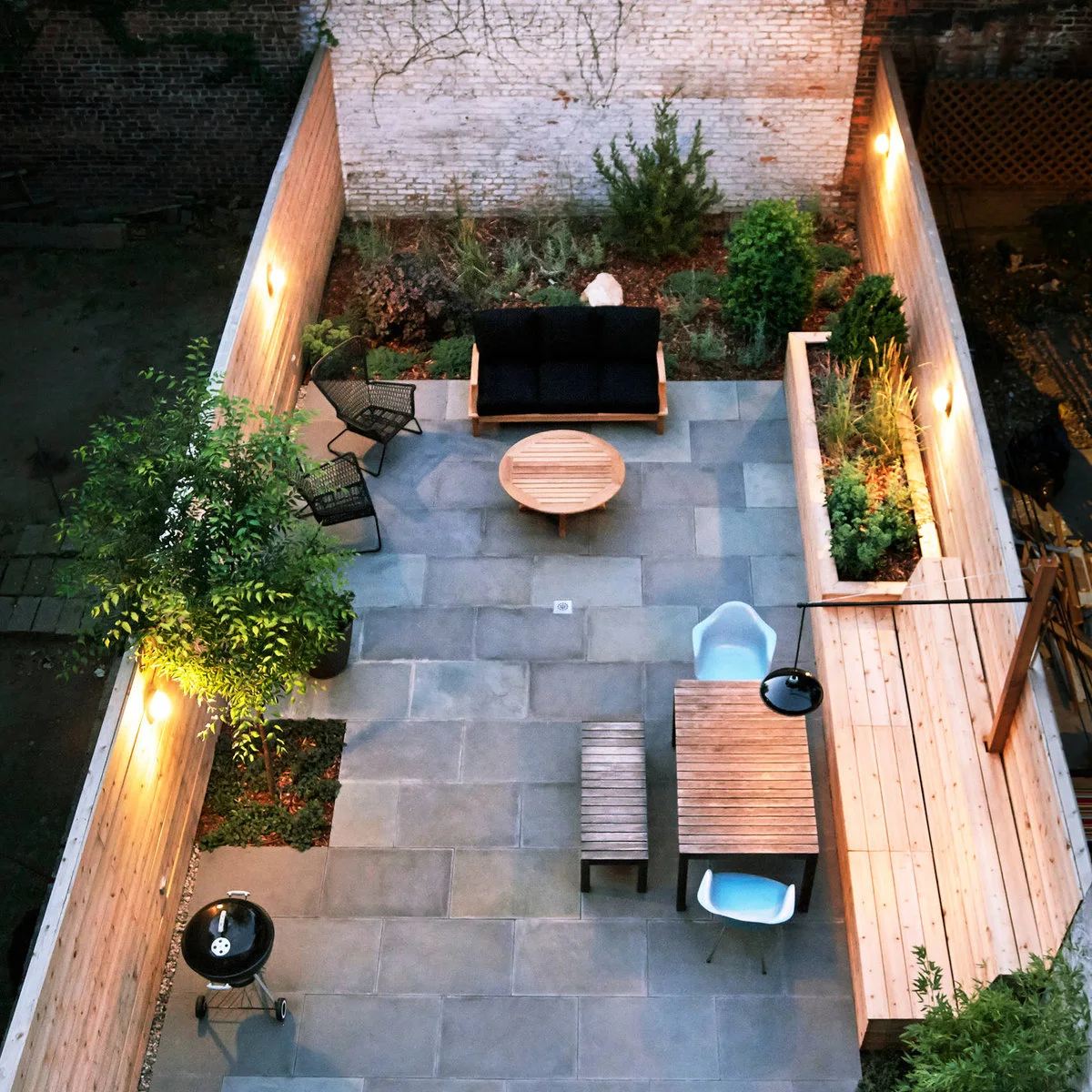
The loveseat and two open-frame chairs make a distinct sitting area at the far end of the courtyard. Raised planting and tall wood boundaries frame the furniture without filling the central paving. A separate dining table nearer the house gives the long space two different places to gather.
Compare backyard privacy ideas from the seated position before raising every boundary. Keep a clear route between dining and lounging, and allow room to water the planted edges without reaching across cushions. Choose outdoor furniture sized for the usable paving rather than the courtyard’s full wall-to-wall width.
IDEA 02 / 20
Put a Chair Beside a Planted Wall
 SaveSupport Non AI Creator
Image credit: Project: Danes Custom Homes (via Houzz)
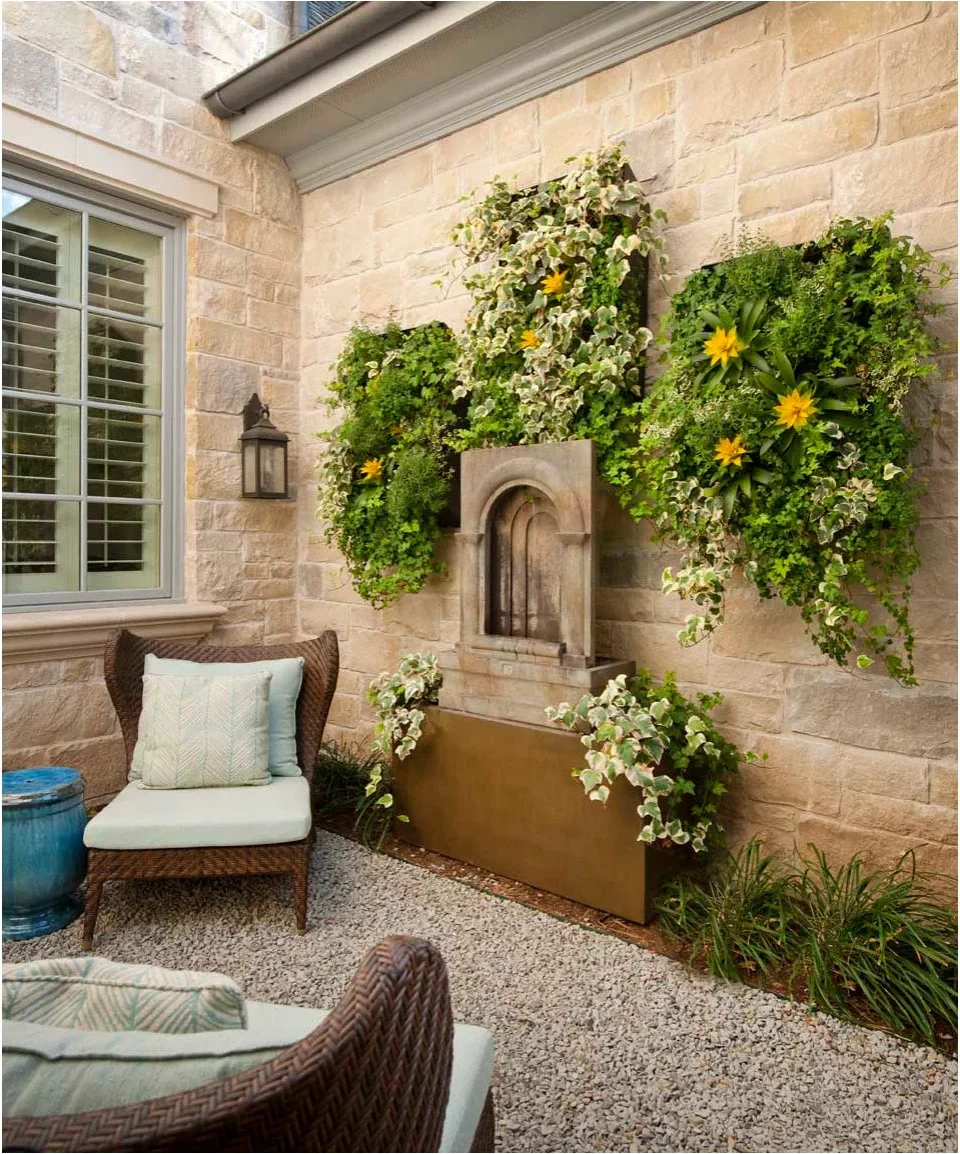
Rectangular planted panels bring greenery onto the wall above the small seating area. A pale cushioned chair sits beside the wall fountain, with a small blue table close at hand. The arrangement uses the corner vertically while leaving the gravel floor relatively open around the chair.
Plan how the wall planting will be watered and maintained before placing furniture beneath it. Keep access to the fountain’s service points and leave room to clean around the basin. Check that chair feet sit firmly on the chosen gravel and provide a convenient dry place for cushions when needed.
IDEA 03 / 20
Turn a Narrow Recess into a Simple Bench Seat
 SaveSupport Non AI Creator
Image credit: P. Lloyd Paul Photography / Laura Bauers
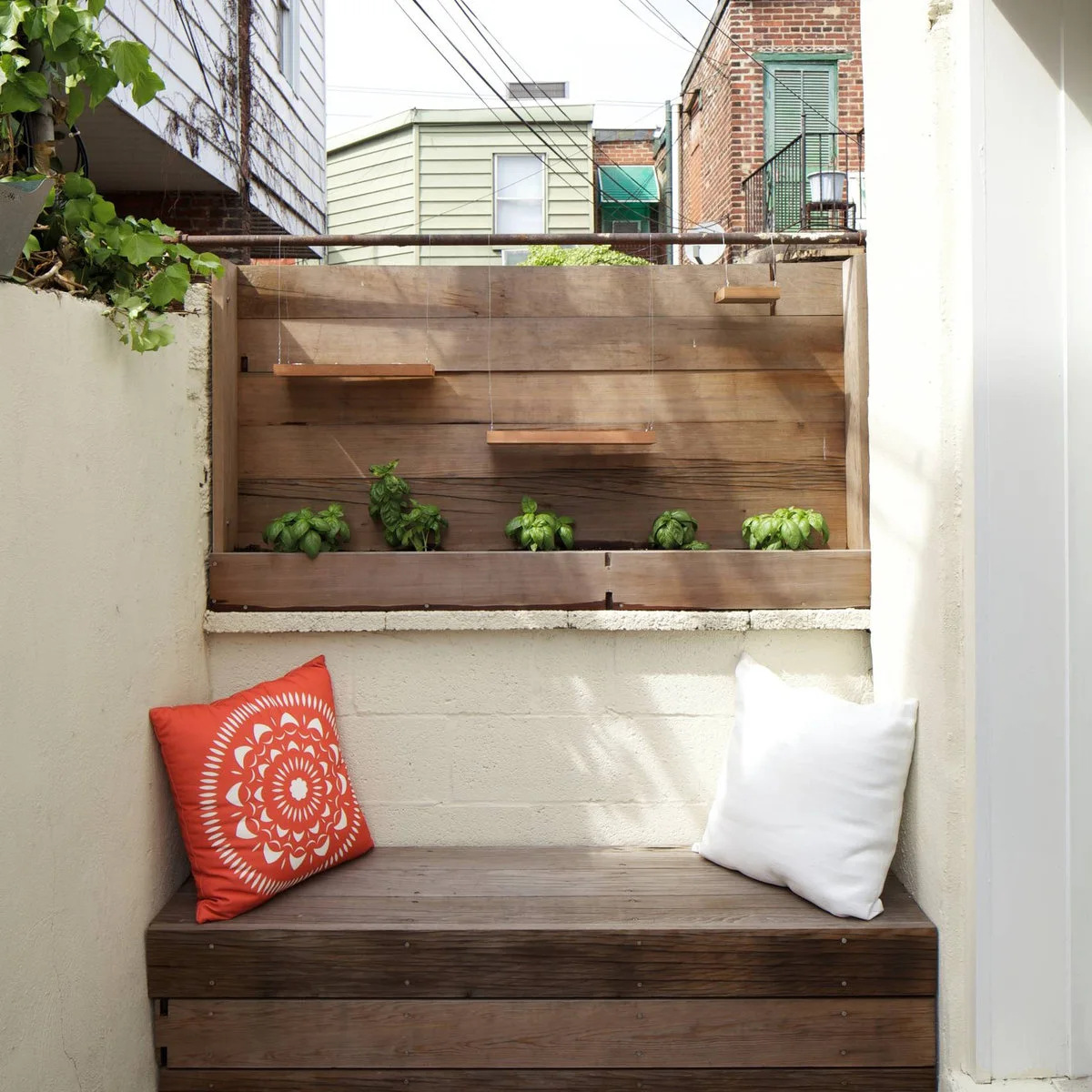
A plain wood bench fills the narrow recess, with one red cushion and one white cushion adding comfort without hiding the seat. The planter above brings a strip of greenery to the back wall. Pale masonry sides help define the small sitting space without requiring separate screening.
Check headroom and the security of anything suspended above a seat before copying the arrangement. Keep watering runoff away from cushions and leave access to the planter. A bench fitted tightly between walls also needs a practical cleaning plan for the corners and the space beneath it.
IDEA 04 / 20
Make Space for Two at a Small Table
 SaveSupport Non AI Creator
Source: Houzz
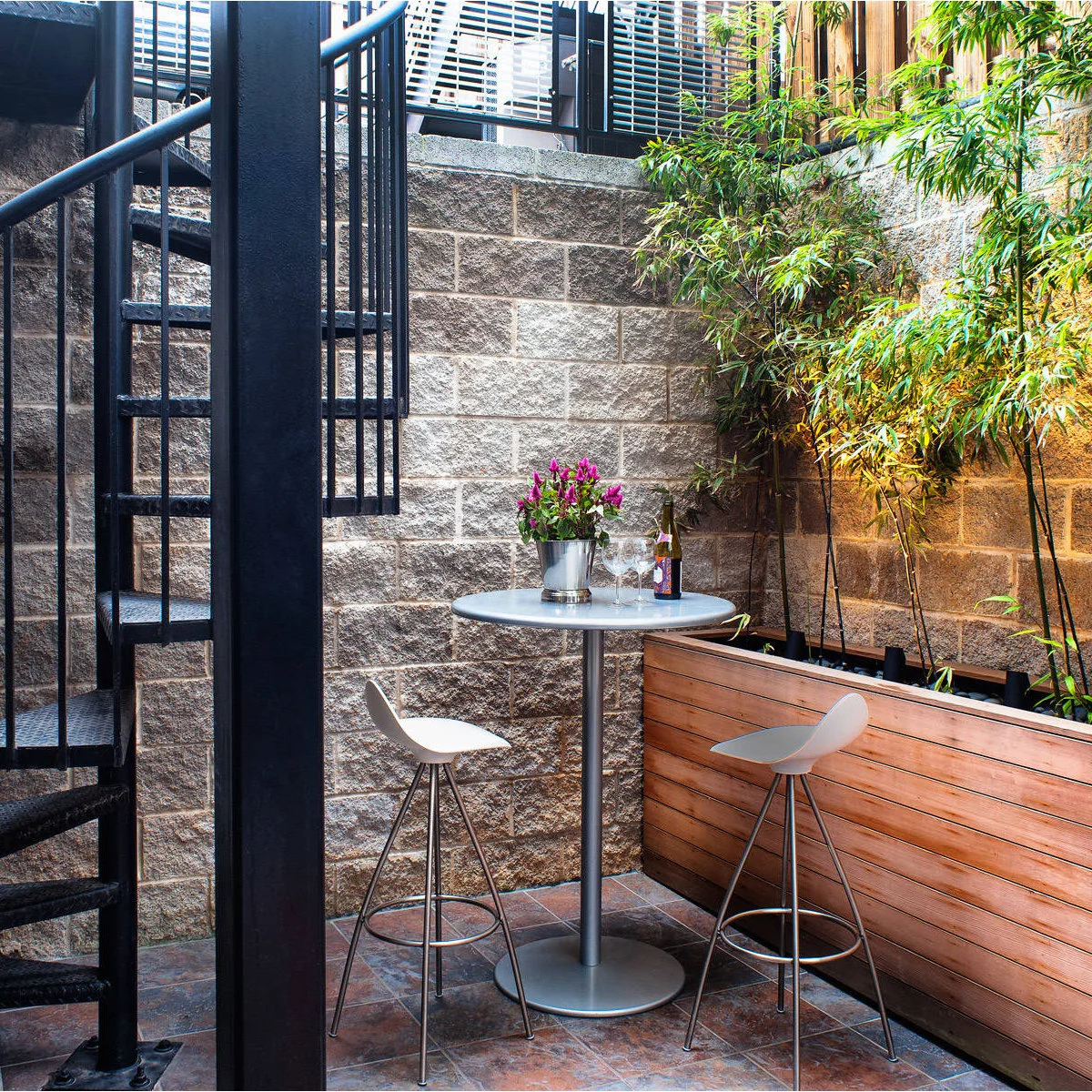
Two pale stools and a small round table create a compact place to sit beside the tall planter. The bamboo-like stems soften the masonry walls and the dark spiral stair. The table’s narrow base leaves more of the small tiled floor visible than a broad dining set would.
Test the approach around both stools and keep the stair route fully usable. Choose a seat height that works with the table and is comfortable for its intended users. Leave room to move the stools for cleaning, and check the planter’s drainage without assuming the surrounding floor can remain wet.
IDEA 05 / 20
Make a Sheltered Daybed Corner Beside a Planted Post
 SaveSupport Non AI Creator
Image credit: Project: Hunter Design (via Houzz)
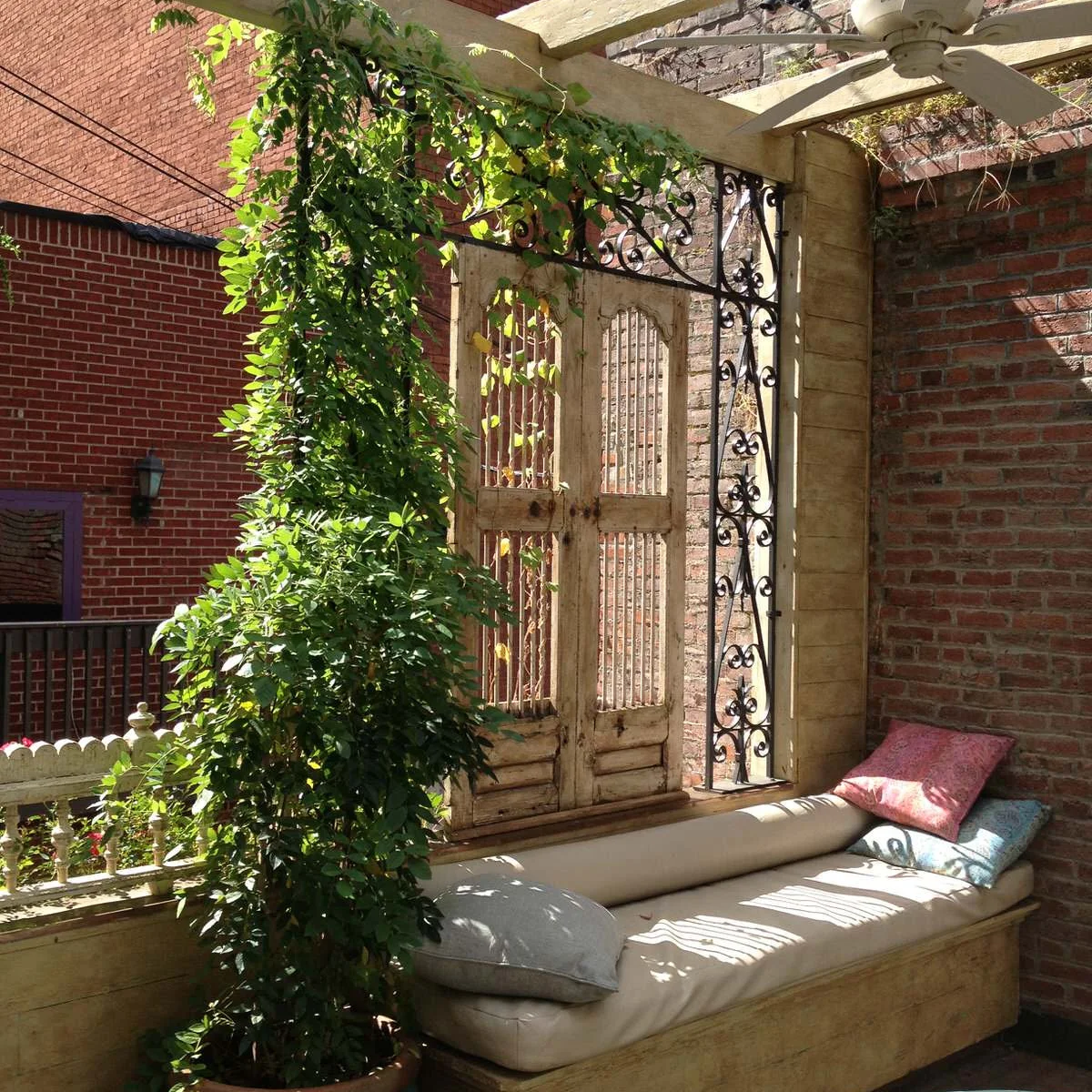
A pale cushioned daybed rests against the brick wall beneath the pergola. Climbing greenery wraps the nearby post, while decorative wood doors and metalwork give the back of the seat a more enclosed character. A few muted cushions keep the long lounging surface visually simple.
Check the cushion care instructions and decide where the long pad will be stored before choosing a daybed. Keep the climber accessible for pruning so it does not spread over the seating surface. Confirm that any decorative doors and panels are securely fixed rather than relying on their weight to hold them in place.
PART 02
Give a Garden Bench Its Own Setting
IDEA 06 / 20
Add a Resting Place Beyond Raised Growing Beds
 SaveSupport Non AI Creator
Image credit: Project: CBA Landscape Architects, LLC (via Houzz)
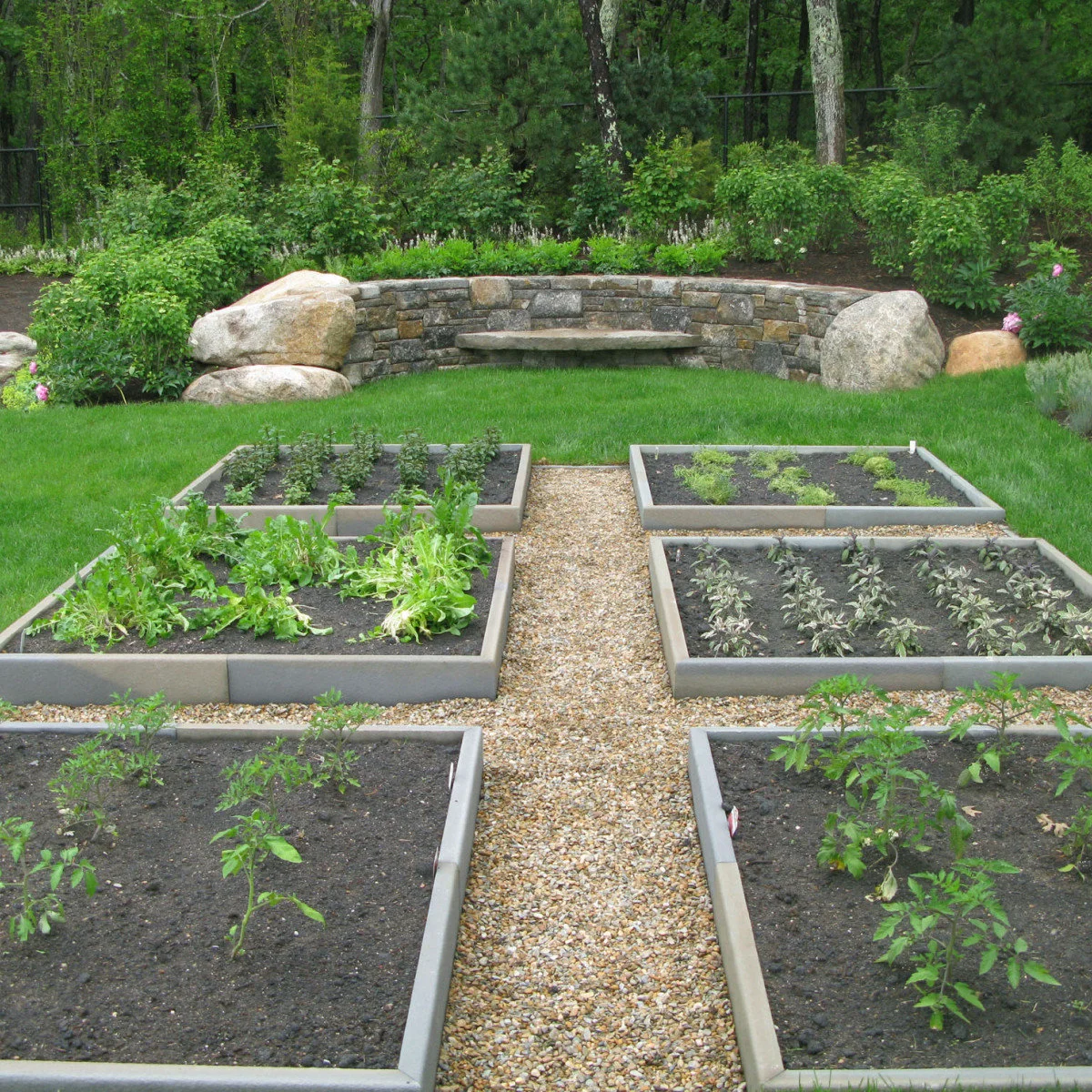
The curved bench gives the raised-bed garden a clear destination beyond the straight gravel path. Large boulders finish the low wall at each end, while planting behind it connects the seating with the wooded boundary. The open patch of lawn separates the bench from the growing beds.
Use vegetable garden ideas to compare bed access before fixing the position of a permanent seat. Keep the bench approach separate from tools and watering equipment. Test the seat surface for comfort and drainage, and have the base and supporting work assessed for the actual ground conditions.
IDEA 07 / 20
Set a Bench into a Curved Gravel Clearing
 SaveSupport Non AI Creator
Image credit: Mike Crews Photography
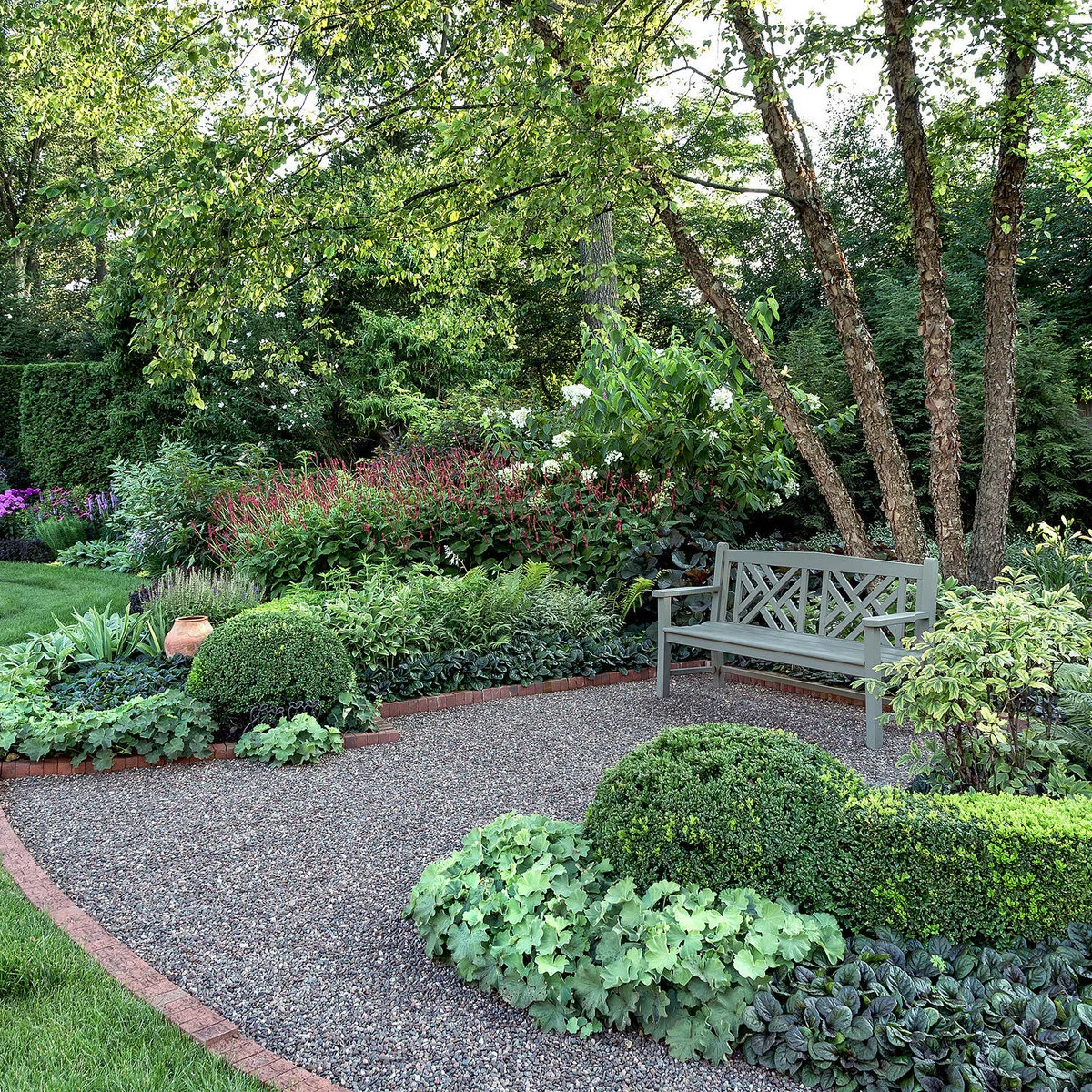
The gray bench sits beneath the trees at the edge of a curved gravel clearing. Layered planting wraps around the seat, with low brick edging defining the bed boundary. Rounded clipped shapes in the foreground contrast with the looser leaves and taller flower stems behind.
Leave enough clear ground to sit down without brushing through wet foliage. Check the expected spread of the surrounding plants and retain access behind the bench for maintenance. Keep gravel contained at the lawn edge, and make sure the bench feet remain stable as the surface is raked and replenished.
IDEA 08 / 20
Frame a Corner Bench with Raised Planters
 SaveSupport Non AI Creator
Image credit: Project: Amber Freda Garden Design (via Houzz)
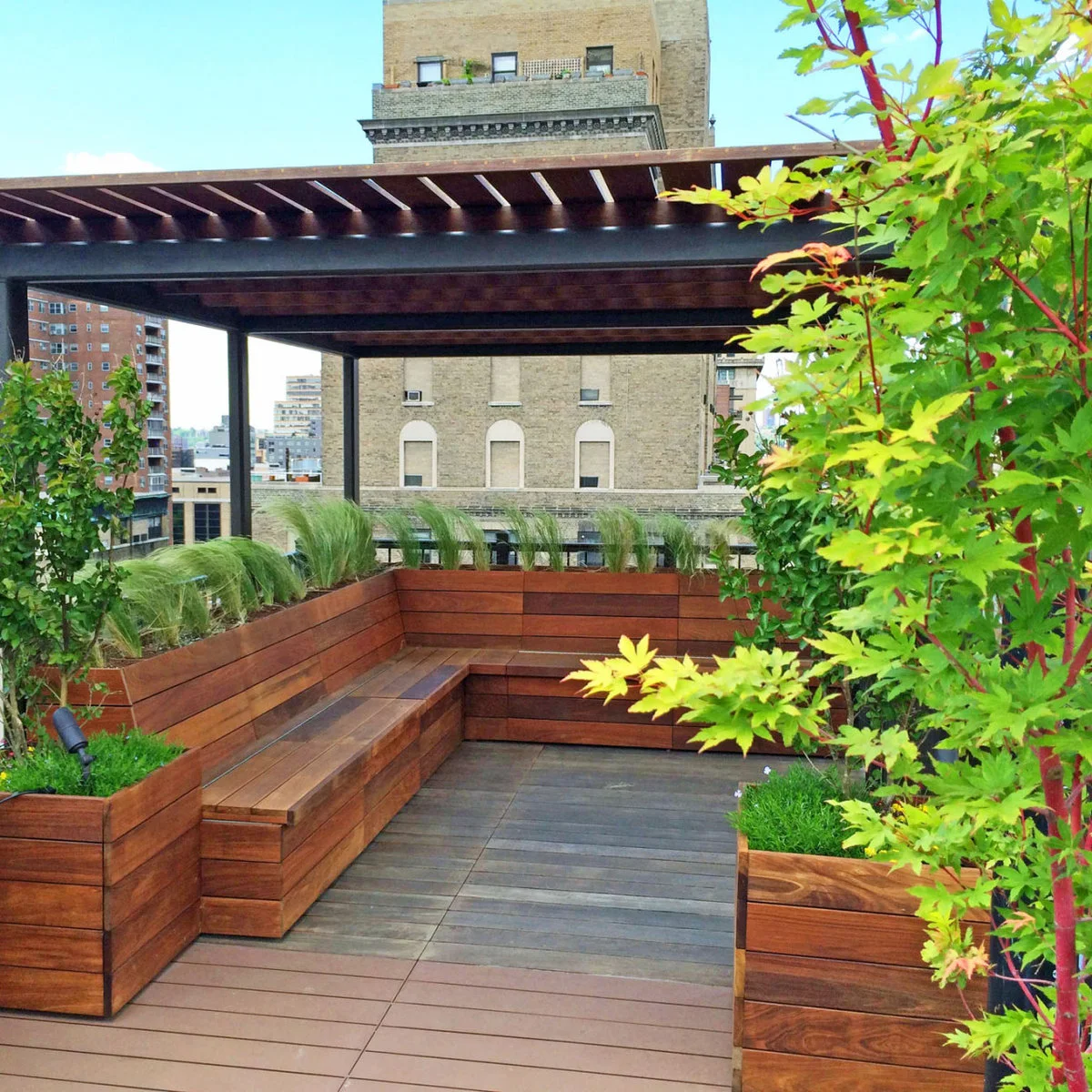
The L-shaped bench shares a continuous wood outline with the raised planters, defining the terrace corner as a sitting area. A dark pergola marks the space overhead, while taller planting gives the edges a softer boundary. The open floor in front makes the bench easy to approach.
For a roof terrace, have the structure, loads and drainage checked before adding built-in seating or large planters. Keep service access available and compare the seat depth with how you want to use it. Plan cushion storage separately rather than assuming the photographed timber surfaces hide storage underneath.
IDEA 09 / 20
Reveal a Bench Through a Leafy Opening
 SaveSupport Non AI Creator
Image credit: Project: Oliver Nurseries (via Houzz)
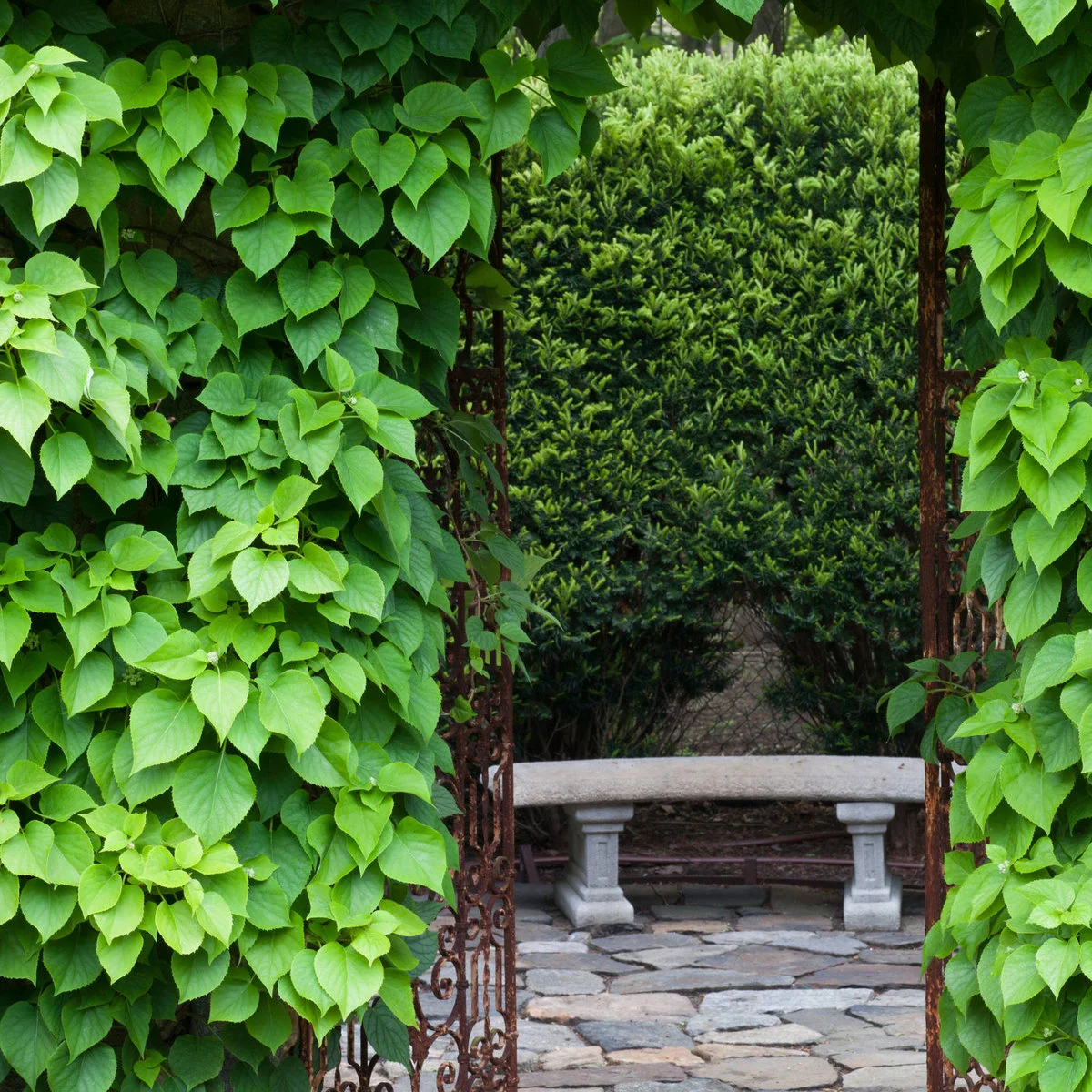
The leafy opening frames a pale curved bench against a dense green backdrop. Irregular paving leads through the arch, giving the small sitting area a clear entrance. The bench’s simple light surface remains visible even though planting covers much of the surrounding structure.
Keep the opening wide enough for the people using the space and prune growth before it narrows the approach. Check the paving for secure footing and avoid letting leaf litter hide uneven edges. Leave access to the arch and bench supports so their condition can be inspected as the plants mature.
IDEA 10 / 20
Use a Painted Arbor to Mark a Flower-Filled Seat
 SaveSupport Non AI Creator
Image credit: Project: DK Design (via Houzz)
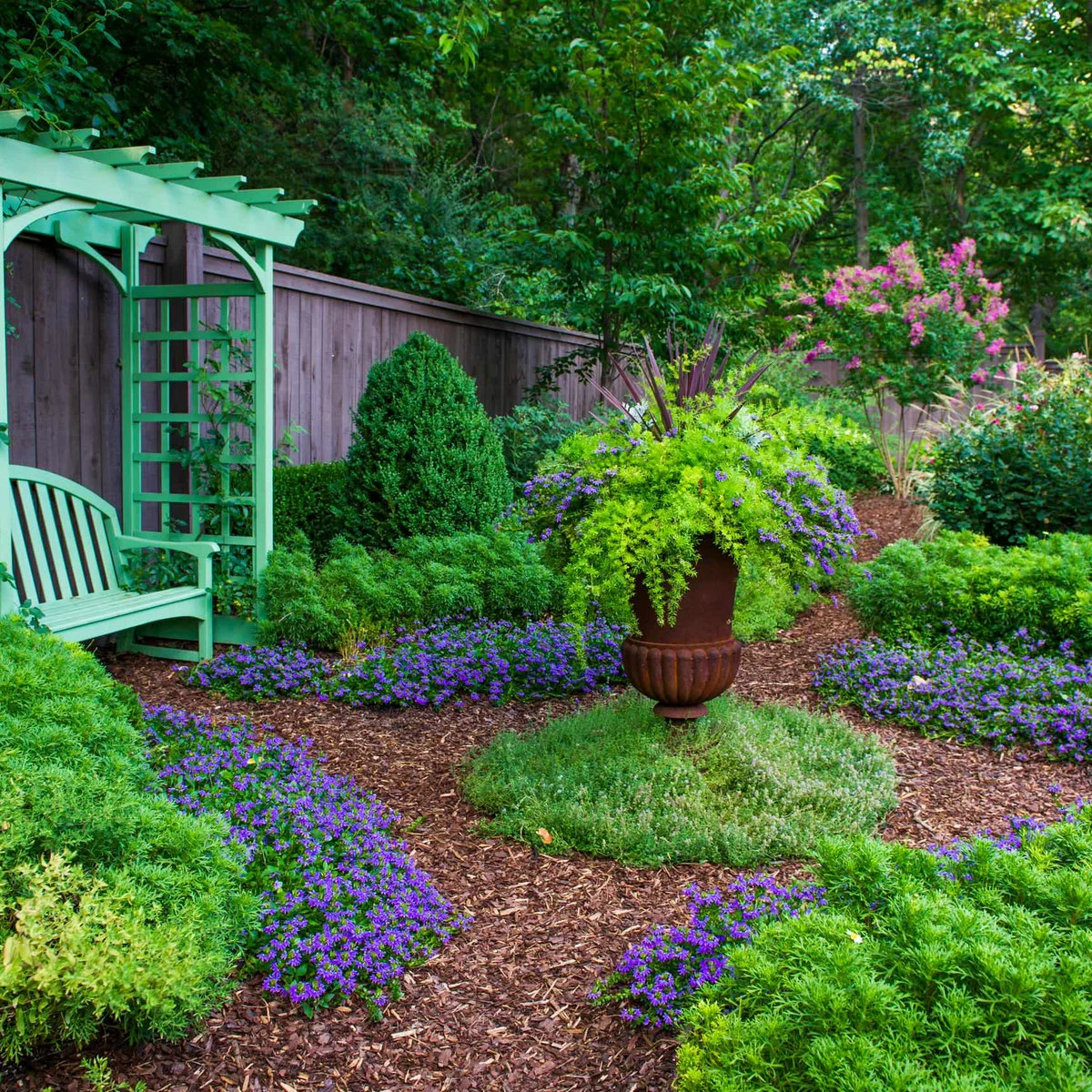
The pale green arbor makes the bench easy to spot against the darker fence and surrounding foliage. Purple flowers repeat across the low planting and the tall urn, connecting the seating corner with the rest of the bed. The arbor gives the modest seat a distinct outline.
For more small cottage garden ideas, compare how paths and seats fit among the planting before adding ornaments. Keep the route to the bench clear at mature plant size. Choose a paint finish suited to the structure and its exposure, and allow access around the posts for maintenance.
PART 03
Use Arbors, Screens and Planted Edges
IDEA 11 / 20
Make the End of a Pergola Walk a Resting Spot
 SaveSupport Non AI Creator
Image credit: Project: Erskine Associates LLC (via Houzz)
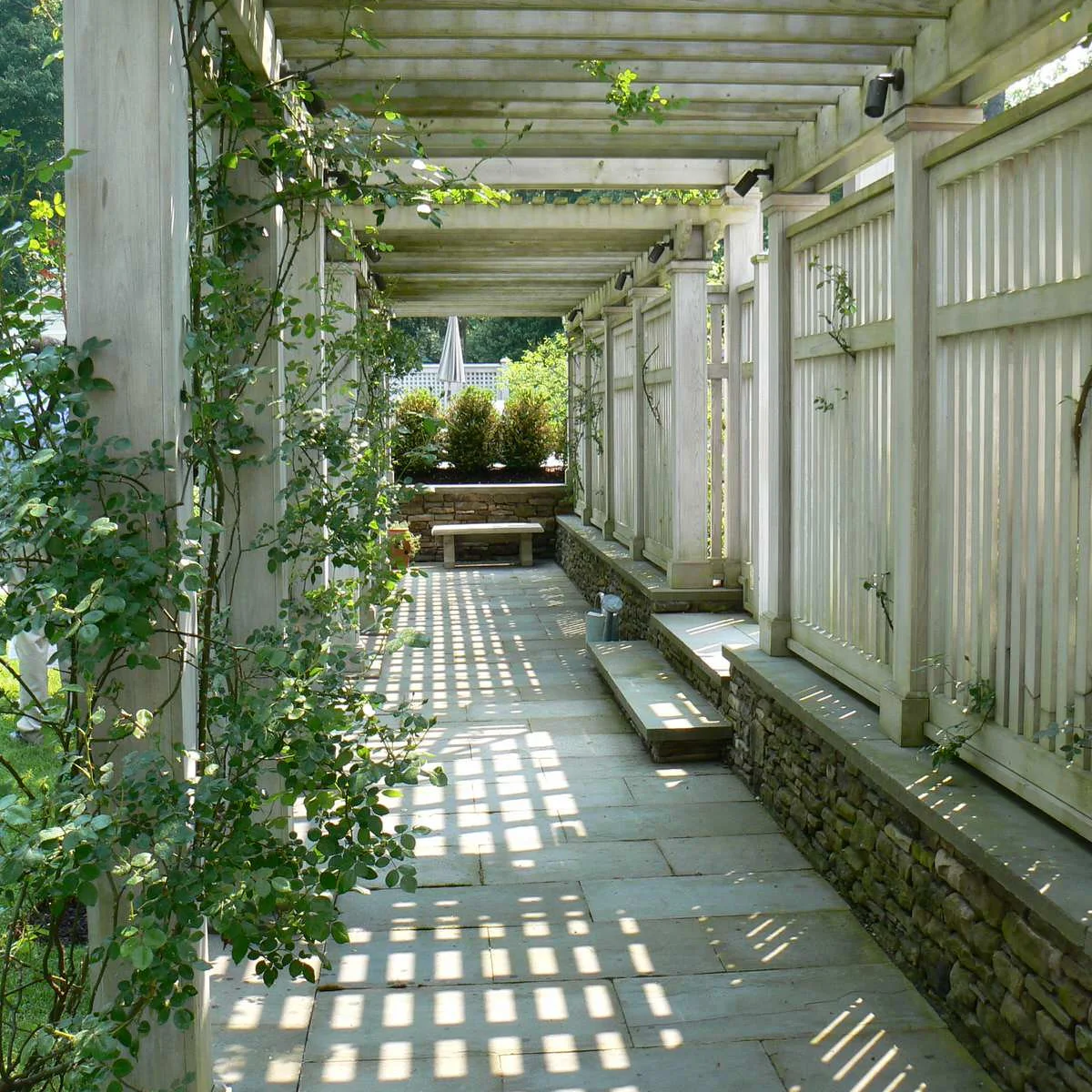
The small bench gives the long pergola walk a destination beyond the repeating posts and beams. Pale paving and the slatted side screen connect the whole passage, while climbing greenery softens its open edge. The seat occupies the end rather than narrowing the route along the side.
Check whether the approach stays comfortable as the climbers develop, and keep new growth clear of the walking area. Test the seat at the time of day you expect to use it, since an open pergola does not provide constant shade. Leave room to clean behind the bench and maintain the screen.
IDEA 12 / 20
Give a Swing Its Own Garden Arbor
 SaveSupport Non AI Creator
Image credit: Project: Just in Thyme Landscape Design (via Houzz)
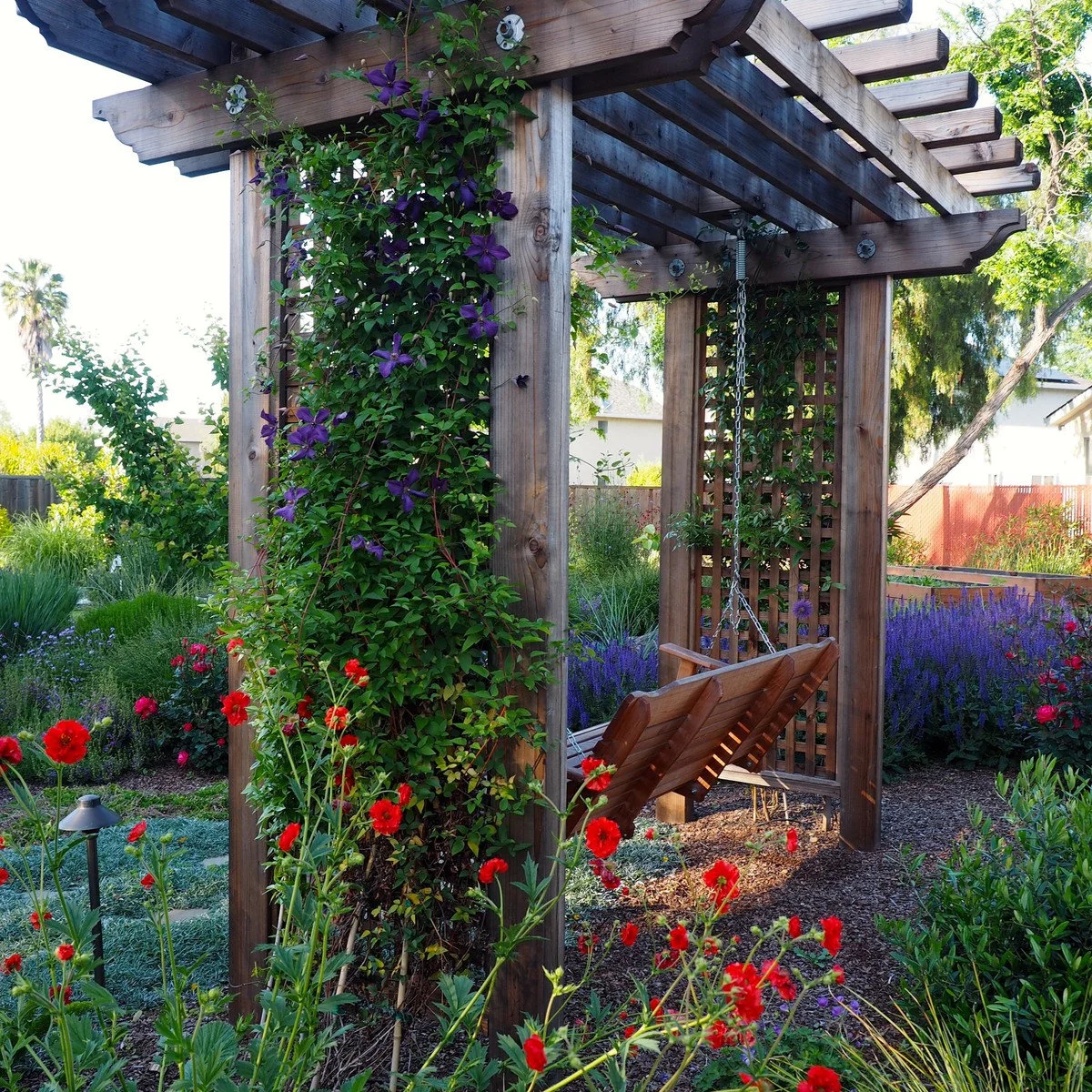
The wood swing has its own timber arbor, with lattice sides and climbers that connect it to the surrounding flower beds. Its framed position distinguishes the seat from the open garden around it. The wood structure remains visible through the foliage, giving the corner a defined shape.
Have the supports, connections and installation assessed for the actual suspended seat and its users. Keep the full movement area clear of planting and nearby objects. Choose climbers suited to local conditions, and leave the fixings visible enough for inspection instead of allowing dense stems to hide them completely.
IDEA 13 / 20
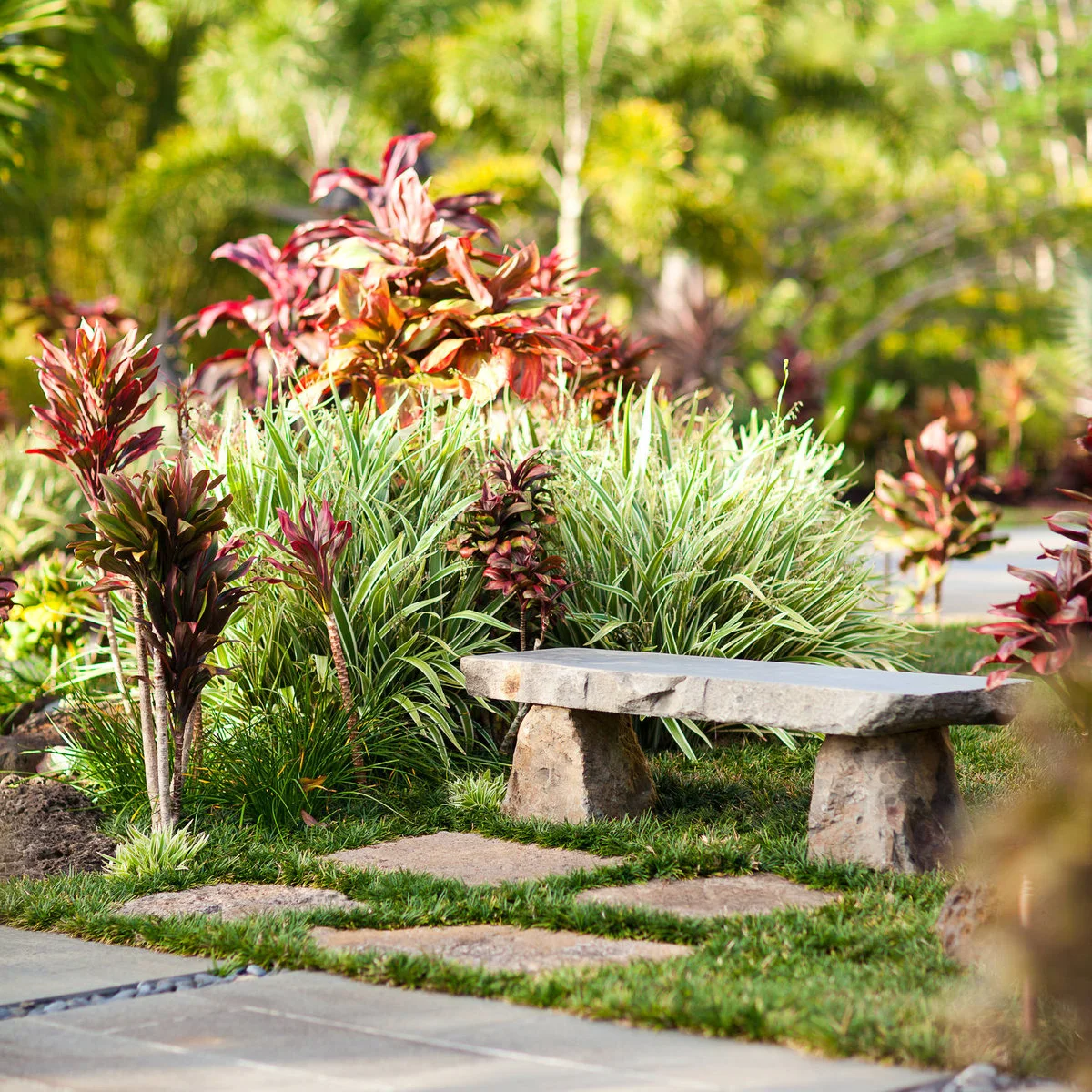
Place a Simple Bench Among Contrasting Leaves
 SaveSupport Non AI Creator
Image credit: Sealight Studios Kauai / Designscape
A broad pale slab bench forms a quiet horizontal line among the contrasting leaves. Narrow striped foliage sits behind it, while taller red-toned stems give the seat a different backdrop. A few broad paving pieces in front connect the bench with the nearby path.
Check the transition from path to seat so there is a stable place to put your feet and stand up. Leave room for the plants’ mature spread rather than planting directly against the supports. For a heavy fixed bench, have the supporting base and assembly planned for the actual site.
IDEA 14 / 20
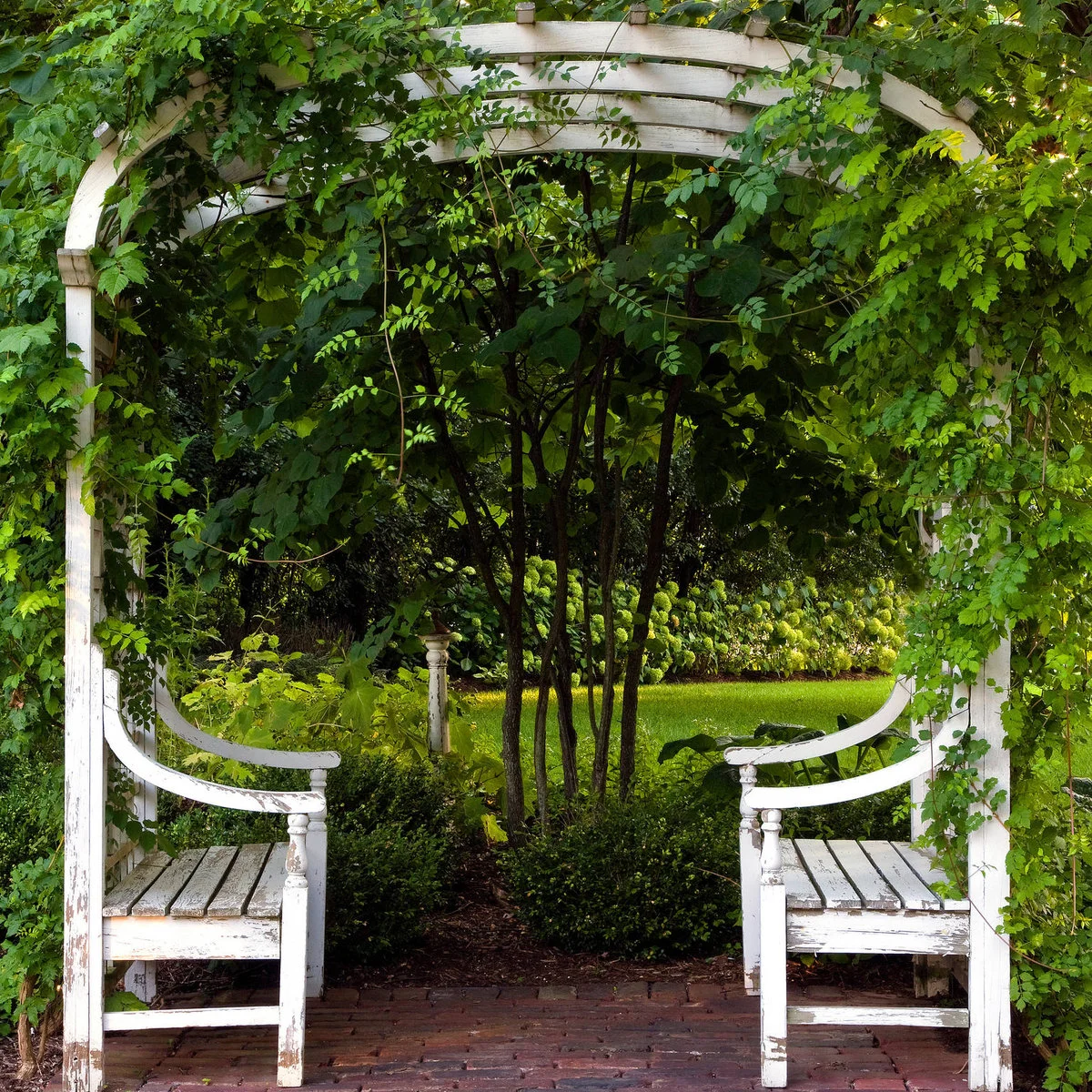
Create Facing Seats Beneath a Leafy Arch
 SaveSupport Non AI Creator
Image credit: Project: Bertrand Landscape Design (via Houzz)
Two white wood seats face each other beneath the leafy arch, making a small place for conversation within the garden. The brick floor provides a distinct base below the greenery. Curved armrests and the overhead arch repeat a softer line against the straight slatted seats.
Check the seat frames and weathered finish before putting an older arbor seat back into use. Leave enough space between the seats for comfortable knees and a clear entrance. Keep the climbing growth manageable so the structure can be inspected and the sitting area does not become difficult to clean.
IDEA 15 / 20
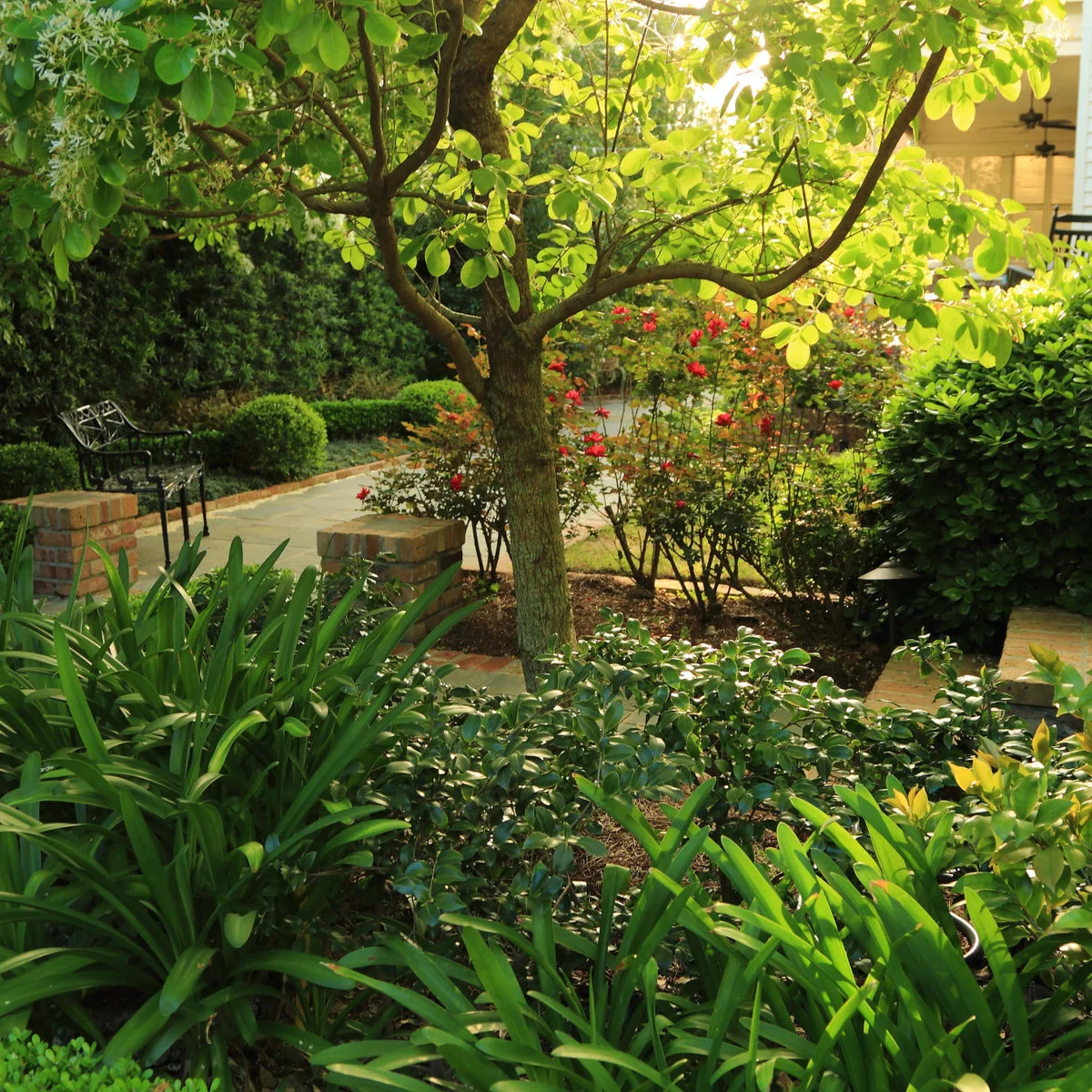
Let Planting Screen a Seat Without Closing the Path
 SaveSupport Non AI Creator
Image credit: Project: Landscape Images Ltd (via Houzz)
The dark chair sits beyond layers of foliage rather than directly against a solid screen. Brick details and a paved approach help define the sitting position, while the tree canopy gives the corner another layer above. The view through the planting keeps the seat connected to the wider garden.
Sit at the proposed position before deciding how much screening is needed. Keep the path open and allow access for pruning plants around the chair. Avoid putting thorny or brittle growth where people brush past it, and choose the actual species around your local conditions and maintenance routine.
PART 04
Keep the Approach and Daily Upkeep Practical
IDEA 16 / 20
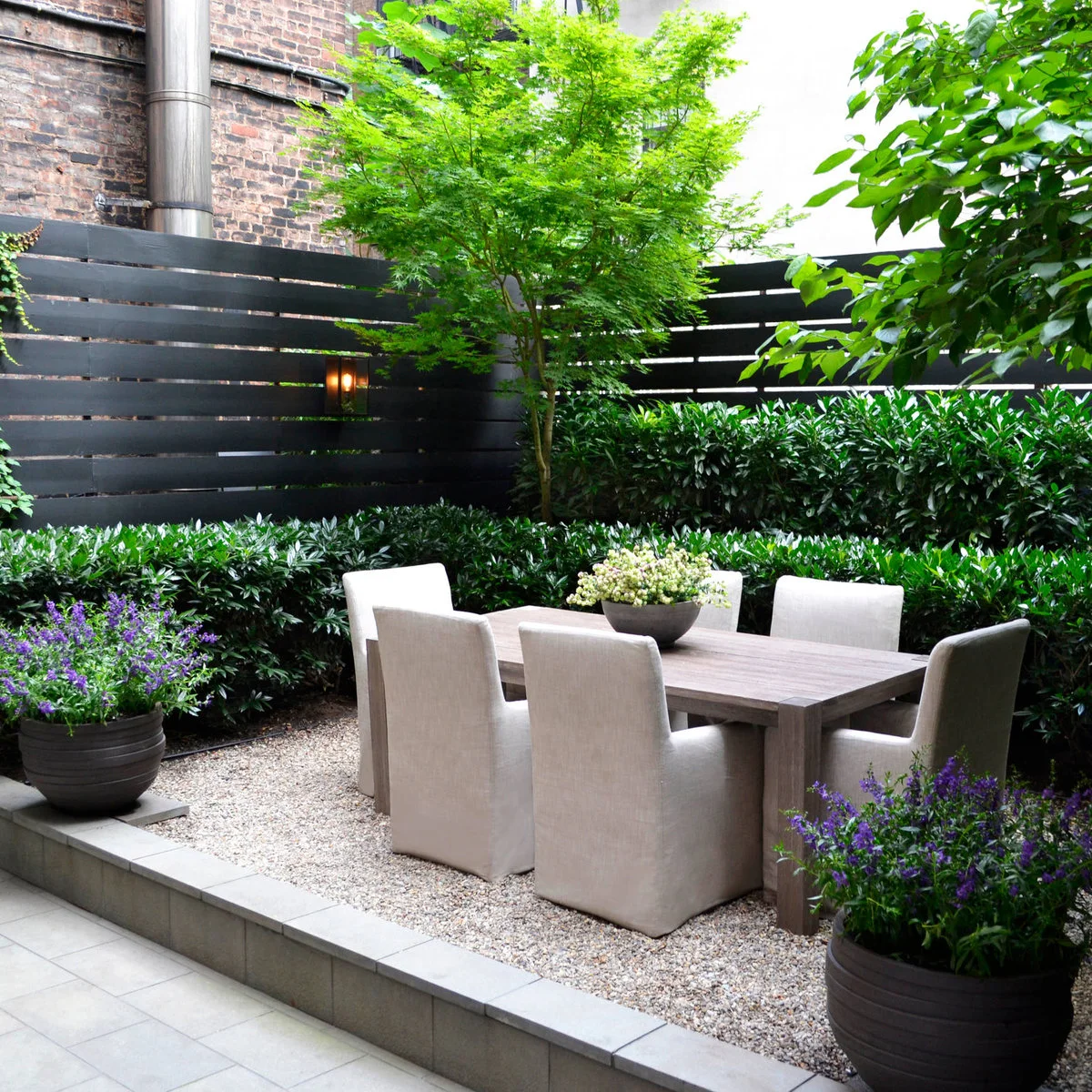
Enclose a Small Table with Planting and Dark Fencing
 SaveSupport Non AI Creator
Source: Houzz
Pale chairs and a wood table sit within a planted corner defined by dark horizontal fencing. The foliage breaks up the boundary while pots at the front help frame the entrance. A low raised edge separates the gravel sitting area from the smoother paving beside it.
Check chair movement on the chosen surface and keep the entrance free of pots that narrow the step. Confirm that the upholstery is suitable for its exposure and plan storage according to its care instructions. Leave room between planting and furniture for cleaning, pruning and moving the chairs without snagging fabric.
IDEA 17 / 20
Keep a Small Sitting Area Open Toward the View
 SaveSupport Non AI Creator
Source: Houzz
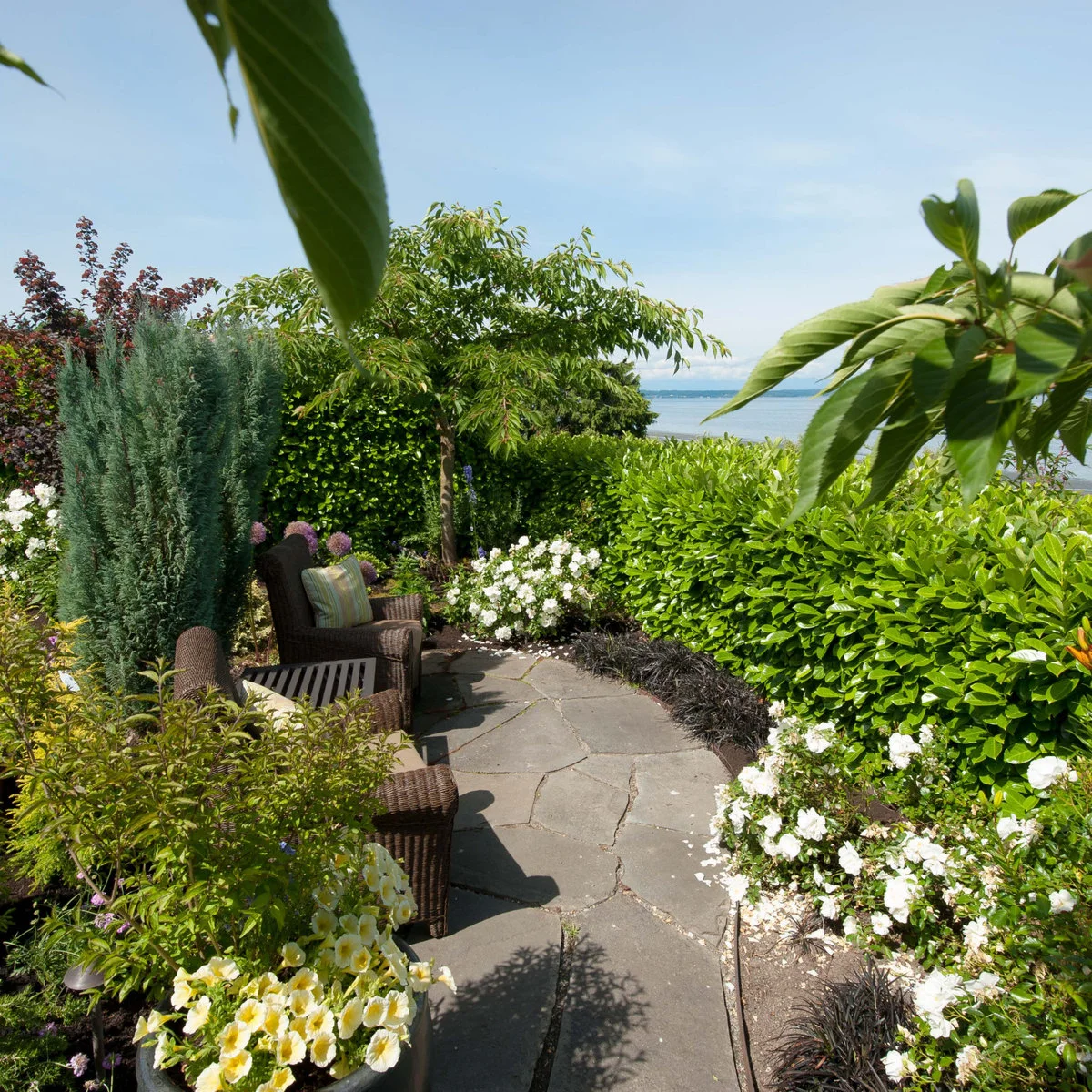
Two woven chairs sit along the small paved area, with a narrow slatted table between them. Dense planting gives the sides a sheltered character while leaving a view toward the water. The irregular paving follows the bed edge rather than creating a broad rectangular terrace.
Check the view from the actual chair height before choosing taller boundary plants. Leave enough paving for chair legs and a clear route past someone seated. Consider how wind reaches the spot and keep access for maintaining the dense planting, especially where leaves can spread over the path.
IDEA 18 / 20
Put a Bench Beside a Fruit Tree
 SaveSupport Non AI Creator
Image credit: Project: TFLA | Terra Ferma Landscape Architecture (via Houzz)
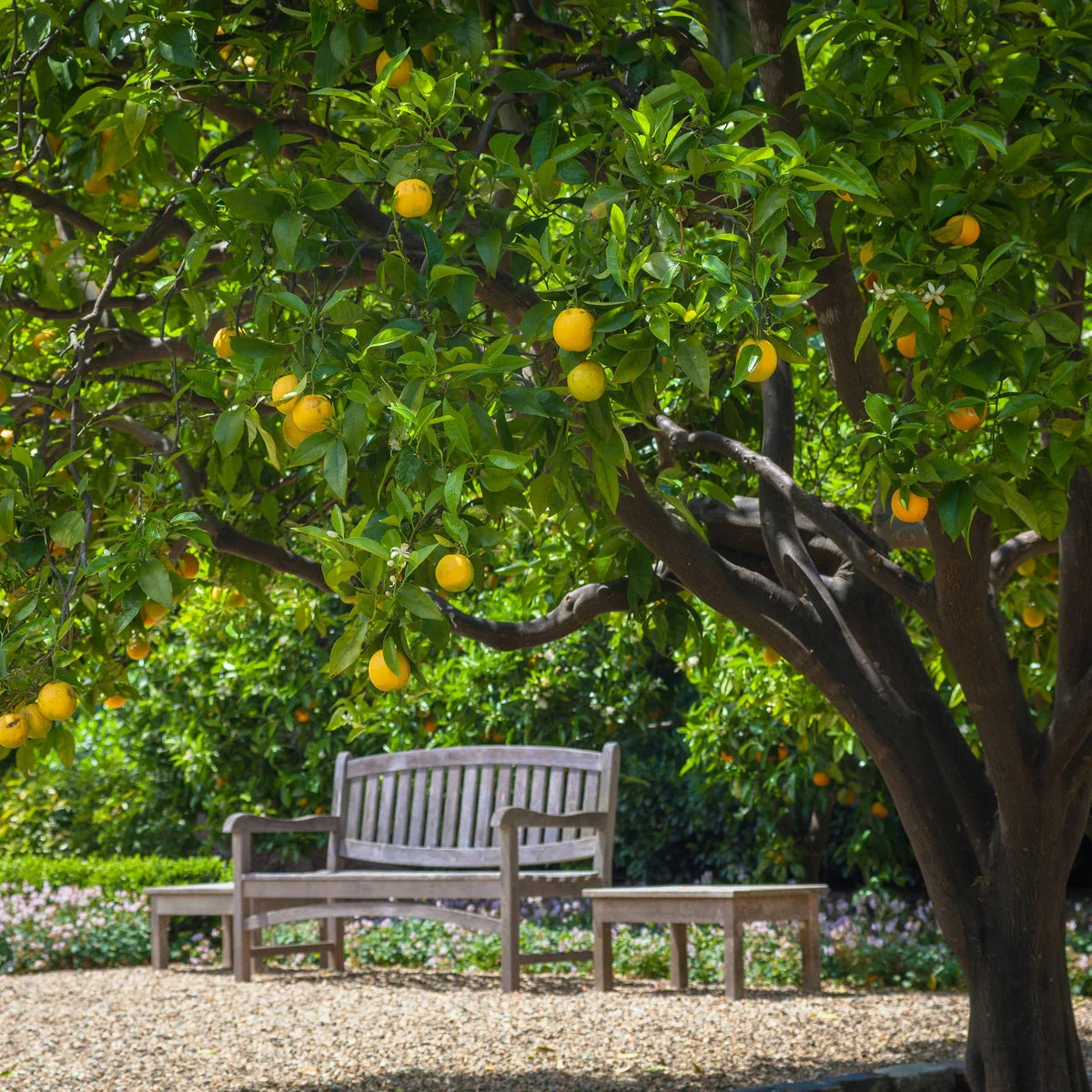
The wood bench sits beneath the leafy citrus tree, with two small stools nearby for flexible use. Gravel gives the small seating area a simple base, while low flowering planting separates it from the surrounding garden. The fruit and canopy make the tree the setting’s main feature.
Plan for fallen fruit, leaves and regular tree care when placing a seat beneath a productive tree. Keep the furniture movable enough to clean the area and reach the surrounding planting. Choose trees for the local climate and available space rather than assuming a photographed fruit tree will suit every garden.
IDEA 19 / 20
Use a Stepping-Stone Path to Reach a Small Clearing
 SaveSupport Non AI Creator
Image credit: Jenn Verrier / Annie Elliott Design
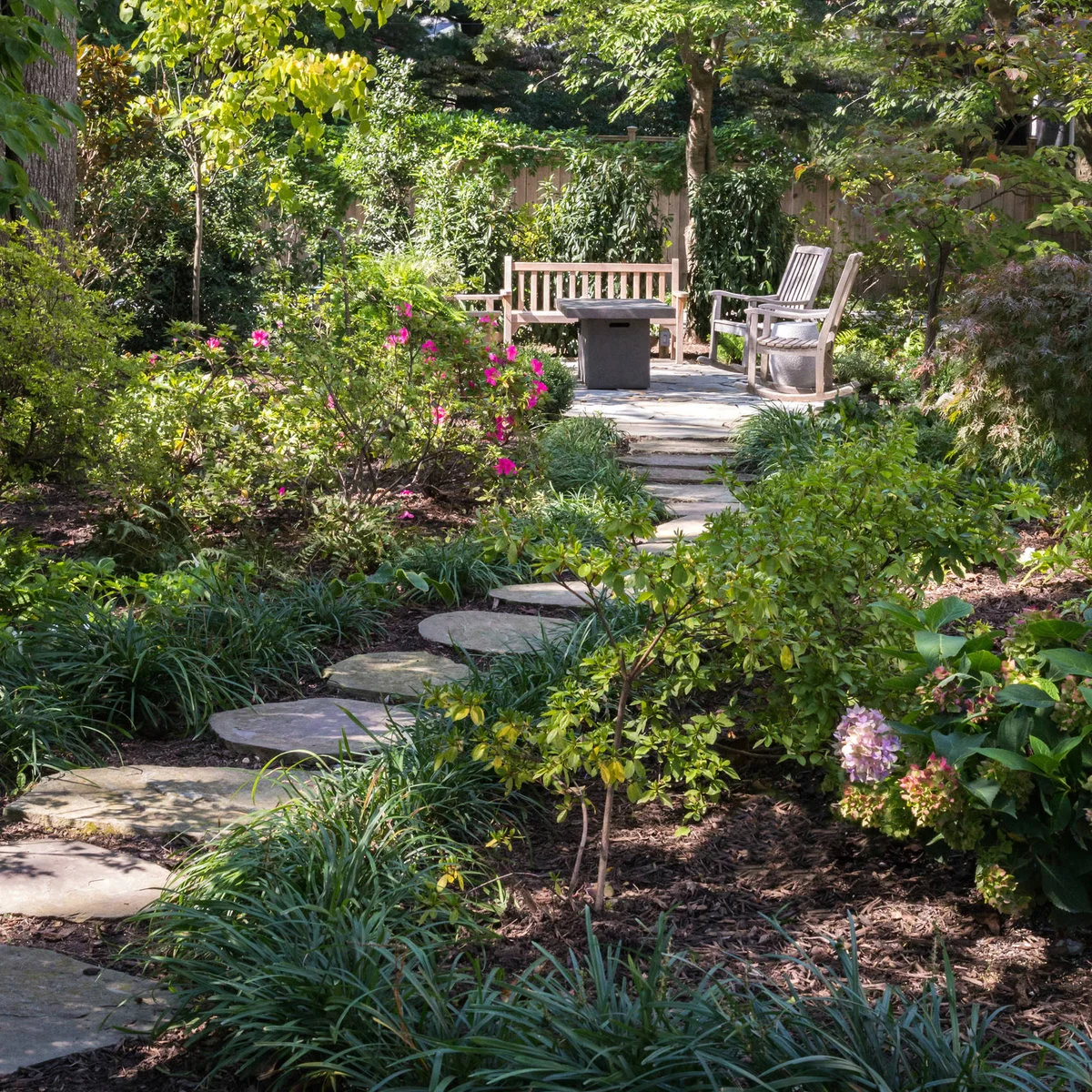
The stepping-stone path leads through the planting to a small paved clearing with a bench and two chairs. The square table gives the group a shared center, while the surrounding shrubs make the sitting area feel distinct from the approach. The furniture remains visible enough to invite someone along the path.
Check that each stepping stone is stable and that the spacing suits the people who will use the garden. Keep plant growth clear of the walking line. If someone needs wheeled access or a continuous firm surface, choose a different approach instead of copying separated stones solely for their appearance.
IDEA 20 / 20
End a Gravel Walk with a Backless Bench
 SaveSupport Non AI Creator
Image credit: Project: Annette English & Associates (via Houzz)
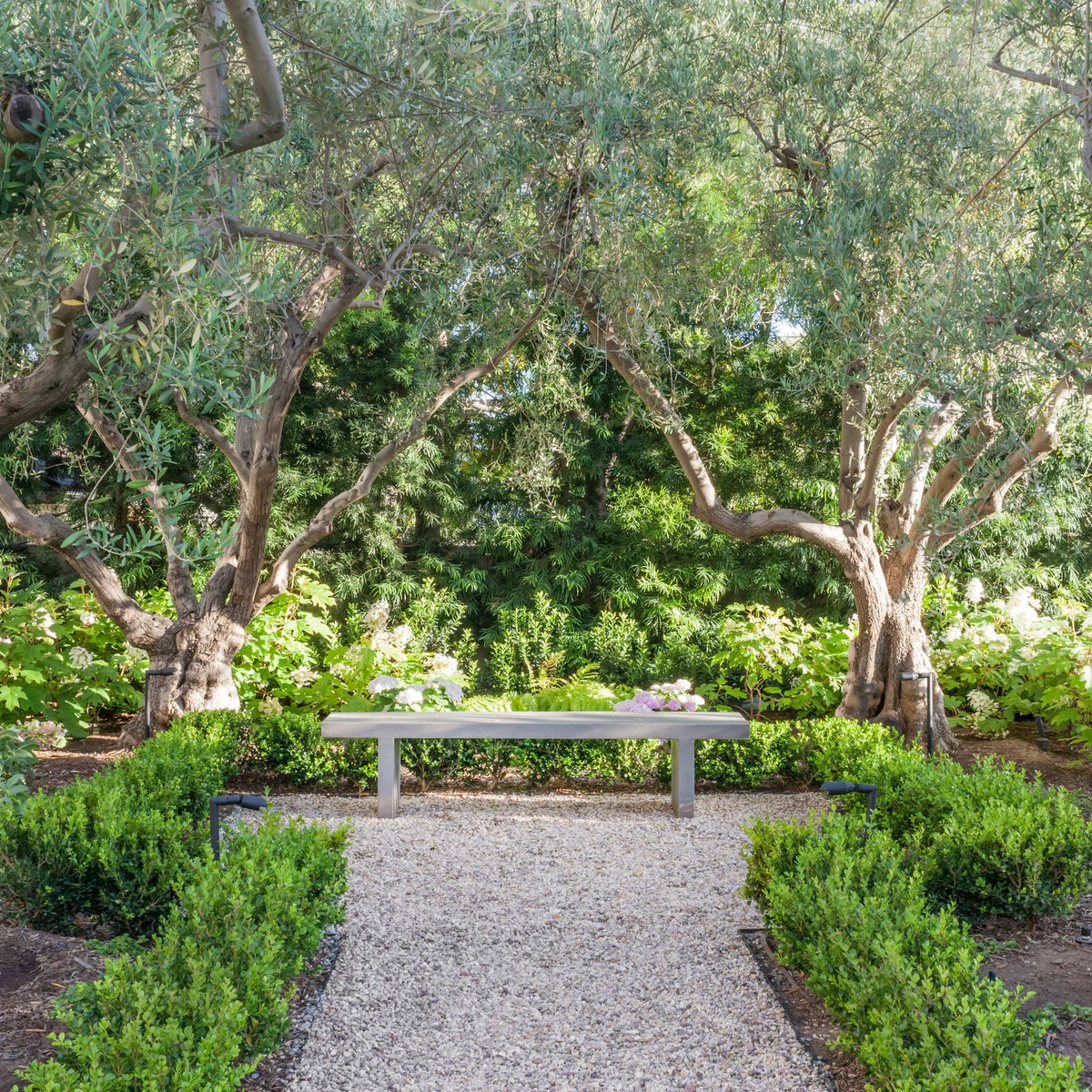
The backless bench forms a simple horizontal endpoint between two trees. Low clipped planting frames the gravel approach, while denser greenery behind gives the seat a quieter backdrop. The restrained furniture lets the trees and their branching shapes define the upper part of the nook.
Try a backless seat before committing to it if the space is intended for long reading sessions. Check that users can sit and stand comfortably, and consider whether a supported seat would be more useful. Keep the gravel approach clear and allow enough space around the trees for their ongoing care.
BRING IT ALL TOGETHER
Try the Seat Before Building Around It
Move a suitable outdoor chair to the proposed spot and sit there at the time you expect to use it. Check sun, neighboring views, wind and the route back to the house. This simple trial can change where the seat should face before you commit to paving or built-in furniture.
Plan access for pruning, sweeping and bringing cushions indoors. Leave planting room for its expected mature spread, and check local conditions before choosing species. For fixed structures, suspended seats or roof terraces, have the relevant professional assess the support and installation rather than treating a photograph as a construction plan.