Dried flowers can bring small details into a room without another large piece of furniture. Their papery petals, faded colors and branching stems work differently from a fresh bouquet. Begin with a place you actually want to decorate, then choose an arrangement that leaves that surface useful.
These photographs show dried and preserved flowers, along with complementary grasses, foliage and seed heads. Some stems have been colored or preserved, so their appearance does not establish a natural flower color. The ideas focus on display and proportion rather than promising a particular preservation result.
PART 01
Start with the Vase and Flower Shape
IDEA 01 / 15
Let a Bright Jug Carry a Mixed Bouquet
 SaveSupport Non AI Creator
Image credit: Sophie Warren-Smith
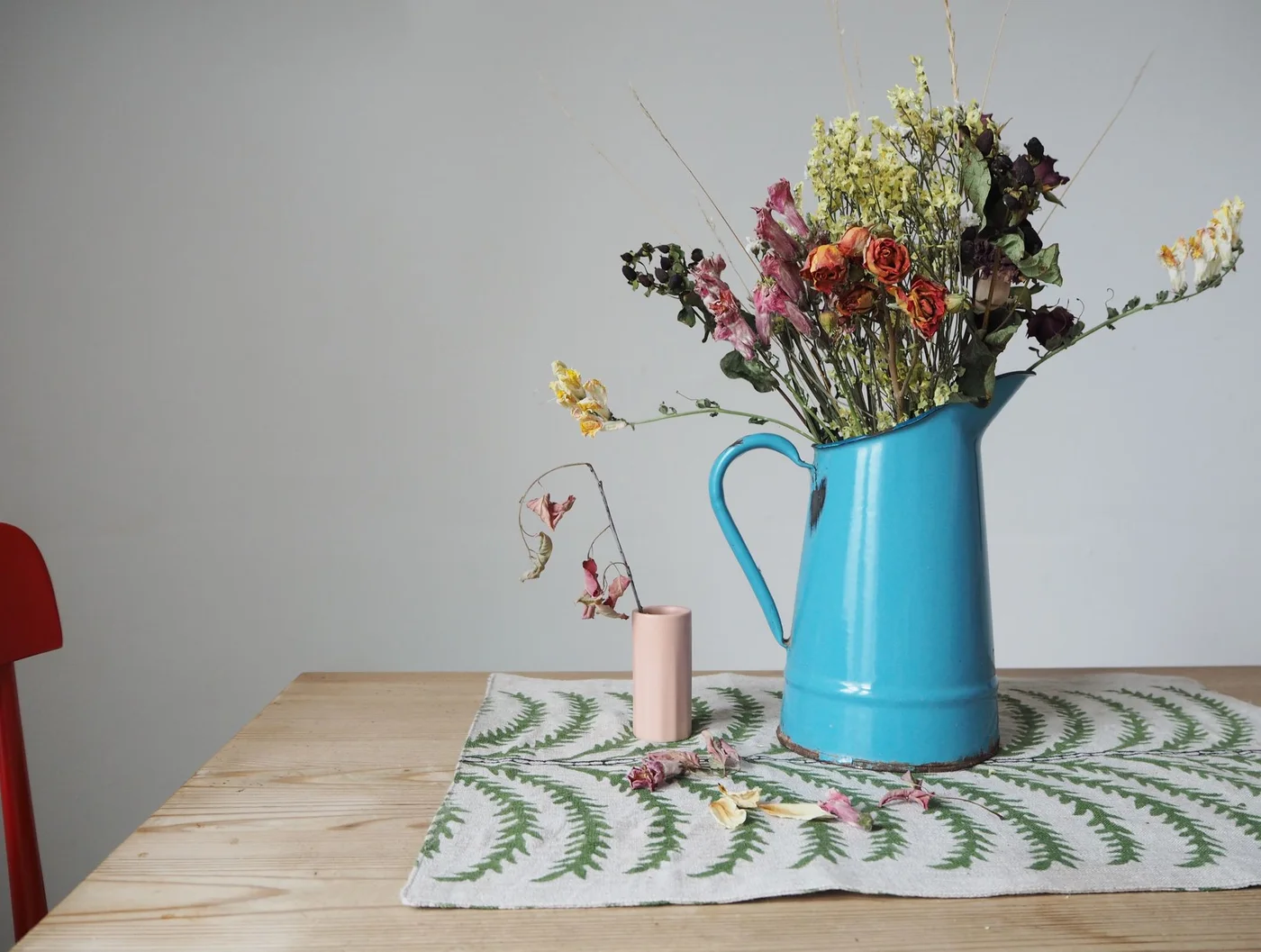
The turquoise jug gives this loose bouquet a strong color at its base, while the dried flowers spread into a more irregular outline above. A tiny pink vase repeats one of the softer flower tones. The patterned cloth connects the display to the tabletop without requiring several more objects.
Try a jug you already own before buying a new decorative vase. Check that its base remains stable when the stems lean to one side, and keep the handle clear enough to lift it safely. Remove loose fallen petals from the eating surface rather than treating their scatter as a permanent part of the arrangement.
IDEA 02 / 15
Build a Bouquet Around One Repeated Color
 SaveSupport Non AI Creator
Image credit: Getty Images / van
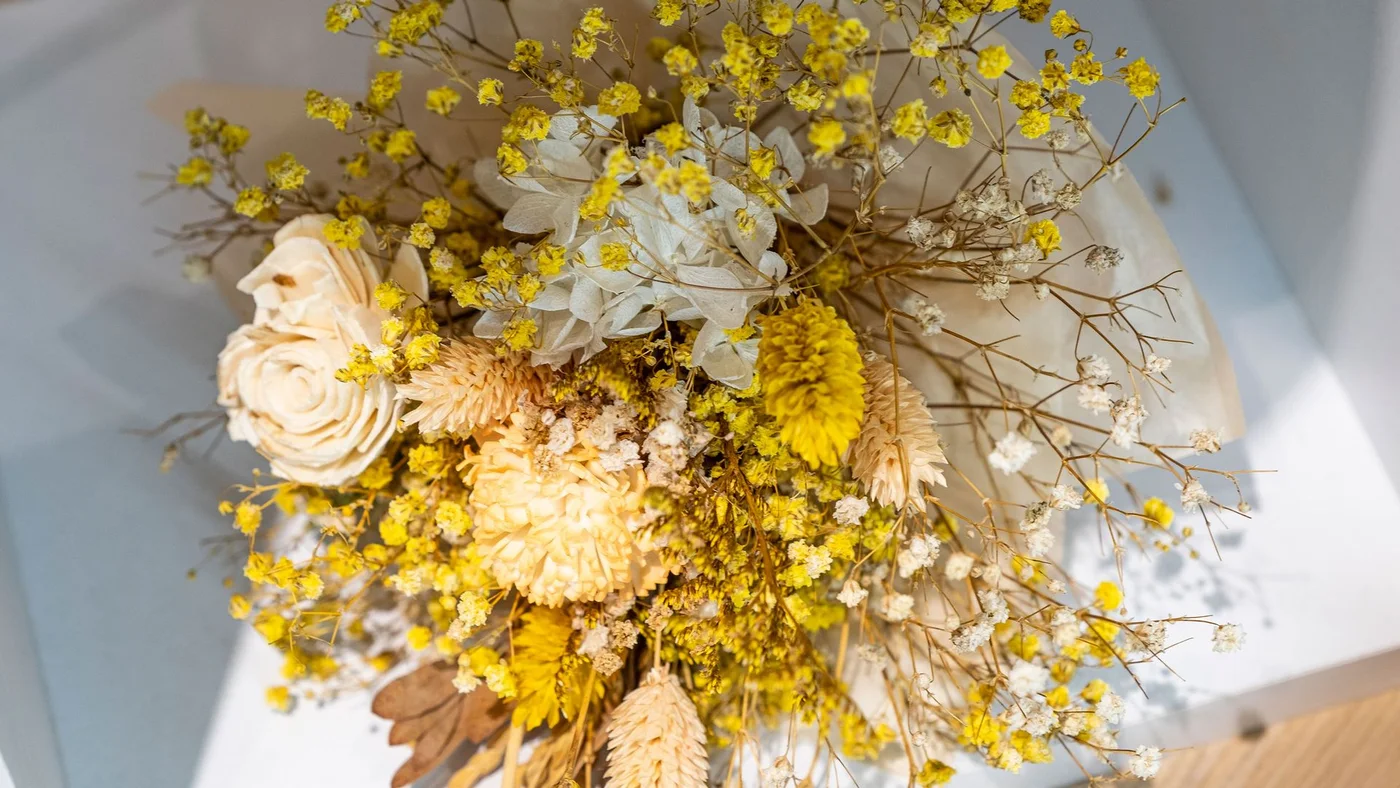
Yellow appears in several different flower shapes, giving this bouquet a clear color thread. Cream flower heads provide larger rounded forms among the finer branching stems. Pale grasses extend the outline without making every part of the bunch equally dense, so the different textures remain easy to see.
Choose a limited group of colors before gathering several varieties together. Rotate the bunch in your hand to check for a heavy patch on one side, then compare it with the vase opening. If purchased stems have been dyed or preserved, use the supplier’s handling guidance and protect pale fabrics while arranging them.
IDEA 03 / 15
Keep a Low Hydrangea Arrangement Below the Seating View
 SaveSupport Non AI Creator
Image credit: Jenna Sue Design
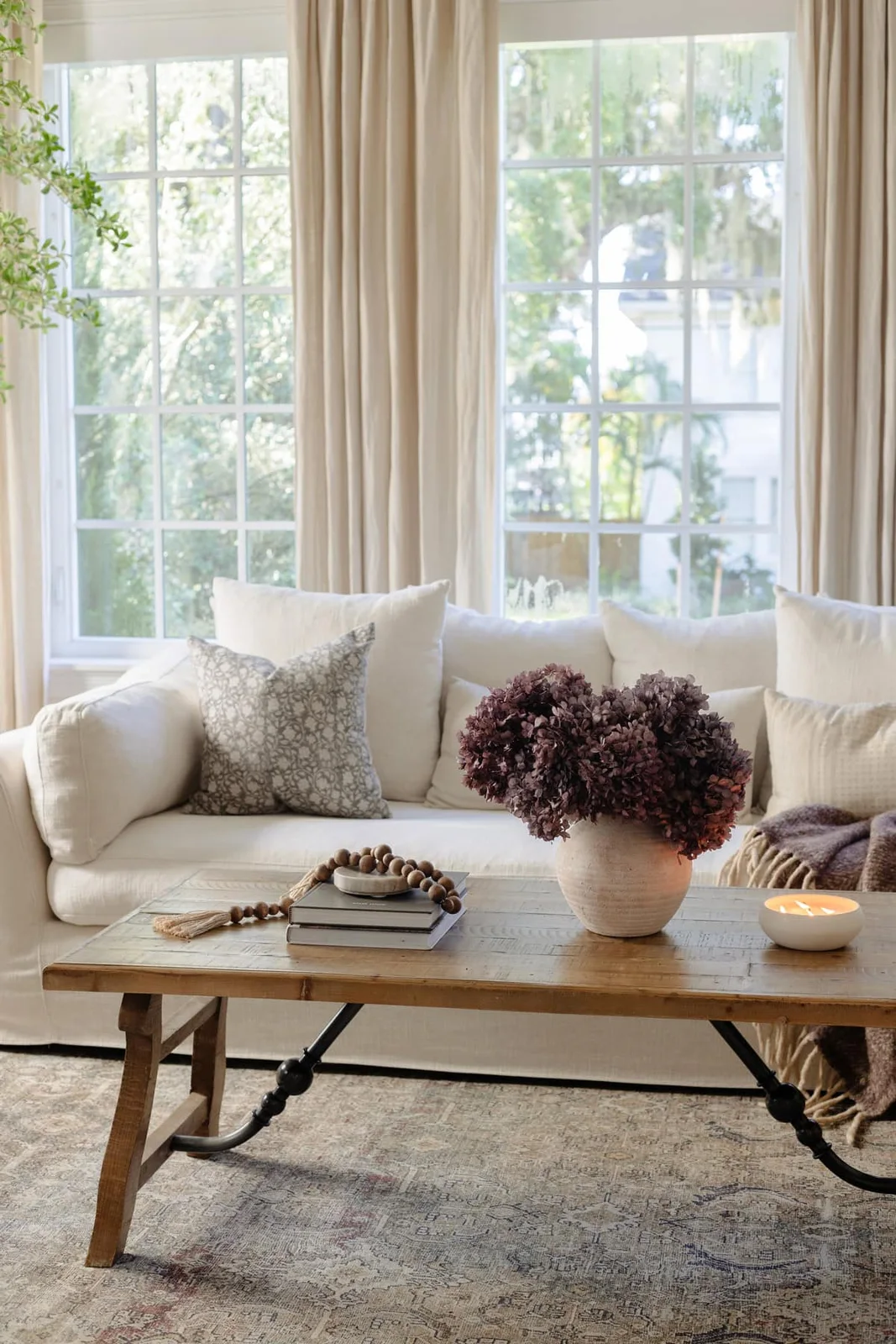
The rounded pot and clustered hydrangea heads create a low, broad shape on the coffee table. Their muted purple color separates them from the pale sofa without taking over the room. Books and a small dish occupy the other side of the table, leaving the flower display as one distinct group.
Compare coffee table decor ideas with the way you use your own seating area. Keep the arrangement low enough that people can see each other comfortably, and leave space for cups or a tray. Move the vase away from lit candles and strong window light when setting up the table for everyday use.
IDEA 04 / 15
Make One Preserved Flower Head the Color Accent
 SaveSupport Non AI Creator
Image credit: Dowsing and Reynolds
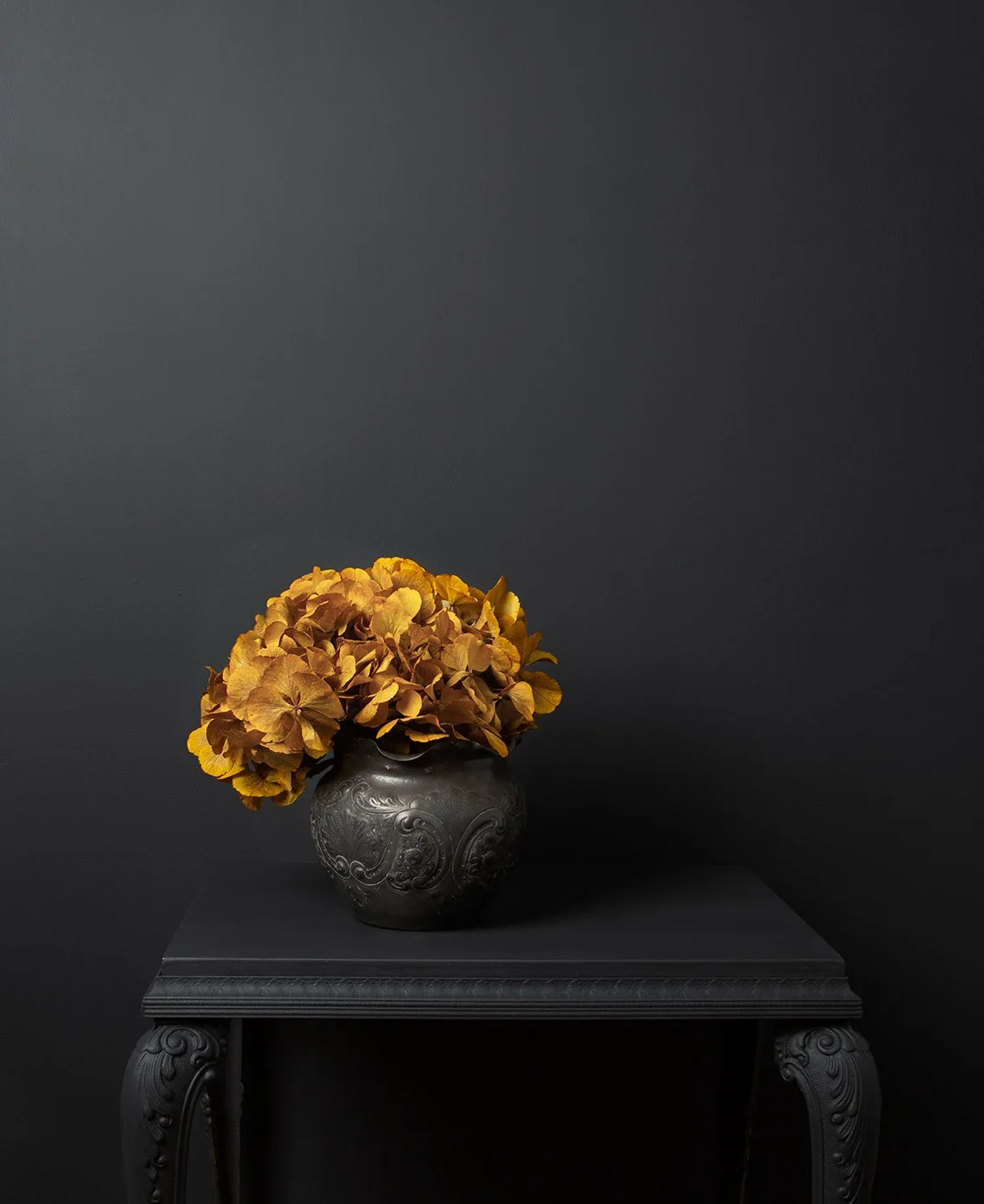
A single preserved hydrangea head provides the brightest color in this dark display. The patterned pot remains close to the wall and table tones, letting the flower’s clustered shape stand out. There is no need for a full bouquet to make the small table feel deliberately arranged.
Compare the color under the lighting where you plan to display it, especially if the stem is preserved or colored. Choose a vessel whose opening supports the stem without crushing the flower head. Leave enough empty tabletop around the pot to move it safely without brushing the delicate outer petals.
PART 02
Compare Small and Sculptural Displays
IDEA 05 / 15
Place a Few Pale Flower Heads in a Tall-Necked Vase
 SaveSupport Non AI Creator
Image credit: Sandra van Aalst / Interior Style Host
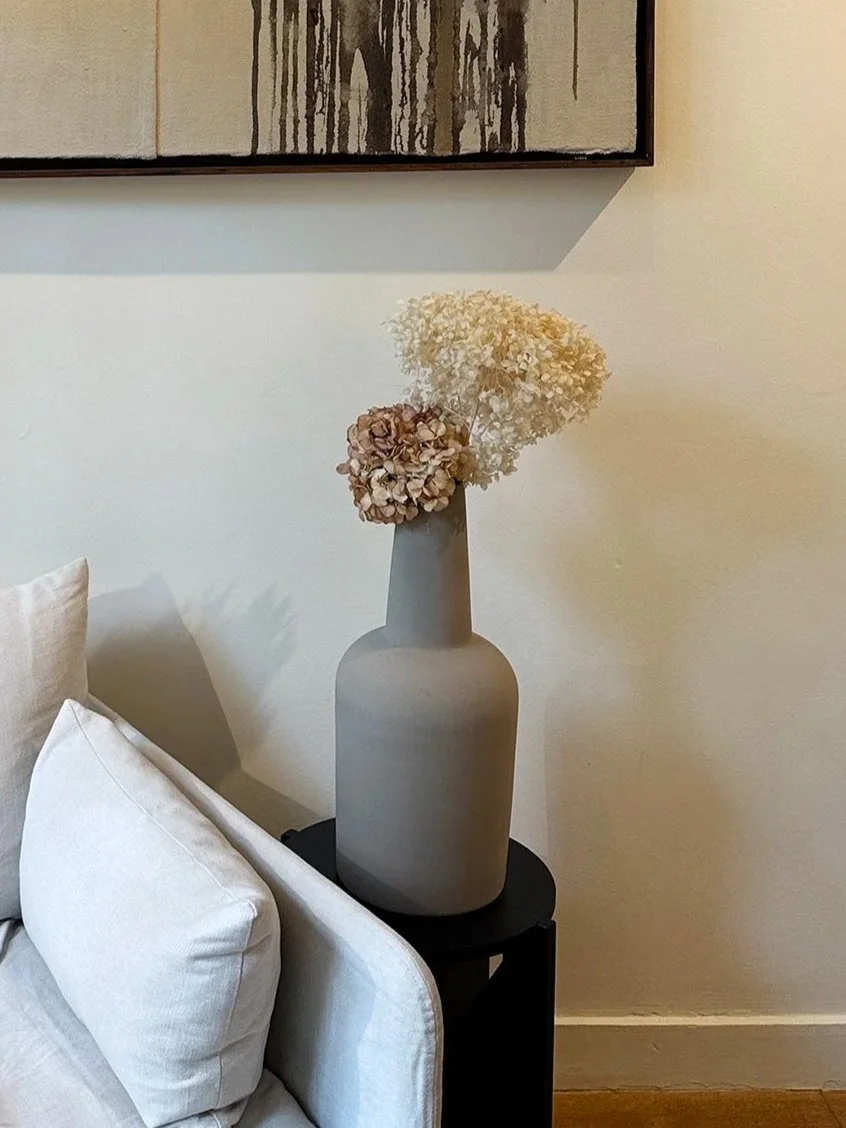
Two pale flower heads rise from a tall gray vase, forming a small asymmetric group beside the sofa. The narrow neck gathers the stems while the wider body gives the arrangement a substantial base. A black side table separates the pale flowers and vase from the pale upholstery.
Use a few stems first and check the silhouette from the usual seat. A tall vase beside a sofa should not sit where an arm or cushion repeatedly catches it. Keep the table usable, and move the arrangement by holding the vase rather than pulling the stems to reposition it.
IDEA 06 / 15
Give Branching Stems a Quiet, Textured Background
 SaveSupport Non AI Creator
Image credit: Sandra van Aalst / Interior Style Host
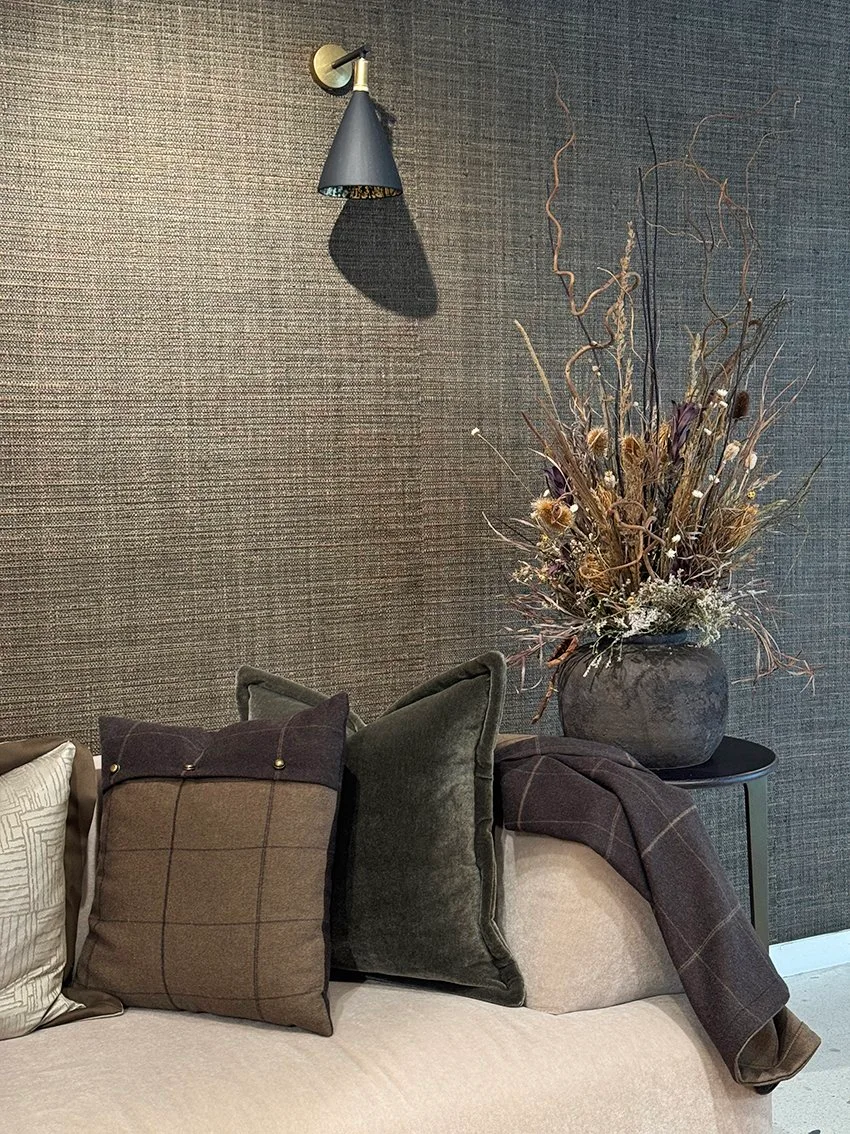
The branching stems rise above the round pot against a dark textured wall. Small flower heads and grasses create finer detail between the taller bare lines. Cushions repeat the subdued brown and green palette below, while the wall sconce remains a separate, simple shape to the left.
Place a tall arrangement where its full outline has room to open rather than pressing it into a corner. Check that no stems touch the light fitting or cross a frequently used walkway. If the display becomes difficult to move or dust around, reduce its width before adding more material.
IDEA 07 / 15
Repeat a Strong Flower Color in Smaller Vases
 SaveSupport Non AI Creator
Image credit: Sandra van Aalst / Interior Style Host
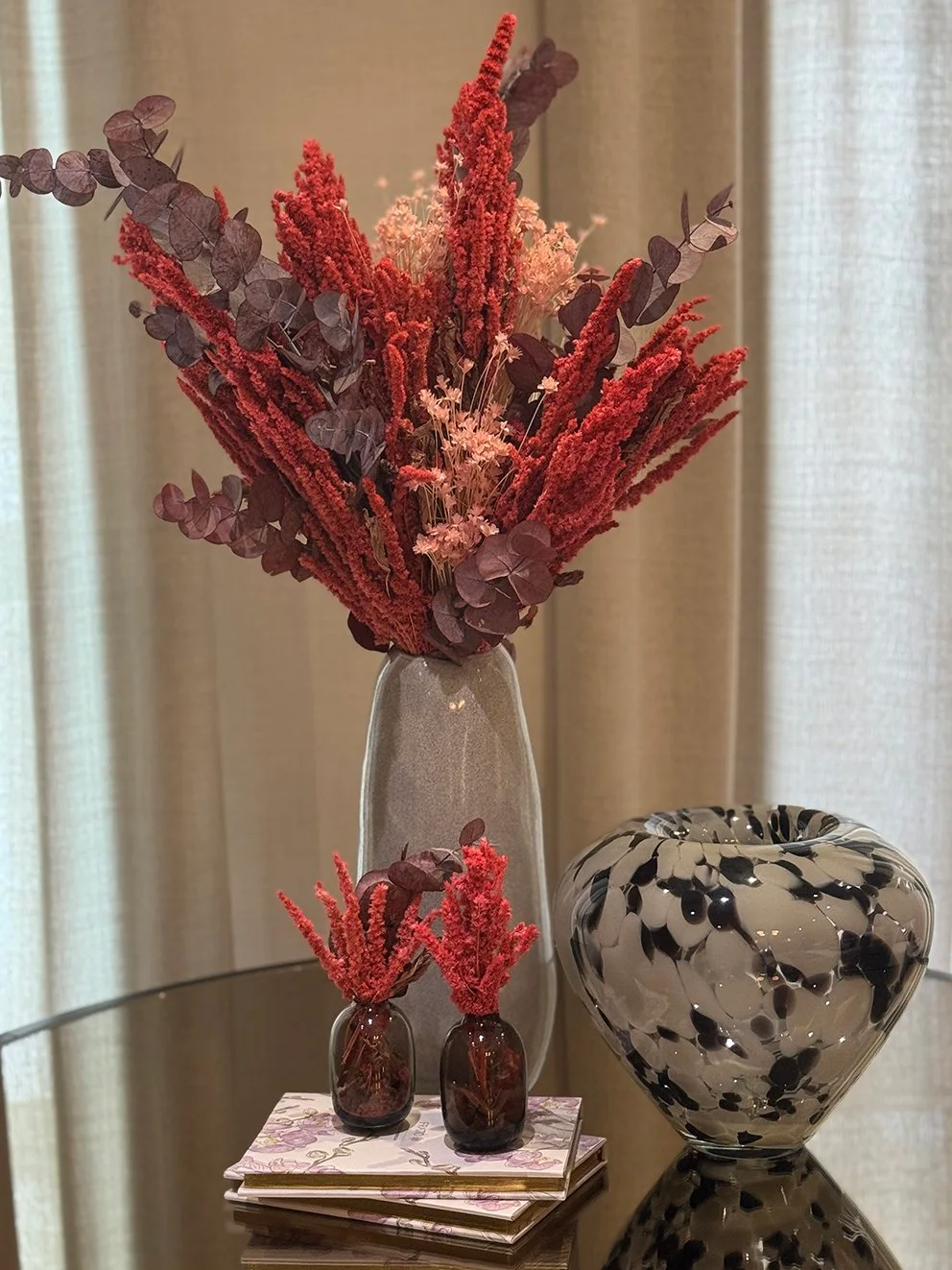
The taller vase carries red-toned flower spikes and muted purple foliage, while two small bud vases repeat the red lower down. A rounded patterned vessel introduces a contrasting shape alongside them. The arrangement uses height and repetition to connect separate objects without filling every vessel in the same way.
Choose the main arrangement first, then use a few short offcuts for the smaller vases. Compare their spacing so the group remains easy to lift and clean around. This is a color-treated or preserved display reference; do not expect freshly gathered stems to reproduce its strong tones without an appropriate treatment.
IDEA 08 / 15
Combine Large Flower Heads with Finer Grasses
 SaveSupport Non AI Creator
Image credit: Ruma
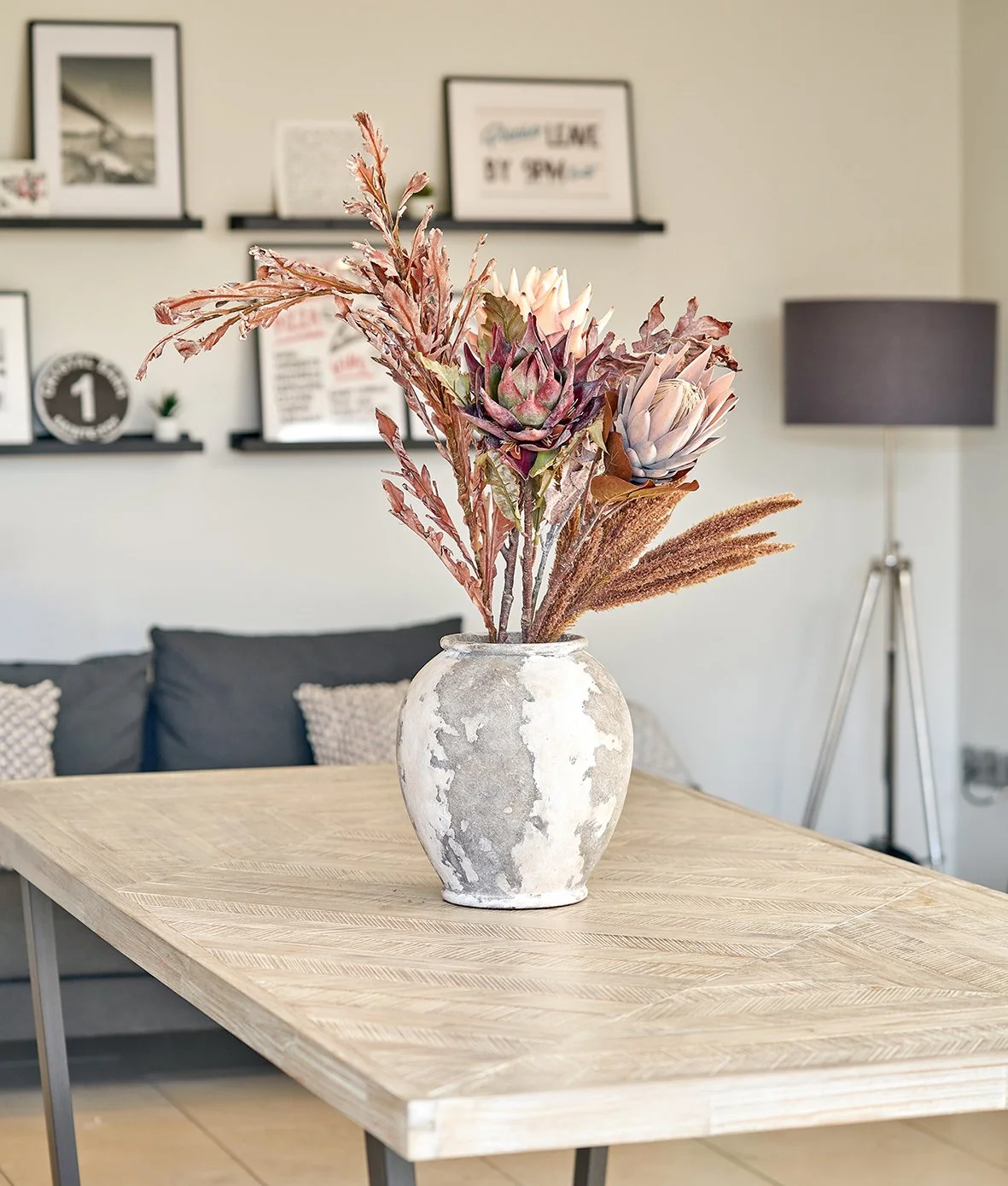
Large dried flower heads create the main points of interest above this pale vase. Finer grasses and branching stems extend the outline between them, while the vase’s worn-looking surface adds another texture below. The light tabletop and restrained room keep the arrangement from competing with several other patterns.
Start with the larger flower heads and turn the vase to check how they sit from the main viewing directions. Add finer stems gradually so they do not conceal the flowers you want to show. Keep the finished bunch away from the table edge, where its projecting stems could catch clothing or a passing arm.
PART 03
Use Color in a Few Deliberate Places
IDEA 09 / 15
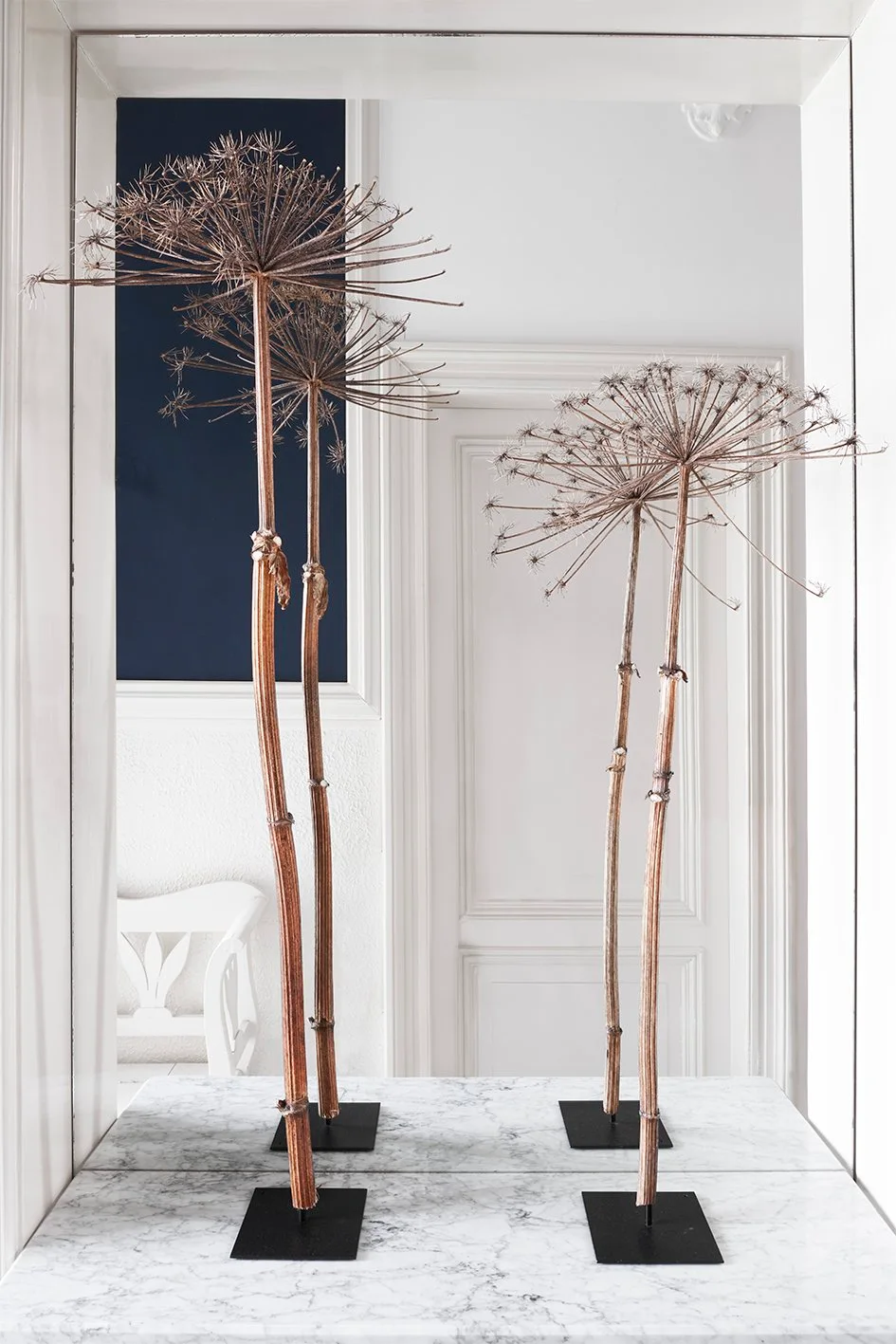
Display Sculptural Seed Heads on Individual Stands
 SaveSupport Non AI Creator
Image credit: Sandra van Aalst / Interior Style Host
Individual black bases give these dried seed heads the presence of small sculptures. Their tall stems and open radial shapes remain distinct because there is space between them. The mirror repeats the forms behind the display, adding apparent depth without requiring an equally large collection of stems.
Use stable purpose-made supports rather than balancing delicate stems loosely on a narrow ledge. Check the display from the side as well as the front to avoid confusing overlaps in the reflection. Keep tall or pointed seed heads where children, pets and passing sleeves cannot easily knock them over.
IDEA 10 / 15
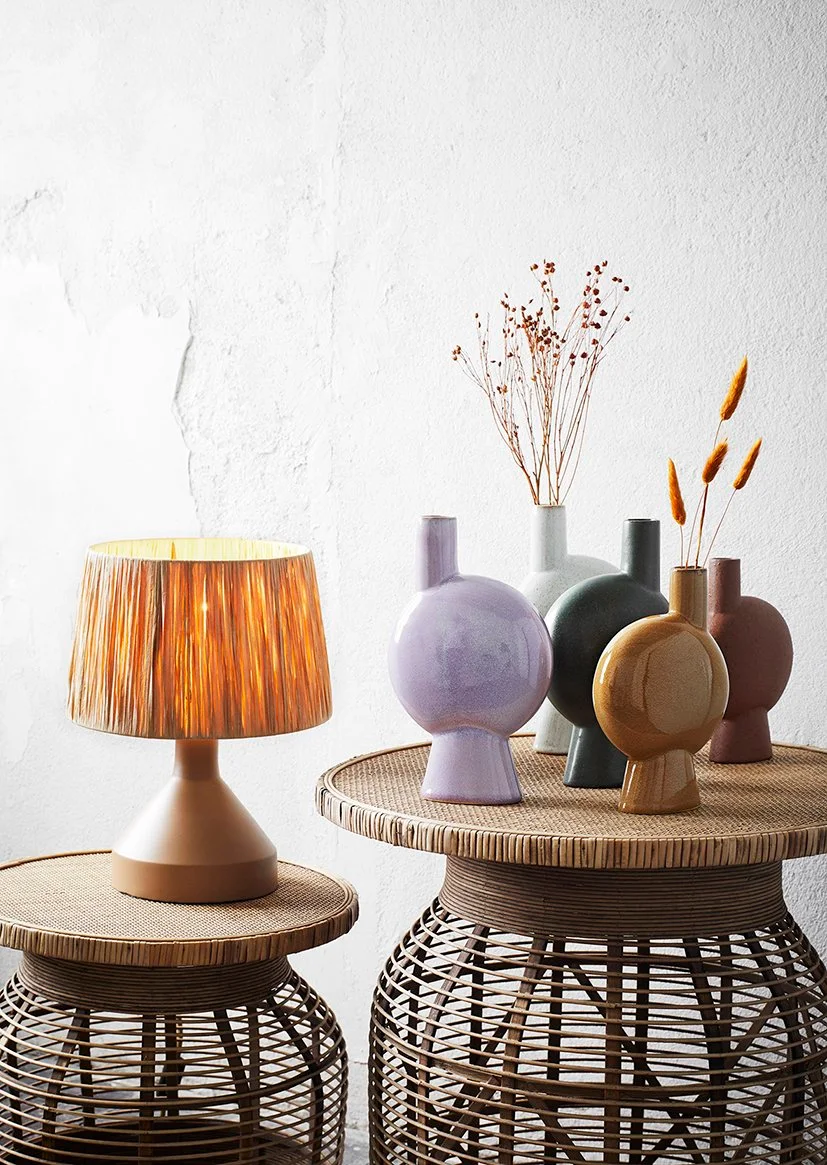
Leave Some Vases Empty in a Small Group
 SaveSupport Non AI Creator
Image credit: Heavenly Homes and Gardens
Only two of the five vases hold stems, allowing their rounded bodies and different colors to remain part of the display. The finer dry stems provide height without hiding the group. Woven side tables and a small lamp introduce texture around the smooth vessel shapes.
Try arranging the empty vases before adding any flowers. Move them until their outlines are clear from your normal viewing position, then add a small number of stems where the group needs height. A lightly filled display is easier to lift, clean around and rearrange than several tightly packed bunches.
IDEA 11 / 15
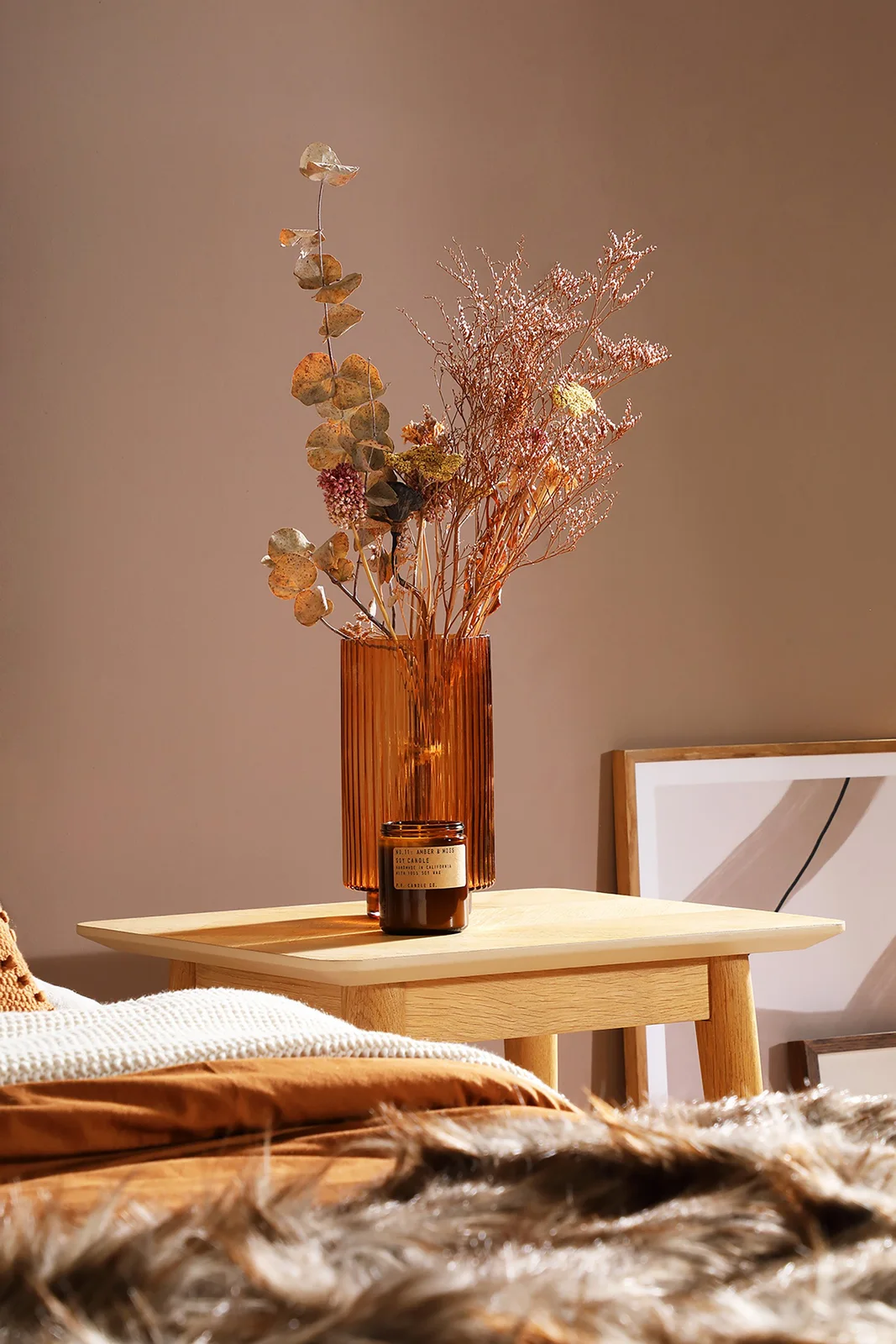
Match an Amber Vase with a Warm, Fine-Stemmed Bunch
 SaveSupport Non AI Creator
Image credit: Furniture and Choice
The amber ribbed vase repeats the warm tone of the wall and bedding, while the fine branching flowers keep the top of the arrangement airy. Round leaves create a few broader shapes between the thin stems. A small dark jar occupies the remaining front part of the bedside table.
Compare bedroom nightstand ideas before giving a tall vase the space needed for a reading lamp, glasses or water. Keep projecting stems out of the route your hand takes to the bedside surface. A smaller bunch or a different location may be more practical if you regularly reach across the table in the dark.
IDEA 12 / 15
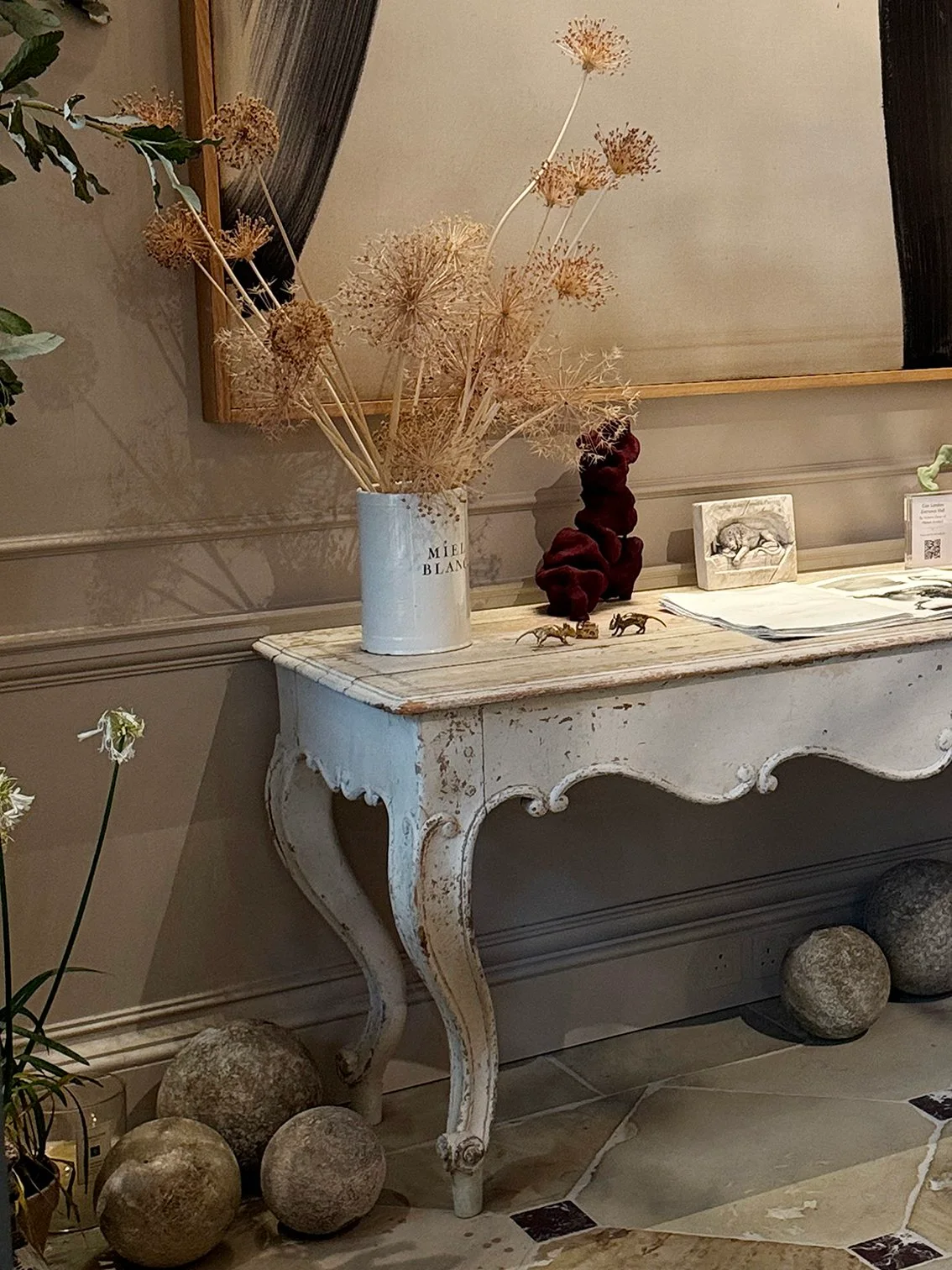
Use Open Seed Heads Against a Large Framed Piece
 SaveSupport Non AI Creator
Image credit: Sandra van Aalst / Interior Style Host
Open seed heads spread above a simple cylindrical tin, giving the display height without a dense mass of petals. The pale vessel connects with the distressed console below. Their fine outlines remain visible against the lighter area of the large framed piece behind them.
Compare console table decor ideas with the height of your artwork before choosing tall stems. Check that the arrangement does not obscure the part of the picture you want to see. Keep the vessel far enough back to remain stable, while leaving space to clean the tabletop without catching the outer seed heads.
PART 04
Finish the Arrangement for Its Location
IDEA 13 / 15
Place a Tiny Flower Bunch on a Shallow Tray
 SaveSupport Non AI Creator
Image credit: Sandra van Aalst / Interior Style Host
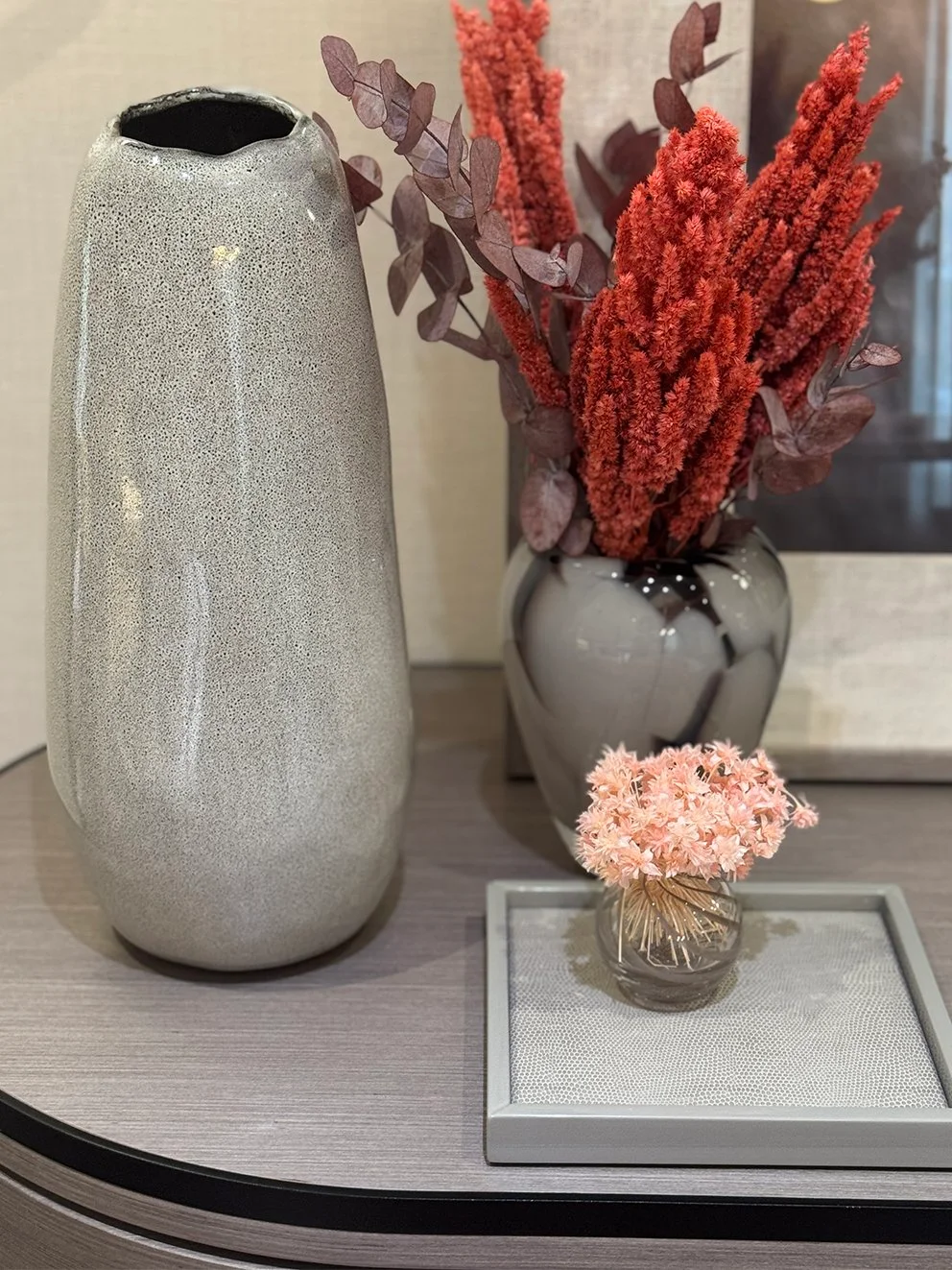
The tiny pink flower bunch gives this group a low focal point in front of the taller vases. A shallow tray separates the small glass vessel from the surrounding tabletop. Red-toned stems and muted foliage provide a stronger accent behind, while the empty tall vase preserves a clear vertical outline.
Choose a tray that leaves room to lift the little vase without pinching the flowers. A small bunch can be easier to place than a large bouquet, but its vessel still needs a stable base. Keep this kind of delicate display away from keys, bags or other items routinely dropped onto the same surface.
IDEA 14 / 15
Coordinate Three Vessels Without Identical Fillings
 SaveSupport Non AI Creator
Image credit: Bohemia Design Ltd
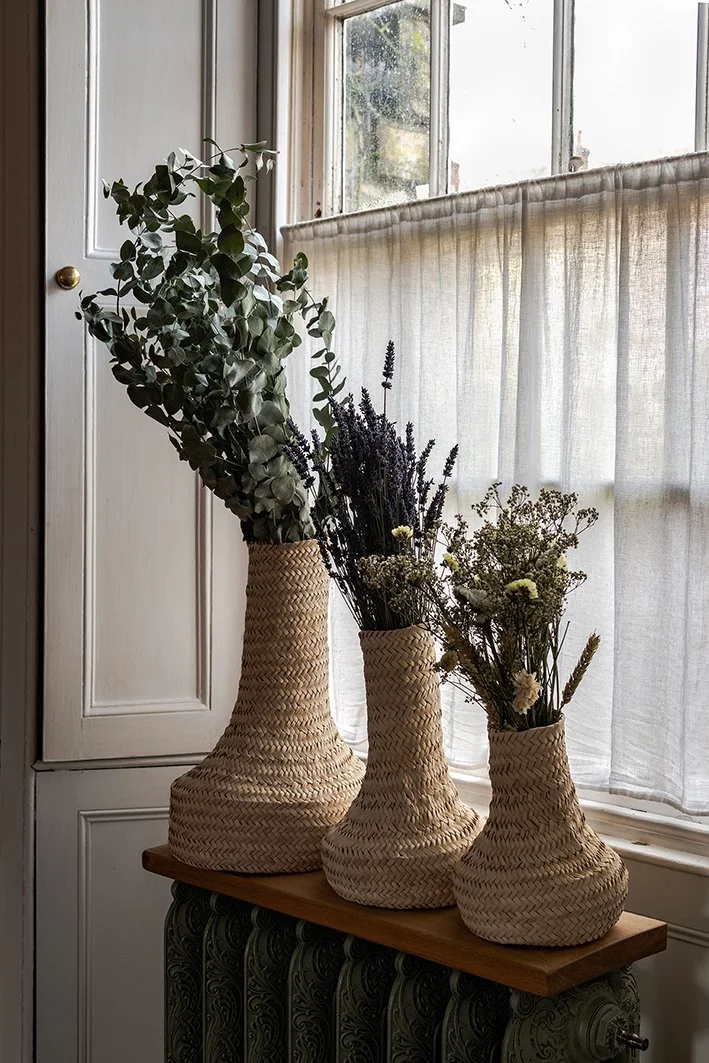
The three woven vessels share a similar shape and surface texture, but their different heights and fillings keep them distinct. Leafy stems occupy the tallest vase, purple flower spikes stand in the middle and a lighter mixed bunch fills the smallest. The group reads as one display without three identical bouquets.
Place a similar group on a stable surface away from strong direct sunlight, which can fade dried flowers. Check the stems against curtains and window hardware so they do not catch during opening or cleaning. Keep the woven vessels dry and follow the supplier’s guidance before using any liner or cleaning treatment.
IDEA 15 / 15
Keep a Small Floral Wreath Partly Open
 SaveSupport Non AI Creator
Image credit: Sophie Warren-Smith
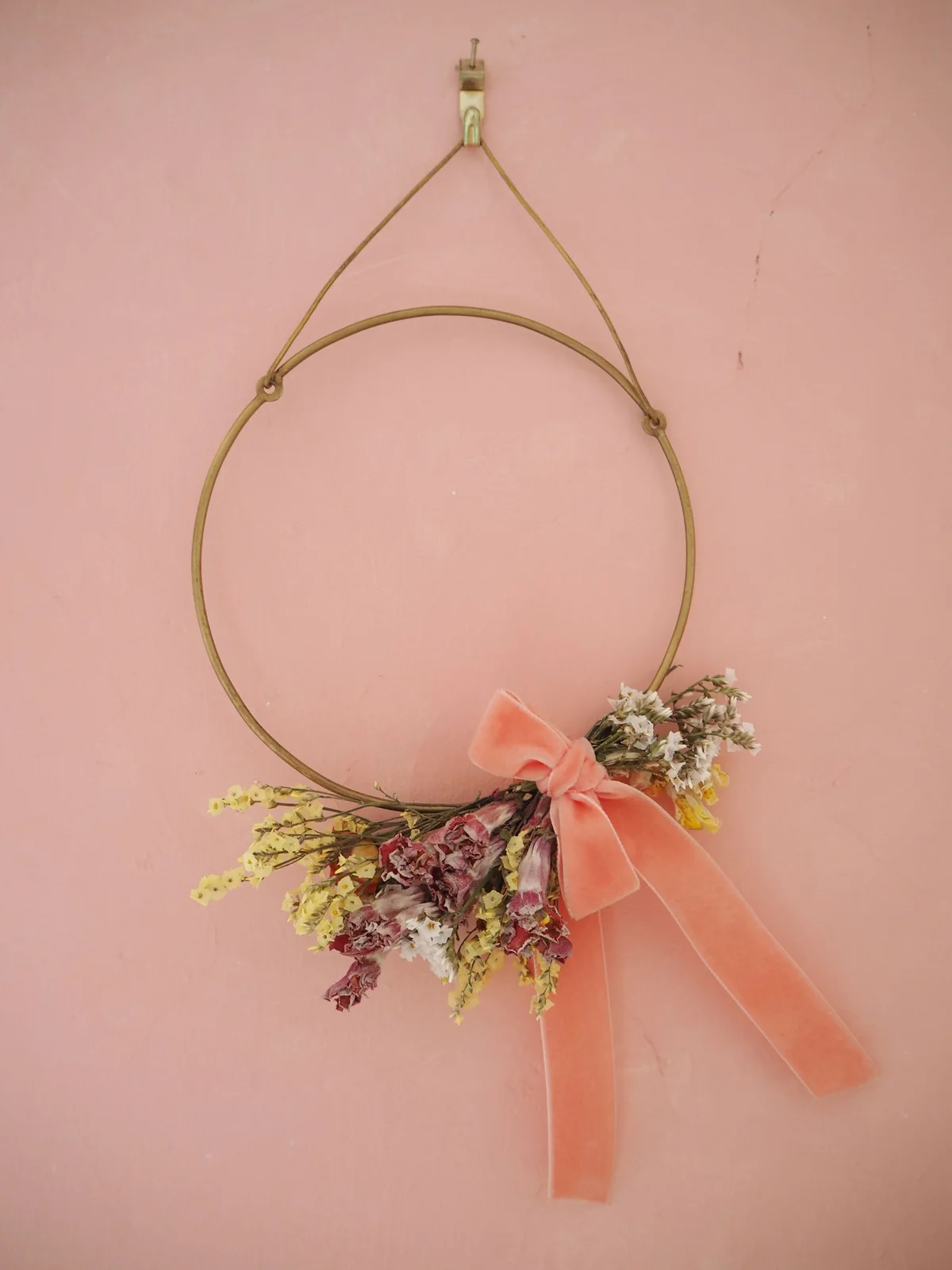
The thin hoop remains mostly open, with the flowers gathered along one lower section. A pink ribbon connects the small cluster to the wall color without covering the circle. Pale yellow, white and muted pink flowers add detail while preserving the simple outline of the wreath.
Choose a secure hanger suited to the wall and the finished wreath’s weight. Keep the flower cluster small enough that its attachment does not twist the hoop out of shape. Check for exposed wire ends before hanging, and place the wreath where a door, curtain or passing shoulder will not repeatedly brush the dried petals.
BRING IT ALL TOGETHER
Give Each Display Room to Be Seen
Choose a vase you can reach and a place that does not interfere with ordinary use. A low bouquet might suit a coffee table, while taller branching stems need more room around them. Move fragile arrangements by the vessel, and avoid repeatedly pushing them aside to use the surface.
Dried flowers can fade in strong light and should be kept away from damp conditions, open flames and heat sources. Follow the supplier’s care guidance for preserved or colored stems. If you want to dry your own flowers, use a method suited to the particular plant instead of assuming every stem needs the same treatment.