A coffee table sits close enough to touch, so its arrangement needs to work beyond a photograph. A place for a drink, a clear view across the room and objects you enjoy handling matter more than a prescribed number of accessories.
These rooms show different ways to balance display with daily use. Start with the shape and reach of your table, then borrow a grouping that suits your habits rather than copying every item.
PART 01
Start with a Small Group
IDEA 01 / 20
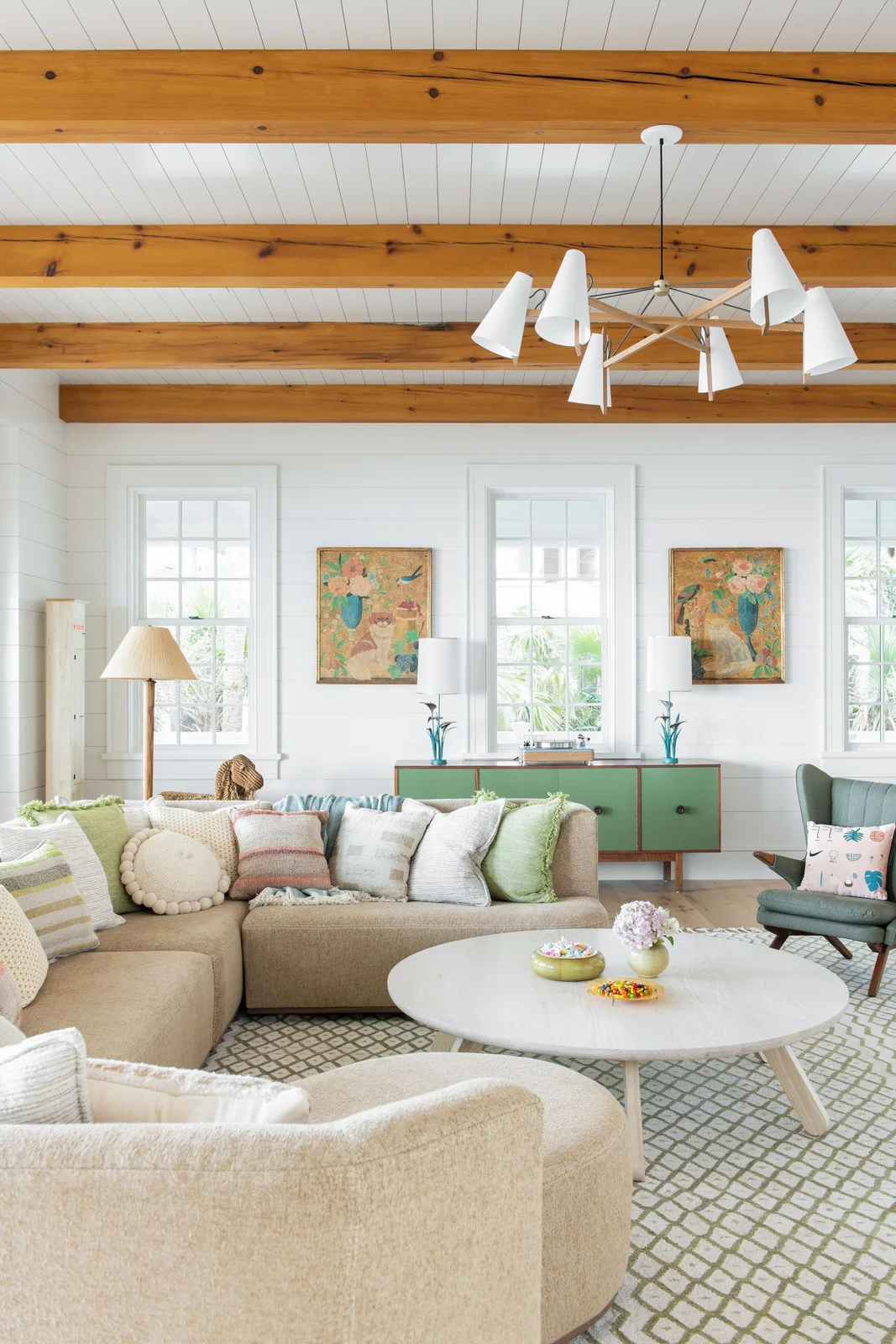
Leave Breathing Room on a Round Table
 SaveSupport Non AI Creator
Image credit: Cortney Bishop
A small flower arrangement and two low dishes sit near the center of this pale round table. Most of the surface stays clear, letting the curved edge and the green accents around the seating remain part of the room rather than hiding them under accessories.
Try a compact grouping when a sectional wraps around the table. Everyone still needs somewhere to put a cup without stretching across a vase. Use a washable dish for loose items, and move food or sweets away when pets or young children can reach them. If you prefer a dried arrangement to the fresh flowers pictured, these dried flower decor ideas compare lower bunches and small vessels that can leave the table useful.
IDEA 02 / 20
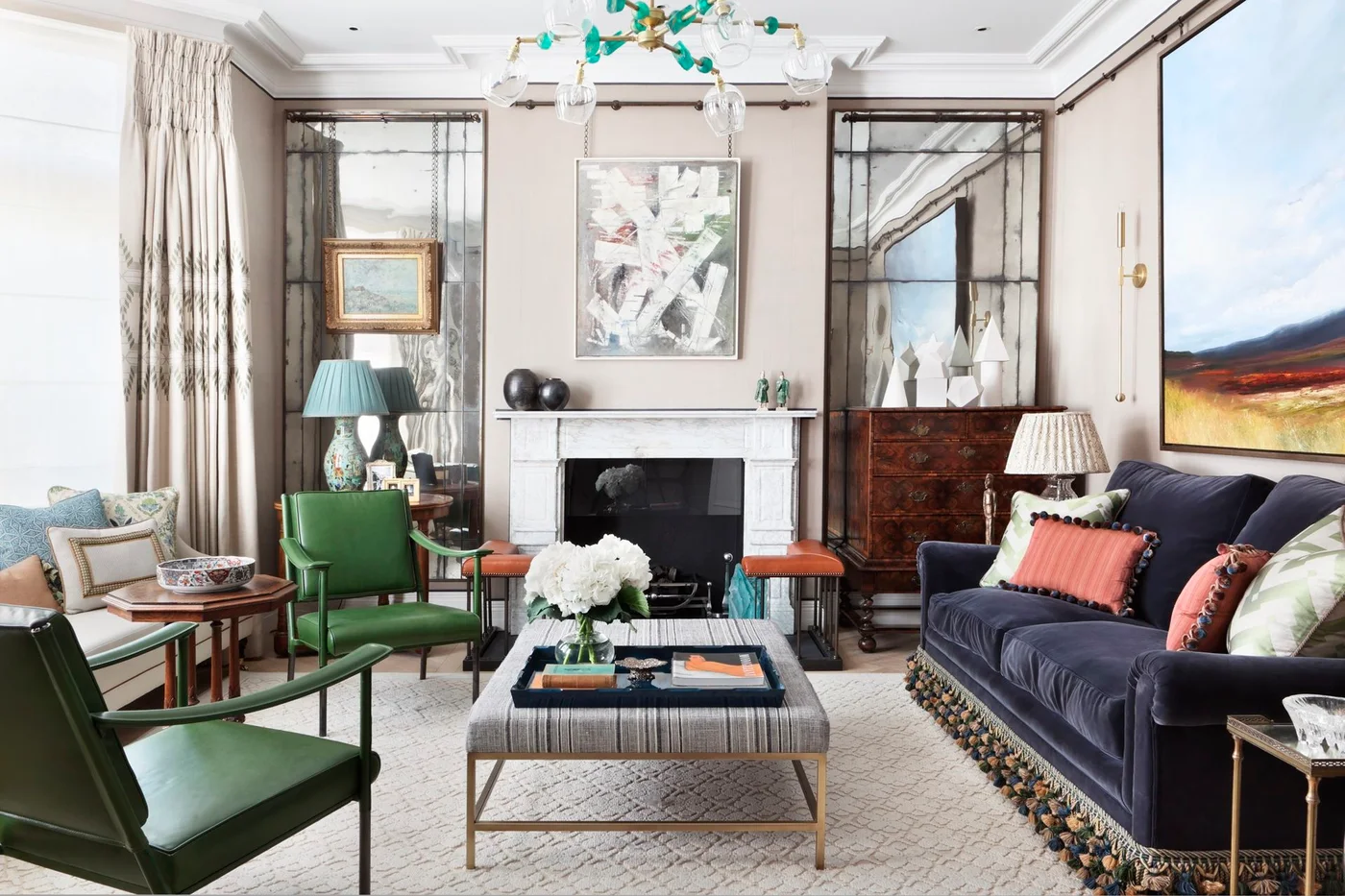
Put a Tray on an Upholstered Table
 SaveSupport Non AI Creator
Image credit: K&H Design
A dark rectangular tray gives books and a glass flower vase a defined place on this striped upholstered table. Its flat outline contrasts with the soft covering, while the flowers repeat the pale fireplace and keep the busy room from feeling heavy at its center.
Check that a tray sits steadily before using an ottoman as a drinks surface. A raised rim helps contain small objects but will not prevent a tall vase tipping. Leave enough uncovered upholstery for feet if the piece is also meant to serve as a footrest.
IDEA 03 / 20
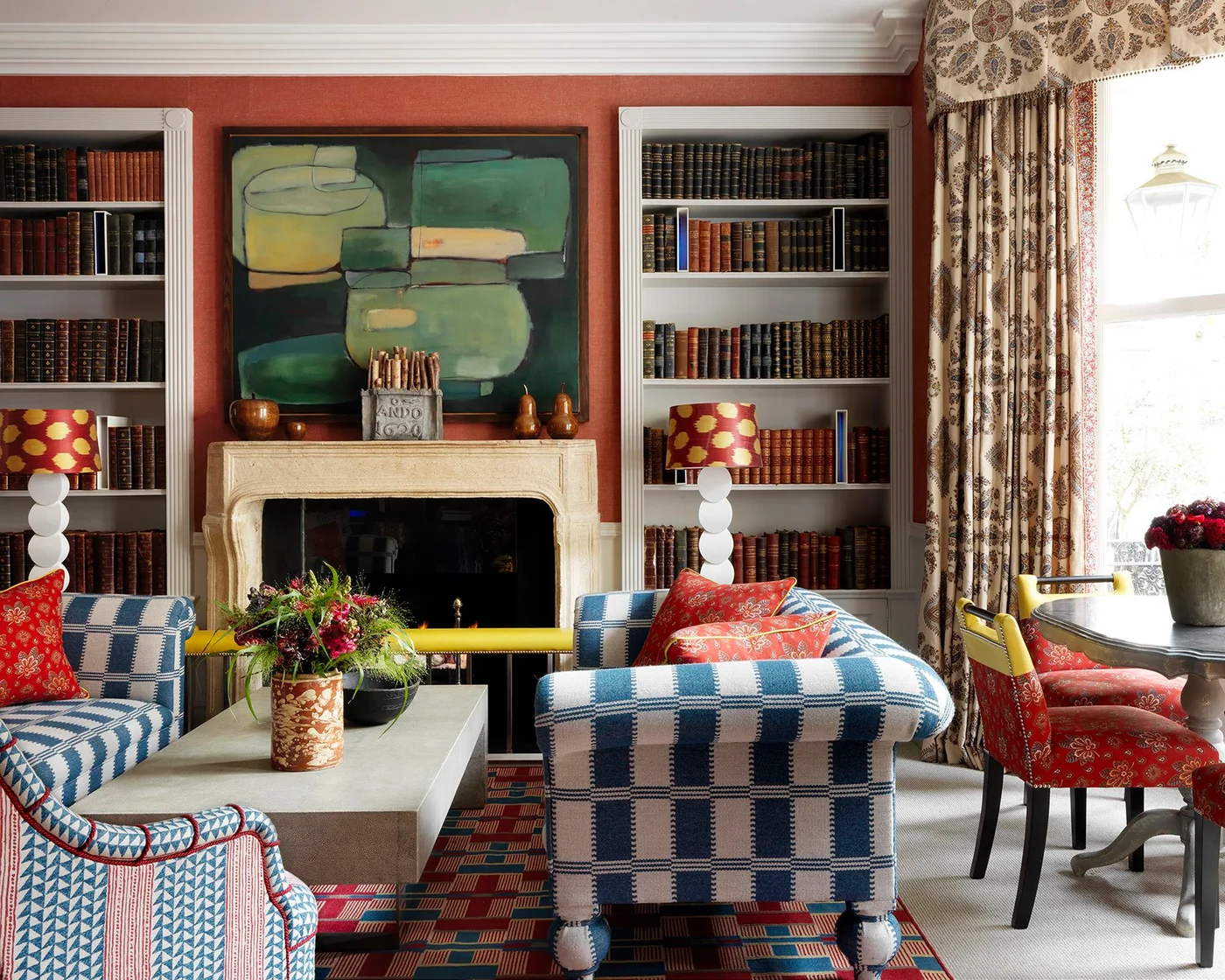
Let a Colorful Room Have a Quiet Center
 SaveSupport Non AI Creator
Image credit: Kit Kemp/Firmdale Hotels
The checked chairs, patterned rug and warm walls already supply plenty of detail. A pale rectangular table provides a pause, carrying a patterned vase and a dark bowl without another layer of bright textiles. The arrangement feels connected to the room without matching every color.
If your seating has strong patterns, start with fewer tabletop objects and assess them from the doorway. One decorative vessel can be enough. Keep arrangements low where people face each other, and lift water-filled containers to refill them rather than pouring over an unprotected surface.
IDEA 04 / 20
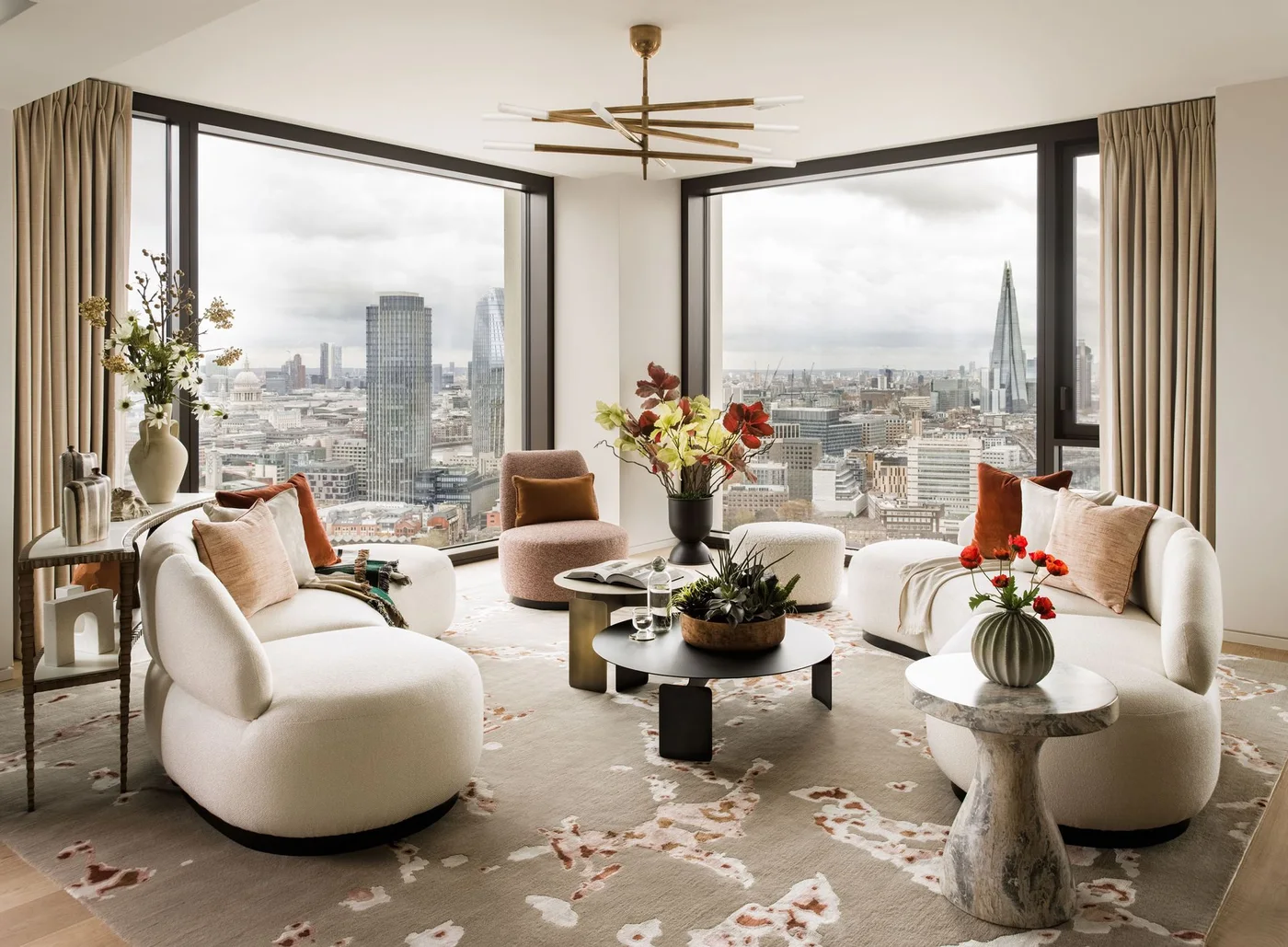
Give Separate Tables Separate Jobs
 SaveSupport Non AI Creator
Image credit: Elicyon/Patrick Williamson
Two low tables divide the central space between curved pale sofas. A planted bowl anchors the darker foreground table, while an open book rests on the table behind it. Their different shapes make the grouping feel loose without leaving accessories scattered across one oversized surface.
Use one table for the permanent arrangement and reserve the other for drinks, reading or a visitor. Before buying a pair, check that both can be reached from the seating. Put a waterproof barrier beneath a planted bowl; a decorative outer container may still leak.
IDEA 05 / 20
Allow a Sculptural Table to Stand Alone
 SaveSupport Non AI Creator
Image credit: Katie Charlotte Photography/Cortney Bishop
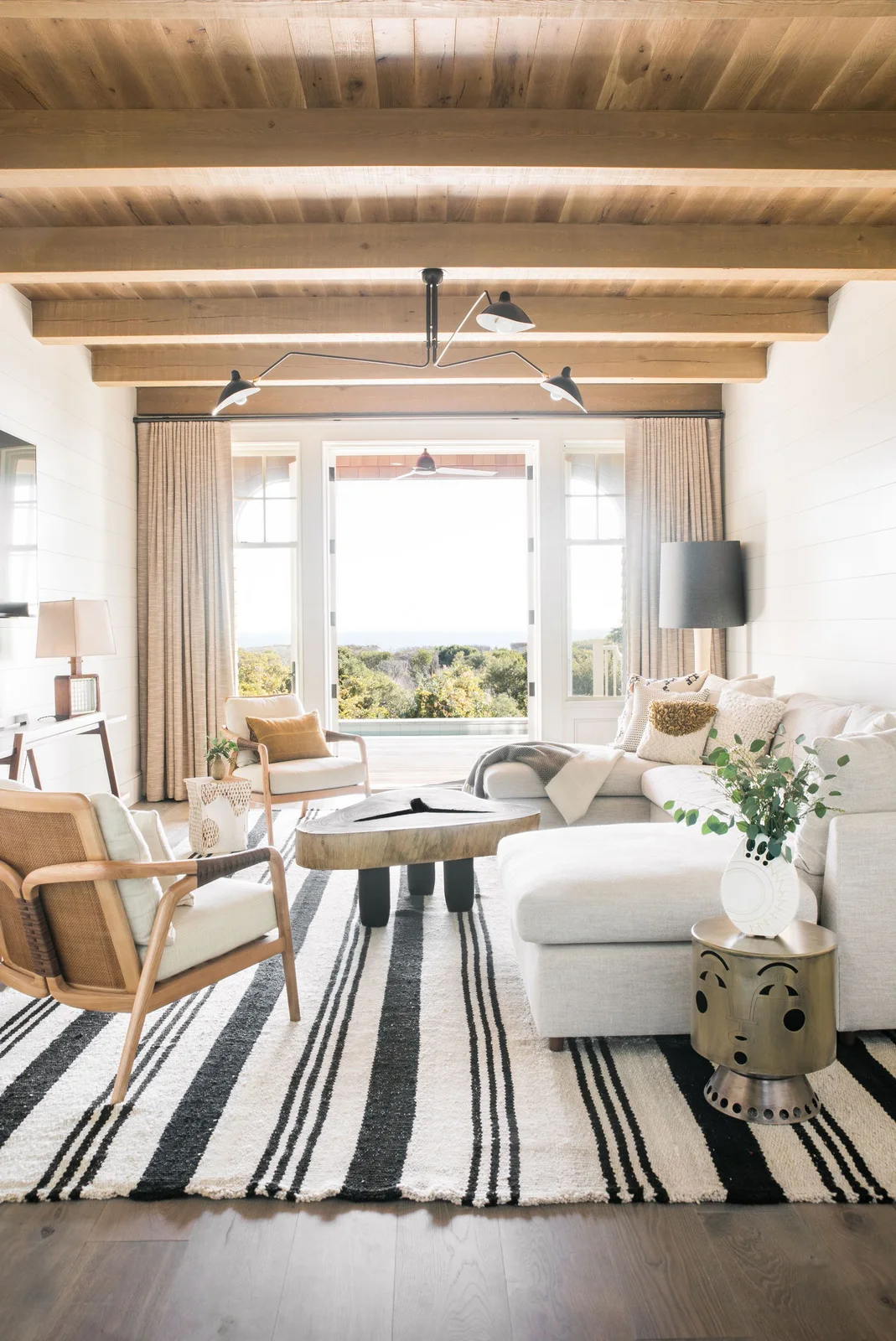
The thick, irregular tabletop is the focal object here, so it has been left uncovered. Its organic outline contrasts with a sharply striped rug and pale seating. Flowers appear on a side table instead, keeping the center open and the unusual form easy to appreciate.
A table with a deep recess or uneven surface may not be equally useful across its whole top. Test your usual mugs on the flat areas before styling it. A small coaster can protect those working spots without covering the grain or turning the table into a display shelf.
PART 02
Use Texture and Shape
IDEA 06 / 20
Keep a Glass Table Visually Light
 SaveSupport Non AI Creator
Image credit: OKA
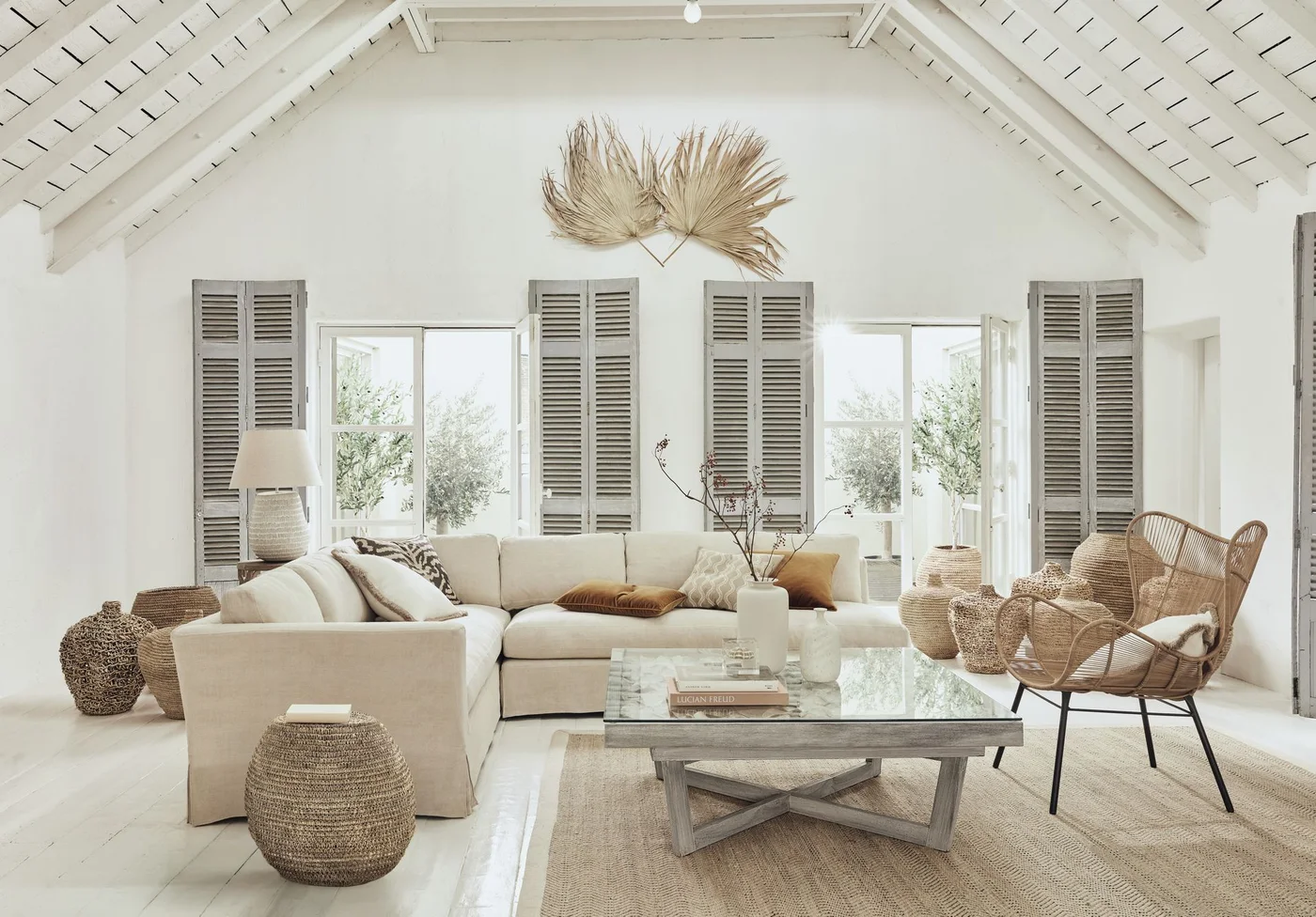
Books and a white vase occupy only part of this glass-topped table, leaving the rug visible beneath. The crossed base adds structure without a solid block in front of the sofa. Woven seating and baskets provide texture around the room, so the tabletop can stay restrained.
Glass shows fingerprints and the undersides of objects, including trays and protective pads. Check the arrangement from a seated position as well as above. Use soft pads under a rough vase base, and keep a suitable cleaning cloth nearby if the table gets frequent everyday use.
IDEA 07 / 20
Repeat the Shape of a Round Tray
 SaveSupport Non AI Creator
Image credit: Kitesgrove
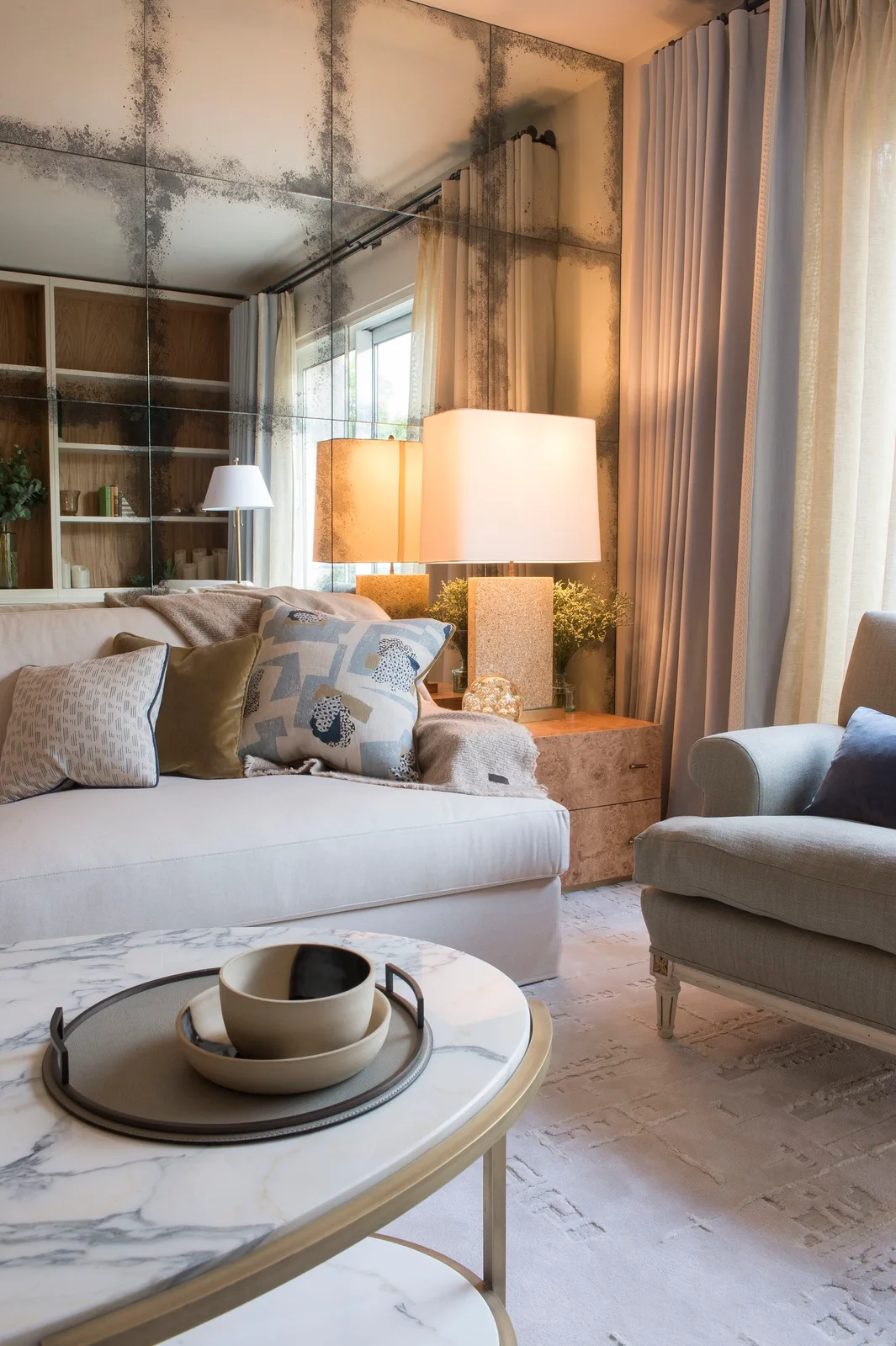
Nested bowls sit inside a round handled tray on this pale veined tabletop. The repeated curves feel settled, while the darker tray gives the bowls enough contrast to stand out. The grouping stays low, allowing the lamp and reflective wall behind the sofa to carry the height.
Nested decorative bowls are easy to lift together when you need the table, but they can scratch each other if their bases are rough. Add discreet separators where necessary. Keep one bowl genuinely available for keys or remotes rather than filling every vessel with another ornament.
IDEA 08 / 20
Make a Dark Table Work Harder
 SaveSupport Non AI Creator
Image credit: Interior Fox
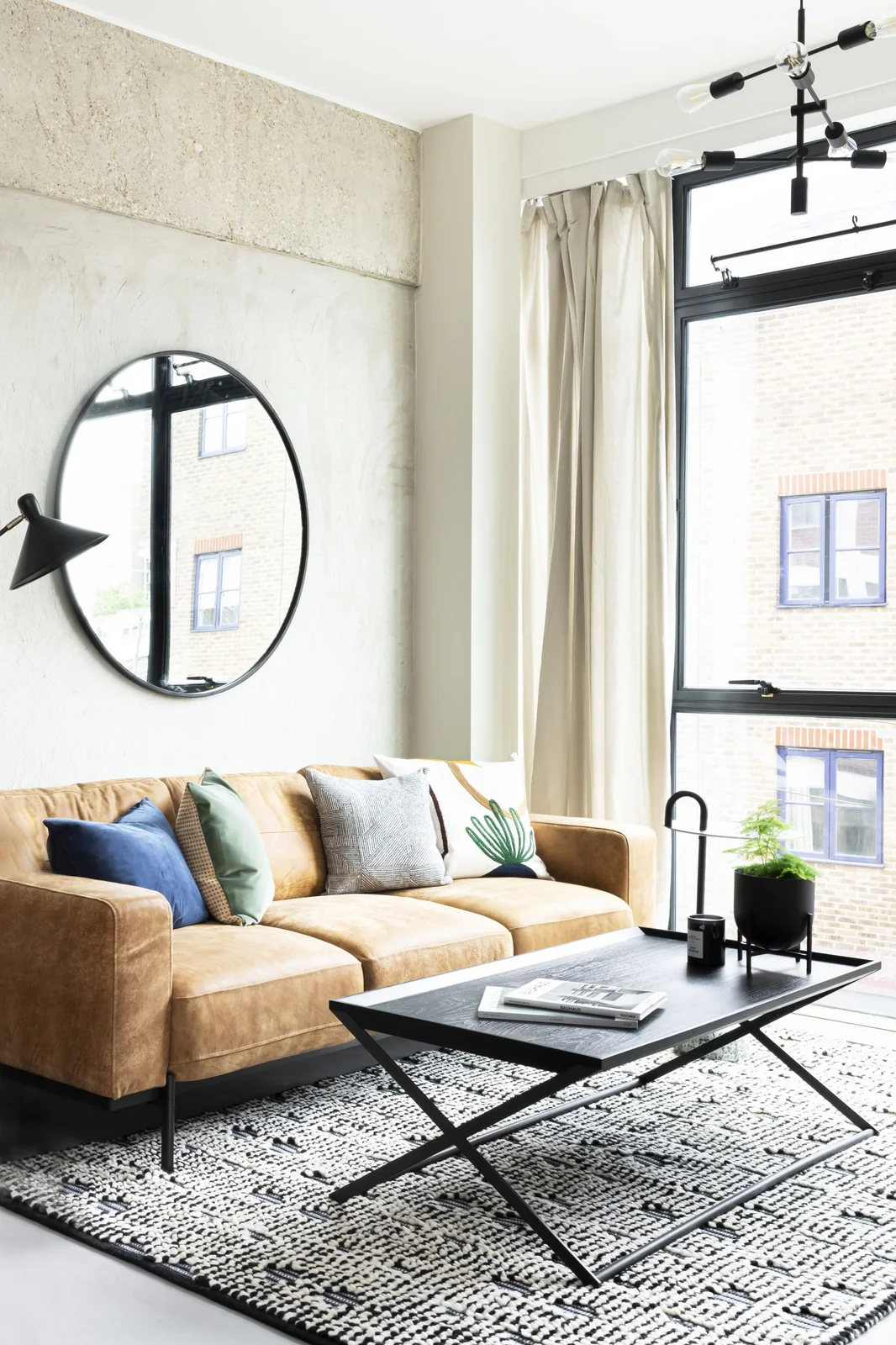
A black table ties together the window frames, wall lamp and patterned rug. Books sit at one end, while a small plant raised on a stand adds height at the other. The exposed middle keeps the narrow room from feeling crowded at floor level.
Use the length of a rectangular top to separate activities. Put reading material near the seat where it will be used and keep the drinks area clear. For a plant beside a bright window, check its actual light needs and empty any drainage water away from the table.
IDEA 09 / 20
Use an Ottoman for a Short Book Stack
 SaveSupport Non AI Creator
Image credit: Mark Bolton/Future PLC
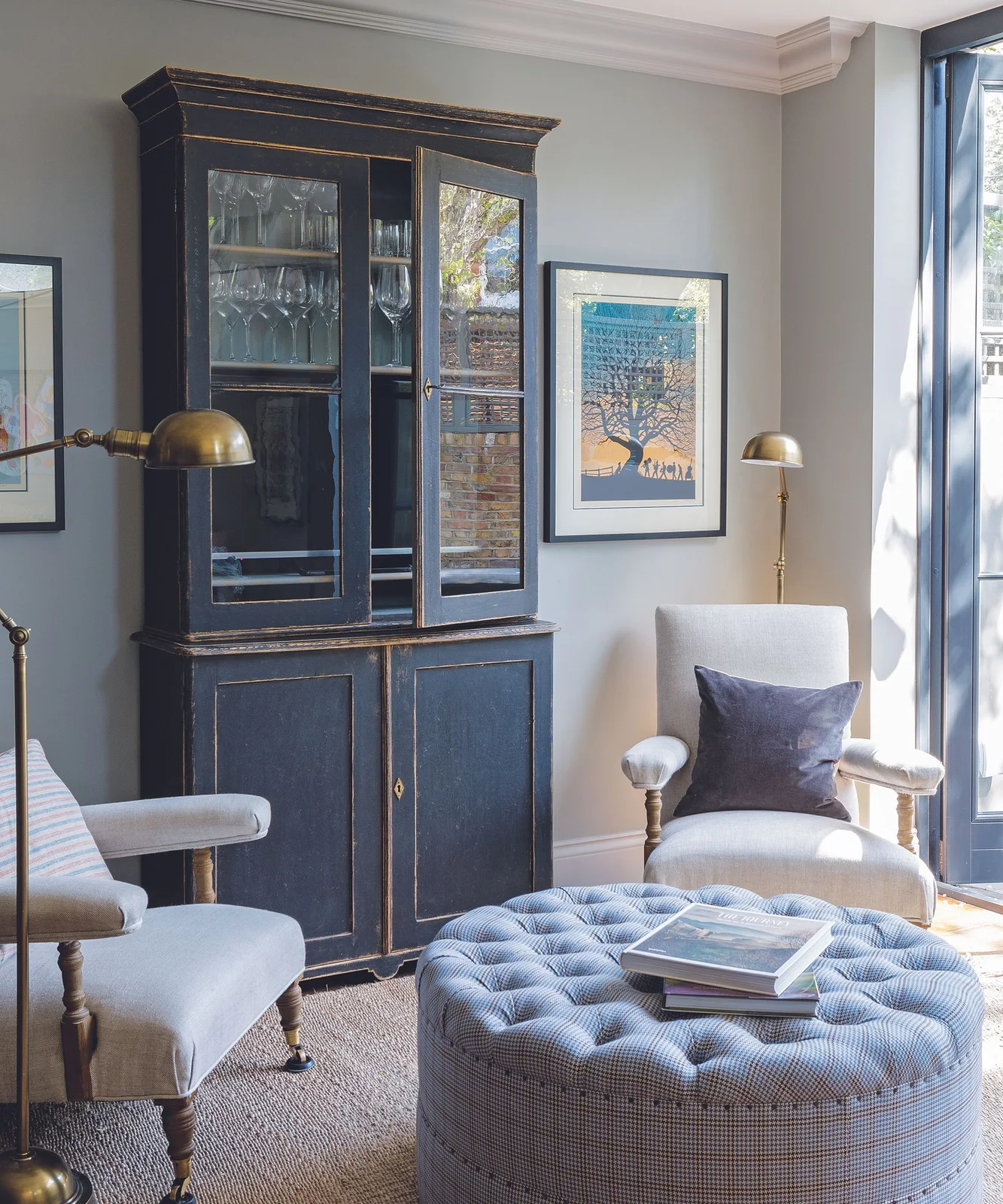
Two books rest on a round tufted ottoman between a pair of pale armchairs. The simple stack lets the small-scale upholstery pattern remain visible. With no tall centerpiece in the middle, the arrangement suits a close conversation area where a large table would dominate.
Books alone do not make a soft ottoman suitable for drinks. Add a stable tray when needed, or use the side surfaces beside the chairs. Keep the stack short enough to lift in one movement so the ottoman can still become an extra seat.
IDEA 10 / 20
Add One Playful Focal Piece
 SaveSupport Non AI Creator
Image credit: Jonathan Adler
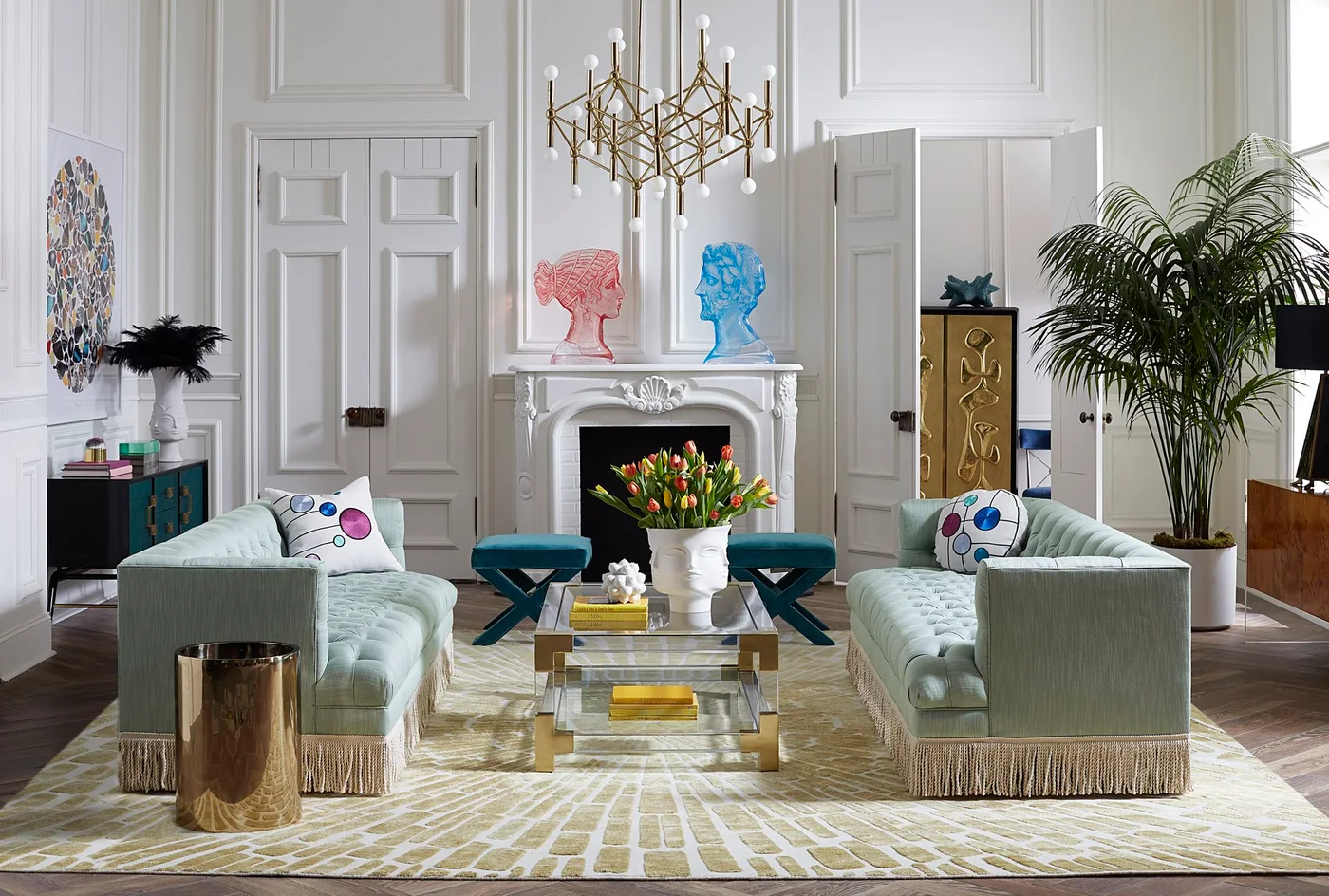
A white face-shaped vase gives this clear coffee table a playful focal point. Tulips bring several warm colors into the pale green seating area, while yellow books repeat the brighter accents. The transparent table keeps the vignette from becoming a dense block between the sofas.
Choose one expressive object rather than competing sculptural pieces. If fresh flowers are part of the arrangement, leave room to lift the vase without moving a pile of books first. Check water levels away from the display and protect book covers from damp stems and drips.
PART 03
Arrange Books and Collections
IDEA 11 / 20
Balance Books with a Woven Bowl
 SaveSupport Non AI Creator
Image credit: Project: Sara Bengur Interiors (via Houzz)
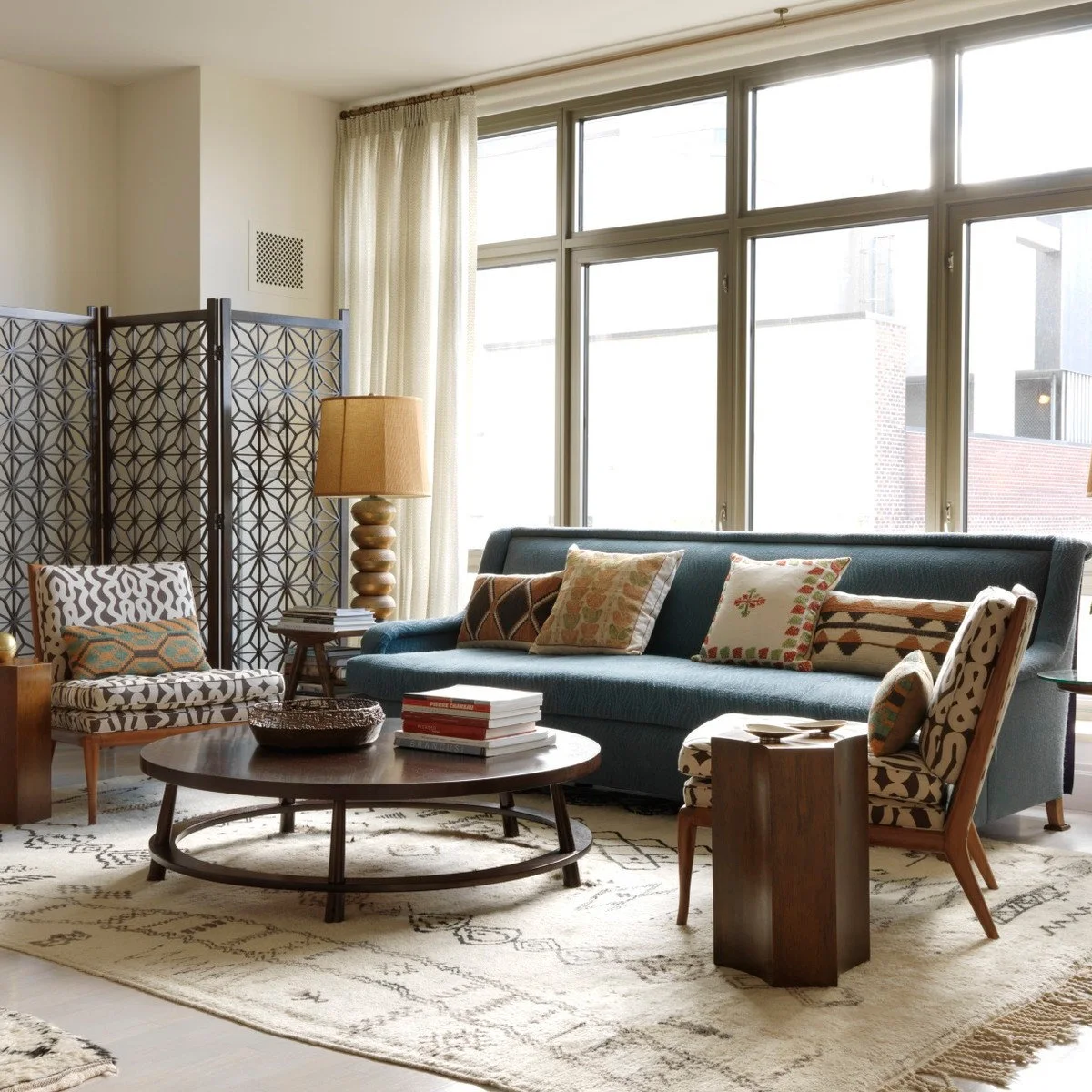
A woven bowl balances a short stack of books on this dark round table. Both stay low beneath the patterned cushions and folding screen behind them. The table’s circular lower frame gives the room another rounded line without needing an arrangement around its whole perimeter.
A shallow basket or bowl can hold reading glasses and small controls, but give it a limited job. Empty it regularly so it does not become a catchall for unrelated items. Position books near the seat where someone can browse them without moving the bowl.
IDEA 12 / 20
Give a Collection a Contained Place
 SaveSupport Non AI Creator
Image credit: Project: Diamond Custom Homes, Inc. (via Houzz)
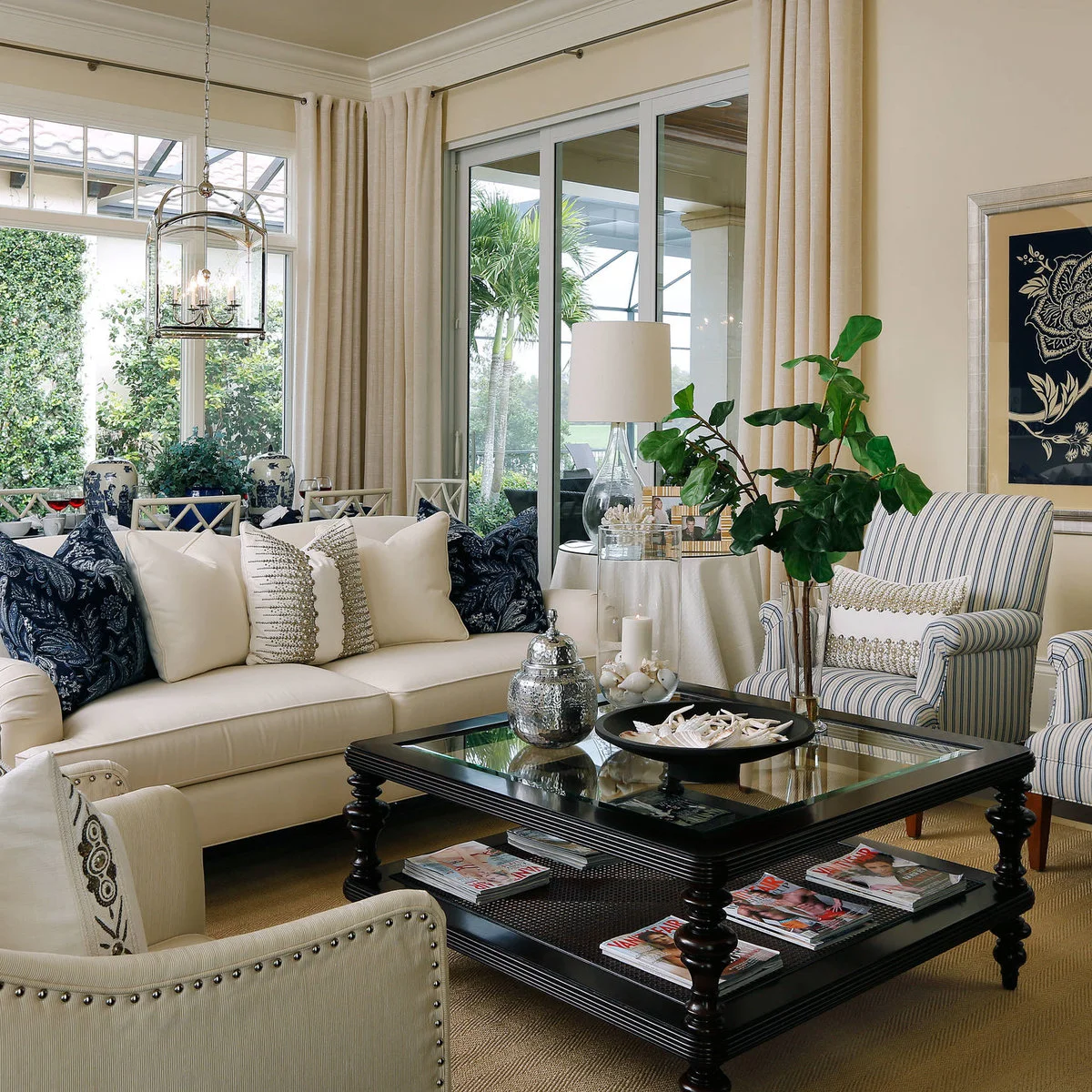
Shells collected in a raised dark dish make a clear focal group on this black glass table. A reflective jar and tall glass candle holder bring different silhouettes, while magazines occupy the shelf below. The items read as separate groups rather than a continuous line of small ornaments.
Keep delicate or rough collectibles inside a dish instead of loose near the edge. The tall holder is a visual idea, not a reason to burn candles close to foliage or passing sleeves. An unlit candle or a flameless alternative preserves the shape with less daily supervision.
IDEA 13 / 20
Pair Two Planters at Different Heights
 SaveSupport Non AI Creator
Image credit: Project: Neila Hutt Interior Design (via Houzz)
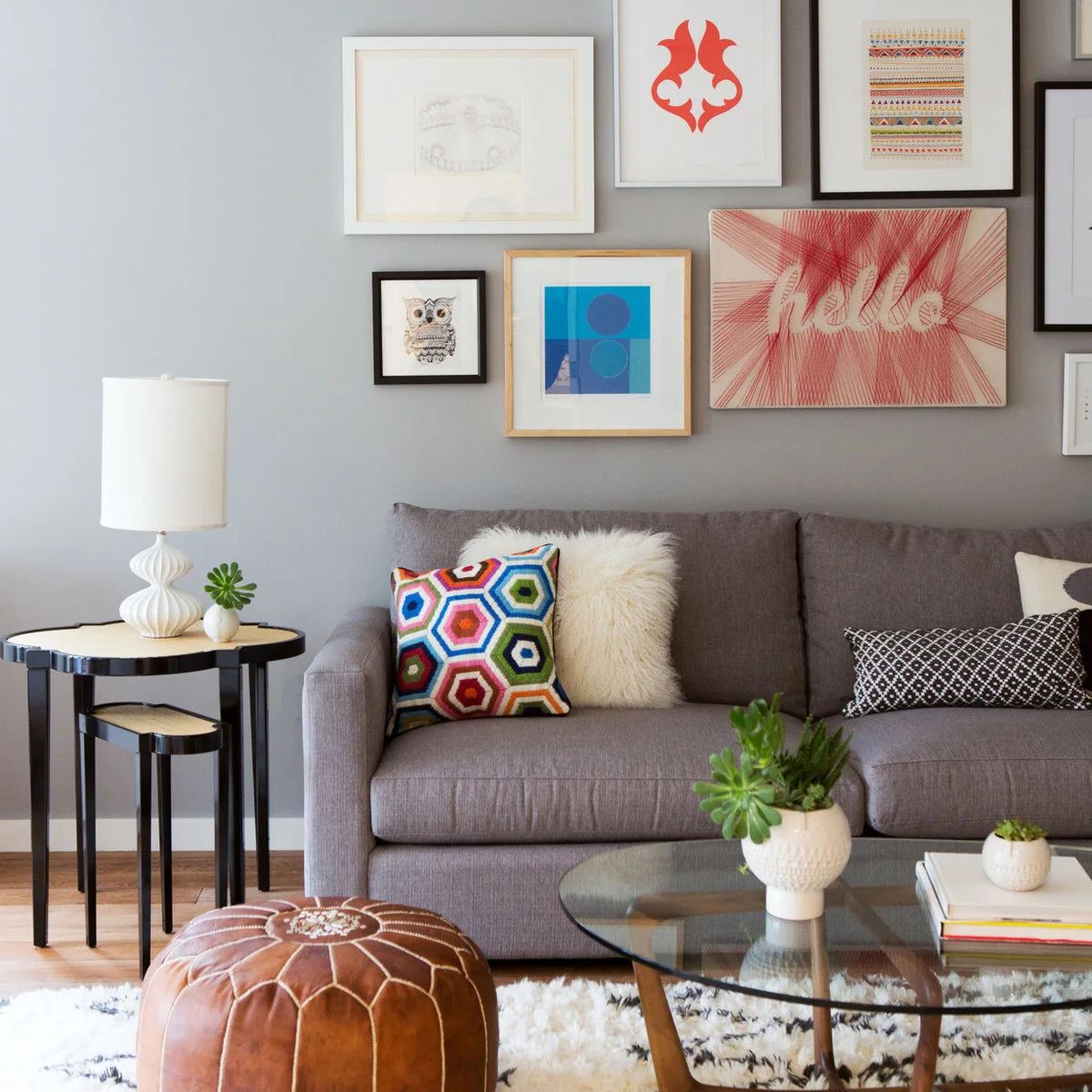
Two white planters echo one another on this oval glass table, but their different sizes stop the arrangement looking rigid. The taller planting stands directly on the glass, while the smaller pot sits on books. A colorful cushion supplies stronger color behind the otherwise simple grouping.
Choose plants for the light the table actually receives, not just their size on the day you buy them. Keep soil and watering away from books. If a planter has a drainage hole, use a properly fitted saucer and remove it to water rather than relying on the book cover.
IDEA 14 / 20
Show Off a Broad Wood Surface
 SaveSupport Non AI Creator
Image credit: Project: Josh Partee | Architectural Photographer (via Houzz)
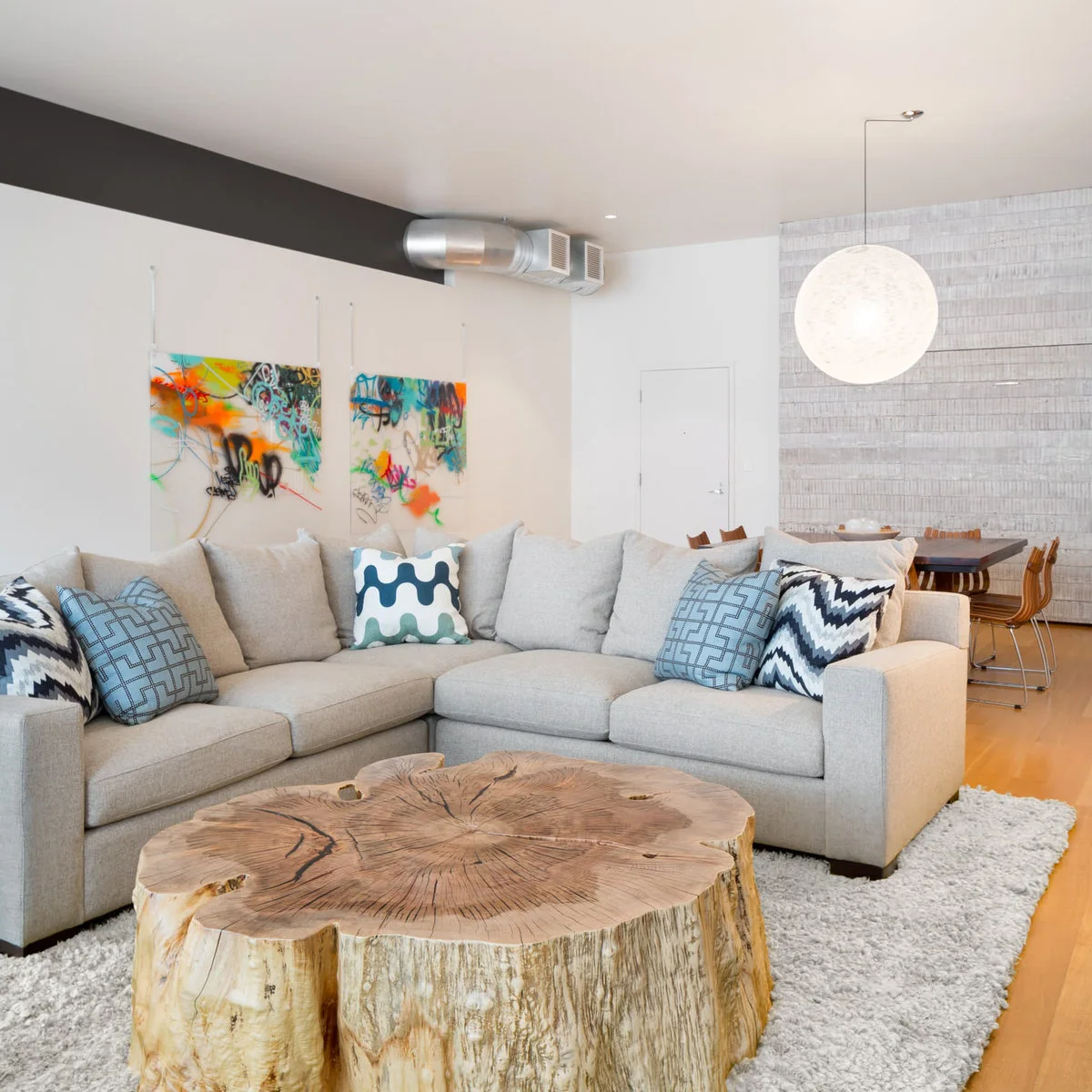
The broad wood slice brings its own pattern through rings, cracks and an irregular edge. Leaving it bare makes those details readable against the pale sectional and rug. Color stays in the cushions and art, so there is no need to repeat it with small tabletop accessories.
Treat natural openings as features that still need practical care. Crumbs and dust can collect in cracks, and a cup may wobble near a hollow. Keep a small removable coaster on the flattest part during use and follow the maker’s care advice for the actual finish.
IDEA 15 / 20
Divide a Large Top into Small Groups
 SaveSupport Non AI Creator
Image credit: Project: Munger Interiors (via Houzz)
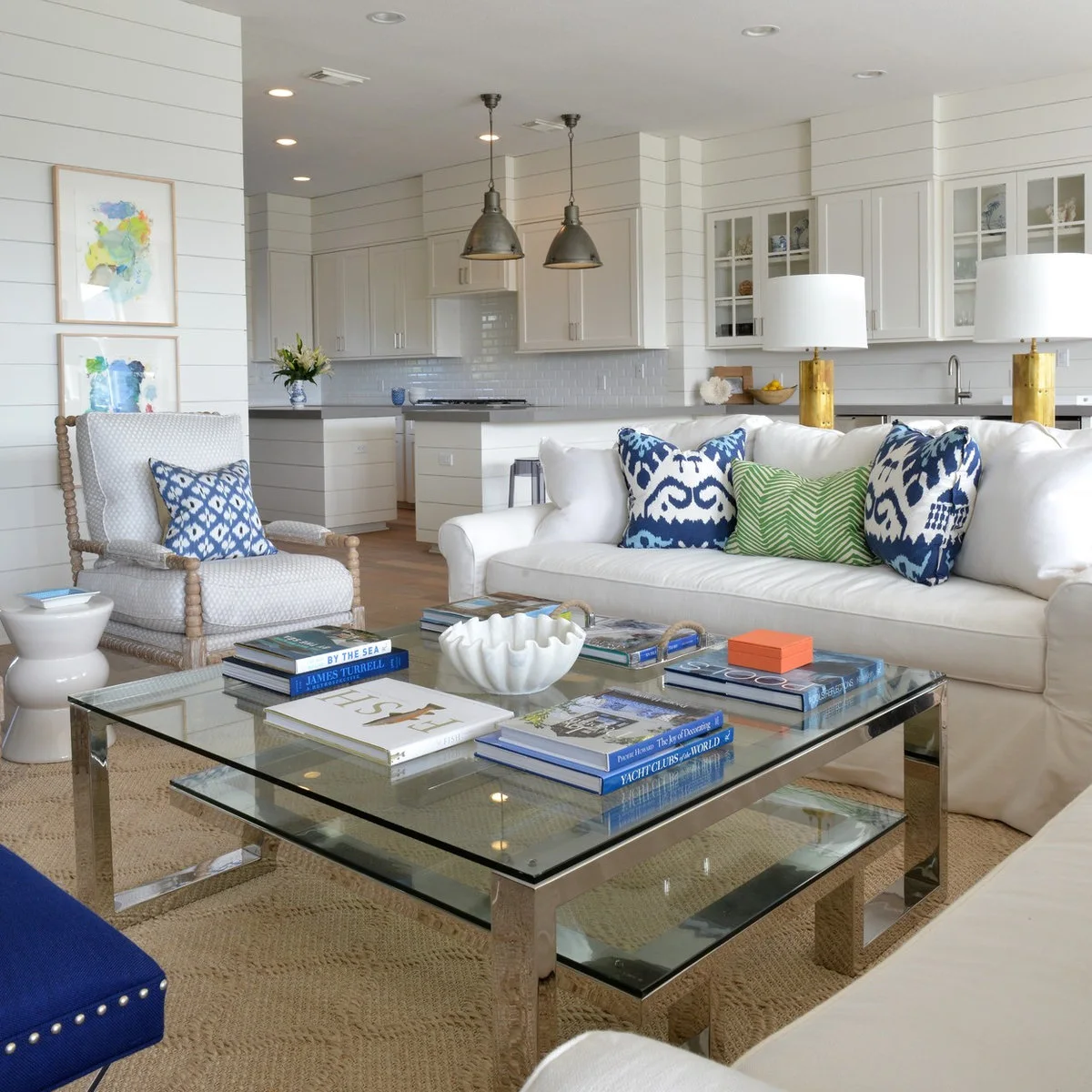
Several low book stacks spread across this large square glass top, with a white bowl and small orange box breaking up their rectangular shapes. Open space remains between the groups. The clear surface reveals the rug beneath, making the generous table feel lighter than a solid block.
Arrange stacks where they can be reached from different seats instead of placing everything at the center. A little lidded box can hold small controls if its interior fits them. Keep at least one corner free for everyday cups so guests do not need to move your books.
PART 04
Keep the Table Useful
IDEA 16 / 20
Use a Raised Edge to Gather Small Pieces
 SaveSupport Non AI Creator
Source: houzz.com
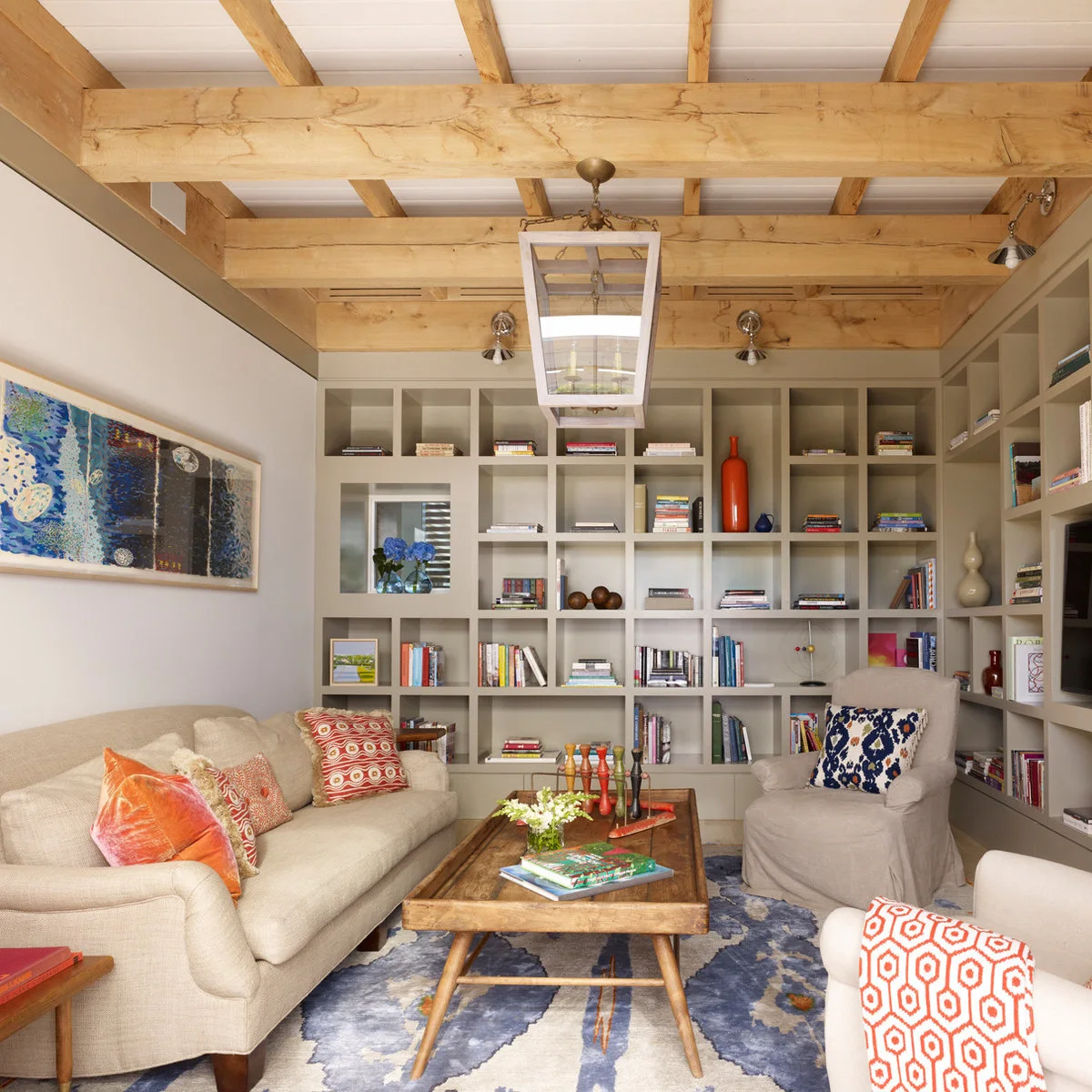
This wooden table has a shallow raised edge that gathers flowers, books and a line of colorful narrow ornaments into one composition. Its warm tone works with the exposed ceiling beams. The bookshelves provide a busy background, so the tabletop groups stay separated and easy to read.
A raised edge helps small things stay contained but also makes wiping crumbs off the top less convenient. Choose a few objects you can remove together. Keep tall narrow decorations away from the side used for walking, especially where children or a wagging tail could catch them.
IDEA 17 / 20
Mix a Tray with an Open Bowl
 SaveSupport Non AI Creator
Image credit: Project: Ally Whalen Design (via Houzz)
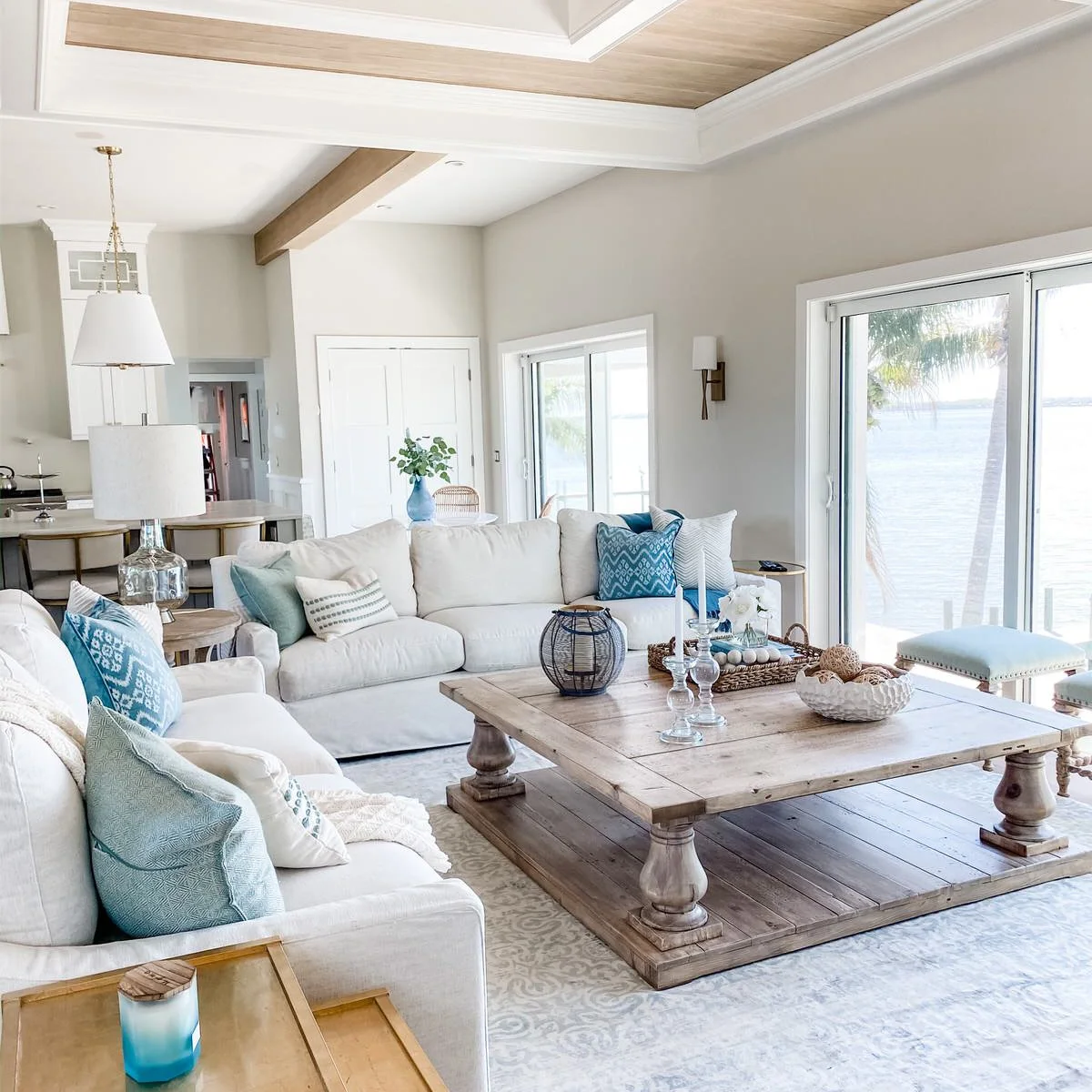
A woven tray creates one cluster on this pale square table, while a white bowl and glass holders sit separately. The basket texture connects with the relaxed seating, and the pale accessories keep the large top from looking heavy beside the blue-and-white cushions.
Give each grouping a purpose before adding more objects. A tray is useful for moving several items when the table becomes a games surface, while an open bowl can collect loose essentials. Choose low stable pieces near the seating edge and leave a reachable landing place for drinks.
IDEA 18 / 20
Style Paired Tables Asymmetrically
 SaveSupport Non AI Creator
Image credit: Project: Swatt | Miers Architects (via Houzz)
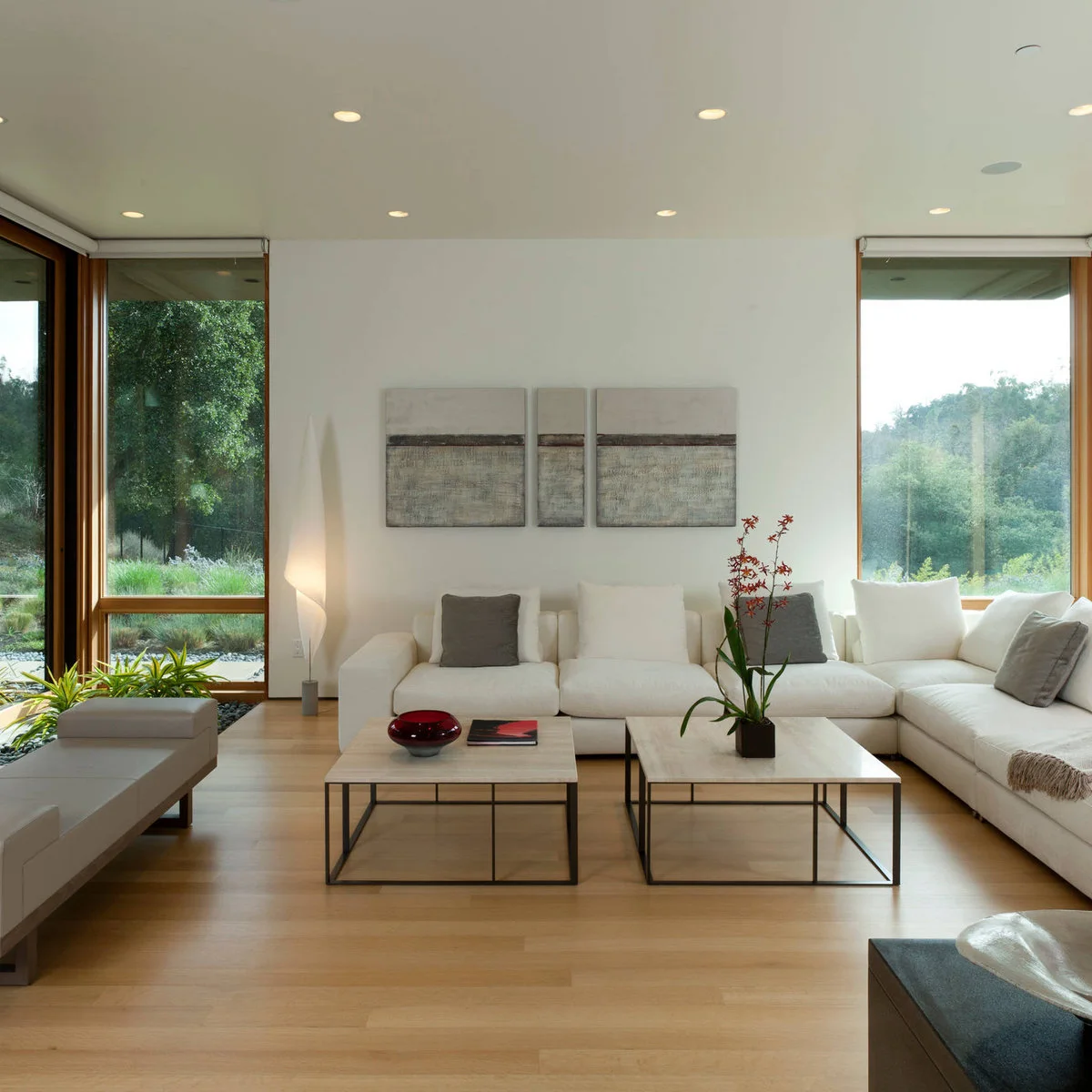
Two matching square tables carry different arrangements: a red bowl and book on one, a flowering plant on the other. Their repeated frames create order, while the uneven distribution of objects keeps the pair relaxed. The pale surfaces suit the white seating without disappearing against the wood floor.
Matching tables do not need matching centerpieces. Reserve the plant table for display and let the other take daily use, or shift them when guests arrive. A tall flowering stem can interrupt a view across the seats, so check its position from the sofa before settling the arrangement.
IDEA 19 / 20
Put Overflow Books on a Lower Shelf
 SaveSupport Non AI Creator
Source: houzz.com
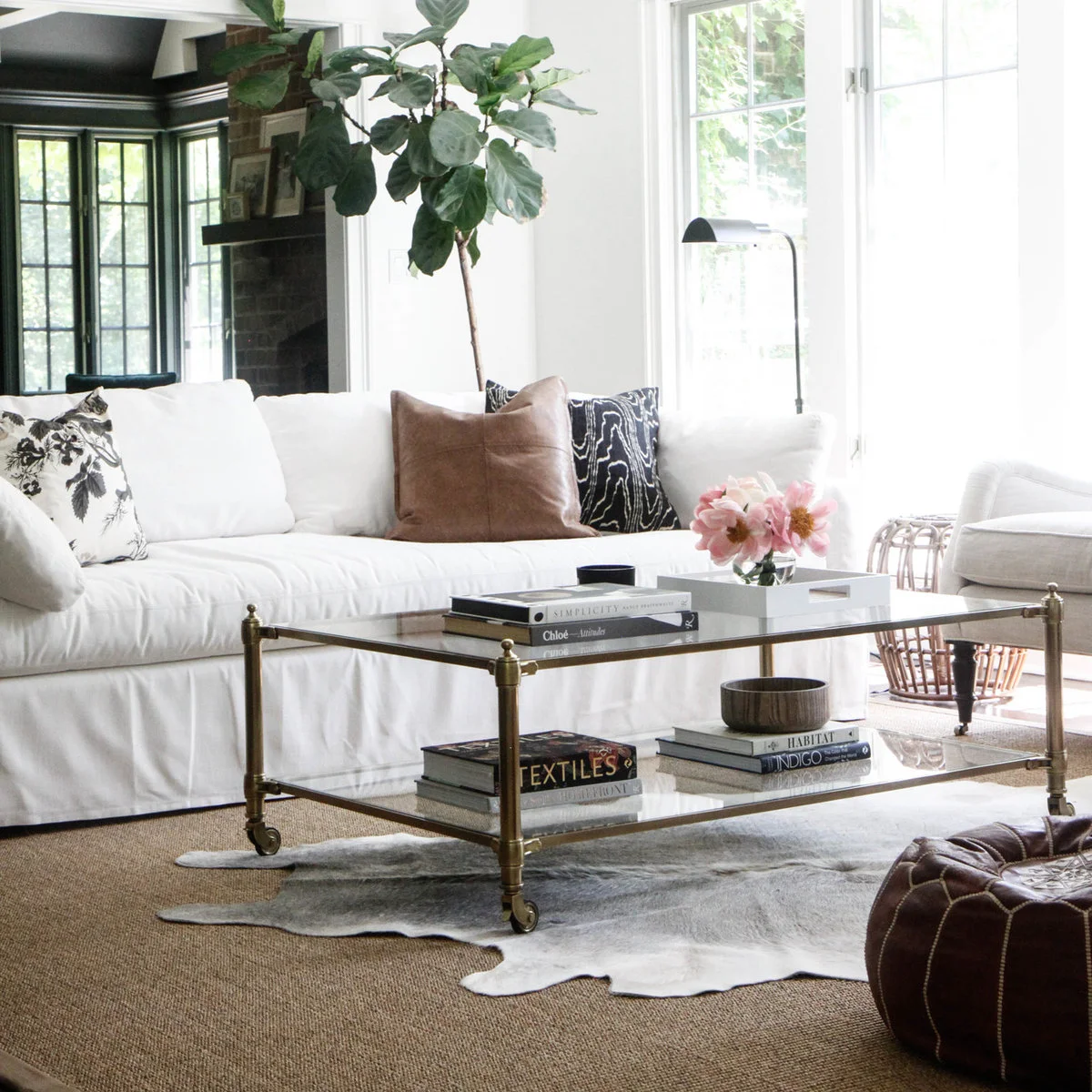
A white handled tray keeps pink flowers together on the upper glass surface, with a short book stack beside it. More books occupy the lower shelf. The open frame lets the room stay airy while providing a second level that does not compete with the tabletop arrangement.
Use the lower shelf for items that can tolerate some dust and can be lifted easily for cleaning. Avoid pushing stacks right against the corners, where feet may catch them. If a table has casters like this one, check that it stays secure on your floor before serving drinks.
IDEA 20 / 20
Bring in Color with Fresh Flowers
 SaveSupport Non AI Creator
Image credit: Project: Jenny Baines, Jennifer Baines Interiors (via Houzz)
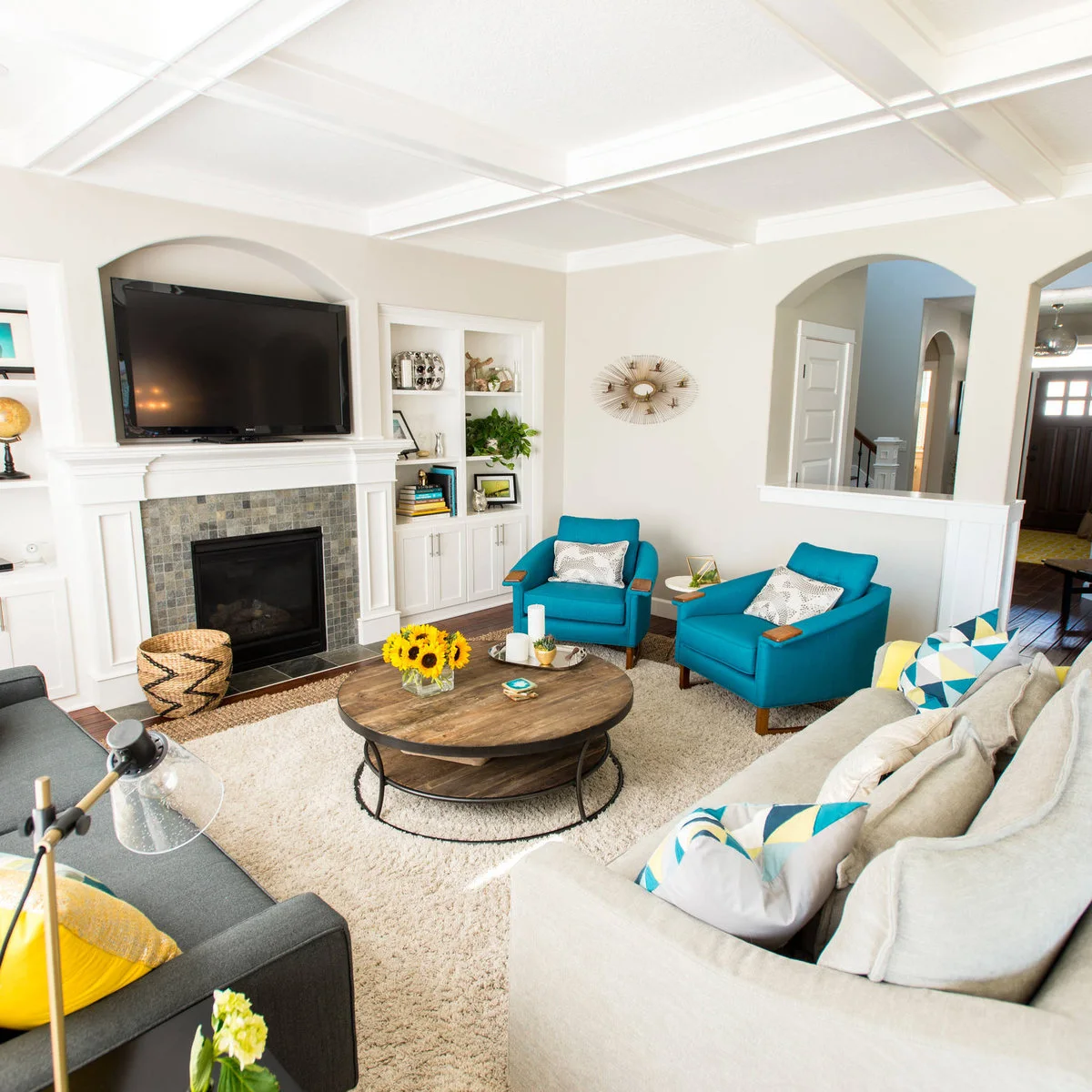
Yellow flowers provide a small burst of color on the round wooden table, connecting to accents near the sofa. A separate tray holds pale accessories, and coasters remain within reach. The rounded outline allows movement between the sofa and the two teal chairs without a projecting corner.
Flowers can change the room without requiring a new collection of ornaments. Keep the vase low enough for conversation and remove spent stems promptly. Put coasters where someone naturally reaches for a drink, rather than hiding them underneath a decorative stack that needs to be dismantled first.
BRING IT ALL TOGETHER
Keep One Useful Space Clear
Choose the arrangement that fits the way you sit, read and host. A bowl and a book can be enough when the table itself has a strong shape or grain.
Before adding another object, use the room for a few days. Anything you repeatedly move out of the way probably belongs on a shelf or side table instead.