The area beneath a television works best when it helps the room feel settled without competing with the screen. Think about cabinet proportions, equipment access and the things you actually need to store before buying ornaments to fill the surface.
These photographed arrangements range from lightly styled sideboards to full media walls. Keep decorations outside the screen and speaker area, follow equipment ventilation requirements and secure furniture and televisions correctly. A clear surface is a valid choice when the cabinet itself already has character.
PART 01
Start with a few low objects
IDEA 01 / 20
Balance a Textured Cabinet with Pale Vases
 SaveSupport Non AI Creator
Image credit: Chad Mellon
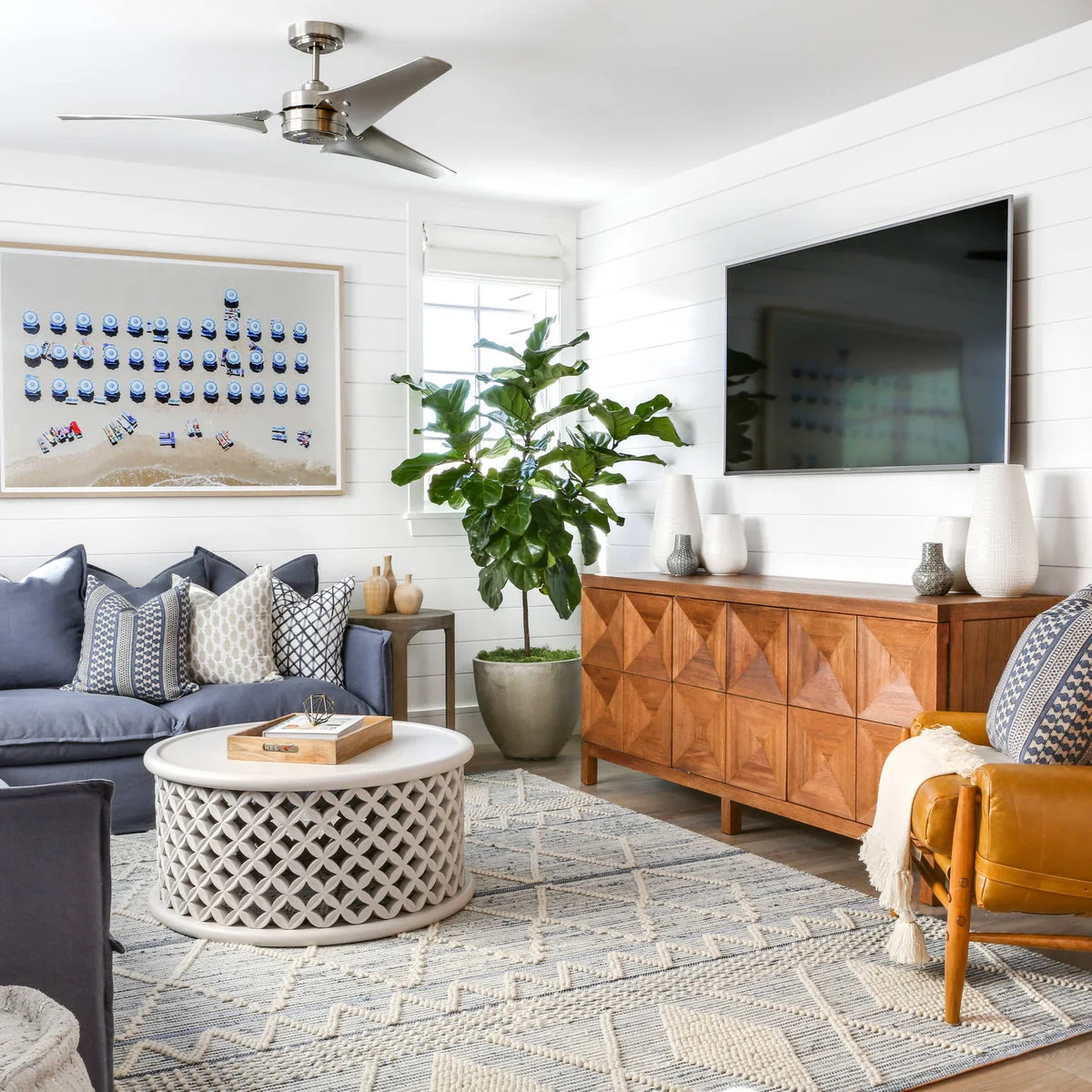
The geometric wood doors already supply a strong pattern, so pale vessels keep the top comparatively quiet. Taller pieces sit toward the ends rather than across the middle of the screen. The large plant stands beside the cabinet, adding height without occupying its working surface.
Let a distinctive cabinet carry some of the decoration before adding more objects. Check the view from your usual seat and keep every vessel below the screen edge. Give a floor plant its own stable position, with suitable light and watering arrangements away from electronics.
IDEA 02 / 20
Use a Broad Basket for Low Texture
 SaveSupport Non AI Creator
Image credit: Connie Anderson
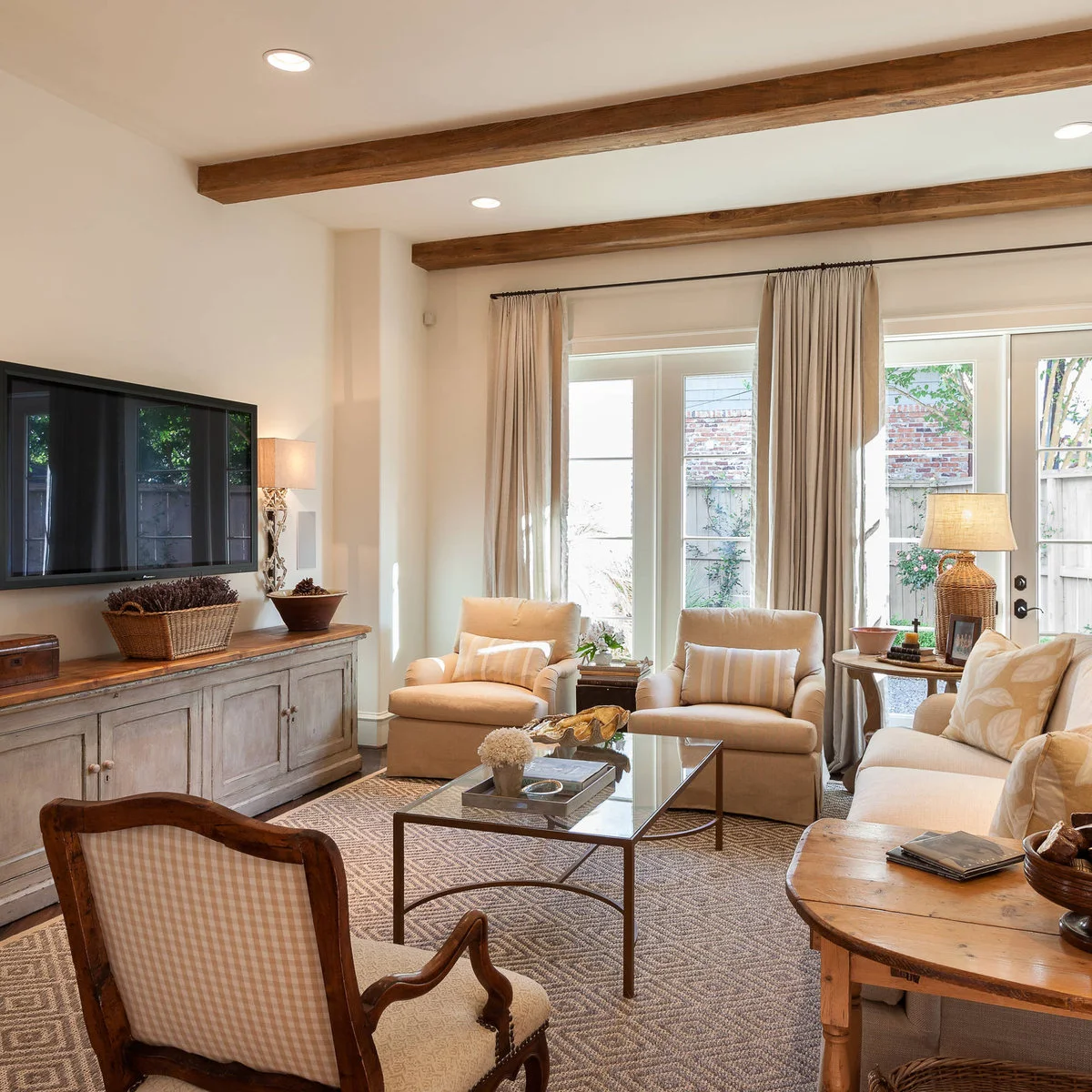
The broad woven basket provides texture beneath the television without a tall vertical arrangement. A small box and bowl spread the display along the wood top, while the paneled cabinet doors keep most storage concealed. The pale base relates to the surrounding walls and seating.
Choose low objects that can be lifted easily for dusting instead of covering the entire top. Keep dried stems or loose contents from reaching the screen or equipment. Use the cabinet interior for suitable everyday storage, checking ventilation separately if any media devices are housed behind its doors.
IDEA 03 / 20
Keep a Matched Pair Outside the Screen
 SaveSupport Non AI Creator
Image credit: Project: Casabella Interiors (via Houzz)
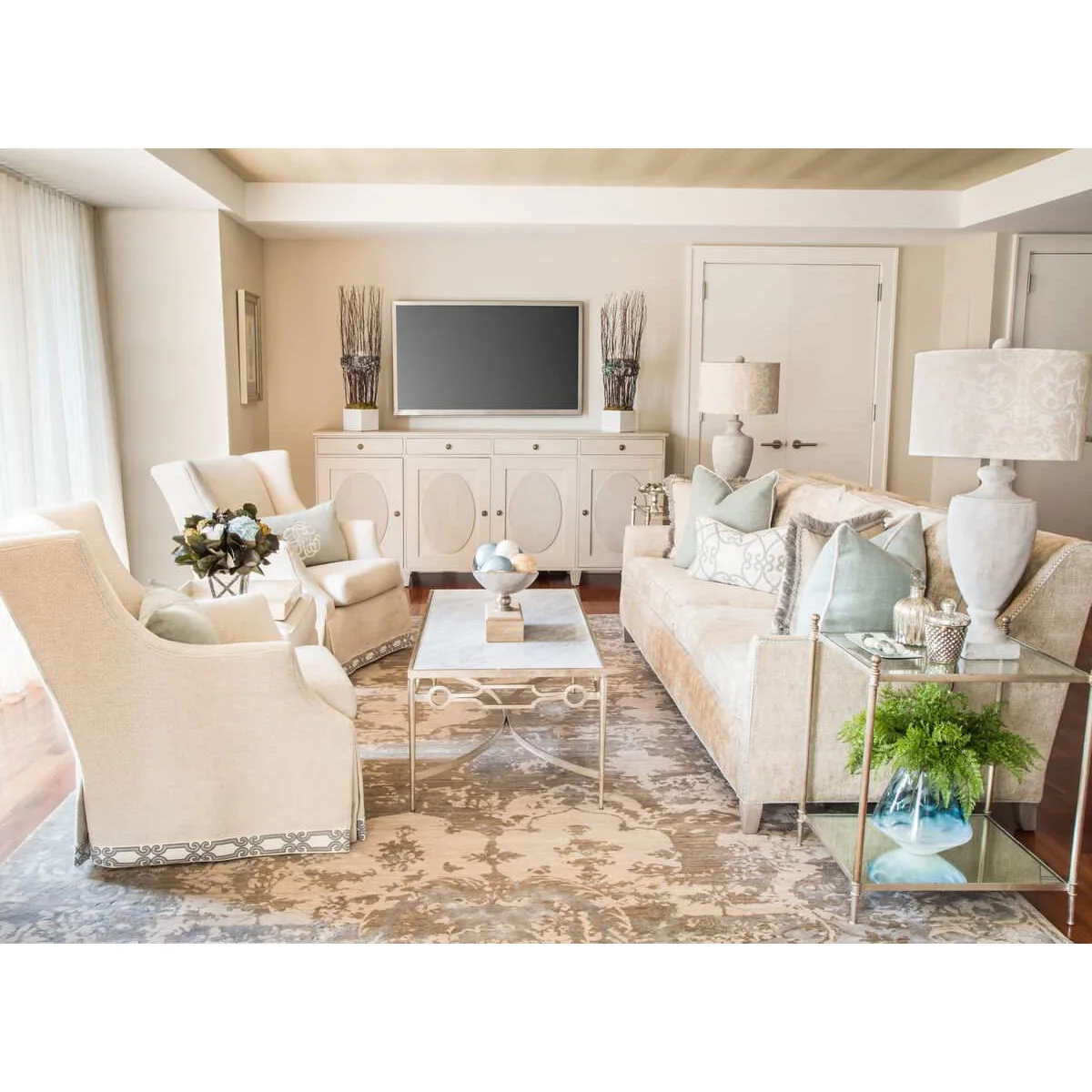
A matched pair of branch arrangements frames the screen at its sides rather than spreading across the cabinet's center. Their narrow silhouettes contrast with the broad cream doors below. The oval details on the fronts add another layer of decoration without requiring extra objects on top.
Our console table decor ideas show other ways to balance paired objects. Here, check the branches from several seats so they do not overlap the picture. Use stable containers and leave access to the television's controls and connections rather than wedging objects into the smallest remaining gaps.
IDEA 04 / 20
Give Equipment a Clear Place in the Recess
 SaveSupport Non AI Creator
Image credit: Project: Rohrscheib Design Group (via Houzz)
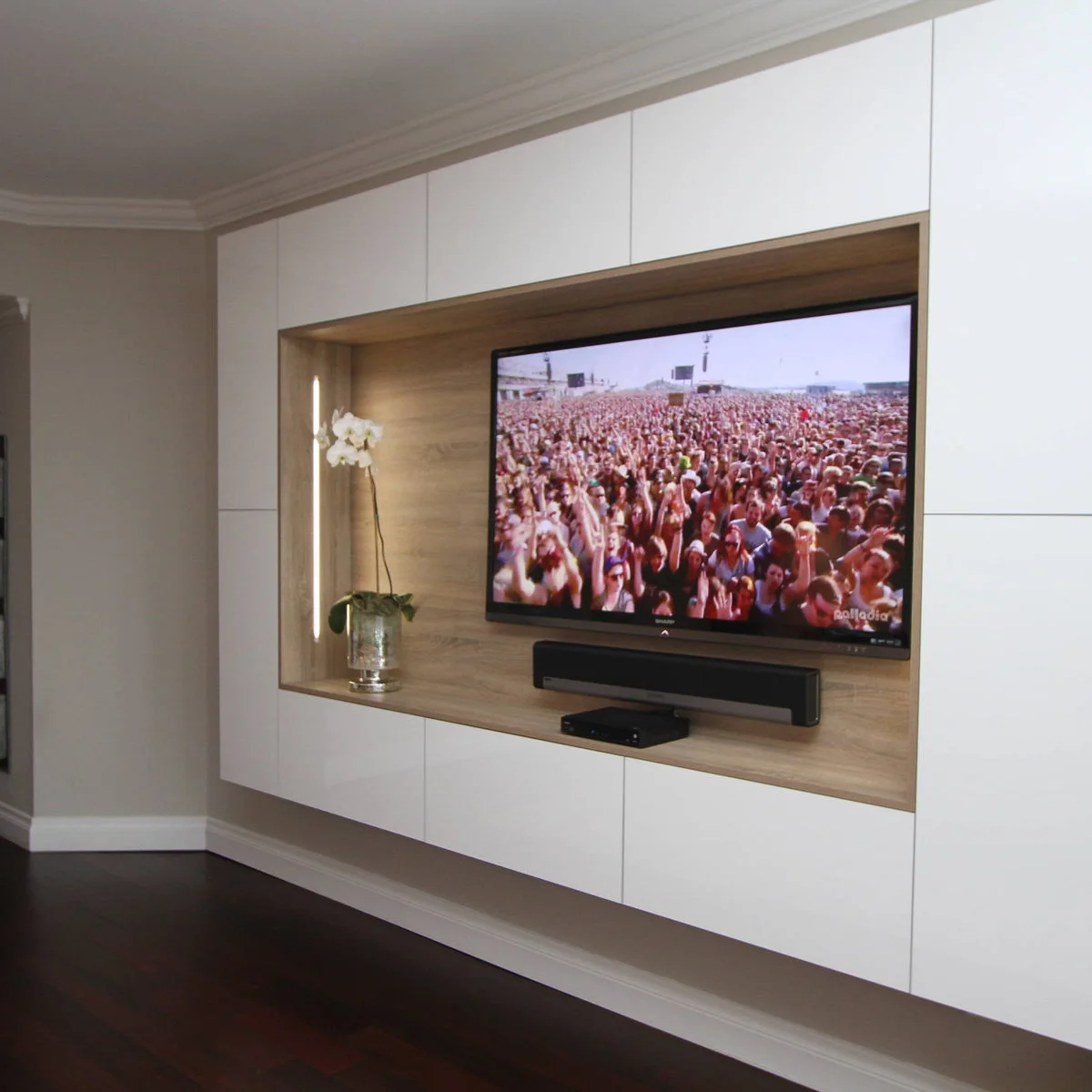
The wood-lined recess separates the television and soundbar from the surrounding white doors. A single orchid fills the spare side area, keeping decoration away from the central equipment. The lower cabinet fronts maintain a clean horizontal line beneath the open section.
Plan the recess for the actual devices, including ventilation, cables and future servicing, before treating its leftover space as display area. Keep watering away from electronics and remove plants from the cabinet to tend them. Do not infer adequate equipment clearances from a neatly finished photograph.
IDEA 05 / 20
Leave a Wood Cabinet Mostly Clear
 SaveSupport Non AI Creator
Image credit: Project: Automated Homes Inc. (via Houzz)
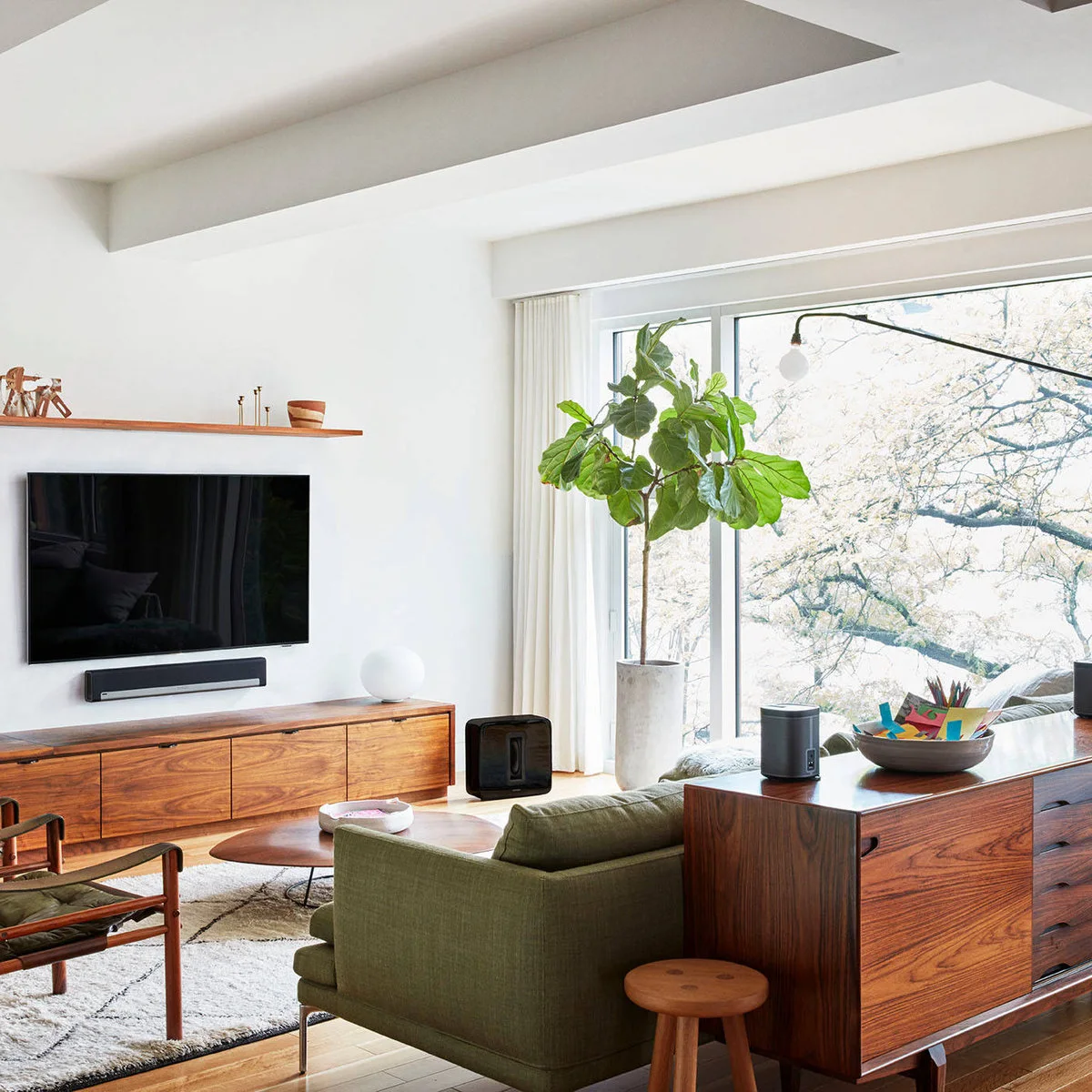
The wood grain is the main decorative feature beneath this television. A small white vessel sits at one end, with most of the cabinet top left empty. The soundbar has a separate wall position, leaving a clear distinction between equipment and the low furniture below.
Try an almost empty arrangement before buying accessories for every section of a long cabinet. It can make a busy wood finish easier to appreciate and reduce dusting. Check mounting and ventilation instructions for the screen and soundbar, and keep decor from obstructing their operation.
PART 02
Choose storage that earns its space
IDEA 06 / 20
Mix Closed Doors with an Open Equipment Bay
 SaveSupport Non AI Creator
Source: houzz.com
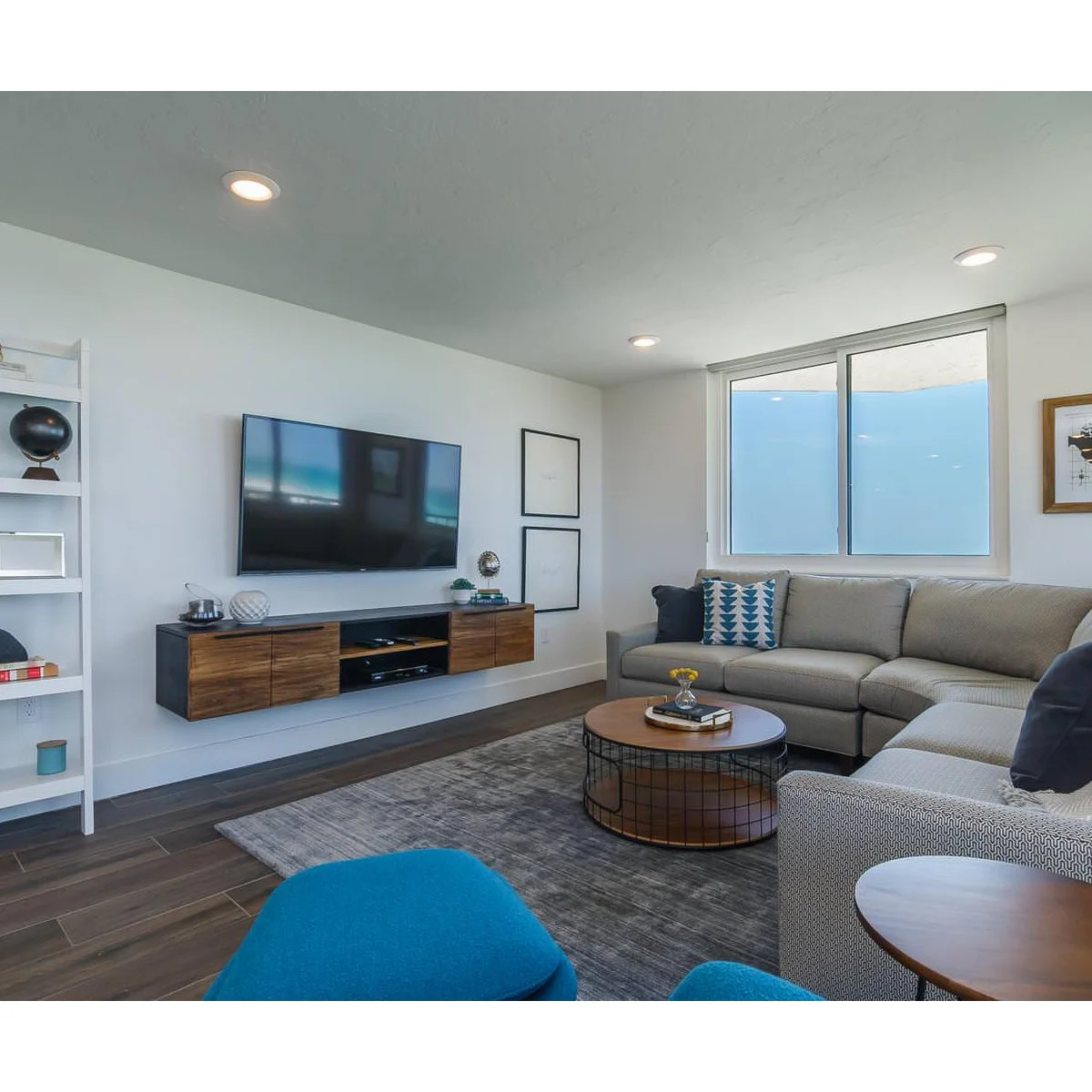
Closed wood-front sections hide storage on either side of the open center bay. Small accessories sit toward the ends of the top, leaving the middle quieter beneath the screen. The gap below the floating cabinet allows the floor line to remain visible across the wall.
Choose an open bay that fits the actual equipment and its ventilation needs, not just its front dimensions. Provide access to cables behind it and verify the supporting wall and fixings for the full loaded cabinet. Keep small decorations separate from device vents and the remote receiver.
IDEA 07 / 20
Let Decorative Cabinet Doors Do More of the Work
 SaveSupport Non AI Creator
Image credit: Project: GEORGE Interior Design (via Houzz)
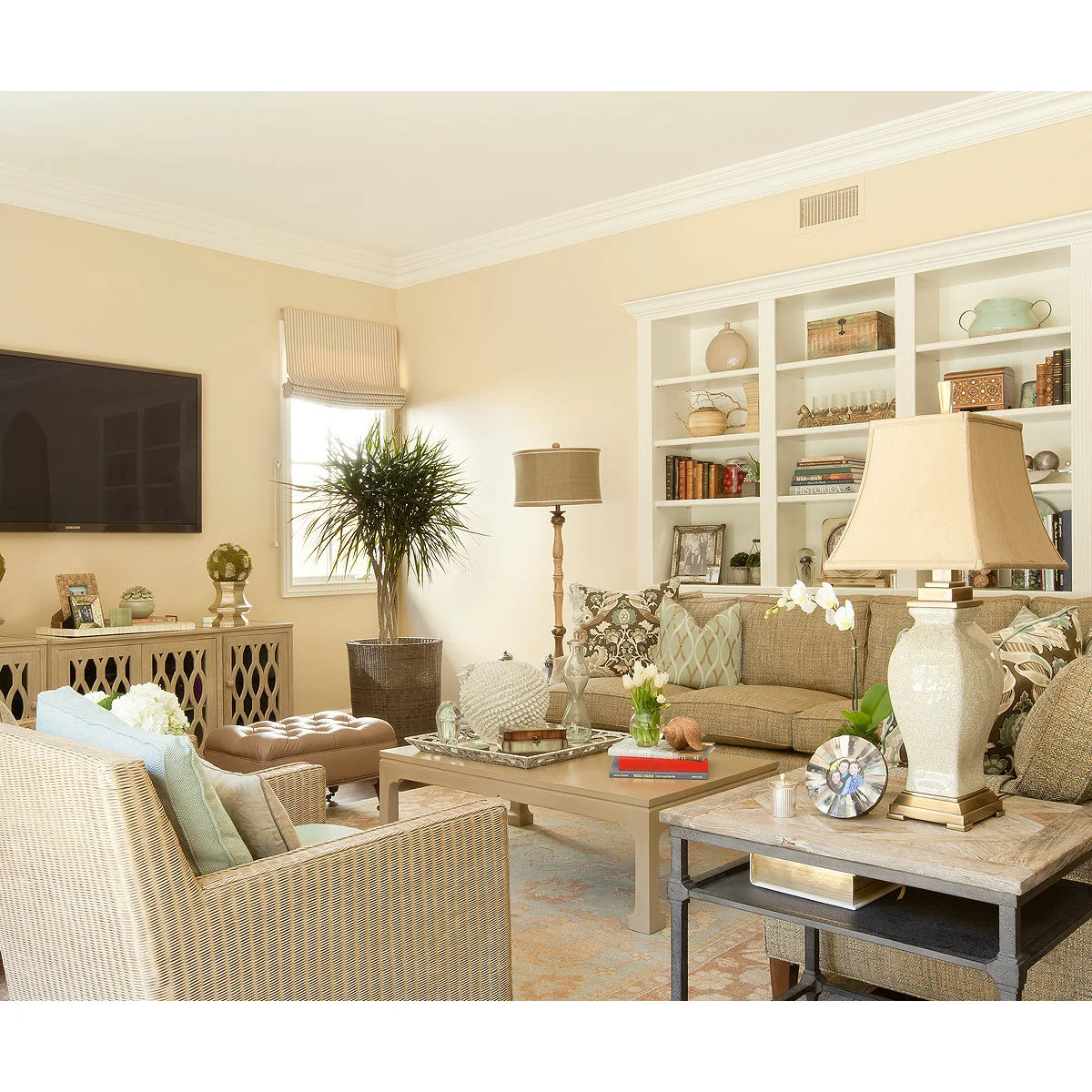
The lattice-pattern doors add texture across the cabinet, allowing the top to use relatively small accessories. Framed photos and a short book stack stay below the television, with a rounded green ornament providing a different shape. A larger plant stands separately beside the unit.
Avoid assuming patterned doors provide sufficient airflow for electronics; assess their backing and the equipment requirements. Start with the pieces you want to see daily, then remove anything that crowds the screen. Keep lightweight frames stable and do not stack items where they could be pulled down by a cable.
IDEA 08 / 20
Contrast a Pale Cabinet with a Textured Wall
 SaveSupport Non AI Creator
Image credit: A Bonisolli Photography
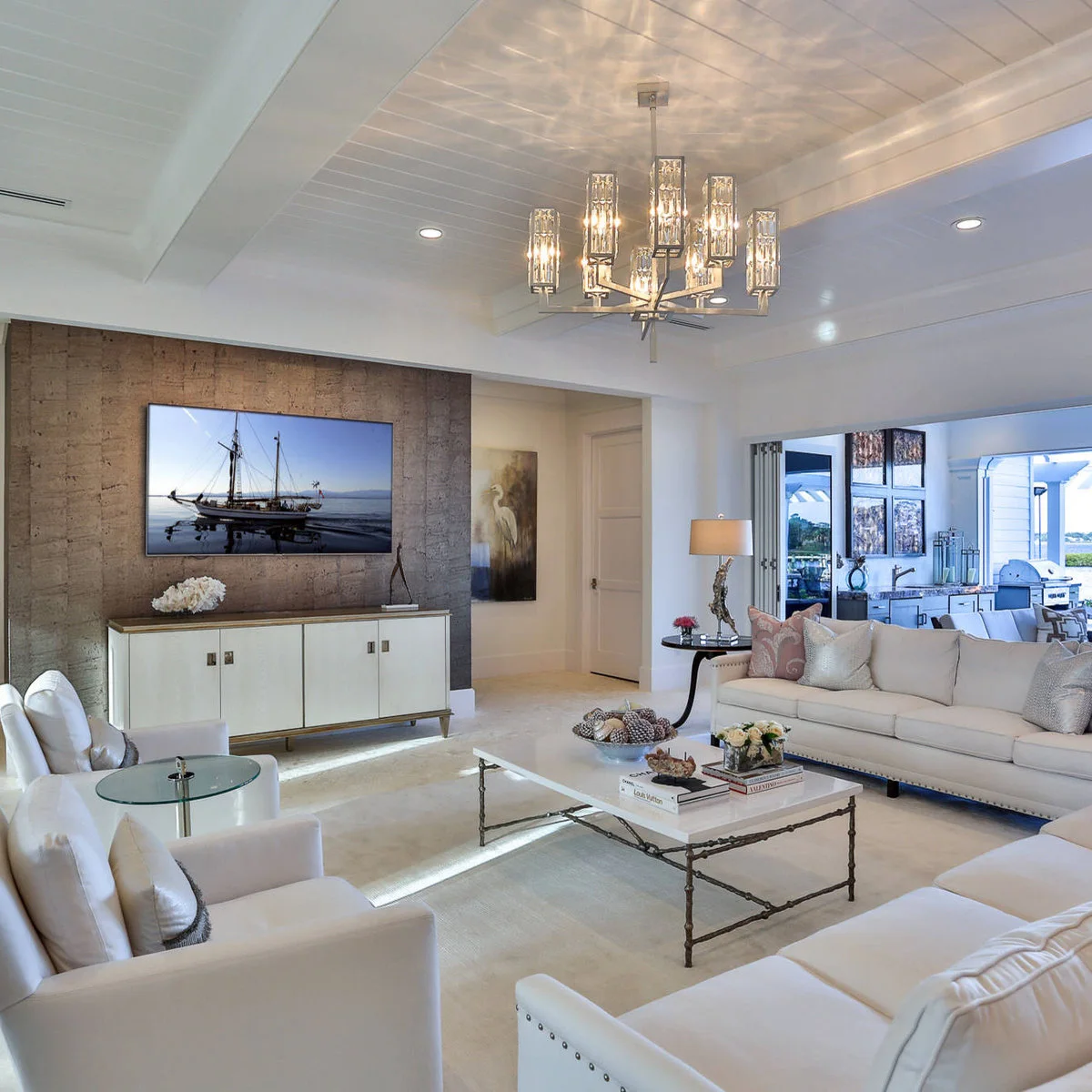
The pale cabinet creates a light base against the darker textured wall. Low flowers sit toward one side, with a slender sculpture balancing the other end. The closed doors leave the surface free for a small display rather than requiring every media accessory to remain visible.
Our living room accent wall ideas offer more ways to give a television wall definition. If the wall finish is already prominent, keep cabinet styling restrained. Use a stable, low arrangement and preserve the required separation around electronics; a textured backdrop does not need several competing ornaments in front of it.
IDEA 09 / 20
Group Similar Vases at One End
 SaveSupport Non AI Creator
Image credit: Project: Cory Connor Designs (via Houzz)
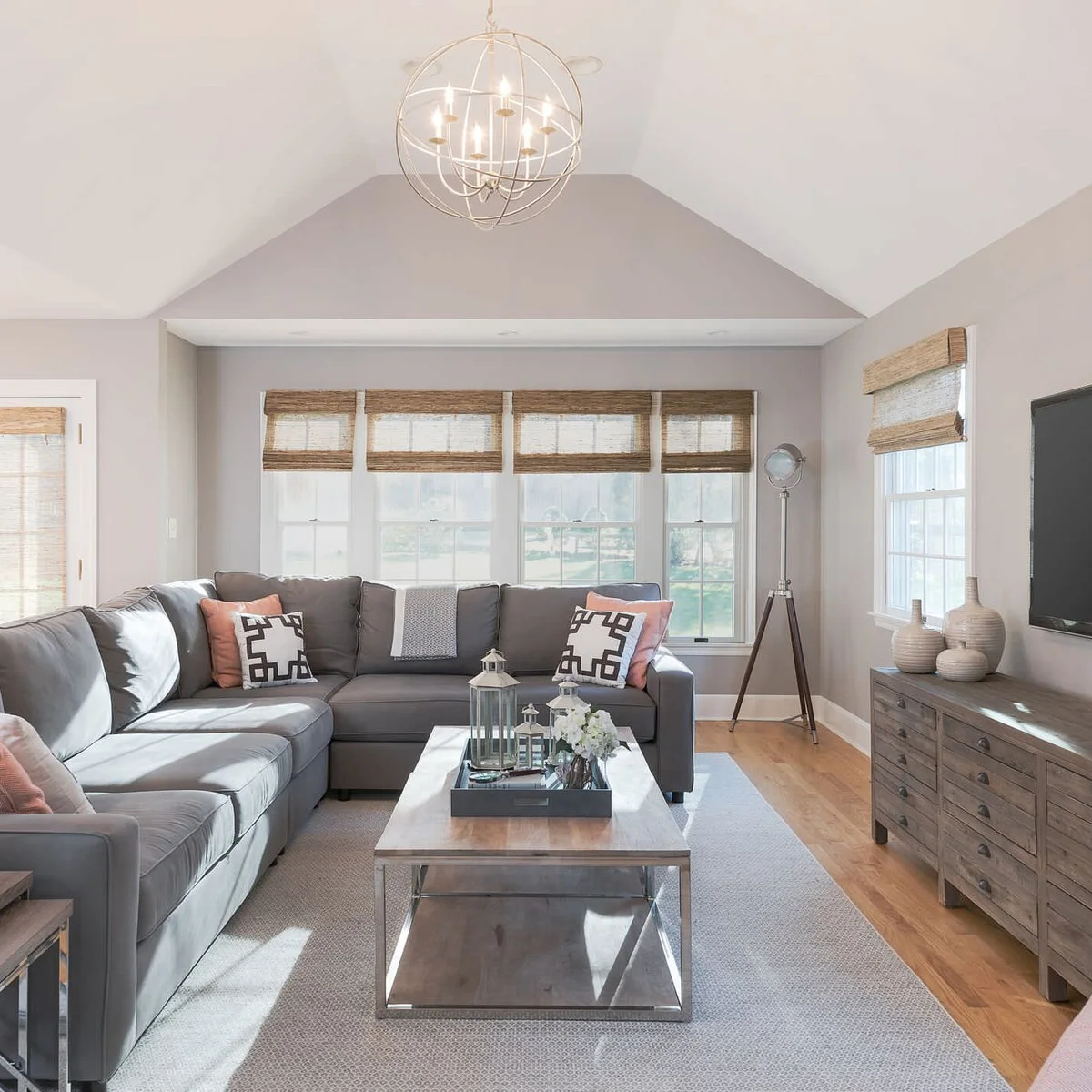
The pale vessels form one compact group rather than a row across the entire cabinet. Their related color and ribbed surfaces connect the different heights. The wood drawer fronts supply another texture below, with the screen area left largely free of small decorative interruptions.
Choose the tallest vessel only after checking the screen height from a seated position. Keep grouped objects clear of drawers and access points, and leave part of the top empty for easier cleaning. Empty vessels can provide shape without the extra height or maintenance of a large floral arrangement.
IDEA 10 / 20
Combine a Long Console with a Useful Seat
 SaveSupport Non AI Creator
Image credit: Project: United Elite Group (via Houzz)
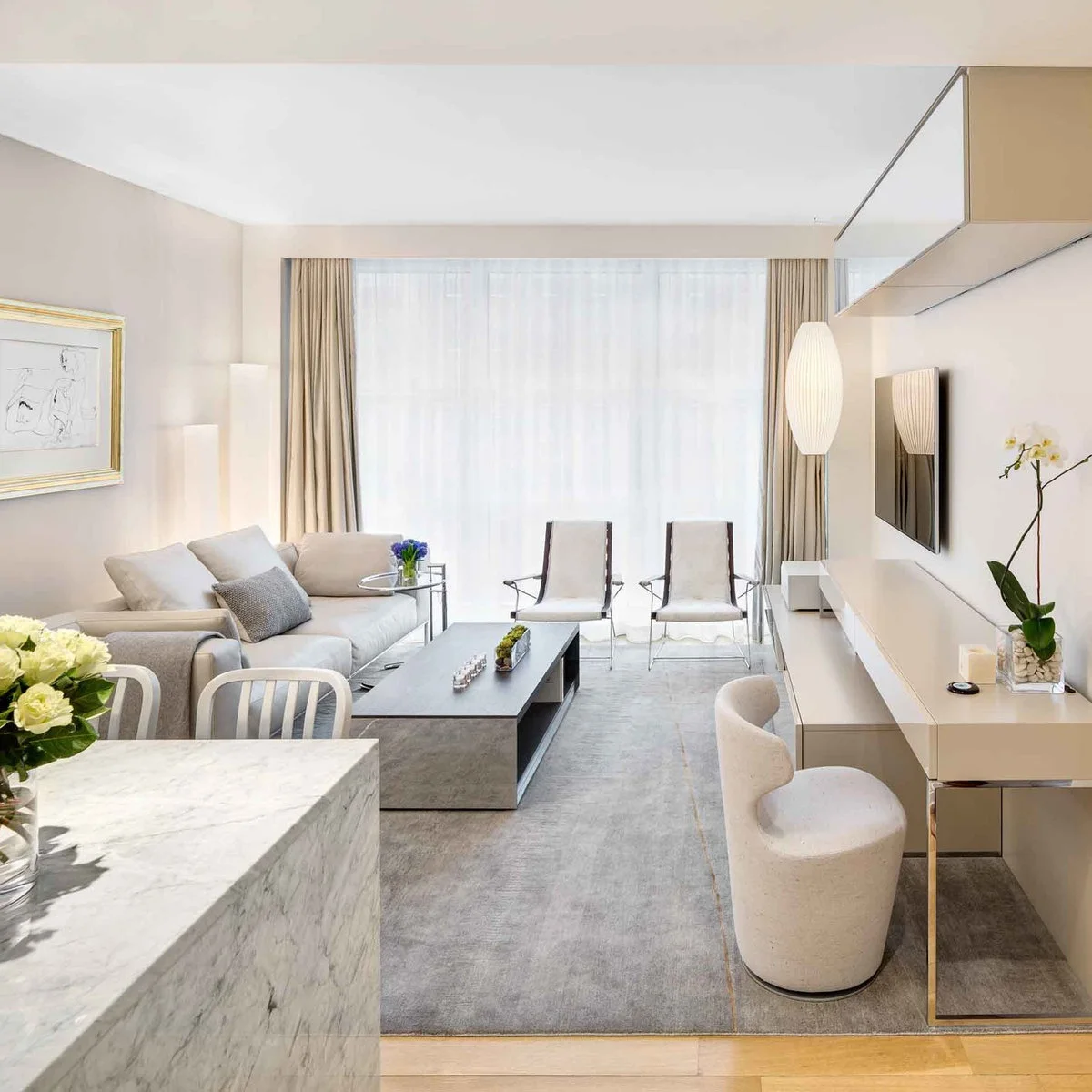
The long pale console extends beyond the television, providing a horizontal line that connects the living space with the nearby dining area. A white orchid adds height at one end. The curved upholstered seat gives the extended surface another possible use without adding a second large table.
Check whether the console is actually designed for seated use before copying the arrangement. Allow knee space, comfortable chair movement and a clear route behind the seat. Keep plants and small objects away from the television's working area, and protect the console appropriately when watering elsewhere.
PART 03
Balance the television wall
IDEA 11 / 20
Use a Low Tray to Gather Small Objects
 SaveSupport Non AI Creator
Image credit: Project: MileStone Community Builders (via Houzz)
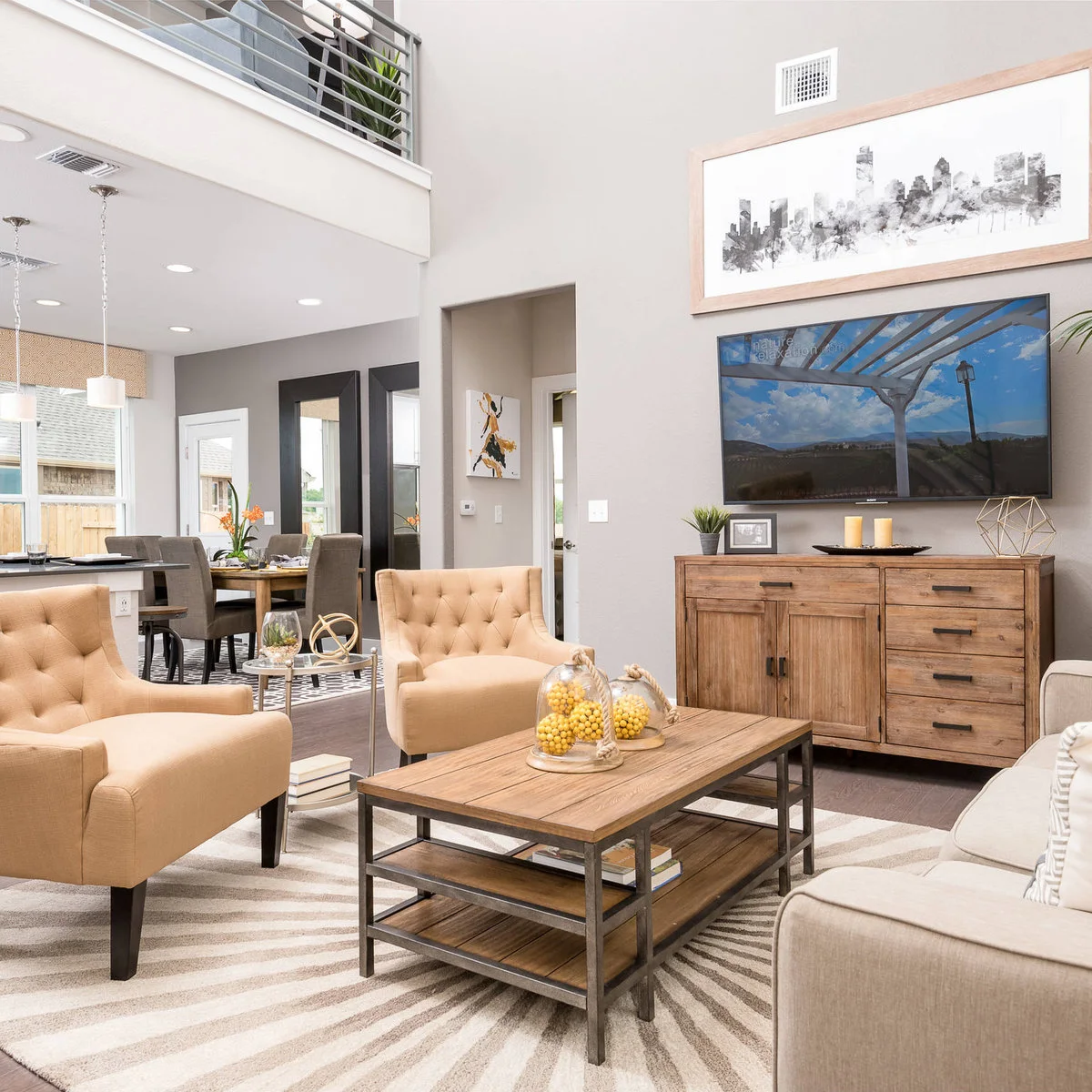
A shallow dark tray gathers the candle-like objects into a single low group. The small frame and plant sit to one side, with an open wire ornament on the other. The cabinet's mixture of doors and drawers provides visual detail below the simple display.
Use a tray for small everyday pieces so the top does not become a scatter of remotes and ornaments. Keep any decorative candle unlit near electronics and choose an alternative location for actual flames. Test whether the objects remain below the screen and can be moved together for cleaning.
IDEA 12 / 20
Put Taller Objects on Adjacent Shelves
 SaveSupport Non AI Creator
Image credit: Project: Gervis Design Studio (via Houzz)
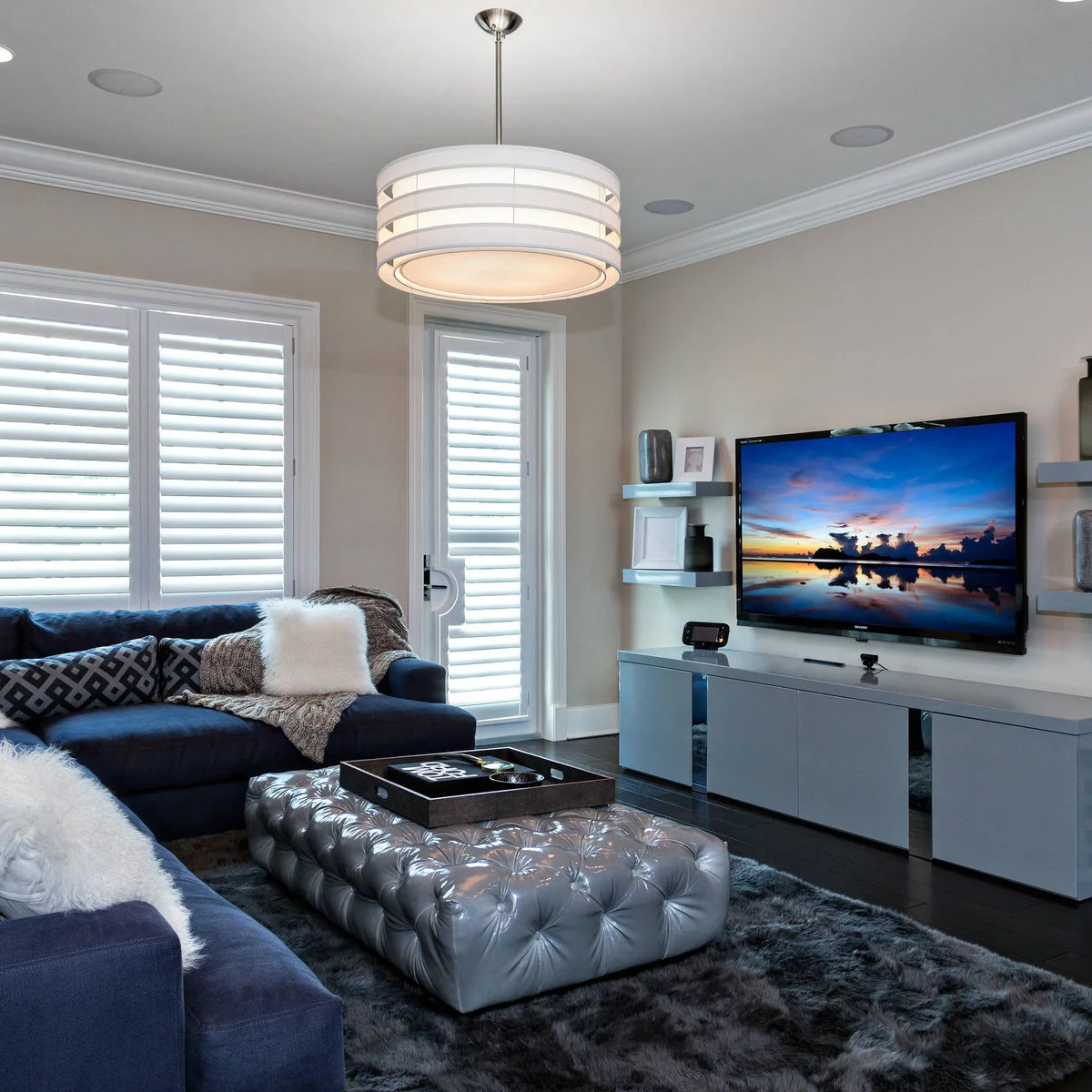
The broad gray top remains mostly open, with the taller decorative pieces moved onto shelves beside the screen. That separation keeps the equipment area easy to read. Repeated pale frames and small vessels connect the wall display with the otherwise restrained cabinet below.
Keep shelves outside the television's mounting and ventilation requirements, and secure them for their intended load. Do not let a side display grow across the screen over time. Leave a practical way to reach and dust the higher objects without standing on the media cabinet.
IDEA 13 / 20
Give a Floating Cabinet One Clear Accent
 SaveSupport Non AI Creator
Image credit: Russell Abraham
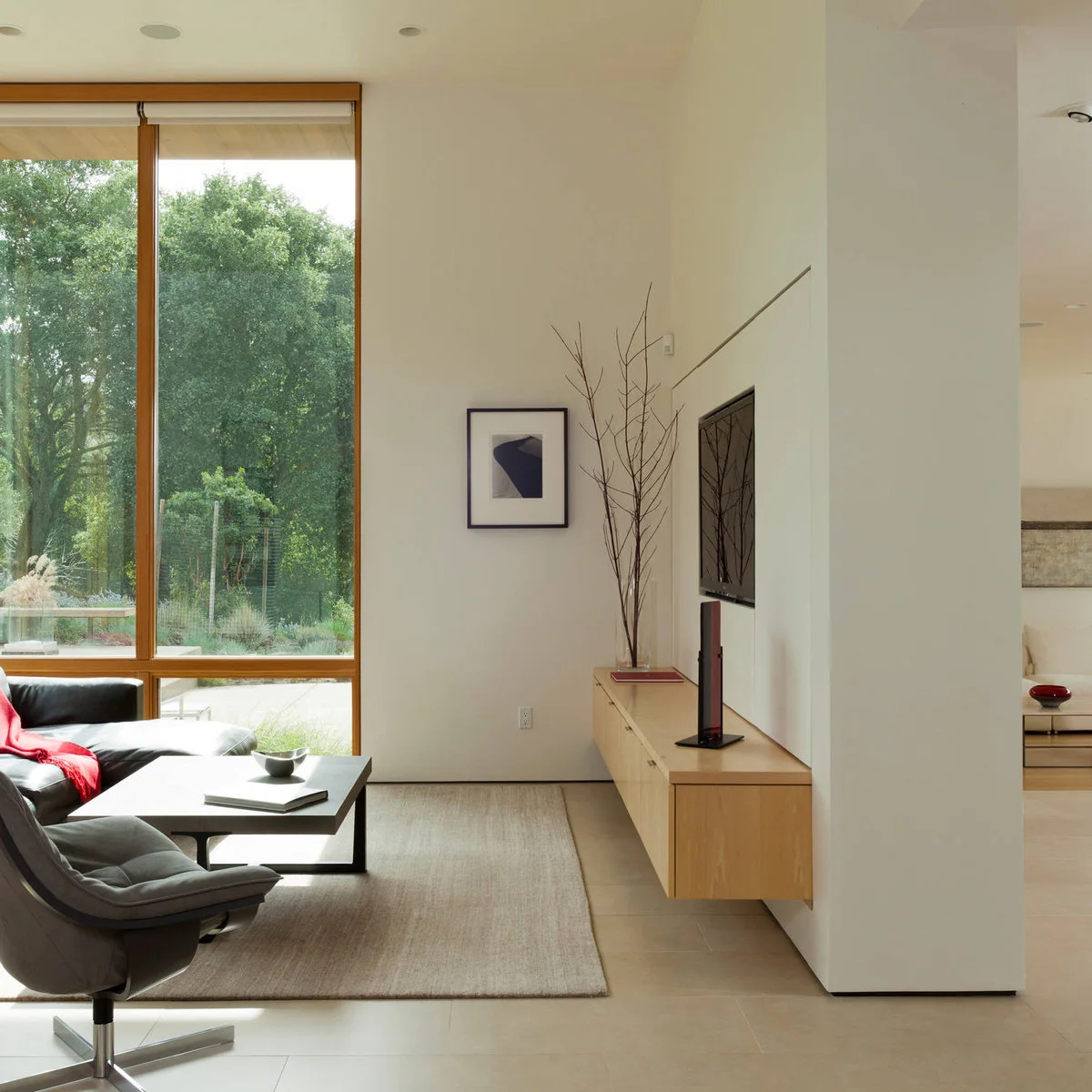
The floating cabinet follows the edge of the projecting wall, creating a long low base beneath the screen. A slim dark object provides a small vertical accent, while the branches occupy the end beside the window. Much of the cabinet surface remains empty.
Check branch spread from the seats rather than judging only from beside the wall. Keep tall arrangements stable and avoid filling space needed for access or ventilation. Floating cabinets require suitable structural support for their loaded weight, so treat the photograph as a styling reference rather than an installation guide.
IDEA 14 / 20
Repeat a Small Collection below the Television
 SaveSupport Non AI Creator
Image credit: Project: Interiors By Agostino's (via Houzz)
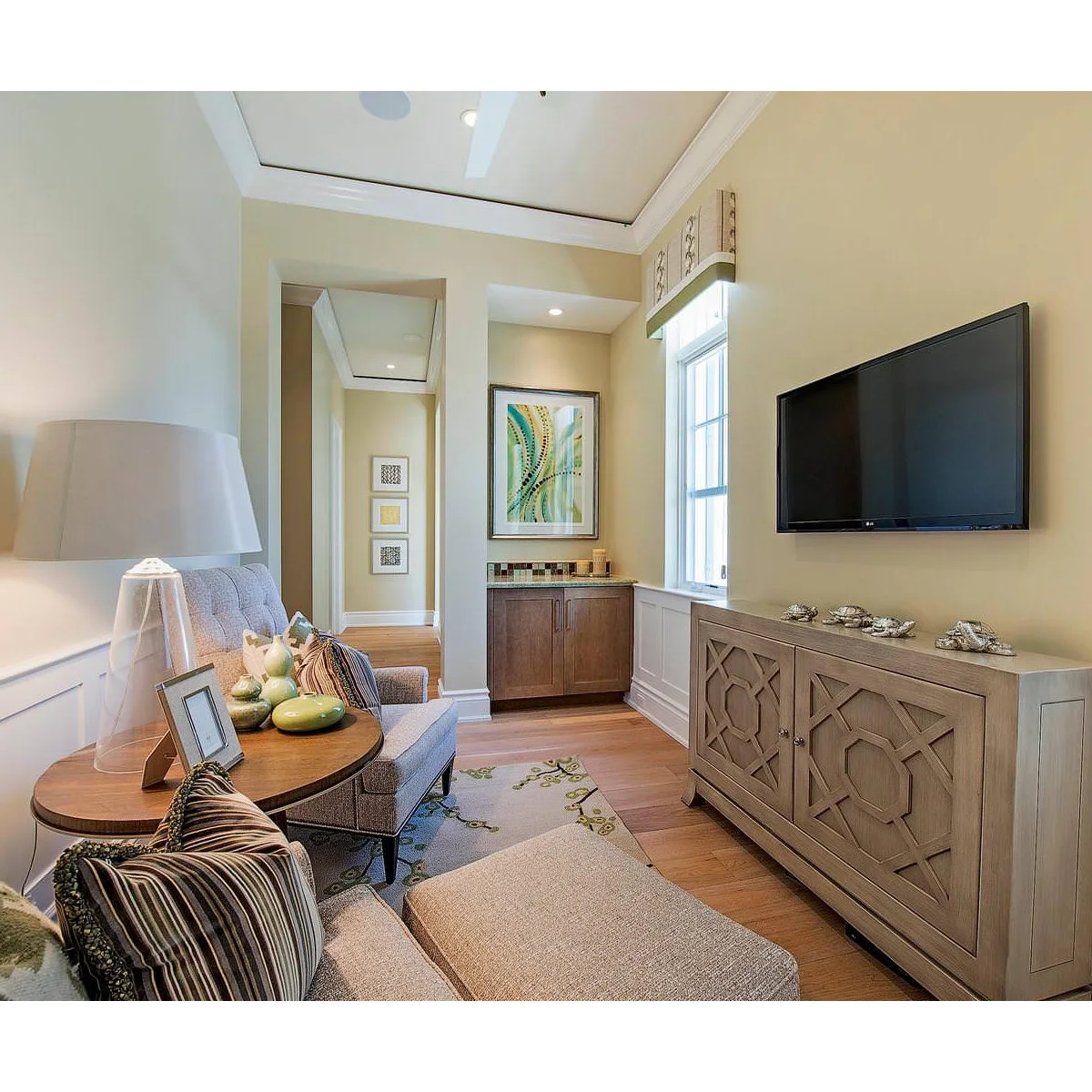
A small collection runs along the top without introducing tall shapes into the screen area. The metallic objects contrast with the pale cabinet and its geometric doors. The repeated low scale gives the arrangement continuity while allowing the cabinet's larger pattern to remain prominent.
Display a collection selectively rather than using every piece you own. Leave gaps for cleaning and avoid blocking equipment controls with closely packed objects. In a narrow room, check cabinet depth and the walking route first; attractive door detail does not compensate for furniture that projects too far into the passage.
IDEA 15 / 20
Use Open Cubbies for the Devices You Reach Often
 SaveSupport Non AI Creator
Image credit: Mindy Mellenbruch
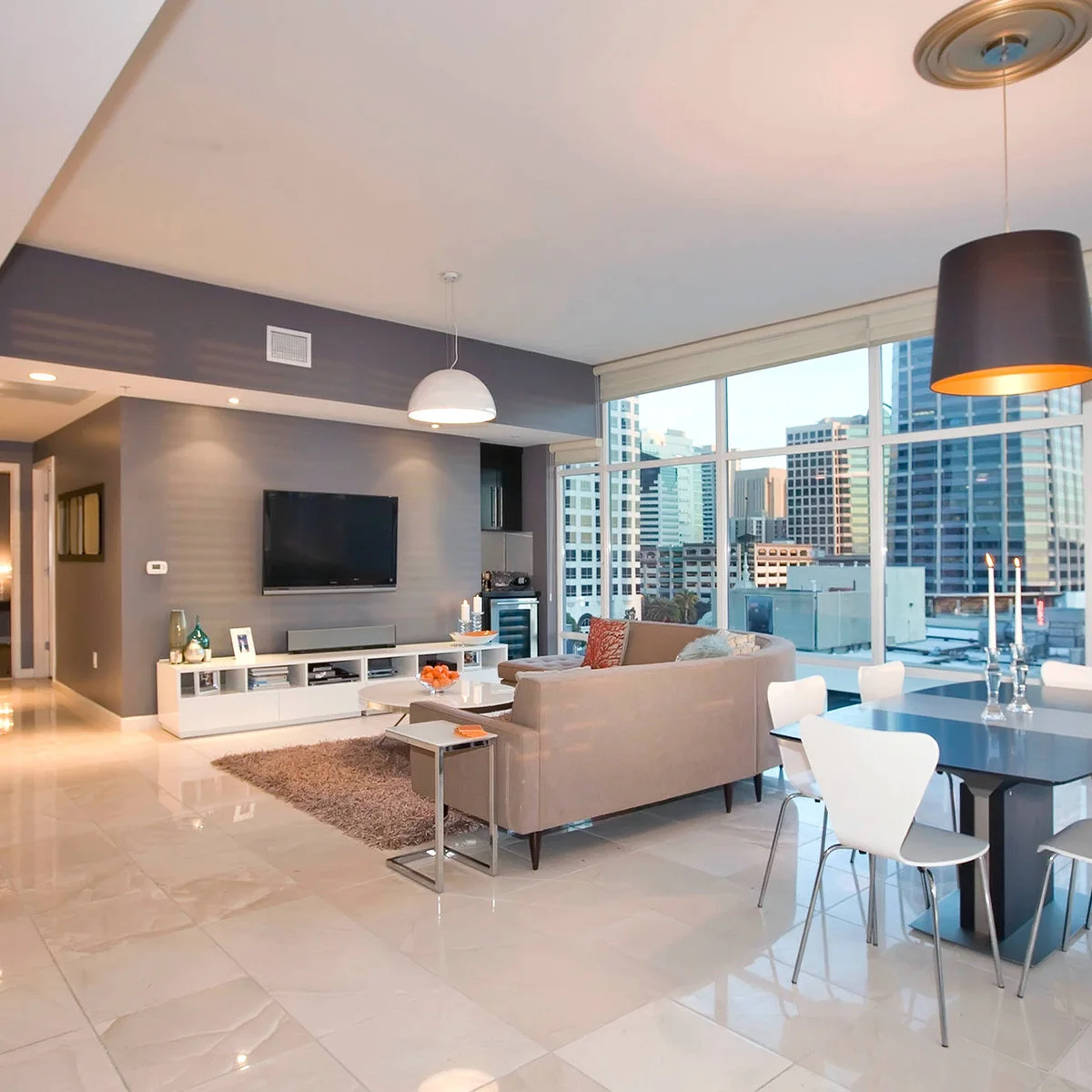
The white cabinet combines visible equipment cubbies with a quieter row of closed storage below. A soundbar occupies the center of the top, with decorative objects kept near the ends. The long low shape gives the television a base without introducing a tall media wall.
These rectangular living room layouts show why furniture depth and circulation matter alongside styling. Here, allow the equipment its required airflow and make cable connections reachable. Keep the soundbar unobstructed, and check door and drawer movement before filling the lower storage with items that are difficult to retrieve.
PART 04
Bring decor into a built-in arrangement
IDEA 16 / 20
Repeat Three Small Pots in a Built-In
 SaveSupport Non AI Creator
Image credit: Project: Elevation Design & Construction Co. (via Houzz)
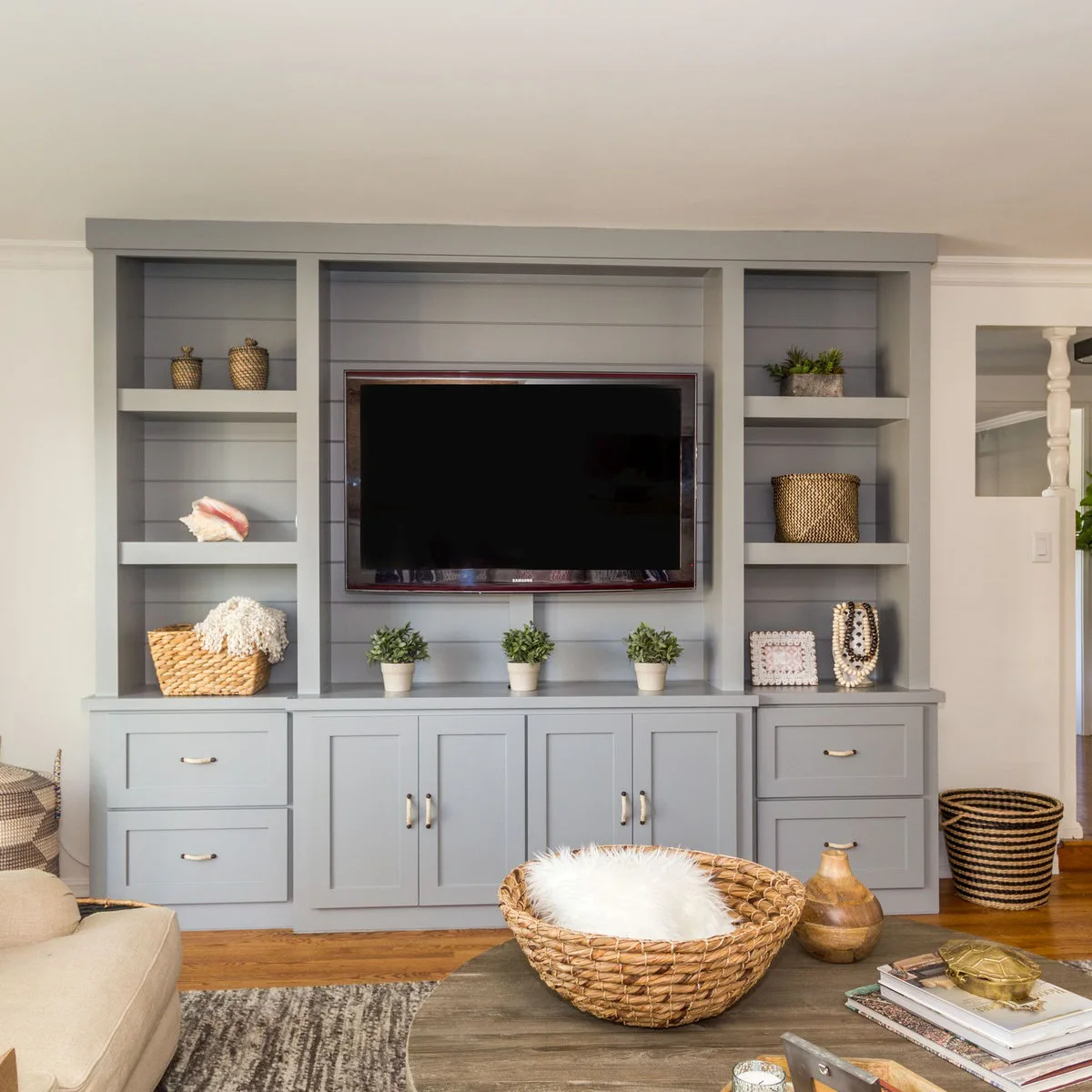
Three small pots establish a simple rhythm beneath the television. Gray shelves frame the screen, with baskets and other objects filling the outer sections instead of crowding the center. The matching lower cabinetry gives the whole arrangement a continuous base.
Keep pots short enough that their foliage will not grow across the screen, and tend them away from the equipment. If suitable light is limited, use empty vessels or other low objects instead. Leave enough access to clean behind each piece and to reach the television without emptying every shelf.
IDEA 17 / 20
Carry Basket Texture into the Side Shelves
 SaveSupport Non AI Creator
Image credit: Suzanna Scott
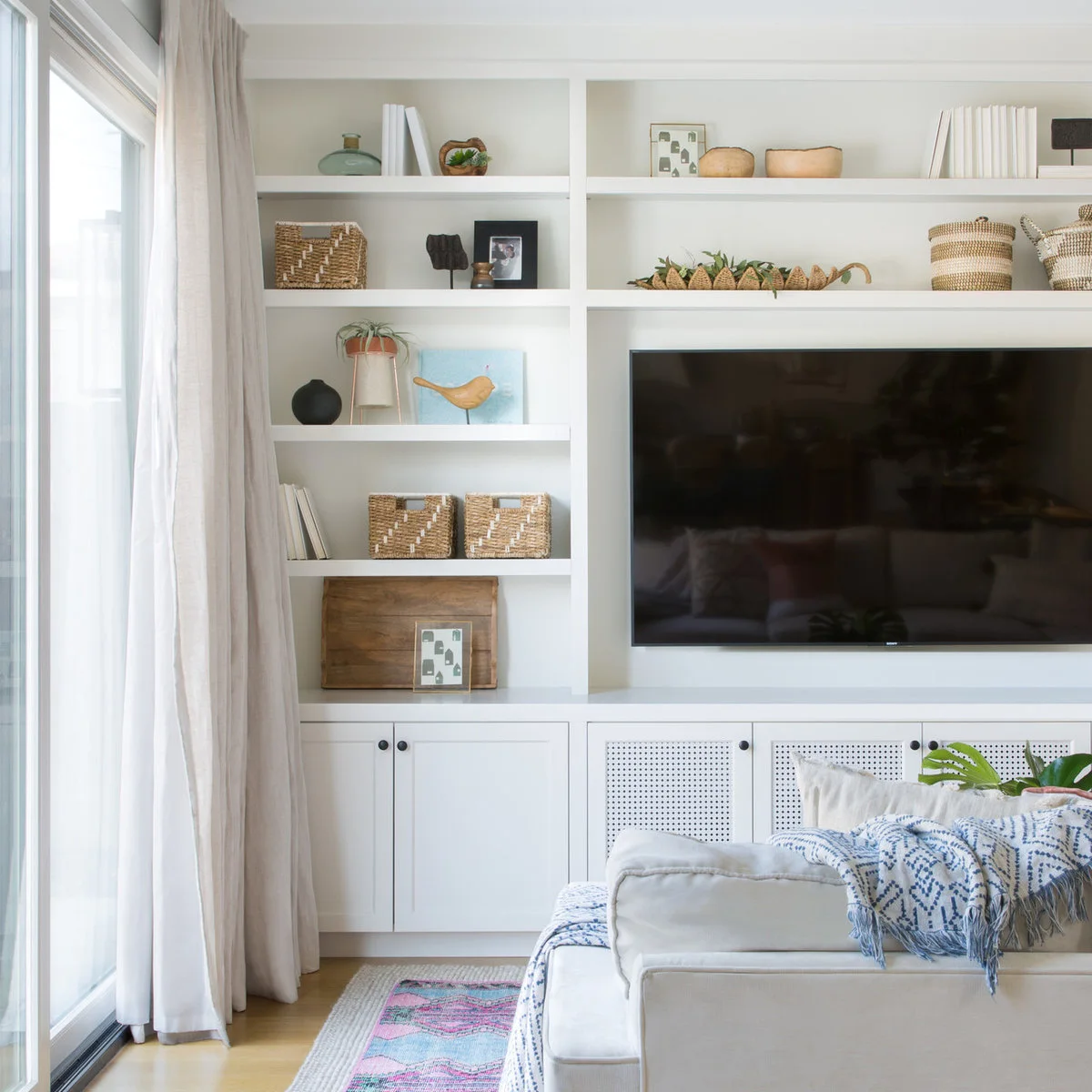
Woven baskets and small artworks move the decorative interest into the shelves beside the screen. Their warm tones soften the white built-in, while the lower doors keep additional storage concealed. The surface immediately beneath the television is left comparatively clear.
Arrange baskets for the items they will actually hold, not just for a matching look. Check shelf depth, load limits and access before buying several containers. Perforated-looking doors do not by themselves confirm adequate ventilation, so plan any concealed devices around their own installation requirements.
IDEA 18 / 20
Use One Side Group beside a Standing Television
 SaveSupport Non AI Creator
Image credit: Project: Jonathan Adler (via Houzz)
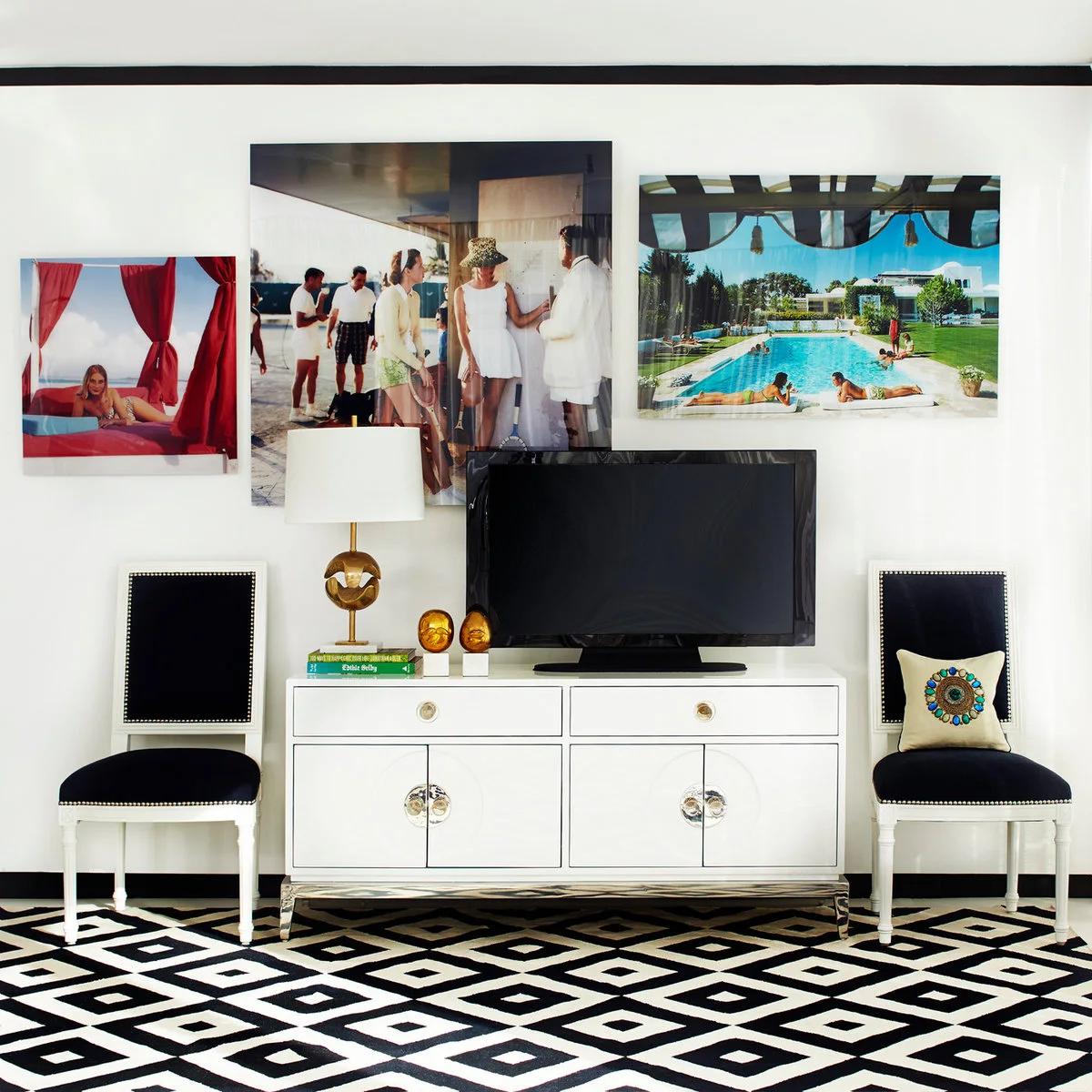
The television occupies one side of the console, while the lamp and small objects form a distinct group beside it. Gold-colored details connect the accessories with the console hardware. Dark chairs frame the furniture, extending the black-and-white palette beyond the cabinet itself.
For a standing television, use furniture designed for that purpose and secure the television and unit as instructed. Keep small tempting objects out of climbing reach where children are present. Test whether a lamp causes screen glare before using this arrangement, and route its cord separately from accessible edges.
IDEA 19 / 20
Balance a Long Cabinet with Just Three Elements
 SaveSupport Non AI Creator
Image credit: Project: Four Brothers Design + Build (via Houzz)
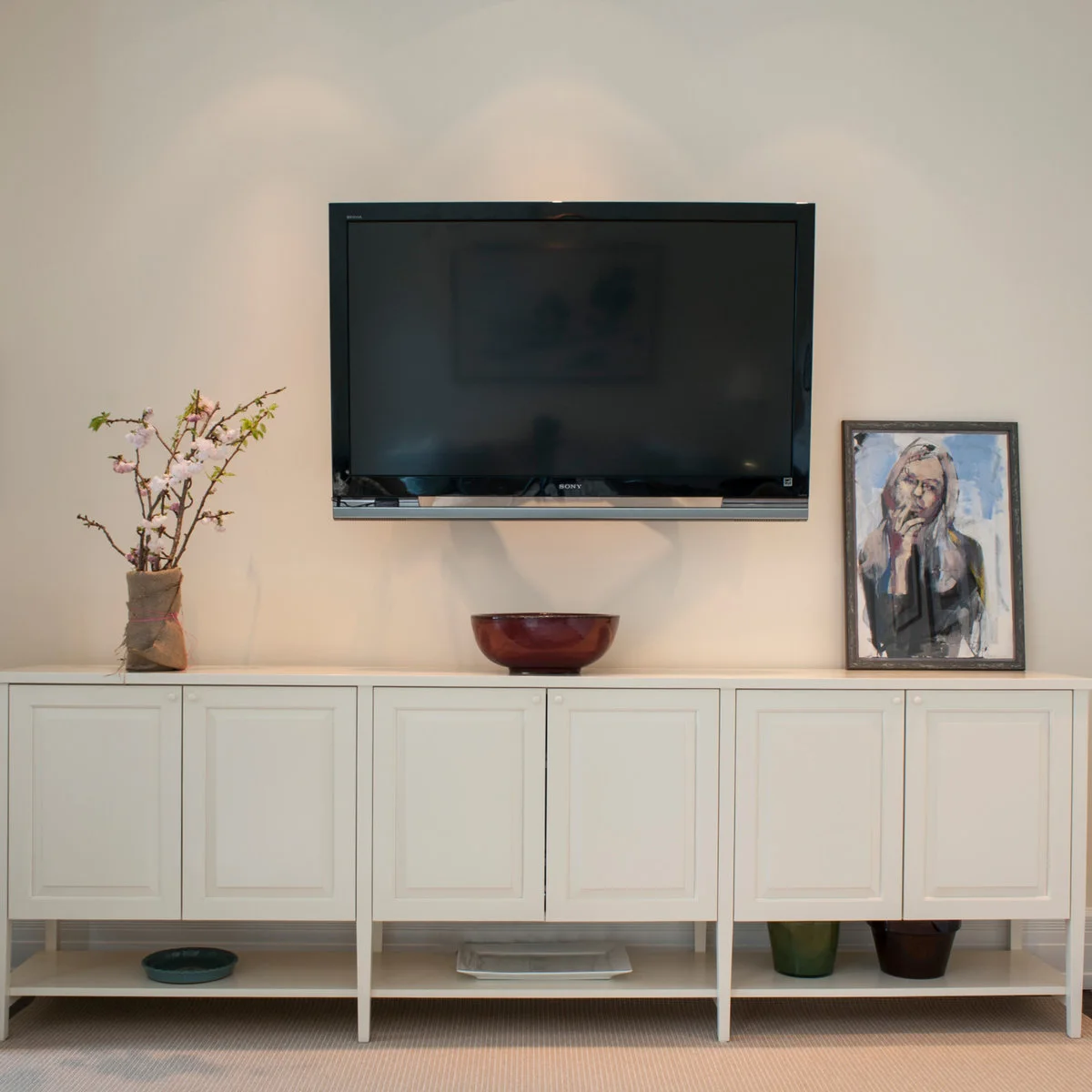
The flower arrangement, low bowl and portrait create three distinct points along the long white cabinet. The center stays low beneath the screen, with taller items placed toward the ends. Open lower shelving provides another storage layer without adding objects across the whole top.
Use this spacing as a starting point, then check the actual height of each item against the screen from your seat. Secure or safely mount artwork rather than assuming a leaning frame will stay put. Keep plant care away from electronics and avoid filling the lower shelf simply because it is visible.
IDEA 20 / 20
Let Lit Display Cabinets Frame a Clear Center
 SaveSupport Non AI Creator
Image credit: Project: Xavier's Collection Fine Cabinetry (via Houzz)
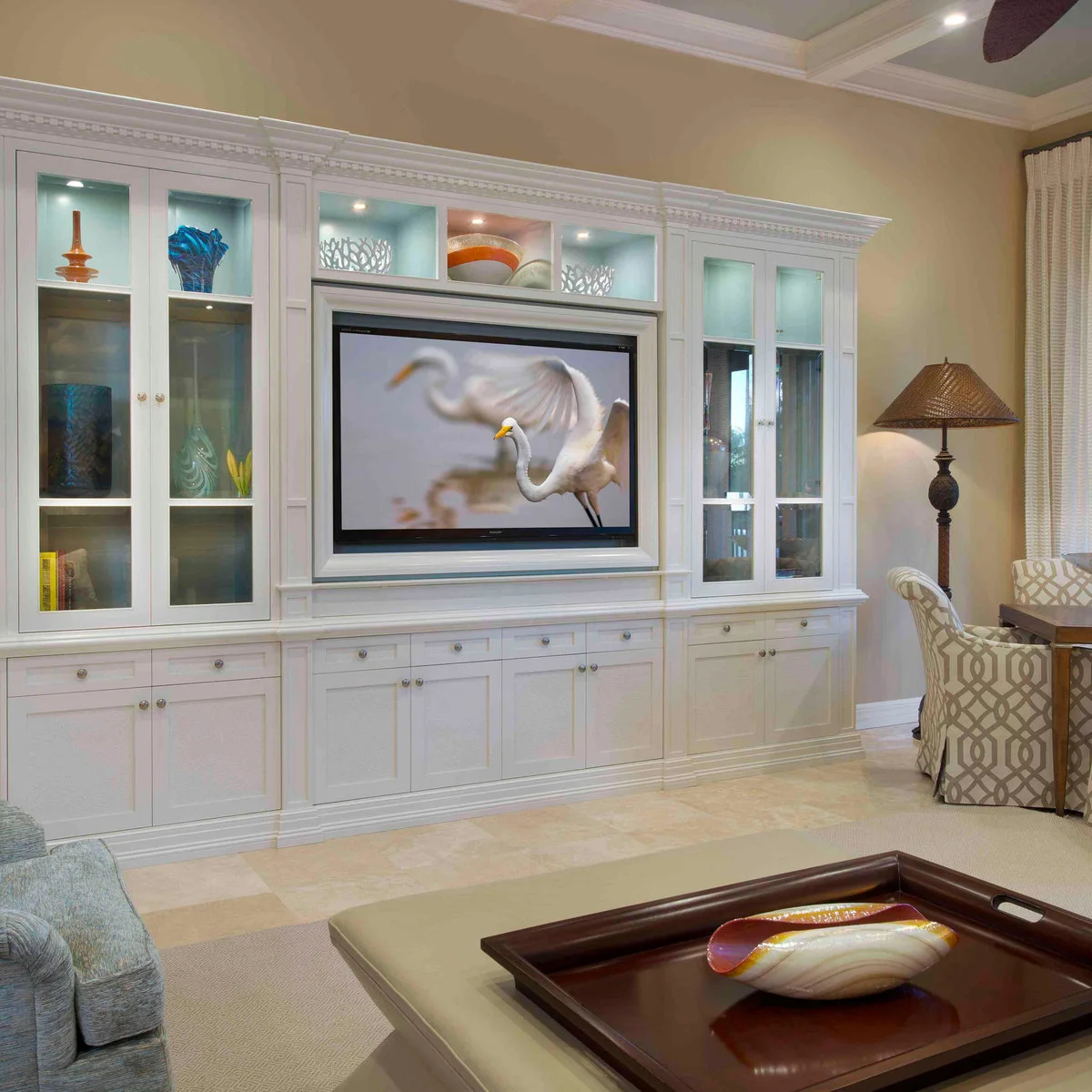
Glass-front side sections and small upper cubbies carry the decorative objects around the television rather than across its lower edge. The white doors and trim connect the separate compartments. Plain cupboards below provide a quieter foundation for the more detailed upper display.
Plan lighting and shelving around actual objects, allowing comfortable access for cleaning and replacement. Avoid overfilling glass-front cabinets, where every stored item remains visible. Keep the television recess sized to its instructions and leave service access; a fitted appearance should not make future equipment changes unnecessarily difficult.
BRING IT ALL TOGETHER
Test the view from your usual seat
Arrange the useful equipment first, with its required ventilation and an accessible route to cables. Then sit down and check the screen, speaker and remote receiver. Add a small number of objects around those fixed needs rather than creating a display you have to dismantle to watch television.
Secure the TV and furniture according to their instructions, and keep tempting objects out of climbing reach where children are present. If the television stands on furniture, use a unit designed for that purpose. Choose decor that is stable, easy to dust and simple to remove for servicing.