A Thanksgiving place setting should make guests feel expected and give them room to eat comfortably. Start with the plates, utensils and glasses the meal needs, then add one personal or seasonal detail. A legible card, folded napkin or small pumpkin can make the place feel considered without a crowded collection.
These photographs show different ways to arrange that detail with plain, patterned and mixed crockery. They are decorating examples rather than fixed instructions for a formal service. Move cards, craft pieces and decorative produce away before food is served, and choose the number of layers around your menu and table space.
PART 01
Use harvest details and a clear color palette
IDEA 01 / 20
Tie a Name Tag to a Clean Apple
 SaveSupport Non AI Creator
Image credit: Photo: Marian Parsons, Mustard Seed Interiors . From: Marian Parsons
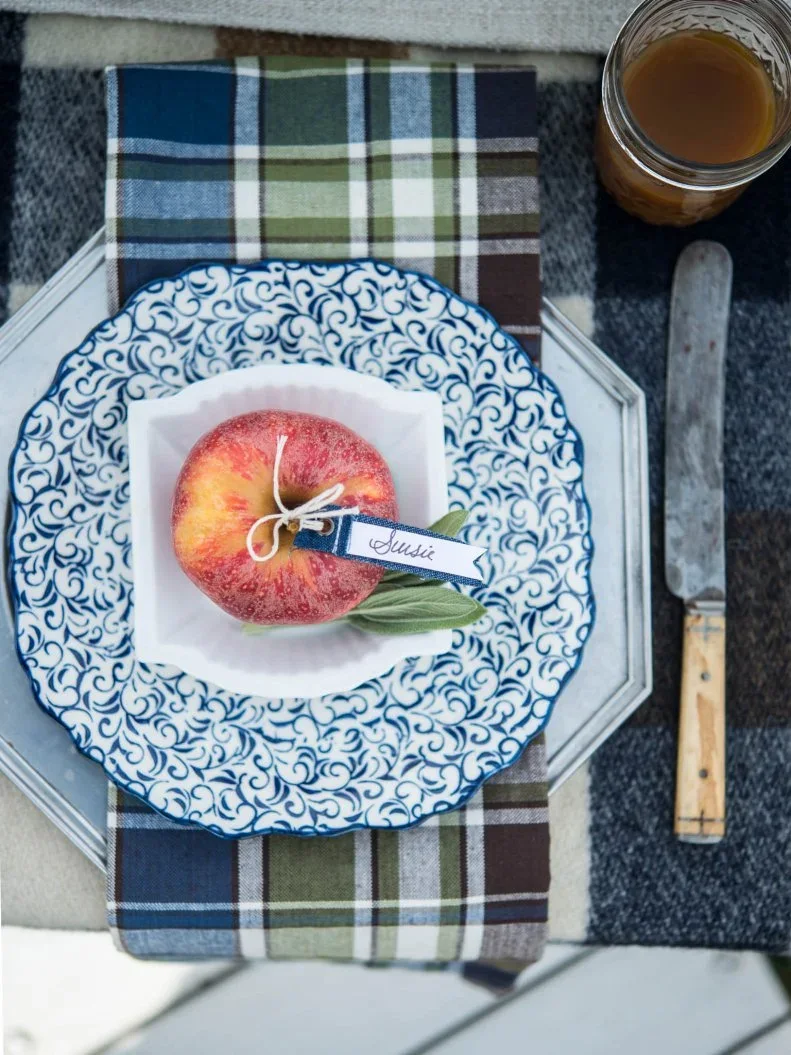
The apple carries a small name tag at the center of the blue patterned plate, making the seat easy to identify without a separate stand. A checked napkin picks up blue and green from the surrounding pieces. The leaf is a smaller decorative detail, allowing the fruit and name to remain the main focus.
Write the names clearly before attaching the tags and check that each apple sits securely on the plate. Use a removable tie, keeping glue or finishes away from fruit intended to be eaten. If you prefer greenery as the wider table theme, green Thanksgiving tablescape ideas compare this small accent with linens, glassware and central arrangements.
IDEA 02 / 20
Gather Wheat and Green Stems into One Bundle
 SaveSupport Non AI Creator
Source: www.hgtv.com
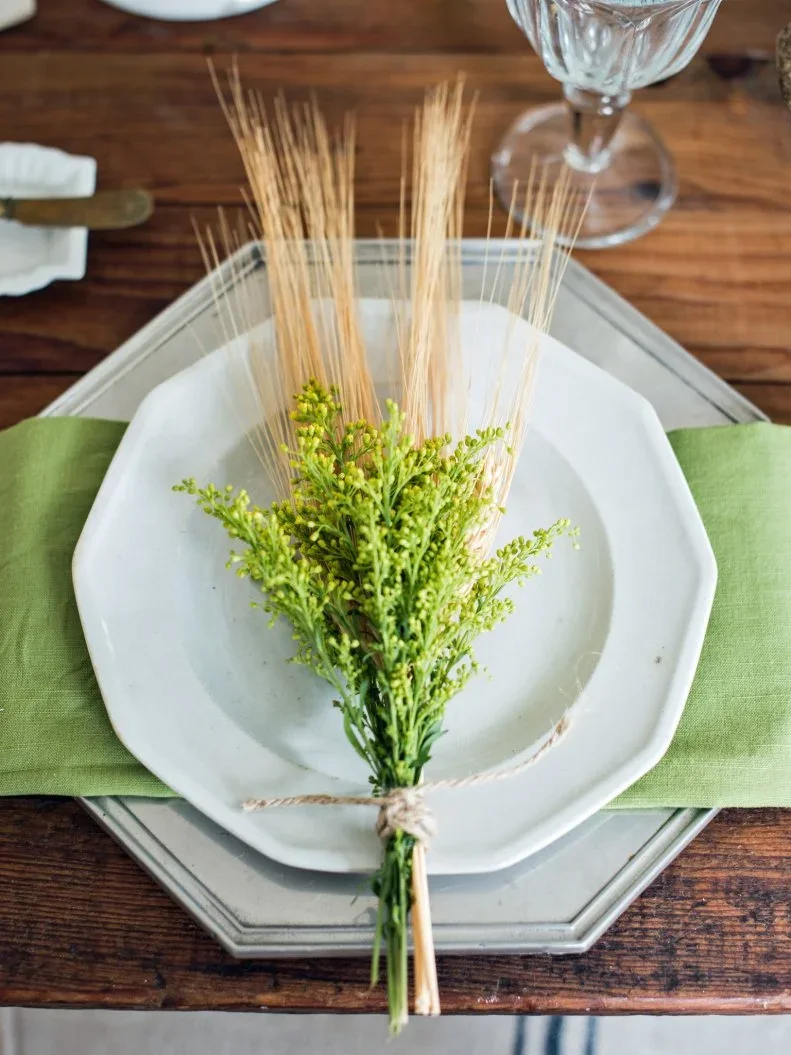
The tied bundle combines pale wheat with bright green stems, giving the white plate a small seasonal decoration. A green napkin repeats the color beneath the plate stack. The gray charger provides another border without a strong pattern, so the bundle remains easy to see and can be removed as one piece.
Trim the stems to fit within the plate and tie them before setting the table, checking for loose pieces. Keep the bundle separate from food and provide somewhere to put it before serving. Compare the napkin color with the actual greenery rather than trying to buy a perfectly matching shade from a screen.
IDEA 03 / 20
Use an Artichoke Beside Pale Plates
 SaveSupport Non AI Creator
Source: www.hgtv.com
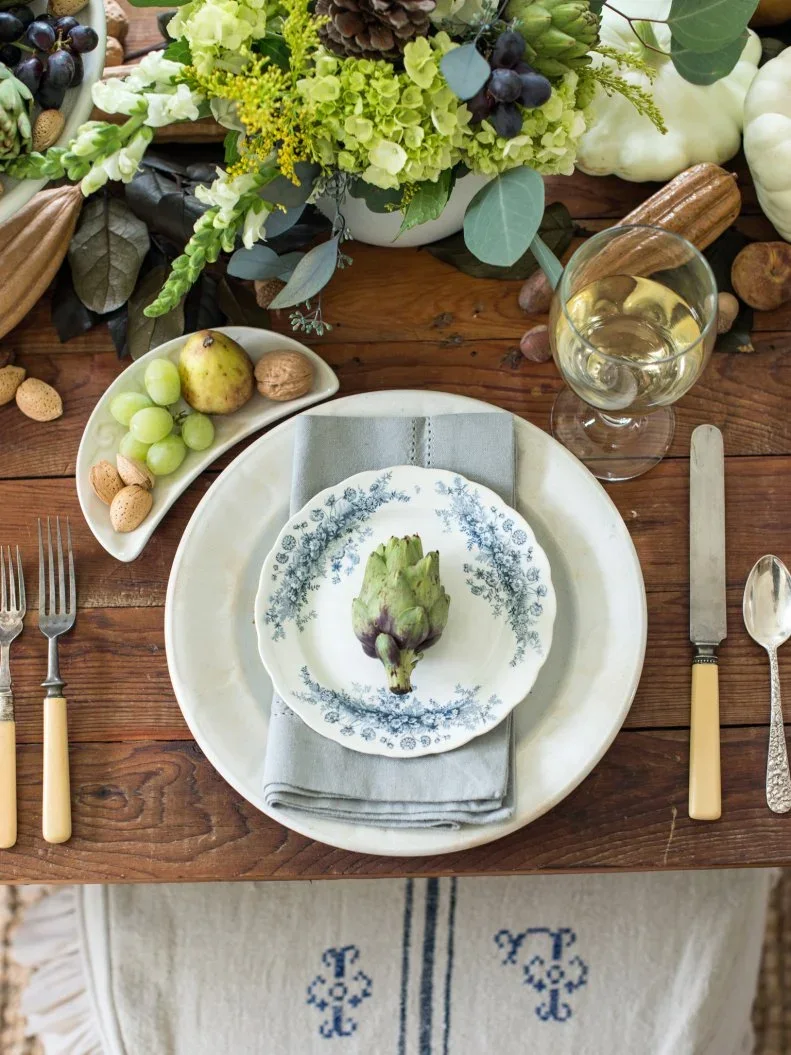
The artichoke gives this place setting a larger green shape against the delicate pattern on the small plate. Pale linens keep the border simple, while grapes and flowers nearby extend the harvest theme. The decoration is concentrated in one object, so the place can be cleared without dismantling several small pieces.
Inspect and clean decorative produce before use, and decide whether it is display or part of the meal. Keep any treated items separate from food. Test the stability of the vegetable on the plate and move it aside before serving; the decoration should not make the place harder to use once guests sit down.
IDEA 04 / 20
Bring a Coastal Palette to the Holiday Table
 SaveSupport Non AI Creator
Image credit: Photo: Heather Baird SprinkleBakes.com
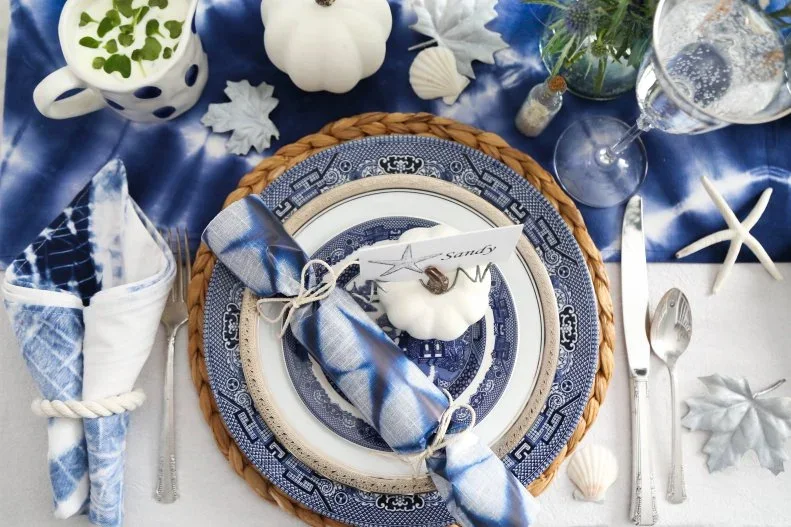
Blue-and-white plates establish a coastal palette, while the small pale pumpkin keeps the place connected with the holiday. A blue napkin and woven charger repeat the surrounding colors and texture. The name card sits on the upper plate, giving it a clearer position than a tag hidden among the nearby shells and star shapes.
Choose a few coastal details rather than placing every themed object around the cutlery. Keep the name easy to read and remove loose decorations before eating. Coastal dining room ideas offer broader room arrangements that can support this palette, especially when existing blue textiles or pale furniture already give the space a coastal character.
IDEA 05 / 20
Repeat Plum in the Napkin and Glasses
 SaveSupport Non AI Creator
Image credit: Photo: Erika LaPresto. From: HGTV Magazine
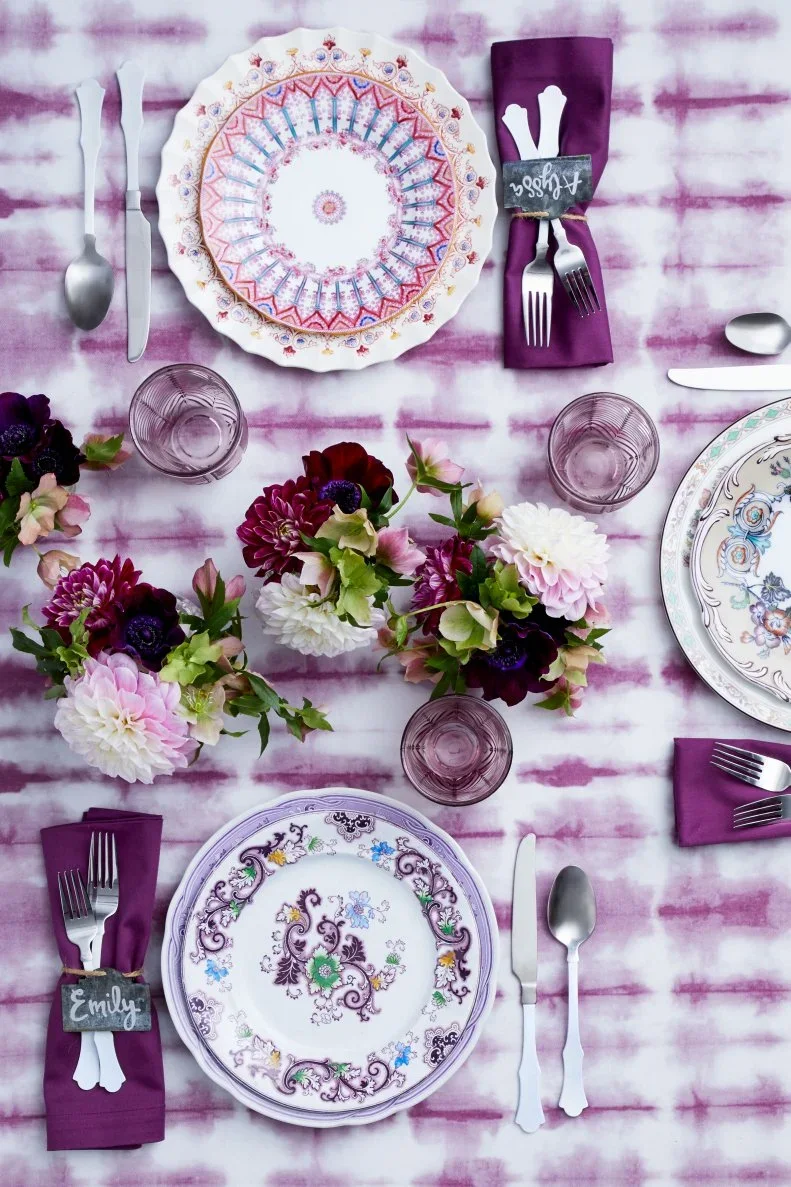
Purple napkins and tinted glasses carry the plum color between the place settings, with patterned plates adding finer detail. Small dark name cards sit across the cutlery rather than inside the plate pattern. The floral arrangement follows the same color family, giving the individual places and centerpiece a clear relationship.
Check that the names contrast well with the card surface and can be read in the room’s evening light. Plan how guests will remove the card without dropping the cutlery. If the plates already have a detailed pattern, keep the folded napkin straightforward and let the repeated plum color do most of the coordinating.
PART 02
Make plates and napkins work together
IDEA 06 / 20
Mix Patterned and Plain Plates Deliberately
 SaveSupport Non AI Creator
Source: www.hgtv.com
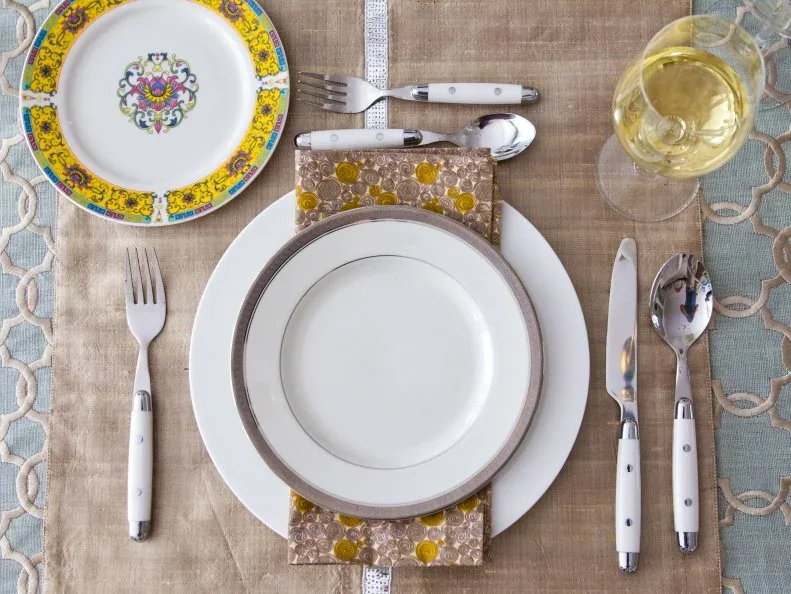
A plain white dinner plate gives the main place a quiet center, while a floral side plate introduces a stronger yellow-and-blue pattern. The napkin adds smaller repeated motifs underneath. White-handled cutlery links the different plates, helping the mixture feel intentional even though the patterns are not identical.
Choose one repeated color or a consistent cutlery set when mixing crockery from different collections. Test the whole arrangement with the serving pieces before setting every place. Keep any patterned side plate sized for its intended use, and leave enough space for glasses instead of expanding the plate collection purely to fill the mat.
IDEA 07 / 20
Keep Tied Cutlery Simple on a Pale Plate
 SaveSupport Non AI Creator
Source: www.hgtv.com
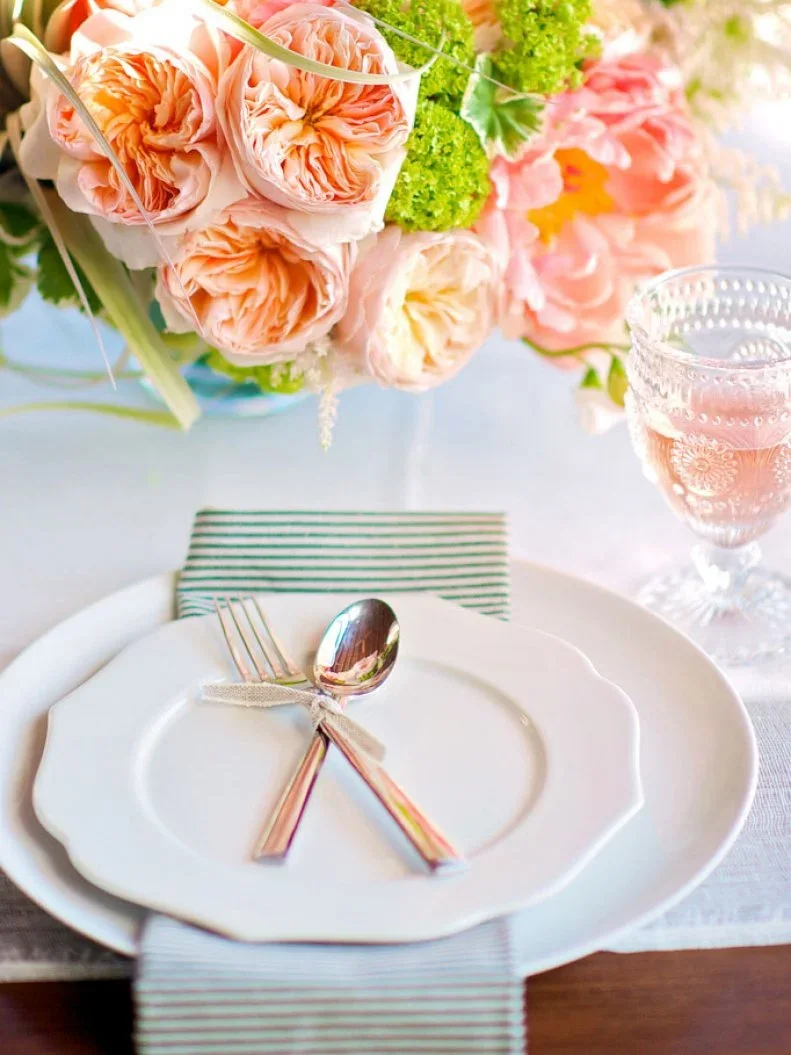
The tied spoon and fork create one small central detail on the pale scalloped plate, with a green-striped napkin supplying restrained color beneath it. Peach-toned flowers add warmer color nearby. Because the plate stays plain, the tie and cutlery are easy to distinguish without another individual decorative object.
Tie the cutlery loosely enough that guests can separate it without effort, and choose a clean tie that does not shed onto the plate. Set out only utensils needed for the meal. Place the floral arrangement where it leaves clear room for glasses and hands, rather than letting the close styling in the photograph determine the final distances.
IDEA 08 / 20
Use a Thankful Message in the Linen
 SaveSupport Non AI Creator
Image credit: From: Marian Parsons
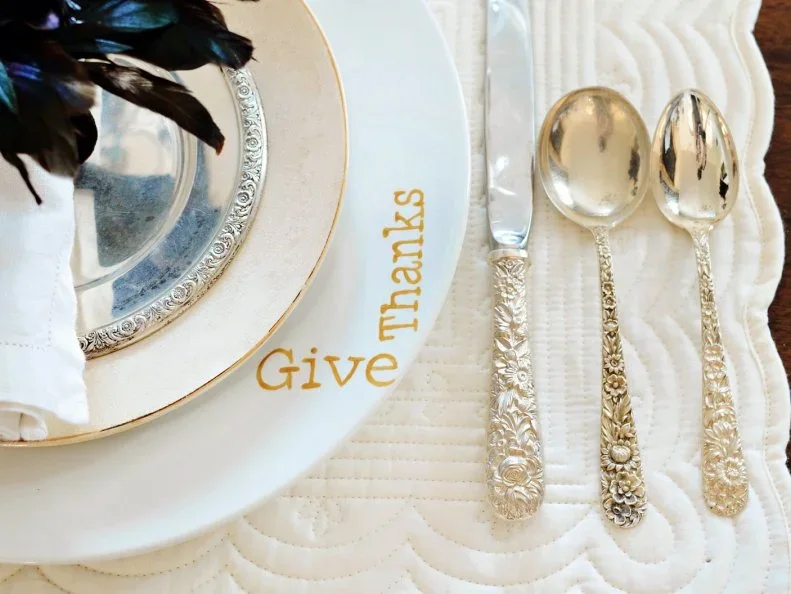
The thankful message adds the holiday detail directly to the pale napkin, avoiding a separate printed card at the place. Pale plates with warm metallic rims repeat a restrained highlight around the setting. Silver-colored cutlery brings another finish, while the large pale surfaces leave the lettering easy to see.
Fold the napkin so the message remains visible without making it awkward to unfold. Check the actual linen’s washing guidance before choosing lettering or embellishment for repeated use. If you combine metallic finishes, repeat each in a purposeful piece and keep the rest of the setting simple rather than adding ornaments to force a match.
IDEA 09 / 20
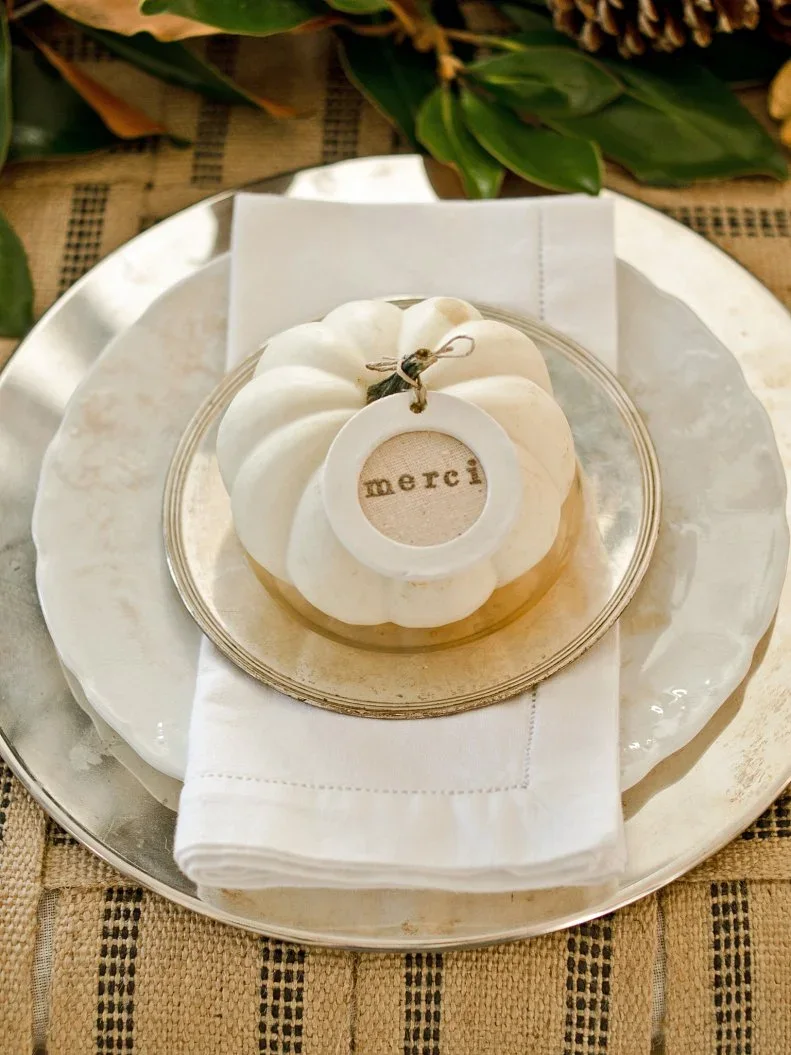
Put a Small Tag on a Pale Pumpkin
 SaveSupport Non AI Creator
Image credit: From: Marian Parsons
The small pale pumpkin provides a clear center above the white napkin, with a round tag adding a thankful message. Pale plates keep the arrangement quiet and let the pumpkin’s shape supply most of the decoration. The layered setting uses one seasonal object instead of several loose items spread around the plate.
Check the pumpkin for marks or moisture before placing it on fabric, and choose a clean removable tag. Plan where guests can put the pumpkin before the first course arrives. Keep the plate stack limited to pieces needed for dinner; a photograph’s decorative layers do not all need to stay on the table during the meal.
IDEA 10 / 20
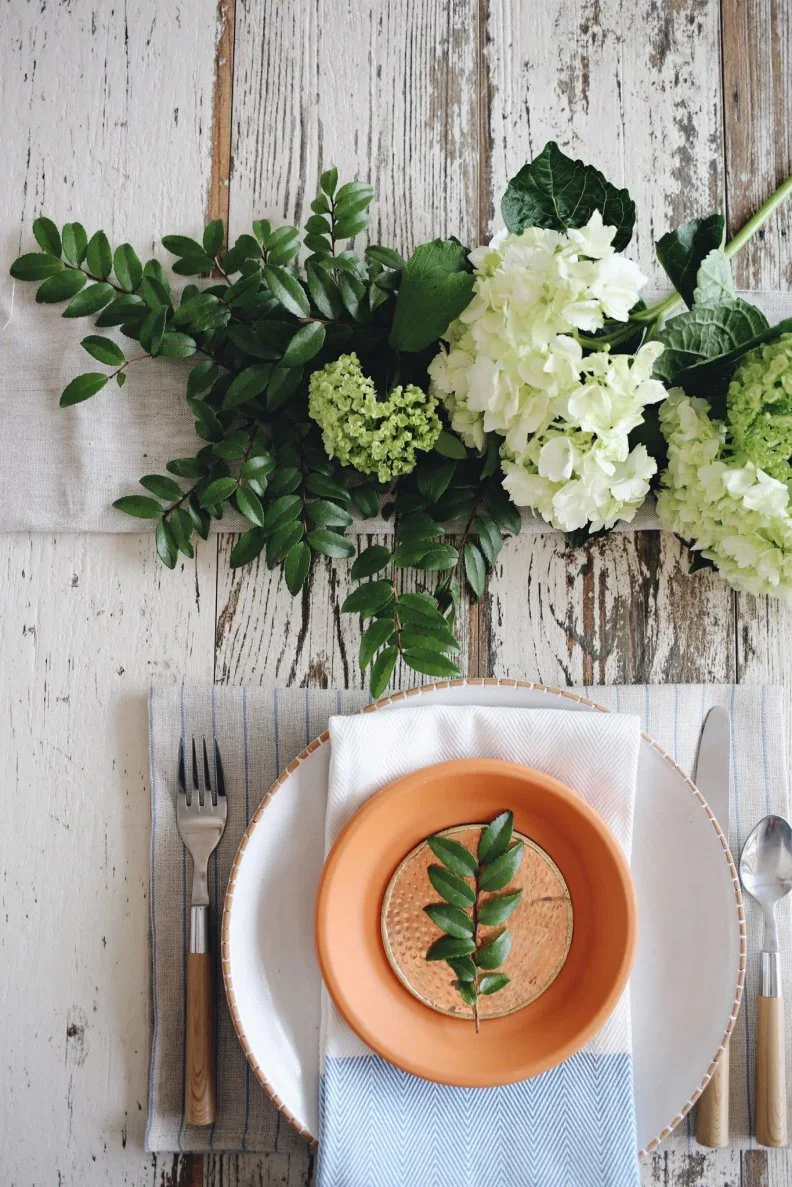
Use One Green Sprig with a Warm Accent Plate
 SaveSupport Non AI Creator
Image credit: Photo: Shain Rievley. From: Kristin Guy
The small orange plate gives the green sprig a clear contrasting background, while the larger pale plate and white napkin keep the rest of the setting quieter. A green-and-white arrangement nearby repeats the natural theme. One stem adds enough detail to connect the place with the centerpiece without making an individual bouquet.
Use clean, identifiable decorative foliage and remove it before serving food. Confirm that the small plate is appropriate for its intended use instead of assuming a decorative surface is suitable for eating. Keep the stem within the plate border so it does not catch on glasses or clothing when guests sit down.
PART 03
Keep the seasonal detail easy to move
IDEA 11 / 20
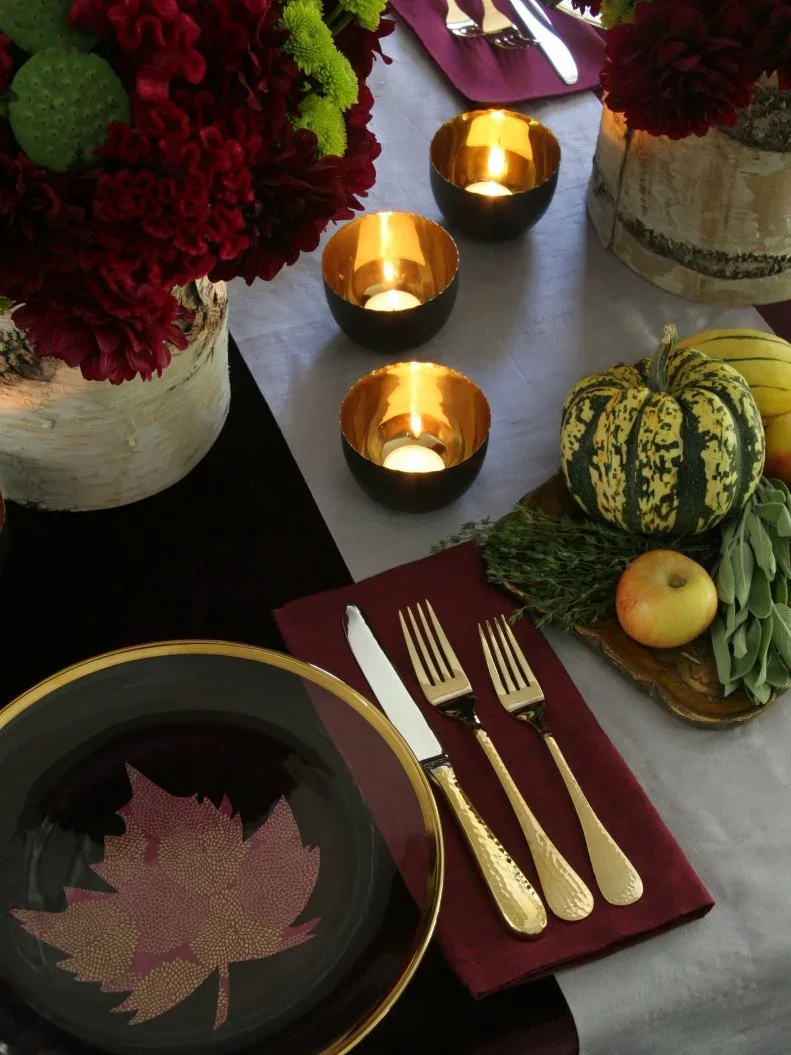
Set a Leaf Shape Against a Dark Plate
 SaveSupport Non AI Creator
Source: www.hgtv.com
A leaf shape stands out against the dark plate, giving the place a seasonal motif without a large object in the middle. Gold-colored cutlery repeats the warm rim, while the plum napkin adds a deeper color beside it. Green gourds and flowers nearby offer contrast to the darker individual setting.
Use a clean removable decorative leaf or a plate with its own suitable printed motif, keeping loose materials separate from food. Test the dark setting under the lights used for dinner, especially if you add a name card. Keep serving ware practical; pale food can provide enough contrast without another decorative layer on the plate.
IDEA 12 / 20
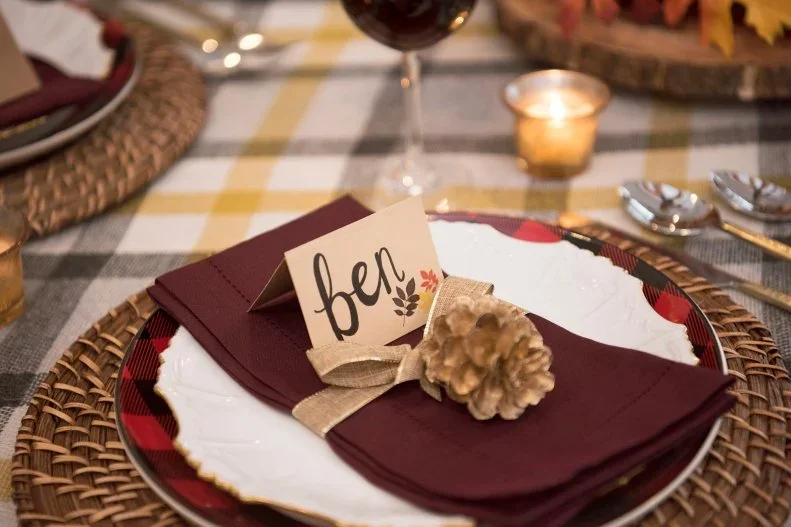
Make a Name Card Part of the Napkin Fold
 SaveSupport Non AI Creator
Image credit: Photo: Sarah Busby; Styling by H. Camille Smith. From: H. Camille Smith
The handwritten card identifies the seat above the plum napkin, with a small pinecone adding a seasonal shape nearby. A woven charger separates the pale plate from the checked tablecloth. The name is placed on a quiet card surface, so it remains easier to read than lettering written directly on the patterned fabric.
Keep the card upright or securely positioned so it does not disappear beneath the napkin. Check decorative pinecones for loose pieces and move them away before serving. If the cloth has a strong check, repeat a plain napkin color across the table rather than adding another detailed pattern at every place.
IDEA 13 / 20
Place a Pear on a Quiet Inner Plate
 SaveSupport Non AI Creator
Image credit: From: Brian Patrick Flynn
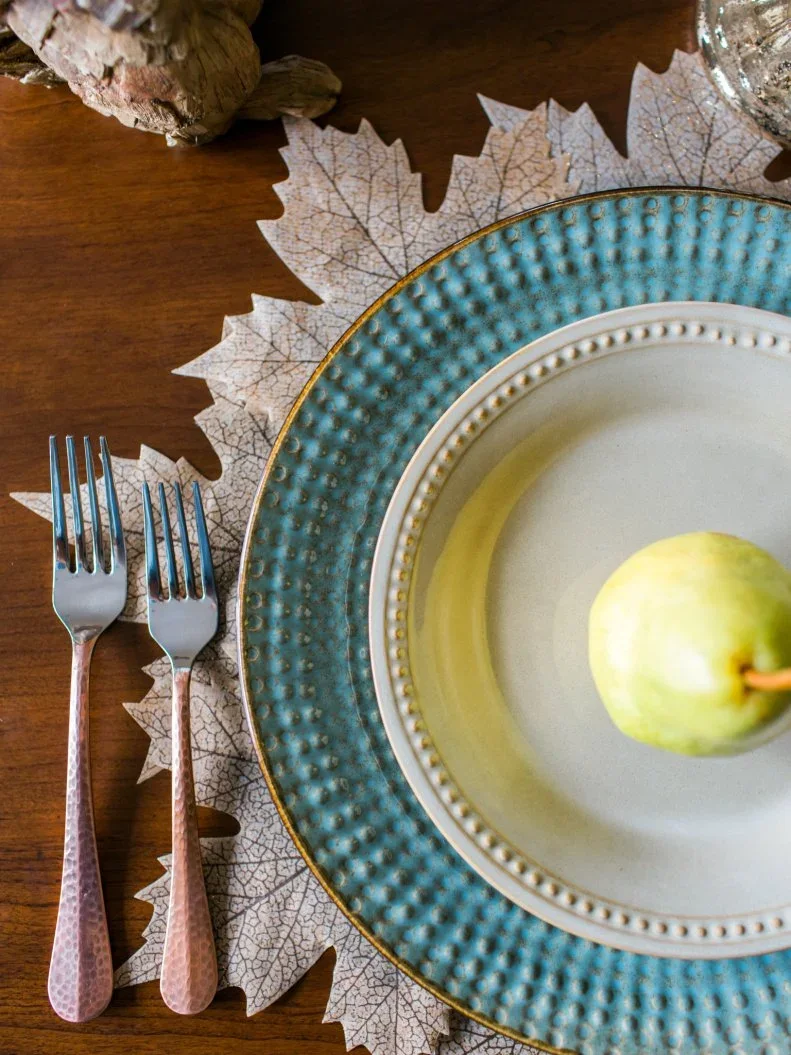
The green pear sits on a plain white plate, giving the fruit a quiet background above the more textured turquoise charger. A leaf-shaped mat adds a seasonal outline at the edge. Warm-toned cutlery provides another color without covering the plate, keeping the place centered on one small harvest object.
Use a stable, clean pear and decide whether it will be eaten before adding tags or surface treatments. Compare the charger and mat with the actual table space so their borders do not crowd neighboring settings. Move the fruit aside before serving if needed, leaving the plain inner plate useful for the meal.
IDEA 14 / 20
Give Children a Clear Turkey Name Card
 SaveSupport Non AI Creator
Source: www.hgtv.com
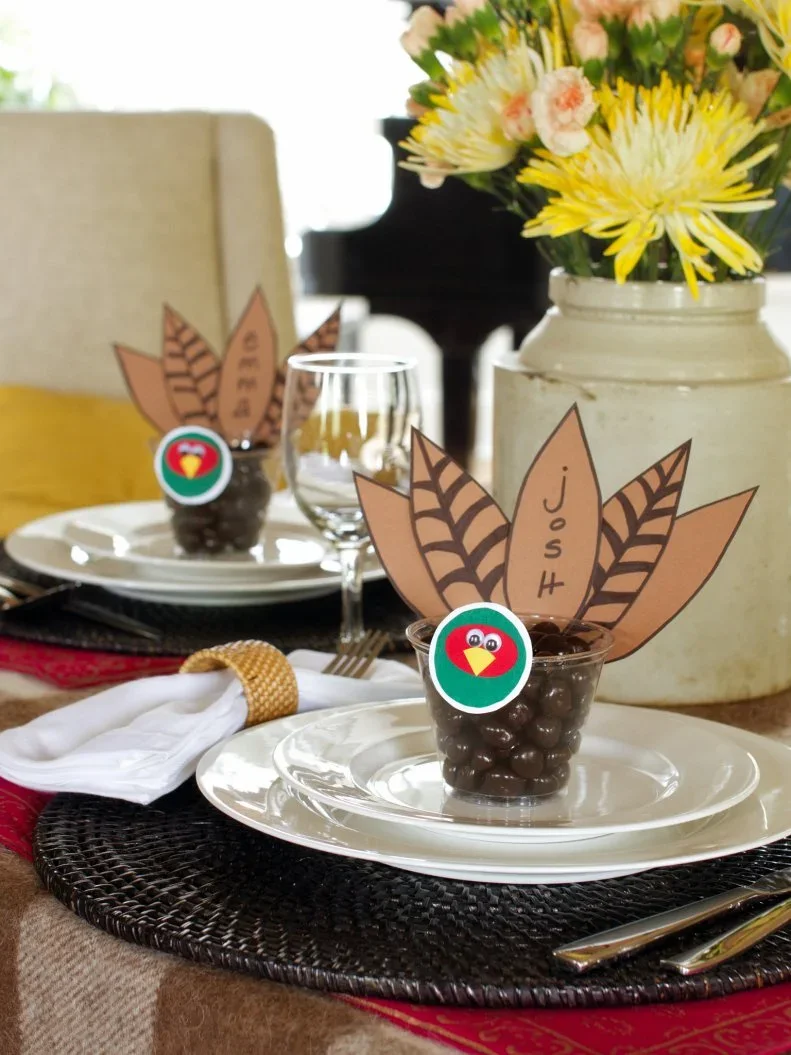
The paper turkey carries each child’s name in a larger, easy-to-see shape, with a small clear cup supporting it above the plate. Pale crockery and white napkins leave the craft as the main detail. Repeating the same basic turkey outline makes the places feel connected while allowing the names to distinguish the seats.
Use age-appropriate materials and keep loose craft pieces separate from food. A small stand can replace the filled cup if you want the card without an extra container at each place. Set the cards where children can move them easily, and choose practical plates and glasses for the guests actually using the table.
IDEA 15 / 20
Choose a Simple Folded Holiday Card
 SaveSupport Non AI Creator
Image credit: Photo: Liliboas
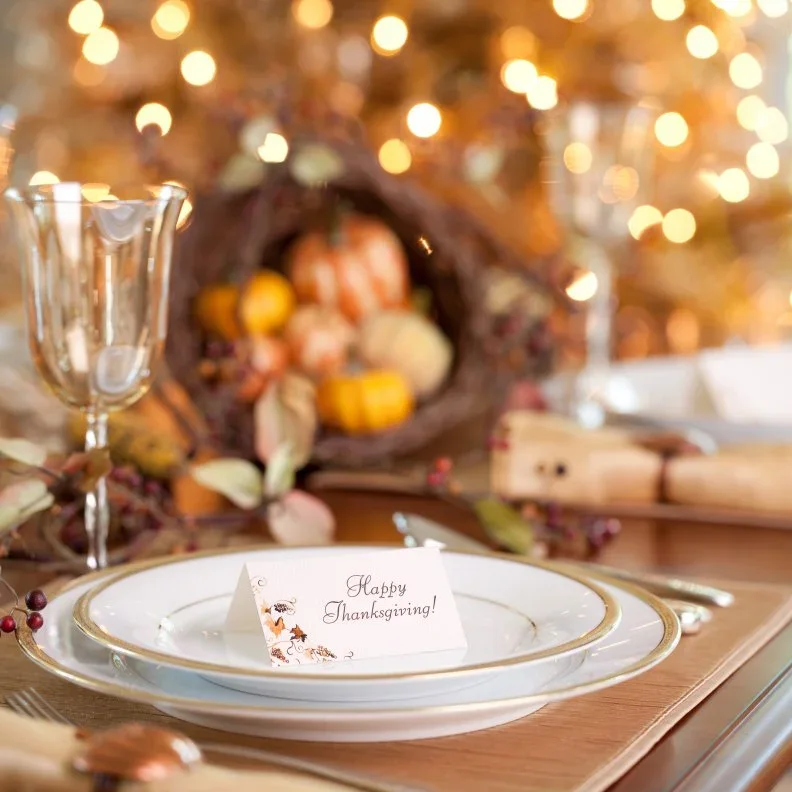
The folded holiday card adds a clear greeting above the pale plate, with its upright position making it visible from across the table. Warm metallic rims repeat the surrounding seasonal colors without another strong pattern. Clear glassware keeps the place lighter, leaving the small card and plate outline as the main individual details.
Write a guest’s name on the card if it also needs to identify the seat, and test the fold so it stands securely. Keep it low enough that guests can see the table beyond. A separate message does not need another ornament beside it; leave the remaining space useful for the meal and move the card before serving.
PART 04
Finish with a personal, readable detail
IDEA 16 / 20
Let a Monogrammed Napkin Carry the Detail
 SaveSupport Non AI Creator
Image credit: Photo: Stacey Brandford Photography
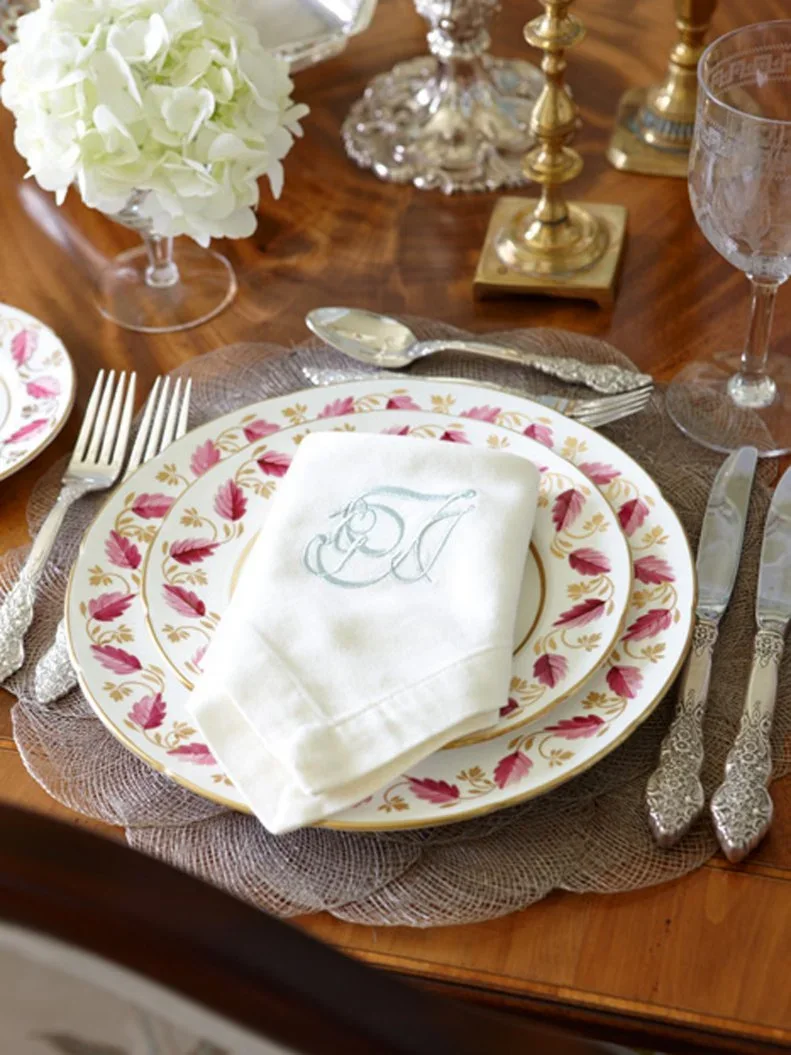
The monogram gives the pale napkin a personal detail over the floral plate pattern. Silver-colored cutlery and clear glassware add finer outlines, while warm-toned candleholders provide a different finish nearby. The folded linen leaves part of the plate’s floral border visible, allowing both pieces to contribute without covering one completely.
Use monograms as decoration unless they clearly identify the guest; add a small name card if seating needs to be unambiguous. Check the washing guidance before choosing embroidery or special finishes for a large set. Fold the napkin for easy removal, and keep the place simple enough that guests can begin eating without moving several keepsakes.
IDEA 17 / 20
Support a Name Card on a Small Wood Slice
 SaveSupport Non AI Creator
Source: www.hgtv.com
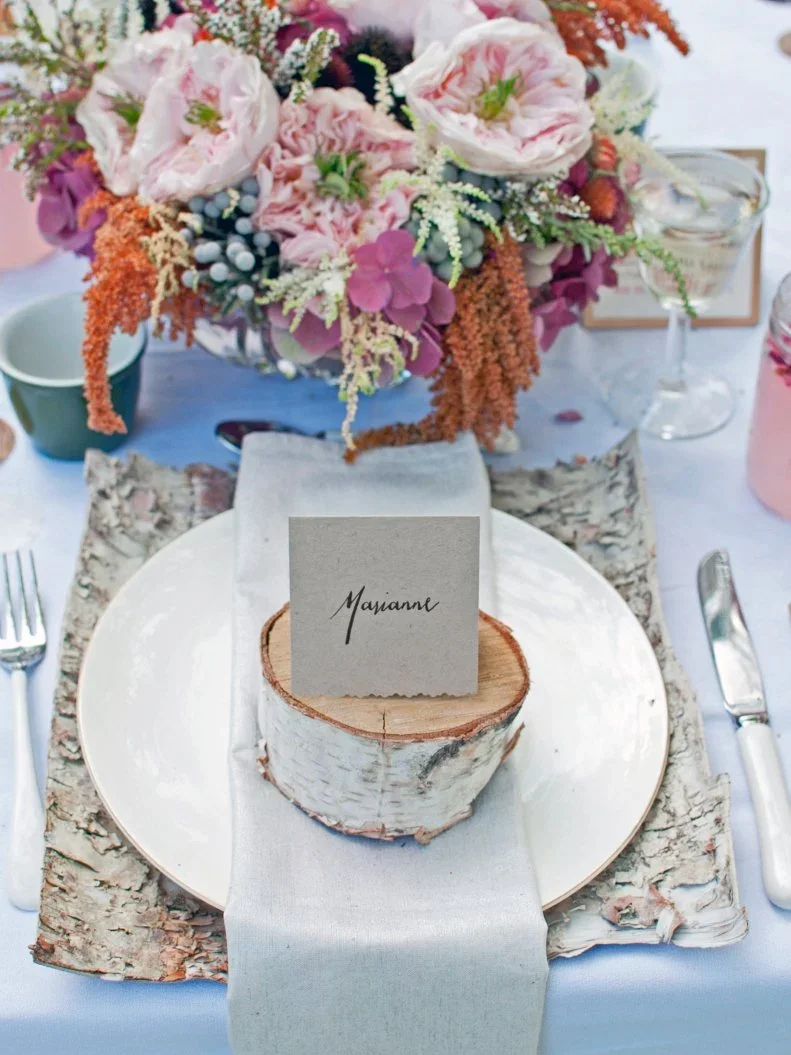
The small wood slice supports the name card at the center of the plate, making the writing the main individual detail. A pale napkin provides a quieter background, while the bark-patterned mat repeats the wood theme beneath the crockery. Flowers nearby add color without requiring the name holder itself to be decorated further.
Inspect the holder for rough edges and use a clean, stable piece that does not shed material onto the plate. The photograph does not establish how the card slot was made, so choose a ready-made or appropriately prepared holder rather than improvising an unsafe cut. Move it aside before serving and store dry for reuse.
IDEA 18 / 20
Put a Name Card Behind a Gold-Toned Pear
 SaveSupport Non AI Creator
Source: www.hgtv.com
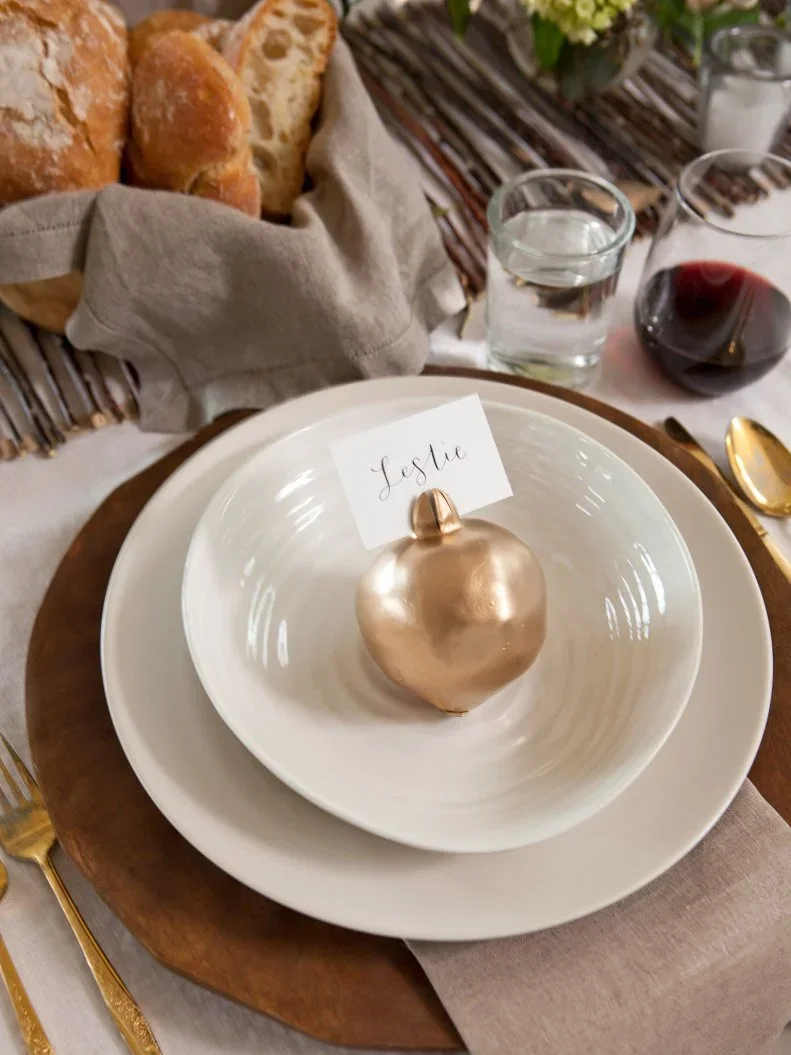
The gold-toned pear creates one warm focal point inside the white bowl, with the pale name card positioned behind it. A simple napkin and round charger leave the setting restrained around the seasonal object. The card and pear work as one small group, giving the place a clear identity without extra lettering on the crockery.
Treat finished decorative fruit as display and keep it separate from food. Make sure the name remains readable when viewed from the guest’s chair, then move the ornament before the bowl is used. If you already have plain crockery, one repeated decorative finish can coordinate the table without replacing the dishes.
IDEA 19 / 20
Use a Small Cork Name Holder
 SaveSupport Non AI Creator
Source: www.hgtv.com
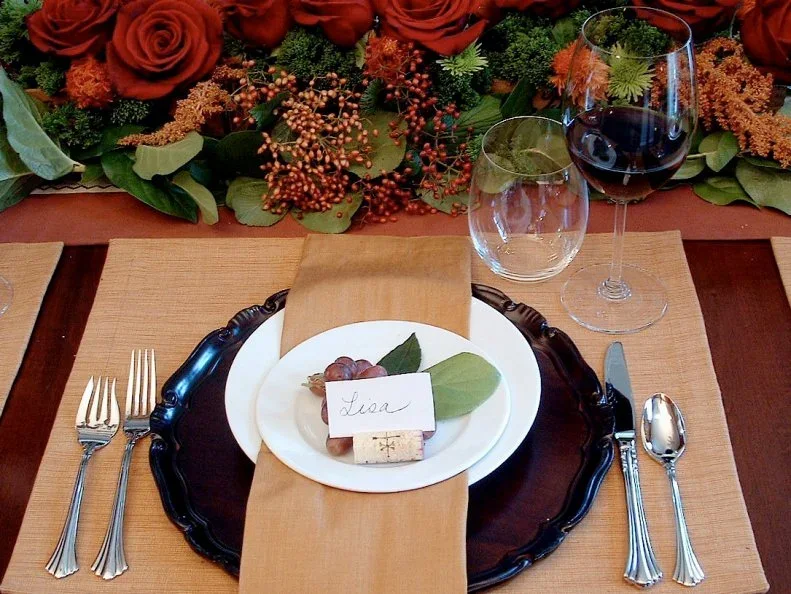
The cork gives the name card a small freestanding support, keeping the name clear above the white plate. Grapes and leaves supply harvest detail behind it, while the darker charger frames the setting. A plain folded napkin extends beneath the plate, allowing the individual decorative group to stay compact.
Use a clean stable holder and test that it grips the card without tipping. Keep decorative foliage and any treated objects separate from grapes intended for eating. Choose the card size around legibility rather than making it large enough to dominate the setting, and remove the small pieces before serving to keep them from being misplaced.
IDEA 20 / 20
Layer a Paper Leaf Beneath a Personal Greeting
 SaveSupport Non AI Creator
Image credit: From: Kim Stoegbauer
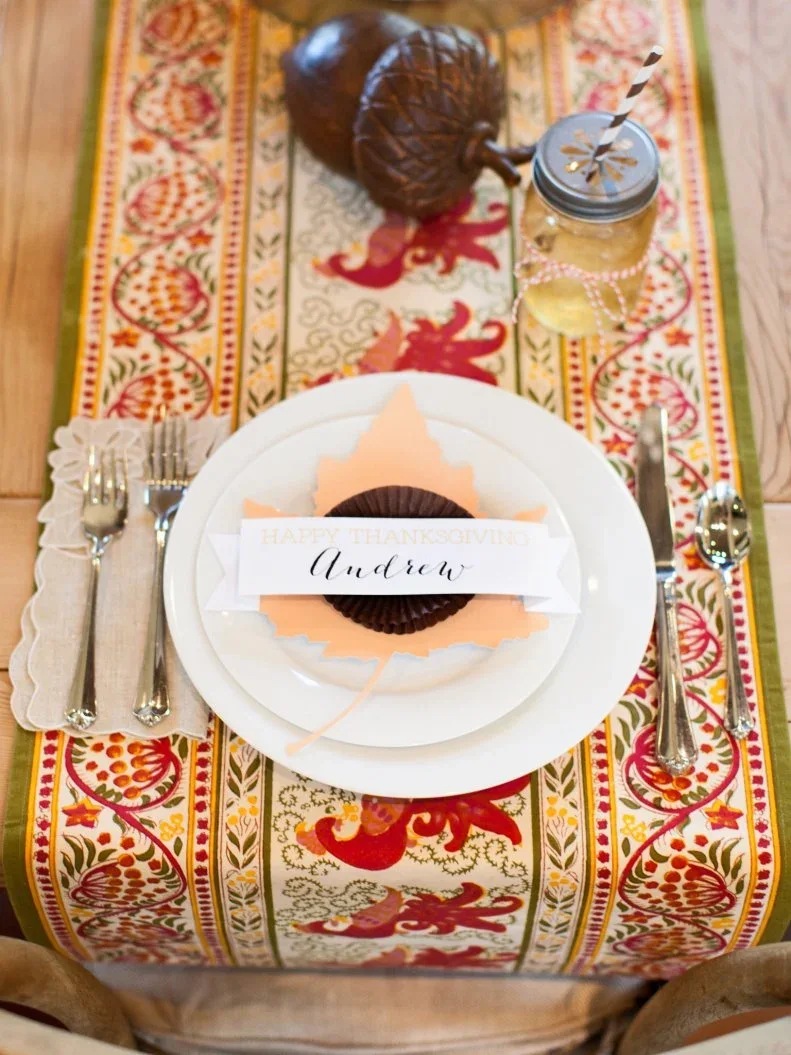
The name strip sits across a folded brown paper medallion, with a pale orange leaf shape adding the seasonal outline beneath it. The white plate gives the craft a quiet background over the stronger patterned cloth. Different paper shapes create depth without needing a large natural object at each place.
Make the cards ahead of time and check that the layers lie flat enough to stay together when moved. Keep craft adhesives and loose pieces away from food, removing the decoration before eating. Set the writing against a plain strip so each name remains readable even if the surrounding tablecloth has a busy pattern.
BRING IT ALL TOGETHER
Make one setting before preparing the whole table
Lay out one complete place with the actual plates and glasses, then sit down to check reach and space. Decide what must be moved before food arrives and give those pieces a nearby landing spot. Read the name card under the light used for dinner before repeating it across the table.
Keep extra utensils and plate layers tied to the meal rather than the photograph. Prepare cards and napkins ahead, but add fresh decorative produce and foliage only after checking their condition. When the table feels crowded, remove a decorative layer first; a clear place and a personal greeting usually matter more than another small ornament.