A green Thanksgiving table can draw its color from linens, glasses, a few leafy stems or the fruit already in the kitchen. You do not need to make every plate and napkin match. Choose one main green feature, then use pale crockery, warmer harvest colors or simple wooden surfaces to give it room around the places.
These photographs show complete tables as well as useful smaller details. Some arrangements are full holiday displays; others offer a green element you can adapt to your own Thanksgiving meal. Set out the plates and serving dishes first, then add the decoration. Keep loose natural materials separate from food, and use battery candles wherever foliage makes a burning flame impractical.
PART 01
Introduce green through the place settings
IDEA 01 / 19
Start with a Green Botanical Tablecloth
 SaveSupport Non AI Creator
Image credit: Donna Perillo Design
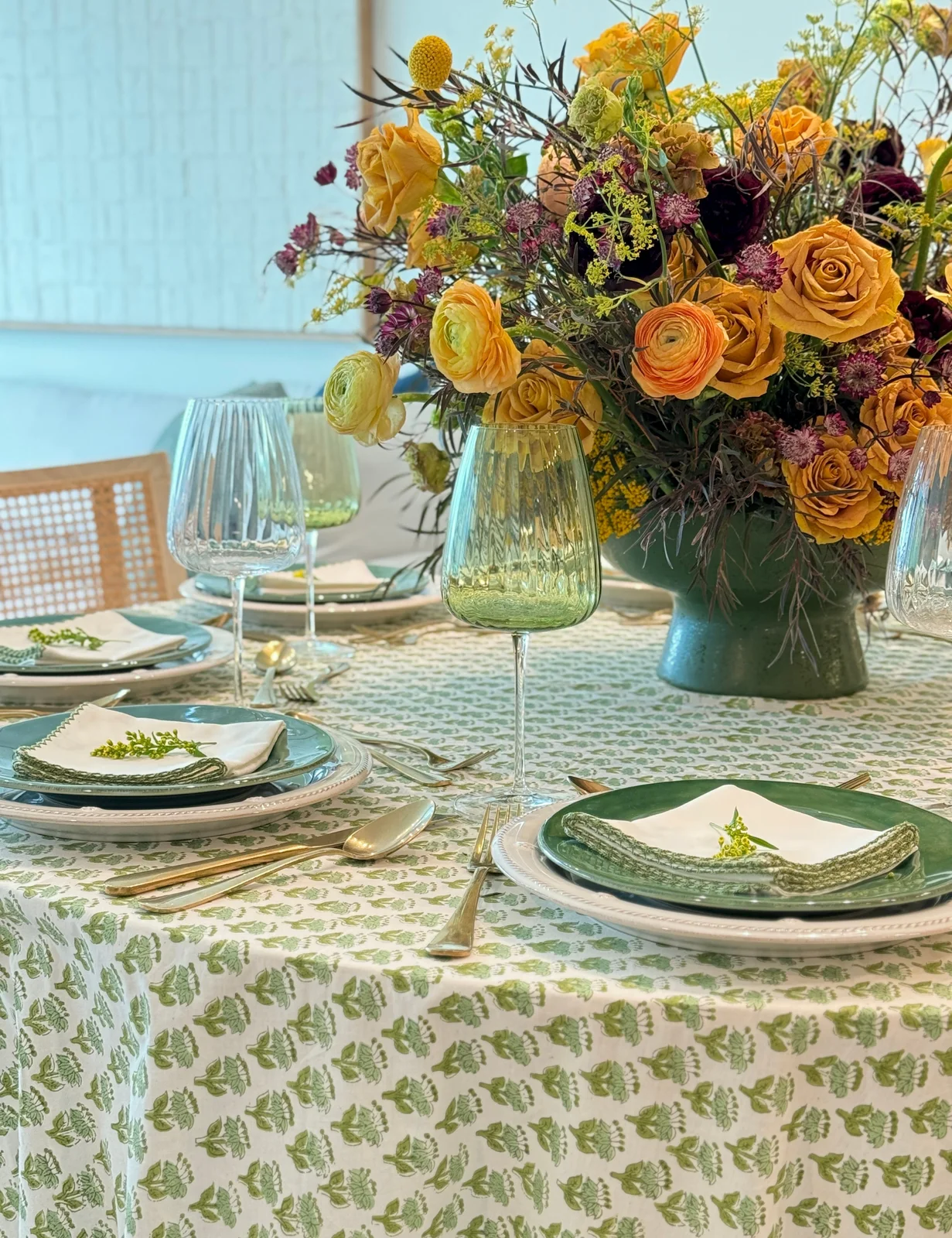
A pale cloth covered in green botanical motifs establishes the palette across the table, while green plates repeat it at each seat. Orange flowers bring a warmer seasonal contrast into the center. The pale napkins and clear glasses leave some quieter areas between the larger floral arrangement and the patterned fabric.
Use a patterned cloth as the starting point for the other colors instead of trying to match every object independently. Compare one complete place setting on it before buying more linens. Keep serving space available by reducing the bouquet if needed; the pattern already adds decoration even where there is no centerpiece.
IDEA 02 / 19
Keep Green Pattern Behind Simple White Plates
 SaveSupport Non AI Creator
Image credit: McGee & Co.
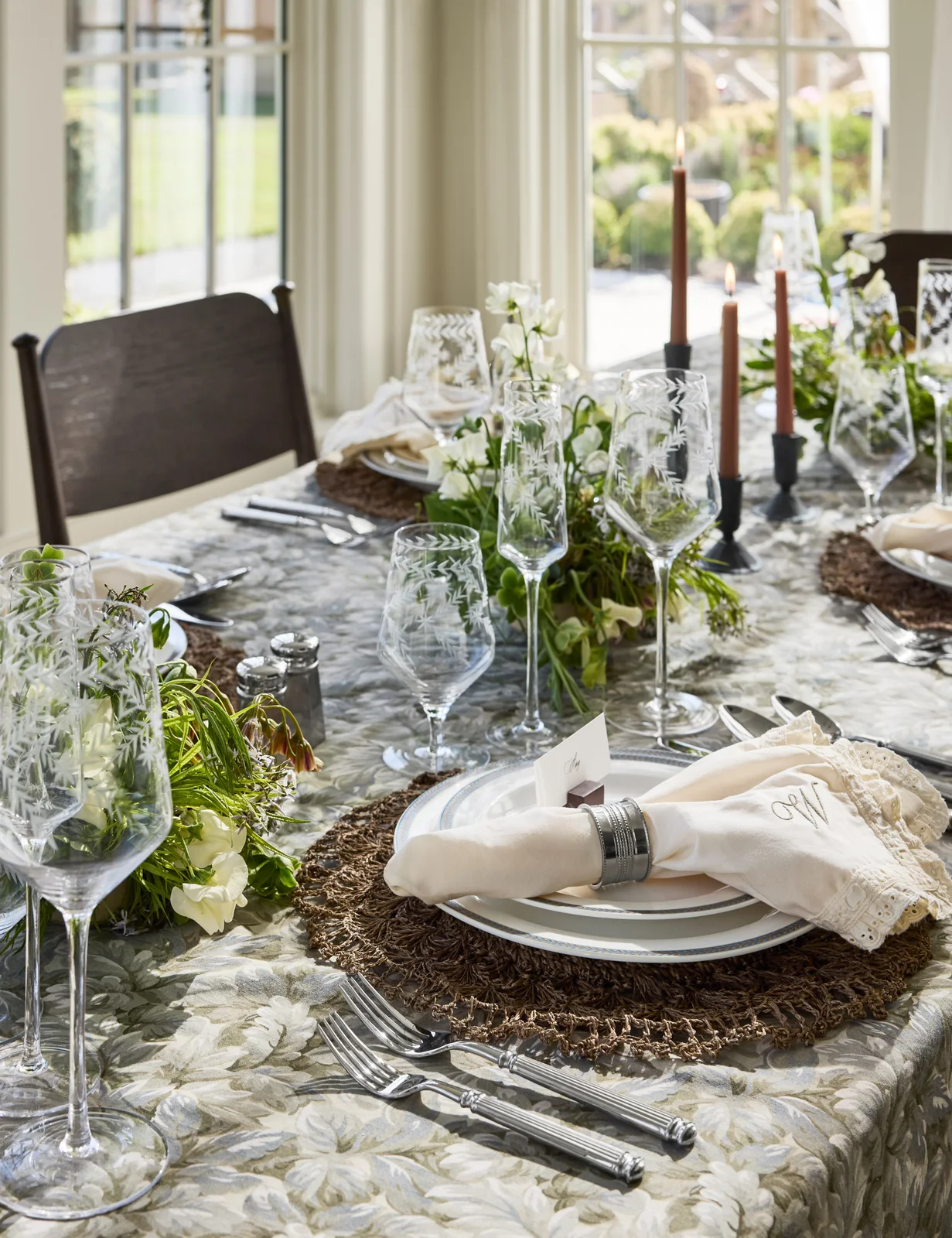
The muted green patterned cloth supplies detail beneath mostly white crockery, while the woven mats separate each place from the busier background. Lace-edged napkins add a finer texture without another strong color. A loose green-and-white centerpiece continues the palette along the middle, with darker candleholders introducing small contrasting outlines.
Check the size of the placemats with the actual plates and glasses so guests have useful room at each seat. Fold decorative napkins in a way that makes them easy to remove. For arrangements that can remain useful after the holiday, dining room table decor ideas compare restrained displays with everyday table space.
IDEA 03 / 19
Bring Green into the Glassware
 SaveSupport Non AI Creator
Image credit: Anthropologie
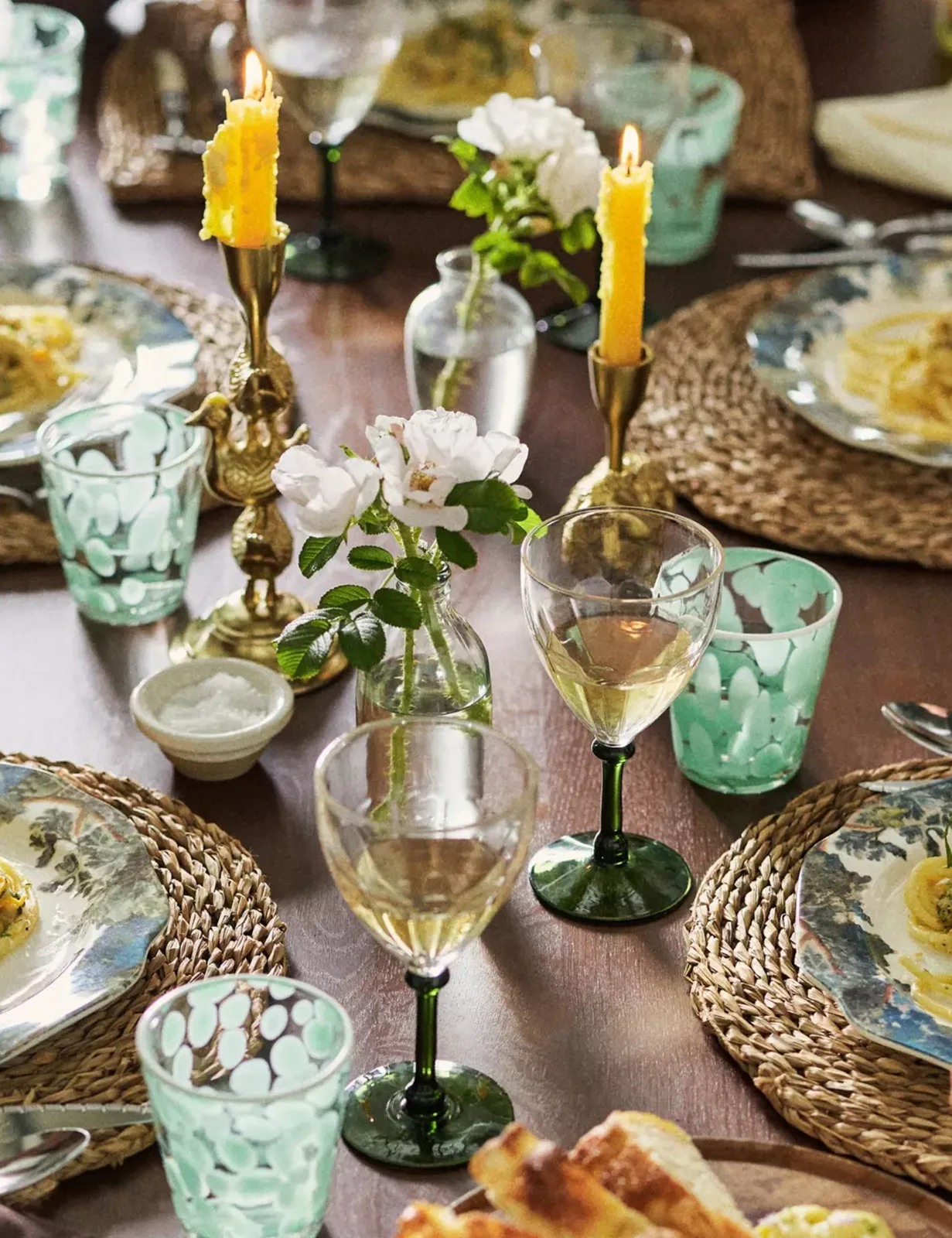
Green appears in the wineglass stems and pale tumblers rather than a full table covering, giving the setting color in smaller repeated pieces. Floral plates and woven chargers add separate patterns and texture. Small clear vases hold pale flowers, allowing the different glasses to remain visible between the place settings.
Choose the glasses around what you will serve and check their care instructions before planning a large gathering. Colored stems can coordinate mismatched plates without requiring identical sets. Replace the photographed burning tapers with battery candles where the flower stems or glassware leave insufficient separation, and leave clear room to lift each glass comfortably.
IDEA 04 / 19
Use a Mint Plate as a Small Accent
 SaveSupport Non AI Creator
Source: www.hgtv.com
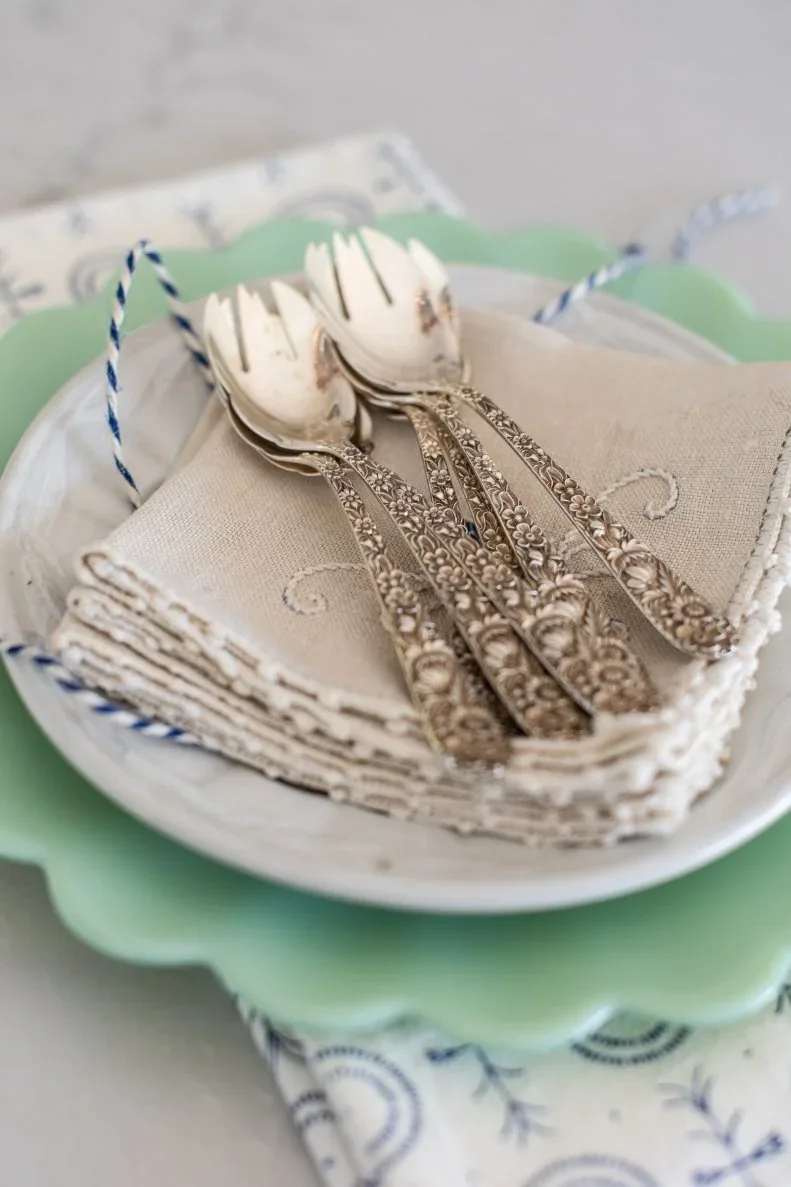
The scalloped mint-green charger introduces color beneath a plain white plate, leaving the upper setting quiet. Silver-colored cutlery and an embroidered pale napkin add finer detail without covering the mint edge. The plate stack works as a small green accent, so the rest of the Thanksgiving table can stay neutral or use a different restrained texture.
Compare the charger with the diameter of the dinner plate before choosing a set; the colored edge needs enough room to remain visible. Keep decorative plates separate from serving ware unless they are intended for food use. Arrange cutlery so the napkin can be removed without spilling it across the table.
IDEA 05 / 19
Connect Green Checks with Patterned Blue Plates
 SaveSupport Non AI Creator
Image credit: Photo: Marian Parsons, Mustard Seed Interiors . From: Marian Parsons
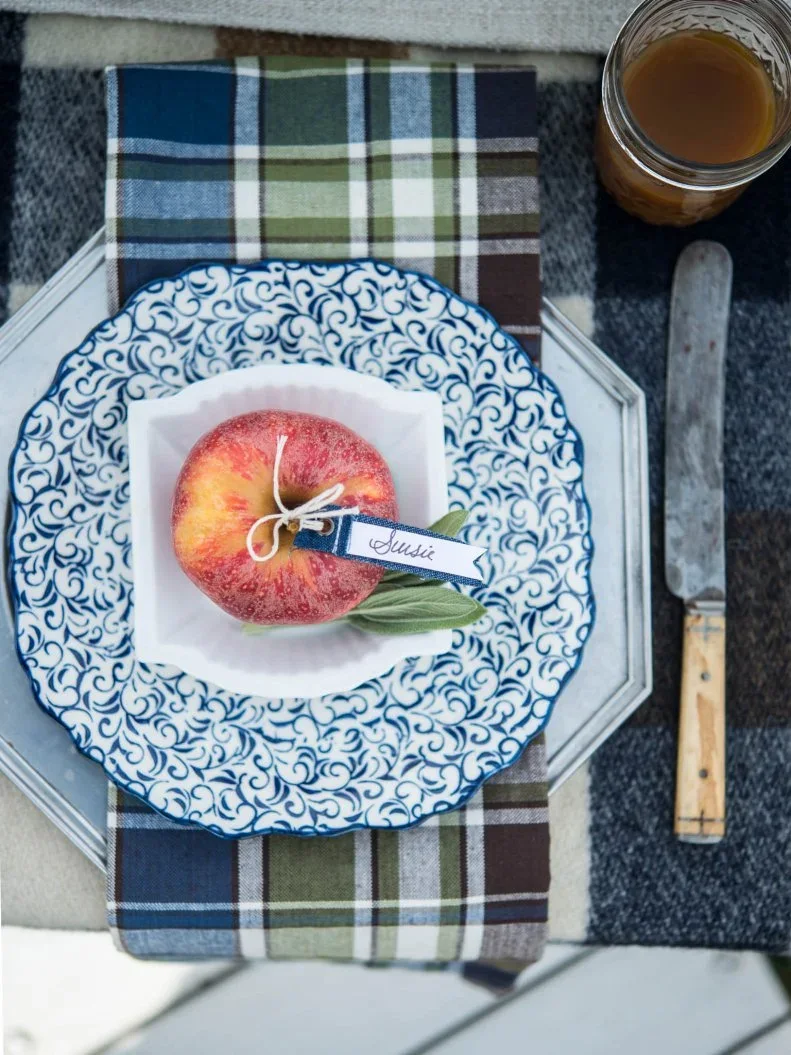
Green checks in the napkin connect a patterned blue plate with a small leaf placed beside the apple. The apple supplies a warmer color and carries the name tag, while the rest of the setting remains relatively simple. This combination introduces green through fabric and one small natural detail rather than a large arrangement.
When combining checks with decorated plates, repeat a color instead of expecting the patterns to match exactly. Test whether the name tag stays legible against the apple and choose a secure, removable tie. Keep any leaf clean and separate it from food, then move the decorative fruit off the eating surface before serving.
PART 02
Give the centerpiece a useful footprint
IDEA 06 / 19
Make Green Vegetables the Centerpiece
 SaveSupport Non AI Creator
Image credit: Lulu and Georgia
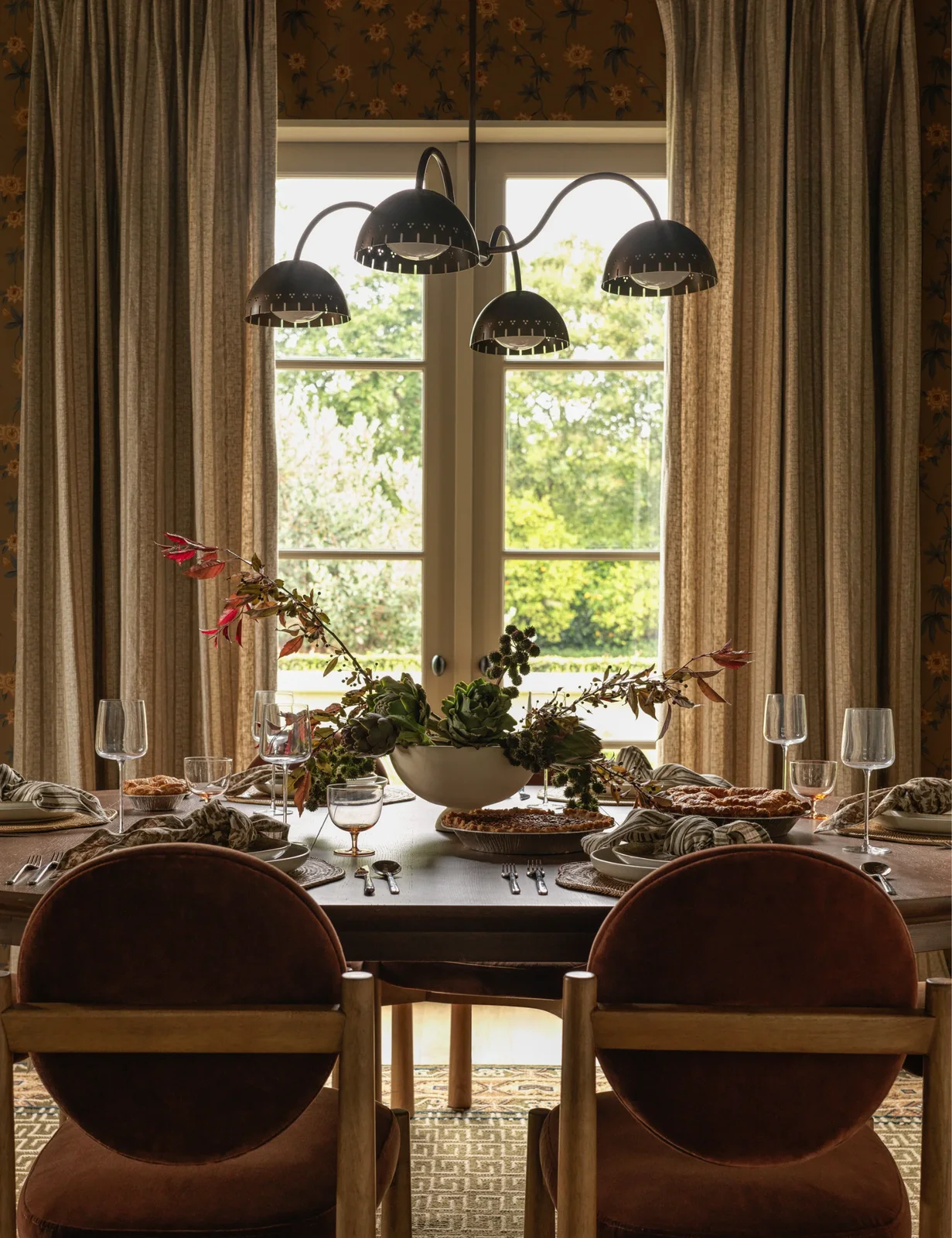
A pale bowl gathers green artichokes and branches into one central arrangement, making the vegetables the strongest green feature on the dark table. Clear glasses and neutral napkins keep the surrounding places simpler. Warm red-brown leaves add a seasonal contrast without requiring several separate decorative objects at each seat.
Choose a stable bowl and test the arrangement from seated eye level before adding taller branches. Keep decorative produce separate from items being prepared for the meal and avoid letting loose stems trail into the plates. If the bowl takes up useful serving space, move it to a nearby surface once dinner begins.
IDEA 07 / 19
Pair Pale Green Flowers with Harvest Fruit
 SaveSupport Non AI Creator
Source: www.hgtv.com
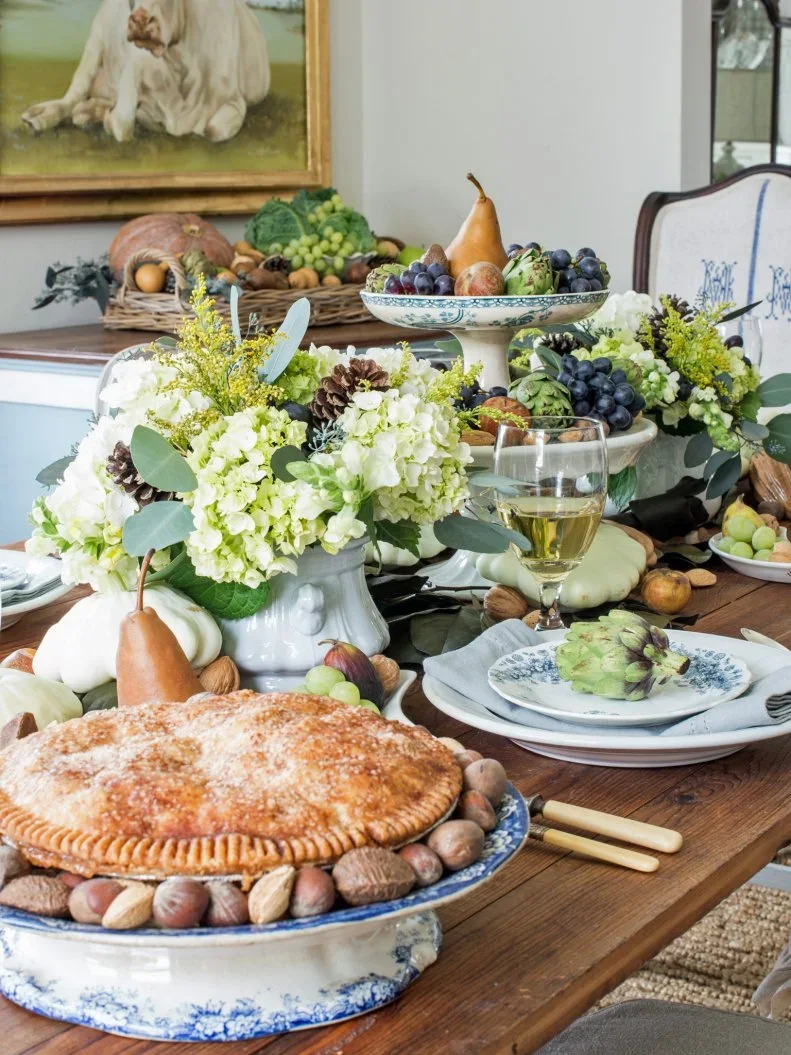
Pale green flower heads connect the larger arrangements with the artichoke placed at one seat. Fruit bowls, white pumpkins and patterned crockery introduce different shapes without changing the green-and-pale emphasis. The pie at the end of the table makes the space visibly part of a meal, rather than a display with no room for food.
Decide which bowls will hold decorations and which need to stay available for serving before setting the table. Lower arrangements make conversation easier, and a few larger pieces can replace many loose objects. Keep room to remove the pie or fruit bowl safely without brushing against flowers, and check that any decorative stand remains stable when partly emptied.
IDEA 08 / 19
Contrast Green Leaves with a Plum Tablecloth
 SaveSupport Non AI Creator
Image credit: Photo: Danielle Daly/Studio D. From: HGTV Magazine
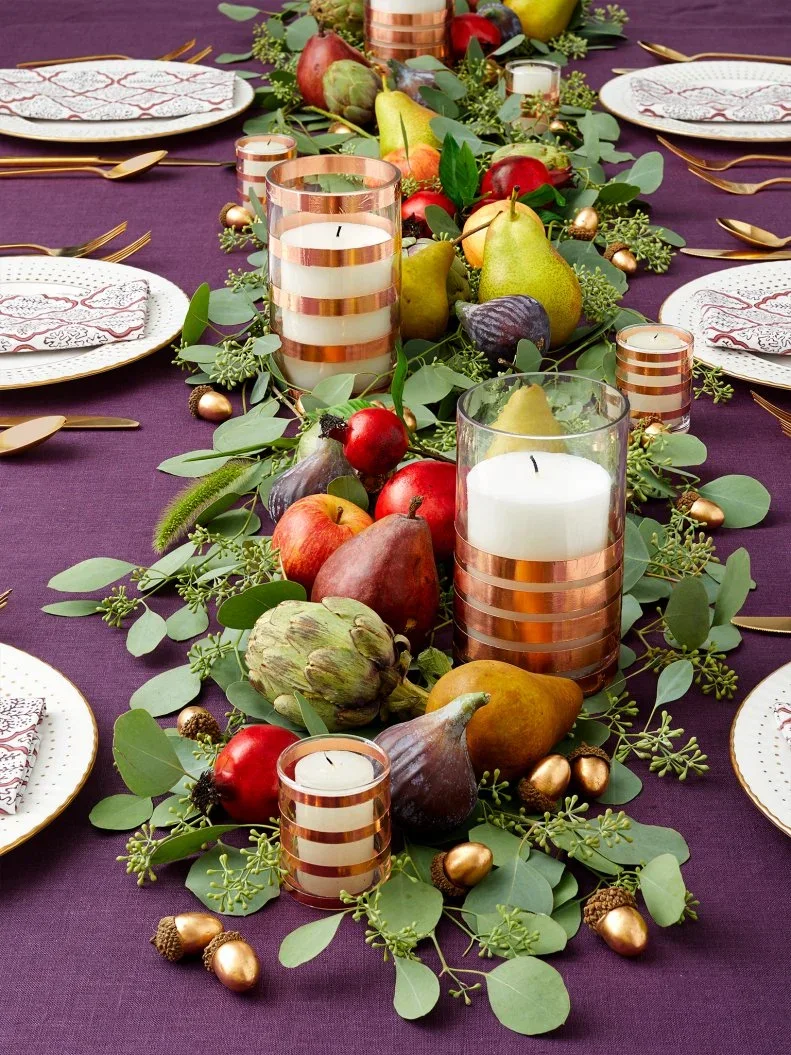
Green leaves and pears create a continuous line against the deeper plum cloth, with artichokes and red fruit adding larger shapes. White patterned plates lighten the individual places. Striped candleholders repeat warm metallic color along the runner, making the contrast between green and plum the main organizing feature despite the variety of objects.
Build the runner in removable sections so serving dishes can take its place when the meal begins. Inspect decorative fruit before use and keep foliage clear of food. Battery candles are a practical choice among loose leaves; their appearance preserves the repeated light points without needing the foliage arrangement to accommodate burning flames.
IDEA 09 / 19
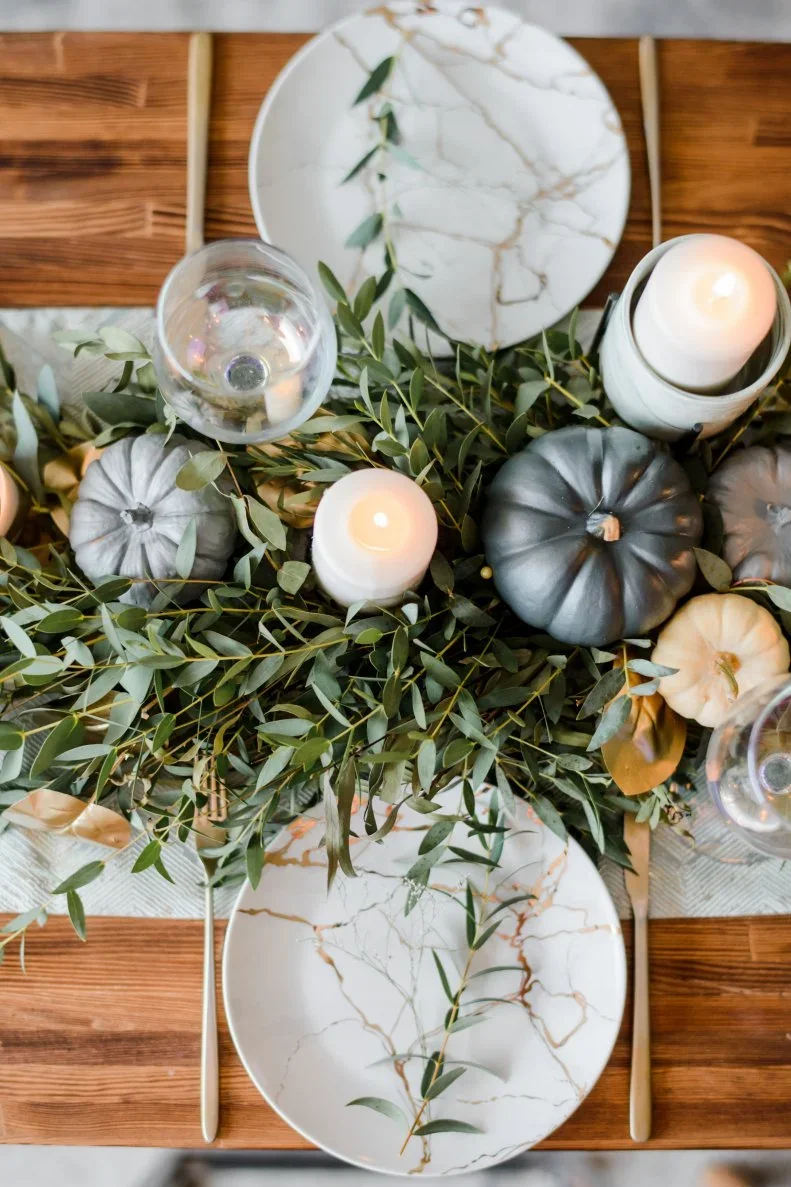
Use Green Foliage to Soften Gray Pumpkins
 SaveSupport Non AI Creator
Image credit: Photo: Mariia Lobanova
Long green foliage spreads between gray and pale pumpkins, linking their different sizes along the middle of the table. White veined plates add a quieter pattern at the edges. Green carries the arrangement through the gaps, allowing the pumpkins to stay neutral rather than requiring every seasonal object to be orange.
Trim the arrangement around the actual plates and glasses so trailing leaves do not obstruct them. Choose battery candles where greenery surrounds the light holders, and keep moisture beneath stems from reaching the wooden surface. Plan a separate spot for serving bowls; a full foliage runner can be attractive before dinner but less useful once food arrives.
PART 03
Combine greenery with pumpkins and contained displays
IDEA 10 / 19
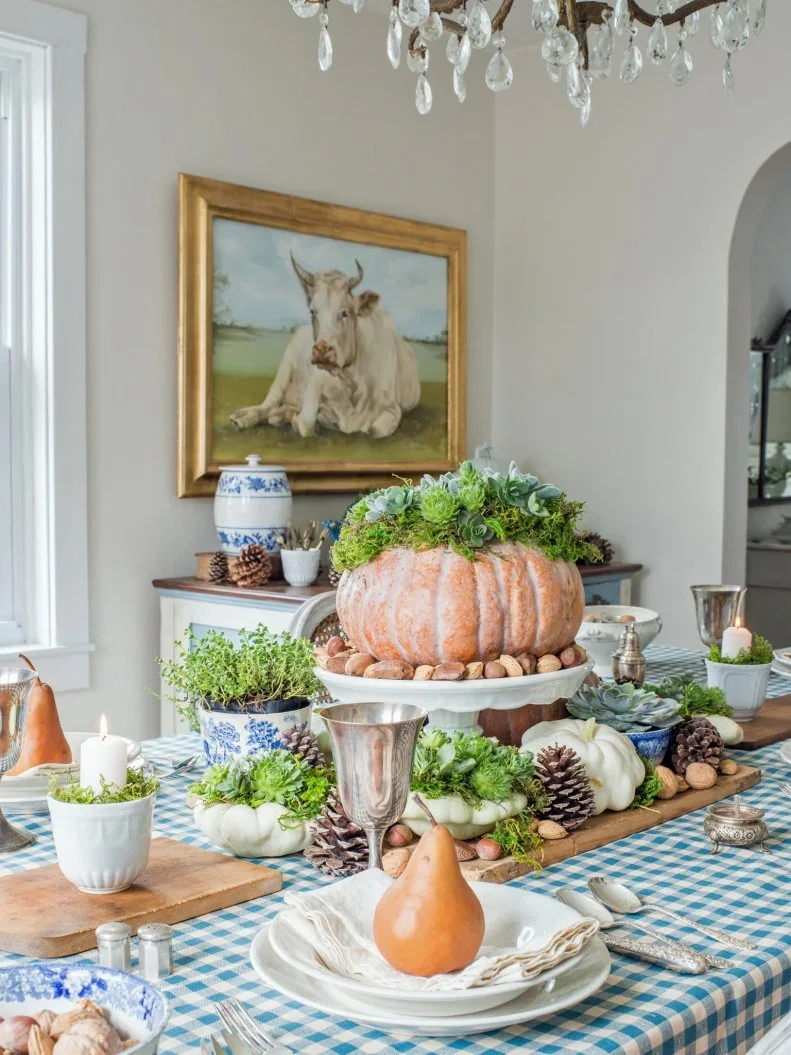
Gather Succulents Around a Pumpkin
 SaveSupport Non AI Creator
Source: www.hgtv.com
Green succulents gather across the top of the peach-toned pumpkin, with smaller plants and pale pumpkins repeating the theme below. The blue checked cloth adds another pattern, while the plants provide the clearest green color. Different heights organize the centerpiece, leaving pale plates and pears to define the places around it.
Use a stable support for a raised pumpkin and check the assembly before guests sit down. The photograph does not establish whether the plants are rooted or attached, so choose a method that suits the actual plants and protects the table. Keep any soil or loose decorative material contained, and move the higher centerpiece if it blocks conversation.
IDEA 11 / 19
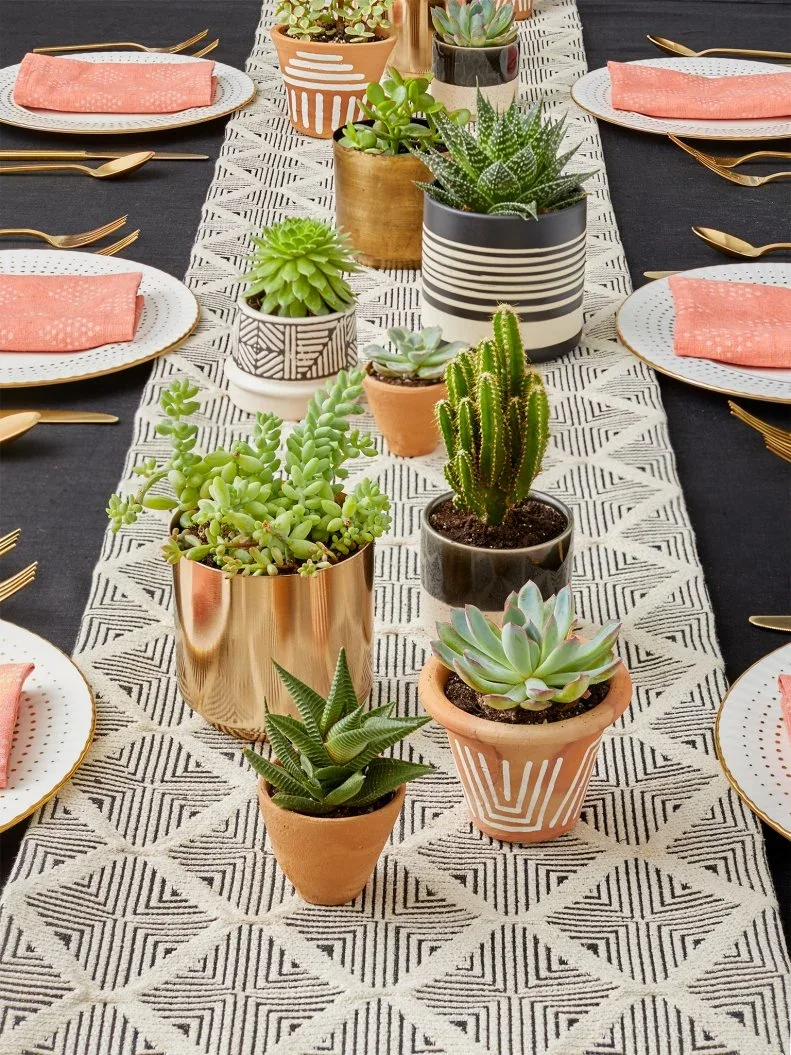
Arrange Small Green Plants in a Row
 SaveSupport Non AI Creator
Image credit: Photo: Danielle Daly/Studio D
A row of small plants supplies green color above a pale patterned runner, with varied pots creating a mixture of heights and outlines. Coral napkins warm the individual places, while white plates keep their backgrounds simple. The dark table makes the green plants and lighter runner stand out without a tall floral centerpiece.
Choose compact pots with protective saucers and keep sharp or spiny plants away from places guests reach across. Leave a useful gap between the plant row and glassware. If the runner already has a strong pattern, limit further patterned accessories. Return the plants to their usual suitable conditions after the meal rather than leaving them in a dim dining area.
IDEA 12 / 19
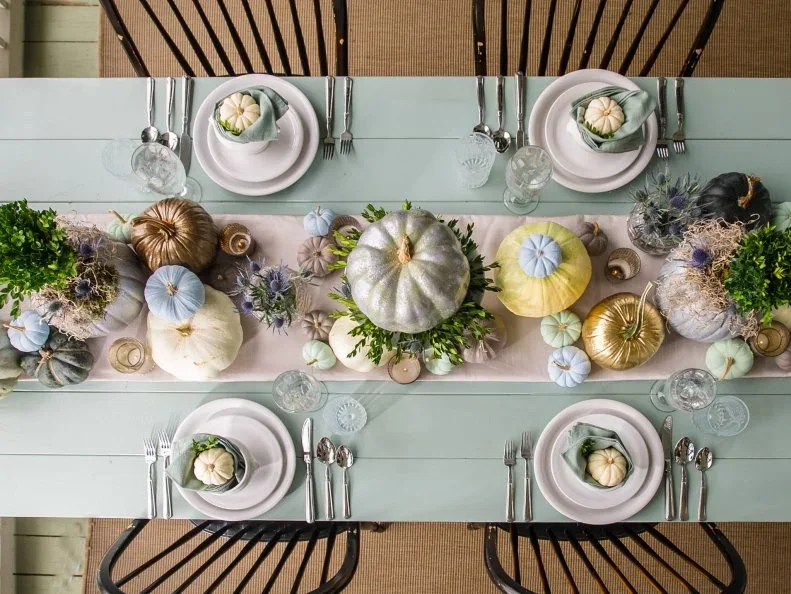
Repeat Sage in the Table and Napkins
 SaveSupport Non AI Creator
Image credit: Photo: Hortus Ltd.
The sage-green table repeats its color in the napkins, making the setting feel connected before the centerpiece is added. Small pale pumpkins sit at each place. A pale runner contains a varied collection of painted and metallic pumpkins, giving the middle more detail while keeping the individual plates comparatively quiet.
Use an existing painted table as part of the palette if it already works, rather than buying another green layer automatically. Select a manageable number of centerpiece pieces and remove enough to make room for serving. Check that any painted decorations stay separate from food, and use a protective layer where their surfaces could mark the tabletop.
IDEA 13 / 19
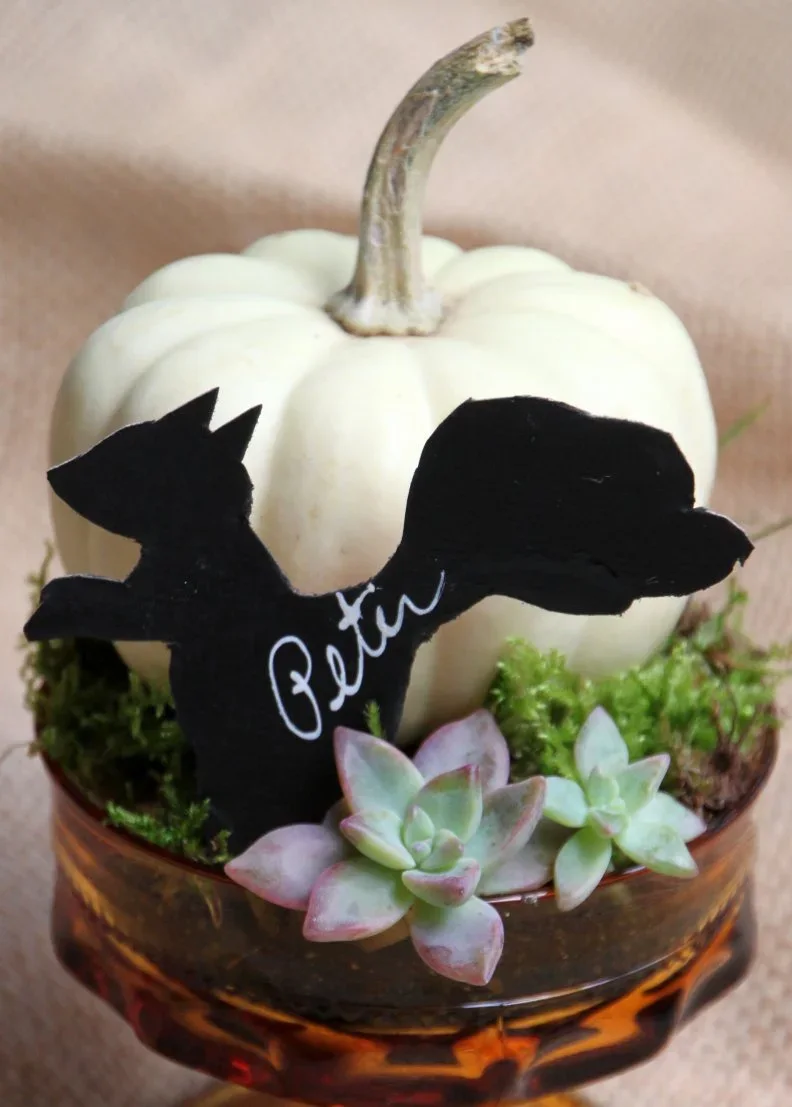
Give a White Pumpkin a Personal Name Tag
 SaveSupport Non AI Creator
Source: www.hgtv.com
The white pumpkin gives the black name tag a clear background, while green covering and pale succulents soften its base. A small bowl keeps the different pieces together rather than spreading them across the place setting. The arrangement adds green through texture around a neutral seasonal object, making it suitable beside quieter plates.
Keep the name legible from the direction guests approach and use a tag that can be removed easily before eating. Check the bowl’s stability and contain any loose covering or soil. If every seat needs an individual arrangement, plan where guests will put it during dinner so these small displays do not take over the available table space.
IDEA 14 / 19
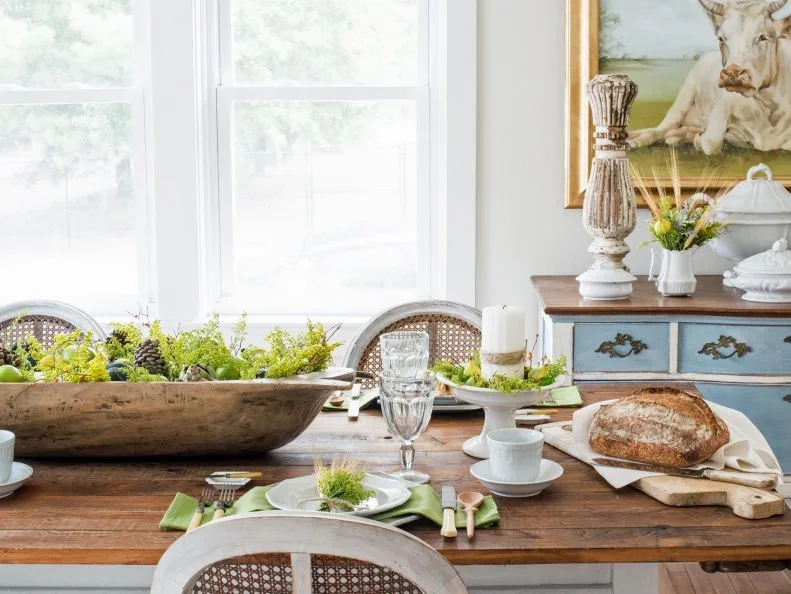
Use a Shallow Wooden Bowl for Greenery
 SaveSupport Non AI Creator
Source: www.hgtv.com
The shallow wooden bowl contains bright green foliage and pinecones as one low centerpiece. Green napkins repeat the color at the places, with pale crockery leaving the center clearly visible. Bread and cups show how a less crowded arrangement can share the table with useful serving pieces instead of occupying every gap.
Line or protect the bowl appropriately if the arrangement contains damp stems, and keep decorative material away from food. Measure the bowl with the place settings in position before filling it. Dining room sideboard ideas show alternative nearby serving surfaces when a larger meal needs more space than the table’s center can comfortably provide.
PART 04
Finish with smaller green details
IDEA 15 / 19
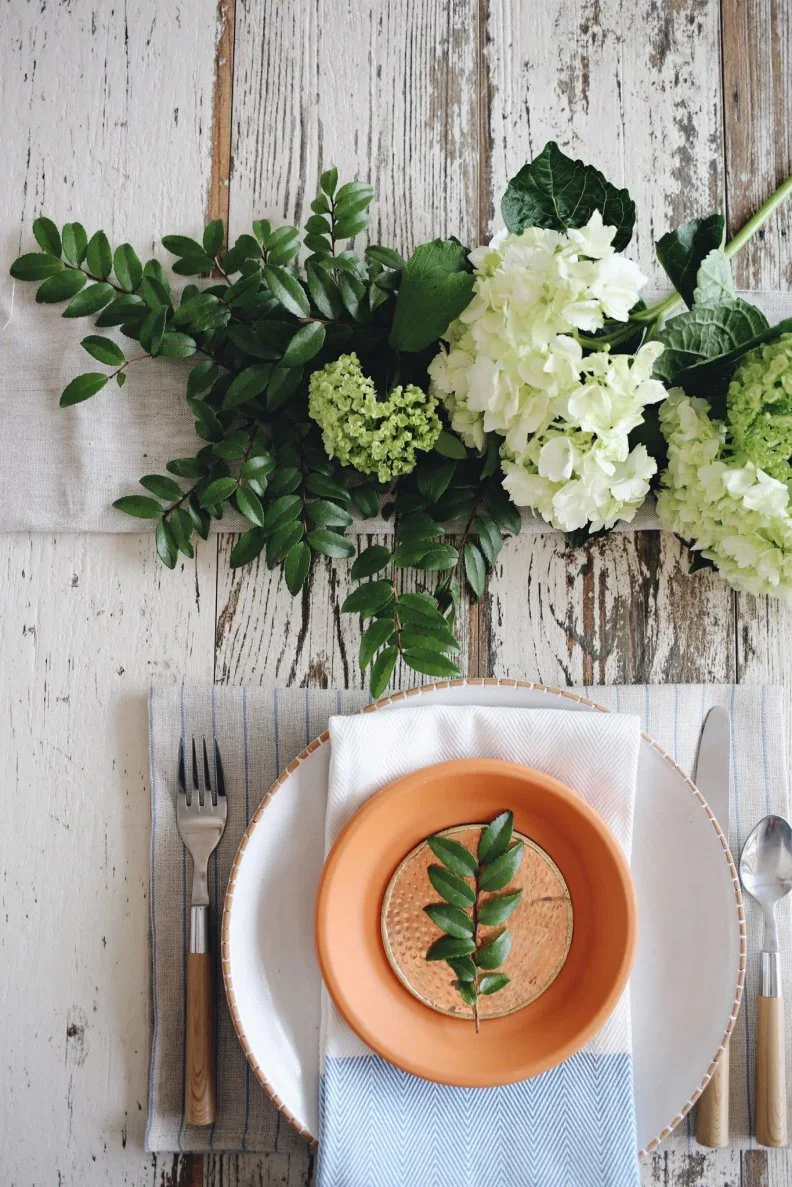
Add One Green Sprig to an Orange Plate
 SaveSupport Non AI Creator
Image credit: Photo: Shain Rievley. From: Kristin Guy
A single green sprig on the small orange plate connects the place setting with the green-and-white flowers nearby. The larger pale plate and white napkin leave the orange and green contrast easy to see. The small decoration works without a full individual bouquet, making the place simpler to assemble and clear.
Choose clean, identifiable decorative foliage and keep it separate from food; do not treat an unknown sprig as an edible garnish. Remove it and the decorative plate before serving if necessary. Test the plate stack with the cutlery in place so the smaller pieces stay stable and guests can pick up the napkin without disturbing everything else.
IDEA 16 / 19
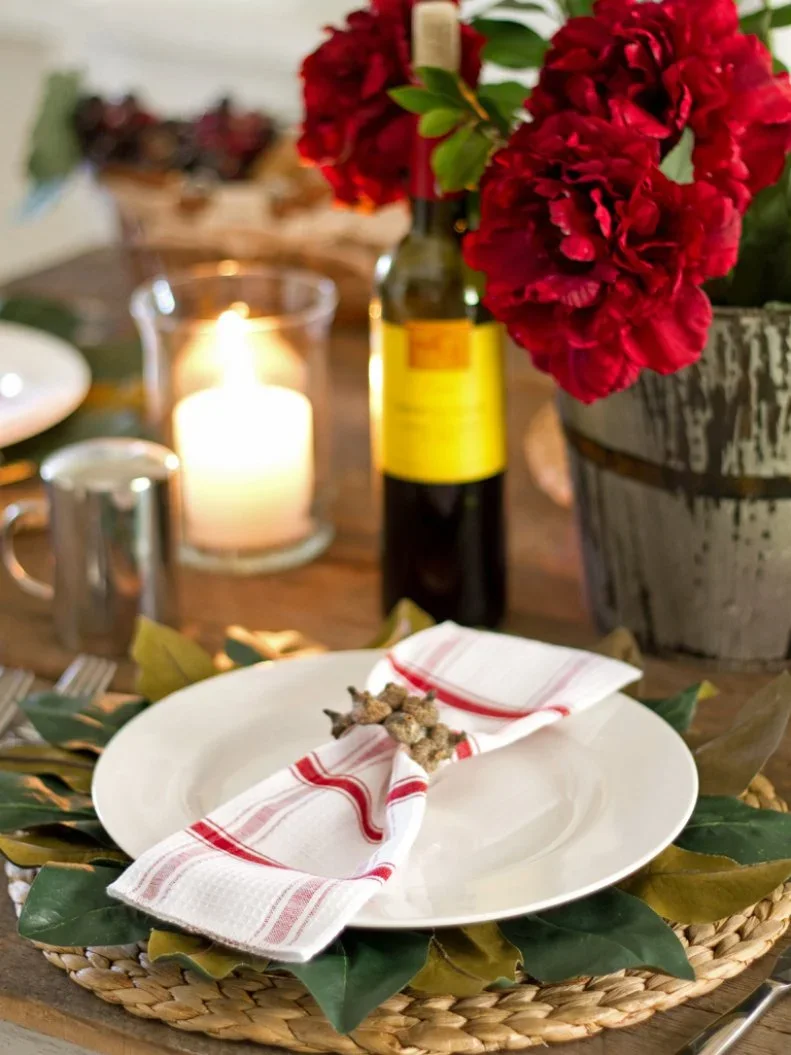
Place Green Leaves Beneath a White Plate
 SaveSupport Non AI Creator
Source: www.hgtv.com
Broad green leaves form a visible border beneath the plain white plate, giving the place a natural-looking green layer. The woven charger adds texture below, while a red-striped napkin repeats the warmer color in the nearby flowers. Because the plate stays plain, the contrast remains concentrated around its edge and the folded fabric.
Use clean foliage or a suitable reusable decorative alternative, keeping it outside the food-contact area. Check whether fresh leaves mark the charger or cloth before setting all the places. Leave enough clear space for hands around the plate, and make the leaf layer easy to remove if it becomes untidy during the meal.
IDEA 17 / 19
Mix Glossy Green Leaves with Pinecones
 SaveSupport Non AI Creator
Image credit: From: Marian Parsons
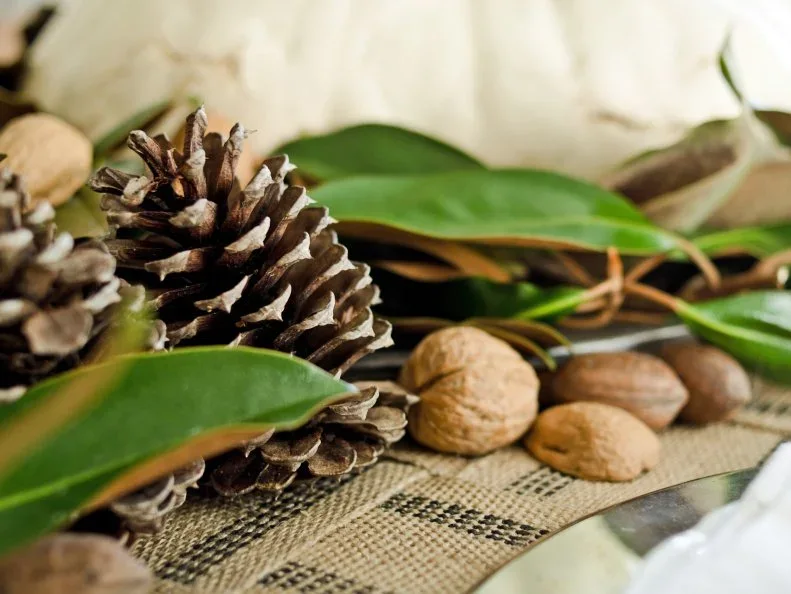
Glossy green leaves provide a smoother contrast to the pinecones and whole nuts arranged along the pale textured runner. The detail stays low, adding green without a vase or tall bouquet. White crockery at the edge keeps the natural objects easy to distinguish, so the smaller centerpiece can work alongside relatively simple places.
Clean and inspect decorative items before bringing them to the table, then keep them contained away from food and serving utensils. Avoid scattering nuts when guests have relevant allergies; substitute another decorative shape instead. Leave gaps for bowls and make the runner removable as a unit so clearing it does not require collecting every loose object individually.
IDEA 18 / 19
Set Green Arrangements on a Twig Runner
 SaveSupport Non AI Creator
Image credit: Photo: Camille Styles
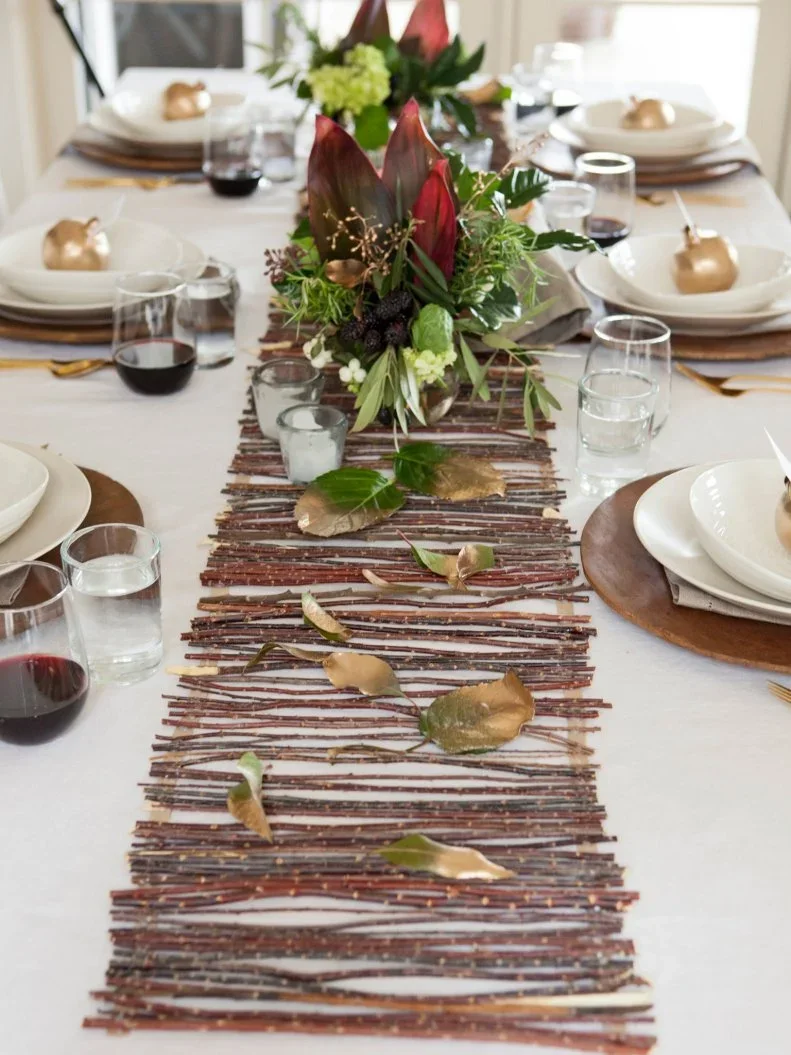
The long twig runner gives the table a clear central line, while green foliage and red-toned flowers provide color above it. Pale plates and warm metallic accents make the individual places simpler than the textured center. Smaller leaves repeat the greenery along the runner, joining the larger arrangements without another set of vases.
Check the runner for loose or snagging pieces and use a protective backing if needed. Keep the arrangements low enough for comfortable conversation, and avoid placing the cutlery where it can catch on the textured surface. Our farmhouse dining room ideas explore wood and woven surroundings that can coordinate with this table treatment beyond Thanksgiving.
IDEA 19 / 19
Let a Green Pear Accent Amber Glass
 SaveSupport Non AI Creator
Image credit: From: Erinn Valencich
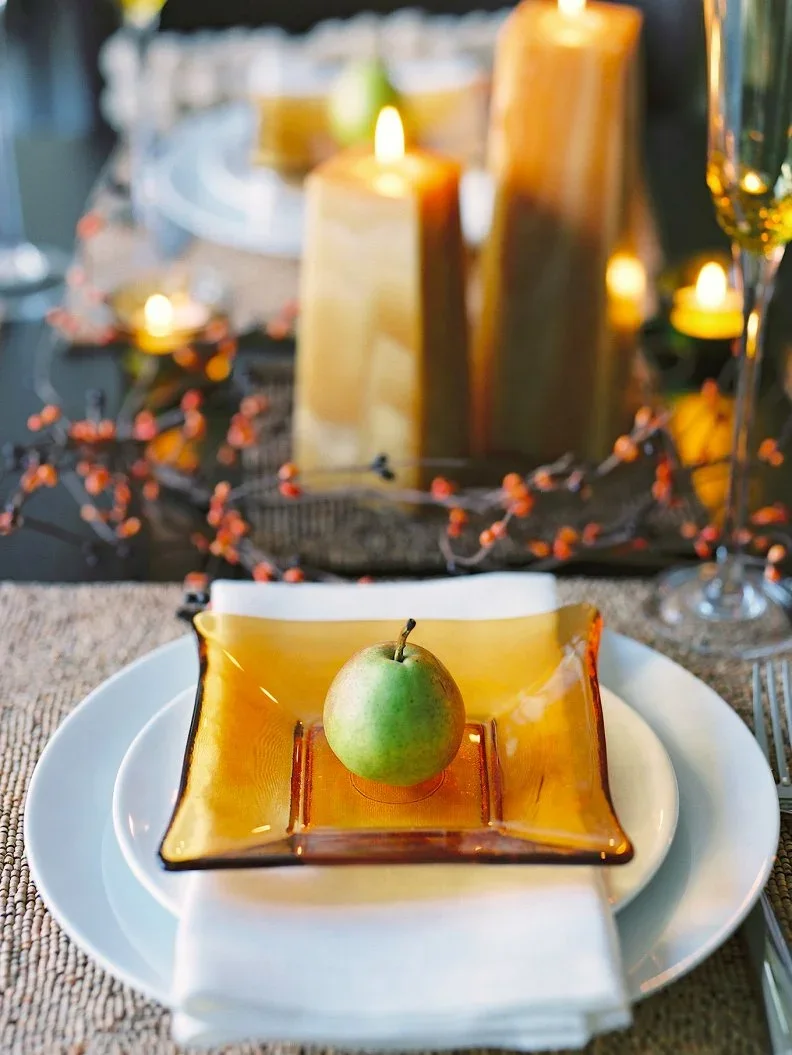
The green pear becomes the small focal point of the place setting against an amber-colored plate. White crockery below prevents the two colors from blending into the background. A textured pale mat adds a quieter surface around the plates, while the larger candle display sits farther along the table rather than appearing at every place.
Use a clean pear and decide whether it is decoration or part of the meal before adding tags or finishes. Keep painted or treated fruit separate from anything served. If the table has limited space, repeat only the pear-and-plate combination and move the larger light display aside; guests still get a clear green accent without another full centerpiece.
BRING IT ALL TOGETHER
Leave room for the meal and conversation
Make one complete place setting and position the serving dishes before finishing the runner. Reduce the decoration if guests would need to reach through it for food or glasses. Repeated green napkins, a colored glass or one small fruit accent can hold the palette together after a larger centerpiece is moved aside.
Prepare a nearby surface for decorations removed during dinner, and keep a tray ready for loose items when clearing up. Protect the table beneath damp foliage and plant pots, then return plants to suitable conditions afterward. Choose decorative pieces you can store or reuse comfortably instead of adding more objects simply to fill the center.