Black can give a small living room a clear outline without covering every wall. A dark alcove, a compact sofa or repeated black frames can carry the idea. Decide whether you want an enclosed dark room or a lighter space with stronger furniture shapes before choosing paint or upholstery.
These rooms show both approaches, including near-black charcoal and inky finishes that change with the light. Some photographs focus on a compact group within a larger space. Borrow the arrangement at the scale of your own room, and test real finishes before assuming a screen shows their exact color.
PART 01
Give Dark Walls a Clear Purpose
IDEA 01 / 20
Frame the Fireplace with Dark Alcoves
 SaveSupport Non AI Creator
Image credit: Project: Neptune (via Houzz)
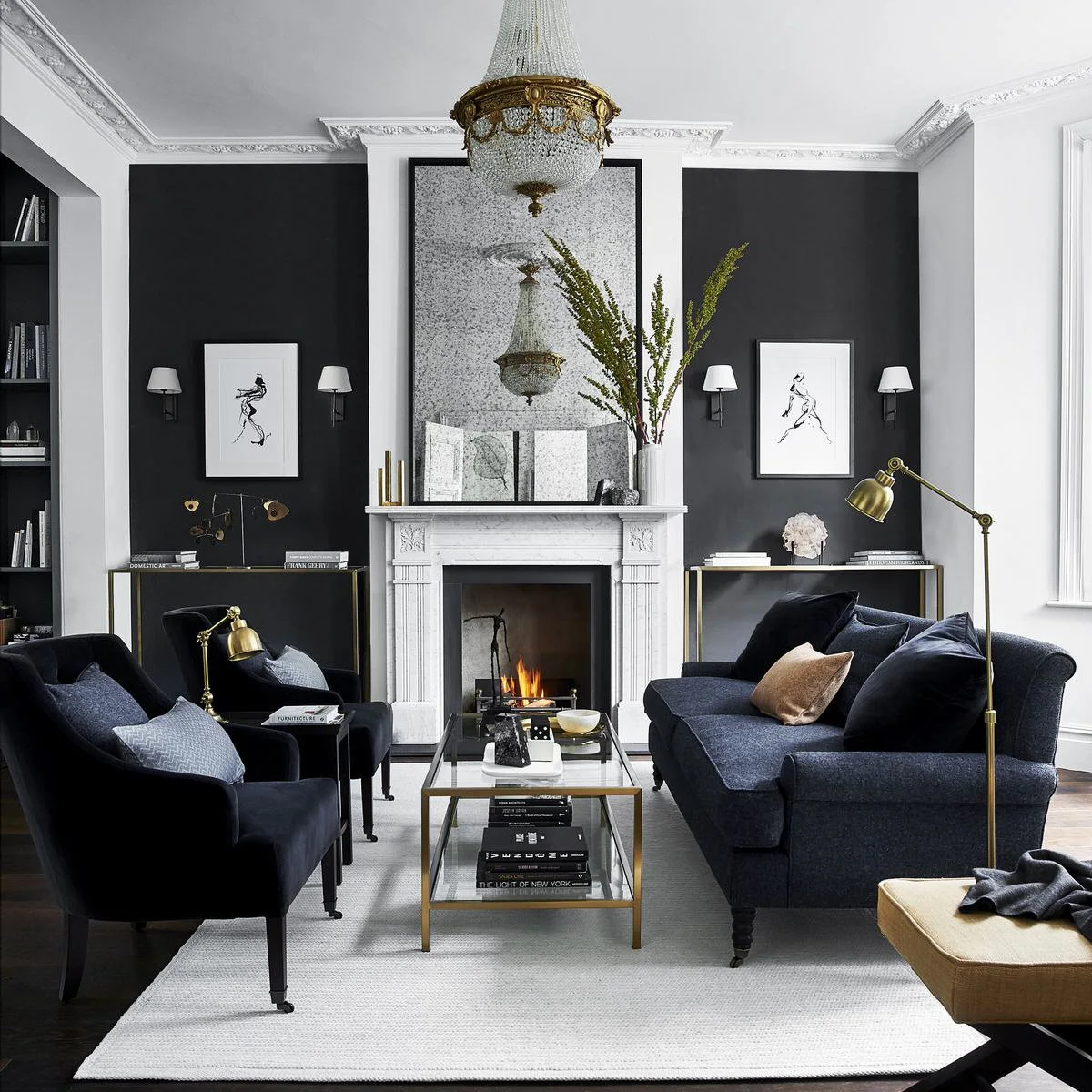
Near-black alcove walls frame the pale fireplace, with dark seating continuing the color at a lower level. A pale rug separates the furniture outlines from the floor. The narrow glass-topped table leaves the center more open visually, while small metallic-looking lamps add a lighter detail beside the seats.
Keep the table narrow enough for comfortable access to every seat. Test dark wall samples beside existing trim and upholstery, since charcoal, navy and black can look similar in photographs. Follow the requirements of any working fireplace rather than copying furniture spacing from the image.
IDEA 02 / 20
Keep the Ceiling and Window Trim Pale
 SaveSupport Non AI Creator
Image credit: Project: Chantel Elshout Studio (via Houzz)
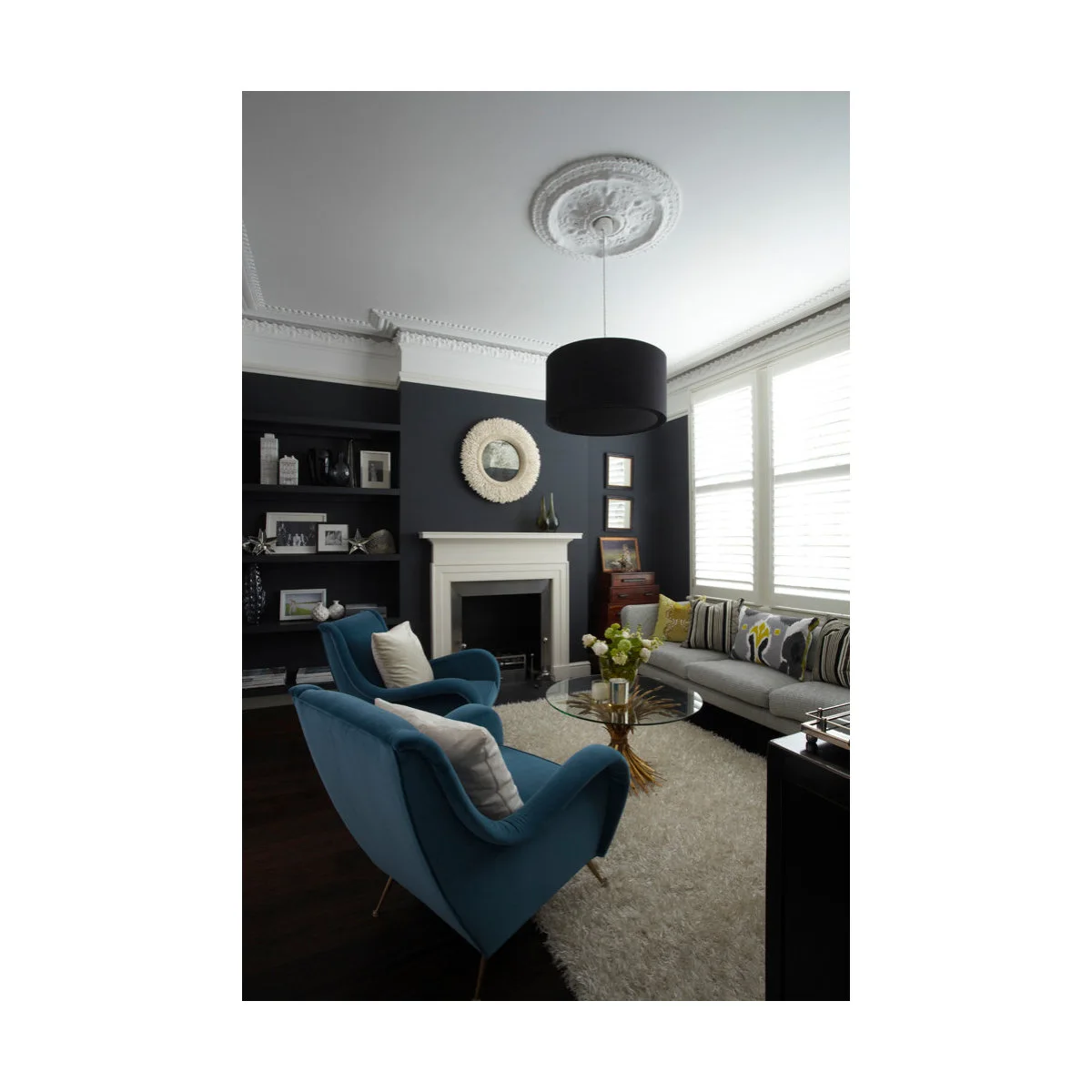
A dark fireplace wall and shelving give this front room a strong backdrop. Pale ceiling decoration and white window shutters interrupt the darker surfaces, with blue chairs adding a separate color. The round glass table keeps the central rug visible rather than introducing another large opaque block.
Use existing trim as a boundary if you want to try a dark wall without changing every surface. Check shutter movement and keep shelves usable. The small living room decor ideas provide more compact furniture arrangements to compare before choosing a second sofa instead of separate chairs.
IDEA 03 / 20
Use a Dark Media Wall beside Pale Seating
 SaveSupport Non AI Creator
Image credit: Project: Inspired Dwellings (via Houzz)
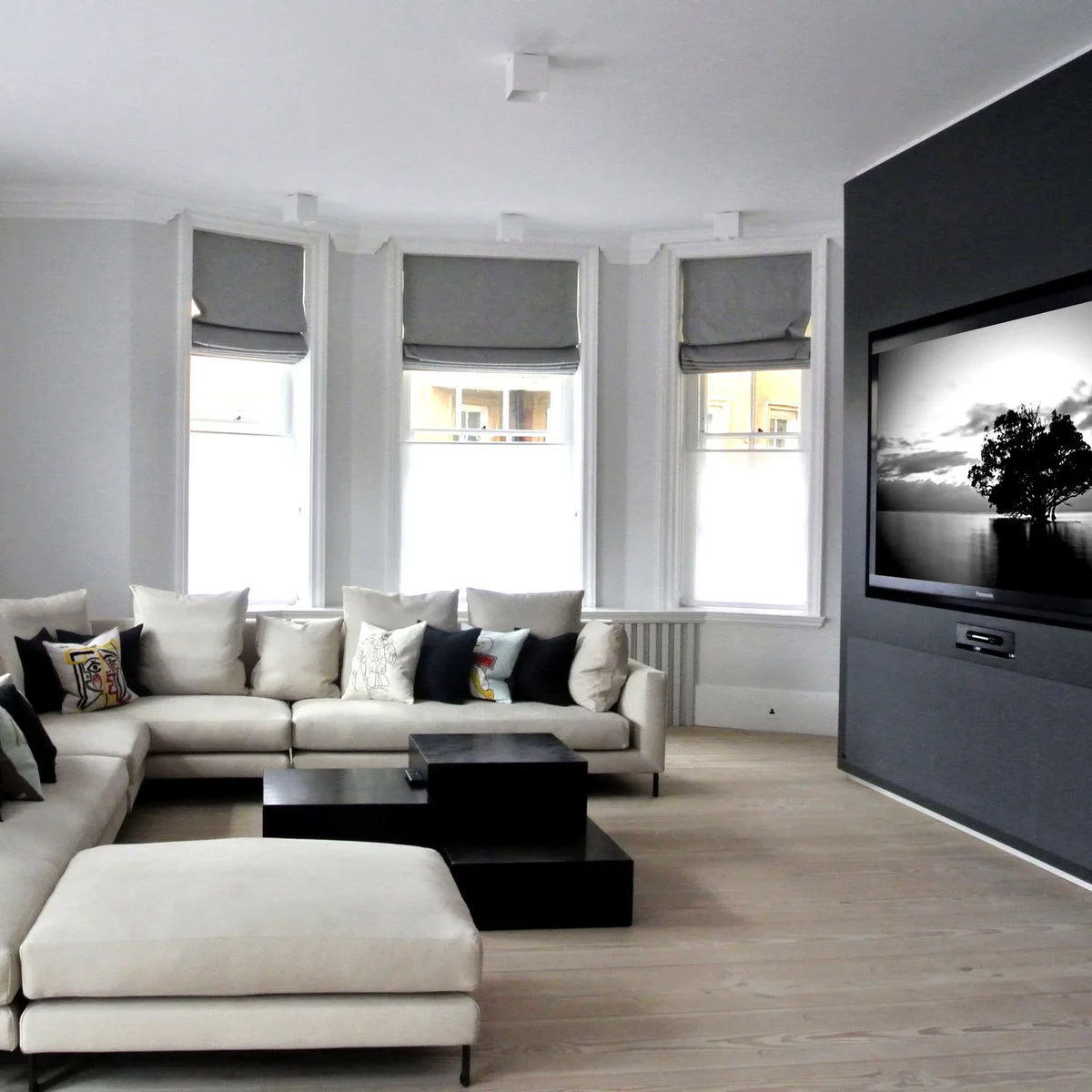
A dark media wall holds the television as one strong rectangle, with pale seating wrapping the opposite side. Small black stepped tables repeat the darker finish near the center. The window wall stays light, keeping the stronger color concentrated around the screen rather than across the whole room.
Check screen height and seating distance from the main viewing position before building a media wall. Keep equipment accessible and ventilated. Small tables offer flexibility, but make sure their different heights and edges remain easy to see and do not interrupt the main walking route. Compare these living room accent wall ideas for other ways to give one surface a clear purpose.
IDEA 04 / 20
Use One Dark Volume in a Pale Interior
 SaveSupport Non AI Creator
Image credit: Project: Ian Moore Architects (via Houzz)
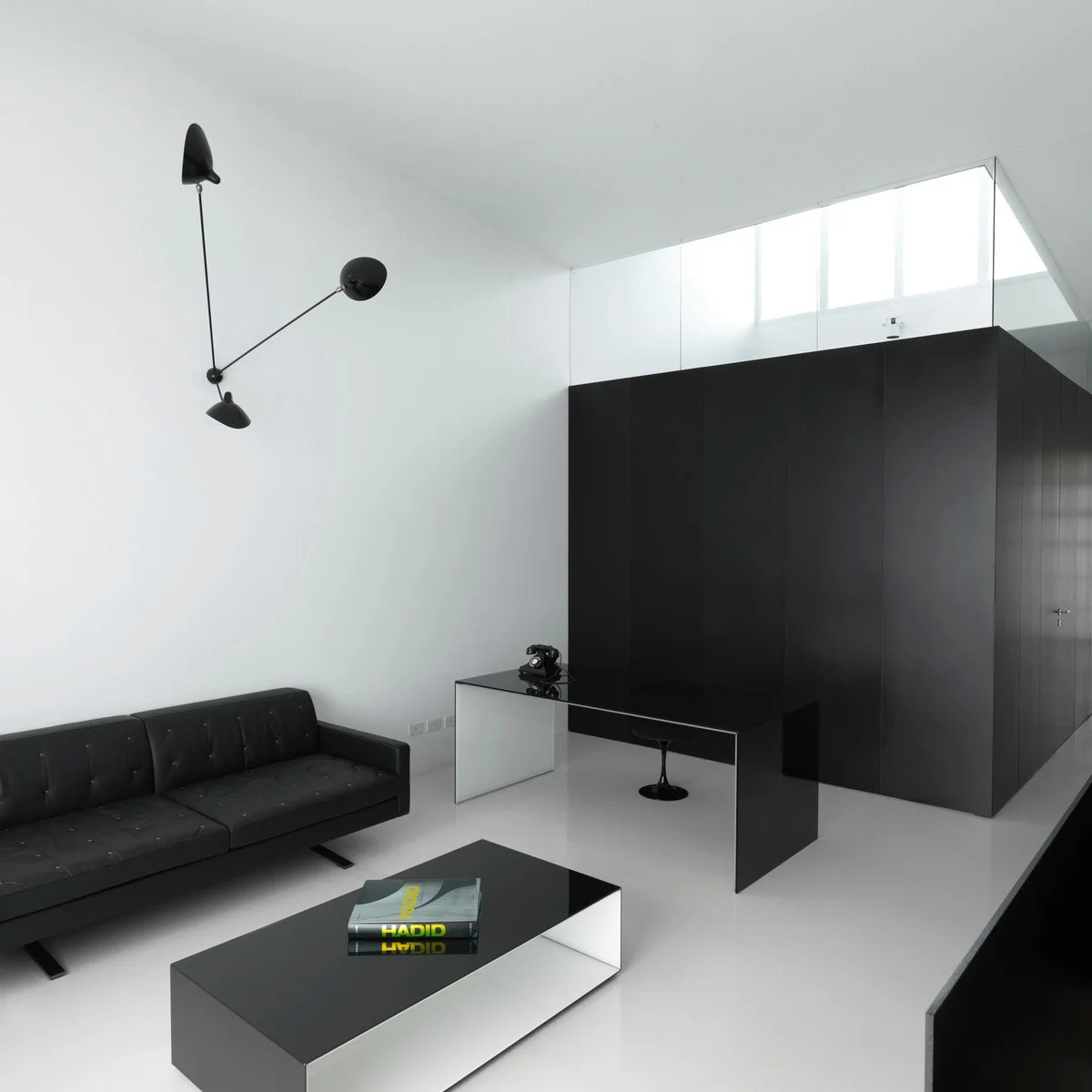
One dark wall volume gives this pale interior a strong end point. A low black sofa and reflective tables repeat the color in separate shapes, while the floor and surrounding walls stay light. The restrained number of objects lets the contrast itself provide much of the room’s detail.
Borrow the limited color group without assuming your room needs a new partition. Choose a sofa for comfort and depth first, then compare its finish with the walls. Reflective tables show marks readily, so consider cleaning and edge visibility as well as their lighter-looking appearance.
IDEA 05 / 20
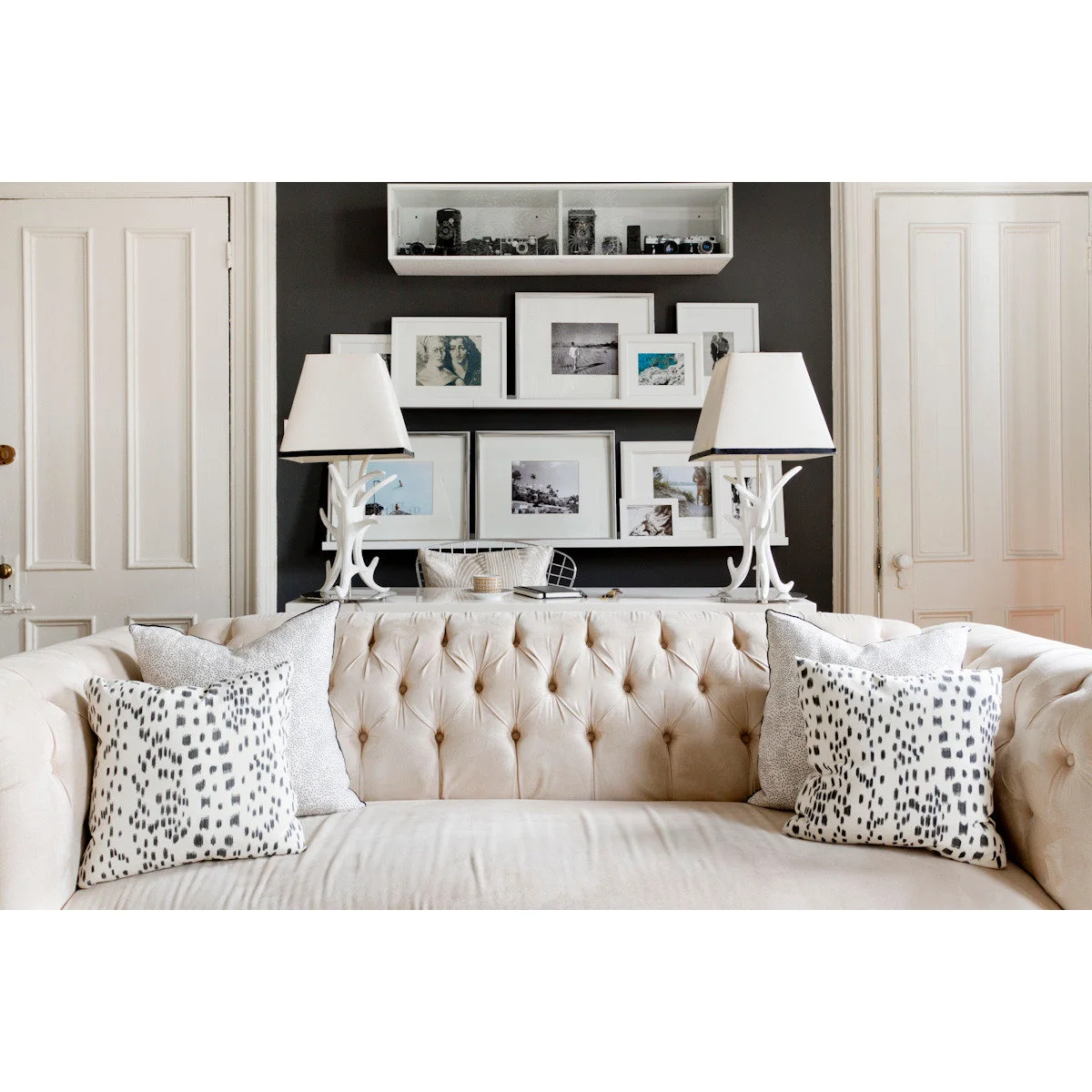
Give a Photo Display a Dark Backdrop
 SaveSupport Non AI Creator
Image credit: Project: Rikki Snyder (via Houzz)
A dark section of wall gives the pale-framed photographs a clear backdrop between two doors. The tufted sofa stays light, with black-and-white cushions repeating the contrast. A narrow surface behind the sofa supports two lamps, keeping their bases away from the seat cushions.
Check the depth behind the sofa before adding a console, including access for plugs and cleaning. Secure picture ledges and frames appropriately. Keep the display within the useful wall area rather than spreading it onto door trim simply to make the collection symmetrical.
PART 02
Keep the Seating Group Readable
IDEA 06 / 20
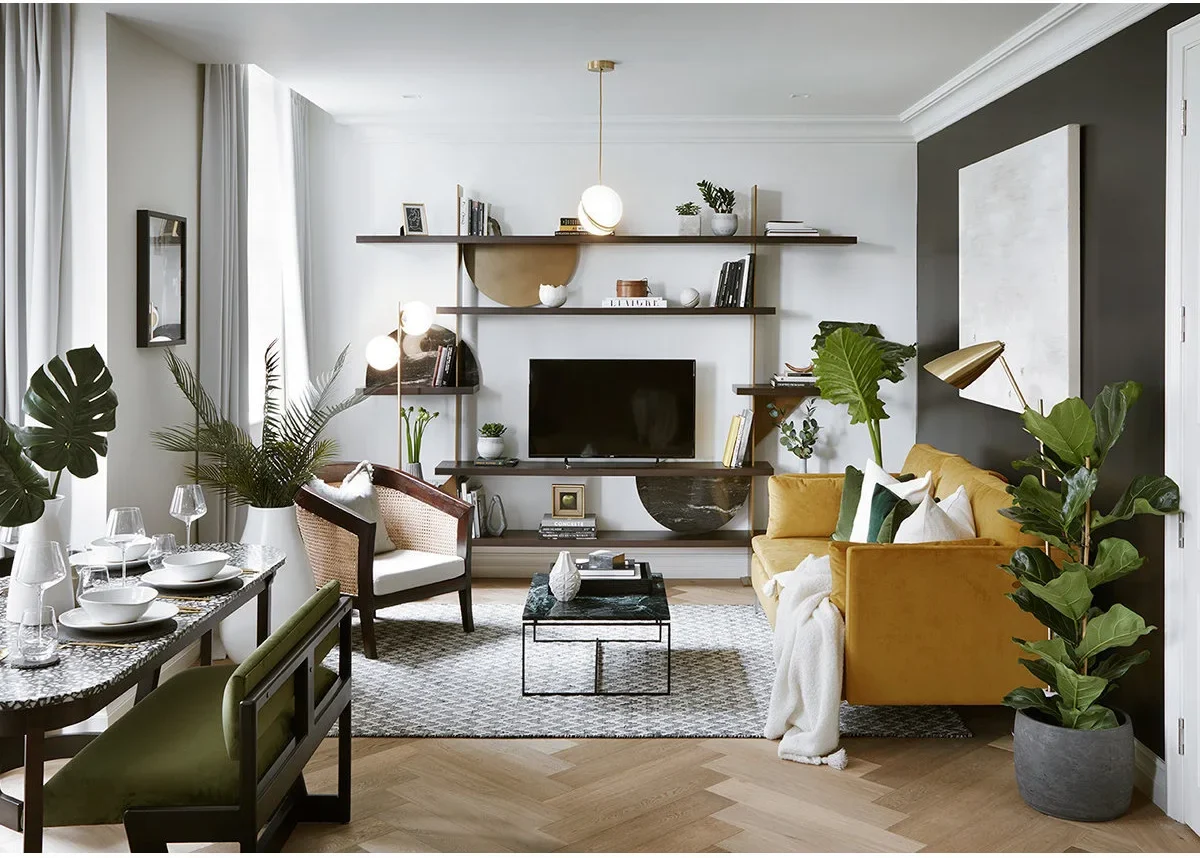
Balance a Dark Accent Wall with a Yellow Sofa
 SaveSupport Non AI Creator
Image credit: Project: House of Sui Sui Interiors (via Houzz)
A dark accent wall gives the yellow sofa a stronger outline in this compact living-dining room. Open shelves organize the television wall, while the pale rug gathers the sitting group. Green plants repeat a smaller accent color without requiring another painted surface near the dining area.
Measure both dining seats and the sofa route in use before choosing additional furniture. Keep plants and lamps from narrowing the passage between the two activities. Use the dark wall as a backdrop for a seat you enjoy rather than adding several matching black pieces around it.
IDEA 07 / 20
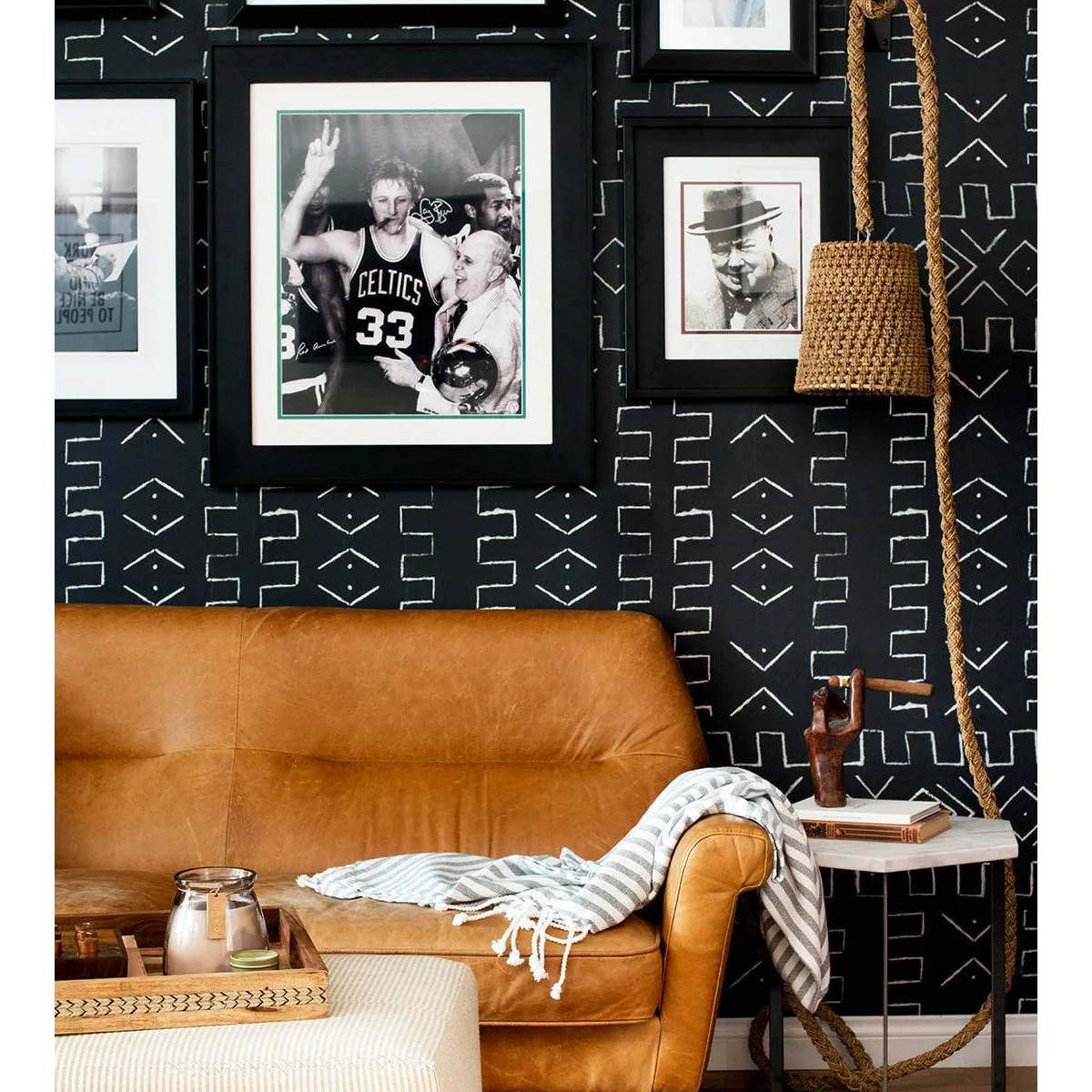
Use Pattern on a Dark Wall behind a Tan Sofa
 SaveSupport Non AI Creator
Image credit: Project: Kate Lester Interiors (via Houzz)
Black wall covering carries a fine pale pattern behind the tan sofa. Dark frames connect the photographs with the background, while their pale mounts keep the images readable. A small light-topped side table and striped throw break up the heavier color without adding another large furniture piece.
View a full pattern repeat before ordering wallpaper for a small room. Keep adjacent textiles simpler if the wall already supplies enough detail. Choose a table with a stable top at a useful height, and keep decorative hanging pieces clear of the route beside the sofa.
IDEA 08 / 20
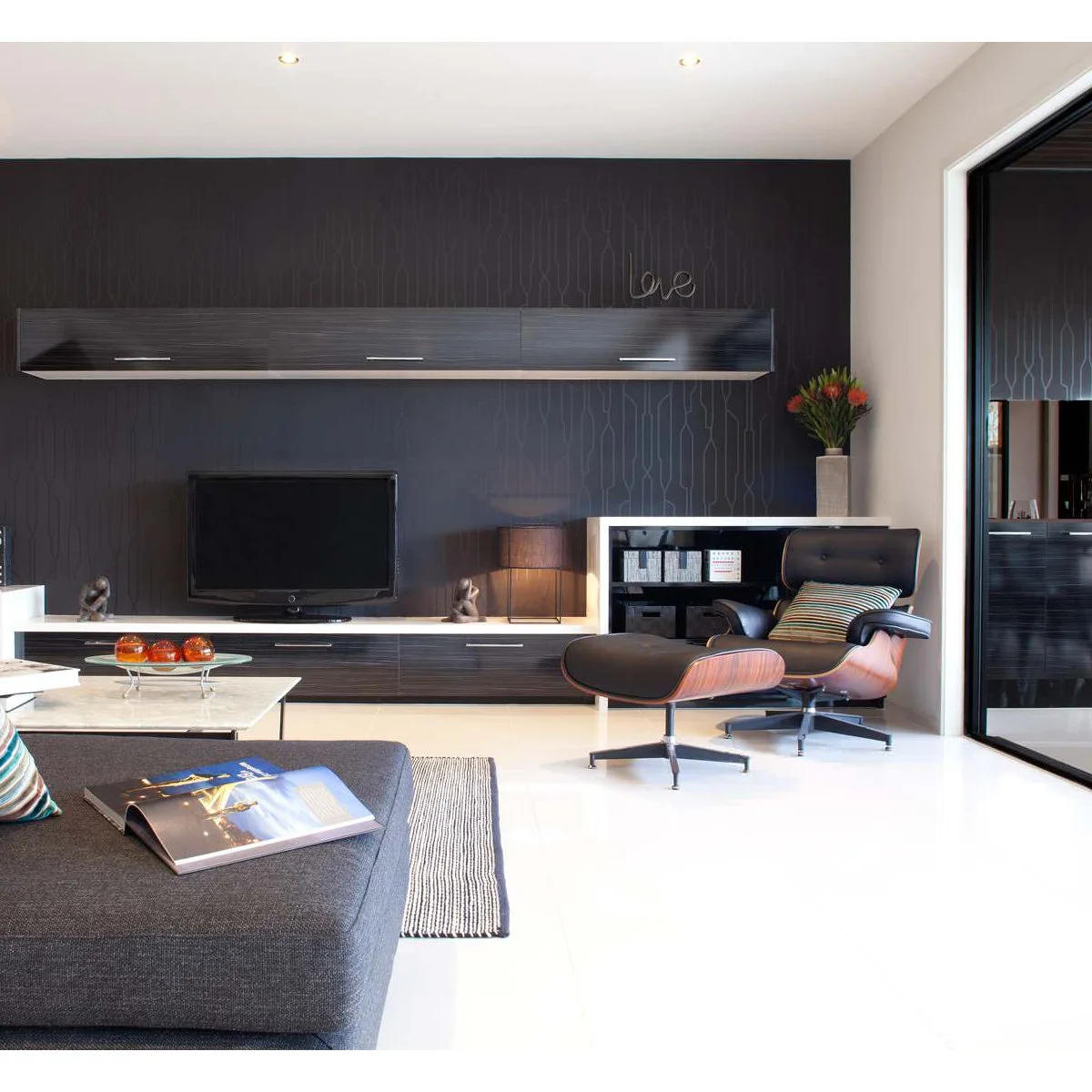
Match Low Storage to a Dark Feature Wall
 SaveSupport Non AI Creator
Image credit: Project: Orbit Homes (via Houzz)
Long low cabinets repeat the dark media wall, with a matching high cupboard providing another horizontal line. A black lounge chair and ottoman sit against the pale floor. Keeping the larger storage pieces visually connected makes the television area read as one feature rather than several unrelated cabinets.
Plan equipment ventilation, socket access and the actual contents before choosing storage. Check the lounge chair and ottoman with enough space to stand and pass. Keep high cabinets securely installed and avoid using a long wall unit as a reason to collect more objects than the room needs.
IDEA 09 / 20
Let Pale Chairs Stand Out against an Inky Wall
 SaveSupport Non AI Creator
Image credit: Project: Paul Craig Photography (via Houzz)
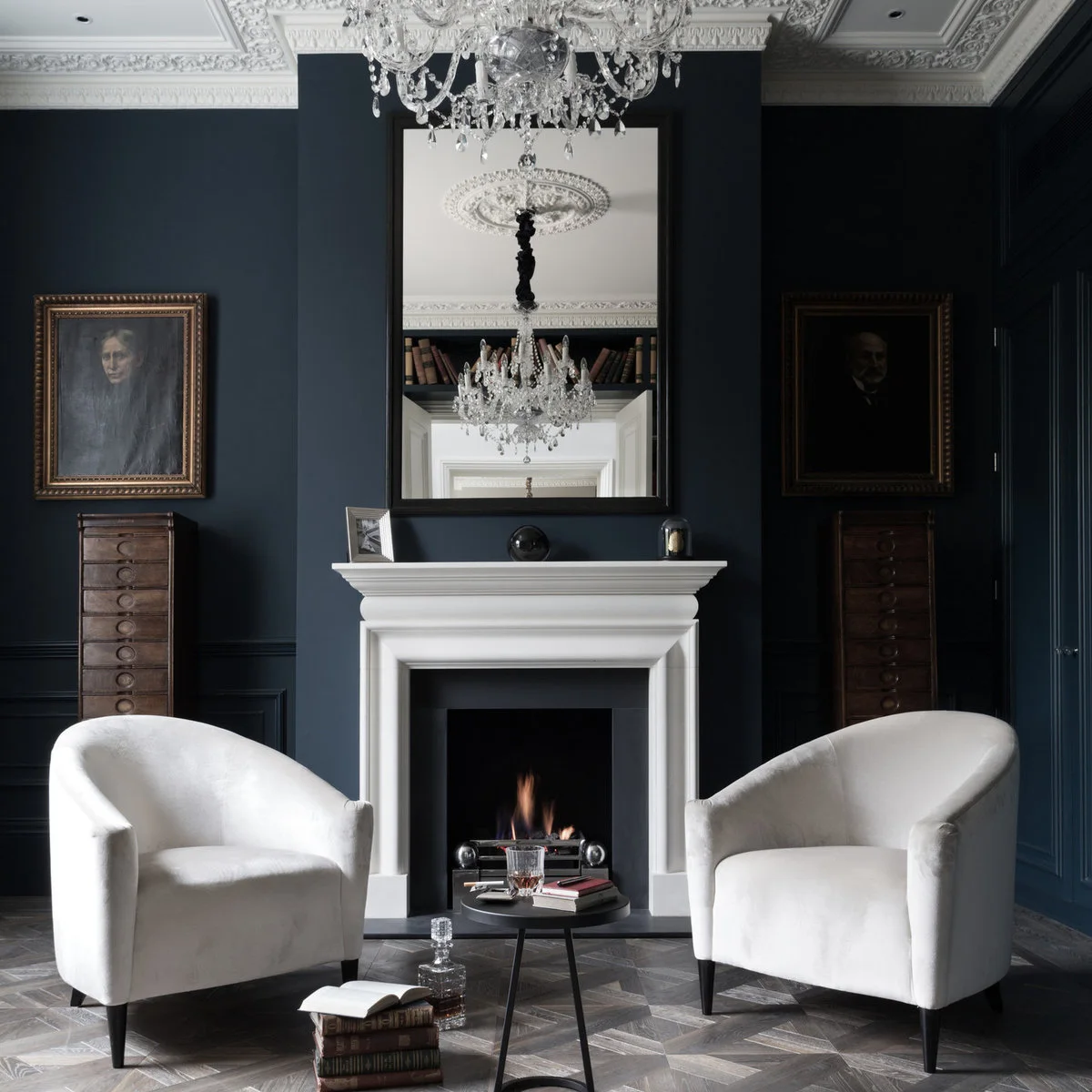
Two pale rounded chairs stand clearly against the inky fireplace wall. A tall mirror repeats the height of the room, with darker wood-colored storage at either side. The small black table gives the seats a shared surface without placing a broad coffee table across the whole group.
This is a focused sitting arrangement rather than proof that the whole room is small. Borrow the chair-and-table scale for your own corner and check clearances around any working fireplace. Test nearly black paint in your light, since its blue or green undertone may become more visible nearby.
IDEA 10 / 20
Use a Slim Dark Console behind Pale Seating
 SaveSupport Non AI Creator
Image credit: Project: DeForest Architects (via Houzz)
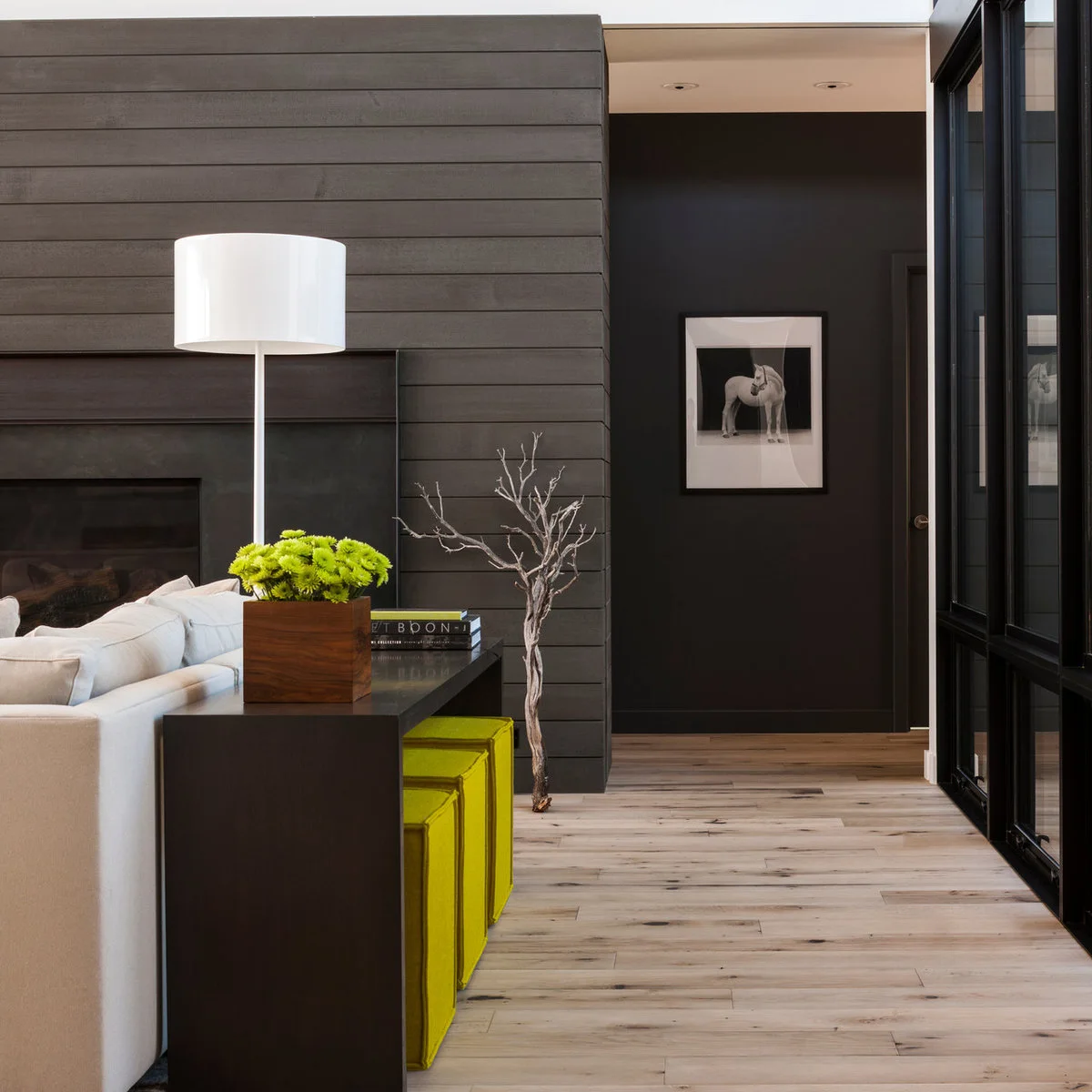
A slim dark console runs behind the pale sofa, with bright stools stored underneath. Dark paneled surfaces give the background depth, while the pale floor keeps the passage readable. The arrangement makes a narrow surface do more than display objects without adding another full-depth cabinet behind the seat.
Check whether stools can be pulled out and used without blocking circulation. A console should suit the sofa height and remain stable when touched from either side. If space is tight, prioritize the walking route and use one small side table instead of copying the entire arrangement.
PART 03
Use Black without Painting Every Wall
IDEA 11 / 20
Repeat Black in Slim Tables and Chair Outlines
 SaveSupport Non AI Creator
Image credit: Project: Hughes Design and Build London Ltd (via Houzz)
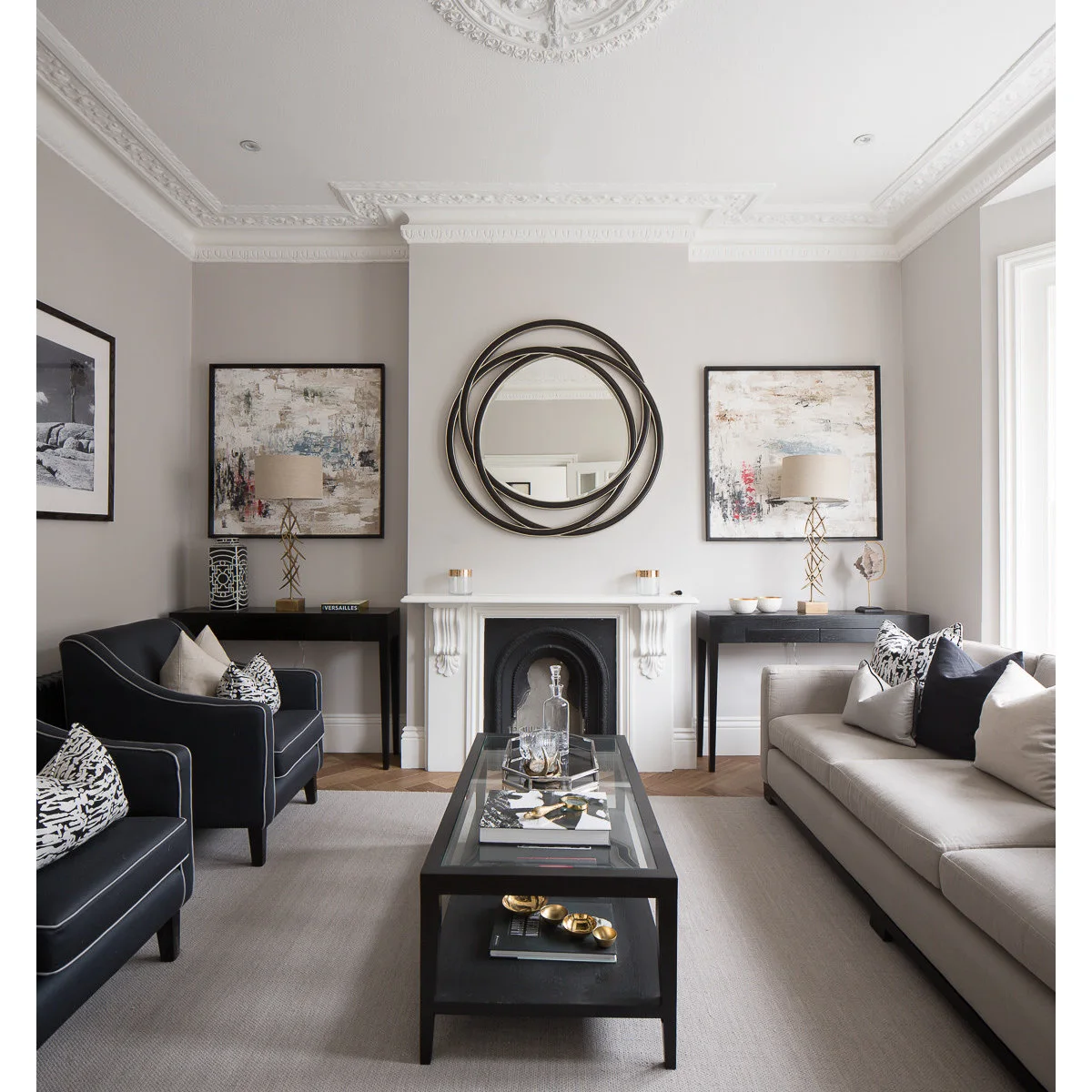
Two dark chairs face a pale sofa, with narrow black consoles flanking the fireplace. The glass-topped coffee table repeats the black frame without filling its center visually. Pale walls and a simple rug keep the smaller sitting group readable despite the room’s decorative ceiling and mirror.
Measure table widths and the route between sofa and chairs before buying matching pieces. A slender frame can still have a large footprint. Keep enough clear surface for daily use and avoid filling every table with accessories simply because the rest of the room is pale.
IDEA 12 / 20
Use a Dark Sofa as the Room’s Anchor
 SaveSupport Non AI Creator
Image credit: Project: Honeybee Interiors and Joinery (via Houzz)
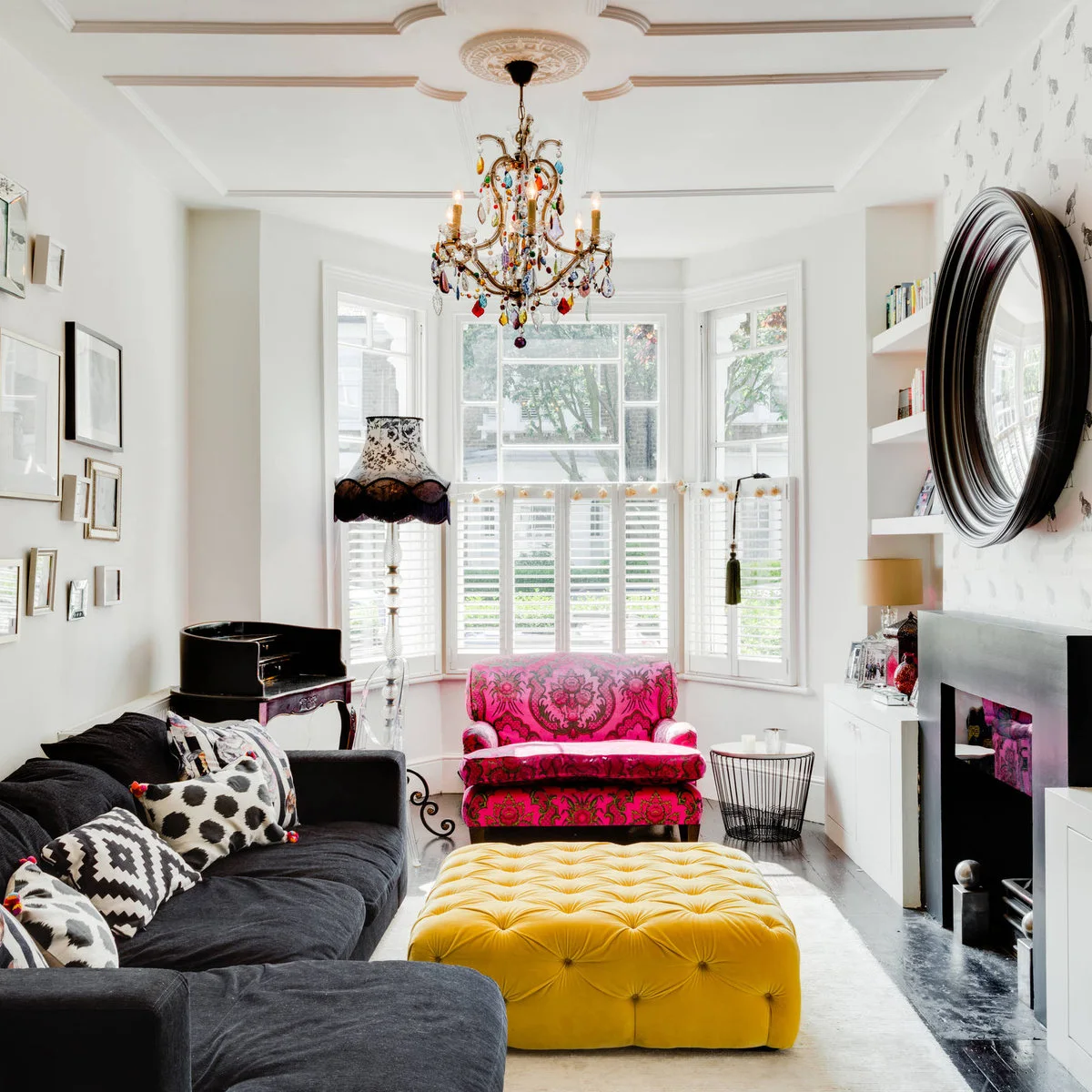
A dark corner sofa provides the largest steady color shape in this bright room. Black-and-white cushions repeat its contrast, while a yellow ottoman and pink chair add separate accents. The pale walls and window area leave those stronger furniture colors distinct rather than blending them into a dark enclosure.
Choose the corner-sofa orientation around the doorway and main route before considering color. Limit extra cushions if they reduce useful seating. A bright accent can work beside black, but compare samples together and choose an ottoman for everyday use rather than only its impact in the room.
IDEA 13 / 20
Connect a Dark Rug with Black Furniture Frames
 SaveSupport Non AI Creator
Image credit: Project: Greg Natale (via Houzz)
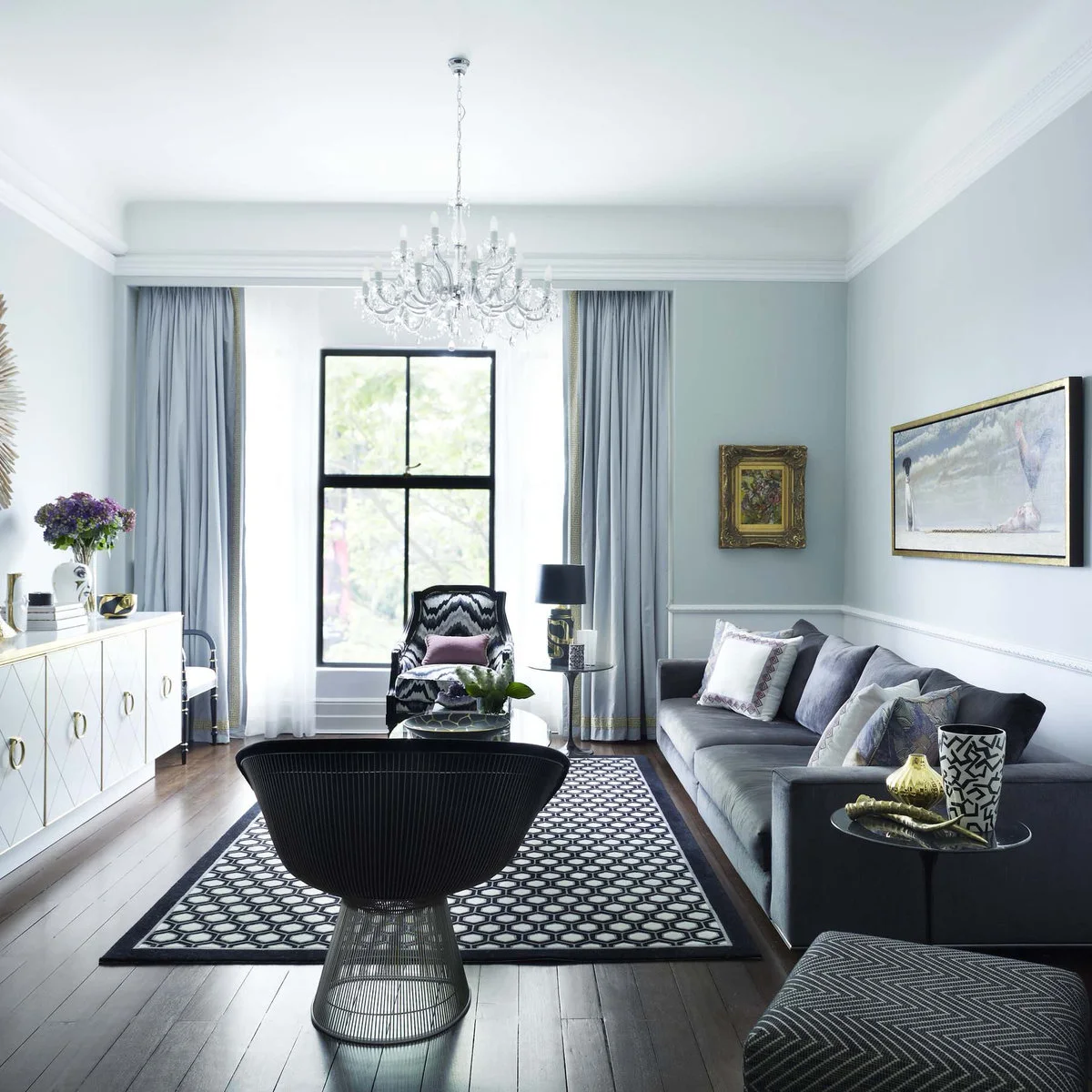
A dark patterned rug gathers the gray sofa and separate chairs in this narrow room. Black frames, a small table and the window outline repeat the same stronger color at different heights. Pale walls and curtains keep the larger background quieter around the compact group.
Select the rug size around the seats rather than using a small decorative patch in the middle. Keep edges flat and leave a clear route beside the furniture. Compare chair width and table depth carefully, since repeated black outlines look connected only when the layout remains comfortable to use.
IDEA 14 / 20
Repeat Black in Curtains and a Round Table
 SaveSupport Non AI Creator
Image credit: Project: Darren Palmer Interiors (via Houzz)
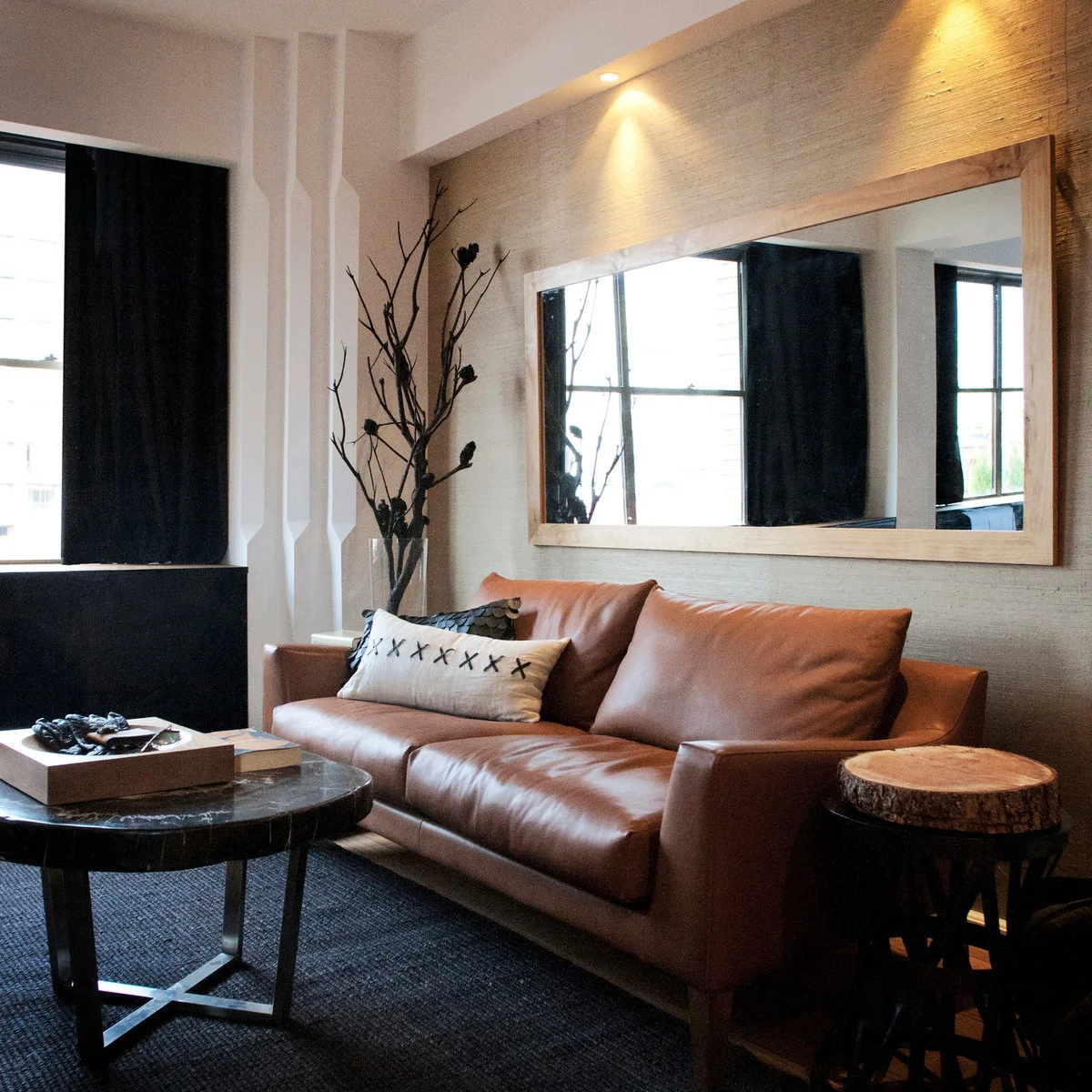
A tan sofa sits between dark curtains and a black round coffee table. The broad mirror repeats the window light above the seat, while wood-colored table details keep the warmer tone connected. Black provides a repeated frame around the seating without requiring a black sofa or an all-dark wall.
Choose curtains for privacy and light control as well as color, keeping them able to open fully. Check what the mirror reflects from the main seat. Use a round table only if its diameter leaves enough walking space, and keep the surface clear enough for a drink or book.
IDEA 15 / 20
Pair Black Chairs with Existing Wood Tones
 SaveSupport Non AI Creator
Image credit: Project: TKP Architects (via Houzz)
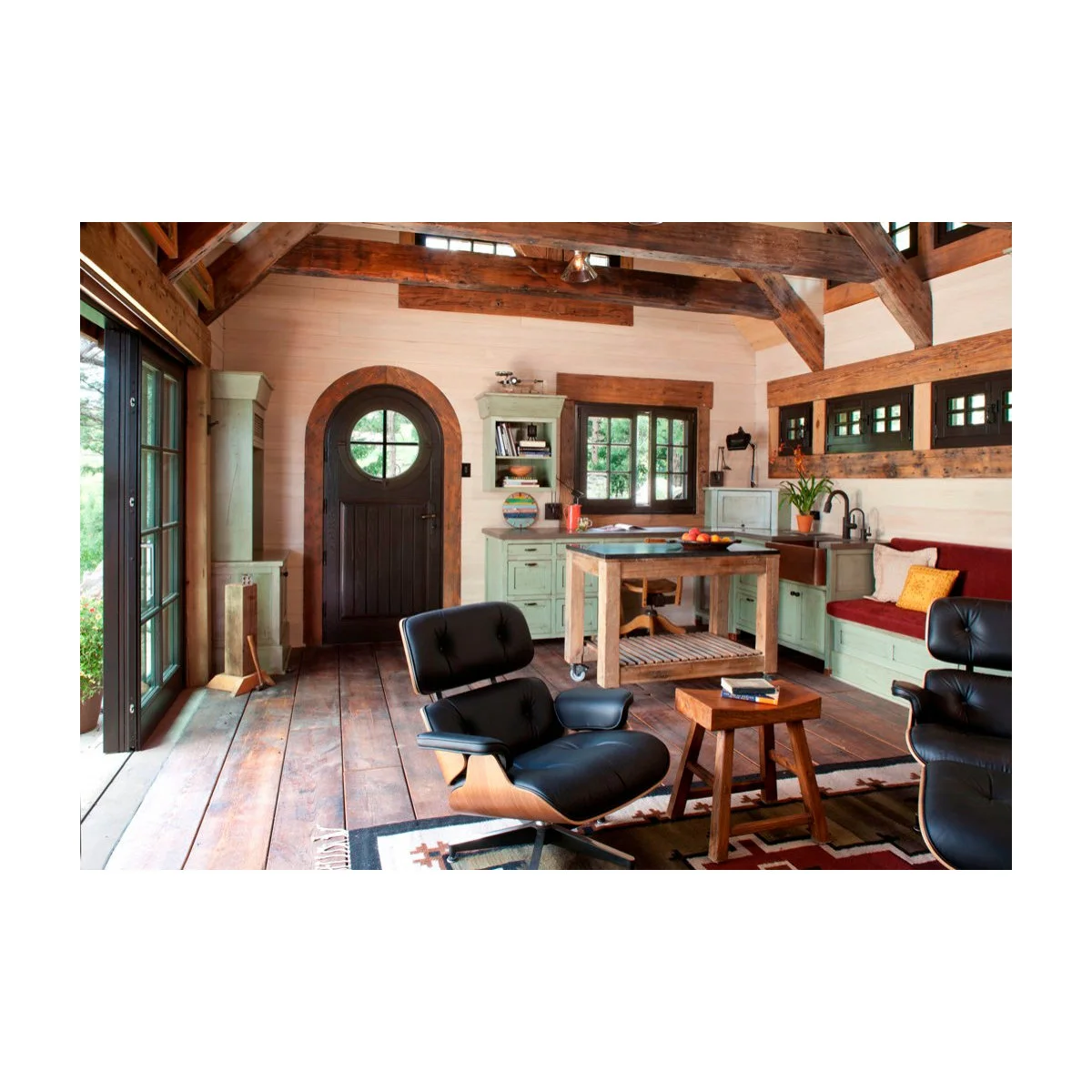
Two black lounge chairs give this compact open sitting area clear furniture outlines. Their wood-colored bases connect with the floor and beams, while pale green cabinets remain visible behind. A small table serves the pair without a second sofa separating the living area from the kitchen.
Check chair depth with the back reclined or occupied, not only from its front outline. Keep the route to the kitchen clear. If black upholstery is your main change, test its care needs and comfort rather than assuming every dark finish will wear or clean in the same way.
PART 04
Make Smaller Details Work Harder
IDEA 16 / 20
Use Black Piping and Frames in a Pale Room
 SaveSupport Non AI Creator
Image credit: Project: Bailey London Interior Design & Build (via Houzz)
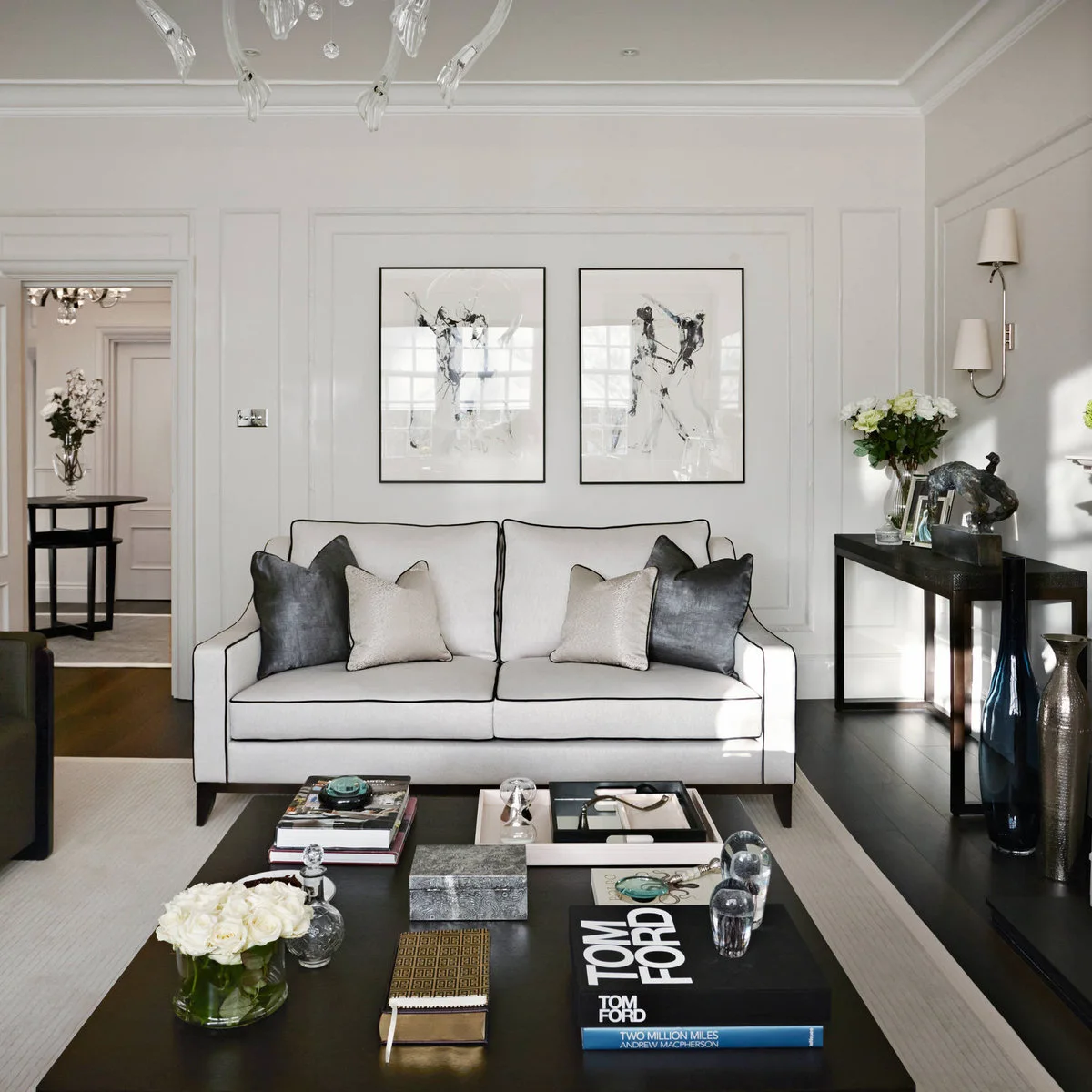
Black piping traces the pale sofa’s outline, with dark picture frames and a narrow console repeating the detail higher on the wall. A black coffee table gives the group a stronger center. The room shows a lighter way to use black without committing to a dark painted background.
Try one repeated detail before replacing several pieces. Choose a coffee table by the usable space around the seats, keeping its top from becoming a permanent display shelf. Pale upholstery still needs a cleaning routine, so compare covers and fabric guidance before deciding the contrast is easy to maintain.
IDEA 17 / 20
Use a Black Ottoman with Simple Patterned Cushions
 SaveSupport Non AI Creator
Image credit: Project: Verandah House (via Houzz)
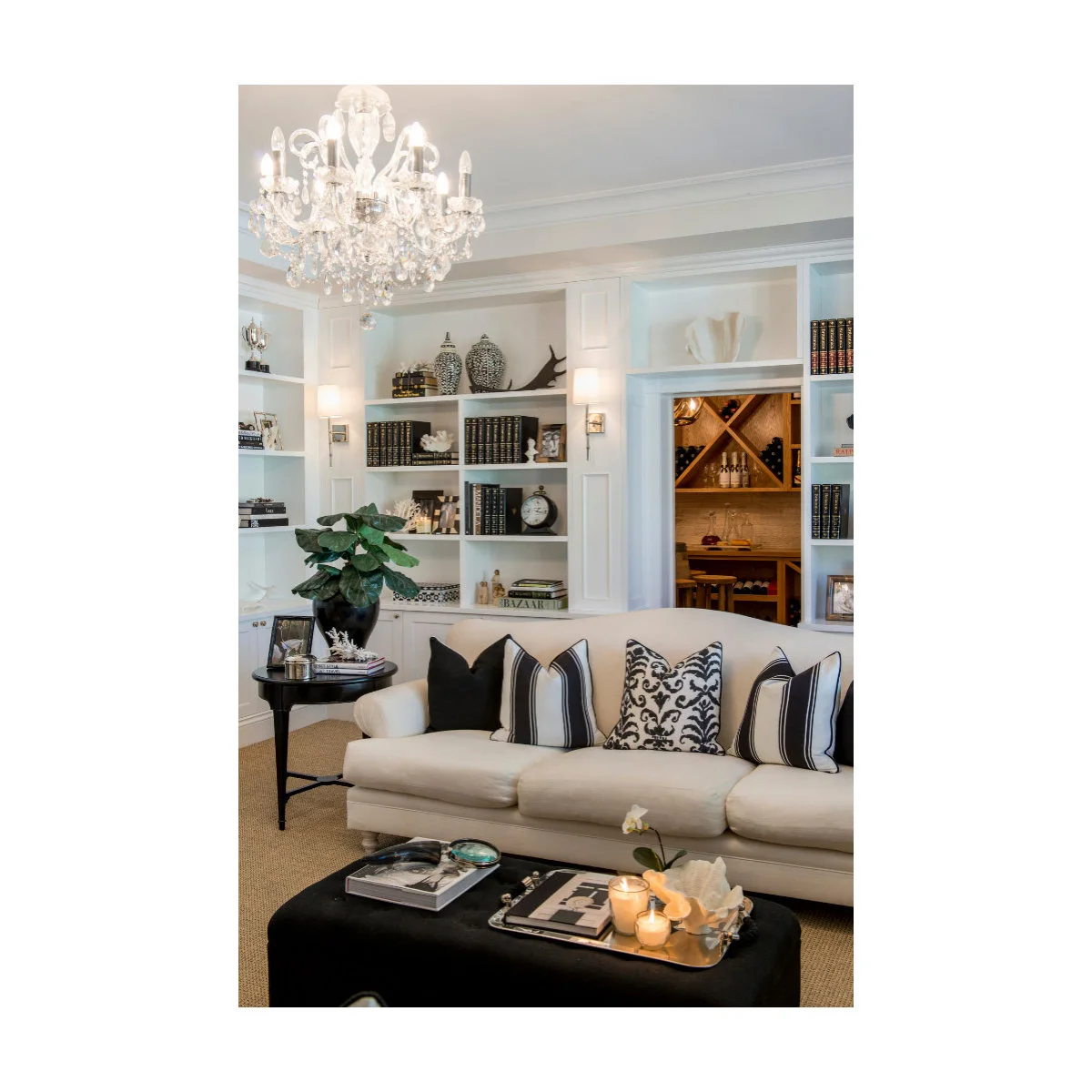
A dark ottoman forms the center of this pale seating group, with black-and-white cushions linking it to the sofa. White shelves behind keep the backdrop lighter. The patterned cushions add detail without requiring another strong wall color or several different accent shades around the seat.
Choose whether the ottoman is primarily for feet, occasional seating or a tray, then compare firmness and height. Keep a stable separate surface for drinks if needed. Limit the cushion group to pieces you can store comfortably and keep the shelves practical for the belongings you actually use.
IDEA 18 / 20
Let a Dark Rug Ground Pale Seating
 SaveSupport Non AI Creator
Image credit: Project: D'Cruz Design Group (via Houzz)
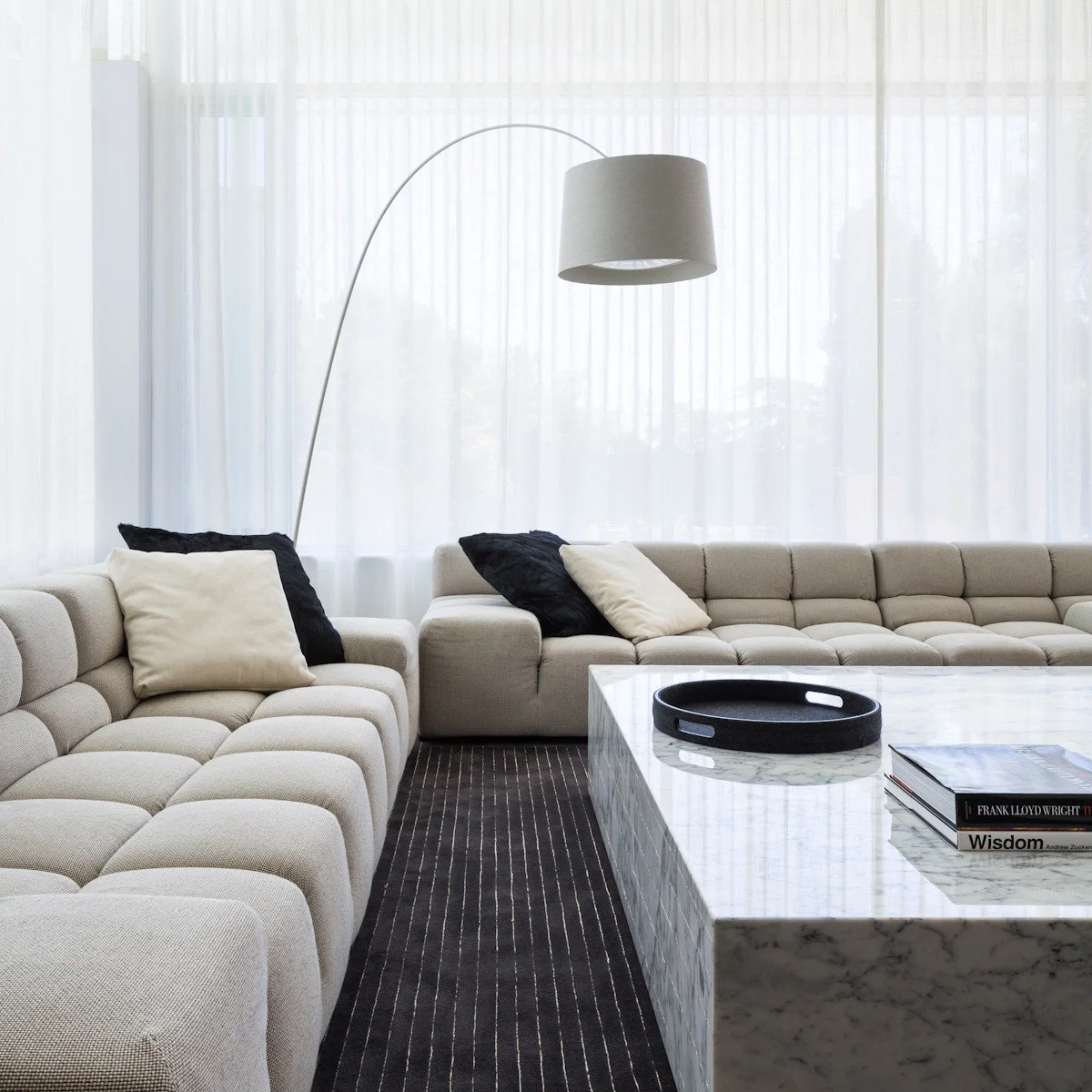
A dark fine-striped rug gives the pale tufted seating a clear base. Small dark cushions and a black tray repeat its color without covering the larger furniture. The tall light curtains soften the window area, keeping the strongest contrast close to the seats and table.
Use the rug’s actual size and pile to assess furniture stability and cleaning needs. A large pale table may be too deep for a smaller room even when the colors work well. Keep the center accessible from every seat and use the repeated black details in quantities that suit your own space.
IDEA 19 / 20
Use a Small Black Side Table in a Reading Corner
 SaveSupport Non AI Creator
Image credit: Project: Simply Home Decorating (via Houzz)
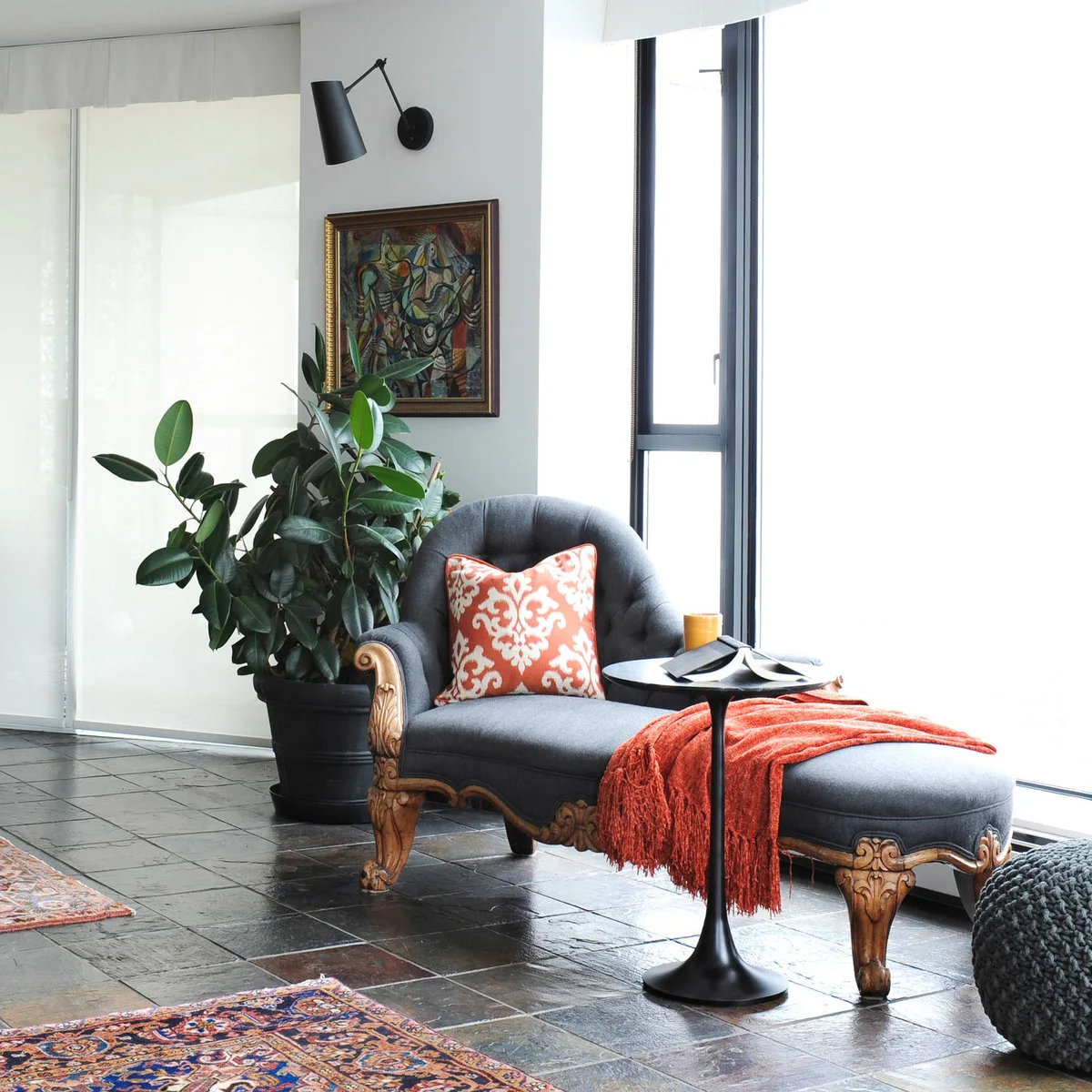
A small black pedestal table gives the gray chaise a reachable landing place. The black wall light and plant pot repeat its outline, with an orange throw adding a warmer accent. The corner stays focused on one seat rather than requiring a second chair or wide console.
Check that the table is stable where a hand naturally reaches from the seat. Place the reading light to avoid glare and keep the plant from interfering with the window. Choose a chaise only if its length leaves the rest of the room usable; a smaller armchair may be easier to fit.
IDEA 20 / 20
Use Black Frames around an Open View
 SaveSupport Non AI Creator
Image credit: Project: Turner Pocock (via Houzz)
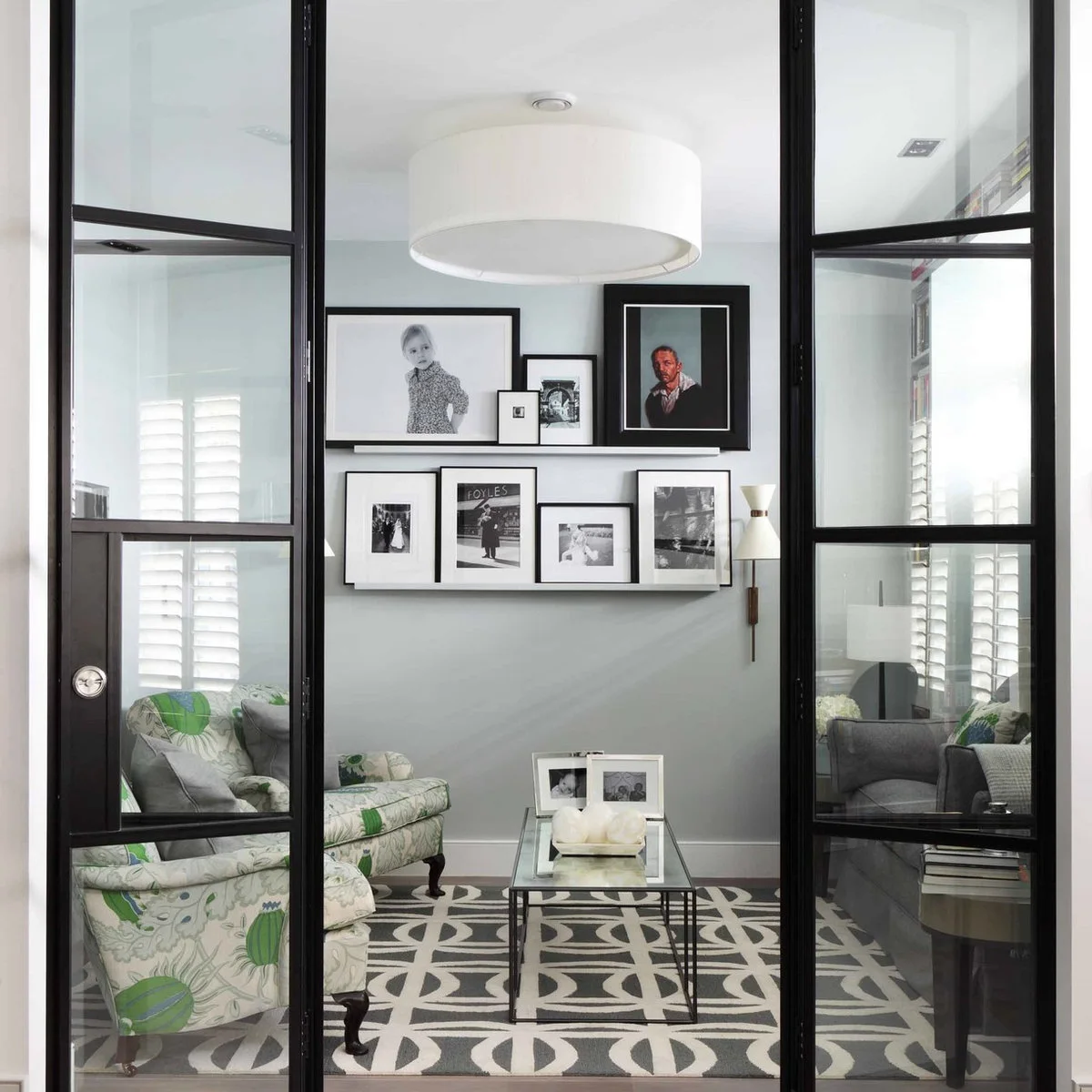
Black-framed glazing defines the entrance to this small sitting room without closing off the view. Black picture frames repeat the outline inside, with a narrow glass-topped table leaving the patterned rug visible. Pale walls and light seating keep the dark lines from becoming large solid surfaces.
Treat glazed doors as a building decision that needs suitable specification and installation, rather than a simple decorative swap. For a smaller change, repeat black in frames and table legs. Keep door movement and furniture placement practical so the open view is matched by an easy route into the room.
BRING IT ALL TOGETHER
Choose Where Black Should Lead
Decide whether black belongs on a wall, a seat or a repeated outline before adding more dark pieces. Keep the route around the furniture comfortable and compare finishes in the room’s actual daylight and evening light.
Use pale surfaces, texture or one warmer accent where they help you enjoy the room. There is no need to make every element match; the most useful arrangement is the one that leaves seating, storage and lighting easy to use.