Scandi rustic living rooms bring two useful qualities together: the warmth of visible wood and texture, and the clarity of simple furniture and a considered layout. The aim is a room that feels comfortable rather than empty or overloaded. A worn table, wood chair or textured rug can provide character without changing every wall.
These photographed rooms show several interpretations, from timber-lined spaces to pale rooms with one rustic accent. They are ideas to adapt, not claims about a home’s location or age. Where fireplaces appear, use the color and furniture relationships as inspiration and have construction, fuel storage and clearances resolved for the actual installation.
PART 01
Start With Wood and a Light Background
IDEA 01 / 20
Let One Substantial Wood Piece Lead
 SaveSupport Non AI Creator
Source: Manomin Resawn Timbers via Houzz
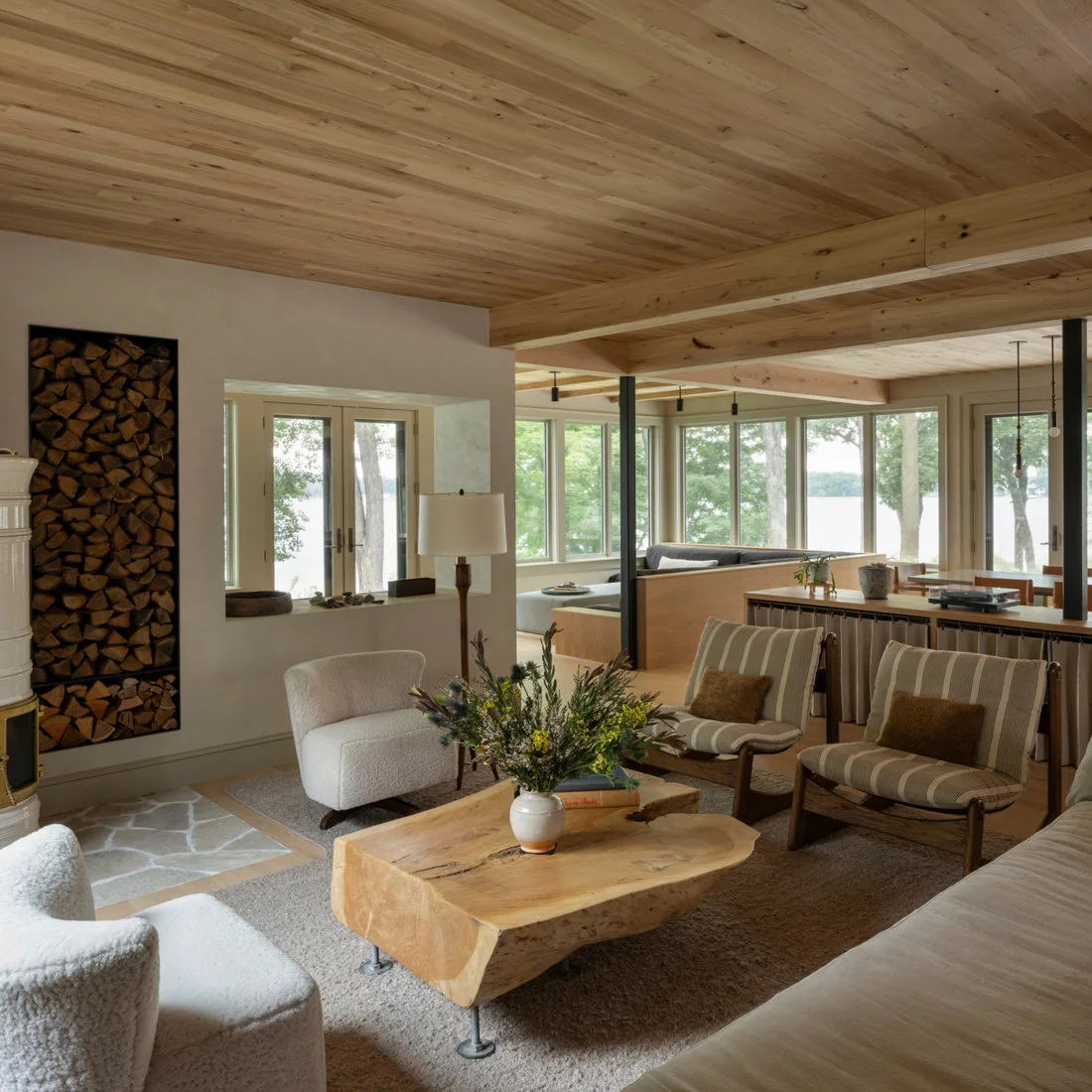
The thick irregular tabletop gives this room its strongest rustic detail. Pale seating, simple chair frames and light walls keep that detail from becoming part of an overwhelming collection of rough furniture. The wood ceiling connects the seating area with the dining space beyond.
Choose a substantial table for its usable height and stable base as well as its grain. Check edges for splinters and allow a clear route around the corners. A quieter sofa and rug help a distinctive tabletop remain the focal point without needing many more decorative objects.
IDEA 02 / 20
Keep the View Open Around Simple Seating
 SaveSupport Non AI Creator
Image credit: Future / Douglas Gibb
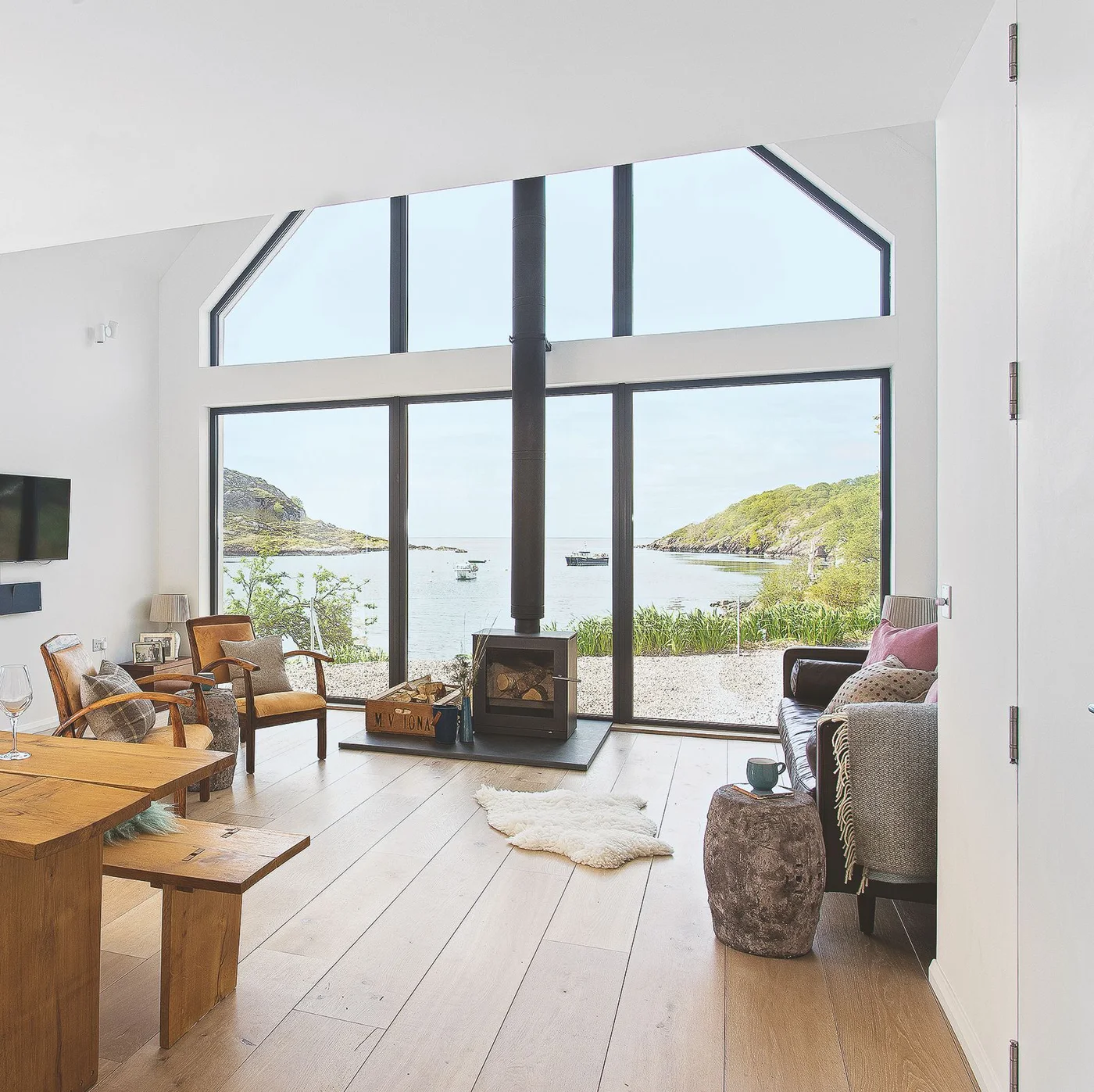
Pale boards and white walls leave this room’s broad window as the main feature. Wood-framed chairs and a small stump-shaped side surface add texture at seating height. The dark sofa and stove provide definition without a large cabinet blocking the view through the room.
Arrange seats for conversation as well as for the view, and check glare on any nearby screen. Keep side tables within reach without narrowing the passage. If adding a stove, have its location, hearth and clearances professionally specified rather than transferring the photographed arrangement directly to your home.
IDEA 03 / 20
Lighten a Timber-Lined Room With Plain Sofas
 SaveSupport Non AI Creator
Image credit: Photo: Troy Thies. From: Martha O'Hara Interiors
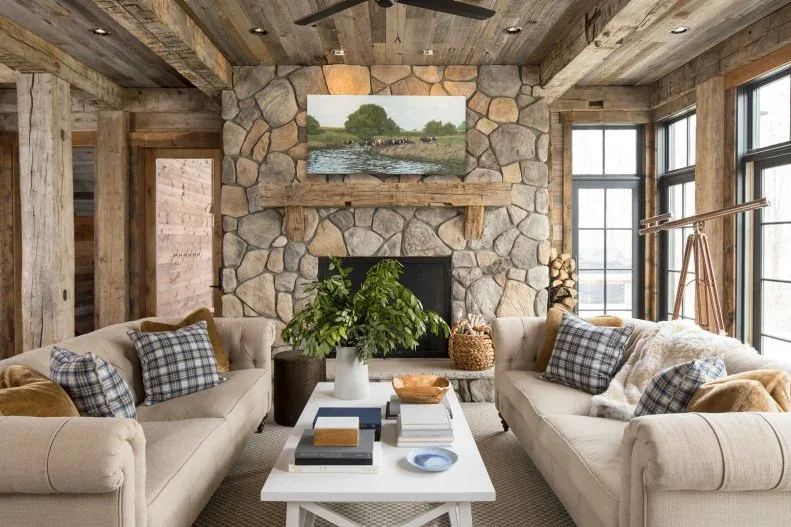
Plain pale upholstery gives the eye somewhere to rest among the timber boards and irregular stone. The white coffee table makes a lighter center than another dark wood piece. Small checked cushions introduce pattern without covering the sofas in competing prints.
In a heavily textured room, begin with simpler upholstery before adding extra patterned curtains or rugs. Compare fabric-cleaning requirements with the way your household uses the sofas. Keep the coffee table comfortable to reach and leave enough floor visible that the furniture does not close in around the seating.
IDEA 04 / 20
Use White Boards to Lift a Low-Key Palette
 SaveSupport Non AI Creator
Source: hgtv.com
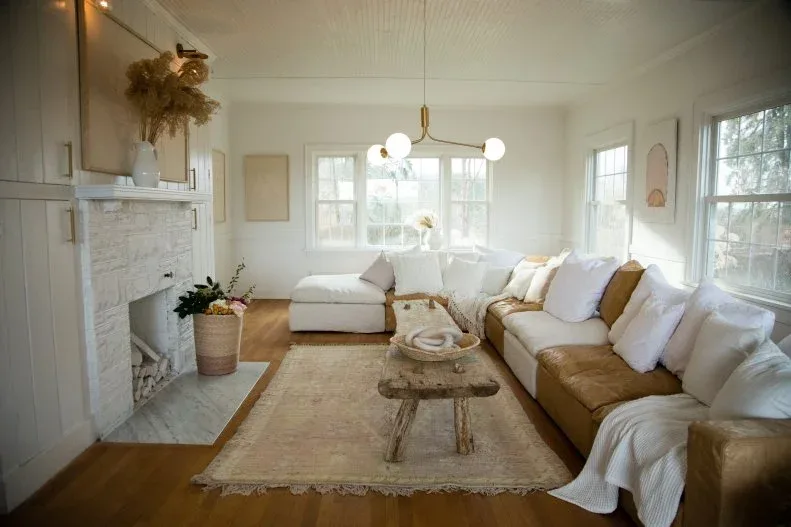
White wall boards and a pale fireplace make this large sectional feel lighter. Its tan base connects with the floor, while a rough bench-style table introduces a smaller rustic accent. The restrained rug and simple globe light leave the room’s main shapes clear.
A deep sectional can provide generous seating but also claim most of a room’s floor. Check its full dimensions, including the chaise, before buying. A small narrow table may improve movement, although it should still give each seated person a practical place for a drink or book.
PART 02
Choose Simple Furniture With Texture
IDEA 05 / 20
Mix Pale Upholstery With One Warm Chair
 SaveSupport Non AI Creator
Source: Cathie Hong Interiors via Houzz
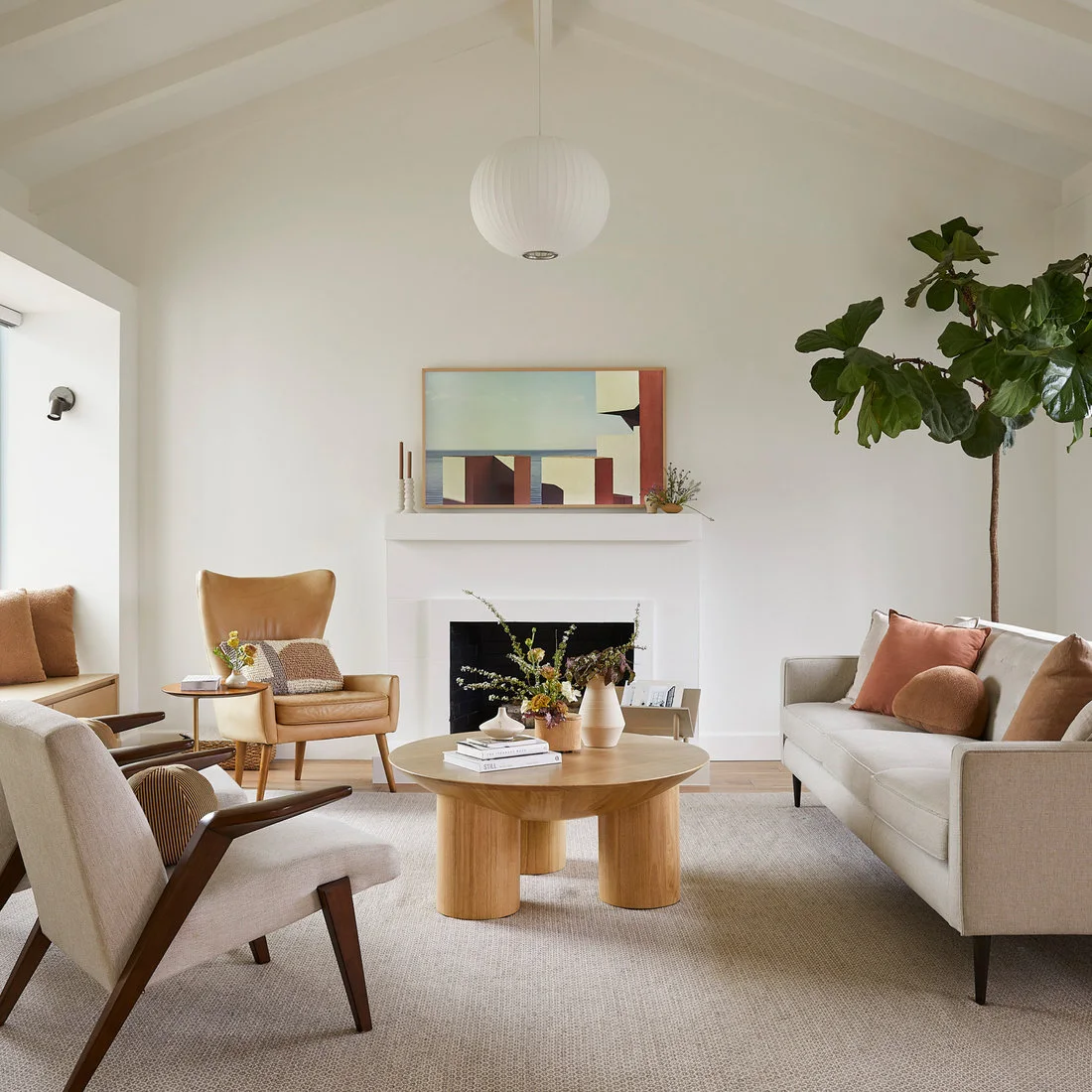
A tan chair adds warmth to this otherwise pale seating group without needing a darker sofa. The round table repeats that warm tone, while the open wood chair frame keeps the foreground light. A single large artwork supplies color above the simple fireplace.
Different chair shapes work best when they still support a comfortable conversation group. Check seat depth and arm height rather than matching every frame. Keep the larger plant clear of the walking route, and choose its position for the actual daylight rather than purely to balance a photograph.
IDEA 06 / 20
Use Open Shelves for a Few Natural Textures
 SaveSupport Non AI Creator
Image credit: Troy Lighting
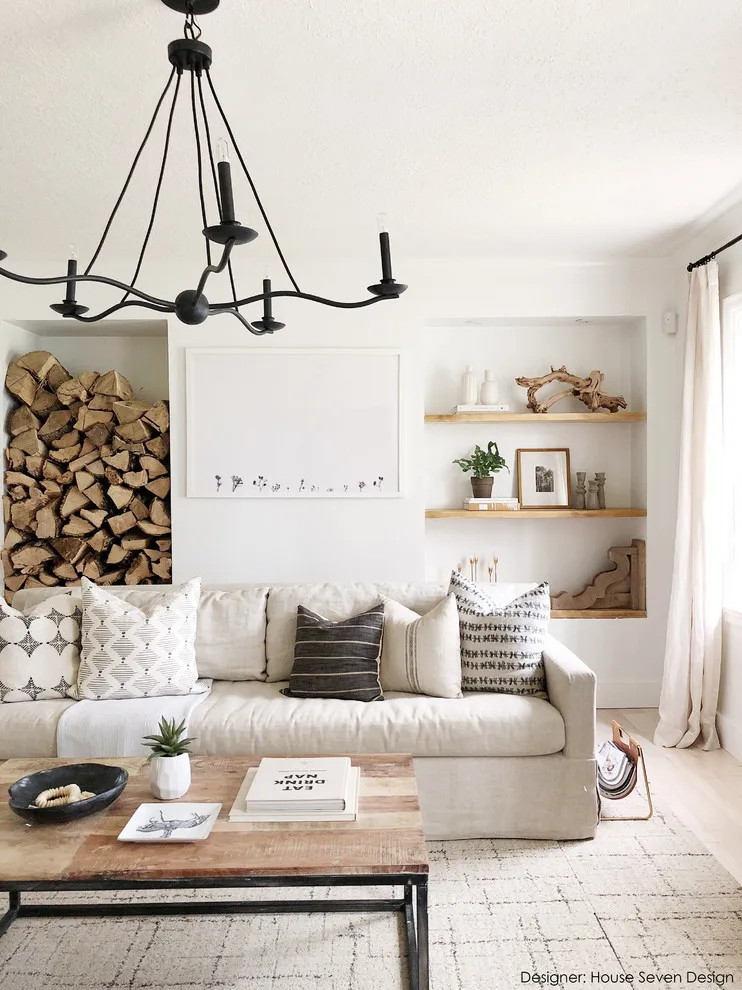
The shelves give books, a small plant and a few natural objects room to stand apart. Pale upholstery and walls keep the room calm while the tabletop adds a visibly worn surface. The black chandelier provides a fine outline above the heavier textures at floor level.
Keep a shelf display selective so it remains easy to dust and does not become another storage problem. Check shelf fixings before adding heavy objects. If you like the log texture, choose a secure storage arrangement appropriate to your home and keep fuel outside any required fireplace clearances.
IDEA 07 / 20
Let Soft Stripes Sit Beside Rougher Wood
 SaveSupport Non AI Creator
Image credit: Future / Simon Whitmore
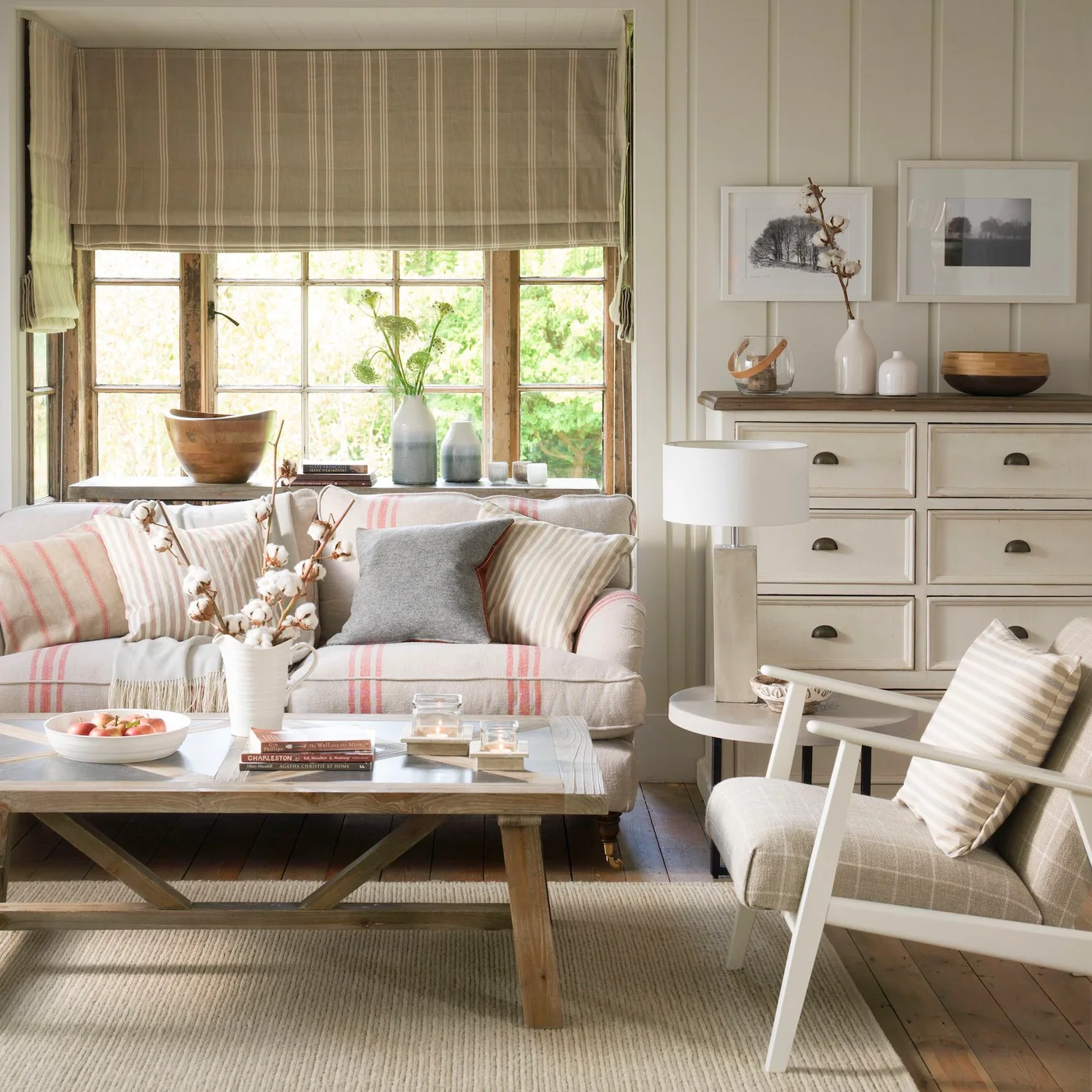
The sofa’s soft stripes add pattern without making the room visually loud. A plain wood table gives the seating group a rustic center, and the painted drawers prevent all the storage from becoming another large timber block. Small framed pictures repeat the light background.
Choose one main stripe scale and keep surrounding patterns quieter if the room is compact. Removable covers are useful where pale upholstery receives daily use. Check that the drawer unit can open fully beside the chair, and keep frequently handled items within reach rather than arranging everything only for display.
IDEA 08 / 20
Combine Useful Wood Storage With Pale Seating
 SaveSupport Non AI Creator
Image credit: Future PLC/Simon Whitmore
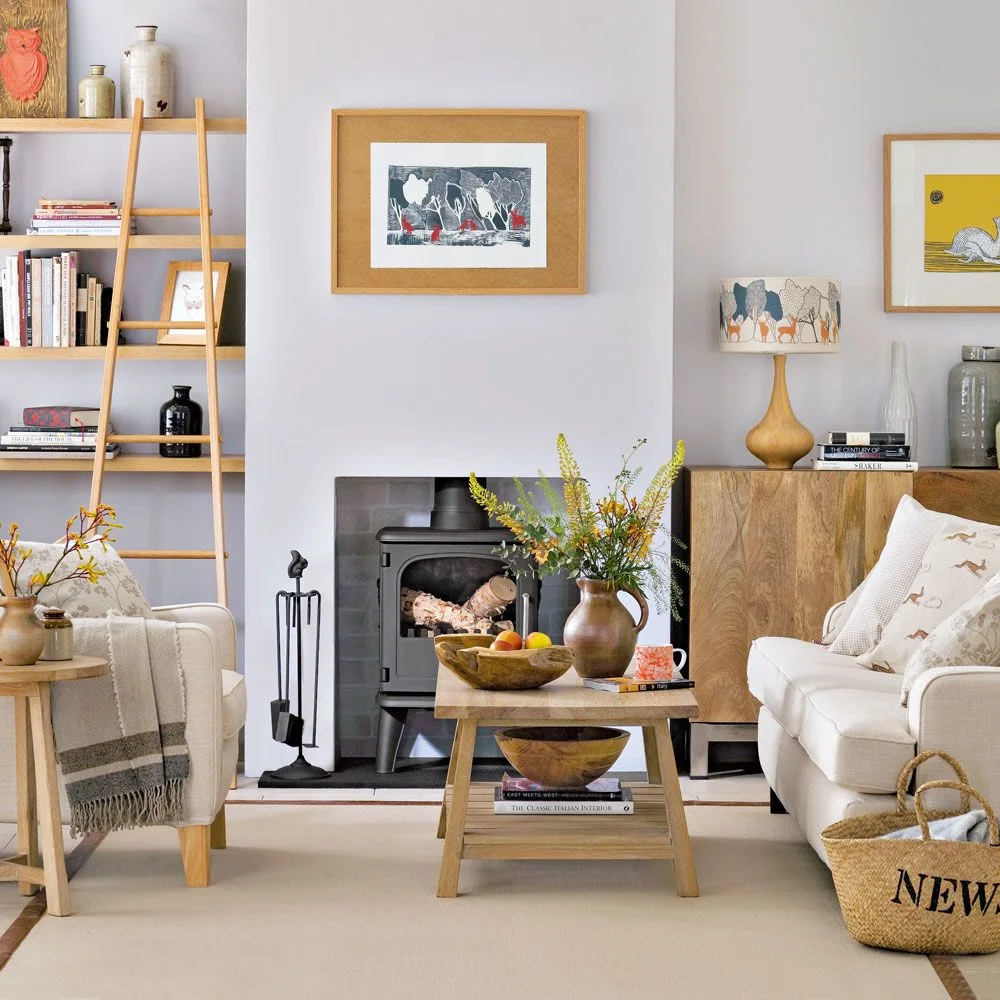
The wood storage gives the room warmth in pieces that also hold books and everyday belongings. Pale chairs and walls stop the shelves and cabinet from feeling heavy. A small low table continues the simple shapes, while a woven basket contains a loose blanket beside the seat.
Plan enclosed storage for things you do not want on show, leaving a few shelves for books or objects you enjoy. Keep ladder-like pieces secure and avoid using decorative furniture as climbing equipment. Scandi living room ideas offer more storage and seating combinations when you prefer a lighter overall balance.
PART 03
Bring Color Into the Rustic Mix
IDEA 09 / 20
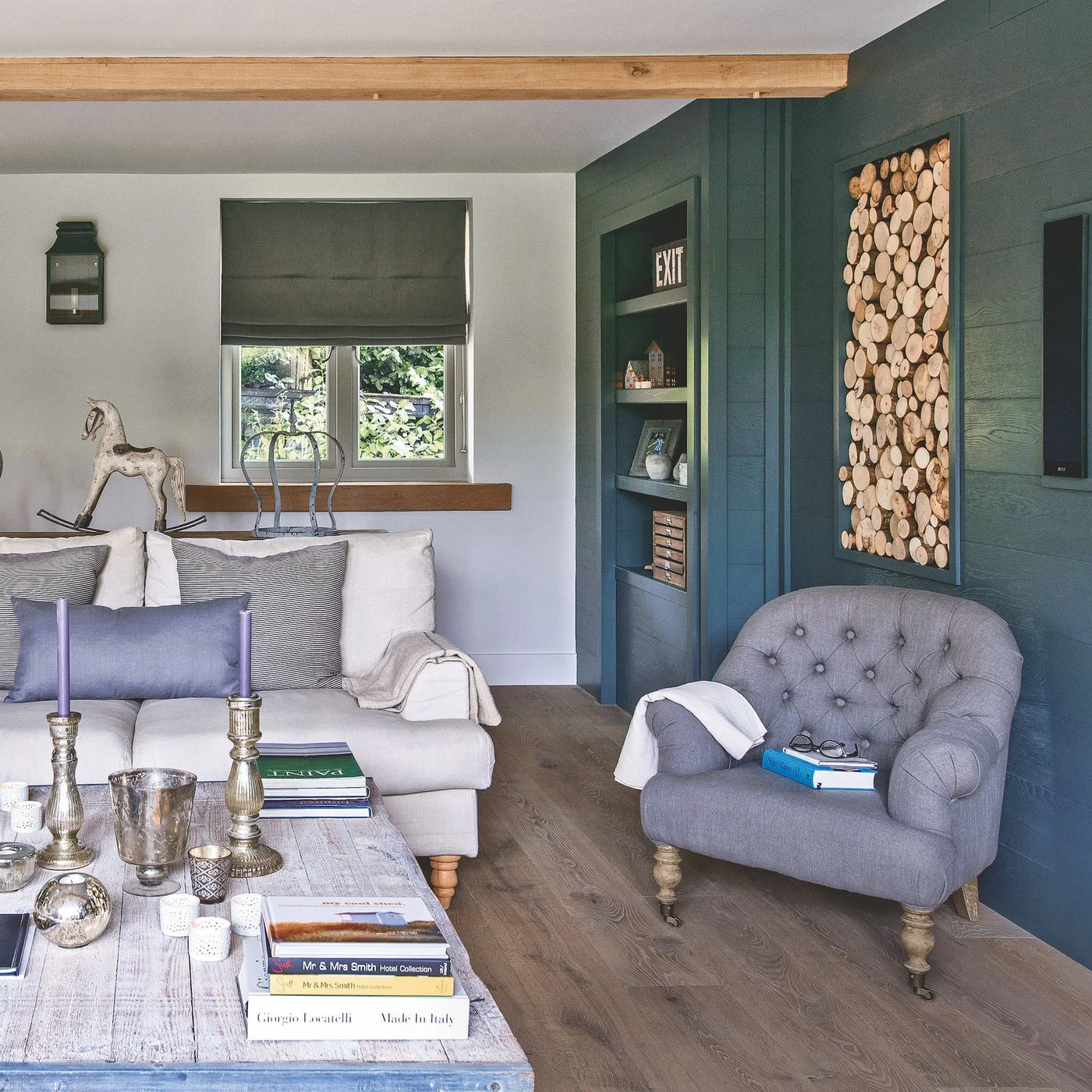
Pair Deep Green With Visible Wood Grain
 SaveSupport Non AI Creator
Image credit: Future / Polly Eltes
Deep green gives the wood trim and round log shapes a clear background. Pale seating prevents the darker wall from dominating the whole room, while the low wood table repeats its natural texture. The color stays concentrated rather than extending across every surface.
Test green paint against the existing wood and the room’s evening light before committing. A framed texture display needs secure construction and fixings; loose log ends should not be treated as an easy wall project. Keep the furniture arrangement comfortable even if you leave the feature wall undecorated.
IDEA 10 / 20
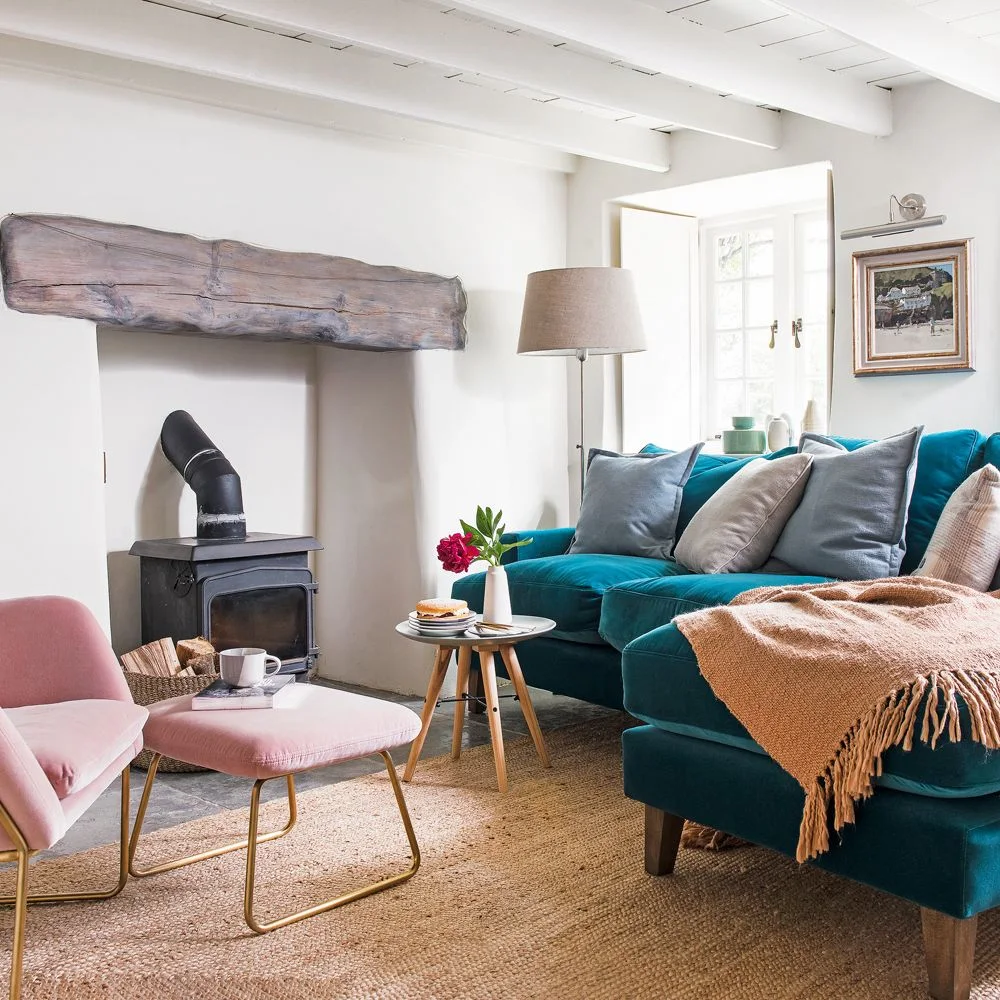
Keep Rustic Structure Above Colorful Seating
 SaveSupport Non AI Creator
Image credit: Future PLC/Colin Poole
White walls and painted ceiling beams keep the room light, allowing the rough mantel to provide the main rustic detail. Teal and pink seating add personality below it without covering the walls in several colors. A textured neutral rug connects the smaller furniture pieces.
Try color through one upholstered piece or a few textiles before replacing the whole seating group. Keep the rug flat beneath chair legs and leave room to move around the small table. Existing beams or mantels should be assessed before alteration, especially when they form part of a working fireplace.
IDEA 11 / 20
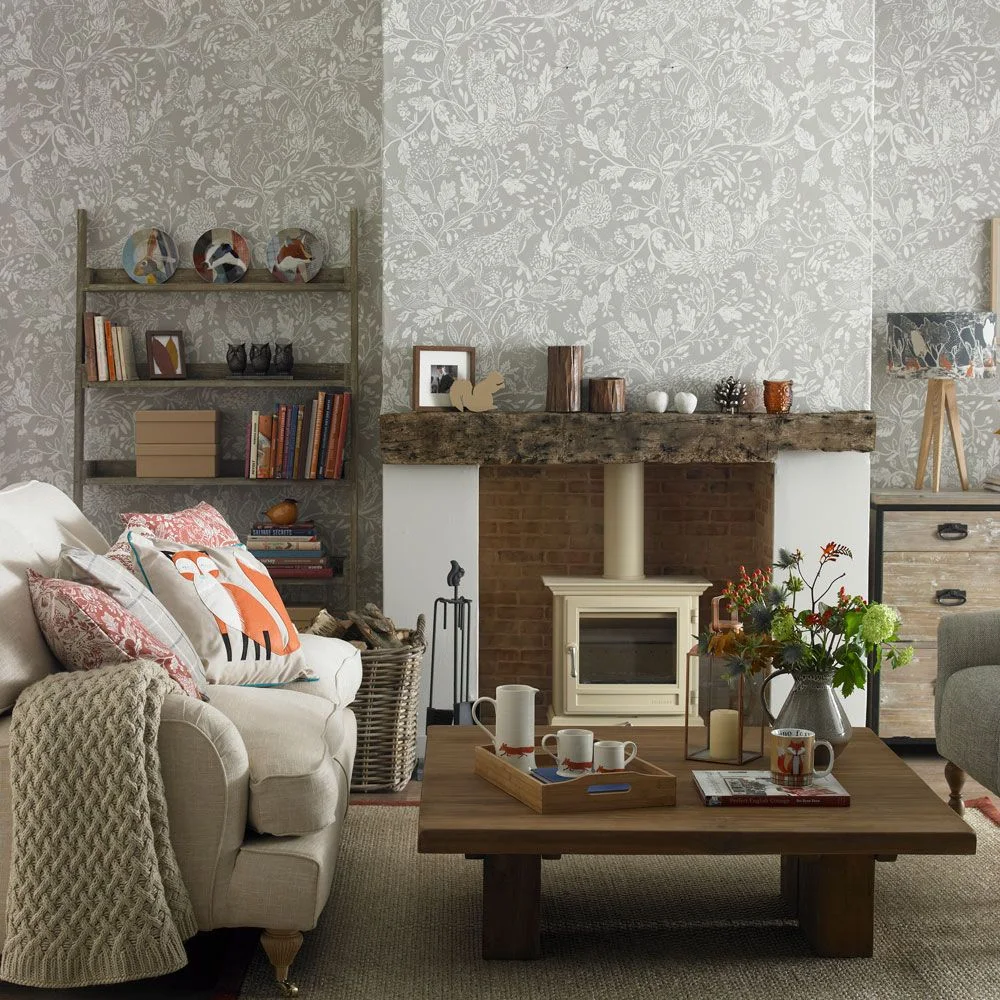
Use a Quiet Nature Pattern Around Simple Furniture
 SaveSupport Non AI Creator
Image credit: Future PLC/David Brittain
The pale woodland print adds a gentle pattern behind the room’s simpler furniture. A rough mantel and broad tabletop provide stronger wood texture, while painted storage and pale upholstery keep the background light. Small colored cushions add variety without competing with the whole wall.
A patterned wall is easier to live with when the sofa and larger rug remain restrained. Compare a full wallpaper repeat with the actual room proportions. Keep shelves and mantels uncluttered enough to clean, and follow the appliance requirements when placing any decorative objects near a stove.
IDEA 12 / 20
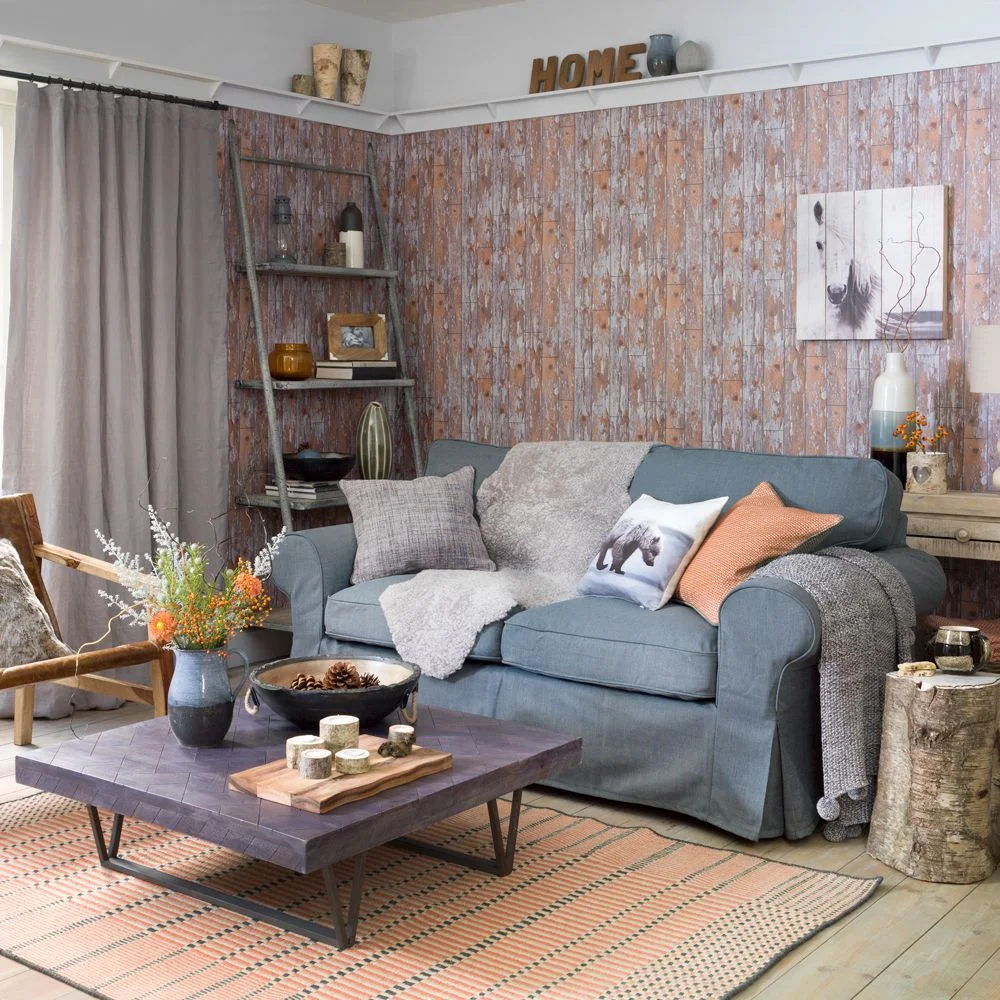
Borrow Timber Color Through a Patterned Wall
 SaveSupport Non AI Creator
Image credit: Future PLC/Simon Whitmore
The faded wall pattern adds the color variation of weathered boards without requiring another bulky piece of furniture. Blue upholstery sits comfortably against its muted pink and gray tones. Plain curtains and a small rug contain the pattern within the seating area.
Check the actual wallcovering and its care instructions instead of assuming a timber appearance means solid wood. A large sample helps reveal whether the repeat looks convincing at home. Keep surrounding shelves simple and secure, with enough open floor that the patterned wall does not make the room feel crowded.
PART 04
Keep the Room Comfortable to Use
IDEA 13 / 20
Repeat Light Wood Around a Dark Stove
 SaveSupport Non AI Creator
Source: JCM Architecture via Houzz
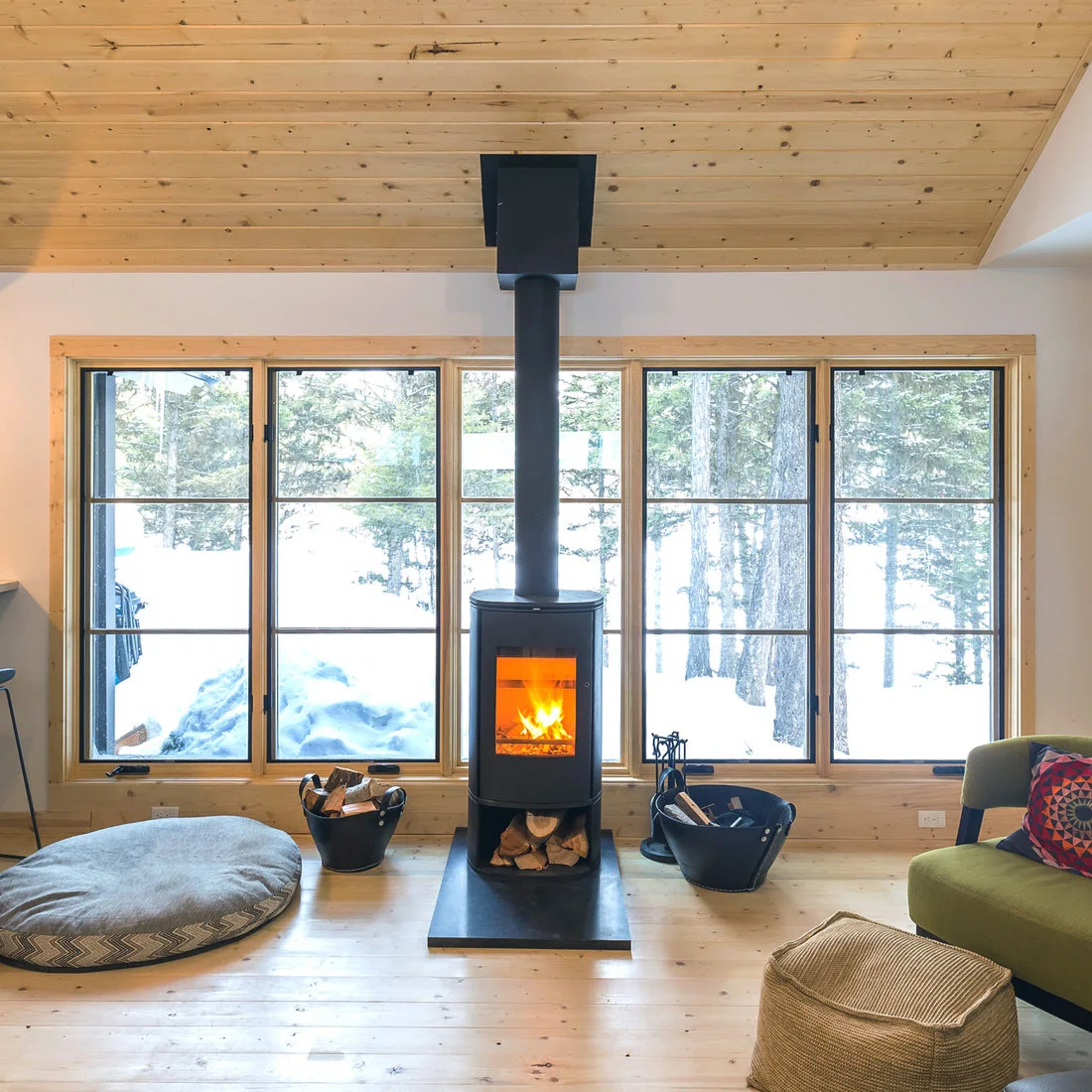
Wood trim and ceiling boards connect the room’s large surfaces, while the dark stove adds a narrow central outline. Green upholstery and a woven pouf introduce softer shapes close to the floor. The wide windows leave the pale finishes bright without a busy wall display.
Use this combination for its balance of wood, dark metal and soft seating rather than as an installation layout. Stove and flue clearances need to follow the actual product and local requirements. Keep loose cushions, rugs and stored fuel out of the protected area, and preserve a clear path to the windows.
IDEA 14 / 20
Leave Room Between Furniture and the Window
 SaveSupport Non AI Creator
Source: Winkelman Architecture via Houzz
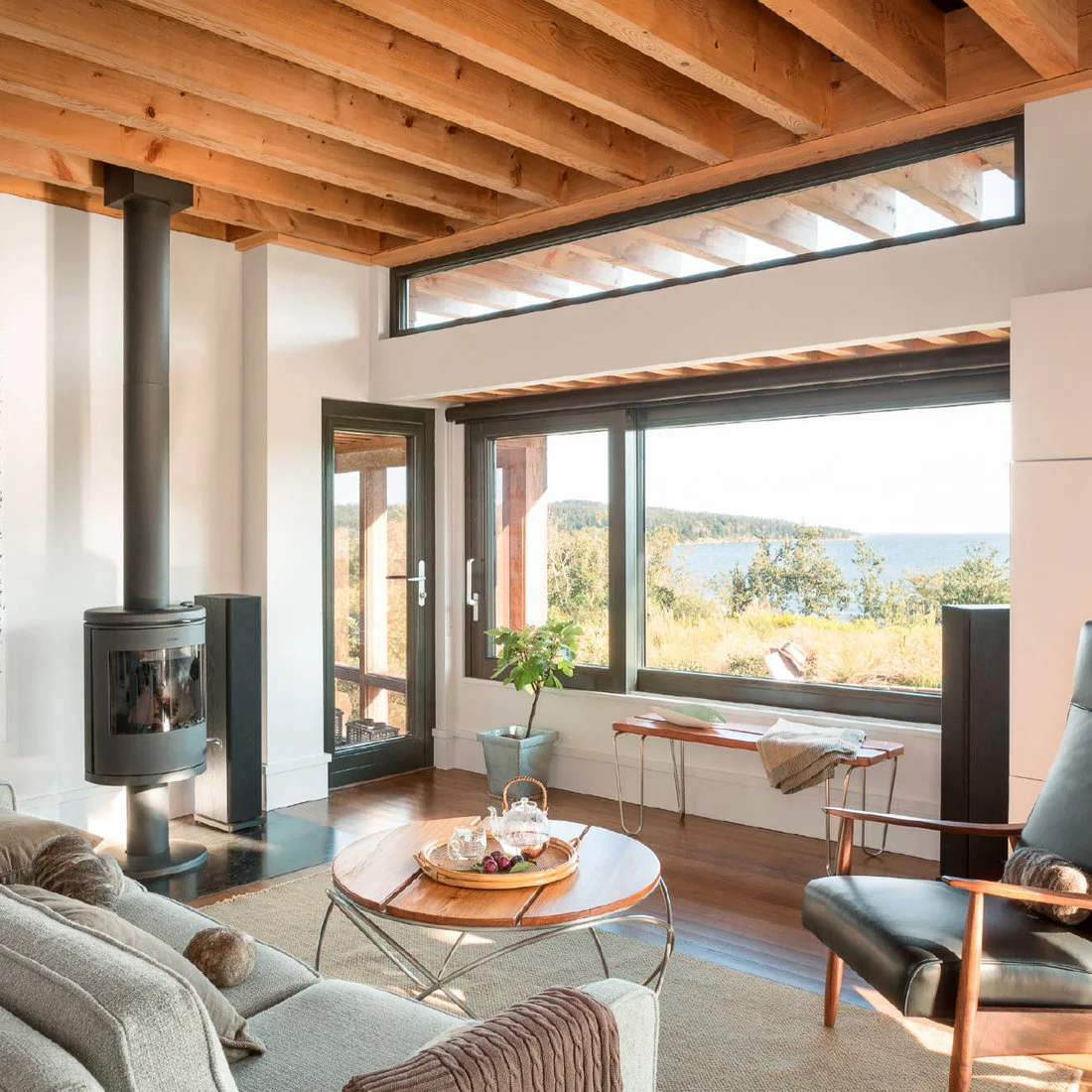
The open chair frame and small round table allow the room’s timber ceiling and window view to remain visible. Gray seating gives the warmer wood a quiet background. A slim bench near the window adds an occasional surface without becoming a deep storage unit.
A view-facing arrangement still needs practical places for drinks and a clear route through the room. Check the chair’s position when someone is seated rather than only when it is pushed back. Choose curtains or shading for glare if needed, and have any heating installation planned independently of the furniture styling.
IDEA 15 / 20
Set a Dark Focal Wall Against Pale Seating
 SaveSupport Non AI Creator
Source: User via Houzz
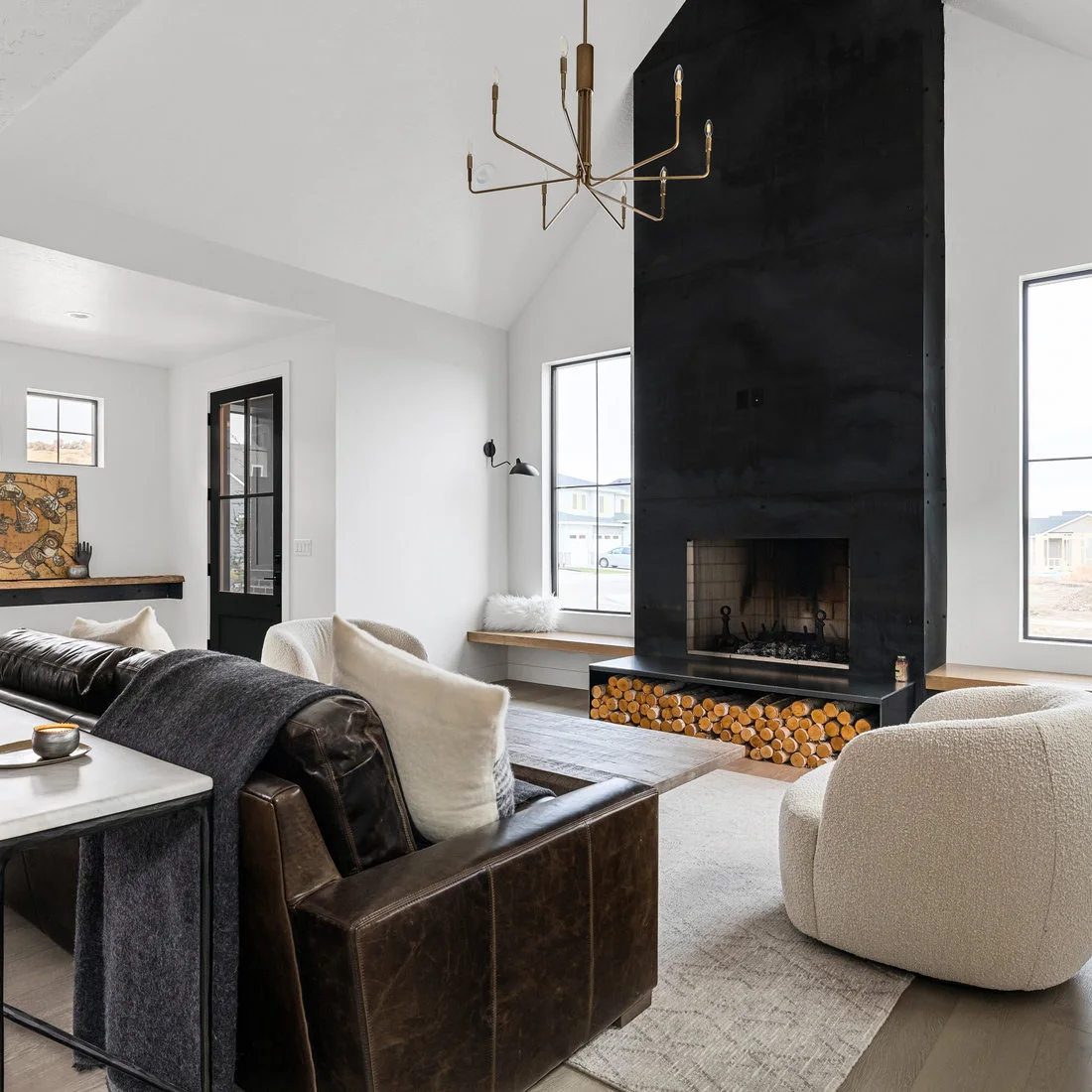
The black chimney wall provides a strong center, while the pale ceiling and walls keep its height from overwhelming the room. Wood window benches and a low plank table bring warmth near the floor. Rounded seating softens the fireplace’s long straight outline.
A dark feature works best when the rest of the room has enough light and comfortable seating. Keep storage arrangements stable, and check any fire-related recess with the installer. Scandi fireplace ideas show other ways to balance a defined hearth with simple furniture and an open surrounding wall.
IDEA 16 / 20
Use a Textured Rug to Soften Strong Lines
 SaveSupport Non AI Creator
Source: The Home Co. via Houzz
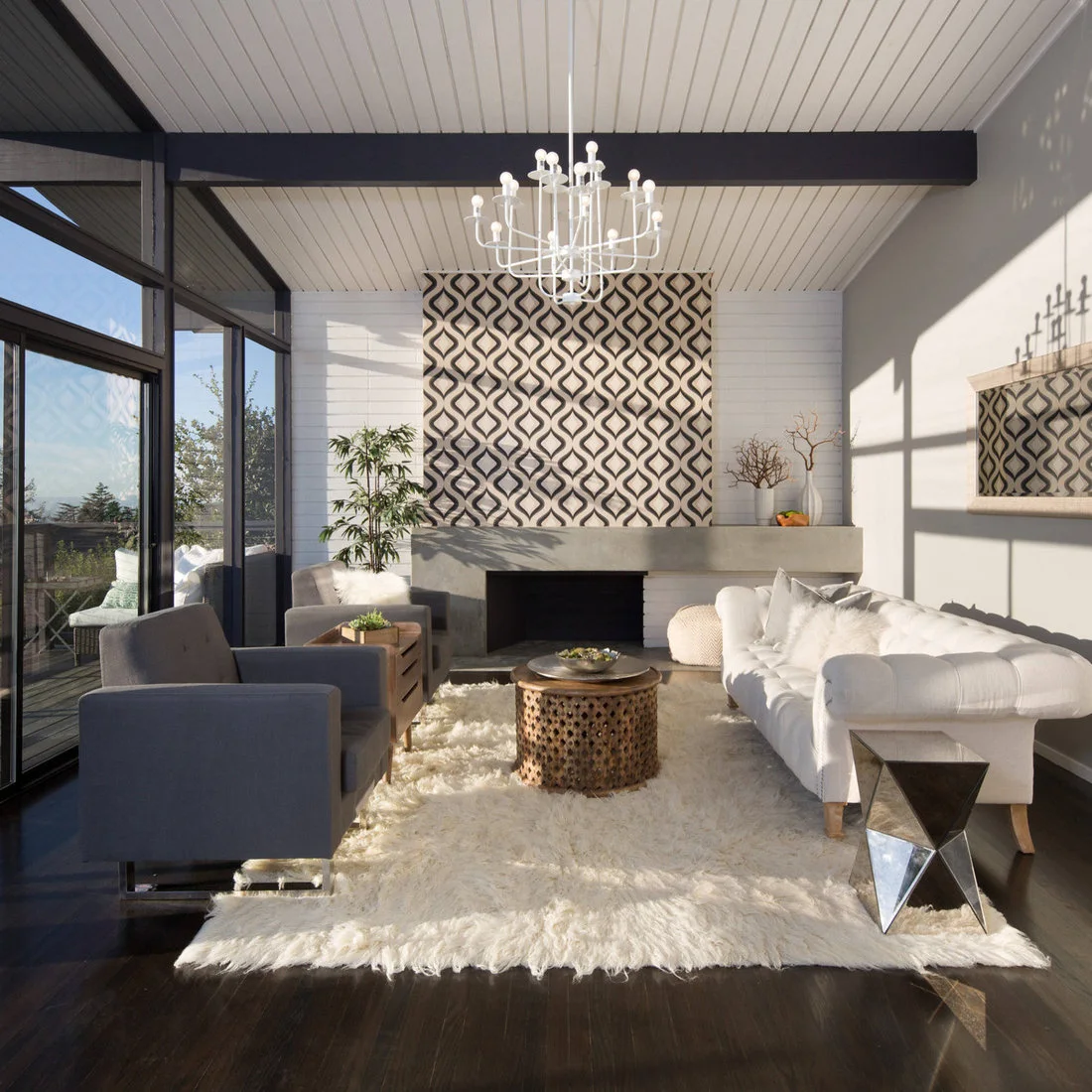
The rug gives the seating group a soft center against the dark floor and strong ceiling lines. A small woven-sided table adds another tactile surface, while the furniture remains mostly plain. The patterned chimney wall stays contained within one clearly defined area.
Longer-pile rugs can feel comfortable but may need more regular cleaning and be awkward for some furniture. Check that the table stands securely rather than wobbling in the pile. Keep other large patterns limited if the fireplace already carries a bold repeat, and compare samples under everyday lighting.
IDEA 17 / 20
Add Warmth With Light-Weight Sling Chairs
 SaveSupport Non AI Creator
Source: Texas Construction Company via Houzz
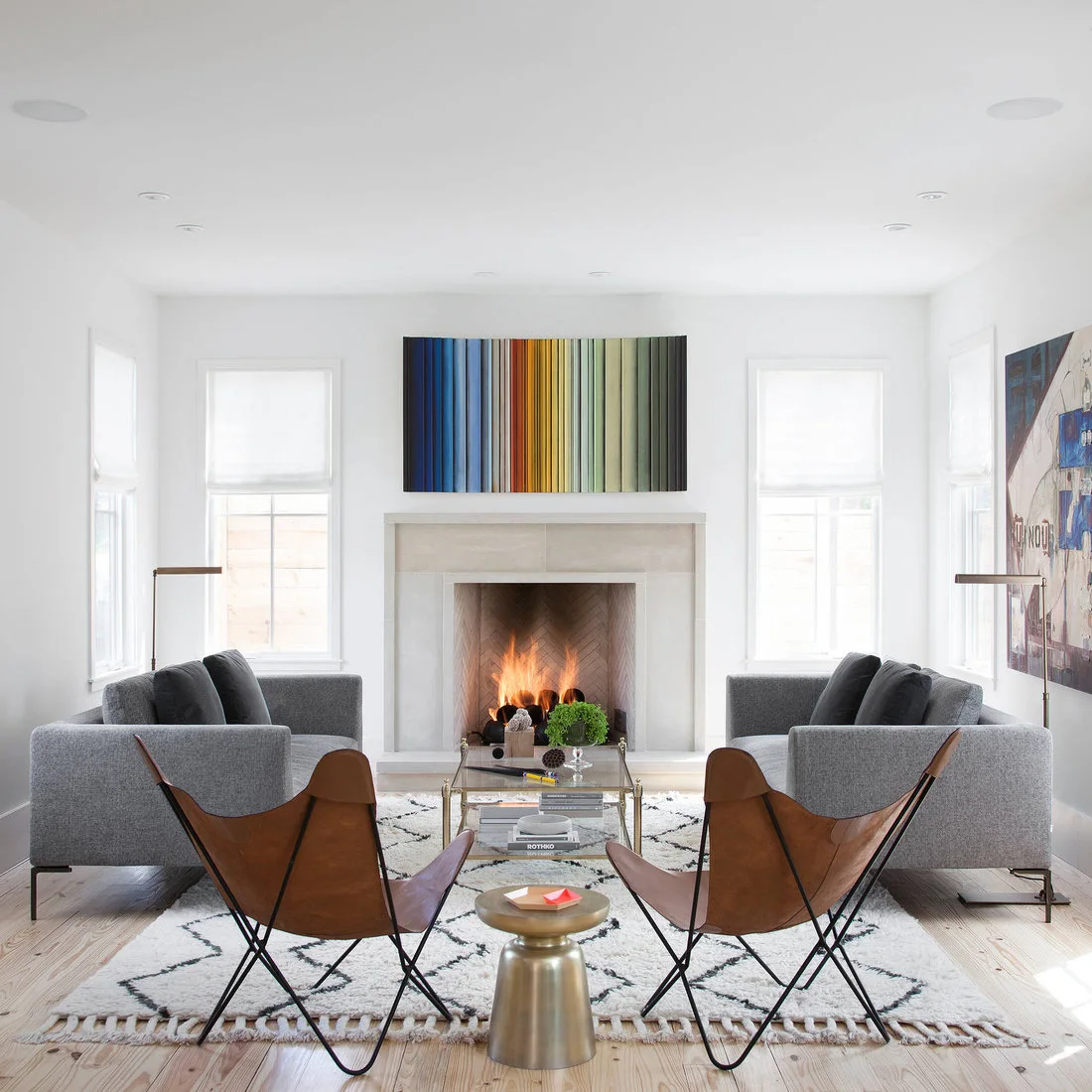
The brown chair surfaces add warmth without introducing a large enclosed furniture shape. Open metal frames preserve a view across the rug, while simple gray sofas provide a quieter backdrop. One colorful artwork supplies the main color change above the otherwise pale fireplace.
Try sling seating before buying, since a low relaxed posture may not suit everyone. Check the material’s care instructions and keep the frames stable on the rug. The glass table keeps the center visually open, although a wood surface may be more forgiving for a busy household.
IDEA 18 / 20
Let a Small Wood Stool Add Rustic Detail
 SaveSupport Non AI Creator
Source: Ellaire Kitchen & Bath Design via Houzz
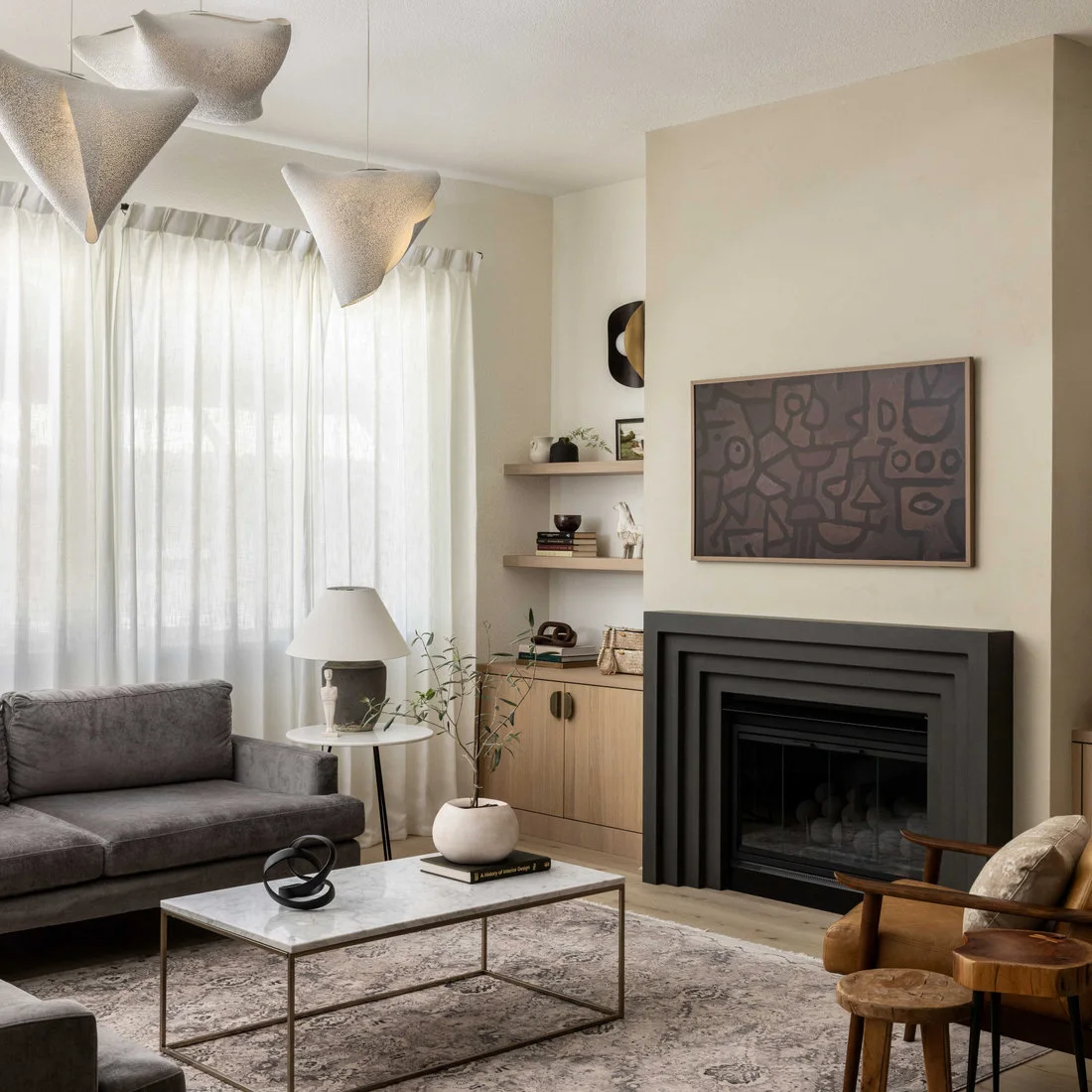
The black fireplace gives this pale room a definite outline, while wood cabinets and the small stool provide warmer textures nearby. Gray seating keeps the larger upholstered surfaces quiet. Soft curtains and a few simple objects prevent the combination of dark fittings and light walls from feeling severe.
A small stool can provide a useful extra surface, but make sure its top suits the objects you intend to place there. Keep it out of the main route and away from required hearth clearance. Choose an enclosed cabinet for less attractive belongings so the rest of the room can remain settled.
IDEA 19 / 20
Use an Ottoman to Make the Seating Group Softer
 SaveSupport Non AI Creator
Source: Everything Home via Houzz
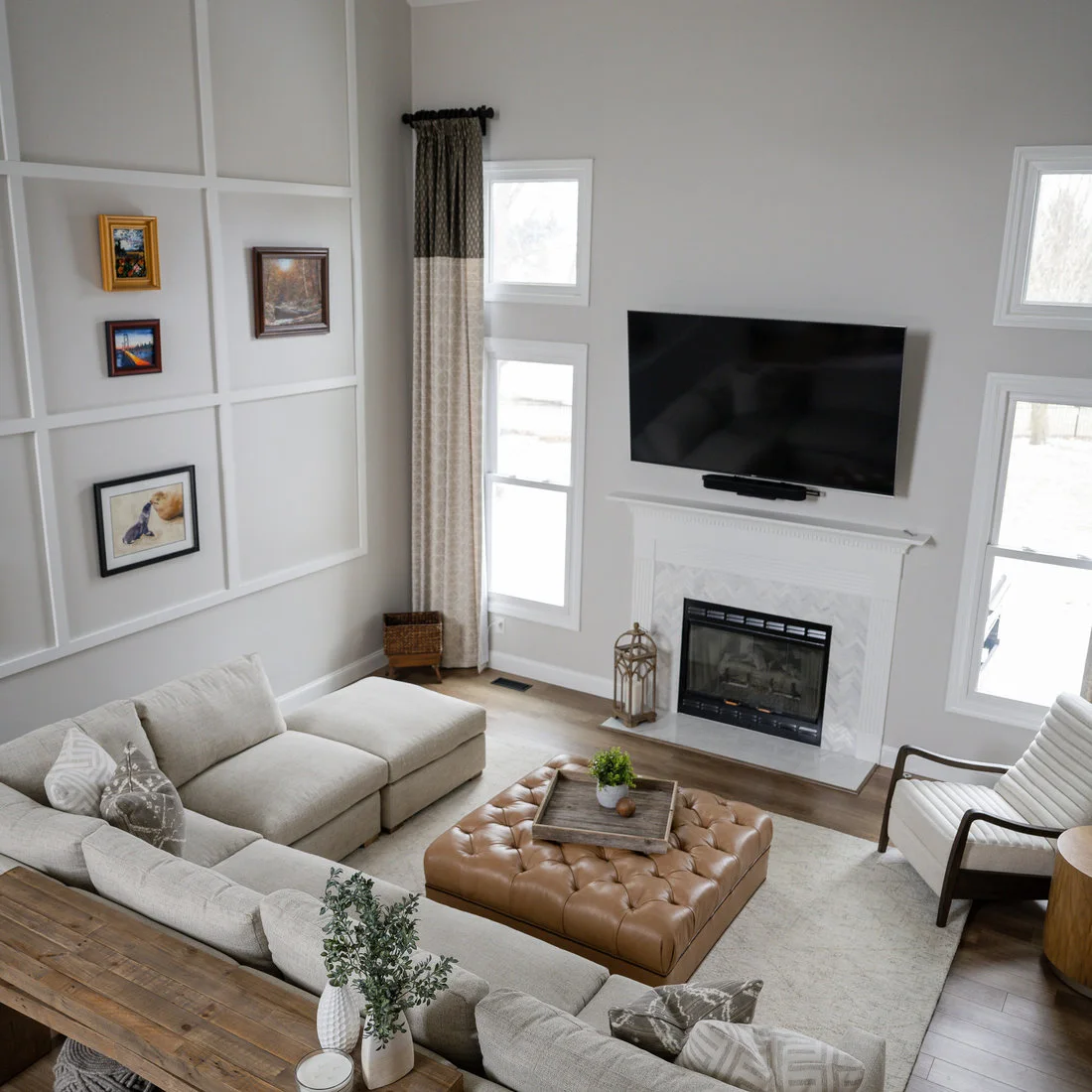
The tan ottoman gives the pale seating group warmth and a softer center than another hard-edged table. A wood-framed chair adds a smaller natural accent. Plain wall panels and a restrained rug keep the different textures connected without several competing large patterns.
Use a stable tray when an ottoman also serves for drinks, and choose upholstery that can tolerate how you use it. Check the distance from each seat so feet and serving objects do not compete for the same space. A separate small side table may be more convenient for everyday mugs.
IDEA 20 / 20
Keep a Rough Console Display Selective
 SaveSupport Non AI Creator
Image credit: Charles Ted
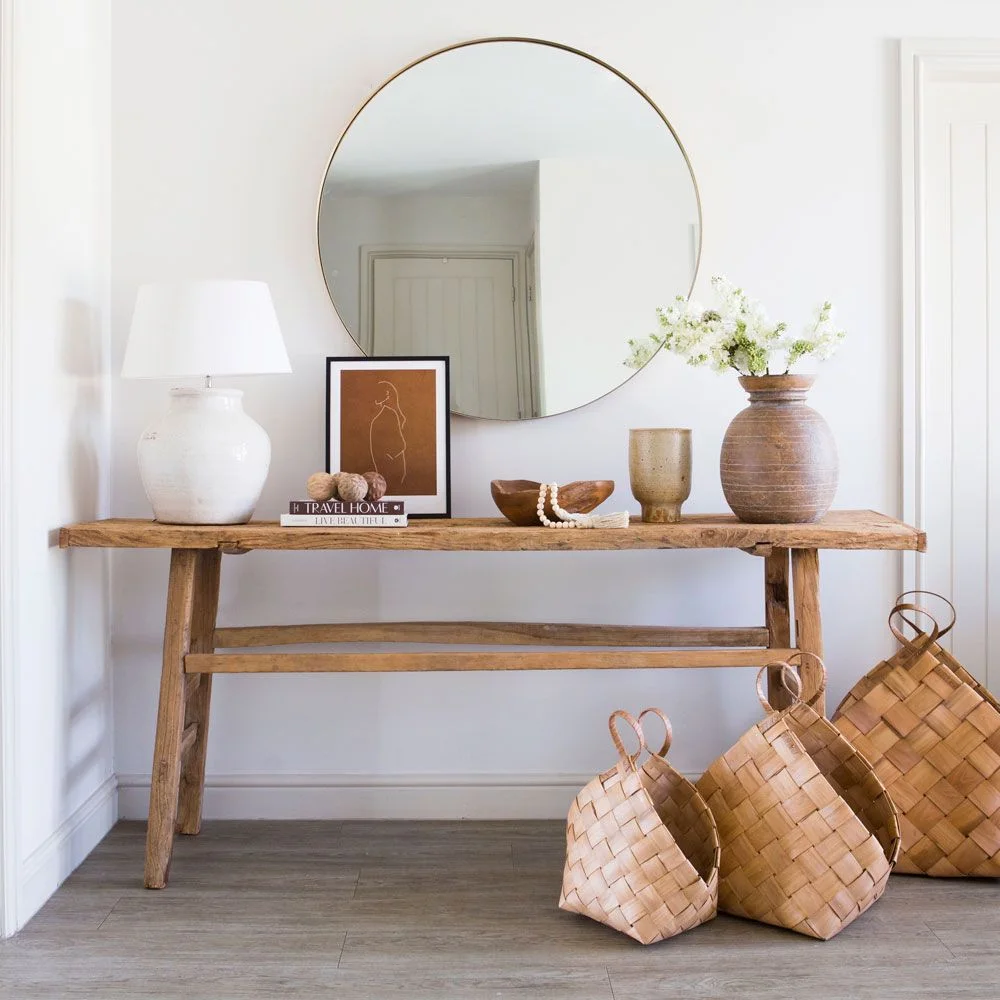
The console adds visible wood grain without requiring the whole wall to be timbered. Pale pottery and a simple lamp keep its top quieter than the rough surface beneath. The round mirror softens the straight table line, while woven baskets repeat texture lower down.
Use a console where it can provide storage or a helpful light rather than filling an already narrow passage. Keep baskets out of the walking route and give them a clear purpose. Check the top for rough edges, and fit a heavy mirror with fixings suitable for the wall.
BRING IT ALL TOGETHER
Keep the Texture and Simplify the Arrangement
Choose one or two pieces with visible grain or a rougher finish, then let simpler seating and clear surfaces balance them. You do not need imitation beams, a stove or a complete matching furniture set to bring warmth into a pale living room.
Test the layout around the way people sit, talk and pass through the room. Keep rugs secure, side surfaces reachable and storage easy to use. Texture works best when it makes the room more comfortable rather than adding objects that constantly need to be moved.