A Scandi-inspired office works best when its simple appearance comes from a sensible arrangement. Start with a desk that suits the task, a supportive chair, useful lighting and storage for the things you reach for every day. Pale walls and wood details can help the pieces feel connected.
These photographs range from dedicated rooms to narrow wall bays and shared spaces. Some show occasional desks rather than full-day computer stations, so adapt the chair, equipment and working height to your needs. Keep personal pictures or books, but give them a place that leaves the active surface usable.
PART 01
Start With a Simple, Useful Work Surface
IDEA 01 / 18
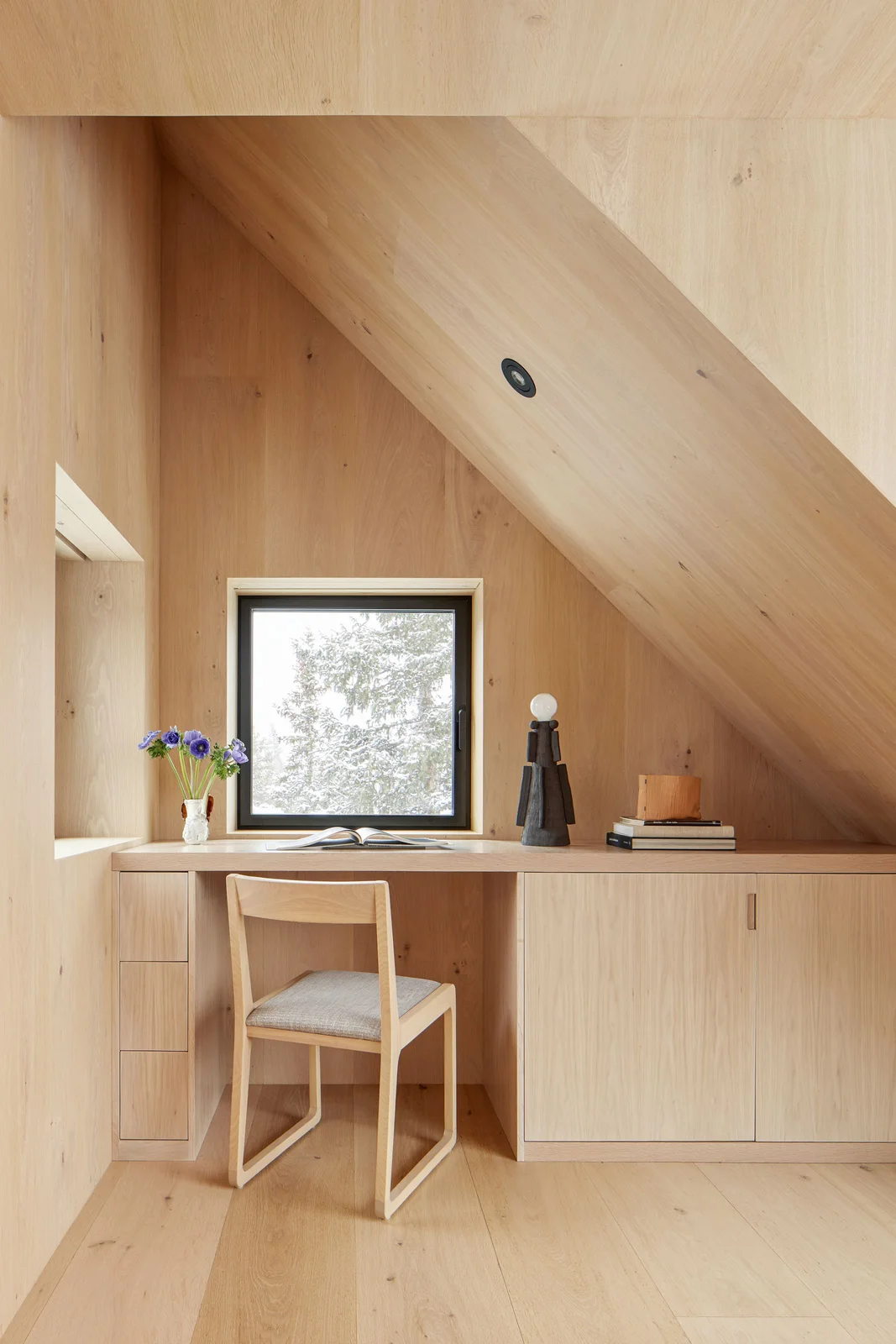
Fit a Plain Wood Desk Under the Eaves
 SaveSupport Non AI Creator
Image credit: Bruce Damonte. Styling by Logan Sommers
The continuous wood finish makes the desk, storage and sloping ceiling read as one compact arrangement. Drawers occupy the left side while a wider cabinet fills the lower roof space. A small window provides a view above the work surface, with very little additional decoration competing for attention.
Measure seated headroom and the space needed to stand up before fitting a desk beneath a slope. Check that knees clear the storage supports and that the chair suits the work duration. Our attic office ideas show other roof-space arrangements; include task lighting and a workable place for power cables.
IDEA 02 / 18
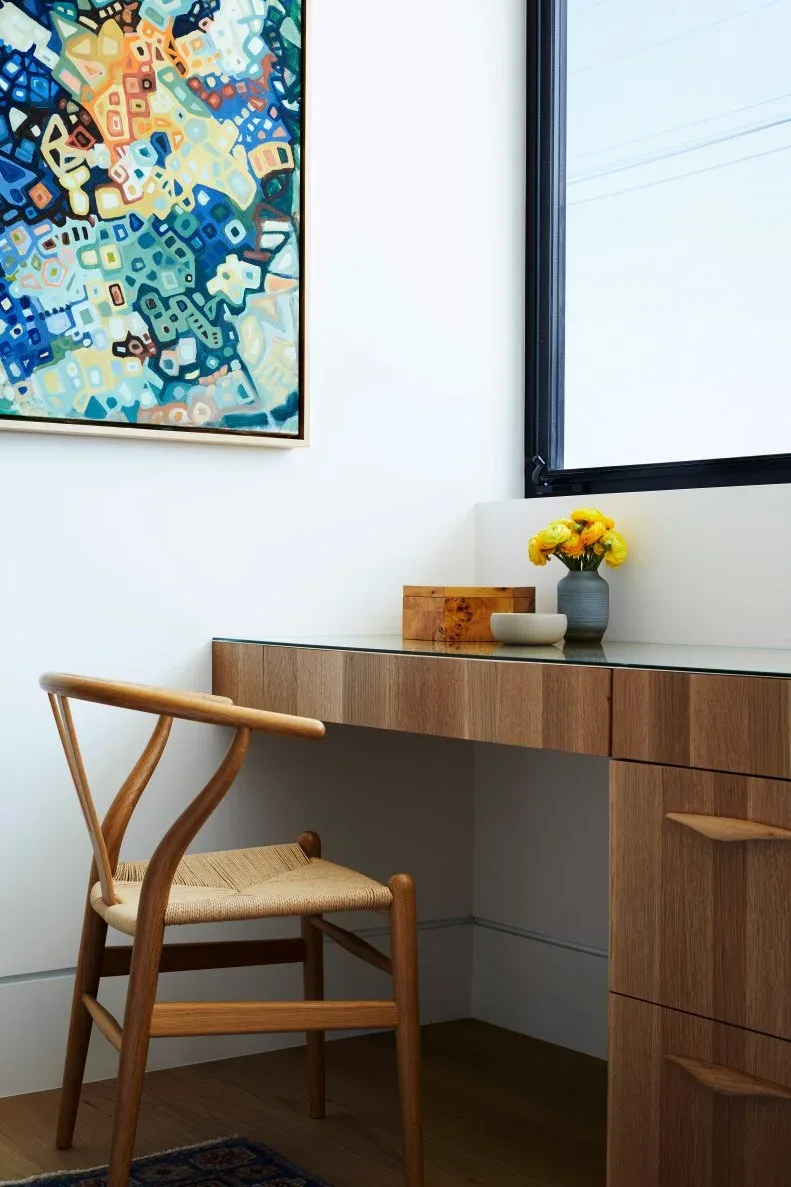
Choose a Small Wood Desk With Useful Drawers
 SaveSupport Non AI Creator
Image credit: Photo: True O'Neill, Interior Designer: Janice Barta
The desk keeps its profile simple while drawers provide storage below the working edge. A curved wood chair brings a softer shape to the straight cabinet fronts. Colorful artwork supplies the main pattern, leaving the desktop largely clear instead of using a collection of small ornaments.
Test the drawer clearance with the chair in place and check that the desk has enough depth for your equipment. A photographed occasional chair may not suit a full working day; choose support and adjustment around your needs. Keep flowers away from electronics and leave room for the tasks you actually perform.
IDEA 03 / 18
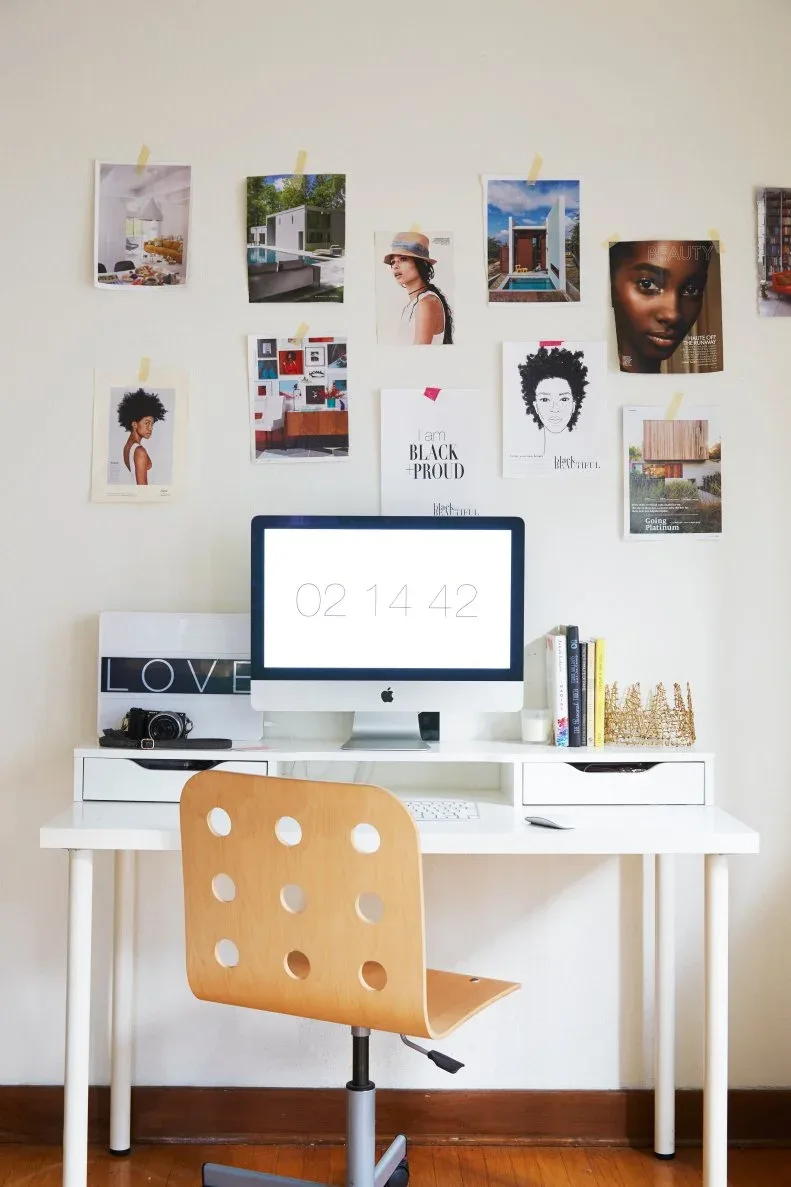
Keep Personal Inspiration Above the Screen
 SaveSupport Non AI Creator
Image credit: Photo: Genevieve Garruppo
A loose arrangement of images makes the wall personal while the white desk stays fairly plain. Small drawers at either side collect supplies without a full wall of cabinets. The wood chair adds warmth, and the main screen remains centered below the display rather than surrounded by desk clutter.
Choose wall attachments that suit the paint and can hold each piece reliably. Keep the display above the working sightline if frequent movement distracts you. Plan where chargers and papers go at the end of the day so the clear desktop is a usable routine rather than a temporary arrangement.
IDEA 04 / 18
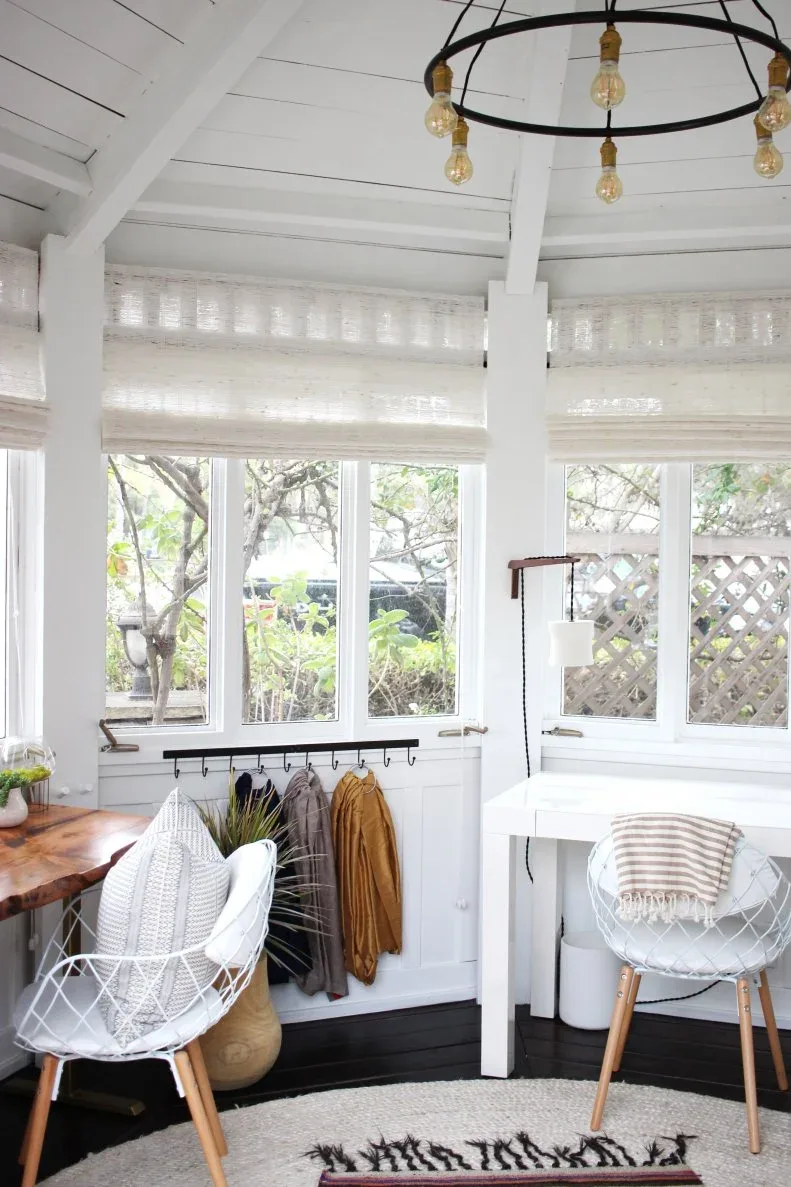
Give Two People Separate Work Surfaces
 SaveSupport Non AI Creator
Image credit: Photo: Molly Bender; www.mollyjeanstudio.com. From: Vanessa Matsalla
Separate work surfaces give each person a defined place without adding a partition to this small glazed room. White chairs connect the different desk finishes, while individual lamps acknowledge that each seat needs its own light. The pale window shades soften the edges without hiding the garden entirely.
Plan calls, charging and paper storage for both users before choosing matching accessories. Check glare and temperature through the day in a heavily glazed room. Leave enough space for both chairs to pull back at once, and use seating that supports the length of time each person will work.
IDEA 05 / 18
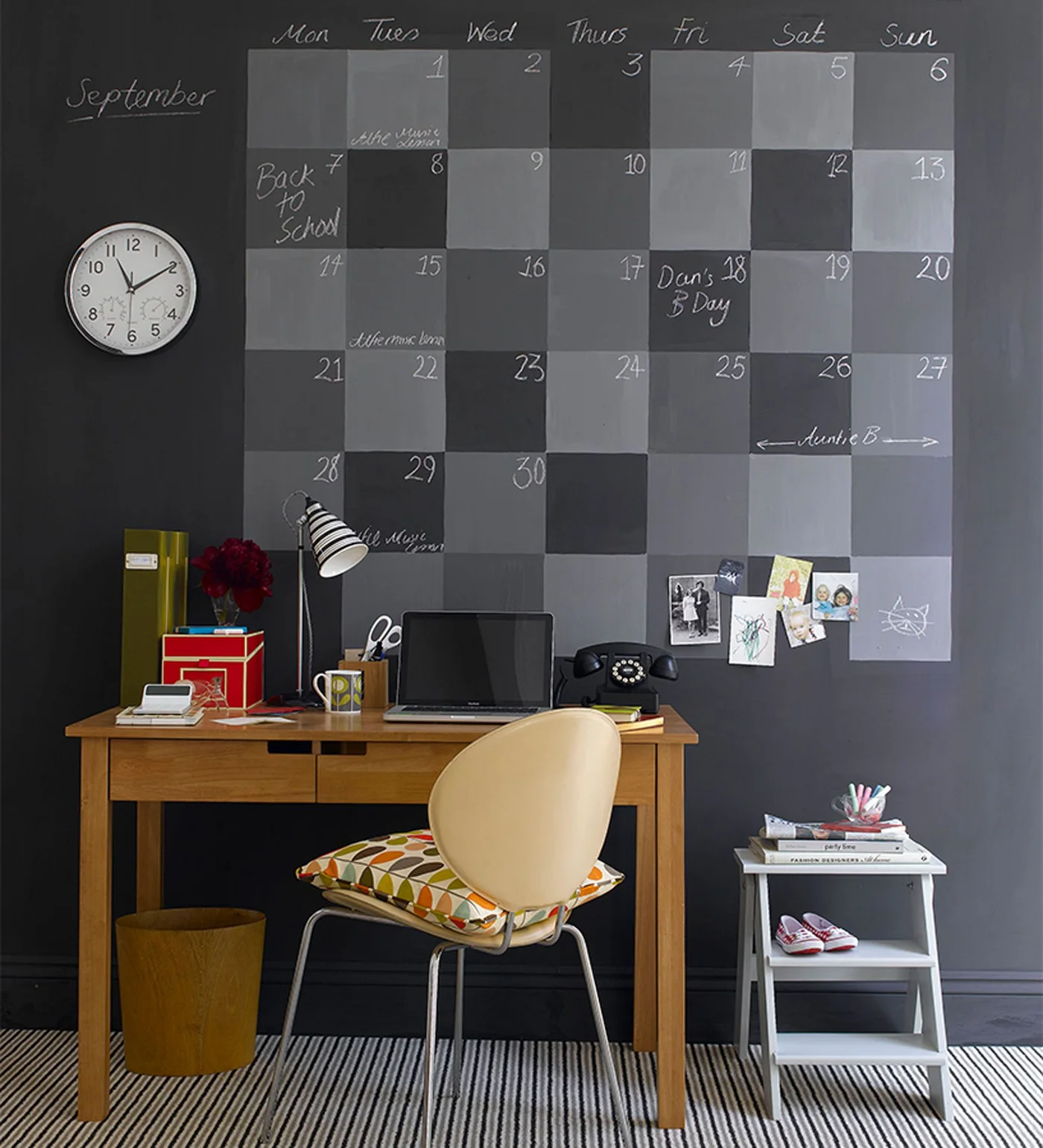
Make a Wall Calendar Do the Organizing
 SaveSupport Non AI Creator
Image credit: Future PLC/Dan Duchars
The large calendar moves planning onto the wall instead of covering the desk with separate notes. Different gray squares keep the grid legible, while the wood desk supplies warmth below. A few red and yellow objects give this darker corner color without requiring another patterned surface.
Use a calendar format you can update easily, with a writing surface suitable for the chosen chalk or markers. Leave practical space for a keyboard and paperwork rather than copying every accessory. Check how dust or cleaning residue will be managed if the board sits directly above electronics.
PART 02
Give Storage and Reminders a Purpose
IDEA 06 / 18
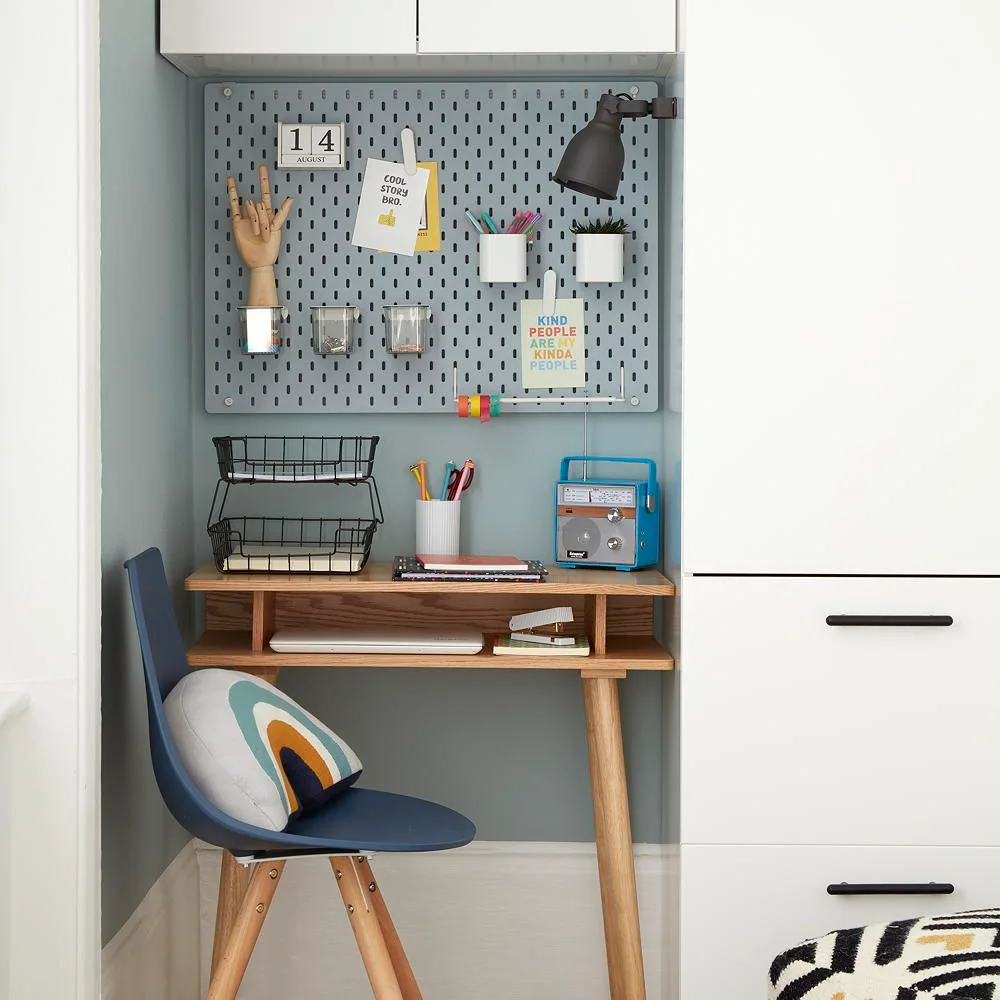
Use a Pegboard in a Narrow Desk Recess
 SaveSupport Non AI Creator
Image credit: Future PLC
The pegboard gives small tools and notes a vertical home within the narrow recess. A shallow shelf below the desktop provides another place for slim items. White cabinetry keeps the larger storage plain, while the blue chair and gray backing give the compact working area a clear identity.
Check that the desk has adequate knee width and depth before adding storage beside or below it. Fix the board and containers for their intended loads. Keep frequently used tools within comfortable reach, and leave the wall lamp free to move without striking stored items or the upper cupboard.
IDEA 07 / 18
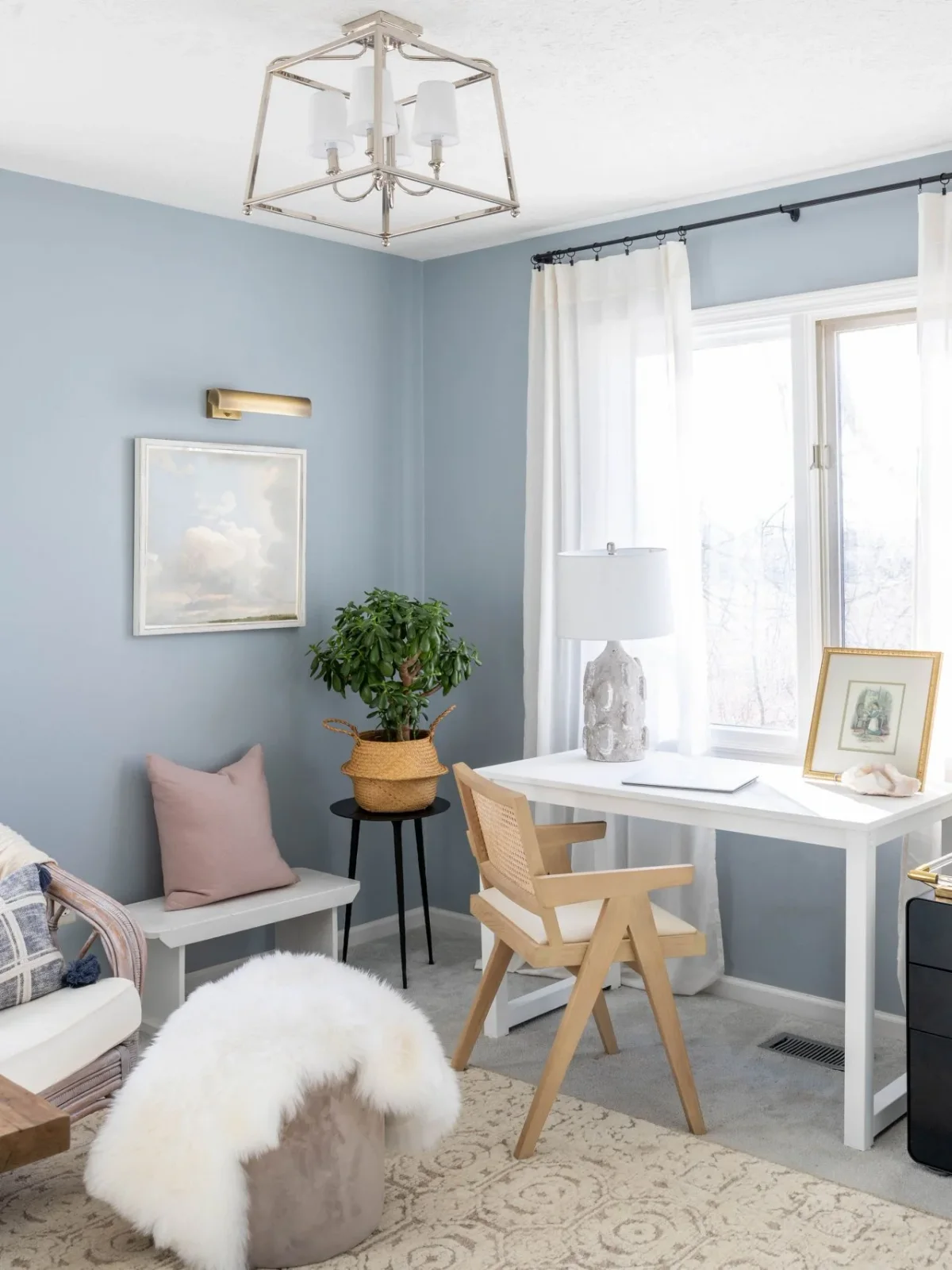
Use Pale Blue Around a White Work Surface
 SaveSupport Non AI Creator
Image credit: Photo: Emily Engler
Pale blue walls give the white desk a soft background without making the corner dark. The wood chair introduces a warmer texture, while a small drawer unit supplies storage beside the work position. Light curtains and a narrow bench keep the room usable beyond the desktop itself.
Position the screen to control window reflections rather than assuming a window-facing desk is always comfortable. Keep the floor vent and curtain movement clear. Check the seat height against the desktop, and use the drawer unit for working supplies so the bench does not become a permanent paper shelf.
IDEA 08 / 18
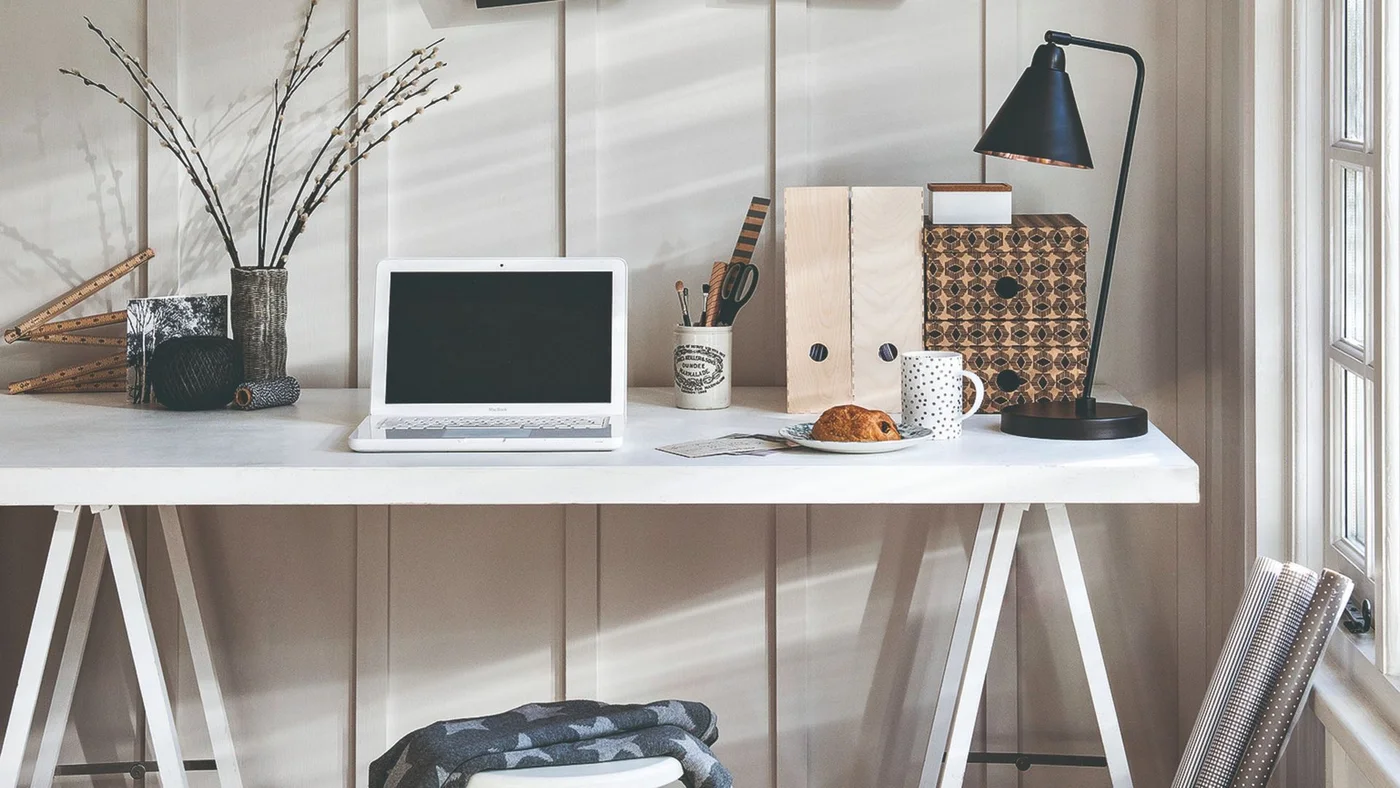
Keep a Trestle Desk Light Against Paneling
 SaveSupport Non AI Creator
Image credit: Future PLC/Polly Eltes
The trestle supports leave the floor visible below the white top, keeping the desk’s outline relatively light. Pale wall boards add a repeated line without a strong color change. Upright files gather papers at one side, while the black task lamp gives the working area a clear point of contrast.
Check the stability and load rating of the top and supports as a complete setup. Leave legroom around the trestles and a clear place for the chair to move. Keep a limited set of current files nearby, with longer-term paperwork stored elsewhere instead of slowly taking over the whole surface.
IDEA 09 / 18
Combine Shelves and a Desk in One Narrow Bay
 SaveSupport Non AI Creator
Image credit: Future PLC/Rachael Smith
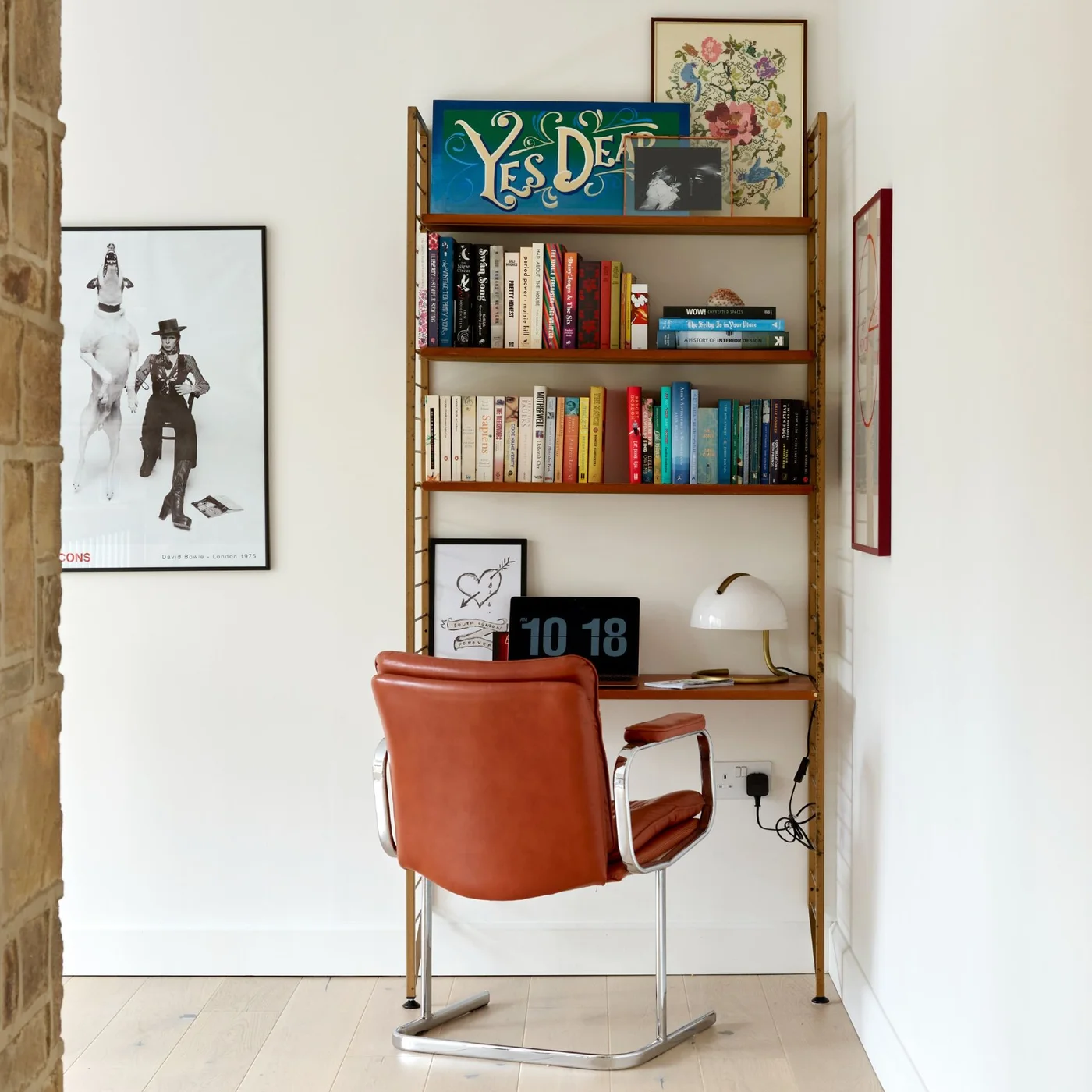
The upright shelf system fits books and a work surface into one narrow wall bay. A warm brown chair echoes the wood shelves, while the pale wall makes the structure easy to read. Artwork personalizes the upper area without needing another freestanding cabinet beside the chair.
A shelf system used as a desk needs a surface deep and strong enough for the intended equipment. Confirm fixings and comfortable knee clearance before loading the upper shelves. Keep heavy objects secure, manage trailing cables, and store only the books you can reach without leaning across the screen.
IDEA 10 / 18
Give a Corner Desk a Place for Loose Papers
 SaveSupport Non AI Creator
Image credit: Future PLC/Anna Stathaki
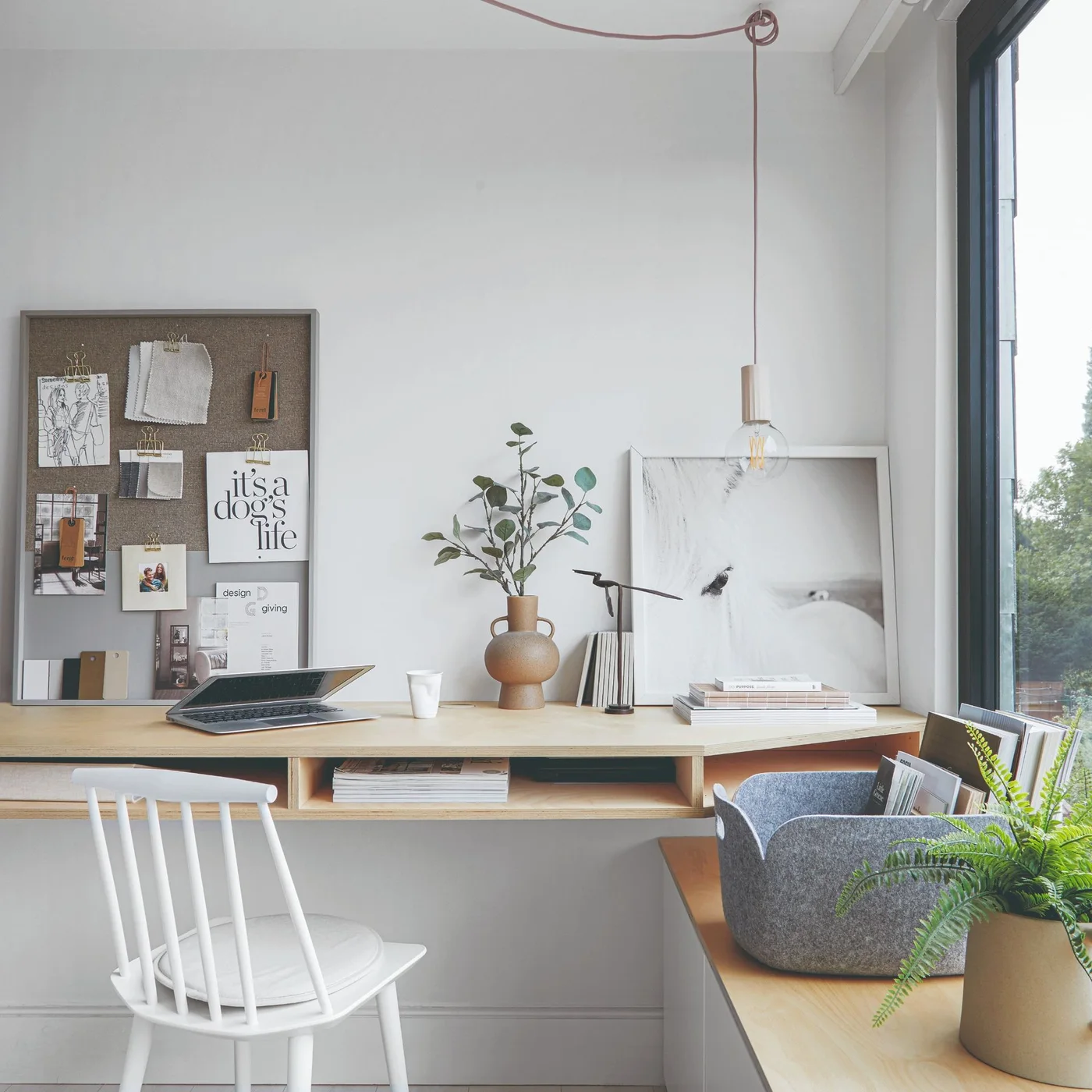
Open slots give papers a temporary home below the work surface rather than in piles beside the laptop. A noticeboard moves reminders onto the wall, while a felt basket gathers larger sheets at the return. White walls and a simple chair keep the wood surface as the main warm element.
Decide what belongs in each slot so the open storage does not become a hiding place for forgotten work. Keep a reachable charging route and enough free desk depth for your usual setup. Use window shading where needed, and move tall decorative objects if they compete with the screen or working reach.
PART 03
Use Warm Materials and Gentle Color
IDEA 11 / 18
Soften a Small Work Nook With Blush Paint
 SaveSupport Non AI Creator
Image credit: Future PLC/Nathalie Priem
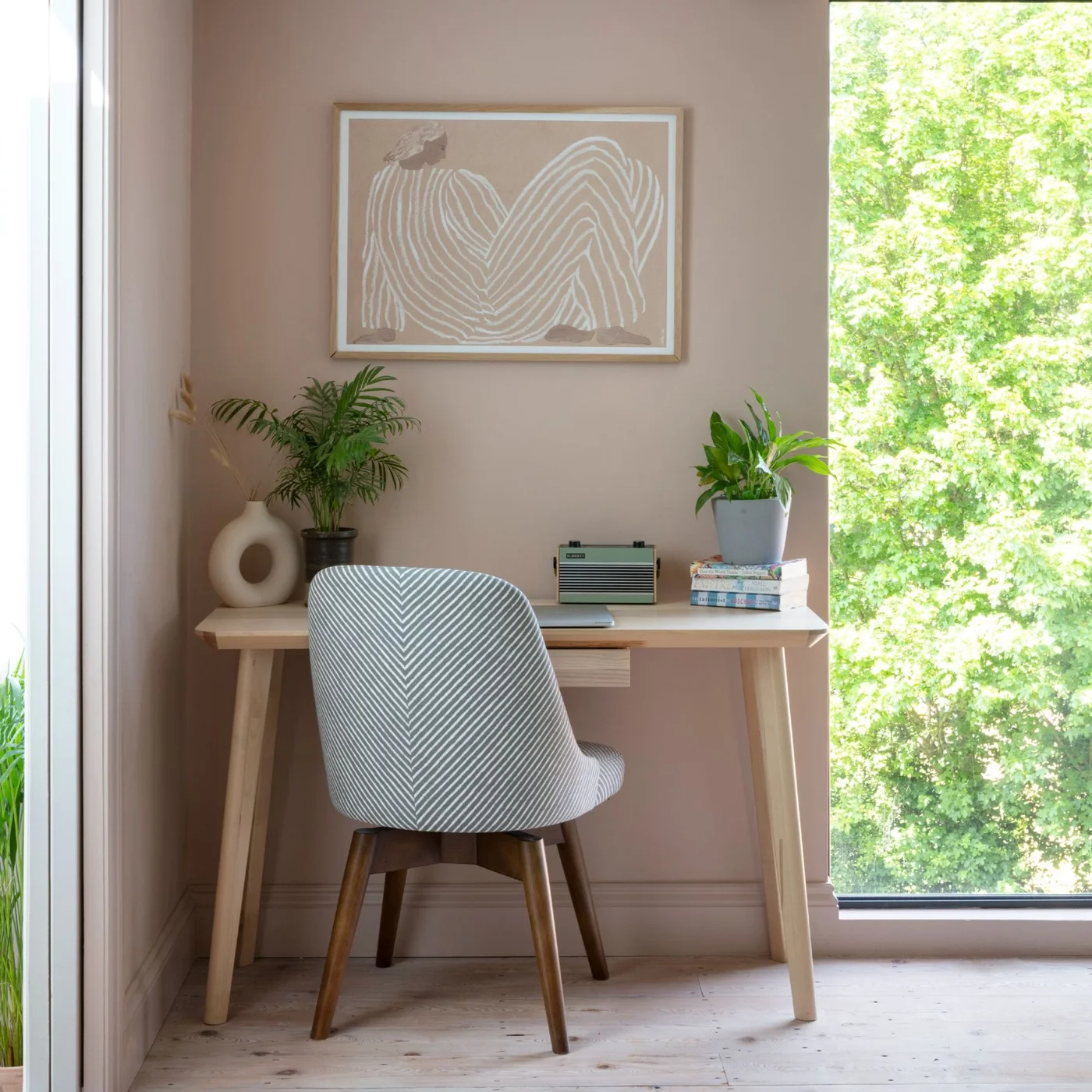
Blush paint gives this small nook warmth while the pale desk keeps the furniture simple. A tonal picture repeats the wall color rather than creating a separate focal point. Plants sit toward the ends, leaving the middle as the working position in front of the chair.
Reserve enough surface for equipment before adding plants or a radio. Use waterproof protection beneath pots and check the light available at each end of the desk. Our office ideas with greenery focus on plant placement; choose the chair here around working comfort and keep the window controls accessible.
IDEA 12 / 18
Use a Wall-Fixed Wood Worktop by a Window
 SaveSupport Non AI Creator
Image credit: Future PLC/Nick Smith
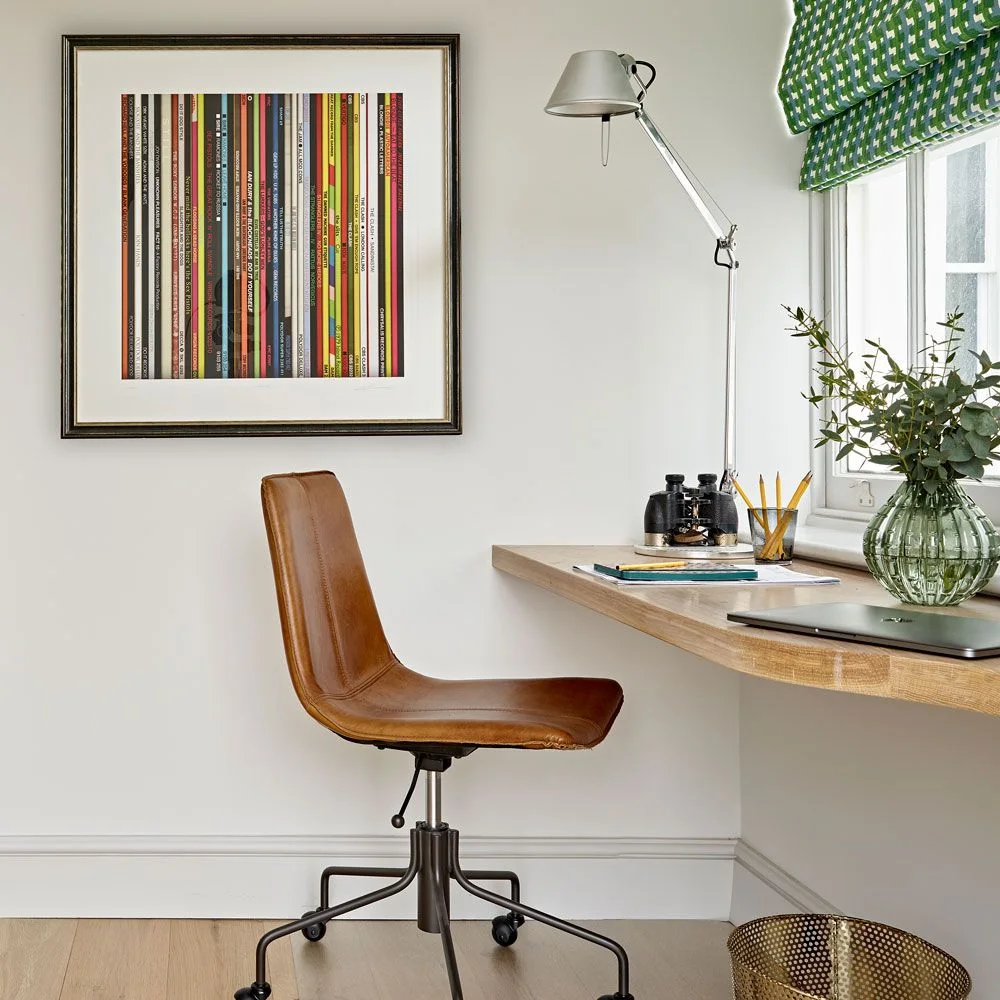
The rounded worktop corner softens the edge of this small workspace. A brown chair echoes its warm color, while white walls keep the surrounding area quiet. The adjustable lamp supplies a directed light source without needing a large overhead fitting to define the desk.
Have the support and wall fixings designed for the worktop and equipment rather than assuming a thick board can span any distance. Test the front edge for comfortable forearm support. Keep a stable place for drinks away from electronics, and leave enough room to turn the chair without catching nearby furniture.
IDEA 13 / 18
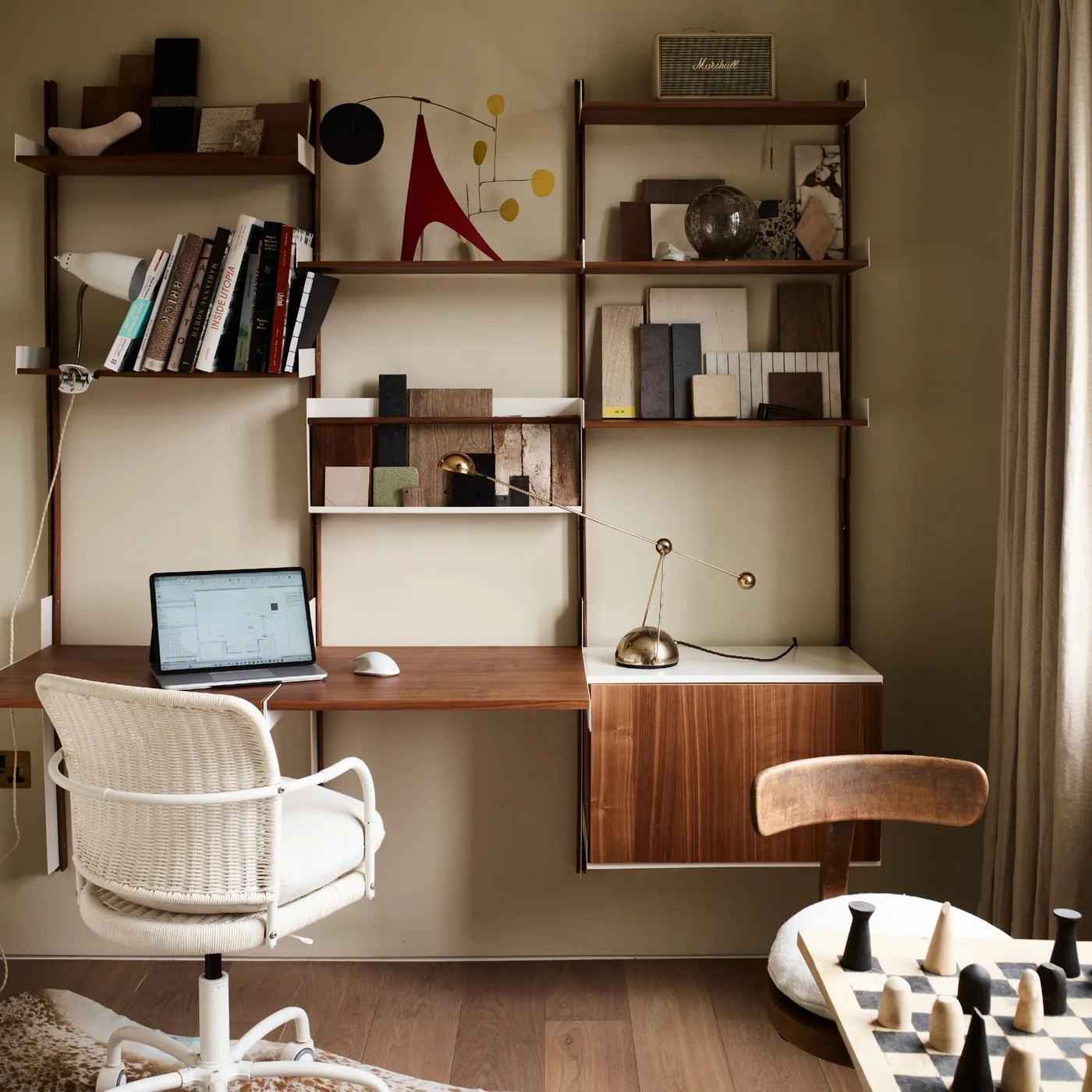
Let One Modular Storage Wall Carry the Work Area
 SaveSupport Non AI Creator
Image credit: Future PLC/Mary Wadsworth
The desk is part of the same wood system as the shelves and cabinet, reducing the number of separate furniture shapes. Beige walls give the warm finish a close background. A pale swivel chair keeps the working position distinct, while the closed cabinet balances the more visible upper storage.
Choose shelf spacing around actual files, books and equipment before installing the system. Check how the desk is supported and where cables can pass without being trapped. Leave some storage closed for supplies that do not display neatly, rather than expecting every working object to suit an open shelf.
IDEA 14 / 18
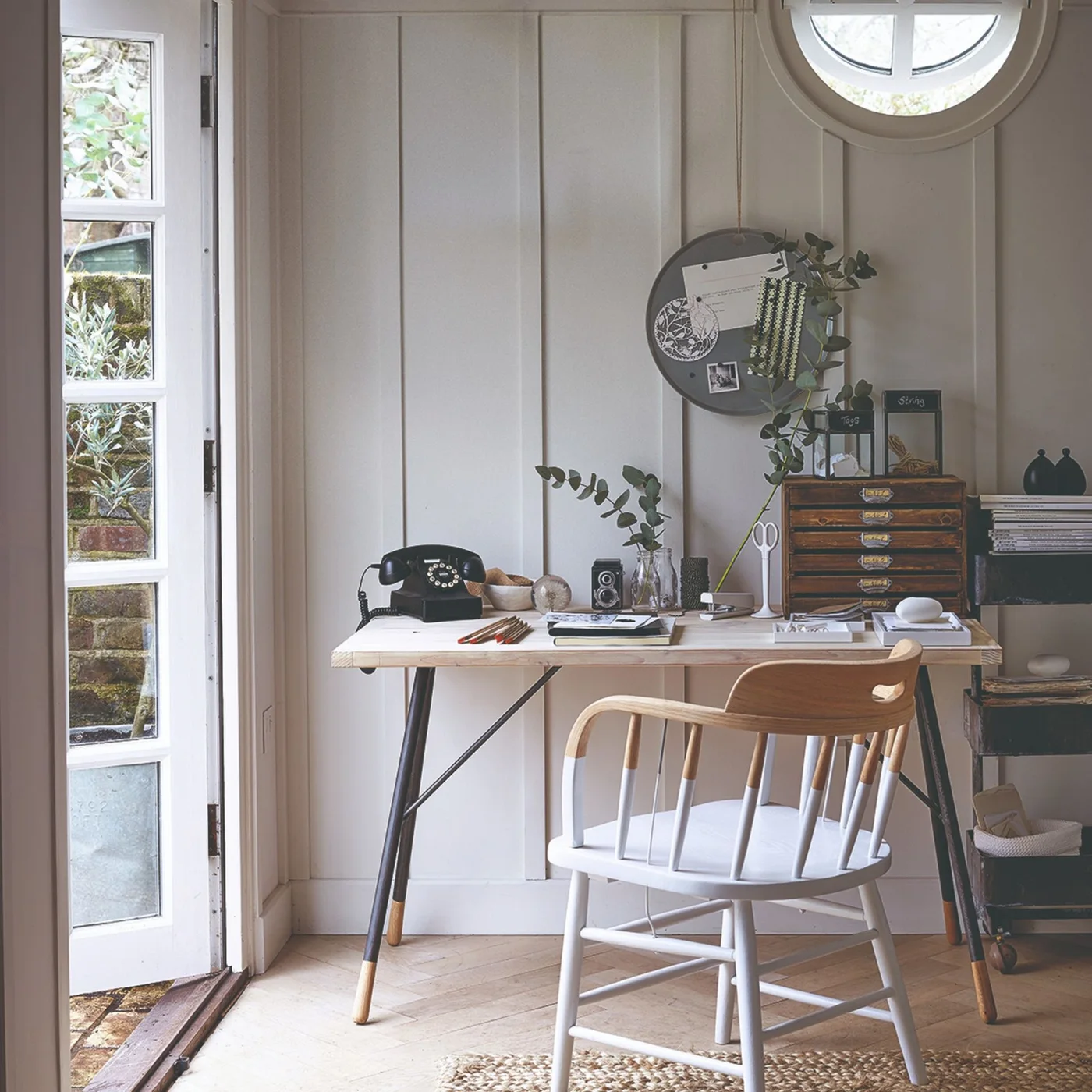
Add Character With a Part-Painted Wood Chair
 SaveSupport Non AI Creator
Image credit: Future PLC
The partly painted chair connects warm wood with the white wall treatment. A pale desktop and slender dark supports keep the main furniture straightforward. Shallow drawers collect small supplies, while the round organizer repeats the shape of the window without adding another large rectangular cabinet.
Keep a chair’s moving joints and seating surfaces appropriate for its finish if you plan to repaint it. A shallow drawer chest suits small supplies but will not replace deep file storage. Leave room to use the door beside the desk, and keep loose materials away from its opening path.
PART 04
Adapt Shared Rooms and Compact Corners
IDEA 15 / 18
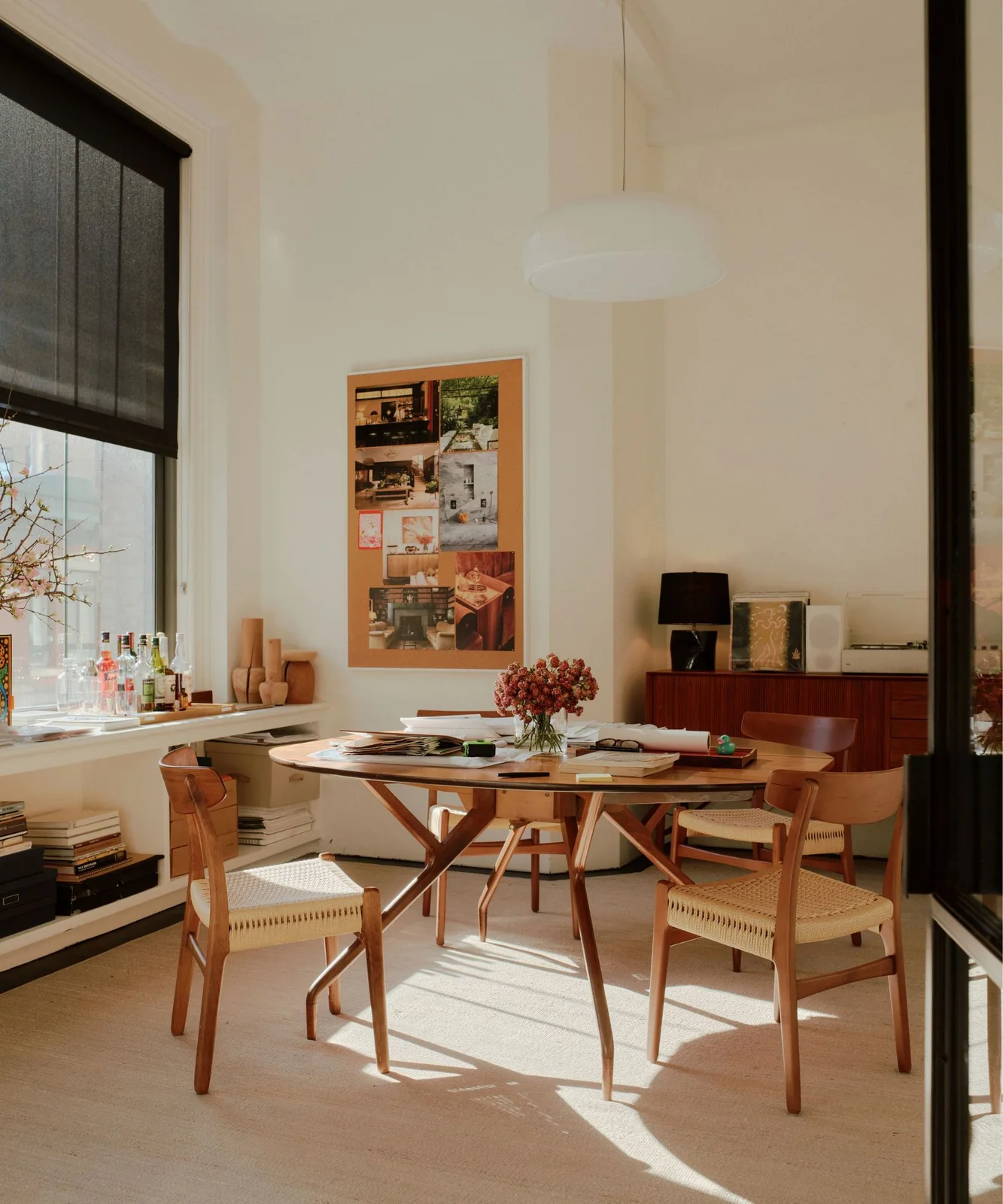
Use a Round Table for Shared Paper-Based Work
 SaveSupport Non AI Creator
Image credit: GACHOT
The round table creates a shared surface for papers and discussion without a single dominant seat. Simple wood chairs repeat its warm tones, while the noticeboard gives references a separate vertical place. The low sideboard provides another storage opportunity, keeping the room’s larger shapes straightforward.
A round table needs enough clear space around its full edge for people to sit and stand comfortably. Plan a nearby storage place so projects can be moved without losing their order. If you also use screens here, arrange safe power access and seating support rather than treating a meeting table as a complete computer workstation.
IDEA 16 / 18
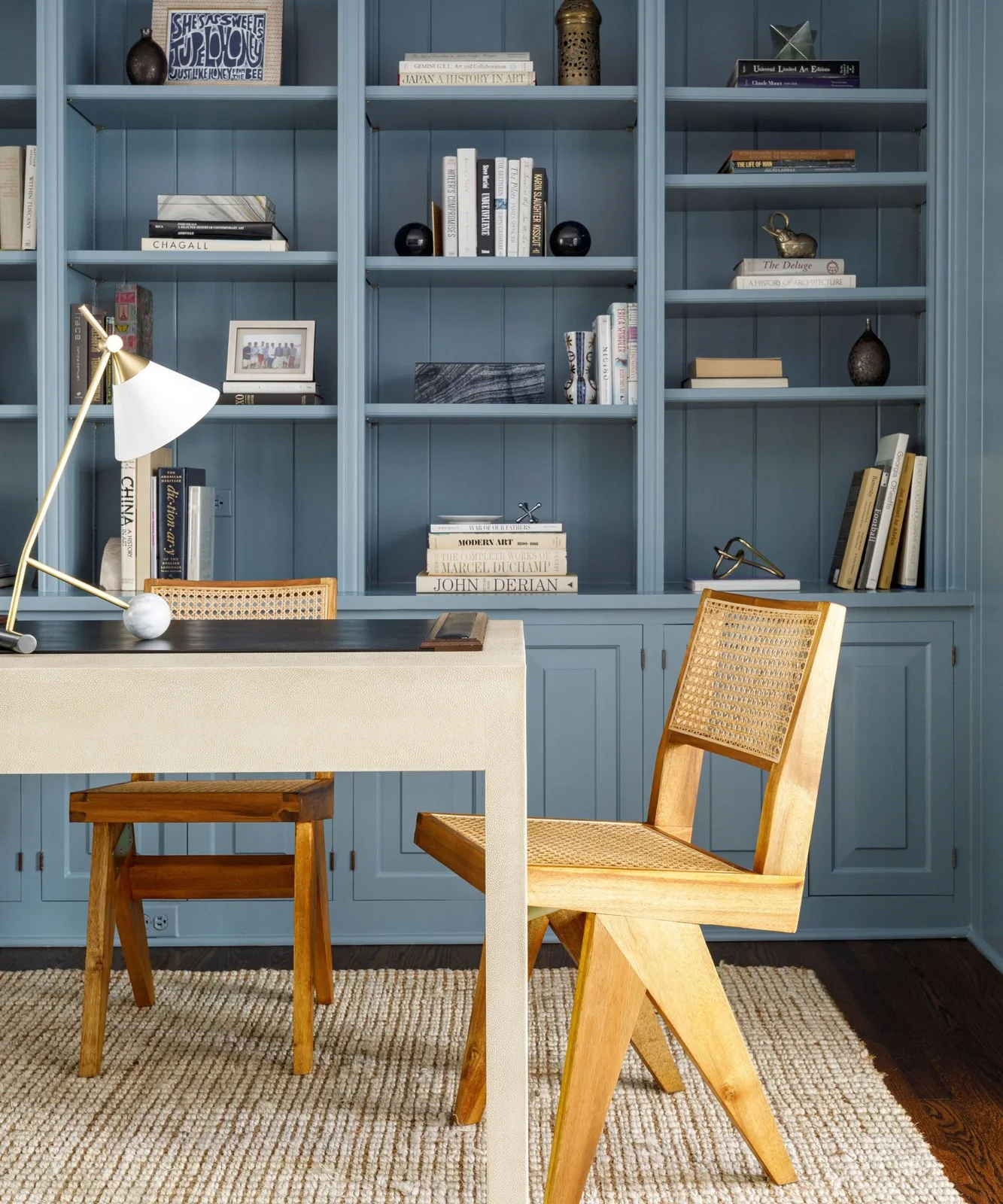
Keep Blue Storage Behind Simple Wood Seating
 SaveSupport Non AI Creator
Image credit: Alexandra Kaehler, Aimee Mazzenga
The blue bookcase wall supplies a strong background, while the desk and wood chairs keep their outlines relatively simple. Closed lower cupboards balance the open shelves above. The pale desk surface separates the work position from the darker storage rather than blending everything into one painted block.
Plan shelf heights for books and files you actually own, with heavy items placed where they can be handled comfortably. Keep enough desk depth for working rather than arranging objects along the entire edge. Choose seat support for the task, and use the blue as one main color instead of adding several competing finishes.
IDEA 17 / 18
Fit a Work Surface Beneath the Stair Slope
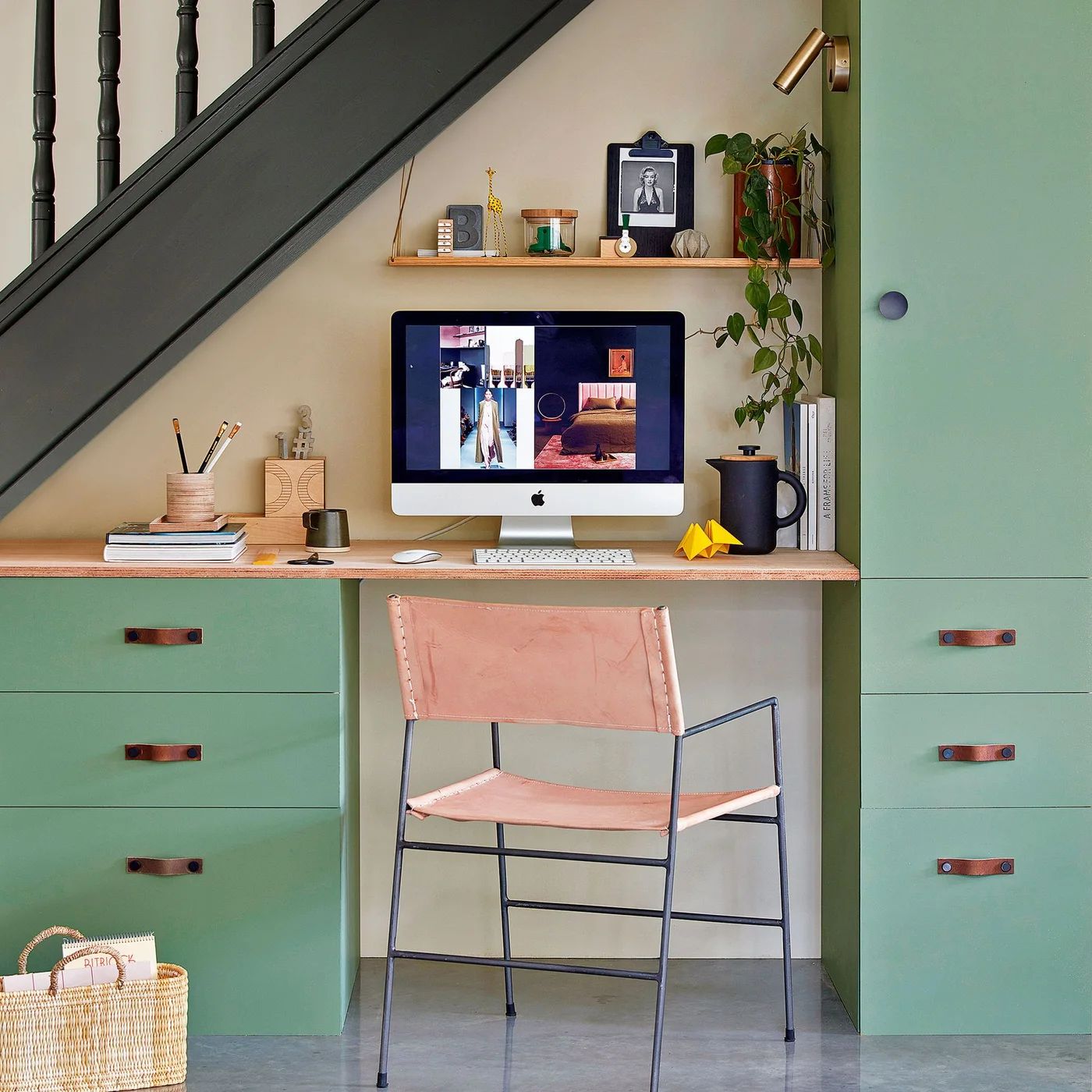 SaveSupport Non AI Creator
Image credit: Future PLC/Tim Young
The staircase slope is used for a compact work position rather than left as an awkward gap. Green storage fronts give the drawers and tall cabinet one consistent color, while the wood top warms the middle. A shallow shelf follows the useful wall area above the computer.
Check headroom both while seated and when standing up, as the slope can make a comfortable-looking nook impractical. Keep enough knee width between the drawers. Our small home office ideas include other compact layouts; preserve any required stair access and plan cables before fitting storage around the desk.
IDEA 18 / 18
Use a Floating Desk for an Occasional Work Corner
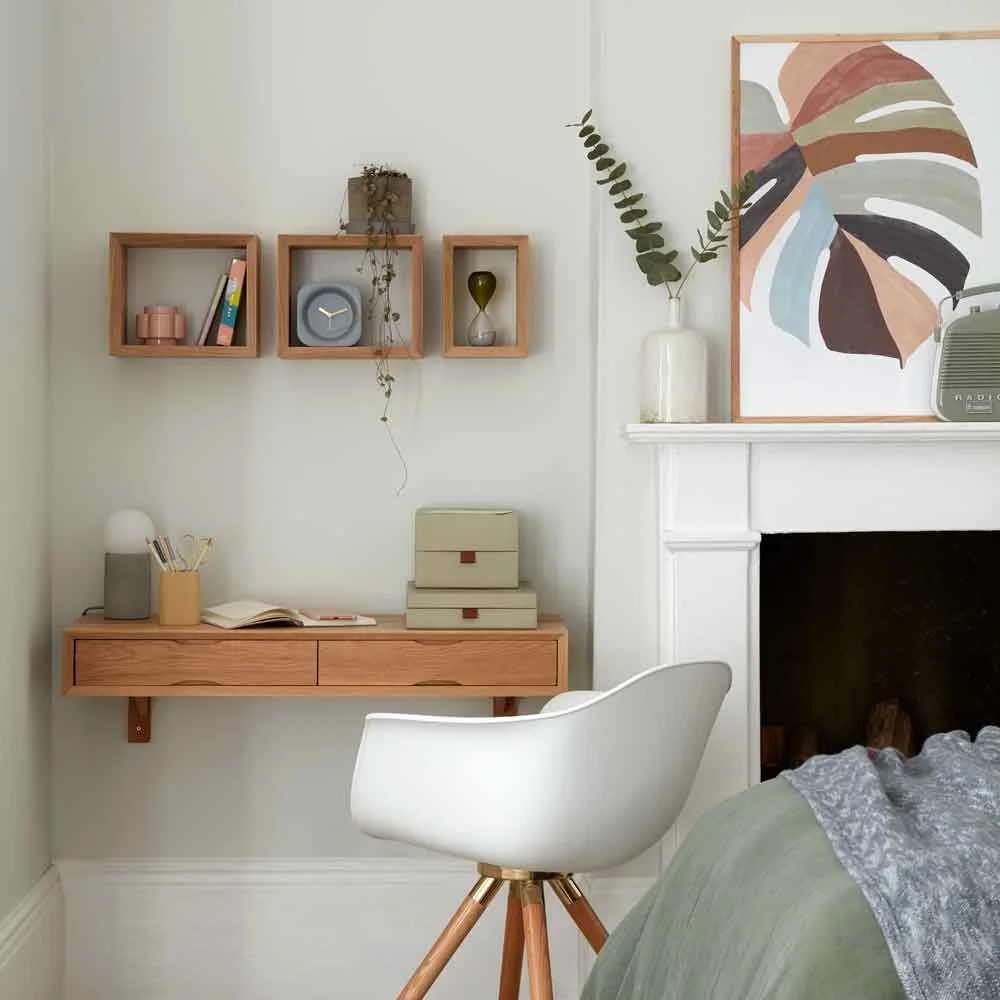 SaveSupport Non AI Creator
Image credit: Future PLC/Tim Young
The shallow floating desk gives this shared room an occasional work surface without another set of floor-standing legs. Three small wood shelves repeat its finish above. A white chair keeps the foreground light, with the fireplace and artwork remaining separate parts of the room rather than being hidden behind storage.
Check the desk’s usable depth and rated load before expecting it to hold a full computer setup. Choose secure wall fixings and leave enough room to pull the chair back. Keep equipment and stored papers outside any fireplace’s required clearances; a nearby hearth is not a suitable place for office overflow.
BRING IT ALL TOGETHER
Let the Work Decide the Arrangement
Choose the desk, chair and light together rather than treating them as separate decorative purchases. Measure knee room, the route behind the seat and the space needed to open storage. A small setup can work well when its equipment and supplies fit, while a larger desk can still fail if it is hard to reach or uncomfortable.
Use a few connected finishes, then give papers, chargers and books deliberate storage places. Keep inspiration visible where it helps and remove it where it distracts. Review the arrangement after working in it; the best improvement may be better task lighting or a more suitable chair rather than another accessory.