A rustic dining room feels welcoming when its texture has a useful place: a wood table that suits daily meals, chairs people enjoy sitting in, and storage that keeps dishes close. The look can be light and simple or richly layered, without needing a whole room of matching furniture.
These photographed rooms show different ways to combine worn wood, painted finishes, brick, woven lighting and comfortable seating. Start with your table size and walking routes, then borrow the details that fit the room you already have. Several examples are kitchen-diners, where clear access matters as much as the decoration.
PART 01
Choose a Table That Grounds the Room
IDEA 01 / 20
Let a Weathered Table Lead the Room
 SaveSupport Non AI Creator
Source: livingetc.com
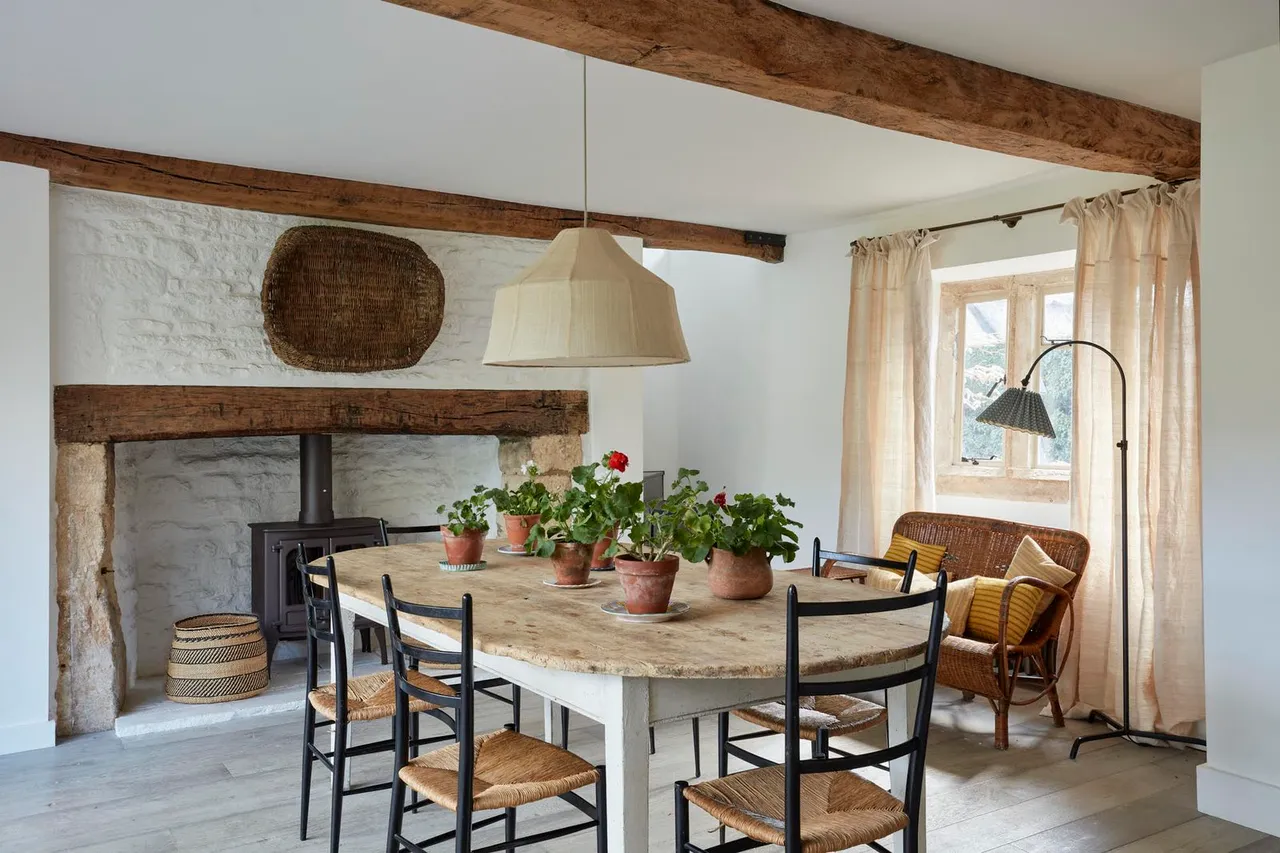
The broad, worn-looking tabletop provides the character here, while the black chairs give it a crisp outline. Pale walls and curtains prevent the exposed beams and deep fireplace from making the room feel heavy. Potted plants introduce varied shapes against the otherwise simple furniture.
Check an older table for a stable base, splinters and a surface finish suitable for everyday meals. Use saucers beneath pots so watering does not leave rings. If you enjoy the fireplace setting, keep the furniture placement independent of the clearances required by the actual stove.
IDEA 02 / 20
Pair a Plain Table With Backless Benches
 SaveSupport Non AI Creator
Source: livingetc.com
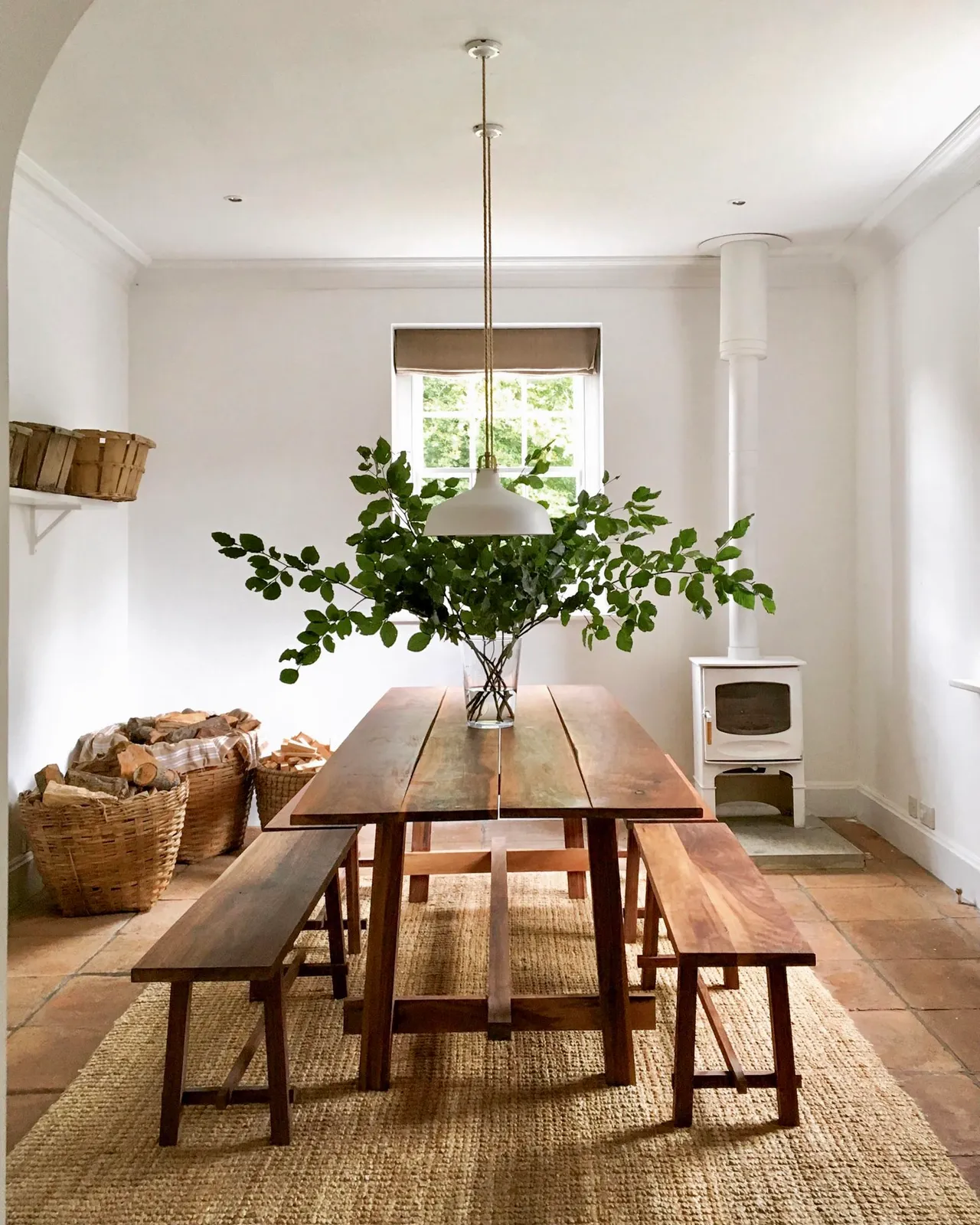
Matching benches make the long table feel uncomplicated, and the white pendant repeats the walls rather than competing with the timber. The baskets and textured rug add warmth at floor level. A large branch arrangement shows how one display can have more presence than many small ornaments.
Benches can tuck away neatly, but reaching a middle seat may be awkward for some guests. Keep an alternative chair available for anyone who needs a backrest. Move the tall branches during meals, and follow the stove maker’s guidance rather than copying the nearby log storage.
IDEA 03 / 20
Balance Exposed Brick With Light Chairs
 SaveSupport Non AI Creator
Image credit: Future PLC/James French
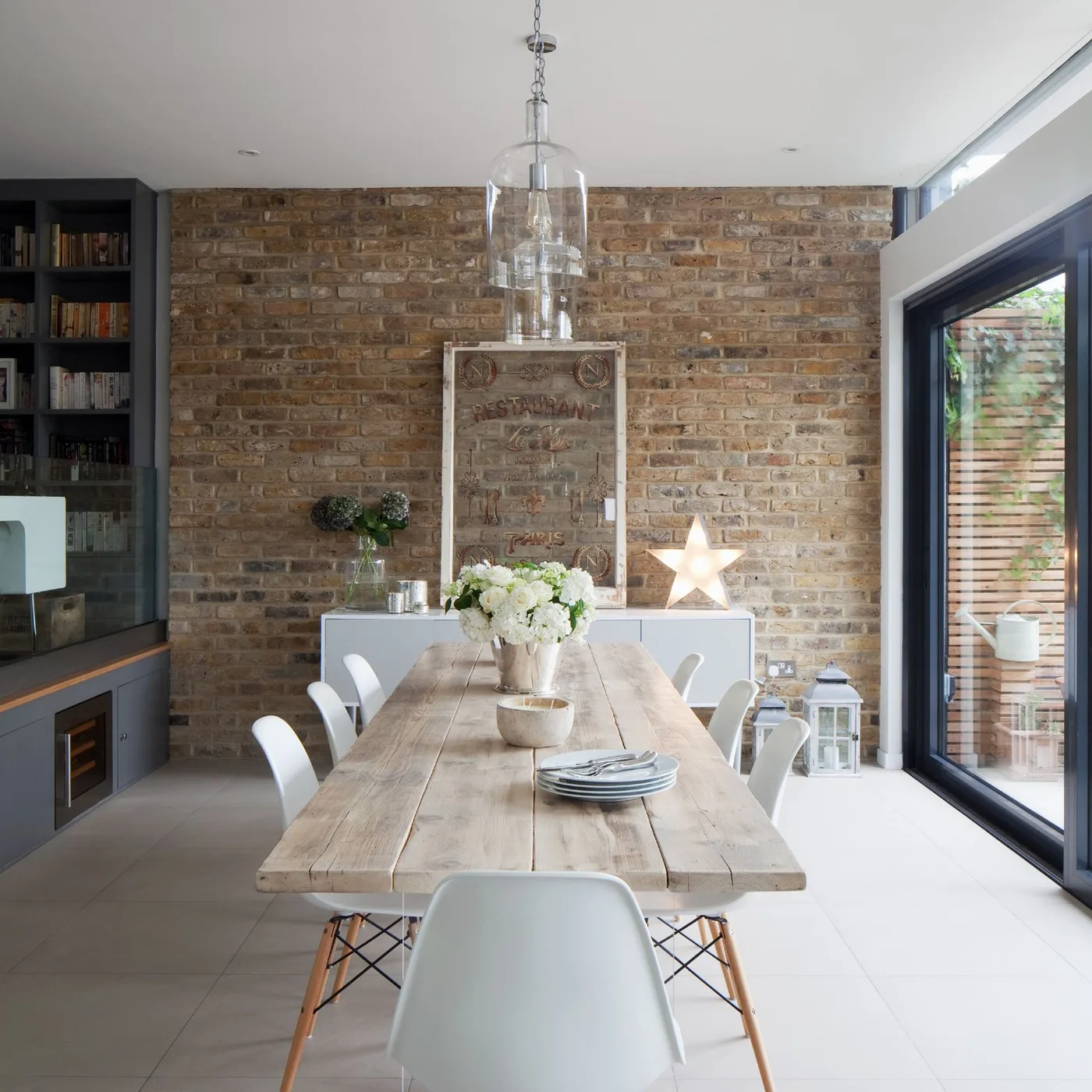
The brick wall and visibly grained table give this room its rustic texture. White chairs, a pale floor and clear lighting lighten the surrounding space, while dark book storage provides contrast at one side. The table stays visually central without a matching suite of heavy furniture.
Choose chairs for comfort before deciding whether they match the table’s age or finish. White seats need a cleaning routine appropriate to their material. A clear pendant allows more of the wall to remain visible, although fingerprints and dust will show when daylight reaches the glass.
IDEA 04 / 20
Soften a Long Wood Table With Covered Chairs
 SaveSupport Non AI Creator
Image credit: Marie Flanigan Interiors/Julie Soefer Photography
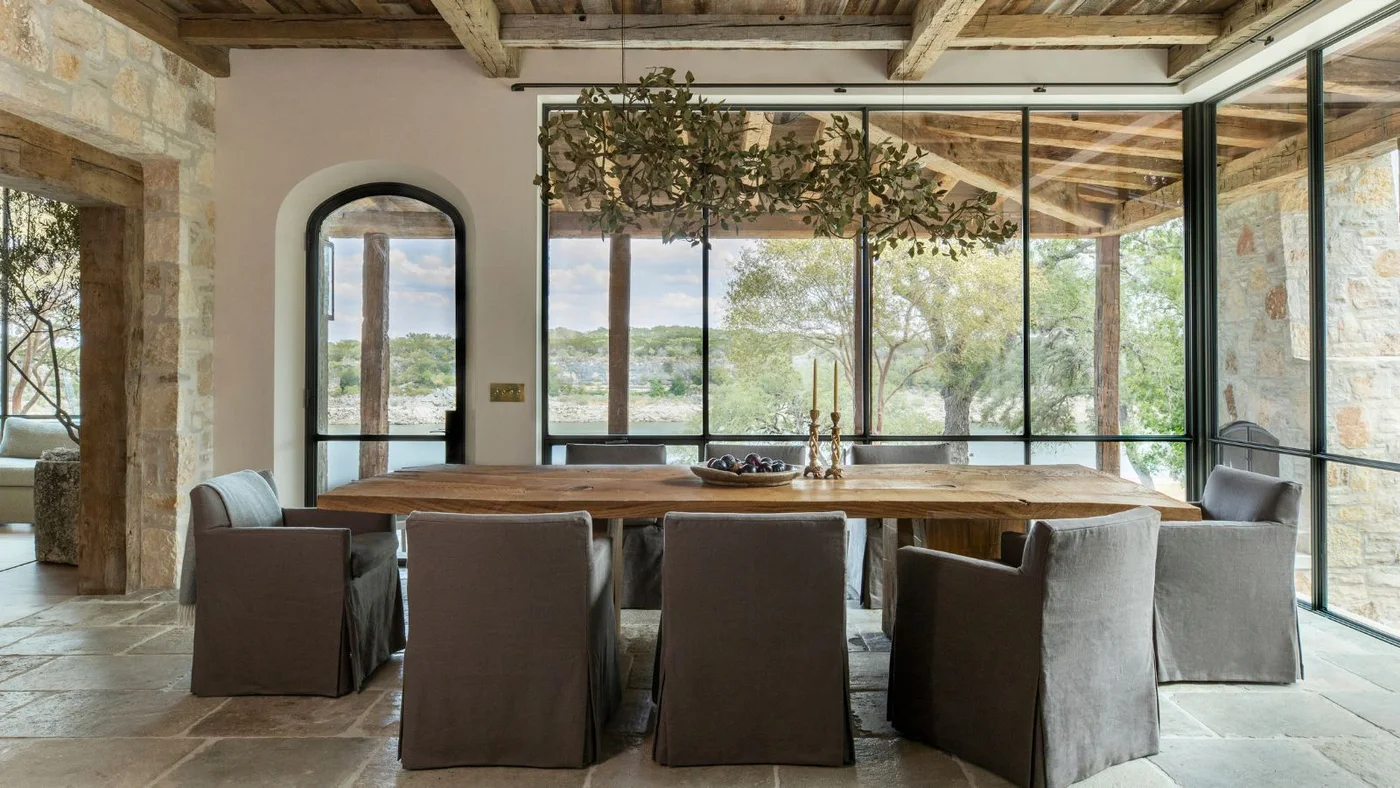
Soft chair covers provide a quiet counterpoint to the broad tabletop, timber ceiling and textured walls. The dark window frames hold the generous view together, and the restrained table display leaves the uneven wood grain visible. This is a comfortable version of rustic rather than a deliberately rugged one.
Look for removable covers with practical washing instructions if the table is used daily. Check that chair arms fit under the table edge and that the skirts clear the floor. Wide glazing can make evening reflections prominent, so plan gentle interior lighting as well as enjoying the daytime view.
PART 02
Work With Texture and Character
IDEA 05 / 20
Use Woven Seating Against Rough Walls
 SaveSupport Non AI Creator
Image credit: Photo: Kelly and Co Design. From: Kelly and Co. Design
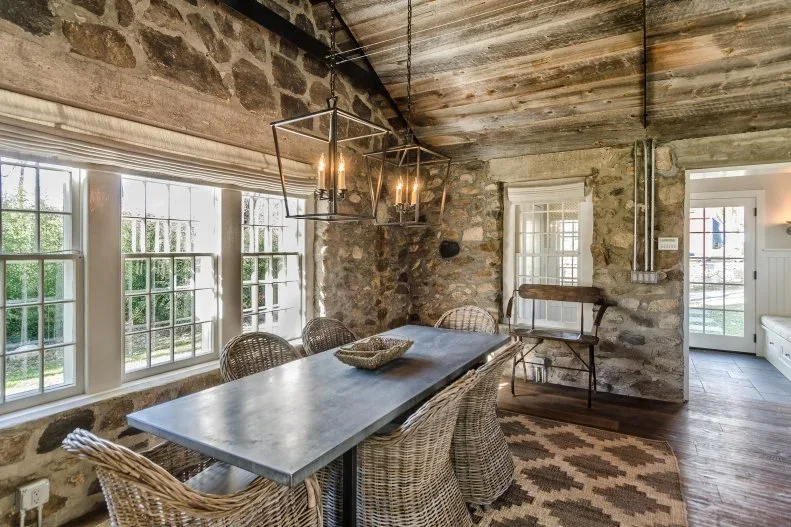
Woven chairs soften the hard stone and timber surfaces without introducing another large block of color. The dark tabletop distinguishes the eating area from the surrounding wood, while the paired lanterns follow its length. A small wall bench leaves another useful place to pause near the doorway.
Try the chairs at the actual table before buying, especially where their arms rise close to the underside. Woven surfaces can catch crumbs and clothing, so inspect the weave and cleaning guidance. Keep the rug large enough for normal chair movement rather than letting rear legs catch its edge.
IDEA 06 / 20
Add a Little Polish to Rustic Timber
 SaveSupport Non AI Creator
Image credit: The Refined Group
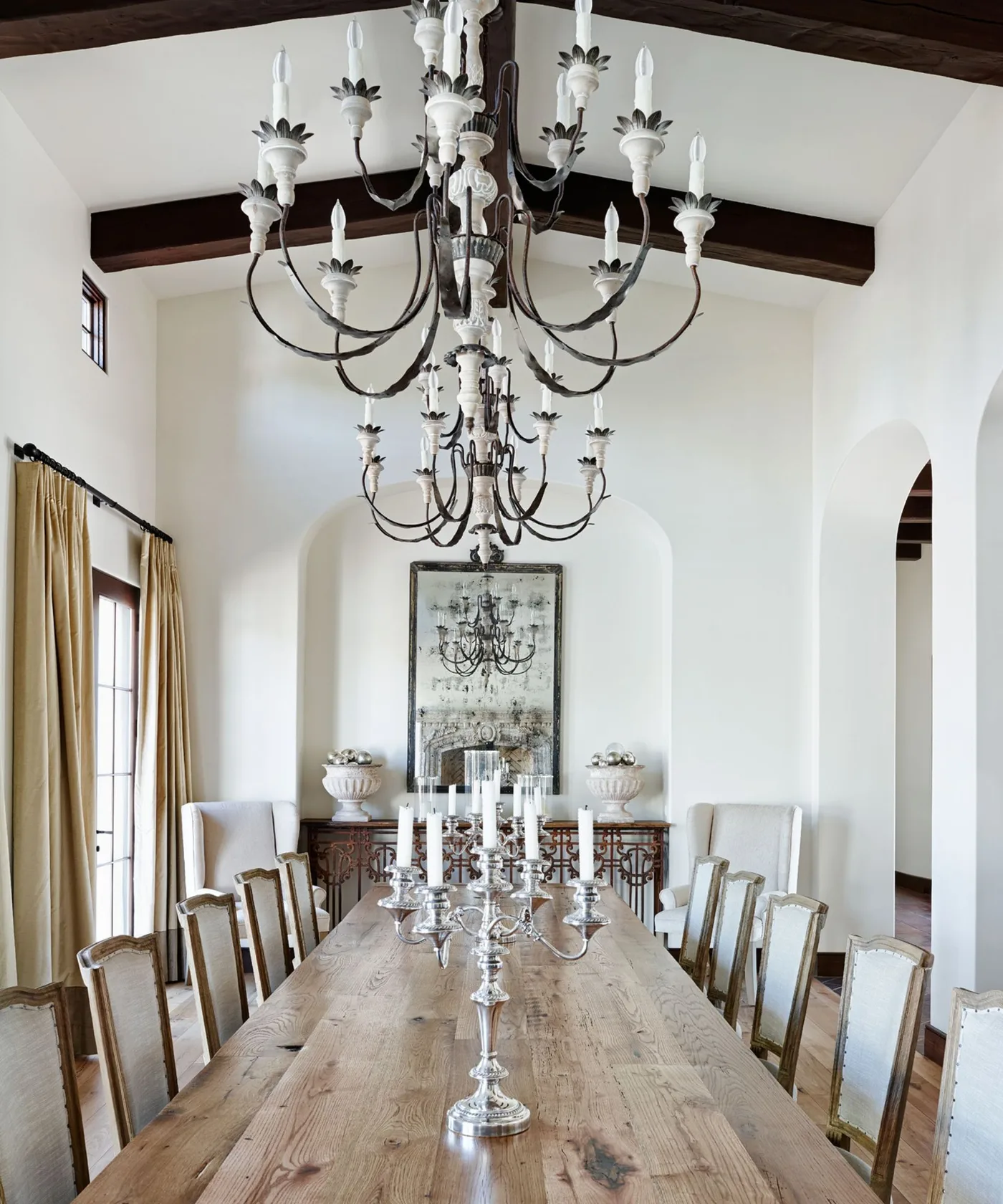
The tabletop’s knots and grain keep this otherwise formal room grounded. Pale upholstered chair backs and white walls relieve the weight of the overhead beams, while decorative lighting adds a more dressed-up layer. The repeated chandeliers make sense of the table’s unusually long proportions.
You can borrow the mix of rougher wood and refined lighting without buying a large formal suite. Measure the table, chairs and pendant positions together. Keep tall candle arrangements removable for meals, and allow enough serving space that decorative objects do not become obstacles between place settings.
IDEA 07 / 20
Introduce Color Through One Door
 SaveSupport Non AI Creator
Image credit: Photo: Michael Khait. From: Kendall Simmons
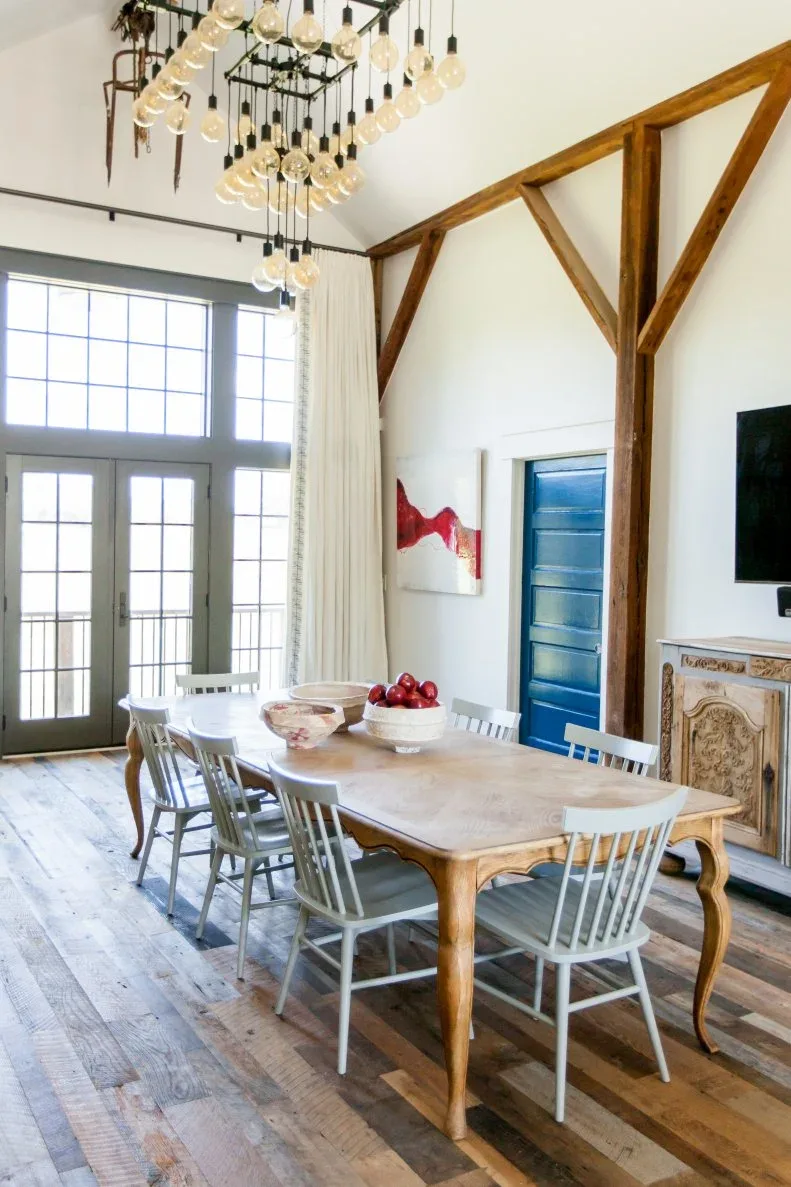
The blue door gives this light dining room a clear focal point while the timber frame and board floor supply texture. Gray chairs settle between the pale table and the darker glazed doors. Curved table legs add a softer line than the straight beams overhead.
A single painted door is an easier color commitment than replacing all the dining furniture. Test the shade beside existing wood in both daylight and evening light. If choosing a curved-leg table, check the apron and leg positions carefully so chairs can tuck in without guests losing knee space.
IDEA 08 / 20
Set Warm Wood Against Blue Pattern
 SaveSupport Non AI Creator
Image credit: Future PLC/Dominic Blackmore
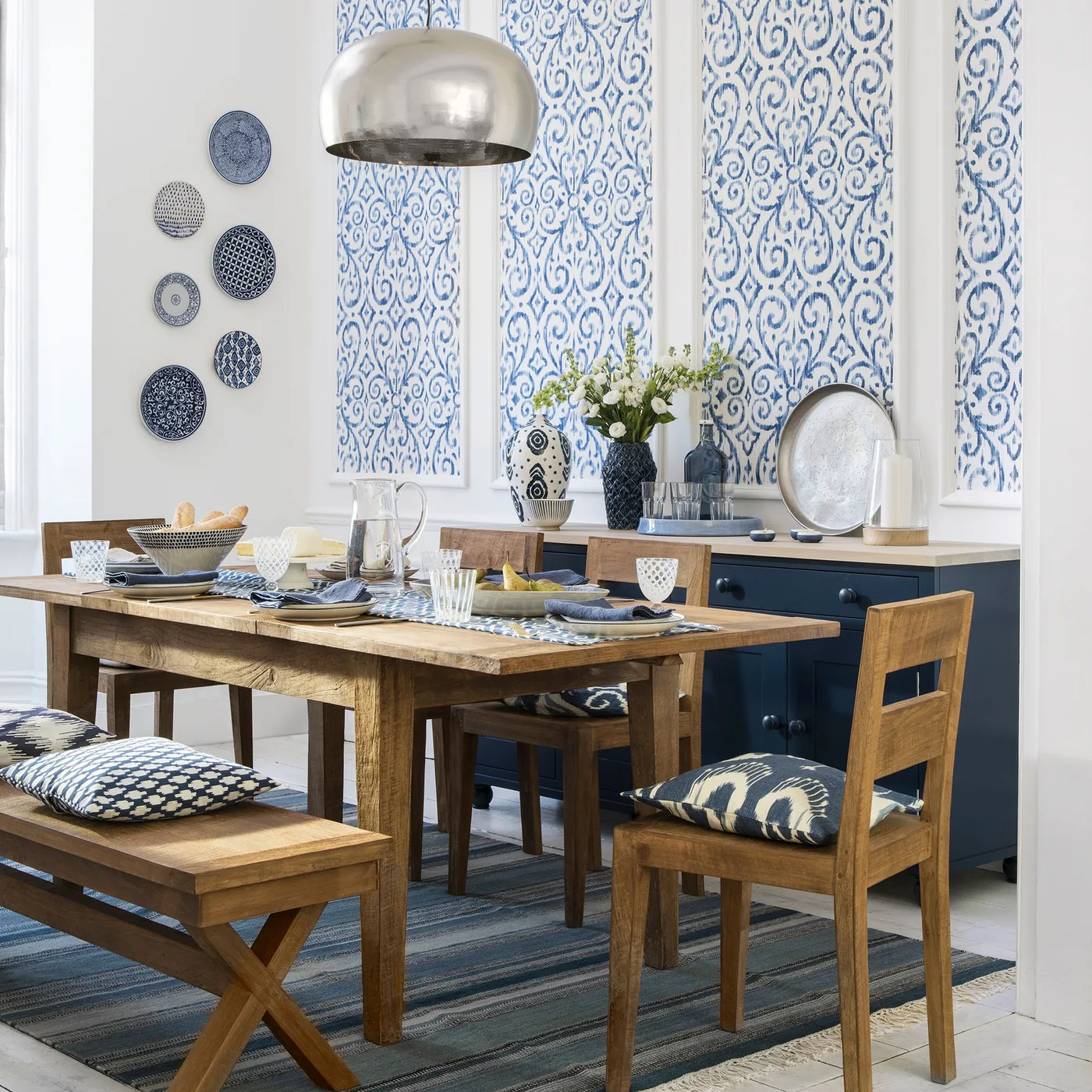
Blue-and-white pattern gives this room energy, but the substantial wood furniture keeps the eating area grounded. Plain white wall sections break up the print, and the blue cabinet repeats its color at a lower level. The striped rug introduces a quieter pattern underneath.
Limit the strongest repeat to a few wall sections if an entire patterned room feels too busy. Check how chair legs move across the rug before settling its position. Dining room wallpaper ideas can help you compare pattern scales, especially when a sideboard display will sit against the same wall.
PART 03
Make Storage and Seating Useful
IDEA 09 / 20
Keep Everyday Dishes Close to the Table
 SaveSupport Non AI Creator
Image credit: Future PLC/Dominic Blackmore
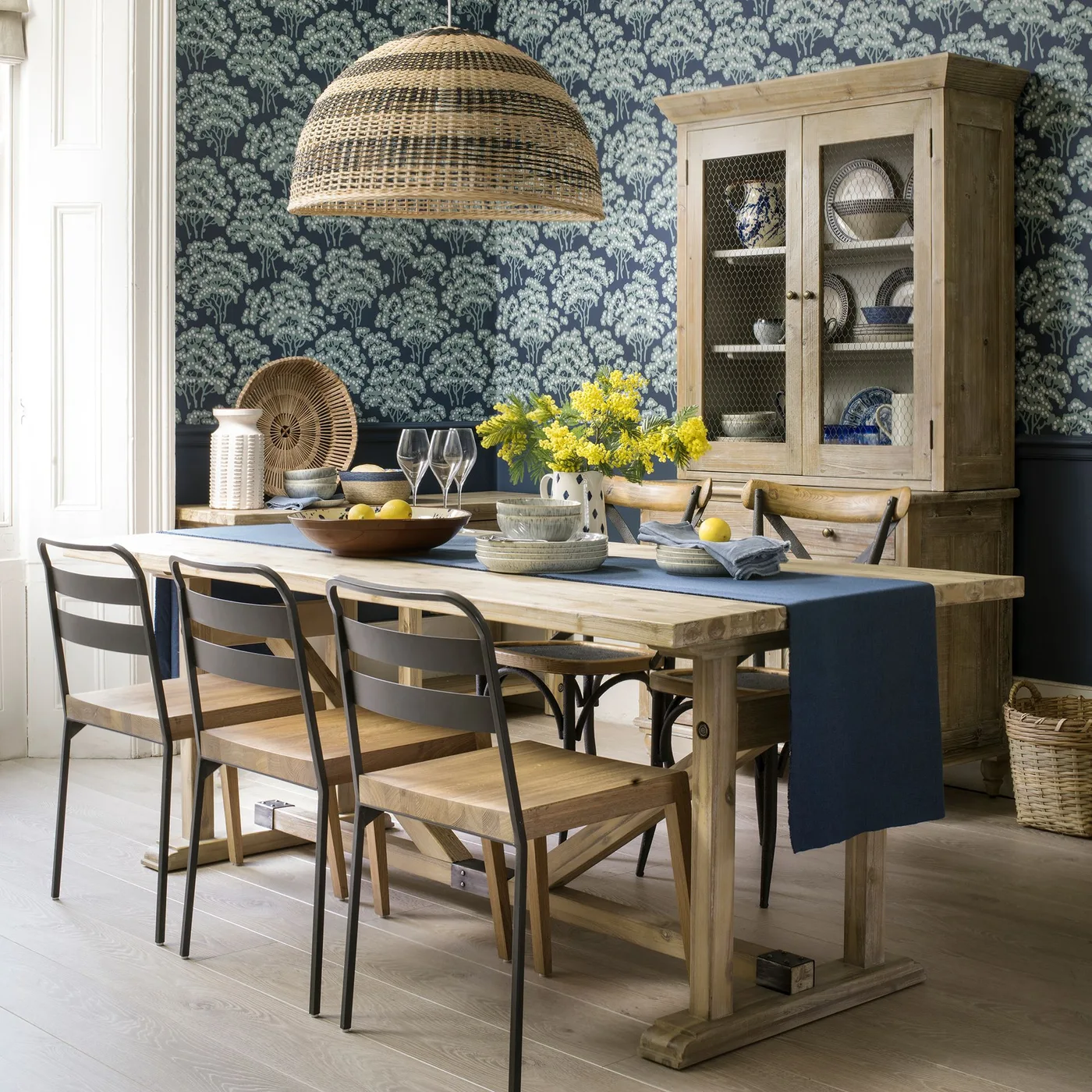
The cupboard makes plates part of the room’s decoration while keeping them near the table. Its pale timber connects with the tabletop, and the large woven shade softens the dark wallpaper. A blue runner repeats the background color without hiding all the wood.
Choose a cupboard depth that leaves room to pull out chairs and open its doors at the same time. Put frequently used dishes on reachable shelves rather than high display levels. Consider whether you prefer doors that hide dust or an open arrangement that makes everyday items easier to grab.
IDEA 10 / 20
Organize a Simple Open Dish Shelf
 SaveSupport Non AI Creator
Image credit: Future PLC/David Cleveland
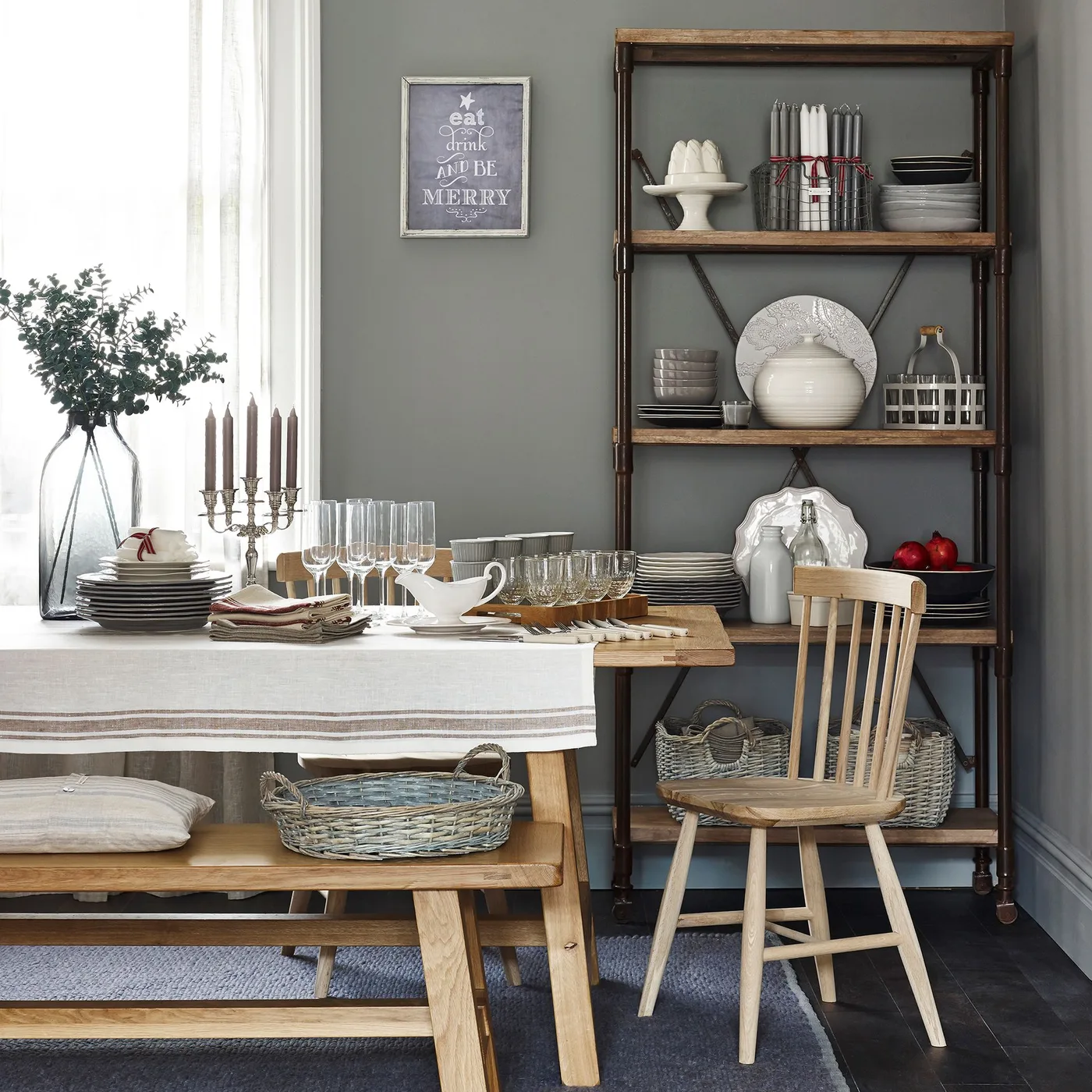
The open shelf gives pale bowls and plates a clear backdrop, while its dark uprights keep the arrangement from looking bulky. The table and bench repeat the shelf boards’ warm tone. A restrained wall color allows the varied dish shapes to do most of the decorating.
Store the dishes you actually use at comfortable heights, with heavier pieces lower down. Open shelves need regular dusting, especially near cooking areas. Secure tall freestanding furniture as its manufacturer directs, and check that a seated diner can leave the bench without catching the shelving corner.
IDEA 11 / 20
Build a Relaxed Nook Beside Garden Doors
 SaveSupport Non AI Creator
Image credit: Future PLC/Lizzie Orme
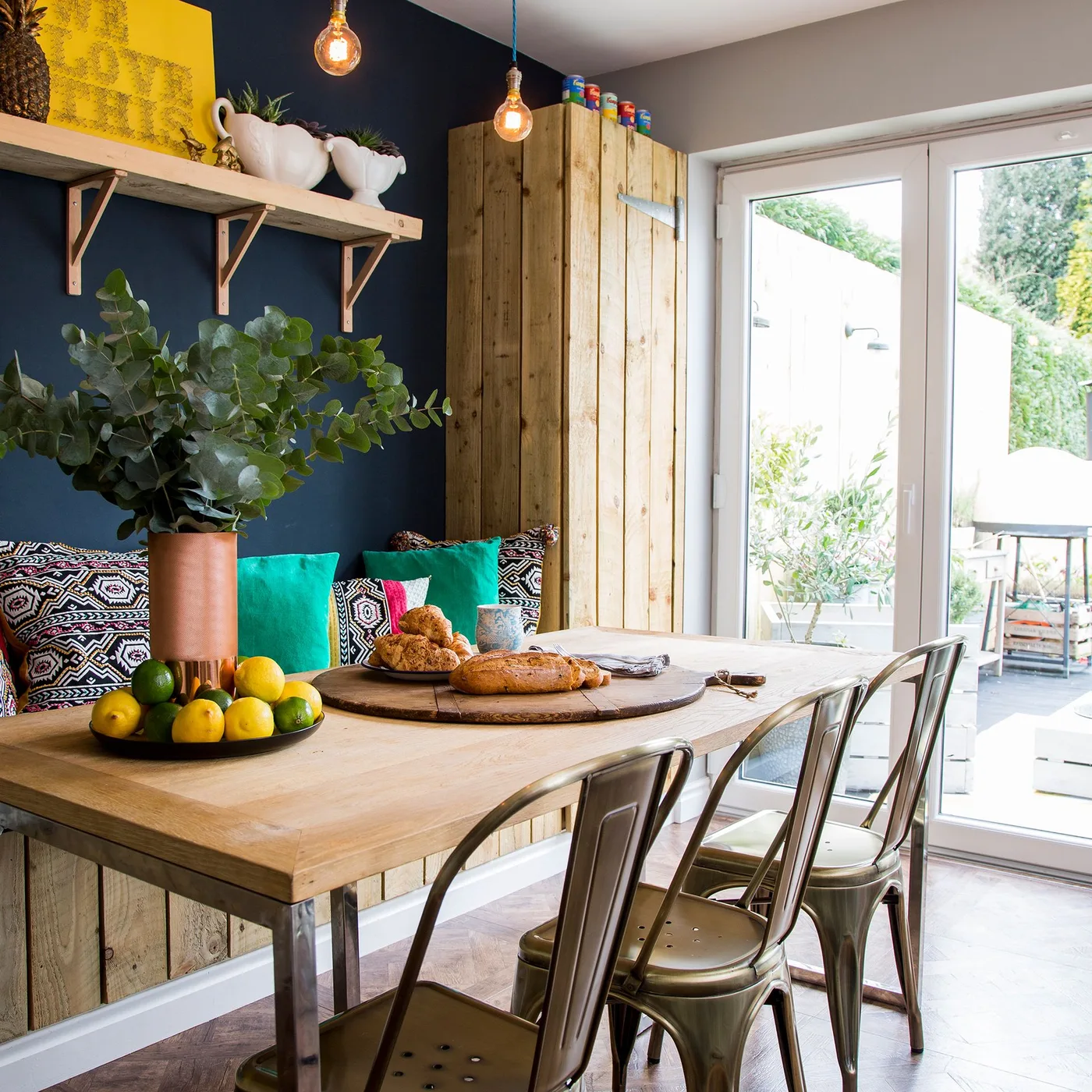
The bench uses the wall as a comfortable backdrop, leaving individual metal chairs along the open side. Wood boards and the tabletop bring warmth beside the dark paint. Bright cushions and a few objects on the shelf make this nook personal without requiring a separate formal dining room.
Leave the door handles and opening route accessible before choosing a table length. Removable cushion covers are useful where meals happen every day. In a kitchen-diner, keep frequently used routes free even when someone is seated, rather than assuming a bench will always save enough space.
IDEA 12 / 20
Give a Small Dining Corner a Warm Backdrop
 SaveSupport Non AI Creator
Image credit: Future PLC / Katie Lee
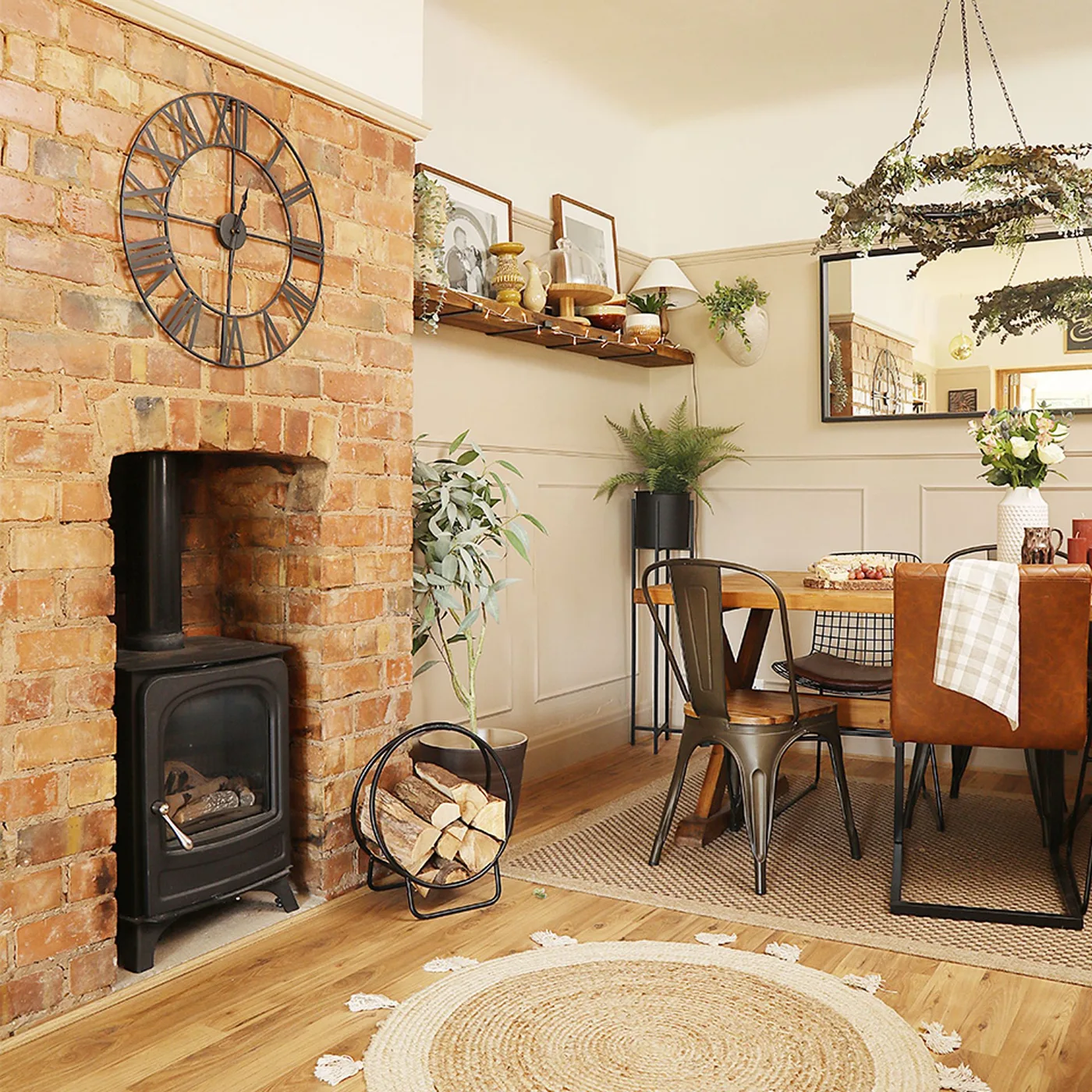
The exposed brick adds depth to a compact eating corner, while pale lower wall panels keep the room bright. Mixed chair shapes avoid a rigid matching look. A long shelf provides display space above the seating instead of adding another cabinet to the floor.
A compact dining area benefits from keeping floor space available for chair movement. Check shelf fixings and avoid placing heavy unsecured objects above a seat. Treat the stove and hearth as working features with their own installation requirements, and keep combustible decorations and furniture outside the required clearance.
PART 04
Make the Finishing Details Useful
IDEA 13 / 20
Lighten a Rustic Table With Painted Chairs
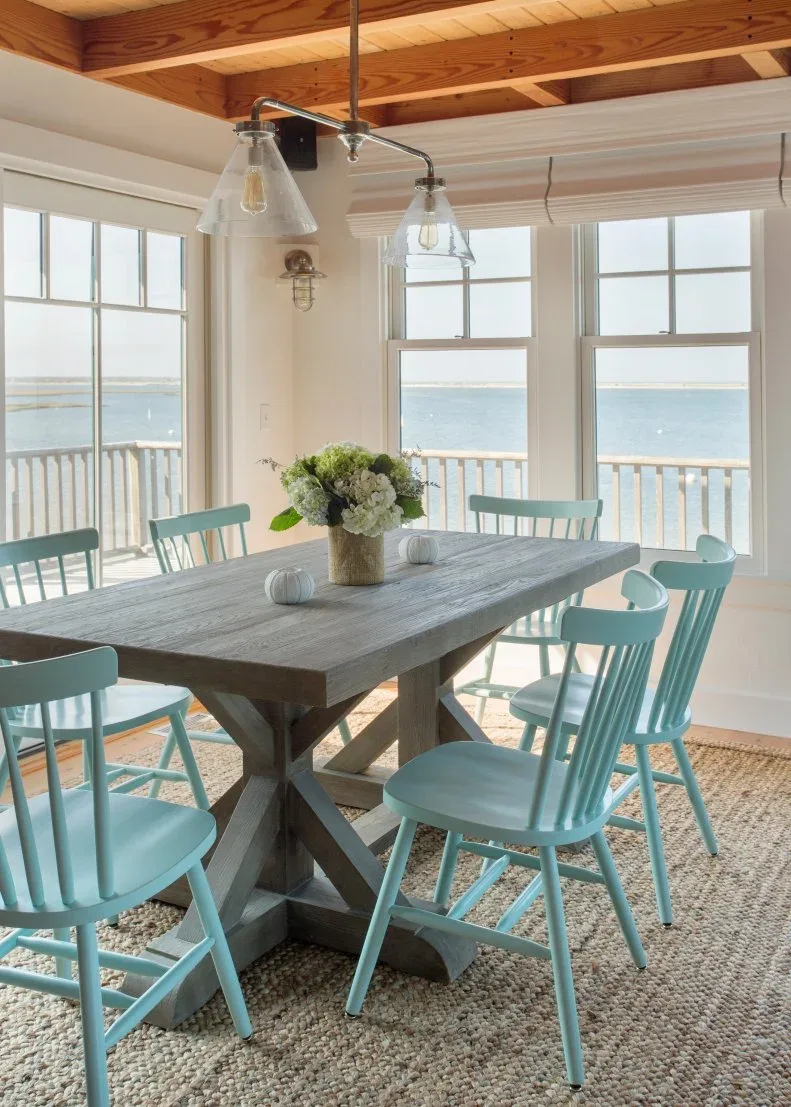 SaveSupport Non AI Creator
Image credit: Photo: Eric Roth Photography. From: Martha's Vineyard Interior Design
Painted chairs bring a light note to the strong trestle base and timber ceiling. The woven rug adds another texture without a busy print, while clear shades preserve the open feeling around the windows. The palette shows that rustic furniture does not require an entirely brown room.
If repainting existing chairs, use a finish intended for frequently handled furniture and allow it to cure before use. Try one chair beside the table before committing to a full set. Compare the seat height with the tabletop, since older chairs and newer tables do not always pair comfortably.
IDEA 14 / 20
Warm a Plain Wall With Woven Lighting
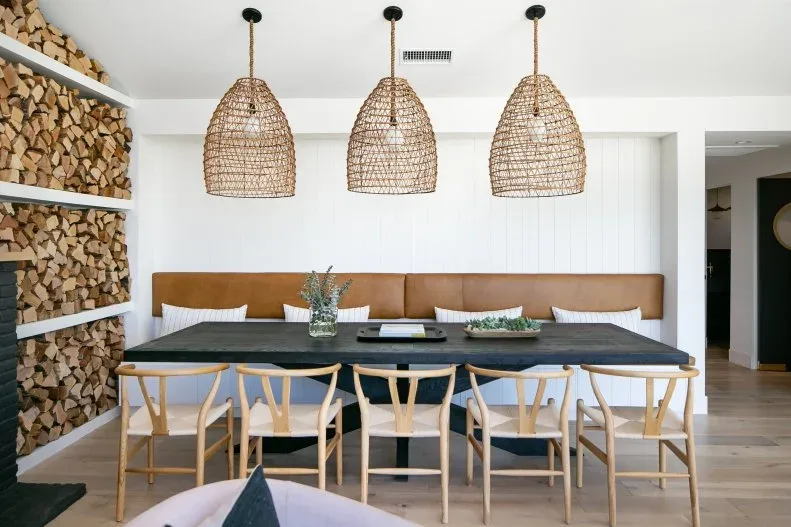 SaveSupport Non AI Creator
Image credit: Photo: Ryan Garvin. From: sKout
The trio of woven shades spreads texture across the length of the table. Pale wood chairs and the brown bench soften its dark surface, while the white wall keeps the different materials readable. The adjacent log display repeats the warm tones without making the table itself crowded.
A bench works well for a defined dining zone if diners can enter and leave comfortably. Check the shade size against both the table and seated sightlines. Woven lamps need careful dusting, and any nearby fireplace or stored fuel should follow the requirements of the actual installation.
IDEA 15 / 20
Use Collected Artwork Above a Plain Table
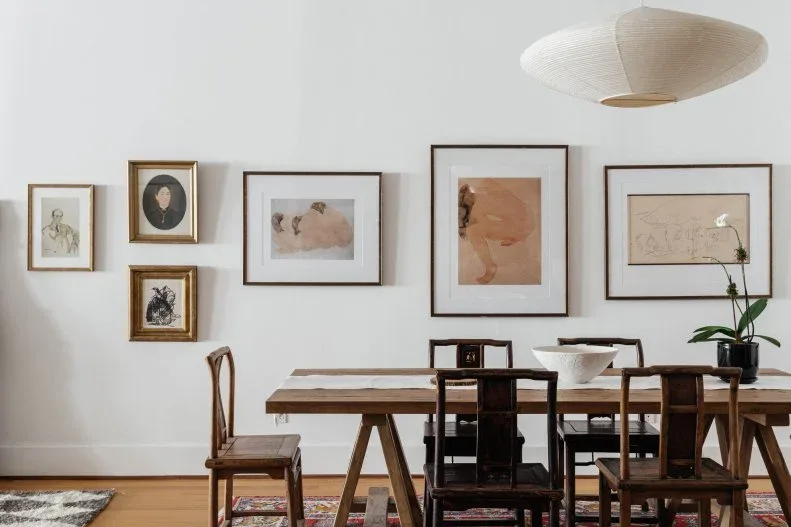 SaveSupport Non AI Creator
Image credit: Photo: Nicholas Glimenakis
The varied pictures give this dining room a collected character, while generous pale wall space prevents the display from overwhelming the table. Different chairs echo that relaxed approach. The simple paper shade keeps the lighting visually light above a tabletop that already has a strong wood grain.
Lay out a mixed picture group before making wall holes, using the table as the center of the arrangement. Keep the lowest frames out of reach of chair backs. Dining room wall decor offers more ways to balance a picture collection with the furniture rather than filling every gap.
IDEA 16 / 20
Make a Dining Room Work as a Reading Room
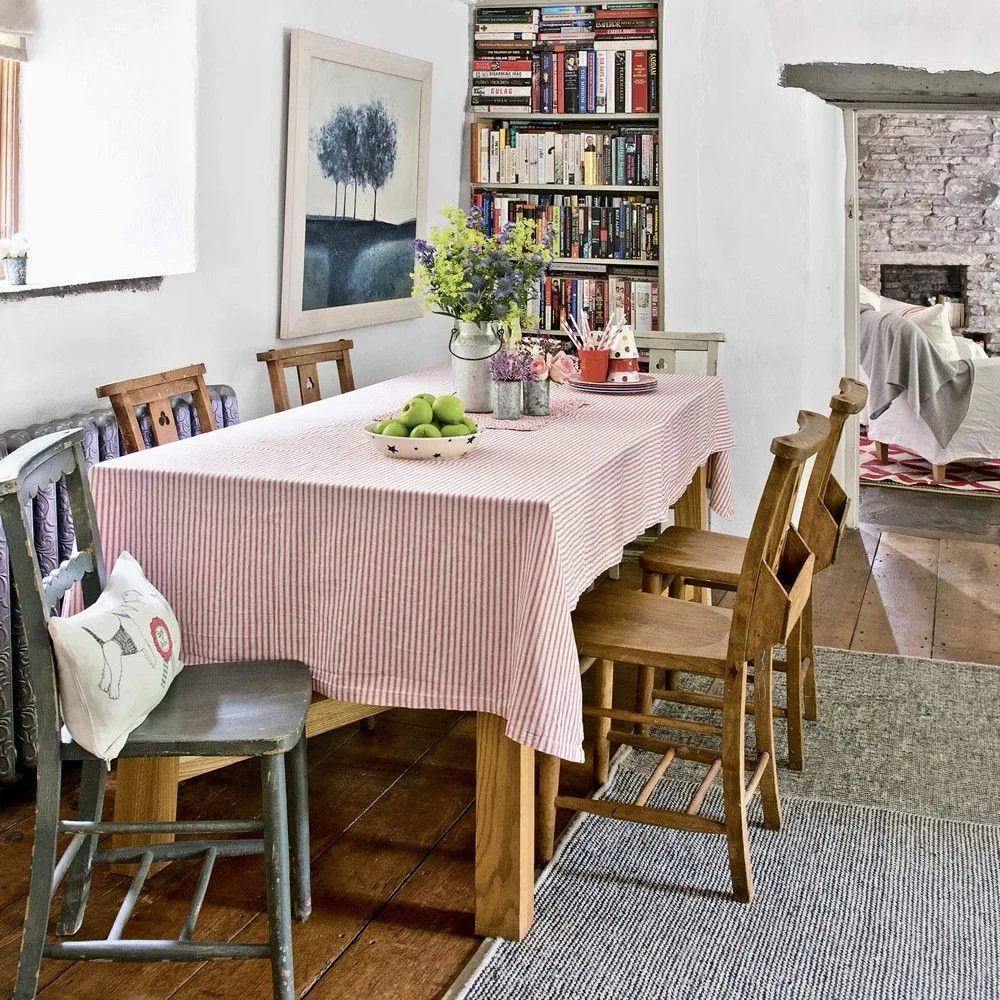 SaveSupport Non AI Creator
Image credit: Future PLC/Polly Eltes
The recessed bookcase uses height without introducing a deep cabinet beside the table. Its packed shelves make the room feel lived in, while the striped cloth ties the different chairs together. A large landscape print adds a quieter area beside the many book spines.
Keep books above and away from places where drinks are regularly set down. Choose a tablecloth that can be washed easily and does not trail under chair legs. If the table doubles as a reading surface, add an accessible light and a place to clear papers before meals.
IDEA 17 / 20
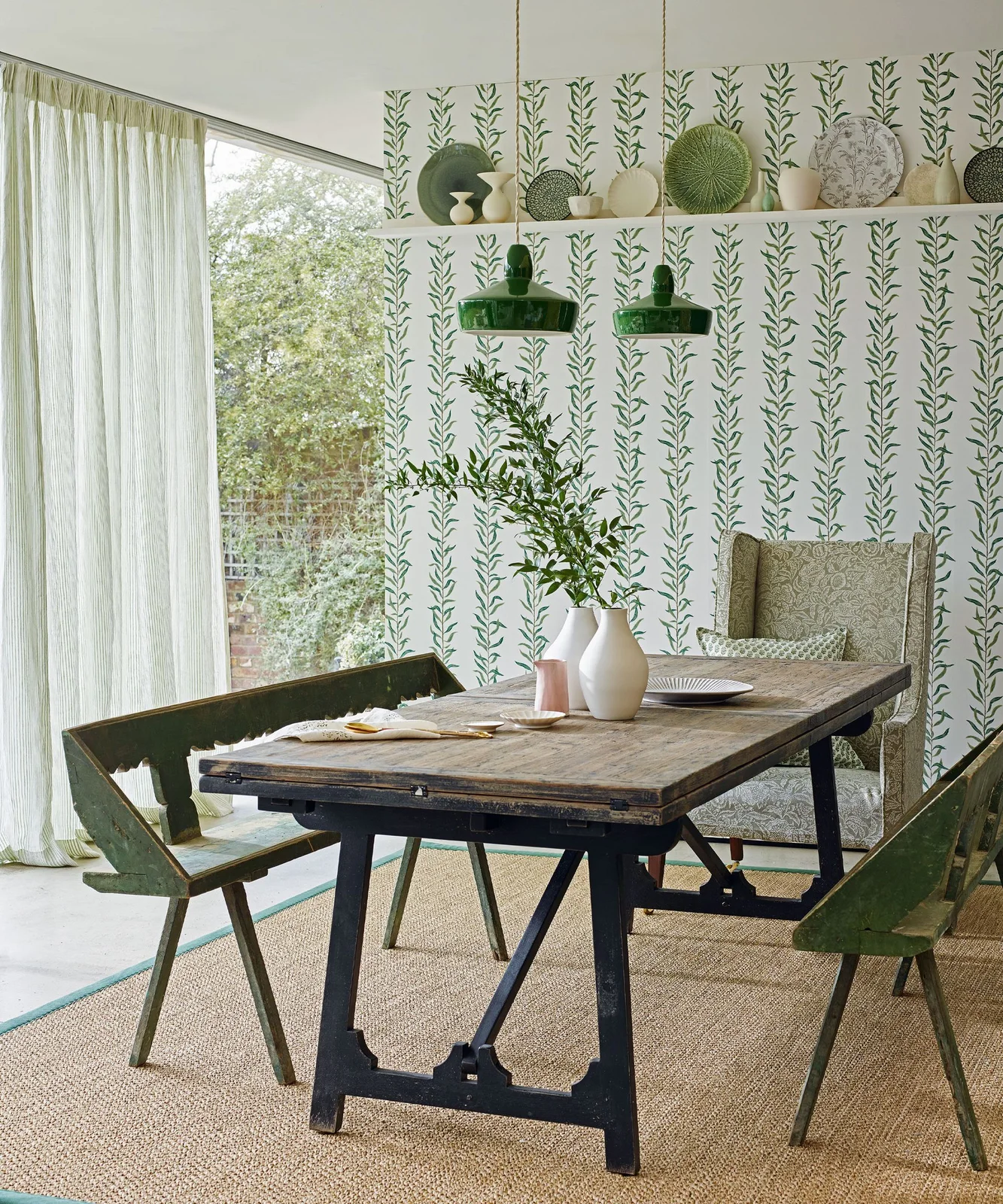
Repeat Leafy Green Around a Worn Table
 SaveSupport Non AI Creator
Image credit: Chris Everard
The worn tabletop provides a calm center for the repeated green pattern. Painted benches, pendant shades and display plates share the same broad color family, so the room feels connected despite its variety. The end chair brings upholstery into an otherwise mainly timber seating group.
Use one recurring color to connect mismatched furniture instead of trying to match every finish. Check older painted benches for stability and loose surfaces before use. A wide upholstered end chair needs enough space to slide out without trapping a person between the table and a nearby wall.
IDEA 18 / 20
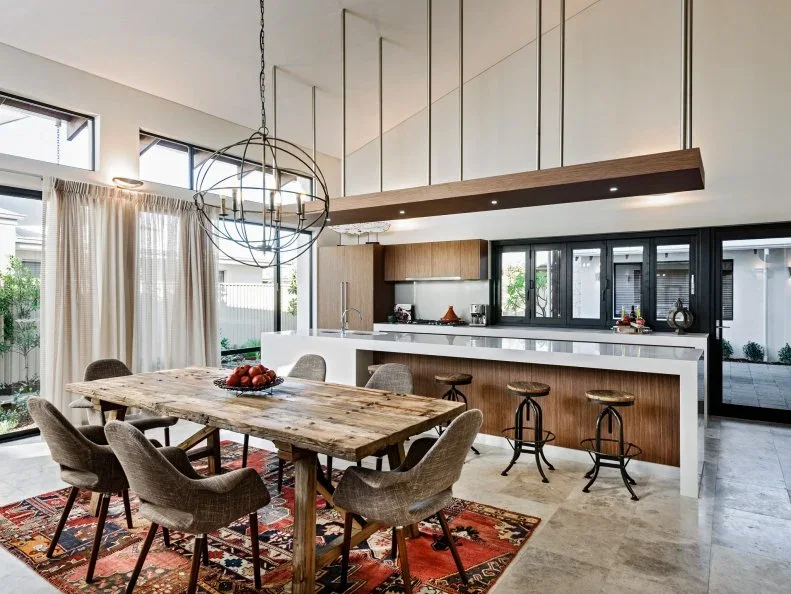
Use a Rustic Table to Define an Open Plan
 SaveSupport Non AI Creator
Image credit: Photo: Jodie Cooper, Jodie Cooper Design; Photo by D-Max Photographers
The grained table and red rug distinguish the dining area from the clean-lined kitchen behind it. Rounded upholstered chairs soften the table’s heavier outline, while an open globe pendant marks the eating position without dividing the tall room. The island remains a separate, practical work surface.
Plan the route between cooking and dining before buying the table. Leave room for occupied chairs as well as people carrying food. Open-plan kitchen ideas can help you compare the relationship between the island and dining furniture, particularly when both have seating that extends into the same walkway.
IDEA 19 / 20
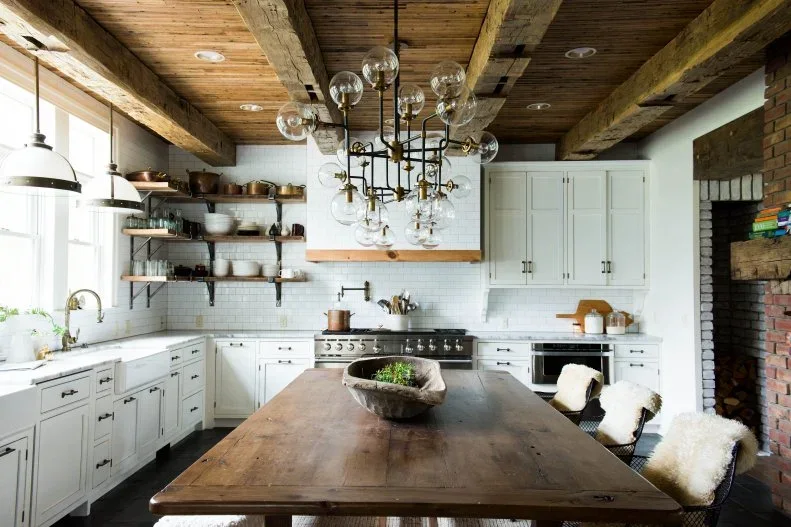
Bring Dining Into a Timber-Ceiling Kitchen
 SaveSupport Non AI Creator
Image credit: Photo: Alexandra Ribar. From: Leanne Ford
The central table borrows warmth from the heavy ceiling boards and beams, while white cabinetry keeps the surrounding kitchen from feeling too dark. Its thick top has a quieter outline than an island with extra cabinetry. The globe chandelier adds lightness above the substantial furniture.
Use a freestanding table in a kitchen only when its chairs will not obstruct appliance doors or the main cooking route. Keep loose throws clear of food preparation and heat. Protect the table finish from hot dishes, and check that a central light works for seated meals rather than only general kitchen illumination.
IDEA 20 / 20
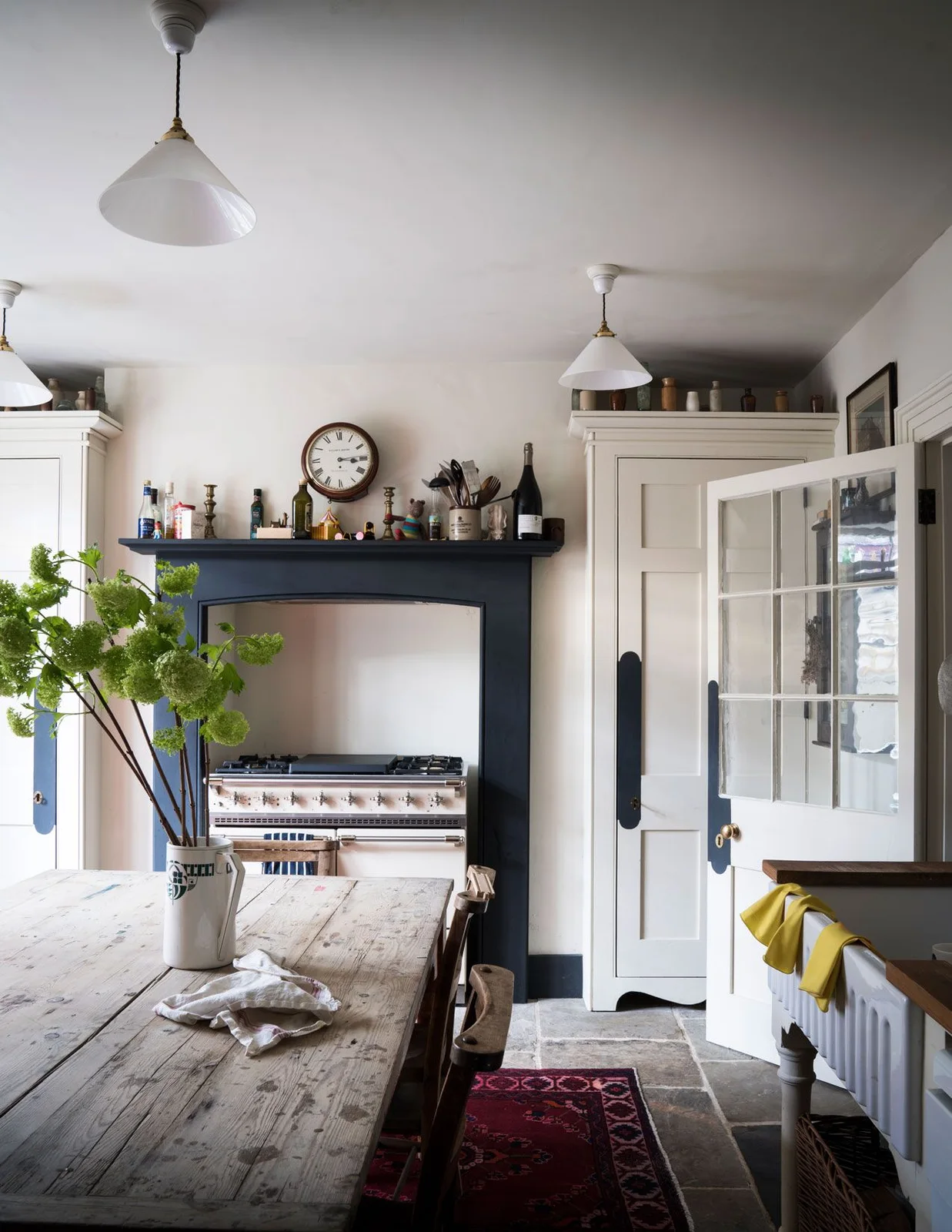
Let an Older Table Soften Painted Cabinets
 SaveSupport Non AI Creator
Image credit: Farrow & Ball
The table’s marked boards bring an informal surface into a room of painted cabinets and pale walls. Navy around the cooker gives the far wall definition, while simple white pendants connect the dining and cooking areas. The combination feels layered without relying on a large number of accessories.
Allow enough space between dining chairs and the cooker for safe everyday movement, following the appliance’s installation guidance. An older tabletop may need placemats or a suitable protective finish. Keep taller vases away from the serving route and check that the dining area remains usable when cabinet doors are open.
BRING IT ALL TOGETHER
Build Around Comfortable Everyday Meals
Choose the table and chairs together, checking seat height, leg positions and the room left for moving behind an occupied seat. A table with visible character is useful only if its surface is sound and its size suits the household.
Add texture where it earns its place: woven lighting, a practical rug, a dish cupboard or a bench with washable cushions. Leave space for serving food and make decorative arrangements easy to move. A rustic room should feel comfortable to use rather than too carefully arranged to disturb.