Rustic bathrooms draw warmth from timber, stone, older furniture and surfaces with visible variation. The most useful examples balance that texture with reliable storage, comfortable lighting and finishes chosen for the parts of the room that actually get wet.
These photographed spaces include small wash areas, traditional bathrooms and larger cabin settings. Use them to choose a palette or a practical detail, then have moisture protection and installation assessed for your own room. A beautiful photograph cannot show everything hidden behind a finished surface.
PART 01
Start With Warm and Useful Wash Areas
IDEA 01 / 20
Combine a Wood Vanity With Pale Paneling
 SaveSupport Non AI Creator
Source: T.S. Adams Studio, Architects via Houzz
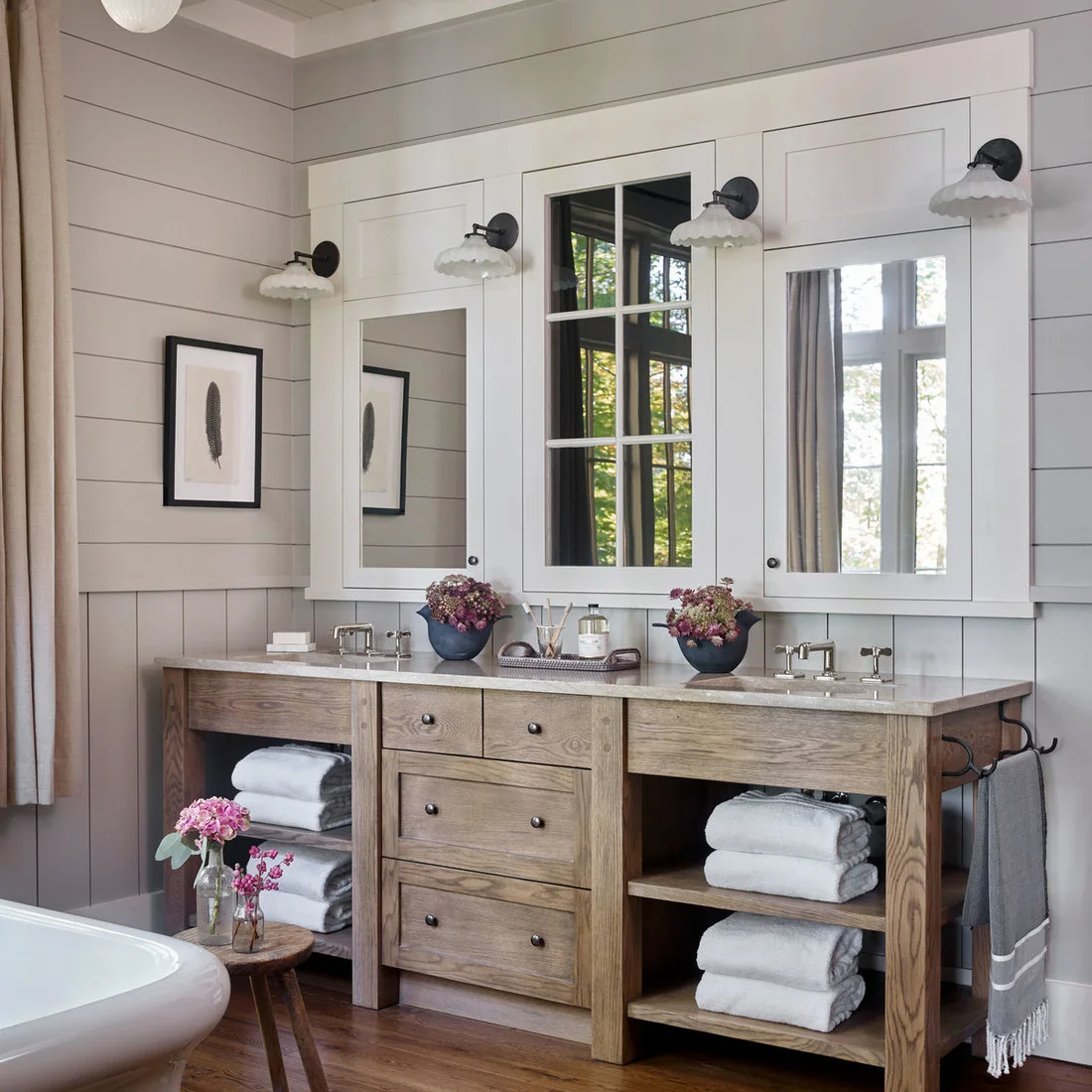
The timber washstand gives this bathroom warmth while pale boards and a wide mirror arrangement keep the wall bright. Open shelves make folded towels easy to reach, and small central drawers provide a place for everyday items that would otherwise crowd the counter.
Use open shelves for a manageable towel supply and closed drawers for mixed toiletries. Protect wood around the basins and wipe splashes promptly. Scandi ensuite ideas offer more restrained combinations of timber and pale surfaces if you want the same warmth with fewer decorative details.
IDEA 02 / 20
Keep Timber Warmth Beside a Simple Tub
 SaveSupport Non AI Creator
Source: Searl Lamaster Howe Architects via Houzz
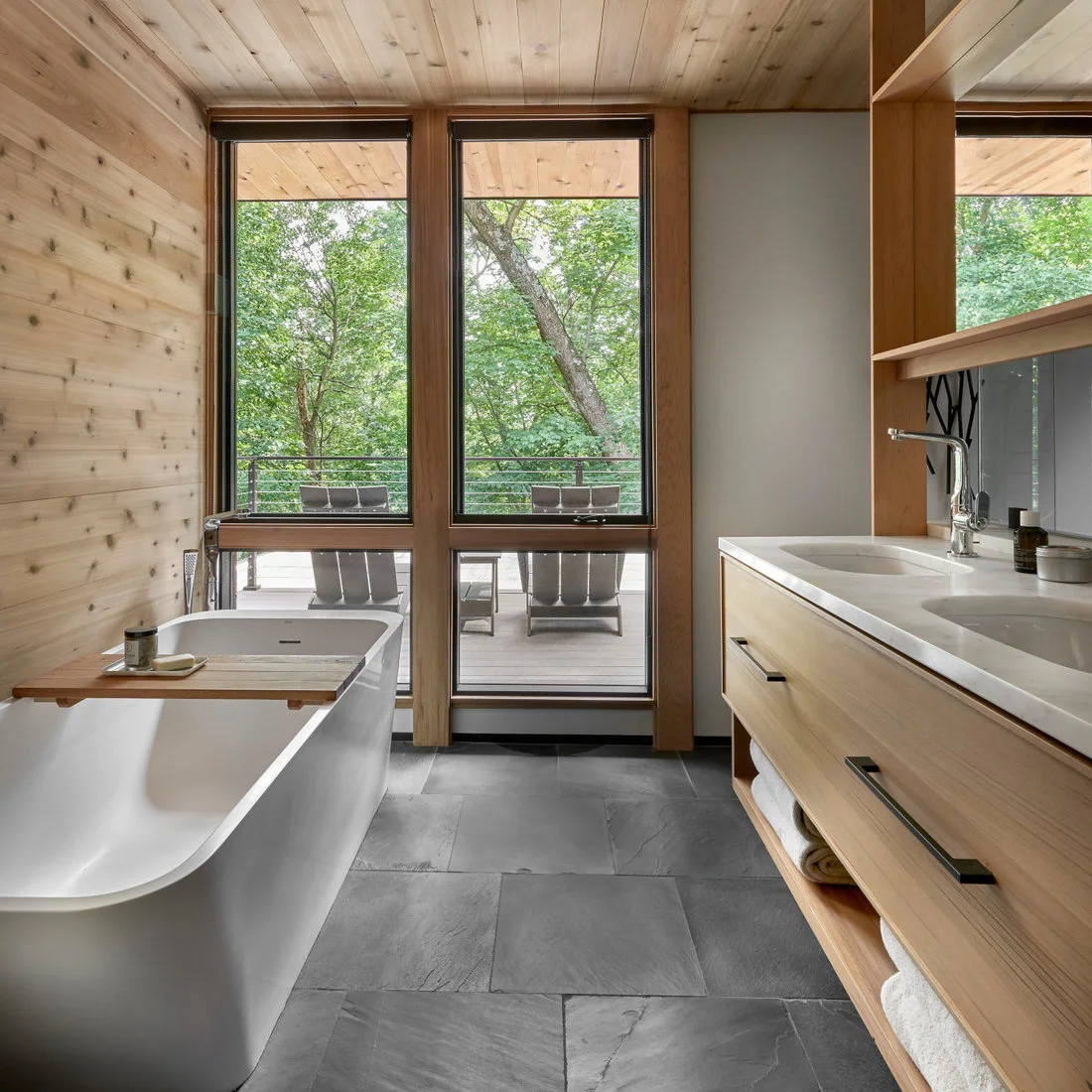
Warm boards continue across the wall and ceiling, giving the plain white tub a calm rustic setting. A simple timber vanity and broad gray floor surfaces keep the room coherent, while the tall windows bring the greenery outside into the view from the bath.
Timber near a bath needs a finish and construction suited to moisture, even where it is outside the main spray area. Plan ventilation and wipe splash marks promptly. Check privacy from the bath as well as from a standing position before leaving large windows uncovered. Country bathroom ideas compare other baths, washstands and painted finishes for rooms where timber already supplies much of the character.
IDEA 03 / 20
Let Existing Masonry Supply the Character
 SaveSupport Non AI Creator
Image credit: Future/Brent Darby
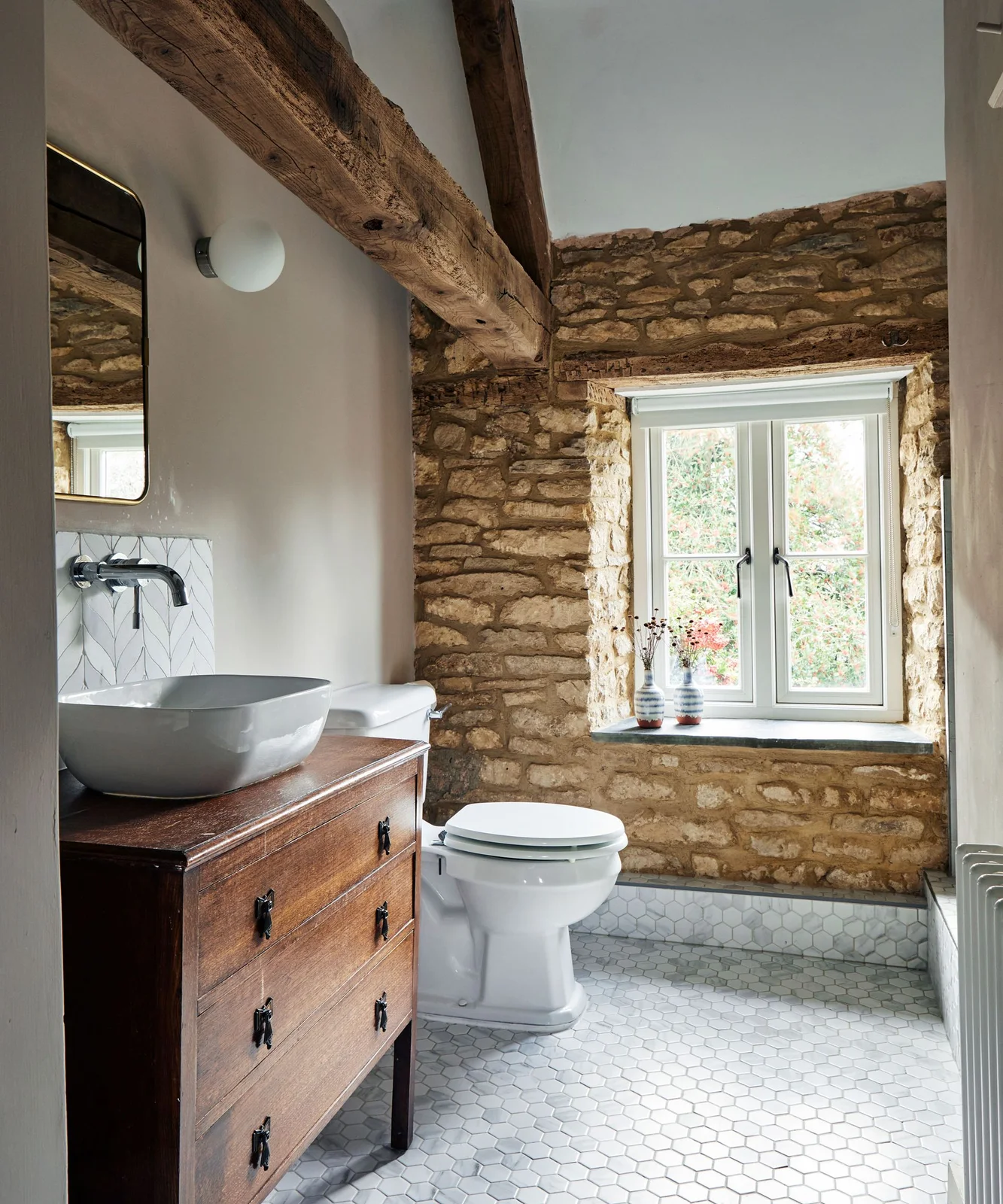
The rough masonry wall and exposed beams provide the strongest rustic details in this small bathroom. A wooden drawer washstand and simple bowl basin fit that setting, while the pale hexagonal floor and white window frame keep the room from feeling entirely brown.
Preserve existing character only after checking the condition of the wall and timber. Ask about suitable cleaning and moisture management rather than sealing every surface indiscriminately. Keep the basin’s splash area protected, and choose drawer storage that remains accessible around the plumbing.
IDEA 04 / 20
Use Clear Lighting Above Textured Cabinets
 SaveSupport Non AI Creator
Source: Artisan Builders LLC via Houzz
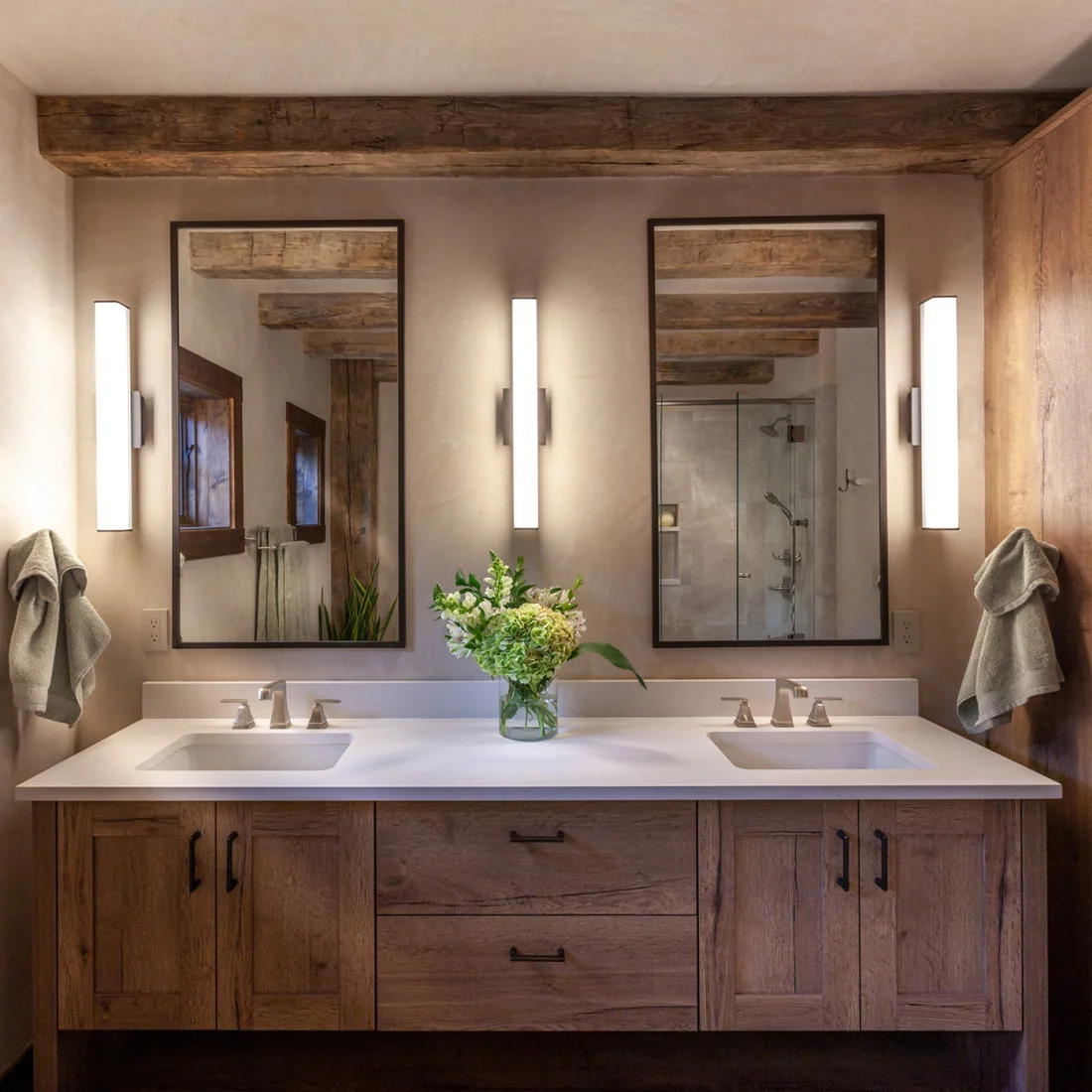
Two simple mirrors and three vertical lights bring order to this timber vanity wall. The pale counter keeps the basins easy to see, while beams reflected in the mirrors repeat the rustic character without another strongly patterned finish directly behind the sinks.
Good face lighting makes a textured bathroom more practical. Check brightness and shadows at the height of the people using the basins, and choose bathroom appropriate fittings. Keep the counter mostly clear so a double vanity remains useful when two people get ready together.
IDEA 05 / 20
Mix Weathered Boards With a Practical Washstand
 SaveSupport Non AI Creator
Source: Locati Architects via Houzz
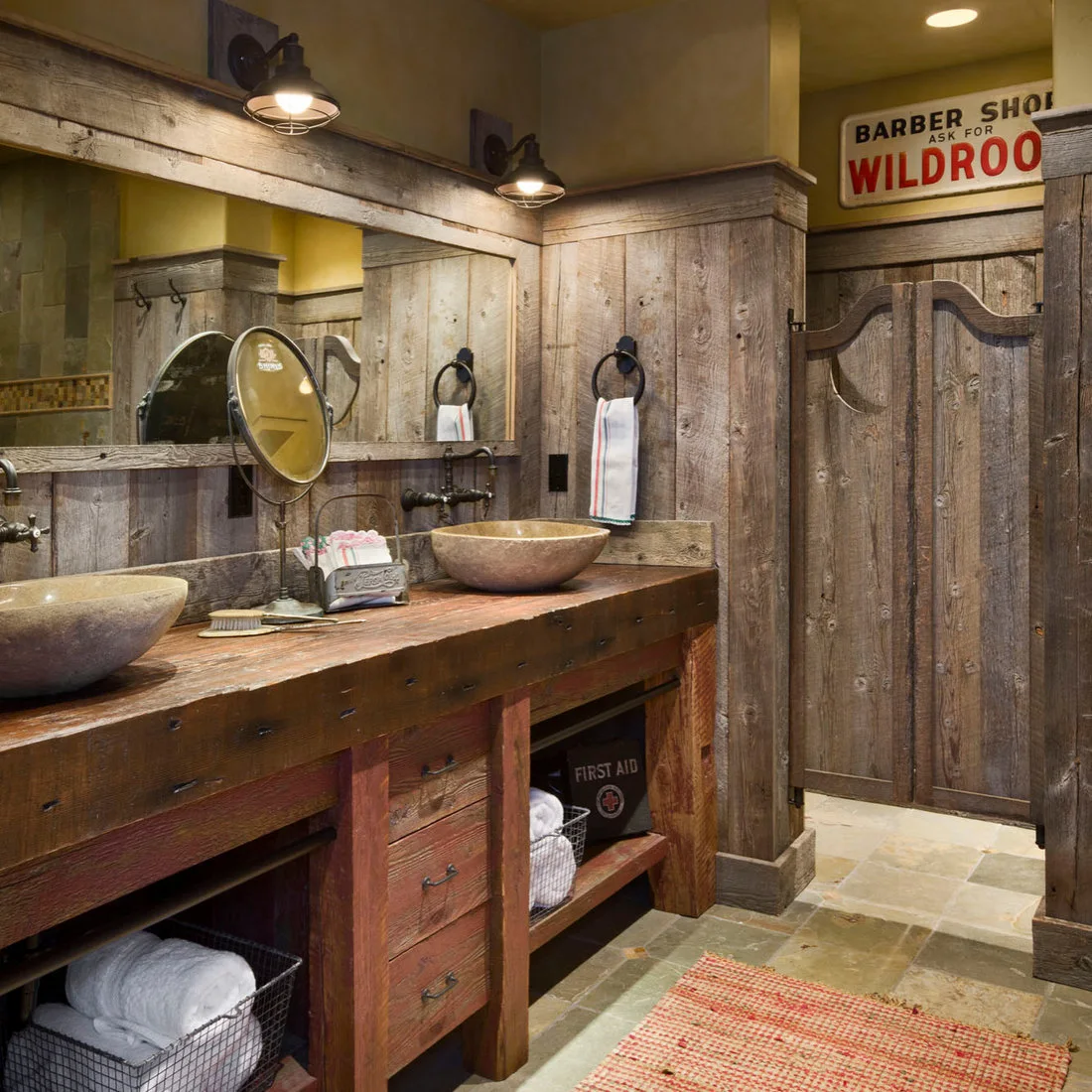
Weathered boards continue from the walls into this substantial washstand, giving the room a strong cabin character. Bowl sinks and dark fittings sit above open shelves, while a central drawer stack offers a useful contrast to the baskets and folded towels below.
A rough appearance should still feel smooth where hands and towels touch it. Check splintering, protected edges and the finish around basin cutouts. Limit exposed storage to items you can keep tidy, and leave enough room to clean around the base and under the counter.
PART 02
Balance Texture Across Wet and Dry Areas
IDEA 06 / 20
Build Towel Storage Into a Dry Return
 SaveSupport Non AI Creator
Source: Houzz
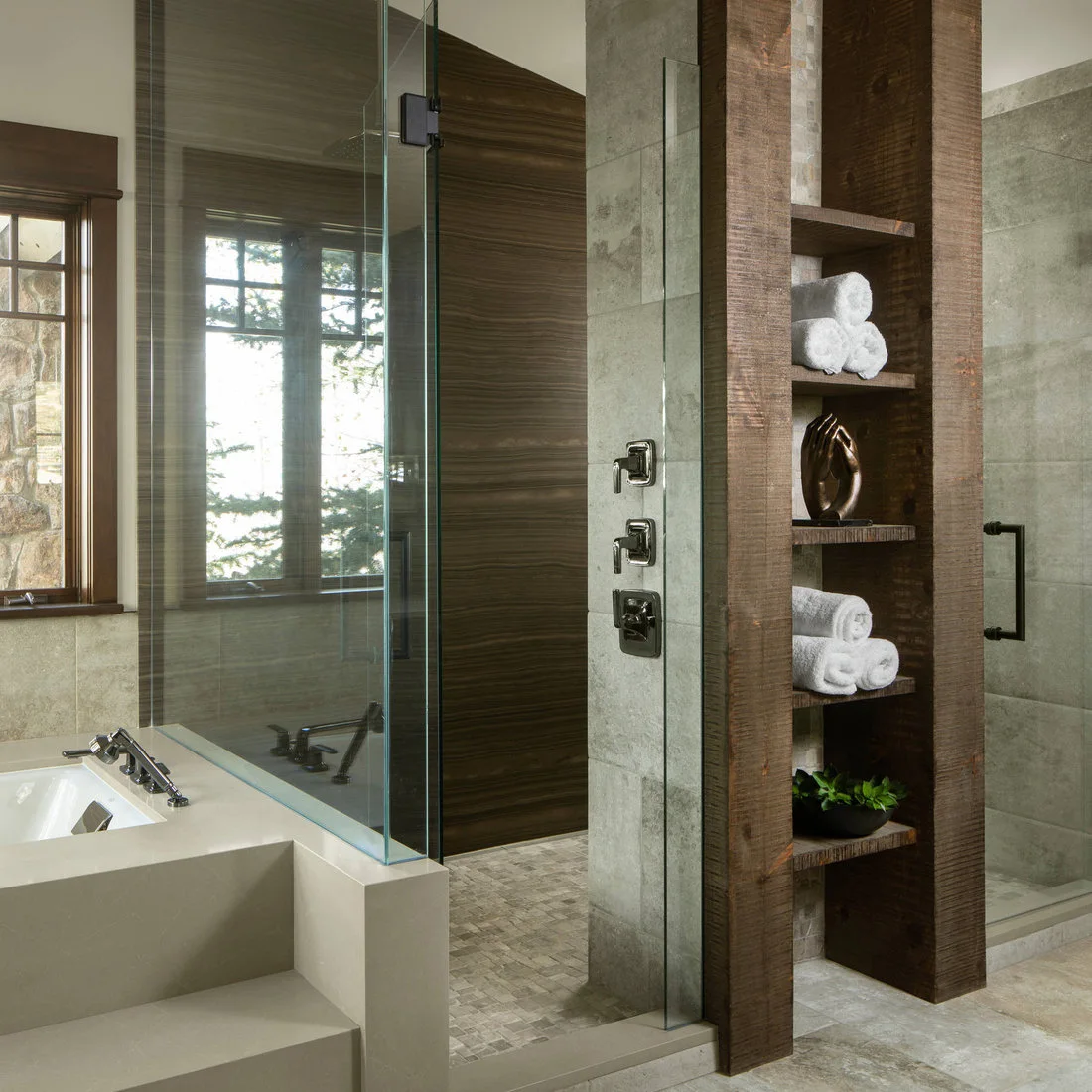
A tall timber shelving unit occupies the return between the glazed shower areas, using a narrow piece of wall for towel storage. Pale tile and clear glass surround it, so the darker grain stands out without needing wood on every bathroom surface.
Towels should stay outside direct spray and be easy to retrieve with dry hands. Confirm the shelf construction and finish suit bathroom humidity. Avoid overfilling the narrow compartments, and leave access for cleaning where the glass, shelf sides and floor meet.
IDEA 07 / 20
Choose Warm Shower Surfaces With Proper Protection
 SaveSupport Non AI Creator
Source: Erin Paige Design, LLC via Houzz
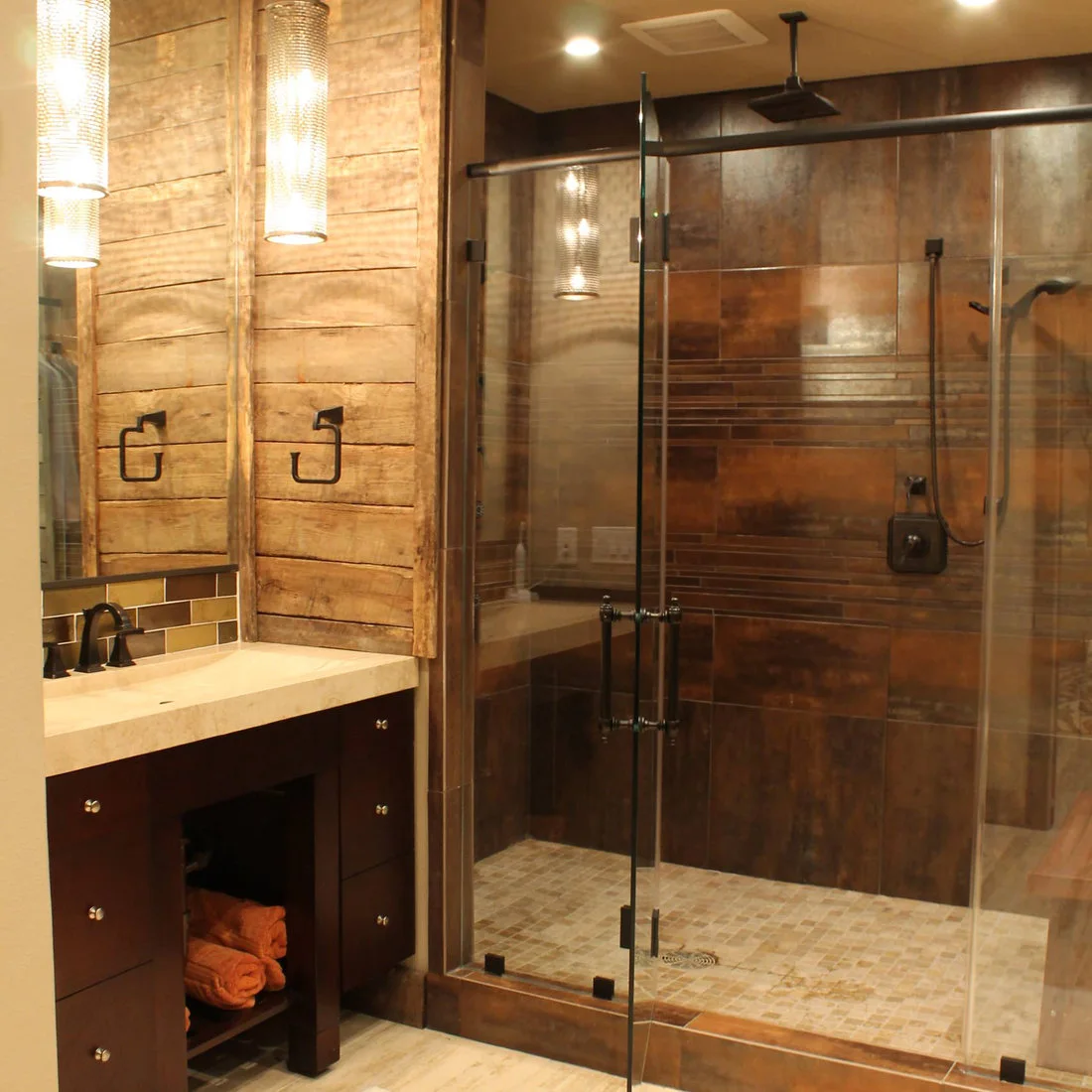
Warm brown rectangular surfaces in the shower relate to the timber paneling beside the basin, creating a consistent palette across wet and dry areas. A pale shower floor and simple dark fittings keep the arrangement readable without introducing a second decorative pattern.
Do not assume a wood toned shower surface is timber. Choose materials explicitly suitable for continuous wet use, and have the waterproofing detailed professionally. The photograph can guide the color relationship, but cleaning instructions and slip suitability need to come from the actual product supplier.
IDEA 08 / 20
Use the Ceiling for Timber Texture
 SaveSupport Non AI Creator
Source: Treefrog Design via Houzz
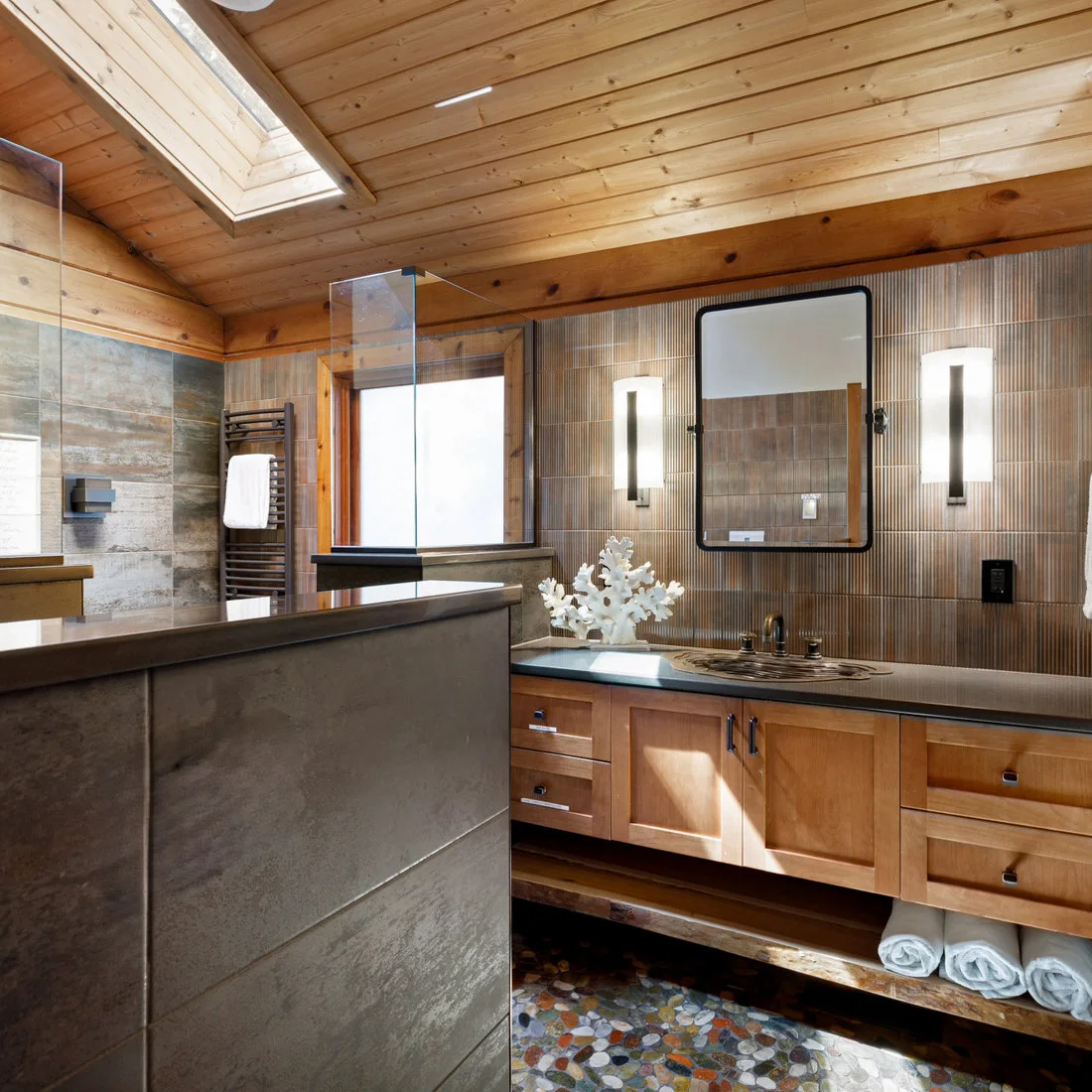
The timber ceiling supplies warmth above a more practical tiled wall and shower partition. A skylight brightens the wood, while a dark framed mirror, paired lights and narrow cabinet pulls add definition without competing with the varied floor pattern.
Putting timber overhead can leave more splash prone walls available for tile. It still needs moisture aware detailing and reliable ventilation. Check access to the skylight and lights for cleaning, and keep the main face lighting independent of daylight from above.
IDEA 09 / 20
Let Strong Stone Pattern Be the Main Decoration
 SaveSupport Non AI Creator
Source: ACM Design via Houzz
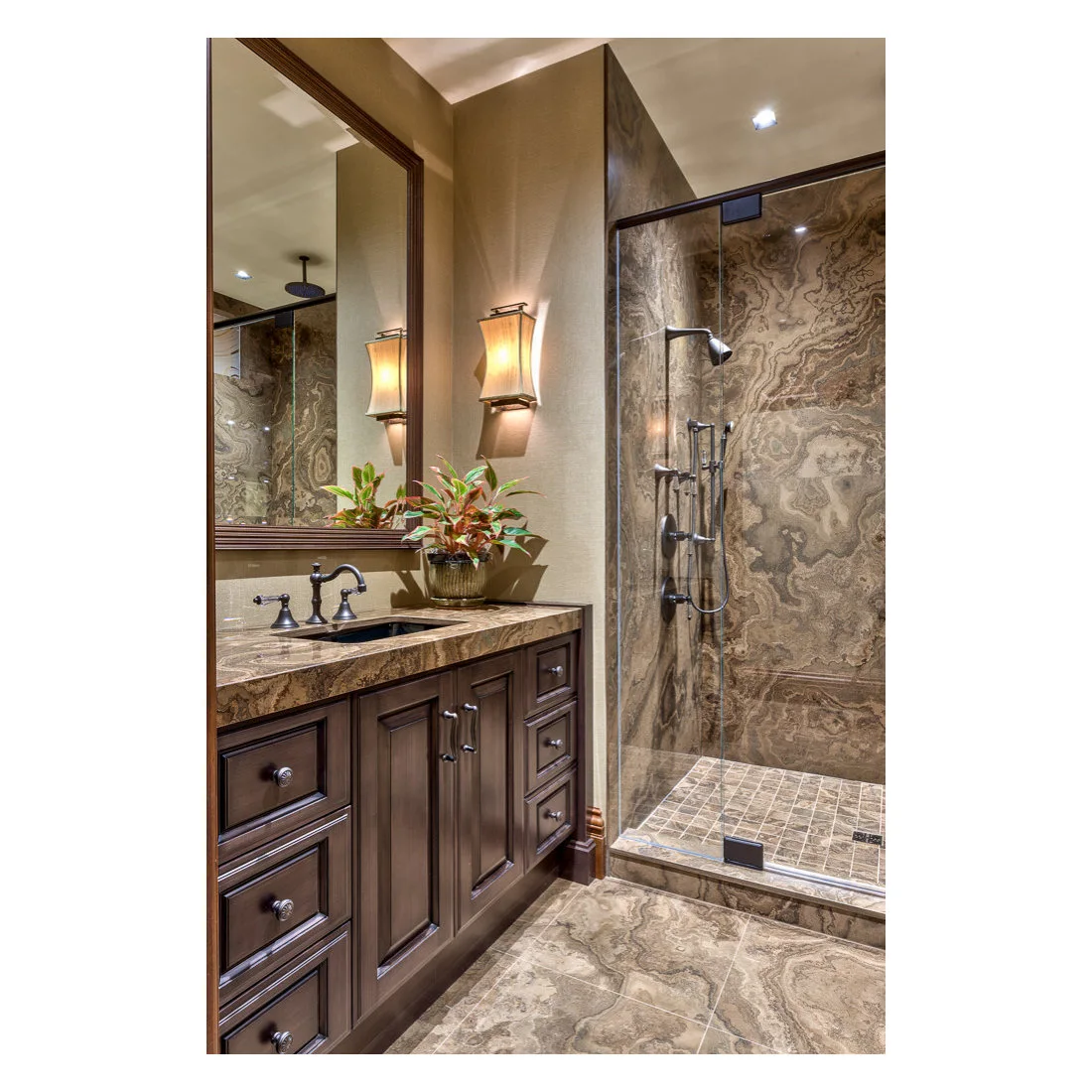
A dark wooden vanity sits beside strongly patterned brown surfaces that continue from the shower to the floor. The repeated palette makes this compact room feel cohesive, while the simple mirror and paired wall lights leave the flowing pattern as the main decoration.
Inspect a full slab or large tile layout before choosing a dramatic pattern. Ask about sealing and compatible cleaners if the selected material requires them. Keep accessories simple and compare wet slip suitability separately from the appearance of the wall surface.
IDEA 10 / 20
Pair a Smooth Tub With Rough Walls
 SaveSupport Non AI Creator
Source: kPd Studios | Kristine Pivarnik Design, LLC via Houzz
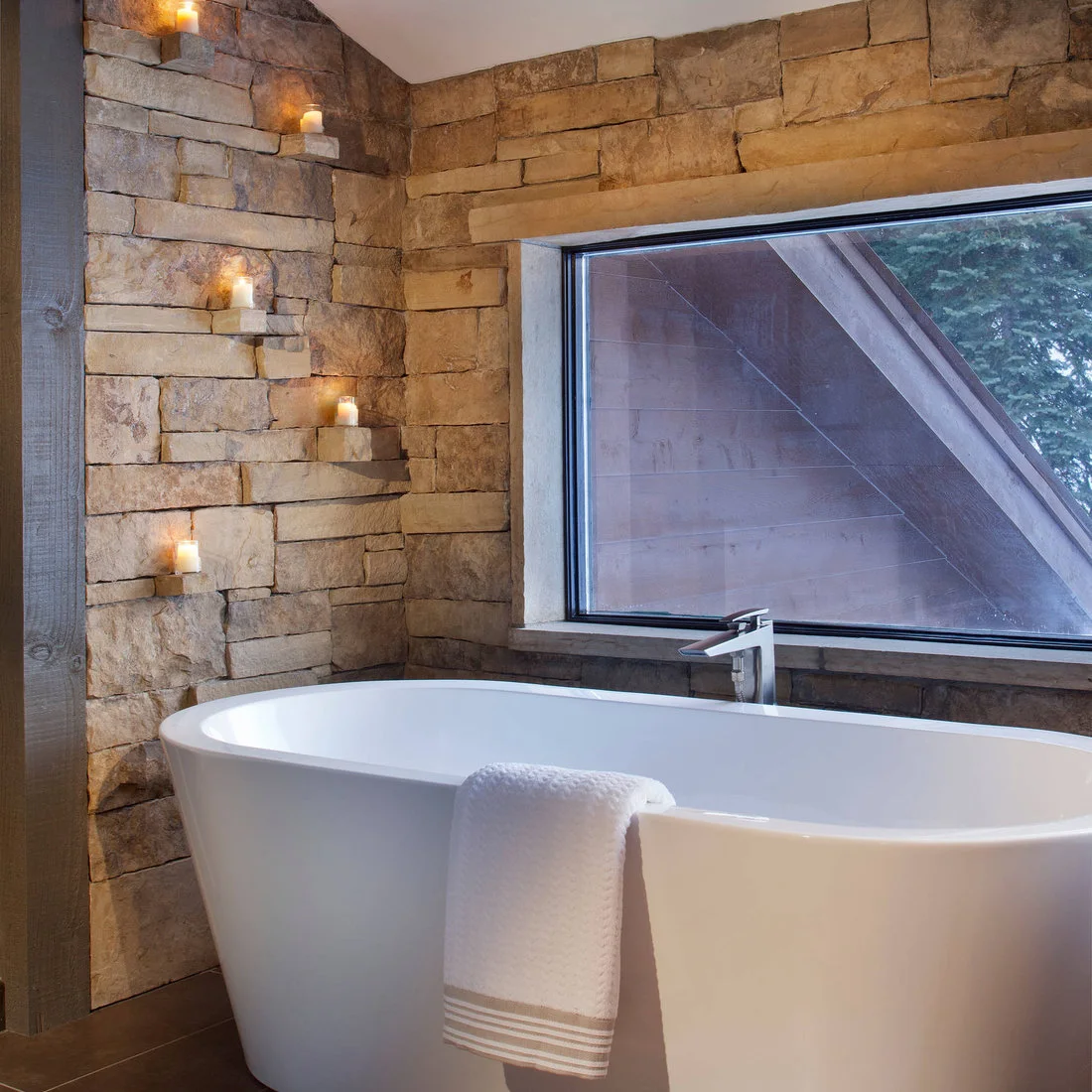
The smooth white bath makes a clear contrast with the rough stone wall behind it. A broad dark framed window adds another simple rectangle, allowing the projecting masonry and warm wall color to remain the main textural features around the bathing area.
Rough stone near a bath needs a realistic cleaning plan and appropriate moisture detailing. Leave enough access to wipe around the tub. For a similar atmosphere without open flames, choose suitable battery lights rather than balancing real candles on narrow, uneven ledges.
PART 03
Add Character Without Crowding the Room
IDEA 11 / 20
Add Small Movable Timber Pieces
 SaveSupport Non AI Creator
Image credit: The Expert/Amber Interiors
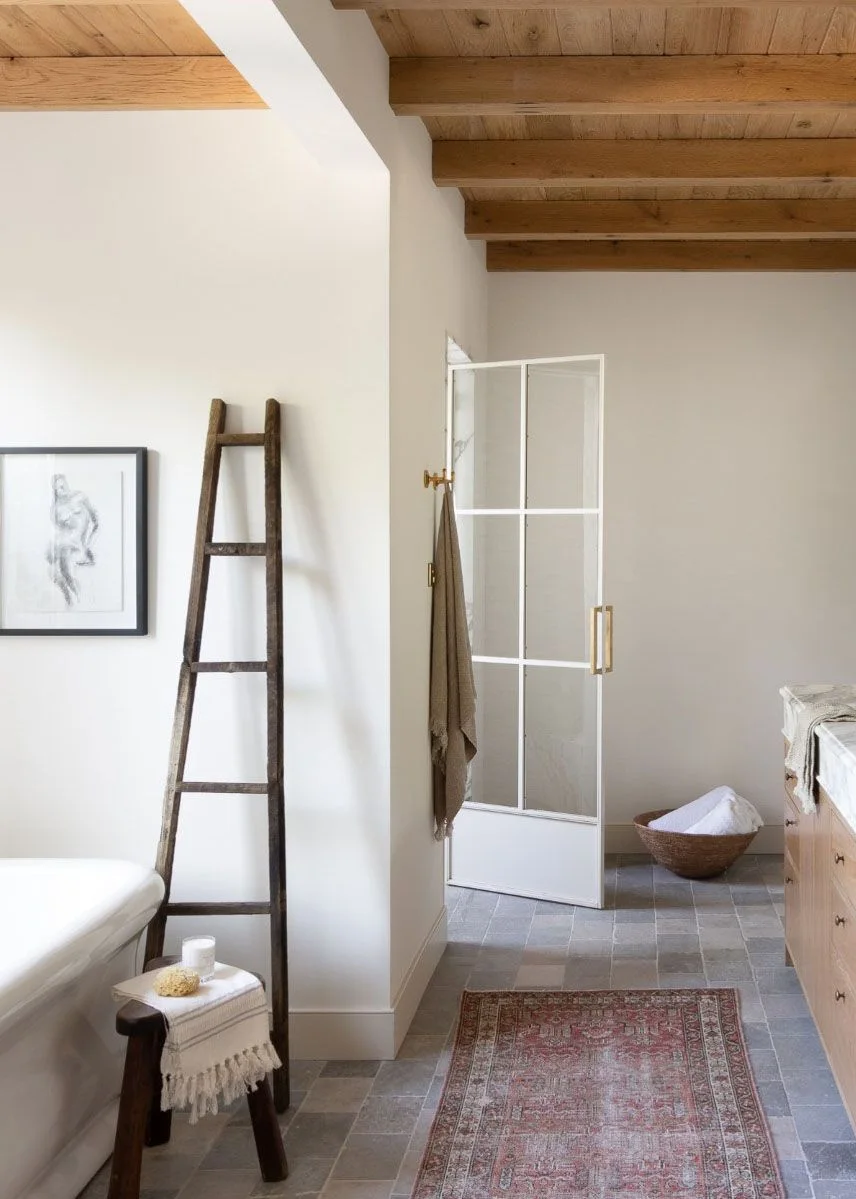
The ceiling beams give this bathroom fixed rustic character, while a timber ladder and small stool add softer, movable details near the bath. Pale walls and a simple shower screen leave those pieces visible without turning the room into a crowded collection of accessories.
Use a ladder intended for towel storage and secure it against slipping if required. A stool can hold a towel, but should not become an unsafe step. Choose a washable runner that lies flat, and keep it outside the wettest route from the shower.
IDEA 12 / 20
Soften a Rustic Ceiling With Pale Paint
 SaveSupport Non AI Creator
Image credit: Alexander Waterworth
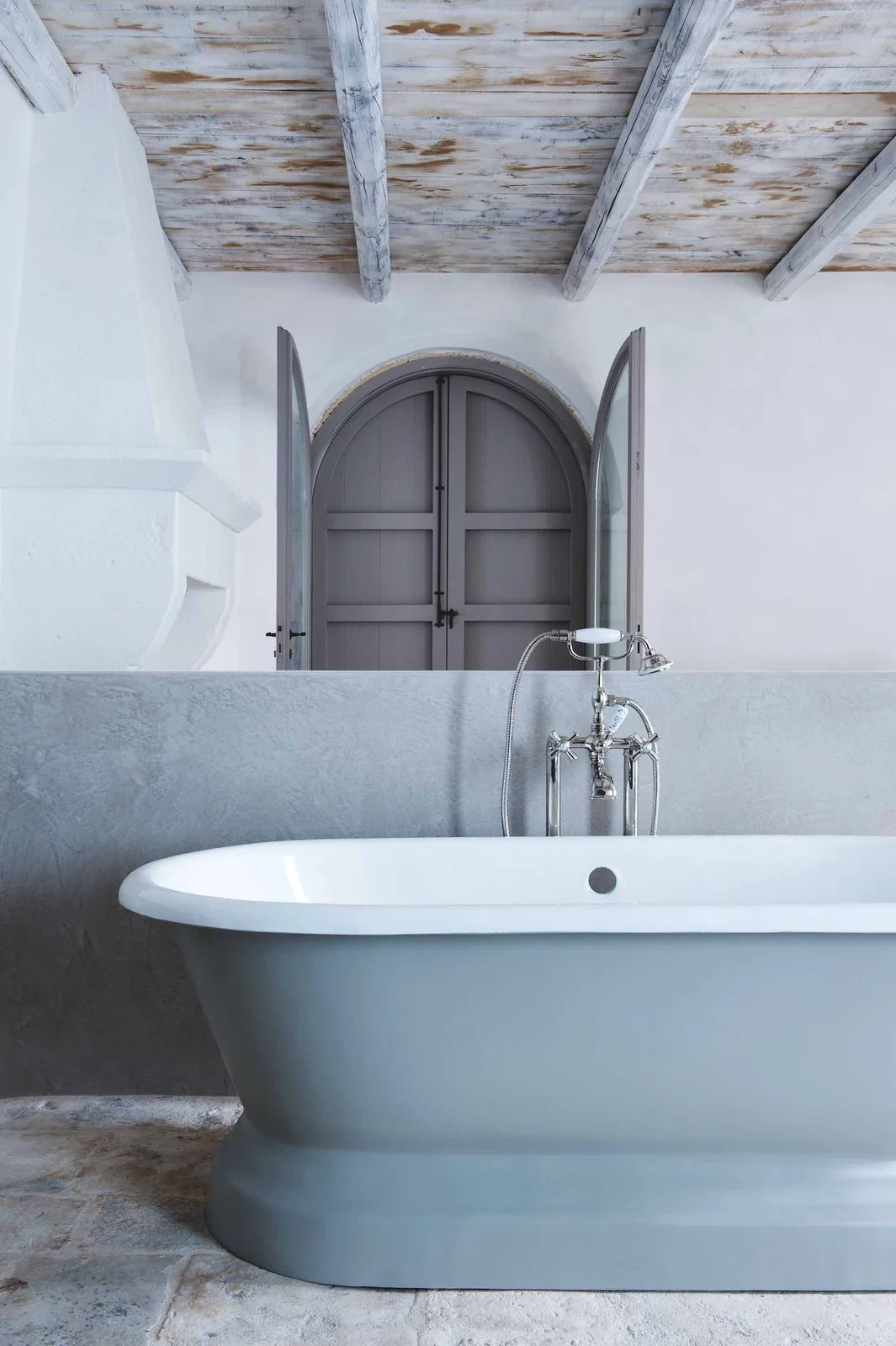
A pale finish on the ceiling boards and beams makes this rustic bathroom feel light rather than heavily timbered. The gray arched door and simple tub repeat the quiet palette, while the visible grain keeps the room from losing all of its older character.
A pale finish can brighten existing timber, but establish what is already on the wood before applying another coating. Sample the appearance in a discreet area. Keep the bath surround easy to wipe and choose a finish appropriate for the room’s humidity rather than appearance alone.
IDEA 13 / 20
Use Simple Curtains Around a Traditional Bath
 SaveSupport Non AI Creator
Image credit: This Old Hudson
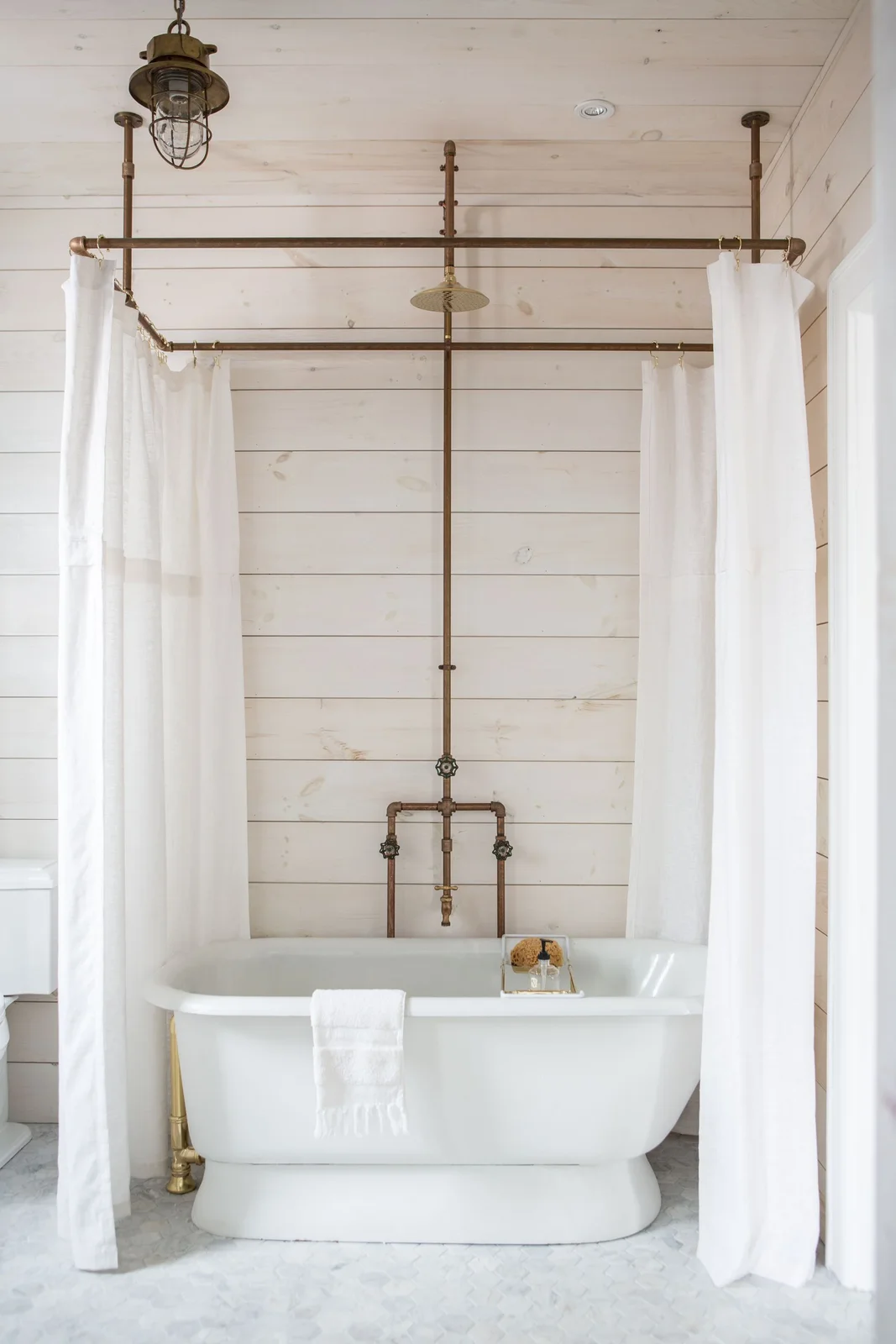
White curtains soften the exposed pipe fittings around this traditional bath. Pale horizontal boards give the room a quiet rustic backdrop, and the simple white tub keeps the metal framework visible without requiring another decorative wall finish in the same area.
A bath and shower combination needs reliable splash containment behind the decorative layer. Use a suitable liner and let it dry fully after use. Have a professional check wall protection, fittings and electrical zones; visible boards alone do not establish that a shower surround is waterproof.
IDEA 14 / 20
Give an Older Chest a New Bathroom Role
 SaveSupport Non AI Creator
Image credit: The Residency Bureau
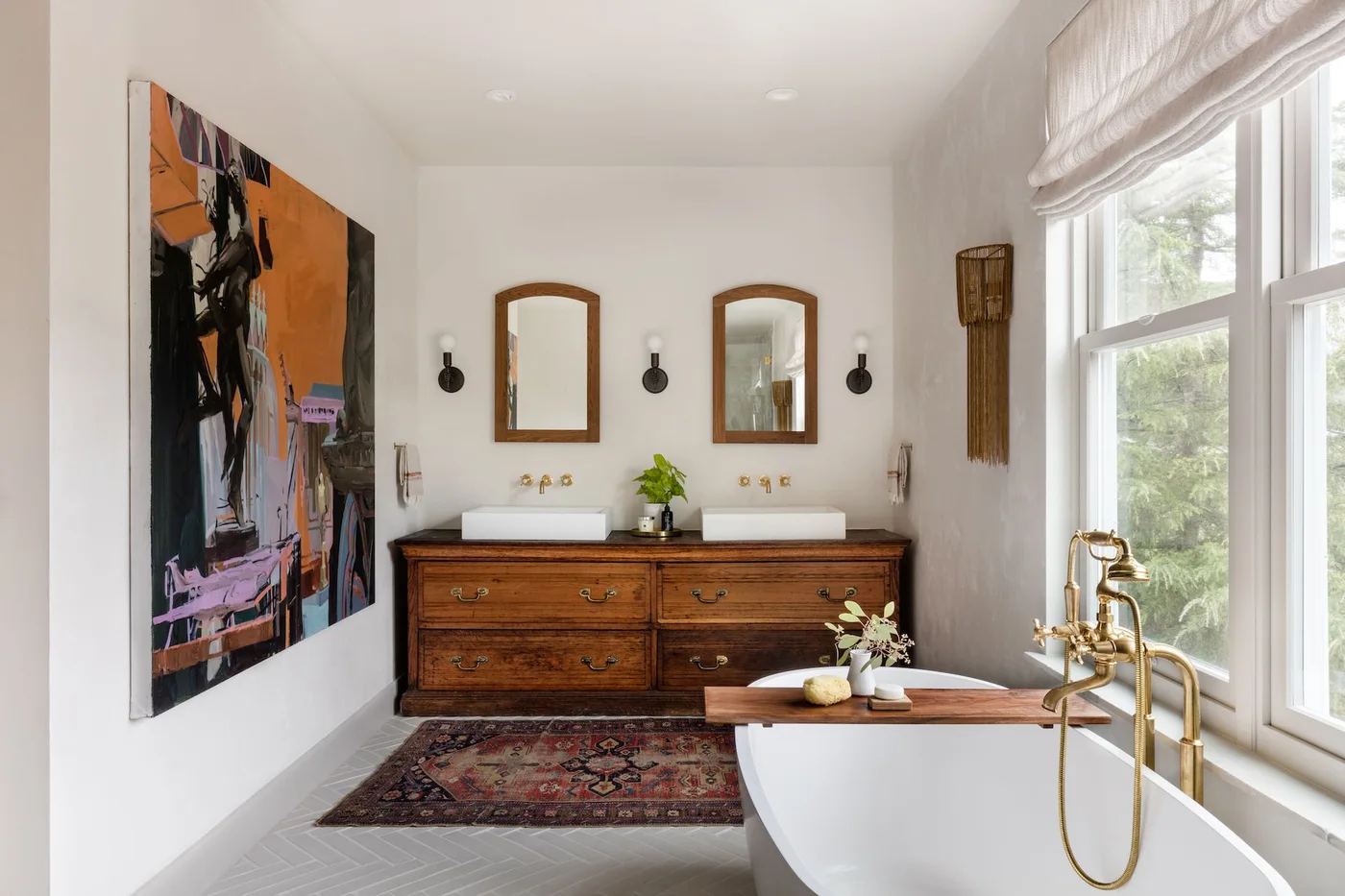
A broad wooden chest supports two plain basins, bringing an older furniture shape into this bright bathroom. Matching framed mirrors reinforce the symmetry, while the patterned rug and large artwork give the mostly white room a warmer, more personal character.
Converting furniture requires more than cutting holes for basins. Check strength, plumbing space, access for repairs and moisture protection before committing to a piece. Keep a rug out of standing water, and select artwork that can tolerate the room’s conditions without sitting in direct splash.
IDEA 15 / 20
Keep a Textured Basin Beside Simple Cabinetry
 SaveSupport Non AI Creator
Image credit: Hetherington Newman
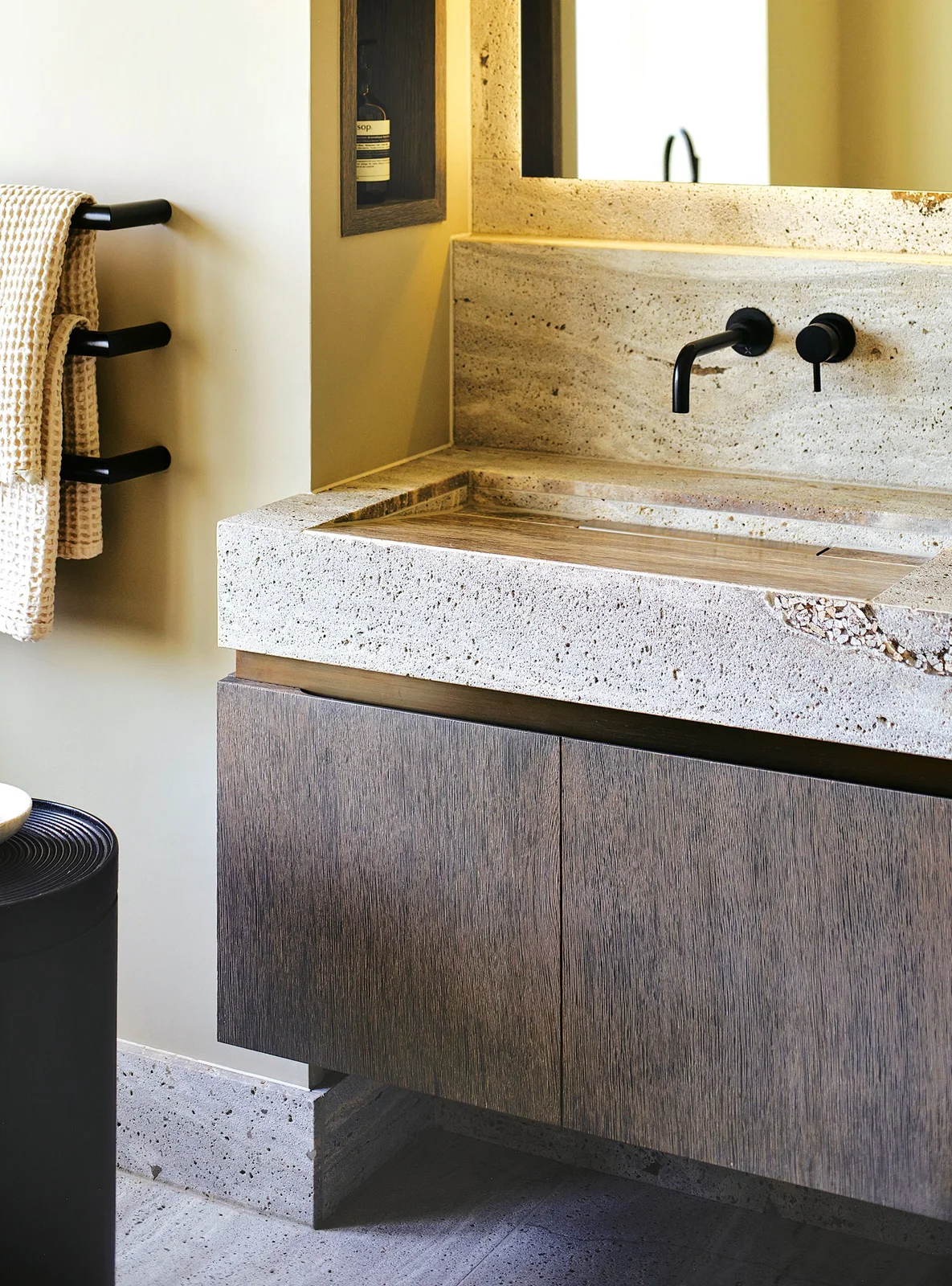
The textured pale basin has a substantial edge and visible surface variation, while flat wooden cabinet fronts keep the area below restrained. Black wall fittings and a narrow towel warmer introduce a clear outline without adding another patterned surface beside the sink.
A textured basin may need different care from a smooth ceramic one. Ask about sealing, stain resistance and compatible cleaners before choosing it. Check that the faucet reaches the basin comfortably and that the surface drains well, rather than selecting the arrangement only for its rougher appearance.
PART 04
Choose Details You Can Maintain
IDEA 16 / 20
Paint Floorboards Instead of Adding More Timber
 SaveSupport Non AI Creator
Image credit: Annie Sloan
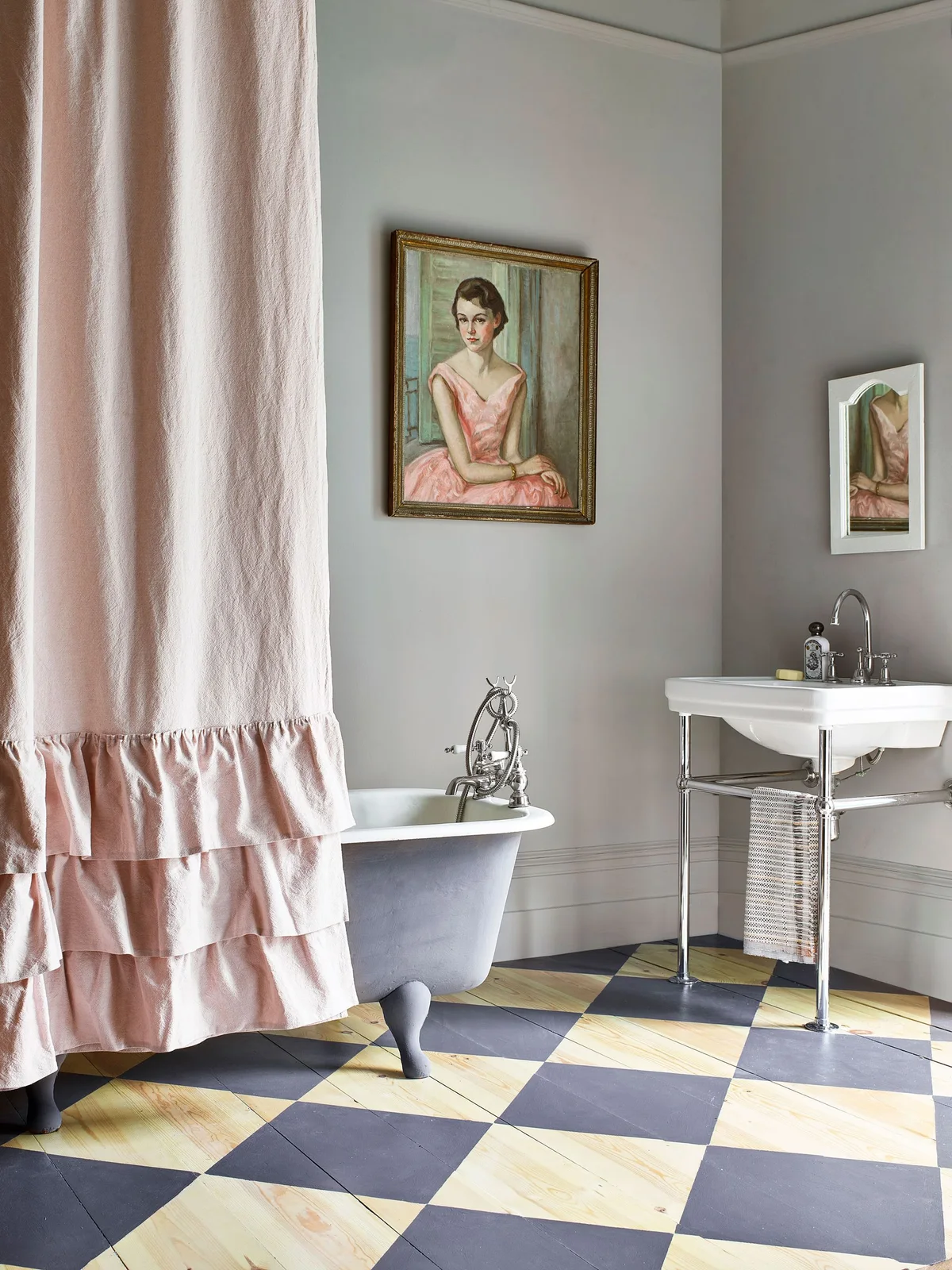
A large diagonal check gives these floorboards a decorative role beneath the gray tub and pale basin stand. The painted pattern allows some timber character to remain visible, while a soft pink curtain adds warmth without requiring a wooden vanity as well.
Painted boards need a suitable floor finish and careful attention to gaps, moisture and slipping. Test the color and pattern at full scale before covering the room. Keep the finish maintained, and use a proper splash barrier if the bath is also used for showering.
IDEA 17 / 20
Choose Quiet Variation in Shower Tile
 SaveSupport Non AI Creator
Image credit: Photo: Todd Goodman
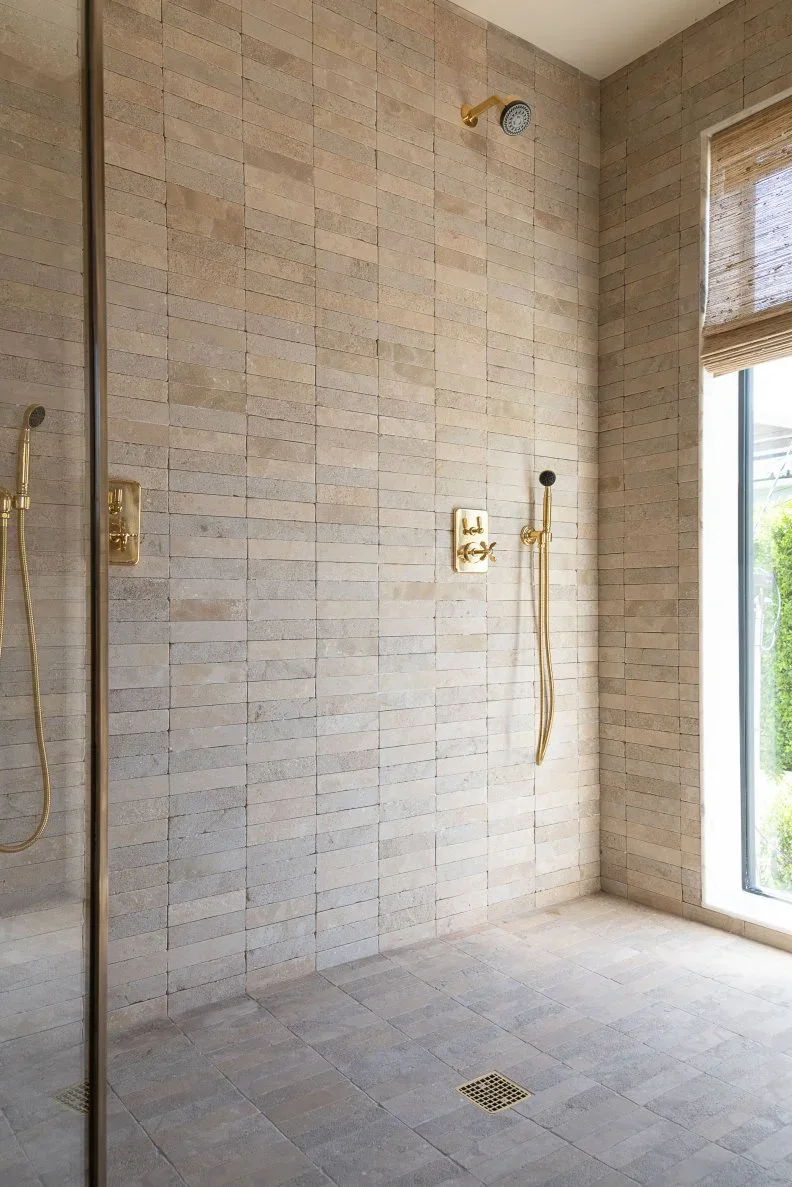
Small pale rectangular tiles create gentle variation across this shower without a high contrast pattern. Warm metal fittings sit quietly against the textured surface, and the tall window provides a brighter edge that helps the enclosed area feel less heavy.
Stone or stone effect products vary in care and suitability, so choose the actual shower tile with its supplier. Check grout cleaning and floor slip characteristics separately. Small tiles create many joints, making installation quality and a manageable cleaning routine especially important in a daily shower. Bathroom floor ideas can help you compare patterns and practical surface choices.
IDEA 18 / 20
Keep Rustic Materials Away From Direct Spray
 SaveSupport Non AI Creator
Image credit: Photo: Chas Everitt International Property Group, a member of Luxury Portfolio International . From: Chas Everitt International Property Group
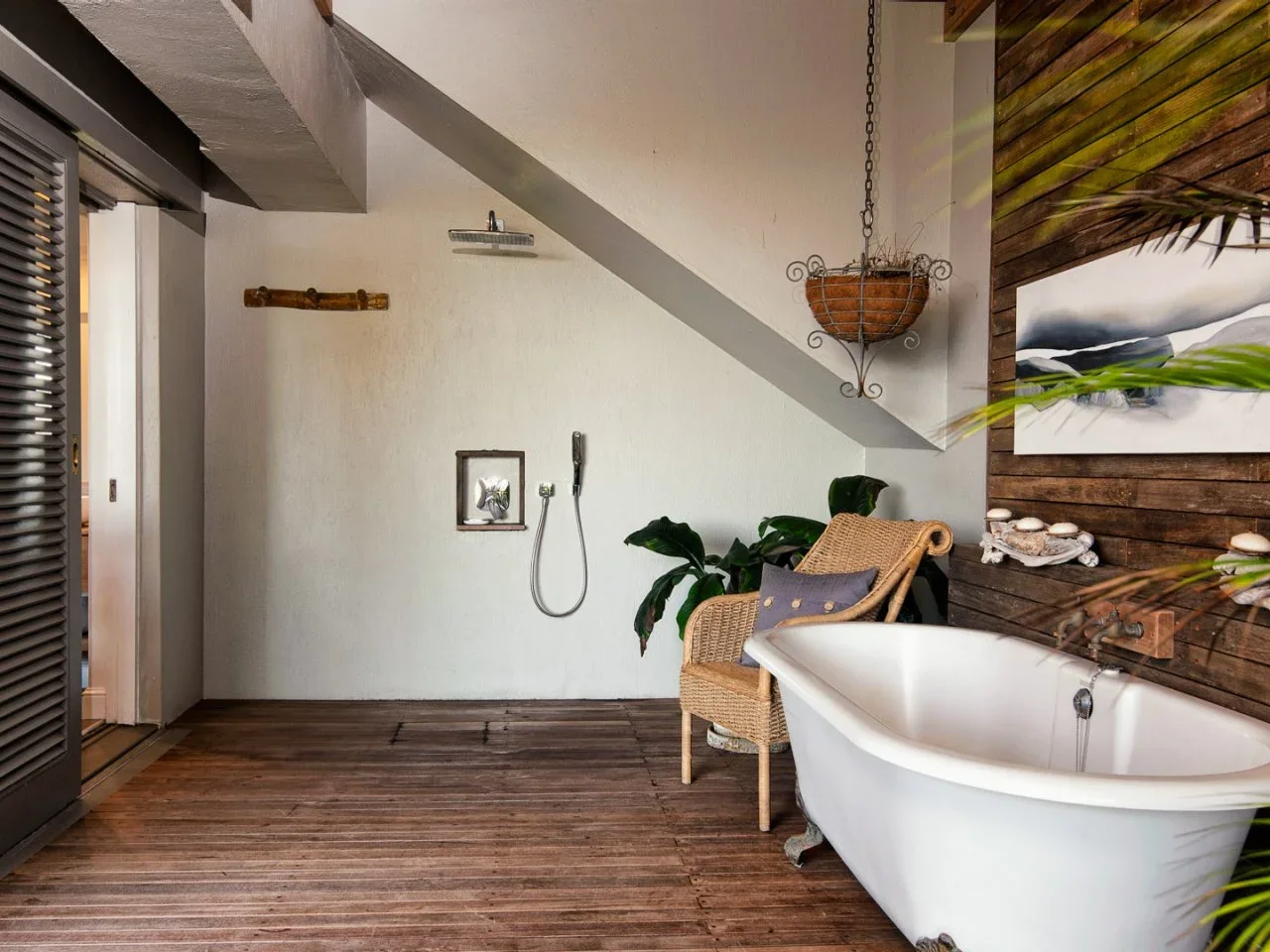
Timber boards, a woven chair and a white tub make this bathroom feel relaxed and textured. The white shower wall keeps one part of the room visually simpler, while the sloping ceiling gives the bathing area a more enclosed, sheltered atmosphere.
Borrow the palette without assuming every visible surface is suitable for your wet area. Timber, woven furniture and floors each need moisture appropriate detailing. Plan drainage and splash control professionally, and choose a smaller removable seat if the chair would obstruct getting into or out of the tub.
IDEA 19 / 20
Use Timber to Warm a Tiny Wash Area
 SaveSupport Non AI Creator
Image credit: Photo: @hopscotchtheglobe
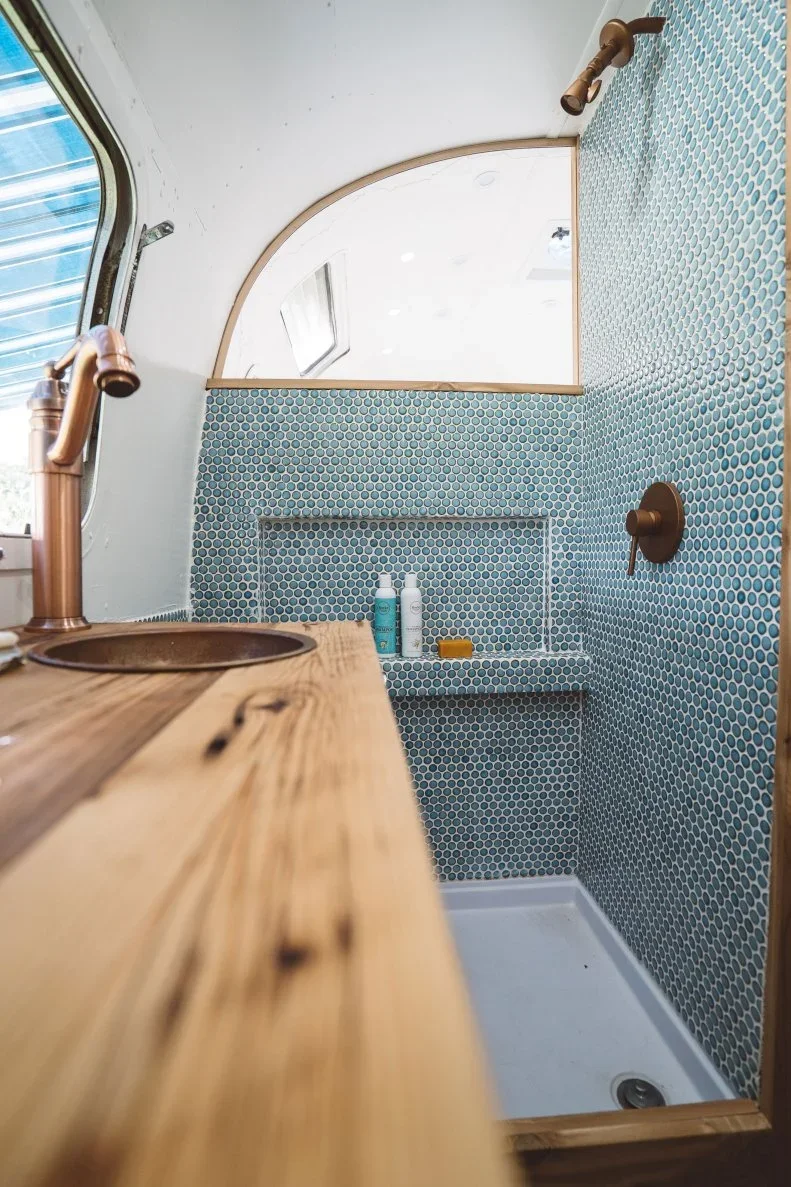
A simple timber counter brings warmth beside the compact blue tiled shower. The small round basin leaves some landing space around it, while the broad mirror follows the curved upper wall and reflects more light into the narrow arrangement.
Compact rooms benefit from a deliberate contrast between one warm surface and one clear color. Protect the counter around the basin and check splash direction from the faucet. Small blue tiles need regular grout care, so balance their attractive detail against the cleaning you are willing to do.
IDEA 20 / 20
Treat a Heavy Cabin Shower as a Specialist Project
 SaveSupport Non AI Creator
Source: High Camp Home via Houzz
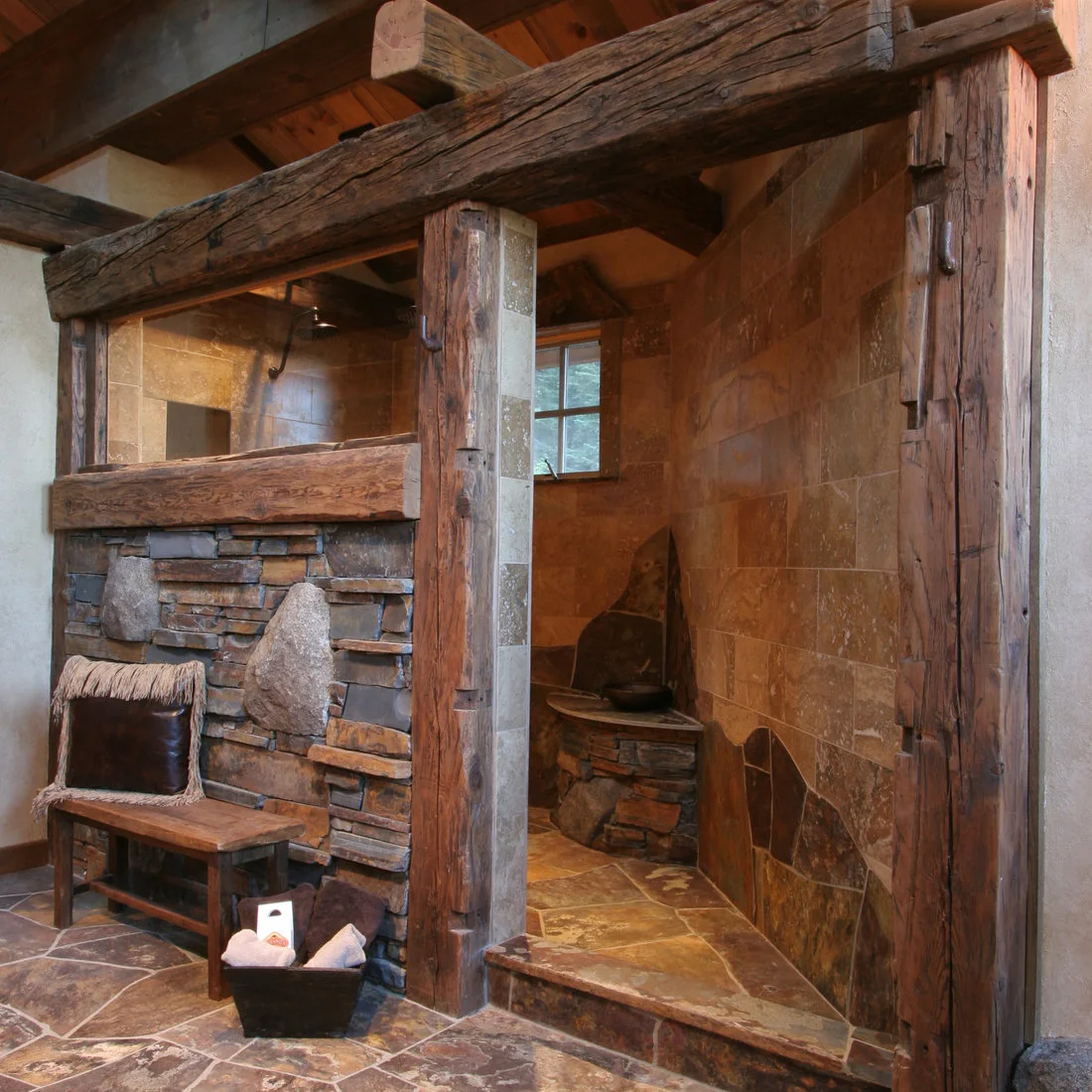
Thick timber framing and a stone faced partition give this shower a substantial cabin character. The adjacent bench creates a dry place to pause, while stone tones continue around the shower opening so the heavy frame feels connected to the rest of the room.
This appearance requires careful detailing, not improvised reclaimed beams around a wet area. Have a qualified installer assess waterproofing, drainage, ventilation and safe glass where required. Keep the threshold easy to navigate, and choose simpler timber accessories if the full structure would overwhelm a smaller bathroom.
BRING IT ALL TOGETHER
Choose the Texture, Then Check How It Lives
Decide which surface will give your bathroom its rustic character before adding more. A wooden washstand or existing stone wall may be enough. Keep storage and lighting simple around it so the room stays comfortable to use every morning.
Care matters as much as appearance. Ask about moisture protection, ventilation, cleaning products and access for maintenance. The right rustic bathroom should feel warm without requiring you to worry about every splash or struggle to clean an awkward corner.