An organic modern living room combines clear furniture shapes with the warmer detail of timber, tactile fabrics and nature-inspired colors. The useful goal is a room that feels comfortable to use, not a checklist of pale furniture and decorative branches. Start with the layout and the pieces worth keeping.
These photographed rooms show several ways to bring that balance into everyday seating areas, from a rounded chair to a timber alcove cabinet. Some lean more contemporary, while others mix older furniture with simpler shapes. Look at how the visible surfaces work together, then check the actual material, finish and care requirements before buying something similar.
PART 01
Begin with softer shapes and warm color
IDEA 01 / 20
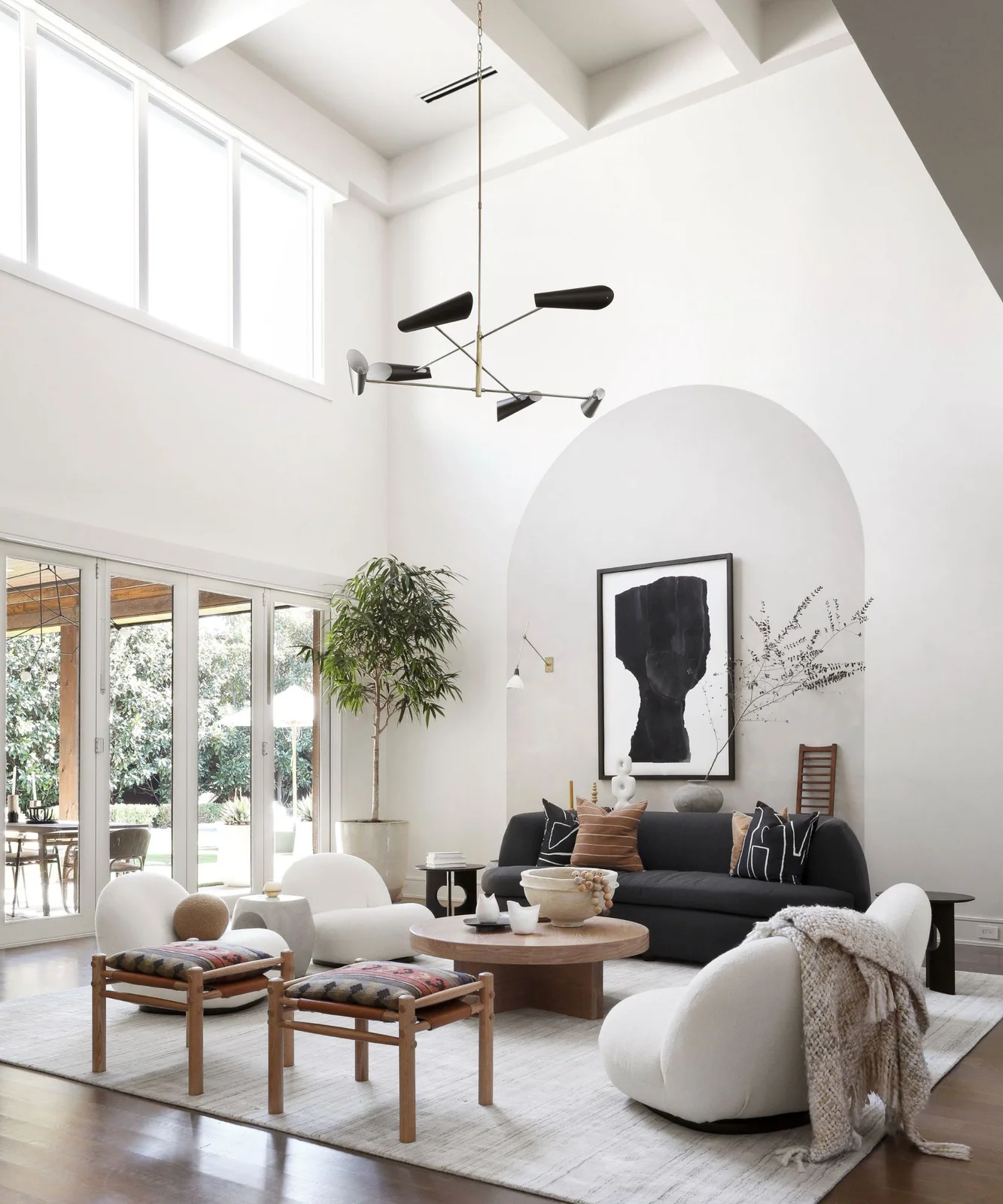
Balance Rounded Seating with a Clear Room Outline
 SaveSupport Non AI Creator
Image credit: Urbanology Designs/Matti Gresham
The chairs, low table and timber stools soften a room whose architecture is tall and sharply defined. Dark upholstery and a large black artwork give the pale surfaces contrast. Rather than relying on many ornaments, the arrangement lets furniture shapes and the grain of the timber carry much of the detail.
Choose one or two rounded pieces around the furniture you already own, then mark their footprints on the floor. Curves still need room for people to pass and sit comfortably. Leave useful space on the table, and compare textured upholstery samples for comfort and cleaning before choosing a pale fabric.
IDEA 02 / 20
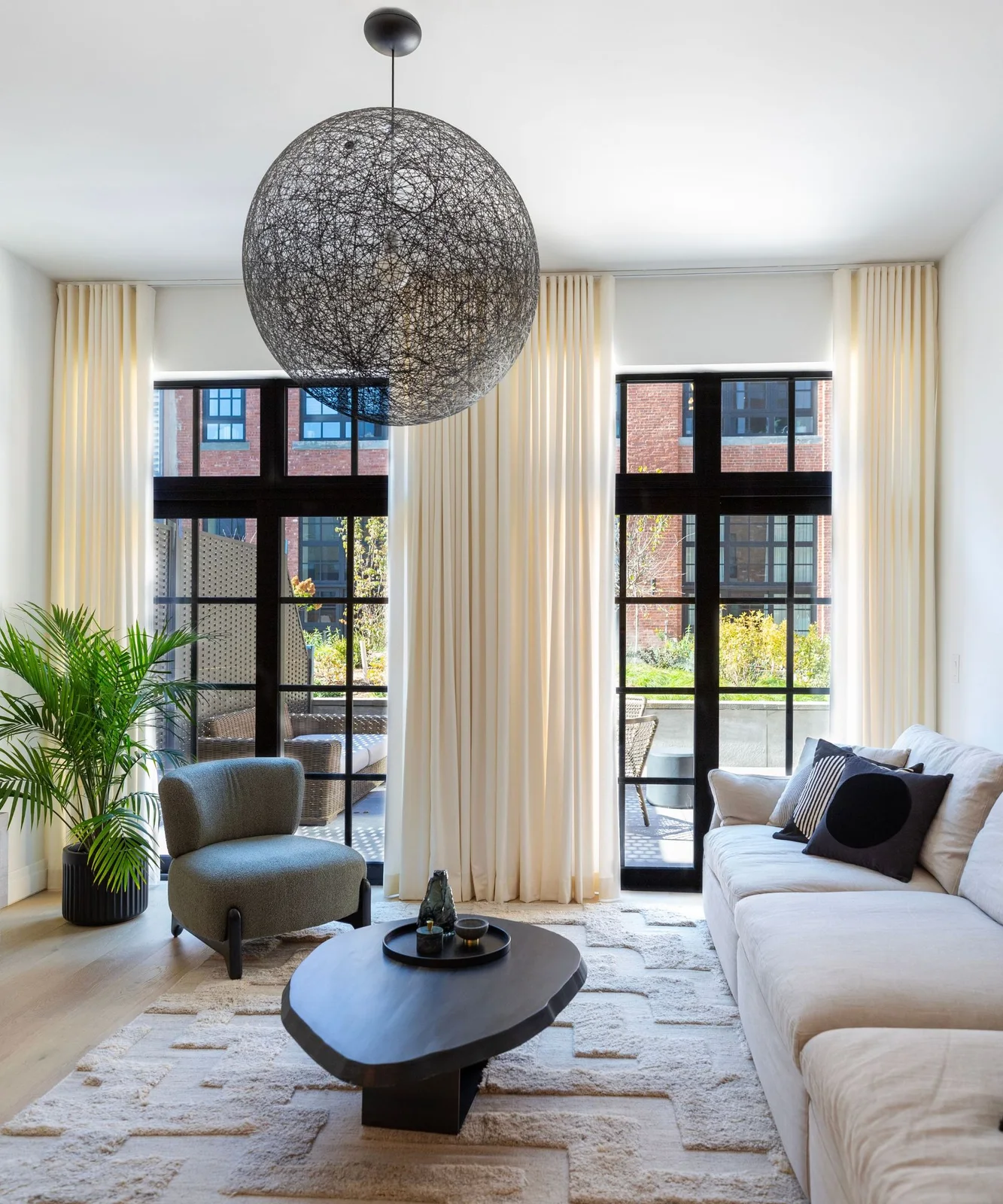
Combine an Irregular Table with a Textured Rug
 SaveSupport Non AI Creator
Image credit: Sova Studio/Margaret Rose Larson
The table’s uneven outline brings a softer shape into the center of the room, while the rug introduces raised bands underfoot. Cream curtains temper the strong black window frames. A single leafy plant connects the pale furniture with the greener view beyond the doors.
Check the table’s usable surface and stability as well as its outline. An unusual edge should still leave comfortable access around the seating. Try a rug sample underfoot and check how easily the pile can be vacuumed, especially where a heavy table will make regular cleaning less convenient.
IDEA 03 / 20
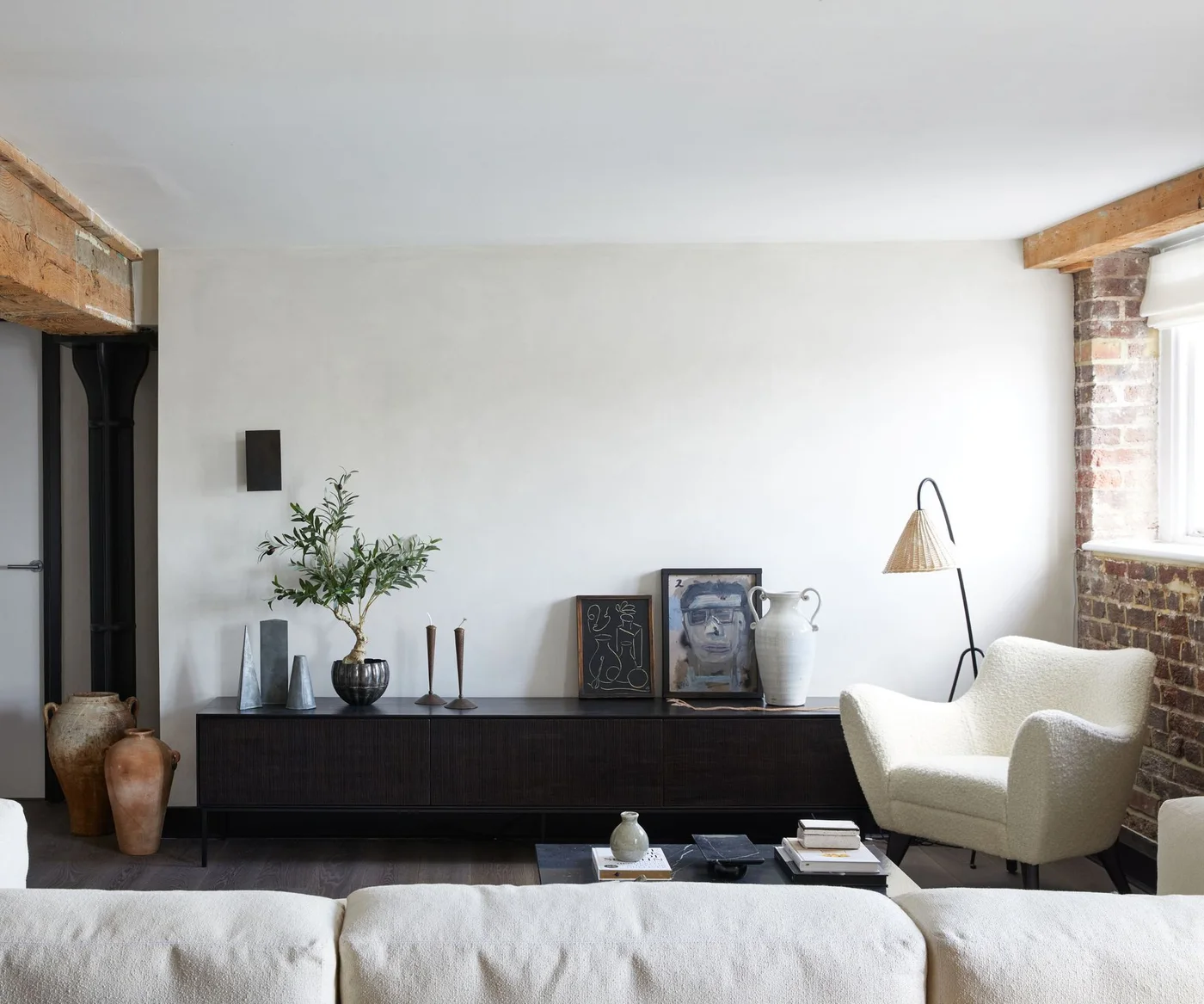
Let a Dark Sideboard Ground Pale Upholstery
 SaveSupport Non AI Creator
Image credit: FARE INC/Helen Cathcart
The long dark sideboard gives the pale seating a clear backdrop without covering the wall in pattern. Exposed brick, a timber beam and the woven lamp shade provide different surface textures. A few larger vessels and framed pictures create a collected display along the lower horizontal line.
Choose the sideboard around what needs storing and leave room to open its doors. Keep some of the top clear rather than adding a small object to every gap. With several textures already visible, a limited range of lamp, pot and frame colors can help the group feel intentional.
IDEA 04 / 20
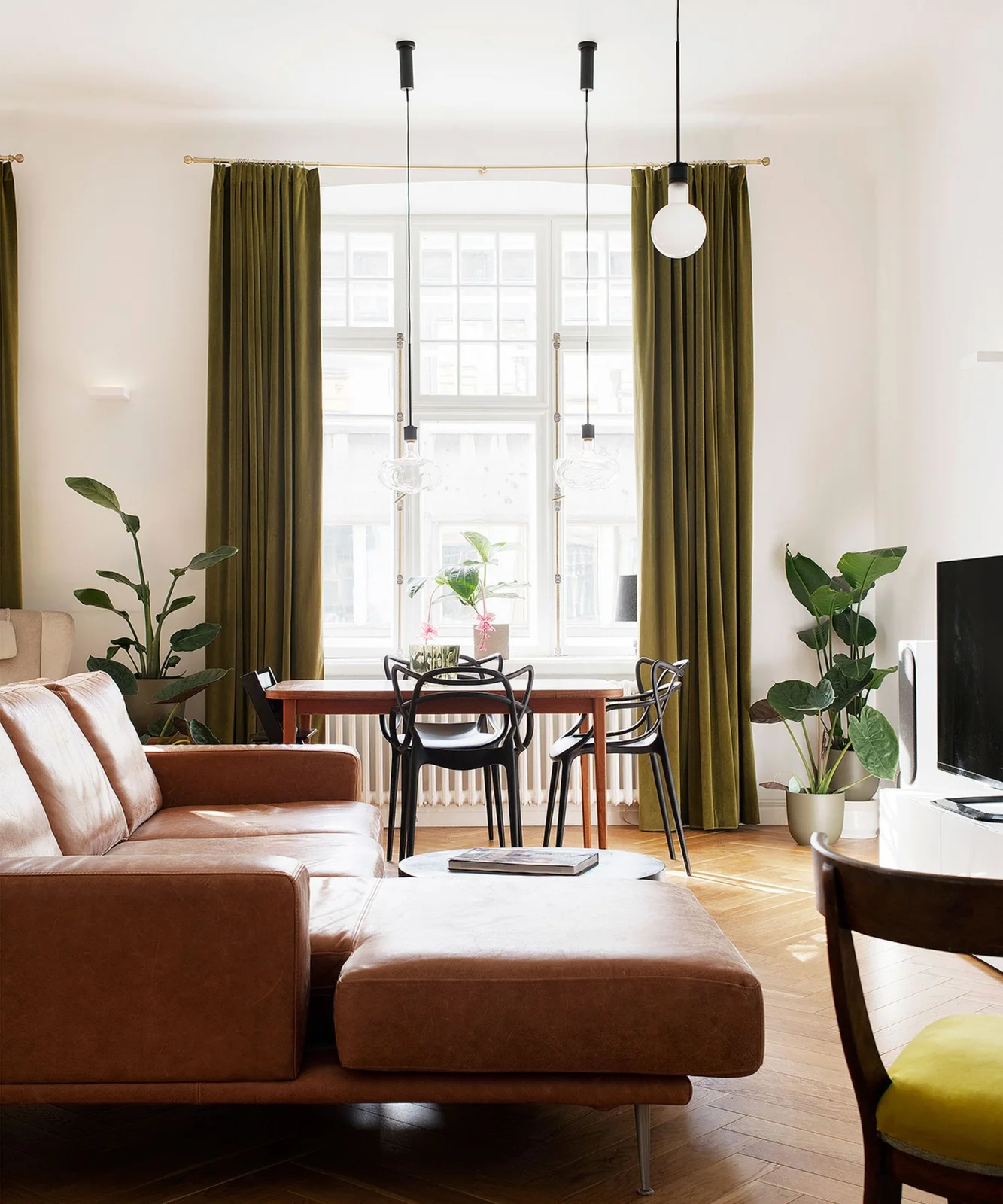
Use Olive Curtains beside Warm Brown Seating
 SaveSupport Non AI Creator
Image credit: Studio ARGUS
Olive curtains supply a strong natural-looking color while the walls stay pale. Brown seating and the timber table add warmth at lower levels. The plants repeat the green in more irregular shapes, connecting the living and dining areas without giving every surface the same finish.
Test curtain fabric in the room during daylight and under evening lighting before choosing a green. Allow the panels to stack clear of the glazing where possible. Our green living room ideas offer more color combinations; retain enough plain fabric and wall space when several different furniture shapes share one room.
IDEA 05 / 20
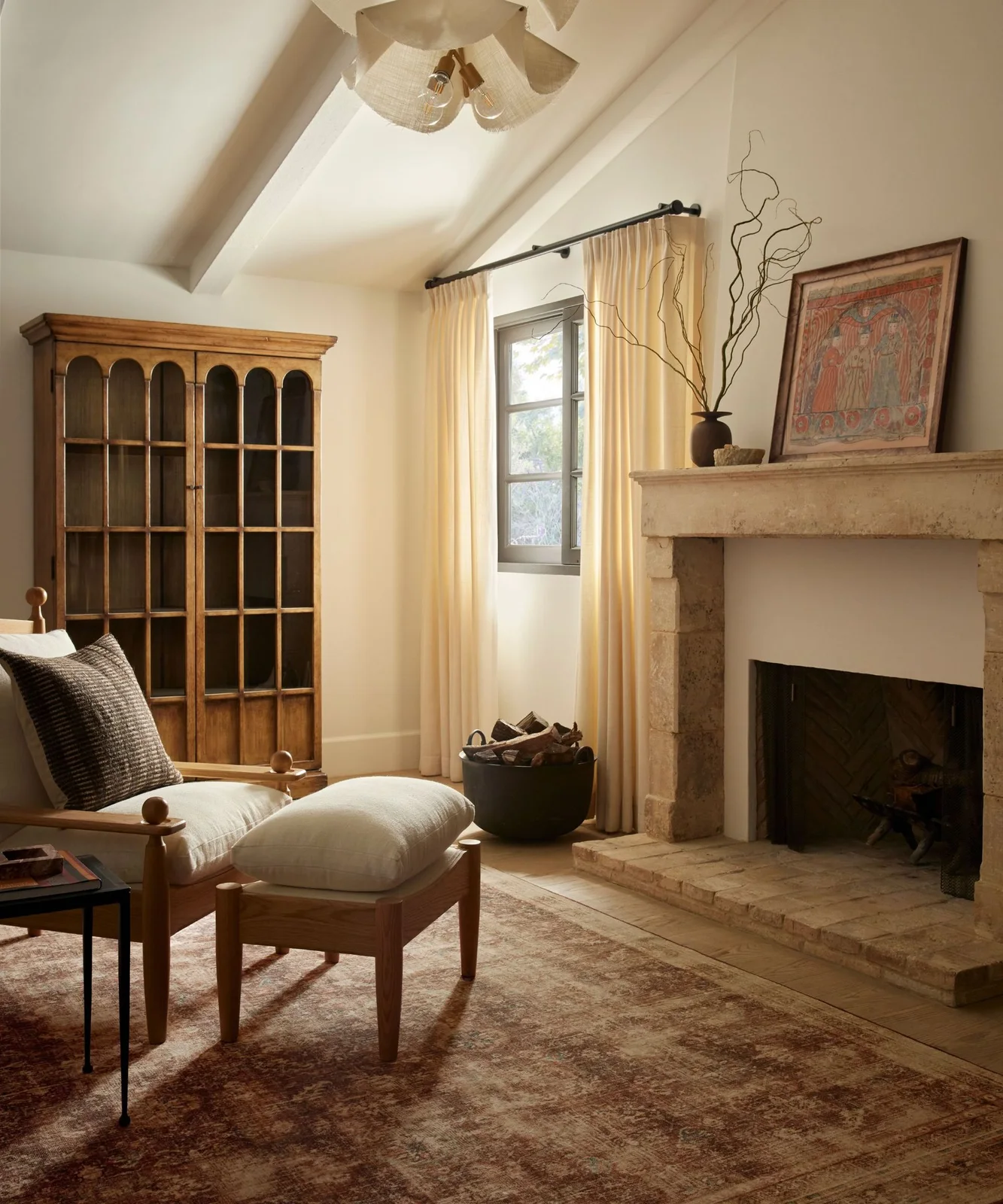
Soften an Existing Fireplace Corner with Simple Seating
 SaveSupport Non AI Creator
Image credit: Ruggable/Jeneva Bell
The chair and footrest use straightforward timber frames beside the more detailed cabinet and fireplace. Pale cushions keep the seating from competing with the larger surfaces. The rug’s muted pattern adds variation at floor level, showing how an existing room can gain a softer, quieter seating area without replacing everything.
Begin with the chair’s comfort and the space needed to use the footrest. Keep both outside the clearances required for a working fireplace, and move staged branches or other decorations as necessary. Compare timber tones together; they can relate through warmth without needing identical grain or matching stain.
PART 02
Work with existing architecture and personal pieces
IDEA 06 / 20
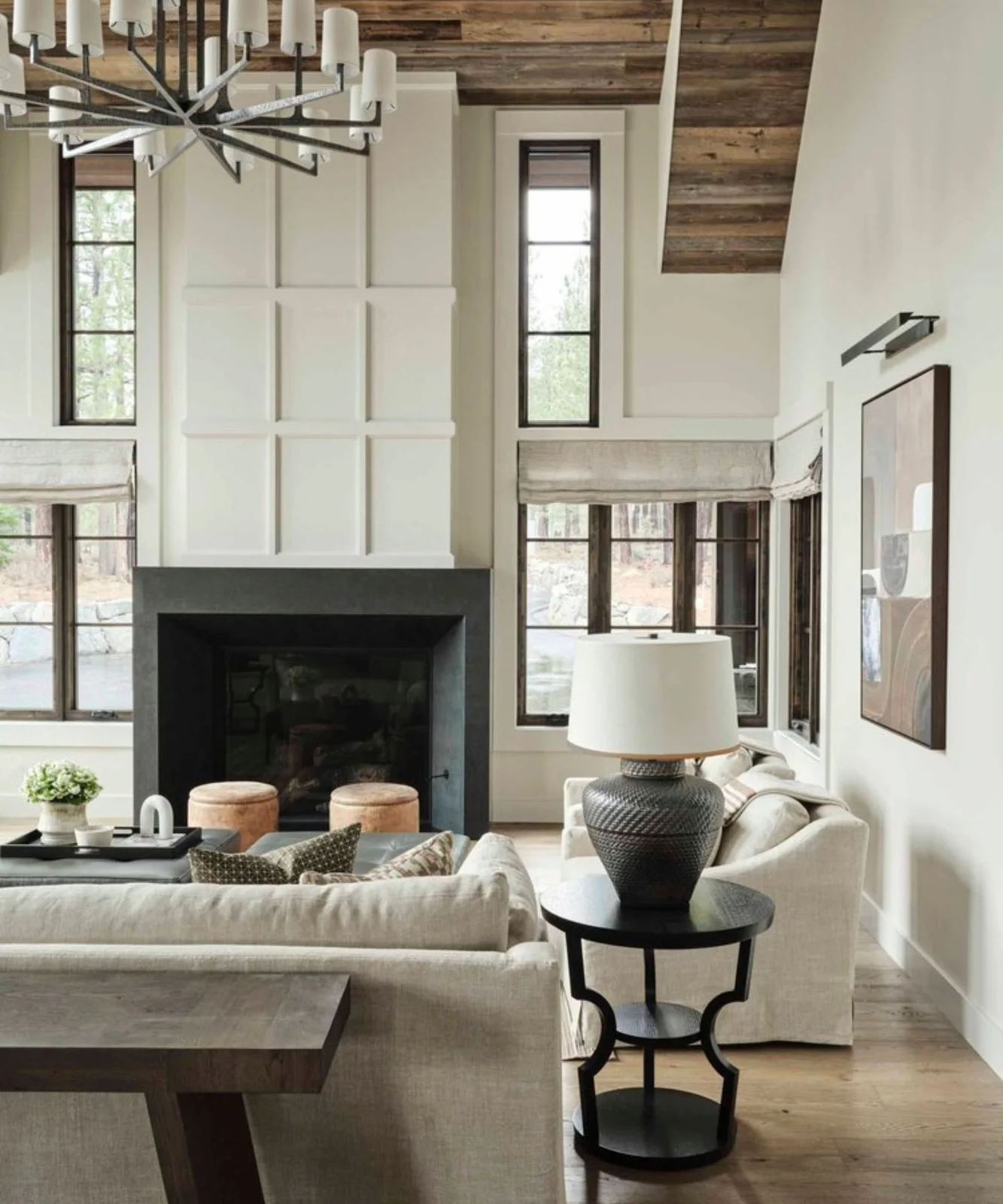
Keep a Strong Timber Ceiling above Quieter Furniture
 SaveSupport Non AI Creator
Image credit: Gunter & Co./Madeleine Tolle
Timber overhead is the strongest textured surface in this tall room. The pale sectional and restrained window treatments give it a quieter setting, while the dark fireplace and side table add definition. Smaller tan seats repeat some of the ceiling’s warmth closer to the floor.
If a room already has prominent timber, use that as the starting point for the rest of the palette. Bring fabric and rug samples into the space before adding another large timber piece. Keep side tables within comfortable reach and choose lamps that provide useful evening light below the taller ceiling.
IDEA 07 / 20
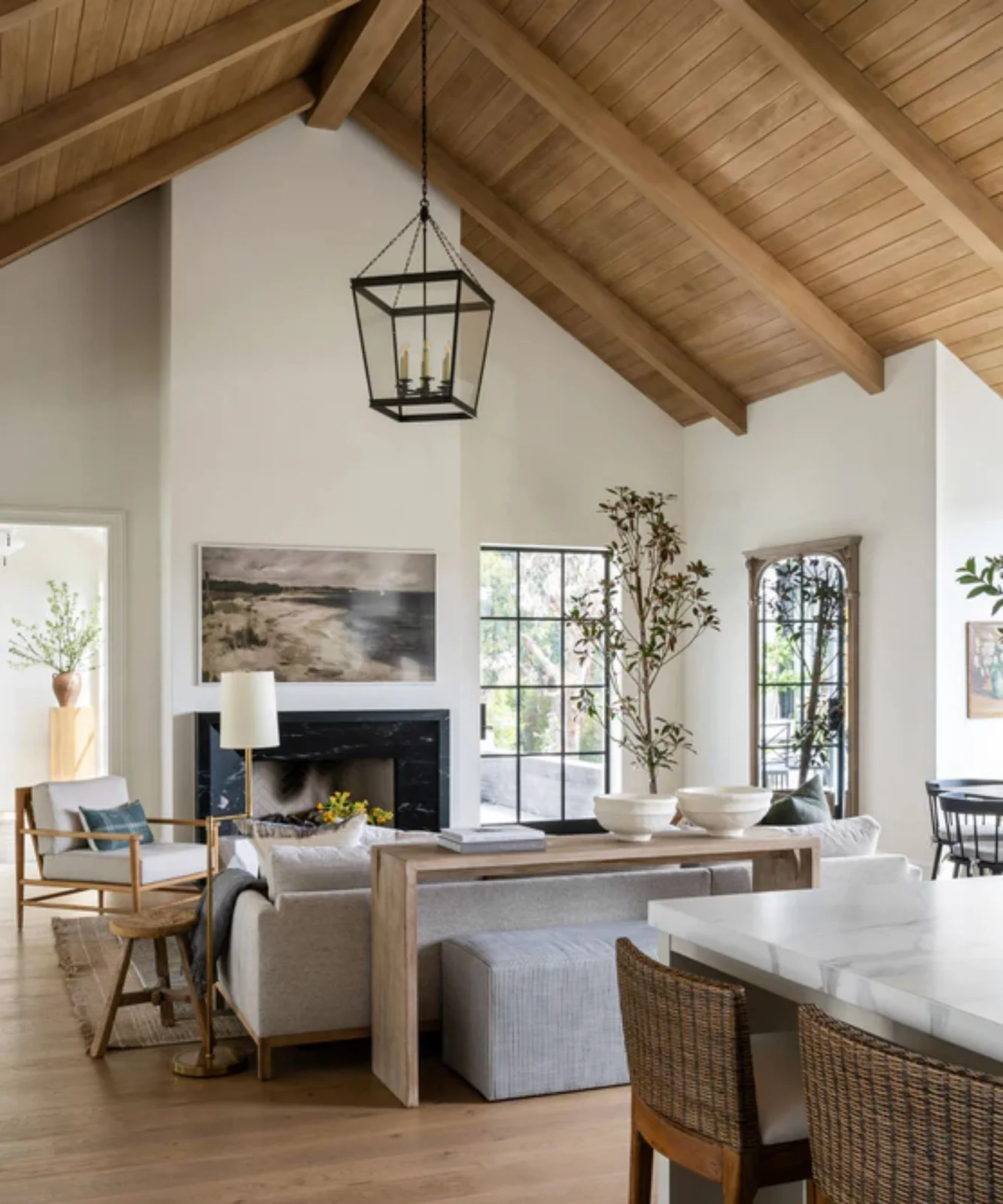
Use a Timber Console to Define an Open Living Area
 SaveSupport Non AI Creator
Image credit: McGee & Co
The console gives the back of the sofa a deliberate finish where the living area meets the kitchen. Its timber tone connects with the ceiling and nearby chair frames. Keeping the console relatively simple allows the seating to define the room boundary without adding a tall partition.
Measure the passage behind the sofa with the console included, and leave enough space to reach nearby doors or seating. Our sofa table ideas explore other practical uses for this position. Choose a stable piece and keep the top useful rather than filling the entire narrow surface with large bowls.
IDEA 08 / 20
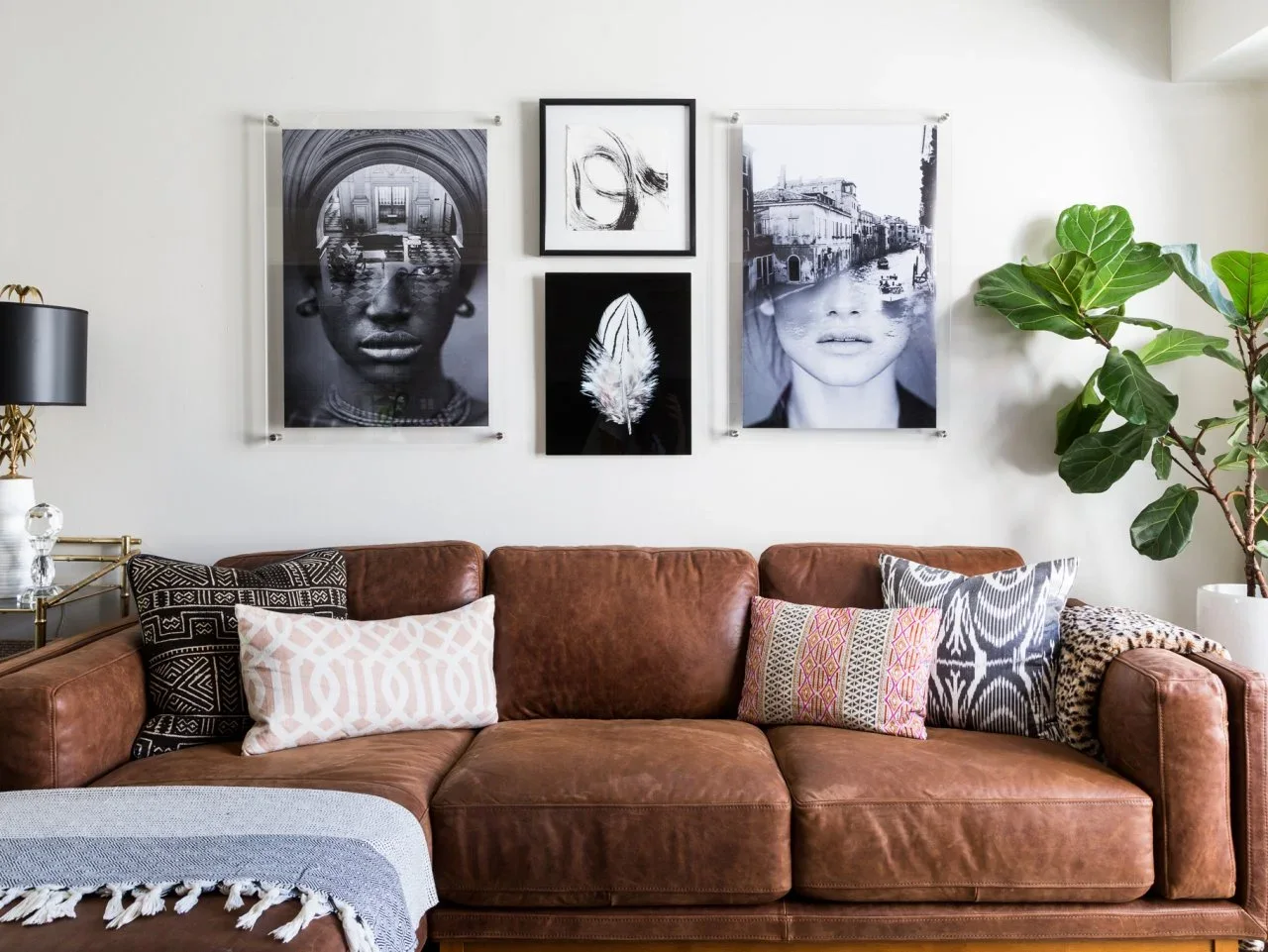
Keep Personal Artwork with Warm Brown Seating
 SaveSupport Non AI Creator
Image credit: Photo: Seth Caplan
Warm brown upholstery gives the room a substantial base, while the black-and-white picture group keeps the wall colors restrained. Patterned cushions introduce smaller areas of variation. The large plant adds a less geometric outline at the side of the sofa, balancing the rectangular frames above.
Keep artwork you enjoy instead of replacing it simply to match a style label. Lay out the group before hanging and secure each piece appropriately. Limit new cushion purchases to textures or colors the sofa actually needs, and check the upholstery’s care guidance before using a cleaner intended for another finish.
IDEA 09 / 20
Try a Botanical Mural with Simple Modern Furniture
 SaveSupport Non AI Creator
Image credit: Photo: Rebel Walls
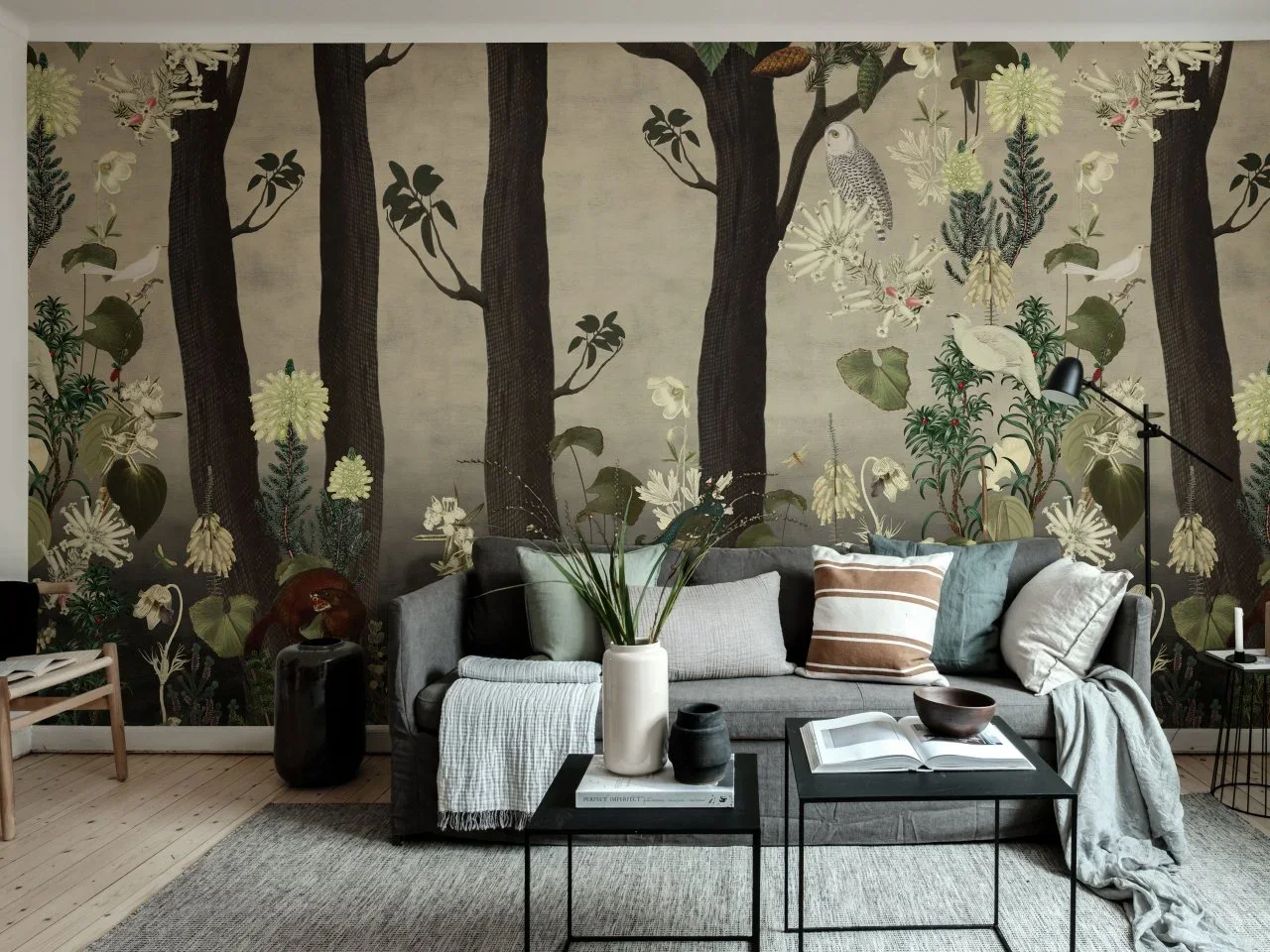
The mural brings the nature reference onto the wall through branches, leaves and birds. The gray sofa and slim dark tables remain comparatively simple, giving the pattern room to be seen. A pale floor and a largely plain rug prevent every surface from competing for attention.
Review the complete mural layout against the actual wall dimensions before ordering, particularly where furniture will hide part of the scene. Check the wall preparation and care instructions for the chosen product. Keep surrounding fabrics quieter and use a sample to judge whether the background color works with the room’s light.
IDEA 10 / 20
Use Dark Stone-Look Pattern as a Deliberate Contrast
 SaveSupport Non AI Creator
Image credit: Christina Cruz Interiors / Photography Molly Culver
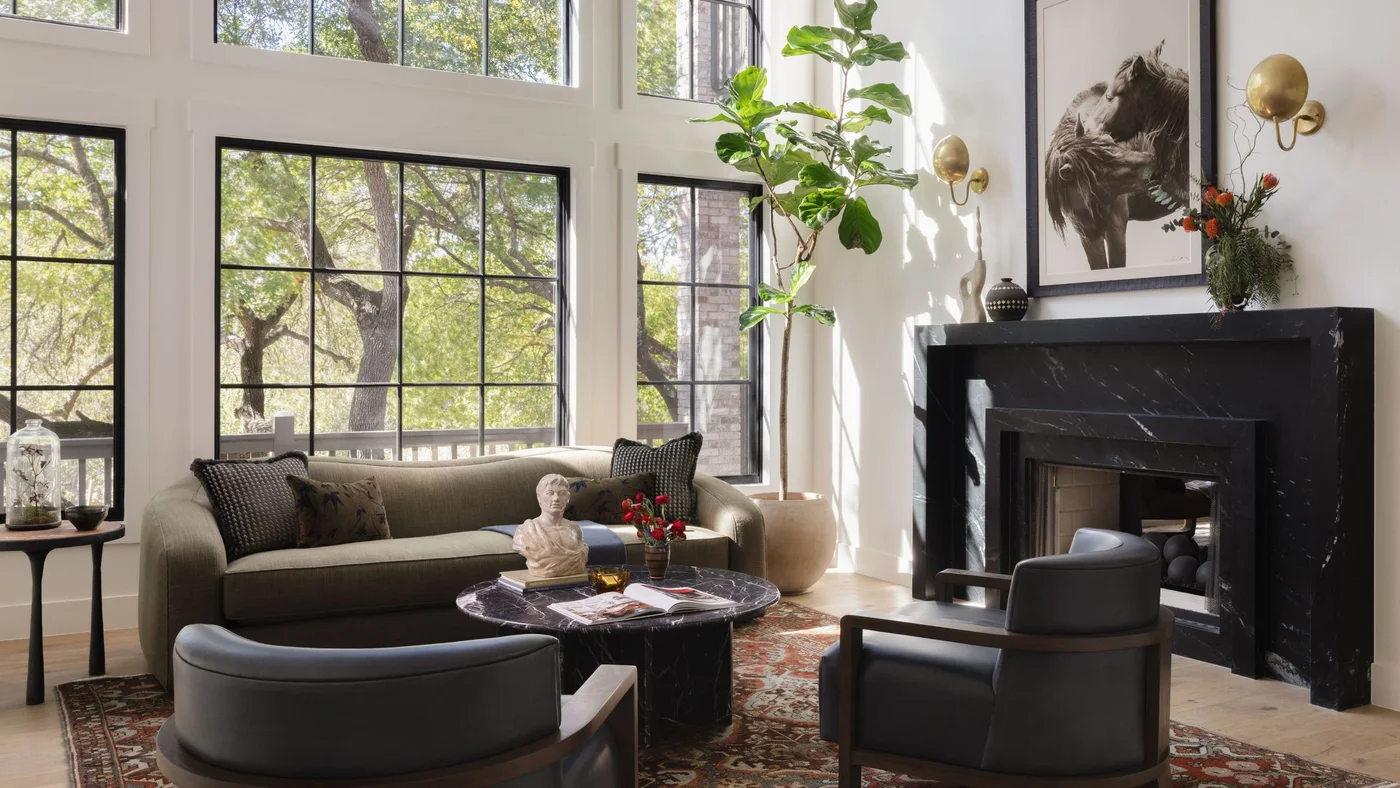
The dark fireplace and rounded table add stronger pattern and contrast than the pale walls around them. Timber-framed chairs and the muted sofa keep the seating group from becoming all black. The leafy view through the large windows supplies another layer of softer shape and color.
Decide which dark feature should lead before adding more patterned finishes. Confirm the actual material and maintenance needs when buying a similar fireplace or table; veining alone does not identify the stone. Position furniture for conversation while maintaining the fireplace’s required clearances and practical access to the window area.
PART 03
Choose useful furniture and timber storage
IDEA 11 / 20
Pair Open Timber Frames with Generous Cushions
 SaveSupport Non AI Creator
Image credit: Christina Cruz Interiors / Photography Molly Culver
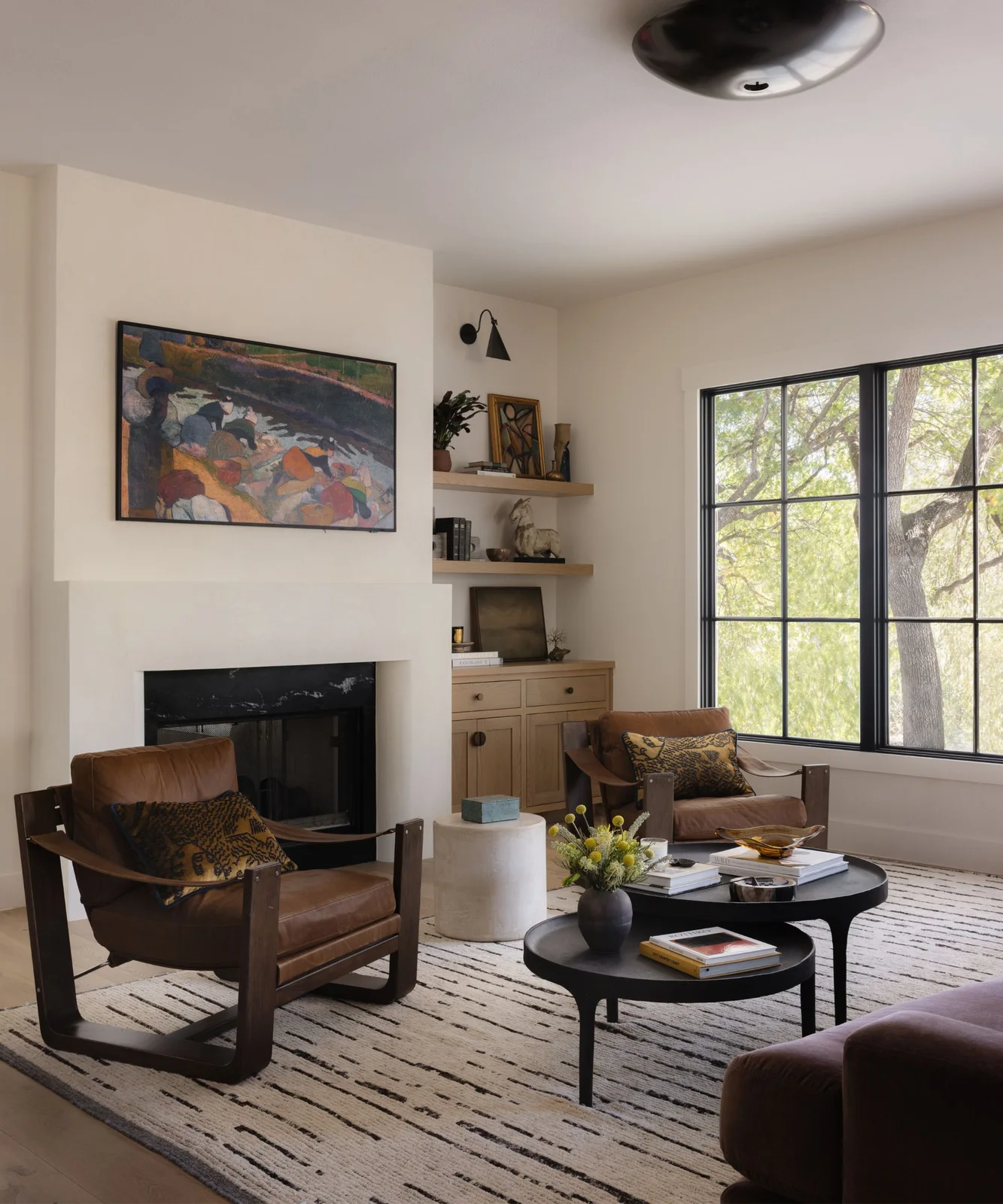
The chairs combine a visible timber structure with deep brown cushions, balancing harder and softer surfaces in the same piece. Dark low tables repeat the window outlines without adding another large timber block. Shelves beside the fireplace continue the warmer wood tones at a different height.
Sit in open-frame seating before buying, checking arm support and the way the cushion stays in place. Confirm the upholstery material and care requirements with the supplier rather than judging from the photograph. Leave enough space around the low tables for feet and keep objects on the shelves easy to lift for cleaning.
IDEA 12 / 20
Let Dark Upholstery Share the Natural Palette
 SaveSupport Non AI Creator
Image credit: Christina Cruz Interiors / Photography Molly Culver
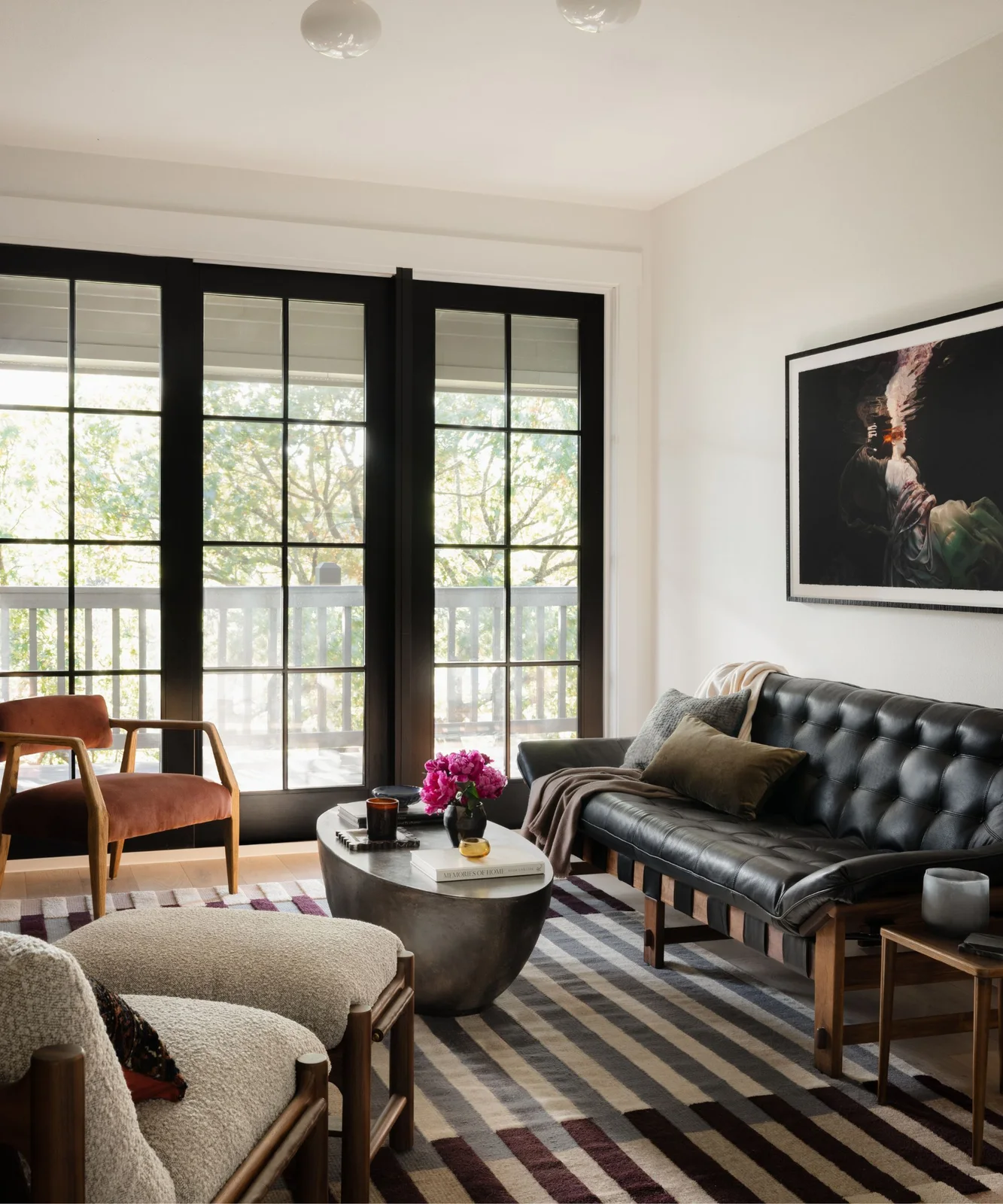
Dark upholstery can still sit within a warm, nature-led arrangement when timber frames and textured pale seating remain visible. The striped rug connects several quieter colors beneath the furniture. A rounded low table breaks up the more regular lines of the sofa and glazed doors.
Compare the dark upholstery with the actual room light rather than assuming every organic-inspired room needs a white sofa. Use a rug large enough to connect the seating you have, and check cleaning access under lower frames. One warm accent chair or cushion can provide color without introducing another dominant pattern.
IDEA 13 / 20
Keep One Older Timber Piece in the Mix
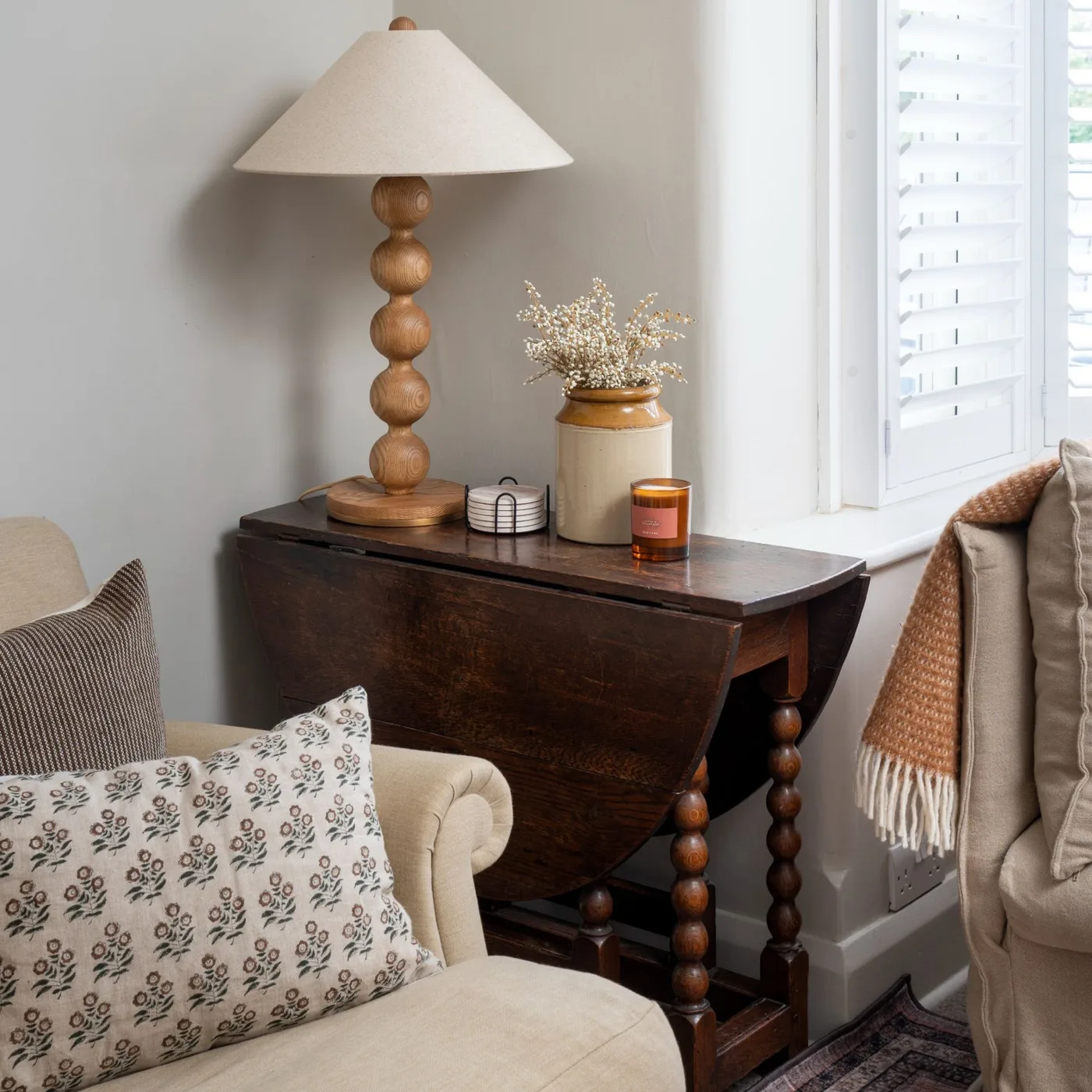 SaveSupport Non AI Creator
Image credit: Future PLC/David Giles
Turned legs and a rounded lamp base give this corner more character than a set of matching plain side tables would. The pale lamp shade and upholstered seats keep the contrast gentle. This detail offers a way to retain an older timber piece while choosing simpler furniture elsewhere in the room.
Check an older table’s stability, hinges and finish before putting it into daily use. Protect the top with appropriate coasters and place the lamp so its cable stays clear of the route. Repeating one timber tone is enough; the remaining furniture does not need matching turned legs or the same period reference.
IDEA 14 / 20
Choose Timber Tables That Show Their Grain
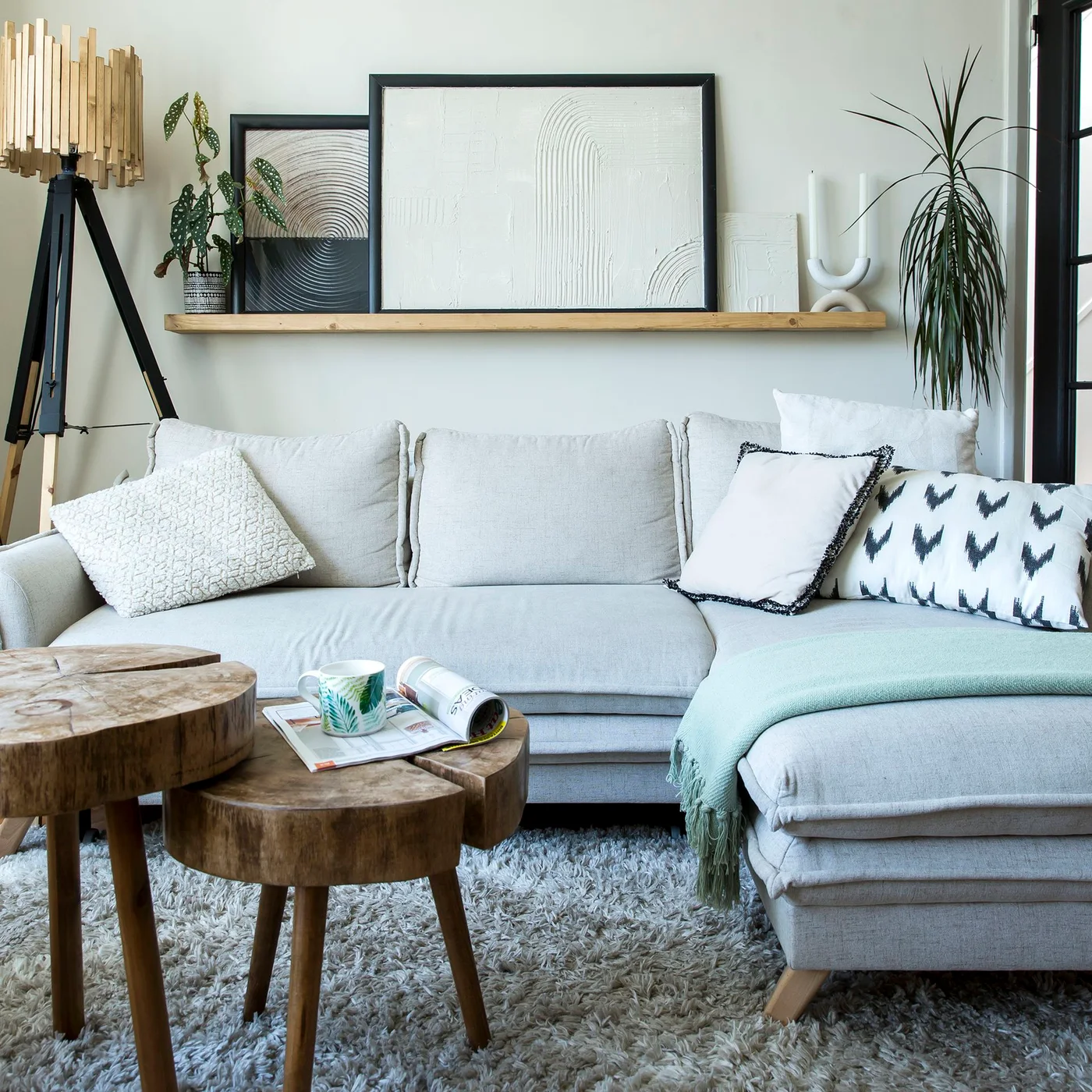 SaveSupport Non AI Creator
Image credit: Future/Lizzie Orme
Broad grain patterns and thick circular tops make these tables the most noticeable natural surface in the seating group. The sectional and artwork stay pale, with black frame edges adding small contrasts. A mint-toned throw provides a softer accent without covering the timber detail.
Measure the tables as a pair, allowing for the space needed to separate them when people use the sofa. Confirm the finish and cleaning guidance before placing drinks directly on the tops. Our neutral sitting room ideas show more ways to let a few textured pieces stand out against quieter upholstery.
IDEA 15 / 20
Combine Timber Display Shelves with Closed Storage
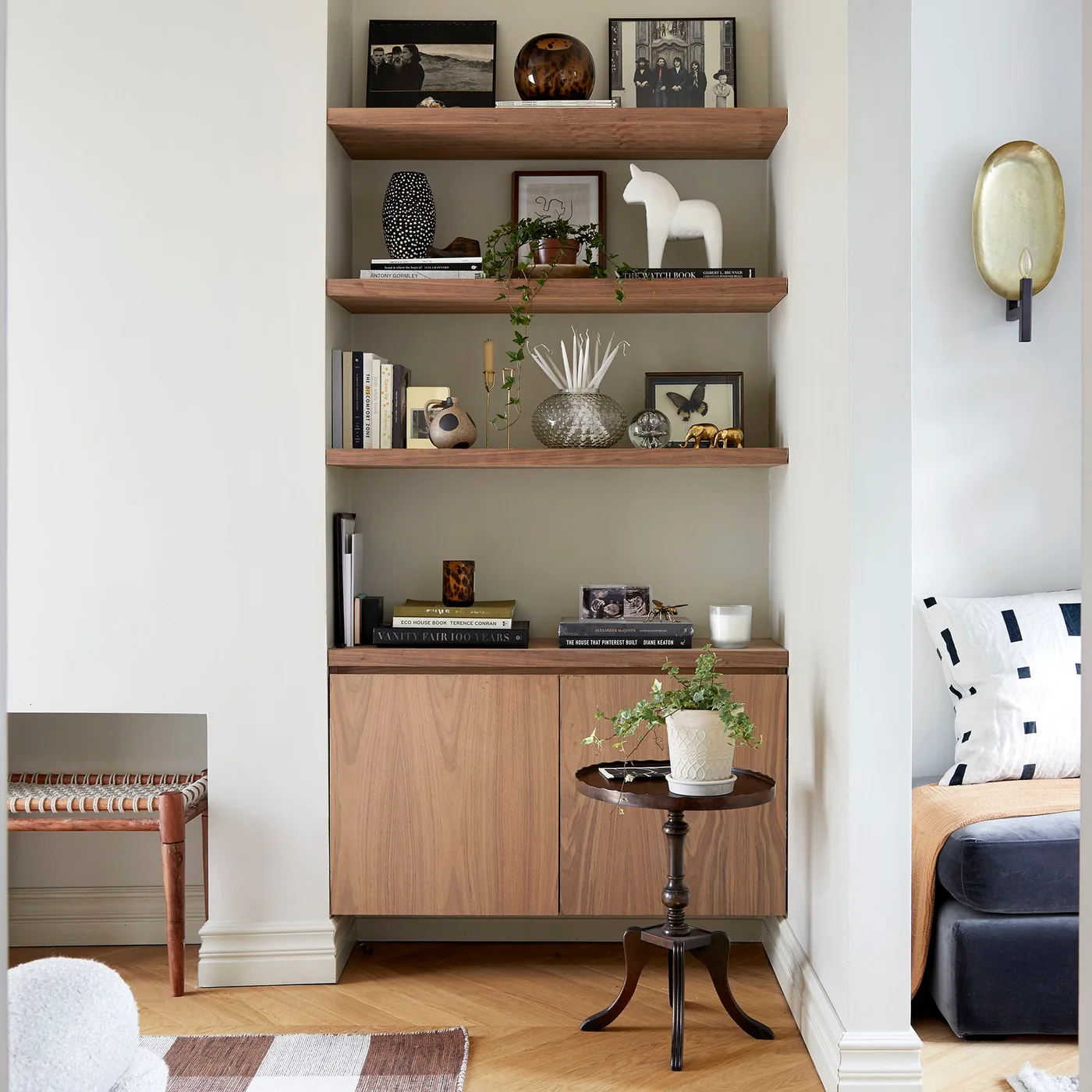 SaveSupport Non AI Creator
Image credit: Future
The lower cupboard provides a solid timber face, while the open shelves hold a more varied collection above. Books, photographs and a few sculptural objects give the room personal detail. The plant’s trailing outline contrasts with the straight shelf edges without needing another large furnishing.
Plan closed storage for the belongings you do not want on display, then leave gaps around the objects above. Check shelf fixing and load guidance before adding heavy books or vessels. Use saucers under plant pots and keep watering away from timber surfaces and the books beside them.
PART 04
Connect the larger surfaces with texture
IDEA 16 / 20
Mix a Weathered-Looking Cabinet with a Plain Sofa
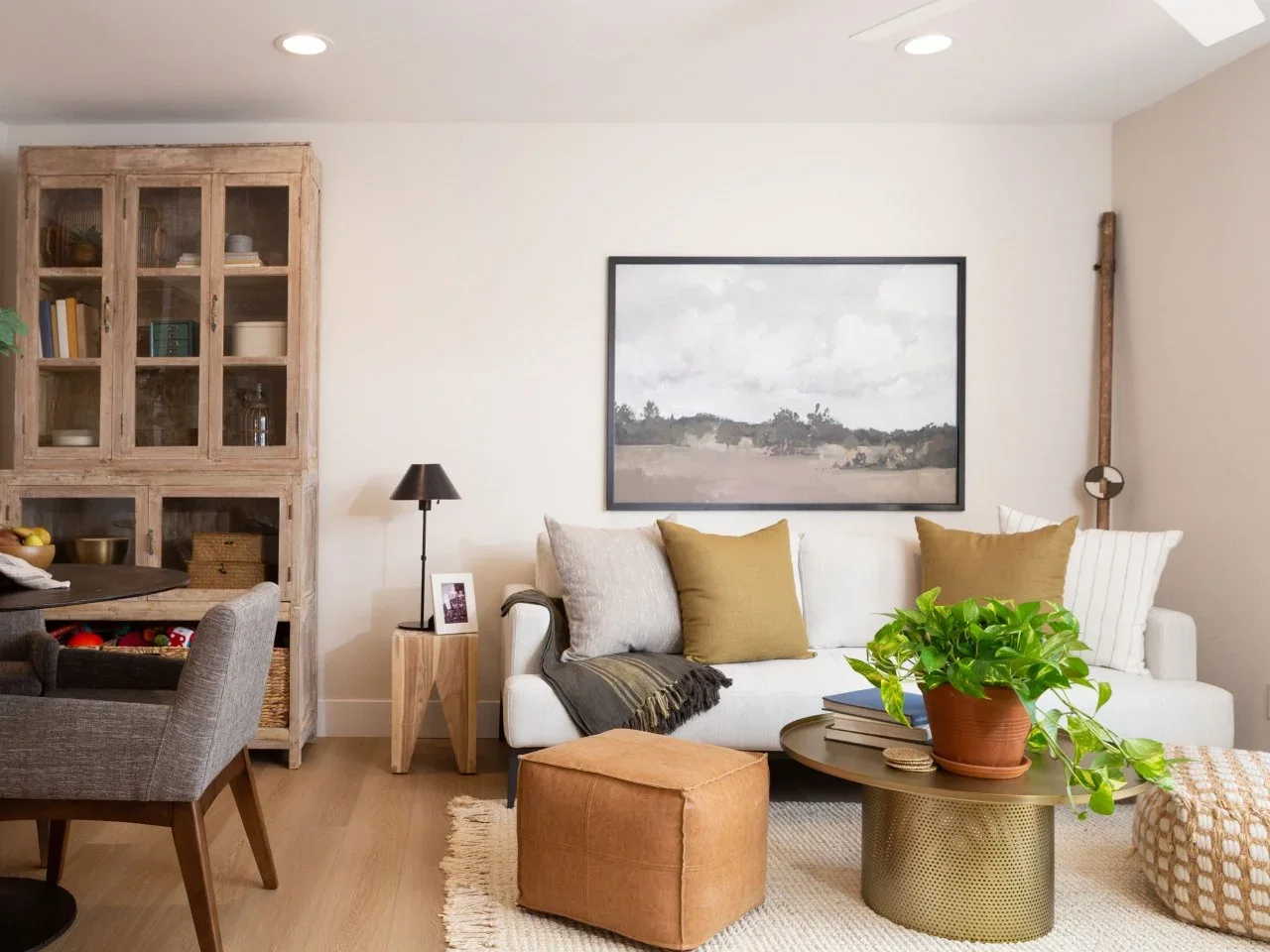 SaveSupport Non AI Creator
Image credit: Photo: Rick Mattson. From: Jasmine Roth
The timber cabinet introduces varied tone and visible surface detail beside the simpler sofa. Muted mustard cushions and a tan ottoman repeat some of that warmth at seating height. A small timber side table keeps another practical surface close without adding a second tall storage piece.
Inspect the condition and finish of any older-looking cabinet rather than assuming that a weathered appearance establishes its age or construction. Check that the shelves suit your actual contents. Keep the side table and ottoman from narrowing the route, and anchor taller storage according to its fixing instructions.
IDEA 17 / 20
Connect Layered Rugs with an Existing Timber Ceiling
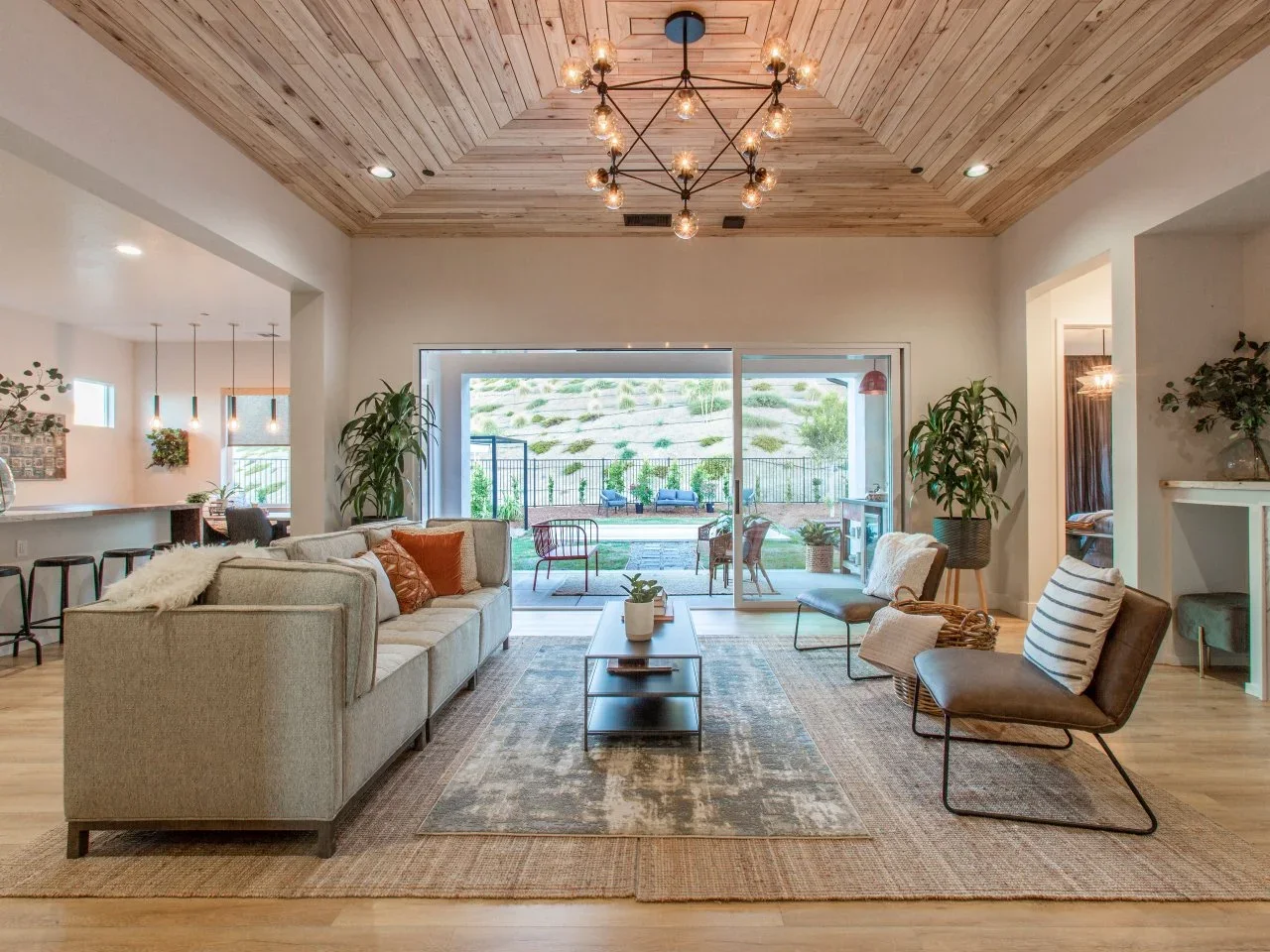 SaveSupport Non AI Creator
Image credit: Photo: Gilles Mingasson/Getty Images. From: Jasmine Roth
The timber ceiling provides a warm upper surface, while two rugs build texture beneath the seating. Brown chairs and rust cushions repeat warmer colors against the gray sofa. Broad doors keep the garden view visible, making the room’s relationship with the outdoors part of the arrangement.
Check that layered rug edges remain flat and that their care requirements suit daily use. Keep furniture stable across the combined thickness. Before adding timber to another large surface, see whether smaller details are enough; the ceiling already provides a substantial amount of grain and color.
IDEA 18 / 20
Give Rough Timber Beams a Simpler Background
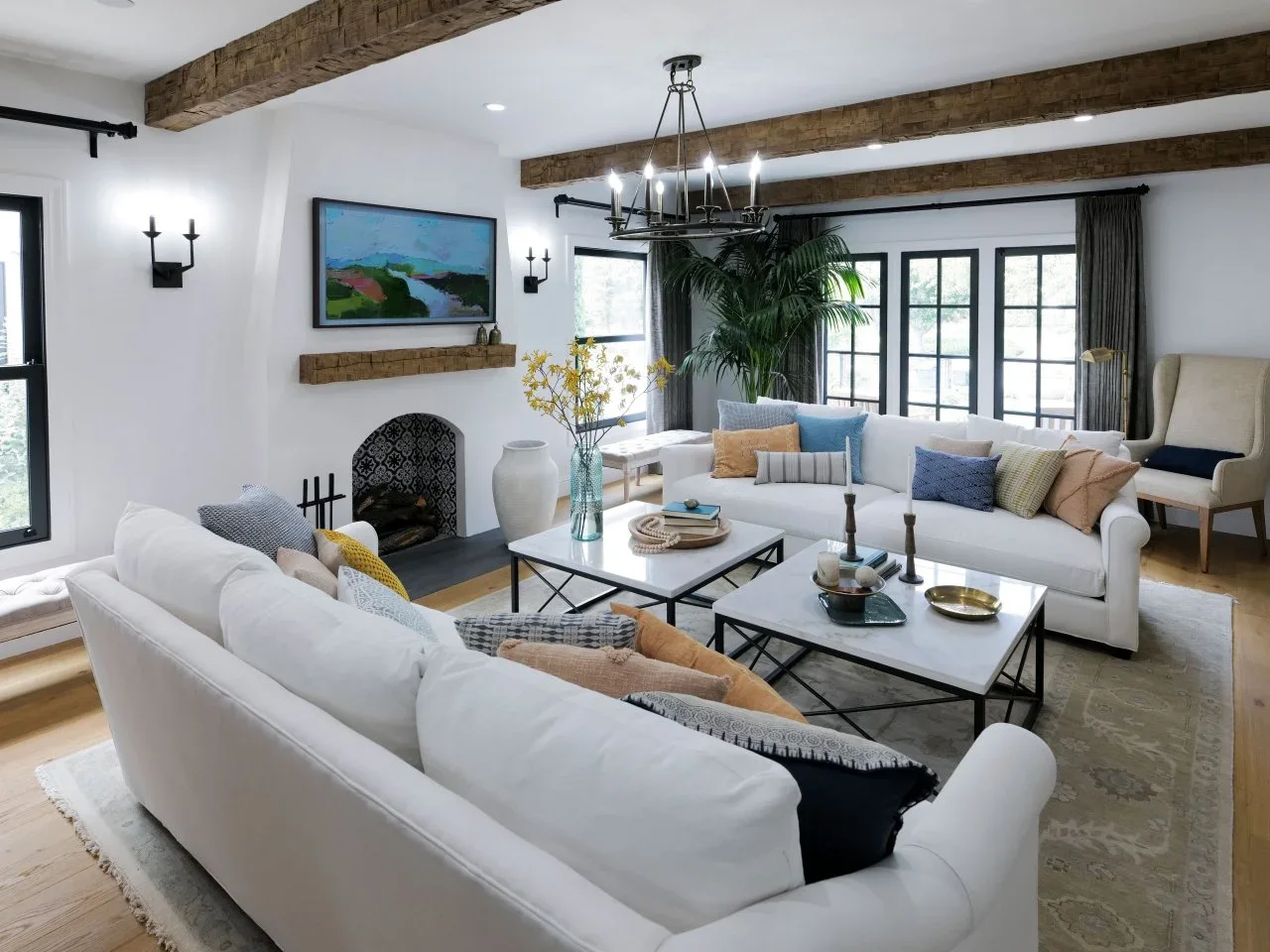 SaveSupport Non AI Creator
Image credit: Photo: Dennys Ilic. From: Jonathan Scott and Drew Scott
Rougher timber beams contrast with the smooth pale walls and seating. Dark window frames and table bases give the room a clear outline, while cushions add smaller areas of color. The arrangement keeps the timber as an existing architectural feature rather than repeating its texture on every furnishing.
Work with the room’s actual beams and proportions instead of adding decorative ones solely to copy the picture. Test sofa and table positions with their full dimensions marked out. Keep fireplace clearances and access practical, and use the softer furnishings to adjust comfort before changing the larger architectural surfaces.
IDEA 19 / 20
Use Woven Chair Panels beside Plain Upholstery
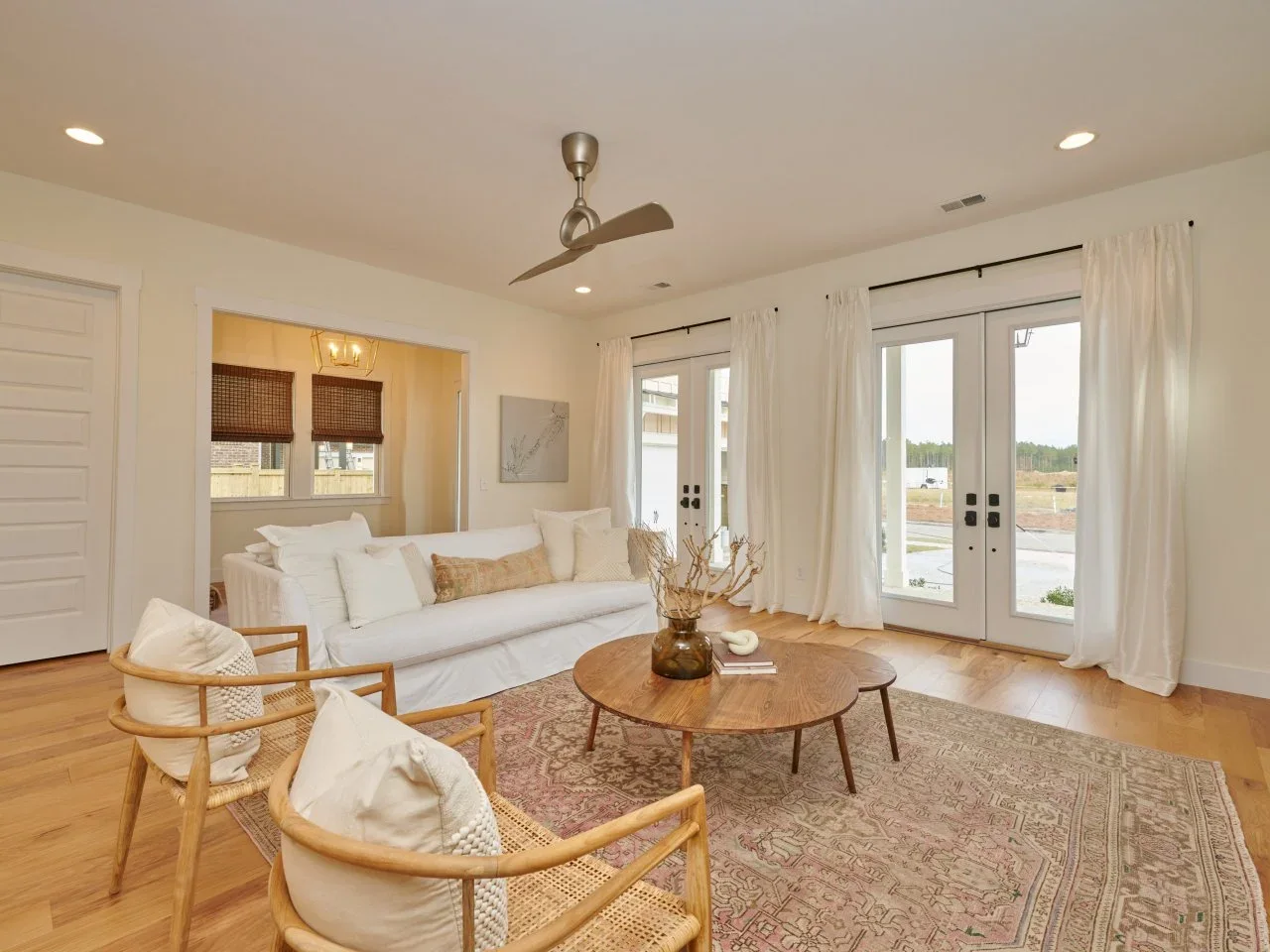 SaveSupport Non AI Creator
Image credit: Photo: Tom Griscom/Big Table Media. From: Jenny Marrs and Dave Marrs
The chairs’ woven panels introduce a finer texture than the broad timber table tops. White cushions and the plain sofa soften the group without hiding the chair frames. Long pale curtains keep the glazed side of the room visually quiet, allowing the furniture materials to remain prominent.
Check the chair’s seat support and woven-panel care instructions before choosing it for regular use. Allow space for knees around the tables and for curtains to move clear of the doors. A few related timber tones can work together without requiring the chairs and tables to come from the same collection.
IDEA 20 / 20
Repeat a Few Natural Shapes around Pale Seating
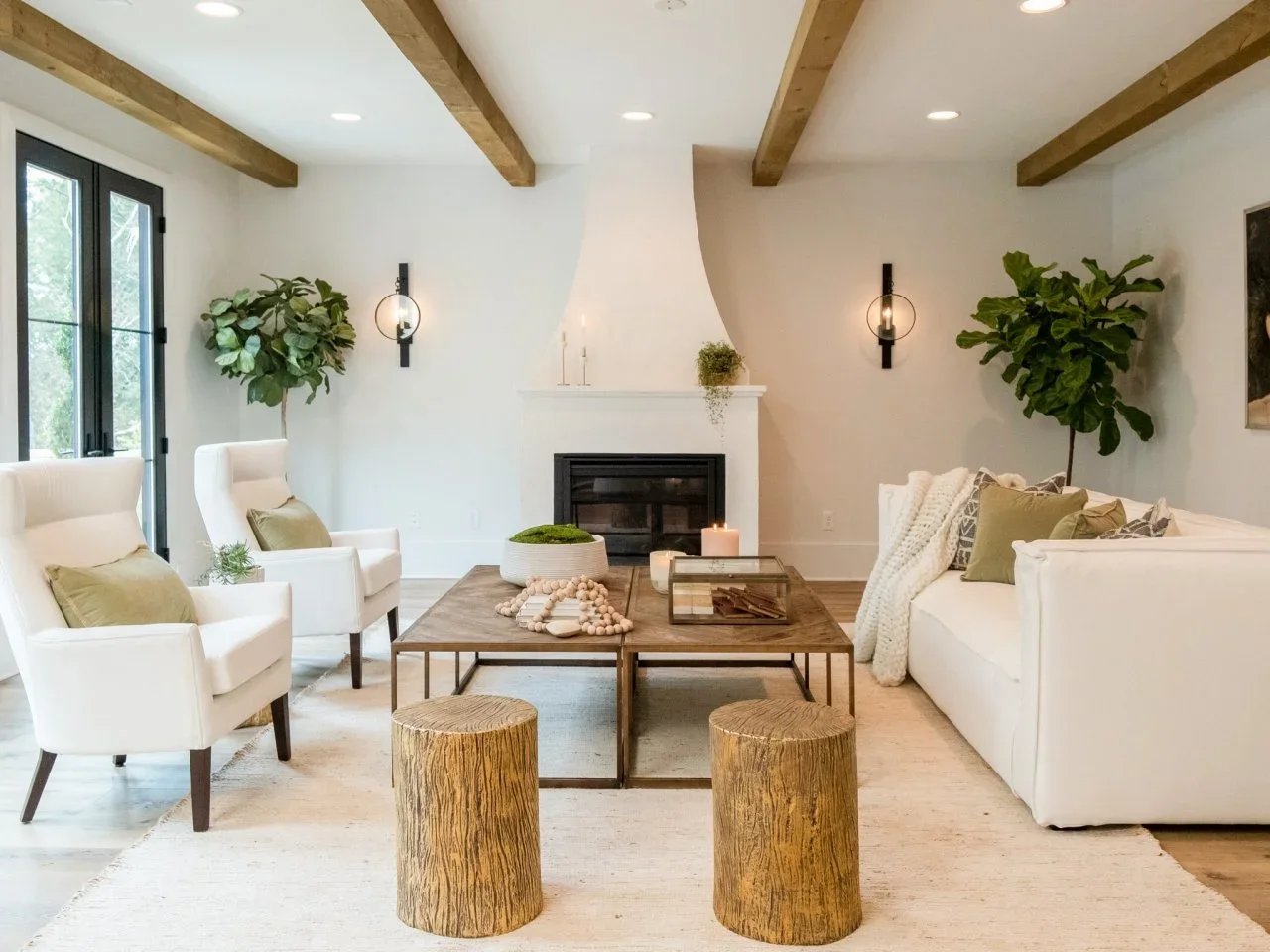 SaveSupport Non AI Creator
Image credit: Photo: Mark Hill
Cylindrical stools and broad timber table tops repeat natural-looking grain at the center of the room. Pale seating and a mostly plain rug give those shapes a quieter background. Green cushions and plants connect the seating with the larger leafy forms at either side of the fireplace.
Confirm whether a cylindrical piece is intended for seating or table use before relying on it for either purpose. Keep the group easy to move around and leave some table surface free. Choose a few durable textures rather than adding a different decorative material to every small gap.
BRING IT ALL TOGETHER
Build the room around comfort and useful contrast
Choose the larger seating pieces for comfort and proportion first. Then compare a small group of timber, fabric and rug samples together in your room. A dark table, a softer chair or an existing wood ceiling may already provide the contrast the arrangement needs.
Keep storage, lighting and cleaning practical as you add texture. Natural-looking surfaces do not all have the same care needs, and a photograph does not establish the exact material. Leave space around the furniture and keep personal pieces that make the room enjoyable rather than replacing everything to follow one style.