Green can form the background of a living room or appear in a smaller useful piece, such as a sofa, chair or cabinet. Start with the furniture you are keeping and the way you use the space. A broad painted wall, a botanical fabric and a green sideboard give quite different amounts of color.
These rooms show several ways to connect green with pale seating, warmer wood and patterned textiles. Compare actual samples together, check the view from each seat, and leave clear routes to doors, windows and storage. Choose the larger arrangement before adding cushions and objects, so the room remains comfortable when everyone is using it.
PART 01
Decide how green surrounds the seating
IDEA 01 / 20
Give a Deep Green Wall a Colorful Gallery
 SaveSupport Non AI Creator
Image credit: Future PLC/Douglas Gibb
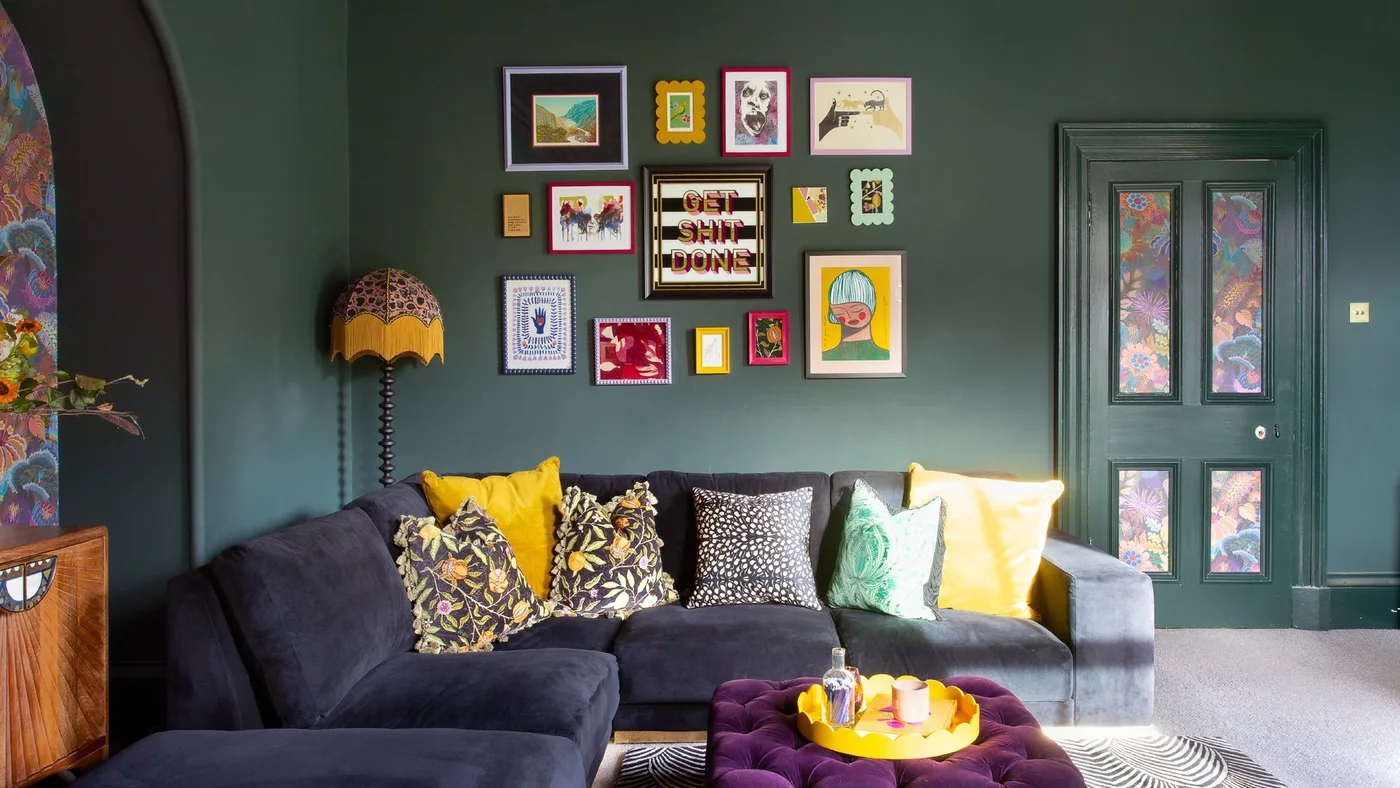
Deep green continues across the wall and door, giving the colorful frames one consistent background. The dark corner sofa sits below the collection, with yellow cushions and a yellow tray adding brighter points near the seating. Different frame colors connect with those smaller accents rather than forming a perfectly matched set.
Lay out the picture arrangement on the floor before making holes, leaving space for the sofa back and the door to open. Start with artwork you enjoy, then select a few cushion colors from it. Keep the rest of the seating comfortable; a large gallery does not need a cushion in every color to feel connected.
IDEA 02 / 20
Set Pale Seating Against Green Boards
 SaveSupport Non AI Creator
Image credit: Future PLC/Douglas Gibb
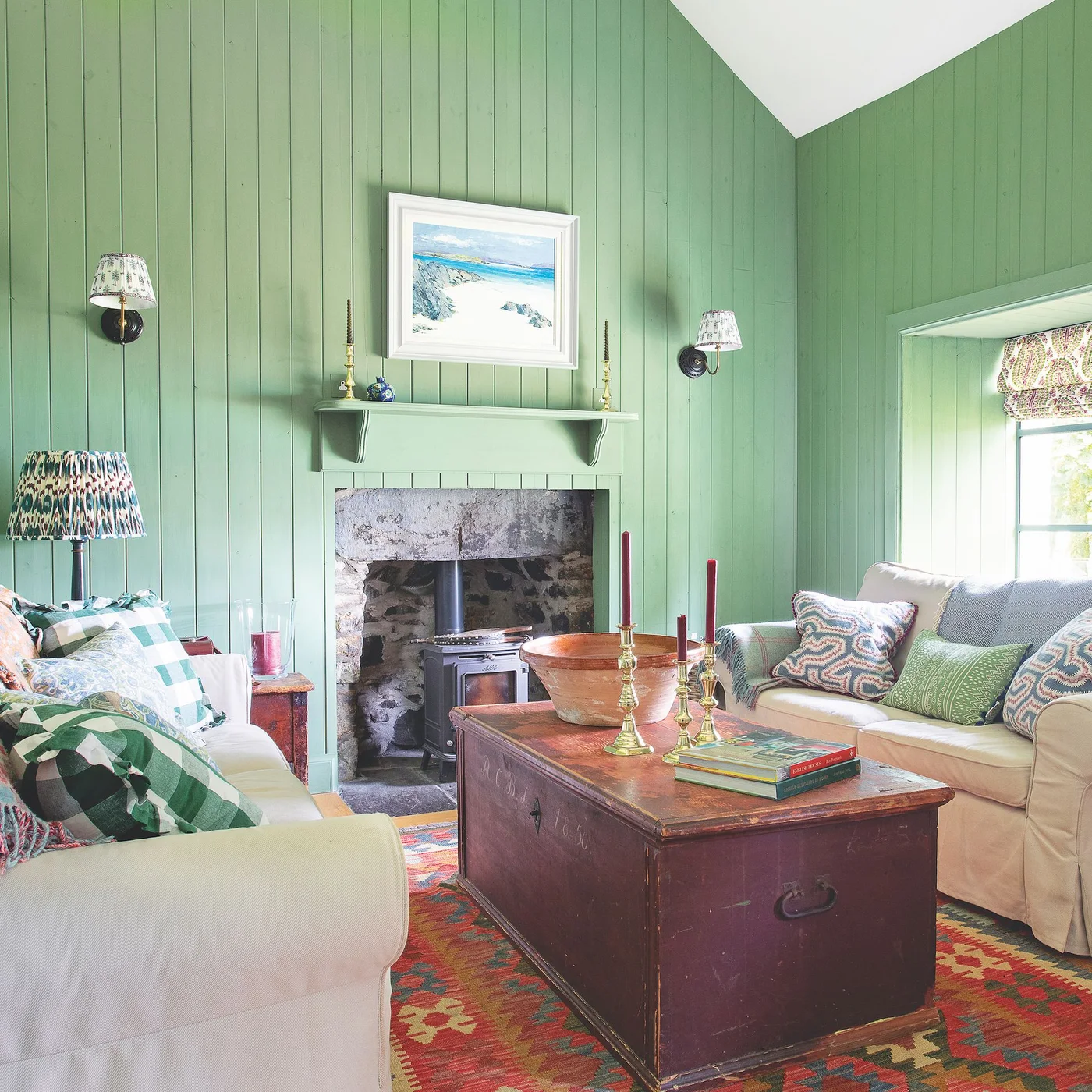
Green boards extend up the walls and around the fireplace, while pale sofas provide larger lighter areas below. A wooden chest serves as the central surface, and patterned lamp shades repeat green in smaller details. The colorful rug brings warmer tones beneath the seating without changing the main painted background.
Compare the chest height and lid access with how you use the room before choosing storage as a coffee table. Keep cushions useful for sitting rather than filling both sofas. Rustic living room ideas offer more ways to combine painted boards with comfortable furnishings when you want this character alongside everyday storage and usable seating.
IDEA 03 / 20
Warm Dark Green with Pink Seating
 SaveSupport Non AI Creator
Image credit: Future/James French
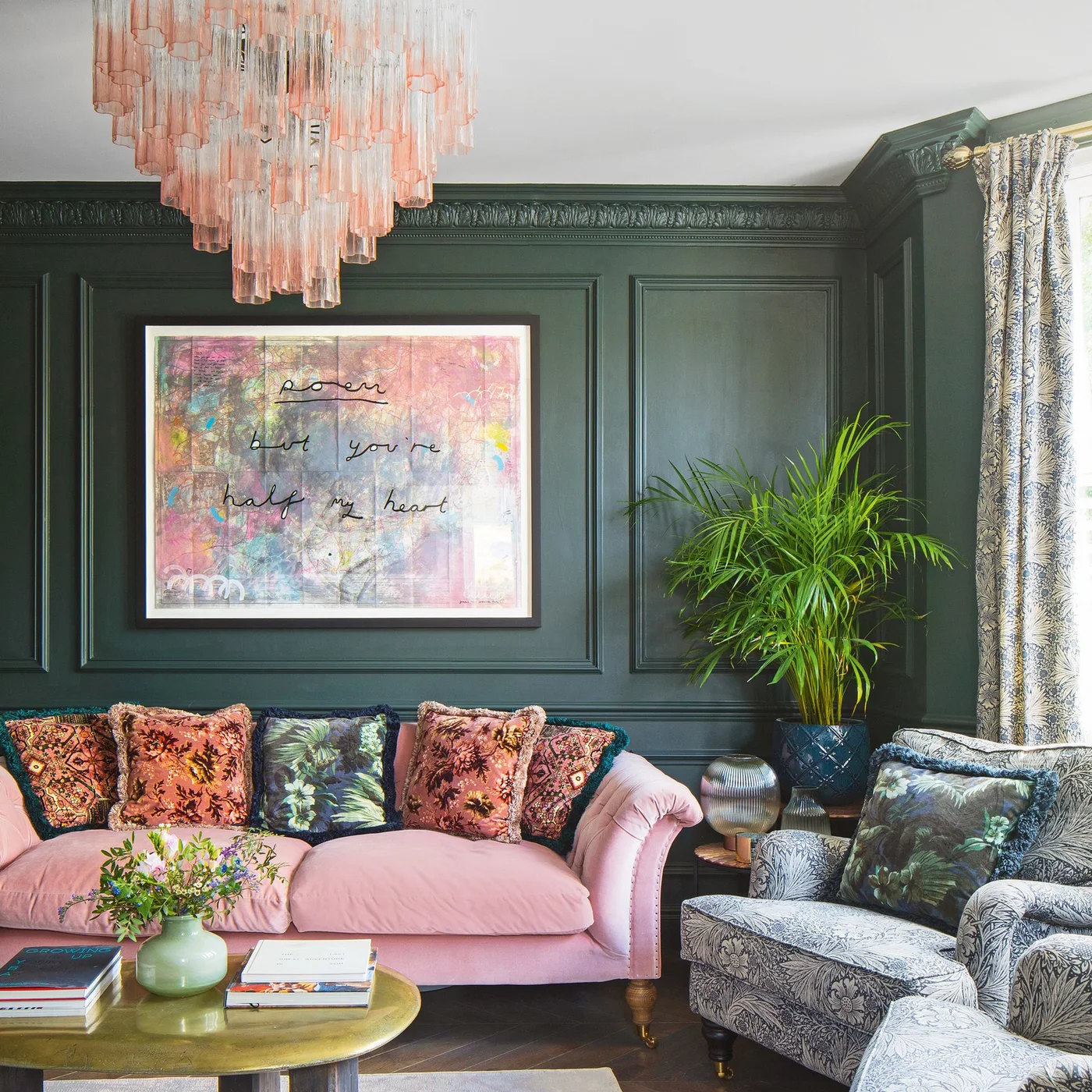
The pale pink sofa creates a clear lighter shape against the dark green paneling, with the pink chandelier repeating warmth above. Patterned cushions and a gray patterned chair introduce smaller details around the larger solid colors. Pale curtains and the light ceiling stop the darker wall treatment from covering every visible surface.
Check the sofa fabric beside the actual wall sample before selecting a pink shade; the contrast changes under evening lamps. Keep a patterned chair separate enough to use comfortably. If the chandelier is a strong decorative feature, choose practical supporting lights for reading rather than asking one central fitting to light every task.
IDEA 04 / 20
Keep the Upper Wall Light Above Green
 SaveSupport Non AI Creator
Image credit: Future PLC / Caroline Mardon
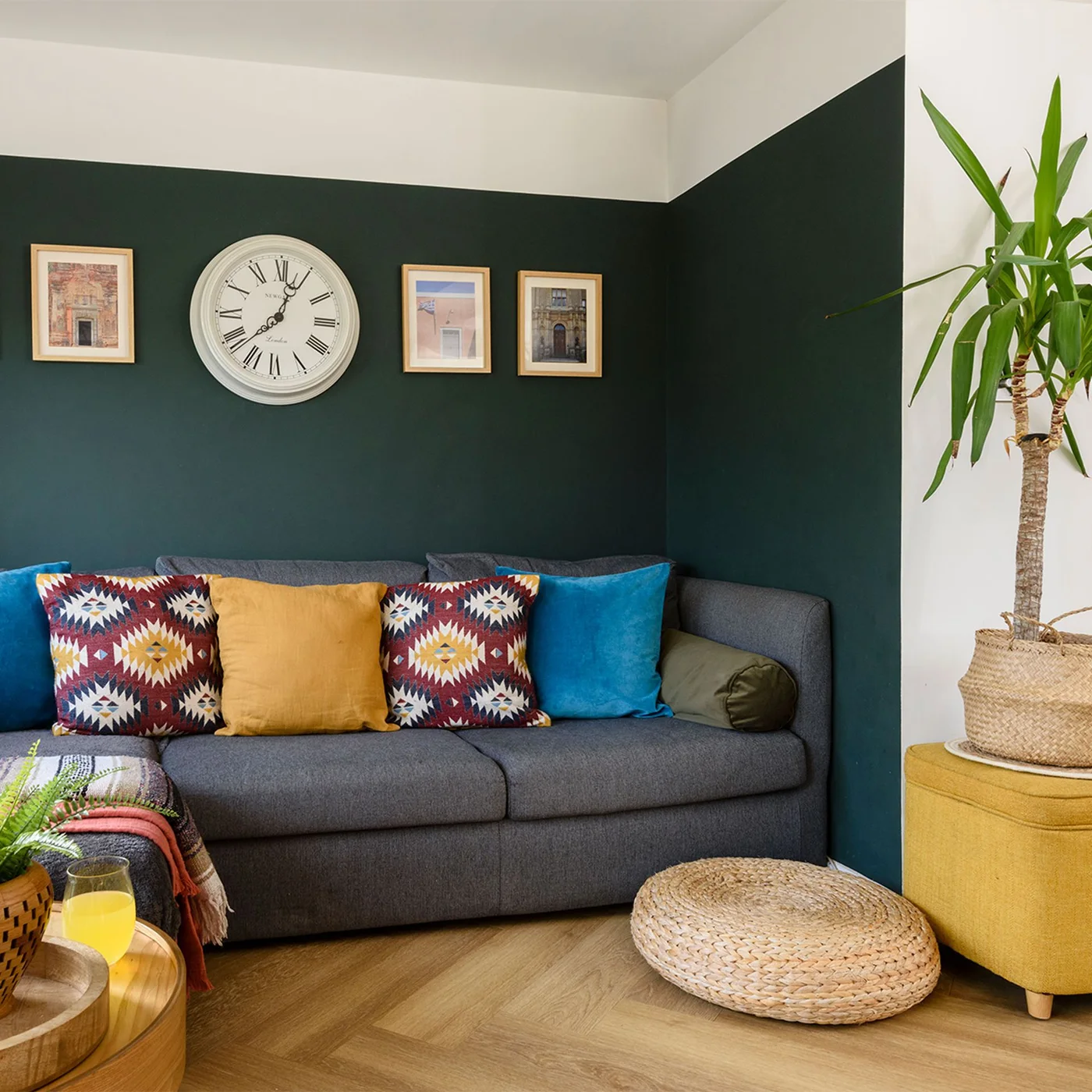
Deep green wraps around the lower wall behind the gray sofa, leaving a pale band above. The clock and small framed pictures sit within the darker area, while blue and warm patterned cushions add stronger colors at seat level. A woven footstool introduces a different texture beside the quieter gray upholstery.
Plan the paint boundary using the room’s corners, door openings and furniture positions, checking the line across the whole wall before painting. Keep the cushion arrangement flexible enough to make space when someone sits down. A movable footstool can help with lounging, but it should have a convenient parking place outside the walking route.
IDEA 05 / 20
Pair Sage Storage with a Warm Sofa
 SaveSupport Non AI Creator
Image credit: Future PLC/Caroline Mardon
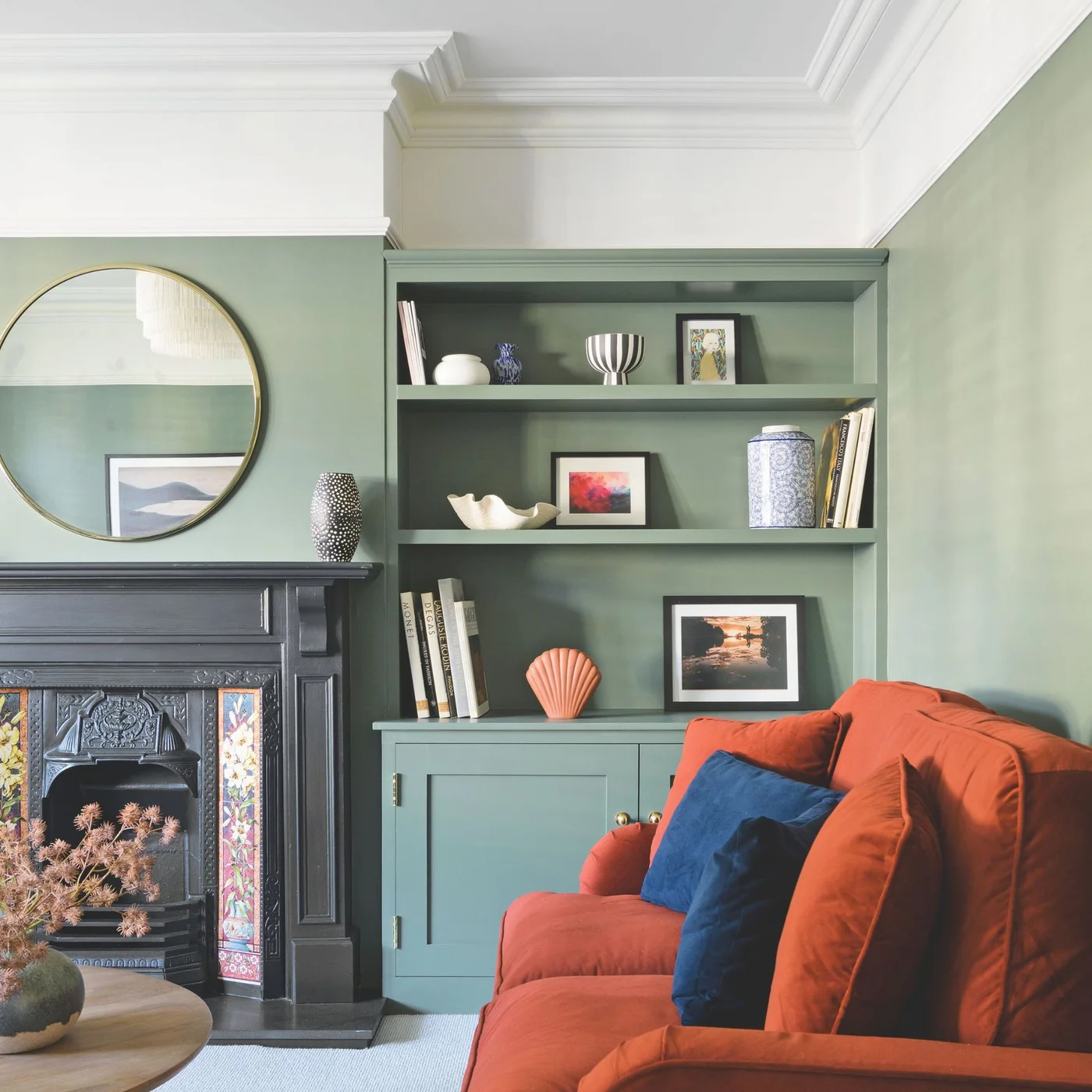
The sage shelving blends with the painted wall, allowing books and pale objects to stand out within it. An orange sofa adds a larger warm contrast, with a blue cushion creating a smaller cooler accent. The dark fireplace and simple round mirror give the surrounding patterned and colorful details firmer outlines.
Choose the shelf spacing for the books and objects you actually keep, leaving some sections available rather than buying decoration to fill them. Test whether the sofa blocks access to lower cabinets. Earthy living room ideas show further combinations of green, warmer upholstery and wood if you prefer a quieter range than several bright accents.
PART 02
Balance green with warmer and lighter pieces
IDEA 06 / 20
Carry Olive Green Around the Whole Background
 SaveSupport Non AI Creator
Image credit: Future PLC/David Giles
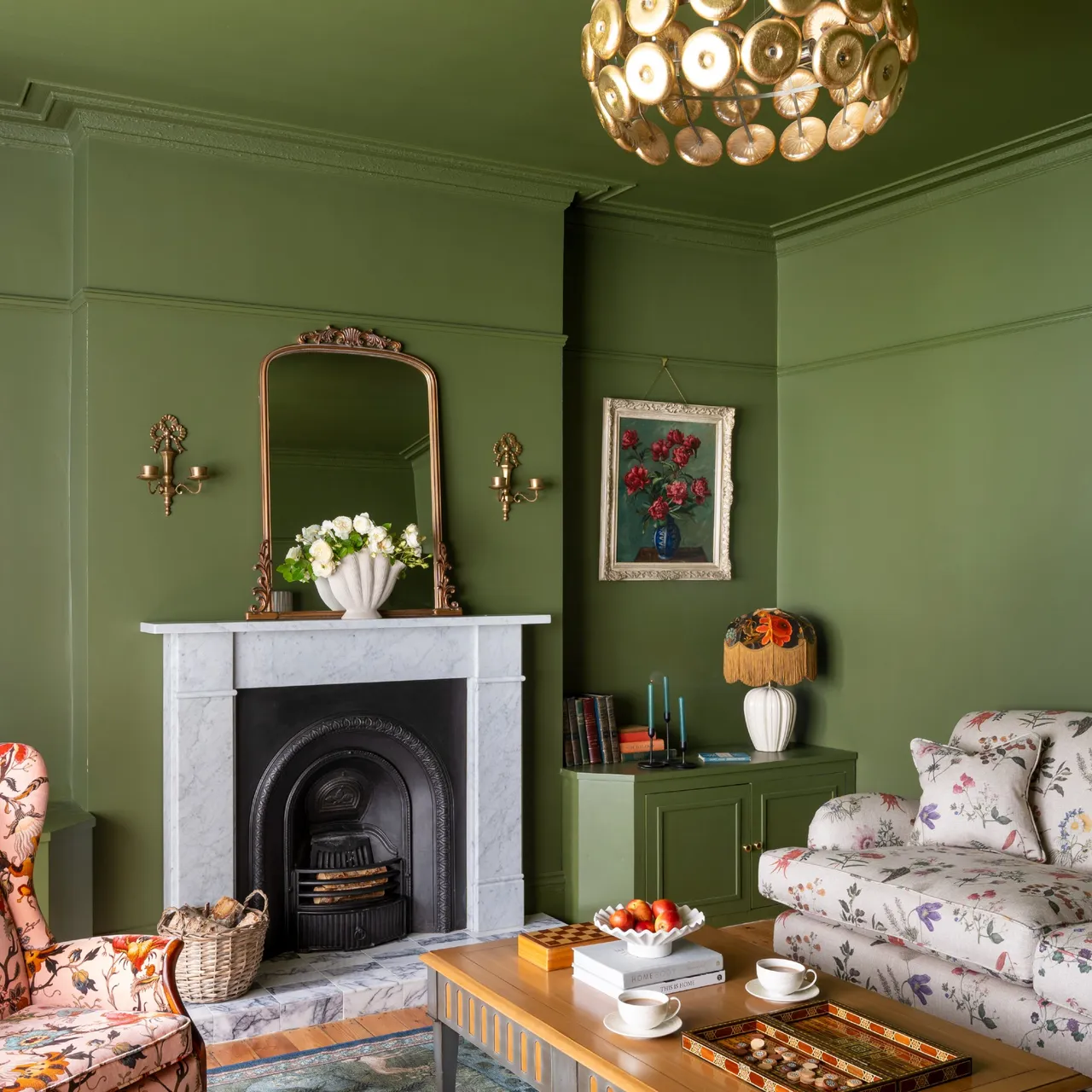
Olive green continues across the walls and ceiling, connecting the background behind different floral seating pieces. The pale fireplace breaks up that larger painted area, while the wooden coffee table introduces a warmer central surface. A framed floral picture and curved mirror repeat some of the room’s decorative character above the furniture.
Try a substantial ceiling sample as well as a wall sample before extending the same color overhead. Judge the room with the lights you use after dark, not only near the window. Keep useful lamps near seats and leave the coffee table available for drinks or books so the richer background does not lead to a crowded arrangement.
IDEA 07 / 20
Soften Brown Seating with Pale Green Walls
 SaveSupport Non AI Creator
Image credit: Future PLC / Lizzie Orme
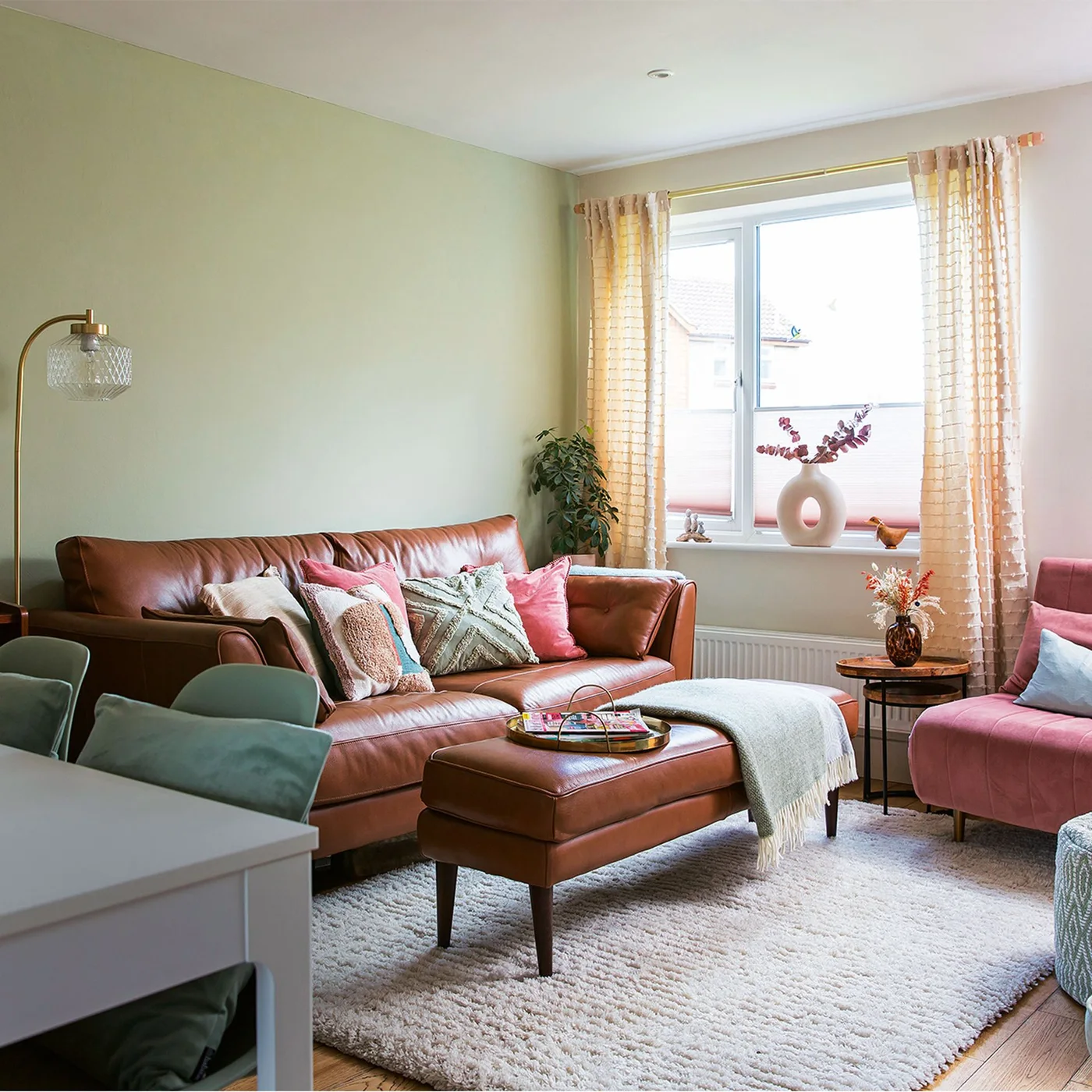
The pale green wall provides a lighter background for the brown sofa and footstool, while peach curtains and a pink chair introduce related warm accents. Pale flooring and the rug keep the lower part of the room light. Green cushions and nearby seating repeat the wall color at a smaller scale.
Choose the rug around the seating footprint and check whether the footstool leaves comfortable passage to the window. Compare the curtains with the wall in daylight before buying a full set. Follow the sofa maker’s cleaning guidance rather than treating every brown upholstery surface the same, and keep watering arrangements away from the furniture.
IDEA 08 / 20
Repeat Green Through a Smaller Seat and Lamp
 SaveSupport Non AI Creator
Image credit: Future PLC/Carolyn Barker
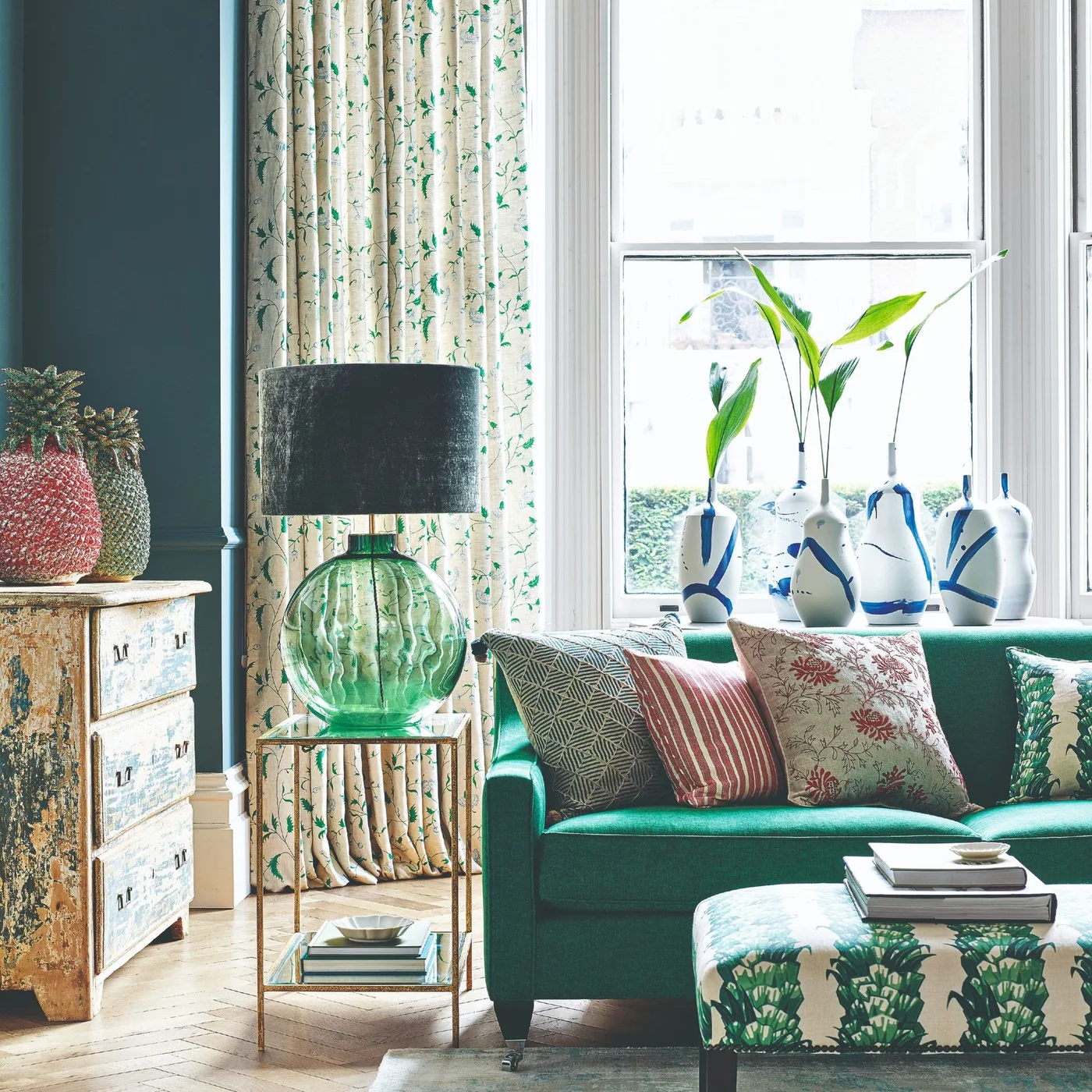
Green appears in the sofa, glass lamp and parts of the patterned curtains, connecting pieces with very different outlines. The lighter curtain background keeps the window area brighter, while the botanical footstool adds another pattern below. The small glass side table gives the lamp a place without creating a large solid block beside the seat.
Check that the side table supports the lamp securely and still leaves a useful surface within reach. Compare curtain and footstool patterns together at their actual size before committing to both. Keep decorative vases stable and positioned where opening the curtains or reaching the window will not knock them into the seating area.
IDEA 09 / 20
Paint Built-In Seating and Shelves One Green
 SaveSupport Non AI Creator
Image credit: Future PLC/Colin Poole
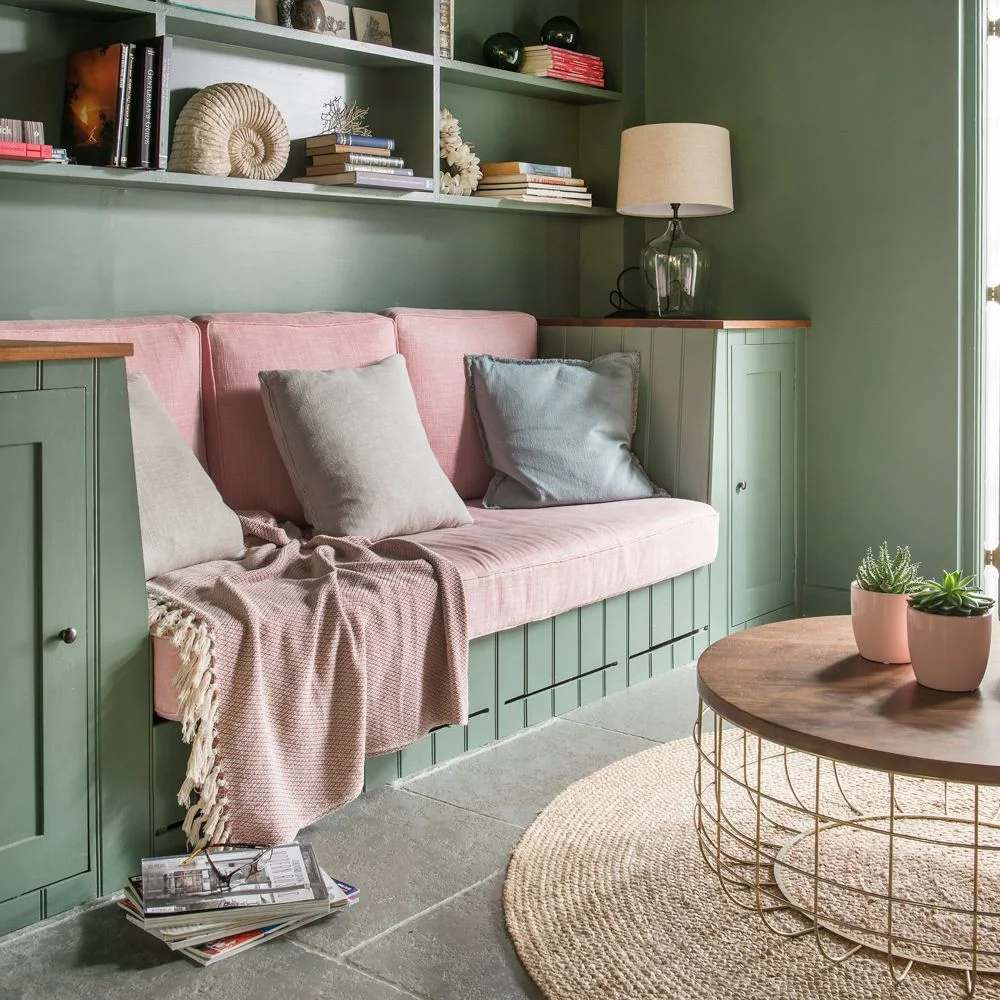
The green paint connects the bench base, surrounding cabinets and open shelves into one larger feature. Pink cushions provide a softer warm area where people sit, while gray cushions and a pale rug keep some of the smaller surfaces quieter. The round coffee table contrasts with the repeated straight lines of the joinery.
Check seat depth with the back cushions in place, and make sure the table leaves a comfortable route to each end of the bench. Store frequently used items where they remain reachable when someone is seated. Plan shelf supports and joinery around the intended loads, using suitable installation help rather than judging capacity from the photograph.
IDEA 10 / 20
Let Green Upholstery Lead a Mixed Collection
 SaveSupport Non AI Creator
Image credit: Future PLC
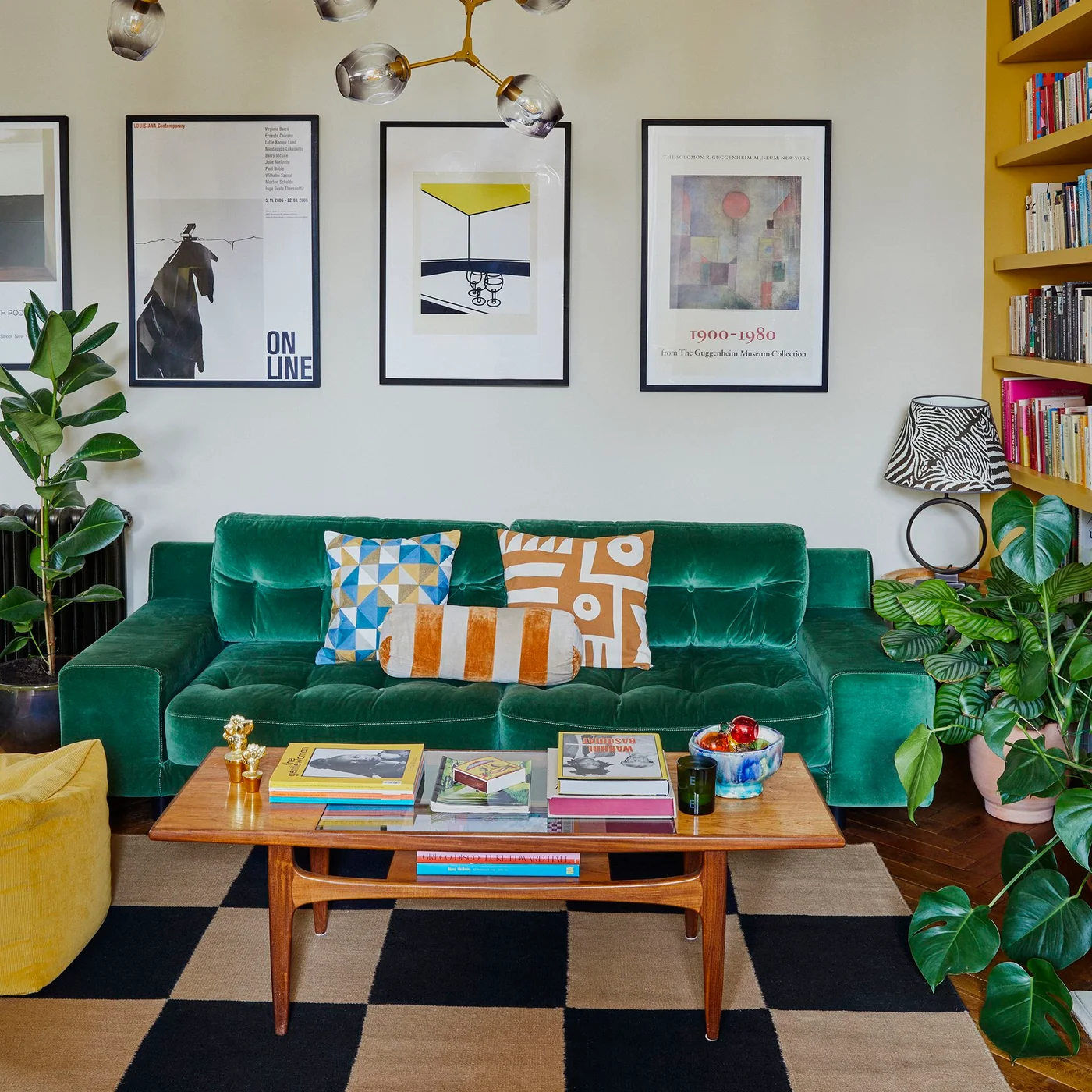
The green sofa gives the seating group a strong central color, while the yellow bookcase adds a second large accent at the side. Framed posters share a simple dark outline on the pale wall. Geometric cushions and the large checked rug bring pattern into the room without changing every furniture finish.
Keep the poster arrangement clear of the sofa back and place the bookcase so its useful shelves stay accessible. Choose which two or three colors will repeat before adding more patterned cushions. Eclectic living room ideas explore mixed collections that still leave room to sit, store books and use the coffee table comfortably.
PART 03
Give smaller corners a useful purpose
IDEA 11 / 20
Connect a Light Green Sofa with Leaf Curtains
 SaveSupport Non AI Creator
Image credit: Future PLC/Carolyn Barber
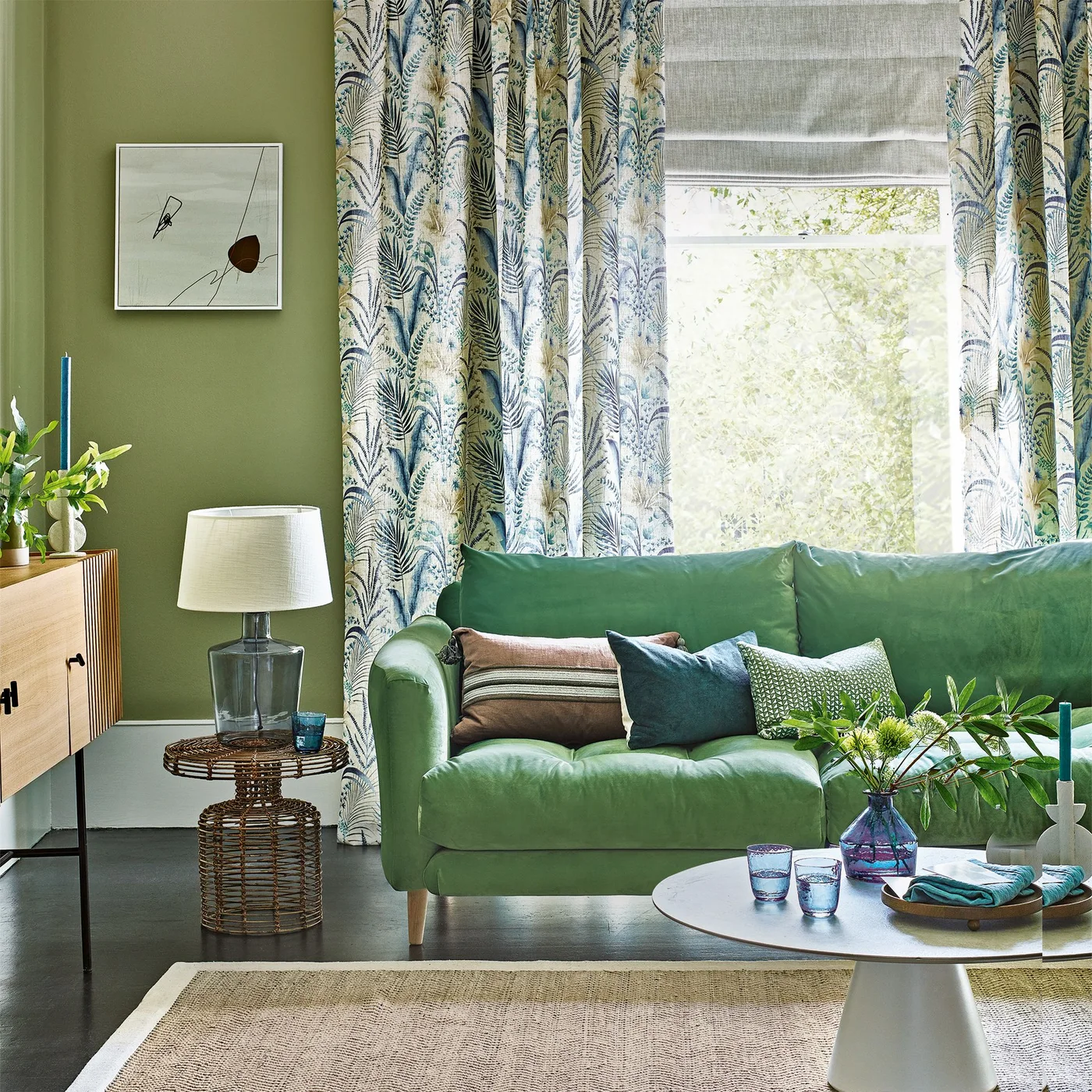
The pale green sofa relates to the stronger yellow-green wall without matching it exactly. Leaf-patterned curtains provide taller lines near the window, while a woven side table adds a different texture beside the seat. The pale oval coffee table gives the middle of the arrangement a simpler lighter surface.
Compare the curtain sample with both the sofa and wall, letting one carry the larger pattern. Check that curtains can open fully without catching the side table or lamp. Keep the coffee table positioned for the actual seat reach, and leave a route beside the sofa that works when the room is being used.
IDEA 12 / 20
Make a Striped Chair the Smaller Green Feature
 SaveSupport Non AI Creator
Image credit: Polly Wreford / Kiera Buckley-Jones
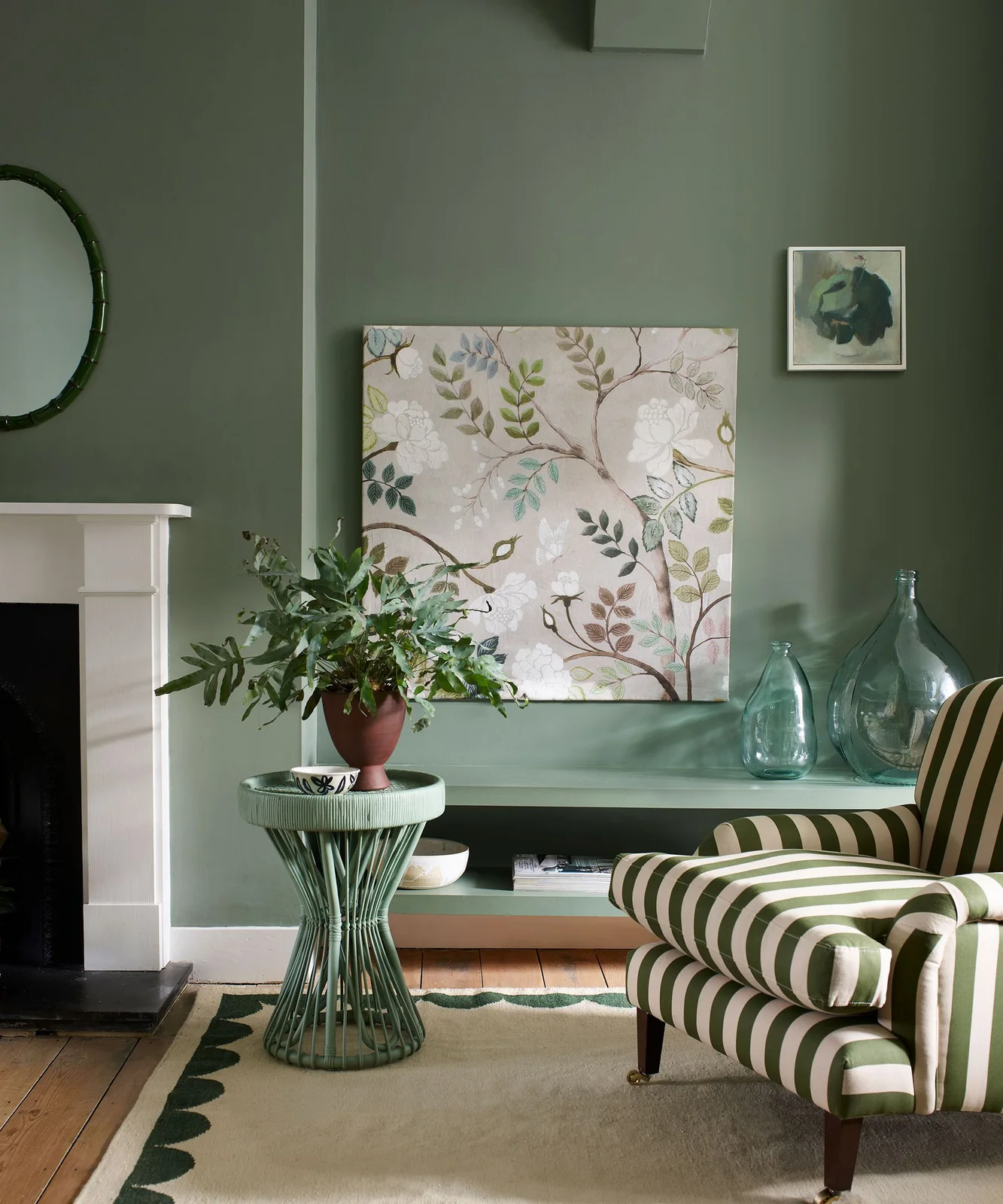
The striped chair supplies the strongest repeated pattern against the quieter gray-green wall. A green side table and pale low shelf give the corner different useful surfaces, while botanical artwork and glass vessels repeat the surrounding color. The light fireplace edge separates this smaller arrangement from the rest of the room.
Sit in the chair before choosing the side table height, checking that a cup or book can be reached without leaning awkwardly. Secure larger artwork if it will stand near a walkway, and keep glass away from chair movement. A corner can feel complete with one useful table and lamp rather than a collection of objects at floor level.
IDEA 13 / 20
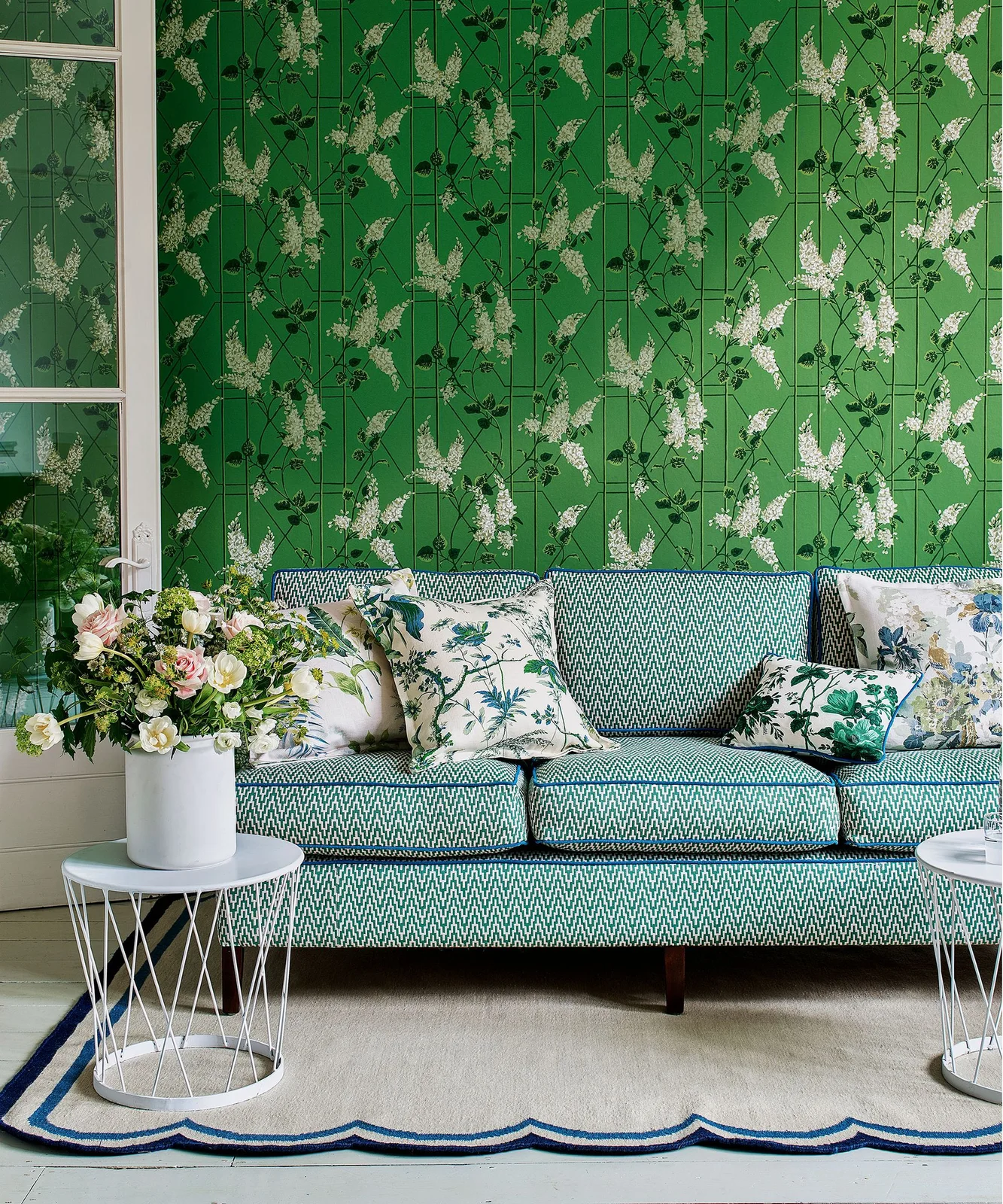
Balance Green Floral Walls with a Smaller Pattern
 SaveSupport Non AI Creator
Image credit: Future / Polly Wreford
The bright green wall carries a larger floral pattern, while the sofa uses a smaller repeating blue-green motif. Pale cushion backgrounds and the side table introduce lighter areas between those designs. The combination connects through related colors while giving the wall and upholstery visibly different pattern sizes.
Look at a full wallpaper repeat beside a substantial upholstery sample before combining them. Decide which pattern should draw attention first, then keep larger accessories quieter. Limit cushions to a number that leaves useful seat depth, and select the side table for everyday reach rather than adding another patterned surface just because it fits the palette.
IDEA 14 / 20
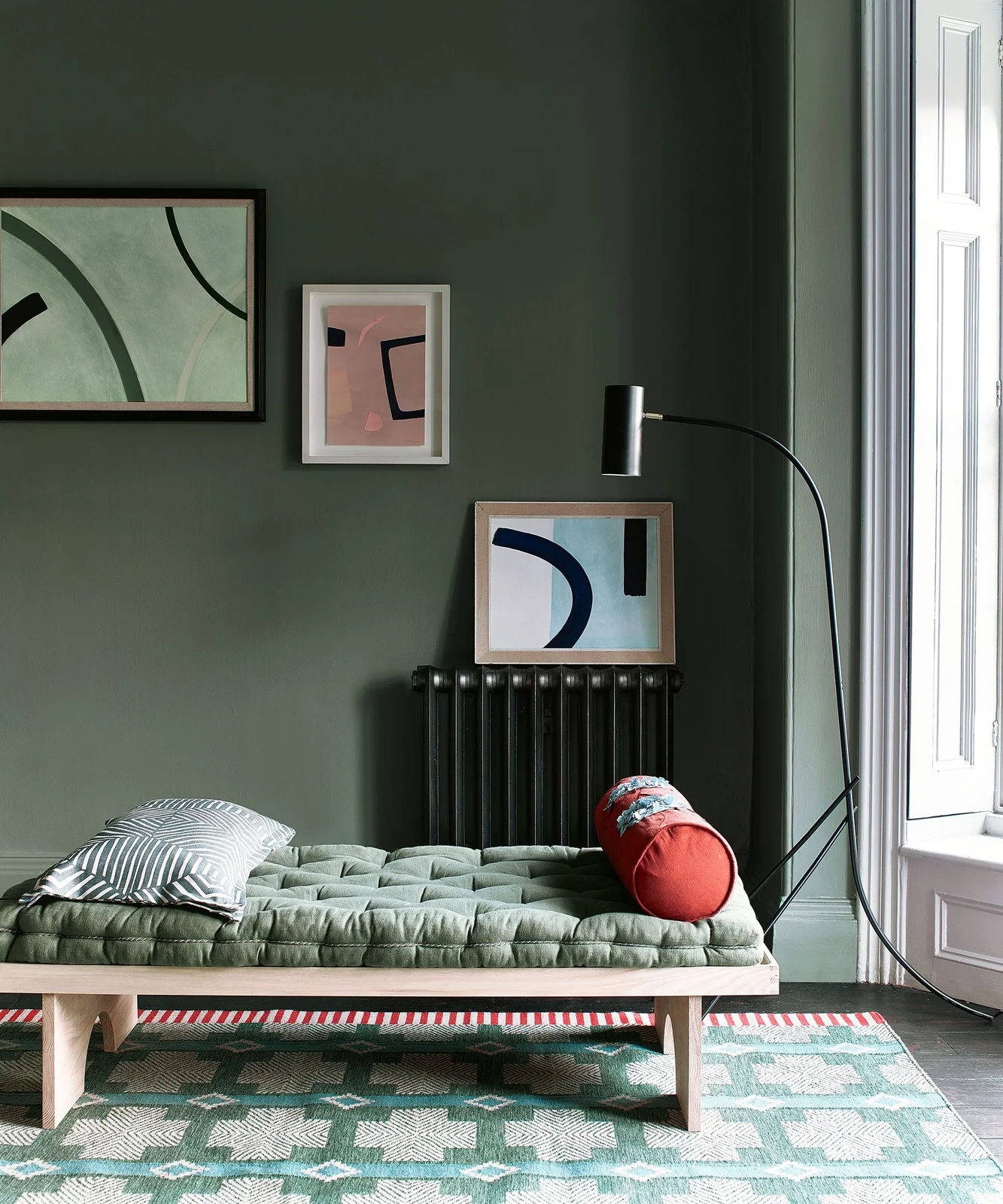
Give a Green Daybed Its Own Reading Light
 SaveSupport Non AI Creator
Image credit: Future
The muted green wall and tufted cushion create a related background for the daybed, with a red bolster supplying one stronger warm accent. Abstract pictures break up the wall above, while the black lamp has a clear outline near the window. A patterned rug adds detail beneath the simpler wooden frame.
Check that the daybed suits how you want to sit or recline, including the support offered by the cushions. Keep the lamp cable outside the route past the window and leave appropriate space around heating equipment. Choose a nearby useful surface for reading essentials so the daybed itself does not become storage for books and cups.
IDEA 15 / 20
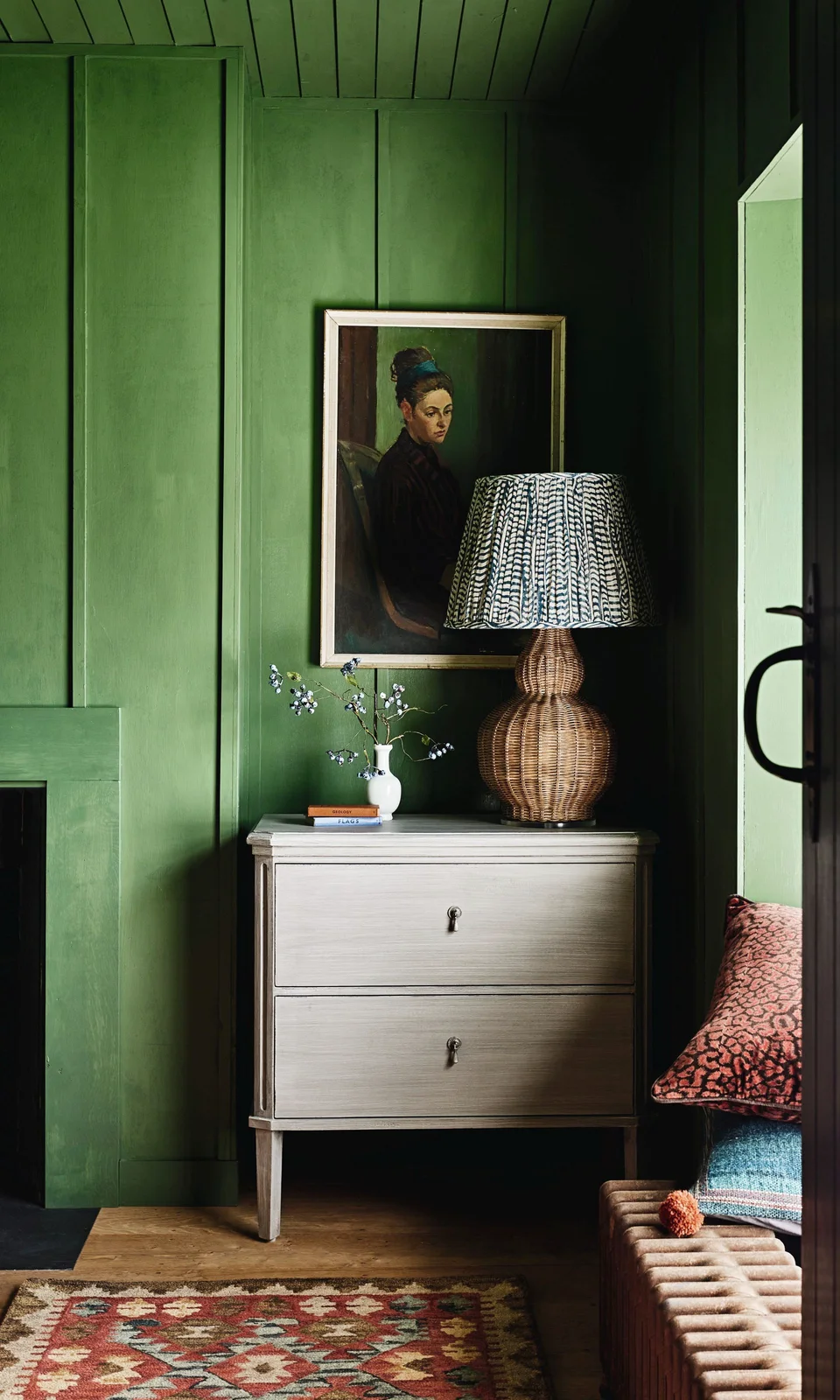
Use Green Boards Around a Useful Cabinet
 SaveSupport Non AI Creator
Image credit: OKA
Green boards continue across the wall and overhead, setting off the pale cabinet below the portrait. The woven lamp adds a warmer texture, with its patterned shade providing a smaller contrasting detail. The patterned rug and visible cushion bring warm accents into a corner whose larger background remains consistently green.
Check the cabinet drawers with nearby seating in its usual position, leaving space to use the storage without moving the lamp. Keep the lamp size suitable for the surface and choose a stable arrangement. Repeating a strong green overhead is optional; a wall-only treatment can preserve this contrast while leaving the upper area lighter.
PART 04
Connect patterns, seating and storage
IDEA 16 / 20
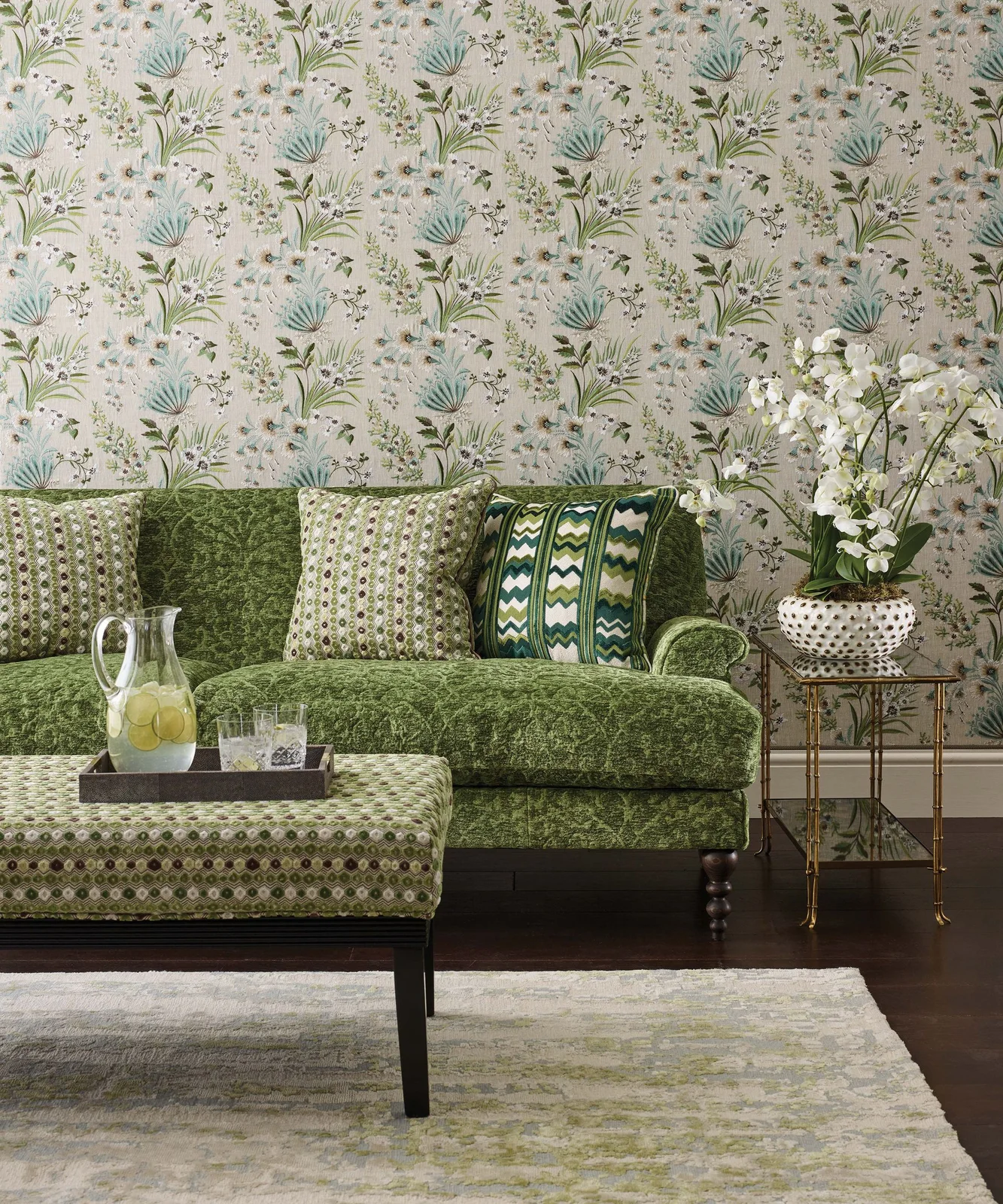
Keep Several Green Patterns in Related Shades
 SaveSupport Non AI Creator
Image credit: Nina Campbell distributed by Osborne & Little
Green repeats through the sofa, dotted footstool and smaller areas of the botanical wallpaper. The wall’s pale background keeps the many patterns separated, while the glass-topped side table introduces a simpler open outline. A larger striped cushion changes the scale of the pattern rather than matching the upholstery exactly.
Compare the full group of fabrics together before ordering upholstery, taking account of how seams will interrupt each pattern. Choose the footstool for its useful size and cleaning needs as well as its color. A stable tray helps create a firmer surface for drinks, but leave comfortable room to move around it.
IDEA 17 / 20
Let Olive Walls Frame Pale Sofas
 SaveSupport Non AI Creator
Image credit: Polly Eltes / Future
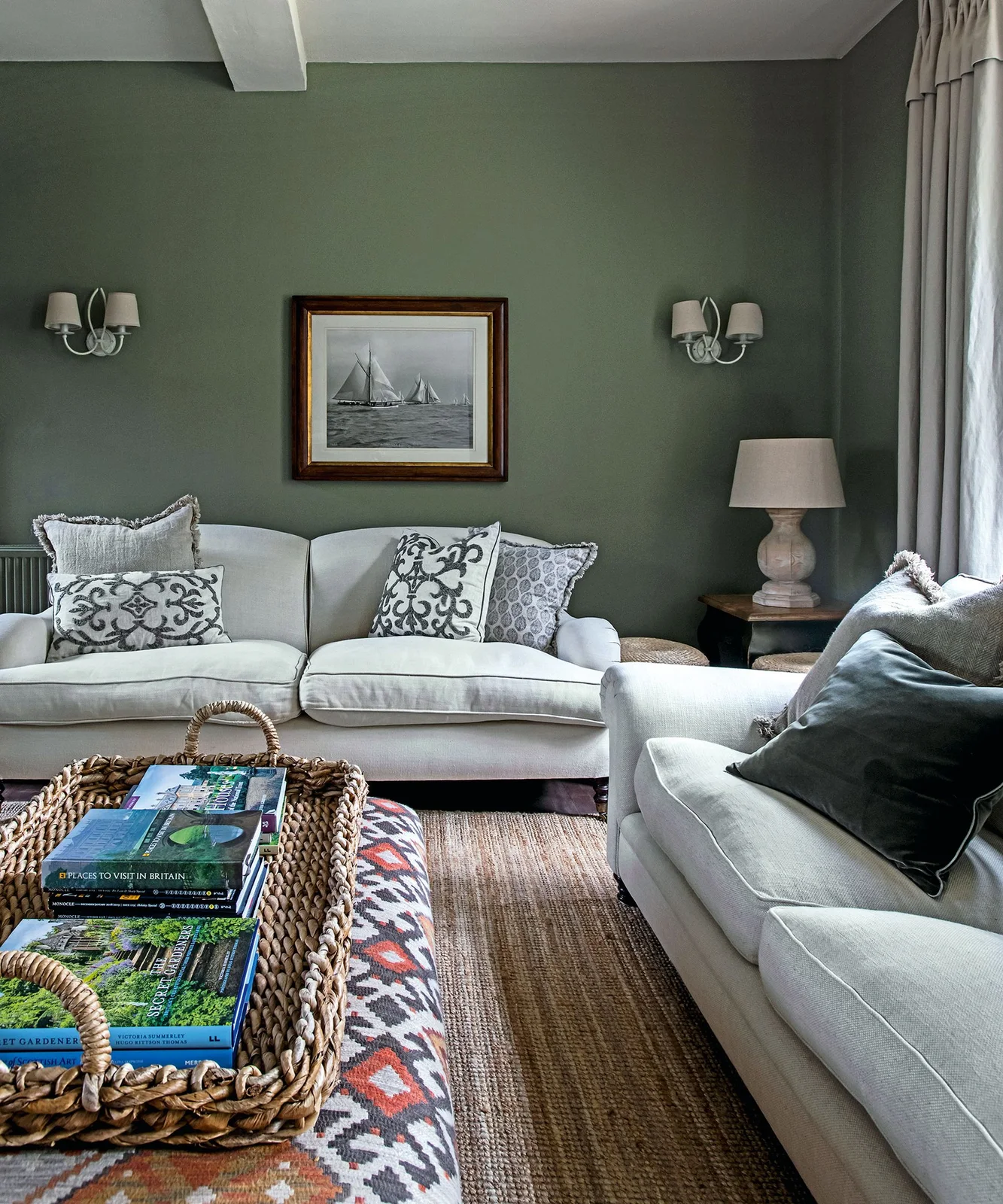
Olive walls provide the darker background around the pale seating, allowing the cushion edges and sofa shapes to remain clear. A patterned footstool introduces warmer details between the seats, with a woven tray creating a defined place for books. Pale curtains and wall lights add lighter areas at the room’s edges.
Check the distance between both sofas and the footstool before choosing a larger central piece. Keep the tray easy to lift if the footstool is also used for resting feet. Select cushion covers around maintenance and comfort, reducing the number if they occupy too much seating rather than adding more simply to repeat the wall color.
IDEA 18 / 20
Set a Bright Green Wall Beside Pale Trim
 SaveSupport Non AI Creator
Image credit: Katharine Paravacini
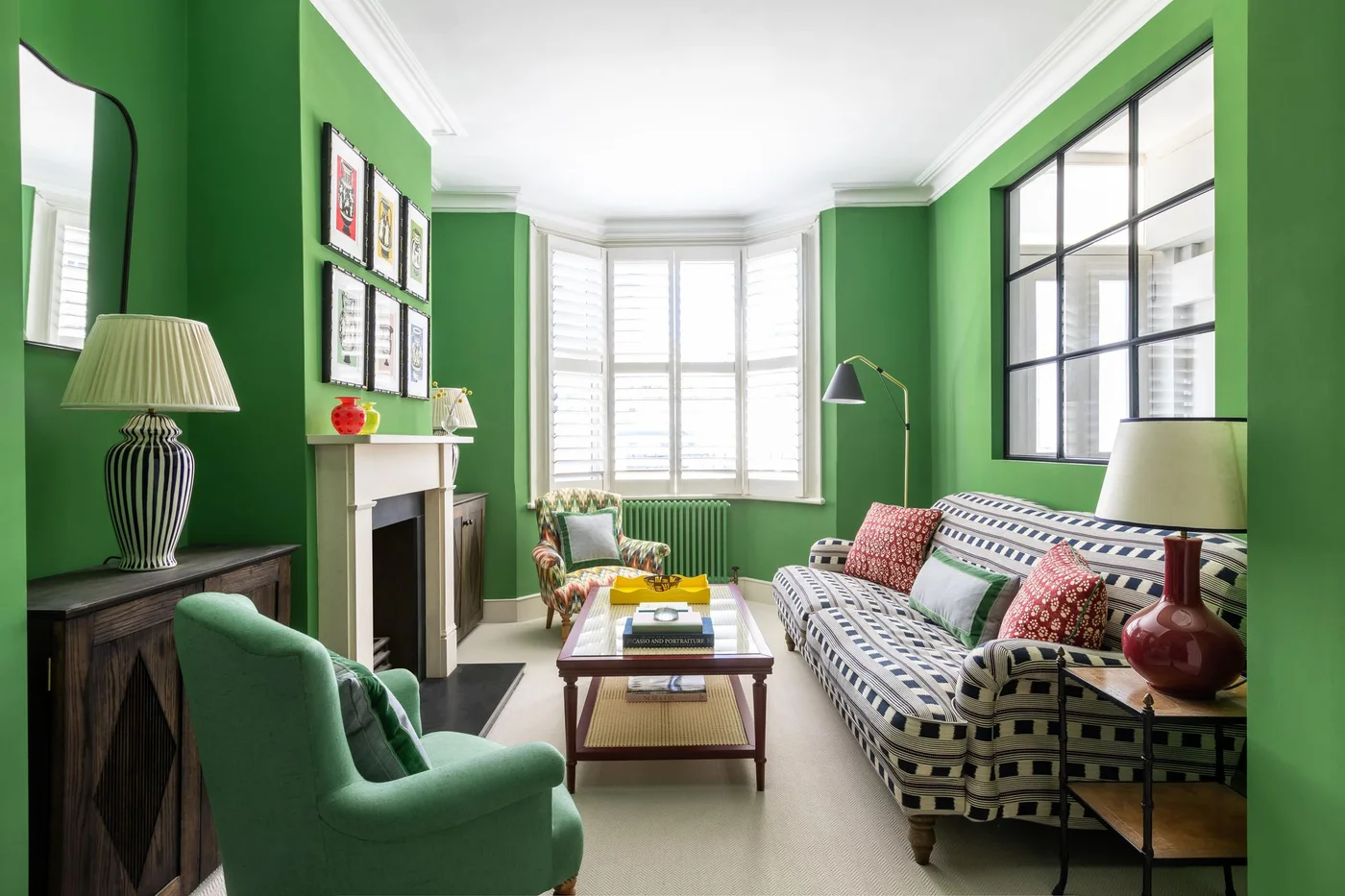
The bright green walls remain distinct from the pale ceiling, window shutters and fireplace. Dark-and-pale patterned seating adds contrast at furniture level, while a solid green armchair repeats the wall color. The wooden coffee table gives the central area a warmer surface beneath the stronger painted background.
Consider how much of a bright wall remains visible once the furniture is in place, rather than judging the sample in an empty room. Keep a practical route between the armchair and sofa. Use the coffee table for the objects you regularly need, and select reading lights separately from the decorative lamps shown around the room.
IDEA 19 / 20
Place a Deep Green Background Behind Books
 SaveSupport Non AI Creator
Image credit: Benjamin Moore
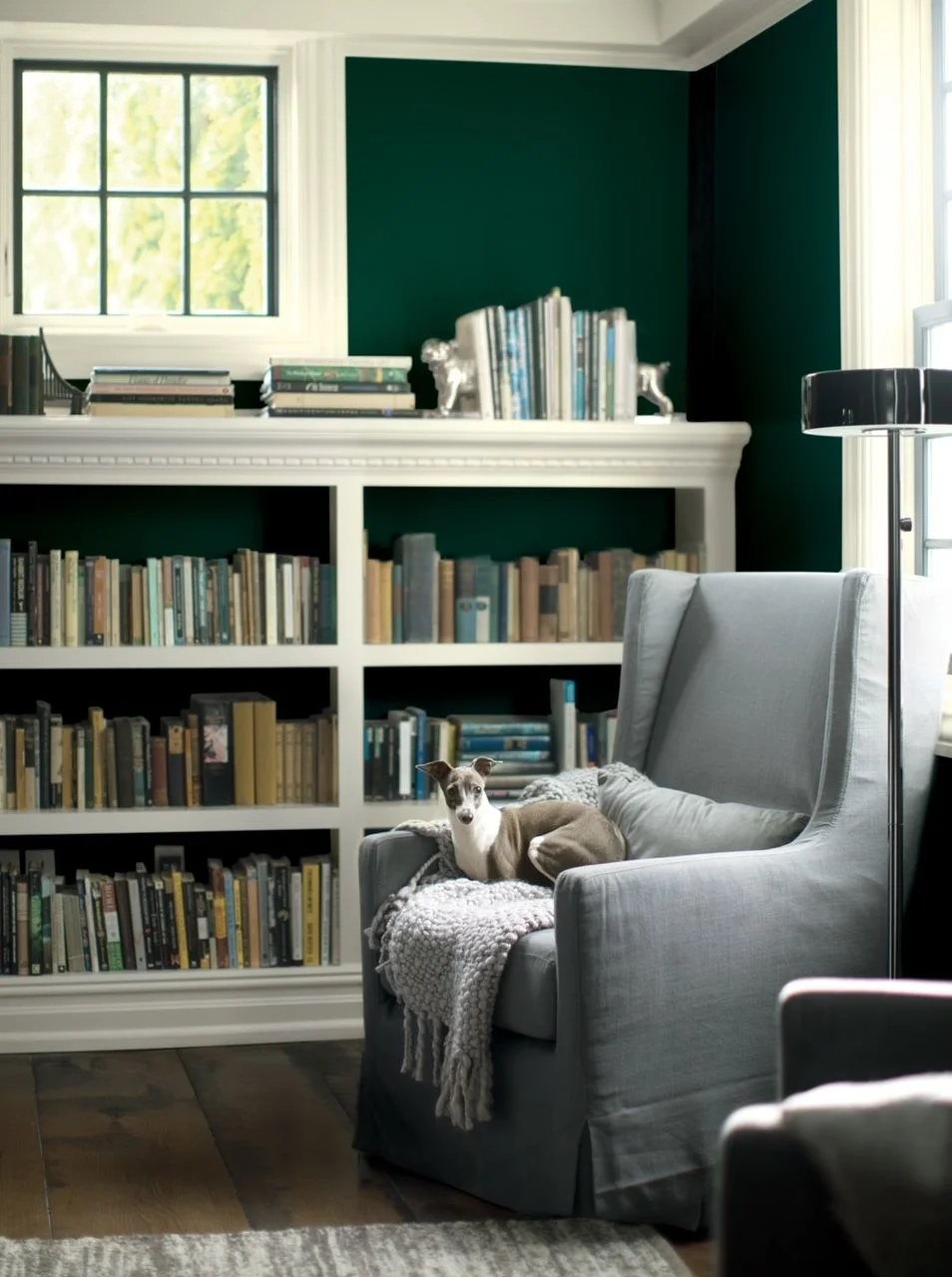
The deep green wall creates a darker background around the pale shelves and window trim. Books provide much of the smaller detail, while a gray armchair keeps the reading seat quieter. The dark floor lamp and pale throw add useful contrasting shapes without requiring another large patterned furnishing beside the shelves.
Keep shelves within comfortable reach and avoid filling the space around the chair with books at floor level. Choose a lamp position that lights the page without occupying the window route. Check the chair fabric’s care instructions if pets share the seat, and leave a stable place for a drink outside the chair’s movement.
IDEA 20 / 20
Introduce Green Through a Low Sideboard
 SaveSupport Non AI Creator
Image credit: Katie Charlotte
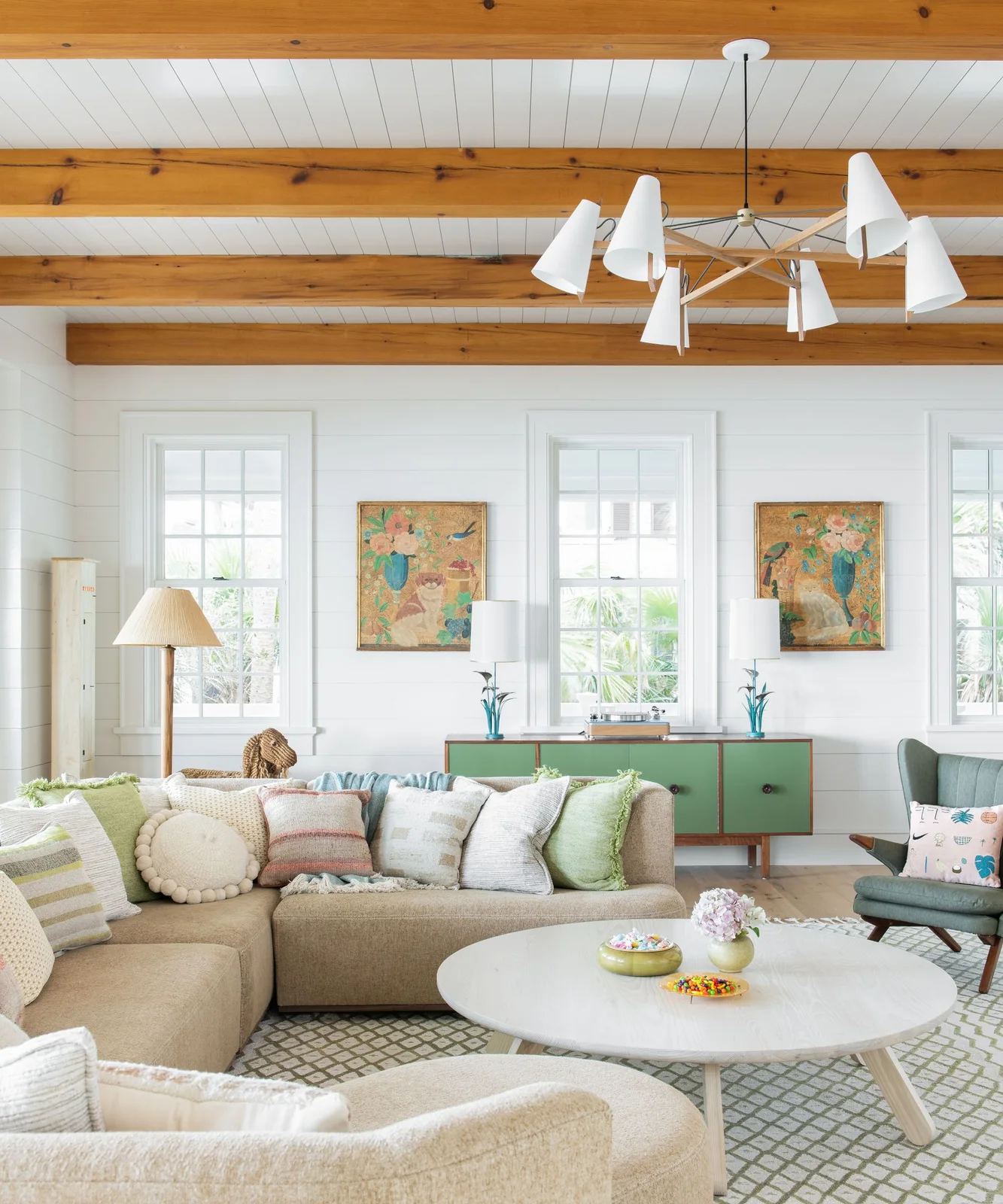
Green appears in the sideboard fronts, chair and selected cushions, leaving the walls and much of the seating pale. The wooden beams and sideboard frame add warmer outlines around those smaller green areas. A pale oval table keeps the center simpler, while framed artwork contributes other gentle colors behind the sofa.
A colored storage piece can introduce green without changing the walls, but check its doors remain usable with the sofa in place. Choose cushion accents from the furniture or artwork rather than trying to match every fabric. Keep enough clear tabletop space for everyday use and judge the whole seating arrangement before adding further decorative pieces.
BRING IT ALL TOGETHER
Choose the useful arrangement before the final accents
Place the main seating and storage first, then compare the green samples beside those surfaces. Check how a stronger wall looks in the evening and whether patterned fabrics still feel comfortable together at their actual scale. Green can connect the room through a few larger areas without appearing in every cushion or decorative object.
Leave space to use cabinets, open curtains and pass between seats. Add reading lights where they are needed and keep useful surfaces within reach. If the room feels too busy, simplify the smaller textiles or displays before changing all the furniture. The arrangement should work just as well with books, drinks and people in it.