A mini bar needs useful storage more than a large footprint. A cabinet, cart or short counter can keep glasses and drinks together while freeing the main kitchen for food preparation. Decide what you actually serve before choosing bottle racks, refrigeration or a sink.
These photographs show compact arrangements with different levels of commitment, from freestanding furniture to fitted cabinetry. Compare the space available with open doors, pulled-out drawers and people passing. Keep a working area clear so the bar remains useful after the bottles and glasses are arranged.
PART 01
Find a Compact Place for the Bar
IDEA 01 / 20
Fit a Dry Bar into a Dining-Room Recess
 SaveSupport Non AI Creator
Image credit: Project: Damon Liss Design (via Houzz)
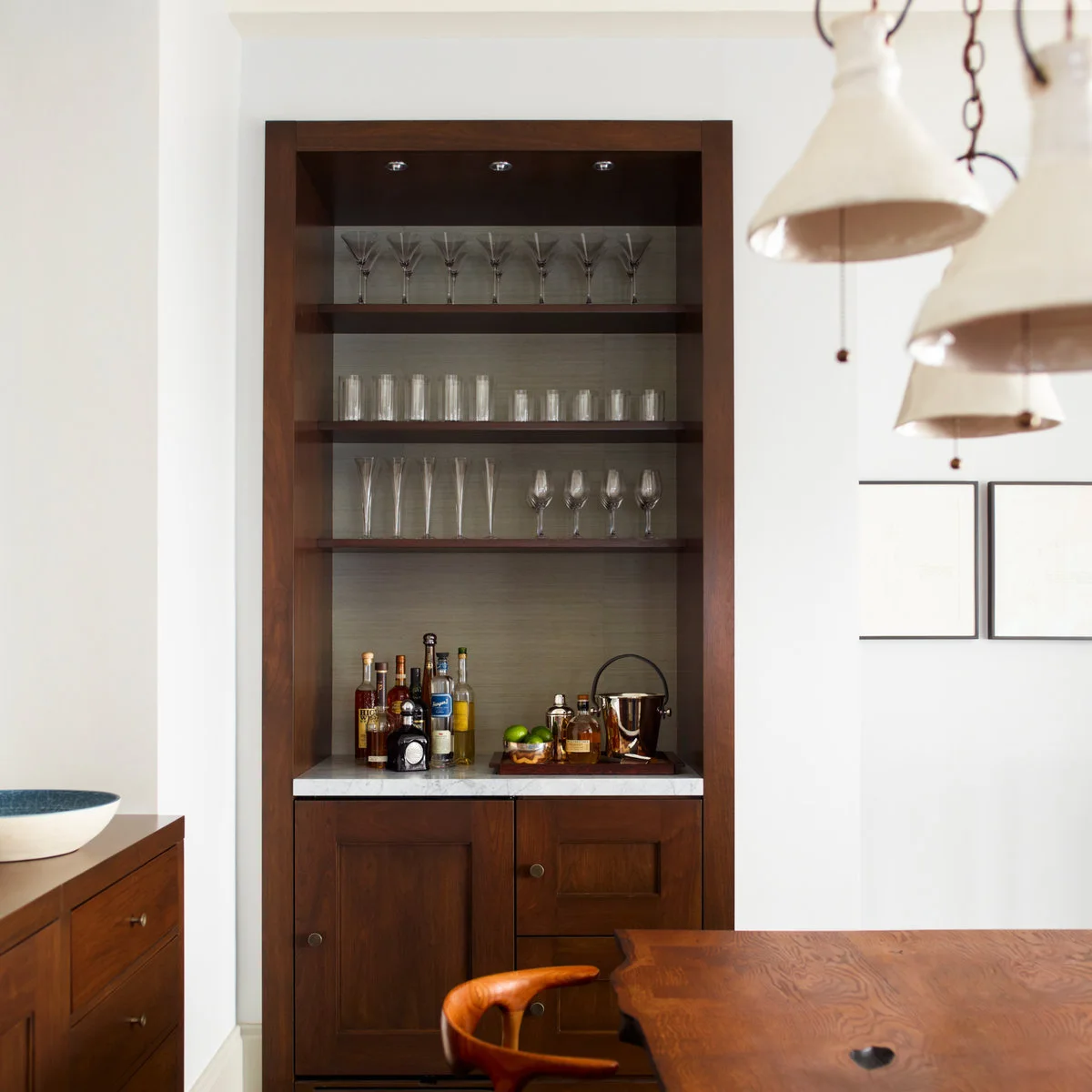
A wood frame defines this recessed bar beside the dining table. Open shelves hold rows of glasses, while the counter groups bottles and serving tools at either end. Closed lower cupboards provide a quieter base, keeping the display concentrated above rather than spreading supplies around the room.
Choose shelf spacing around the tallest glasses you actually use. Leave a clear section of counter for setting down a tray or preparing drinks. If the recess already stores dining essentials, dining room storage ideas can help you divide the space without displacing useful plates and linens just to create a display.
IDEA 02 / 20
Turn a Narrow Alcove into a Wet Bar
 SaveSupport Non AI Creator
Image credit: Project: DeRosa Builders LLC (via Houzz)
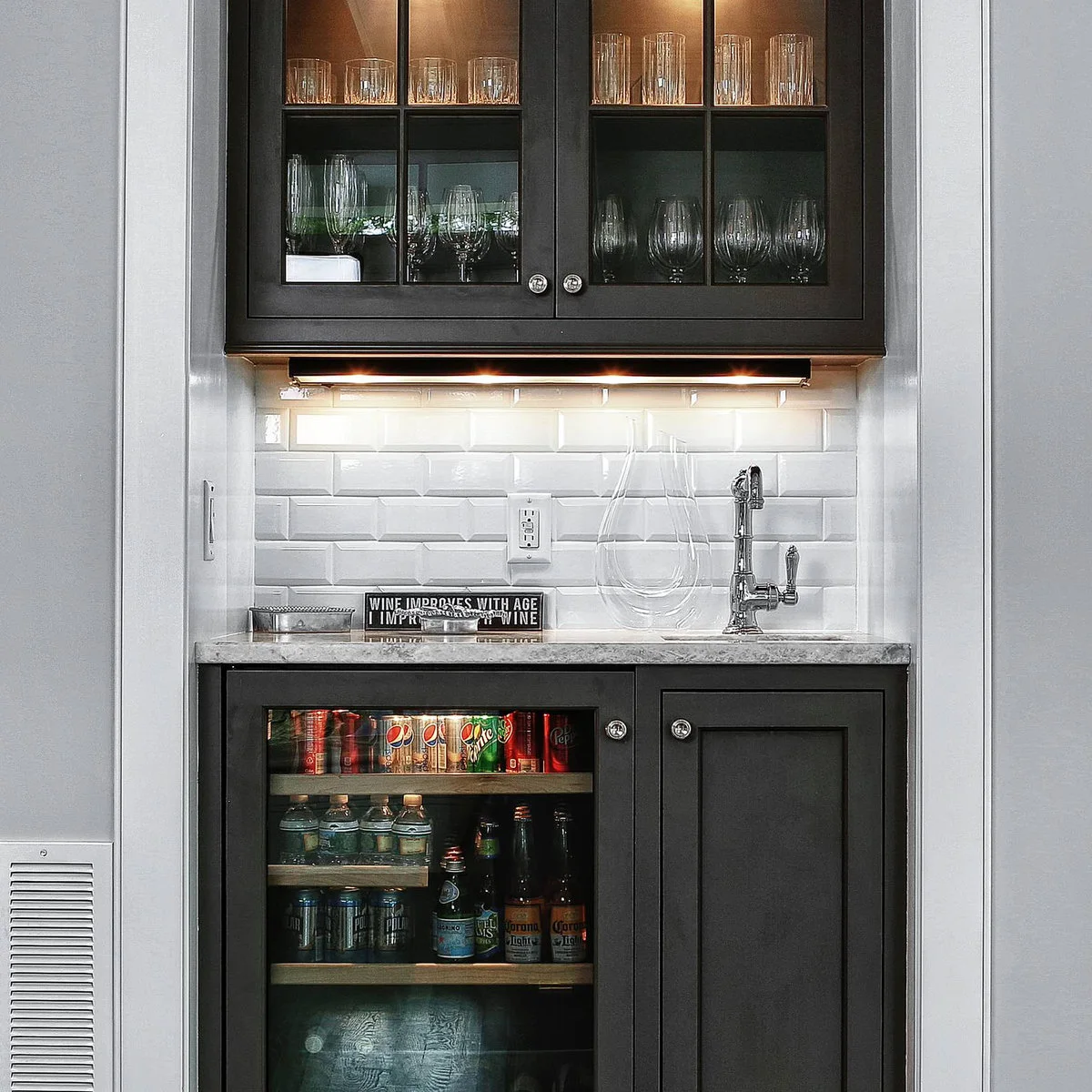
Black cabinetry gives this narrow alcove a clear outline against the pale surrounding walls. White beveled tile and a light counter keep the middle section bright. The small faucet and beverage refrigerator group drinks and rinsing facilities within one compact run instead of occupying the main kitchen counter.
Decide whether a sink earns its place before reserving a cabinet for it. Plumbing can take away storage that might otherwise hold glasses or trays. Check the refrigerator’s ventilation and door requirements with the actual model, and keep the counter accessible rather than filling the space around the faucet with decorative objects.
IDEA 03 / 20
Use a Slim Niche for Bottles and Stemware
 SaveSupport Non AI Creator
Image credit: Project: Hive Home (via Houzz)
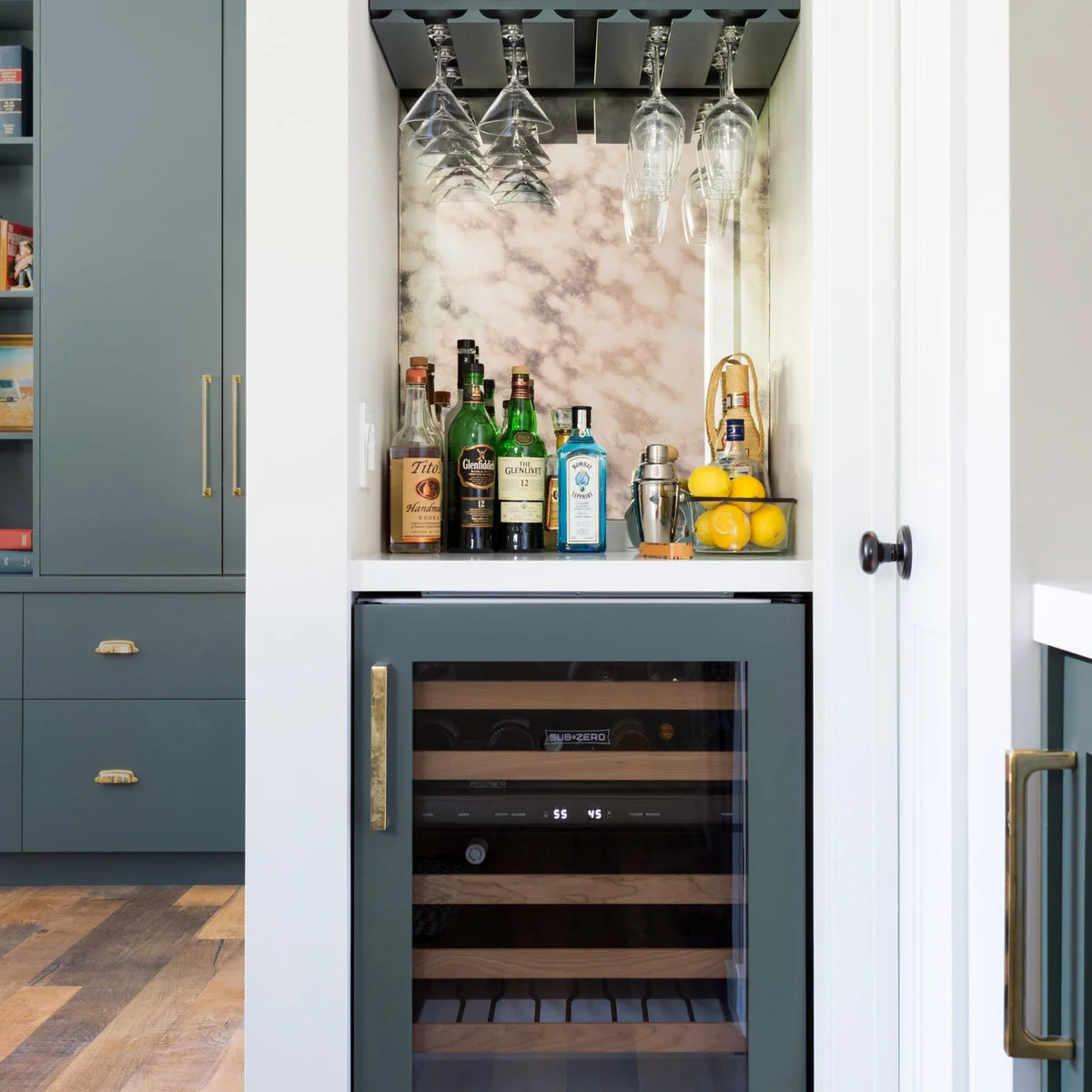
A slim white niche holds bottles and a shaker above a wine refrigerator. Hanging stemware uses the upper part of the opening, leaving the bottle grouping below. The neighboring blue-green cabinetry supplies a stronger color, while the pale patterned backing gives the small niche its own distinct surface.
Check glass height and bowl width before choosing an overhead rack. Leave enough clearance to remove each glass without knocking the bottles below. Keep only the bottles you use in the opening, with the remaining supplies elsewhere, so the narrow counter still offers a place to set down a glass.
IDEA 04 / 20
Start with a Freestanding Drinks Stand
 SaveSupport Non AI Creator
Image credit: Project: Sally Wheat Interiors (via Houzz)
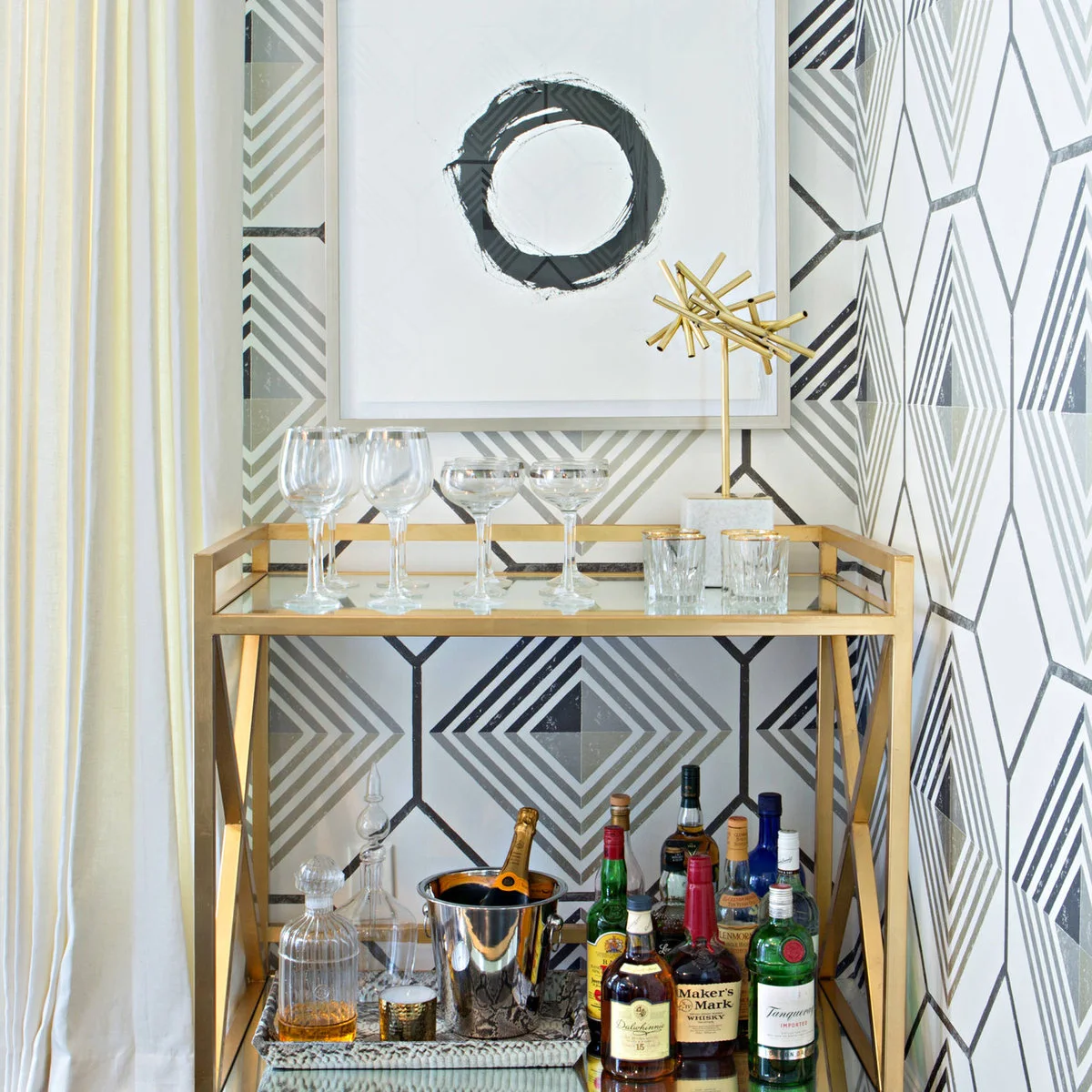
A gold-toned drinks stand holds glasses on its upper tier and bottles below. The geometric wallpaper and framed artwork give the small corner a distinct setting without requiring built-in cupboards. The arrangement uses vertical storage while keeping the furniture itself separate from the wall treatment.
Choose a stable stand with shelves suited to the weight you intend to store. Keep heavy bottles on the lower tier and leave the upper surface useful for serving. Protect the floor and shelf surfaces from drips, and position the stand where curtains, doors and passing traffic will not brush the glassware.
IDEA 05 / 20
Follow the Slope beneath a Staircase
 SaveSupport Non AI Creator
Source: houzz.com
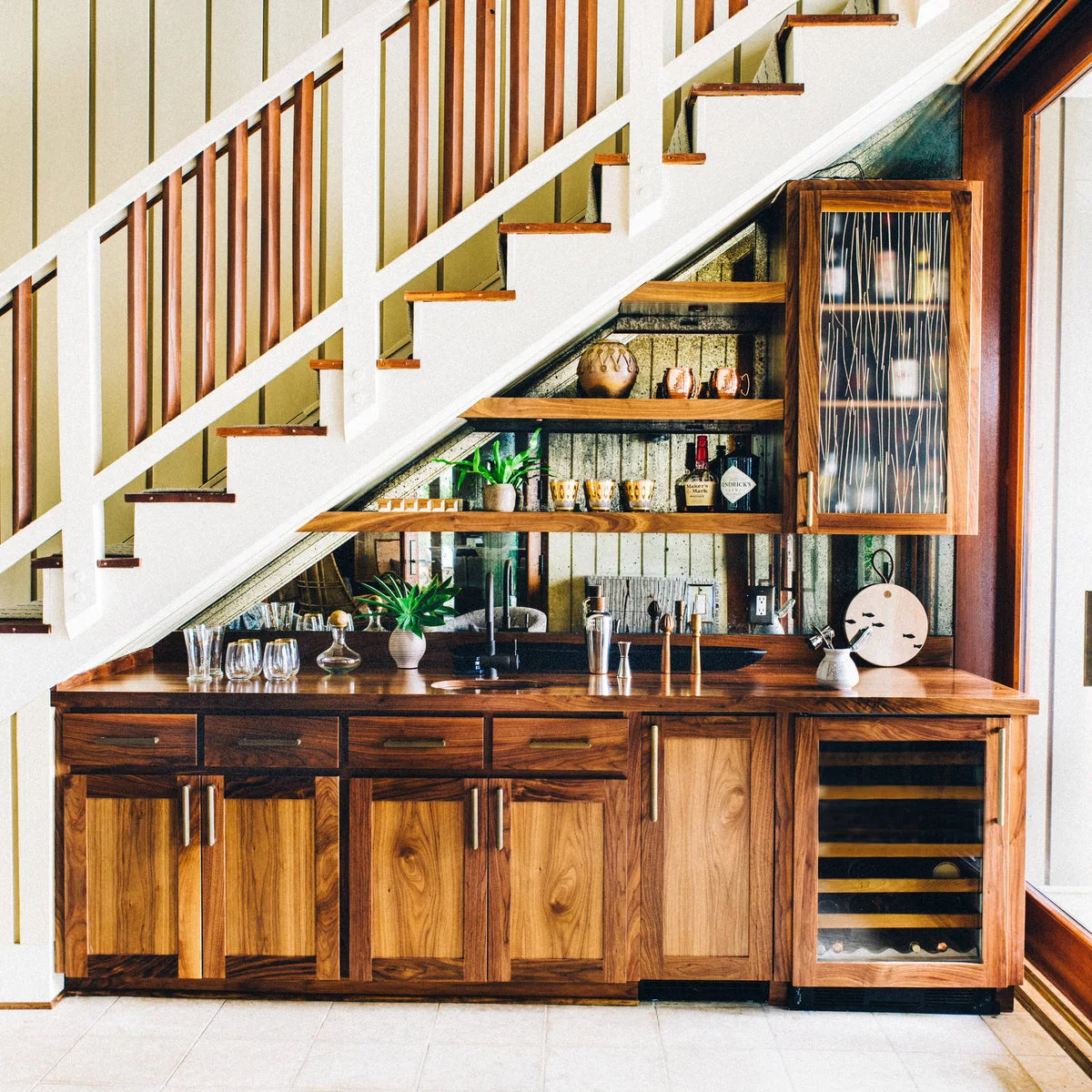
Staggered shelves follow the slope above this under-stair bar. Wood cabinetry fills the lower run, with a small sink near the middle and a wine refrigerator at the right. The changing shelf lengths use the triangular wall without pretending that every part of the recess has the same headroom.
Check headroom where you will stand, not just the available wall width. Keep taller glasses and frequently used supplies in the easiest section to reach. For the surrounding circulation, staircase ideas can help you consider the relationship between the stairs and the room before dedicating the recess to cabinetry.
PART 02
Make the Storage Work Harder
IDEA 06 / 20
Give Bottles a Narrow Pull-Out
 SaveSupport Non AI Creator
Image credit: Project: McCarley Custom Cabinets (via Houzz)
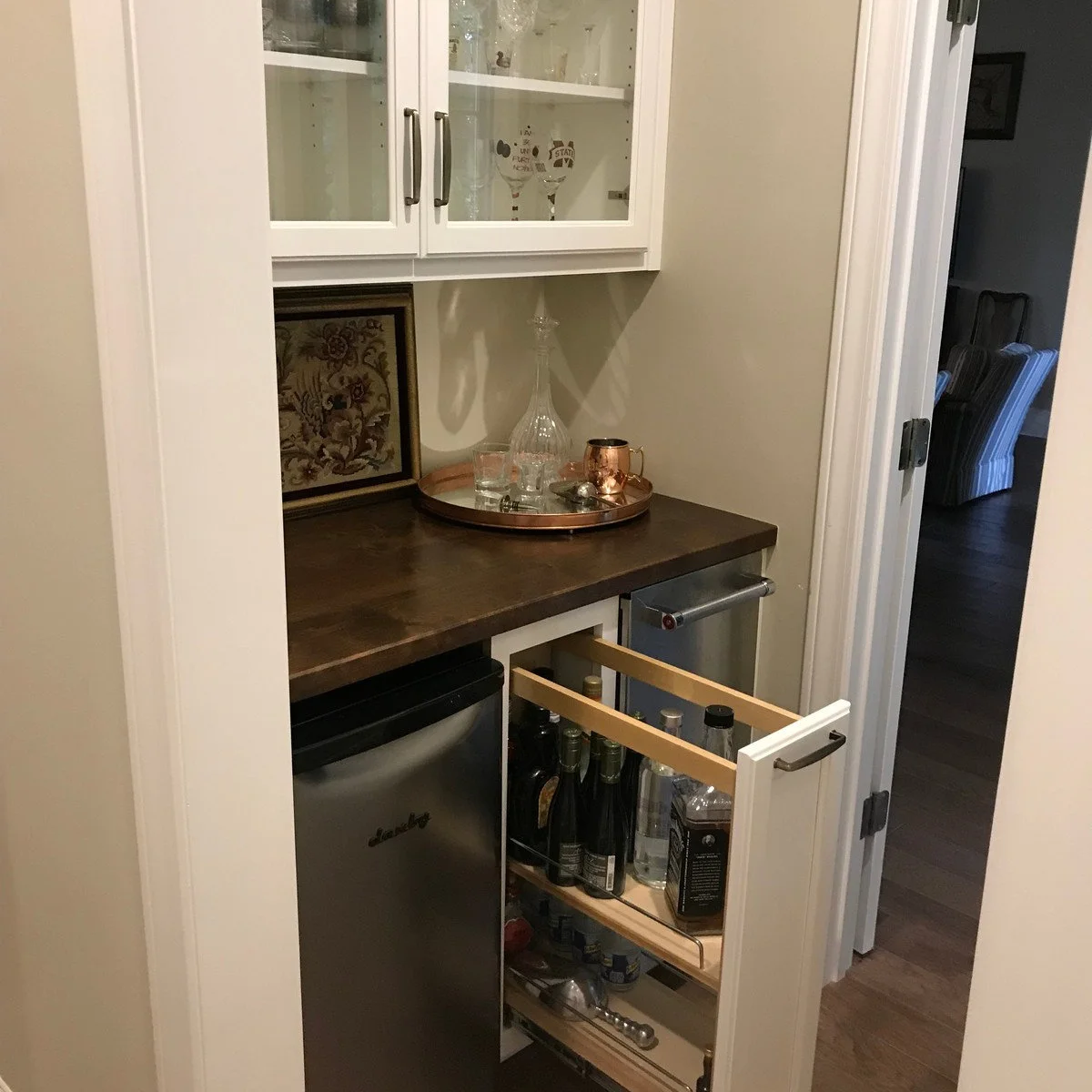
A narrow pull-out brings bottles out from beneath a brown counter in this compact bar. The rail-sided storage makes the contents visible without lining them all up on the worktop. A tray groups a decanter and glasses above, while a white glass-front cabinet holds additional stemware.
Measure bottle heights and the pull-out’s usable internal width before ordering this kind of fitting. Check its load rating and the space required when fully extended. Keep the nearby doorway clear, and choose a finish that can be wiped after spills rather than leaving residue around the moving runners.
IDEA 07 / 20
Check Refrigerator Drawers in the Open Position
 SaveSupport Non AI Creator
Image credit: Project: Marvista Design + Build (via Houzz)
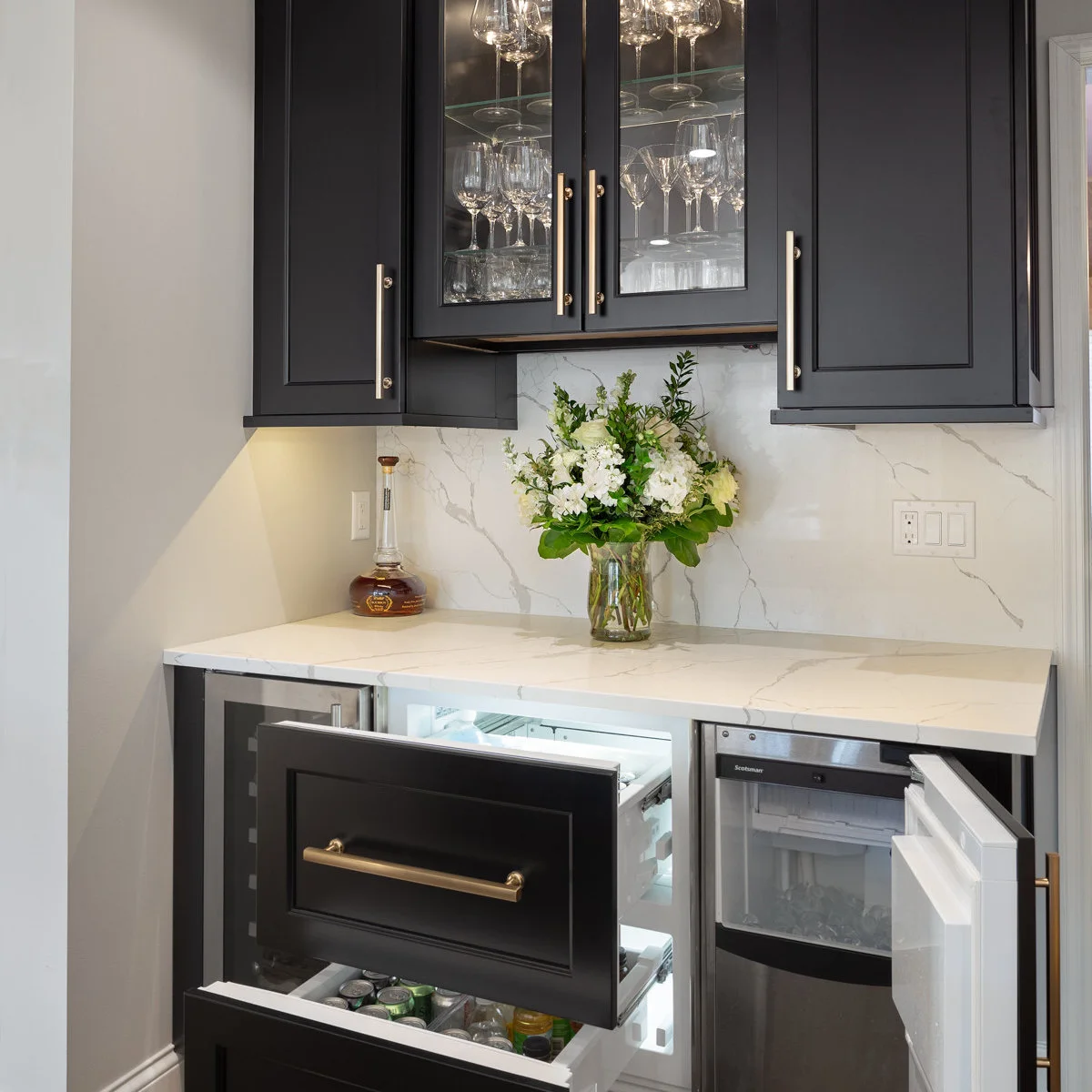
Open refrigerated drawers and an open appliance door show how this black mini bar works below its pale counter. The glass-front cupboards above hold stemware, with closed sections at either side. The photograph reveals the space needed in front of the appliances, which is easy to overlook in a closed-cabinet view.
Test the full opening of drawers and doors against the available aisle before choosing an appliance arrangement. Include access for cleaning and service rather than building tightly around a front panel. Compare the storage benefit with the equipment’s upkeep; a small bar does not need every refrigeration option to be useful.
IDEA 08 / 20
Hide a Glass Collection behind Cabinet Doors
 SaveSupport Non AI Creator
Image credit: Project: Rebecca Ryan Design (via Houzz)
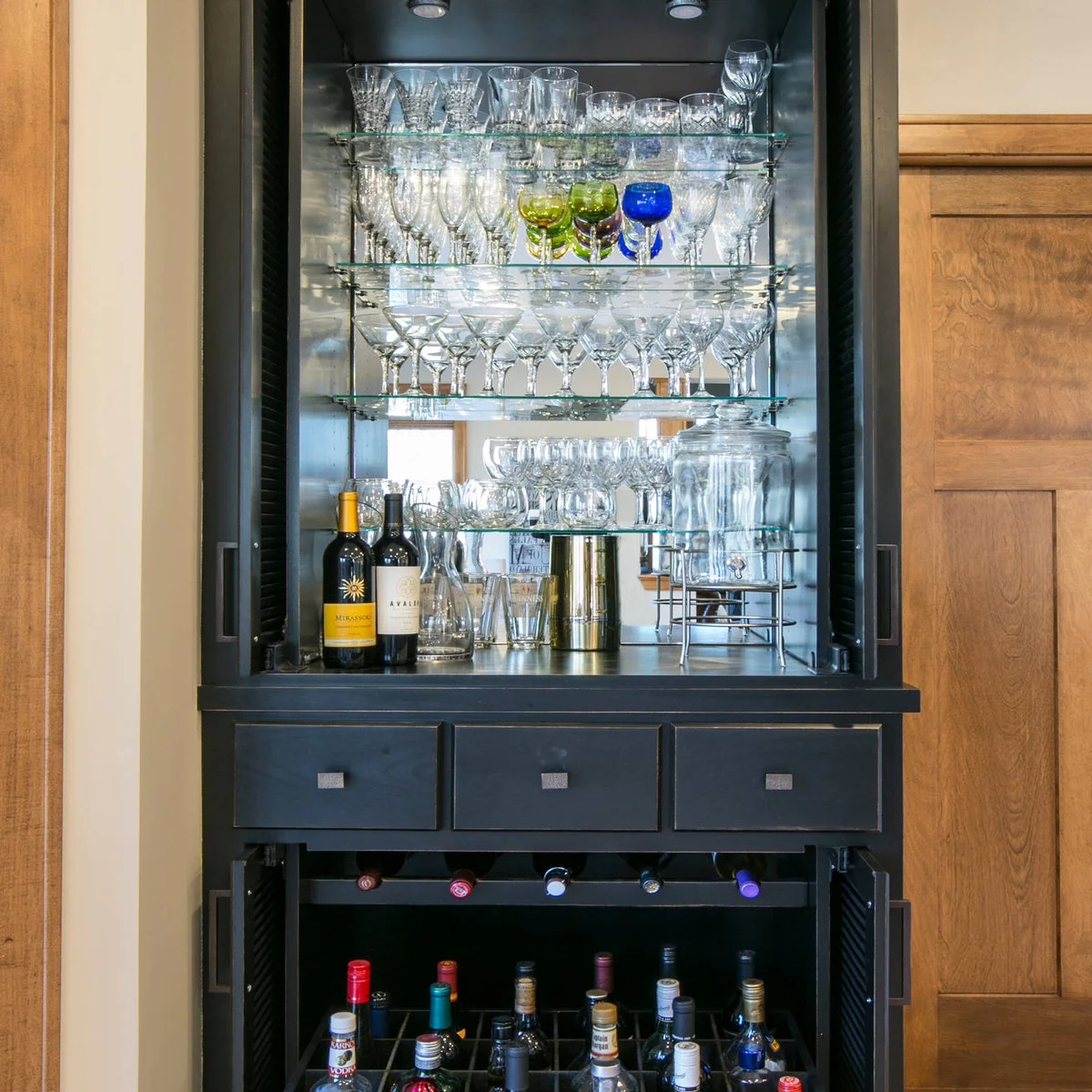
An open dark cabinet holds glasses on several glass shelves, with bottles and shallow drawers below. A mirrored backing repeats the collection and makes the interior appear deeper. The doors sit to the sides of the opening, keeping the serving surface accessible when the cabinet is in use.
Count the glasses you want to store before specifying shelf spacing. Allow enough room to lift each one safely rather than packing the shelves to their visible limit. Check how the doors move and whether they obstruct nearby furniture, and consider closed storage for less frequently used pieces that do not need display space.
IDEA 09 / 20
Combine Bottle Rails with Hanging Glass Storage
 SaveSupport Non AI Creator
Image credit: Project: Flemming Interiors (via Houzz)
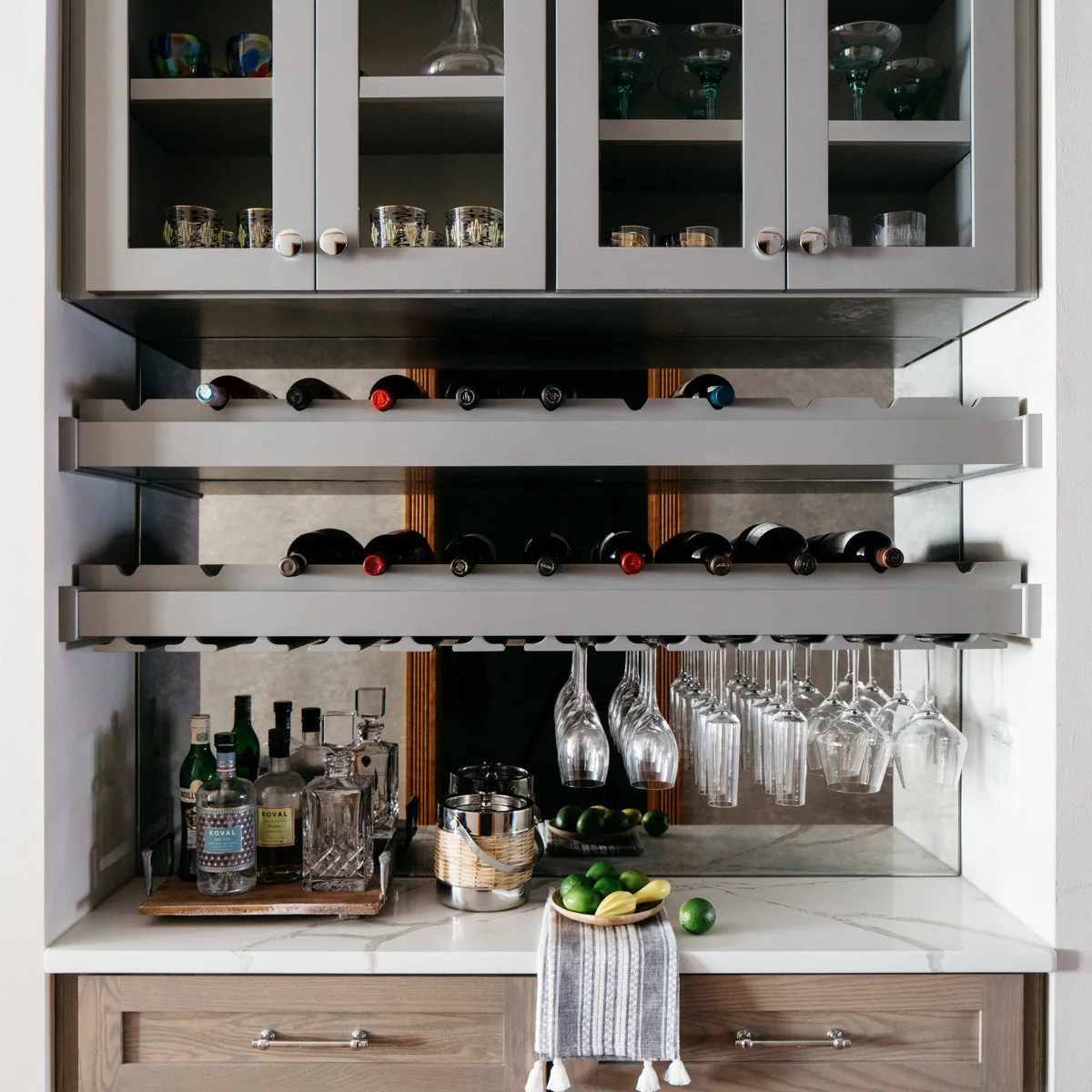
Horizontal bottle rails occupy the wall above this mini bar counter, with stemware hanging beneath the lower rail. A mirrored backing reflects the room behind, while wood drawers provide a solid base. A small bottle tray and serving tools leave the central work surface more open than a full row of bottles would.
Check the support and fit of both the bottle rails and glass rack before installation. Keep the counter clear enough to prepare drinks without working beneath crowded glassware. Use drawers for small tools and napkins so the visible storage can stay limited to items you reach for regularly.
IDEA 10 / 20
Mix Display Doors with Closed Drawers
 SaveSupport Non AI Creator
Image credit: Project: Lifestyle Kitchen Studio (via Houzz)
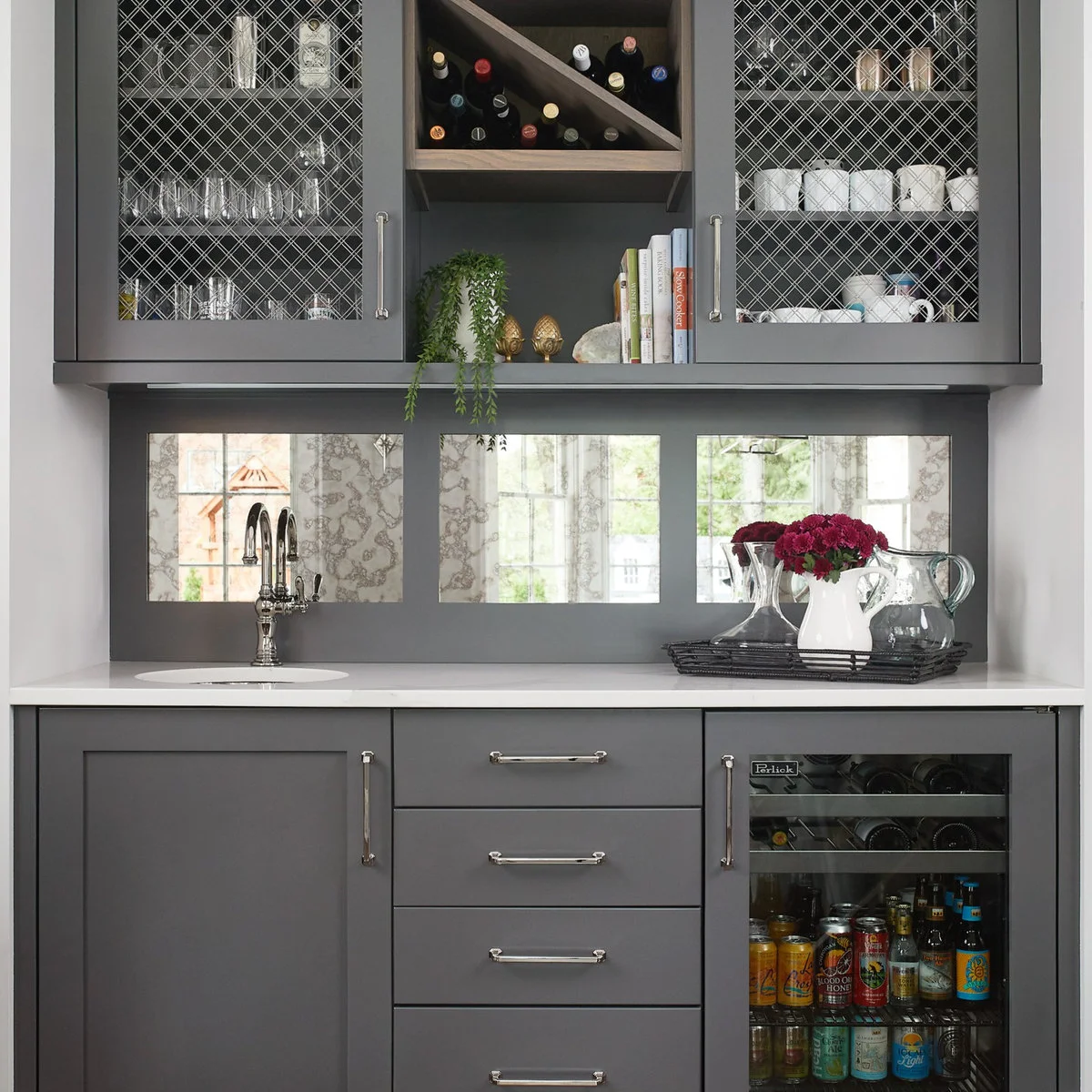
Gray cabinetry combines display cupboards, a diagonal bottle compartment and closed drawers in this mini bar. Mirrored panels run across the backsplash, reflecting the windows rather than adding another pattern. A small sink sits at one end, leaving the other end available for a tray of serving pieces.
Separate the items you enjoy displaying from practical supplies that benefit from being hidden. Keep spare napkins and tools in drawers, with frequently used glasses in reachable cupboards. Avoid overfilling the bottle compartment, and check that the display-door material is easy to clean around its small openings.
PART 03
Choose Finishes That Suit the Room
IDEA 11 / 20
Warm a Small Bar with Wood Cabinetry
 SaveSupport Non AI Creator
Image credit: Project: Moser Architects PLLC (via Houzz)
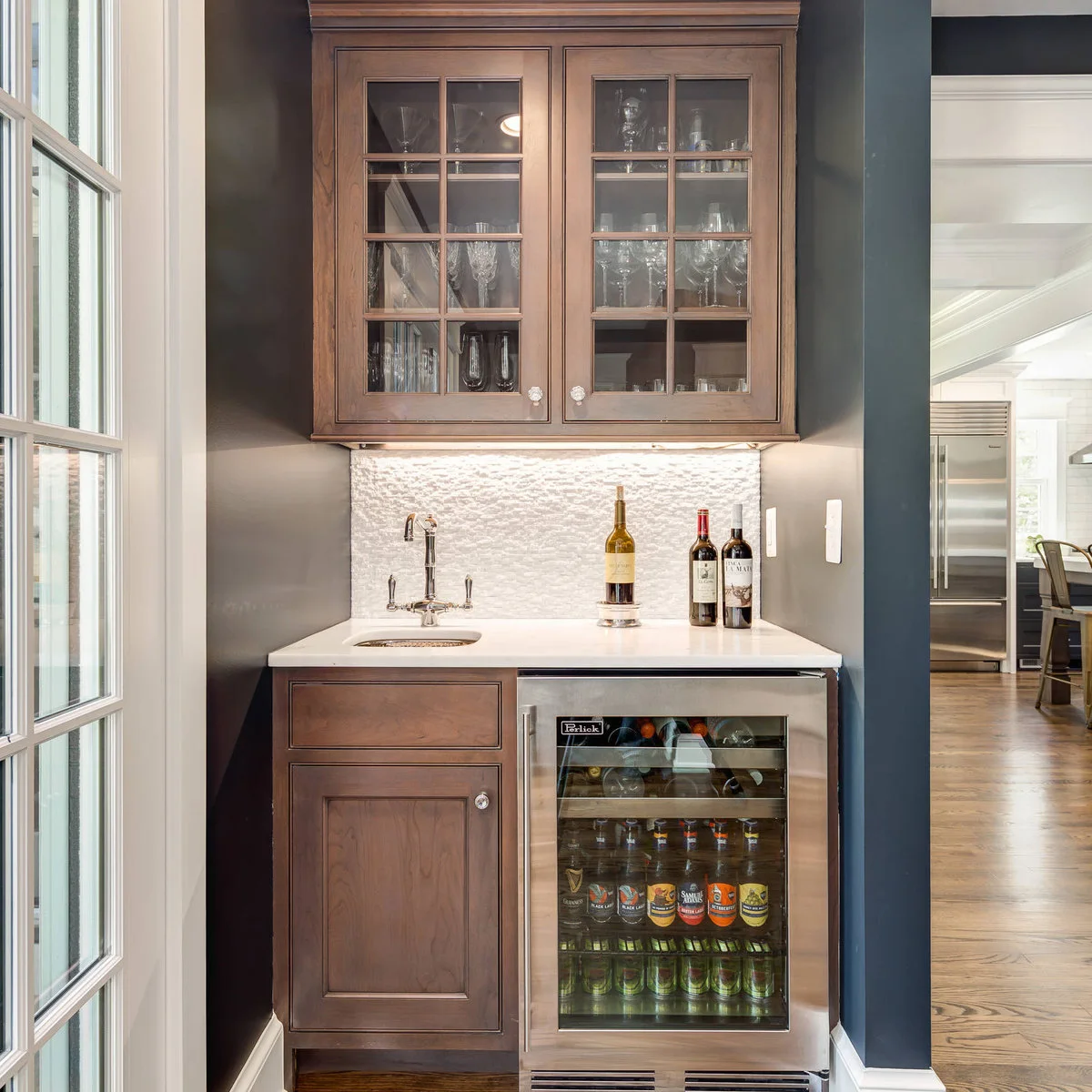
Wood cabinetry brings a warm outline to this small bar beside the kitchen. A pale textured backsplash and light counter keep the working area distinct from the darker walls. The sink occupies the left side, while the beverage refrigerator and a small bottle grouping sit on the right.
Compare the cabinet tone with nearby floors and furniture before adding another wood finish. A small sample is easier to judge alongside the backsplash than from a product photograph. Keep the texture behind the counter manageable to clean, especially around the faucet where splashes can collect in an uneven surface.
IDEA 12 / 20
Use Wood Shelves above a White Base
 SaveSupport Non AI Creator
Image credit: Project: Keitaro Yoshioka Photography (via Houzz)
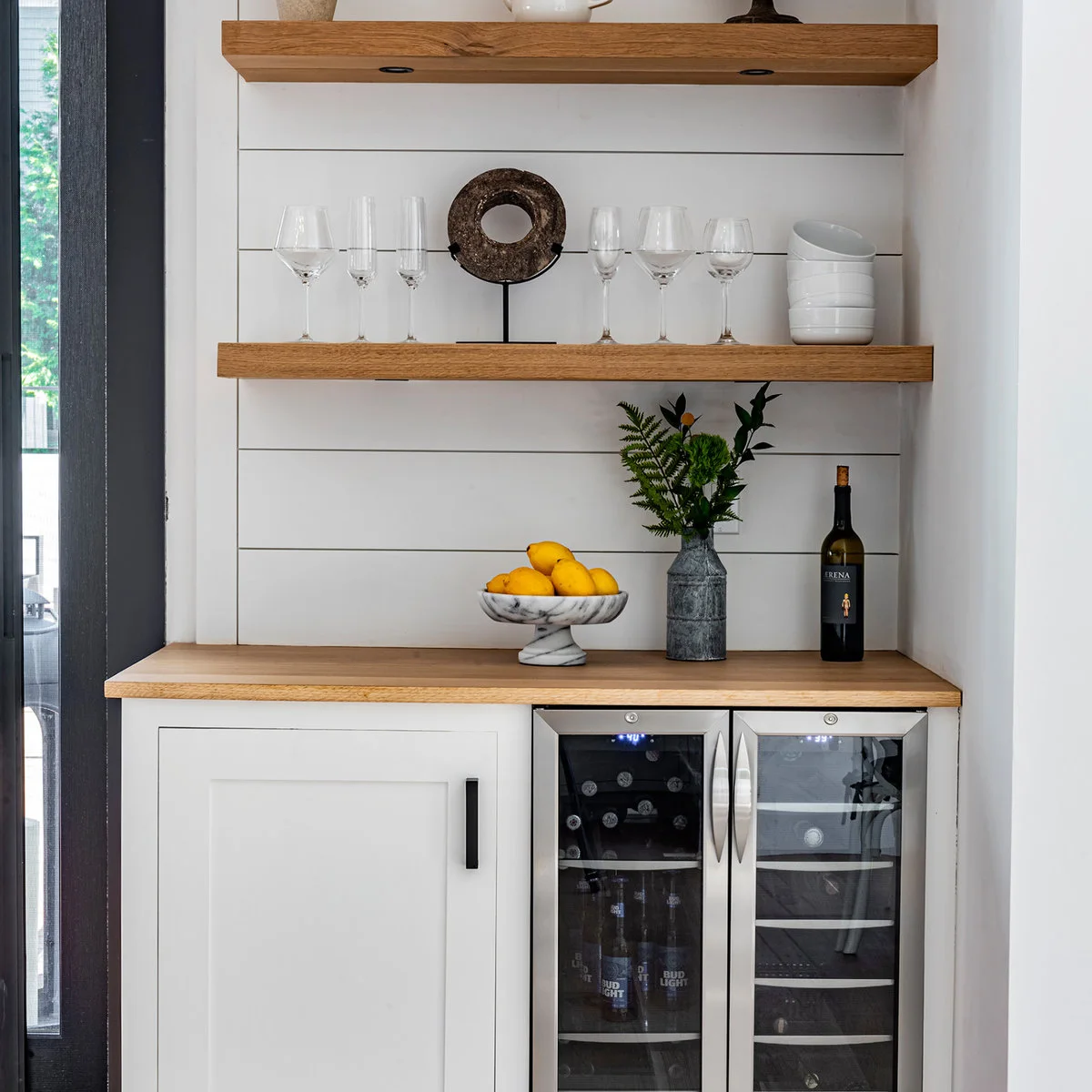
Wood shelves and a matching counter warm the white base cabinetry in this bar. Horizontal white boards make a simple backing, allowing the glass shapes and shelf edges to stand out. A two-door beverage refrigerator sits below, while a closed cupboard provides space for supplies that do not need display.
Keep only a small collection of glasses on open shelves so dusting remains straightforward. Check that shelf lighting does not create glare at seated eye level. Choose the refrigerator for the drinks you serve rather than the number of visible doors, comparing usable capacity and installation requirements before deciding on the cabinet widths.
IDEA 13 / 20
Give a Small Bar One Decorative Backsplash
 SaveSupport Non AI Creator
Image credit: Project: Paper Moon Painting (via Houzz)
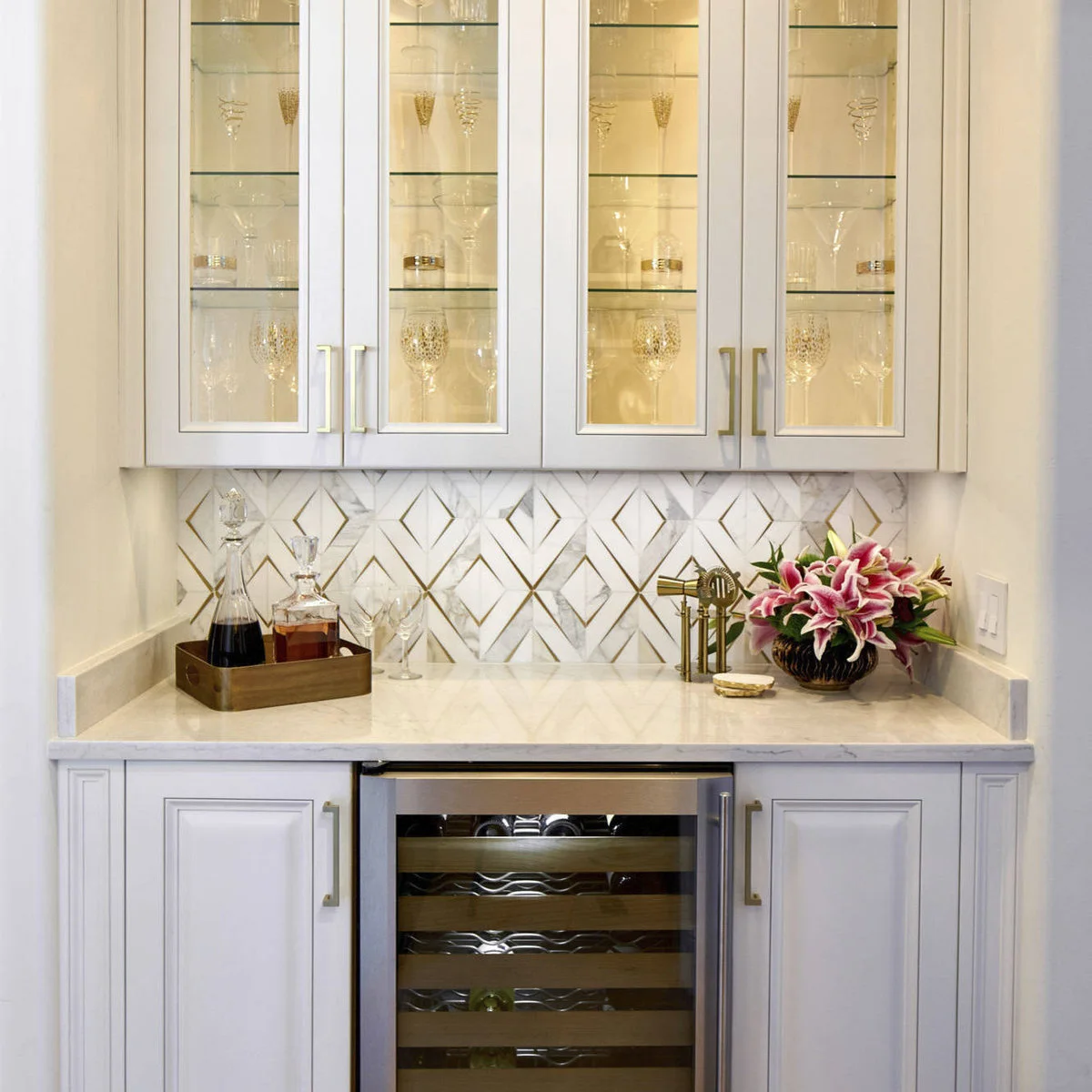
A diamond-pattern backsplash gives this white mini bar its main decorative detail. Gold-toned hardware and a matching faucet repeat the warm lines in the pattern. The glass cupboards above are lit, while the pale counter leaves a broad quiet area between the bottles and flowers at either end.
Select the backsplash and hardware together before adding more decorative finishes. Keep a clear counter section so the bar still serves its purpose during a gathering. If you prefer a calmer arrangement, reduce the displayed glassware or use simpler cupboard doors rather than adding another pattern to the surrounding walls.
IDEA 14 / 20
Make a Small Blue Backsplash the Color Feature
 SaveSupport Non AI Creator
Image credit: Project: Bullseye Wood Specialties, L.L.C (via Houzz)
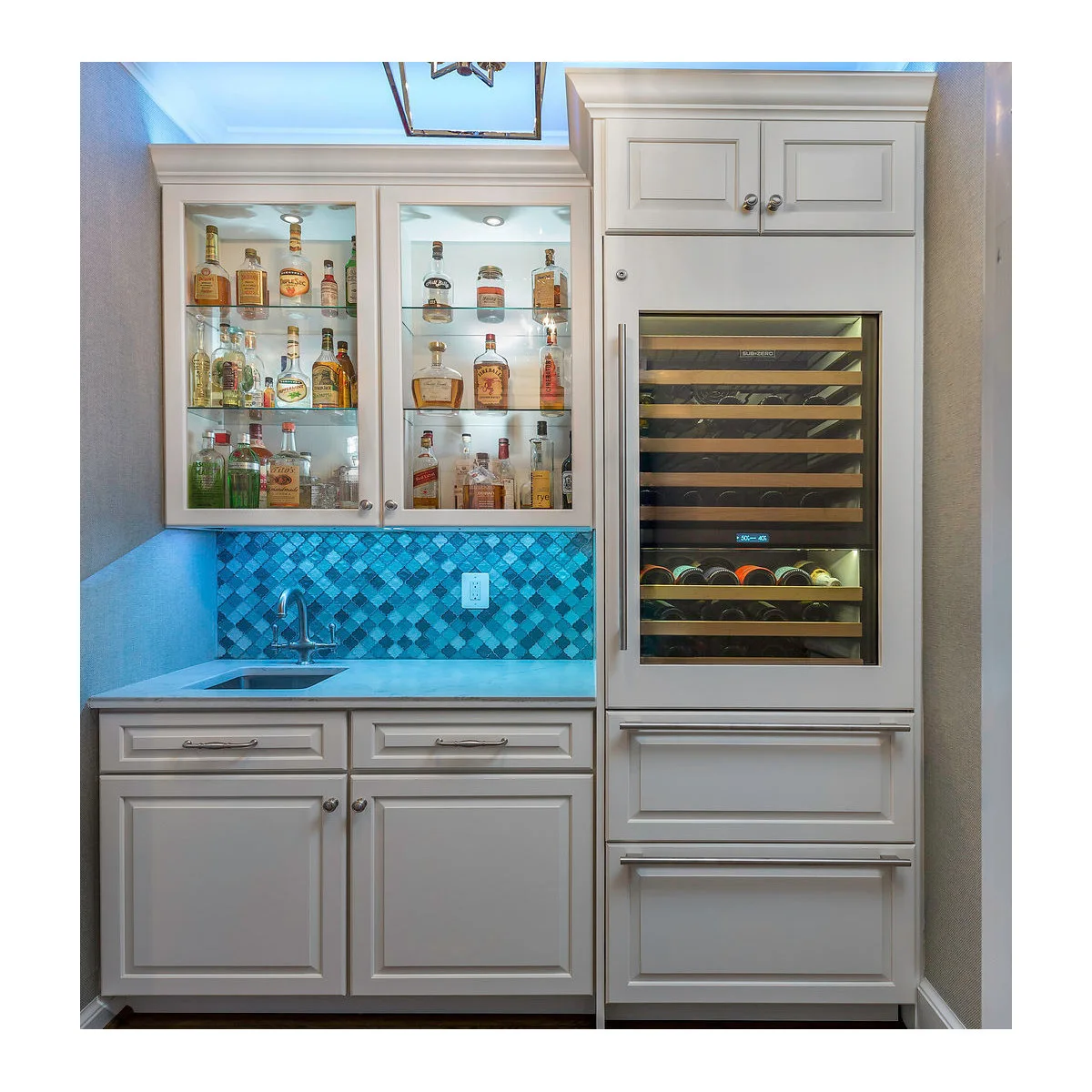
Blue mosaic tile supplies a concentrated color feature beneath an illuminated bottle cupboard. White cabinetry surrounds the sink and the taller wine refrigerator, keeping the overall arrangement light. The bright backsplash occupies a small enough area to stand apart without requiring the whole adjoining room to use blue.
View the tile sample under the lighting you intend to install; colored light can change how both bottles and finishes appear. Keep the rest of the counter simple so the backsplash remains readable. Check appliance access and cooling requirements before treating the tall refrigerator as another ordinary cabinet within the run.
IDEA 15 / 20
Use a Dark Swirled Backing in a Narrow Niche
 SaveSupport Non AI Creator
Image credit: Project: BuiltIN studio (via Houzz)
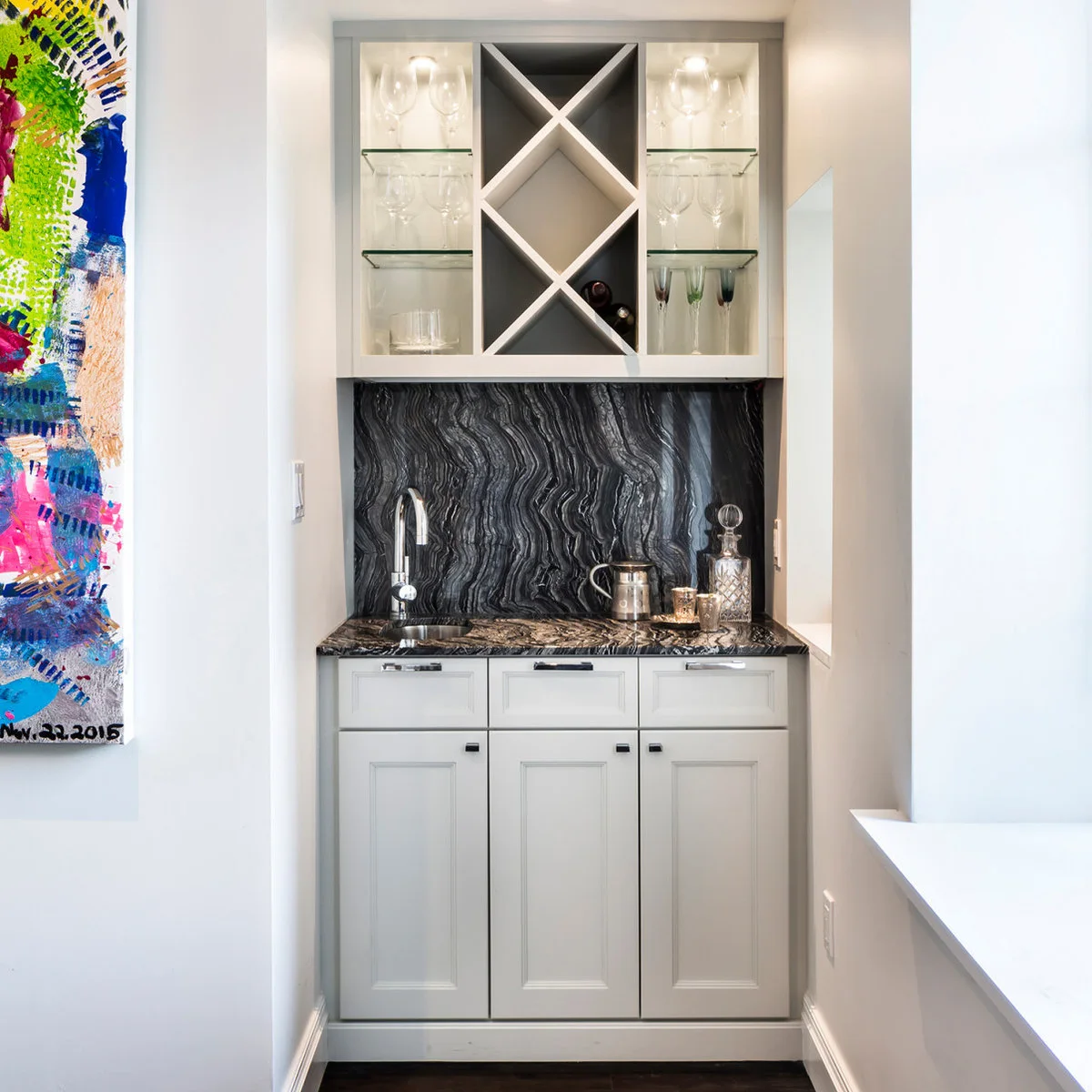
A dark swirled backing makes this narrow white bar easy to distinguish from the surrounding walls. A small sink occupies the left end of the counter, with a few serving pieces on the right. Upper shelves flank diagonal bottle storage, keeping the outline compact and largely symmetrical.
Compare a full sample of a strongly patterned finish before using it in a small opening. Keep accessories sparse enough for the pattern to remain visible. Measure the remaining counter around the sink, since a fitting that looks compact can still leave very little practical space for cutting citrus or setting down a tray.
PART 04
Keep Serving and Cleanup Simple
IDEA 16 / 20
Place a Small Sink beside a Useful Counter Area
 SaveSupport Non AI Creator
Image credit: Project: Sandra Ericksen Design (via Houzz)
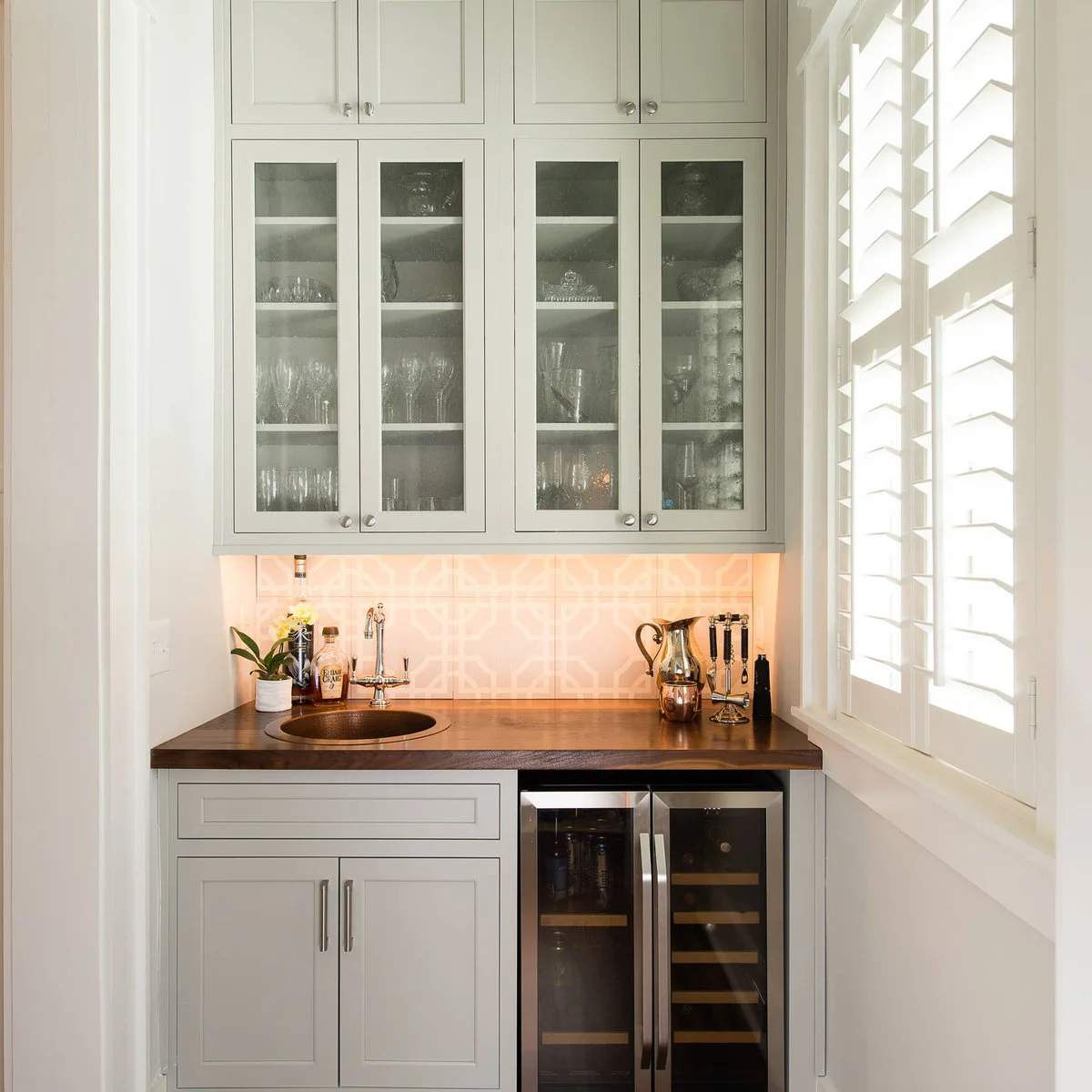
A round sink sits at the left of a dark wood counter in this pale gray bar. Glass-front cupboards use the space above, while a patterned backsplash adds detail without a strong new color. The counter area to the right of the sink remains relatively open for serving.
Choose the sink and faucet together, checking splash and usable bowl depth before ordering the worktop. Ask about protection and maintenance for the exact counter material around the cutout. Leave everyday tools in a small tray rather than spreading them across the free area that makes a compact bar practical.
IDEA 17 / 20
Combine Coffee and Cold Drinks in a Cupboard
 SaveSupport Non AI Creator
Image credit: Project: Tallulah & Bird LLC, Interior Design (via Houzz)
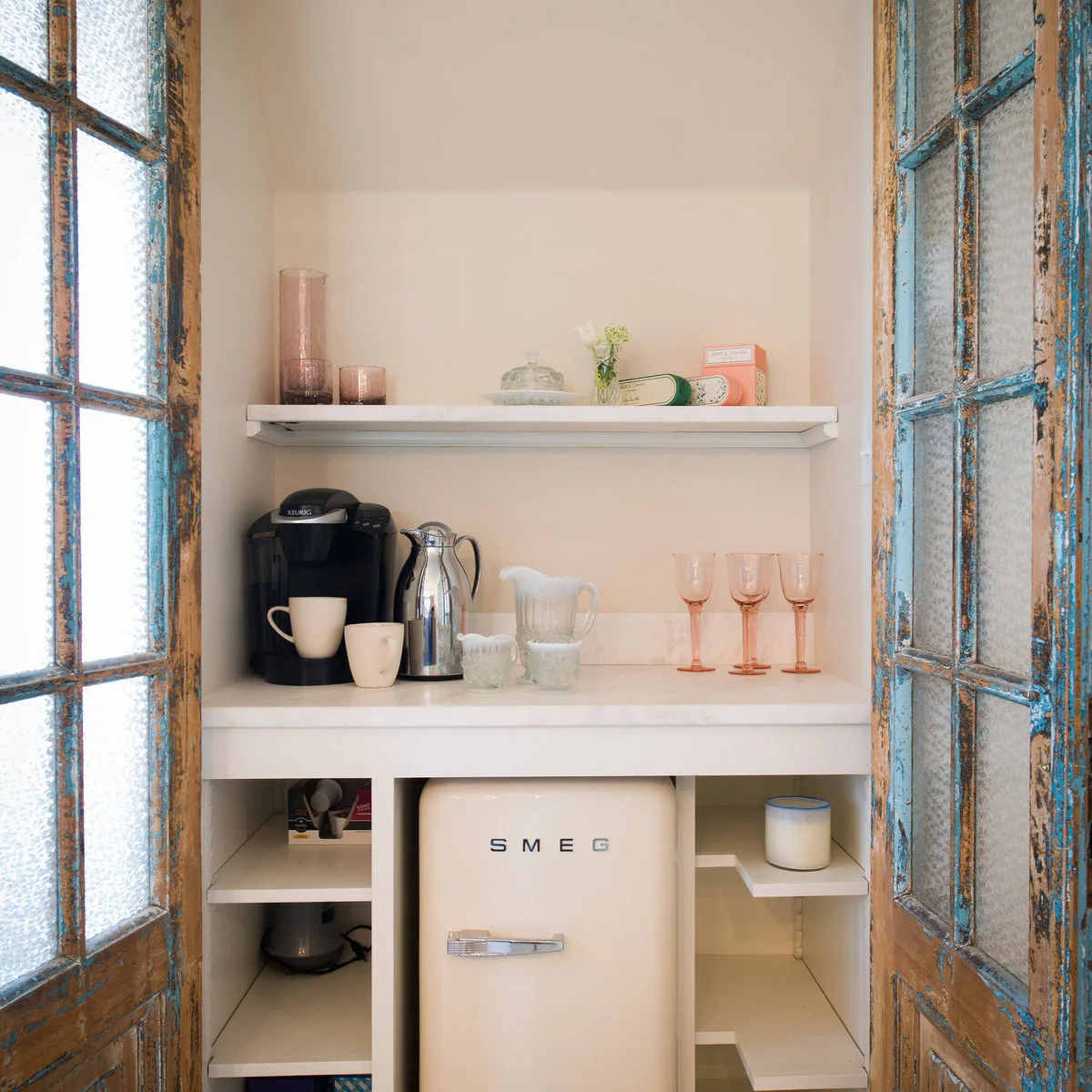
Distressed blue doors frame a compact cupboard containing a coffee machine, glasses and a small cream refrigerator. The white shelves keep the interior simple, with a clear middle counter linking hot and cold drinks. This arrangement offers an alternative to a bar focused only on bottles and stemware.
Check appliance ventilation and operating clearance with the manufacturer before planning to close doors around equipment. Keep the coffee machine easy to fill and clean, and reserve a place for used cups. Coffee bar ideas offer more ways to organize everyday drinks if that is how you will use the cupboard most often.
IDEA 18 / 20
Keep a Beverage Tap Separate from Bottle Shelves
 SaveSupport Non AI Creator
Image credit: Project: DeGraffenreid Photography (via Houzz)
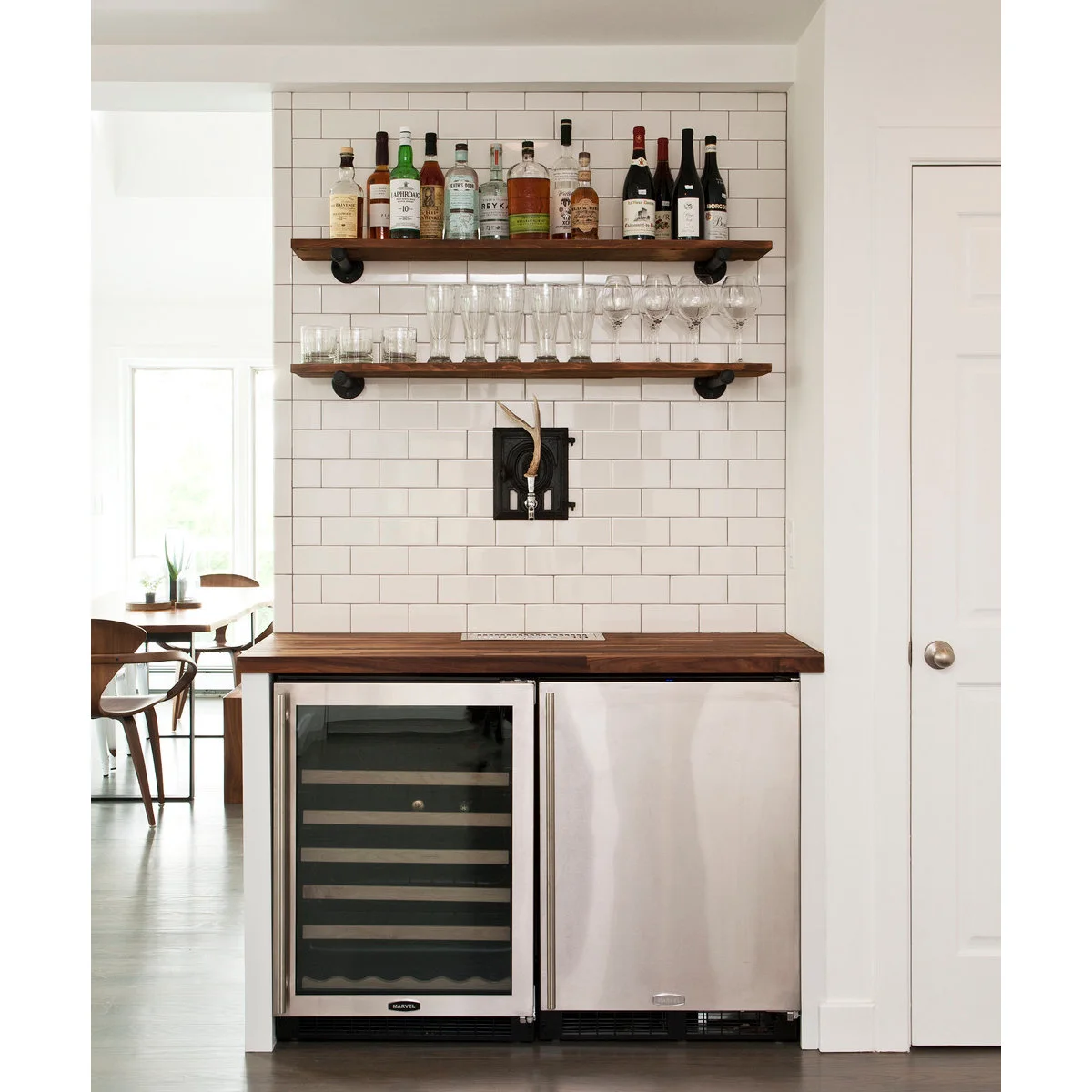
Two undercounter appliances sit below a wood surface and open shelves in this compact bar. A central beverage tap forms the main wall detail against white subway tile. Bottles occupy the upper shelf, with everyday glasses grouped on the shelf below rather than spread across the serving counter.
Treat a beverage-tap system as equipment that needs proper installation and regular cleaning, not simply a decorative faucet. Check its requirements and maintenance before allocating the cupboard space below. If you will rarely use it, a clear serving surface with bottled drinks may be a more useful way to arrange the same small area.
IDEA 19 / 20
Keep a Clear Mixing Area below Glass Storage
 SaveSupport Non AI Creator
Source: www.houzz.com
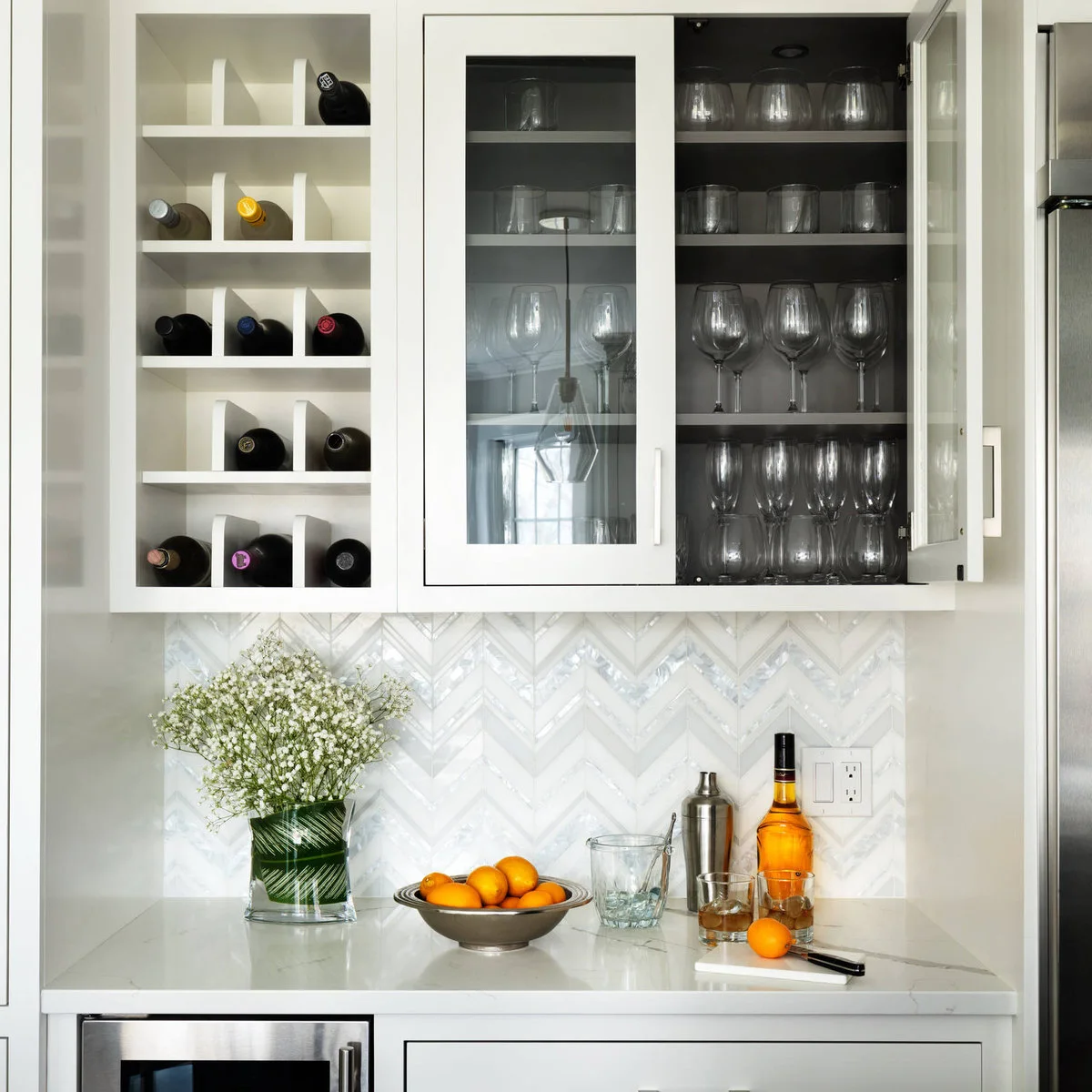
Bottle cubbies sit beside a dark-backed glass cupboard above this white mini bar. The pale herringbone backsplash adds texture behind a relatively open counter. A shaker, glasses and citrus occupy only a small grouping, showing how supplies can be ready without covering the entire working surface.
Choose the few tools needed for the drinks you serve and store the rest below. Keep a removable cutting board and a place for used glasses rather than treating the counter as a permanent display. Check that the open cupboard door clears the working position and does not become an obstacle during serving.
IDEA 20 / 20
Add a Small Seating Return Only If It Fits
 SaveSupport Non AI Creator
Image credit: Project: Christine Elliott Designs (via Houzz)
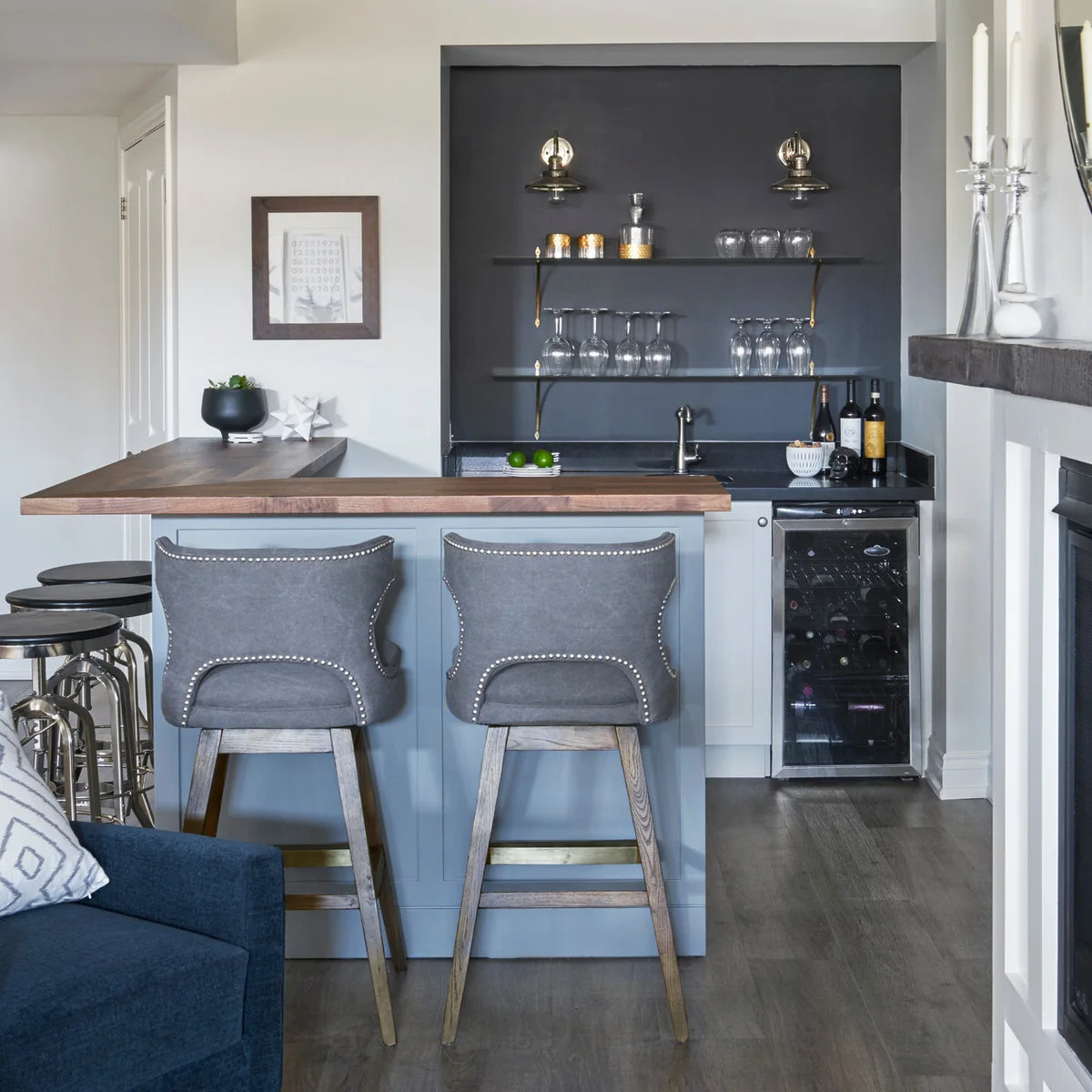
A short wood seating return faces a gray rear bar with open shelves and a small sink. Upholstered stools create a place to sit without introducing a full second room of furniture. The dark wall behind the shelves makes the small collection of glasses visible against a simple background.
Position the stools with someone seated before deciding whether the return belongs in the room. Keep a clear path around nearby seating and cabinet doors. A mini bar can work just as well without stools; retain the counter only if it supports comfortable serving rather than narrowing a route used every day.
BRING IT ALL TOGETHER
Leave Enough Space to Make and Serve a Drink
Choose a location and storage format around the supplies you actually use. A cart or cabinet may be enough, while a fitted bar needs a plan for open doors, utilities and service access. Spend the available space on a useful counter before filling the wall with extra display shelves.
Keep the daily routine simple: reachable glasses, a tray for bottles, room for used cups and surfaces that wipe clean. Add appliances only when their capacity and maintenance suit your habits. A smaller collection arranged well is easier to use than a miniature version of a fully equipped commercial bar.