A luxury dining room should feel comfortable once people sit down, not just appealing when the table is empty. Useful seat support, workable serving space and lighting that suits conversation matter alongside expressive furniture. Choose the details you value most instead of assuming a larger room or a more expensive finish will resolve an awkward arrangement.
These photographs show quieter wooden dining groups, upholstered seating, dramatic wall treatments and distinctive overhead lights. Use them to compare individual choices that fit your home. Test chairs beside the actual table, check finish care and leave comfortable movement around occupied seats before committing to a full room of new furniture.
PART 01
Start with seating and useful table proportions
IDEA 01 / 20
Begin with Comfortable Upholstered Seating
 SaveSupport Non AI Creator
Image credit: Ingalls Photo
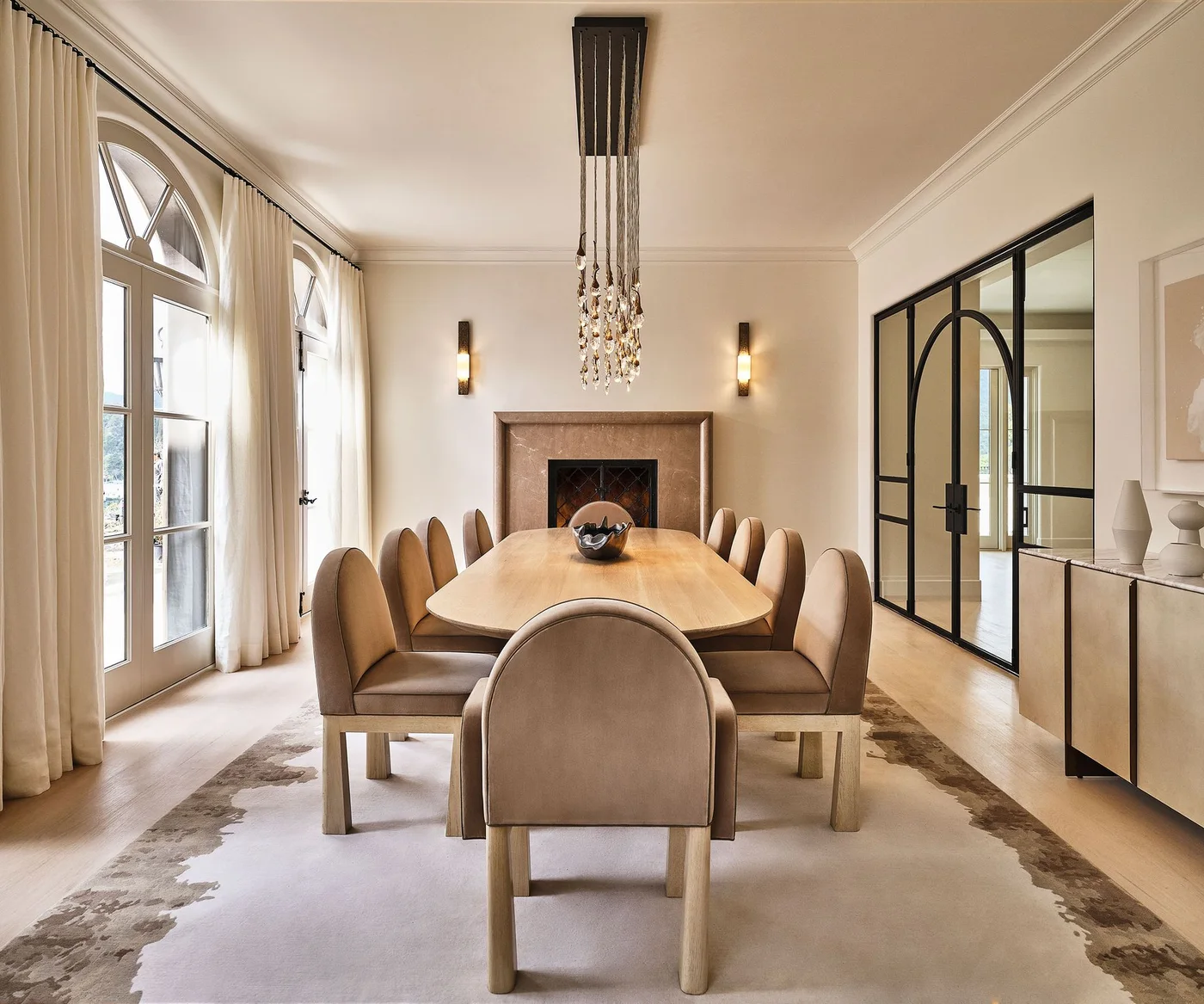
The beige upholstered chairs give this long dining table a consistent softer outline. Pale walls and curtains connect the seating to the room’s larger surfaces, with black-framed doors adding a more defined edge. The hanging light and smaller wall lights separate the table area from the surrounding circulation space.
Sit in the proposed chair for more than a brief showroom test, checking back support and the height beside your table. Leave room to get up while neighboring seats are occupied. Dining room chair ideas compare different backs, arms and upholstery choices when comfort needs to guide the purchase.
IDEA 02 / 20
Keep a Large Window View Clear Around the Table
 SaveSupport Non AI Creator
Image credit: Marie Flanigan Interiors/Julie Soefer Photography
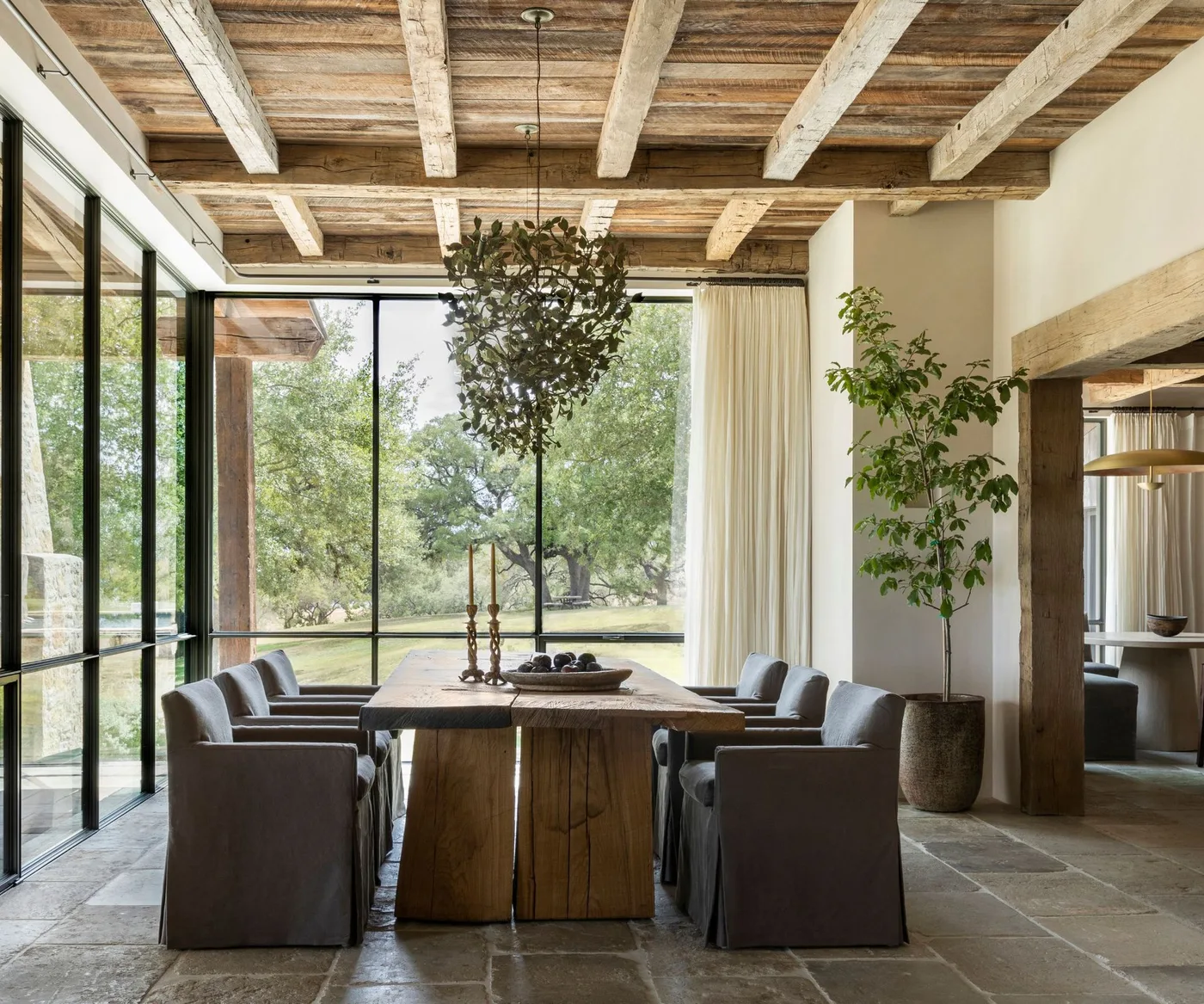
Tall windows surround this wooden dining table, leaving the outdoor view visible above the lower chairs. Gray skirted seating introduces a softer surface below the exposed beams. The leafy hanging fixture adds one more natural-looking shape overhead without filling the tabletop with several large decorative arrangements.
Plan occupied chair space and door access before choosing a large table for a glazed room. Check glare and privacy at the times you usually eat, rather than judging daylight alone. Any substantial hanging fitting needs suitable support and professional installation, with access for cleaning considered before it is placed overhead.
IDEA 03 / 20
Let a Tiered Light Lead a Quiet Room
 SaveSupport Non AI Creator
Image credit: Ash Wilson Design/Ben Anders
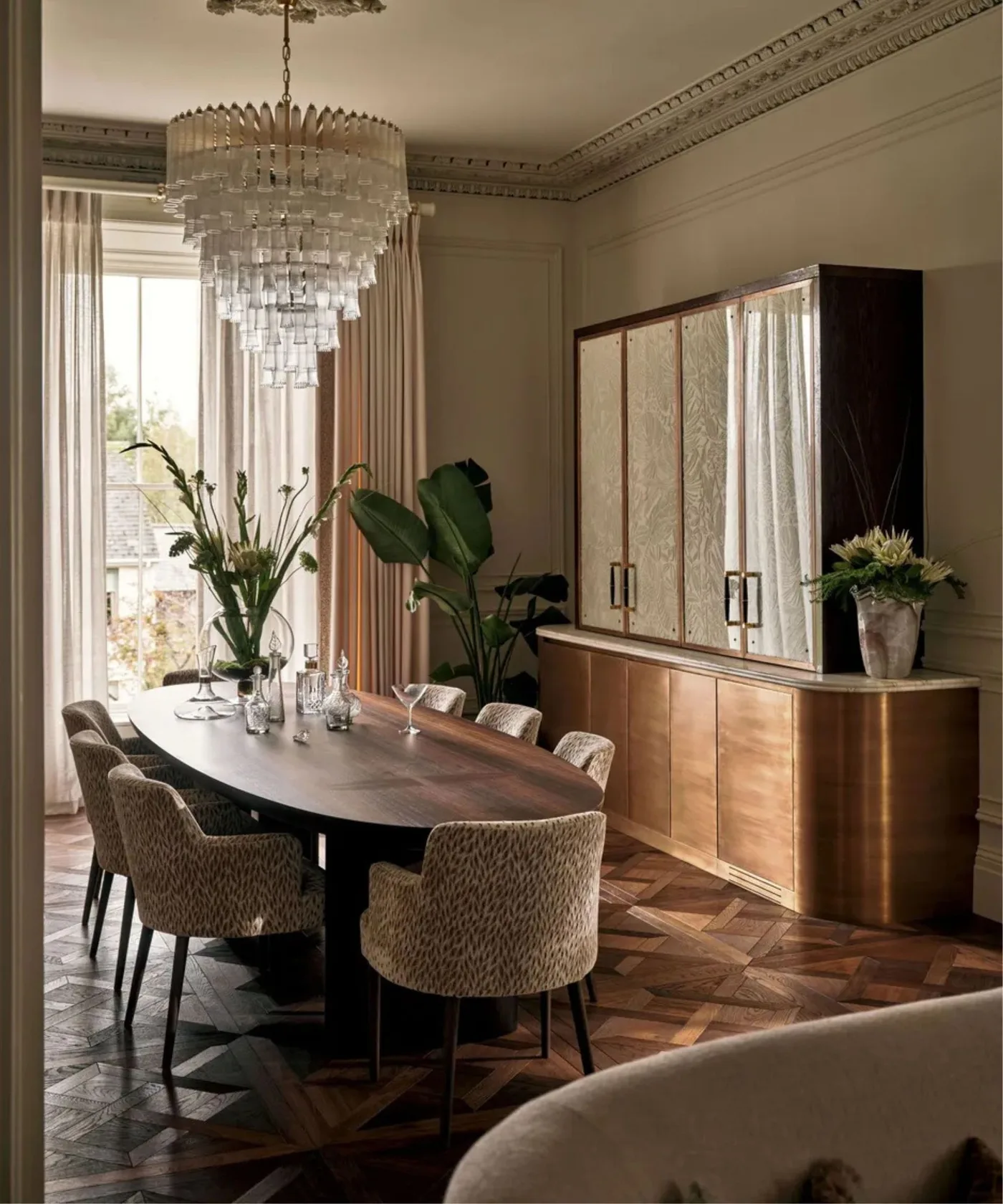
The tiered hanging light provides the largest decorative detail above this oval table. Upholstered chairs repeat a quieter pattern around it, while the pale cabinet supplies storage along the wall. Tall curtains and the wooden floor give the room additional texture without introducing another strongly colored furniture group.
Compare the fitting’s scale with the table and ceiling before ordering, checking seated sightlines and access for cleaning. Confirm the weight, electrical requirements and suitable support with an installer. Dining room chandelier ideas offer more shapes if you want to decide between a broad horizontal fitting and a deeper tiered light.
IDEA 04 / 20
Use a Transparent Table to Show the Surrounding Room
 SaveSupport Non AI Creator
Image credit: Spinocchia Freund/Felix Speller
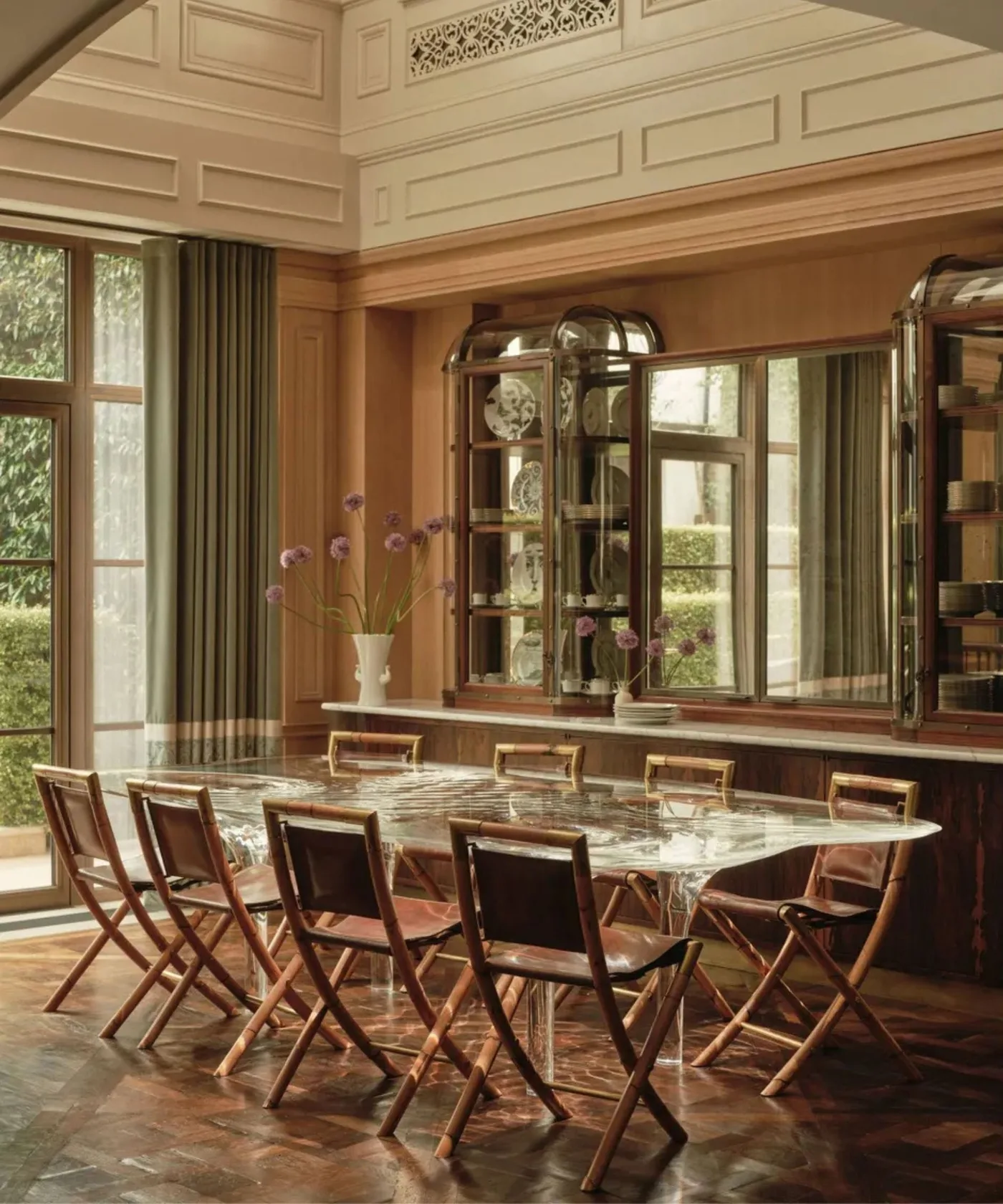
The transparent table leaves the wooden chair outlines visible beneath its top. Tall glazed cabinets frame the wall behind the seats, with pale paneling carrying the room’s detail higher above the furniture. Warm wood and curtains keep the clear table from being the only noticeable surface in the space.
Confirm the table’s actual material, edge treatment, weight and cleaning instructions before buying it. Check the underside as carefully as the top because both remain visible. Dining room glass table ideas compare other transparent arrangements if you want to judge how different chair shapes look beneath a clear surface.
IDEA 05 / 20
Give a Dining Bench a Comfortable Backdrop
 SaveSupport Non AI Creator
Image credit: Dining room designed by Tiffany Duggan, Founder of Studio Duggan and Trove by Studio Duggan
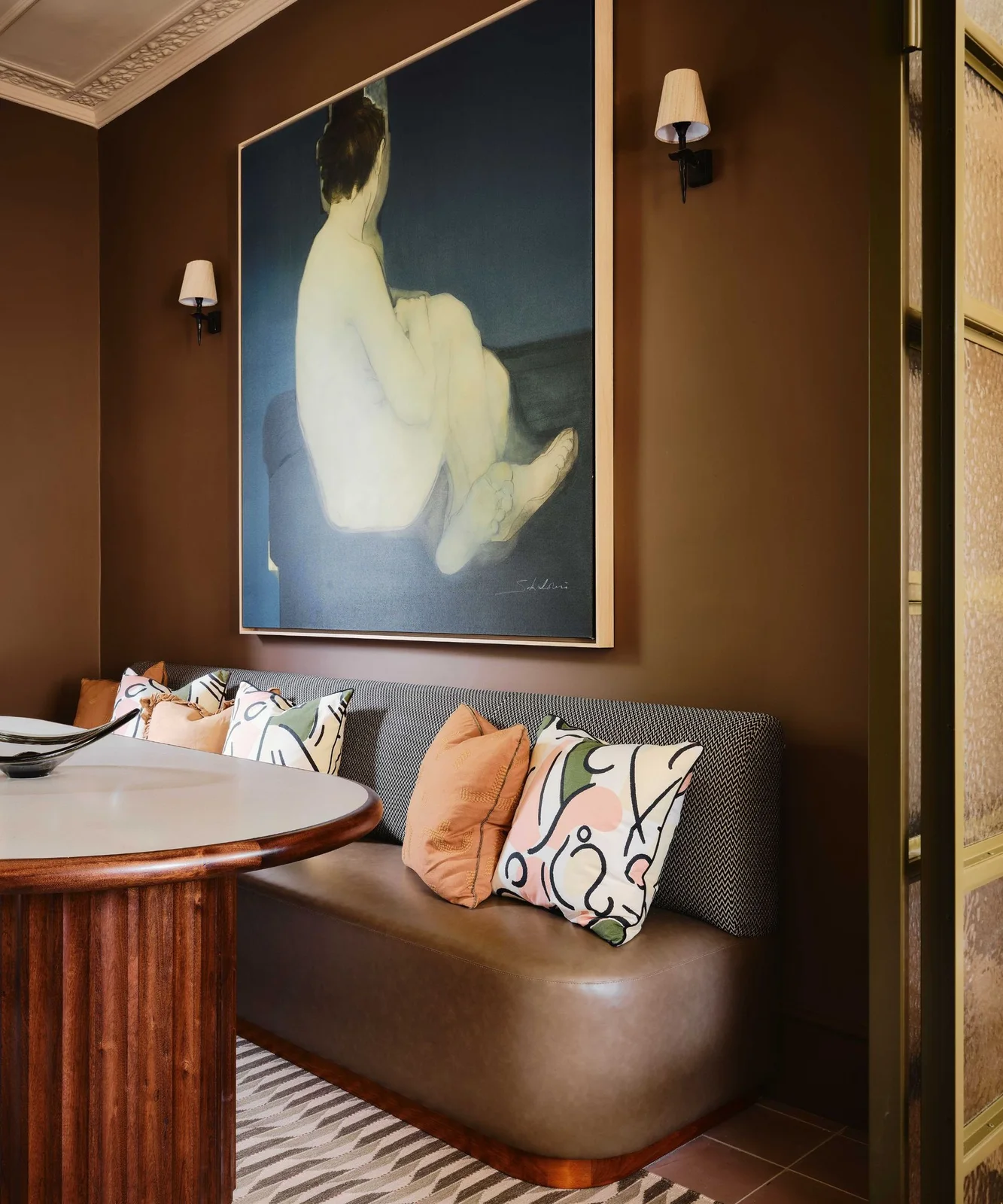
The curved bench gives this dining corner a continuous upholstered back beneath the artwork. A rounded table follows its softer outline, with a fluted wooden base adding narrow vertical detail below. Warm brown walls and smaller cushions keep the seating area closely connected in color.
Test the distance between the fixed seat and tabletop before commissioning a bench. Allow a practical route for people seated farther along it to get out. Dining room banquette ideas show more arrangements when you need to compare a fitted seat with moveable chairs, especially where cleaning beneath the table matters.
PART 02
Connect floors, storage and warmer surfaces
IDEA 06 / 20
Put Strong Artwork Beside Simple Table Shapes
 SaveSupport Non AI Creator
Image credit: Sarah Stacey Interior Design/Molly Culver
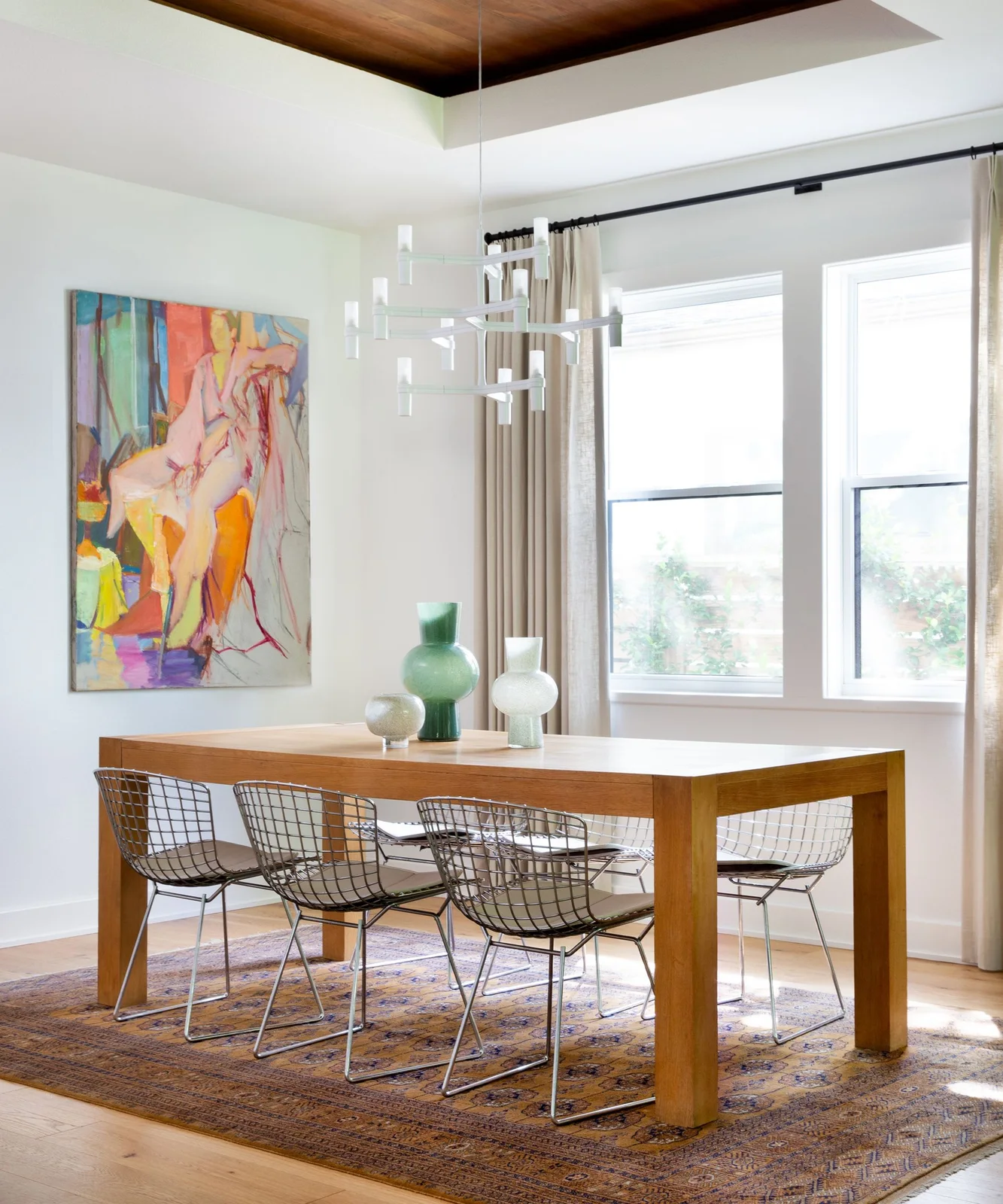
The colorful artwork supplies the strongest pattern beside this straightforward wooden table. Wire-frame chairs leave much of the space beneath the tabletop visible. The white branching fitting repeats a more open outline above, while pale walls and curtains let the artwork remain separate from the furniture shapes.
Check whether the chair’s shape supports your back comfortably and whether an added cushion suits its intended use. Leave room for serving dishes before arranging several decorative vessels. Choose artwork you enjoy at normal dining distance, checking the hanging position from the seats rather than only when standing beside the wall.
IDEA 07 / 20
Use a Rug to Connect a Brighter Dining Area
 SaveSupport Non AI Creator
Image credit: Ginny Macdonald/Sara Tramp
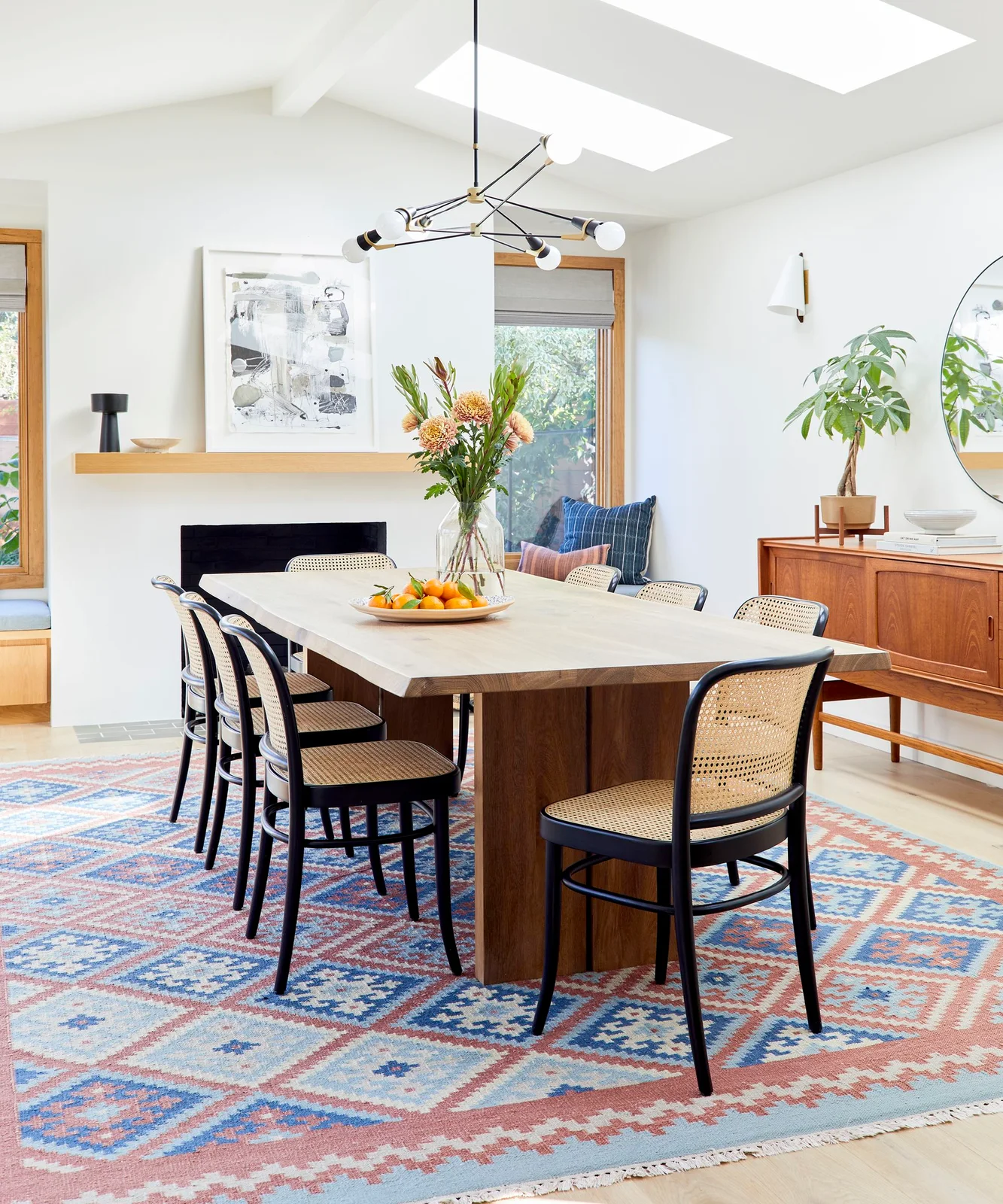
The blue-and-red rug gives this lighter dining area a stronger color surface beneath the table. Black-framed chairs add repeated outlines around the pale top, while wooden furniture and window trim contribute warmth. Roof windows leave the hanging light visible against a largely white ceiling.
Check the rug with chairs pulled back as well as tucked in, choosing a size that supports the movement you actually need. Compare cleaning guidance with the meals and spills the room will see. Dining room rugs show more patterns and arrangements when the floor needs to connect several separate furniture pieces.
IDEA 08 / 20
Make Display Shelves Part of the Dining Setting
 SaveSupport Non AI Creator
Image credit: Future / Davide Lovatti
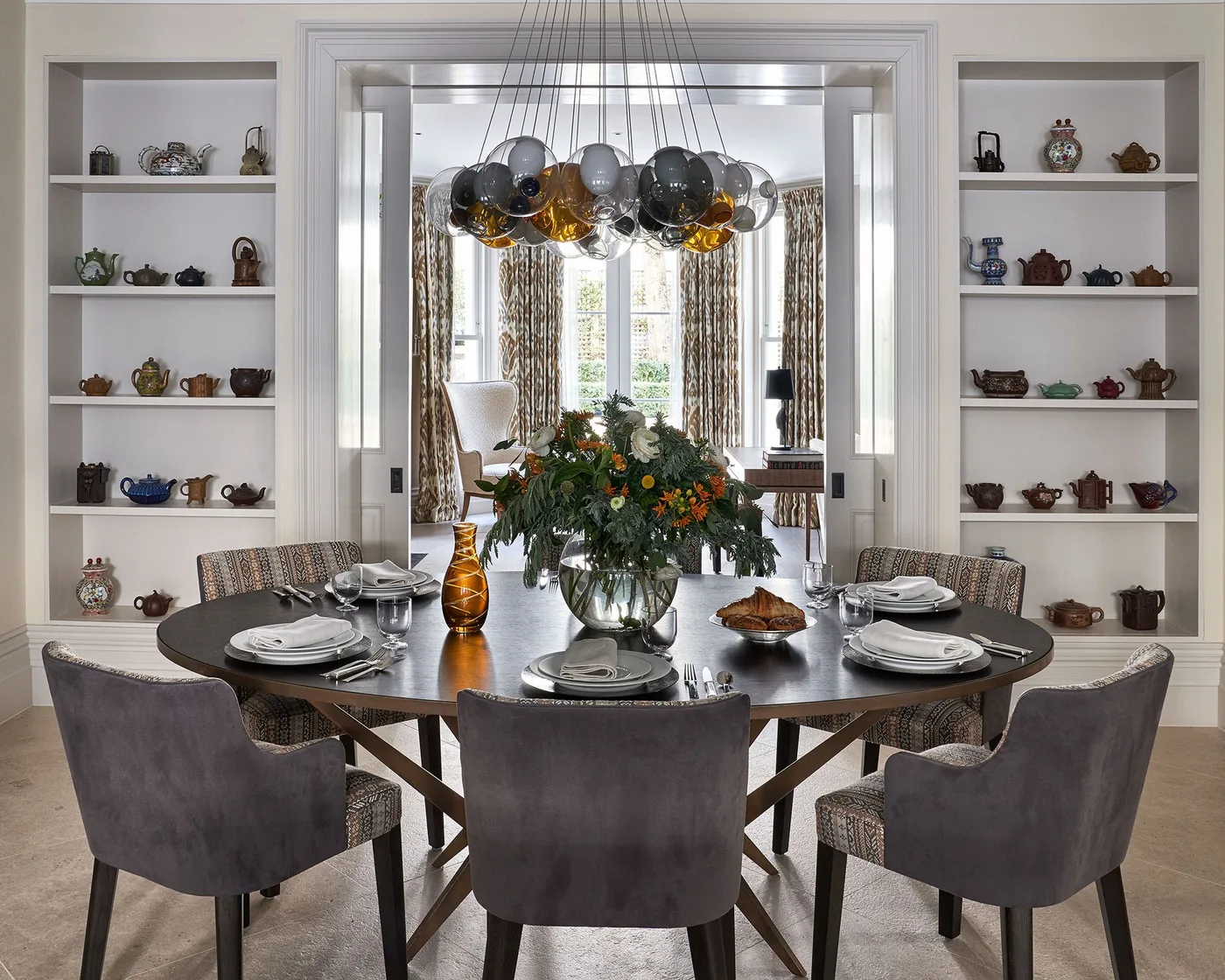
The round table gathers the gray upholstered chairs into one compact arrangement. Clustered glass shades form a separate shape above its center. Pale shelves on both sides hold smaller vessels, giving the dining room a display background while keeping the surrounding wall lighter than the tabletop.
Choose shelf spacing from the objects you intend to display, leaving practical room to lift and dust them. Keep fragile pieces away from chair movement and check suitable fixings. A smaller rotating collection can be easier to maintain than filling every shelf, especially when the dining table already carries a centerpiece.
IDEA 09 / 20
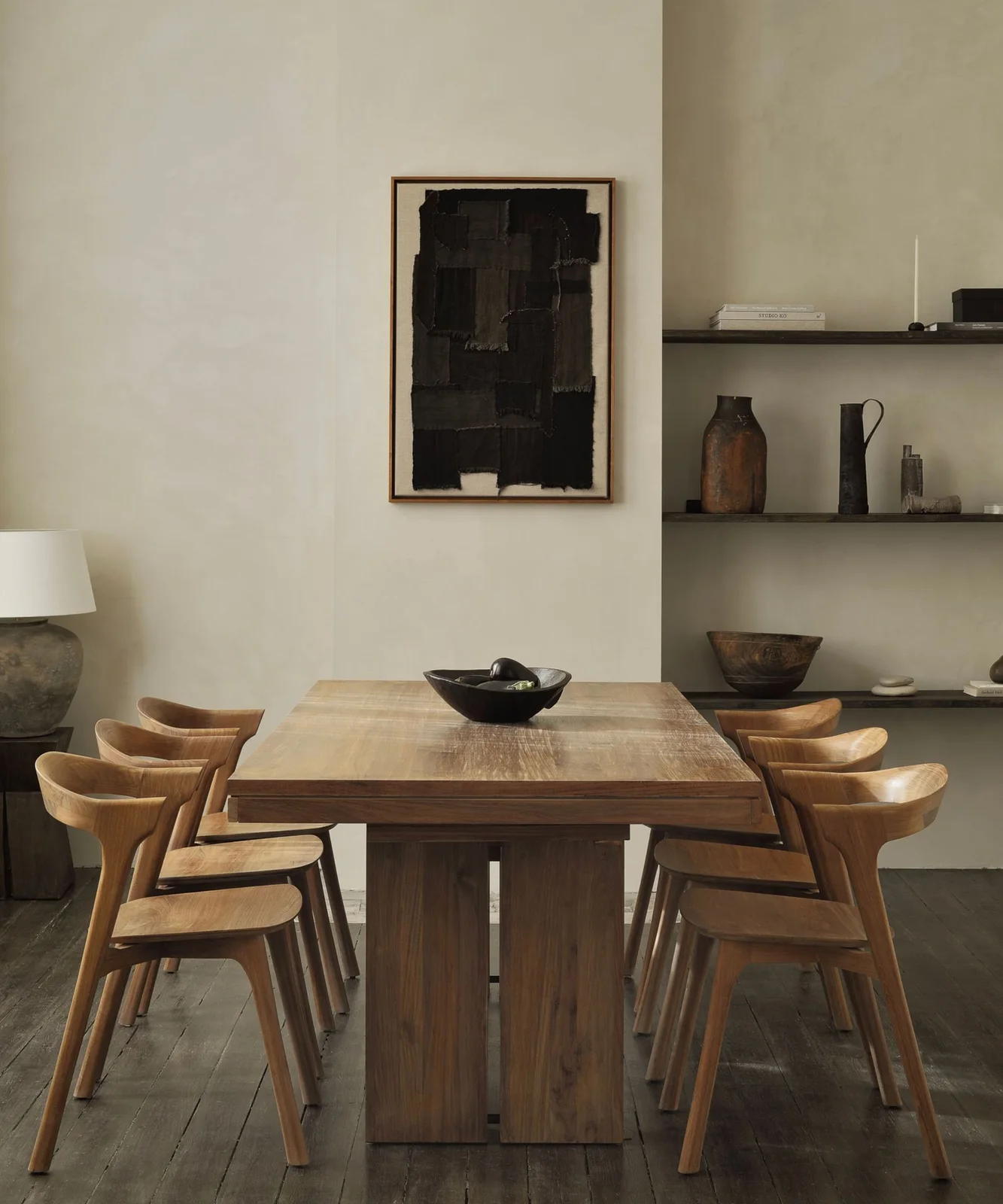
Let Carefully Shaped Wood Carry a Quiet Room
 SaveSupport Non AI Creator
Image credit: White Cliff Studios
The shaped wooden chairs give this quieter room detail through their curved arms and backs. A broad table repeats the warm wood across a larger surface, with dark shelving and black artwork providing contrast behind it. The plain walls leave the furniture forms easy to distinguish.
Test arm clearance under the table and check how the chair feels when reaching for a plate. Compare actual finish samples instead of assuming similarly colored wood will age or clean in the same way. Keep display objects limited so the useful furniture shapes remain visible and the tabletop can serve everyday meals.
IDEA 10 / 20
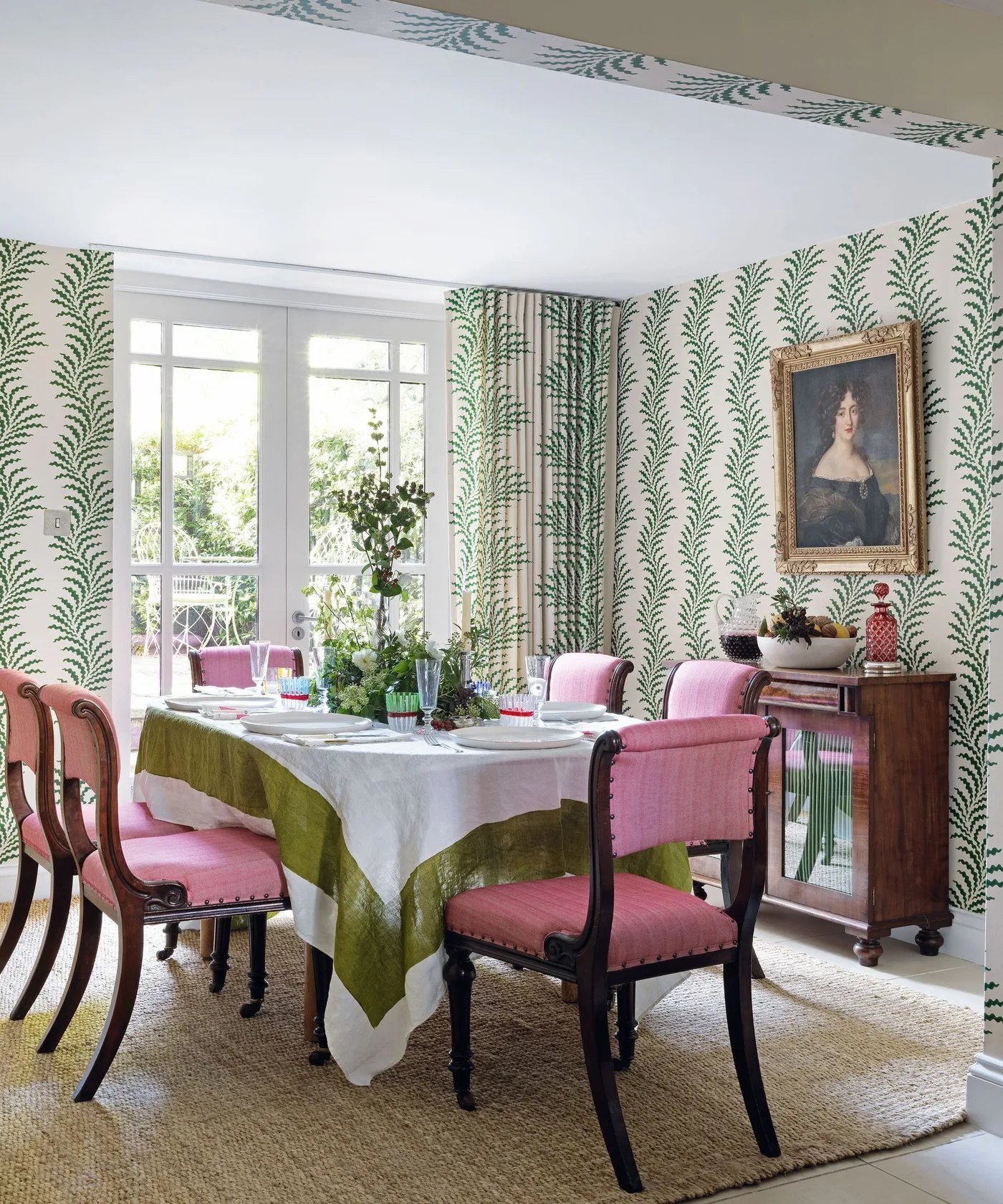
Balance Pink Seats with a Green Botanical Background
 SaveSupport Non AI Creator
Image credit: Future
Pink upholstery provides a warmer contrast against the green botanical wallpaper and curtains. The wooden cabinet adds a separate solid surface beside the repeating pattern. Table linens connect the white background and green details, letting the chairs remain the most noticeable brighter color at seat level.
Compare upholstery and wallpaper samples in the room before choosing a coordinated set of curtains. Check fabric care around frequent meals and leave storage doors clear when chairs are occupied. Dining room wallpaper ideas offer more pattern scales if you want the wall to support colorful seats without competing with them.
PART 03
Compare patterned rooms and quieter furniture
IDEA 11 / 20
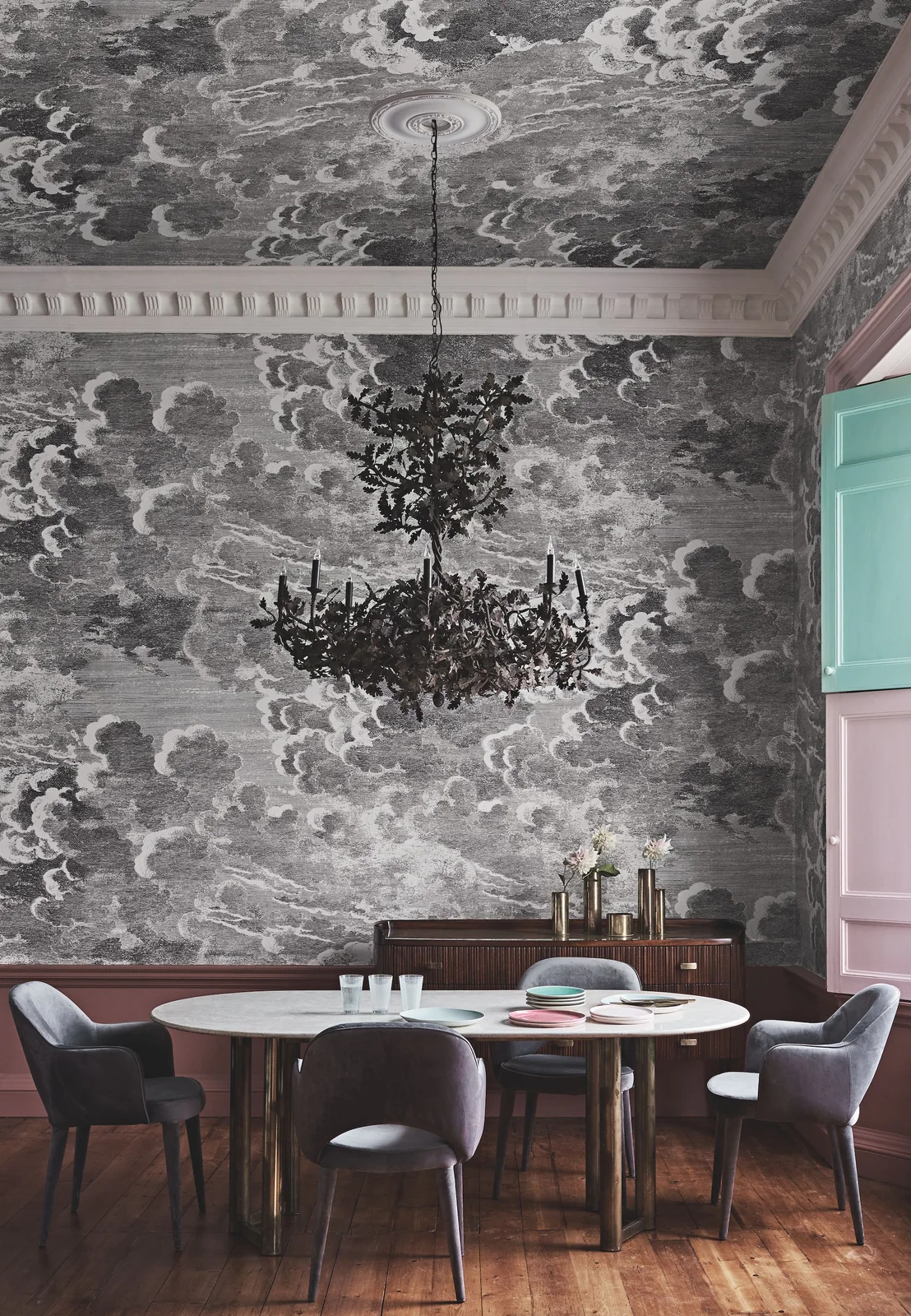
Choose a Dramatic Upper Surface with Quieter Chairs
 SaveSupport Non AI Creator
Image credit: Cole & Son
The cloud-like pattern covers both walls and ceiling in this dining room, giving the black chandelier a detailed backdrop. Gray upholstered chairs and the pale oval table stay simpler below. A darker cabinet and pink lower wall add separate bands without another large patterned furniture surface.
View the wallpaper over a larger area before extending it overhead, and plan joins around the room’s existing trim. Ask an installer about preparation and working around the fitting. Keep the seating fabric quieter if the upper surfaces already supply plenty of detail, and consider how the room looks under evening light.
IDEA 12 / 20
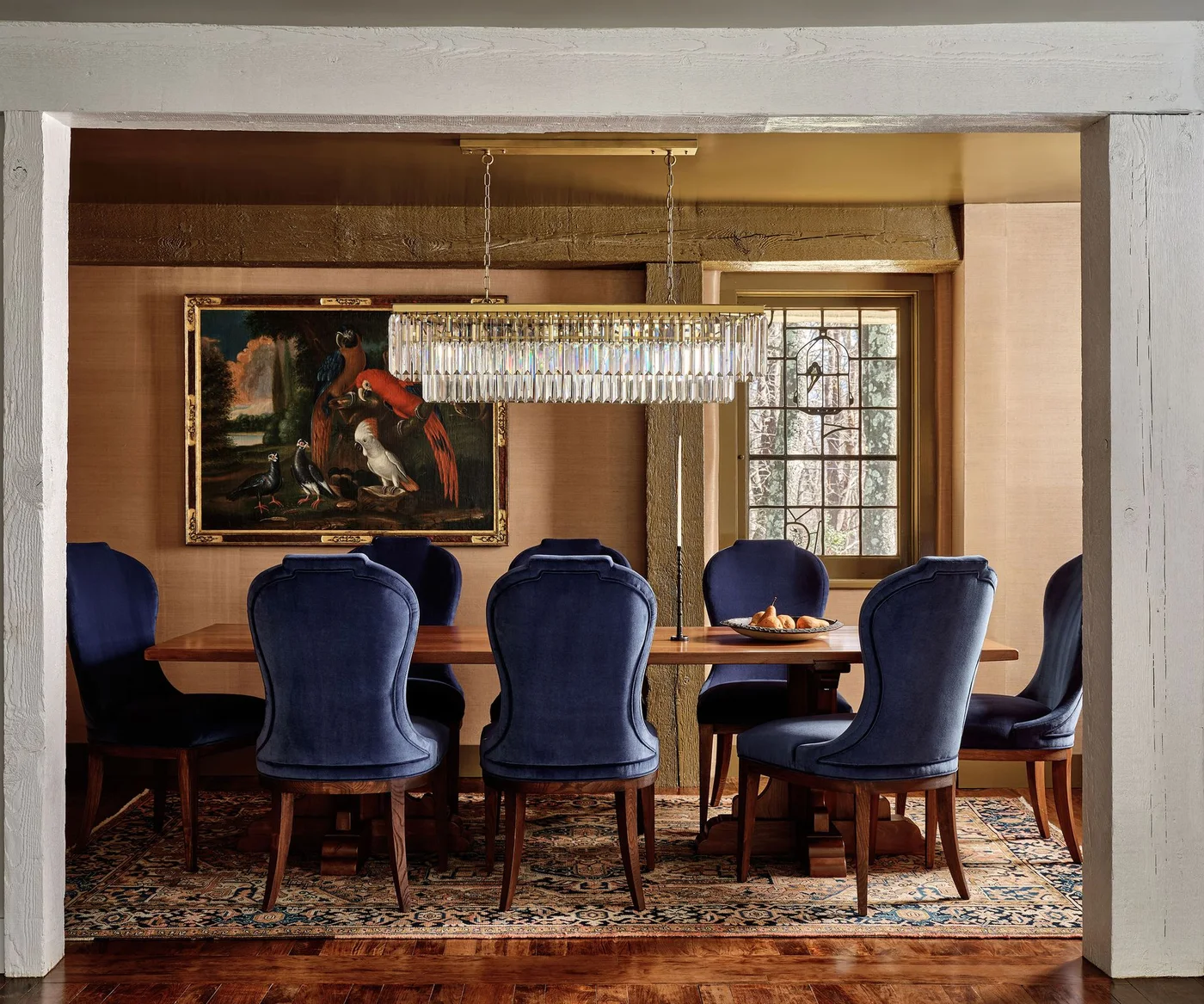
Pair Deep Blue Upholstery with a Long Hanging Light
 SaveSupport Non AI Creator
Image credit: Read McKendree
The deep blue chair backs create a consistent darker outline around this wooden table. A long clear hanging light runs above the seating group, while warm walls and the patterned rug give the surrounding room softer color variation. Large framed art remains distinct behind the table rather than becoming a repeated wall print.
Check the table length against occupied chair spacing before choosing a full matching set. Follow upholstery cleaning guidance and test how easily chairs move across the actual rug. Plan the hanging fitting around the table’s final position, with installation, support and bulb access confirmed before decorating the wall behind it.
IDEA 13 / 20
Repeat Warm Wood Without Matching Every Shape
 SaveSupport Non AI Creator
Image credit: Albion Nord/80 Holland Park/Patrick Williamson
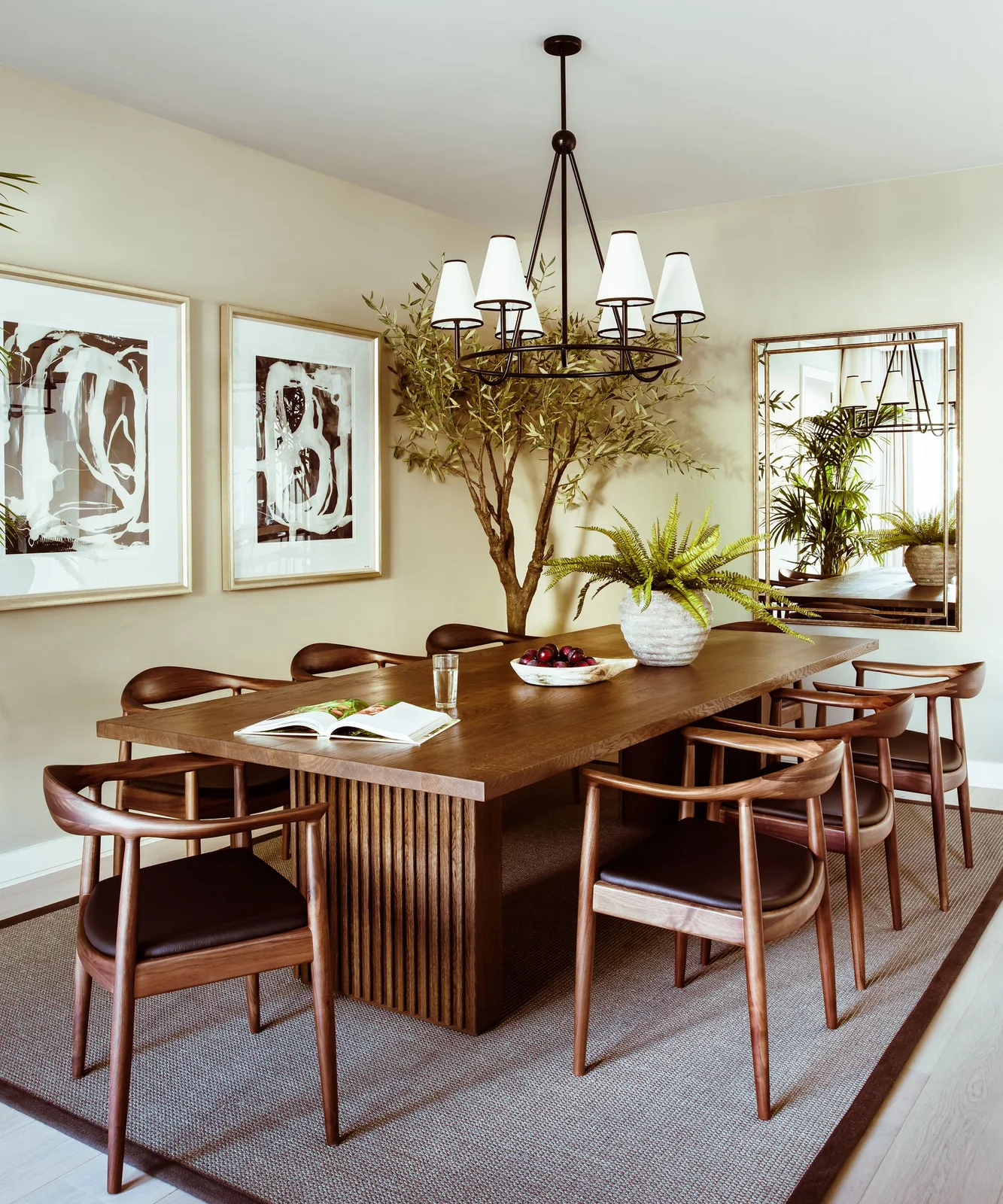
The curved chair backs and ribbed table base repeat warm wood through different shapes. Lighter walls keep those furniture details visible, with framed artwork and a mirror adding separate rectangles around the room. The shaded chandelier supplies another softer outline above the longer tabletop.
Compare wood samples beside the furniture you intend to retain, looking at undertones rather than demanding an identical finish. Check chair arms beneath the tabletop and whether the base interferes with feet. Keep a generous usable area on the table, choosing smaller plants or removable arrangements for ordinary meals.
IDEA 14 / 20
Give a Dark Table a Light Architectural Background
 SaveSupport Non AI Creator
Image credit: Douglas Friedman
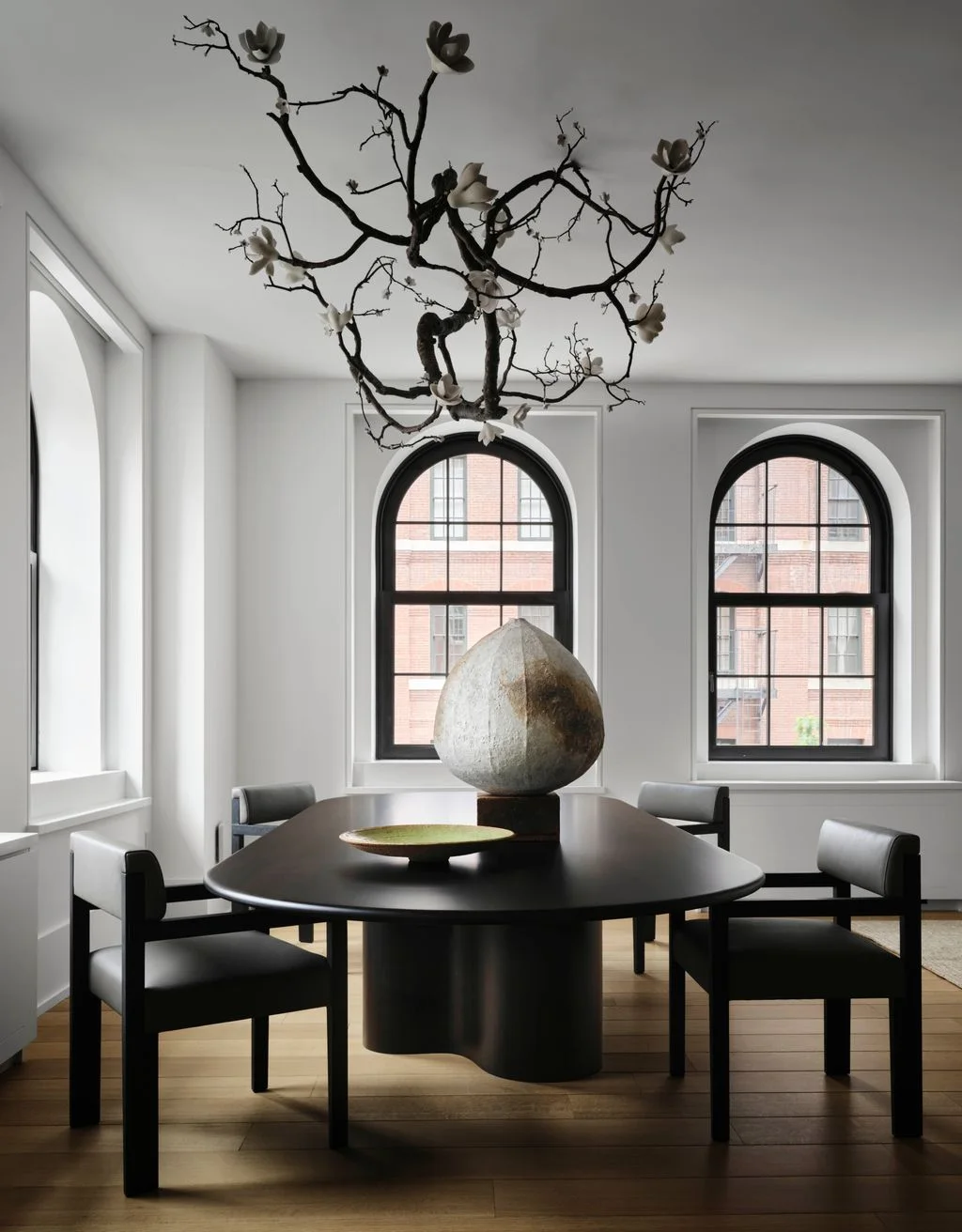
The dark table and chairs form a clear central group against the lighter walls. Arched windows repeat their black outline without adding more dark furniture around the perimeter. The branching hanging light introduces an irregular shape above, leaving the tabletop largely clear aside from two substantial decorative objects.
Judge the light from seated viewpoints before choosing a sculptural fitting, checking whether its lower branches interrupt conversation or access. Confirm suitable support and installation with a professional. Keep table ornaments removable for meals so a clear furniture arrangement remains useful rather than becoming a display that is inconvenient to reset.
IDEA 15 / 20
Use a Pale Round Table Against Soft Pink Walls
 SaveSupport Non AI Creator
Image credit: Rafael Pulido
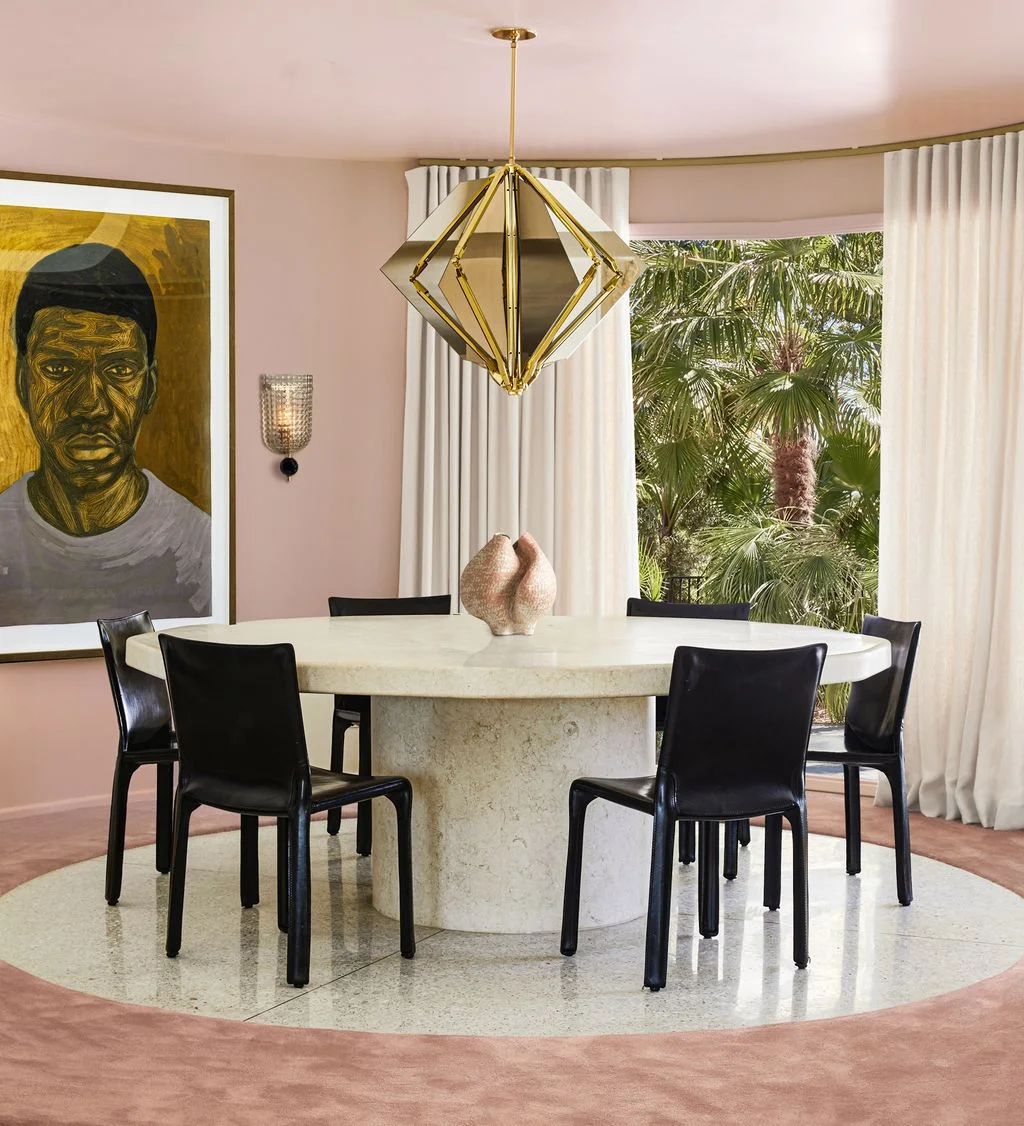
The pale round table gives this pink room a lighter center between the black dining chairs. A geometric pendant adds sharper edges overhead, contrasting with the rounded furniture. White curtains repeat the tabletop’s lighter color beside the window, with large artwork providing one separate wall feature.
Choose the round table from the seats and serving dishes you actually need to accommodate, checking the pedestal’s effect on legroom. Confirm care requirements for the actual top before placing decorative vessels directly on it. Compare pink paint with the chair and curtain samples under daylight and evening illumination.
PART 04
Choose distinctive chairs and comfortable lighting
IDEA 16 / 20
Let Carved Chair Backs Define a Darker Room
 SaveSupport Non AI Creator
Image credit: Stephen Kent Johnson; styling: Michael Reynolds
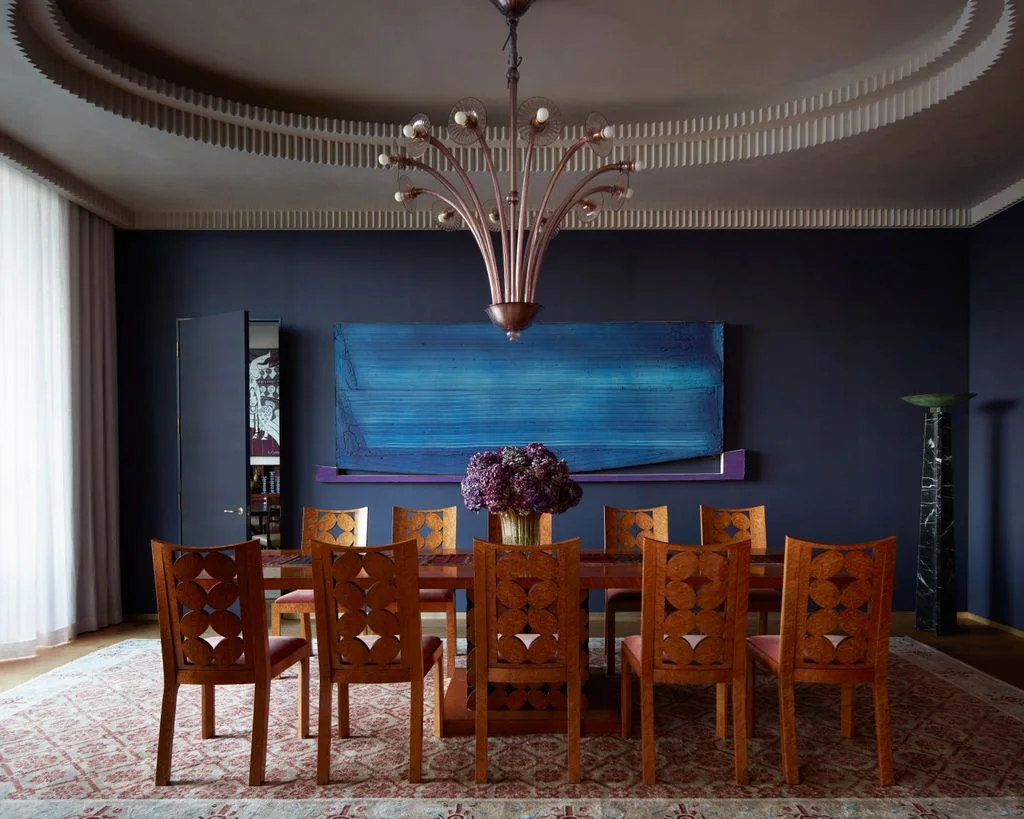
The carved chair backs give this darker dining room repeated decorative shapes at seat level. Large blue artwork relates closely to the wall color behind it. A branching chandelier adds another outline above the table, with the patterned rug introducing lighter detail beneath the warm wooden furniture.
Sit against a decorative chair back before choosing it for longer meals, checking comfort rather than appearance alone. Compare the rug with the carved shapes so the smaller details do not become difficult to read together. Leave enough space behind the chairs to move comfortably without constantly shifting the whole seating group.
IDEA 17 / 20
Bring Warm Color to a Window-Side Table
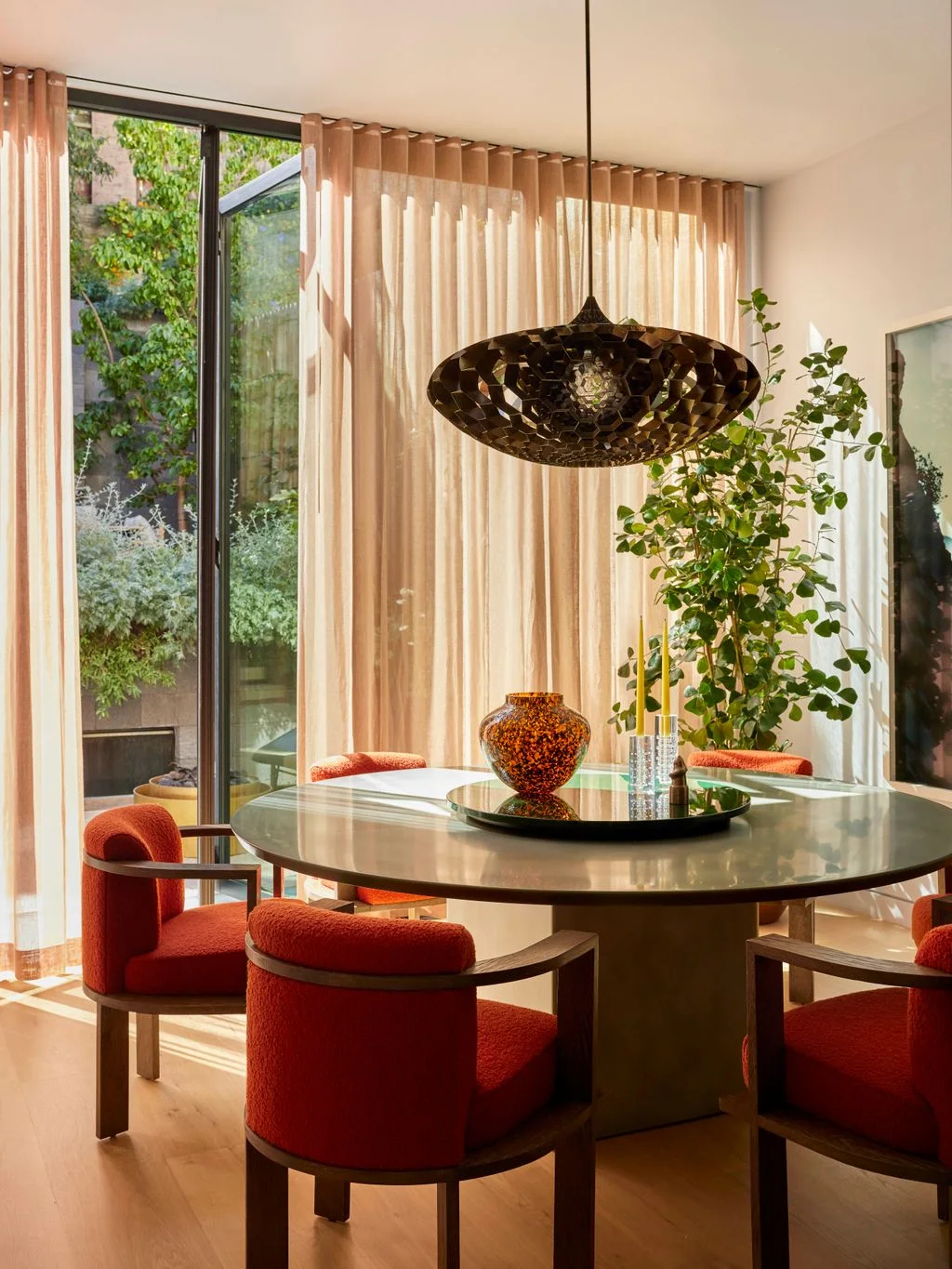 SaveSupport Non AI Creator
Image credit: Laure Joliet
Orange upholstered chairs add a warmer color around the reflective round table. The dark sculptural pendant supplies a separate shape above its center. Pale sheer curtains leave the window backdrop lighter, with a taller plant and a small tray arrangement introducing different forms beside the repeated chair outlines.
Check the table’s real surface and recommended cleaning method before selecting a reflective finish. Test chair support and arm clearance, then inspect the arrangement in evening light when reflections change. Keep the tray removable and select curtains from the privacy and light control you actually need at mealtimes.
IDEA 18 / 20
Give a Shared Room One Clear Dining Group
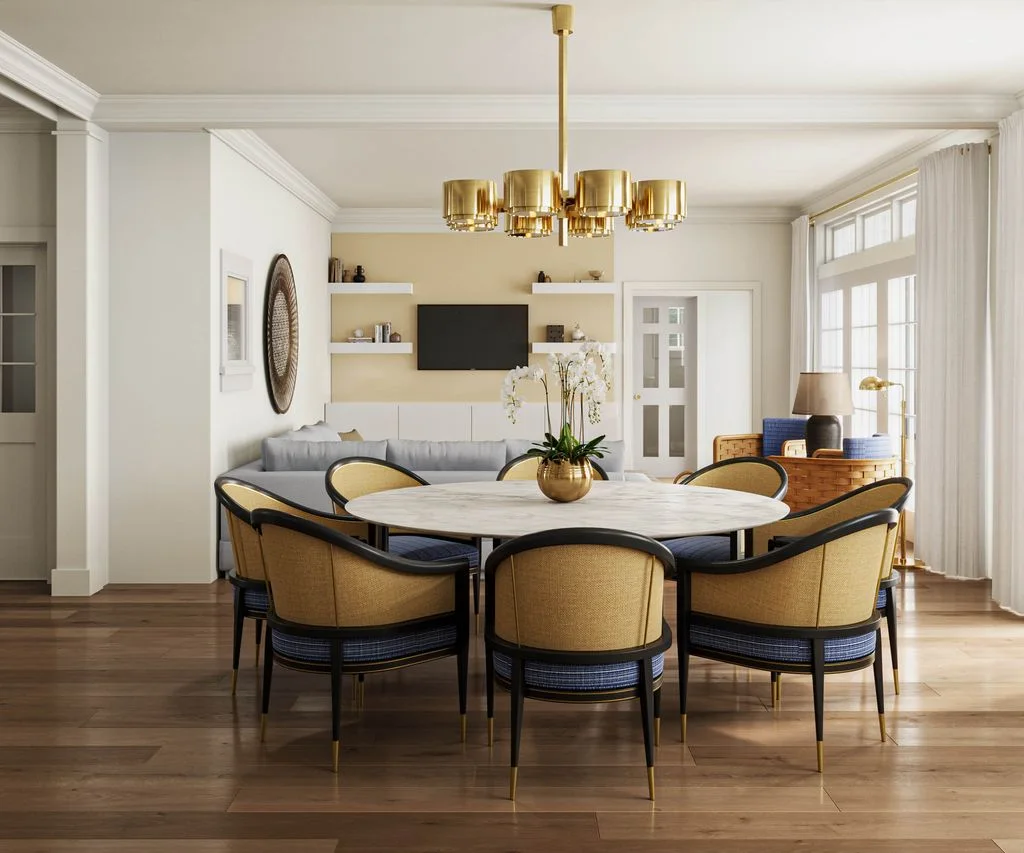 SaveSupport Non AI Creator
Image credit: Joy Moyler
The rounded yellow chairs and pale round table form one clear dining group within this larger shared room. A gold-toned fitting repeats warmer color overhead, while the sofa and shelves remain visible beyond. Dark chair outlines separate the seats from the lighter walls and wooden floor.
Allow for occupied chairs and movement to the adjoining sitting area before choosing the table diameter. Test whether the chair backs give the support you want for longer meals. Check the lighting from both dining and sofa positions so a decorative fitting does not create an uncomfortable bright spot elsewhere in the room.
IDEA 19 / 20
Connect Rich Wood Grain with a Pale Table
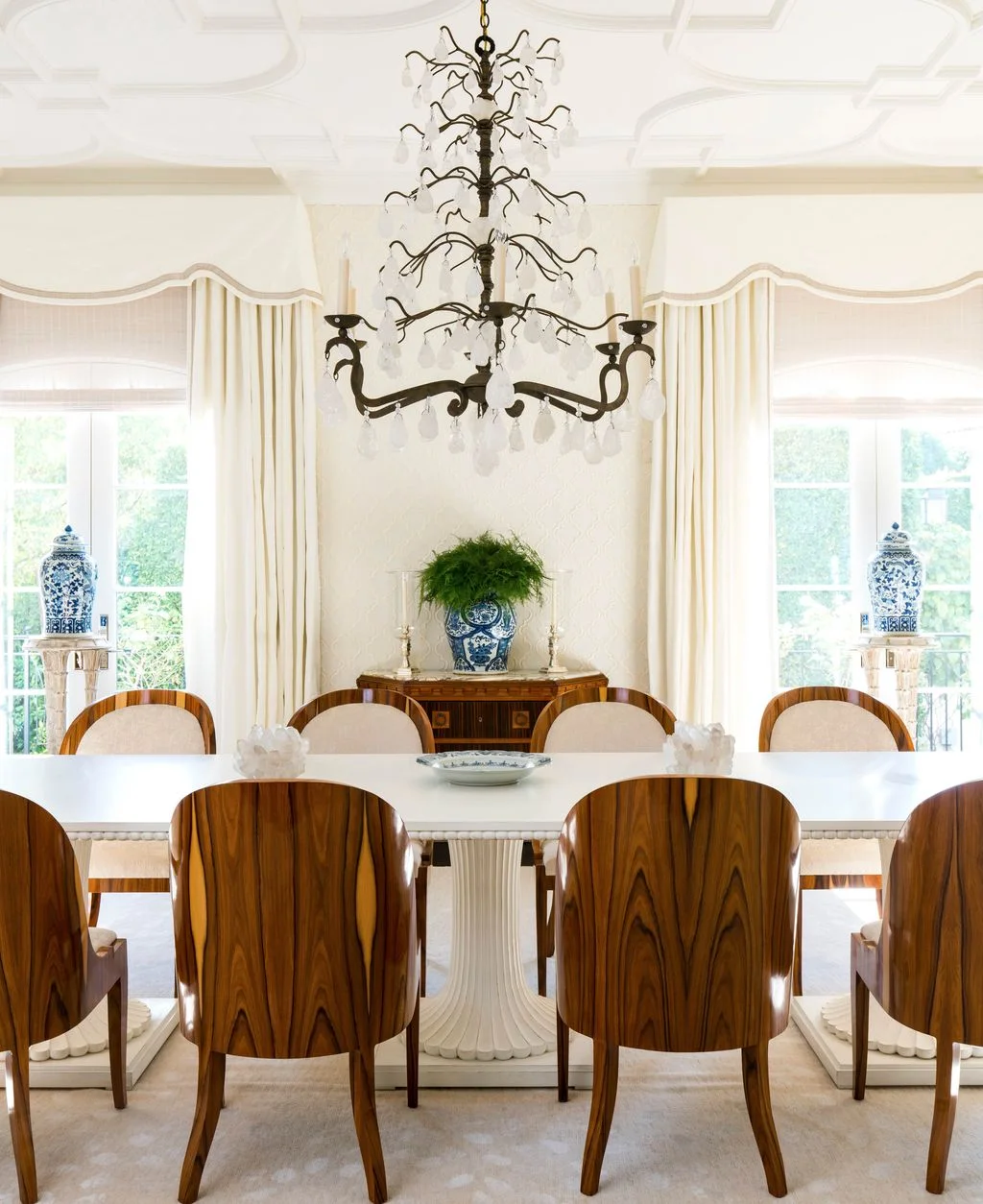 SaveSupport Non AI Creator
Image credit: Nelson Hancock
The strongly patterned wooden chair backs give this pale dining table a warmer repeated border. A tiered dark chandelier provides a more irregular outline above, while lighter curtains and walls keep the furniture’s grain easy to see. Smaller blue-and-white vessels add separate decorative details around the room.
Compare several chair samples if pronounced grain is part of the appeal, asking how much variation to expect across a set. Check the table finish’s maintenance guidance and chair comfort before ordering. Keep wall decorations manageable when the chair backs and overhead light already supply several noticeable shapes.
IDEA 20 / 20
Pair Bold Upholstery with a Veined Backdrop
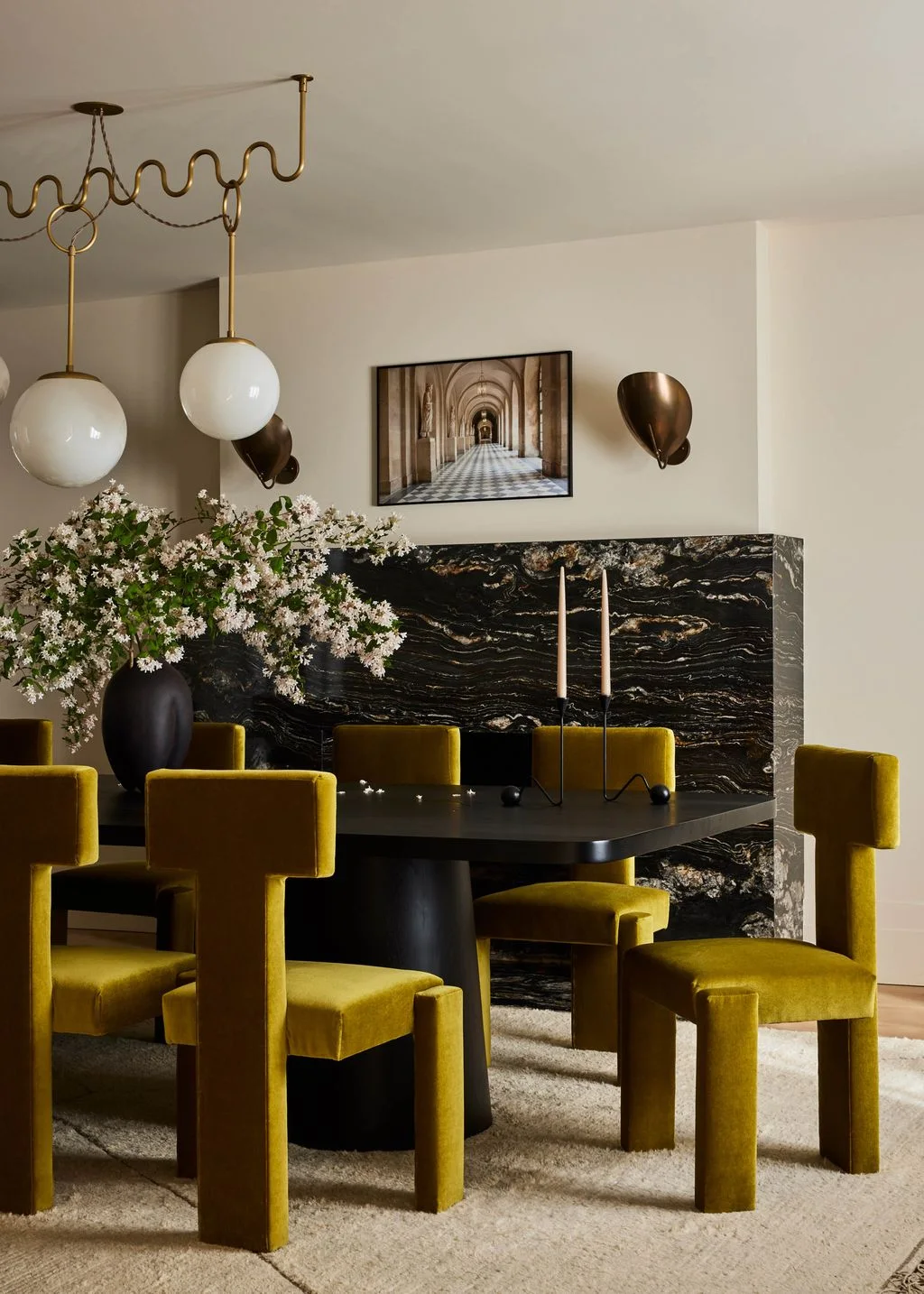 SaveSupport Non AI Creator
Image credit: Nicole Frazen; artwork: Nicole Cohen
Yellow upholstery gives this dining room its strongest color against the black table and dark veined wall. White globe pendants add lighter round shapes overhead, with smaller warm metal wall lights framing the artwork. The pale upper wall keeps the patterned backdrop concentrated behind the dining furniture.
Compare the upholstery with a larger sample of the wall surface rather than selecting from a small swatch. Confirm the actual material and care requirements before choosing prominent veining. Keep everyday table arrangements lower and removable, allowing the wall and chairs to provide the visual detail while meals remain easy to serve.
BRING IT ALL TOGETHER
Make comfort the first part of the plan
Choose the seat and table relationship before decorative finishes. Sit long enough to judge support, check arms and knees beneath the top, and allow comfortable movement behind occupied chairs. Consider the route between the table and the place where you serve food so the finished room works during a meal.
Compare larger samples of prominent surfaces and ask about actual cleaning requirements. A sculptural fitting, expressive chair back or patterned wall may provide all the character the room needs. Keep table arrangements removable, plan useful storage, and choose lighting from seated viewpoints as well as the appearance of the room when empty.