A dining room rug changes how the table sits within the room, but its usefulness depends on more than color. Chairs need stable support as they move, nearby doors need clearance and the surface must suit the way you eat and clean.
These dining settings show quiet neutrals, broad patterns, bright accents and different table shapes. Use the visible arrangements as a starting point, then check the actual rug construction, care label and floor compatibility before deciding what belongs beneath your table.
PART 01
Start With Color and Chair Clearance
IDEA 01 / 20
Define an Open Dining Area With a Pale Rug
 SaveSupport Non AI Creator
Source: houzz.com
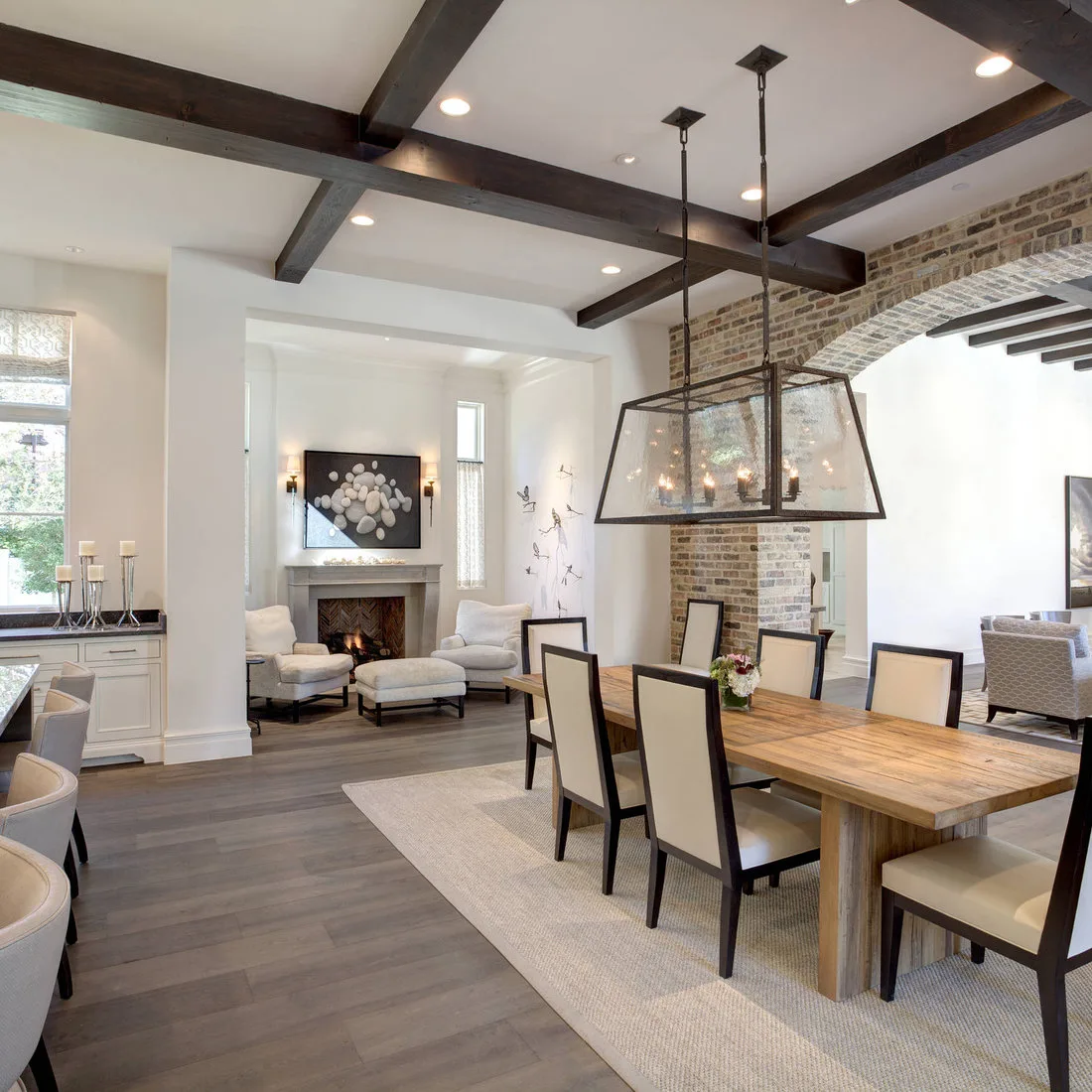
A pale rectangular rug separates the wood dining table from the surrounding gray floor and nearby sitting area. Cream chair upholstery repeats its light tone, while dark chair frames and ceiling beams give the room stronger outlines. The rug makes the dining group readable within the open layout without adding another busy pattern alongside the brick arch and large hanging light.
Measure the dining group with chairs pulled out, rather than choosing a rug from the tabletop dimensions alone. Keep a clear strip of exposed floor along the main walking route into the sitting area. Pale rugs show food marks readily, so check the cleaning instructions and stain treatment before buying. Use a floor-compatible pad and test that chair legs move without catching the edge.
IDEA 02 / 20
Soften Gray Furniture With a Faded Blue Pattern
 SaveSupport Non AI Creator
Source: houzz.com
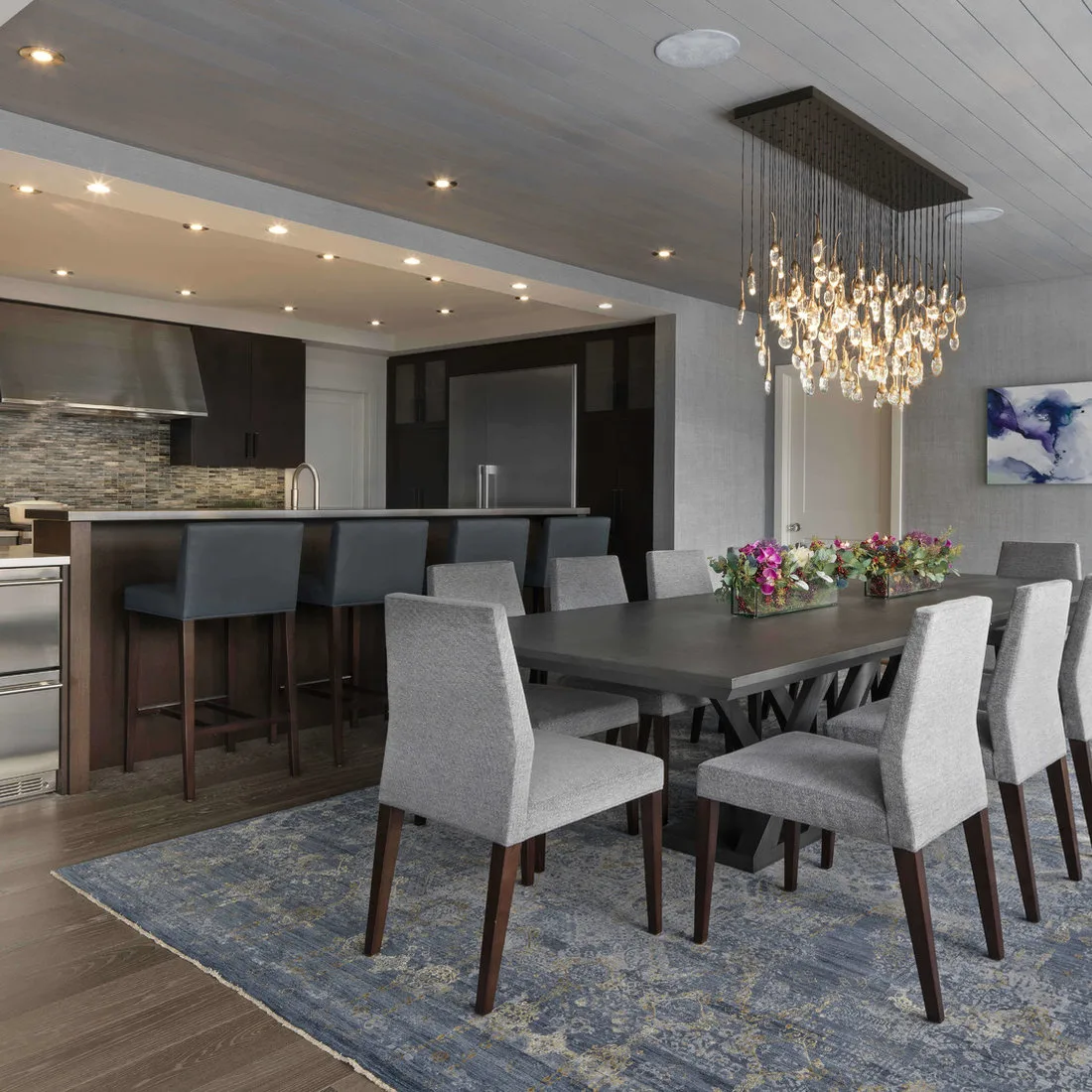
A faded blue patterned rug sits beneath a dark dining table and gray upholstered chairs next to the kitchen. The softer pattern breaks up the large blocks of gray and dark cabinetry without competing with the bright chandelier. Its rectangular outline gives the table a defined footprint, while the exposed wood floor keeps the dining area connected to the kitchen around it.
Compare the rug color with the chairs in both daylight and evening light. A faded pattern can disguise some visual wear, but it does not establish stain resistance or easy cleaning. Check the actual fiber, backing and care instructions. Pull the chairs toward the kitchen and doorway to test clearance, and keep the rug edge outside the busiest route around the island.
IDEA 03 / 20
Make Blue and White the Main Floor Pattern
 SaveSupport Non AI Creator
Source: houzz.com
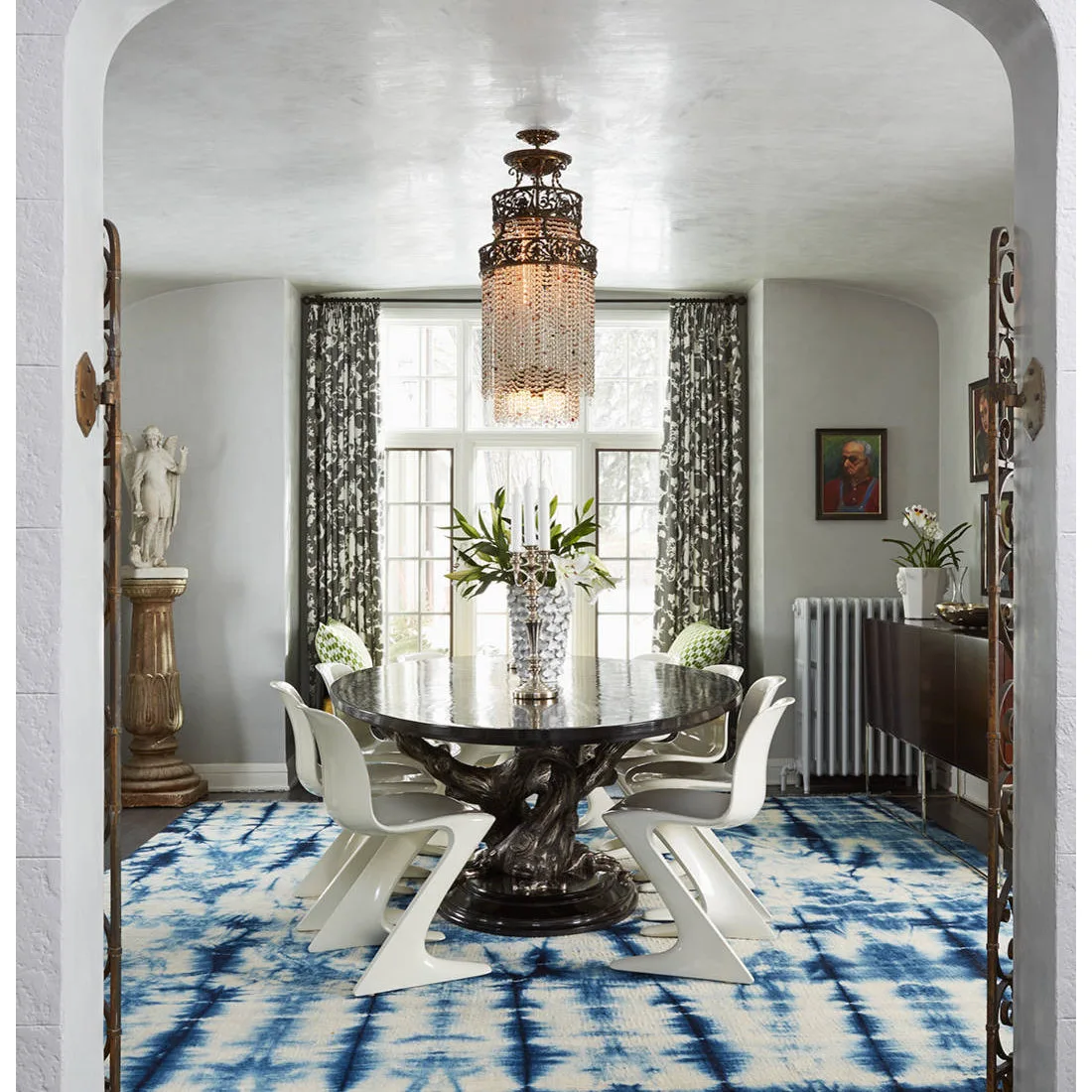
A strong blue and white rug spreads beneath a dark round table and white sculptural chairs. The dark tabletop and ornate hanging light give the room weight above, while the rug introduces a brighter, less formal layer below. Patterned curtains repeat the idea of movement at the window without using exactly the same design, helping the small dining room feel collected.
Choose the rug pattern with the curtains visible beside a sample. Two patterns can work together when their scales differ, but a photograph cannot predict how they will look in your room. Check that every chair stays supported when pulled away from the round table. Keep radiator access clear, and follow the rug’s care instructions instead of assuming a blue pattern will hide every spill.
IDEA 04 / 20
Use Quiet Texture Beneath a Dramatic Window Wall
 SaveSupport Non AI Creator
Source: houzz.com
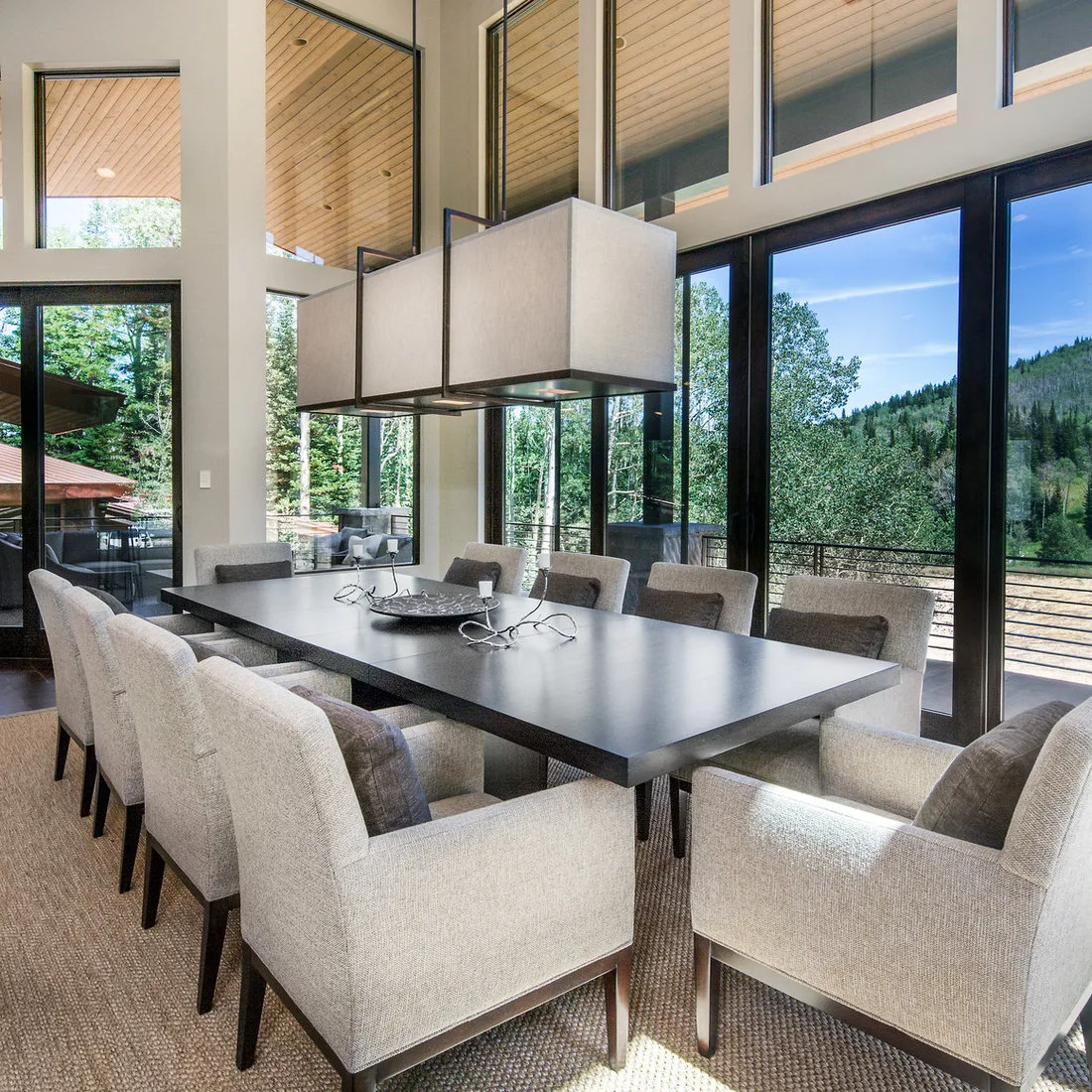
A neutral textured rug sits below a dark rectangular table and pale upholstered chairs facing tall black-framed windows. The view and large box-shaped pendant already create strong features, so the floor treatment remains quiet. Its light surface softens the dark table outline and connects with the chair upholstery, giving the dining group a common base within the tall, bright space.
Test a sample against the floor and chair upholstery before choosing a near-matching neutral. Consider how sunlight changes its appearance and follow any guidance about fading or rotation. Confirm the weave and pile allow chair legs to slide comfortably. Keep the rug away from opening doors, and choose a pad compatible with the floor finish so the seating group stays stable during meals.
IDEA 05 / 20
Echo Curved Chairs With a Soft Geometric Rug
 SaveSupport Non AI Creator
Source: houzz.com
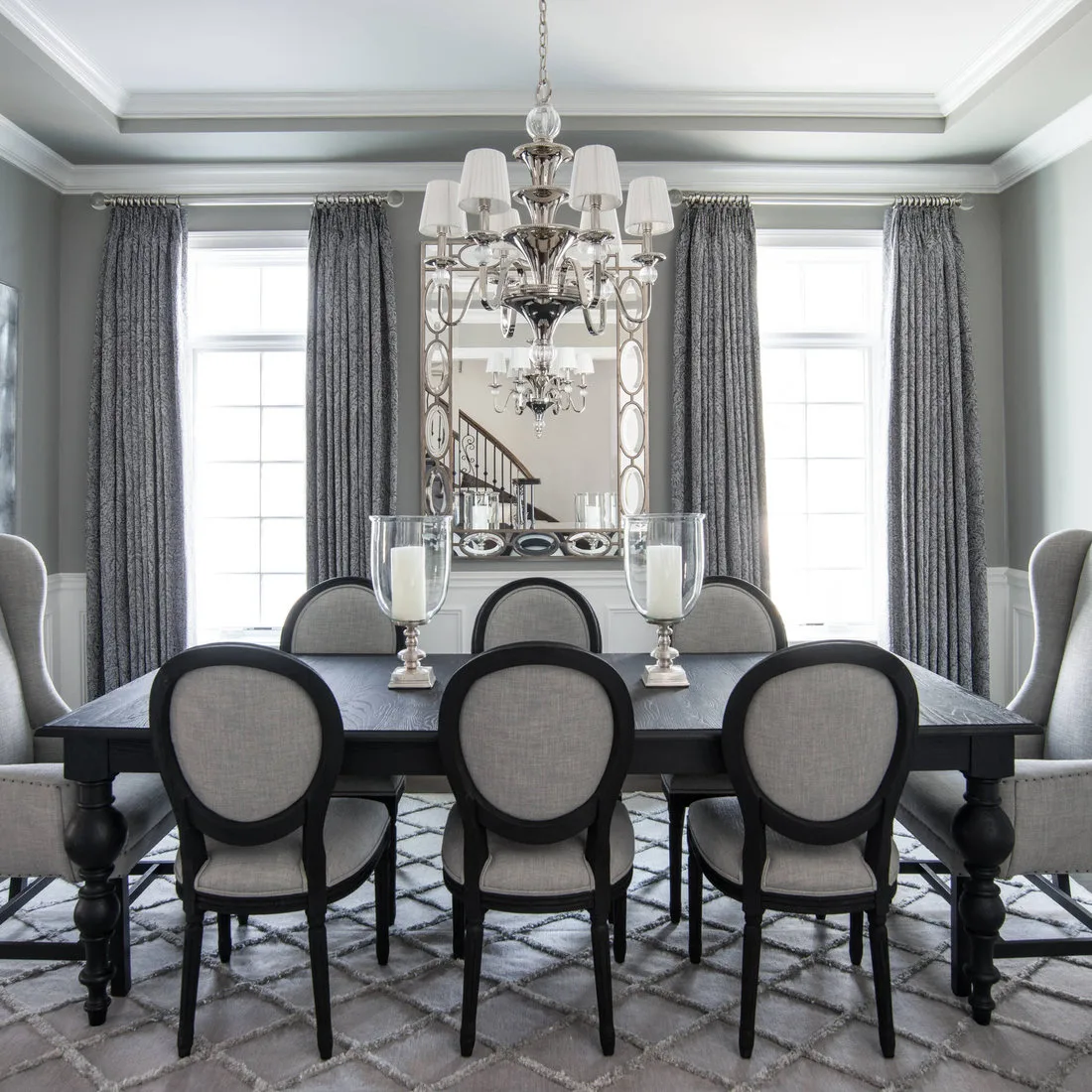
A pale gray rug with a large diamond pattern gives the dark table and oval-backed chairs a softer base. Gray curtains, light upholstery and a reflective mirror carry a restrained palette through the room. The floor pattern adds structure without needing a stronger color, and its broad shapes remain visible around the furniture rather than becoming a small detail lost beneath the table.
Compare the pattern scale with the room and the furniture legs. Broad shapes often remain readable around a dining group, but the rug still needs enough width for pulled-out seats. Inspect pile depth and test a chair on a sample when possible. Vacuum using the recommended setting, and check the care requirements for any raised sections rather than treating all parts of a textured rug alike.
PART 02
Balance Patterns With the Room Around Them
IDEA 06 / 20
Balance Formal Chairs With a Sweeping Floor Pattern
 SaveSupport Non AI Creator
Source: houzz.com
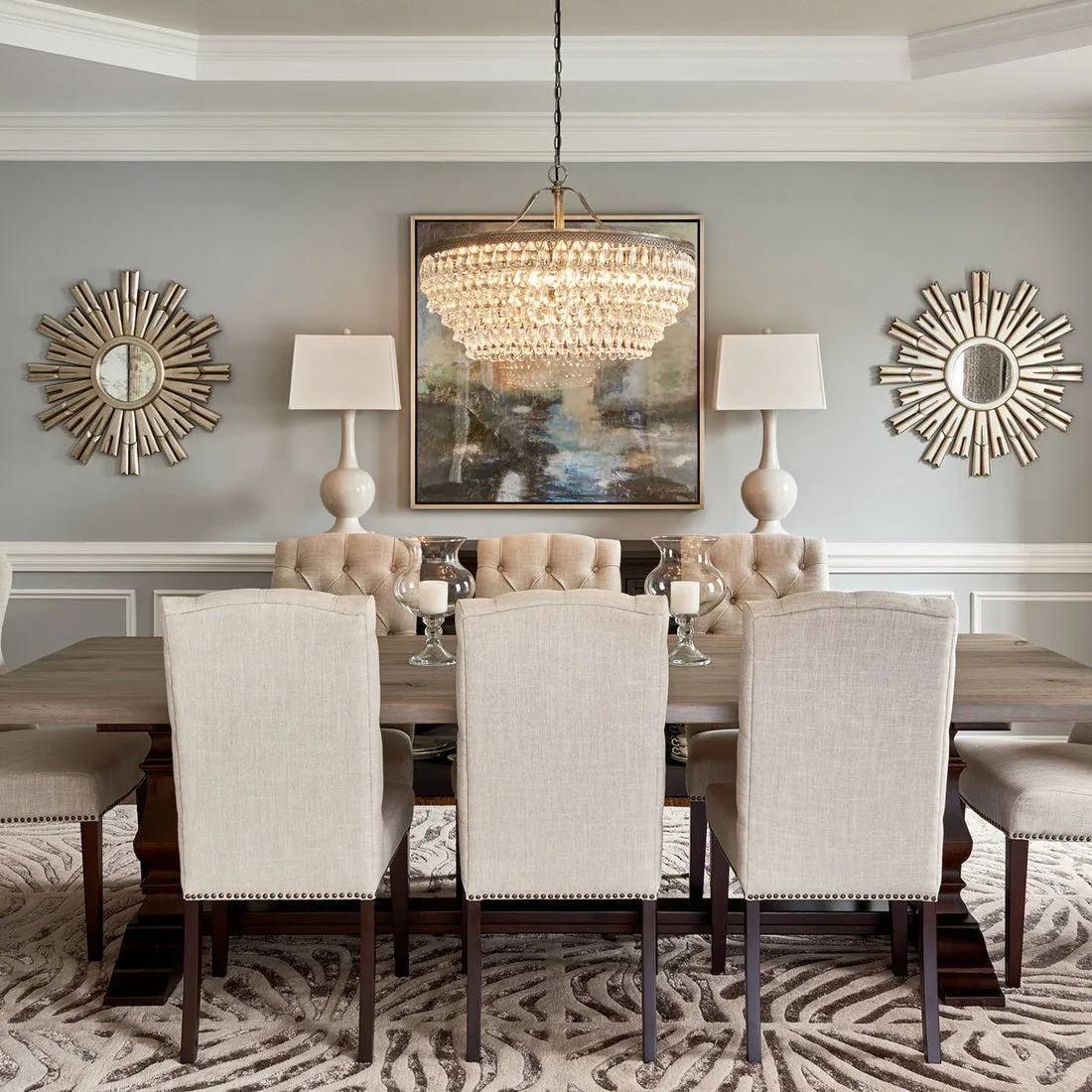
Sweeping gray motifs cover a pale rug beneath a substantial wood table and cream upholstered chairs. The room also includes framed artwork, matching sunburst mirrors and a sparkling pendant. The rug’s flowing pattern introduces movement below this formal furniture arrangement, while its restrained colors allow the wall decorations and warm wood to remain prominent.
Look at the rug alongside the sideboard, art and lighting before adding another decorative layer. A restrained palette can still contain a large pattern, so check how much of it will remain visible once the chairs are in place. Leave clearance around the sideboard for serving and cleaning. Confirm suitable spot-cleaning methods before placing a pale rug beneath a table used for regular family meals.
IDEA 07 / 20
Carry Floral Detail Beneath a Round Table
 SaveSupport Non AI Creator
Source: houzz.com
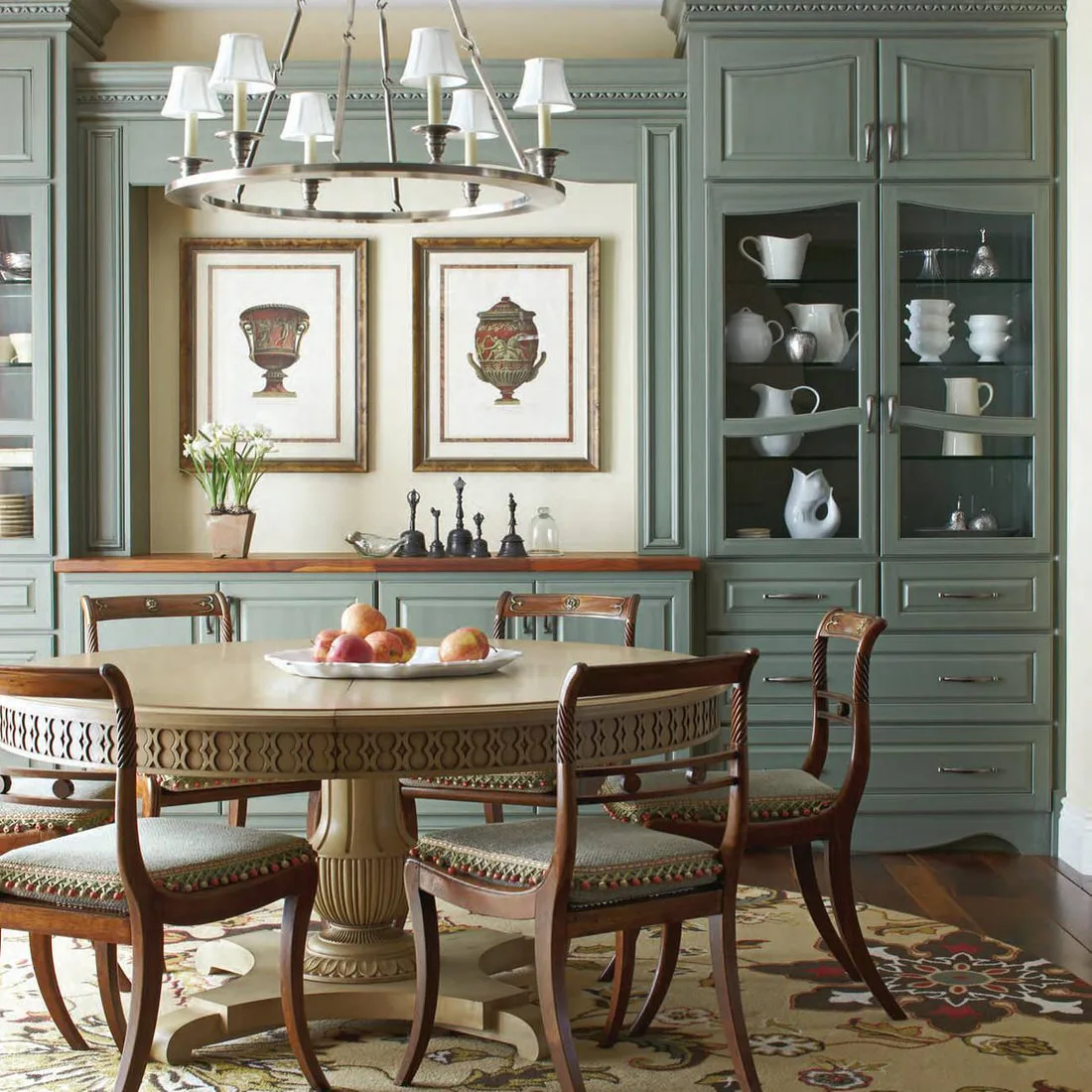
A floral patterned rug spreads beneath a round pedestal table and carved wood chairs. Green display cabinets, framed botanical-style pictures and white serving pieces create a layered backdrop. The rug contributes another decorative surface below the table, with muted colors that sit comfortably alongside the cabinetry rather than introducing a sharp new contrast.
Check how the rug border relates to the round table before choosing its size. Chairs need room to move outward without landing halfway on a thick edge. Keep the cabinet doors usable with the dining seats pulled back, and avoid bunching a rug against the storage wall. Read the care label carefully; an intricate pattern may disguise small marks but does not remove the need for prompt cleaning.
IDEA 08 / 20
Give a Dining Library a Deep Teal Base
 SaveSupport Non AI Creator
Source: houzz.com
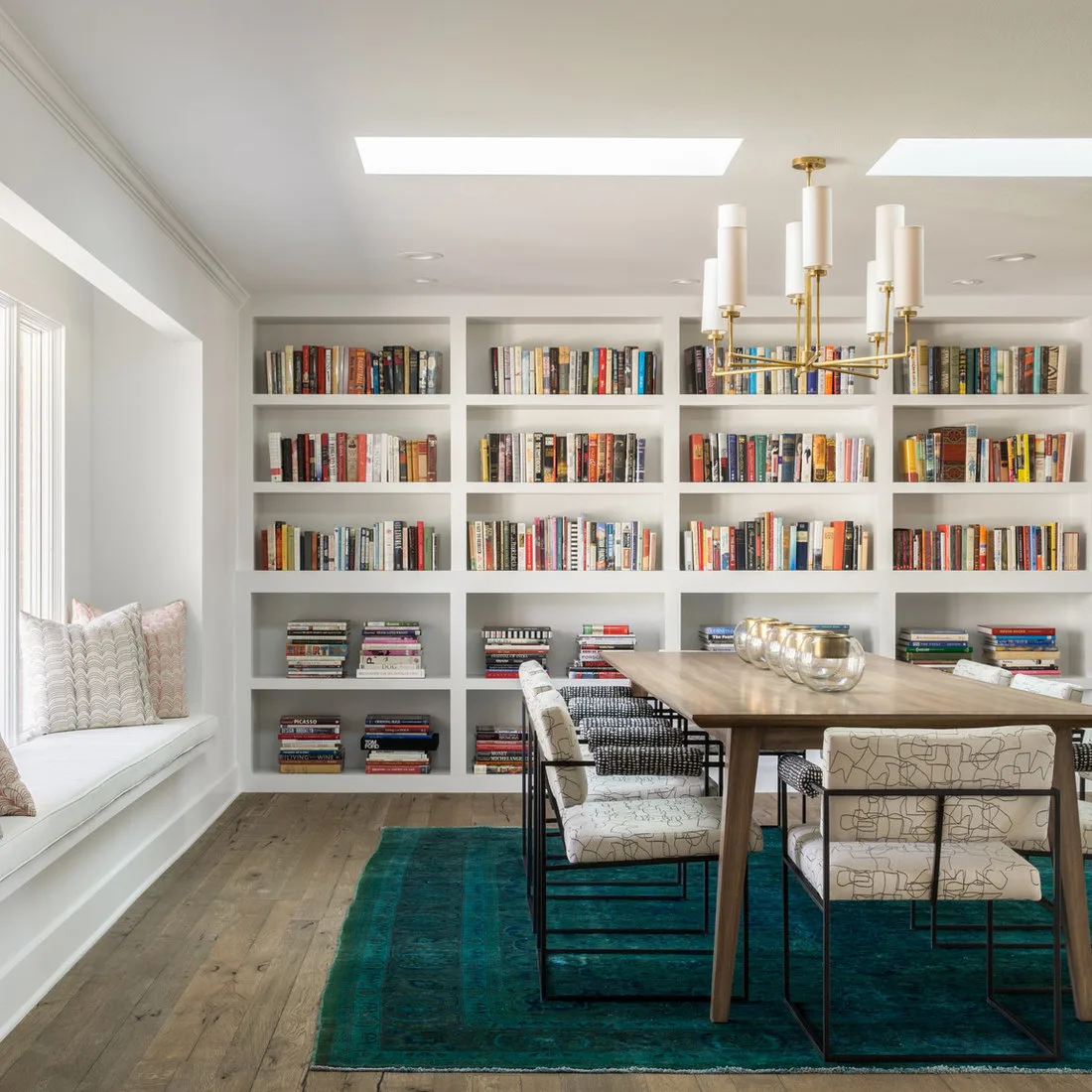
A deep teal rug creates a strong floor area beneath the wood table and patterned chairs in this dining library. White bookshelves and pale walls keep the surrounding room light, while the books introduce many smaller colors. The rug concentrates the main accent below the seating, making the dining group distinct from the window bench and the storage wall.
Choose a color that works with both the furniture and the visible book collection. Test how easily the chairs move over the rug, especially if the table also serves as a reading or work surface. Keep access to low shelves clear, and leave room to vacuum along the edges. Dark color alone does not guarantee resistance to food stains, lint or fading.
IDEA 09 / 20
Keep a Pale Rug Inside an Open Dining Threshold
 SaveSupport Non AI Creator
Source: houzz.com
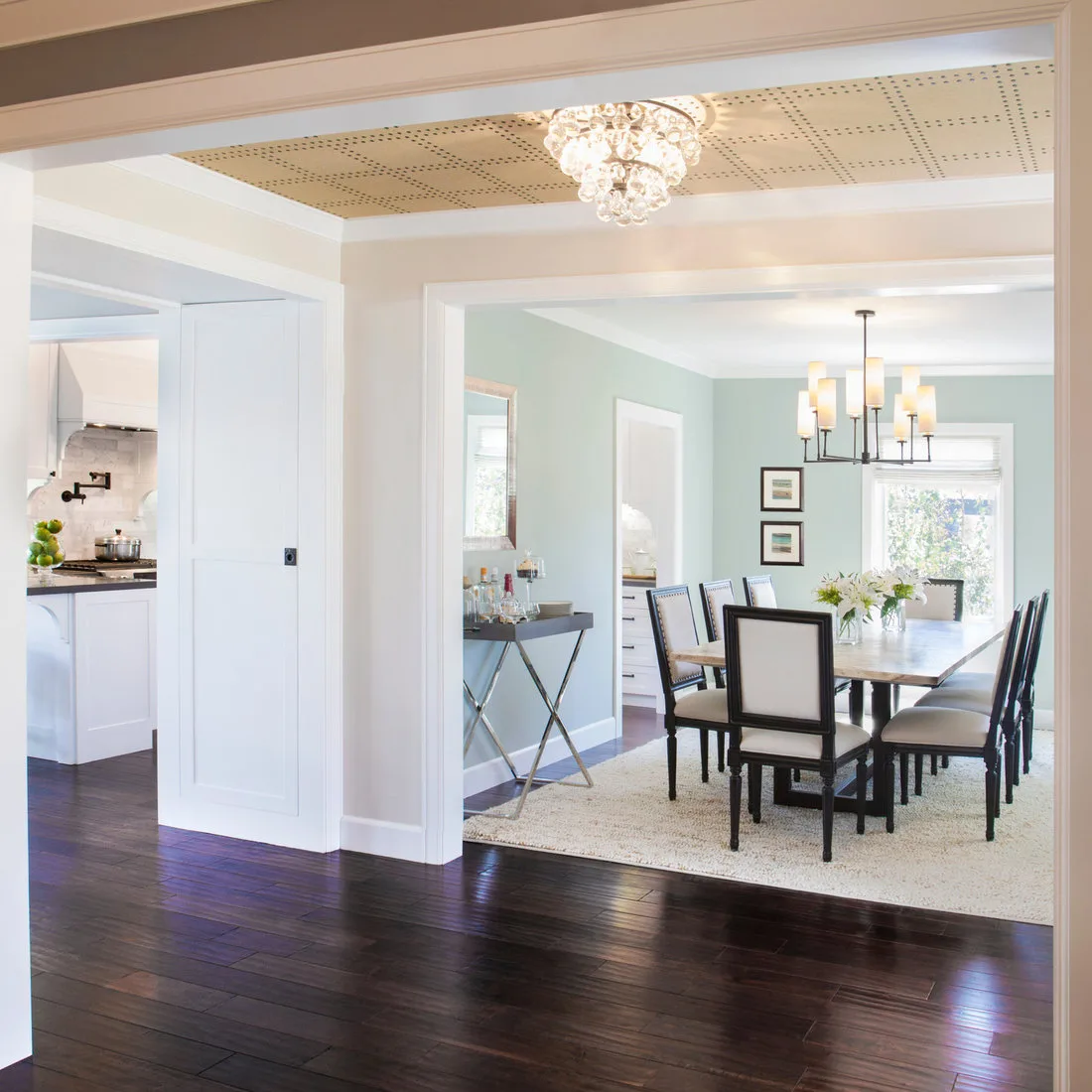
A pale textured rug marks the dining room beyond a wide white opening. Dark chair frames, cream upholstery and light blue-green walls give the room a clear palette, while the darker wood floor remains visible around the rug. The floor treatment defines the furniture group without extending its pattern into the adjoining passage, preserving a readable transition between the spaces.
Measure the threshold and chair movement together before setting the rug position. Keep its edge out of the doorway where it could interfere with walking or door operation. A pale surface may make crumbs easy to spot, but cleaning suitability depends on the actual product. Check the backing and pad against the floor finish, and leave enough exposed floor to clean around the dining group.
IDEA 10 / 20
Lighten a Dark Dining Room From the Floor
 SaveSupport Non AI Creator
Source: houzz.com
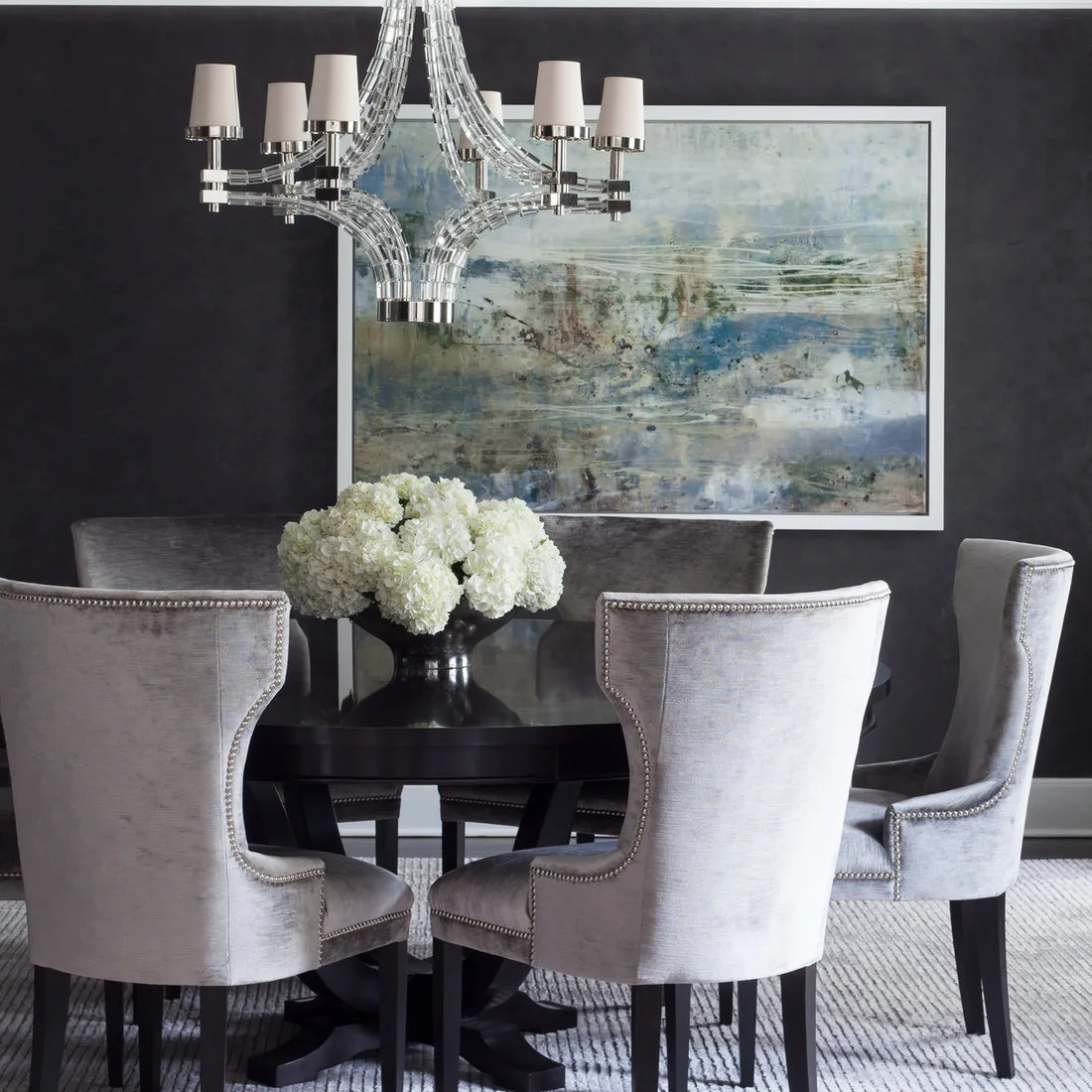
A pale rug with fine repeated lines sits beneath a dark round table and gray upholstered chairs. The dark wall and large framed painting create a strong backdrop, while the rug supplies a lighter horizontal surface below the furniture. Its quiet pattern keeps attention on the curved chair backs and chandelier instead of introducing another large decorative motif.
Compare the rug with the upholstery rather than matching it only to the wall color. Fine lines can change appearance at a distance, so view a sample from the doorway as well as close up. Check chair stability and how the legs cross the rug edge. Use only the vacuum setting and cleaning products recommended for the actual construction, especially if the surface contains delicate raised threads.
PART 03
Plan for Open Rooms and Layered Rugs
IDEA 11 / 20
Link Soft Chair Color With Rounded Rug Motifs
 SaveSupport Non AI Creator
Source: houzz.com
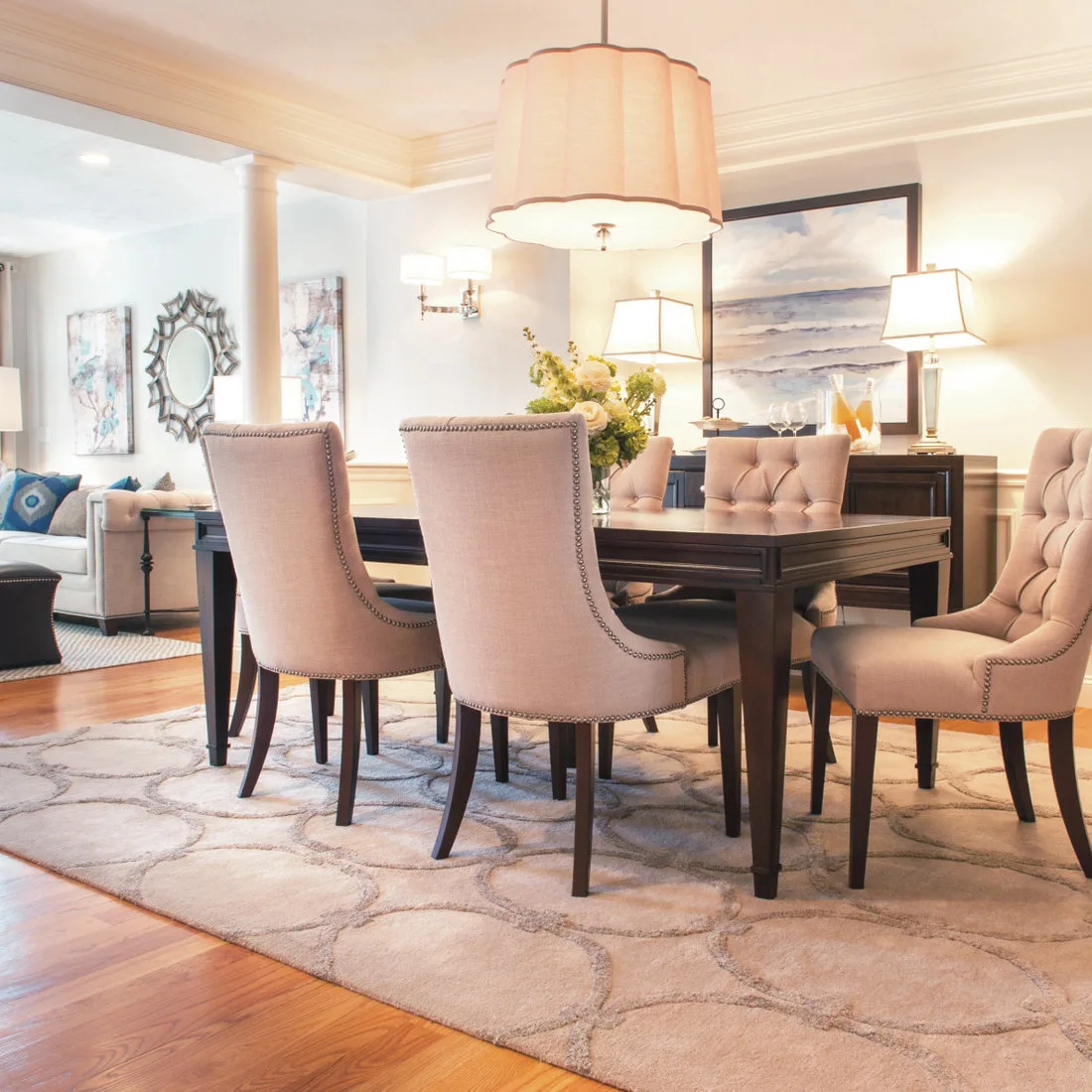
Rounded gray outlines repeat across a pale rug under blush-toned upholstered chairs and a dark dining table. A large fabric-shaded pendant adds another soft shape overhead. The rug connects the seating with the surrounding light walls, while the table and exposed wood floor keep the room from becoming a single pale block. The adjacent sitting area remains visible beyond the dining group.
Check the rug’s outline against the main route between the dining and sitting areas. Leave room for someone to pass while a chair is occupied, and test the edge with chairs pulled back. Near-matching pale colors can look different under warm lamps, so compare samples in the room. Ask about stain treatment and cleaning limits before using a light rug for everyday dining.
IDEA 12 / 20
Combine a Large Floor Pattern With Window Geometry
 SaveSupport Non AI Creator
Source: houzz.com
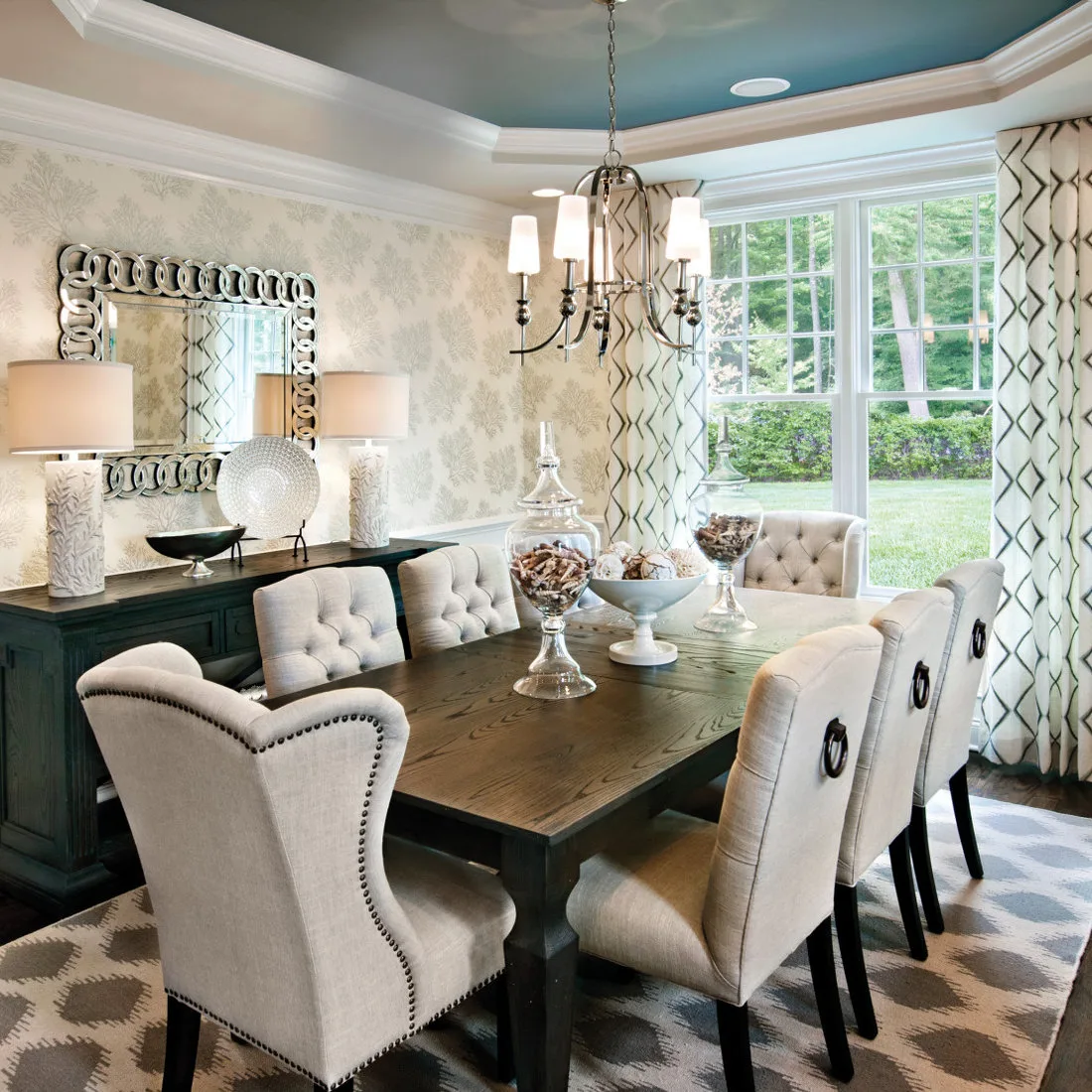
A gray and white rug carries a broad irregular pattern beneath cream chairs and a wood table. Geometric curtains, a patterned wall covering and a blue ceiling add detail at other heights. The pale upholstery gives the eye a quieter layer between those patterns, while the floor design keeps the dining group distinct from the dark sideboard behind it.
Compare the rug and curtain patterns together before ordering. Similar colors do not automatically prevent a room from feeling busy, so vary the scale and leave some plain surfaces. Check the clearance between chairs and sideboard doors. Follow the care instructions for the rug’s actual fibers and construction, and make sure a suitable pad does not raise the edge into a frequent walking route.
IDEA 13 / 20
Layer a Narrow Pattern Over a Textured Base
 SaveSupport Non AI Creator
Source: houzz.com
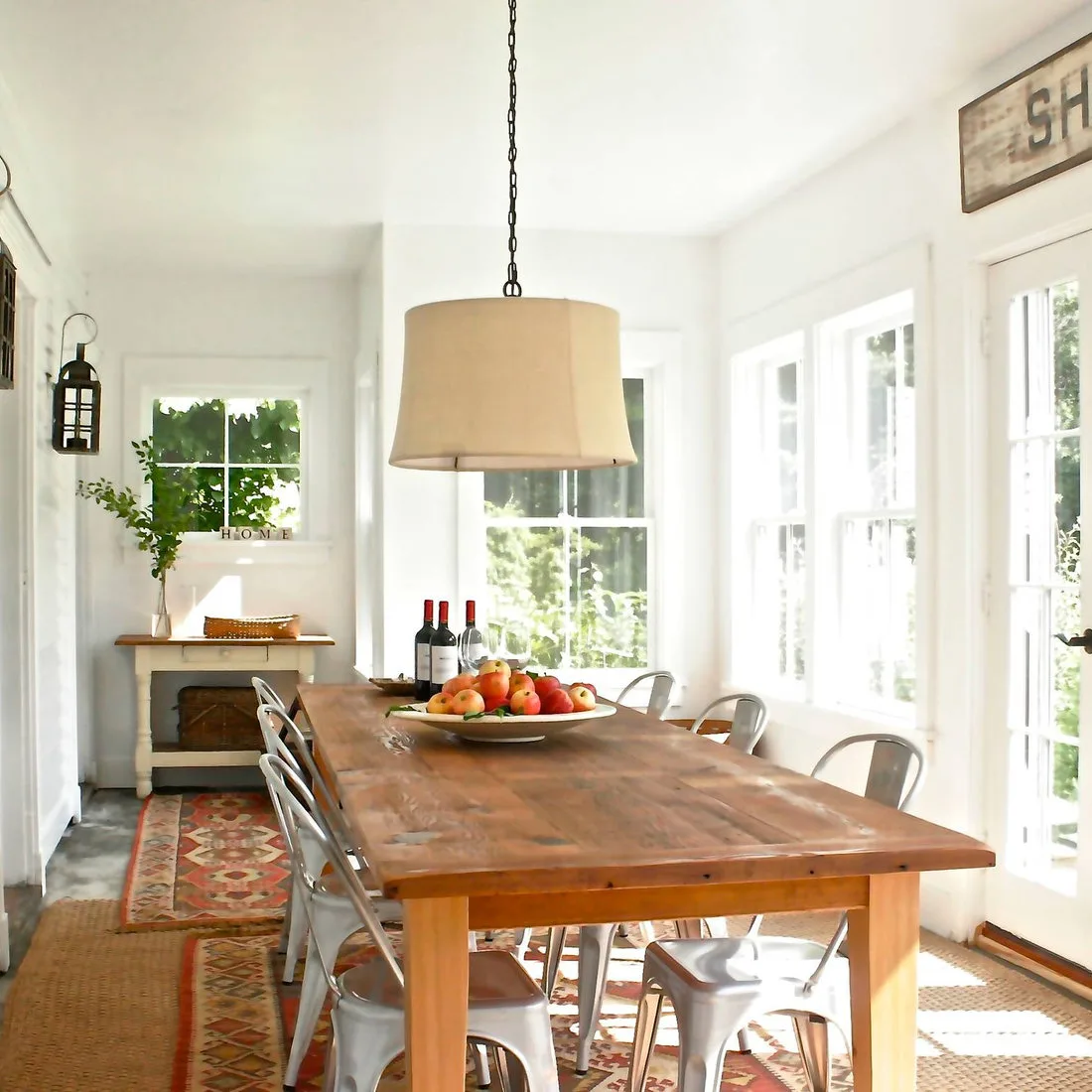
A neutral textured rug forms a broad base beneath a rustic wood dining table and metal chairs, with a narrow red patterned rug adding color along the dining area. White walls, bright windows and a plain hanging shade keep the surrounding setting simple. The layered floor treatment introduces variation without needing colorful furniture, but it also creates more edges around moving chairs.
Check the combined thickness and grip before layering rugs beneath dining furniture. A chair should not rock or catch as its legs cross from one surface to another. Keep the smaller rug away from the busiest chair movement if necessary, and verify both products permit the intended pad or underlay. Clean between the layers regularly, since crumbs and grit can collect where the upper rug ends.
IDEA 14 / 20
Let a Pale Rug Quiet a Farmhouse Dining Group
 SaveSupport Non AI Creator
Source: houzz.com
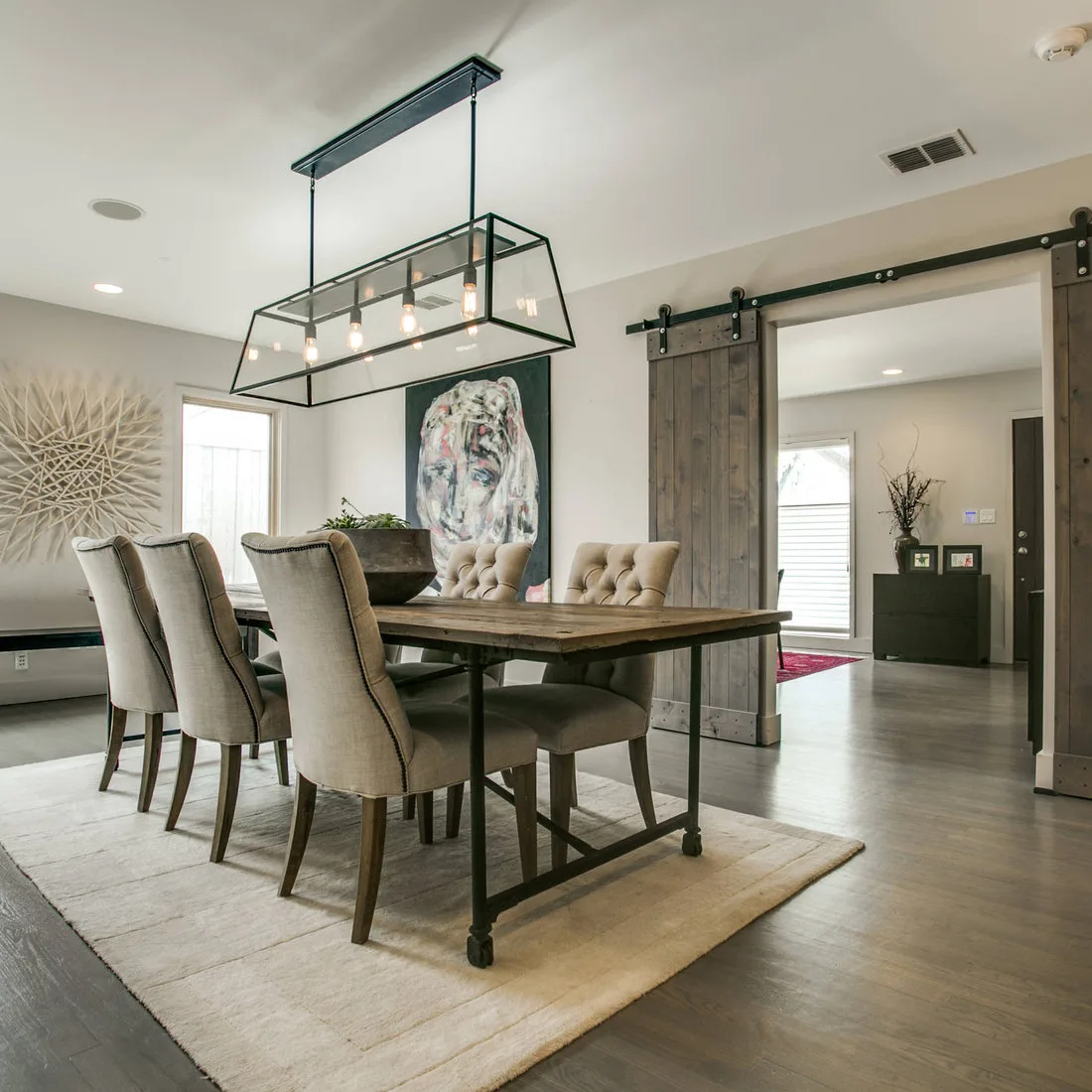
A pale rectangular rug supports a wood table and tufted dining chairs beside a sliding wood door. The caged pendant, large animal portrait and textured wall decoration already give the room several prominent features. Keeping the rug quiet allows those details to remain distinct, while its light surface separates the table’s dark support from the gray floor around it.
Mark out the rug position with the sliding door and dining chairs in use. Keep the doorway route clear and make sure the rug does not interfere with the door’s operation. Choose construction that allows the chair legs to move easily rather than relying only on a farmhouse appearance. Confirm cleaning and spot-treatment requirements, especially for a pale rug under a table used every day.
IDEA 15 / 20
Use a Muted Rug Beneath Glass and White Seating
 SaveSupport Non AI Creator
Source: houzz.com
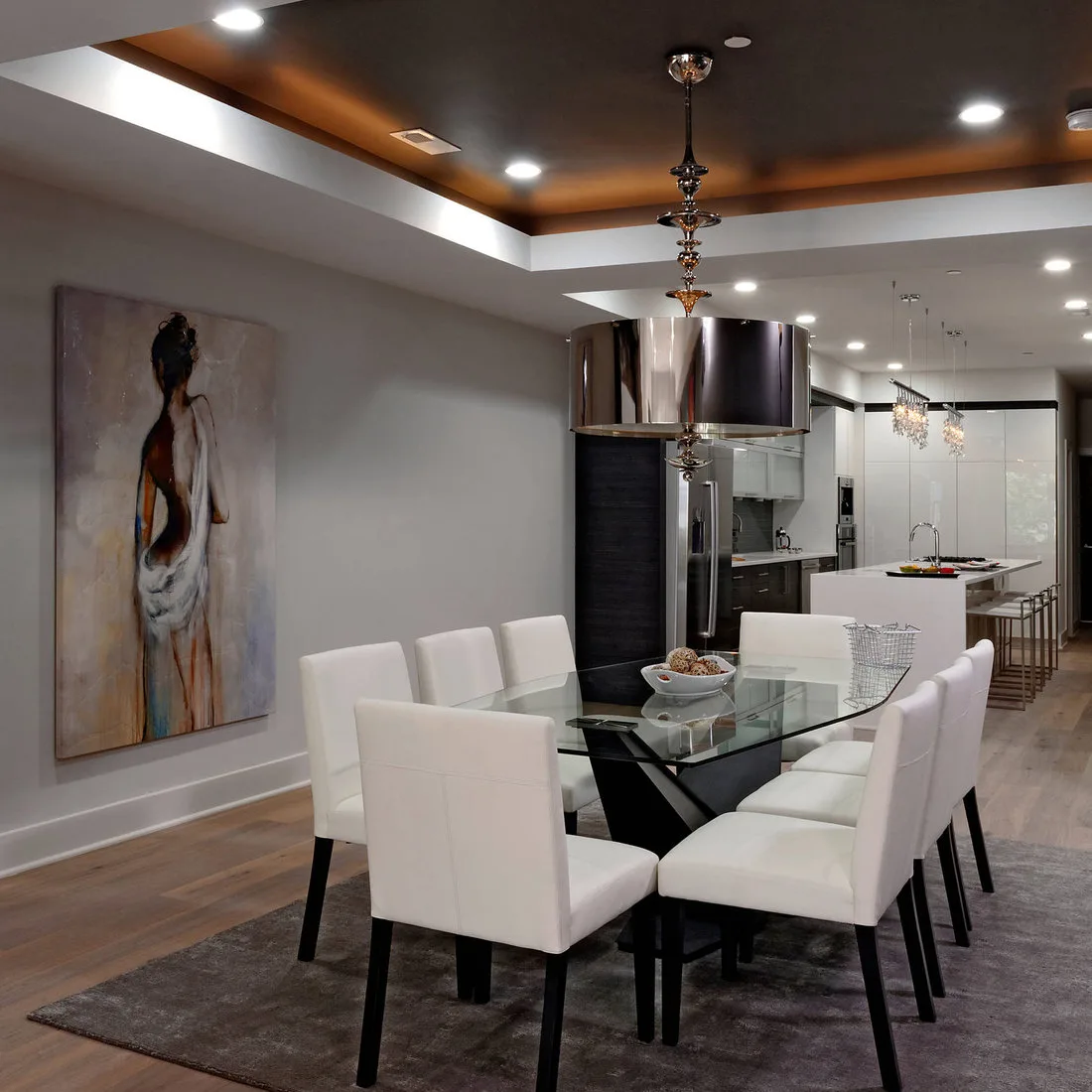
A muted gray-brown rug sits beneath a glass dining table and white upholstered chairs. The transparent tabletop reveals more of the floor treatment, while a dark sculptural base and reflective pendant give the group strong shapes. In the open kitchen setting, the rug adds a quieter dining footprint without creating a sharp contrast against the surrounding wood floor.
Check the rug’s appearance through the glass tabletop as well as around the chairs. A pattern that looks subtle alone can become more noticeable when the whole center remains visible. Test chair movement and keep the pad hidden beneath the edge. Inspect the actual care requirements, and protect the surrounding floor from unsuitable cleaning products when treating food marks near the table.
PART 04
Fit the Rug to Your Dining Furniture
IDEA 16 / 20
Give a Formal Room a Broad Geometric Foundation
 SaveSupport Non AI Creator
Source: houzz.com
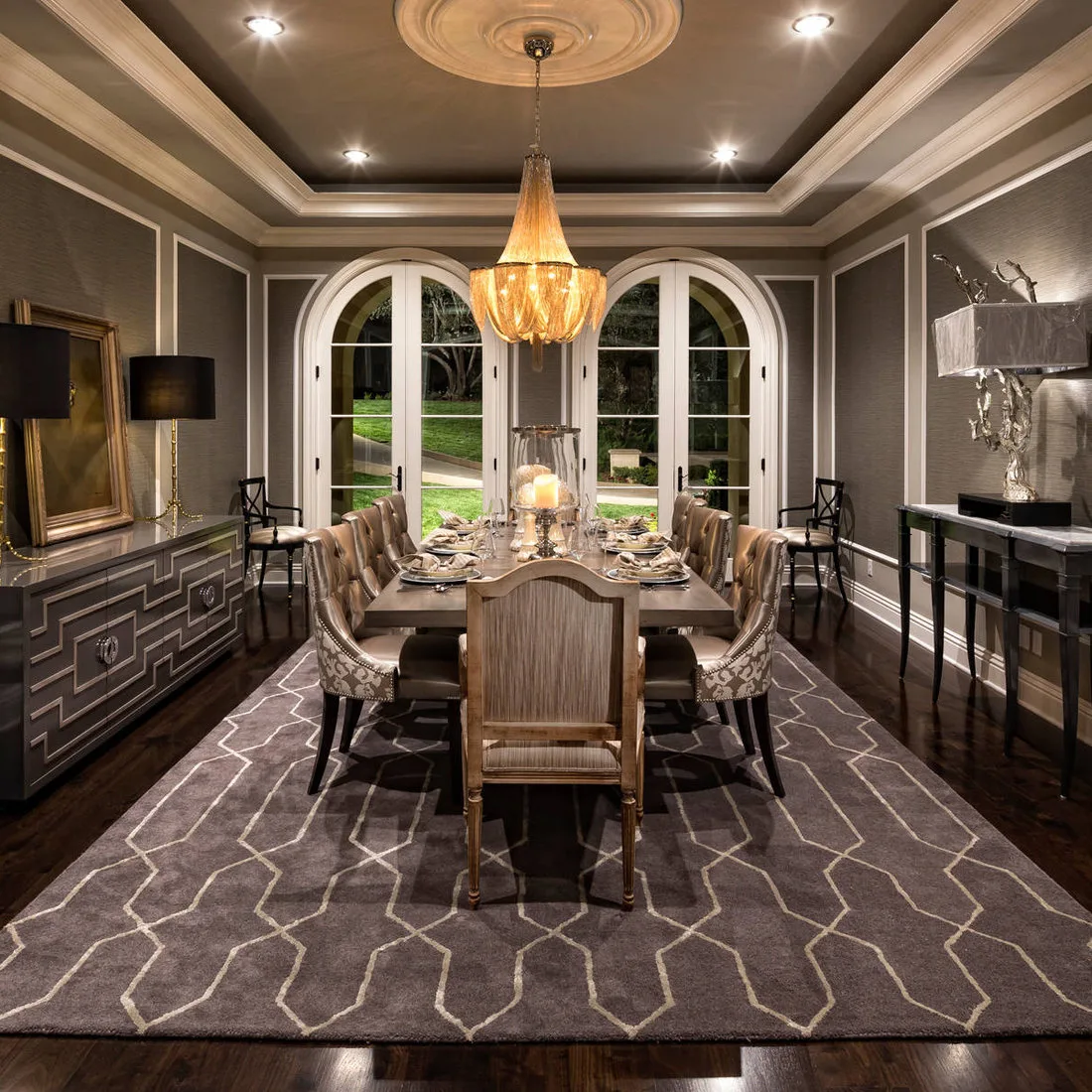
Pale angular outlines repeat across a large gray rug below a formal dining table and upholstered wood chairs. Decorative wall molding, framed pictures and an amber-toned chandelier add more detail around it. The rug’s broad pattern remains clear at the room’s entrance, giving the furniture a defined foundation while leaving a border of dark wood floor visible.
Plan the rug around the full seating arrangement, including the end chairs, rather than centering it only between the side walls. Keep sideboard access and the entrance route clear when guests are seated. Compare the floor pattern with the wall molding so their repetition feels intentional. Check the pile and cleaning instructions, and avoid assuming a gray color makes the rug forgiving of every type of spill.
IDEA 17 / 20
Zone a Dining Table Beside the Kitchen
 SaveSupport Non AI Creator
Image credit: Photo: David Tsay. From: HGTV Magazine
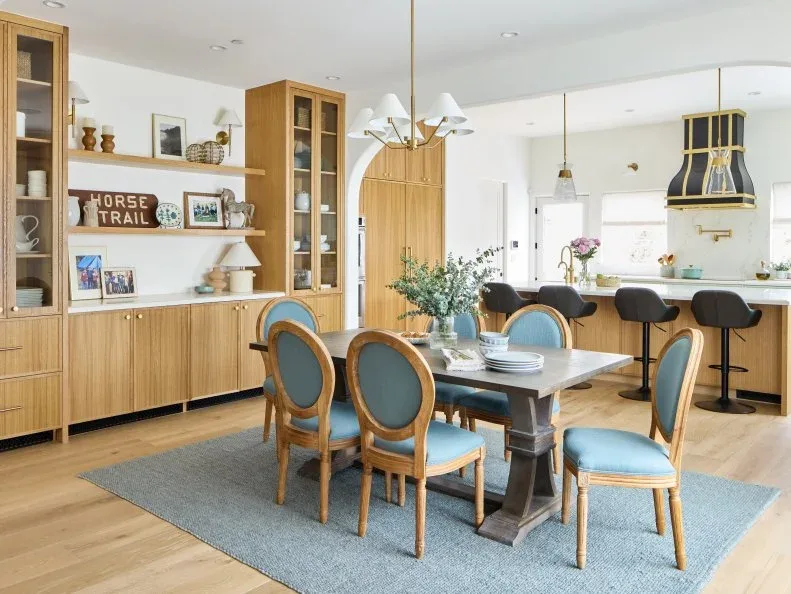
A blue-gray rectangular rug defines the dining table beside warm wood cabinetry and a kitchen island. Blue oval-backed chairs repeat the rug’s color, while the pale table provides a lighter center. The rug stays within the dining group, leaving the surrounding wood floor visible toward the kitchen. That clear boundary helps distinguish eating from cooking without introducing a physical divider.
Check the route between the table and island with diners seated before deciding where the rug ends. Keep its edge clear of busy kitchen traffic and allow chairs to move without catching. Compare a sample with the chair upholstery and cabinet finish in the room’s light. Choose an appropriate backing and pad, and check the actual cleaning instructions for spills near a frequently used kitchen.
IDEA 18 / 20
Repeat Purple Through a Zigzag Rug
 SaveSupport Non AI Creator
Image credit: Photo: Brittany Ambridge. From: HGTV Magazine
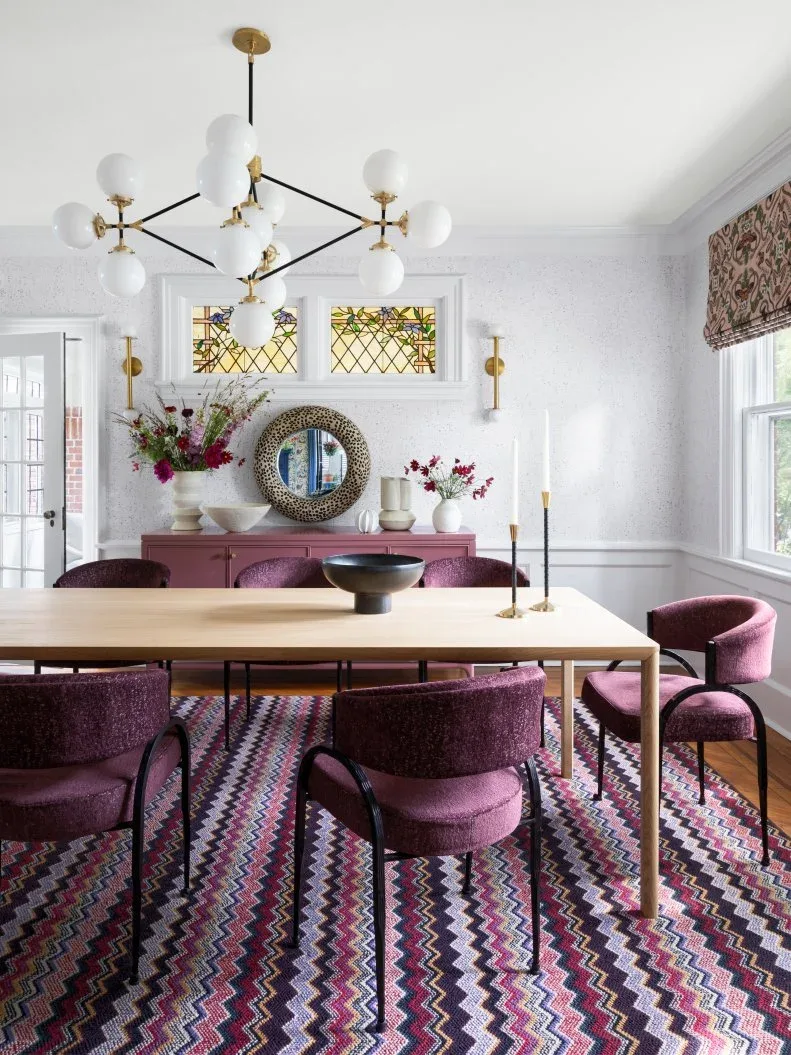
A multicolored zigzag rug repeats purple tones from the dining chairs and sideboard. A pale wood table and white walls keep the stronger pattern from filling every surface. The rug gives the seating a lively common base, while the round mirror and hanging globe light introduce larger, simpler shapes above. Color travels through the room without every piece needing an identical finish.
Compare a rug sample with the chair upholstery before using repeated colors to connect the room. Keep the pattern readable around the table rather than choosing a size that disappears beneath it. Check how smoothly chair legs move across the surface and follow the care instructions for the actual weave. A busy pattern can soften the appearance of small marks, but spills still need suitable prompt treatment.
IDEA 19 / 20
Use Small Dark Marks Beneath Bright Yellow Chairs
 SaveSupport Non AI Creator
Image credit: Photo: Adam Albright. From: HGTV Magazine
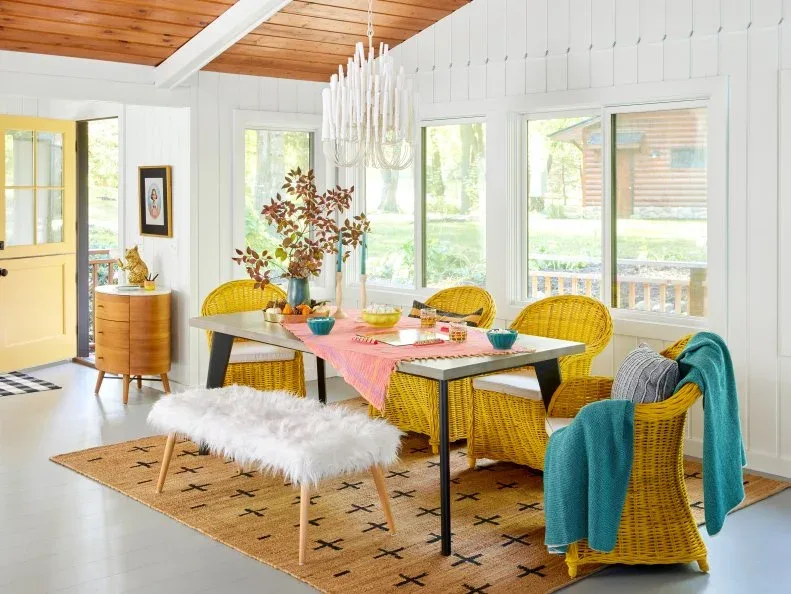
Small dark cross motifs punctuate a tan rug beneath yellow woven chairs and a rectangular dining table. A white-covered bench, pink table runner and teal throw add other bright accents. The rug supplies a quieter background for that color, while its scattered marks connect with the table’s dark legs. White walls and many windows keep the dining corner light.
Check the rug’s chair clearance on every side, including the bench. A visually simple woven surface may still resist sliding or trap crumbs, so inspect the actual construction and cleaning instructions. Avoid assuming a tan rug is a particular natural fiber from its appearance. Use a suitable pad to limit movement, and keep the edge clear of the nearby entry door.
IDEA 20 / 20
Match a Round Rug With a Compact Dining Table
 SaveSupport Non AI Creator
Image credit: Photo: Buff Strickland. From: HGTV Magazine
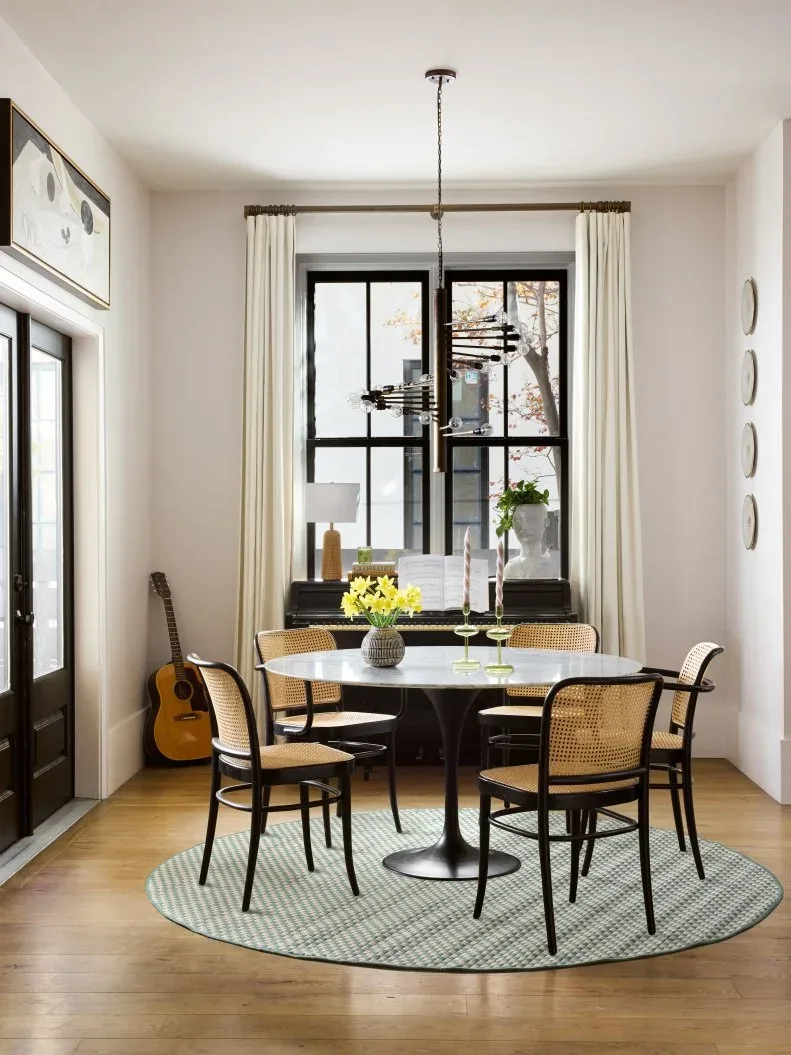
A round green patterned rug echoes the pale round tabletop in this compact dining room. Black chairs with woven backs outline the seating, while light curtains frame the dark window behind it. The repeated circular shapes give the furniture group a clear center, and the green floor pattern adds color without requiring an accent wall or a large collection of decorative objects.
Measure chair movement outward from the table before choosing a round rug diameter. All legs should remain supported at the seating position you actually use; a matching shape alone does not guarantee a practical size. Keep the rug clear of the adjacent doorway and test that chairs slide without catching. Check the care label and backing, since the photograph does not establish washability or stain resistance.
BRING IT ALL TOGETHER
Choose for the Chairs as Well as the Table
Mark the proposed rug outline on the floor and pull every seat into its usual position. Check bench movement, door clearance and the route around occupied chairs. The pattern matters, but a stable dining arrangement matters more.
Read the product’s care instructions and verify the fiber, backing and recommended underlay. A room photograph cannot establish washability, stain resistance or material. Choose a surface whose cleaning needs you can manage, and treat food spills with the specified method.