Kitchen corners create a practical choice: reach into a deep cupboard, bring its contents forward or use the space for a different kind of storage. The right answer depends on what you need to keep there.
These photographs show the doors and fittings as well as finished rooms. Before choosing a mechanism, check its opening path, usable shelf shape and load limit with the actual pans, dishes or appliances you want to store.
PART 01
Drawers and Turning Storage
IDEA 01 / 20
Separate Lids in Corner Drawers
 SaveSupport Non AI Creator
Image credit: Project: Floor Huggers (via Houzz)
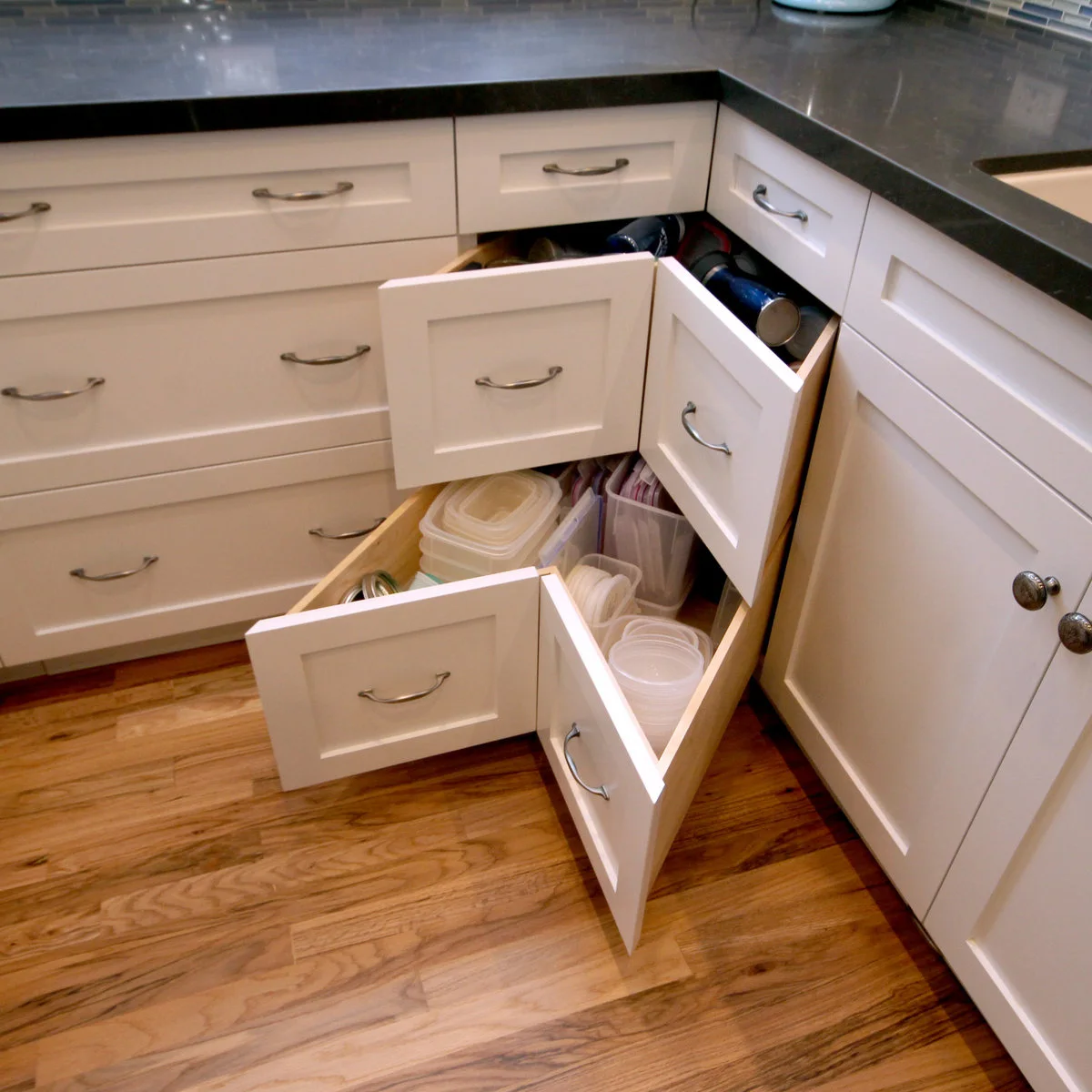
Angled fronts turn the corner into drawers that pull toward the room. In the lower drawer, food containers sit beside a vertical organizer for lids. The arrangement makes a scattered category more visible without asking someone to reach into a dark cabinet behind the adjoining units.
Test the drawer with your largest container and its matching lid before ordering dividers. The angled shape may reduce the usable width near the front. Keep small lids upright in a removable section and leave the back accessible so loose pieces do not become trapped behind taller stacks.
IDEA 02 / 20
Keep Tall Pieces on a Lower Carousel
 SaveSupport Non AI Creator
Image credit: Project: Everingham Design (via Houzz)
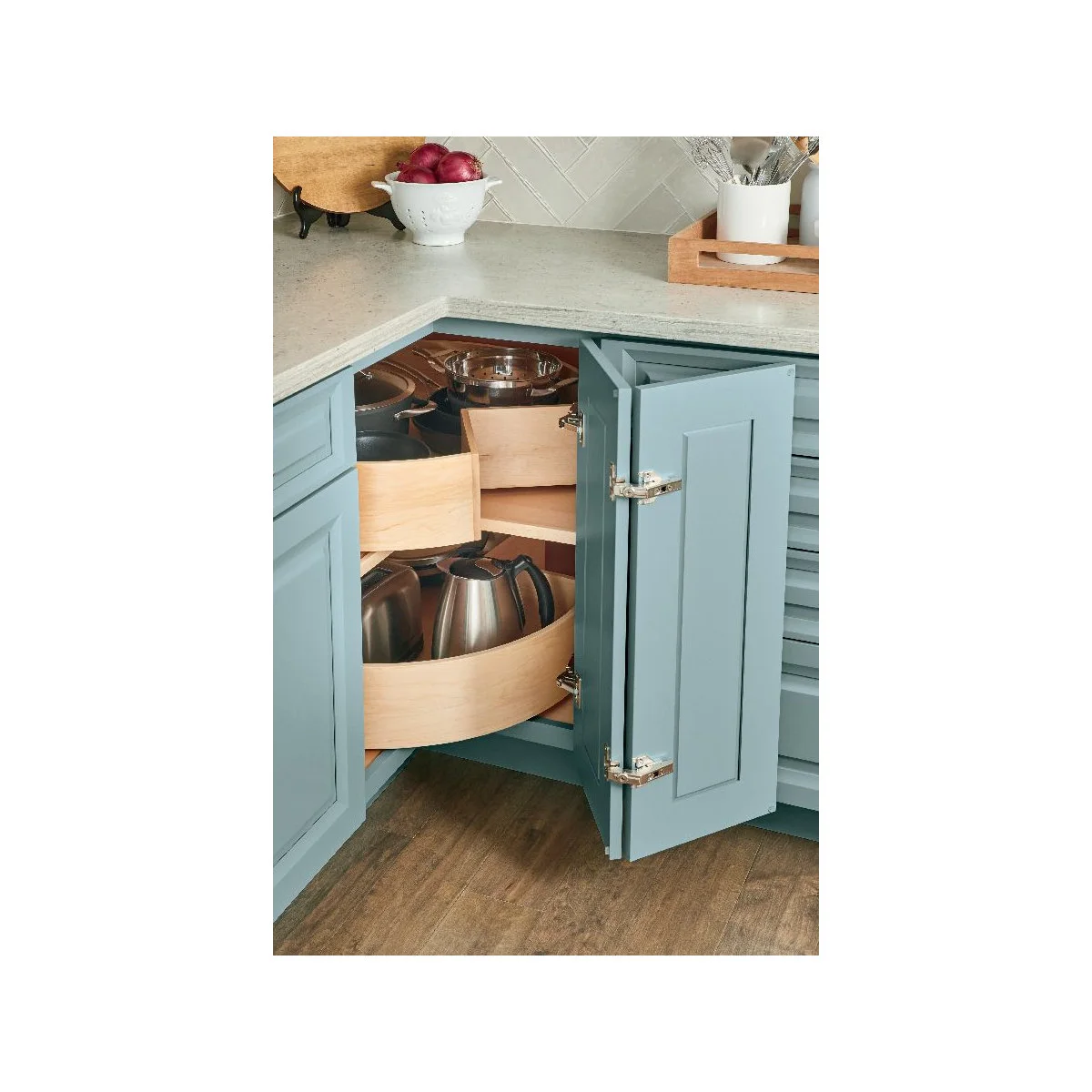
Curved wooden shelves occupy this blue corner cupboard, with pans above and taller jugs below. The folding door opens across the corner rather than leaving a narrow single-door opening. Raised shelf sides help define the storage area while the round shape brings different sections toward the front.
Check that tall handles clear both the shelf above and the door hardware during rotation. Do not fill every curved edge simply because it is available. Leave enough room to lift cookware without catching a neighboring piece, and keep the fitting within its stated load capacity.
IDEA 03 / 20
Choose Pull-Outs for Bulky Serving Dishes
 SaveSupport Non AI Creator
Image credit: Project: Wood-Mode Fine Custom Cabinetry (via Houzz)
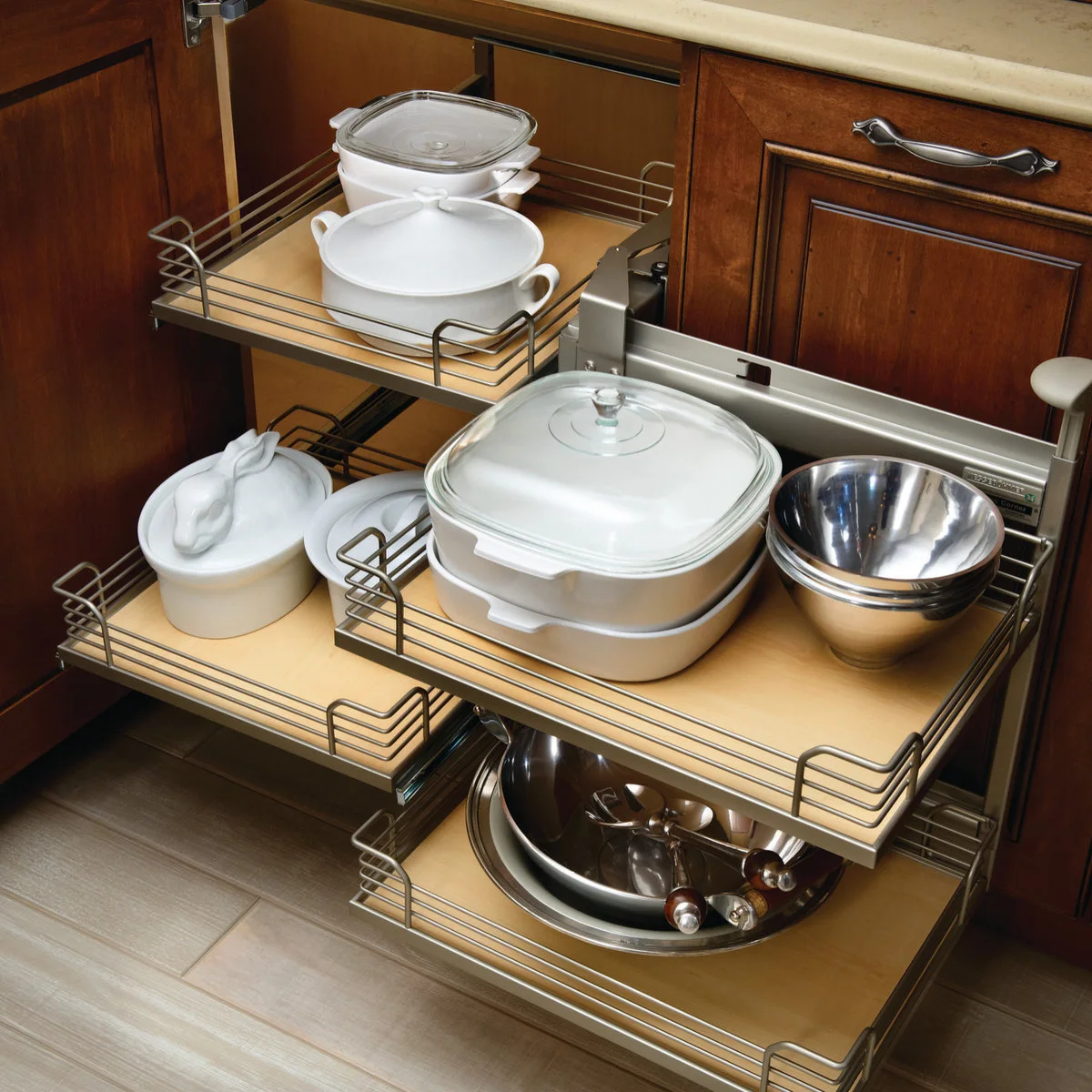
Several rectangular trays bring white serving dishes and mixing bowls out of this deep corner cabinet. Low guard rails surround the shelf edges without hiding the contents. The dishes remain upright, so handles and lids can be seen before something is lifted out.
Measure the largest dish including its side handles, not only its base. A fitting can look spacious but have a narrower opening than the cabinet interior. Try the full movement with the neighboring cupboard shut and open, checking where the extended trays will occupy the walking space.
IDEA 04 / 20
Use Different Drawer Depths at the Turn
 SaveSupport Non AI Creator
Image credit: Project: MasterBrand Cabinets (via Houzz)
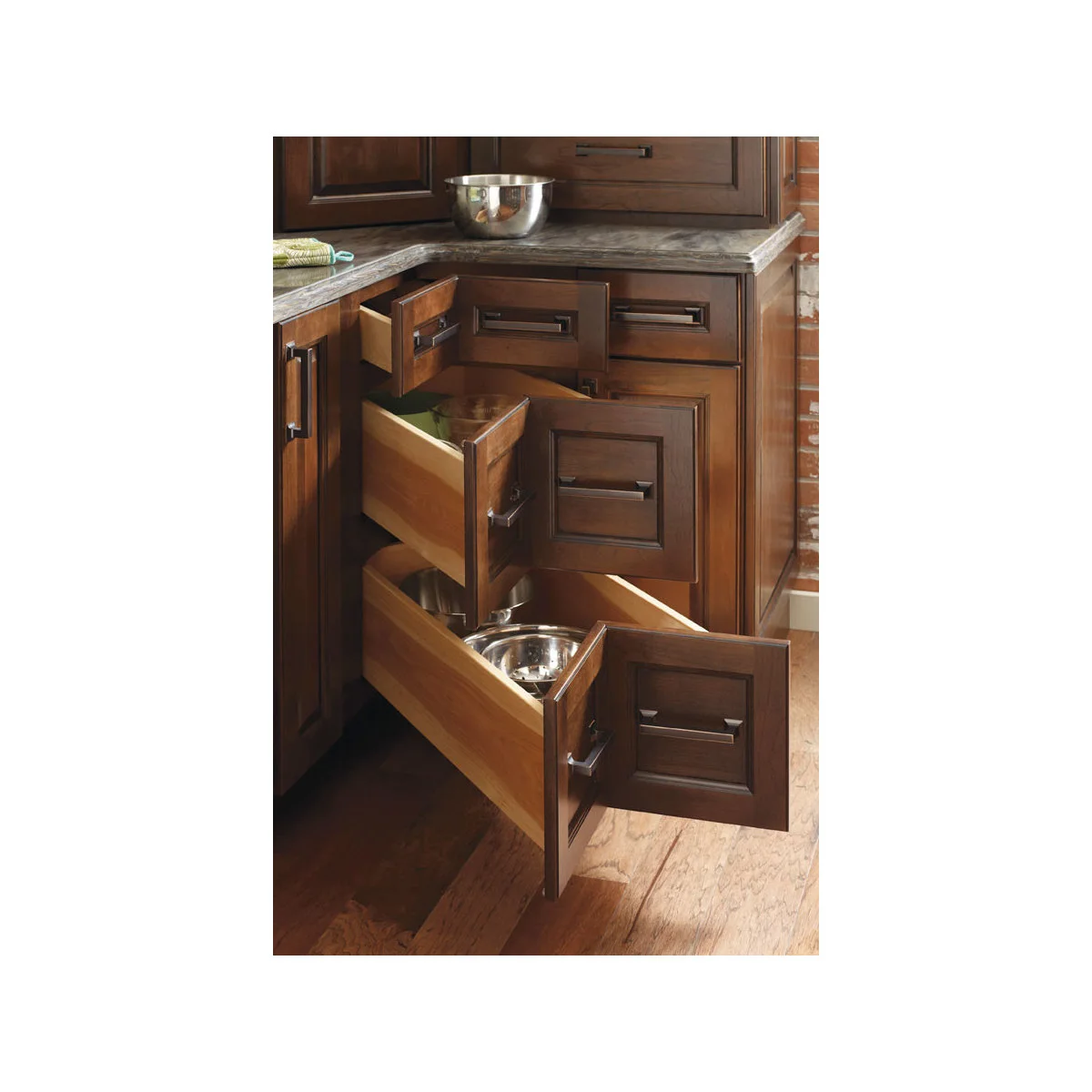
A shallow top drawer and deeper lower drawers share the angled corner front in this dark wood kitchen. The differing depths allow small tools and larger bowls to occupy separate levels. The open drawers show how the corner moves into the room rather than remaining a hidden storage pocket.
Choose drawer depths after listing their intended contents. A deep drawer is wasted on one layer of small tools unless it has a useful inner tray. Open only one drawer at a time during everyday use and confirm that neighboring pulls cannot collide with the angled fronts.
IDEA 05 / 20
Give Bottles and Pots Different Shelves
 SaveSupport Non AI Creator
Source: www.houzz.com
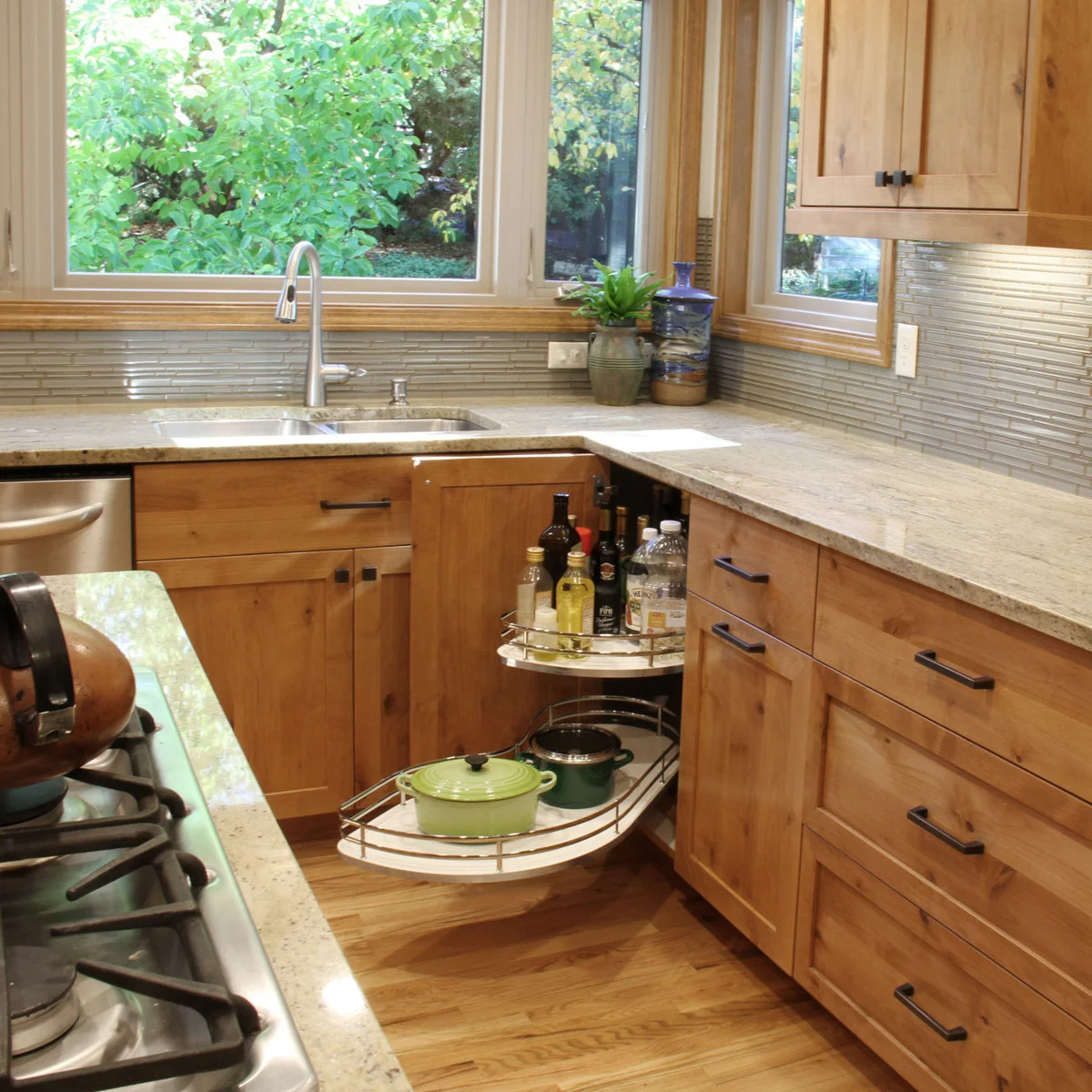
Curved shelves swing out from the corner beside this sink. Bottles stand on the upper shelf, while lidded cookware occupies the lower one. The raised rails outline the shelf edges, making it easier to see where a handle or bottle base might interfere with the movement.
Check that tall bottles remain stable as the shelf turns, and leave space around their tops. Put heavier cookware on the level recommended by the fitting manufacturer. Because this cupboard is beside plumbing, keep the storage removable enough to inspect nearby connections and clean the floor beneath it.
PART 02
Bring Deep Shelves Forward
IDEA 06 / 20
Store Small Appliances on a Turning Shelf
 SaveSupport Non AI Creator
Image credit: Project: R & K Cabinets LLC (via Houzz)
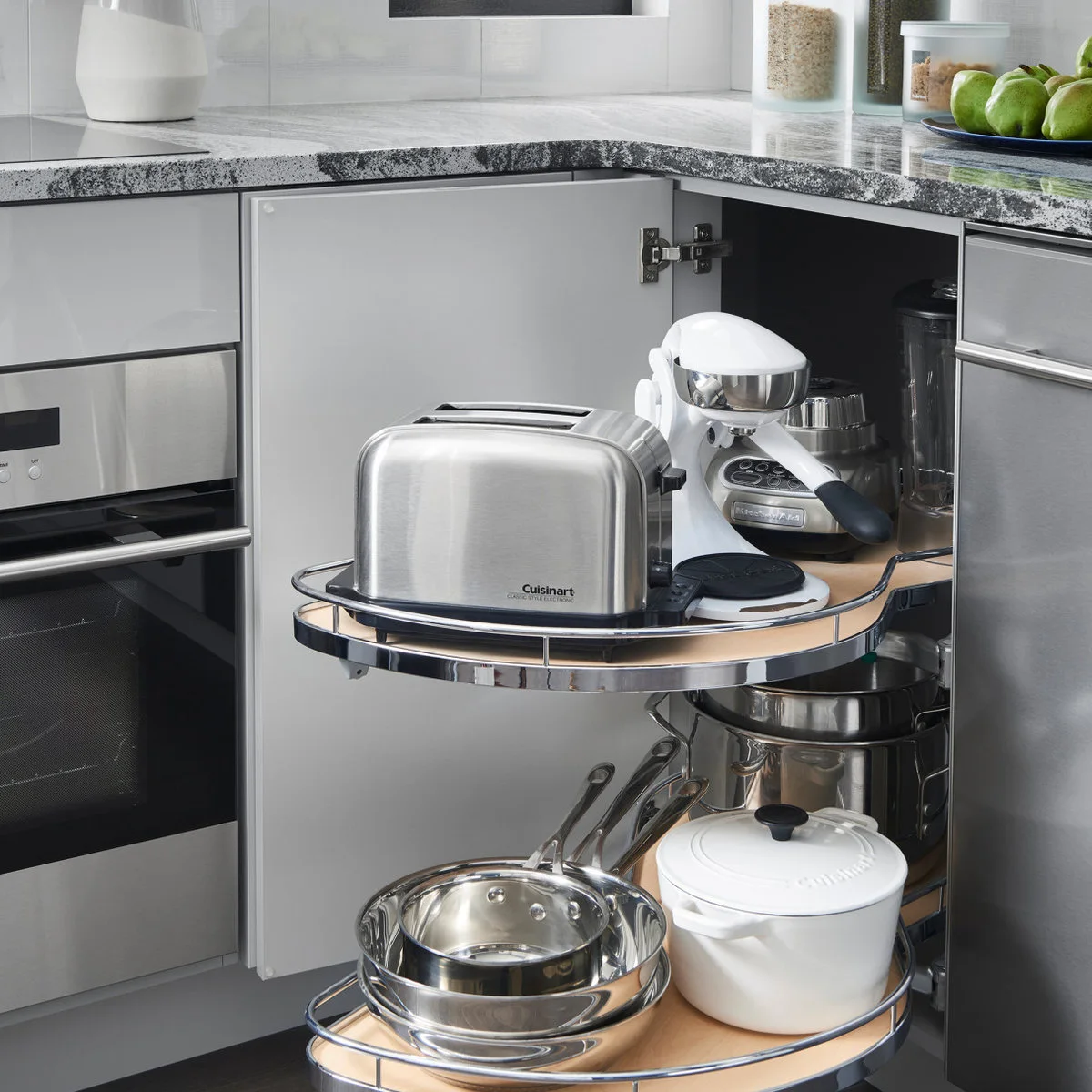
A toaster and mixer sit on the upper turning shelf of this gray corner cabinet, with pans below. The deep cupboard becomes more accessible because the shelf moves toward the opening. Appliance bodies take the upper level without being stacked on top of one another.
Treat this as appliance storage, with cords unplugged and tucked clear of the mechanism. Lift appliances onto a suitable work surface for use, following their instructions. Check the combined weight of everything on the shelf; a mixer can consume much of a fitting’s capacity by itself.
IDEA 07 / 20
Give Pan Handles a Clear Turning Path
 SaveSupport Non AI Creator
Image credit: Project: Wood-Mode Fine Custom Cabinetry (via Houzz)
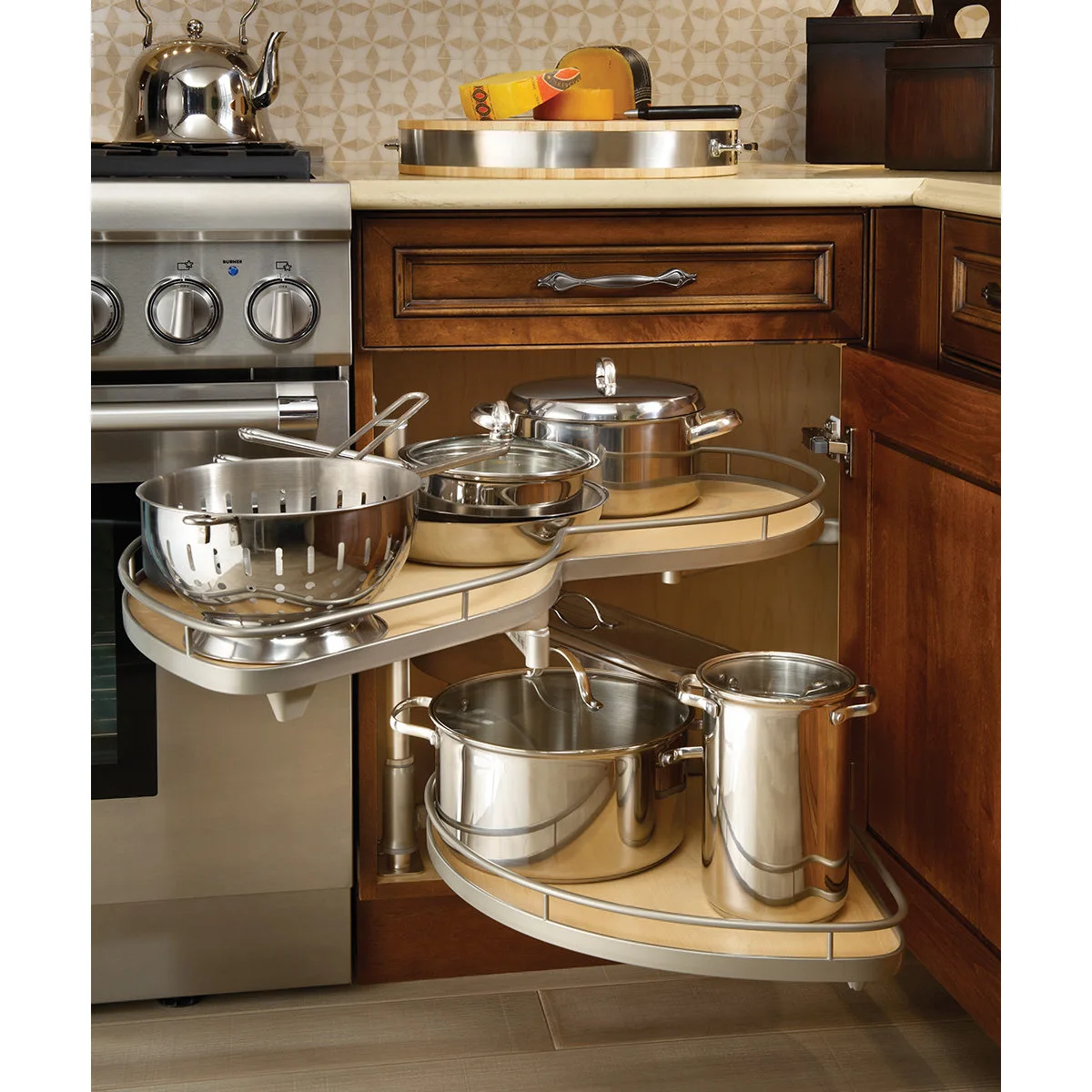
Two curved shelves extend from this wooden cupboard beside the range, carrying pans, a colander and lidded pots. The long pan handles show why the shape of the contents matters as much as shelf area. The fitting makes the stored cookware visible from the front.
Arrange handles inward enough to clear the door without wedging them under another pot. Test movement slowly before loading the shelves fully. A nearby range makes retrieval convenient, but the open fitting should never block someone carrying hot cookware or require reaching across an active cooking surface.
IDEA 08 / 20
Nest Bowls Above Everyday Pots
 SaveSupport Non AI Creator
Image credit: Project: Nadler Cabinet Services Inc. (via Houzz)
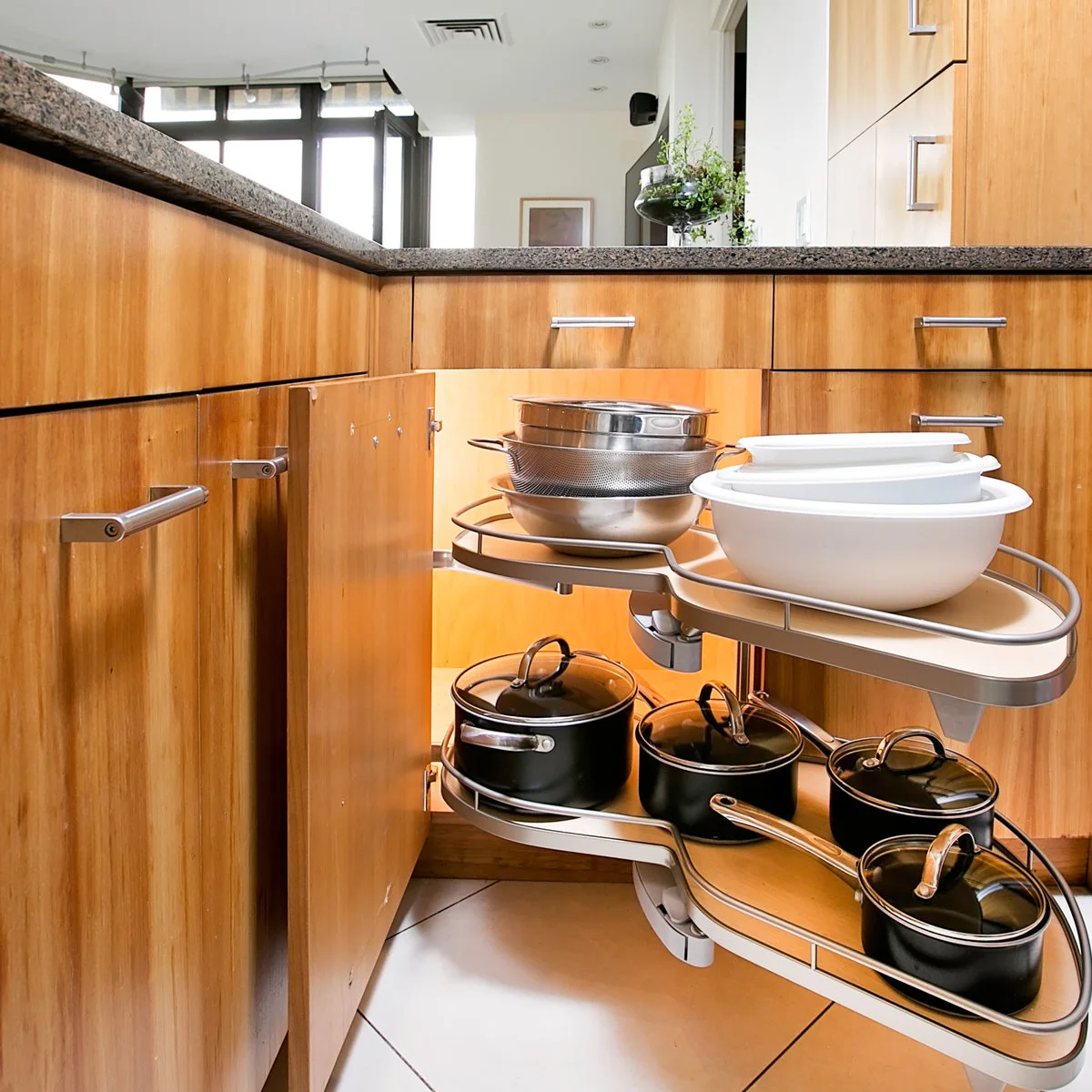
Nested bowls and a colander occupy the upper shelf in this warm wood kitchen, with lidded pans below. The shelves turn out separately, giving each level a clear storage role. Their irregular outline follows the corner opening rather than offering a simple rectangular surface.
Nesting saves space, but too many bowls can make the lower one difficult to retrieve. Keep the pieces you use most toward the accessible end and avoid building heavy stacks on the moving edge. Check that each lid stays seated when you return the shelf inside.
IDEA 09 / 20
Coordinate Upper and Lower Corner Storage
 SaveSupport Non AI Creator
Image credit: Project: BARRETT STUDIO architects (via Houzz)
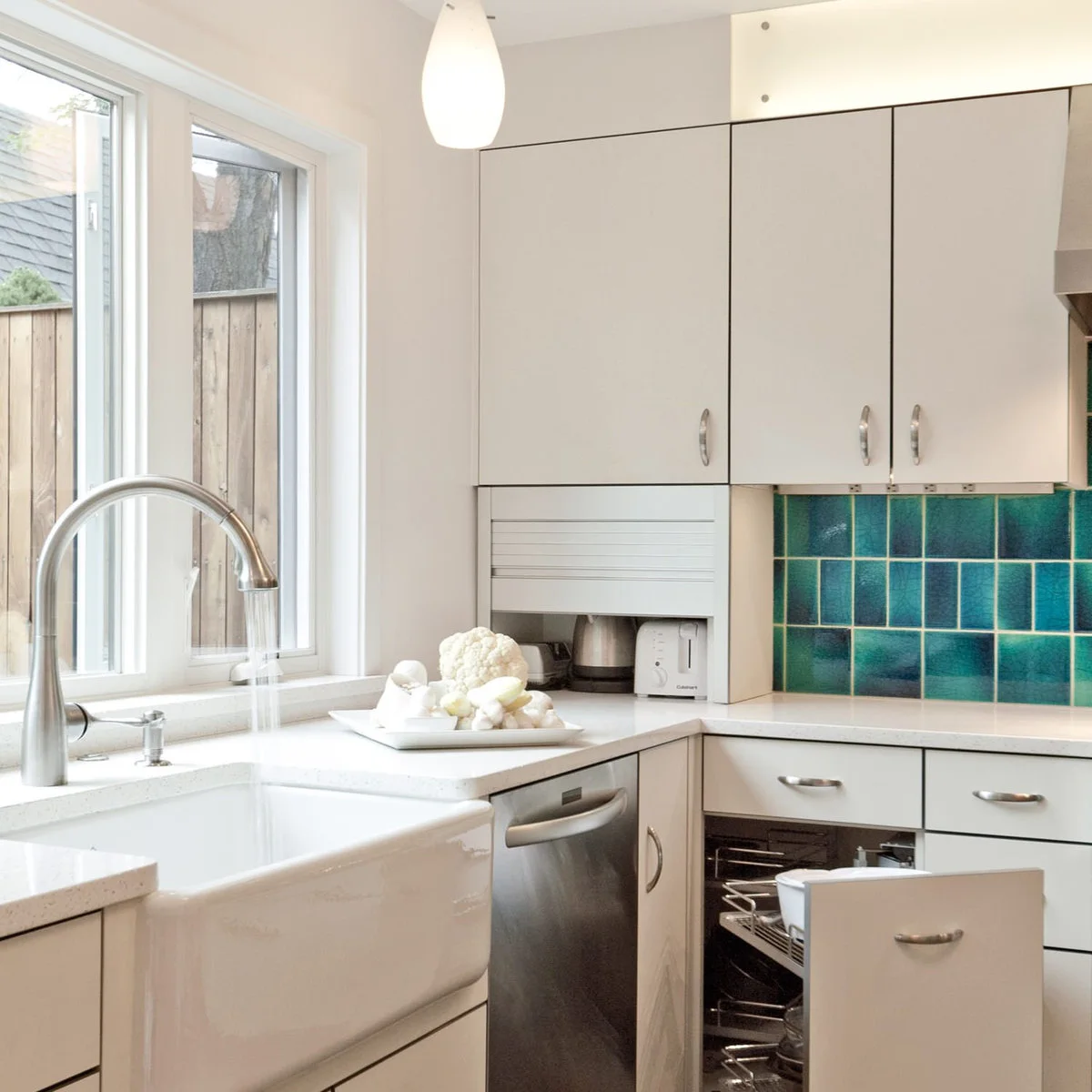
A roller-front appliance cupboard occupies the counter corner above a lower pull-out fitting. Small appliances stay together behind the upper opening, while the base cabinet offers another way to reach the depth below. The window and sink remain alongside rather than being replaced with a tall storage tower.
Plan upper and lower storage together, including where you stand while opening each part. Move heat-producing appliances onto an appropriate clear surface for use unless the installation is specifically designed for them. Keep the roller track clean and make sure its handle remains easy to reach.
IDEA 10 / 20
Make the Drawer Movement Visible
 SaveSupport Non AI Creator
Image credit: Project: Flavin Architects (via Houzz)
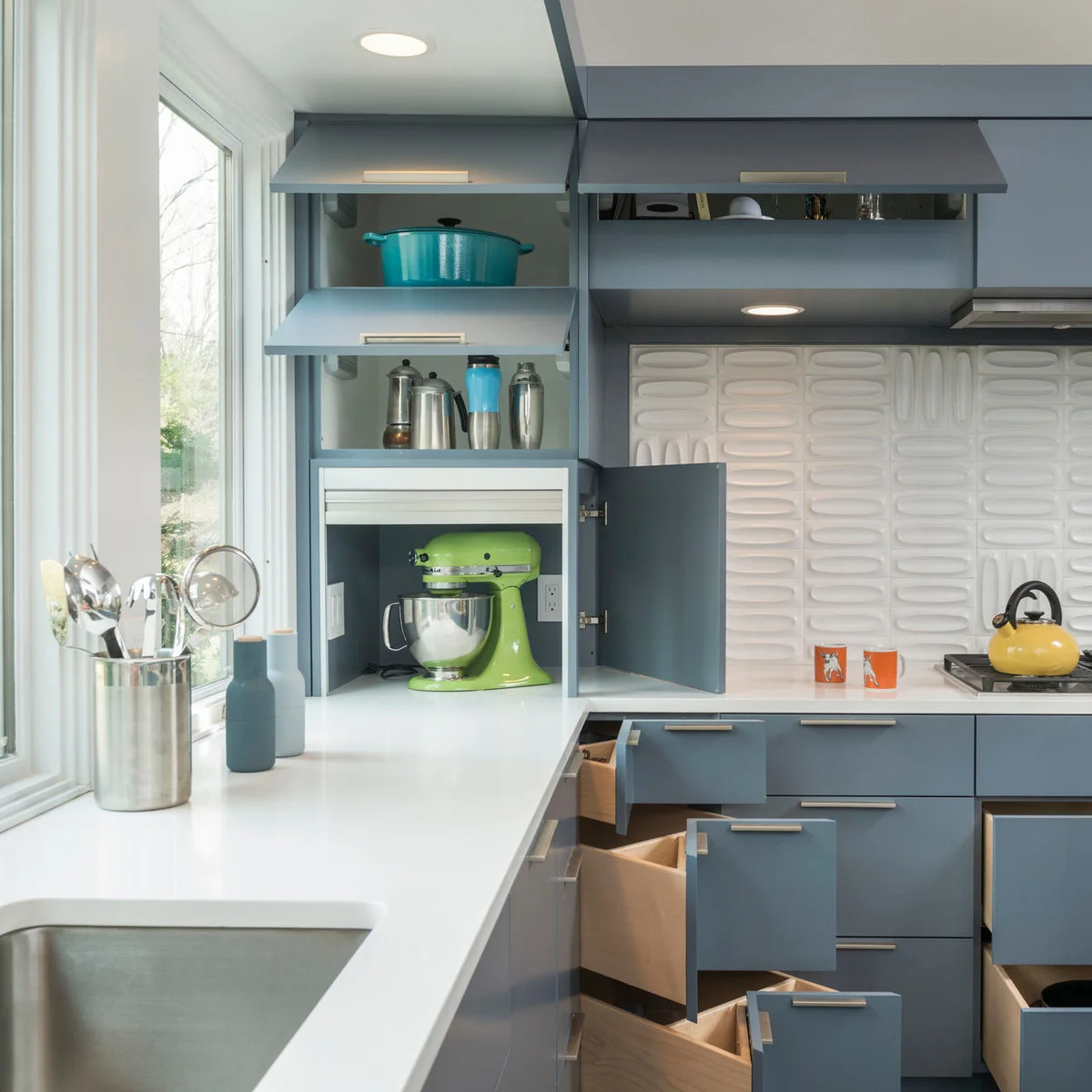
Open angled drawers make the corner mechanism easy to see in this blue kitchen. Above them, a green mixer sits in a counter-level cupboard, with smaller storage compartments higher up. The different openings show that the corner can serve several categories without using one deep shelf for everything.
Mock up the drawer reach before committing to the layout, especially if the kitchen aisle is narrow. Keep heavier appliances at a level you can move them from safely. Lift-up doors also need reachable handles and hardware that holds them securely open while you remove stored items.
PART 03
Make Room for Small Appliances
IDEA 11 / 20
Hide a Counter Corner Behind a Lift-Up Door
 SaveSupport Non AI Creator
Image credit: Project: Stephanie Muno (via Houzz)
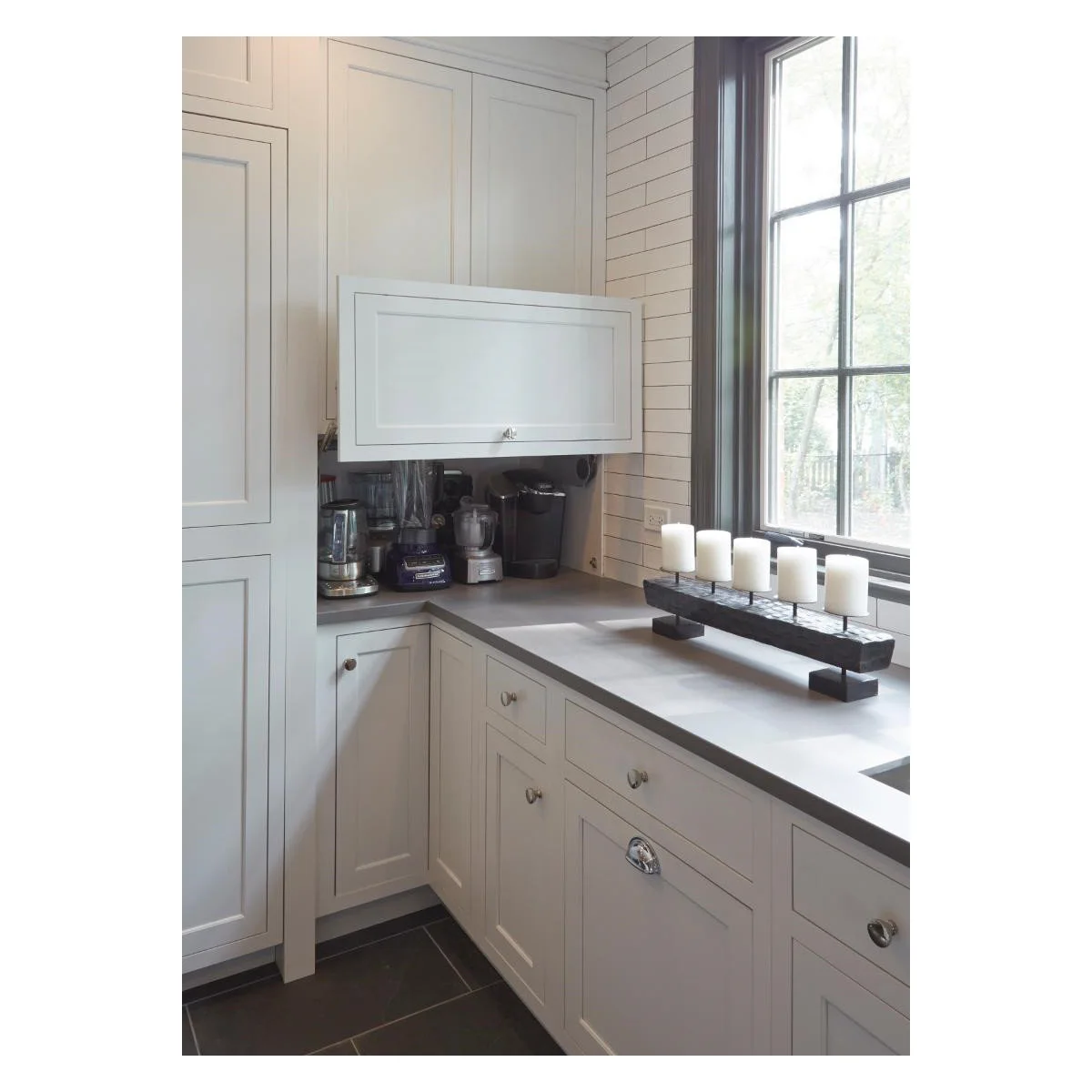
A broad lift-up door conceals a group of small appliances at this counter corner. The white front matches the surrounding cabinets, so the storage can recede when closed. The adjoining counter remains available, which matters more than the number of appliances that fit behind the door.
Check the open door’s height and whether you can comfortably close it. Do not assume appliances can run inside simply because outlets are nearby; follow each appliance’s clearance and ventilation instructions. Keep a clear landing area outside the cupboard for lifting out a blender or food processor.
IDEA 12 / 20
Give the Coffee Maker a Full-Height Opening
 SaveSupport Non AI Creator
Image credit: Project: Ayelet Designs (via Houzz)
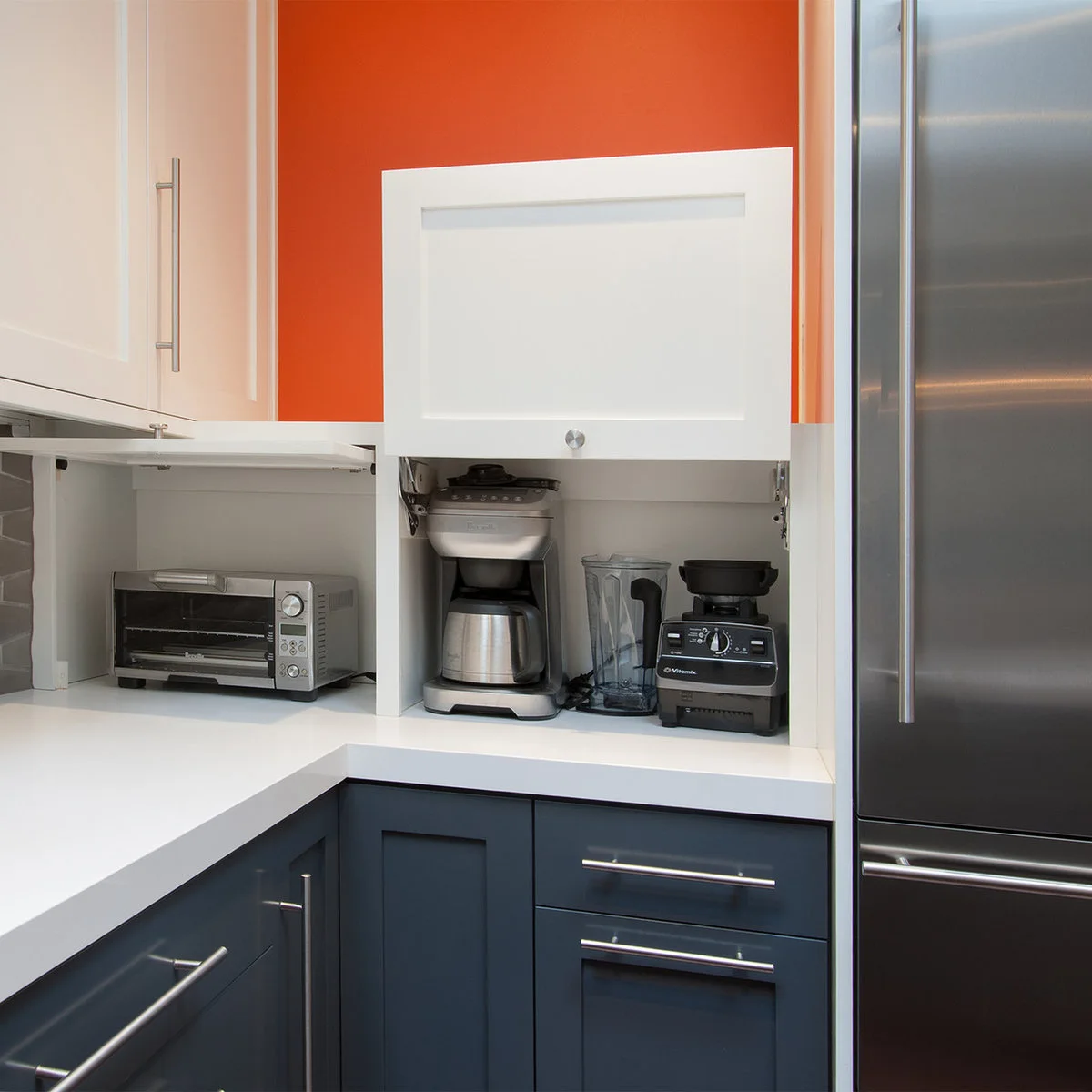
The raised front gives this coffee maker and blender a generous opening at counter level. An adjacent cupboard opens upward too, using two neighboring sections of the corner. Dark lower cabinets ground the arrangement, while the white countertop provides a continuous place to set appliances down.
Measure the appliance with its lid or reservoir fully open, not just closed on the shelf. Leave room to remove tanks and clean behind the base. When storing several appliances together, unplug them and arrange cords so the door or hinges cannot trap them.
IDEA 13 / 20
Fit Storage Between Two Windows
 SaveSupport Non AI Creator
Image credit: Project: EGStoltzfus Custom Homes & Remodeling (via Houzz)
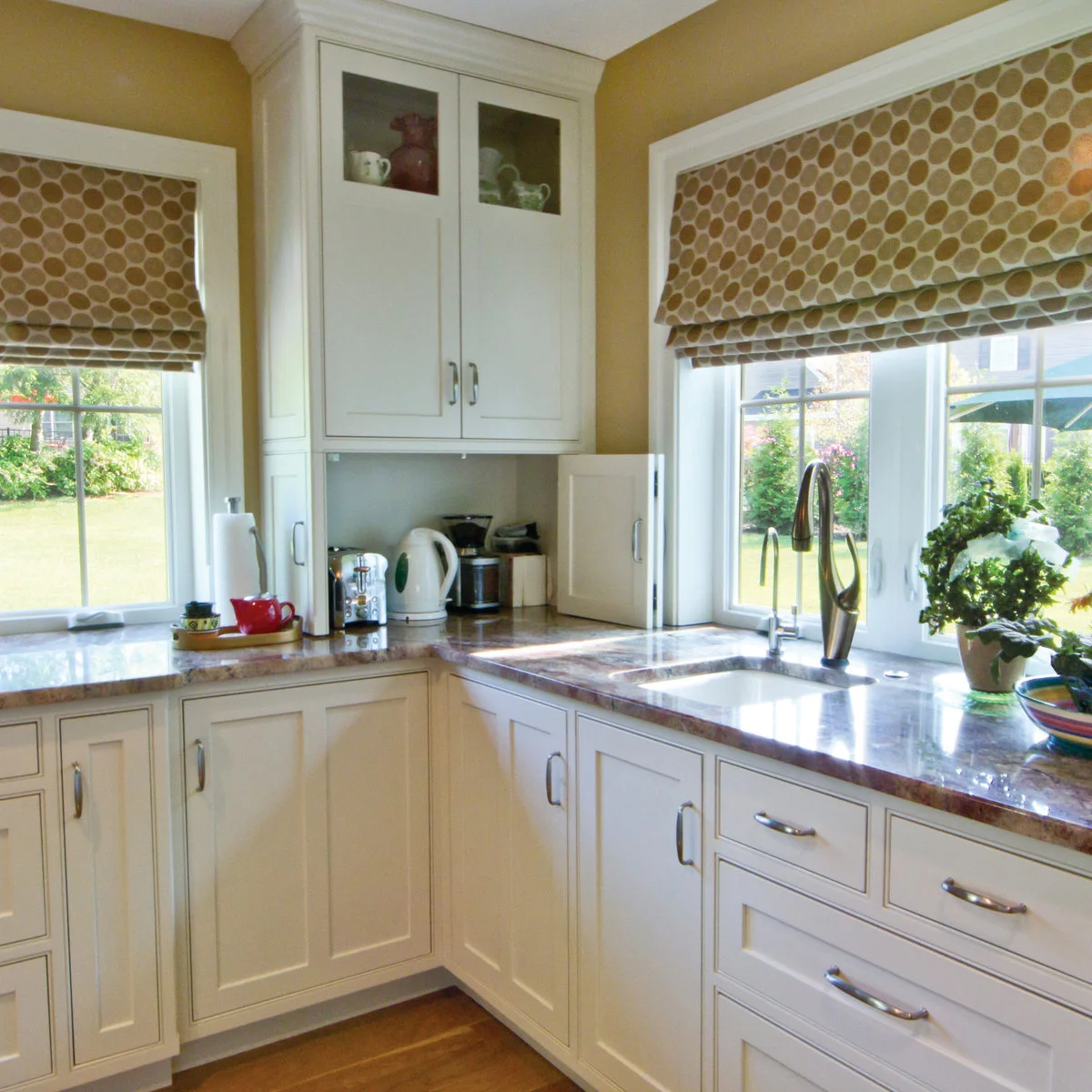
A white cupboard fills the corner between two windows, with a lower opening holding several small appliances. Glazed upper doors provide another storage level without replacing either window. Its angled position uses a space that would otherwise be difficult to fill with a standard rectangular wall cabinet.
Check that the cupboard and its doors leave window handles accessible. Keep an appliance compartment deep enough for storage without sacrificing all the counter in front. Use the nearby worktop for operation where required, and leave a dry route between the sink and any electrical equipment.
IDEA 14 / 20
Give a Mixer a Dedicated Compartment
 SaveSupport Non AI Creator
Image credit: Project: Beyond the Box Design Collective (via Houzz)
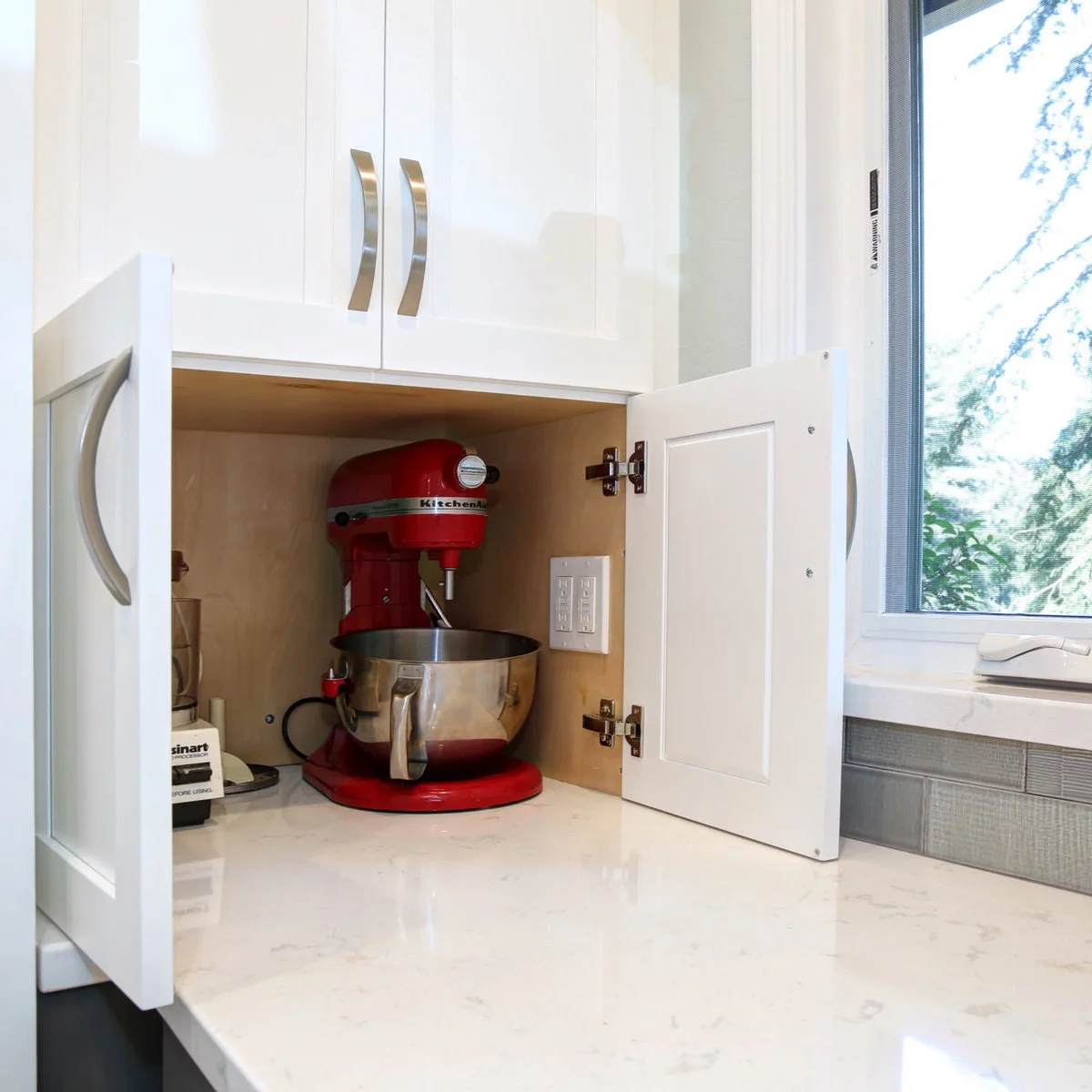
A red stand mixer has a dedicated place inside this white countertop cupboard. The double doors reveal a broad opening, allowing the bowl and body to be seen together. Keeping a heavy appliance at counter height avoids lifting it from a low corner shelf every time it is needed.
Measure clearance for lifting the mixer head or removing its bowl, and follow the appliance’s operating instructions. Storage space is not the same as safe running space. Keep enough clear counter outside the doors to reposition it without balancing a heavy base on an edge.
IDEA 15 / 20
Use an Angled Upper Cabinet for Glassware
 SaveSupport Non AI Creator
Image credit: Project: Design Line Kitchens (via Houzz)
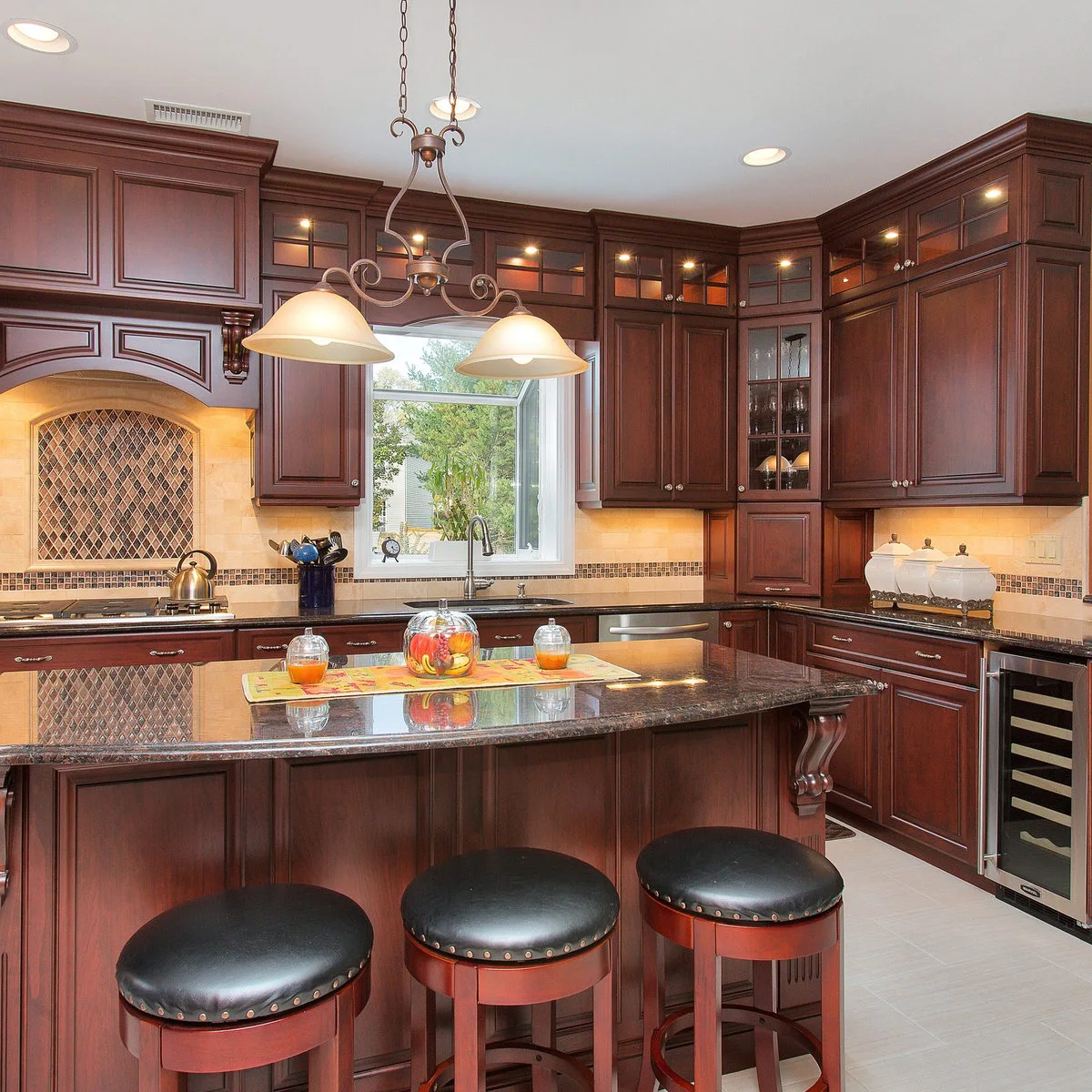
An angled glazed cupboard bridges the wall corner in this traditional kitchen. Its narrow glass door displays a few glasses, while solid cupboards continue on either side. The diagonal front creates a more direct approach than reaching through a small door into the back of a square corner.
Check the usable interior dimensions before choosing the diagonal front; an attractive cabinet can still be awkward for wide dishes. Keep fragile glasses in short reachable rows. Let the counter corner below remain useful instead of filling it with decorations simply because the wall cupboard is a display piece.
PART 04
Use the Corner Above the Counter
IDEA 16 / 20
Curve Open Shelves Around a Pantry Corner
 SaveSupport Non AI Creator
Image credit: Project: Benvenuti and Stein (via Houzz)
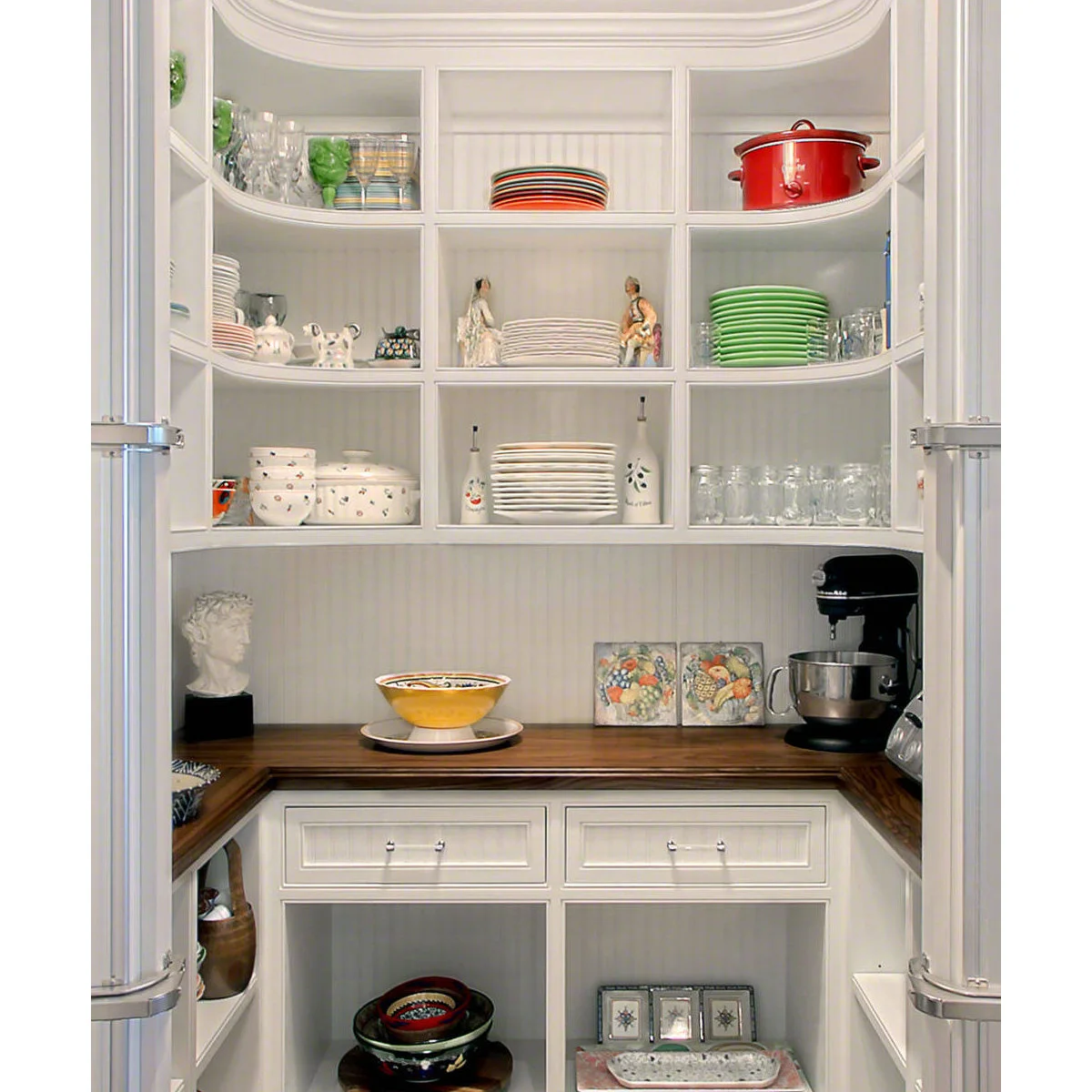
Curved shelves join the straight runs in this small white pantry. Plates and glasses occupy separate compartments, with drawers and open lower spaces below the counter. The rounded connections make the corner visible from the entrance instead of creating a hidden pocket behind overlapping shelf ends.
Keep daily dishes where both hands can reach them easily and use upper shelves for lighter occasional pieces. Curved shelves still need a practical depth: very deep stacks become hard to retrieve. Measure your widest serving dish before specifying the corner radius or adding vertical partitions.
IDEA 17 / 20
Turn a Pantry Corner into a Book Nook
 SaveSupport Non AI Creator
Image credit: Project: NEAT Method Scottsdale (via Houzz)
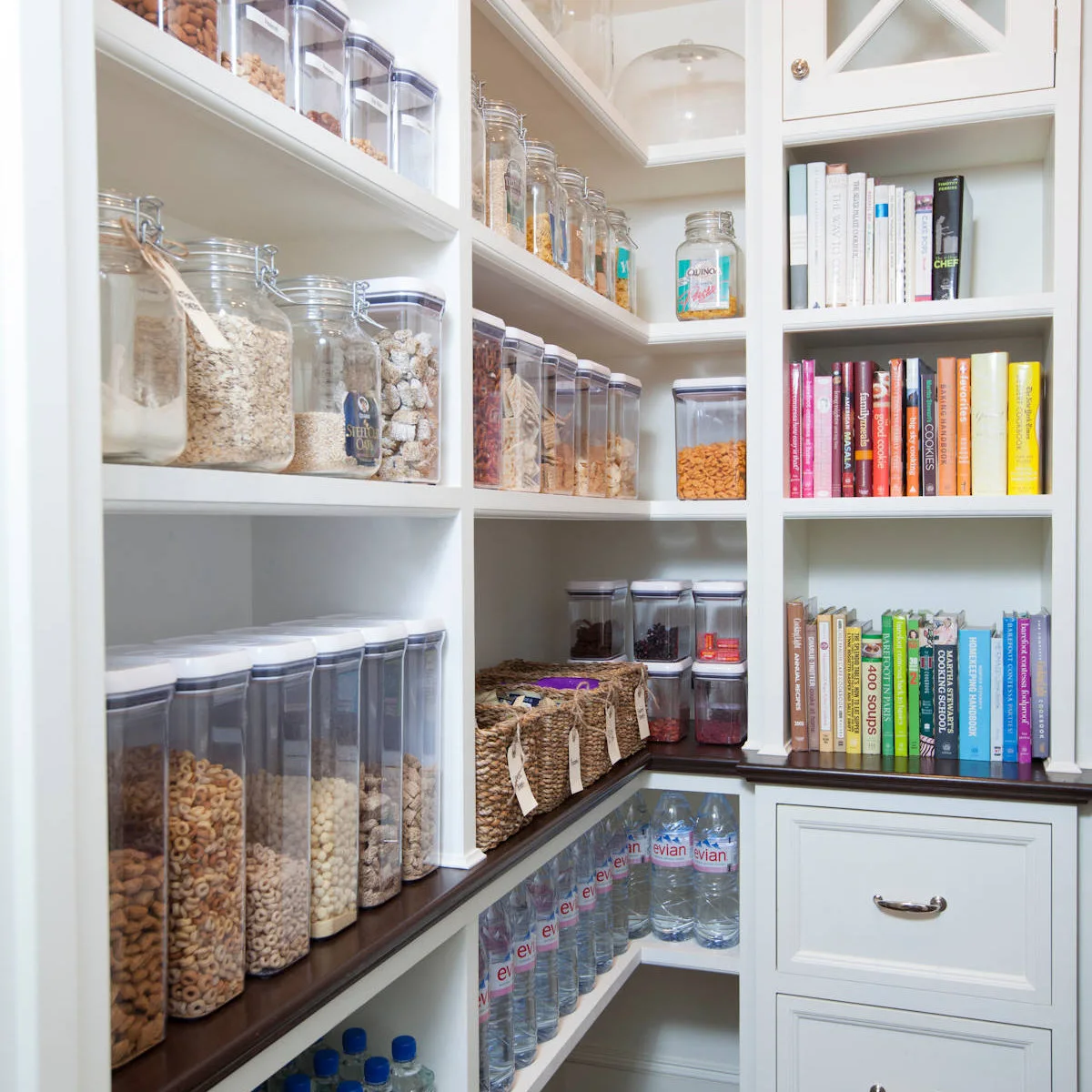
A narrow column of cookbooks fills the turn between food shelves in this white pantry. Containers remain on the longer straight runs, while baskets gather packets near the counter. Using the corner for books prevents another row of jars from becoming buried behind the neighboring shelf line.
Keep books away from steam and possible spills, with the ones you use most at a comfortable height. Leave enough room to pull a book straight out rather than bending it around an adjoining container. A small shelf stop can keep leaning volumes from sliding into the food storage.
IDEA 18 / 20
Round the Pantry Shelf Ends
 SaveSupport Non AI Creator
Image credit: Project: A Closet Case (via Houzz)
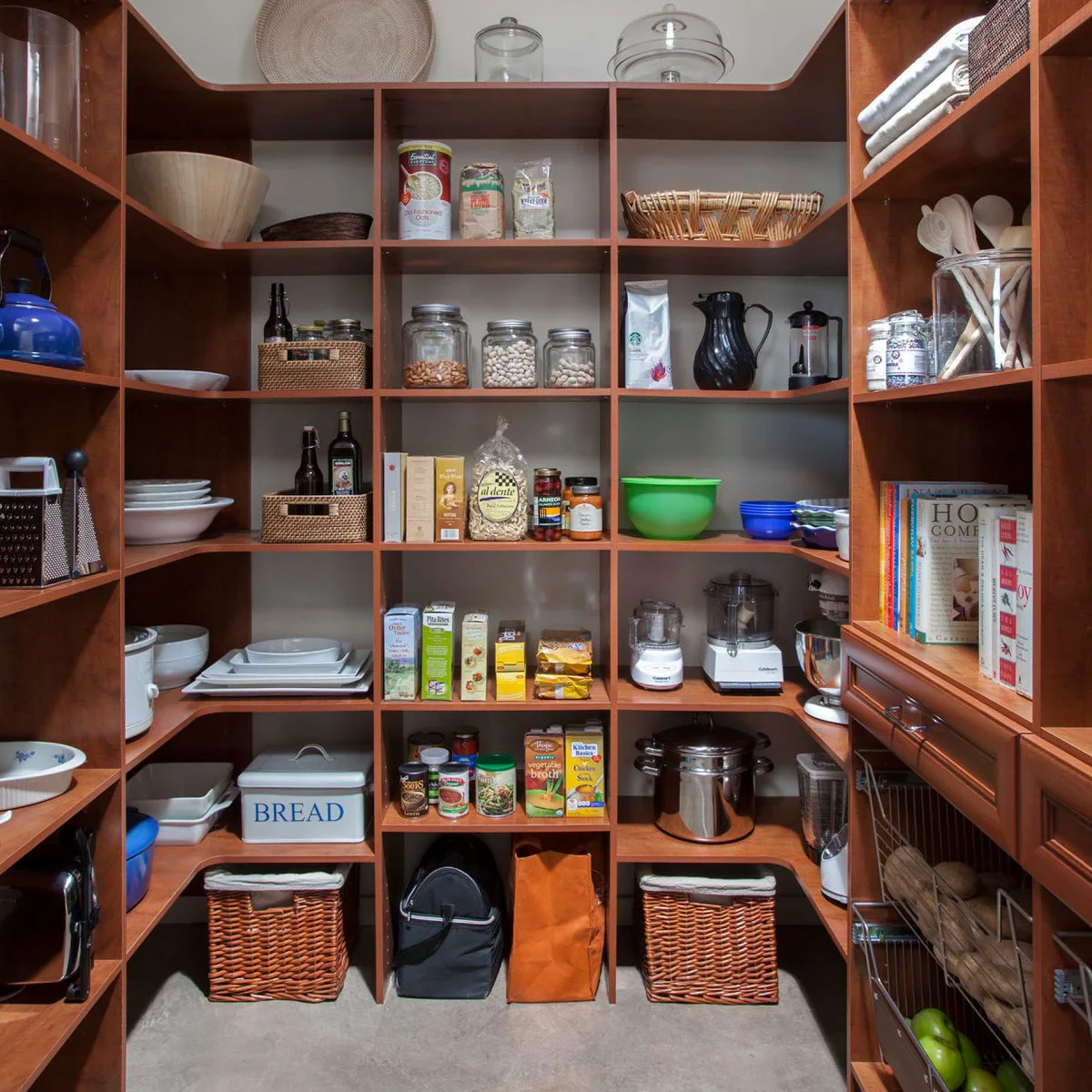
Rounded shelf ends soften the turn in this wooden pantry, keeping jars, bowls and cookware visible across the corner. Divided compartments limit long crowded rows. Larger baskets sit low, while a small drawer and open food storage occupy the right-hand side of the room.
Assign the corner to items that can be lifted out from the front without moving a whole row. Keep heavy cookware low enough for a safe two-handed lift. A rounded edge helps access, but the shelf still needs sufficient support and a depth suited to your actual contents.
IDEA 19 / 20
Leave a Narrow Open Shelf at the Junction
 SaveSupport Non AI Creator
Image credit: Project: Southern Living (via Houzz)
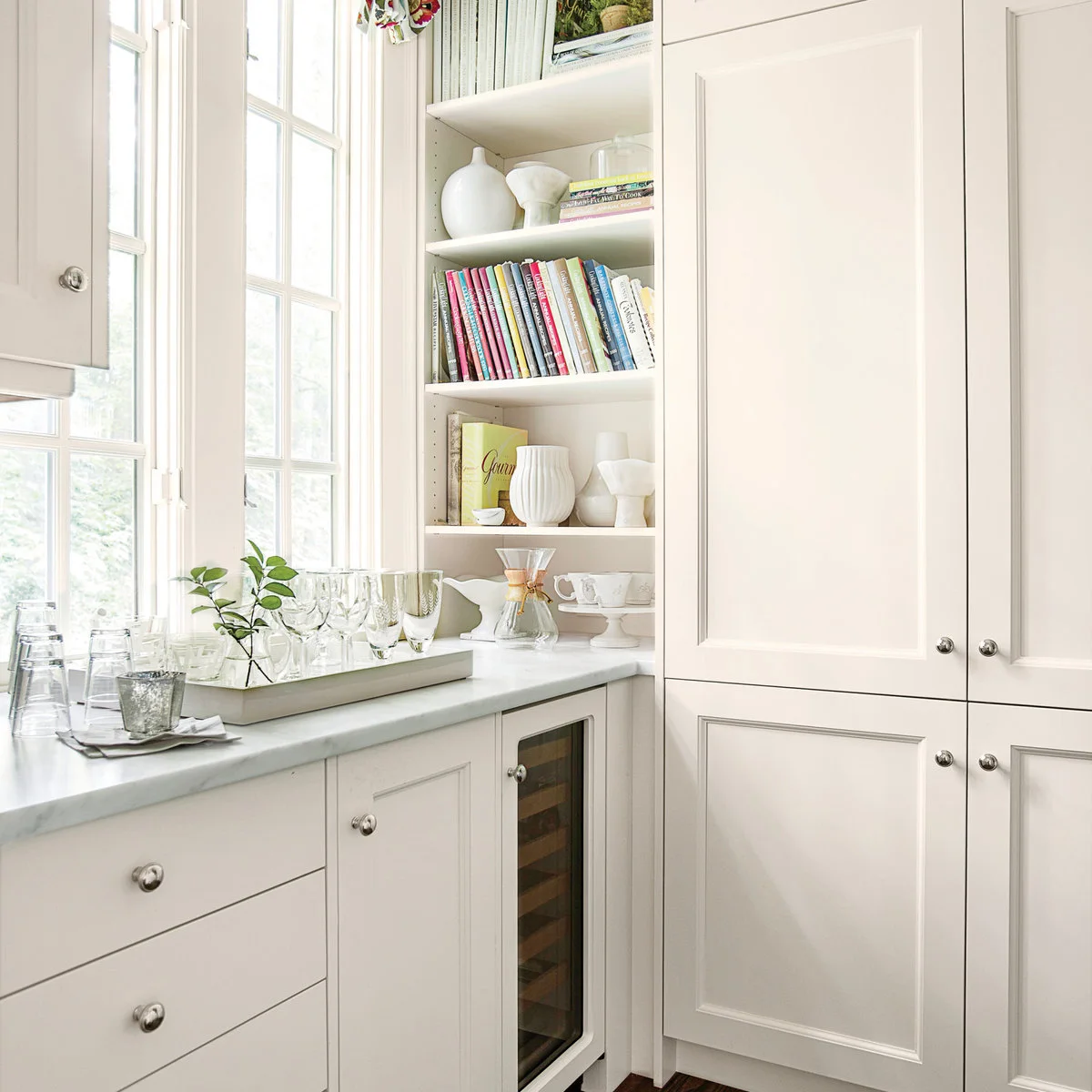
A slim open shelving column occupies the junction between this window counter and tall cupboards. Cookbooks and a few vessels fill the shelves, making the turn useful without another deep door. The narrow opening gives each item a visible place rather than creating a large mixed storage pocket.
Use this solution for objects that suit a shallow shelf, keeping paper clear of splashes from nearby preparation areas. Check that cupboard doors can open without hitting projecting book spines. Leave some empty space so taking down a cup or returning a book stays simple.
IDEA 20 / 20
Choose Continuous Shelves for a Pantry Corner
 SaveSupport Non AI Creator
Image credit: Project: DK Homes (via Houzz)
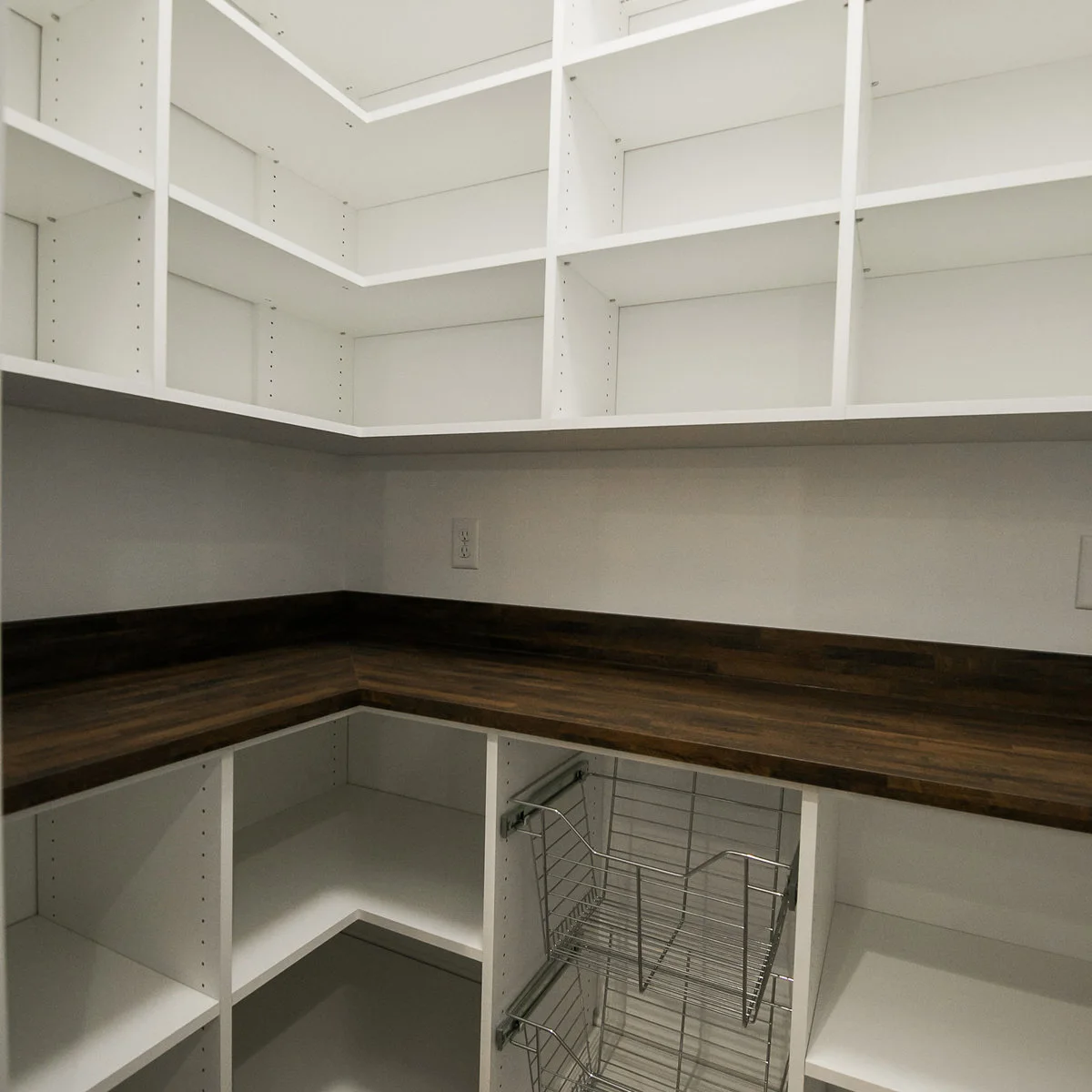
Continuous shelves turn the corner above a dark pantry countertop in this empty fitted room. The open view shows their depth and the vertical supports before any containers are added. A lower corner shelf and adjacent wire pull-out offer two different ways to use the base storage.
Measure the deepest corner reach and decide what can live there before filling it. Larger occasional pieces may suit that position better than small daily jars. Keep the counter beneath available for sorting groceries, and avoid buying identical containers until you know the shelf dimensions you need.
BRING IT ALL TOGETHER
Choose Access Before Capacity
A corner fitting earns its place when you can reach, lift and return the things stored there. Compare the accessible surface and opening path rather than the apparent size of the empty cabinet.
Keep the mechanism simple enough to clean and maintain. In some corners, a shallow shelf or dedicated appliance cupboard serves better than a more elaborate collection of moving baskets.