A dark brown couch can give a living room a clear anchor, but the furniture and surfaces around it determine whether the room feels inviting or heavy. Look at the whole arrangement: the floor underneath, the light behind it and the space needed to move around its arms.
These rooms show both fabric and leather seating, from compact sofas to large sectionals. Borrow a palette or a layout that suits your own furniture rather than trying to reproduce every accessory. Compare upholstery samples in your room before committing to a neighboring chair or rug.
PART 01
Give dark upholstery a lighter setting
IDEA 01 / 16
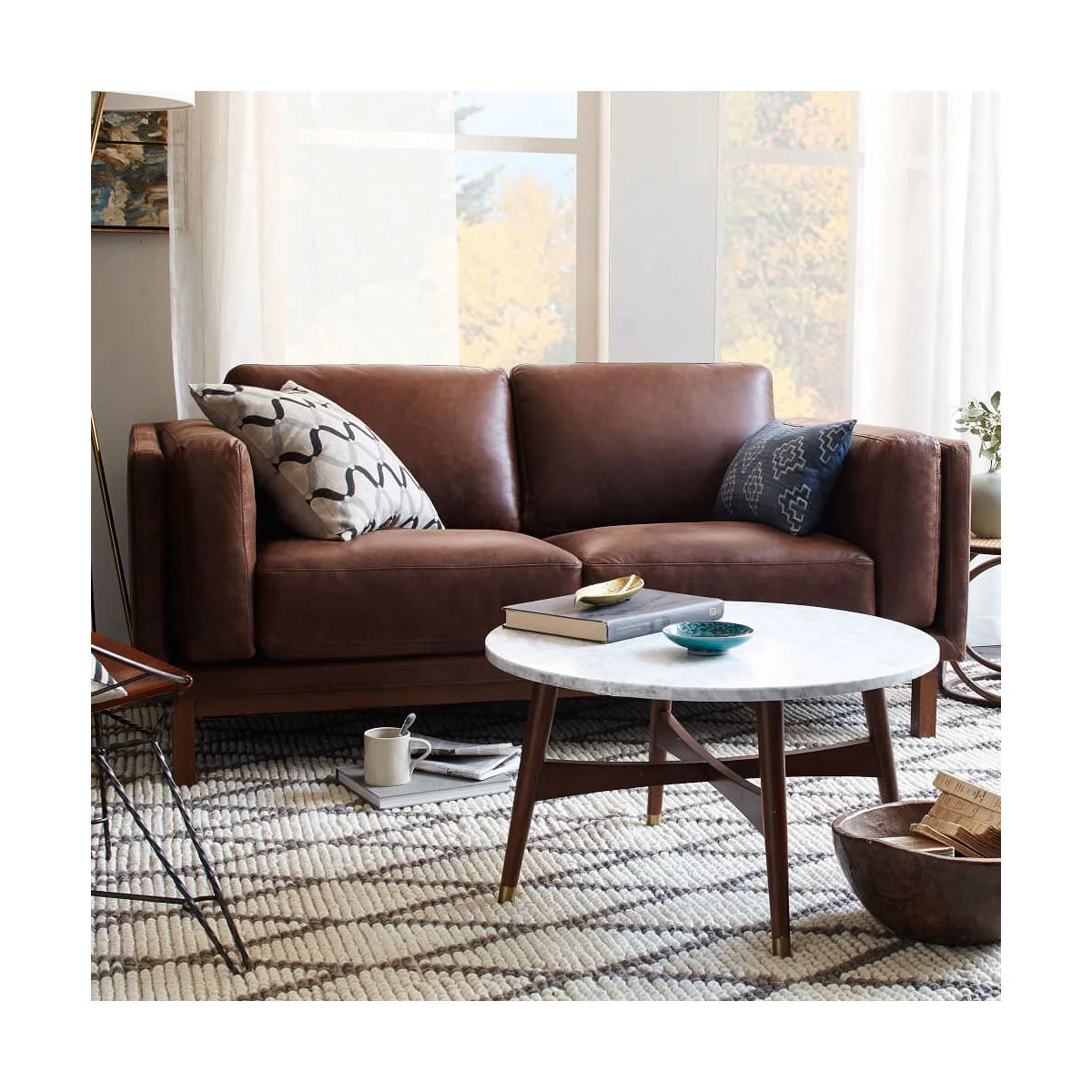
Lighten a Compact Sofa with a Pale Table
 SaveSupport Non AI Creator
Image credit: Project: West Elm UK (via Houzz)
The compact brown sofa has a strong outline against pale curtains, while the round white table provides a lighter shape in front. A patterned dark cushion connects the upholstery to the gray rug. The pale cushion stops the sofa from reading as one uninterrupted block of brown.
Try a light table surface before replacing a darker sofa you already like. Check the table’s diameter against the route past the seat, including space for knees when someone stands up. A rounded outline can soften the composition, but it still needs comfortable clearance around its edges.
IDEA 02 / 16
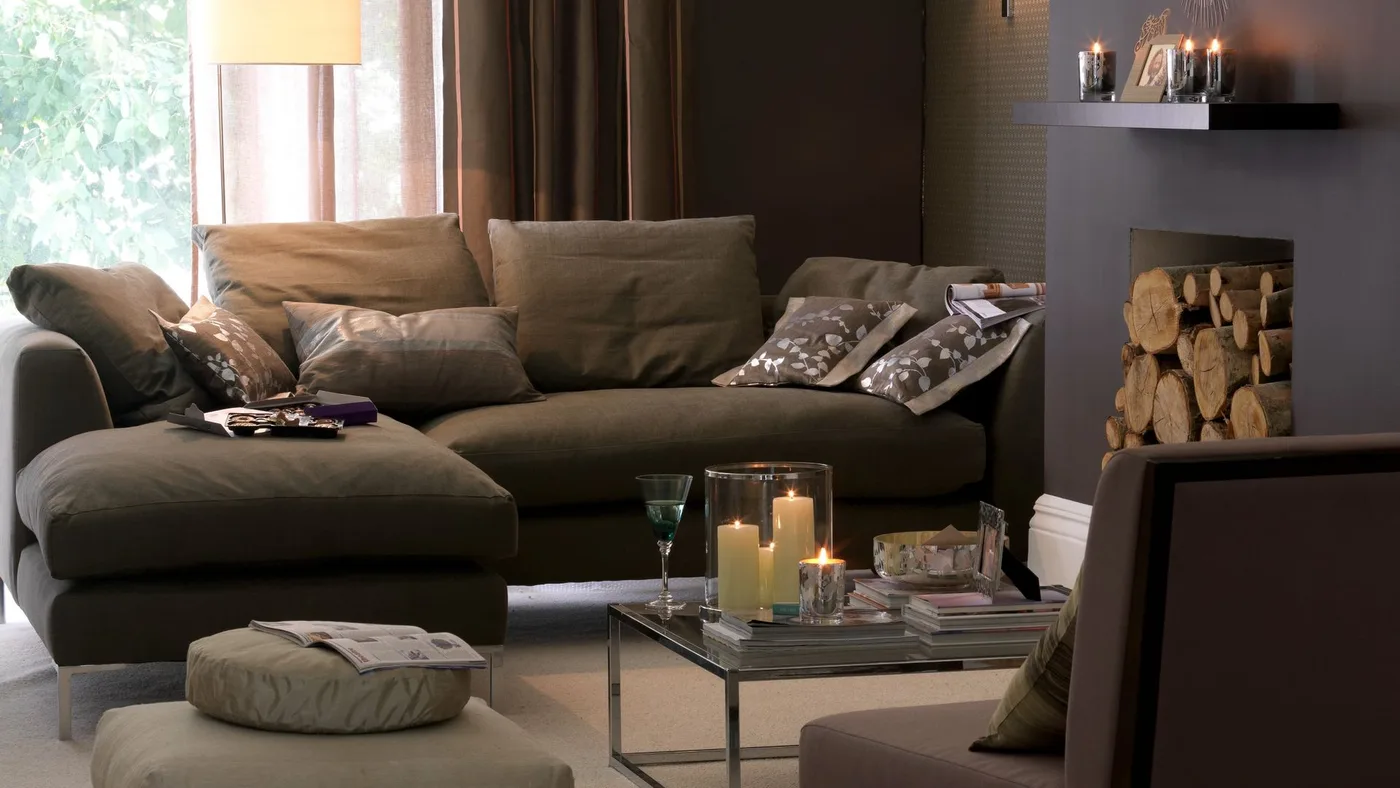
Use a Glass Table Against Brown Upholstery
 SaveSupport Non AI Creator
Image credit: Future PLC
Brown walls extend the sofa’s color into its background, creating a close, enveloping arrangement. Floral cushions break up the broad fabric surface. The glass table leaves more of the floor visible between the chaise and the opposite side of the seating group.
A transparent top can reduce the visual bulk of a table without reducing its physical size. Check that its edges are easy to see from every approach and choose a shape that fits the chaise. Keep a suitable cloth nearby if fingerprints and rings would bother you in daily use.
IDEA 03 / 16
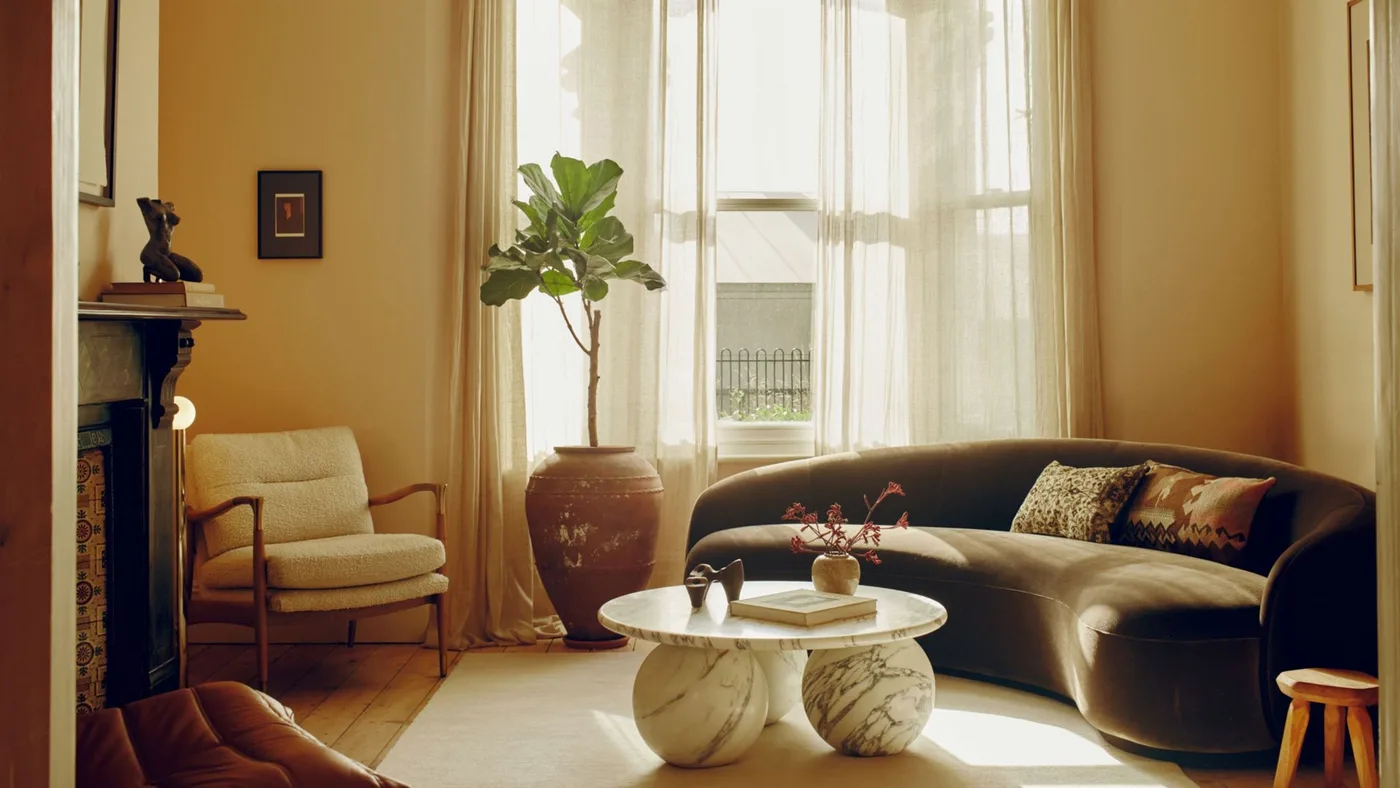
Set a Curved Brown Sofa Against Warm Pink
 SaveSupport Non AI Creator
Image credit: Studio Hahn. Design: Filippo Calvagno
The curved sofa sits within a warm pink and ochre palette, rather than against a neutral white background. A pale round coffee table repeats its softer outline. White curtains bring a broad light surface into the room, and a pale chair gives the brown upholstery a lighter companion.
Test warm wall samples beside the sofa in daylight and under your evening lamps. Brown can appear redder or grayer depending on its surroundings. For more ways to arrange a rounded seating group, compare these contemporary living room ideas before choosing the size of the table.
IDEA 04 / 16
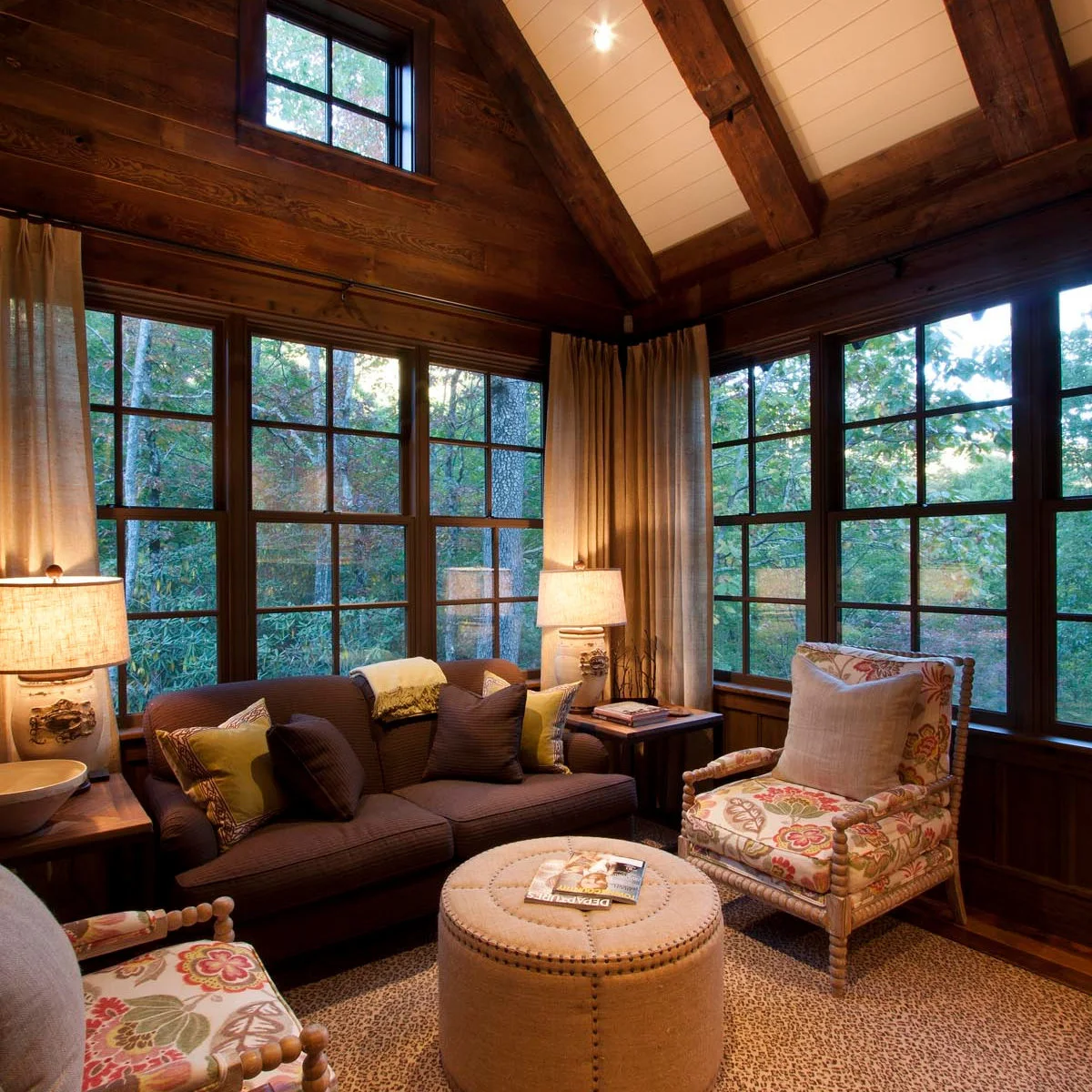
Keep a Wood-Lined Room Bright Around the Sofa
 SaveSupport Non AI Creator
Image credit: Project: Morgan-Keefe Builders, Inc. (via Houzz)
The brown sofa relates to the room’s wood walls, while the white ceiling and windows keep the upper half brighter. Floral armchairs introduce a different surface beside the plain upholstery. A pale tufted ottoman gives the seating group a central piece that is lighter than the sofa.
Judge the amount of brown across the whole room, including floors and wall boards. If several large surfaces are already dark, introduce contrast through a substantial rug or chair rather than many tiny ornaments. Choose lamps that provide useful light at the seats instead of relying only on ceiling illumination.
PART 02
Bring color into the seating group
IDEA 05 / 16
Connect Brown Leather with Black and White Pattern
 SaveSupport Non AI Creator
Image credit: Future PLC/David Brittain
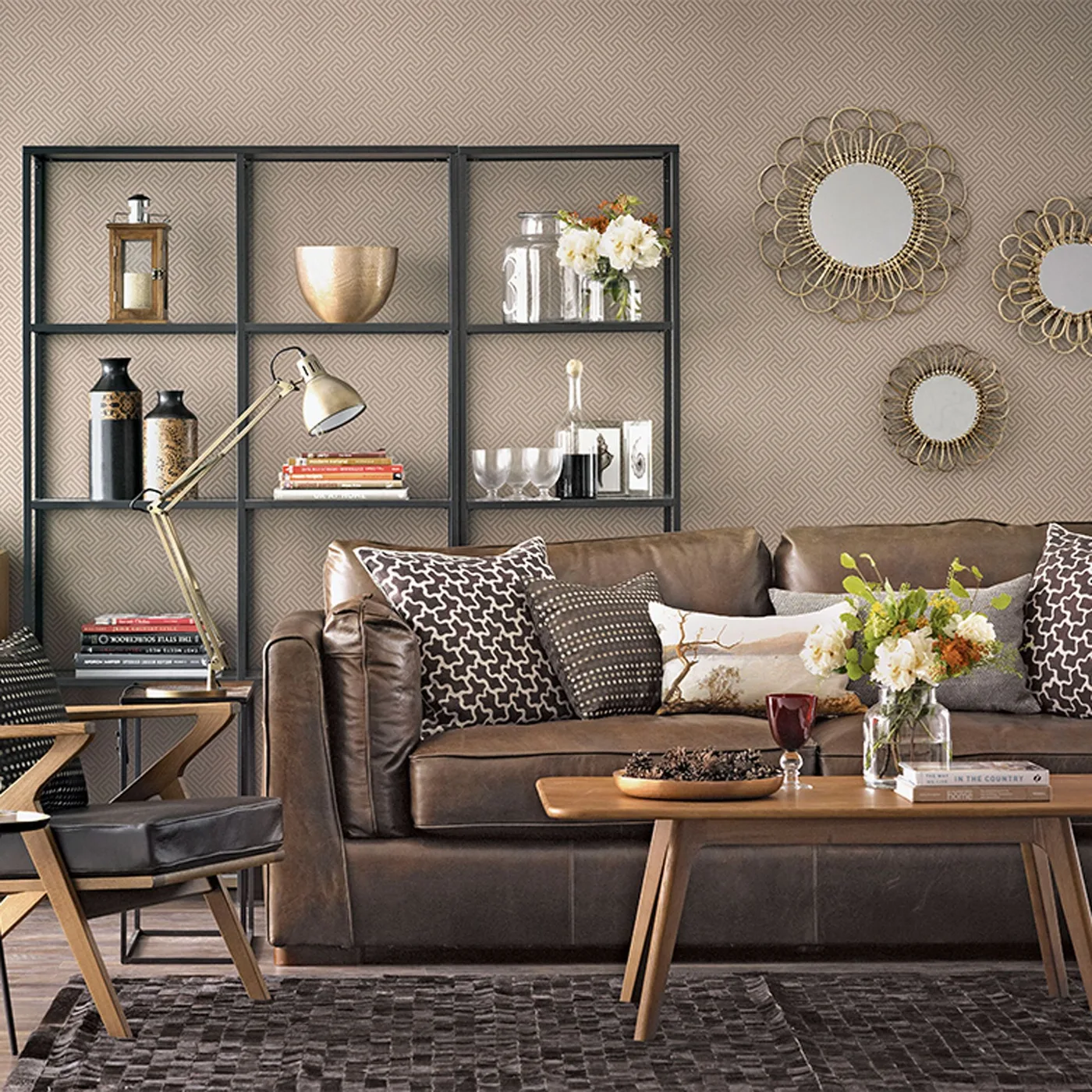
Black shelving gives the wall a strong framework behind the brown leather sofa. Round gold mirrors soften that grid, while the rug and cushions repeat black and white in different scales. The brown seat becomes the warmest large surface in an otherwise graphic arrangement.
Choose one pattern to dominate and keep the others smaller or quieter. Repeating the same two colors can connect different motifs without buying a matching set. For a similarly warm contrast, these black couch living room ideas show how pale surfaces can balance darker furniture.
IDEA 06 / 16
Let Patterned Chairs Bring in the Brighter Color
 SaveSupport Non AI Creator
Image credit: Image: Lindsay Brown. Design: Annie Downing Interiors
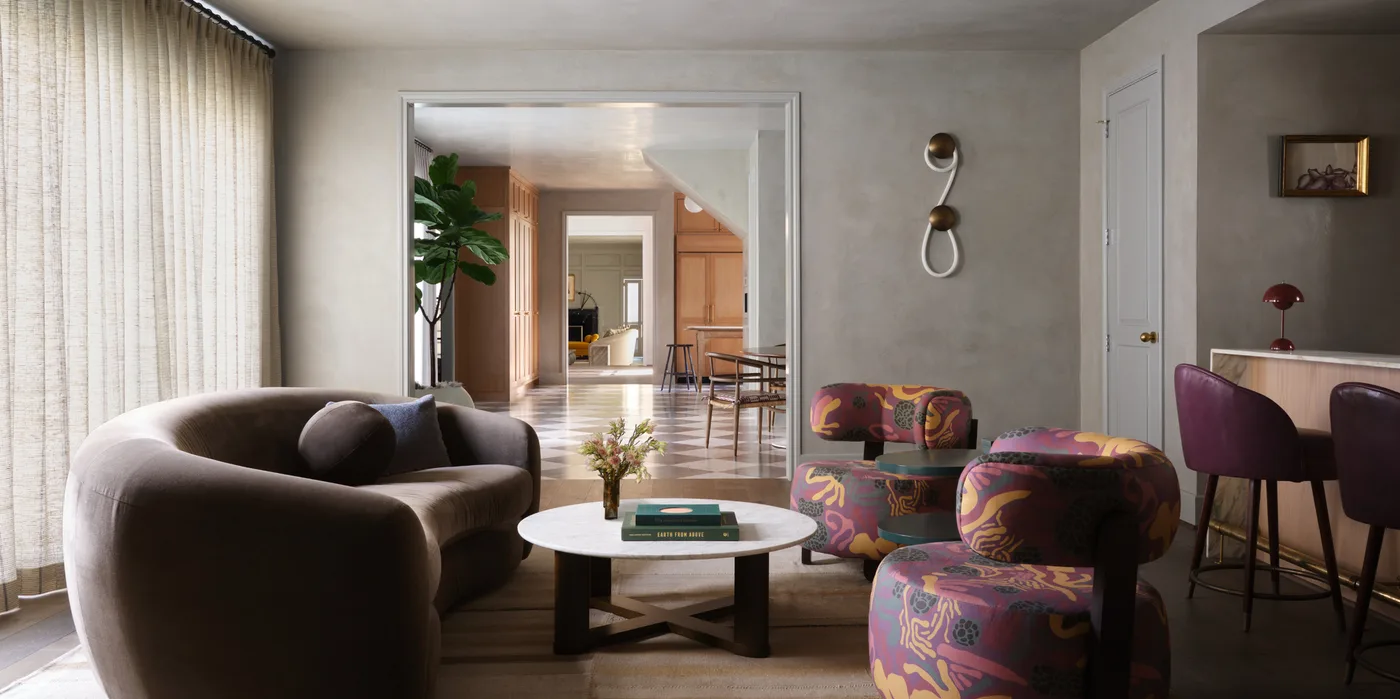
The dark curved sofa forms a quieter backdrop for the chairs’ purple and yellow pattern. A pale round coffee table keeps the center of the group light. The broad rug gives the different seats a shared base, while the surrounding walls remain comparatively restrained.
Bring a sample of the chair fabric alongside the sofa before ordering. Small pattern samples can look much busier when spread across a whole armchair. Keep the main walking route outside the group where possible, so the curved sofa and chairs can face one another without blocking movement.
IDEA 07 / 16
Repeat Teal in a Chair and a Few Cushions
 SaveSupport Non AI Creator
Image credit: Project: LTB Designs (via Houzz)
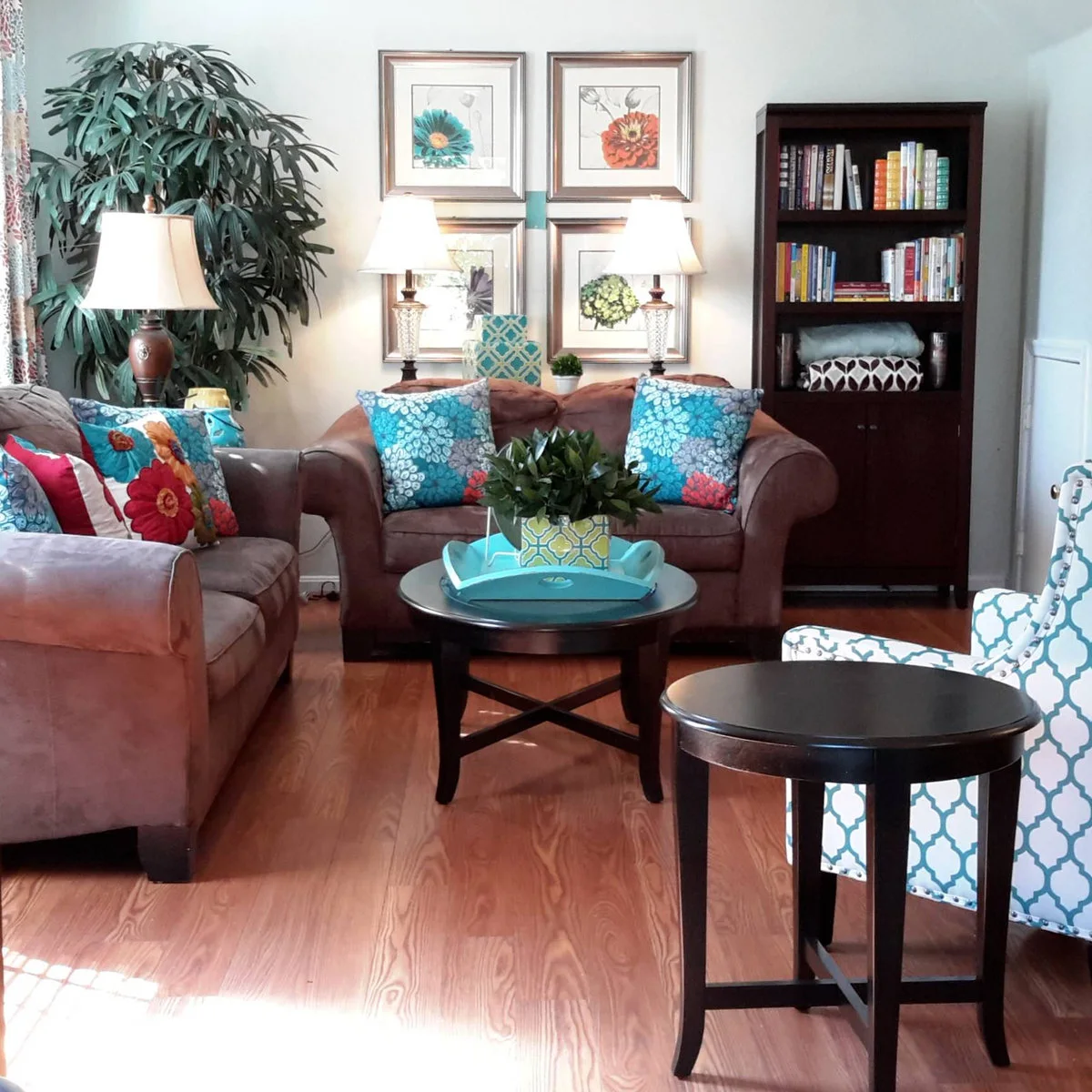
Teal appears in the cushions and patterned chair, linking those smaller pieces across the brown sofas. Black tables add a separate dark outline between the seats. Pale walls and the rug give the arrangement some relief, while a dark bookcase repeats the furniture’s deeper tones.
Use the accent color in a few places that can be seen together from the main doorway. It does not need to appear in every accessory. Compare the size of each motif as well as its color; a quieter cushion can help a strongly patterned chair feel deliberate.
IDEA 08 / 16
Use Red Accents Across Facing Brown Sofas
 SaveSupport Non AI Creator
Source: www.houzz.co.uk
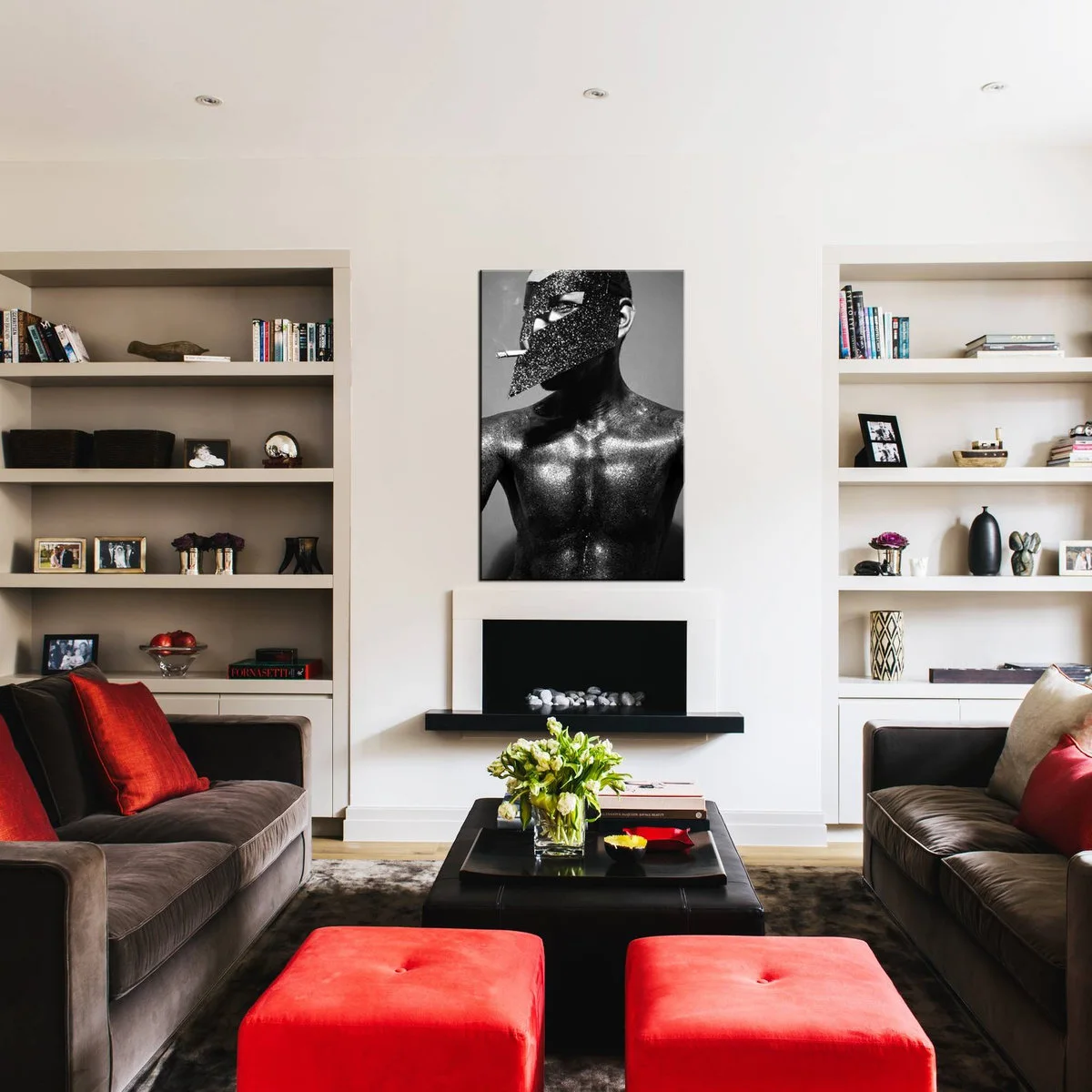
Two brown sofas face one another across a dark central ottoman, giving the room a conversational layout. Red cushions and the pair of red stools carry a brighter color through the group. Pale shelving and the light fireplace wall leave a calmer backdrop for the strong accents.
Choose accent pieces you actually use, rather than adding color only through extra objects on shelves. Move stools out of the walking route when they are not needed. A tray can give an upholstered ottoman a useful level surface, provided it sits securely and leaves room for feet.
PART 03
Make room for larger sofas
IDEA 09 / 16
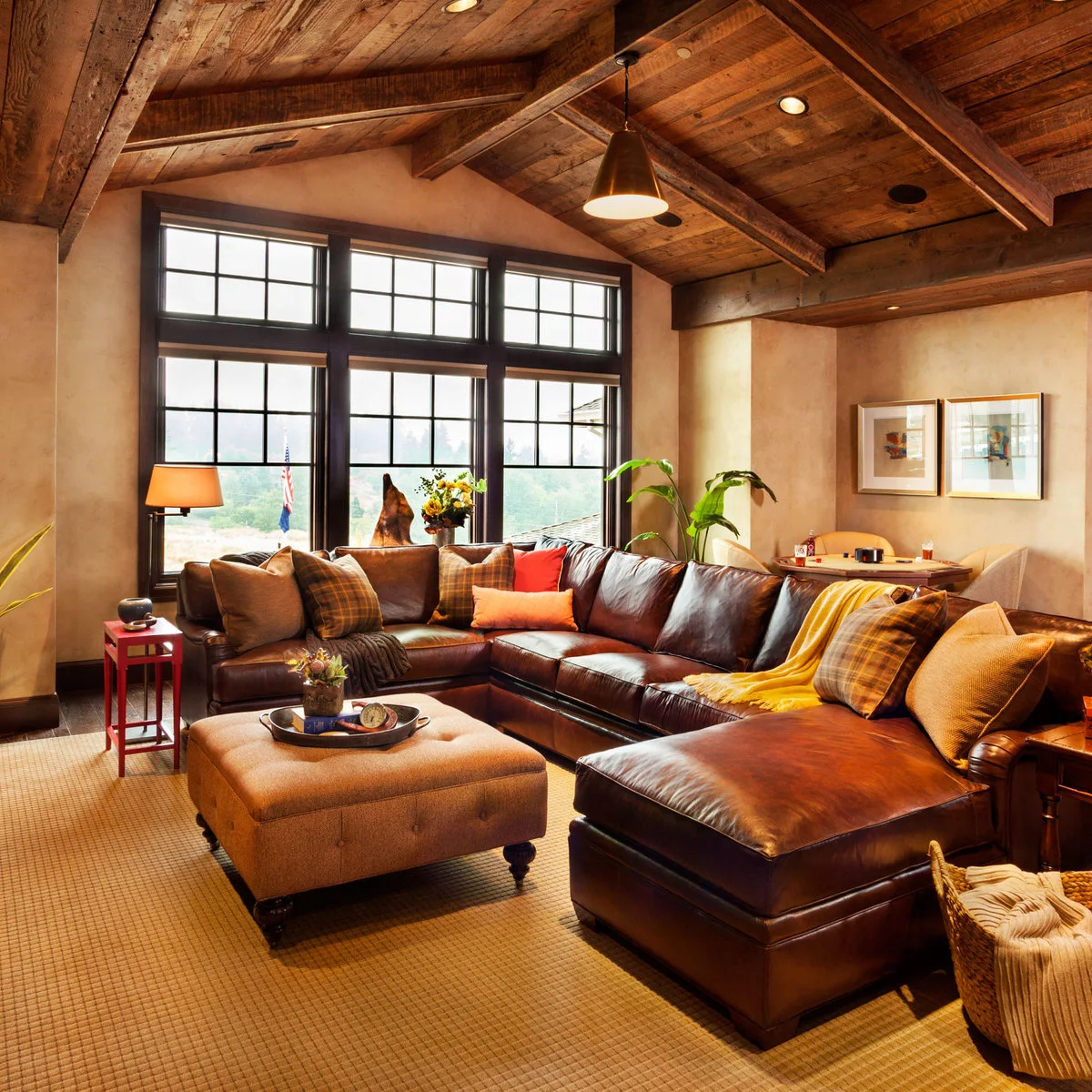
Break Up a Large Leather Sectional with Warm Textiles
 SaveSupport Non AI Creator
Image credit: Project: Westlake Development Group, LLC (via Houzz)
The sectional fills a broad corner beneath the wood ceiling, with rust cushions and a yellow throw separating its dark surface into smaller areas. A pale ottoman provides contrast in front. The patterned rug also distinguishes the seating group from the surrounding floor.
Measure the sectional as a complete shape, including its return, before choosing a central ottoman. Leave a usable route to each seat and nearby door. These long living room ideas offer more arrangements to compare when a straight sofa would leave too much seating disconnected.
IDEA 10 / 16
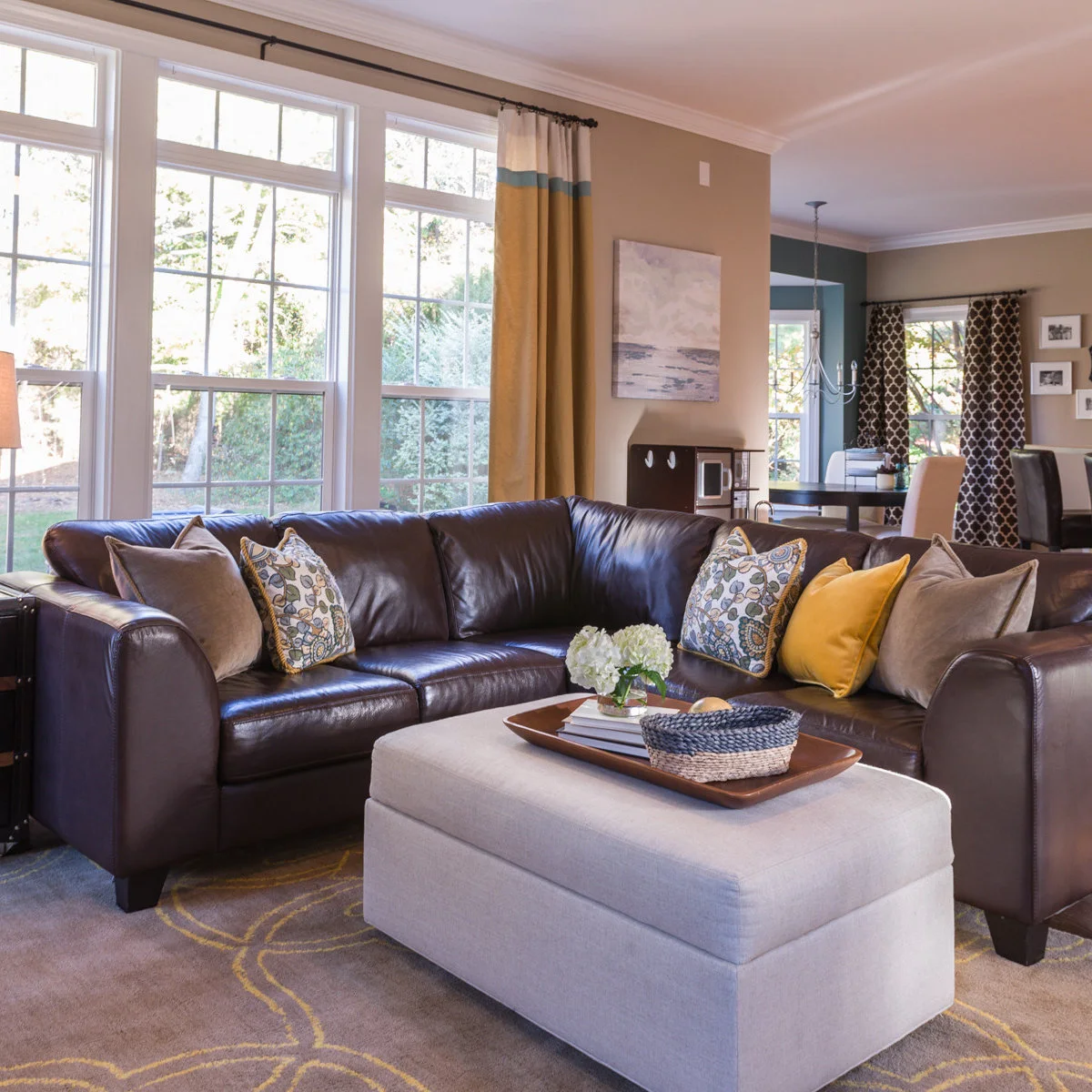
Echo Yellow Curtains in One Sofa Cushion
 SaveSupport Non AI Creator
Image credit: Project: Dwell by Cheryl Interiors (via Houzz)
Yellow curtains introduce a tall band of color beside the sectional, and one yellow cushion repeats it on the leather seat. Pale patterned cushions keep the long sofa from feeling uniformly dark. The light gray ottoman gives the center a softer, less reflective surface.
Try curtain samples at window height before matching cushions to them. Backlighting can change how a fabric looks, especially beside glossy upholstery. Keep the remaining cushions limited enough that people can sit comfortably without removing a pile, and check that the ottoman does not obstruct the room’s main route.
IDEA 11 / 16
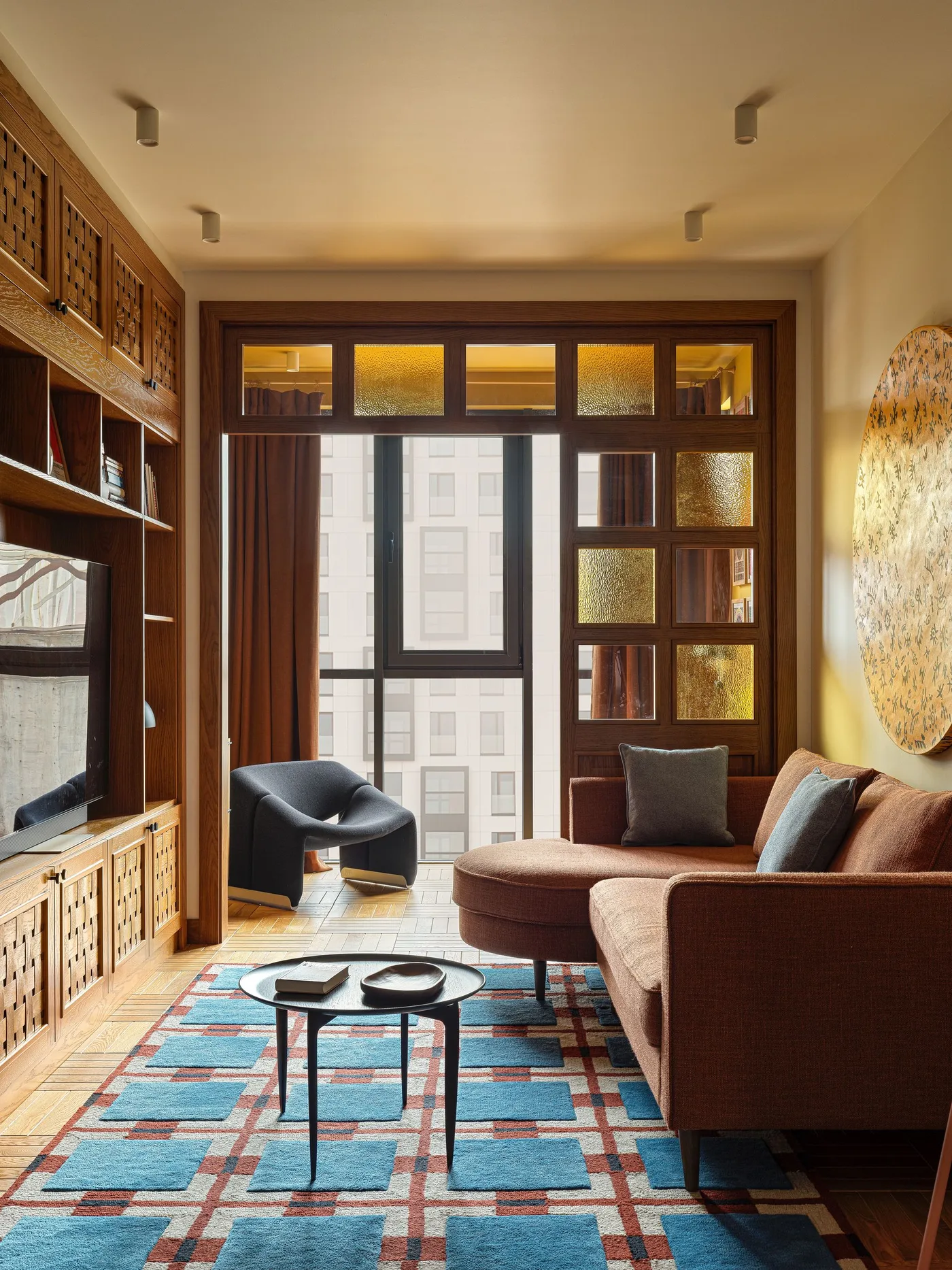
Use a Colorful Rug Beneath a Brown Chaise
 SaveSupport Non AI Creator
Image credit: sdelaemremont
A turquoise geometric rug creates a clear colored zone beneath the brown chaise. The sofa’s broad plain upholstery contrasts with the rug and the lattice detail behind it. A small dark round table occupies less of the central floor than a long rectangular table would.
Mark out the rug and chaise footprint together before buying either. A colorful rug has more impact when enough of its design remains visible around the furniture. Check the path around the projecting chaise, and avoid placing a small table where someone must step around it to reach a seat.
IDEA 12 / 16
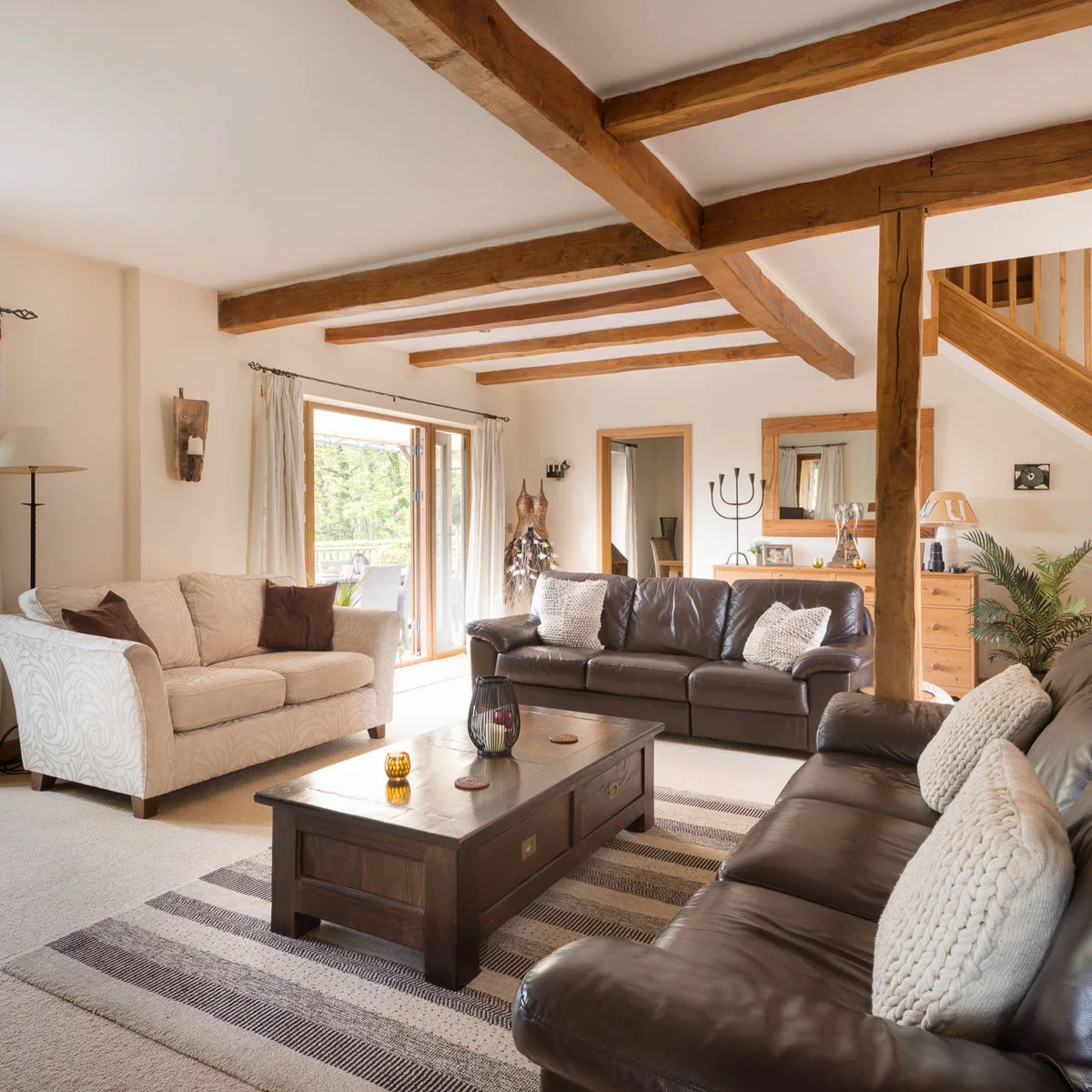
Mix Dark Leather with a Lighter Patterned Sofa
 SaveSupport Non AI Creator
Image credit: Project: User (via Houzz)
The room combines dark leather sofas with a pale patterned seat, using contrast rather than matching upholstery throughout. Wood beams give the upper part of the space a warm framework. The cream rug forms a lighter base beneath the mix of substantial furniture.
Start with the seats you need and test their combined footprints before shopping for a coordinated set. Keep at least one shared element, such as a warm color or similar seat height. A lighter sofa can balance dark leather, but its fabric still needs to suit the room’s everyday cleaning demands.
PART 04
Choose the room’s supporting details
IDEA 13 / 16
Add Blue Art Beside Dark Brown Leather
 SaveSupport Non AI Creator
Image credit: Project: User (via Houzz)
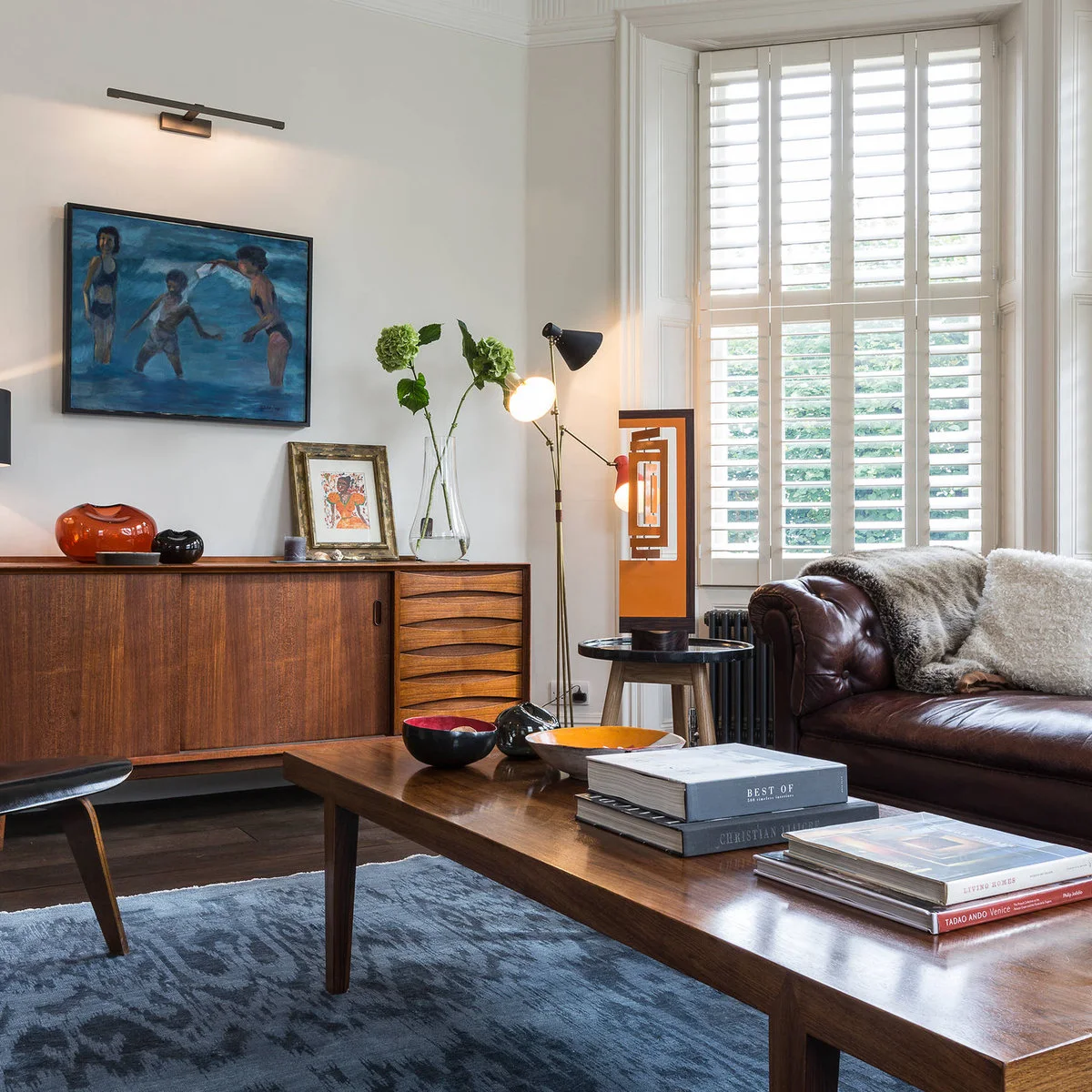
The tufted leather sofa sits beside a wood cabinet with warm orange accessories, while blue art introduces a cooler note above it. Blue also appears in the rug. The furniture remains visually substantial, but the repeated color gives the arrangement another point of interest beyond brown.
Try a larger artwork before adding several small ornaments around an already detailed sofa. Check the picture from a seated position as well as the entrance. Keep lamps and frequently used items reachable, leaving enough clear cabinet surface to avoid crowding everything into the gap beside the arm.
IDEA 14 / 16
Pair Brown Fabric with Teal and Pale Art
 SaveSupport Non AI Creator
Image credit: Project: Tollgard Design Group (via Houzz)
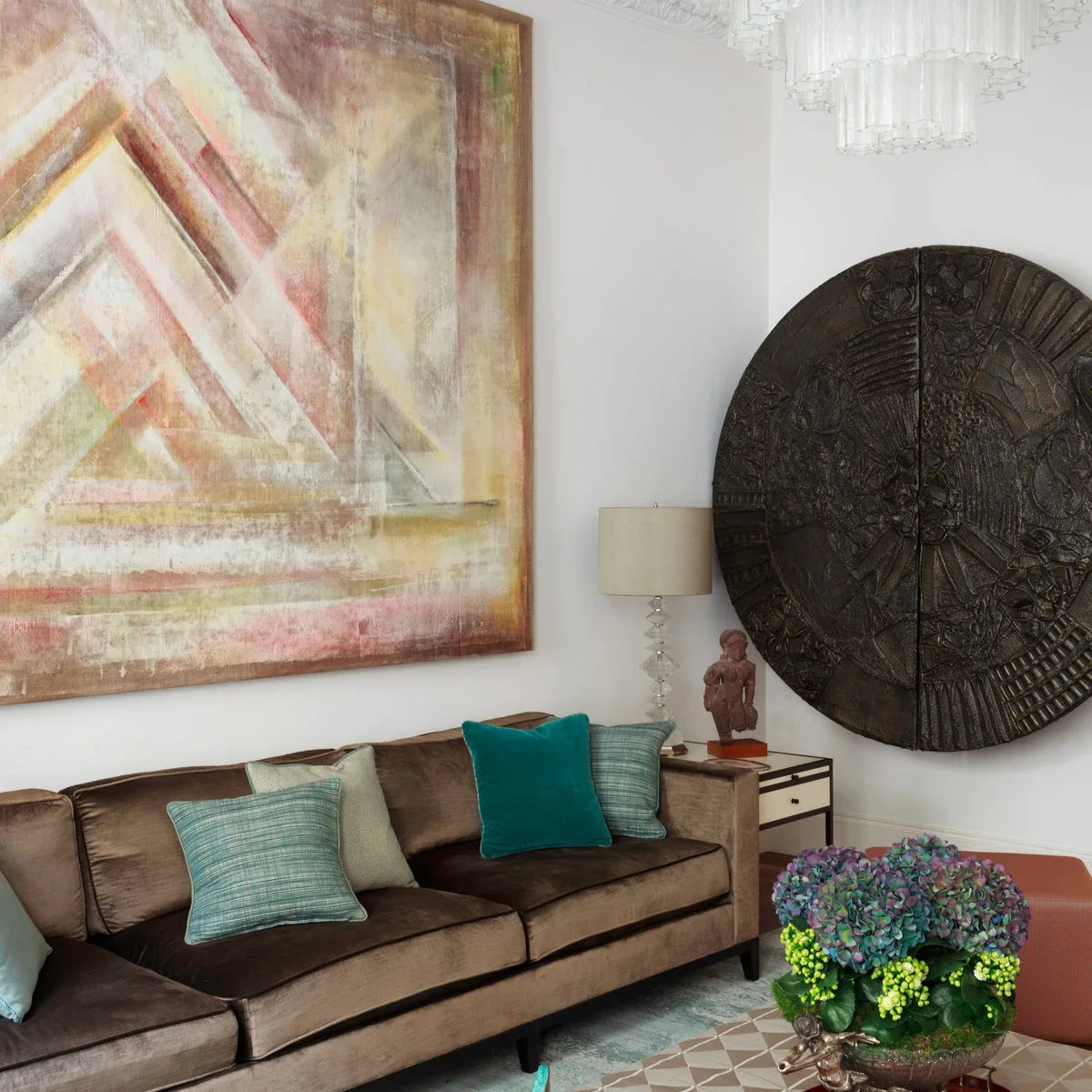
The brown sofa carries a small group of teal cushions, with paler green-blue tones linking them to the surrounding artwork. A large pale painting keeps the wall above the seat lighter. The circular carved piece on the neighboring wall adds a different shape beside the rectangular picture.
Check the balance of wall pieces from the room’s main approach before hanging them. Two substantial works need enough space to remain distinct. Repeat an accent color through a few washable cushion covers if you want an easily changed connection between existing upholstery and art.
IDEA 15 / 16
Keep a Patterned Ottoman Connected to the Sofa
 SaveSupport Non AI Creator
Image credit: Project: American Freight Furniture, Mattress, Appliance (via Houzz)
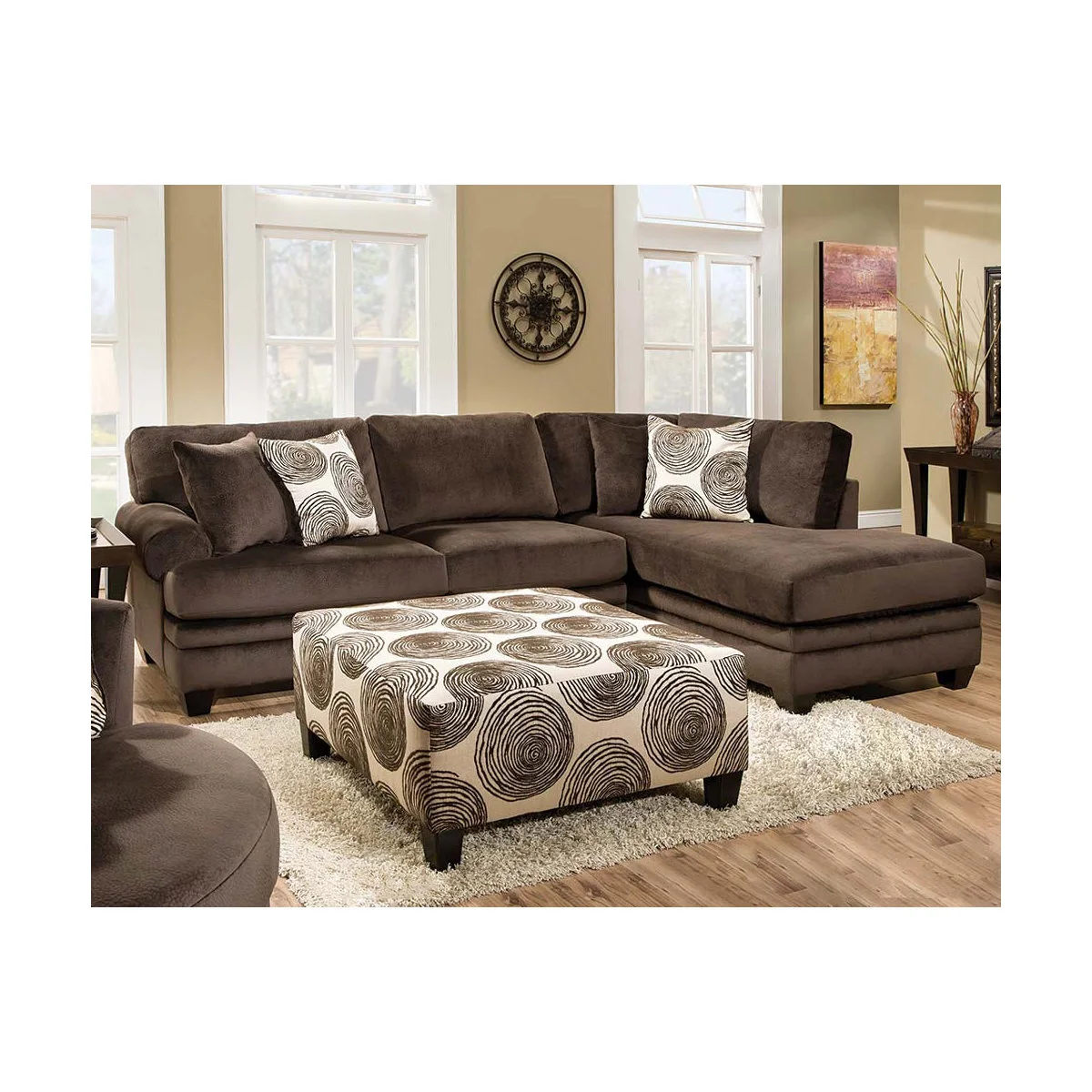
The chaise sofa has a broad chocolate-colored surface, while a patterned ottoman introduces pale curves in front. Similar marks appear on the cushions, connecting the central piece to the seat. A light rug separates the darker upholstery from the wood-colored floor around it.
An ottoman and cushions can share a pattern without requiring every accessory to match. Check the ottoman’s size with the chaise extended into the room, then leave access to the corner seat. Ask for the upholstery’s care instructions before choosing a pale pattern for a surface that may also support feet.
IDEA 16 / 16
Use Brown Seat Cushions in a Built-In Arrangement
 SaveSupport Non AI Creator
Image credit: Prue Ruscoe. Design: YSG Studio
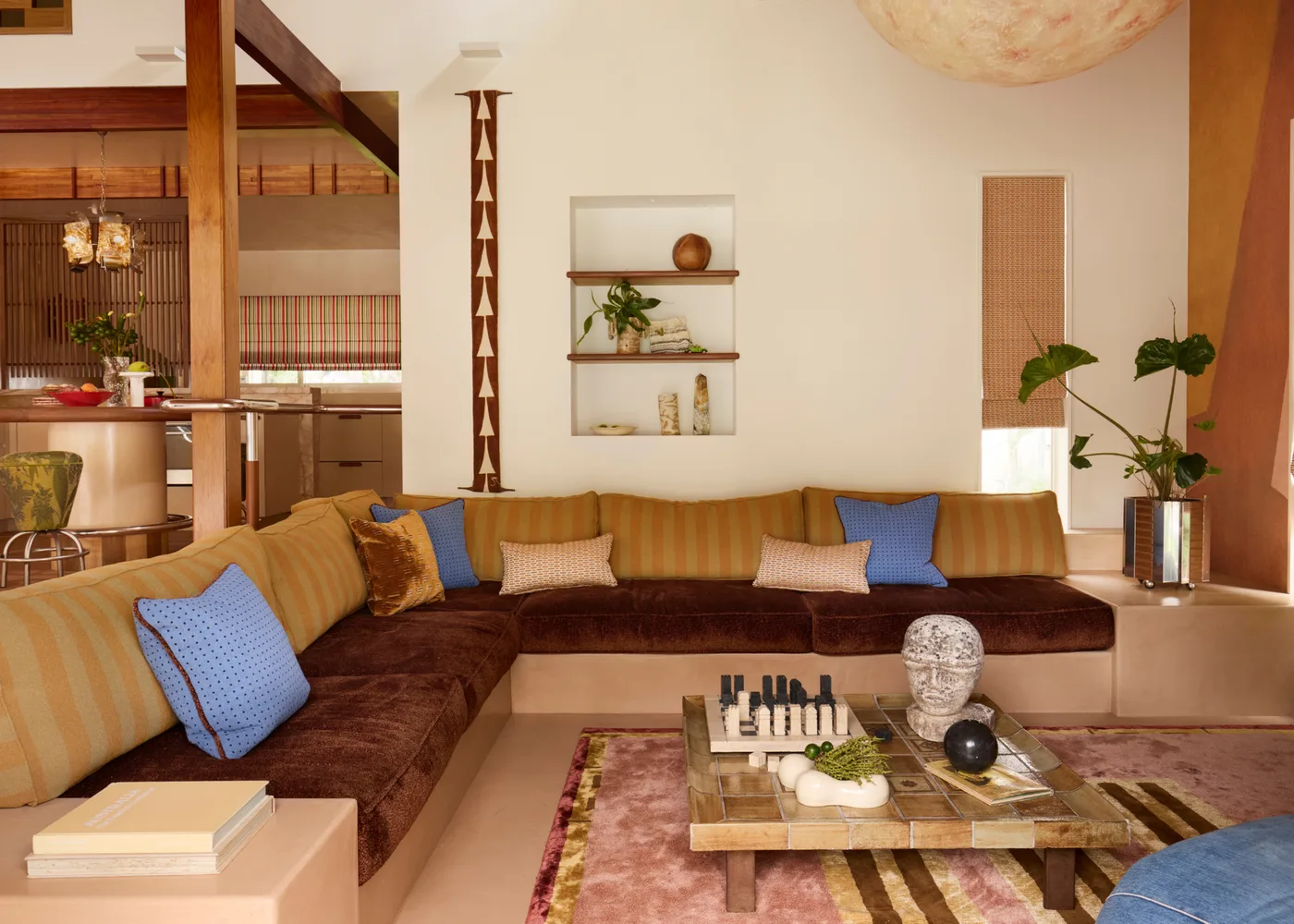
Brown seat cushions form the lower layer of the built-in arrangement, with striped cushions and blue pillows introducing a more varied backrest. The pale base and surrounding walls keep the dark fabric from dominating. A low square tiled table follows the seating area’s broad horizontal lines.
Built-in seating needs more planning than a movable couch. Test a sample seat and back cushion together before deciding on their depth or firmness, and allow for removable covers. Keep access around the table comfortable; a low arrangement should still let people sit down and stand up easily.
BRING IT ALL TOGETHER
Balance the sofa with the surfaces around it
Choose the room’s largest supporting surfaces first: the wall behind the sofa, the rug beneath it and the table in front. Those decisions affect the balance of brown more than a shelf of small accessories. Keep a comfortable walking route through the finished arrangement.
Then add a few useful accents, such as washable cushion covers, curtains or a lamp beside the seat you use most. Check colors against the actual upholstery in changing light, and follow the sofa maker’s cleaning advice rather than assuming every brown finish needs the same treatment.