A television leaves an awkward strip of wall above it, especially when the furniture below is much wider than the screen. A picture, a shallow ledge or a small collection can connect those proportions without turning every inch into a display.
Start with a comfortable viewing height and the television’s ventilation and mounting instructions. Plan decoration around that position. Test pictures with paper templates, use suitable wall fixings, and keep anything resting on a shelf secure above people and electronics.
PART 01
Style a ledge above the screen
IDEA 01 / 20
Keep a Long Ledge Lightly Filled
 SaveSupport Non AI Creator
Image credit: Project: Reference Media Inc (via Houzz)
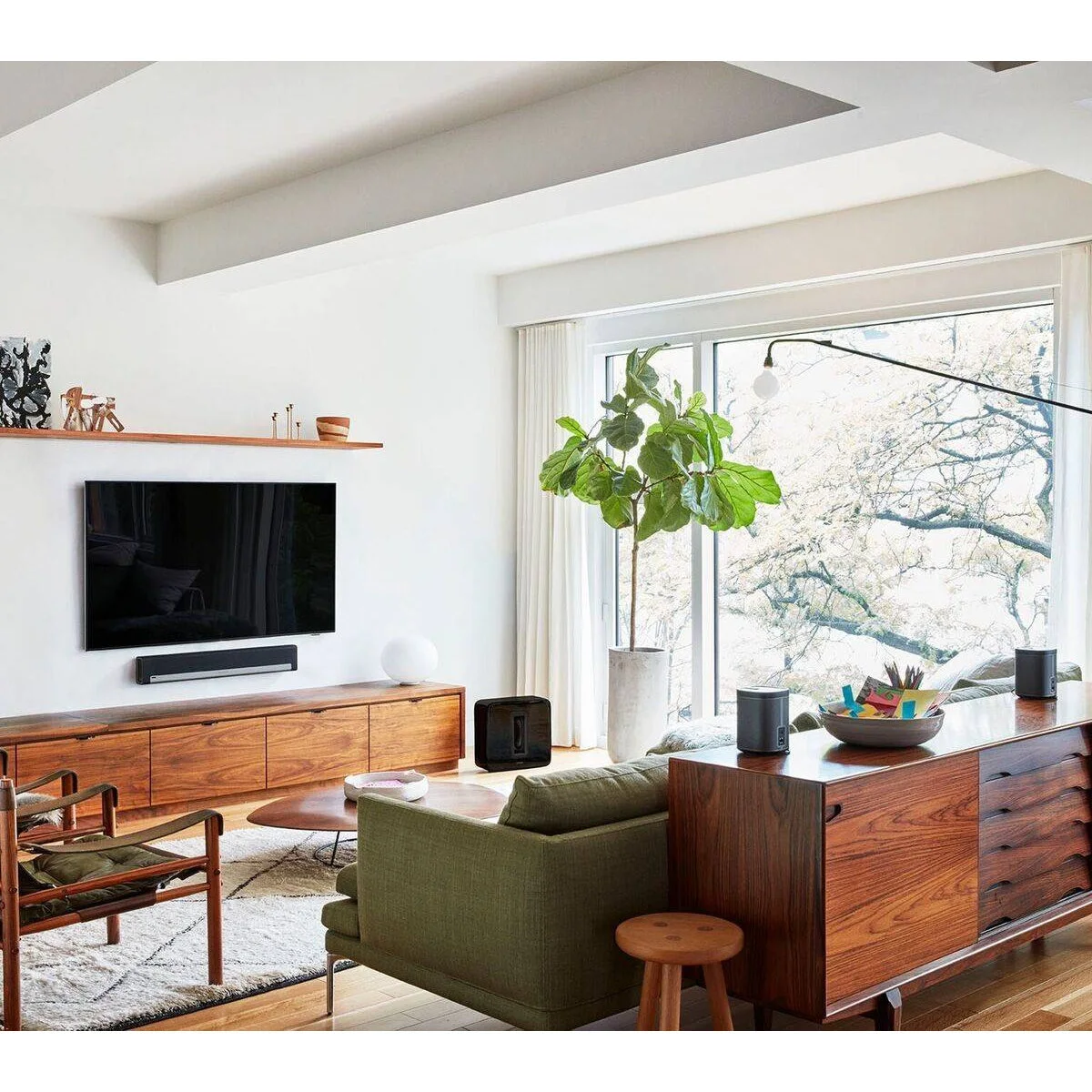
A slim wood shelf extends beyond the television, repeating the longer cabinet below. Small sculptures, candlesticks and a striped bowl occupy only parts of its length. The open gaps matter here: they keep the shelf from becoming a second solid band above the black screen.
Mark the shelf length with tape before ordering, checking how it relates to both the cabinet and the nearest window. Leave enough space for the television’s ventilation and possible replacement. Small objects need stable bases, and a shelf above electronics should not become a landing place for drinks.
IDEA 02 / 20
Layer Pictures on Two White Ledges
 SaveSupport Non AI Creator
Image credit: Project: Charles Vincent George Architects, Inc. (via Houzz)
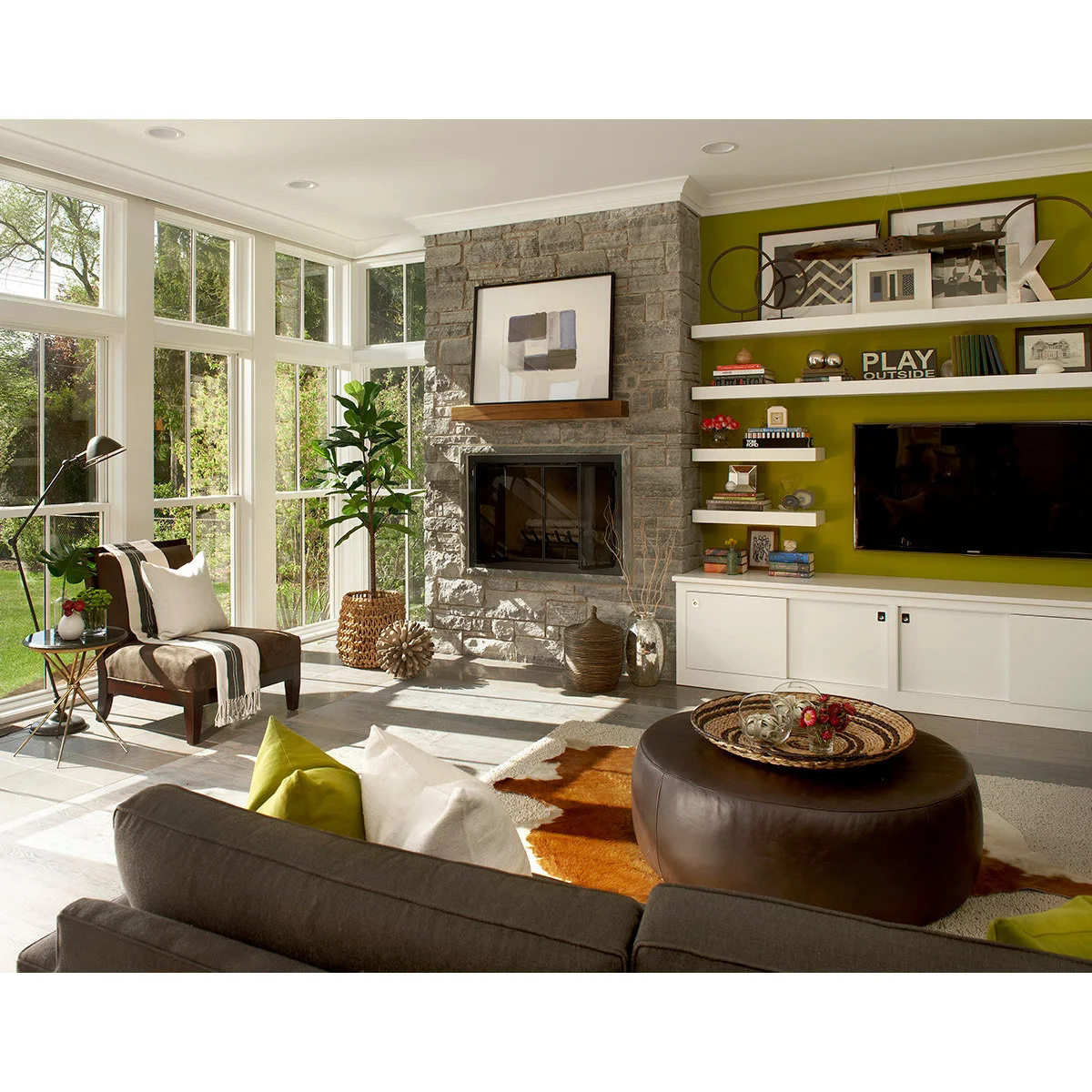
Two white ledges break up the green wall above the television. Black and white frames overlap on the upper shelf, while books and small colorful objects fill the lower one. The repeated shelf color links the display to the white trim rather than adding another strong outline.
Choose shallow ledges with a retaining lip, then check each frame’s stability before loading them. Keep heavier pieces low and use restraints where appropriate. A bright wall already supplies plenty of energy, so edit the objects by color instead of adding every photograph you own.
IDEA 03 / 20
Echo a Black Screen with a Dark Shelf
 SaveSupport Non AI Creator
Image credit: Project: Moda Interiors (via Houzz)
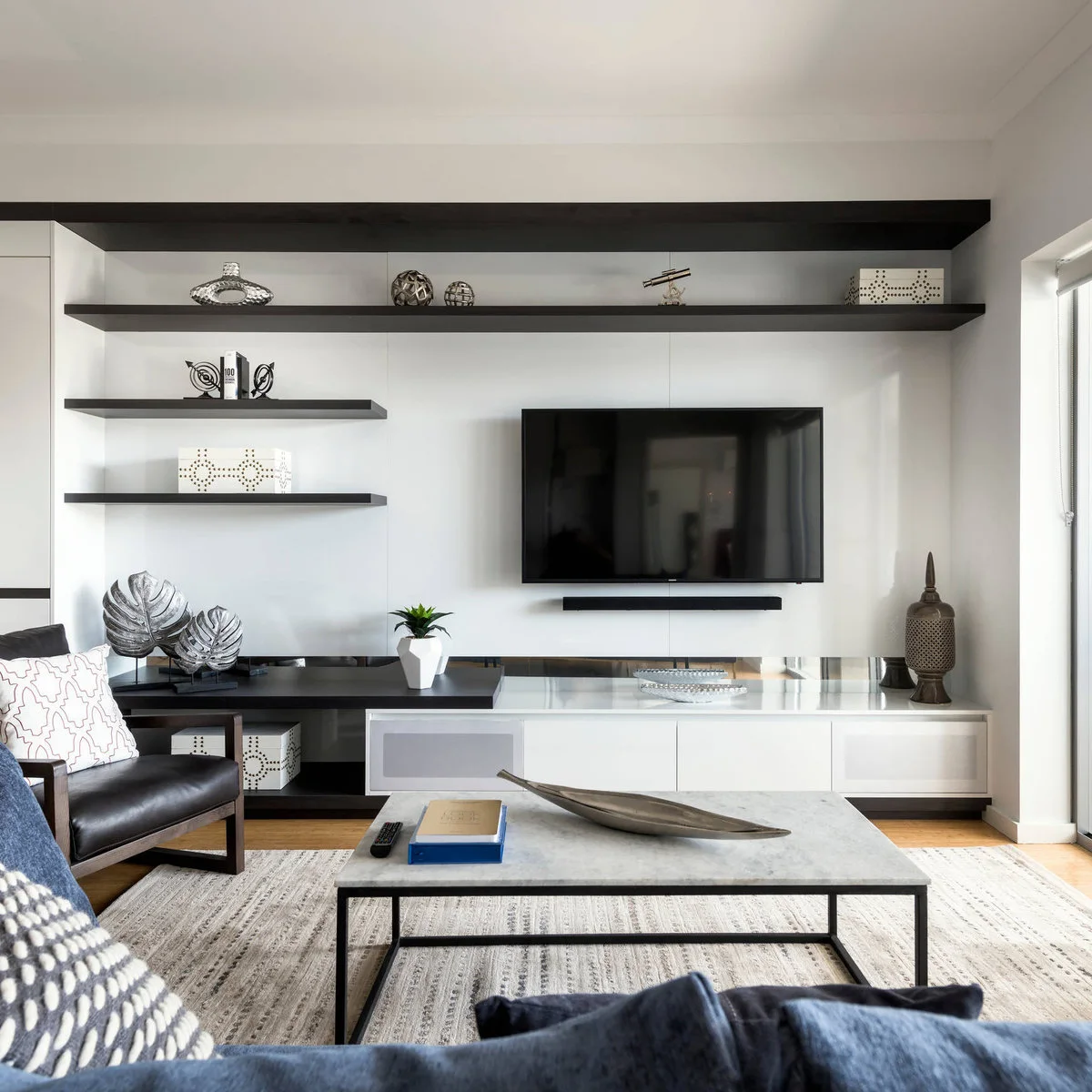
A dark shelf runs over the television and continues into an offset arrangement on the left. Pale and metallic objects stand out against the wall, while the shelf’s dark edge repeats the screen. The white base cabinets leave the lower part of the composition quieter.
Align the main shelf deliberately with the cabinet or the whole wall, rather than automatically centering it on a small object. Check the arrangement from your usual seat. Reflective accessories can catch lamplight, so move them if they create distracting flashes while you watch.
IDEA 04 / 20
Connect Several Screens and Pictures with One Ledge
 SaveSupport Non AI Creator
Image credit: Project: Goggans Architecture & Interiors (via Houzz)
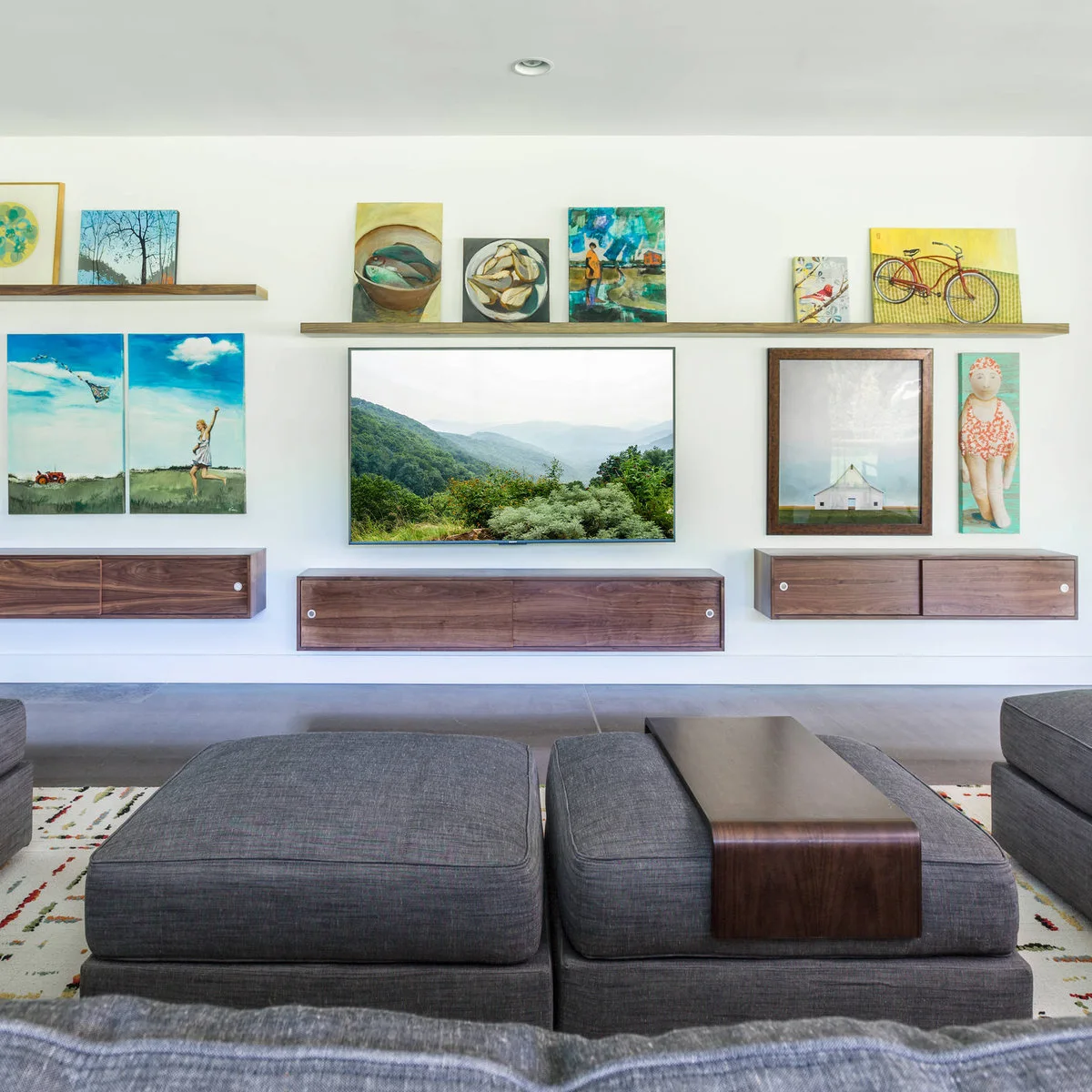
Small colorful paintings sit on a continuous wood ledge above the landscape shown on the central screen. Other pictures and floating cabinets extend the arrangement sideways. The shelf gives these different shapes a shared line, keeping the wall readable despite its many separate pieces.
Plan the whole width on paper before mounting individual items. Leave an accessible route to the television’s connections and check that the ledge does not block sensors or ventilation. Use the landscape display as one part of the arrangement, while making sure the wall still feels balanced when the screen is dark.
IDEA 05 / 20
Display Plates on a Pale Floating Shelf
 SaveSupport Non AI Creator
Image credit: Project: Florida Designer Cabinetry (via Houzz)
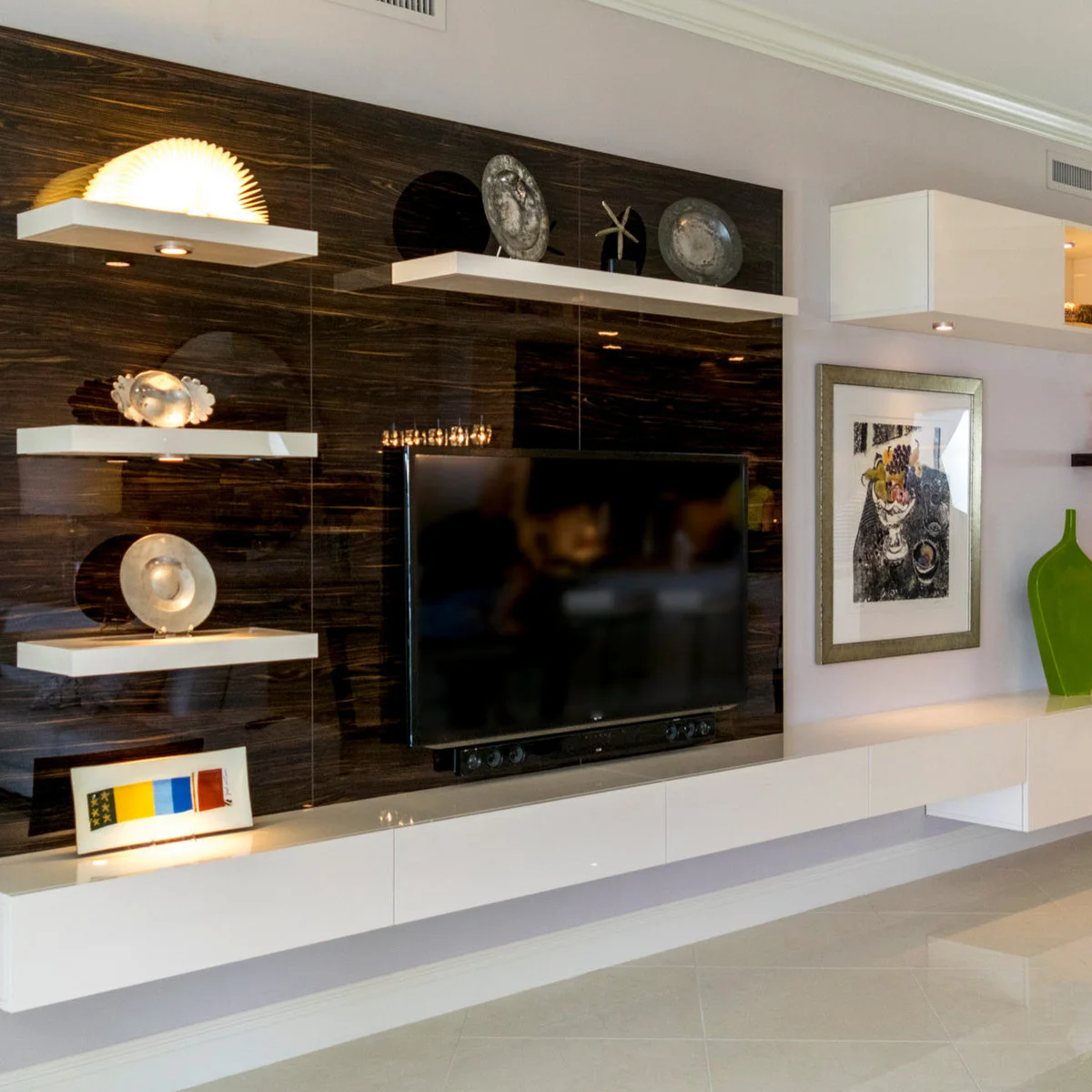
A pale shelf carries a row of decorative plates above the television, with smaller shelves stepping down to its left. The light surfaces stand out against the dark wall. Round objects soften the screen’s hard rectangular outline without introducing a busy cluster of picture frames.
Use plate stands that fit the pieces securely and check the shelf’s weight limit before arranging a collection. Keep delicate items away from shelf edges. The glossy wall and reflective plates can both catch light, so test the view with the lamps you normally use in the evening.
PART 02
Make the television part of an art wall
IDEA 06 / 20
Give a Colorful Gallery One Main Picture
 SaveSupport Non AI Creator
Image credit: Project: Jennifer Connell Design (via Houzz)
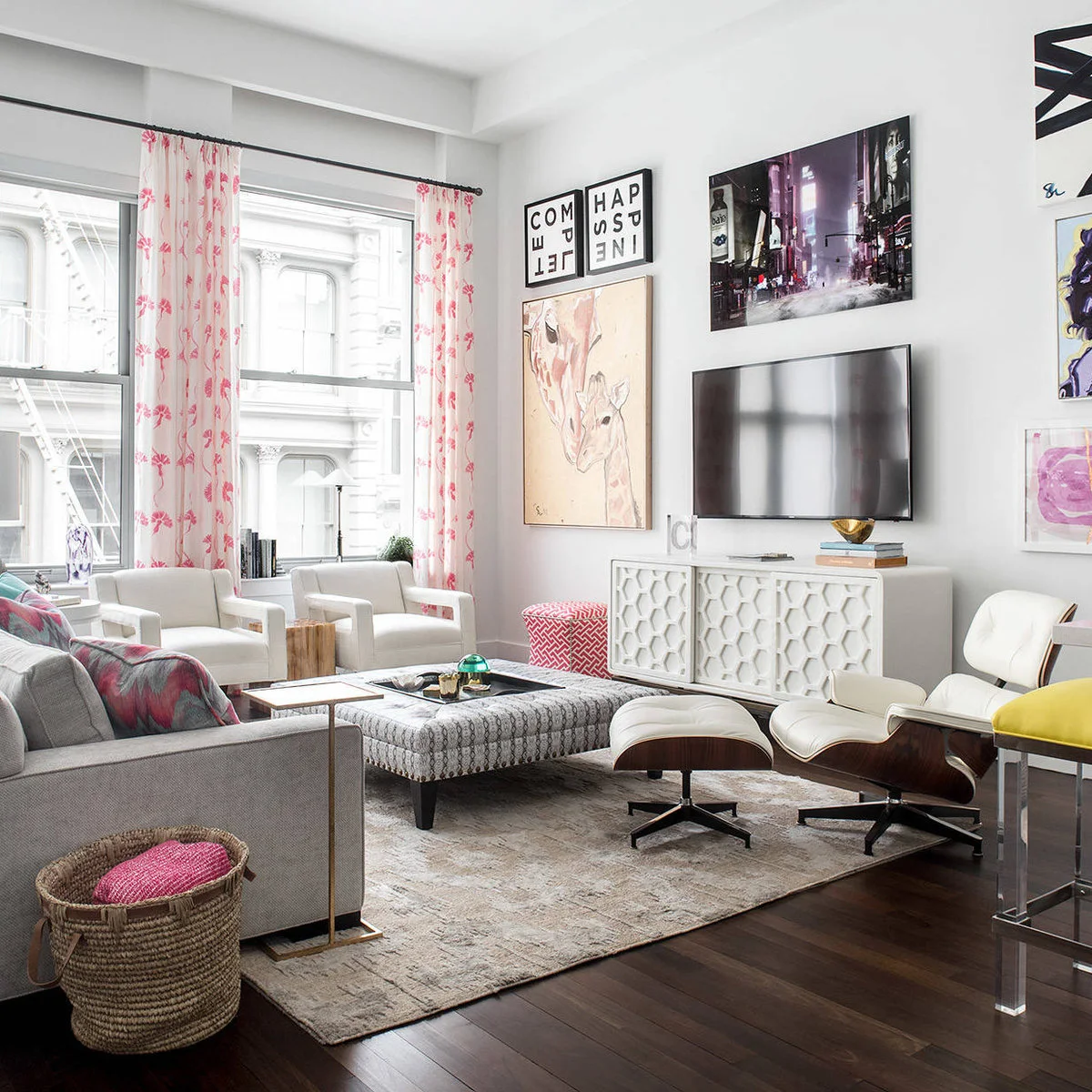
A large city photograph sits directly above the television, with smaller pictures spreading onto the surrounding wall. Pink curtains and upholstery repeat some of the art’s color. The white cabinet stays relatively quiet, helping the many frames feel like a single display above it.
Pick the largest picture first, then build the smaller pieces around the television’s actual position. Keep enough breathing room around the screen to distinguish it from the frames. For a compact seating arrangement, these small living room decor ideas can help keep the rest of the room from becoming crowded.
IDEA 07 / 20
Mix Older Frames Around a Modern Screen
 SaveSupport Non AI Creator
Image credit: Project: Jennifer Ribek Inc. (via Houzz)
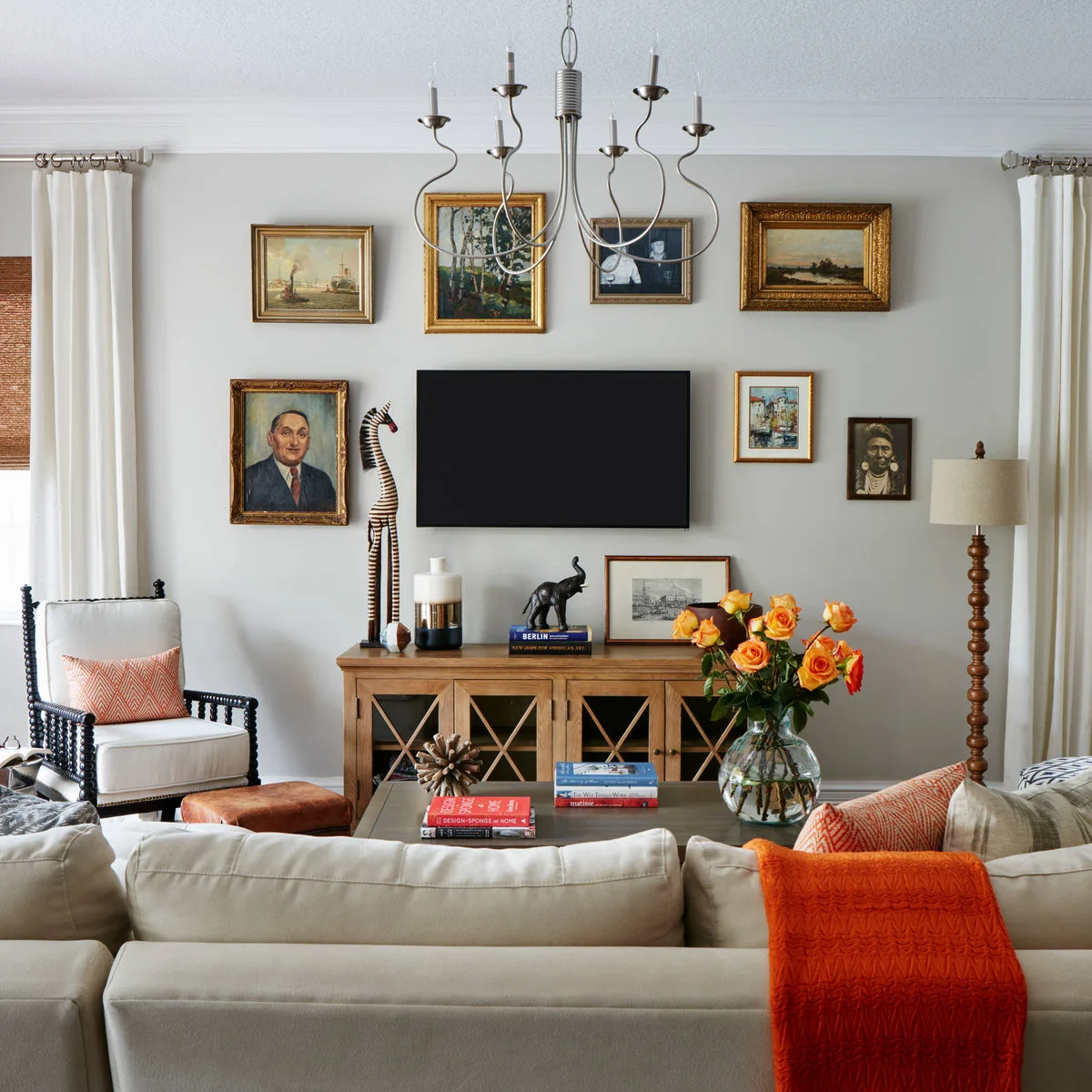
Portraits and landscapes in varied frames surround the television, with several pieces forming a loose row above it. The wood cabinet and warm frame finishes make the screen feel less isolated. A tall striped animal sculpture adds height at the left without requiring another picture.
Lay out the full group on the floor before hanging it, treating the television as an existing rectangle within the arrangement. Repeat a finish or color in several frames to connect mismatched pieces. Keep tabletop objects low enough that they do not obscure subtitles or the lower edge of the picture.
IDEA 08 / 20
Keep a Small Gallery Inside a Compact Wall
 SaveSupport Non AI Creator
Image credit: Project: Noble Abode (via Houzz)
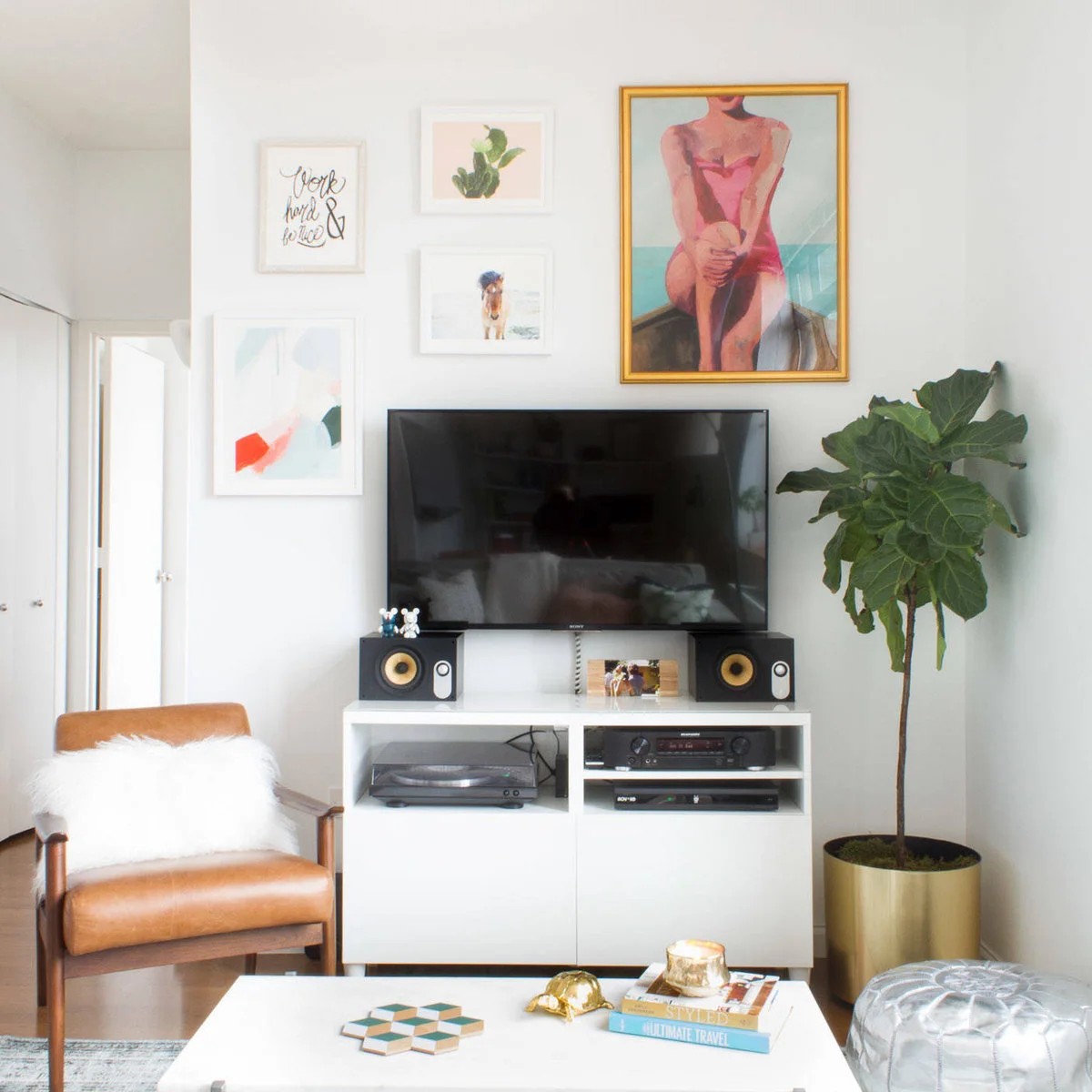
A large pink figure painting anchors the group above the screen, while smaller pale frames fill the narrower spaces to its left. The white cabinet and walls reduce visual weight around the dark television. A tall leafy plant balances the pictures from the opposite side.
Use the width between the doorway and the plant as the boundary for the group. Paper templates help prevent small frames from drifting too far apart. Keep watering away from electrical equipment, and position the plant so leaves cannot trail over the screen or block its ventilation.
IDEA 09 / 20
Let One Bold Abstract Lead a Dense Gallery
 SaveSupport Non AI Creator
Image credit: Project: Interior Design Alchemy (via Houzz)
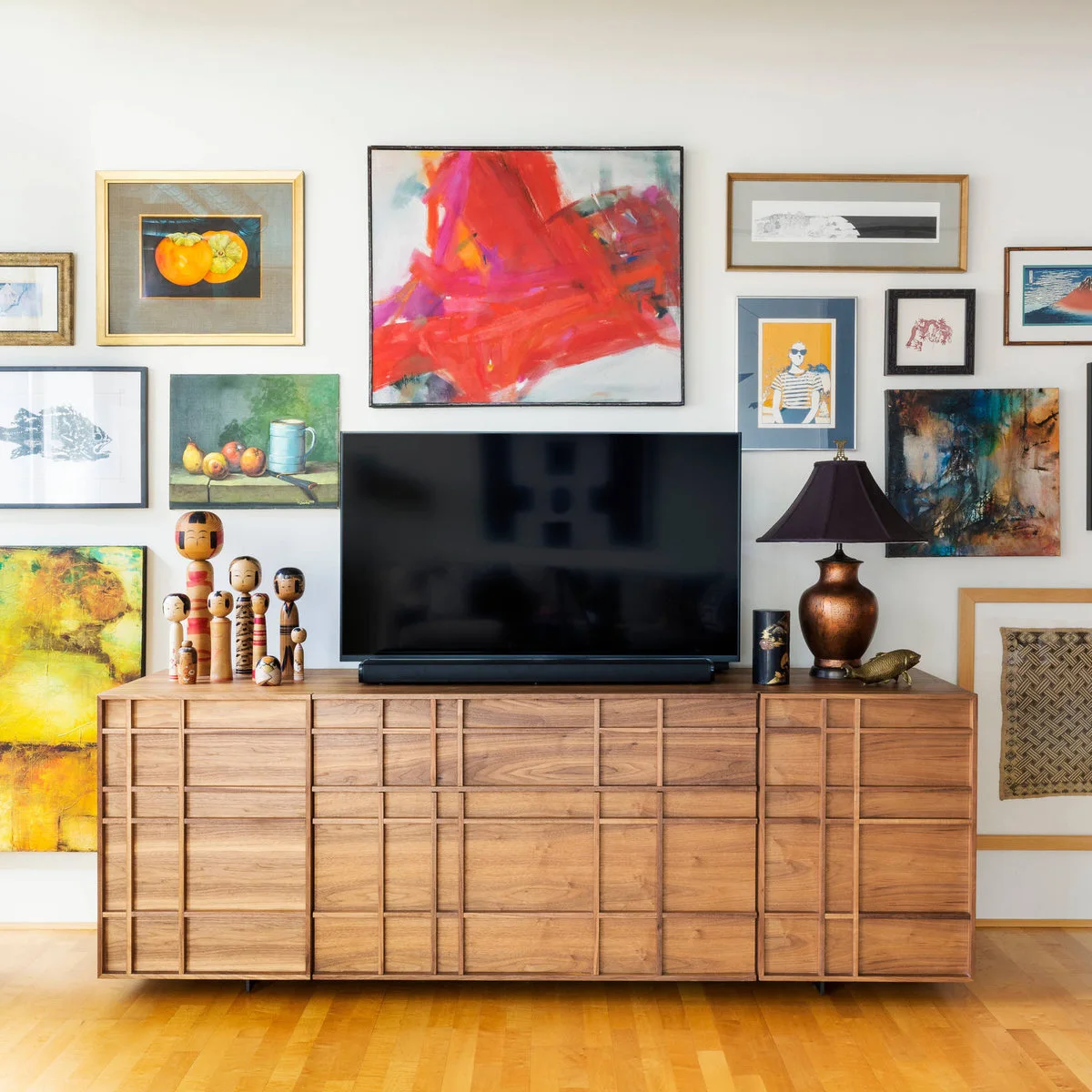
The red abstract painting gives this busy wall a clear center above the television. Smaller still lifes, portraits and landscapes fill the surrounding space, while the broad wood cabinet grounds the collection. The screen becomes one dark rectangle among several substantial framed pieces.
Begin with one picture that has enough presence to organize the rest. Keep the edges and gaps deliberate even when the arrangement is informal. A dense gallery benefits from a quiet seating area, so repeat only a few of its colors in cushions and throws rather than competing with every artwork.
IDEA 10 / 20
Build a Nature-Themed Wall Around the Screen
 SaveSupport Non AI Creator
Image credit: Project: Lark Interiors (via Houzz)
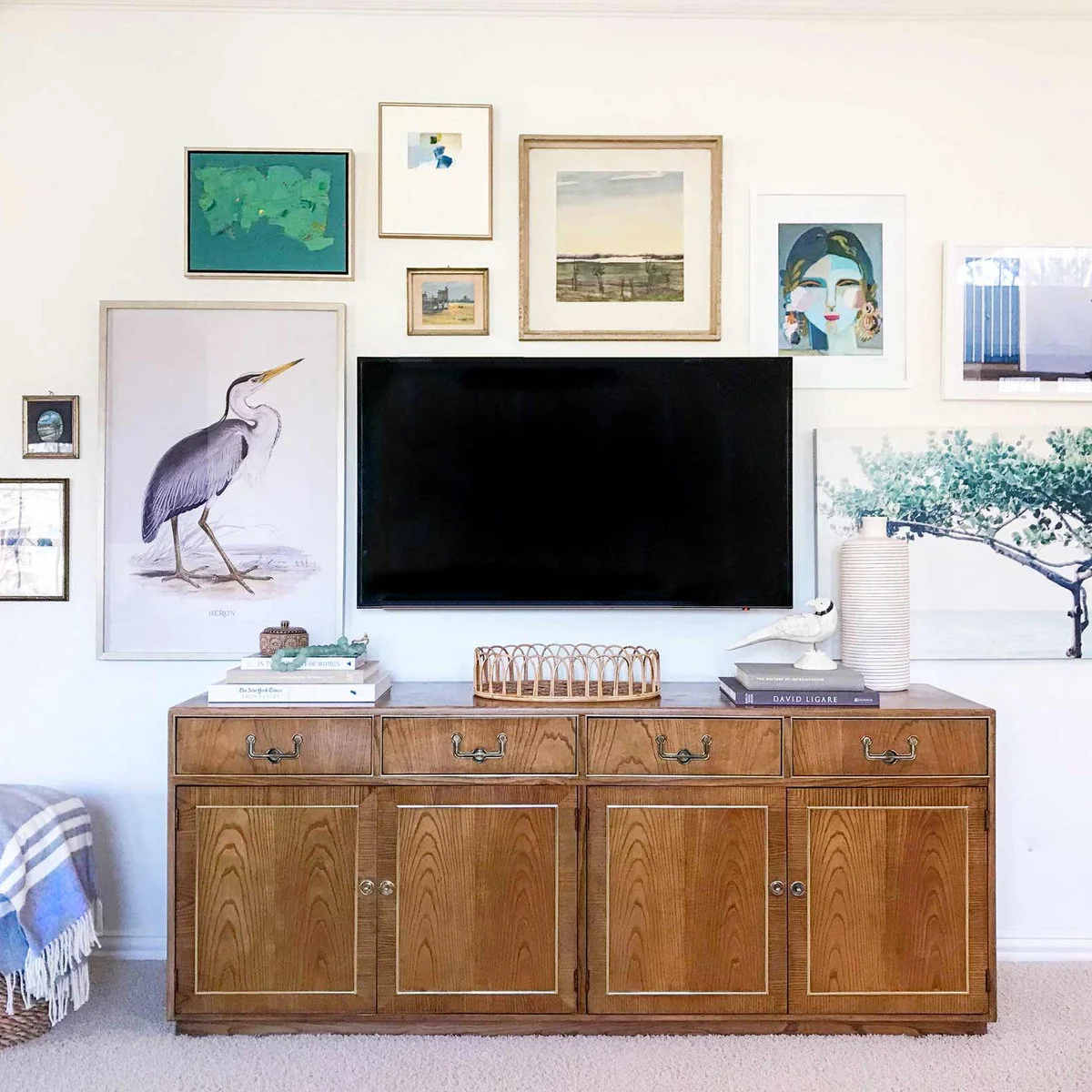
A large bird print and a broad tree picture flank the television, with smaller landscapes and a portrait above it. Pale backgrounds connect the varied subjects. The cabinet’s wood grain and the woven tray below the screen continue the warm tones without adding more wall frames.
Choose pictures for a shared mood or palette rather than matching every frame exactly. Arrange the largest pieces first, then fill genuine gaps with smaller works. Keep the lower edges clear of the screen and leave space to reach connections without having to remove half the gallery.
PART 03
Use the space within built-ins
IDEA 11 / 20
Divide a Wide Upper Recess into Small Displays
 SaveSupport Non AI Creator
Image credit: Project: John Johnstone (via Houzz)
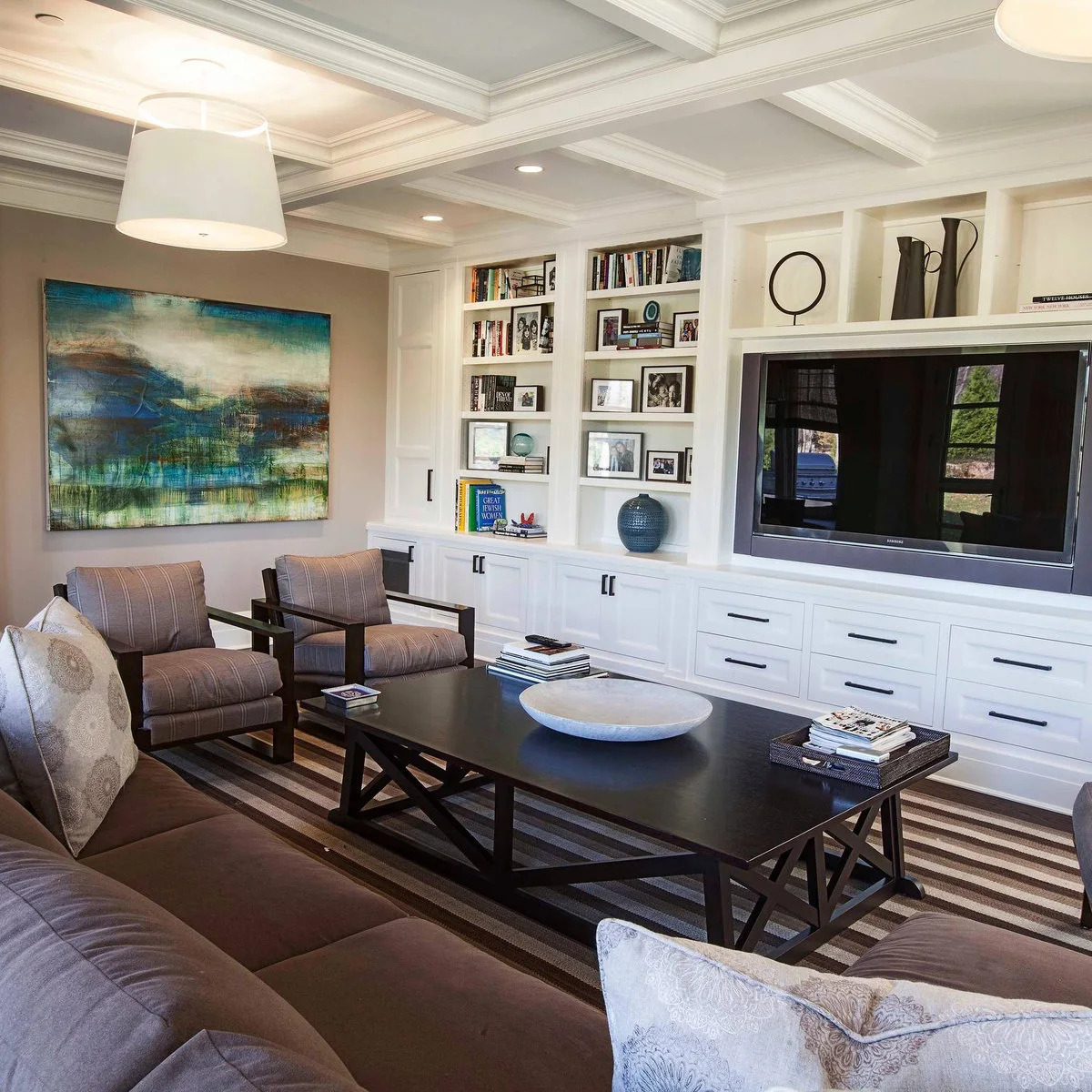
Three shallow niches divide the space above the television, giving each small collection its own boundary. Dark vessels and a ring-shaped sculpture read clearly against the white backing. The nearby shelves contain books and family pictures, but the upper row stays more restrained.
Use fewer objects in high niches because they are harder to dust and rearrange. Check the view from the sofa before choosing small pieces that may disappear at that distance. If planning new cabinetry, allow for a future television size and access to wiring before fixing the niche proportions.
IDEA 12 / 20
Overlap Family Pictures on a Wide Shelf
 SaveSupport Non AI Creator
Image credit: Project: KBG Design (via Houzz)
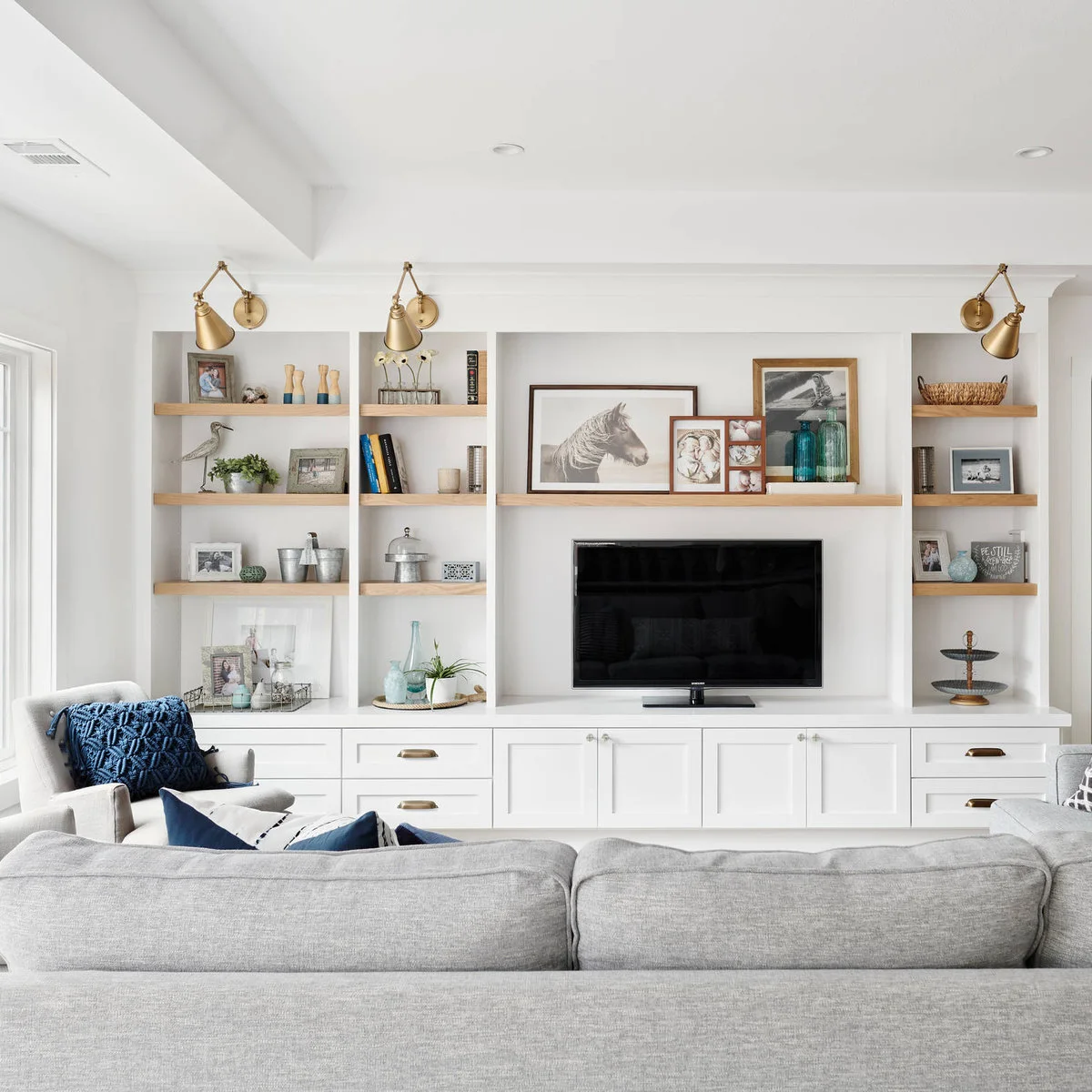
Layered family pictures occupy the broad shelf above the television, with blue glass bottles adding height on the right. Smaller displays sit in the side niches. Wood shelves repeat across the wall, giving the photographs a consistent base without requiring identical frame sizes.
Arrange the frames so the important faces and images remain visible from the seating area. Secure leaning pieces rather than relying on their weight alone. Keep the upper display lighter than the lower shelves, and leave enough room to dust around the television without disturbing the whole arrangement.
IDEA 13 / 20
Keep a Side Alcove Separate from the Fireplace
 SaveSupport Non AI Creator
Image credit: Project: Everything Home (via Houzz)
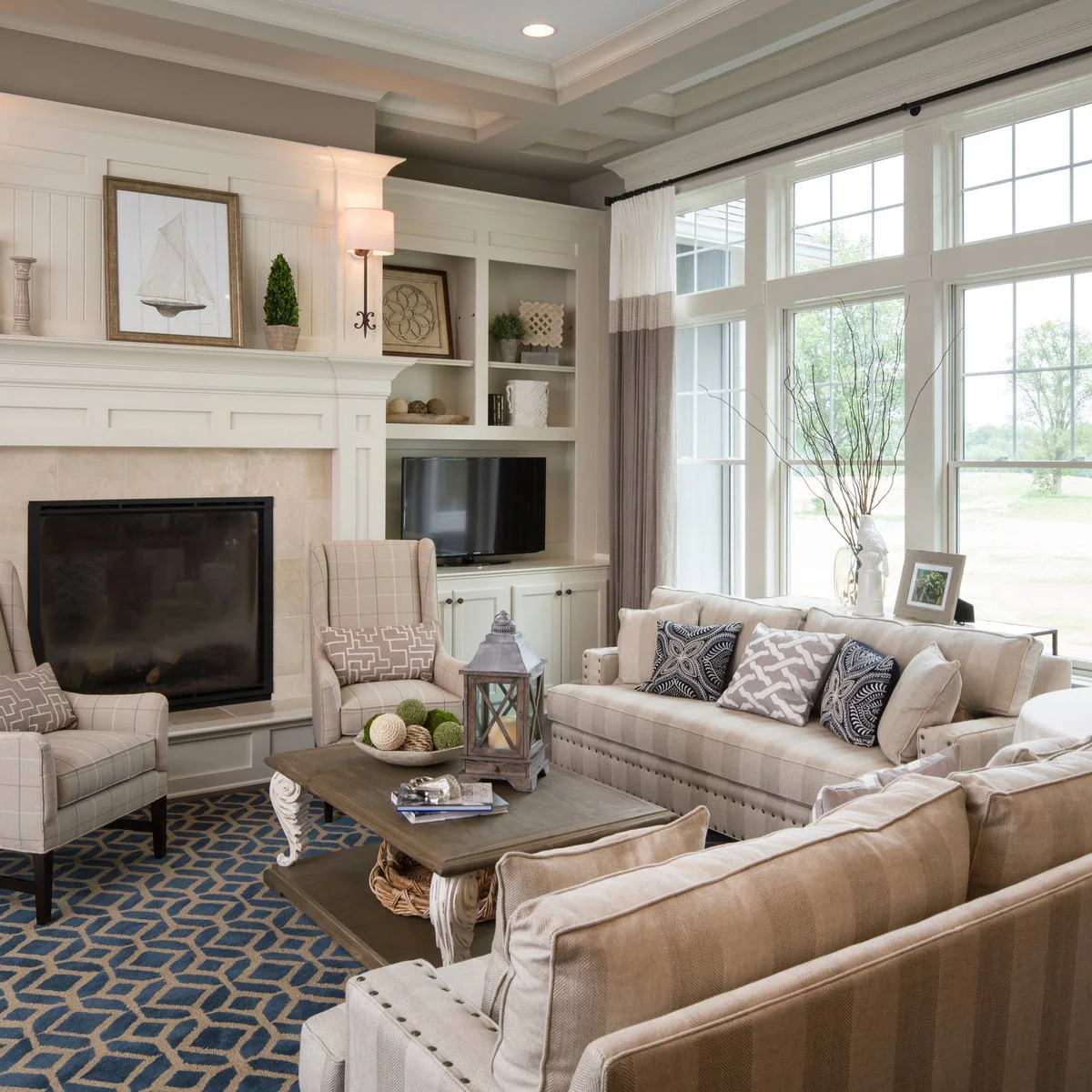
The television occupies a side alcove, with two shelves immediately above it carrying art, books and pale objects. The larger painting belongs to the neighboring fireplace wall. Keeping those two compositions distinct prevents the smaller television area from having to compete with the entire room.
Measure the alcove itself when planning the display, including any trim at its edges. Use modest objects that suit that width instead of copying the size of the fireplace artwork. Keep the television comfortable to watch from the actual seats, even if that means the shelves are not perfectly symmetrical with the neighboring wall.
IDEA 14 / 20
Repeat a Small Accent Color Above the Screen
 SaveSupport Non AI Creator
Image credit: Project: Elms Interior Design (via Houzz)
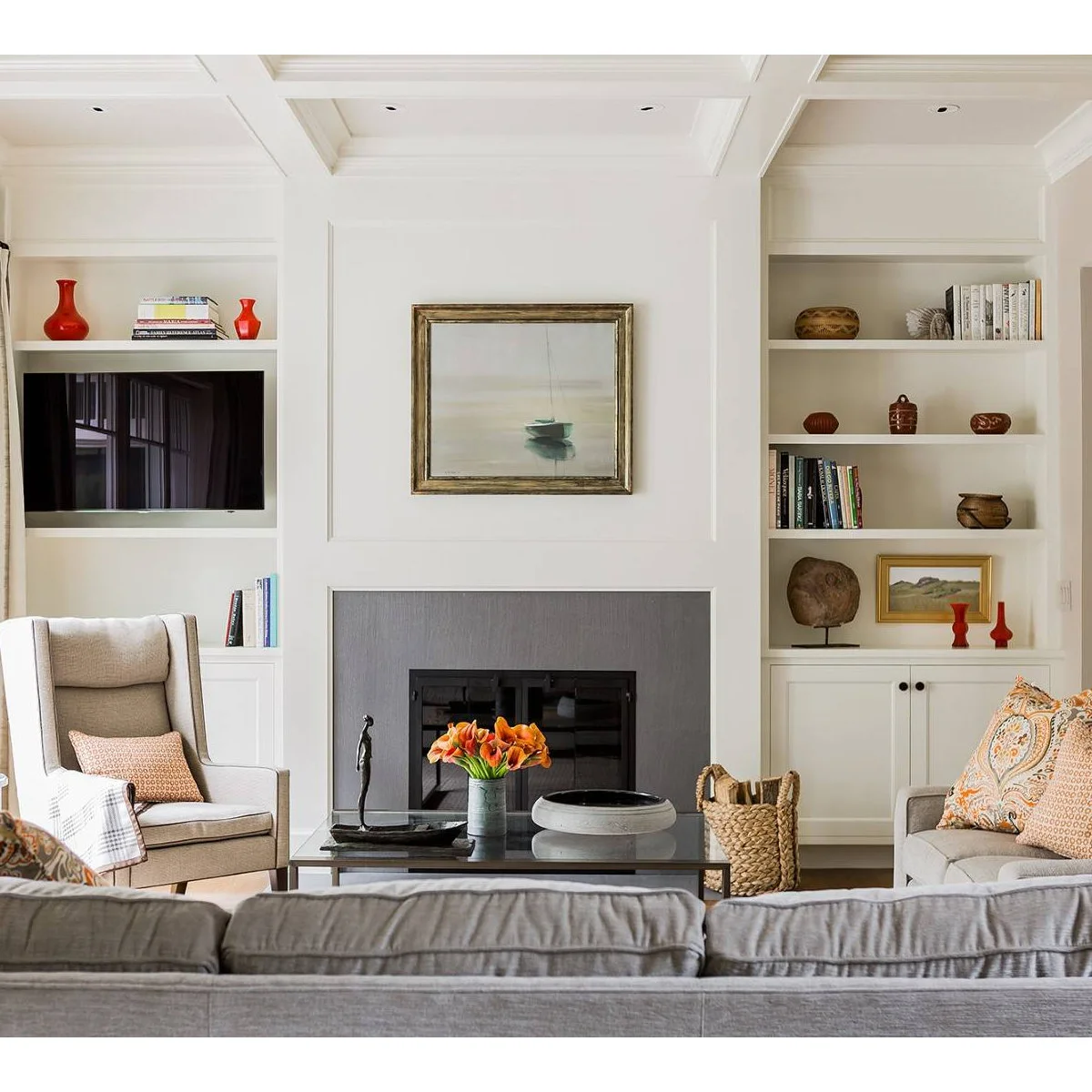
A few red vessels and books brighten the shelf above the television, while the surrounding cabinetry stays white. The neighboring fireplace has its own larger artwork. This small repeated color gives the television alcove a visible identity without needing another oversized picture.
Choose one accent that already appears elsewhere in the seating area, then stop before the shelf becomes a row of unrelated ornaments. Leave space around every object for cleaning. These dark brown couch living room ideas offer ways to connect warm furniture with smaller, brighter details on a nearby display wall.
IDEA 15 / 20
Put a Short Book Row in an Upper Compartment
 SaveSupport Non AI Creator
Image credit: Project: Greenleaf Lighting Ltd (via Houzz)
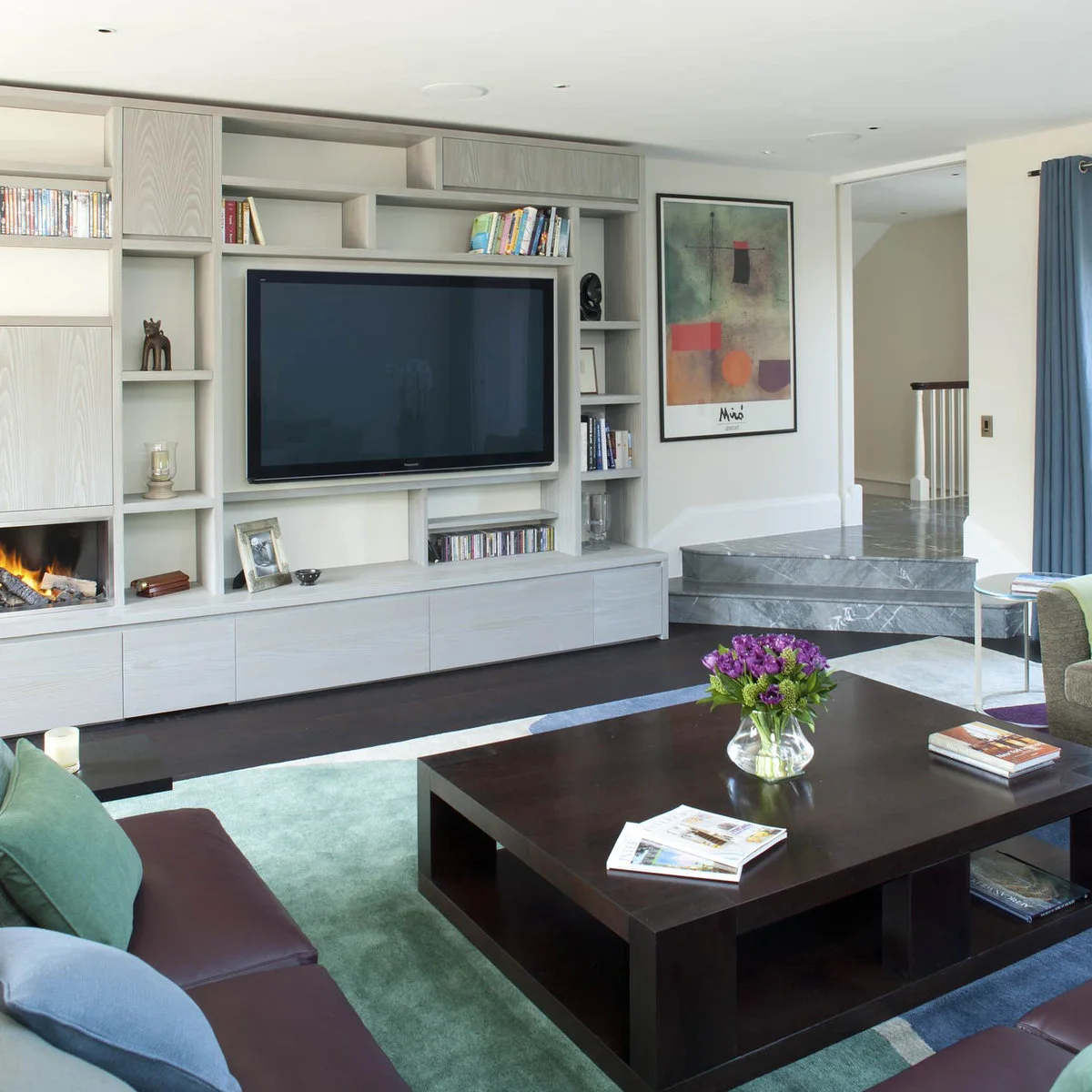
A short row of books fills an open compartment above the television, while closed doors occupy much of the surrounding unit. The uneven arrangement feels intentional because the compartments share the same finish. A nearby framed picture supplies a separate focal point at the side.
Store only books you can lift down comfortably, and check the shelf rating before stacking heavy volumes overhead. Preserve the television’s required airflow inside the unit. Closed compartments can take everyday equipment, leaving the open book row decorative and preventing cables from becoming part of the display.
PART 04
Give collections a clear shape
IDEA 16 / 20
Use Two Small Shelves in a Narrow TV Niche
 SaveSupport Non AI Creator
Image credit: Project: Cathy Emmins Interiors (via Houzz)
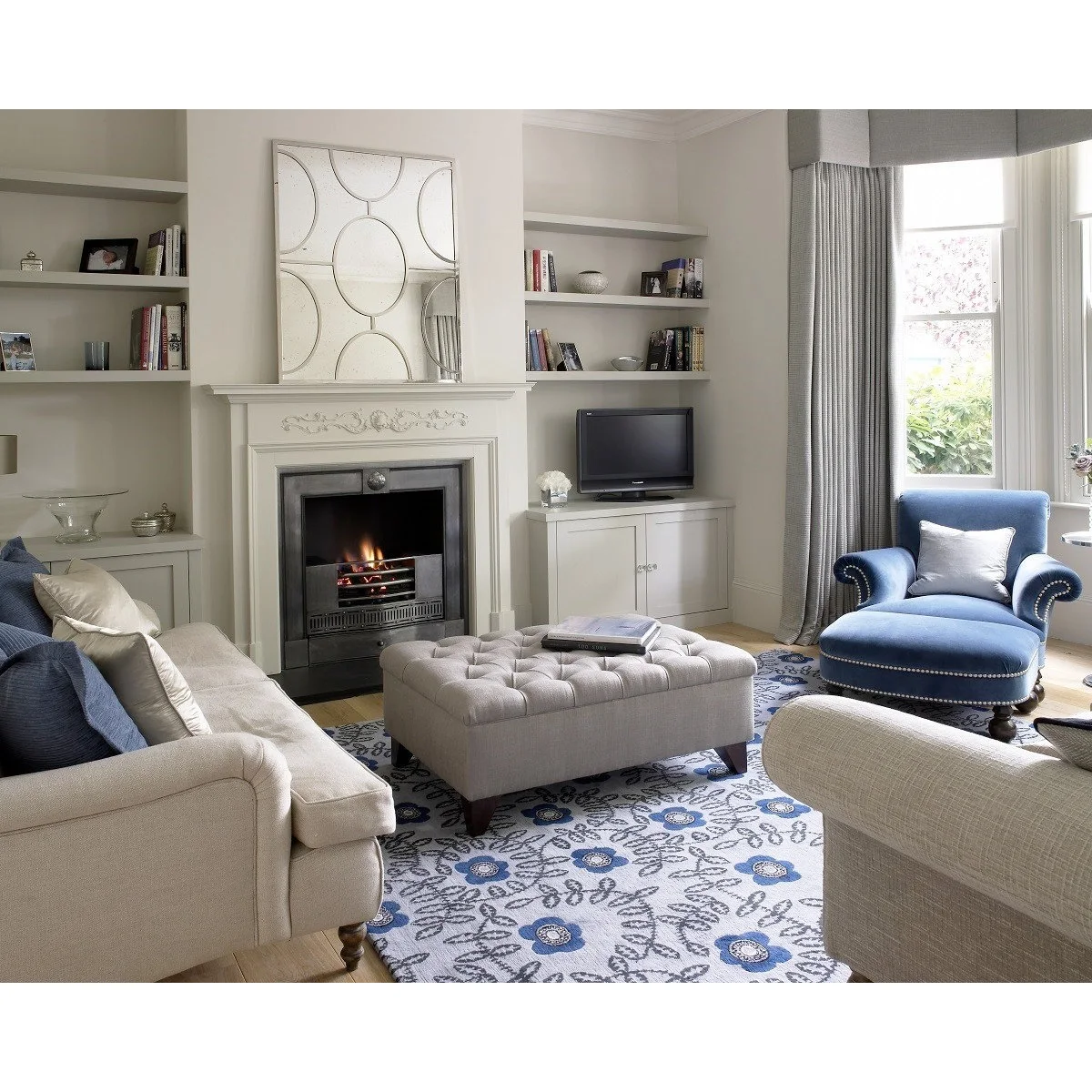
Two shelves make use of the narrow niche above the television, with framed pictures, bowls and books arranged in small groups. The white cupboard below hides storage. A larger mirror over the neighboring fireplace remains separate, so the television display does not need to carry the whole wall.
Keep the objects proportional to the niche and leave some backing visible between them. Check that books and frames cannot slide forward during cleaning. A small television makes shelf clearance especially important if you expect to replace it with a larger model later.
IDEA 17 / 20
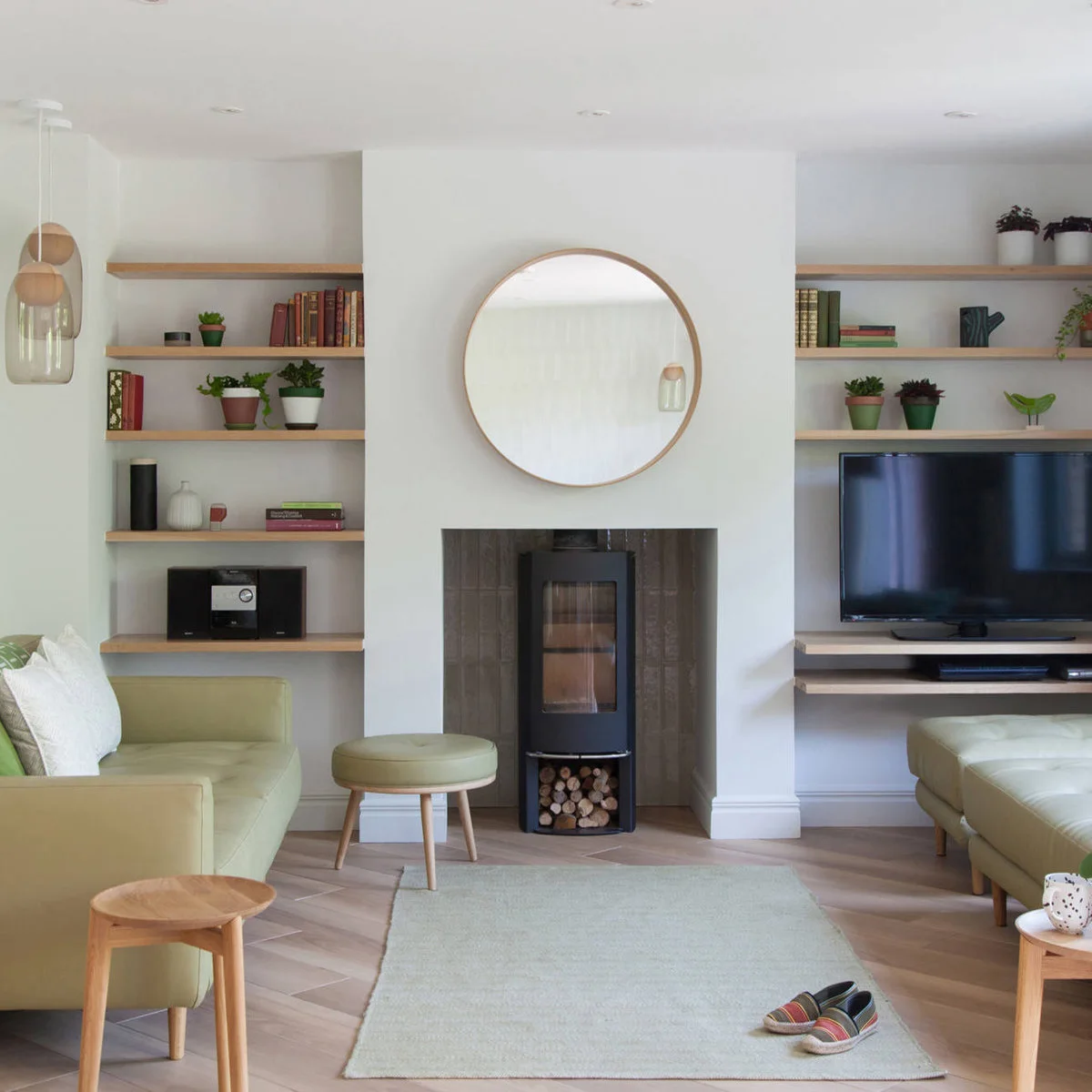
Mix a Few Plants with Books Above a Side TV
 SaveSupport Non AI Creator
Image credit: Project: colour + shape (via Houzz)
Wood shelves fill the alcove above the television, combining small plants, books and a teal jug. Green seating repeats the foliage color lower in the room. The round mirror belongs to the neighboring fireplace wall, giving that central area a different shape from the shelf display.
Choose containers that do not leak and water plants away from the electronics. Leave room for growth without letting foliage cover the screen or ventilation openings. If the alcove receives little daylight, choose suitable plants for those actual conditions rather than placing greenery there solely to match a photograph.
IDEA 18 / 20
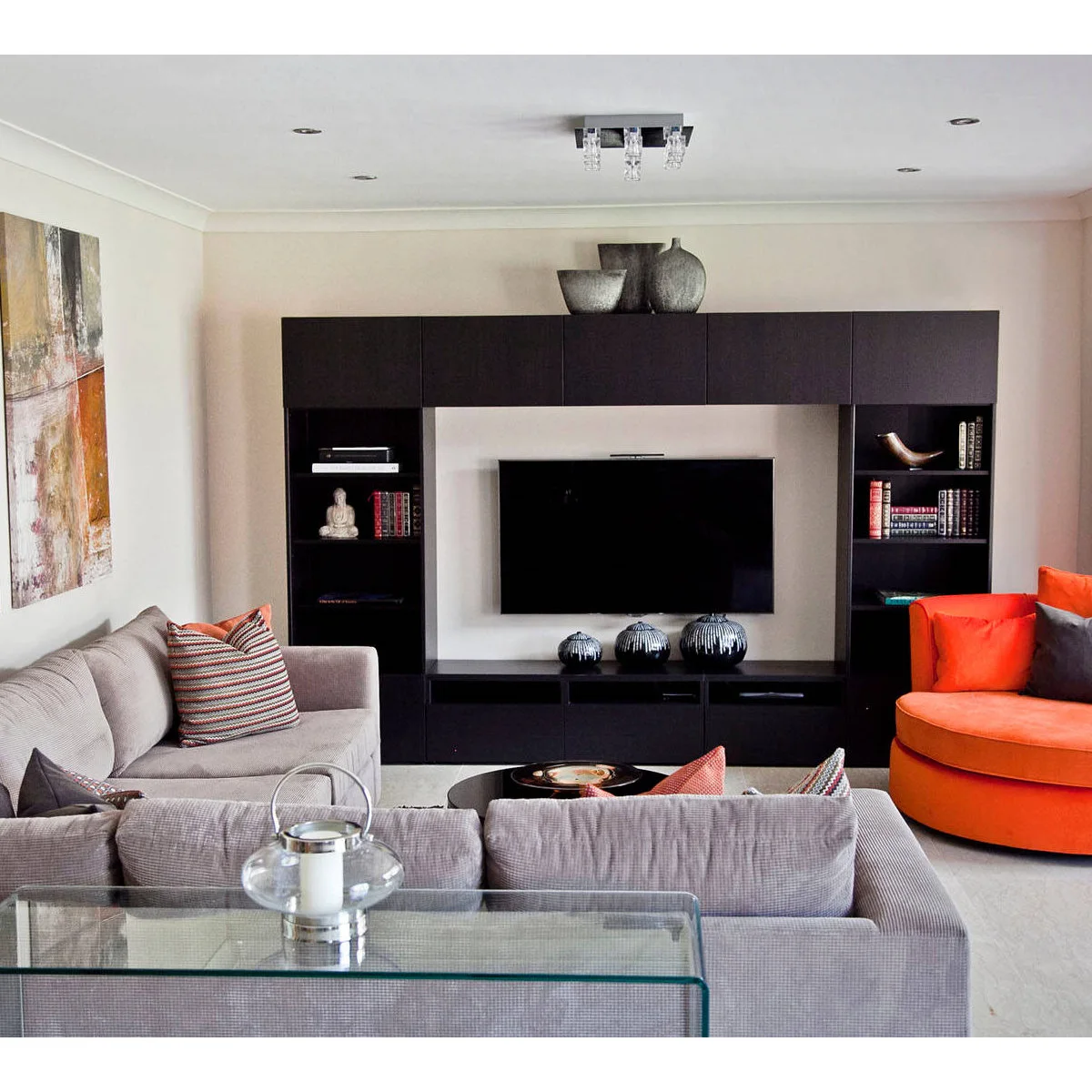
Group Large Vessels Above a Dark Cabinet Frame
 SaveSupport Non AI Creator
Image credit: Project: Falchi Interiors (via Houzz)
Three gray vessels sit above the television on the cabinet’s upper frame, adding rounded forms to a strongly rectangular unit. The dark finish connects the screen with the surrounding storage. Books occupy the side compartments, while the top remains a simple group rather than a crowded shelf.
Check the cabinet’s installation and top-surface weight limits before placing anything high on it. Large vessels can be heavy even when empty, so use secure positioning and avoid unstable narrow bases. Leave enough clearance below the ceiling to clean the pieces without scraping the wall.
IDEA 19 / 20
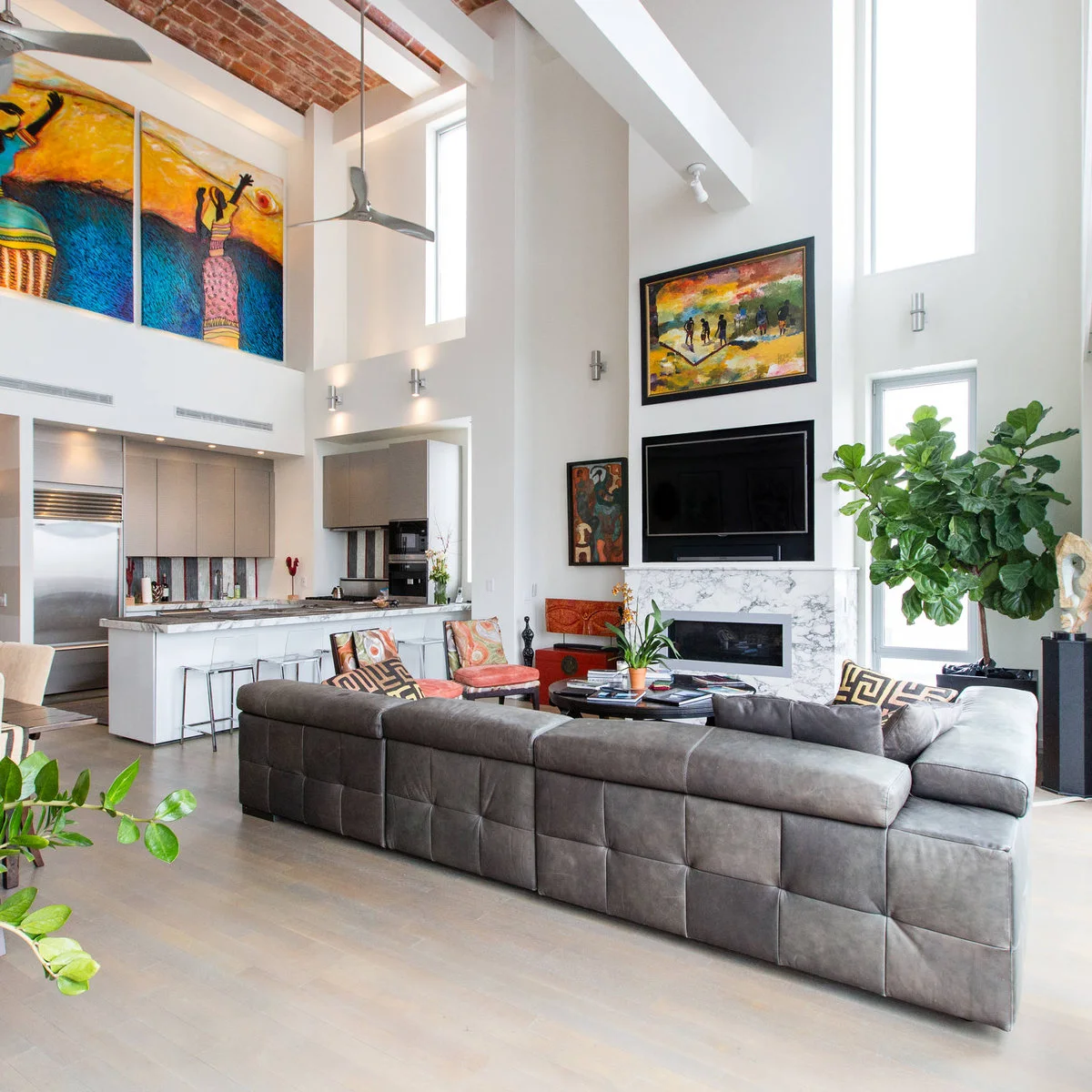
Hang One Colorful Picture Over a Small TV
 SaveSupport Non AI Creator
Image credit: Project: DTV INSTALLATIONS LLC (via Houzz)
One colorful painting gives the wall above the television a clear focal point, with tall windows supplying a separate vertical rhythm beside it. The screen remains a smaller dark shape below. Pale walls and seating leave the picture’s bright marks easy to notice.
Try the painting at several heights using a paper outline, checking the view while seated rather than only standing beside the wall. A single substantial picture can be enough when the room already has strong architecture. Keep its fixings independent of the television mount and confirm clearance before drilling nearby.
IDEA 20 / 20
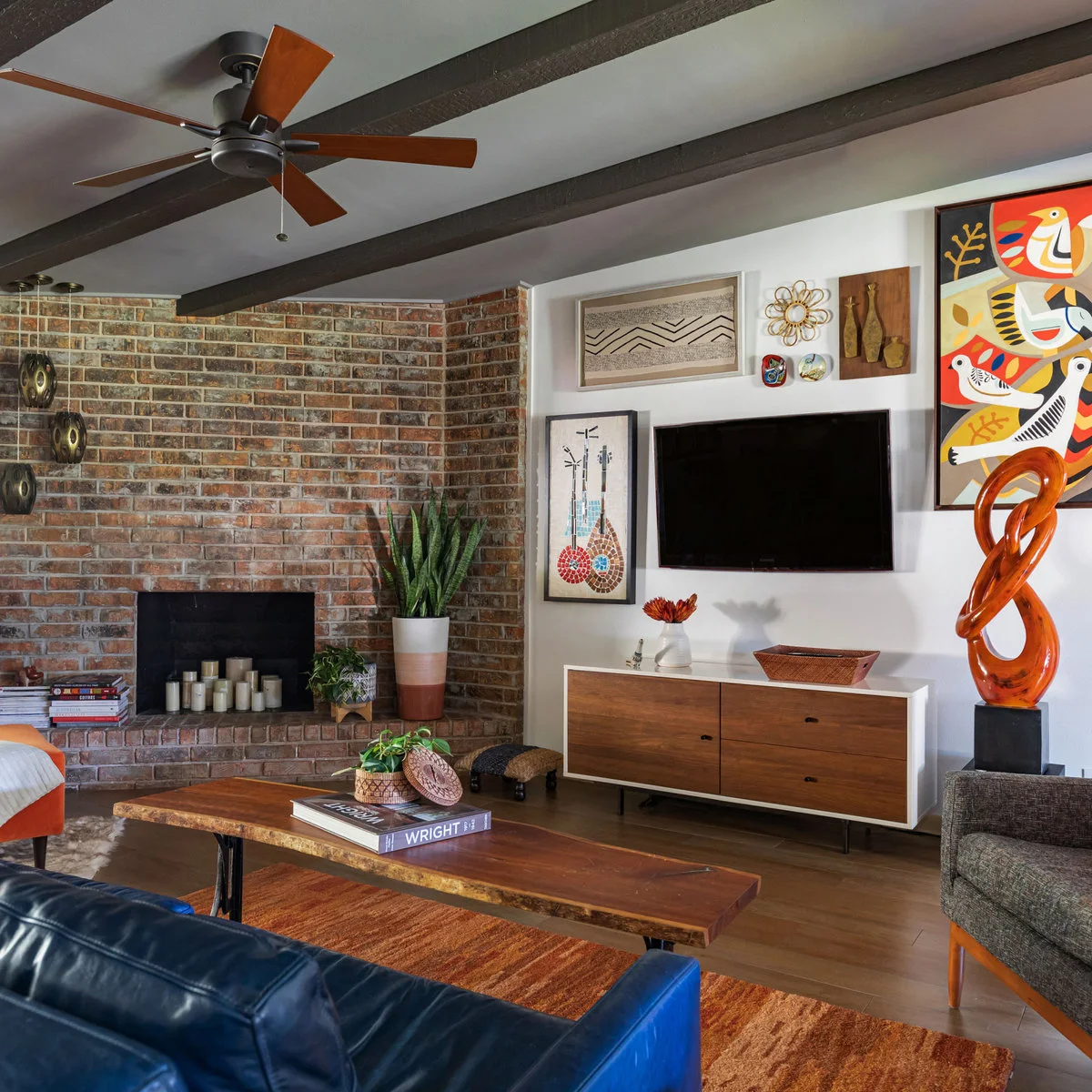
Combine Framed Art with Small Sculptural Pieces
 SaveSupport Non AI Creator
Image credit: Project: Chairma Design Group (via Houzz)
A long horizontal print and small sculptural pieces fill the strip above the television, while larger colorful art occupies the side. The mixed shapes make the display feel collected rather than uniform. Wood furniture and the brick fireplace give the lively wall a more grounded setting.
Select a few small pieces with clear outlines so they remain recognizable from across the room. Use suitable fixings for each object rather than treating sculpture like a lightweight print. For another way to organize a feature wall, compare these living room accent wall ideas before adding more color or texture.
BRING IT ALL TOGETHER
Check the view with the screen switched off
A dark television is the most demanding version of the composition. Check that the art, shelf or collection still feels balanced when no moving picture is distracting you. Keep the comfortable viewing position as the starting point for every decorative choice.
Edit high displays more firmly than low shelves. Secure objects, preserve ventilation and leave room to clean. The best arrangement belongs to the wall while letting the television do its everyday job.