The cupboard above a refrigerator can be useful storage or the place where things disappear for years. Its success depends on what you keep there, how far the doors sit behind the front of the fridge and whether you can reach the contents comfortably.
These above-fridge cabinet ideas show interior organizers and different ways to fit upper doors into a kitchen. Before copying a cabinet surround, check the installation instructions for your exact appliance. Keep required ventilation and service access clear; a finished photograph cannot establish the right clearances for another model.
PART 01
Organize the Interior
IDEA 01 / 15
Split Trays From Taller Serving Pieces
 SaveSupport Non AI Creator
Image credit: Project: Bay Area Kitchens (via Houzz)
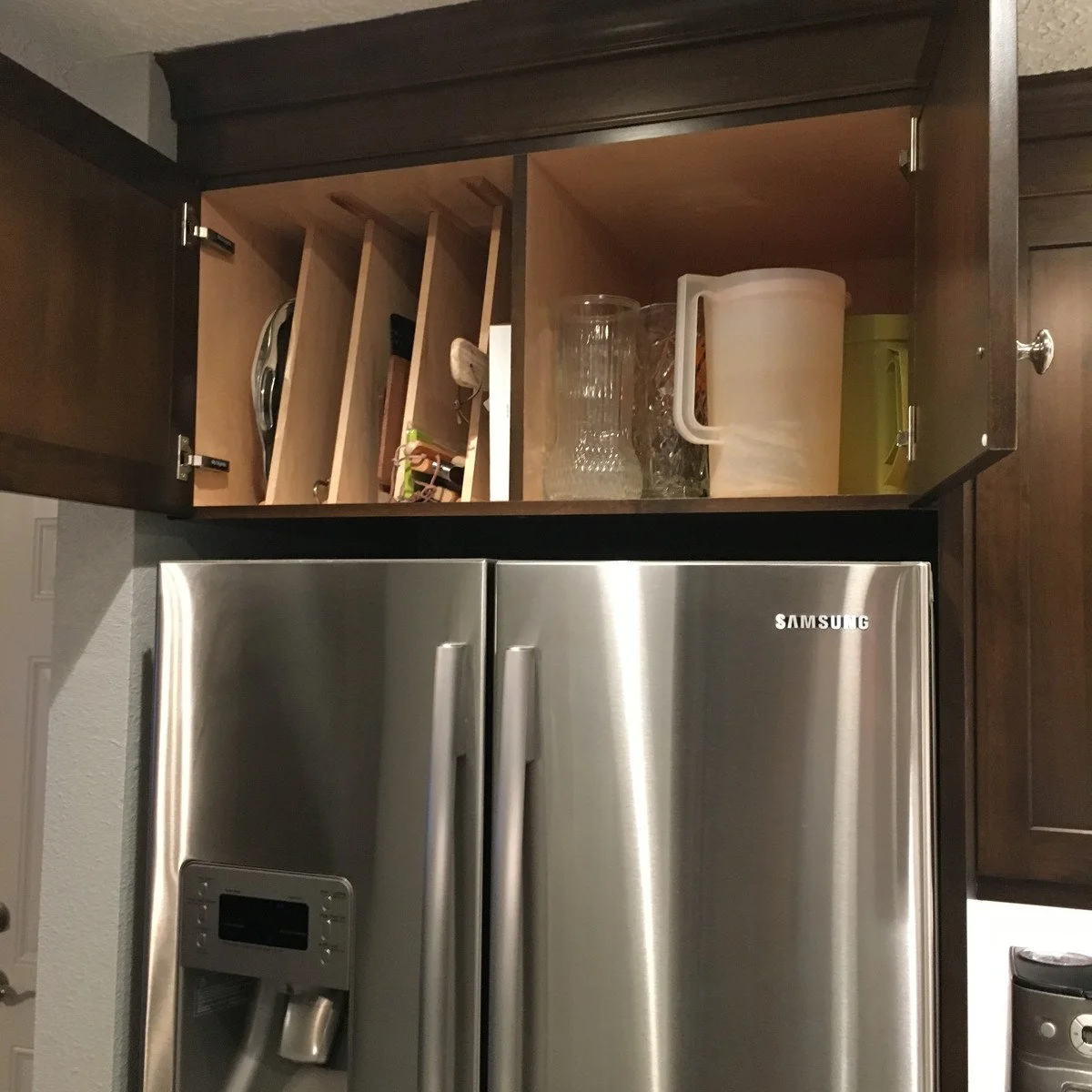
This open cupboard divides the space above the refrigerator into two different storage zones. Vertical slots separate flat pieces on the left, while a wider section on the right accommodates taller pitchers and glasses without forcing them into narrow compartments.
Sort your own collection before specifying partitions rather than dividing the cupboard into identical spaces by default. Keep heavy or frequently used pieces lower down if overhead lifting is awkward. Apply the same sorting approach to kitchen pantry ideas so overflow does not simply move to another hard-to-reach shelf.
IDEA 02 / 15
Use Removable Dividers Across the Width
 SaveSupport Non AI Creator
Image credit: Project: Denise Quade Design (via Houzz)
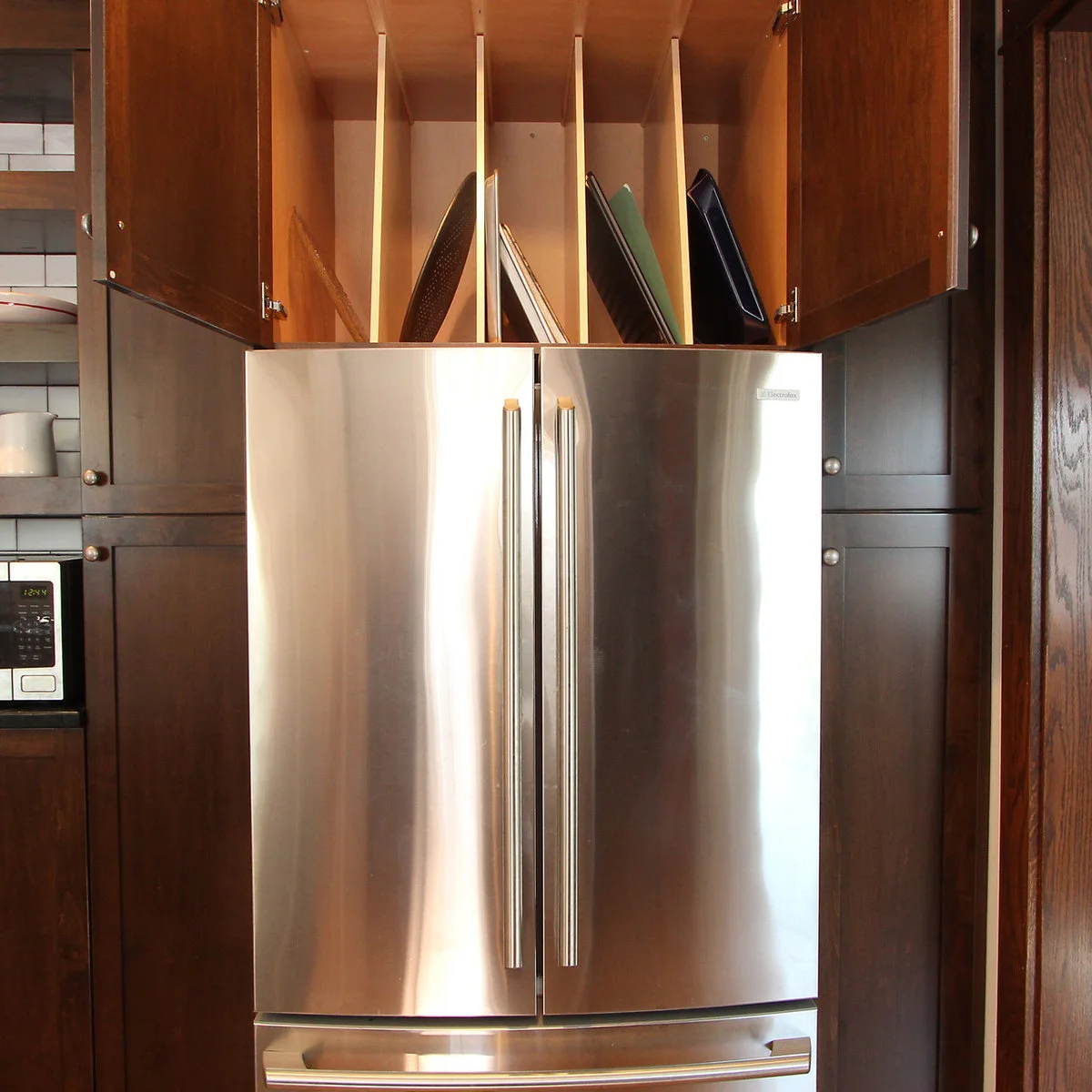
Vertical dividers use the width of this cupboard to separate baking trays and boards above the French-door refrigerator. The open doors reveal how individual pieces can stand apart instead of forming a horizontal stack that must be lifted to reach the bottom.
The project description identifies the partitions as removable, which makes the arrangement more flexible as your cookware changes. Check slot sizes against your actual trays before copying it. Keep their upper edges reachable and avoid placing heavy pieces where you would need to stretch over the appliance.
IDEA 03 / 15
Combine Shelves With Two Rows of Slots
 SaveSupport Non AI Creator
Image credit: Sophie Piesse Architect
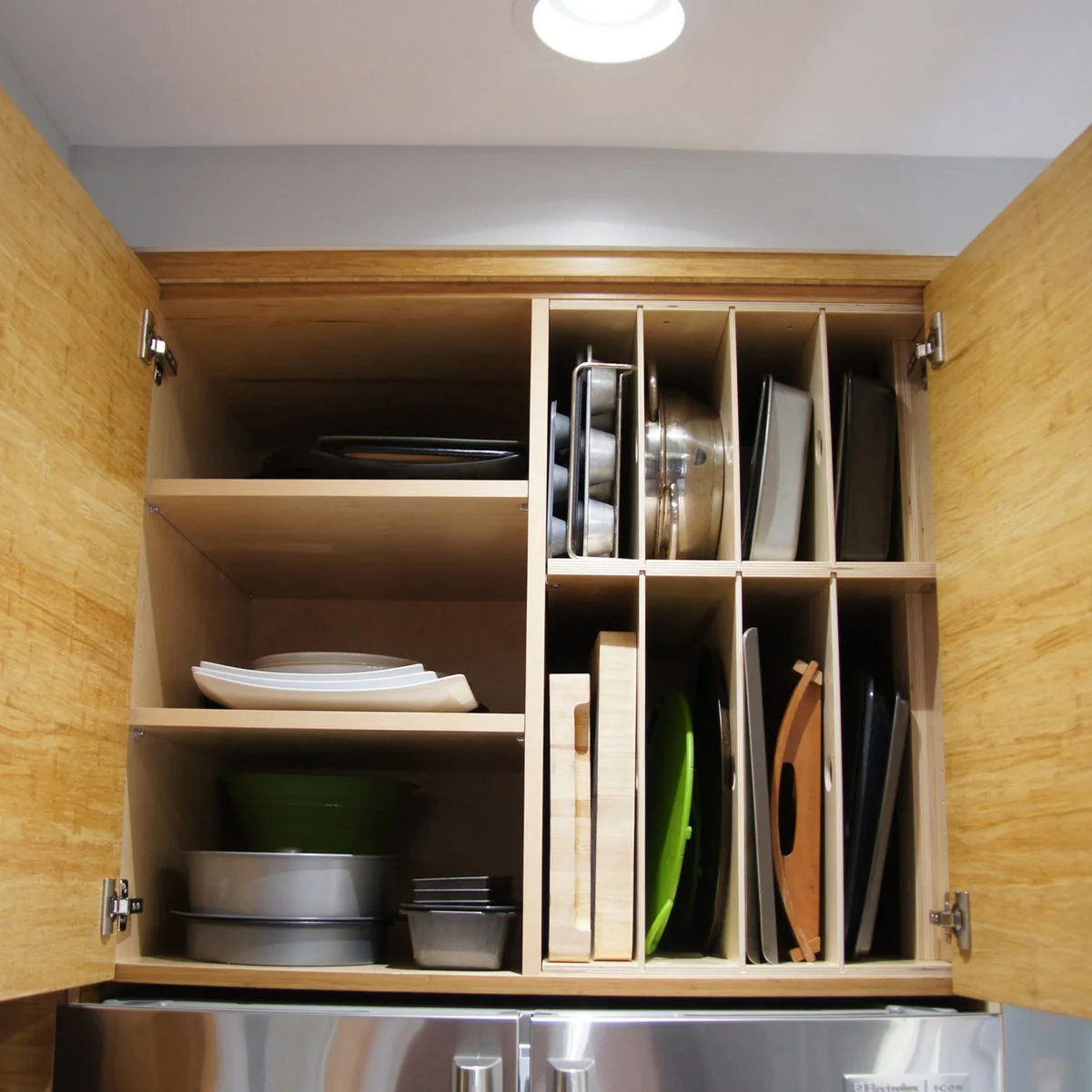
Adjustable shelves occupy one side of this above-fridge cupboard, while two rows of vertical compartments organize smaller flat items on the other. The mix makes better use of different object shapes than treating the entire interior as one large shelf.
Measure both the height and depth of the pieces you want to store before deciding where the divider row should split. Leave enough room to grasp each item. A compartment that fits an object tightly on paper may still be frustrating when you need to slide it out overhead.
PART 02
Coordinate the Upper Doors
IDEA 04 / 15
Keep a Small Upper Cupboard Visually Quiet
 SaveSupport Non AI Creator
Image credit: Project: Dibico Construction (via Houzz)
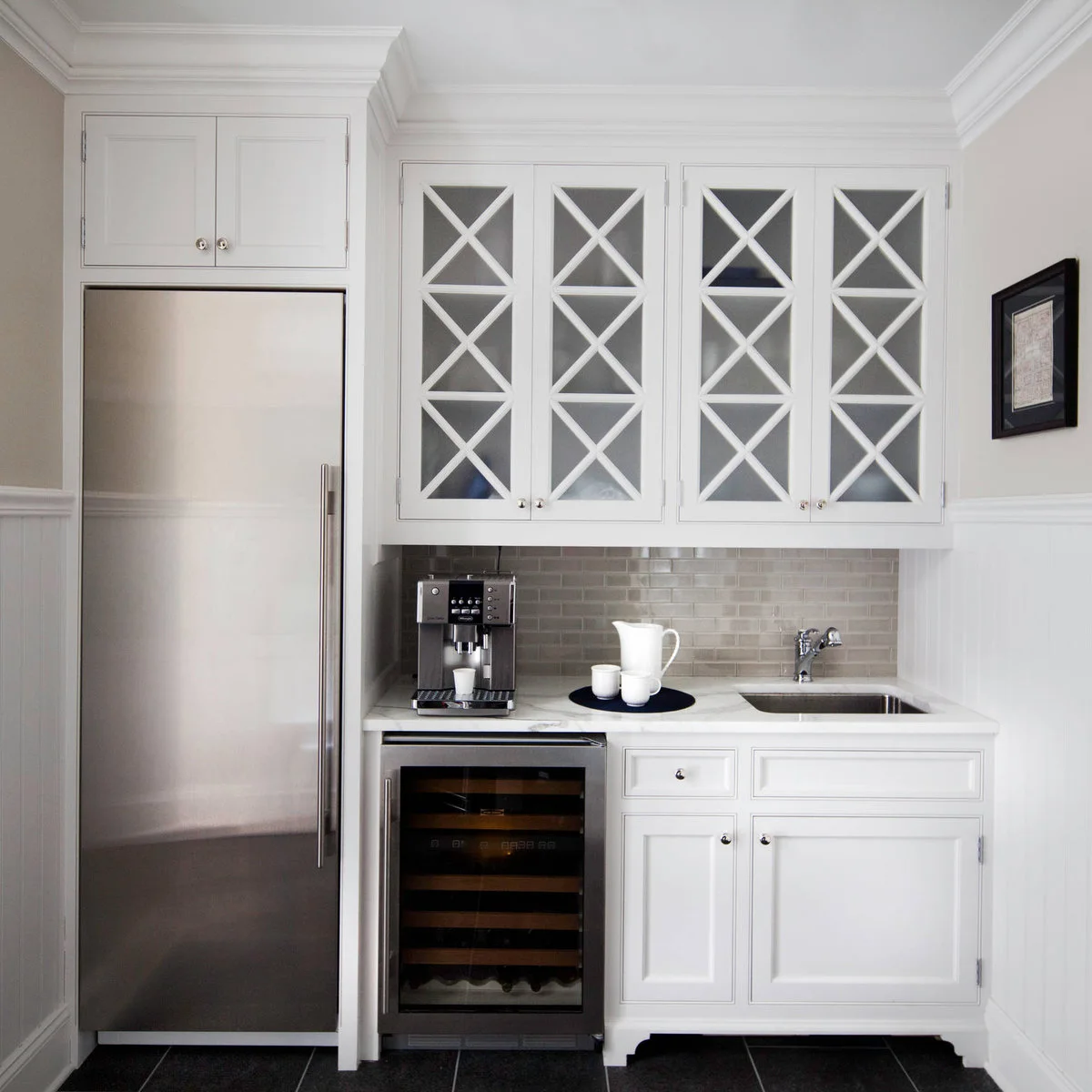
A simple white two-door cupboard sits directly above the stainless refrigerator, beside much more decorative glass-front cabinets. Its plain inset fronts keep the narrow appliance section quiet, while the matching white frame and crown connect it to the surrounding cabinetry.
Use simpler upper doors when neighboring cupboards already have a strong glass pattern. Check knob placement from your normal standing position before choosing hardware. The appearance can stay consistent across the wall even when the interiors serve different purposes and the refrigerator needs its own installation opening.
IDEA 05 / 15
Line Up the Upper Tier With Nearby Cabinets
 SaveSupport Non AI Creator
Image credit: Project: McCallum Cabinets Inc (via Houzz)
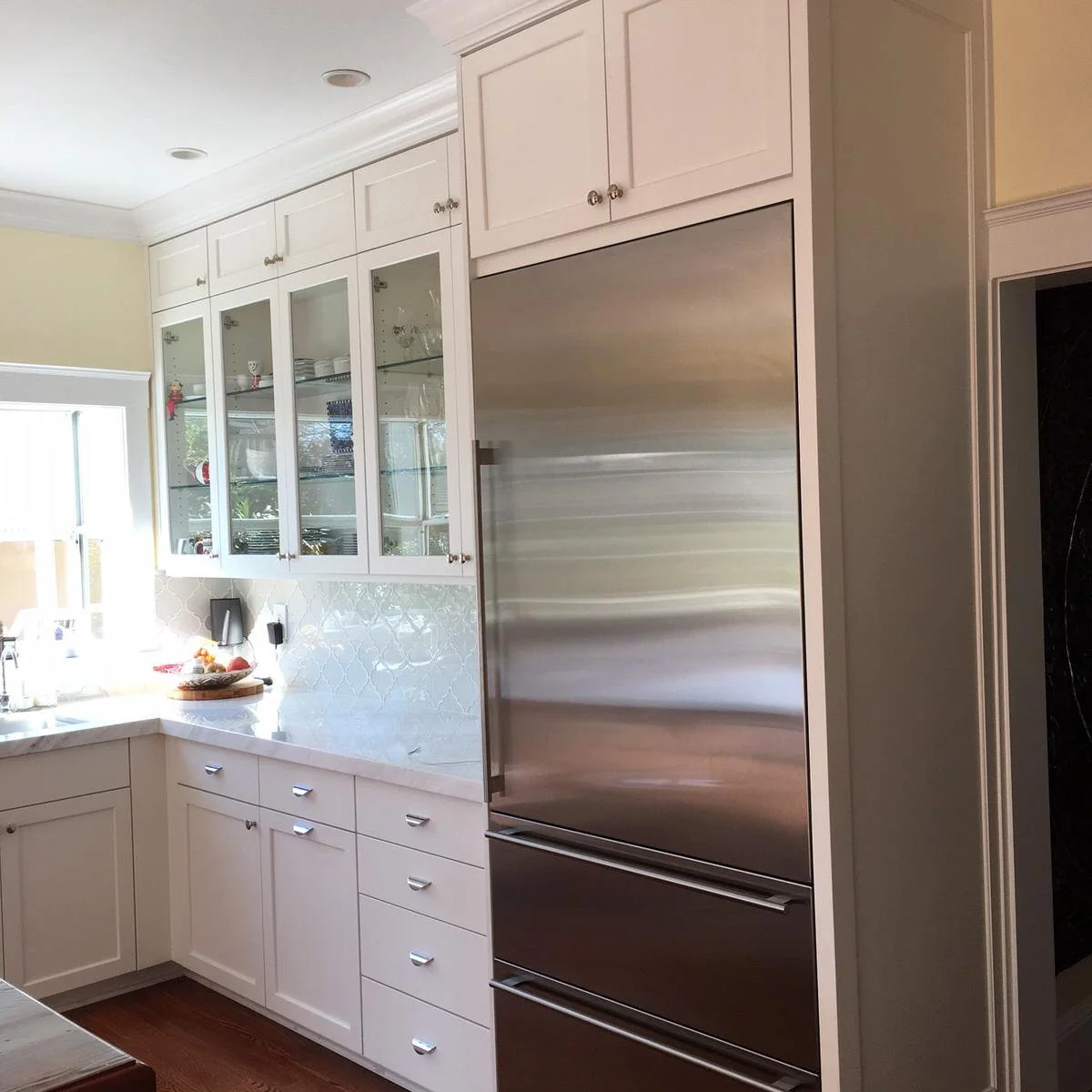
The white cupboard above this refrigerator aligns with the small upper tier over the glass-front cabinets nearby. That shared horizontal line connects a tall appliance opening with a more detailed display area, avoiding a completely separate-looking box above the fridge.
Plan the full cabinet elevation before ordering just the refrigerator unit. Door proportions, crown and adjacent upper tiers all affect how the section fits. Confirm the appliance opening independently of those decorative alignments so a tidy line does not come at the expense of required clearance.
IDEA 06 / 15
Divide a Tall Upper Area Into Two Tiers
 SaveSupport Non AI Creator
Image credit: Project: Saussy Burbank (via Houzz)
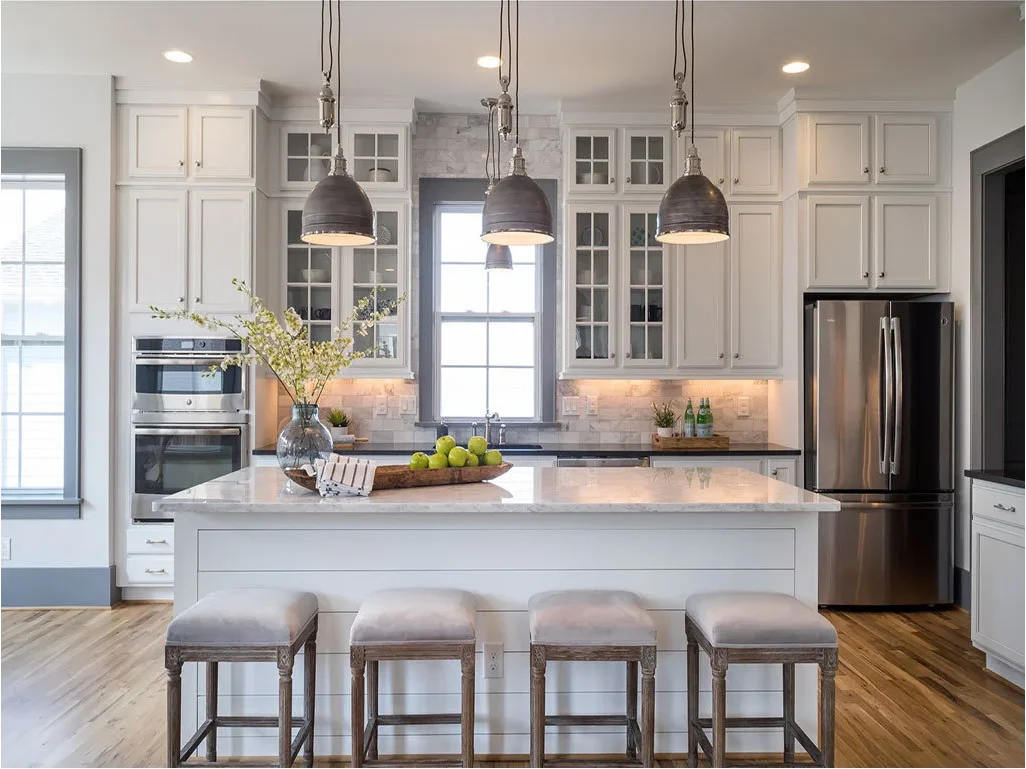
Two tiers of cupboard doors fill the tall area above this refrigerator, matching the height of the neighboring display cabinetry. The division breaks a large vertical space into smaller door fronts and carries the cabinet arrangement toward the ceiling.
Separate the storage by how often you use it, keeping the least-needed light items in the highest tier. Consider whether both rows are practical to access before copying the height. A tall, orderly facade does not automatically make every shelf convenient for everyday use.
IDEA 07 / 15
Use Taller Doors Where the Room Allows
 SaveSupport Non AI Creator
Image credit: Maletz Design
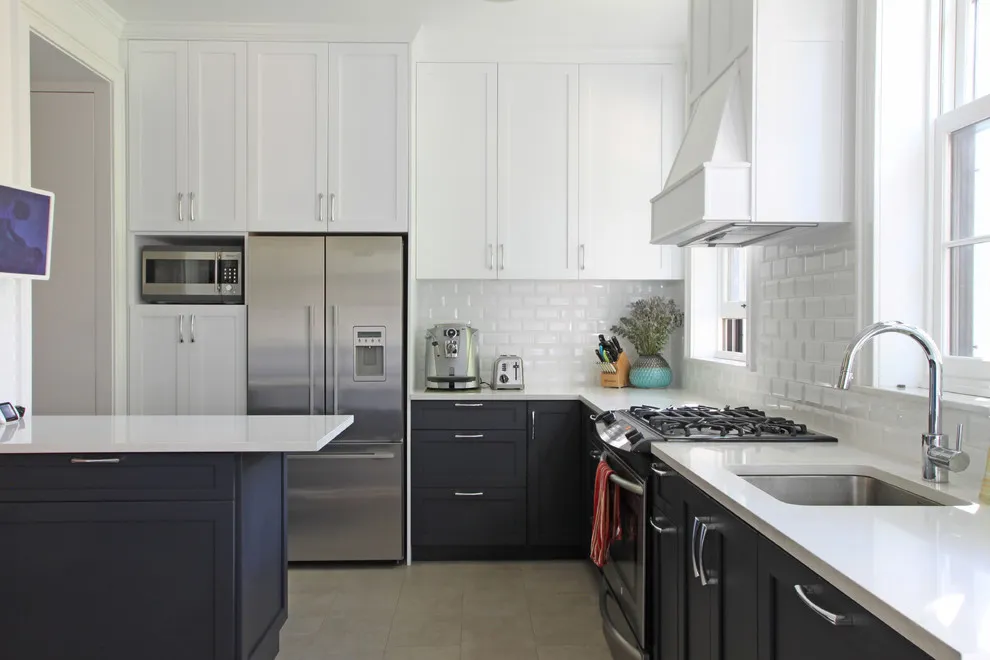
Tall white doors use the space above the stainless refrigerator, with a smaller microwave opening alongside. The pale upper cabinetry keeps that end of the compact kitchen visually connected, while dark lower cupboards give the room a clearer base.
Check how much of the cupboard interior you can actually reach over the refrigerator before choosing tall doors. An adjustable shelf can help divide the volume, but it still needs a sensible use. Keep the most frequently used kitchen items closer to counter height.
PART 03
Work With the Appliance Layout
IDEA 08 / 15
Repeat the Cupboards Over Two Appliances
 SaveSupport Non AI Creator
Image credit: Troy Thies / John Kraemer & Sons / Sharratt Design Company
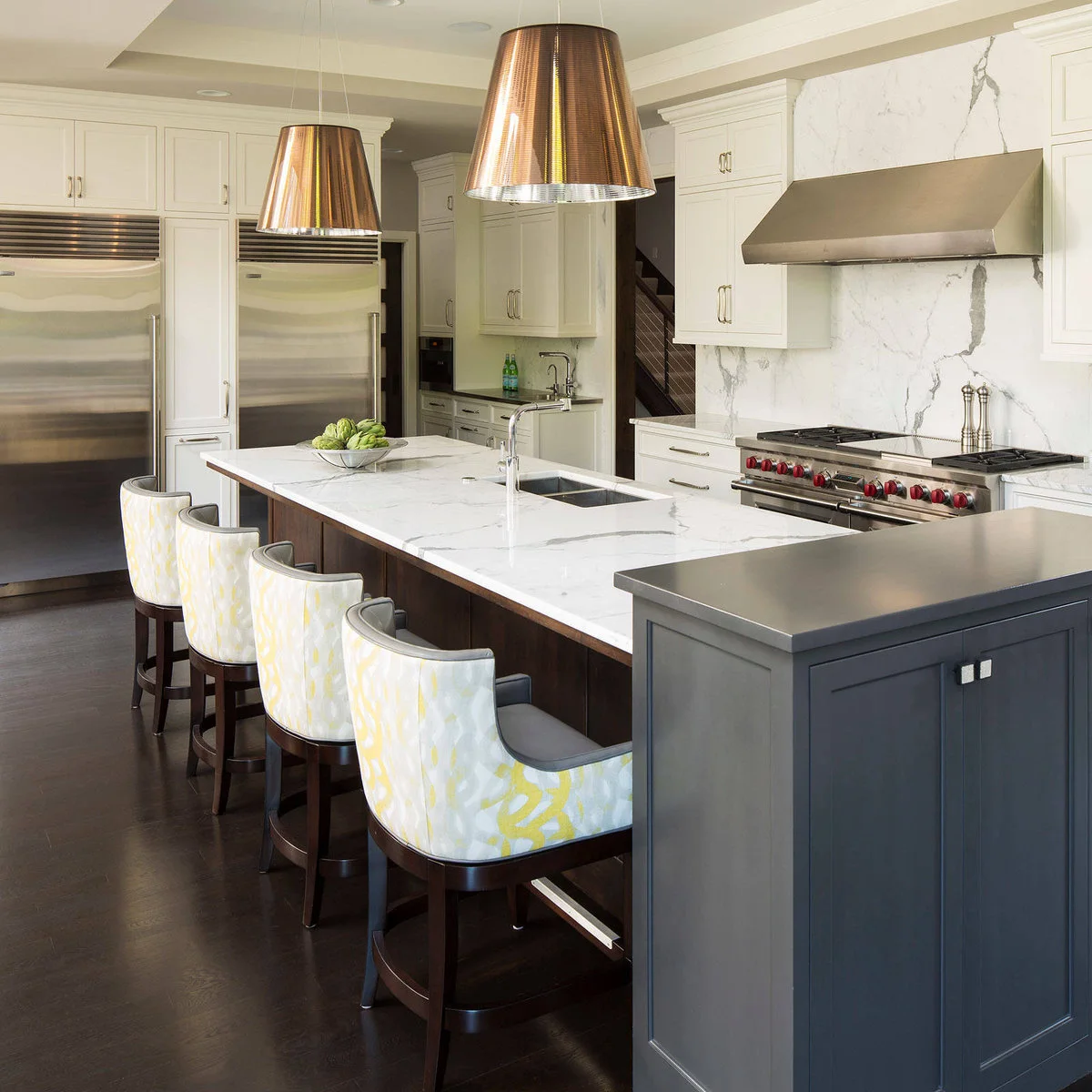
Matching white cupboards sit above two tall stainless appliances, separated by a narrow cabinet section. Repeating the door style gives this broad appliance wall a consistent rhythm, while the smaller center section stops the two metal fronts from becoming one uninterrupted surface.
If your layout includes separate refrigerator and freezer units, plan each opening from its own installation guide. Do not assume their requirements match because the fronts look similar. Check how cabinet doors and appliance doors move together, especially near a central divider or adjoining wall.
IDEA 09 / 15
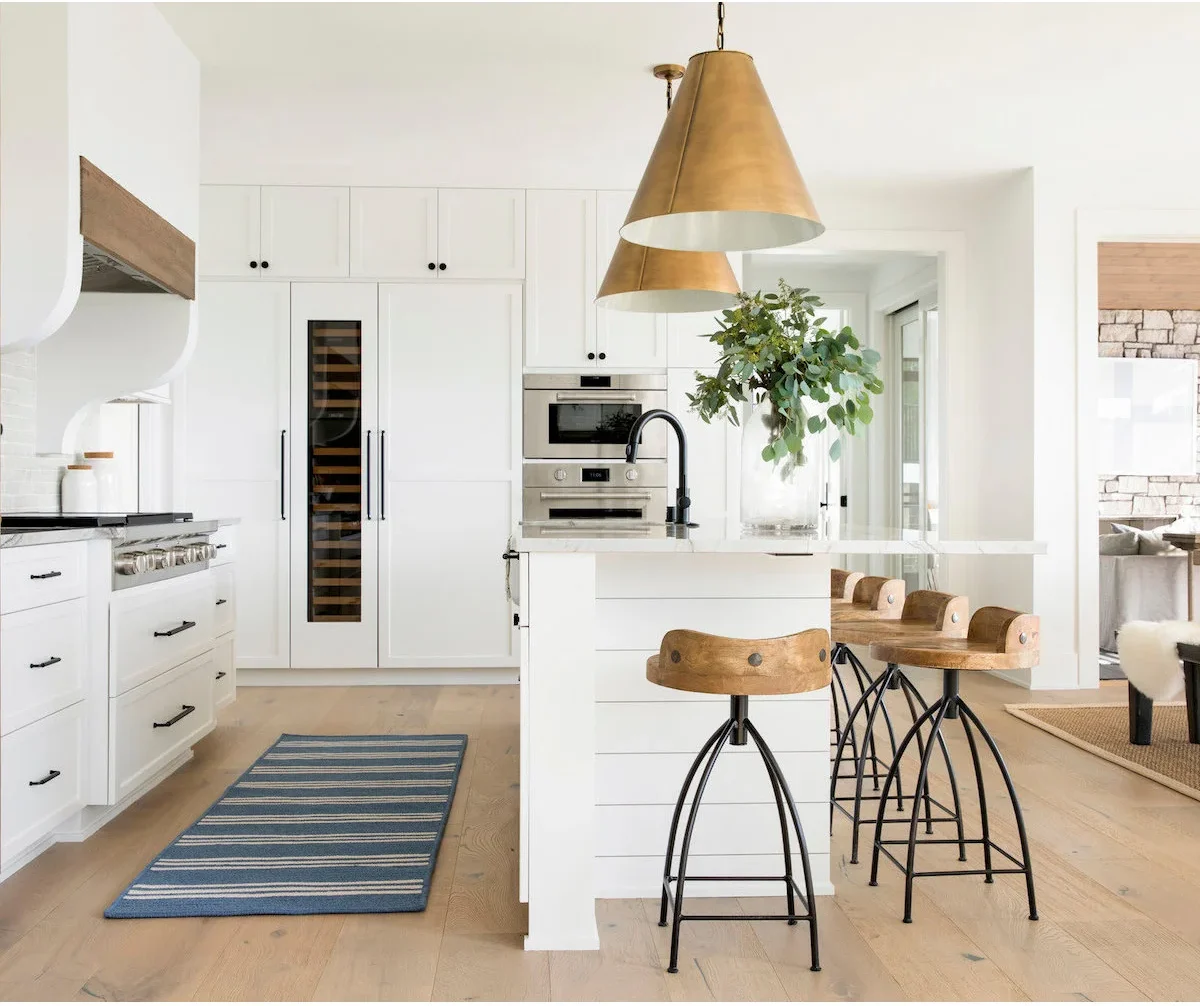
Continue the Upper Line Across a Paneled Wall
 SaveSupport Non AI Creator
Image credit: Project: Sustainable Nine Design + Build (via Houzz)
White upper cupboards continue across a paneled appliance wall, including the section above a narrow glass-front wine unit. The repeated door style gives the tall arrangement a unified appearance, while the visible glass strip identifies one appliance without interrupting the whole facade.
Choose integrated or panel-ready appliances early if this is the effect you want. Their panel sizes, hinges and access requirements influence the cabinetry. Keep a record of model details for future servicing, rather than assuming that any replacement refrigerator will fit the same opening.
IDEA 10 / 15
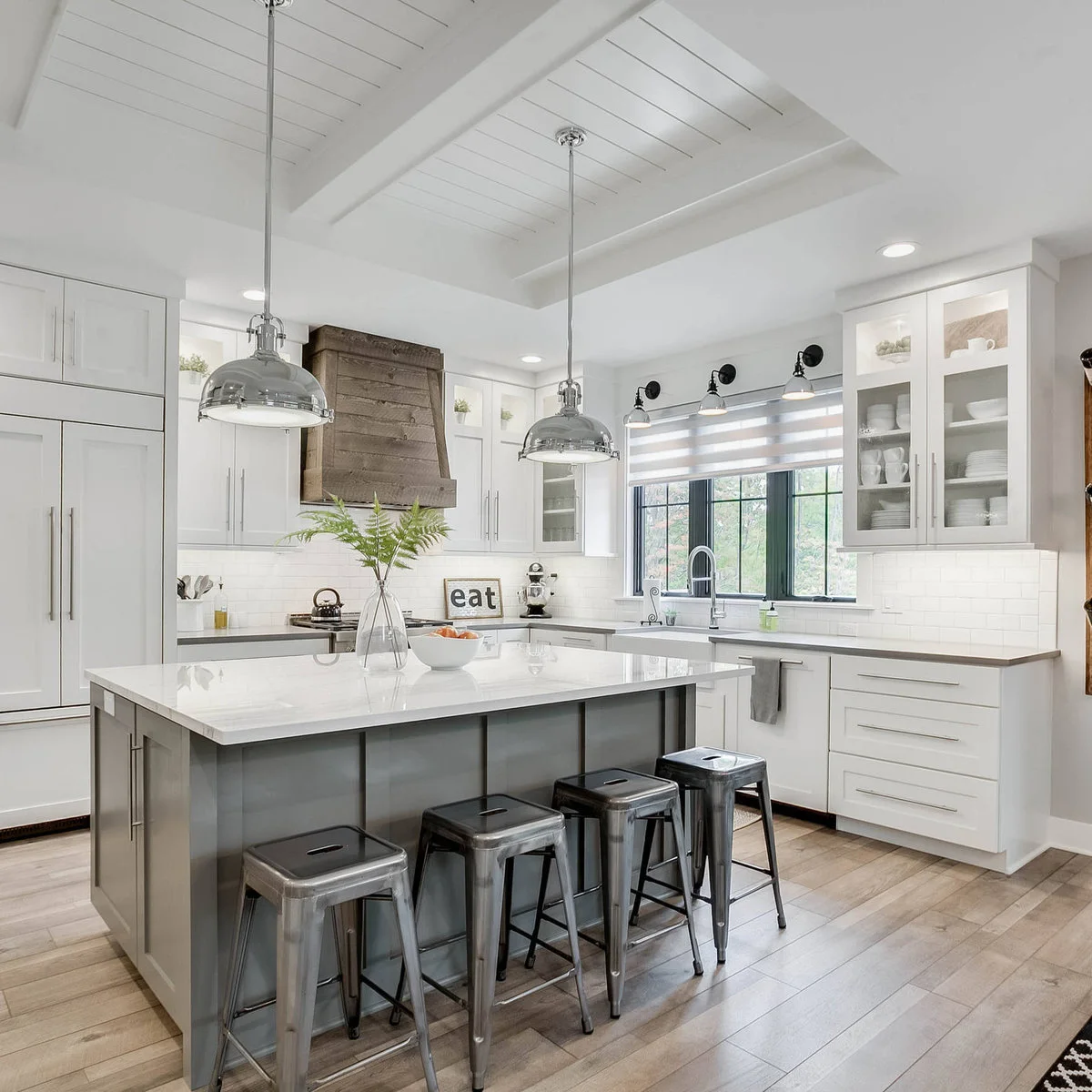
Blend the Fridge Into White Cabinetry
 SaveSupport Non AI Creator
Image credit: Project: CVI Design - Carly Visser (via Houzz)
White paneled appliance doors sit below a matching pair of upper cupboard doors at the end of this kitchen. The consistent framing makes the tall refrigerator section read as part of the cabinetry, with the dark hood and island providing contrast elsewhere.
Use a refrigerator designed for decorative panels rather than attaching doors to an unsuitable appliance. Coordinate the panel weight and hardware with the installer. For neighboring storage, hidden pantry ideas offer a similar visual approach, but pantry doors and appliance panels need different installation details.
IDEA 11 / 15
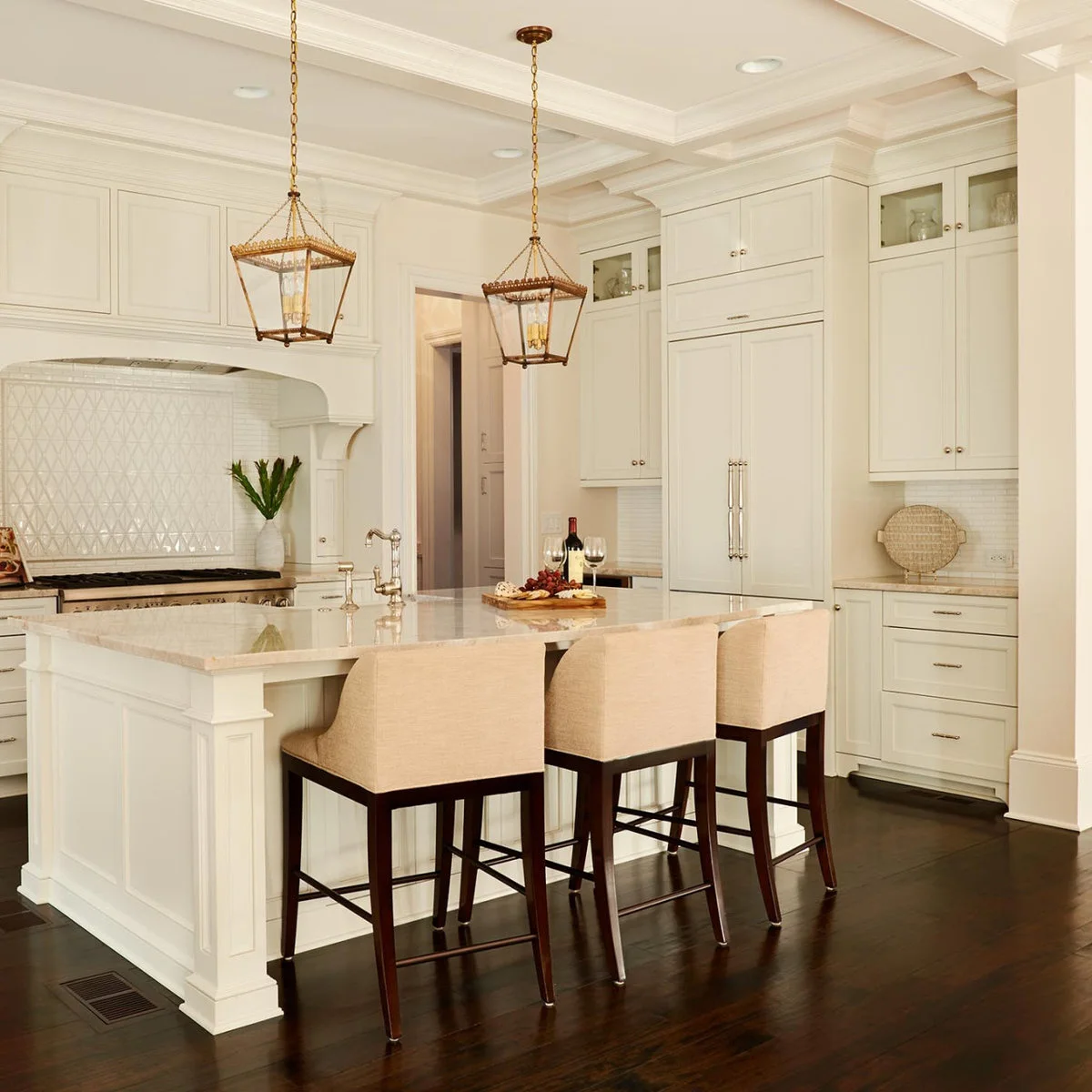
Add a Shallow Horizontal Tier Above Tall Doors
 SaveSupport Non AI Creator
Image credit: Dustin Peck Photography / Carolina Design Associates
A broad horizontal section separates the tall paneled refrigerator doors from the upper cupboard doors. The layered arrangement relates to the surrounding crown and small glass display sections, creating a more detailed transition between the appliance height and the ceiling.
Decide which sections are actual storage and which are appliance or trim components before copying the facade. Do not assume every visible panel opens as a cupboard. Ask the cabinetmaker to show the interior arrangement and explain how service access will remain available.
PART 04
Finish, Height and Door Details
IDEA 12 / 15
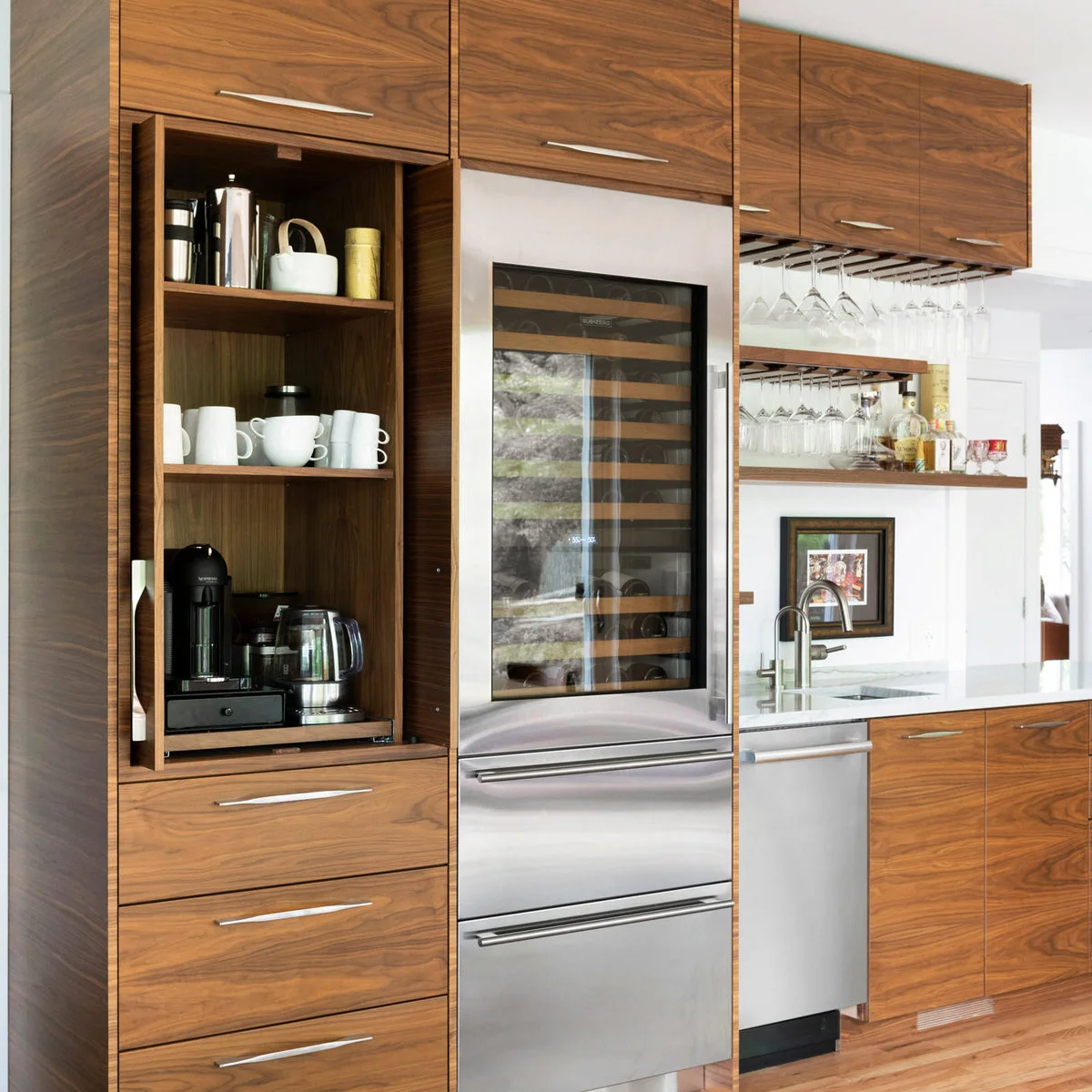
Carry Wood Grain Across Flat Upper Doors
 SaveSupport Non AI Creator
Image credit: Project: Herrick Design Group (via Houzz)
Wood grain continues across the flat-front cupboards above the tall wine refrigerator and the adjacent coffee station. Long metal pulls repeat across the doors, keeping the upper section visually related to the drawers below without introducing a different decorative profile.
Lay out the grain direction and joints across the complete cabinet run before fabrication. The appliance opening will interrupt the pattern, so decide where the strongest lines should meet. Use the exact wine refrigerator installation requirements for its enclosure rather than copying clearances from an ordinary kitchen fridge.
IDEA 13 / 15
Match Inset Doors and Visible Hinges
 SaveSupport Non AI Creator
Source: houzz.com
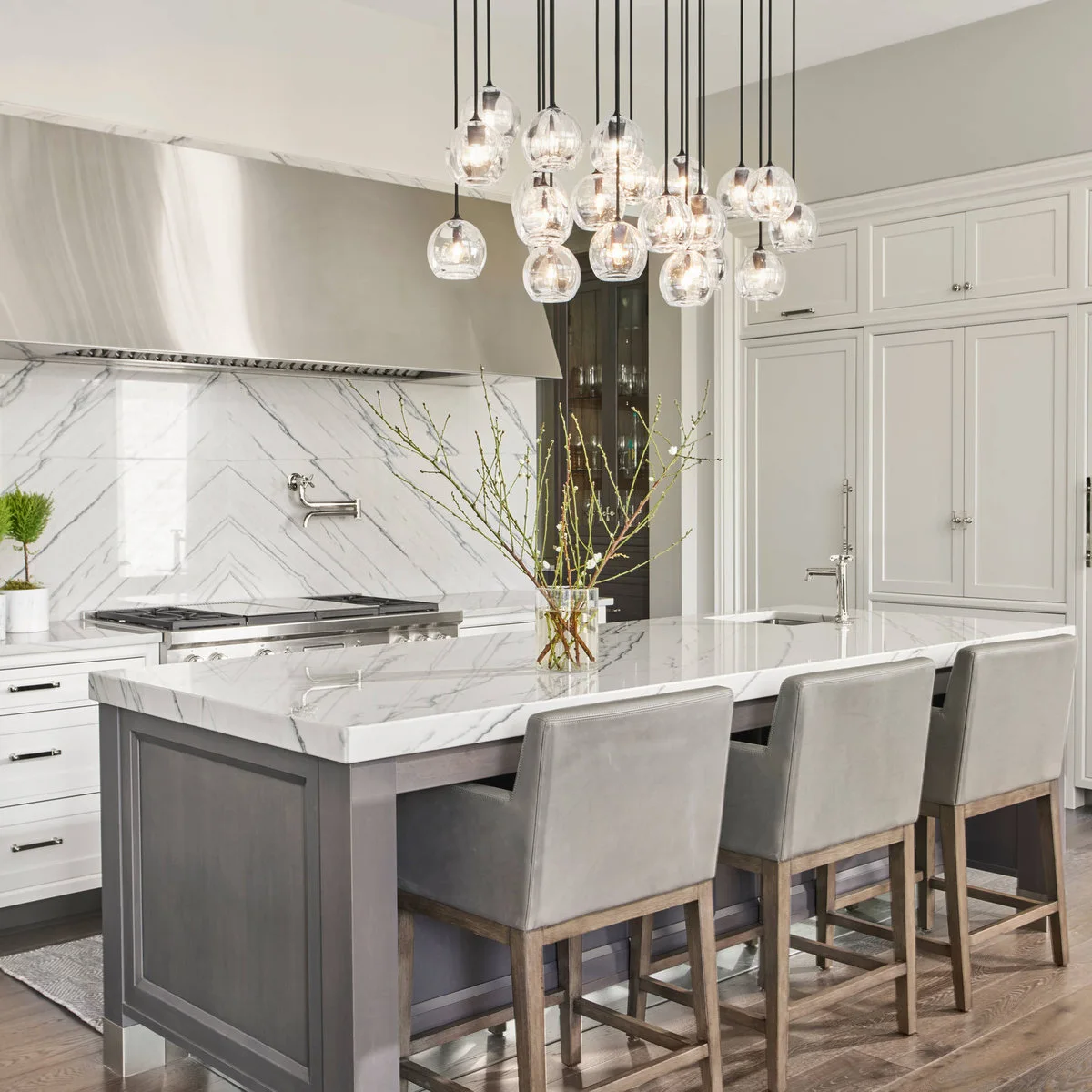
White inset cupboard doors sit above the integrated refrigeration, with visible hinges adding small dark details to the pale cabinet fronts. The framed doors continue the surrounding kitchen style, while their shorter proportions distinguish the upper storage from the taller appliance panels below.
Consider the door and hinge style across the whole appliance section before selecting a detail for the upper cupboard alone. Check swing positions and nearby hardware together. Keep the decorative panels compatible with the appliance system and preserve the installer’s planned access for servicing.
IDEA 14 / 15
Use Color to Connect a Fridge and Drinks Area
 SaveSupport Non AI Creator
Image credit: Project: Ferrarini & Co. Kitchens & Interiors (via Houzz)
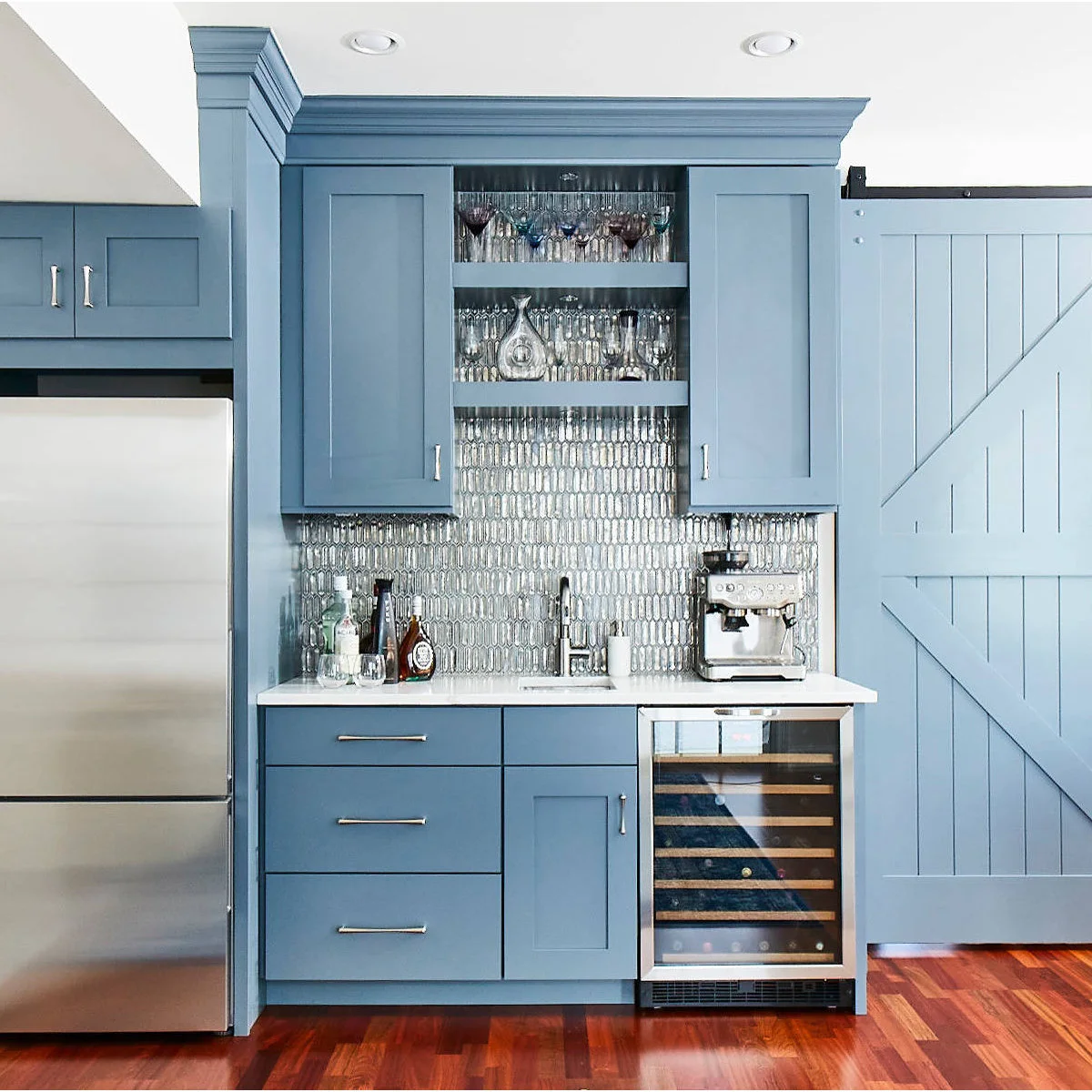
Blue cupboard doors above the stainless refrigerator match the cabinetry around the adjoining drinks station. The shared color connects the full-height appliance with the smaller wine fridge and work surface, while light counters and metallic details keep the arrangement from appearing entirely dark.
Try the blue beside the actual appliance finish before choosing paint or a factory color. Reflections can make a strong shade read differently against stainless steel. Keep the upper cupboard contents suited to occasional use, even if the neighboring coffee or drinks station is used every day.
IDEA 15 / 15
Let a White Appliance Sit Below Matching Doors
 SaveSupport Non AI Creator
Image credit: Lori Hamilton / Collins DuPont Design Group
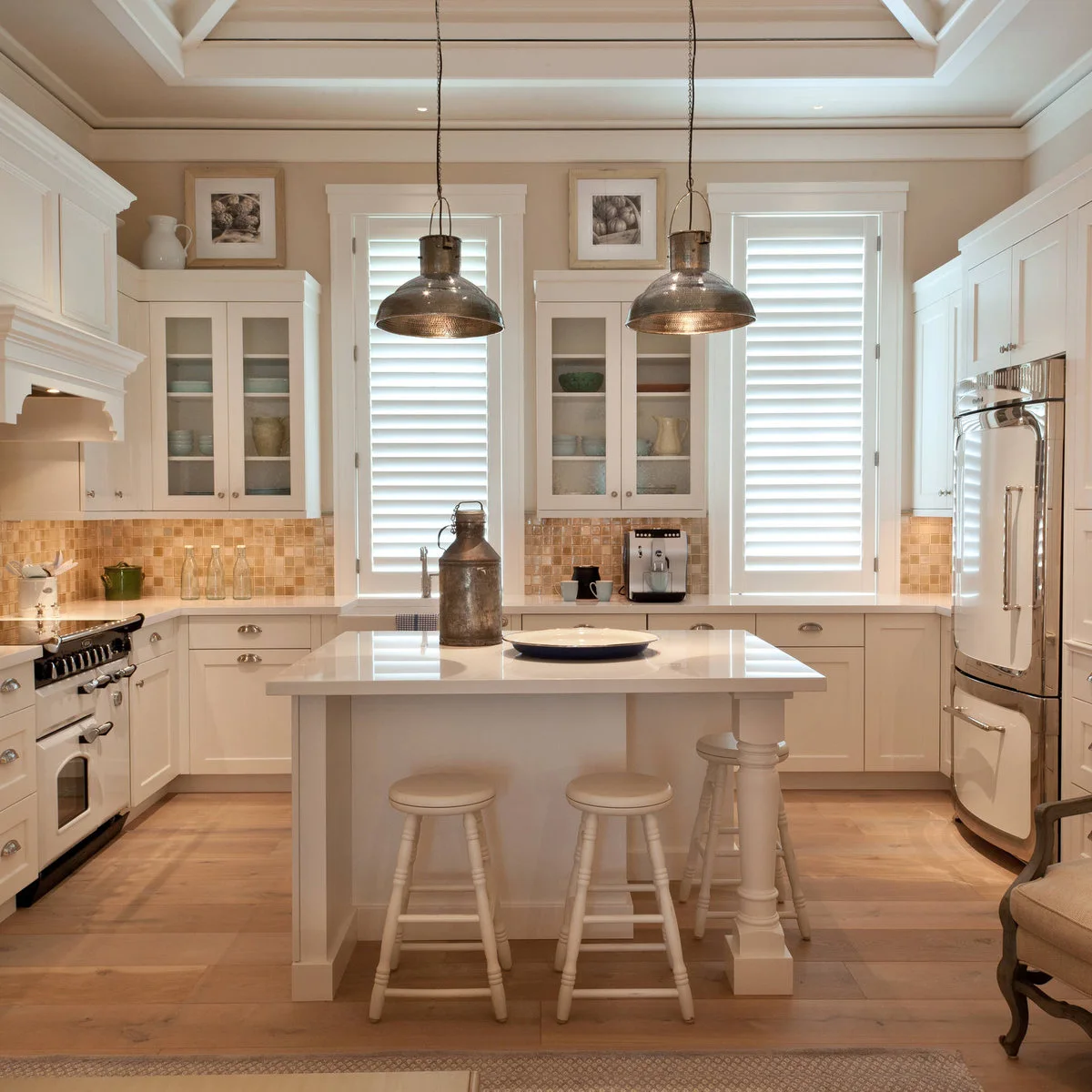
A white refrigerator sits beneath matching pale cupboard doors, keeping the tall section close in color to the rest of the kitchen. The surrounding glass-front cabinets carry more visual detail, while the appliance area forms a quieter block at the end of the run.
Compare the appliance white with the cabinet sample in the room because their undertones may differ. A related shade can still work without being an exact match. Check the door opening against the adjoining island and cabinetry before deciding that the neat visual fit is also a comfortable practical fit.
BRING IT ALL TOGETHER
Plan the Contents and the Opening Together
Choose what deserves the high cupboard before choosing its door style. Light, occasional-use items are usually more practical than a heavy stack you need every morning. Dividers can help separate flat pieces, while adjustable shelves accommodate a changing collection.
Measure the actual appliance, hinges and surrounding walls with the installer, using the model-specific instructions. Keep access for cleaning and service, and make sure you have a stable way to reach the cupboard. The neatest surround is useful only when the fridge and the storage both work comfortably.