Yellow can fill a kitchen with color through cabinets, a tiled wall or a smaller collection of everyday objects. Decide how much of it you want to see before choosing a shade: a yellow drawer front behaves very differently from a room wrapped in bright paint.
These photographed kitchens range from pale, traditional cabinetry to strong modern combinations. Look at the neighboring counters, floors and window frames as well as the yellow itself. Test samples in your own daylight and evening light before committing to a permanent finish.
PART 01
Make Yellow Cabinets Work
IDEA 01 / 20
Balance Bright Cabinets with Black Outlines
 SaveSupport Non AI Creator
Image credit: Project: Koivu Ltd (via Houzz)
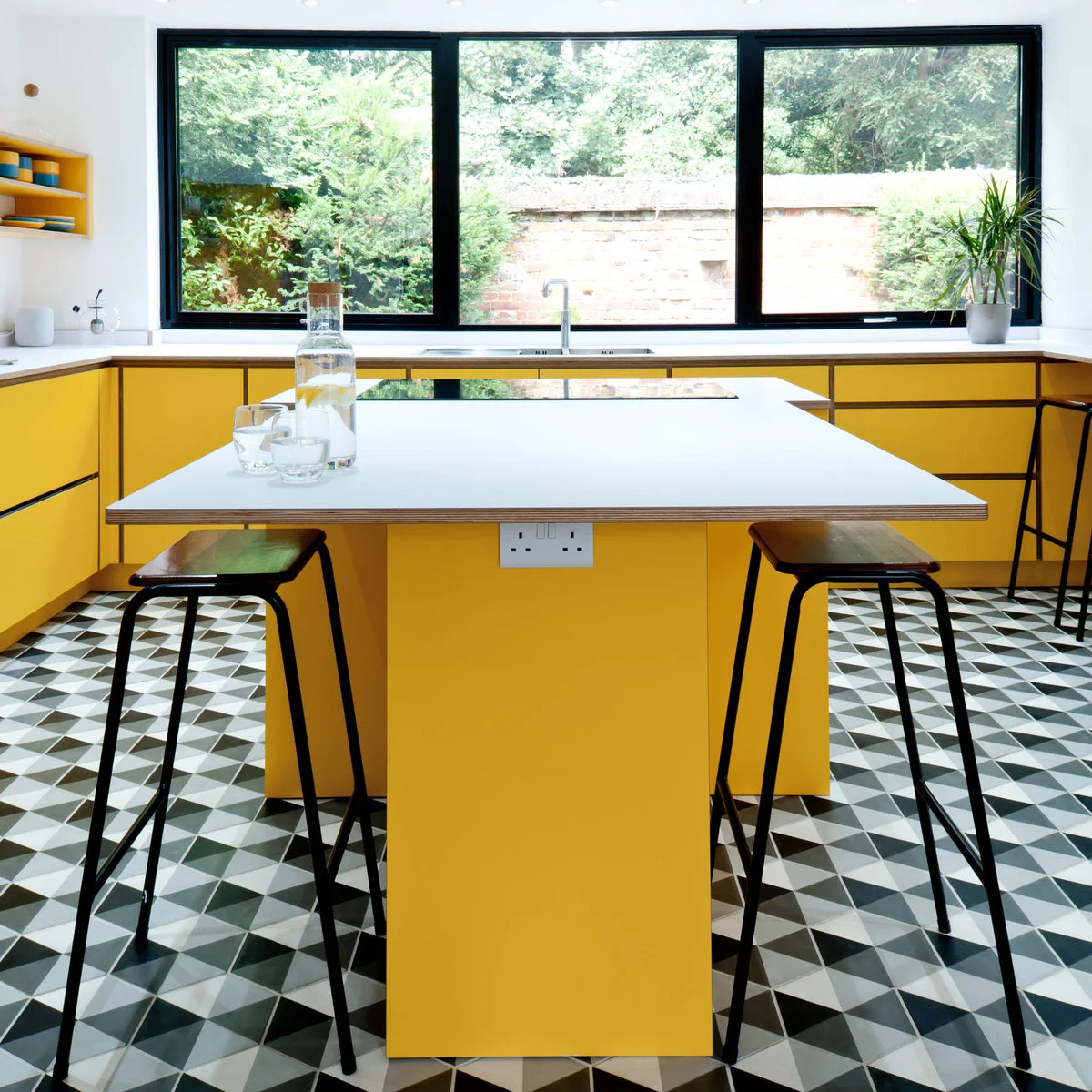
Yellow base cabinets and an island bring strong color below the windows, while the white counters keep the work surfaces visually distinct. Black window frames, stools and narrow cabinet outlines repeat the darker shapes in the patterned floor without adding another competing color.
When combining bright fronts with a busy floor, compare large samples together rather than choosing them separately. Keep the counter relatively quiet and allow enough room behind occupied stools. Check how drawer pulls or finger channels feel before ordering a full kitchen.
IDEA 02 / 20
Let Yellow Tile Rise between Pale Cabinets
 SaveSupport Non AI Creator
Image credit: Project: Landed Interiors (via Houzz)
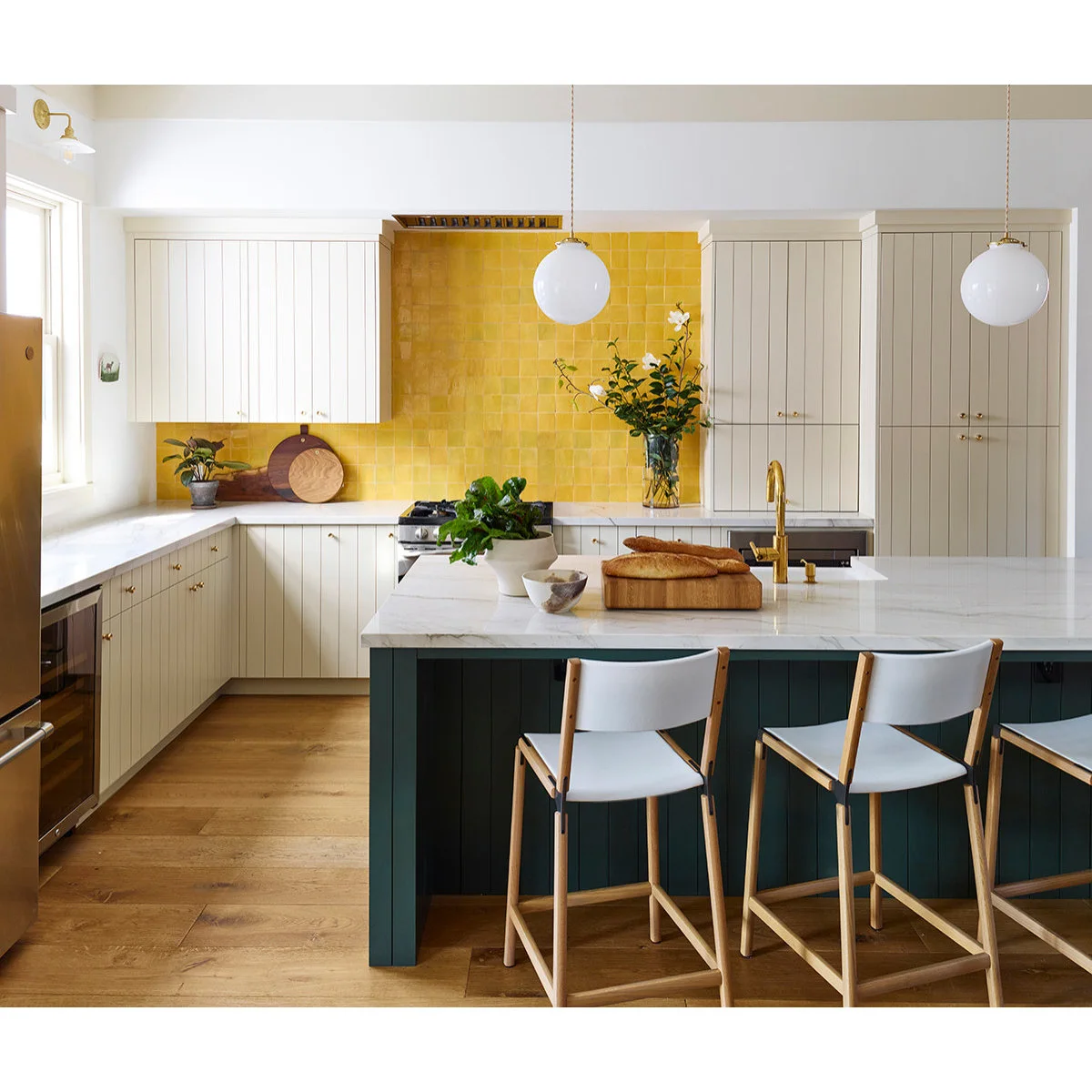
Yellow square tiles rise behind the range and continue beneath the pale upper cabinets. Their small variations give the wall depth, while the dark green island anchors the foreground. White globe pendants and pale counters keep the yellow from being the only light element.
Ask for a sample board that shows several tiles and the proposed grout. Check cleaning guidance for the actual surface, particularly around cooking splashes. For more ways to arrange a colored wall behind cabinets, compare these classic kitchen backsplash ideas before choosing the final coverage.
IDEA 03 / 20
Carry Yellow onto the Window Trim
 SaveSupport Non AI Creator
Source: www.houzz.com
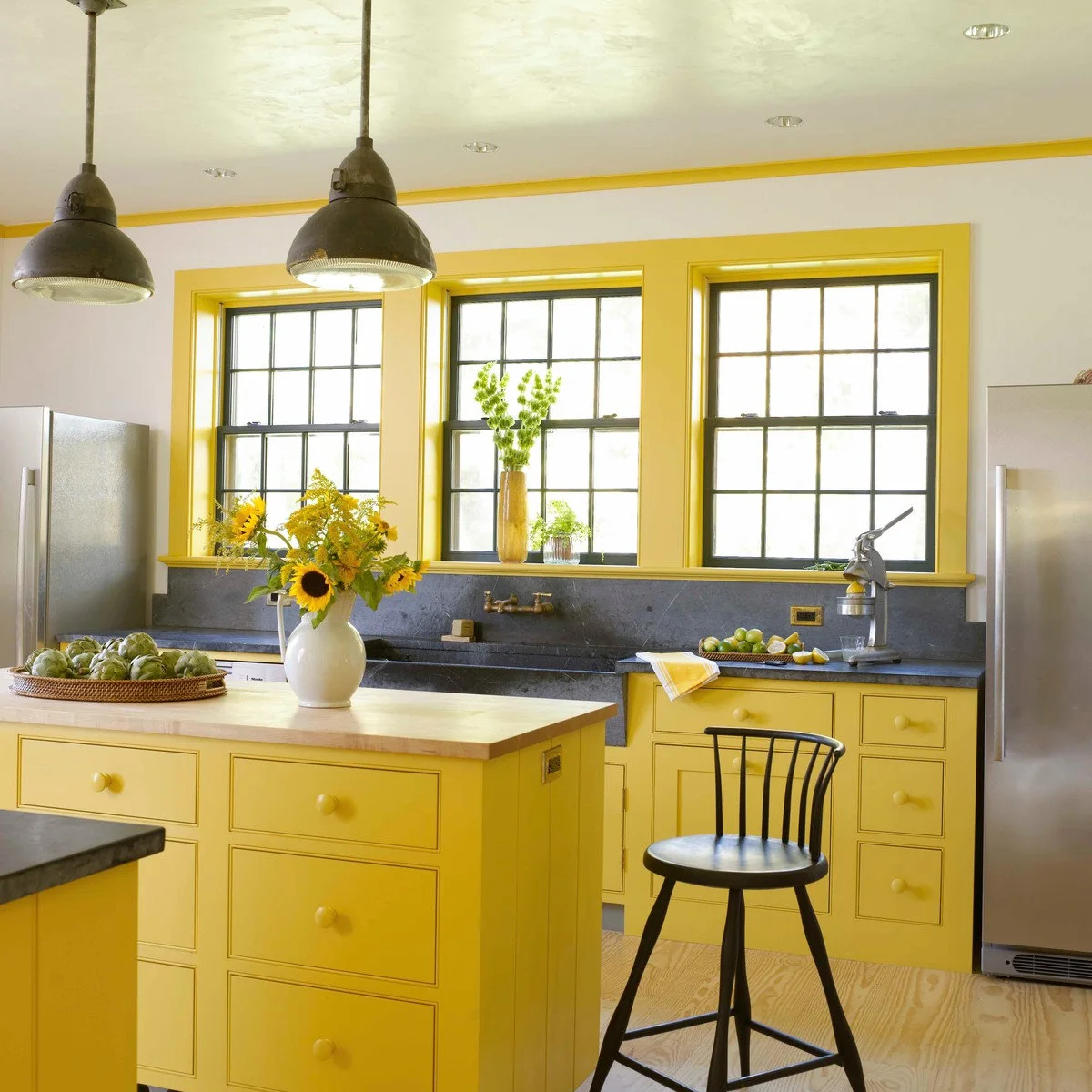
Bright yellow cabinets are echoed by the trim around the windows, making the color part of the room’s outline. Dark counters and dark window frames give the yellow a firm edge. A wood-colored island top adds a different surface without introducing another bright painted color.
Painted trim receives handling and condensation as well as light, so choose a suitable finish and prepare the surface properly. Test the yellow beside the existing window frame first. Repeating one color can connect separate elements, but it also makes later touch-ups more noticeable.
IDEA 04 / 20
Soften Yellow with Glass-Front Storage
 SaveSupport Non AI Creator
Image credit: Project: COOPER Design Build (via Houzz)
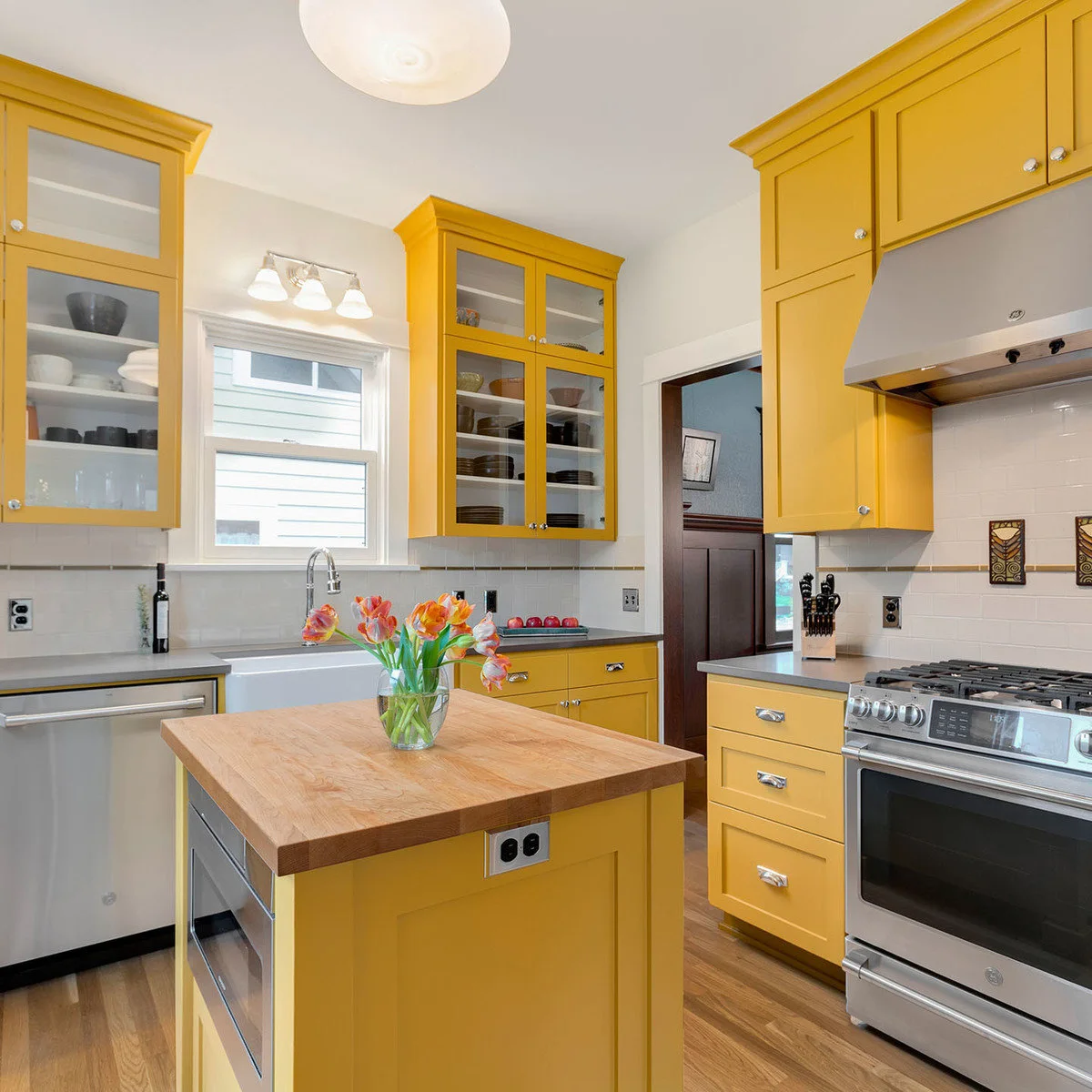
Glass-front upper cabinets break up the pale yellow cabinetry and let dishes become part of the view. The island’s wood-colored top contrasts with darker perimeter counters. A large cooking area sits within the cabinet composition rather than becoming a separate splash of color.
Use glass doors for items you can keep reasonably orderly, and reserve closed cupboards for mixed packaging. Check the yellow against both counter finishes. If a display cupboard is high, keep occasional serving pieces there and leave everyday dishes where they are easy to reach.
IDEA 05 / 20
Use a Mirrored Backsplash with Care
 SaveSupport Non AI Creator
Source: houzz.co.uk
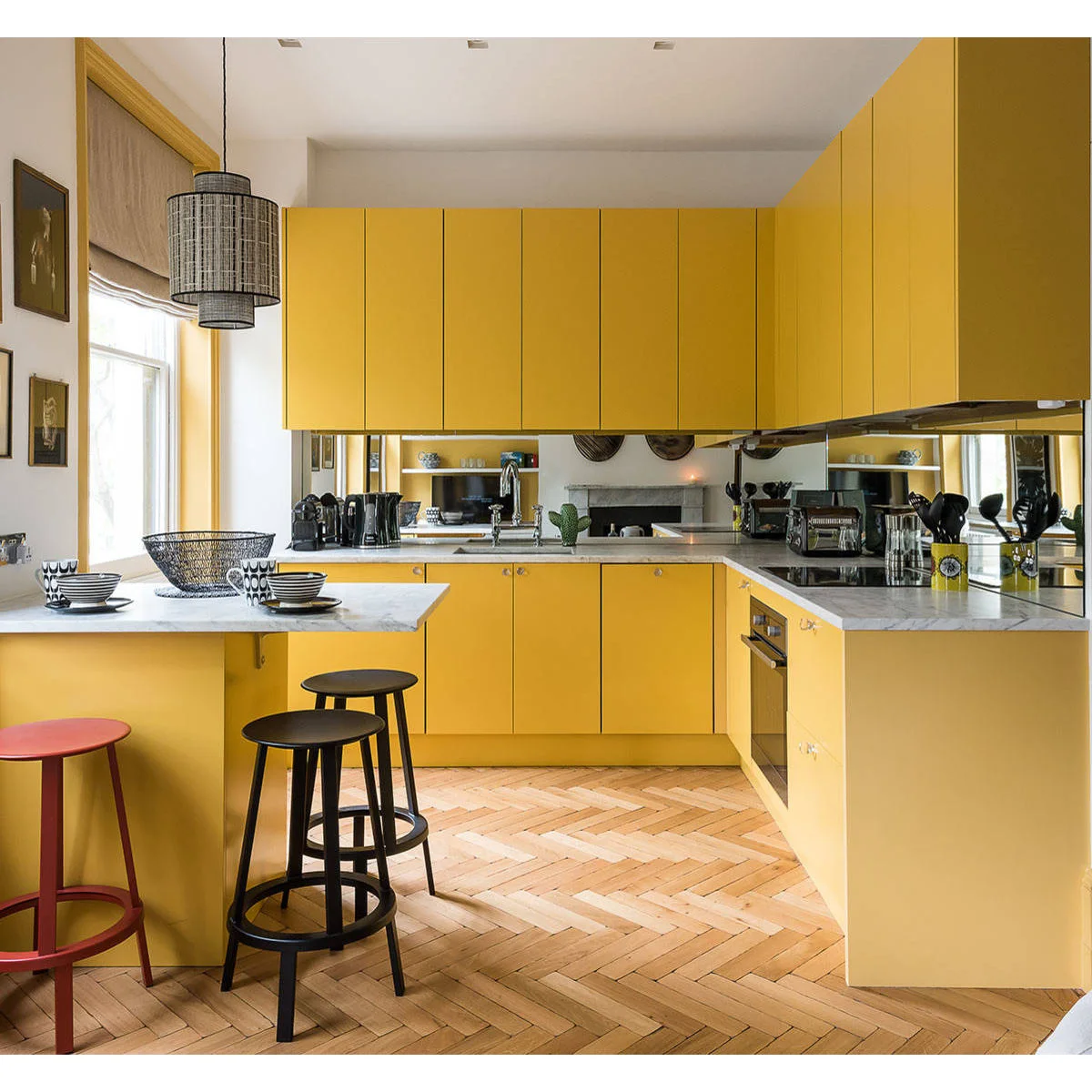
Mustard cabinets wrap around the room above and below a mirrored backsplash. The reflection extends the view of shelves and counters, while black stools and pendant shades provide darker accents. The pale worktop keeps the boundary between the upper and lower yellow areas readable.
A mirror also repeats countertop clutter and cooking splashes, so consider what it will reflect from the doorway. Confirm that the chosen product is appropriate for its location and cleaning routine. Keep a modest appliance group rather than relying on reflection to make a crowded counter feel spacious.
PART 02
Give Cabinet Details a Purpose
IDEA 06 / 20
Give Traditional Yellow Cabinets a Fine Red Accent
 SaveSupport Non AI Creator
Image credit: Project: Hingeworks (via Houzz)
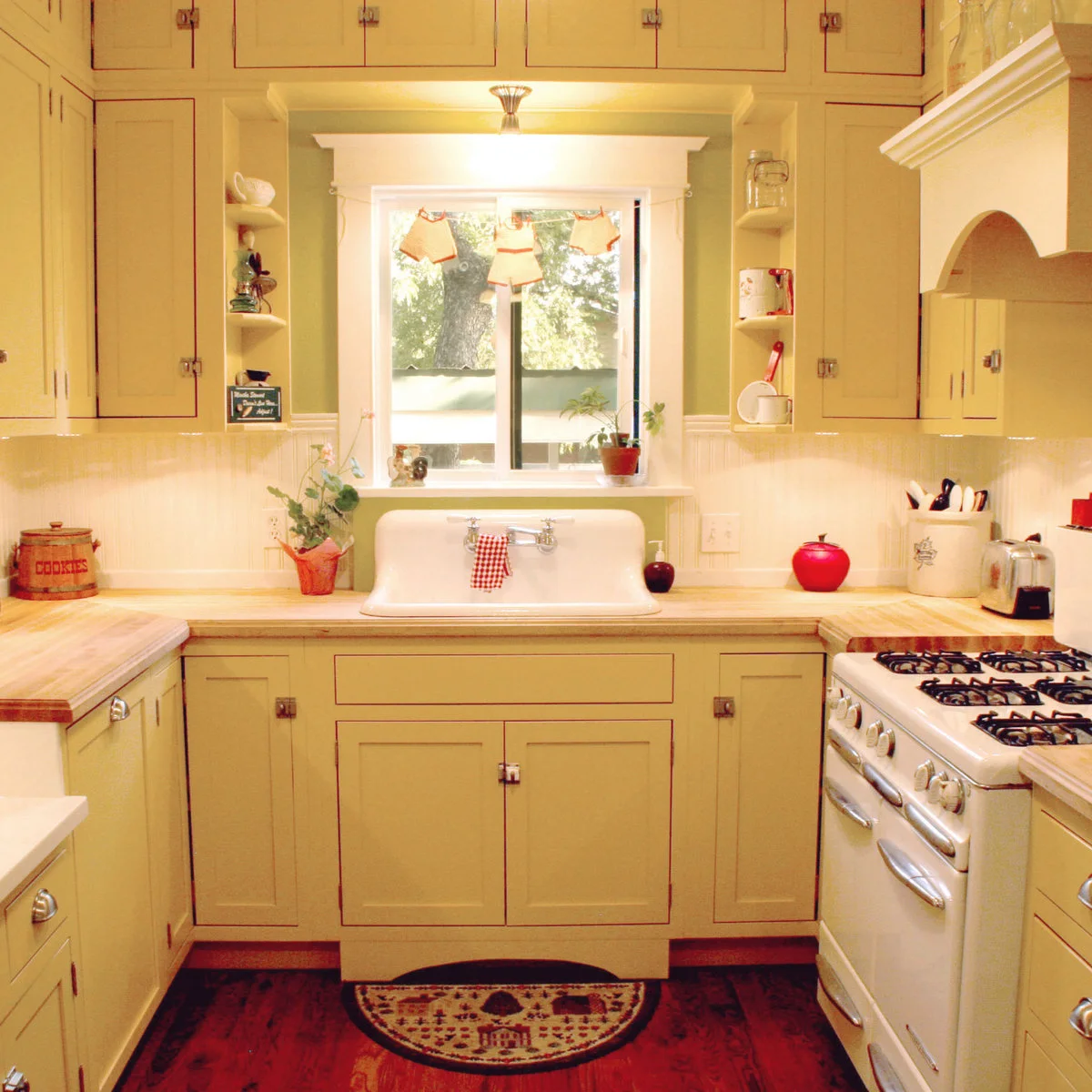
Fine red lines and darker fittings define the yellow cabinet fronts without turning the whole room red. White beadboard and a pale sink provide relief around the detailed joinery. The result depends on small repeated accents as much as the main cabinet color.
Try the edging on a spare sample door before applying it across the kitchen. Detailed profiles and contrasting lines make uneven preparation easier to see. Keep other small accessories restrained so the cabinet treatment remains legible instead of competing with several different decorative patterns.
IDEA 07 / 20
Pair a Yellow Display Cabinet with Blue
 SaveSupport Non AI Creator
Image credit: Project: RBA Architecture (via Houzz)
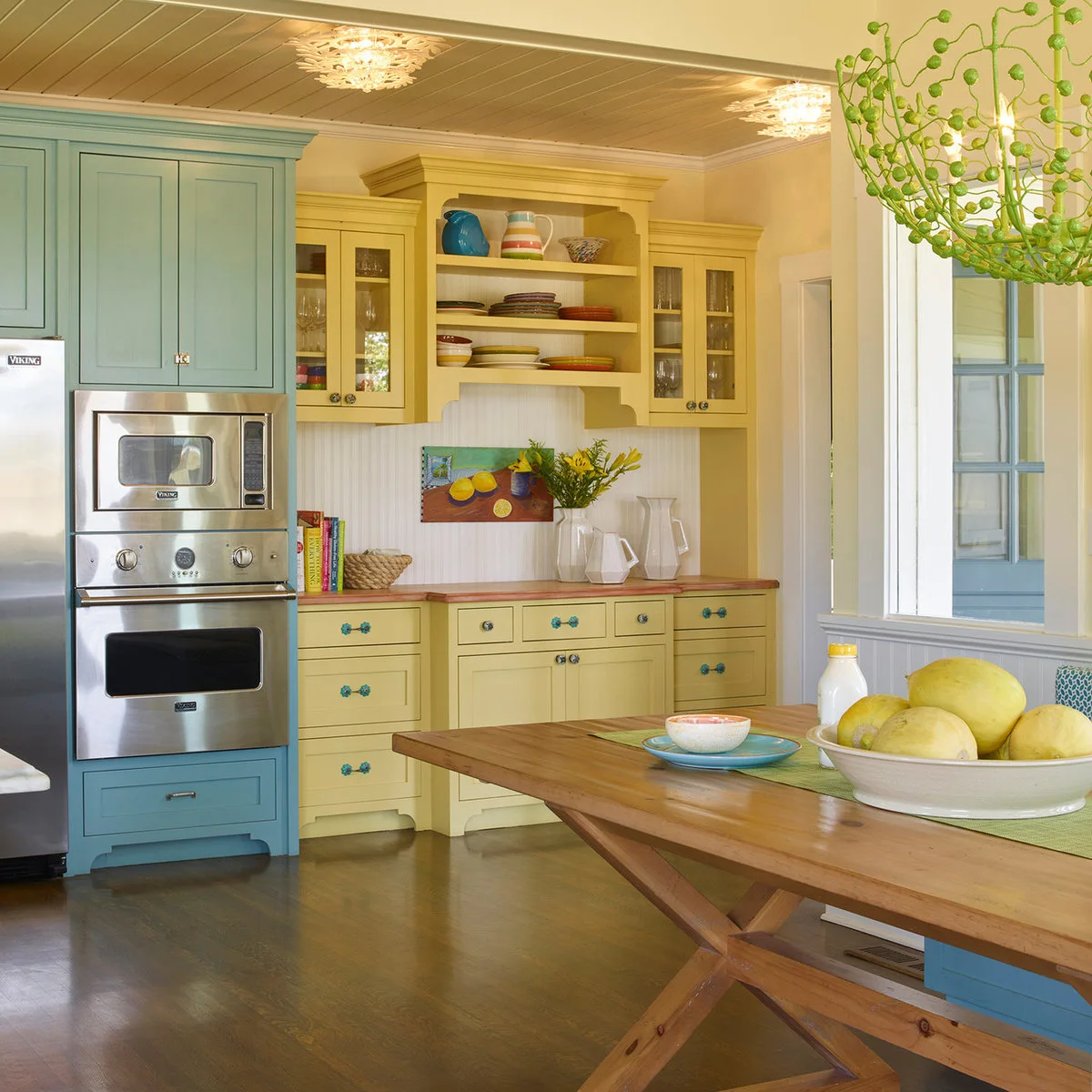
A pale yellow display cabinet holds plates above a wood-colored surface, while a blue appliance cabinet stands beside it. The two colors occupy separate furniture-like sections. Open display makes the yellow visible behind everyday objects rather than treating it as a flat uninterrupted wall.
Plan shelves around the plates or bowls you actually own and check their support before filling them. Keep small appliances within an appropriate ventilated arrangement. A contrasting appliance tower can give a kitchen character, but compare both colors in the same light before committing.
IDEA 08 / 20
Let Yellow Drawers Frame a White Range
 SaveSupport Non AI Creator
Image credit: Project: Fireclay Tile (via Houzz)
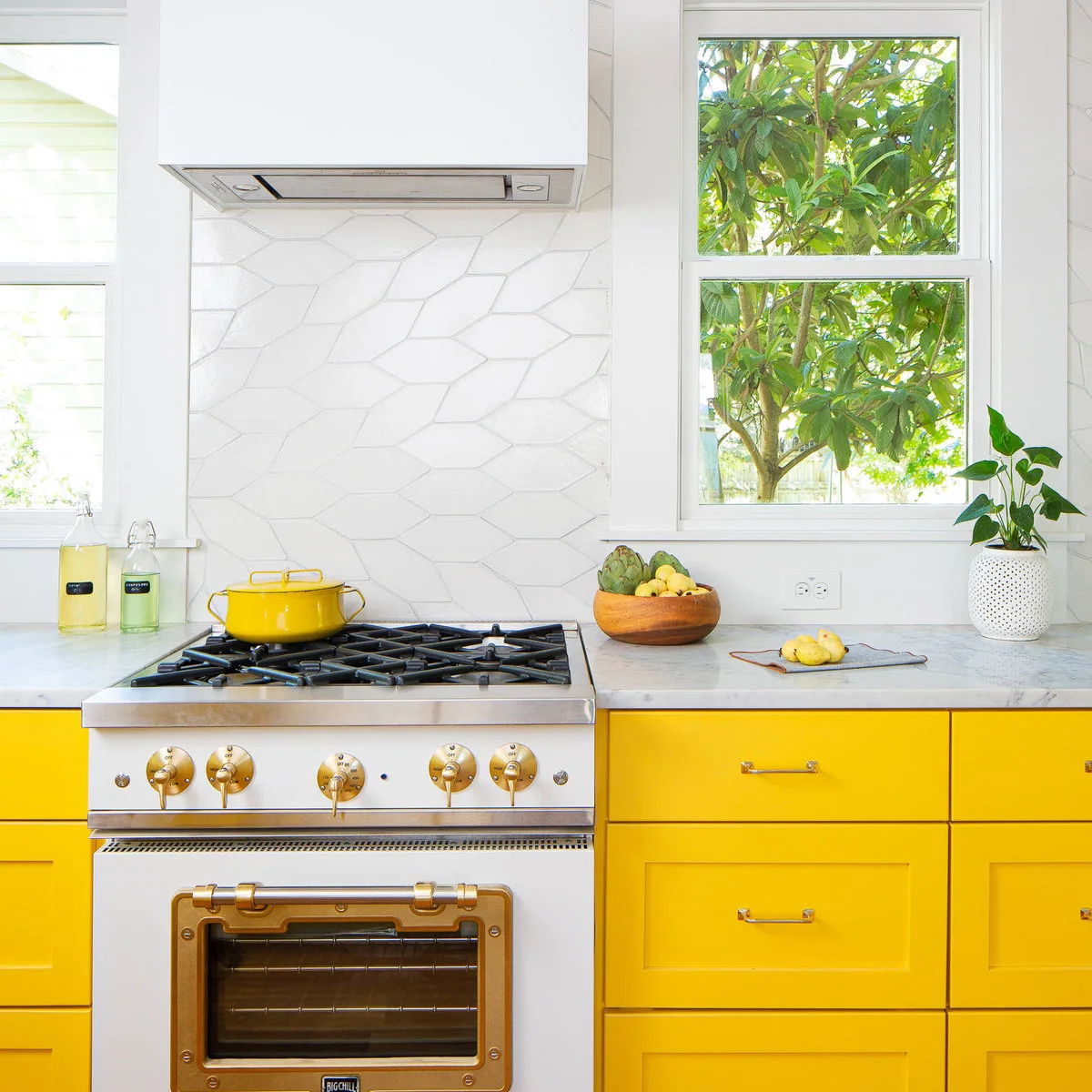
Bright yellow drawers flank a white range, connecting the color across the cooking area. The range’s brass-colored details echo the drawer handles without requiring yellow on every surface. White wall tiles and a window keep the upper half of the composition lighter.
Choose hardware for its grip and cleaning requirements as well as its color. Confirm heat clearances and surface suitability around the range with the relevant product guidance. A pale backsplash can simplify the combination, but the grout still needs a practical maintenance plan.
IDEA 09 / 20
Keep the Worktop Dark against Lemon Fronts
 SaveSupport Non AI Creator
Image credit: Project: Martin Scherag Fotografie (via Houzz)
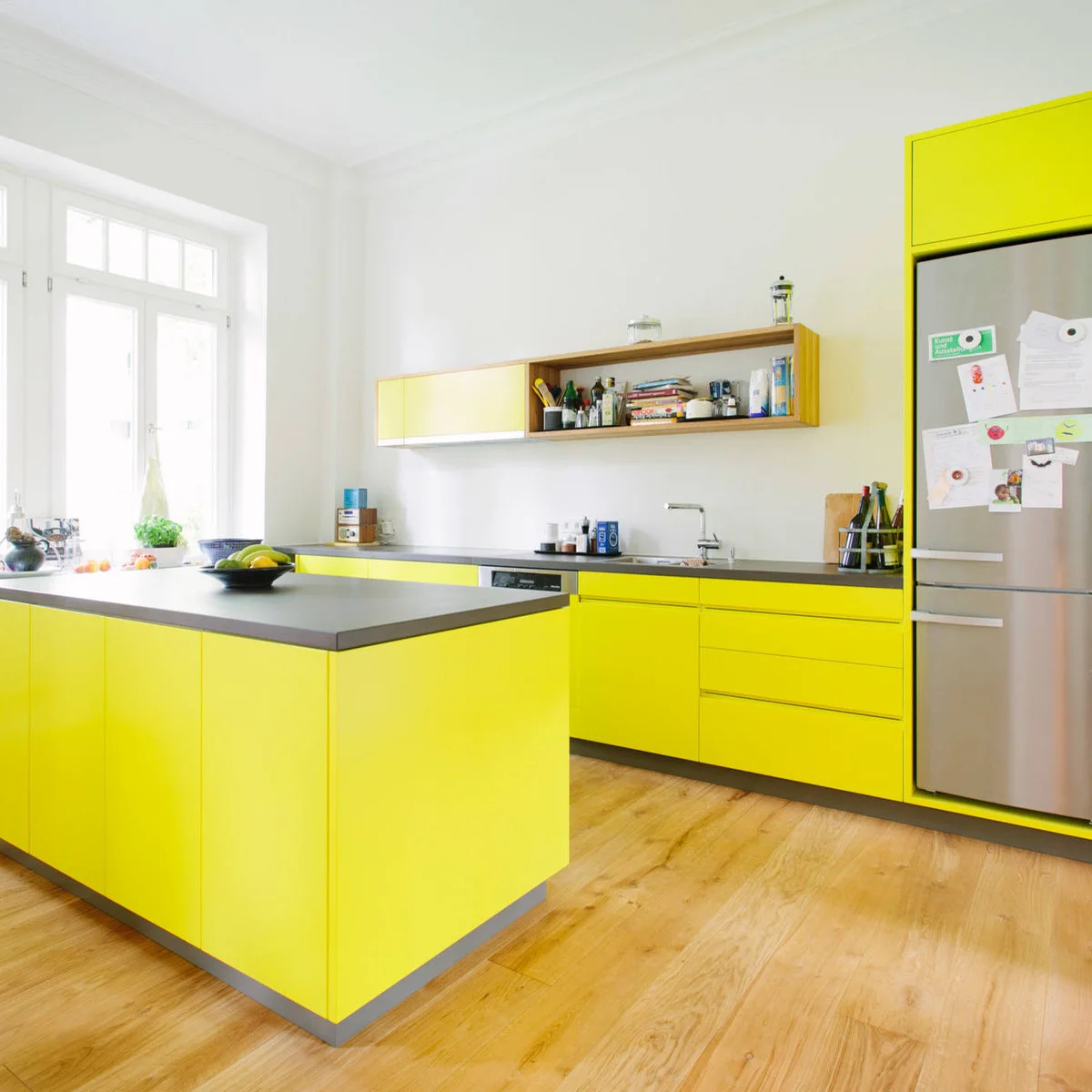
Lemon yellow fronts stand out beneath dark counters, while an open wood-colored shelf interrupts the upper storage. The tall refrigerator is surrounded by the same bright color. White walls leave room for notes and daily objects without adding another large painted area.
A dark worktop creates a strong line, so check joints, edges and handle positions together. Decide where household papers will live before the refrigerator becomes the only noticeboard. Flat fronts can look simple, but fingerprints and cleaning marks depend on the actual coating you select.
IDEA 10 / 20
Repeat Yellow within a Geometric Backsplash
 SaveSupport Non AI Creator
Image credit: Project: Géraldine Laferté (via Houzz)
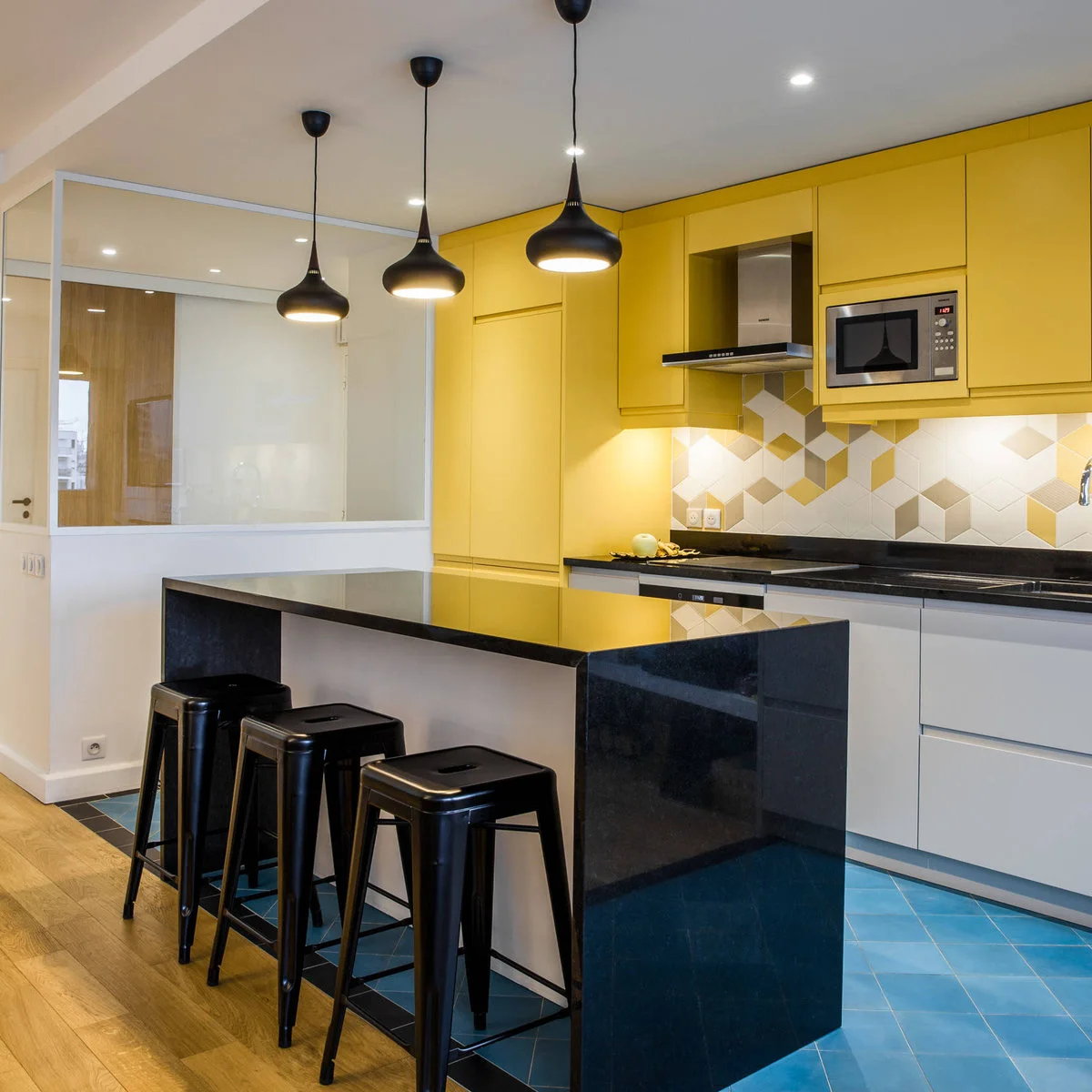
Yellow upper cabinets and tall storage give this compact kitchen a strong backdrop. The geometric backsplash repeats yellow among pale gray and white shapes. A black peninsula and stools separate the eating edge from the lighter lower cabinets and the blue-toned floor.
Order enough sample tiles to see the full repeat before planning the wall. Check where the pattern will meet sockets and cabinet edges. When the floor also carries color, keep loose accessories limited so the kitchen has clear areas of rest between its stronger surfaces.
PART 03
Bring Color onto the Walls
IDEA 11 / 20
Warm White Cabinets with Yellow Walls
 SaveSupport Non AI Creator
Image credit: Project: Bellingham Bay Builders (via Houzz)
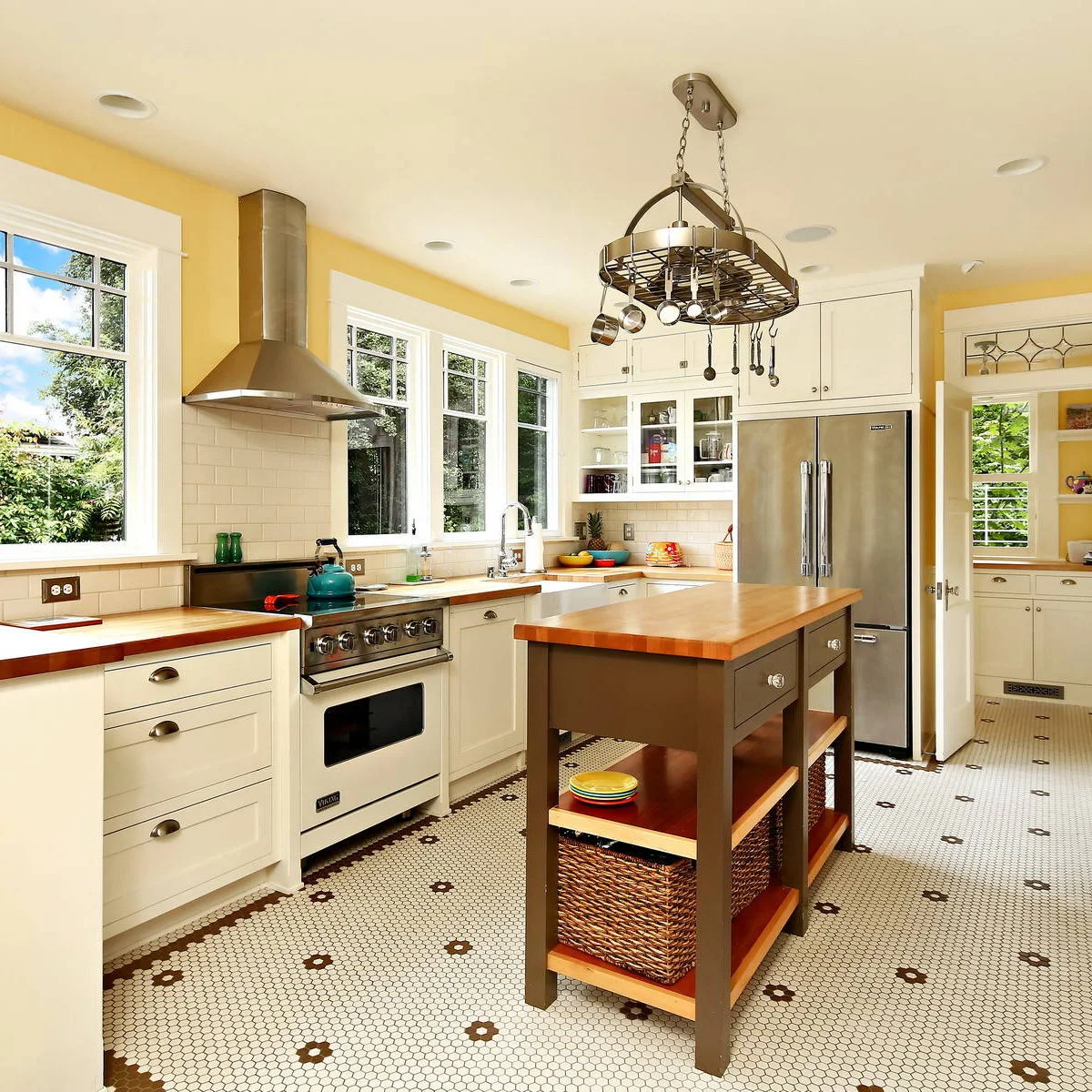
Yellow walls frame white cabinets and a dark island, giving the room color without painting every door. The wood-colored island top adds warmth at the center. A hanging pot rack brings useful storage into view but also adds another layer above the working area.
Try wall color on more than one side of the room, because corners and shaded areas can read differently. Keep hanging cookware supported appropriately and clear of movement. A wall change is often easier to revise than cabinet work, especially when testing a stronger yellow.
IDEA 12 / 20
Use Yellow as a Recessed Back Wall
 SaveSupport Non AI Creator
Image credit: Project: BO HOME DESIGN (via Houzz)
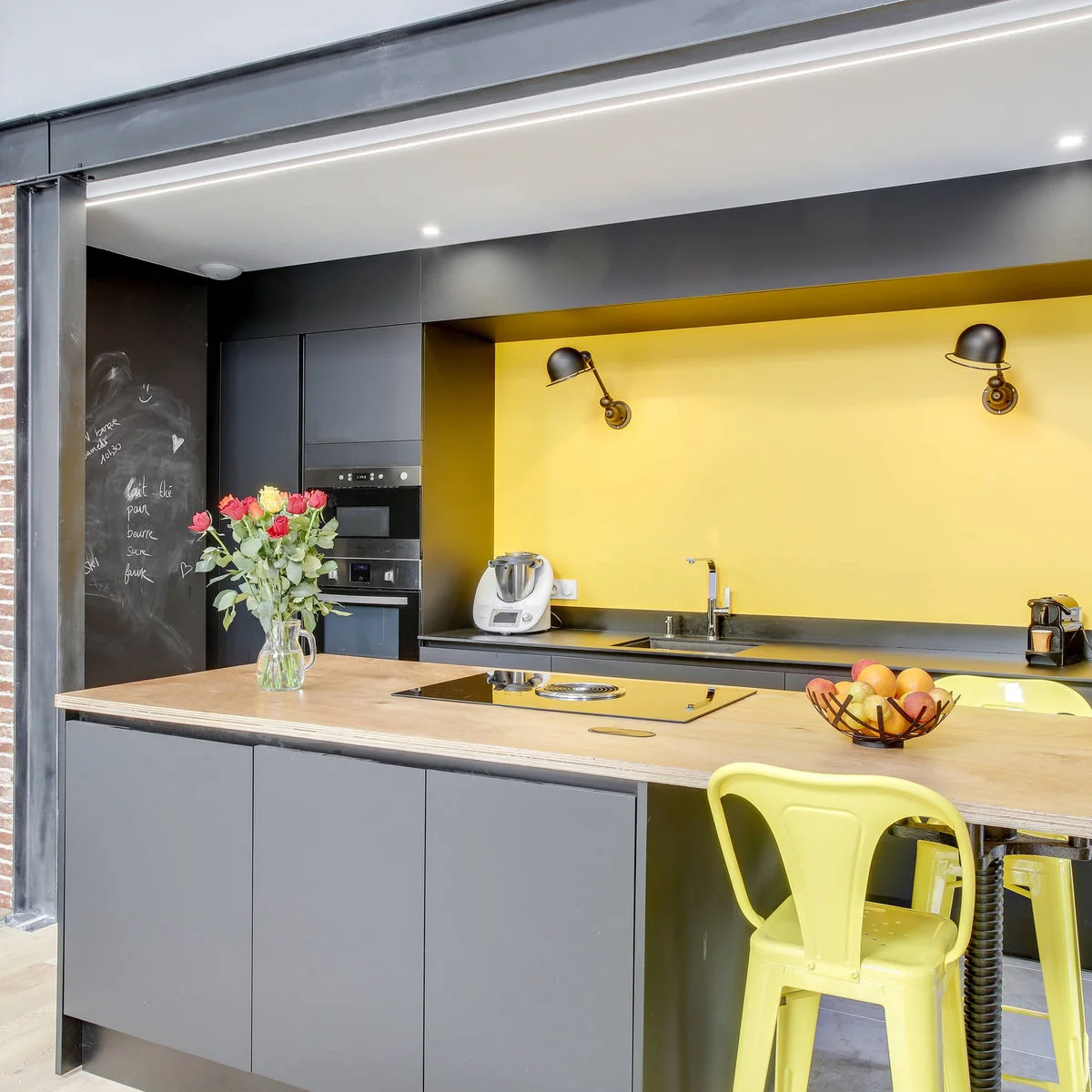
A yellow recessed wall sits within a dark cabinet frame, concentrating the color around the sink. Black wall lamps repeat the dark outer surfaces. Yellow stools bring the color forward to the island without requiring the island drawers to match the back wall.
Choose a suitable washable surface for the sink area and detail the joints carefully. Keep task lighting aimed at the counter rather than only across the wall. If you like this contrast, compare black kitchen cabinet ideas for other ways to balance dark cabinets with a brighter surface.
IDEA 13 / 20
Refresh White Cabinets with a Yellow Wall
 SaveSupport Non AI Creator
Image credit: Project: Agnès & Agnès architecture (via Houzz)
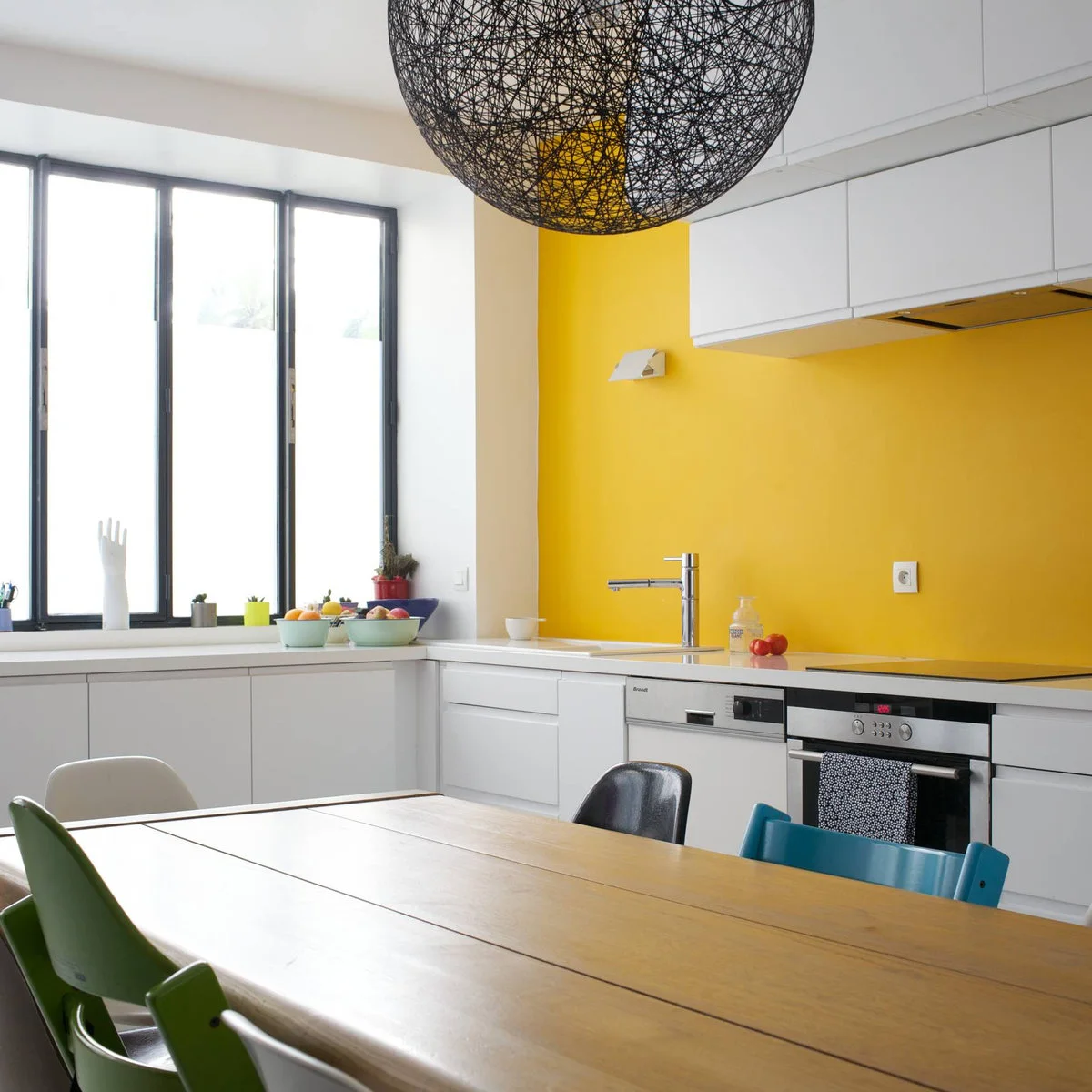
A broad yellow wall changes the character of an otherwise white kitchen. Black window frames and a dark pendant give the room definition, while different-colored dining chairs add smaller accents. The pale cabinet fronts leave the yellow as the largest uninterrupted color area.
Check the wall finish near the sink and cooktop before copying a painted treatment. Test the yellow beside existing white doors, which may look warmer or cooler by comparison. Keep the dining palette connected through a few repeated tones instead of introducing a new color on every object.
IDEA 14 / 20
Set a Yellow Wall beside Dark Modern Cabinets
 SaveSupport Non AI Creator
Image credit: Project: Lang Küchen & Accessoires (via Houzz)
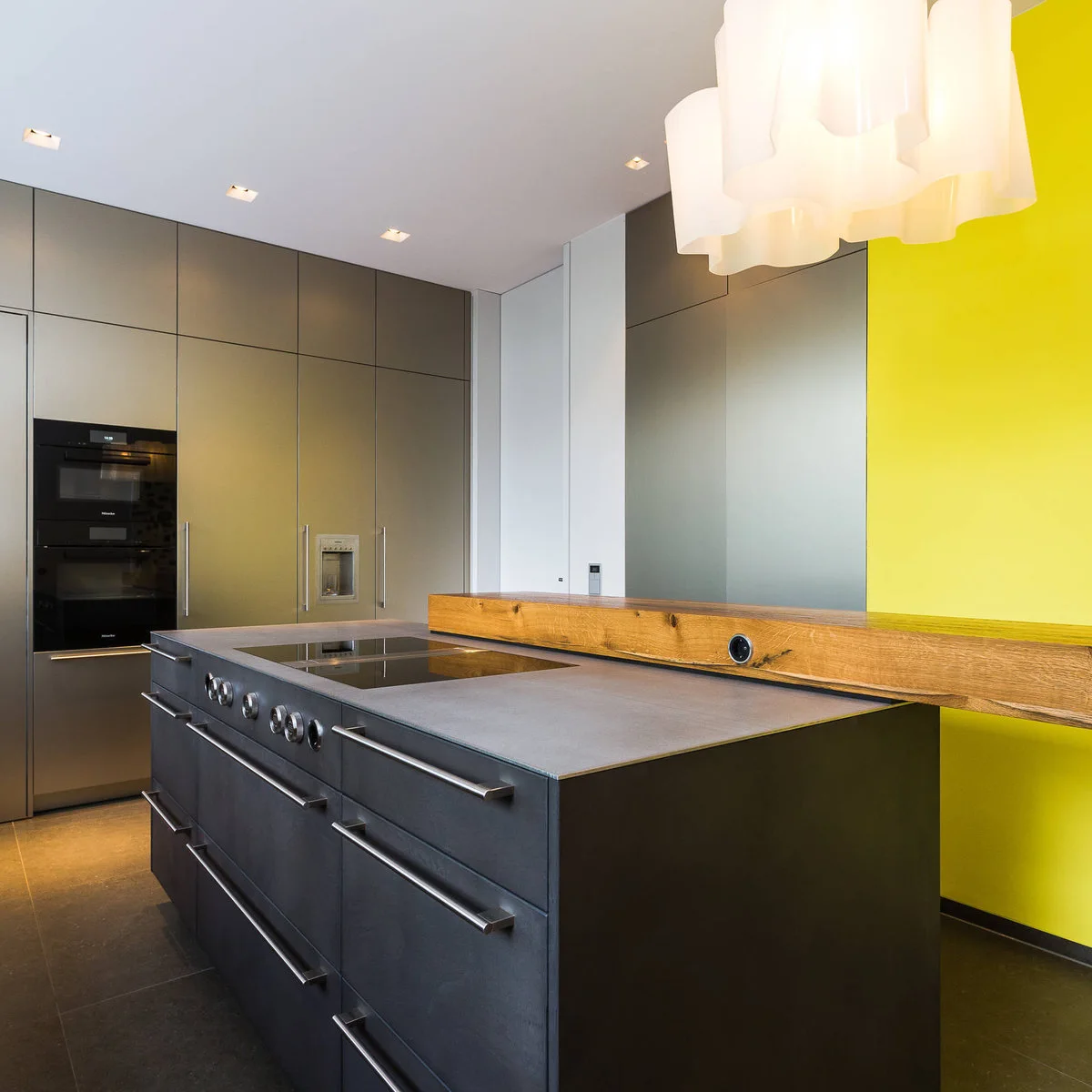
A bright yellow wall appears beside tall muted cabinets and a dark cooking island. The thick wood-colored ledge crosses the foreground, adding another horizontal surface. The yellow is concentrated at one side, giving the room a strong accent without covering all its storage.
Plan the ledge around safe cooking clearances and a comfortable route through the room. Choose the wall finish for its actual exposure to splashes and handling. A single bright wall is easier to balance when the surrounding cabinets share a restrained, consistent finish.
IDEA 15 / 20
Mix Soft Pastel Fronts beneath a Yellow Wall
 SaveSupport Non AI Creator
Image credit: Project: Period Property Store (via Houzz)
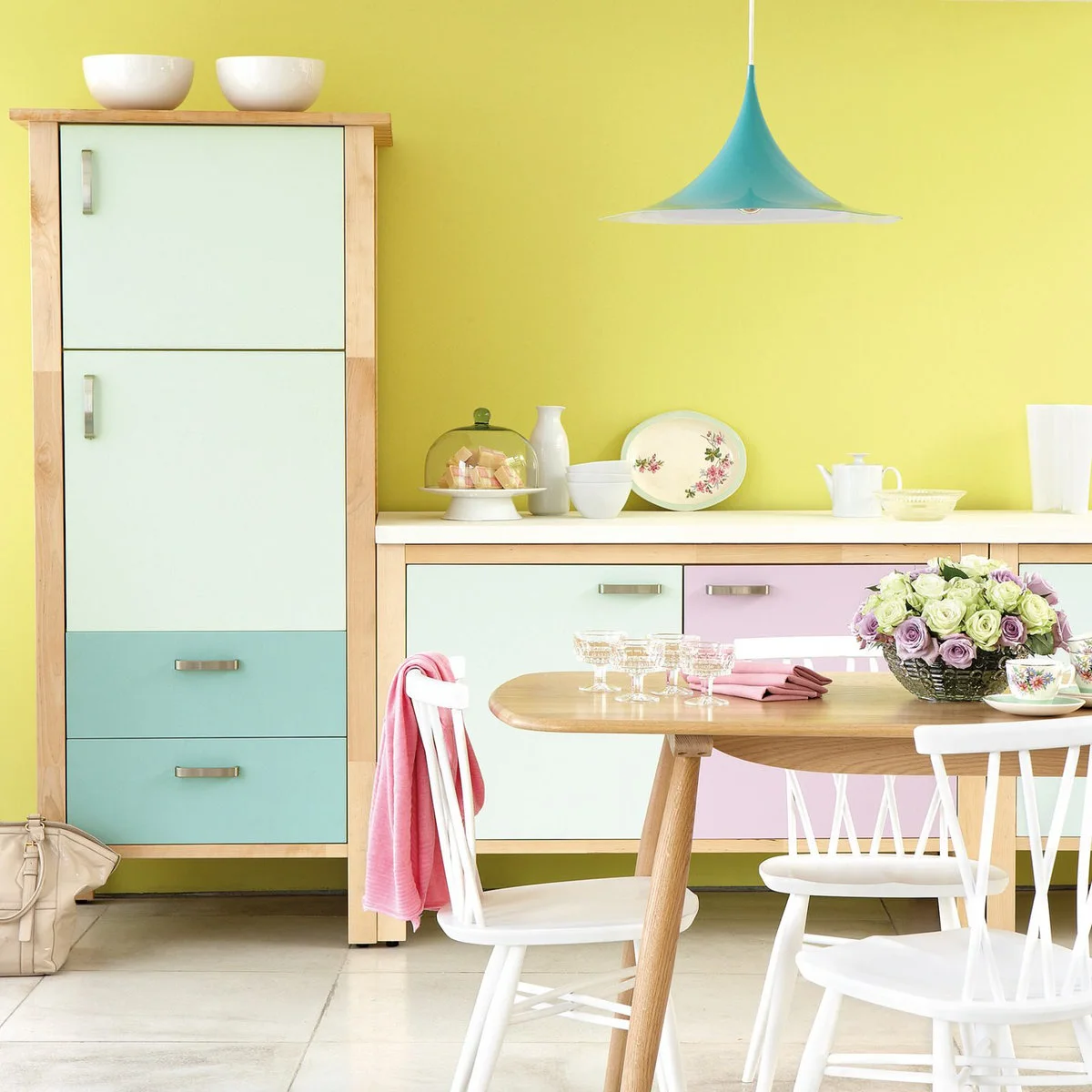
A yellow wall sits above a mix of mint, blue and lilac cabinet fronts. The wood-colored frames and dining table connect the different pastels, while white chairs and dishes repeat a calmer neutral. The colors are distributed in broad sections rather than many tiny accessories.
Lay out the proposed door colors on paper and compare real finish samples before ordering. Allow one or two tones to occupy more space so the arrangement feels intentional. Keep replacement finishes in mind, because matching several different cabinet colors later may be harder than touching up one.
PART 04
Build a Balanced Color Combination
IDEA 16 / 20
Use Yellow within a Larger Color-Block Scheme
 SaveSupport Non AI Creator
Image credit: Project: Crafted Cabinetry (via Houzz)
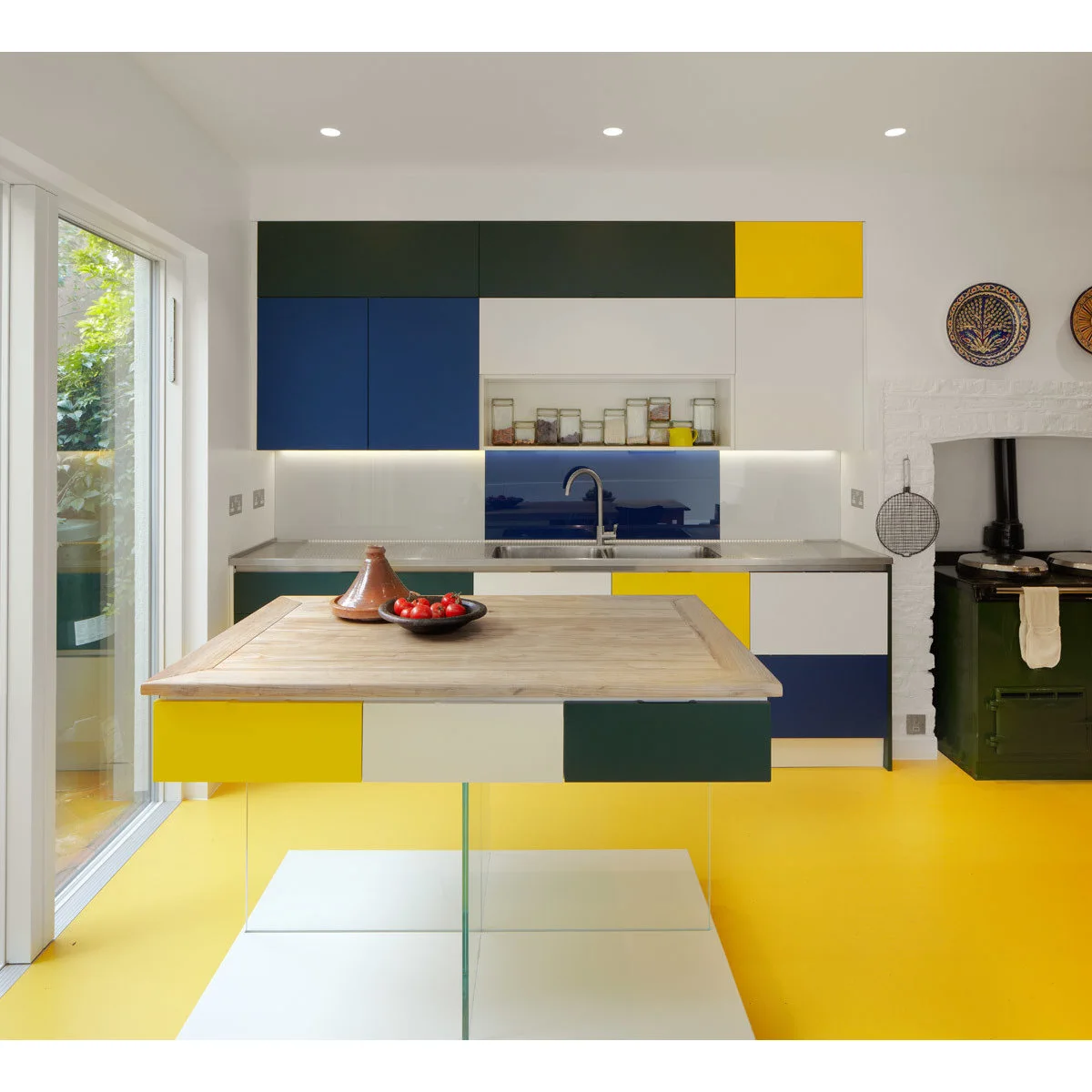
Yellow flooring and selected cabinet panels connect the color across this kitchen. Blue, dark green and white sections form a larger block pattern around the sink and central table. The wood-colored table top gives the center a quieter surface amid the contrasting painted areas.
Choose flooring by durability, slip performance and cleaning needs before settling on color. Compare the yellow under the room’s intended lamps, since a large floor changes reflected light. Keep the cabinet pattern deliberate and avoid adding unrelated patterned textiles to every remaining space.
IDEA 17 / 20
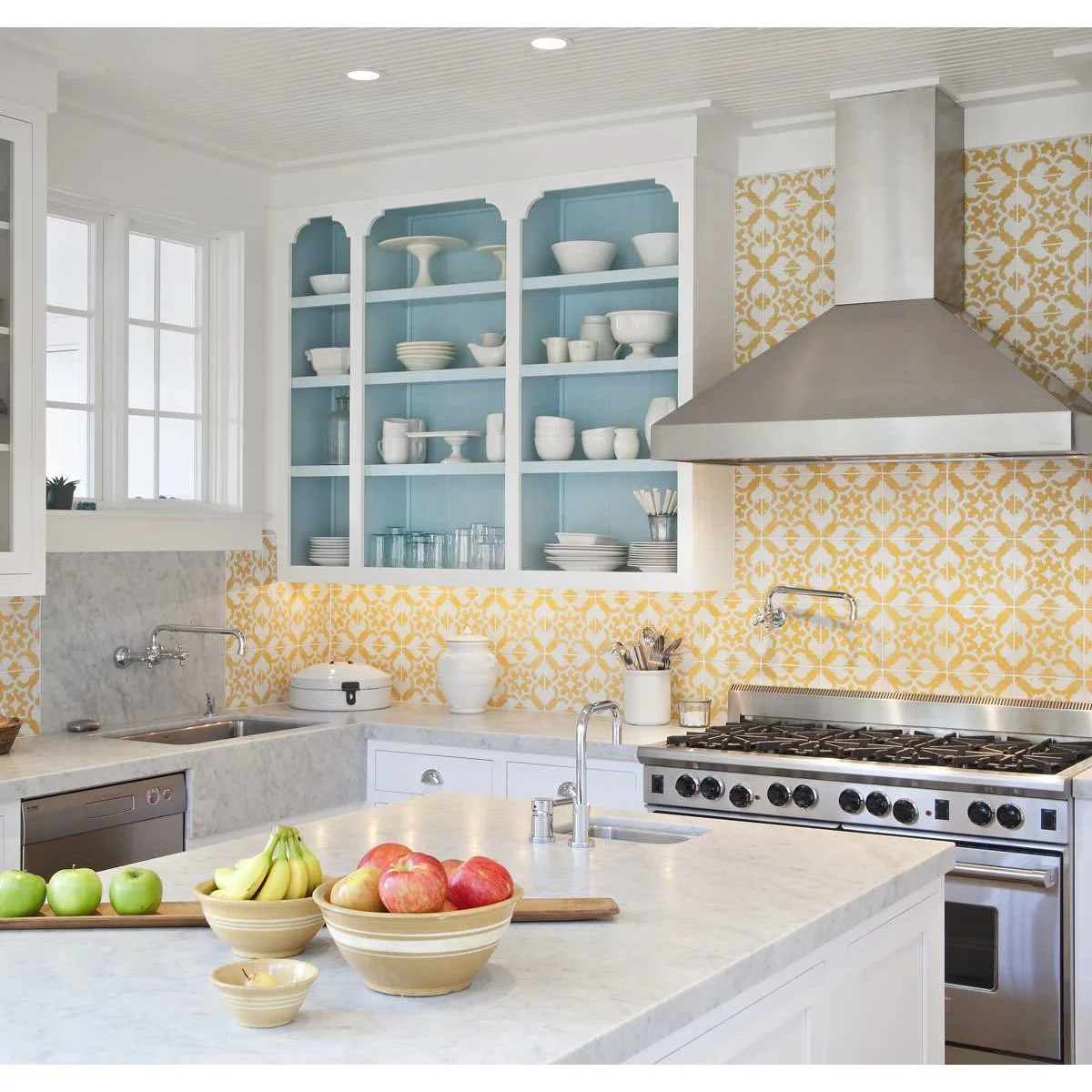
Combine Yellow Pattern with Blue Shelf Backs
 SaveSupport Non AI Creator
Image credit: Project: Jessica Glynn Photography (via Houzz)
Patterned yellow tiles wrap around the cooking area, while blue shelf backs frame rows of white dishes. The pale counters and cabinets allow both colors to remain clear. A large metal hood provides a simple central shape against the smaller repeated tile pattern.
Open dish shelves need regular cleaning, especially near cooking. Keep frequently used pieces there so the display earns its space, and check the shelf installation. Sample the tile pattern at its full repeat to avoid awkward cuts where it meets the hood or neighboring window.
IDEA 18 / 20
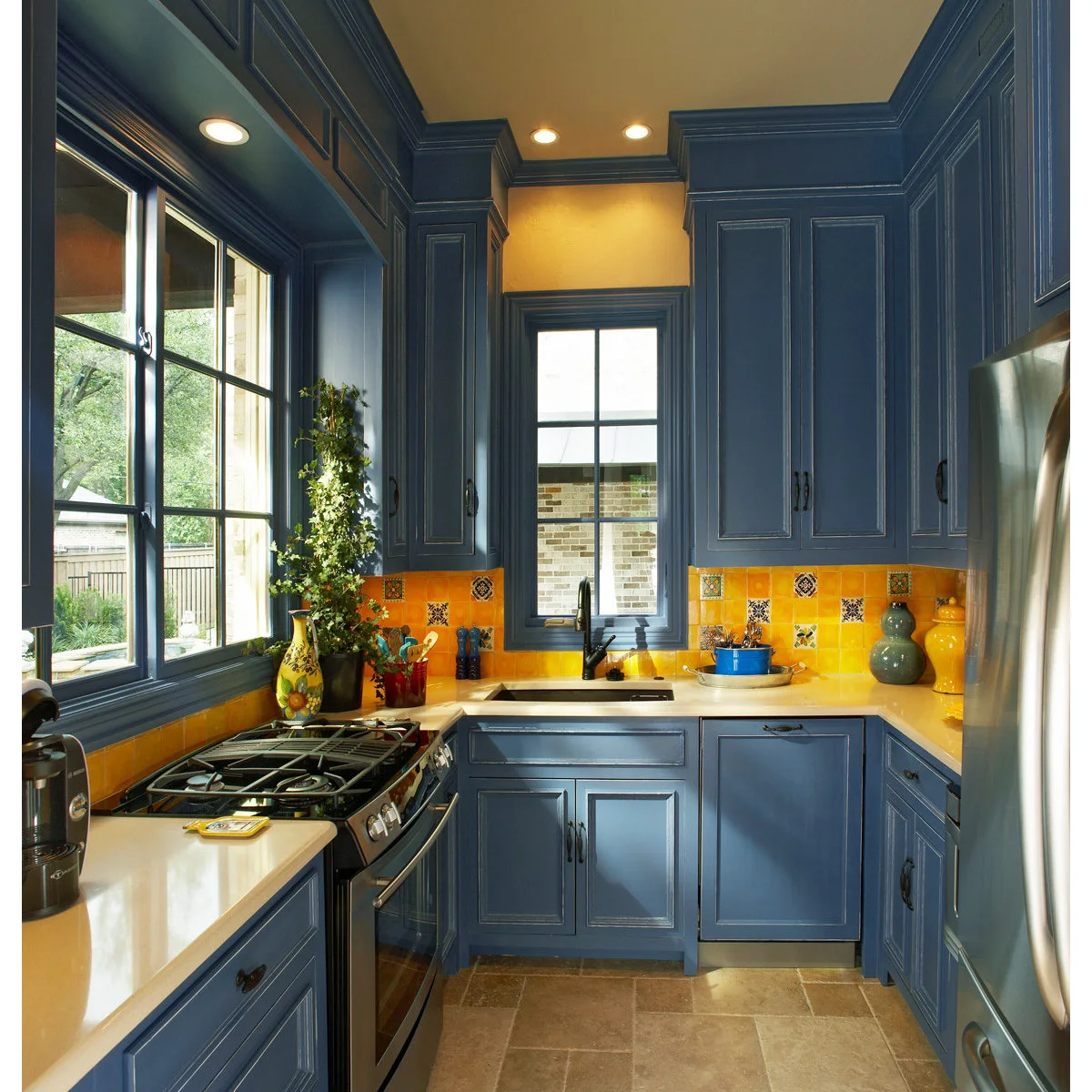
Bring Yellow Tile into a Blue Kitchen
 SaveSupport Non AI Creator
Image credit: Project: Michael Lyons Architect (via Houzz)
Blue cabinets and window trim surround a yellow tile backsplash. Small patterned tiles interrupt the solid yellow at intervals, adding detail without covering the whole wall in a dense motif. Pale counters help separate the darker cabinetry from the warmer color behind the sink.
Decide the placement of decorative tiles before installation rather than leaving the spacing to chance. Check how the pattern ends at corners and sockets. Use the yellow as a focused warm accent and keep countertop storage organized so the tile details remain visible.
IDEA 19 / 20
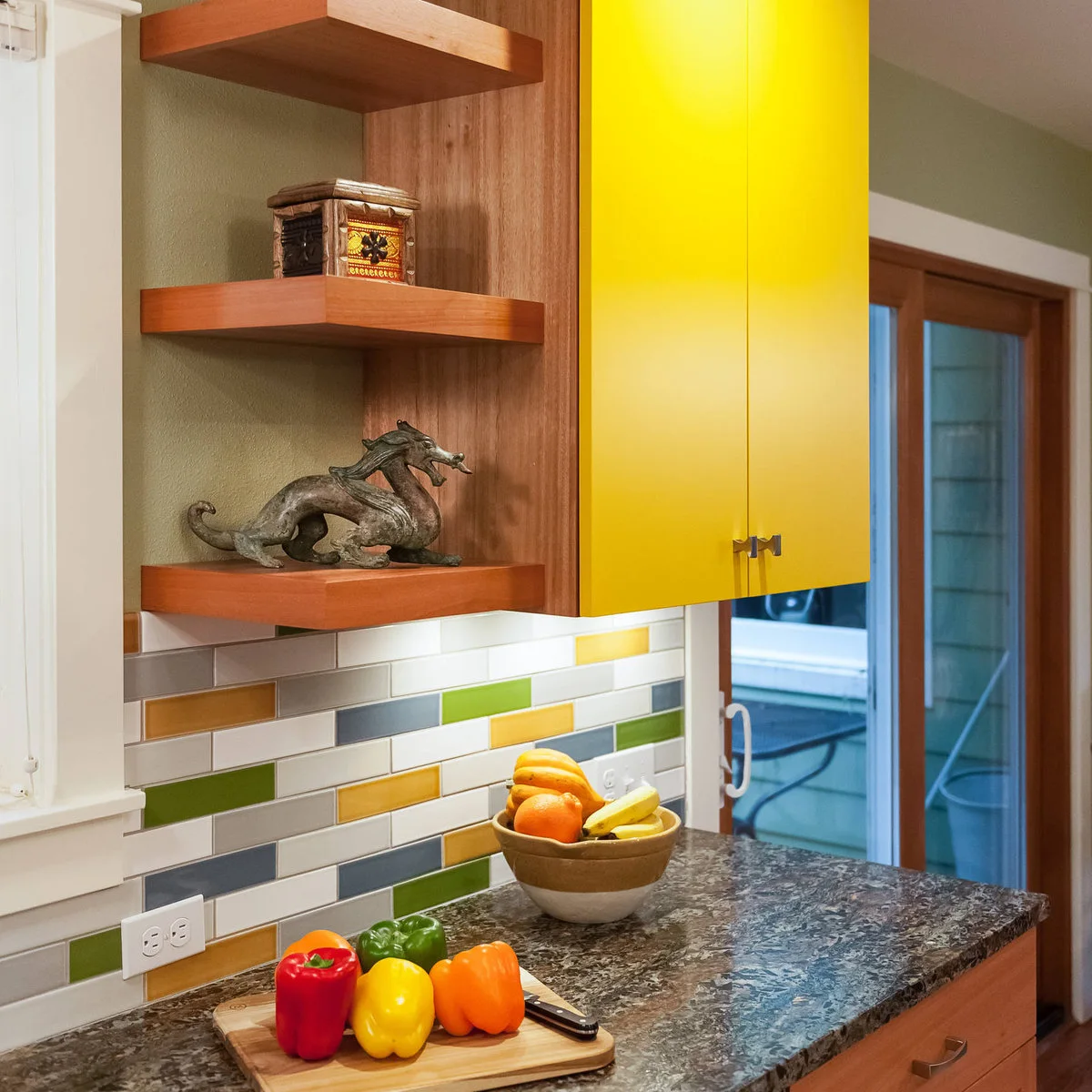
Echo a Yellow Cupboard in Mixed-Color Tile
 SaveSupport Non AI Creator
Image credit: Project: Fraley and Company (via Houzz)
A yellow upper cupboard sits beside wood-colored open shelves. Yellow, green and gray tiles repeat smaller pieces of the palette across the backsplash, linking the bright door to the darker counter. The open shelves hold a few objects without filling every available surface.
Keep display pieces away from the main preparation area and allow room to wipe the counter beneath them. Compare tile and door samples directly, because similar yellows can clash under different lighting. The mixed backsplash works best when its colors repeat finishes already present nearby.
IDEA 20 / 20
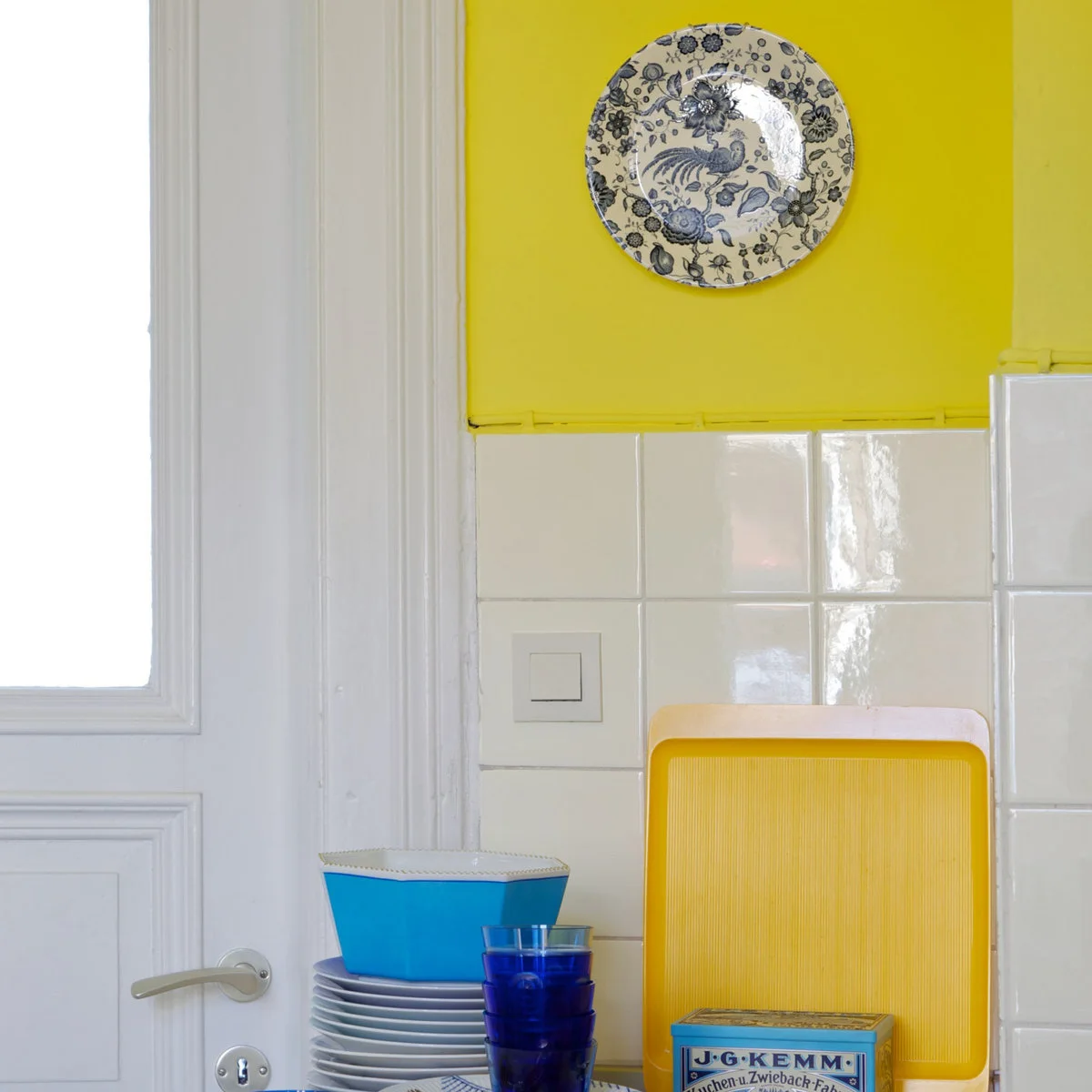
Try Yellow through Everyday Countertop Pieces
 SaveSupport Non AI Creator
Image credit: Project: Burmester Photography - Fotograf (via Houzz)
A yellow wall and tray give this countertop corner a clear color theme. Blue glasses and a blue container provide contrast against stacked white dishes and glossy white wall tiles. The close view shows how useful objects can carry color without replacing a cabinet run.
Choose a small group of items you use regularly rather than creating a permanent obstacle on the worktop. Store trays securely when they are not needed and leave room for preparation. This is a manageable way to test yellow alongside existing dishes before changing a larger surface.
BRING IT ALL TOGETHER
Choose the Amount of Yellow First
Start with the part of the kitchen you want to change: fronts, walls, tile or smaller objects. Test the yellow alongside the surfaces that will stay, including counters and flooring.
Then plan cleaning, storage and task lighting around everyday use. A well-chosen accent can have as much character as an entirely yellow kitchen when it connects clearly with the rest of the room.