Yellow can feel gentle, earthy or wonderfully bright depending on its shade and the surface it covers. A pale painted wall has a different effect from mustard curtains or a small bedside table. Start by deciding how much yellow you want to see when you enter the room.
These bedrooms show yellow alongside gray, blue, green, pink and natural wood. Each arrangement offers a practical detail to borrow, from a clearly placed paint line to bedding that can be changed without redecorating. Check your own light, furniture and cleaning needs before choosing the final combination.
PART 01
Choose the right amount of painted color
IDEA 01 / 20
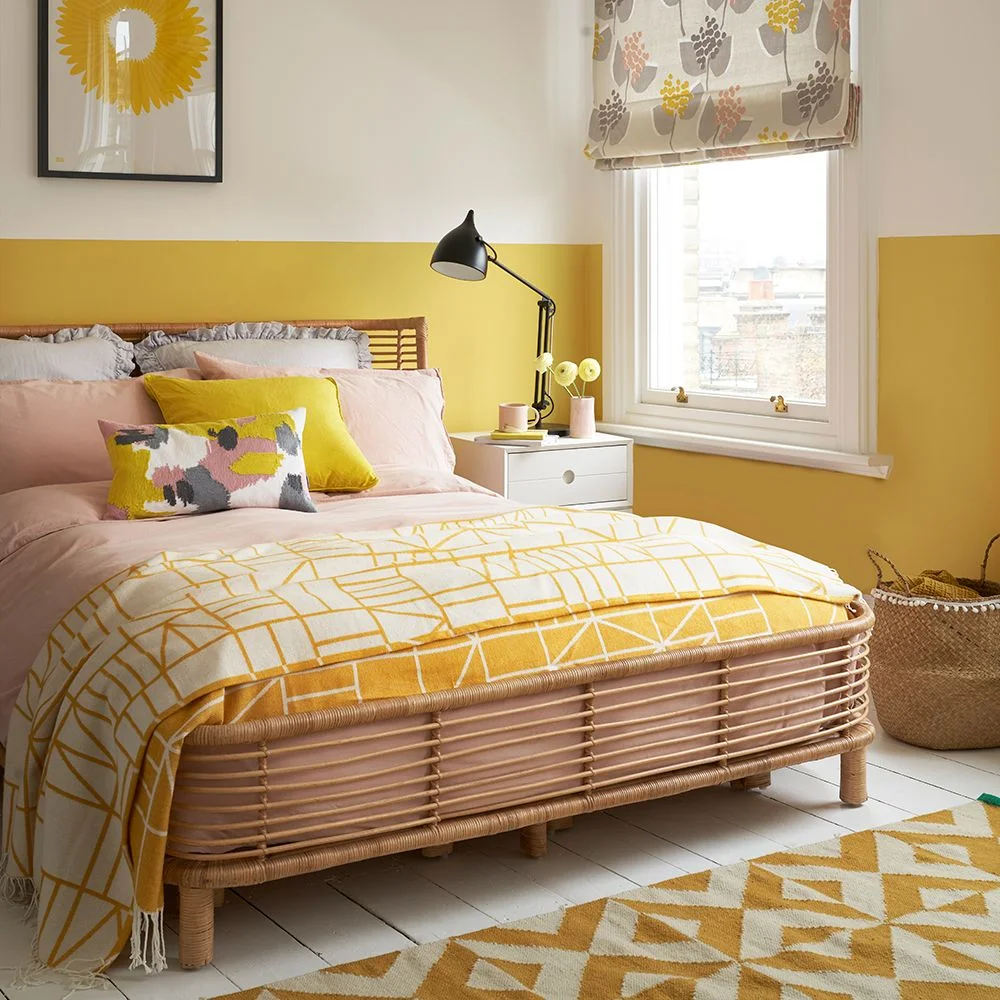
Stop Yellow Paint Halfway Up the Wall
 SaveSupport Non AI Creator
Image credit: Dominic Blackmore
Yellow forms a broad band around the lower part of this room, while the white upper wall keeps the backdrop light. Pink bedding softens the contrast, and the patterned throw repeats the yellow nearer the foot of the bed. The black lamp supplies a crisp outline among the softer colors.
Mark the paint line against the actual mattress and headboard heights before committing. A line that disappears behind furniture may look accidental when the bed moves. Try samples beside the pink textiles in daylight and lamplight, and choose a washable finish where pillows or hands regularly touch the wall.
IDEA 02 / 20
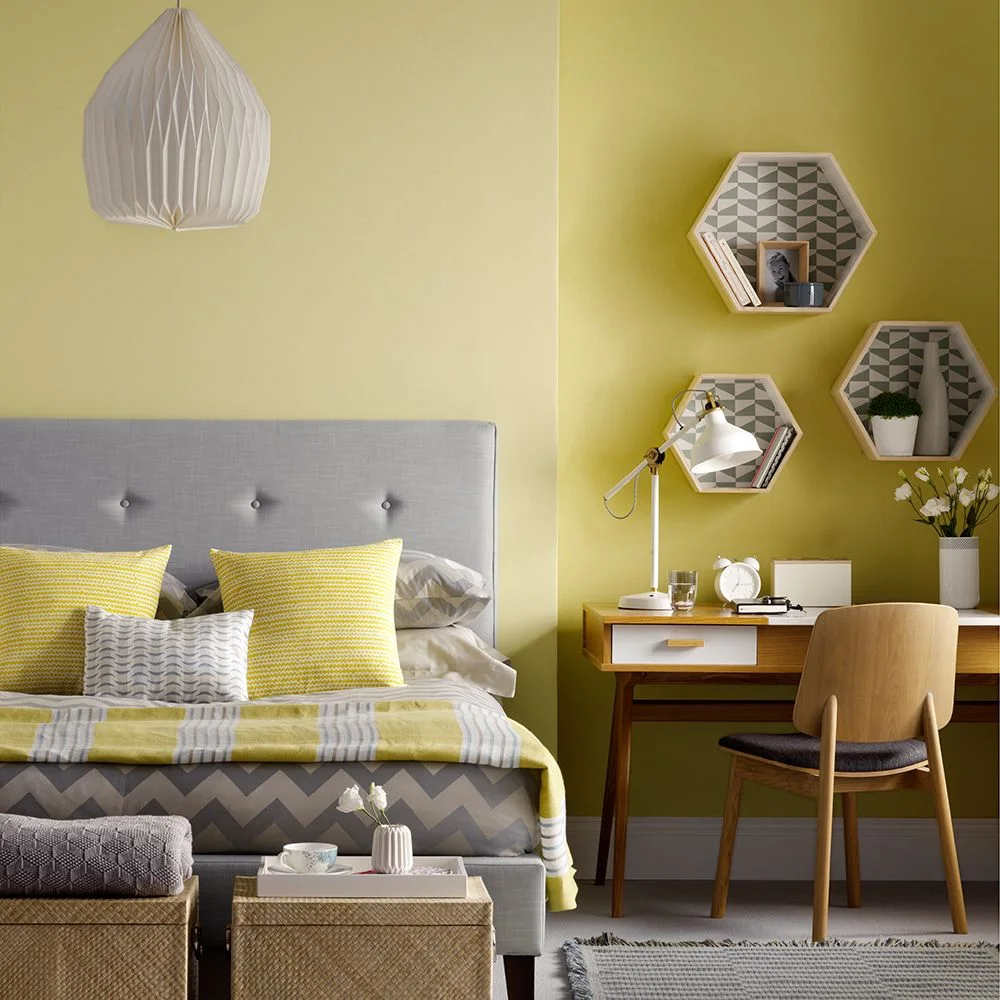
Balance Pale Lemon with Quiet Gray
 SaveSupport Non AI Creator
Image credit: Dominic Blackmore
Pale lemon walls give this bedroom its warmth without making every object yellow. The gray headboard and pillows create a quieter center, while yellow accents connect the bed to the surrounding paint. Geometric wall boxes make the desk area decorative without requiring a wide shelving unit beside the chair.
Check the desk chair clearance as carefully as the bedside space. Shallow wall storage works best for small, light belongings rather than everything normally kept in drawers. Our small bedroom decor ideas show other compact arrangements. Keep the hanging light high enough for comfortable movement and confirm its position before finalizing the desk.
IDEA 03 / 20
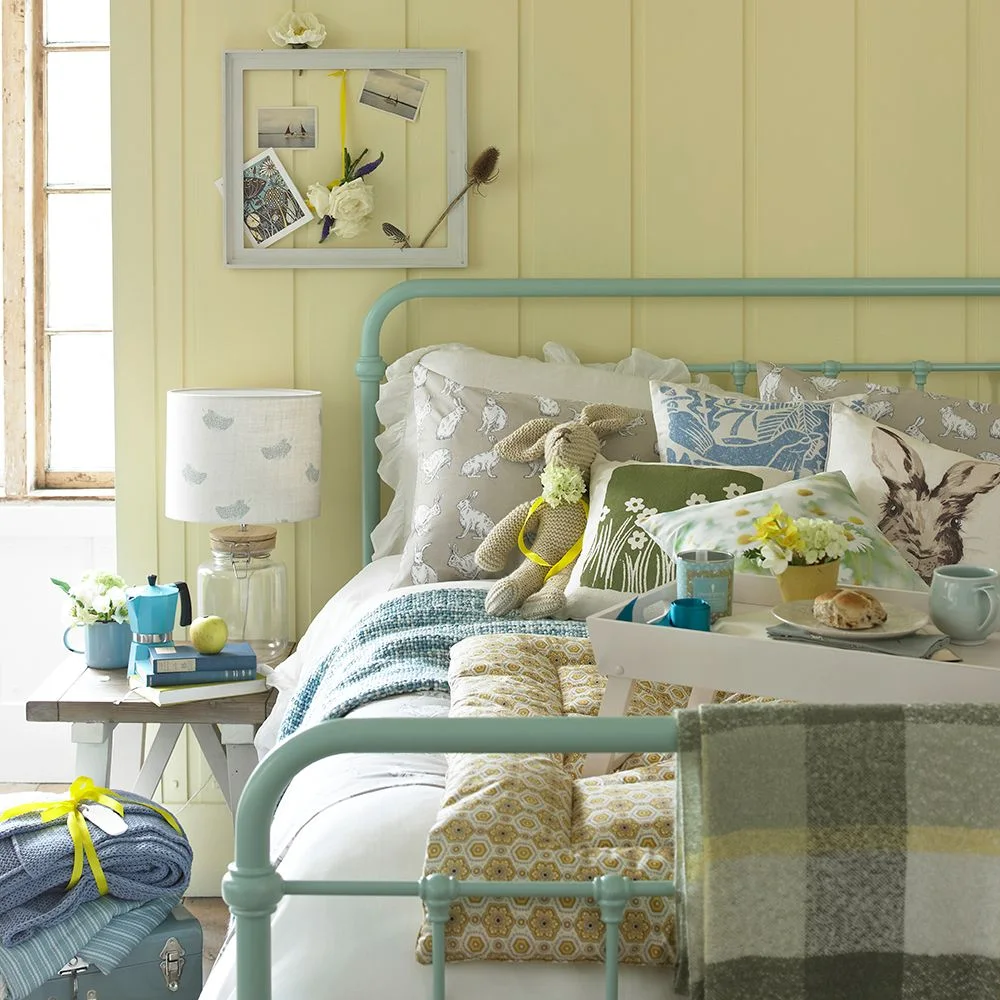
Pair Primrose Paneling with a Mint Bed
 SaveSupport Non AI Creator
Image credit: David Brittain
Vertical paneling gives the yellow wall a gentle rhythm behind the slim mint bed frame. The two pale colors feel related in strength, while patterned cushions and a patchwork throw add smaller changes of color. A blue pot on the white tray supplies a brighter accent without competing with the whole wall.
Keep enough plain bedding visible to separate several small patterns. Choose washable covers for the pieces that will be handled most, and remove decorative trays before sleeping. If adding paneling, plan the joints around sockets and the bed position. Test the yellow and mint together instead of choosing each color from separate pictures.
IDEA 04 / 20
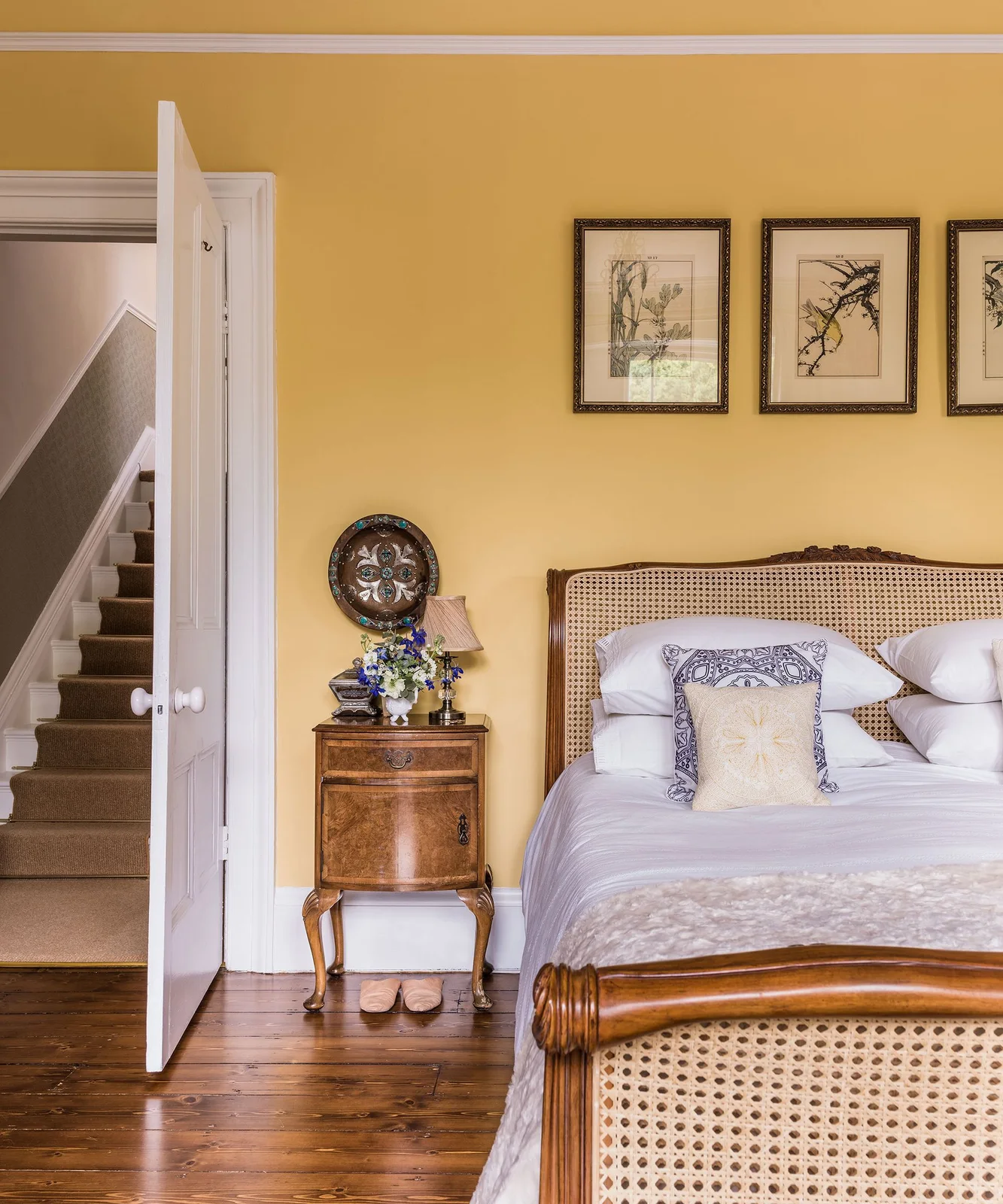
Warm a Wood Bed with Ochre Walls
 SaveSupport Non AI Creator
Image credit: Future / Mel Yates
Ochre makes a warm backdrop for the wood bed and curved bedside cabinet, allowing their outlines to remain clear. White bedding provides a broad resting area between the yellow wall and purple patterned pillows. Small bird pictures sit above the bed rather than extending the pattern across the entire wall.
Compare the paint with the actual wood finish, especially if the furniture already has a strong orange or red tone. A yellow that looks gentle on a sample card can become more intense across a complete room. Keep bedside lighting useful for reading and avoid crowding the curved cabinet top with decorative objects.
IDEA 05 / 20
Define a Recess with Muted Mustard
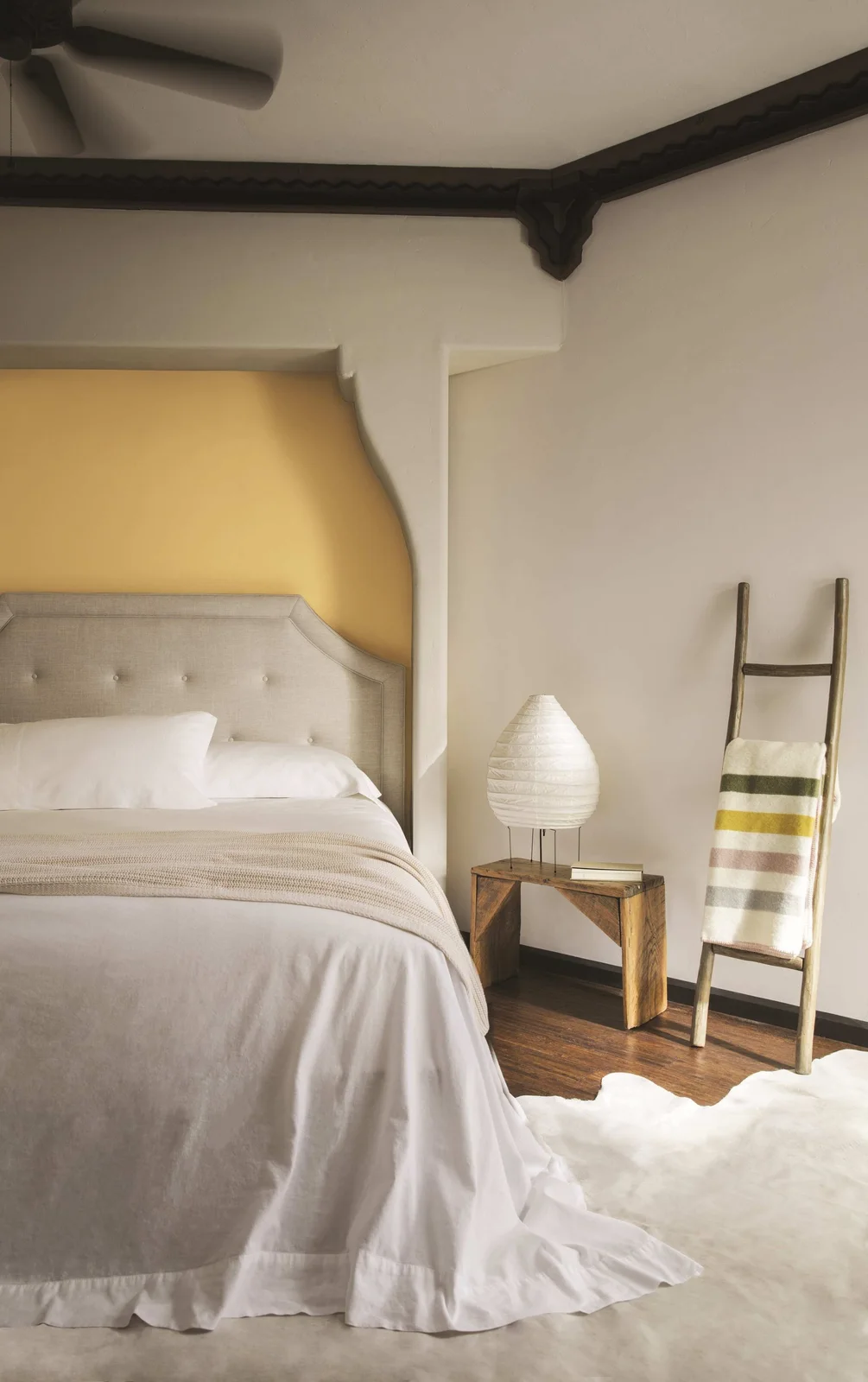 SaveSupport Non AI Creator
Image credit: Benjamin Moore
Mustard paint distinguishes the recess from the lighter wall beside it, giving the bed a clear location within the room. The neutral headboard and pale bedding keep the painted area prominent. A simple wood table and light shade introduce texture without adding another strong color to the small bedside arrangement.
Follow the actual edges of a recess for a clean stopping point, and check the color on its shaded side before painting. A bedside block needs enough usable top for your essentials and lamp. Position any leaning ladder securely outside the route around the bed, rather than treating it as a substitute for stable storage.
PART 02
Layer yellow with furniture and pattern
IDEA 06 / 20
Give Twin Beds a Shared Yellow Backdrop
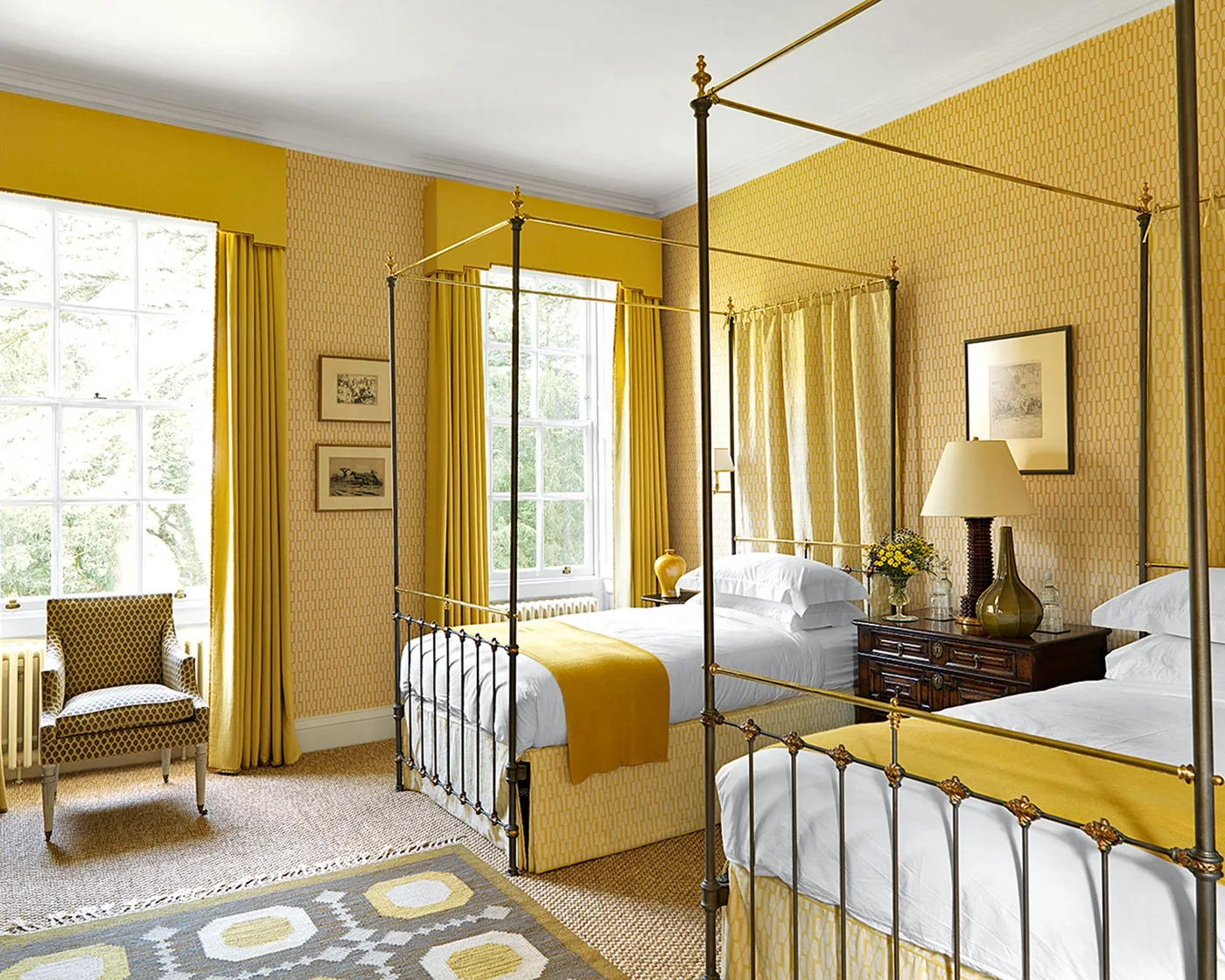 SaveSupport Non AI Creator
Image credit: Veere Grenney Associates / David Oliver
Yellow patterned sections and solid painted strips organize the long wall behind these twin beds. Matching runners repeat the color at mattress height, while the slender frames leave much of the pattern visible. A shared wood chest provides a substantial center between the beds instead of two unrelated bedside tables.
Measure access from both mattresses to the shared chest before adopting this layout. Each sleeper still needs a reachable light and a place for water or a phone. Keep curtain fabric clear of fittings and moving furniture. Our cozy guest bedroom ideas offer other ways to make shared sleeping arrangements comfortable.
IDEA 07 / 20
Layer Gold Tones with Green Bedside Cabinets
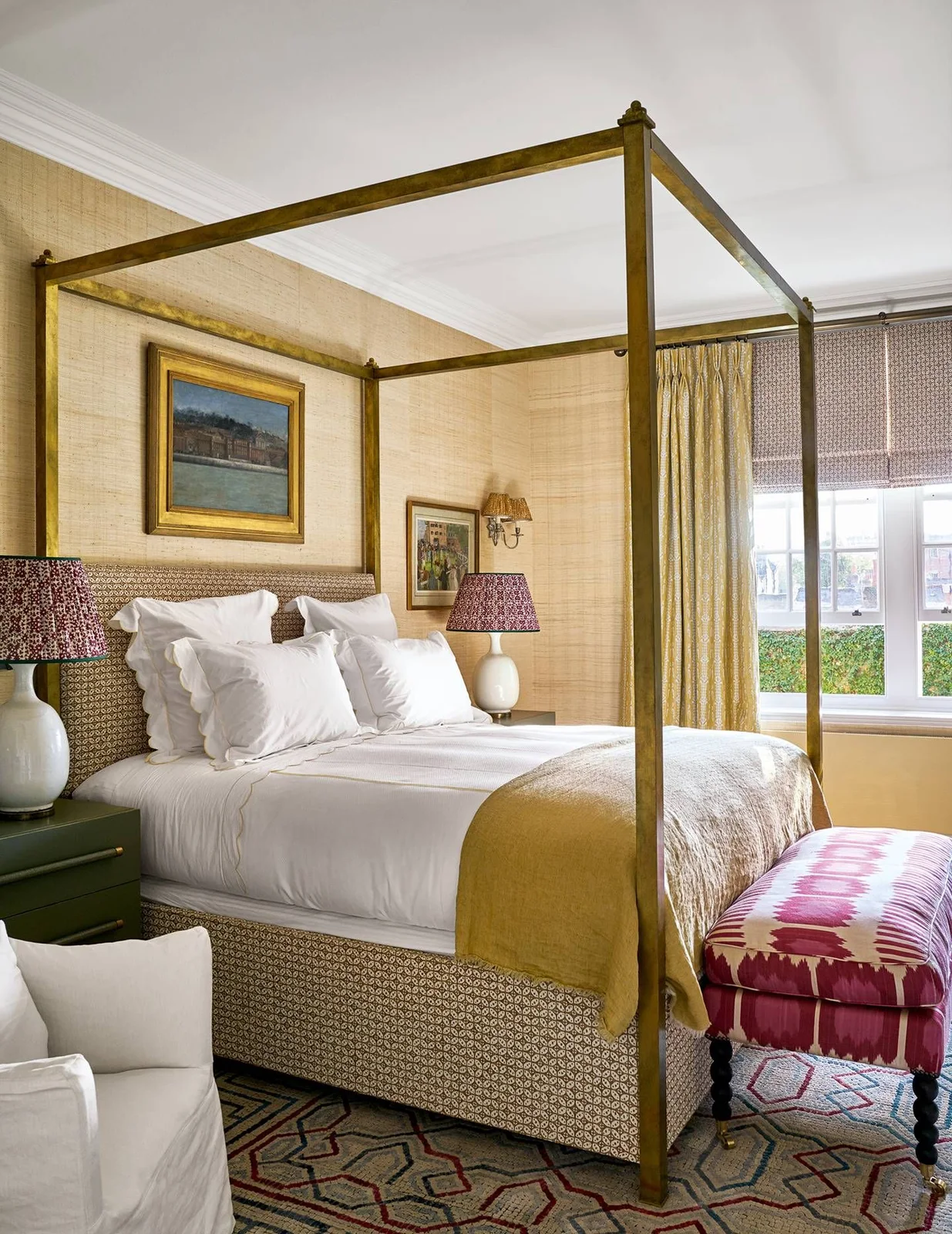 SaveSupport Non AI Creator
Image credit: Penny Morrison
Several warm yellow and gold tones appear together here, from the textured wall to the bed frame and folded throw. Green cabinets give the bedside area a contrasting color, while pink and burgundy patterns keep the scheme from feeling like a single matching set. White bedding separates these richer details.
Choose the largest warm surface first, then compare metal finishes and fabrics against it. Small differences can feel deliberate when the shapes stay simple. Leave practical room around the ottoman and check that both lamps remain useful for reading; a heavily patterned shade may cast a different quality of light from a plain one.
IDEA 08 / 20
Outline Leafy Wallpaper with a Yellow Frame
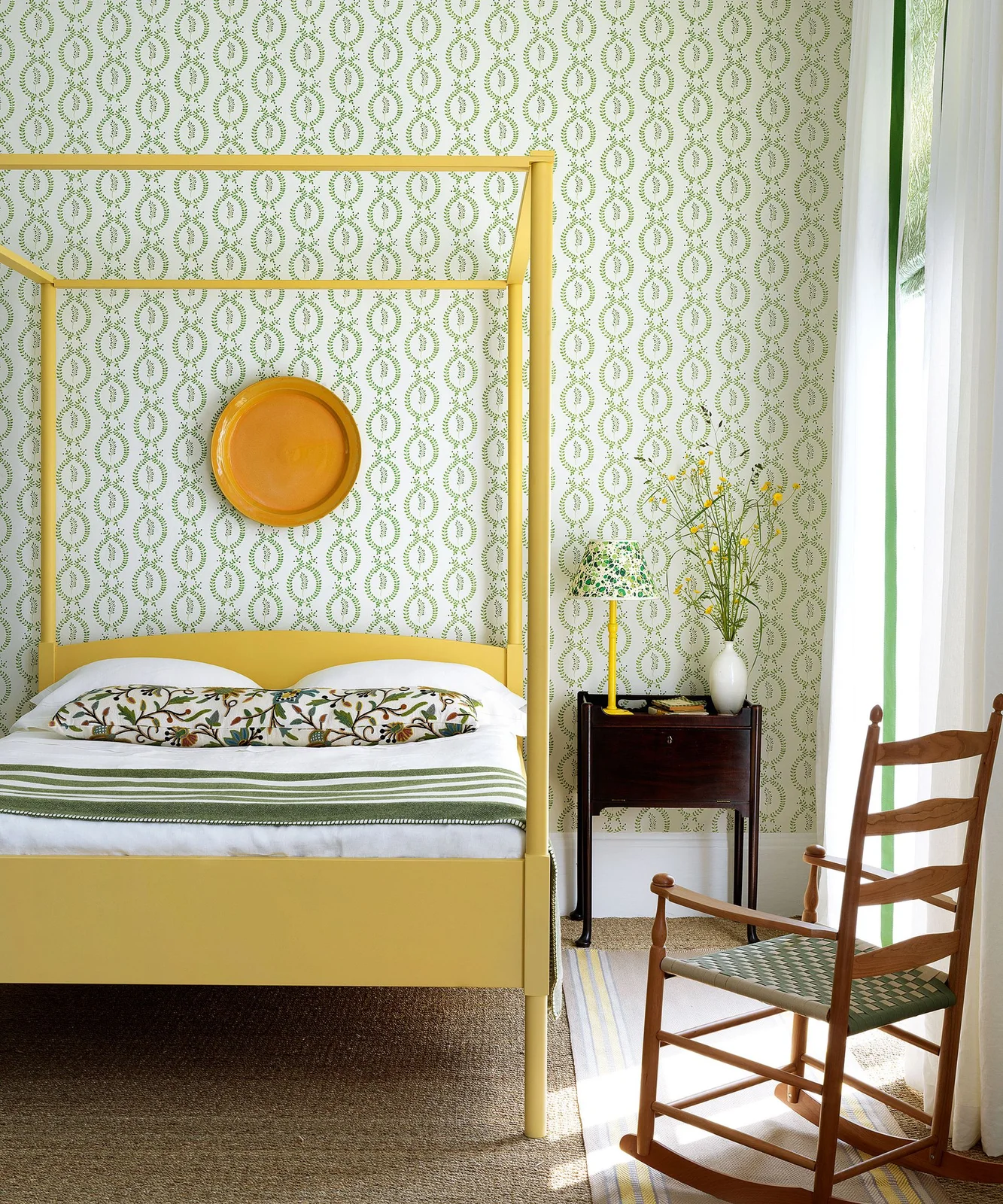 SaveSupport Non AI Creator
Image credit: Future
The yellow frame draws a strong outline across the repeating green leaves, making the bed easy to distinguish from the wall pattern. White bedding reduces the amount of competing detail. A green striped throw connects the bed to the wallpaper, while the yellow plate repeats the frame color in a smaller shape.
Hold wallpaper and frame samples together at the room rather than comparing screen colors. Check where the repeat falls behind the headboard so an important motif is not awkwardly cut off. Secure wall decorations with suitable fixings, and leave clearance around the tall frame for curtains, lights and ordinary bed-making.
IDEA 09 / 20
Pull Yellow Accents from a Botanical Pattern
 SaveSupport Non AI Creator
Image credit: Etch Design Group/Avery Nicole
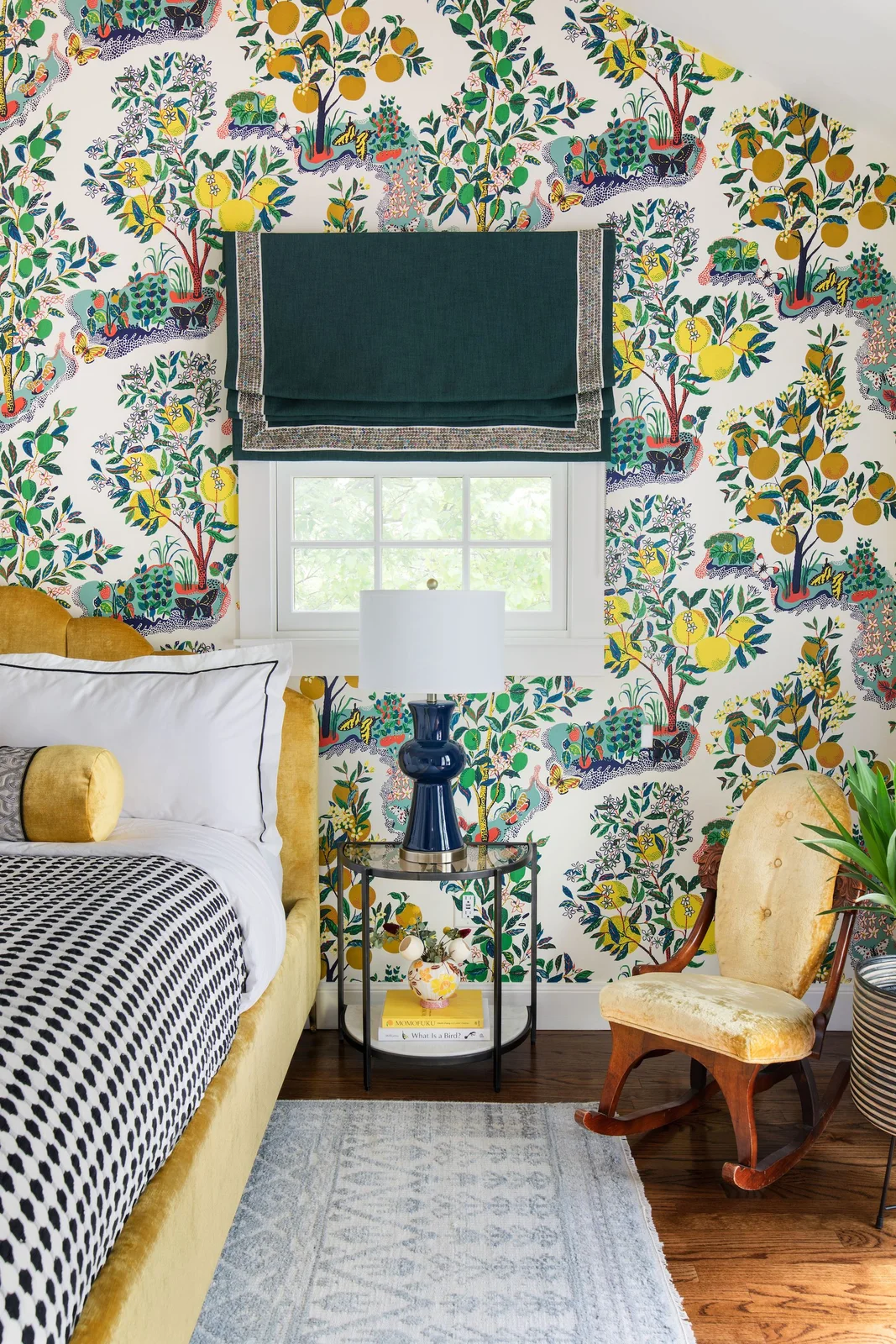
The yellow headboard and chair pick up one color from the busy botanical wallpaper instead of introducing another unrelated accent. A dark green blind brings weight to the window, balancing the brighter upholstery. White bedding and a black-and-white dotted throw create a simpler area within the detailed walls.
Choose one or two colors from the wallpaper for the large furnishings, then keep the remaining textiles more restrained. Check the rocking chair through its full movement so it cannot hit the bed or wall. Sample upholstery for cleaning and fading requirements, especially if the chair will stand in direct window light.
IDEA 10 / 20
Use Soft Yellow Under a Sloping Ceiling
 SaveSupport Non AI Creator
Image credit: Kim Armstrong Interior Design/Michael Hunter
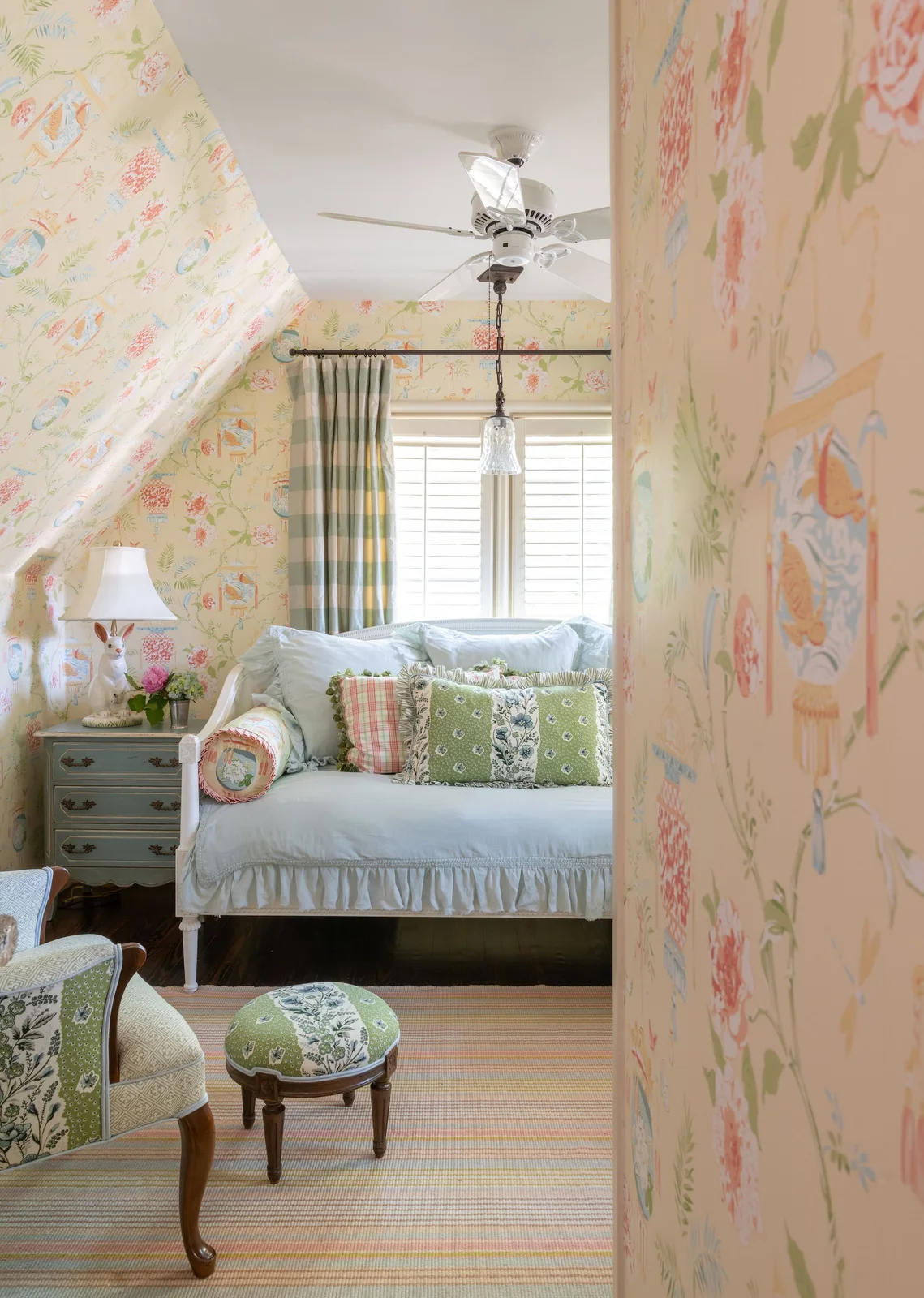
A pale yellow ground keeps the wallpaper gentle despite its birds, cages and flowers. The white daybed and light blue cover provide a clear horizontal base beneath the slope. Pastel cushions and striped curtains introduce more pattern, but their softer colors allow the wall to remain the main decorative surface.
Order enough wallpaper to align its repeat across the angled sections rather than treating each triangle separately. Leave comfortable headroom where someone sits up on the daybed. If this is an everyday sleeping space, keep the cushion count manageable and choose a cover that can be removed and washed without dismantling the whole arrangement.
PART 03
Shape the room with deeper contrasts
IDEA 11 / 20
Set Bright Yellow Pattern Against a Navy Headboard
 SaveSupport Non AI Creator
Image credit: M.Lavender Interiors/Janet Mesic Mackie
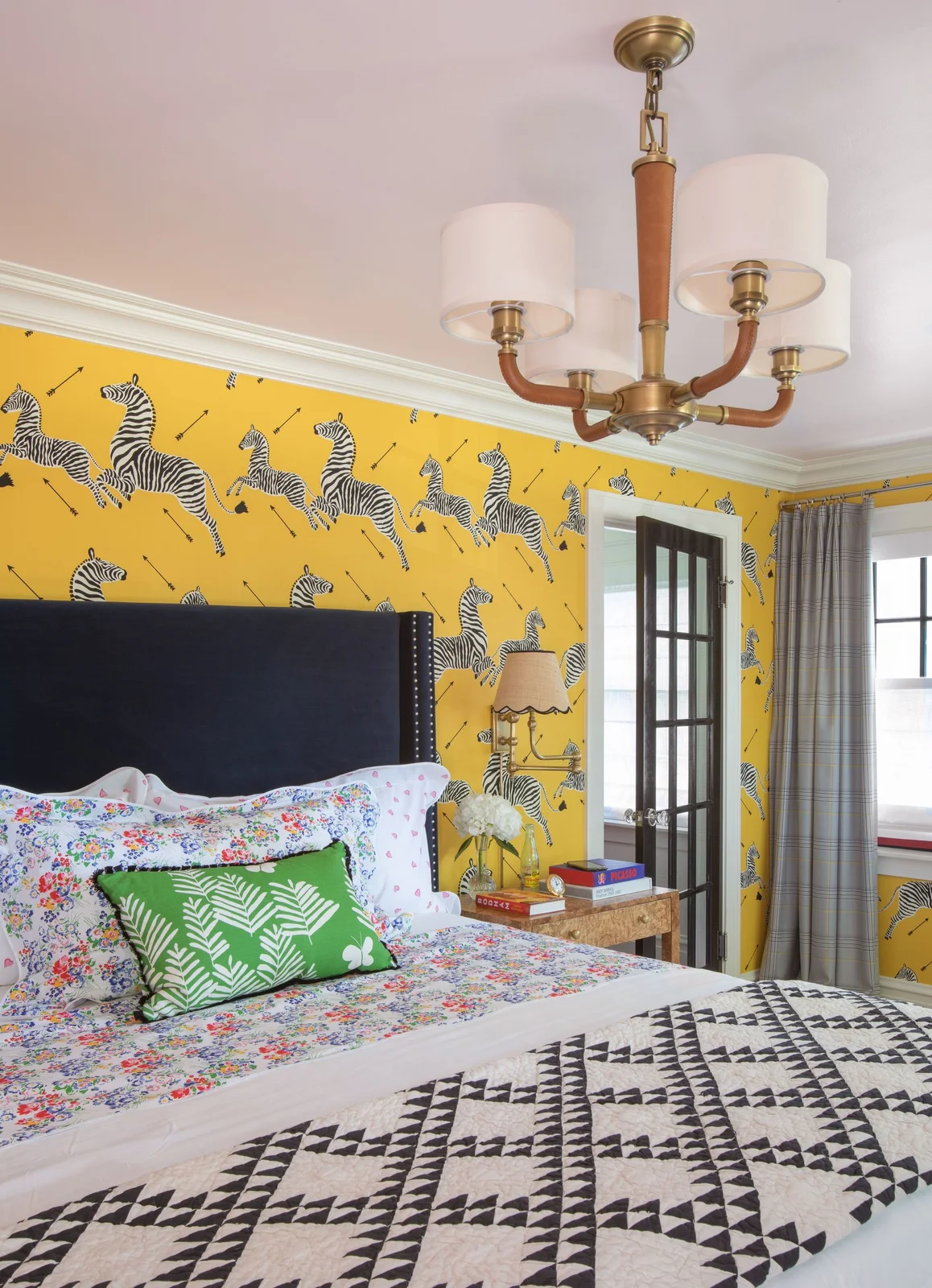
The tall navy headboard creates a solid pause in the lively yellow wallpaper. Floral bedding introduces a different pattern scale, while the dark throw relates back to the headboard. Gray curtains reduce the number of strong colors around the window, allowing the yellow wall to carry most of the energy.
Try a generous wallpaper sample behind the actual headboard fabric before ordering. A large solid shape can balance busy walls more easily than several small accents. Our dark blue bedroom ideas explore similar deep contrasts. Keep extra pillows easy to remove at night, and compare the wallpaper under the lamps you will use.
IDEA 12 / 20
Repeat Ochre in a Calm Twin Room
 SaveSupport Non AI Creator
Image credit: Albion Nord
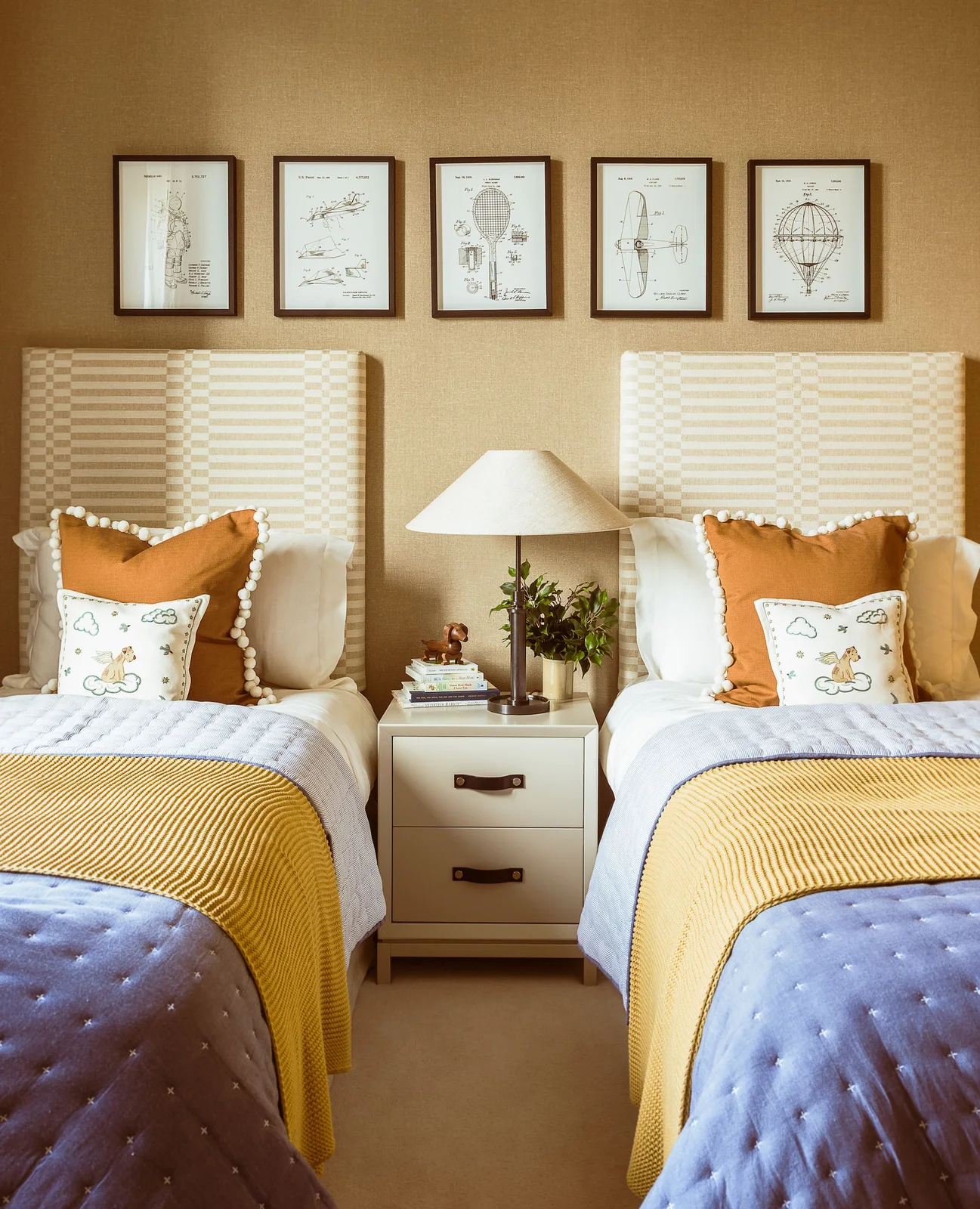
Muted golden walls connect the twin beds without making the room depend on bright yellow furniture. Matching ochre cushions and knitted throws repeat the wall color, while blue quilts provide a cooler contrast. The central white chest and pale headboards give the arrangement a lighter structure beneath the small grouped pictures.
Check whether a shared lamp provides enough light for both sleepers or whether each needs an independent reading light. Keep the chest reachable from both beds without stretching over a large gap. Use similar bedding sizes for easy laundering, but allow each sleeper a practical place to store personal belongings separately.
IDEA 13 / 20
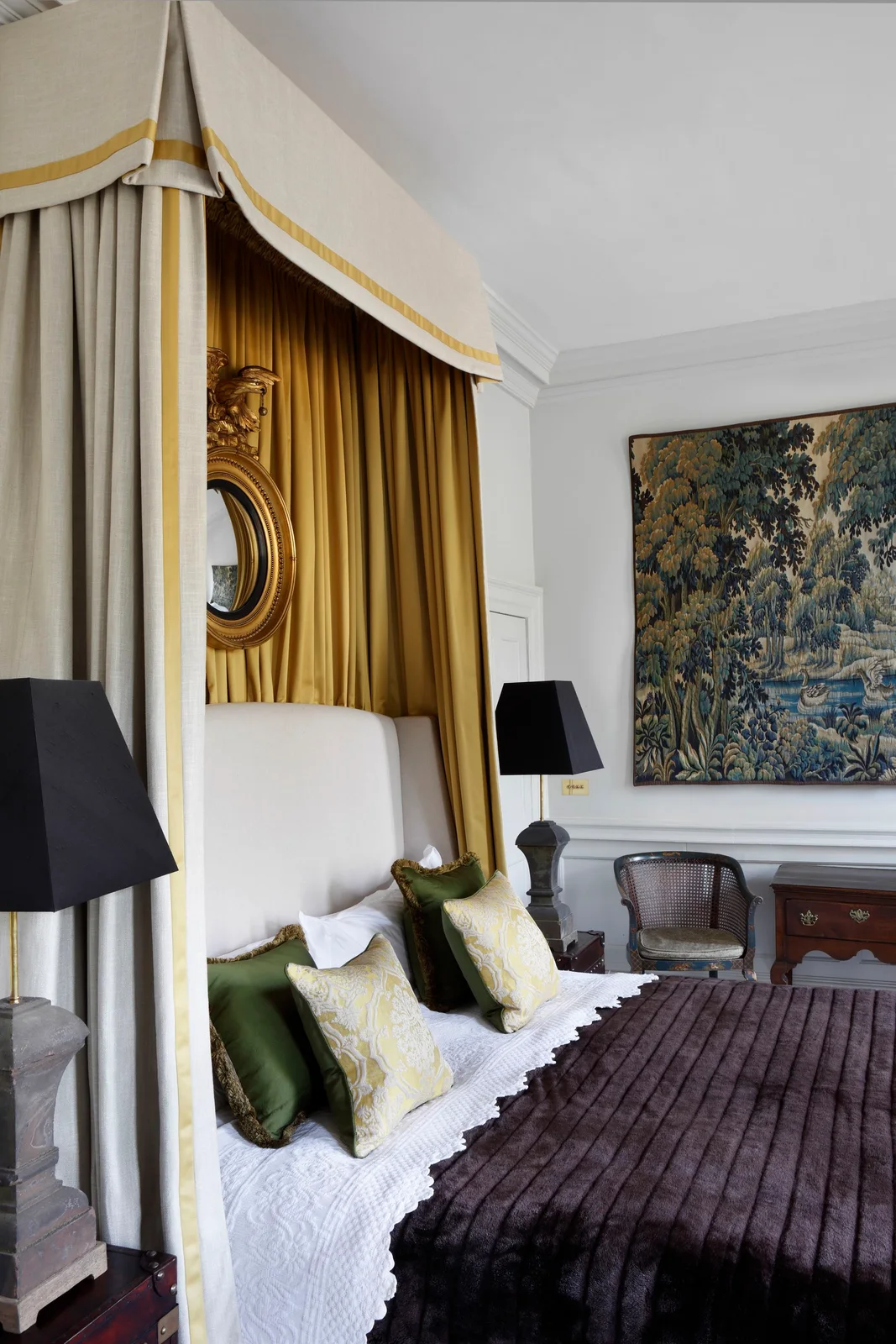
Frame Mustard Curtains with Cream Fabric
 SaveSupport Non AI Creator
Image credit: VSP Interiors
Mustard fabric creates a warm vertical panel behind the bed, while the cream outer fabric defines its edges. Plum bedding supplies a deep contrast lower in the room. The round mirror breaks up the straight folds, and dark lamps give the bedside tables a clear outline against the lighter headboard.
Treat a fabric crown as a fitted installation that needs secure fixings and a clear plan for cleaning. Keep fabric away from lamps, heat sources and moving parts. This adult bedroom arrangement should not be copied around a crib. Test the mustard against the bedcover, since both cover large areas in the same view.
IDEA 14 / 20
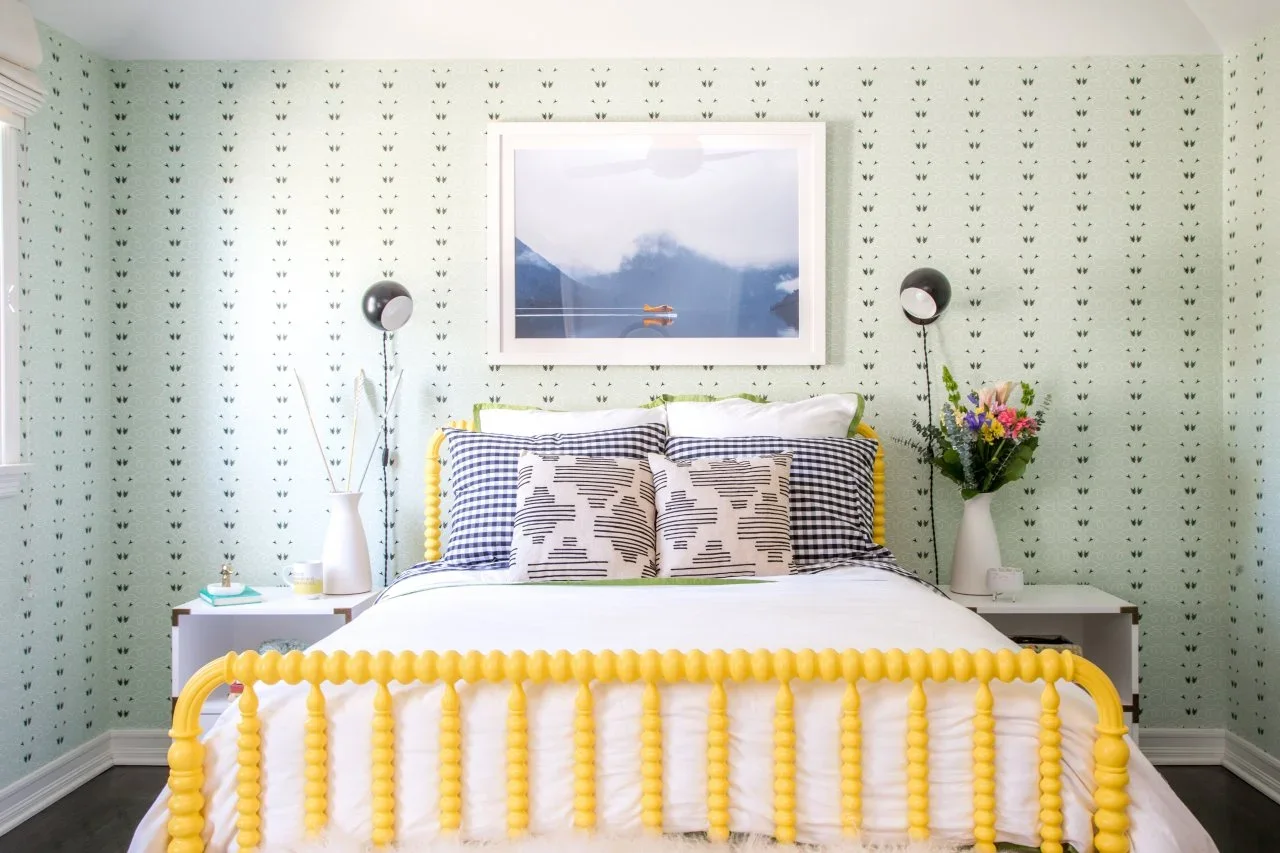
Make a Yellow Spindle Bed the Main Accent
 SaveSupport Non AI Creator
Image credit: Photo: Bethany Nauert. From: Dee Murphy
The yellow bed gives the room a clear focal point while the pale mint wall stays comparatively quiet. Black-and-white checks add a graphic layer to the bedding, connecting with the dark wall lights. The large blue picture introduces a cooler block above the frame without requiring another patterned wall.
If repainting an existing bed, follow a coating system appropriate to its surface and allow it to cure fully before use. Check that joints and moving parts remain functional. Keep the picture securely fixed and place wall lights where they can be reached comfortably without projecting into the space used for sitting up.
IDEA 15 / 20
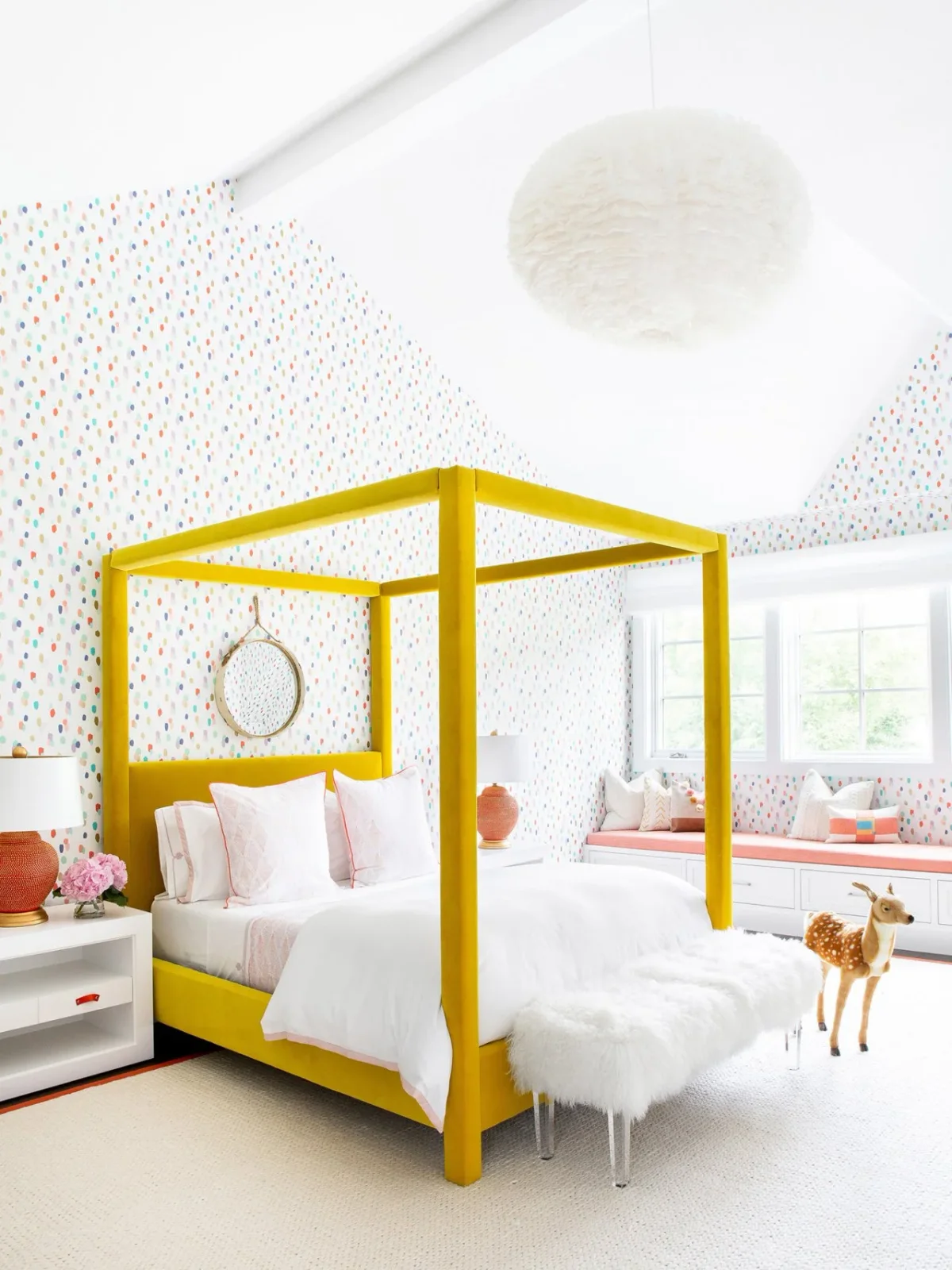
Use a Yellow Four-Poster in a Light Room
 SaveSupport Non AI Creator
Image credit: Photo: Sarah Elliott. From: Chango and Co.
The yellow four-poster fills the center of this otherwise pale room with a strong architectural shape. White bedding makes its tall posts easy to read, while pink edging and the peach window-seat cushion soften the contrast. The small scattered wall pattern adds movement without becoming a second large focal point.
Allow walking space around all four posts and check their relationship with overhead lighting before choosing a tall bed. For a child, use an age-appropriate frame and secure nearby furniture. Keep the window seat arrangement compatible with safe window access, and choose upholstery with care requirements that suit regular handling.
PART 04
Make yellow work with existing furniture
IDEA 16 / 20
Soften Heavy Woodwork with Warm Yellow
 SaveSupport Non AI Creator
Image credit: Photo: Dan Tullos. From: Colorado Group Realty
Warm yellow links the dark window trim, exposed beams and wood bedside tables rather than letting each appear as a separate heavy outline. Pale bedding and upholstery lighten the middle of the room. Rust-patterned cushions repeat the warmer notes in the wood while introducing a small, concentrated area of detail.
Test yellow beside the darkest trim as well as on an open wall, because the contrast changes its appearance. Keep window treatments from obscuring hardware or limiting operation. Choose bedside tables with enough usable surface for lamps and essentials, and leave the open shelf practical instead of filling it entirely with display objects.
IDEA 17 / 20
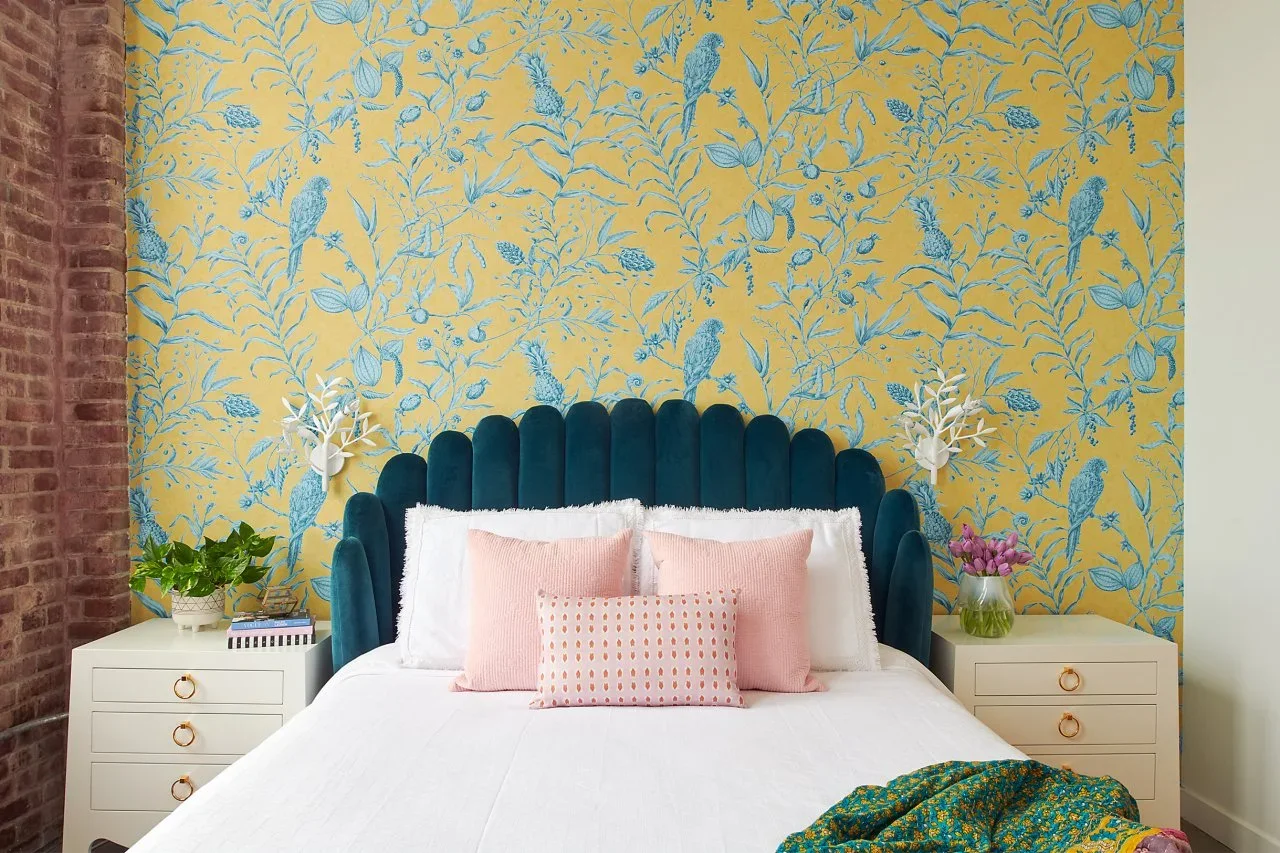
Contrast Yellow Wallpaper with a Blue Scalloped Headboard
 SaveSupport Non AI Creator
Image credit: Photo: Rebecca McAlpin. From: Michelle Gage Interiors
Blue birds and foliage connect the yellow wallpaper to the deep blue headboard, so the contrast has a clear relationship. The scalloped upholstery repeats the softness of the leafy forms without copying them exactly. Pale pink cushions add a gentler accent, while the white bedcover and drawer tables keep the lower area lighter.
Compare the blues in the wallpaper and upholstery together; they need not match exactly, but a large difference may change the intended balance. Check the headboard height against the wallpaper repeat. Our bedrooms with paneling offer a quieter alternative if this much pattern would feel too active beside your bed.
IDEA 18 / 20
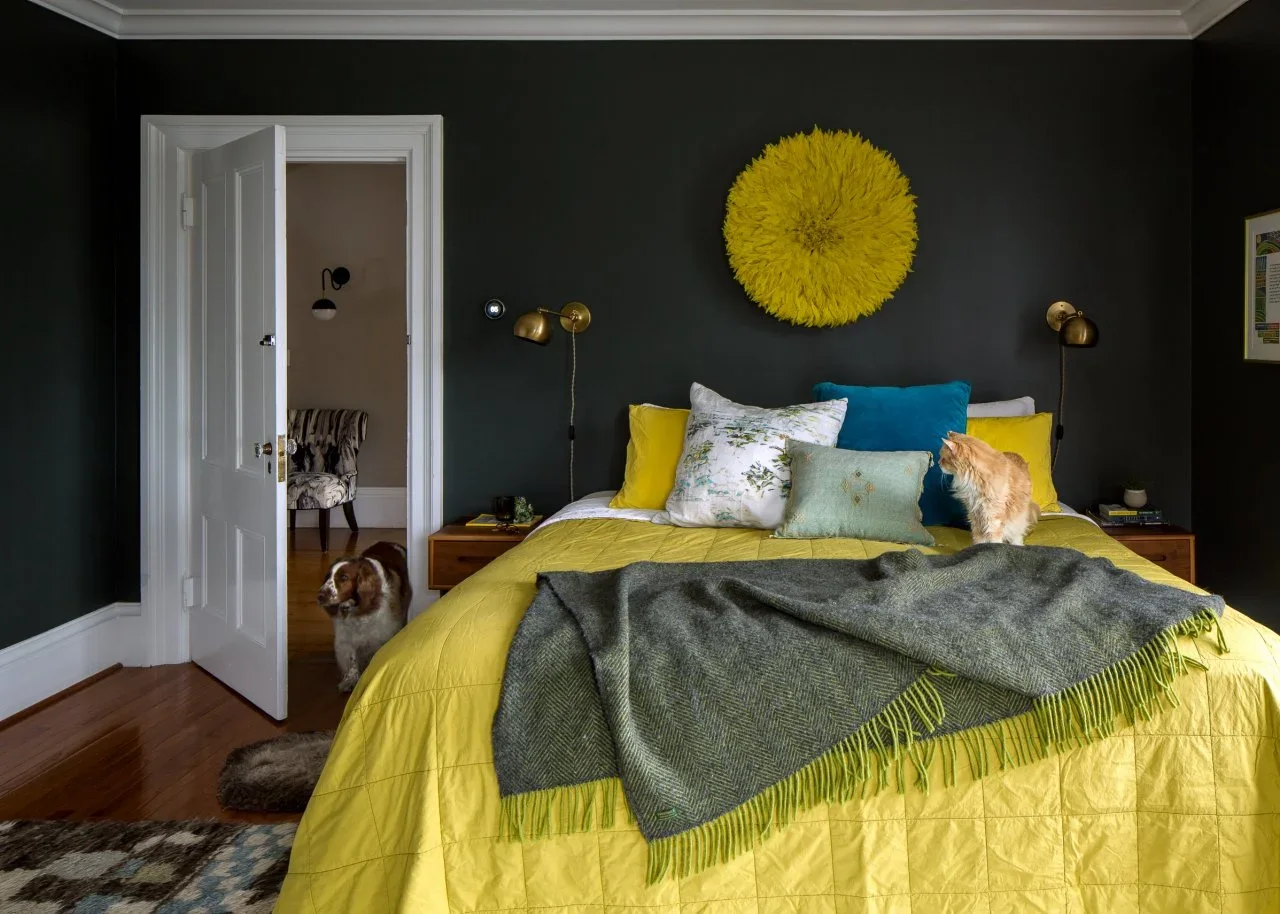
Brighten Charcoal Walls with Washable Yellow Bedding
 SaveSupport Non AI Creator
Image credit: Photo: Sean LItchfield. From: Casagrande Studio
Yellow occupies the most easily changed surfaces here: the bedcover, cushions and round wall ornament. Against charcoal walls, those pieces appear especially bright. Blue pillows and a green throw bridge the strong contrast, while wood bedside tables and small wall lights keep the practical furniture relatively simple.
For a room shared with pets, prioritize washable covers and a throw that can be removed for frequent cleaning. Check fabric care labels rather than assuming a color hides hair or marks. Test charcoal on several walls first, and keep lighting useful enough that the room works after the bright bedding is folded away.
IDEA 19 / 20
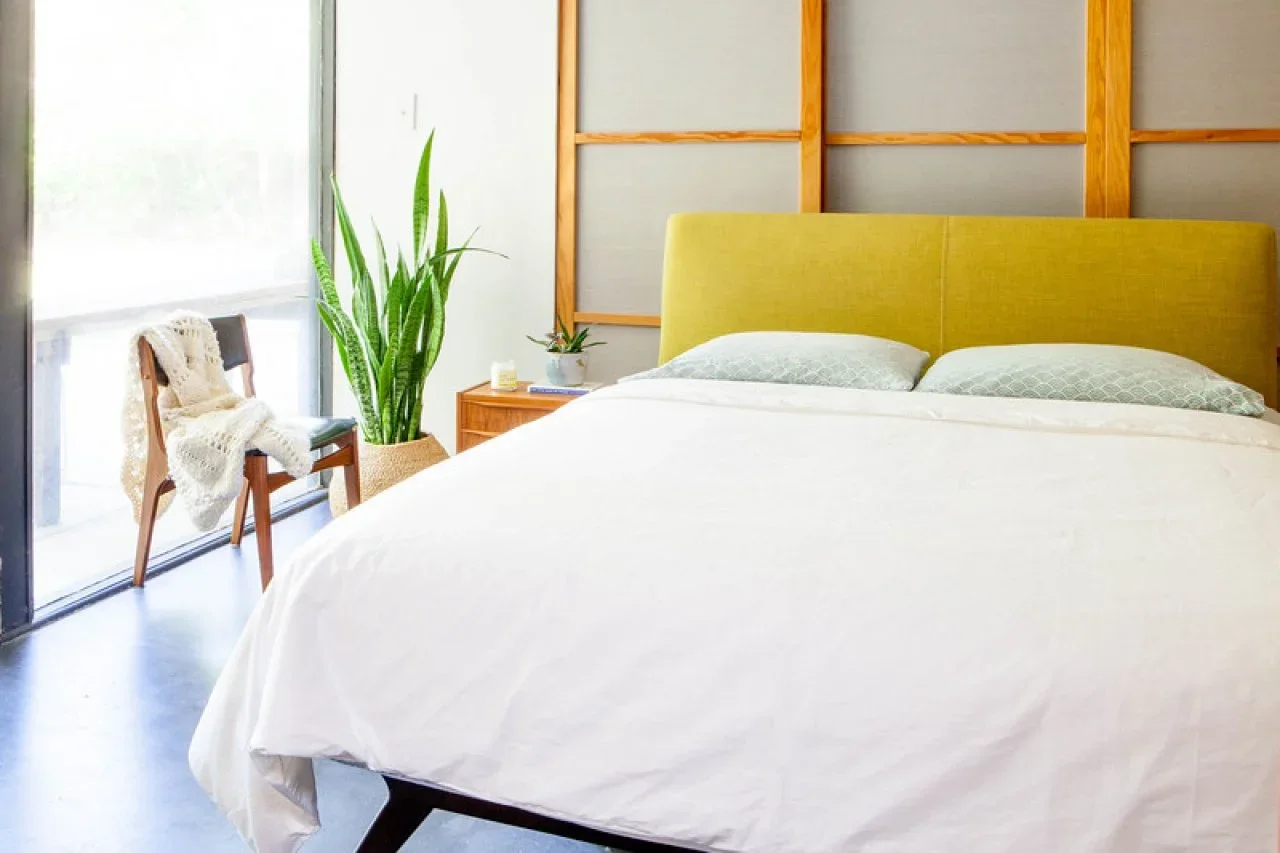
Keep a Yellow Headboard Beside Natural Wood
 SaveSupport Non AI Creator
Image credit: Photo: John Shum
The plain yellow headboard adds a warm block of color while allowing the wood grid behind it to remain visible. White bedding keeps the composition spare, and the bedside cabinet repeats the wood tone at a lower level. Plants add varied outlines beside the glazing without introducing another large piece of furniture.
Choose the headboard fabric for the contact and cleaning it will receive, especially around the top edge. Keep plant pots stable and protect furniture from watering spills. Check daylight conditions for the plants you select, and leave the chair and its throw clear of the route to the window or door.
IDEA 20 / 20
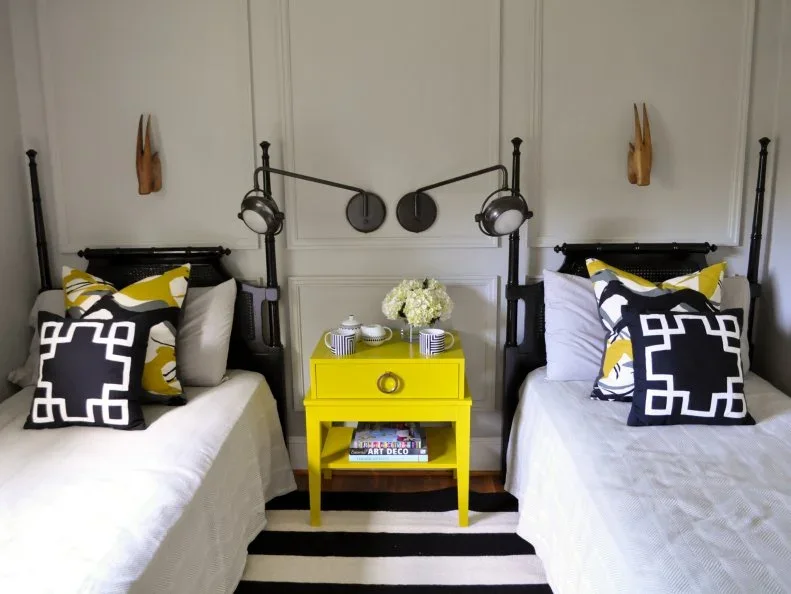
Share One Bright Bedside Table Between Twin Beds
 SaveSupport Non AI Creator
Image credit: From: evaru design
A single yellow table gives this black-and-white twin room its strongest color. The patterned cushions repeat small yellow accents, connecting each bed to the shared center. Wall-mounted lights free the tabletop from bulky lamp bases, leaving useful space for the two sleepers while maintaining a balanced arrangement.
Measure reach from both beds before placing a shared table between them. Give each light its own accessible control and check that its arm cannot swing into someone sitting up. Keep the top clear enough for everyday essentials, and use the lower shelf for a small selection of books rather than an unstable stack.
BRING IT ALL TOGETHER
Choose one large yellow surface first
Start with the wall, bed frame or textile that will carry most of the color. Compare the remaining pieces against it in the actual room, including after dark. A sample beside your existing woodwork and bedding is more useful than choosing several unrelated yellows from separate photographs.
Keep the everyday arrangement comfortable as the decorative layers grow. Leave bedside space for real essentials, use washable textiles where they are handled frequently and plan secure fixings for lights and wall decorations. The strongest room is one whose colors still work when the extra cushions and throws are put away.