A wood burning stove becomes part of the room long before the first fire is lit. Its shape, the wall behind it and the way furniture faces it all affect how the space feels. These photographed examples offer different ways to make that visual relationship work.
Use the rooms as inspiration for colors, textures and proportions. Have a qualified installer assess the actual appliance, flue, hearth, wall construction and local requirements before choosing a layout. Furniture, firewood and decorations shown in a photograph do not establish safe operating distances.
PART 01
Give the Stove a Clear Backdrop
IDEA 01 / 15
Set a Dark Recess into a Pale Wall
 SaveSupport Non AI Creator
Image credit: David Butler Photography
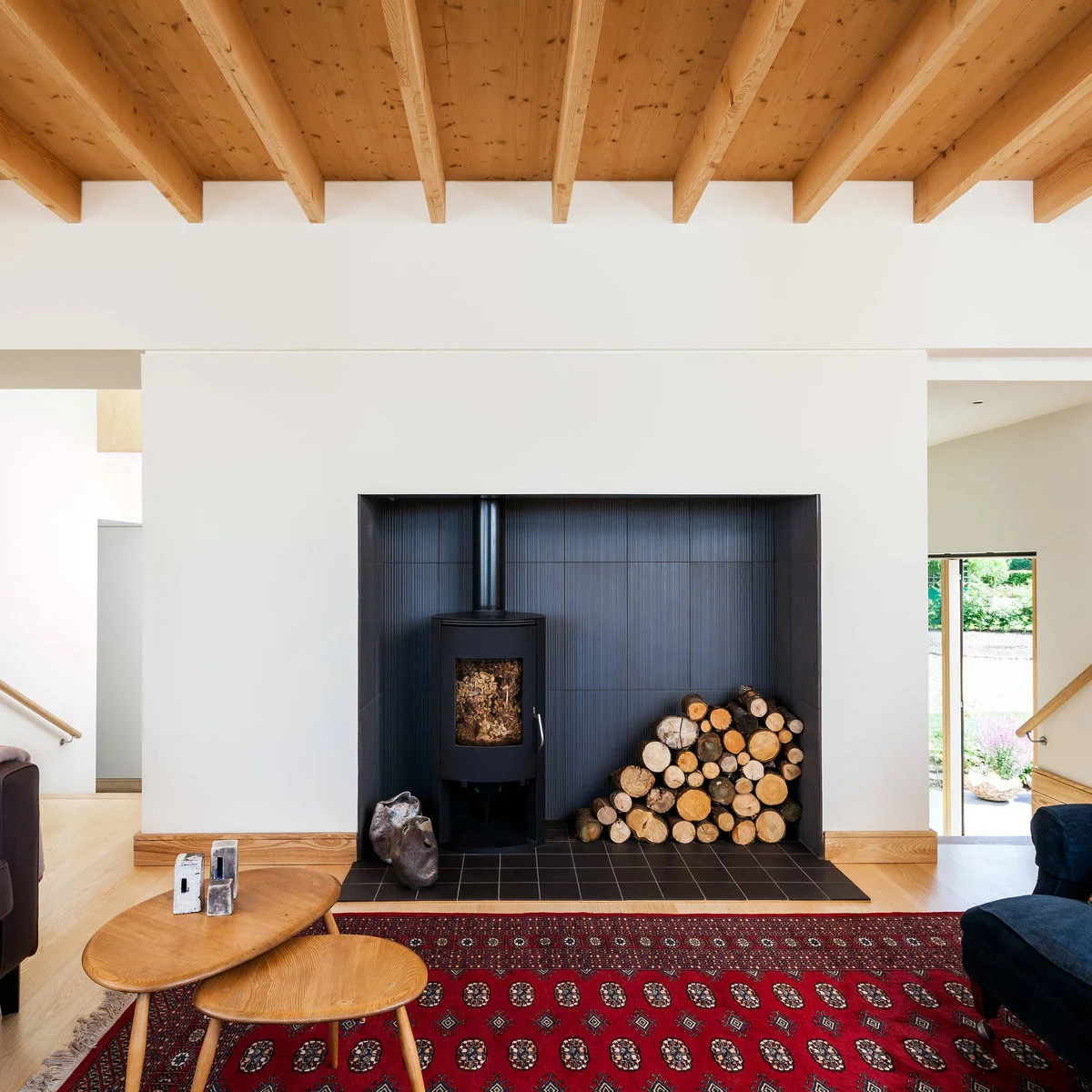
A broad dark tiled recess gives this stove a defined setting within an otherwise pale wall. The pale surround remains plain, so the stove and vertical pipe read as one dark shape. Timber ceiling beams and the patterned rug add warmth without covering the central wall with decoration.
Compare the width of the backdrop with the whole wall, including the openings at either side. A very narrow dark patch can look disconnected from a substantial appliance. Keep any decorative log stack separate from the installation plan and have its proposed position checked rather than copying the photograph’s arrangement.
IDEA 02 / 15
Keep a Window Corner Visually Light
 SaveSupport Non AI Creator
Image credit: Project: Regency Fireplace Products (via Houzz)
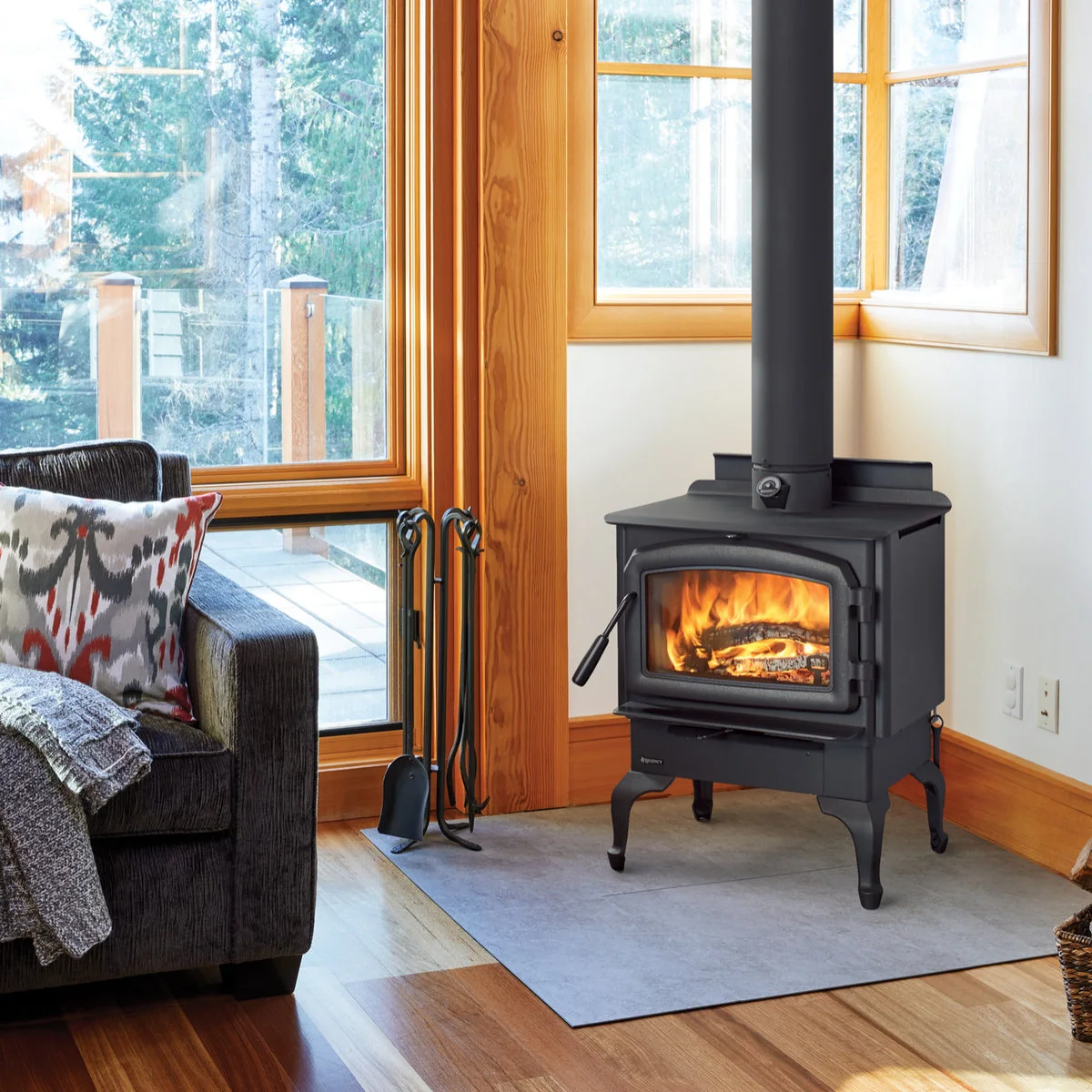
The pale rectangular hearth keeps the floor beneath this black stove quiet, while the timber-framed windows give the corner much of its character. A dark chair repeats the appliance color. The slim tool stand adds a practical vertical detail without introducing another large piece of furniture.
Assess a window corner as a complete installation, including glazing, trim and nearby furniture, before selecting it for a stove. After that assessment, compare simple hearth finishes against the existing floor. A clearly defined edge is easier to notice during everyday circulation than a small panel hidden beneath a rug.
IDEA 03 / 15
Choose a Rounded Silhouette for a Glazed Room
 SaveSupport Non AI Creator
Source: Houzz
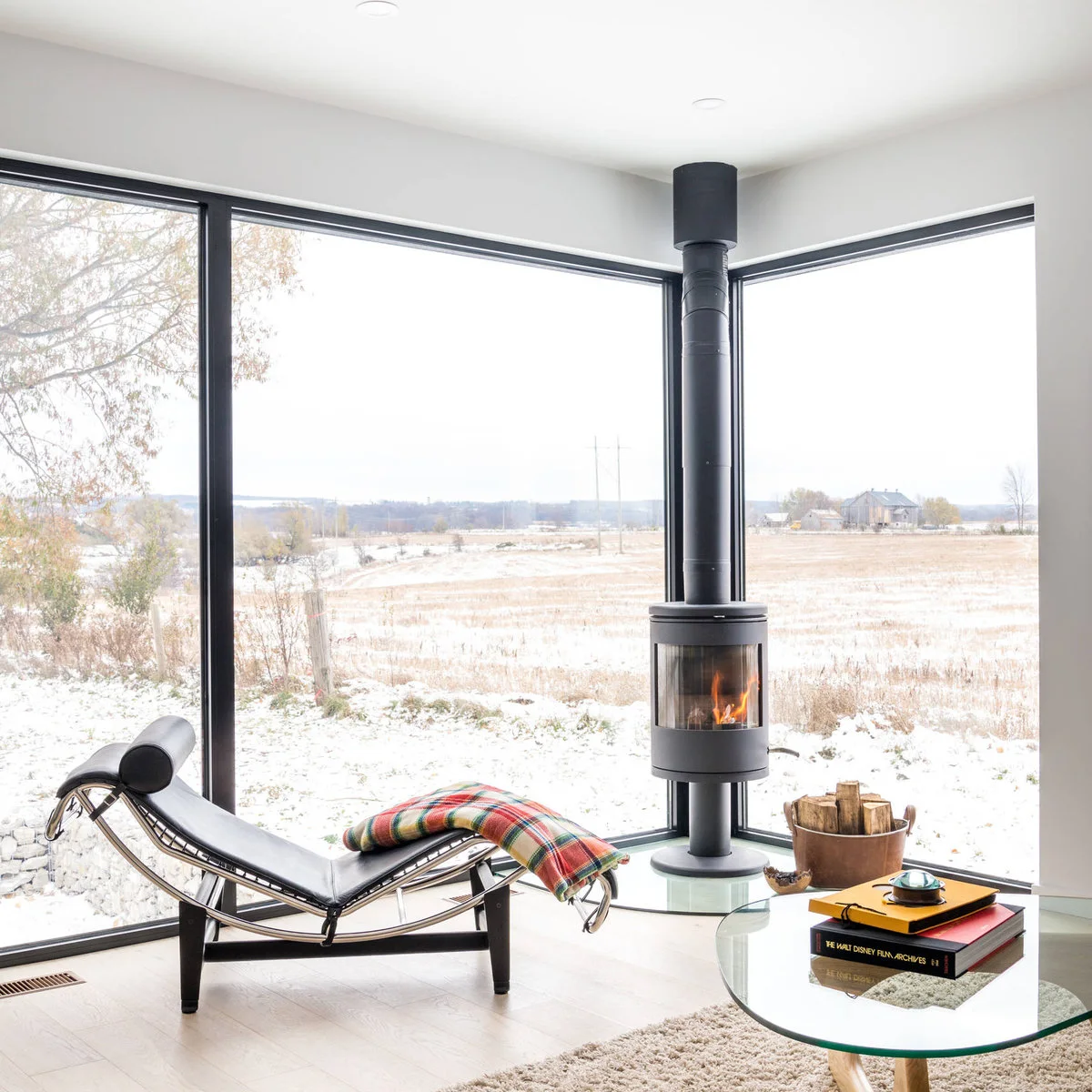
The cylindrical stove presents a narrow silhouette against the large corner windows. A curved transparent floor panel leaves the pale flooring visible, while the reclining chair and glass table keep the surrounding arrangement open. The result depends on a few distinct shapes rather than a decorated chimney wall.
Compare enclosed porch and sunroom ideas when planning a glazed seating space, but resolve the heating installation before placing a chair by the glass. A transparent panel’s appearance does not establish its specification. Ask which approved floor-protection options suit the appliance, then compare their edges and cleaning requirements.
IDEA 04 / 15
Repeat the Hearth Color in Nearby Textiles
 SaveSupport Non AI Creator
Image credit: Project: Regency Fireplace Products (via Houzz)
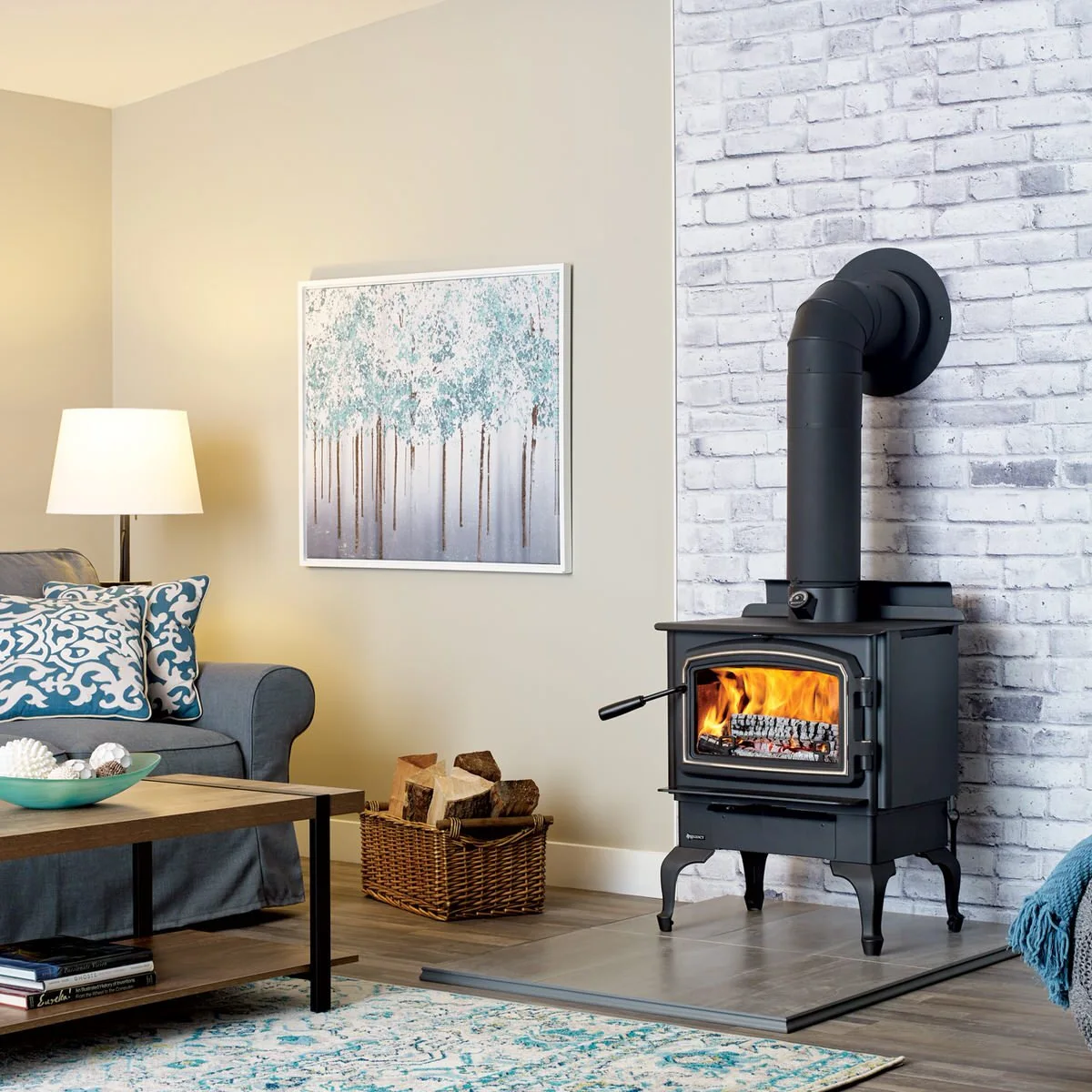
Gray in the hearth connects visually with the nearby sofa and the cooler tones in the rug. The pale brick backdrop adds texture while letting the stove remain the darkest object in the corner. Blue patterned cushions introduce detail at seating height rather than around the stove itself.
Lay fabric and floor samples beside the hearth finish before buying several coordinated pieces. Similar colors can differ noticeably under window light and lamps. Keep the rug edge, log basket and upholstered furniture outside the approved operating area, and choose an arrangement that can be vacuumed without moving the appliance tools repeatedly.
PART 02
Choose a Shape That Suits the Room
IDEA 05 / 15
Use a Continuous Floor Finish Around the Dining Area
 SaveSupport Non AI Creator
Image credit: Project: Regency Fireplace Products (via Houzz)
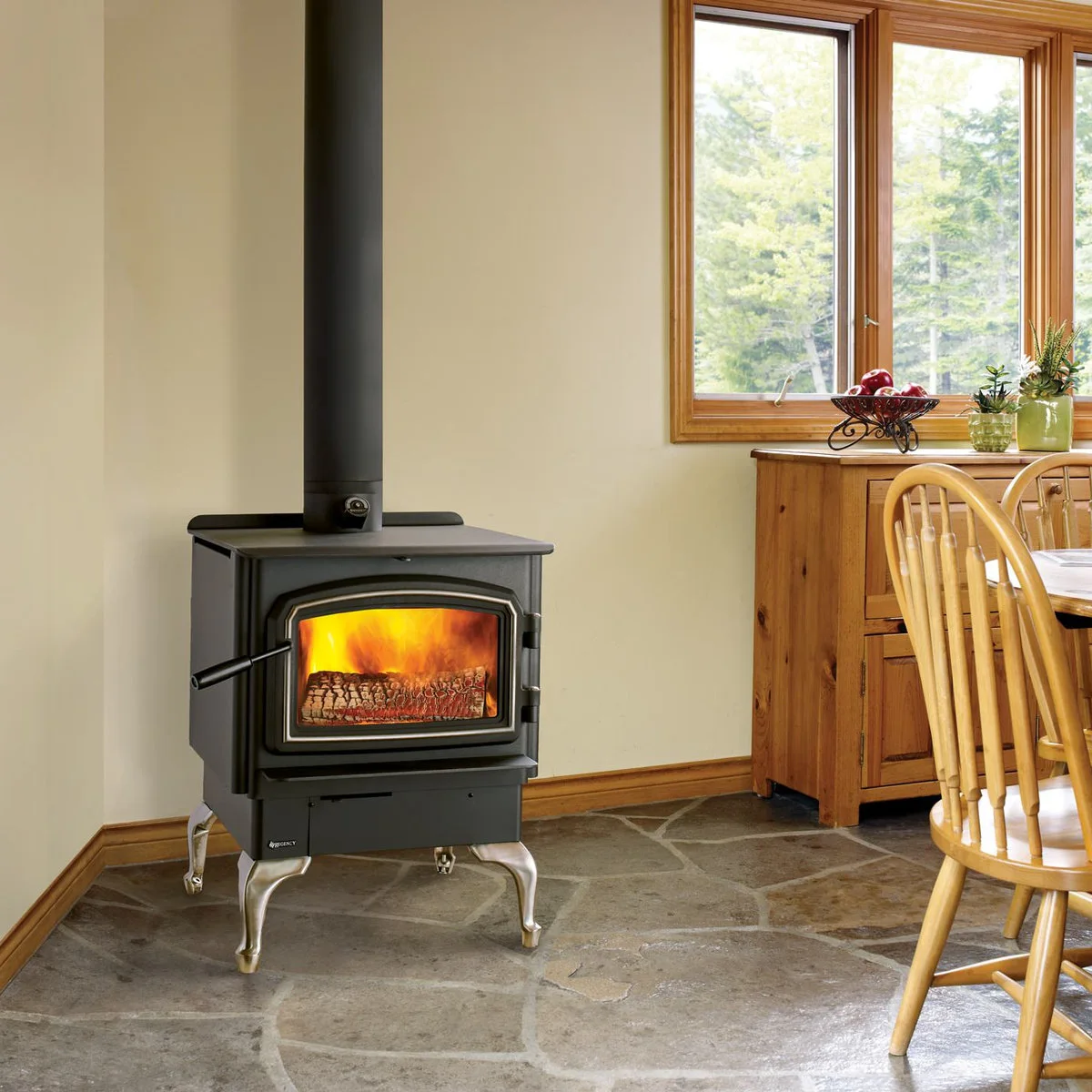
The irregular stone-patterned floor continues through the visible dining area, rather than appearing as a tiny isolated pad. Bright metal stove legs distinguish the appliance from the darker pipe. Timber chairs, window trim and the low cabinet give the surrounding room a consistent warm palette.
If you prefer a continuous floor appearance, ask the installer which complete floor assembly meets the stove’s requirements. Surface appearance alone cannot answer that question. Then compare cleaning and joint maintenance with your dining routine, especially where crumbs, chair movement and stove servicing share the same part of the room.
IDEA 06 / 15
Let Pale Wall Boards Frame a Compact Stove
 SaveSupport Non AI Creator
Image credit: Casey Dunn / Rauser Design
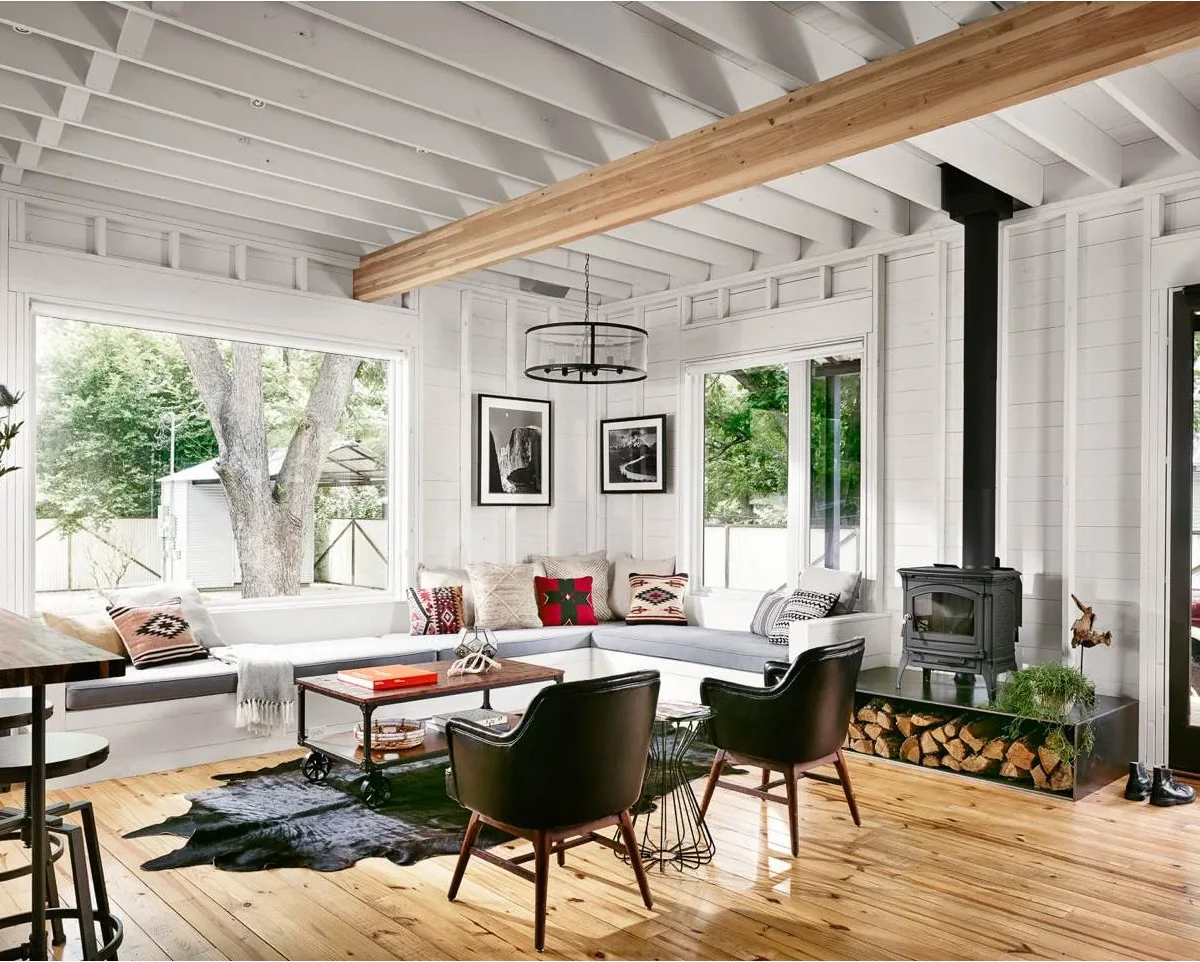
Pale wall boards and exposed ceiling framing make this compact black stove easy to pick out. Built-in window seating occupies the adjacent walls, while black chairs repeat the stove’s dark outline lower in the room. The timber beam gives the pale upper surfaces one strong warm accent.
Use the contrast between pale boards and a dark appliance as the visual reference, then have the underlying wall assembly and required separation assessed. Built-in seating cannot be moved as easily as a chair, so resolve its relationship to the stove early. Keep cushions, plants and stored fuel out of the approved operating area.
IDEA 07 / 15
Keep the Existing Brick Chimney Visible
 SaveSupport Non AI Creator
Image credit: Chris Veith / KraftMaster Renovations
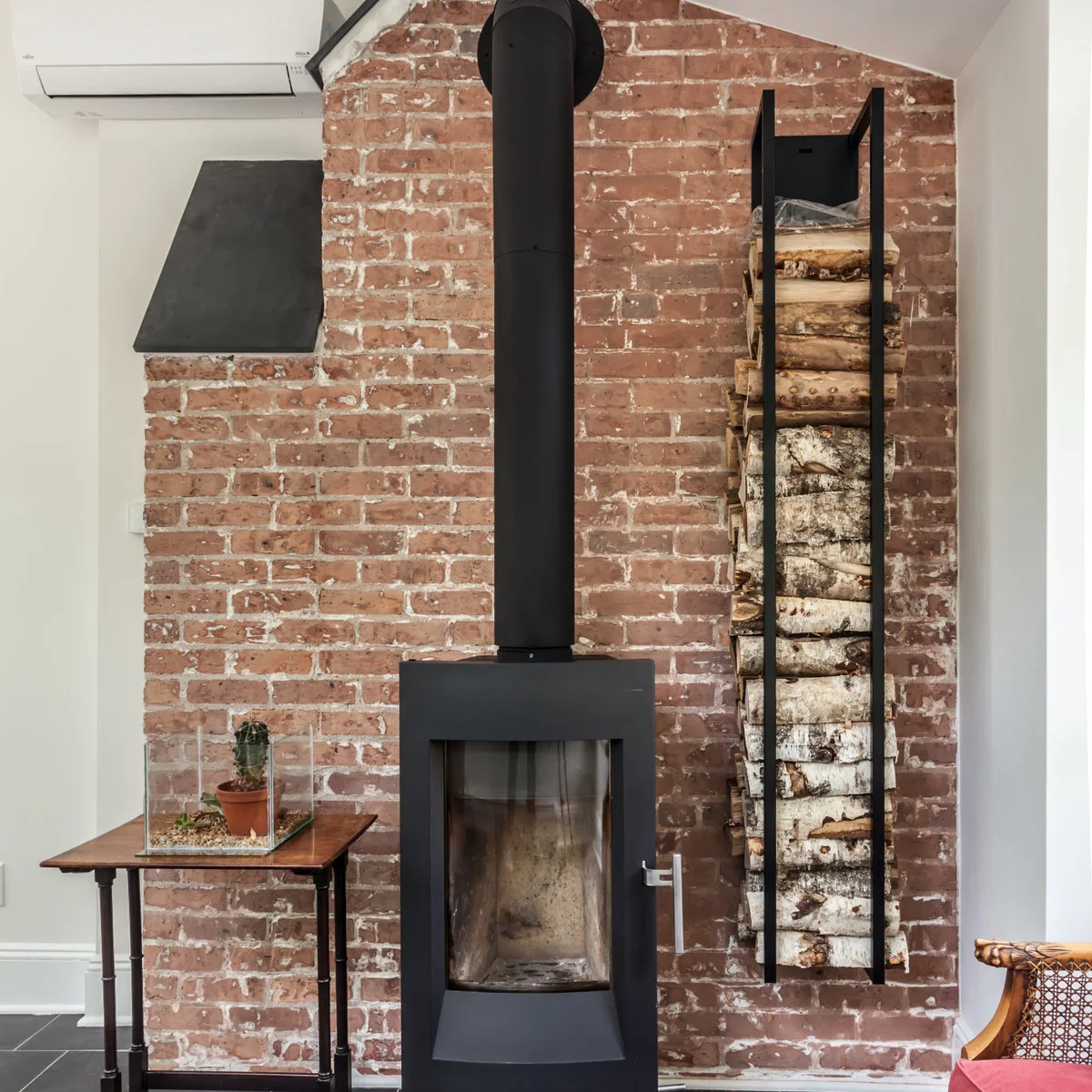
Exposed red brick provides a textured backdrop for the tall, plain-fronted stove. The black pipe and narrow rack create vertical lines, while the small table introduces a lighter, finer outline at the opposite side. The appliance does not need an elaborate mantel to hold its place against this wall.
If an existing chimney has brick you like, investigate its condition and the proposed connection before planning decorative changes. Keep a freestanding stove installation distinct from a general wall-styling project. Ask where fuel and furniture can safely stand; the rack and table positions in this photograph are not installation dimensions.
IDEA 08 / 15
Balance a Round Stove with One Sculptural Chair
 SaveSupport Non AI Creator
Image credit: Project: Homestead Stove Company (via Houzz)
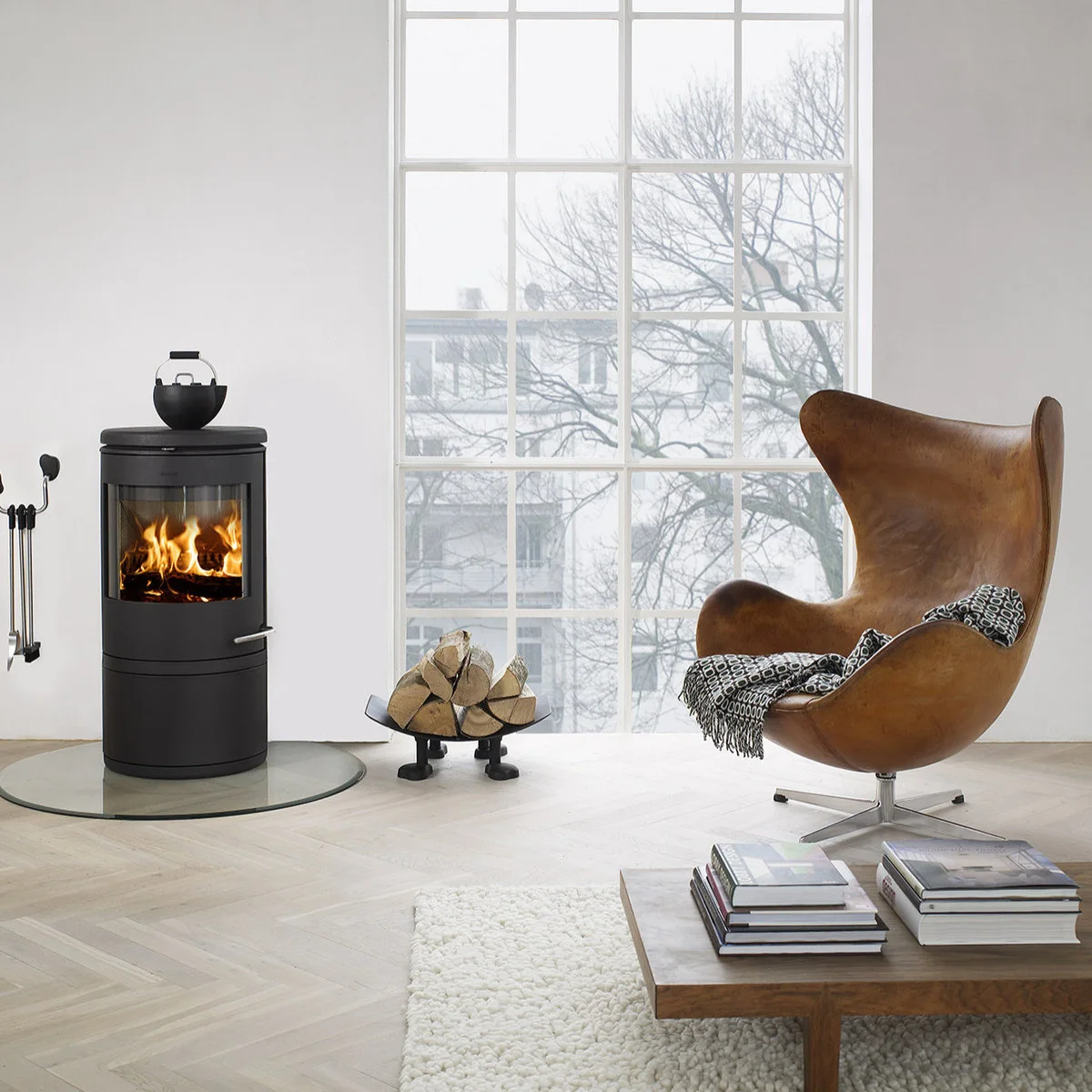
The round stove and curved floor-panel edge create a quieter outline than a large rectangular surround would. A brown wingback chair supplies the room’s strongest warm color. The tall window and pale walls leave both shapes clearly visible, with a low table providing the remaining horizontal surface.
Compare the chair and stove from the main entrance as well as from the seat itself. Their silhouettes can work together without being crowded into one corner. Final chair placement, the small log stand and any floor textiles must follow the installation requirements rather than the close arrangement suggested by a styled photograph.
PART 03
Work with Existing Room Character
IDEA 09 / 15
Echo the Stove in Dark Furniture Details
 SaveSupport Non AI Creator
Image credit: Jamie Salomon, styling by Susan Salomon / Bensonwood
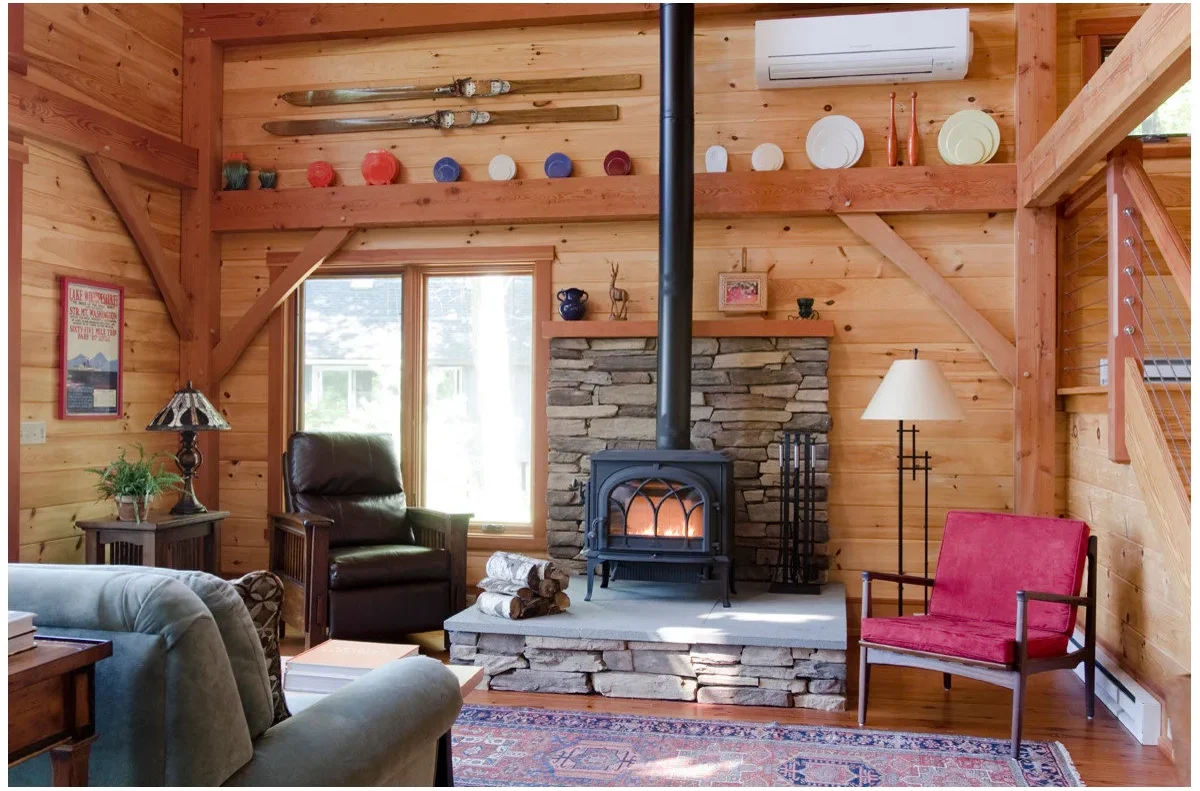
A raised stone-faced hearth gives the black stove a substantial base within this timber-lined room. The dark armchair and metal tools repeat its color, while the red chair and patterned rug add smaller contrasting areas. The wall and ceiling already supply enough texture to keep accessories restrained.
Compare rustic living room ideas before adding more wood furniture to an already timber-lined space. A few darker outlines can separate the seating from the walls. Have the raised hearth and the proposed appliance arrangement assessed as a complete installation, and keep its edges visible so people can move around it comfortably.
IDEA 10 / 15
Use a Tall Pipe to Join a Loft’s Vertical Lines
 SaveSupport Non AI Creator
Image credit: Ross Anania / Crescent Builds
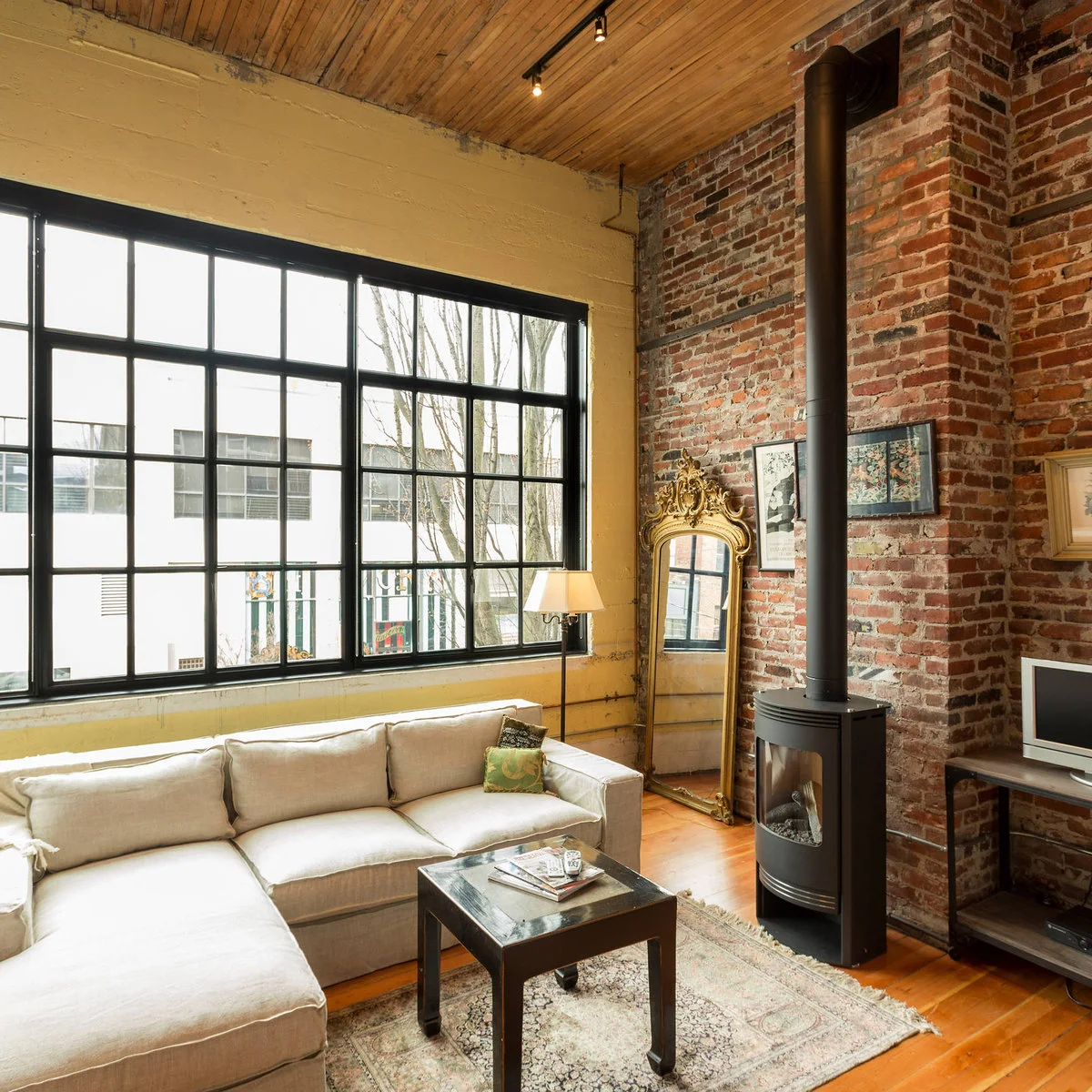
The tall black pipe follows the vertical scale of the loft wall, while the narrow stove leaves more brick visible around it. Large window grids repeat the dark lines. A pale sofa and an ornate mirror bring two different kinds of softness to the surrounding industrial surfaces.
Keep the pipe route and its approved construction part of the installation discussion before choosing decorative wall pieces. A leaning mirror or large television stand can make the corner feel busy even when the appliance is slim. Check their location with the installer and keep the stove accessible for cleaning and inspection.
IDEA 11 / 15
Give a Paneled Library a Brick Backdrop
 SaveSupport Non AI Creator
Image credit: Peggy Harrison Photography / Johnson, Craven & Gibson
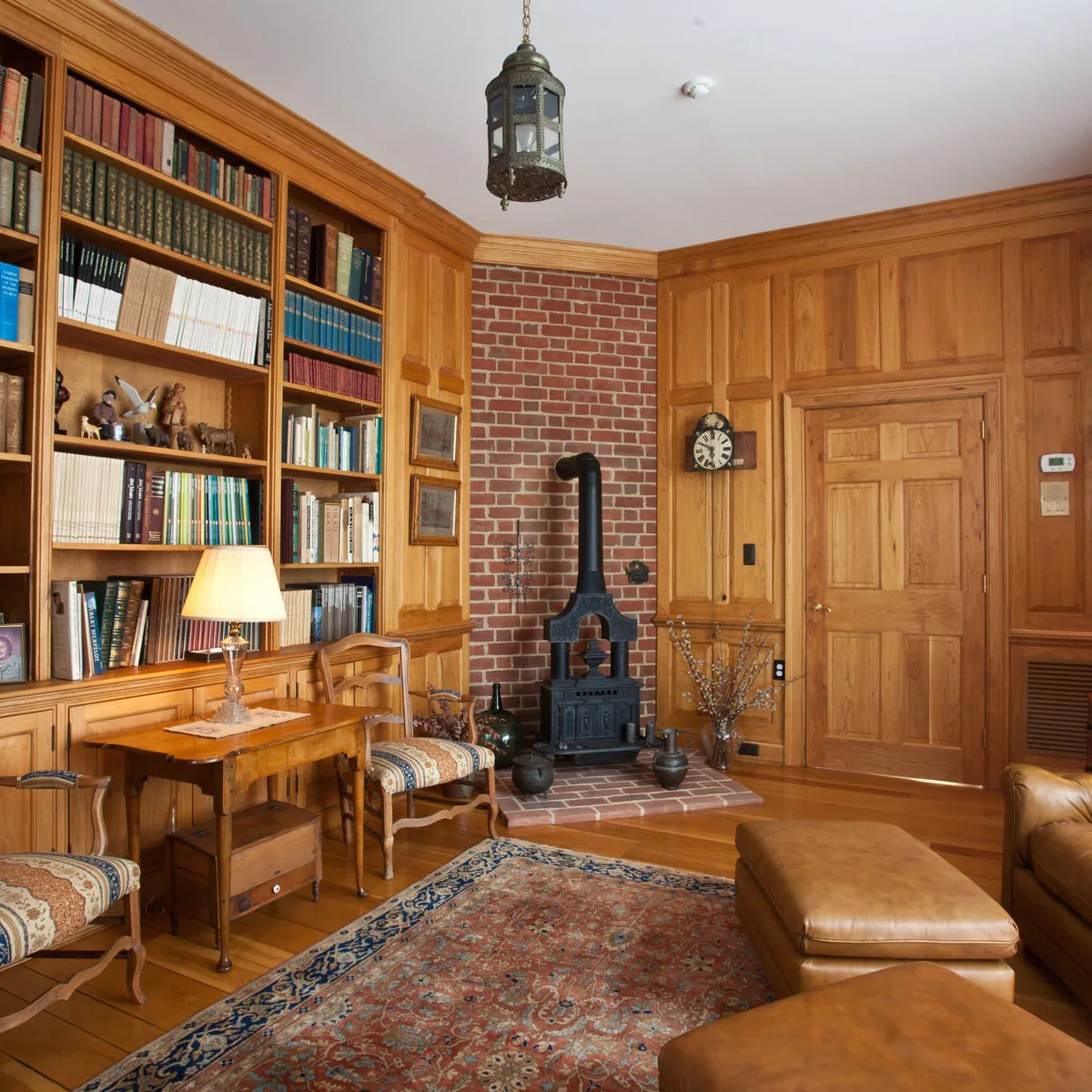
The tall red brick panel interrupts the timber wall at the stove, making the heating corner easy to identify within a busy library. A small desk and bookshelves occupy the surrounding walls. The stove’s dark finish provides a firm outline among the many warm wood and paper tones.
Compare brick fireplace ideas for color relationships, while keeping the stove’s technical requirements separate from decorative masonry. Books, framed pieces and furniture introduce combustible items into the same room. Have their proposed positions checked and avoid filling the hearth with display objects just to repeat the library’s collected character.
IDEA 12 / 15
Pair a Plain Box Shape with Textured Brick
 SaveSupport Non AI Creator
Image credit: Project: Fircrest Hearth and Home (via Houzz)
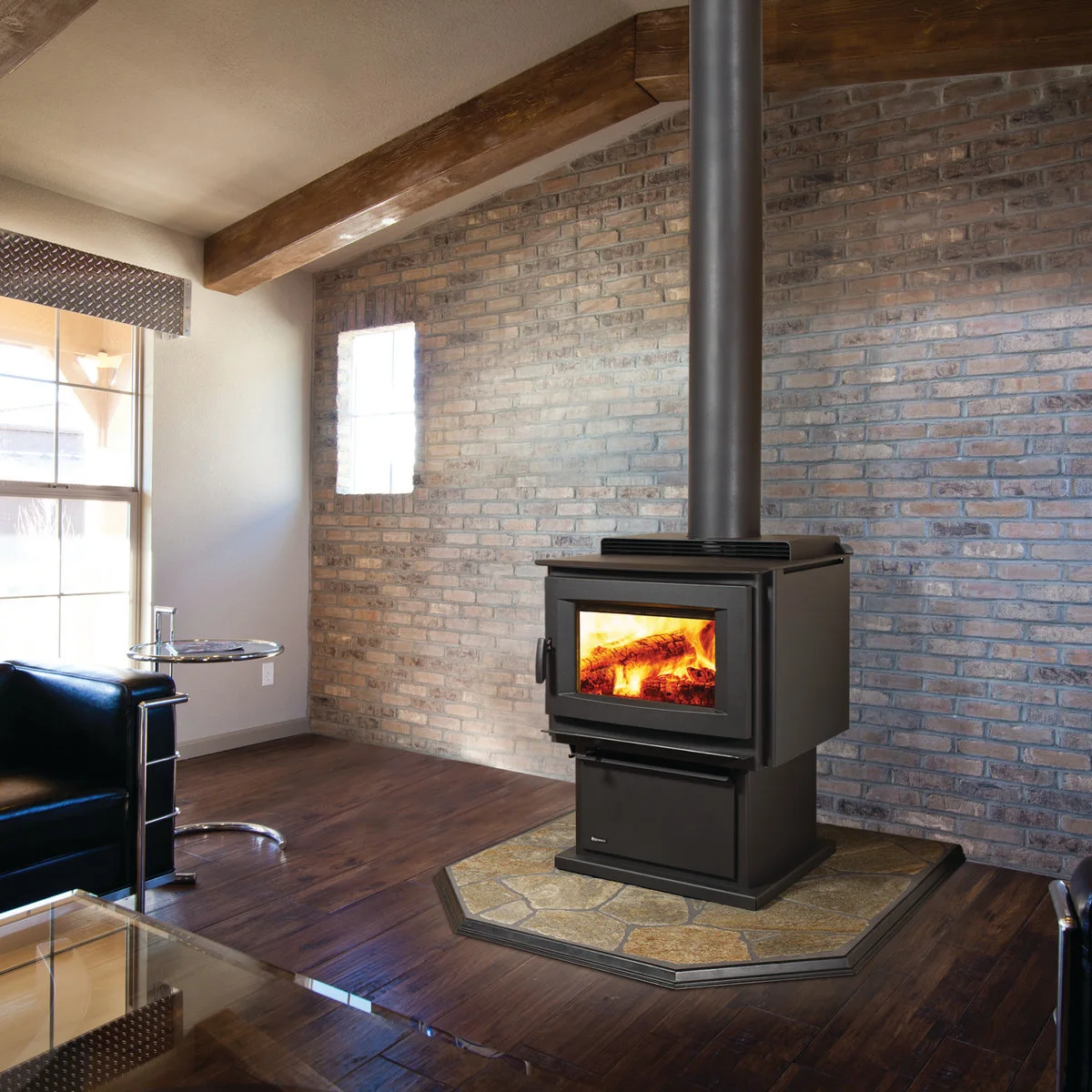
A broad, plain stove contrasts with the smaller repeating shapes in the brick wall. The clipped hearth corners create a distinct floor boundary, and the dark leather seating repeats the appliance color without matching its geometry. Glass tables keep the view through the seating arrangement relatively open.
Compare a plain appliance front against the wall’s existing texture before adding a decorative surround. The more variation the brick contains, the less extra pattern the corner may need. Have the hearth dimensions and floor protection specified for the appliance, then keep table legs and walkways outside that required area.
PART 04
Keep the Surrounding Details Deliberate
IDEA 13 / 15
Make a Simple Hearth the Main Decorative Base
 SaveSupport Non AI Creator
Image credit: Project: The Stove Shop Fireplace Center (via Houzz)
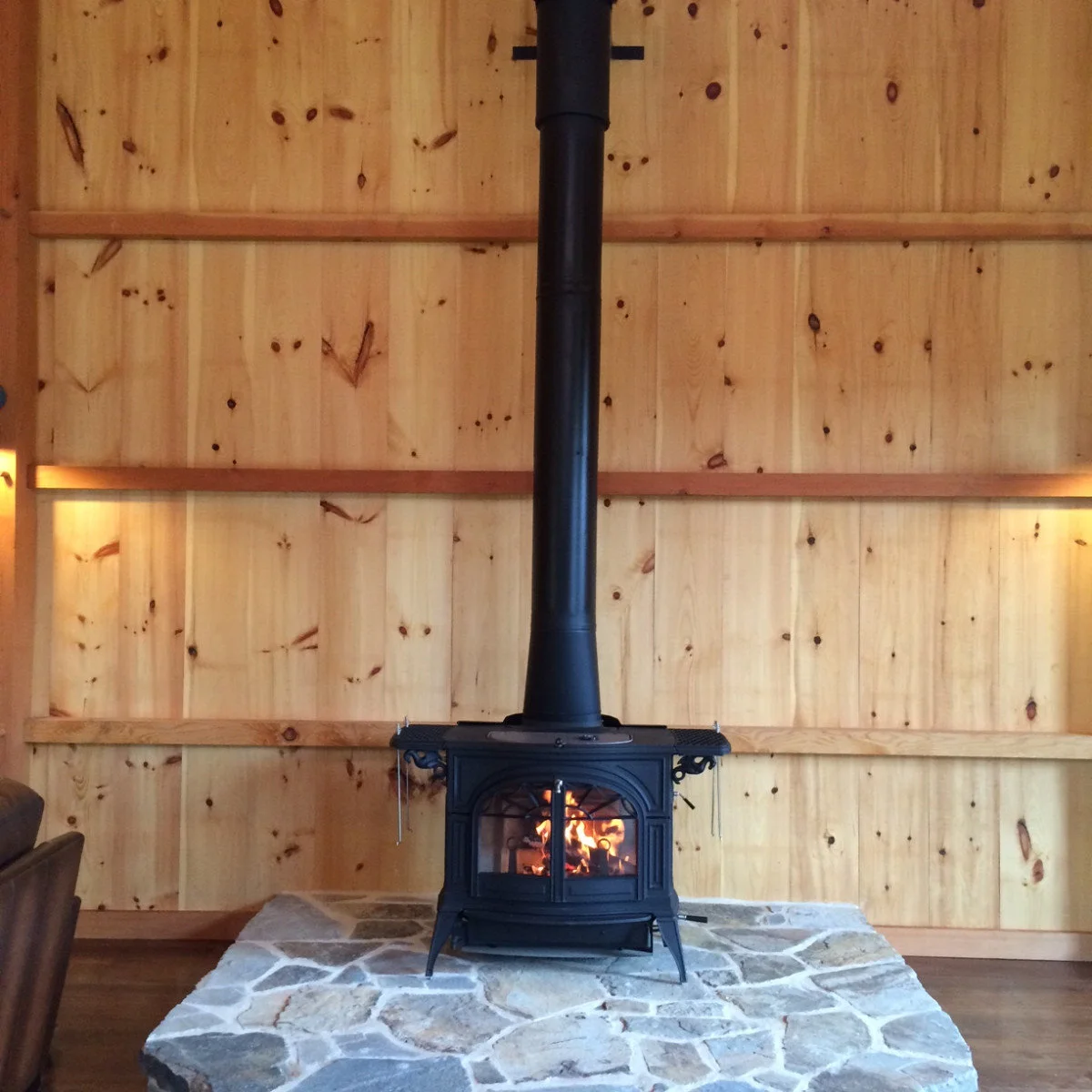
The broad pale hearth gives this compact black stove a clearly defined base. Its arched double-door front supplies the principal decorative detail, while the timber-board wall stays plain. A tall black pipe continues the central line upward without an additional mantel, shelf or framed piece above it.
If the appliance already has decorative door detailing, try a quiet backdrop before adding more ornament. Compare the hearth’s shape from the room entrance so its raised edge remains easy to see. Do not assume timber boards are suitable at the photographed distance; have the actual wall construction and clearances assessed.
IDEA 14 / 15
Use a Small Stove as One Dark Accent
 SaveSupport Non AI Creator
Image credit: Project: Homestead Stove Company (via Houzz)
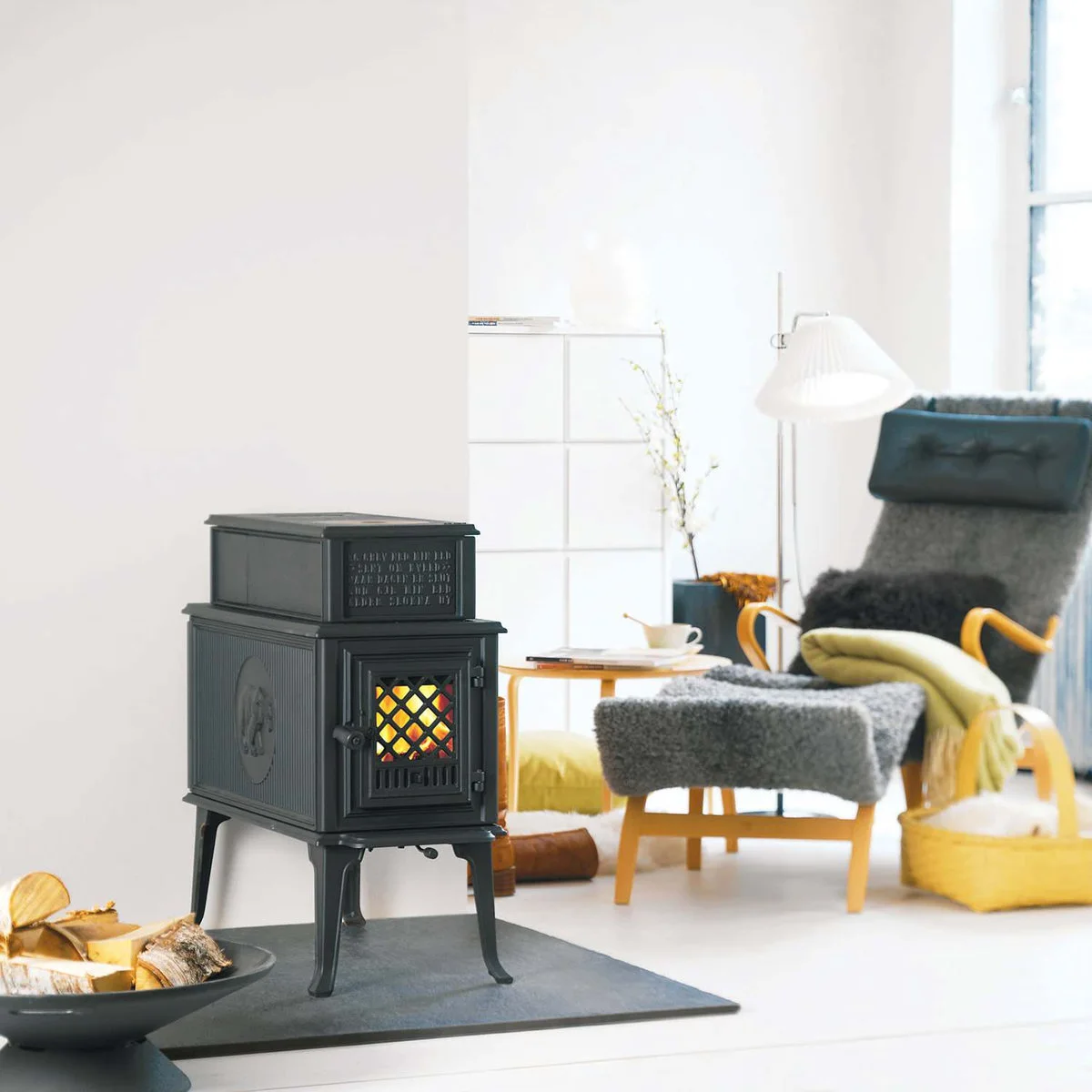
This small stove forms one dark accent in a predominantly pale room. Its patterned front adds detail at a modest scale, while the gray chair and yellow textile provide a separate seating focus. The simple rectangular hearth gives the appliance a clear boundary without a large chimney surround.
Compare the required heating capacity with a qualified installer rather than choosing a compact model solely for its appearance. Once the appropriate appliance is established, repeat just one or two of its dark details elsewhere. Keep the chair, throw, baskets and stored fuel beyond the approved operating clearances when arranging the room.
IDEA 15 / 15
Contrast a Curved Stove with a Tall Panel Wall
 SaveSupport Non AI Creator
Image credit: LongViews Studio / Locati Architects / North Fork Builders
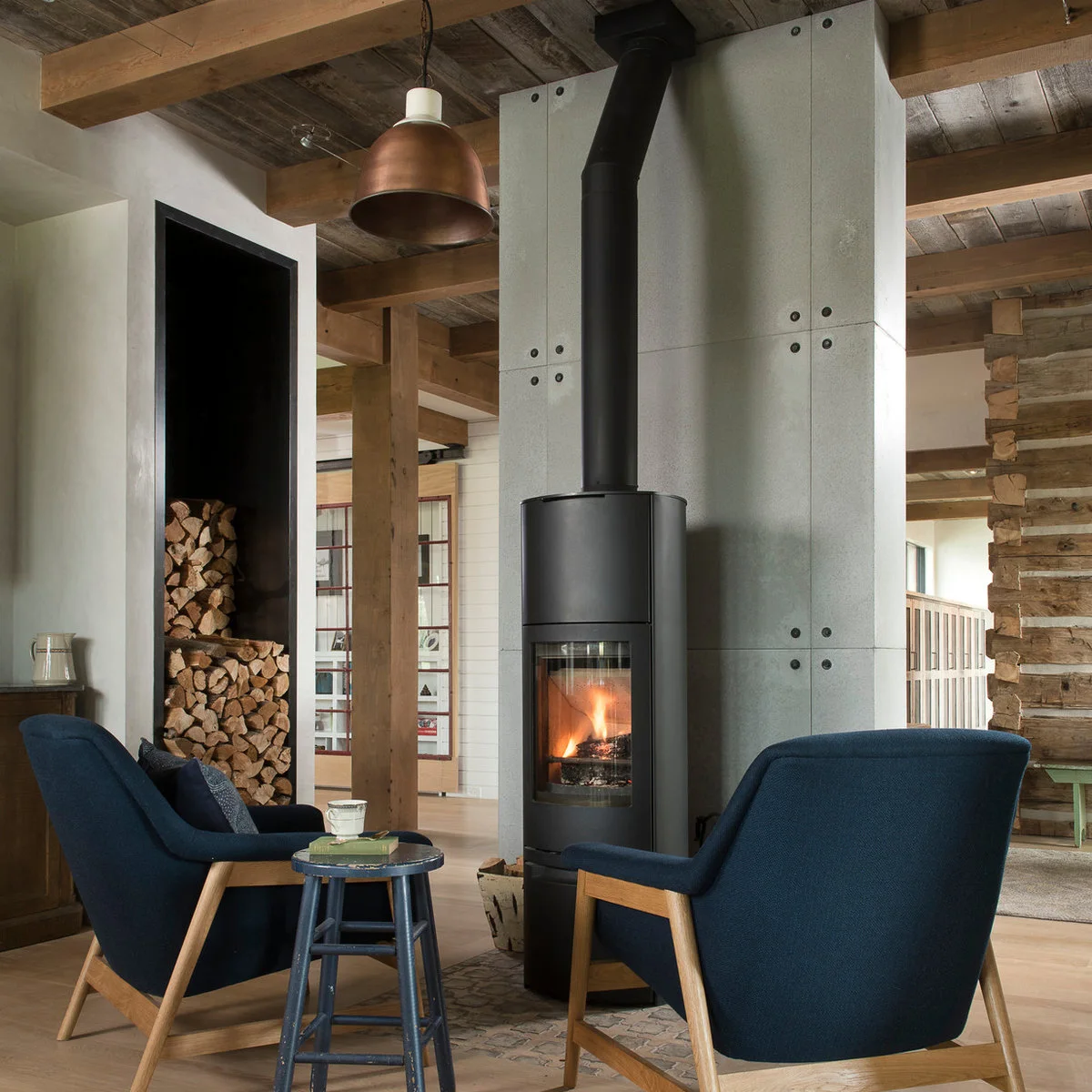
The curved-front stove contrasts with the grid of joints and exposed fixings on the tall gray panel wall. Blue chairs introduce color below the warm timber framing, while a separate tall recess organizes the visible logs. Each element has a distinct outline rather than merging into one continuous dark wall.
Bring panel samples and a room sketch to the installation discussion before assuming a similar-looking wall will provide suitable protection. The panel composition and assembly matter as much as its color. Set chair positions and fuel storage from the approved plan, then use the blue upholstery and timber tones to refine the palette.
BRING IT ALL TOGETHER
Plan the Appliance Before the Accessories
Choose the heating system with a qualified installer before committing to a decorative surround or new furniture. Bring photographs to explain the appearance you like, then ask which parts can be achieved with the appropriate appliance, floor protection and wall assembly for your home.
Once the installation is resolved, keep the nearby palette simple enough to show the stove clearly. Leave access for cleaning and servicing, provide suitable tool storage and place rugs, chairs and firewood according to the actual installation requirements. Review the arrangement again when furniture changes.