Twin beds can make a small bedroom more flexible, whether you need one sleeping place with room to work or two separate beds for guests. Start with the full frame dimensions and the space needed to move around them. Matching furniture is optional; usable access to beds, windows and storage is essential.
These photographs show different ways to arrange and dress narrower beds. Room dimensions and mattress sizes cannot be confirmed from a photograph, so check the actual measurements before buying. Borrow the useful details, such as a shared bedside chest or wall light, without assuming every extra seat or decorative layer will fit.
PART 01
Make the Basic Layout Work
IDEA 01 / 20
Use Slim Bed Frames around One Shared Chest
 SaveSupport Non AI Creator
Image credit: Project: Lola Interiors (via Houzz)
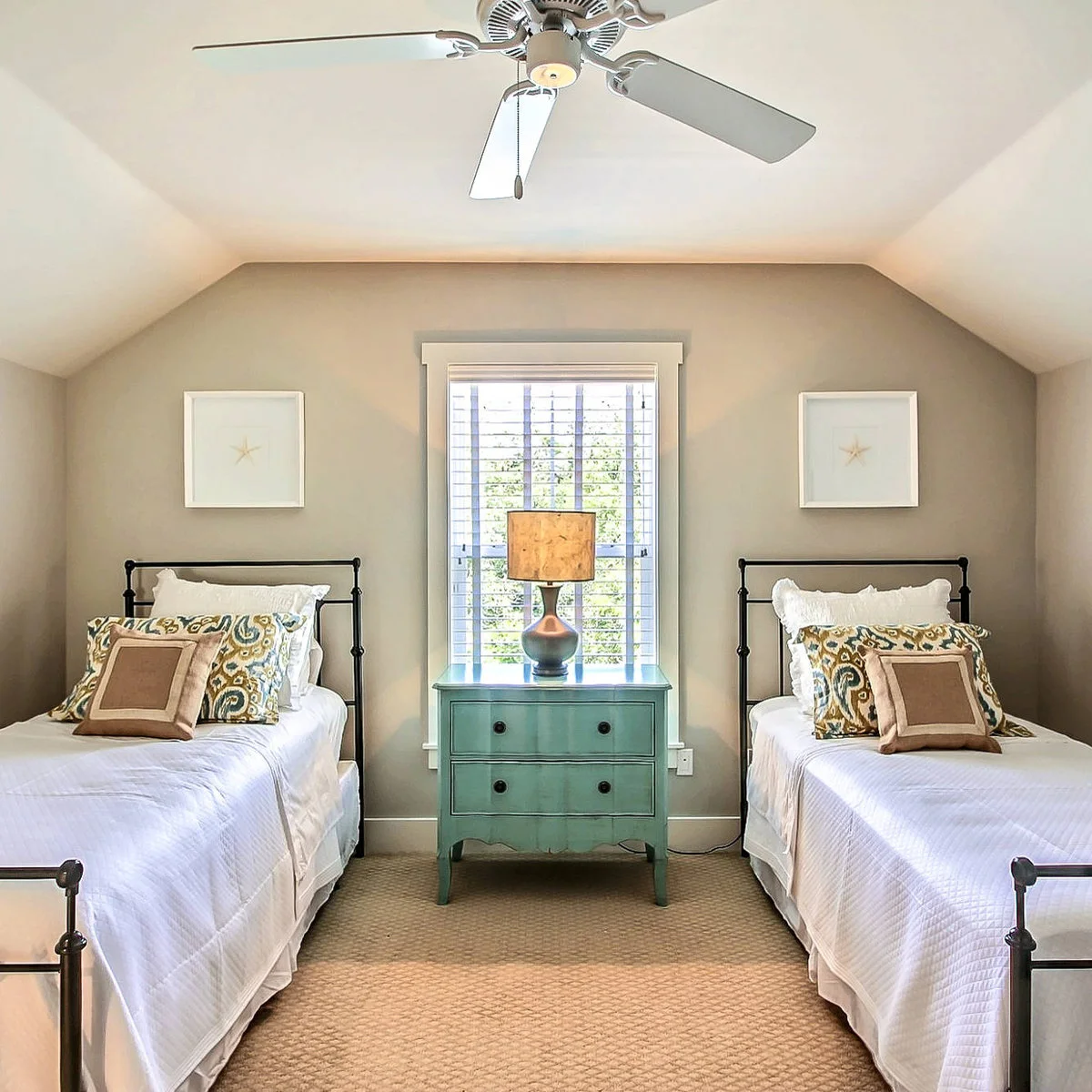
Slim black frames outline two beds without a large upholstered surround. A small teal chest sits between them below the window, combining a shared bedside surface with drawers. White bedding keeps the paired arrangement simple, while patterned cushions repeat a little of the chest’s color.
Measure the complete frames, including projecting posts and feet, rather than using mattress width alone. Check that the shared drawers can open into the aisle. Leave enough room to make both beds comfortably, and confirm that the central lamp can be switched without reaching across the other sleeping place.
IDEA 02 / 20
Keep the Bedside Table Narrow
 SaveSupport Non AI Creator
Image credit: Project: Banks Design Associates, LTD & Simply Home (via Houzz)
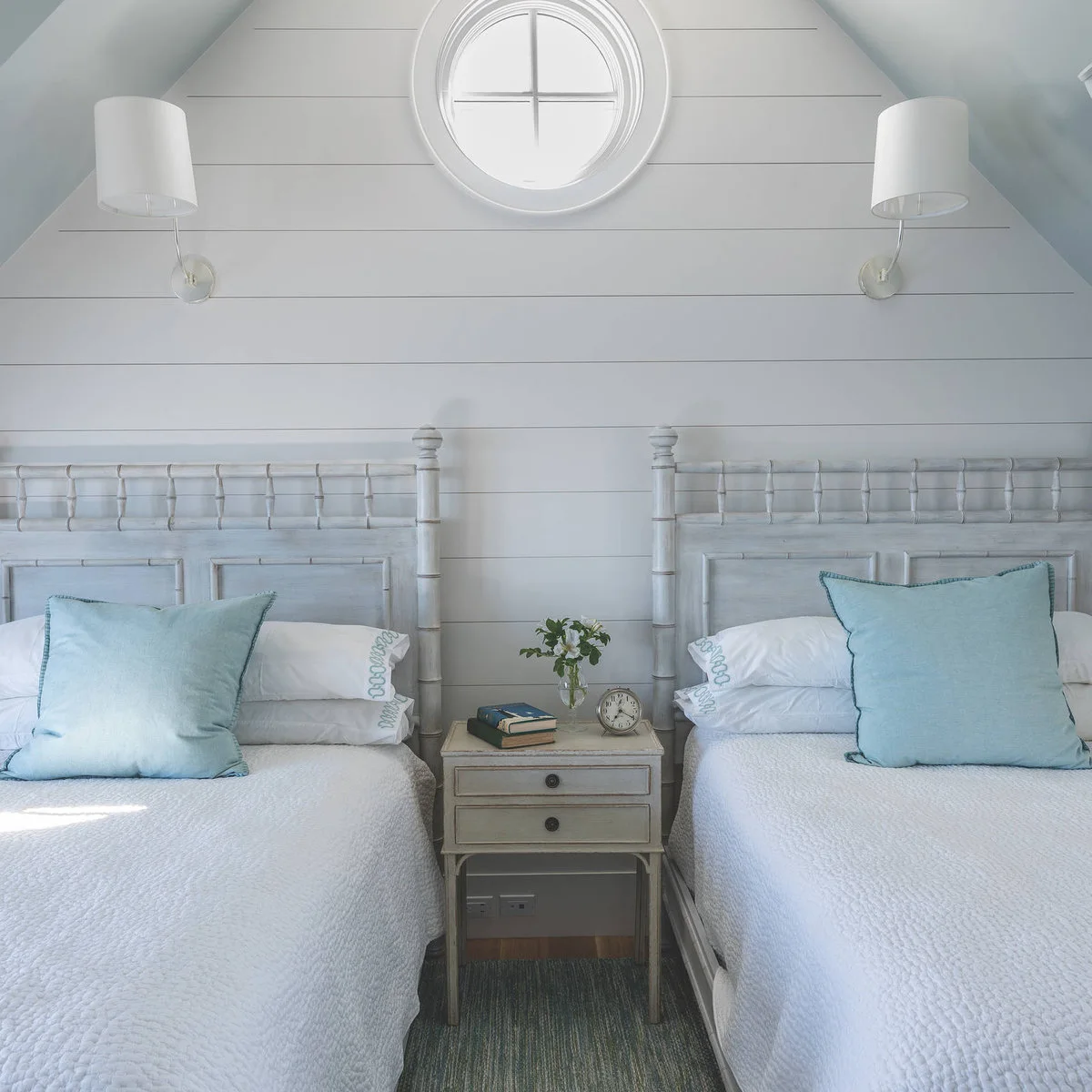
A narrow two-drawer table fits between pale beds beneath a round window. Aqua cushions repeat the soft color near the sloping ceiling, while wall lamps keep the small tabletop available. The pale finishes connect the bed frames and boards behind them without hiding the central table’s practical role.
Choose the bedside piece after setting out both beds on the floor plan. Check tabletop height beside the mattresses and leave room for everyday essentials rather than a large display. Small bedroom decor ideas offer related ways to keep the room useful when the bed arrangement takes up much of the available width.
IDEA 03 / 20
Keep Bed Bases Close to the Mattress Outline
 SaveSupport Non AI Creator
Image credit: Project: Anne Grice Interiors (via Houzz)
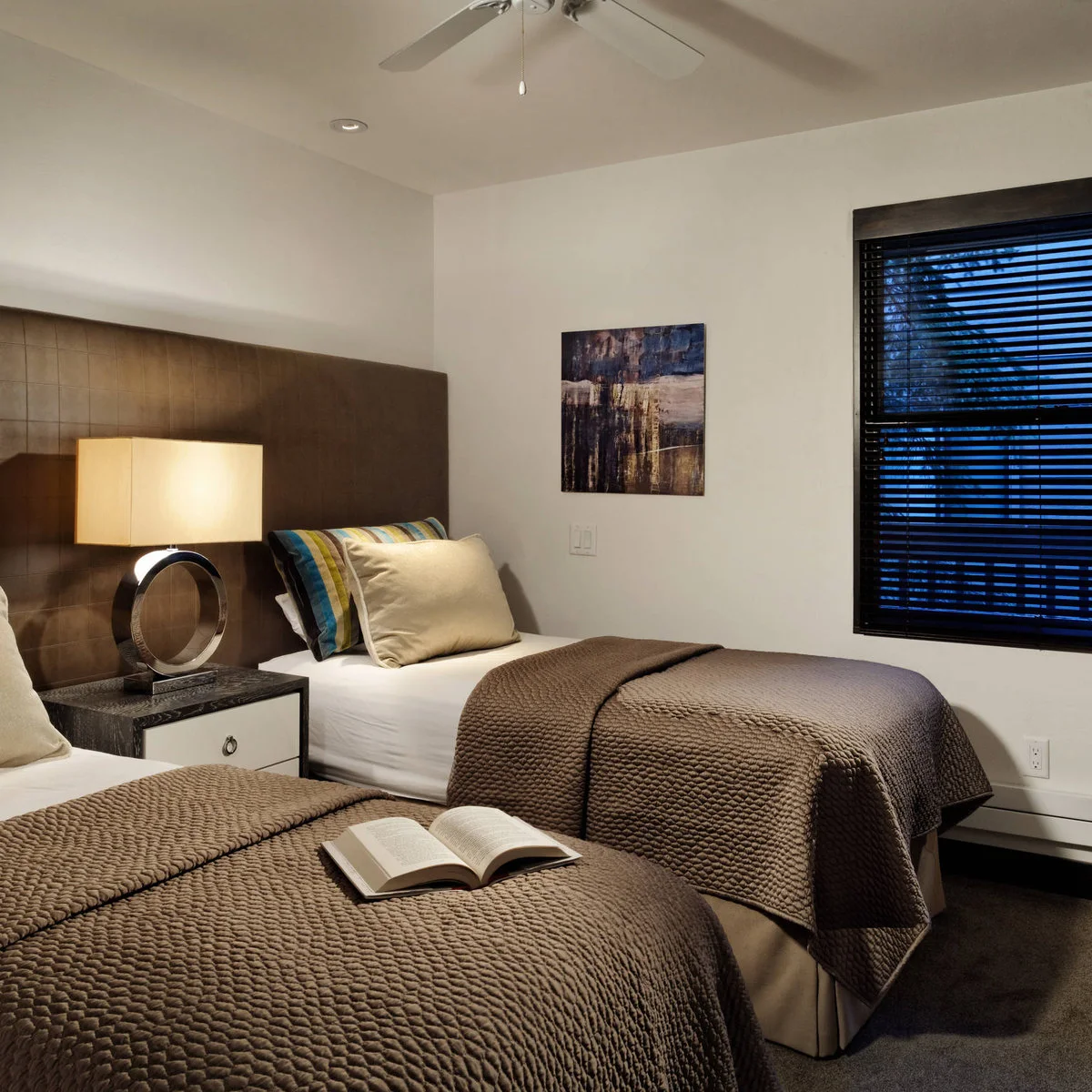
Brown textured covers sit on bed bases that stay close to the mattress outline. A shared drawer table and broad brown headboard connect the two sleeping places. The pale walls and simple bedding let the arrangement read clearly without additional footboards or large furniture at the bed ends.
Compare the outer dimensions of several bed bases before deciding that a room cannot fit two. Avoid adding bulky surrounds simply to match the headboard. Keep the route at the foot of the beds clear, with space for luggage or a laundry basket that does not obstruct the door or drawer access.
IDEA 04 / 20
Consider an End-to-End Arrangement along One Wall
 SaveSupport Non AI Creator
Image credit: Project: Connie Cunningham Designs & B&B (via Houzz)
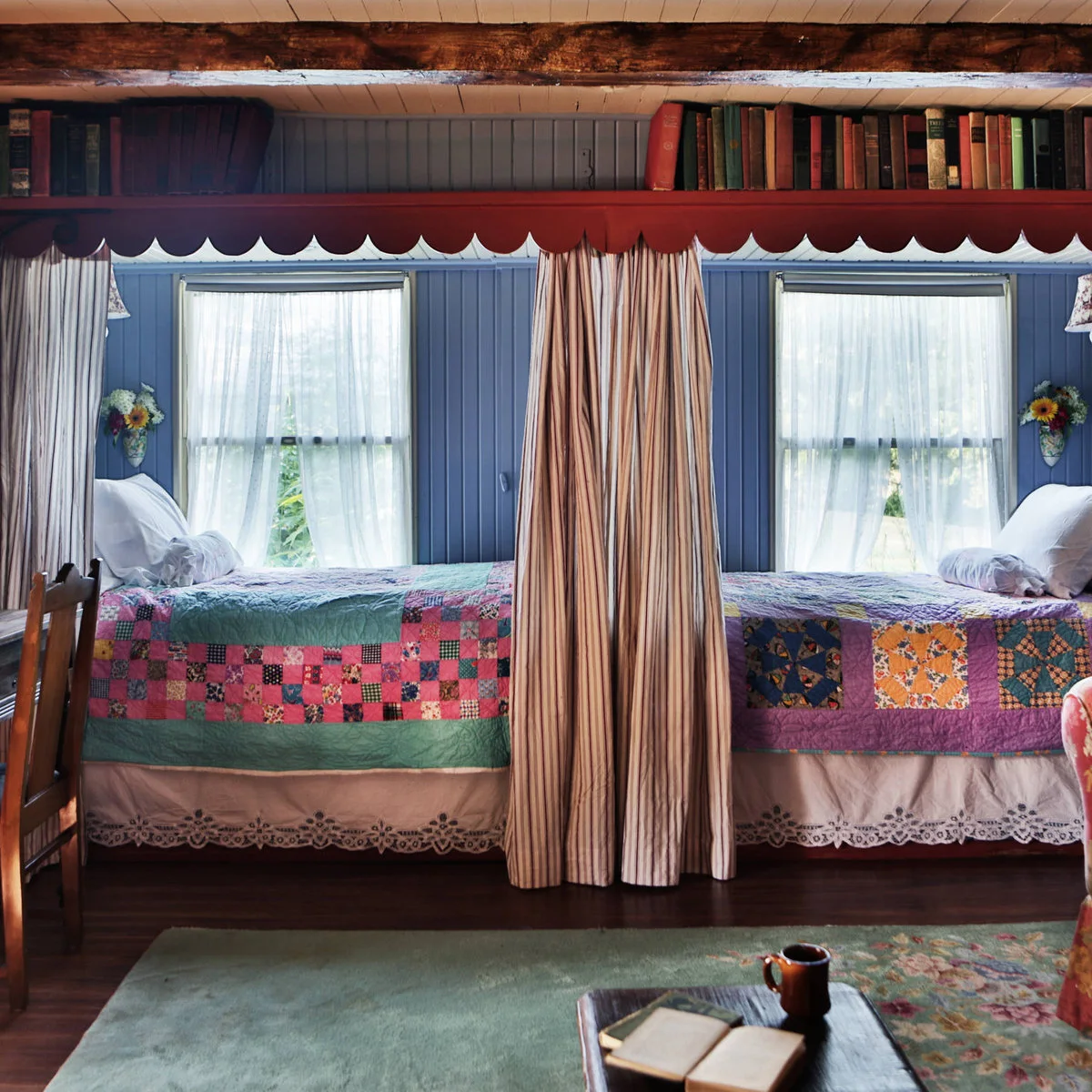
Two beds run end to end along the blue-paneled wall, with patchwork quilts and curtains giving each sleeping area a distinct section. This arrangement uses wall length rather than placing both headboards on the same short wall. The floor in front remains available for movement and the room’s other furniture.
Measure the entire wall run and both full frame lengths before considering this approach. Keep window access, heating and the route to the door practical. Use curtains only where they can move clear of lamps and beds, and make sure the arrangement still allows bedding changes without shifting heavy furniture each time.
IDEA 05 / 20
Use a Fold-Down Bed beside a Working Desk
 SaveSupport Non AI Creator
Image credit: Project: Portland Closet Company (via Houzz)
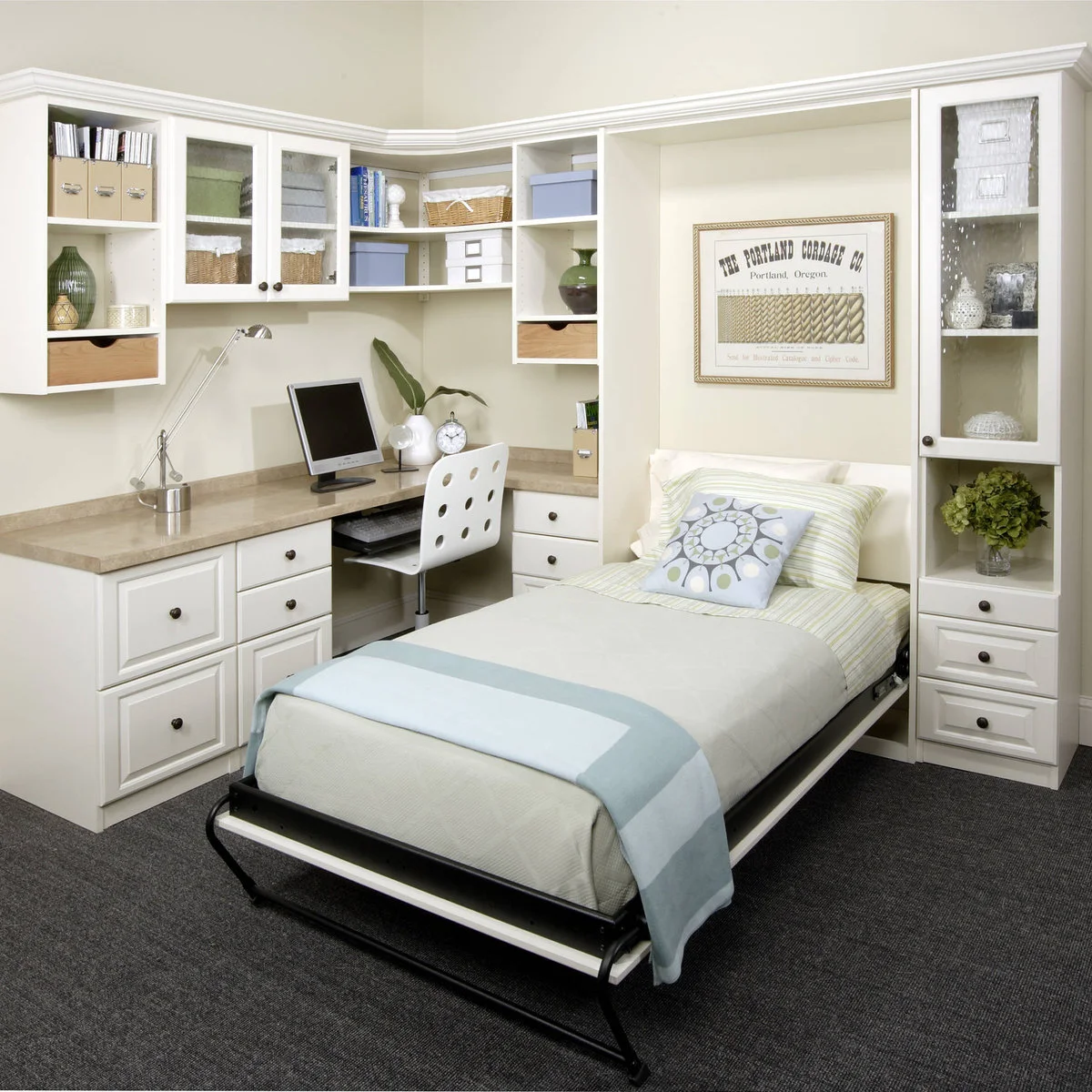
A narrow fold-down bed opens beside a fitted desk within white storage cabinetry. The surrounding cupboards and drawers group the room’s work and sleeping functions together. With the bed open, the photograph makes its floor footprint visible rather than showing only the tidier closed position.
Plan the room for the bed’s fully open position, including its support legs and the route beside it. Choose a system installed and secured according to its manufacturer’s instructions. Check the required mattress and bedding limits, and make sure operating the mechanism does not require moving everyday furniture out of the way.
PART 02
Let Storage Earn Its Floor Space
IDEA 06 / 20
Use Bed Drawers Instead of Another Chest
 SaveSupport Non AI Creator
Image credit: Project: Post 31 Interiors (via Houzz)
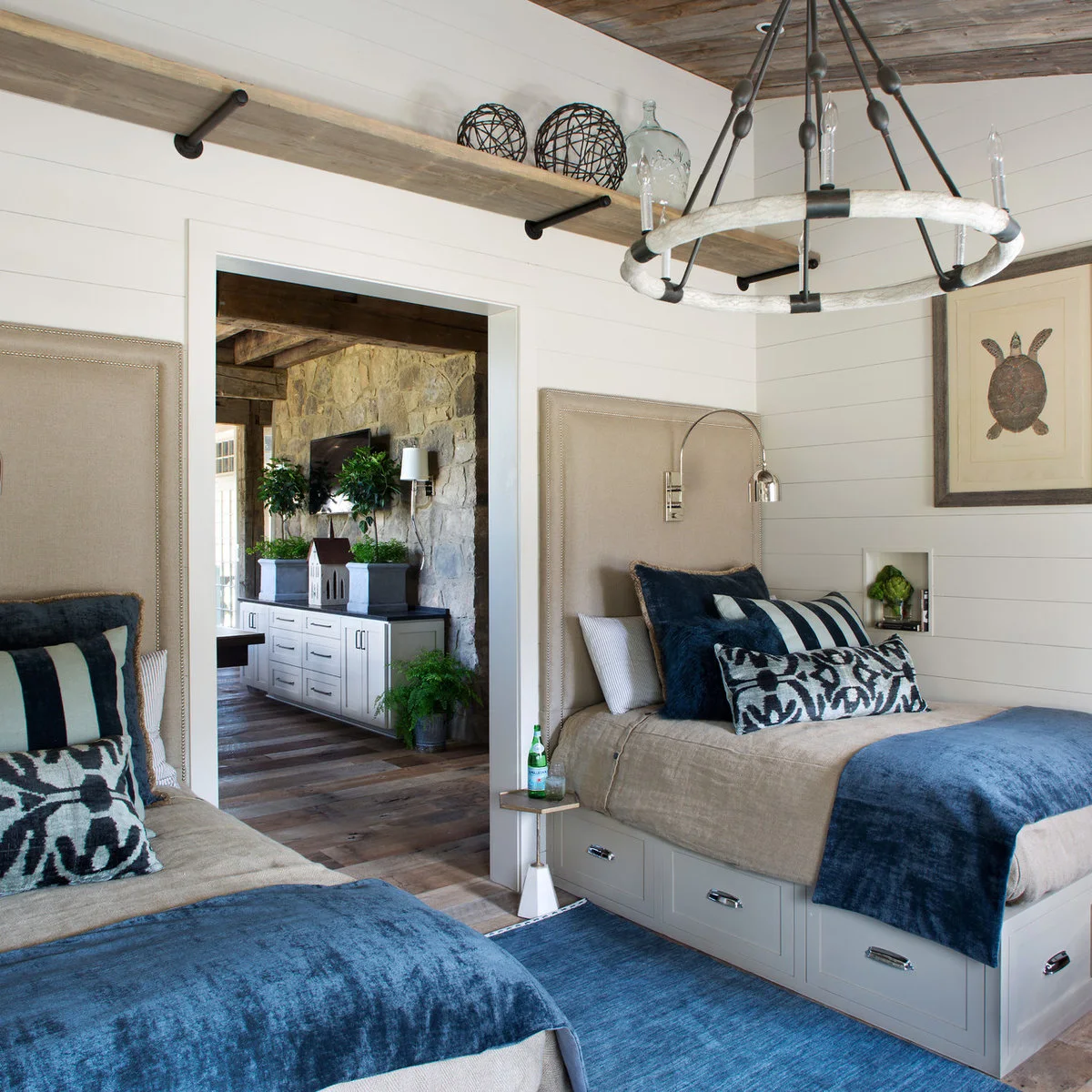
White drawer bases place storage beneath these two beds, while small shelves supply bedside landing spots. Blue throws and patterned cushions connect the sleeping places without needing another matching chest between them. Tall neutral headboards make a broad background against the white horizontal boards.
Check the floor space needed to pull the drawers fully open. Under-bed storage helps only when you can reach it without moving the other bed or lifting a rug edge. Keep the drawers for items suited to their actual depth and load rating, and leave the bedside shelves clear for essentials.
IDEA 07 / 20
Make Drawers Part of a Colorful Bed Base
 SaveSupport Non AI Creator
Image credit: Project: Mina Brinkey (via Houzz)
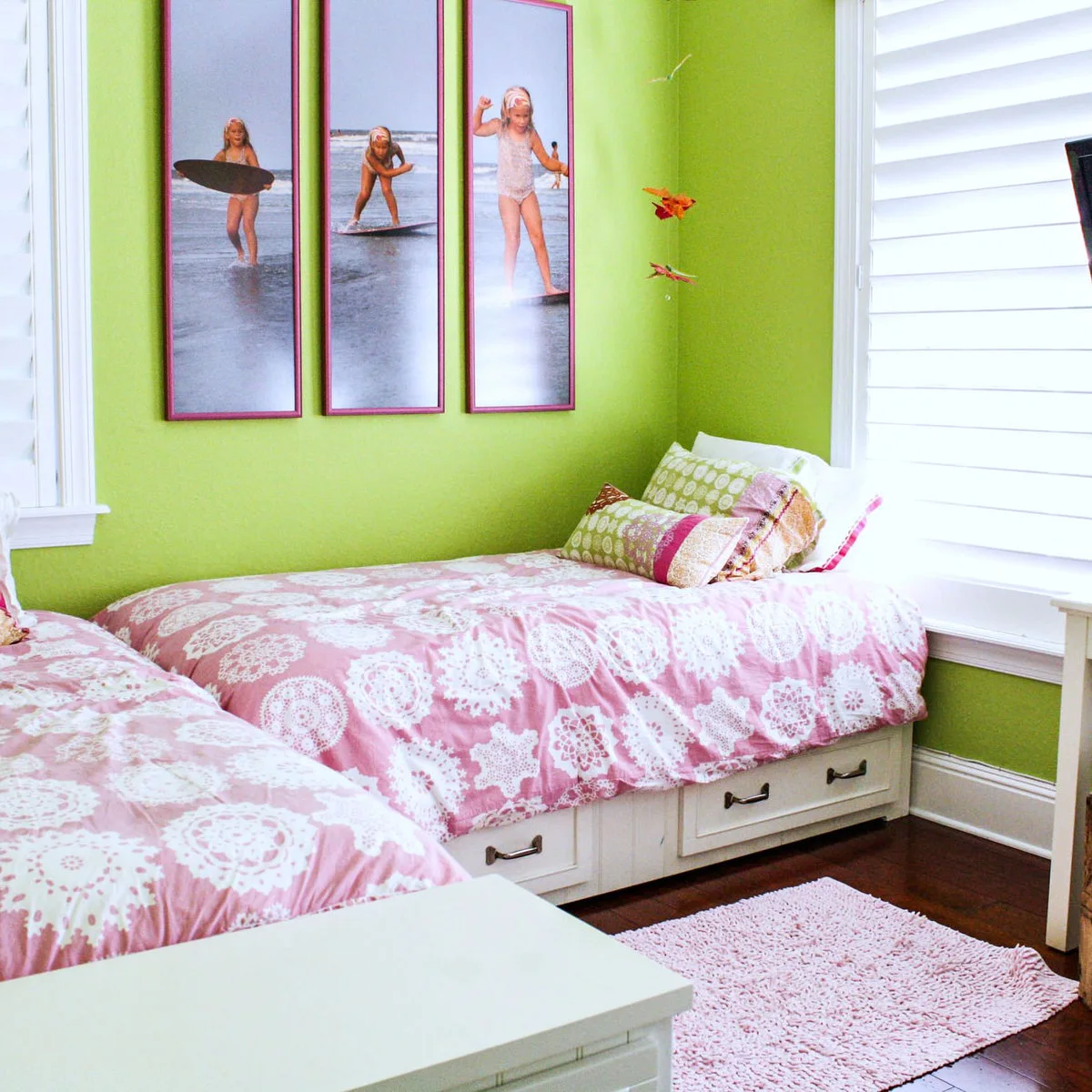
White drawers beneath the beds introduce storage into a brightly colored room. Pink patterned covers stand against lime green walls, while the pale bases make the two sleeping areas feel related. The visible drawers are a practical detail beneath the stronger wall and bedding colors.
Measure open-drawer clearance before placing a second bed or a bedside table nearby. Keep the flooring in front easy to clean and avoid a loose rug that catches the drawer fronts. Choose bedding you can wash regularly, allowing the wall color to supply much of the room’s decoration without extra floor-standing furniture.
IDEA 08 / 20
Choose a Shared Chest with Useful Drawer Depth
 SaveSupport Non AI Creator
Image credit: Project: A.LeStage Interiors (via Houzz)
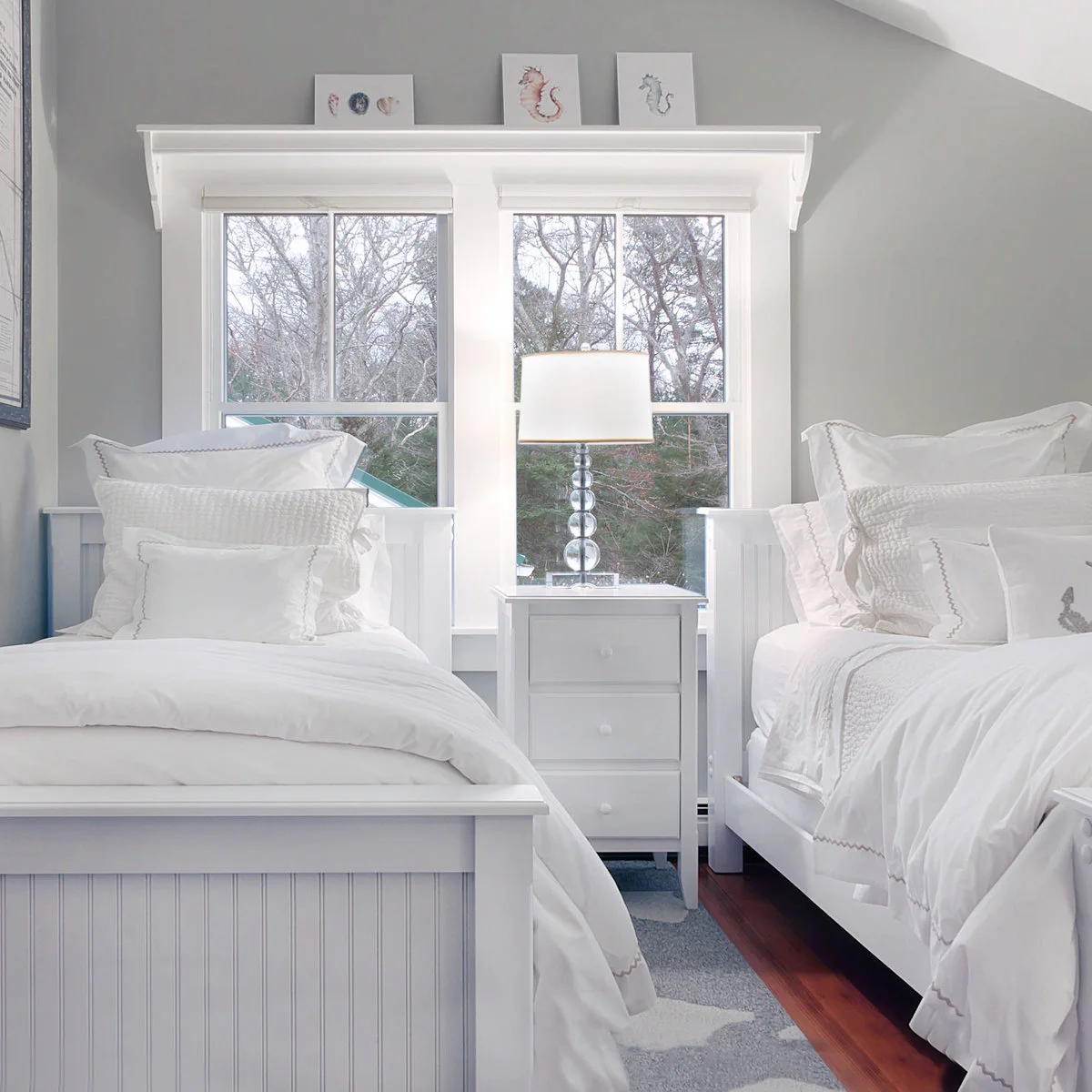
A slim three-drawer chest sits between two white beds below the window. The pale bedding and frames keep the arrangement coordinated, with a shared lamp providing the main bedside object. A rug connects the narrow floor area while the drawers offer storage without another separate bedside unit.
Compare internal drawer dimensions with the things guests need to put away. A tall, narrow piece may suit folded clothing but be awkward for broader items. Check that the lamp does not prevent opening the window or reaching the shade, and keep a place for each person’s small essentials rather than filling the top with decoration.
IDEA 09 / 20
Share One Low Chest under the Roof Slope
 SaveSupport Non AI Creator
Image credit: Project: Elizabeth Taylor Satterfield Interior Design, Inc. (via Houzz)
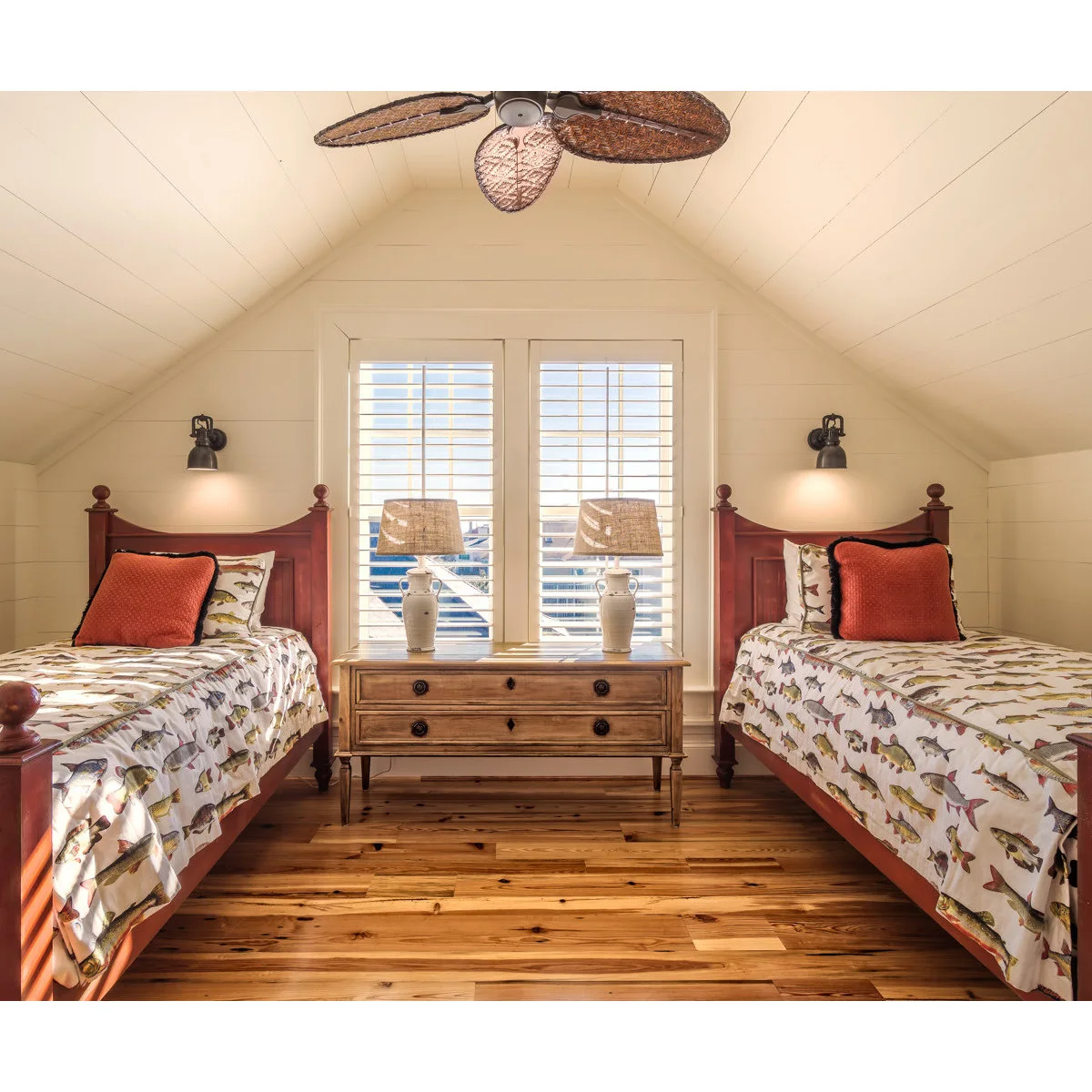
A low wood chest sits between two red beds beneath the roof slope. Matching fish-pattern covers connect the beds, while pale boards keep the angled ceiling simple. Two lamps stand on the shared chest, giving each sleeping place a more distinct bedside light within the paired layout.
Check headroom where each person sits up and gets out of bed. Choose the chest height around the mattress tops and window controls, keeping the drawers usable from the central aisle. If the room already has strong bedding patterns, plain walls can provide enough relief without another decorative feature on every surface.
IDEA 10 / 20
Reuse a Chest between Simple Metal Beds
 SaveSupport Non AI Creator
Image credit: Project: Crescent Homes (via Houzz)
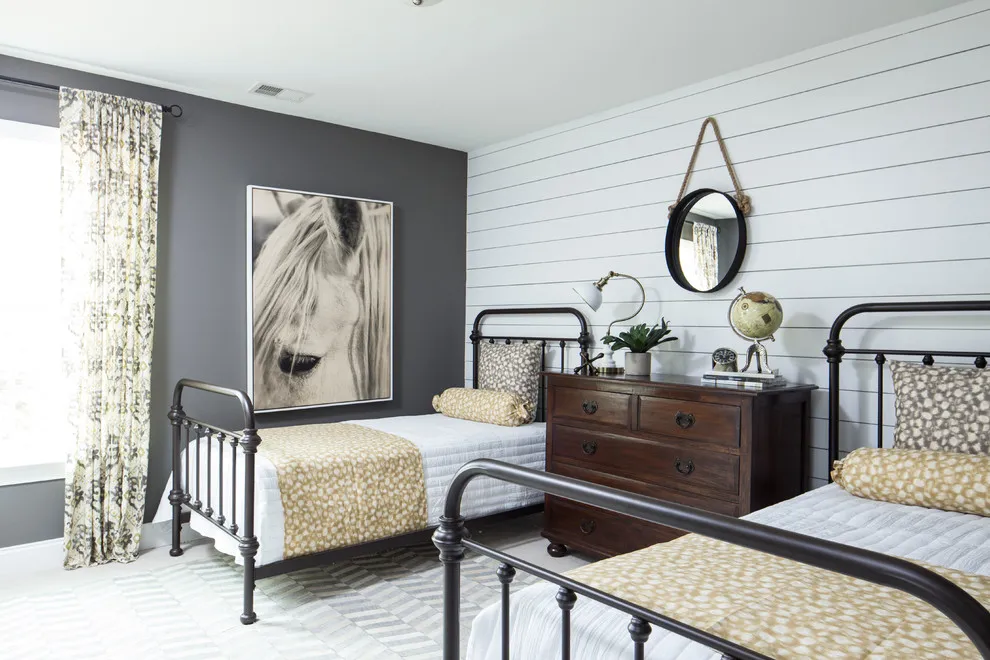
A dark wood chest serves both black metal beds in this pale room. Yellow accents in the bedding introduce color without replacing the simple frames. The chest combines drawers and a shared surface, while the white boarded wall gives the older furniture a clear, lighter background.
Check an existing chest before buying two new bedside tables. Its height and depth should work with the beds and leave space to move at the foot. Keep only a few objects on top, and secure the furniture as directed for its construction rather than assuming a heavy older piece cannot tip.
PART 03
Keep Lighting and Bedside Details Practical
IDEA 11 / 20
Give Each Bed Its Own Reading Lamp
 SaveSupport Non AI Creator
Image credit: Project: Michele Lee Willson Photography (via Houzz)
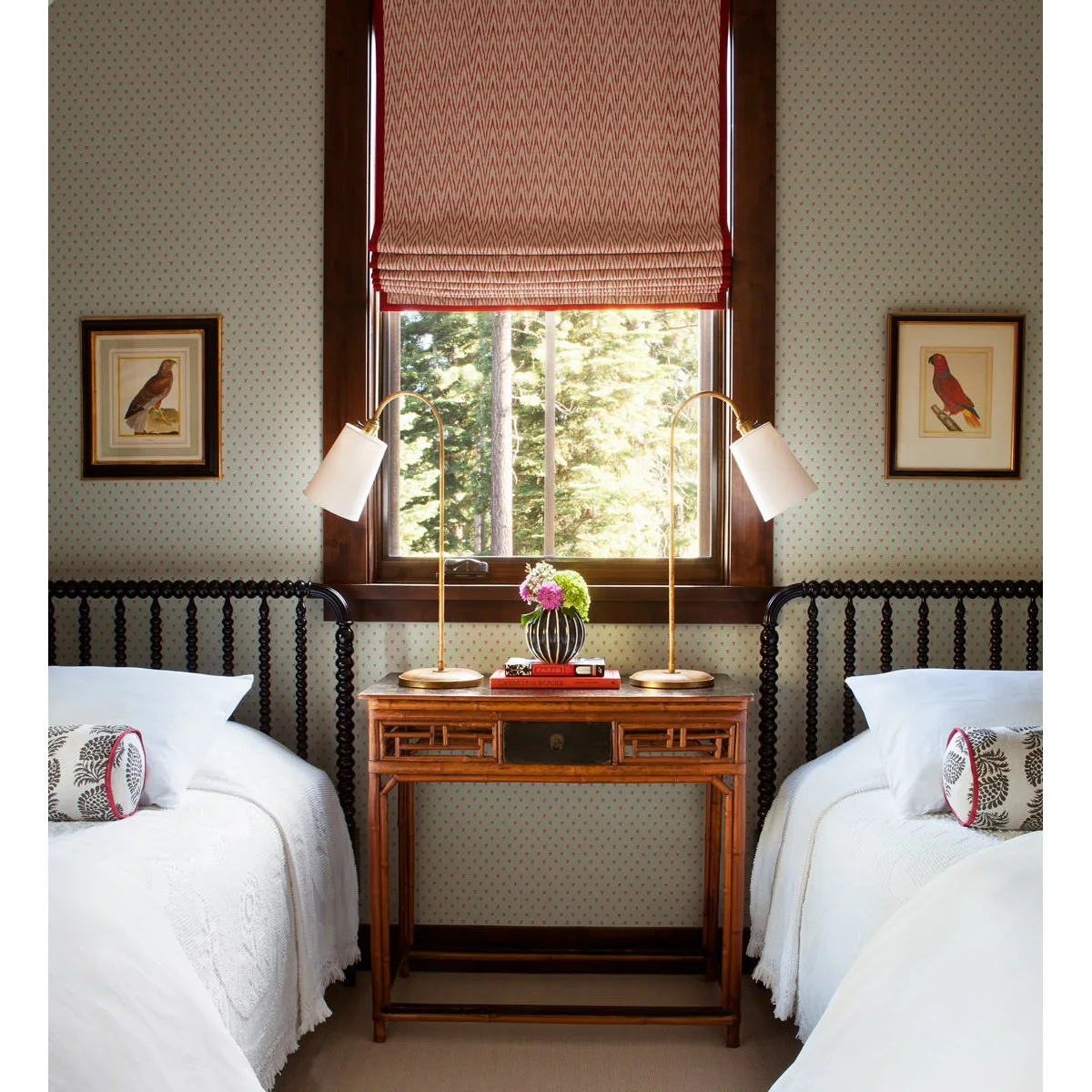
Two adjustable lamps stand on a shared wood table between dark spindle beds. The white covers keep the sleeping surfaces calm against patterned walls and a red window shade. Each lamp has a distinct position, showing how separate reading light can work without two individual bedside cabinets.
Check how each lamp turns on and whether it can be aimed without shining directly at the neighboring bed. Leave enough tabletop space for water and a book. Route cables away from the aisle and choose shades that do not crowd each other when both lamps are positioned for use.
IDEA 12 / 20
Use Wall Lights above a Shared Headboard
 SaveSupport Non AI Creator
Image credit: Project: Divco Custom Homes (via Houzz)
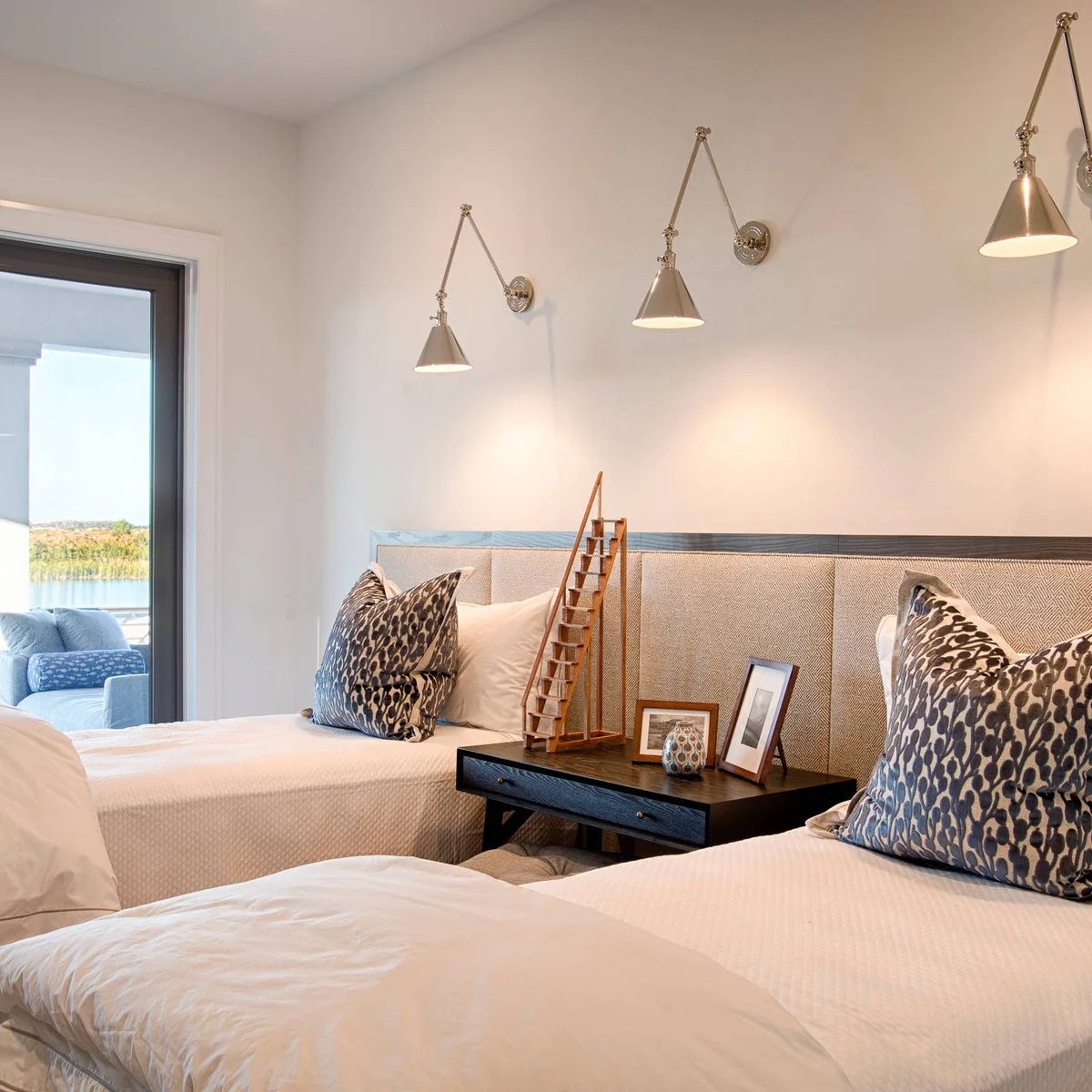
A continuous neutral headboard connects these two beds, with wall-mounted lights above rather than large bedside lamp bases. A dark table provides a shared surface between the mattresses. Patterned cushions supply most of the contrast, leaving the bedding and wall quiet around the lighting.
Plan light positions and switches around the actual bed layout before installing them. Keep fixtures clear of pillows and choose suitable equipment with an electrician where required. Limit tabletop decoration so both people retain a place for essentials, especially when one shared piece replaces two separate bedside tables.
IDEA 13 / 20
Leave a Tiny Table Clear beneath Pendant Lights
 SaveSupport Non AI Creator
Image credit: Project: Brynn Olson Design Group, LLC. (via Houzz)
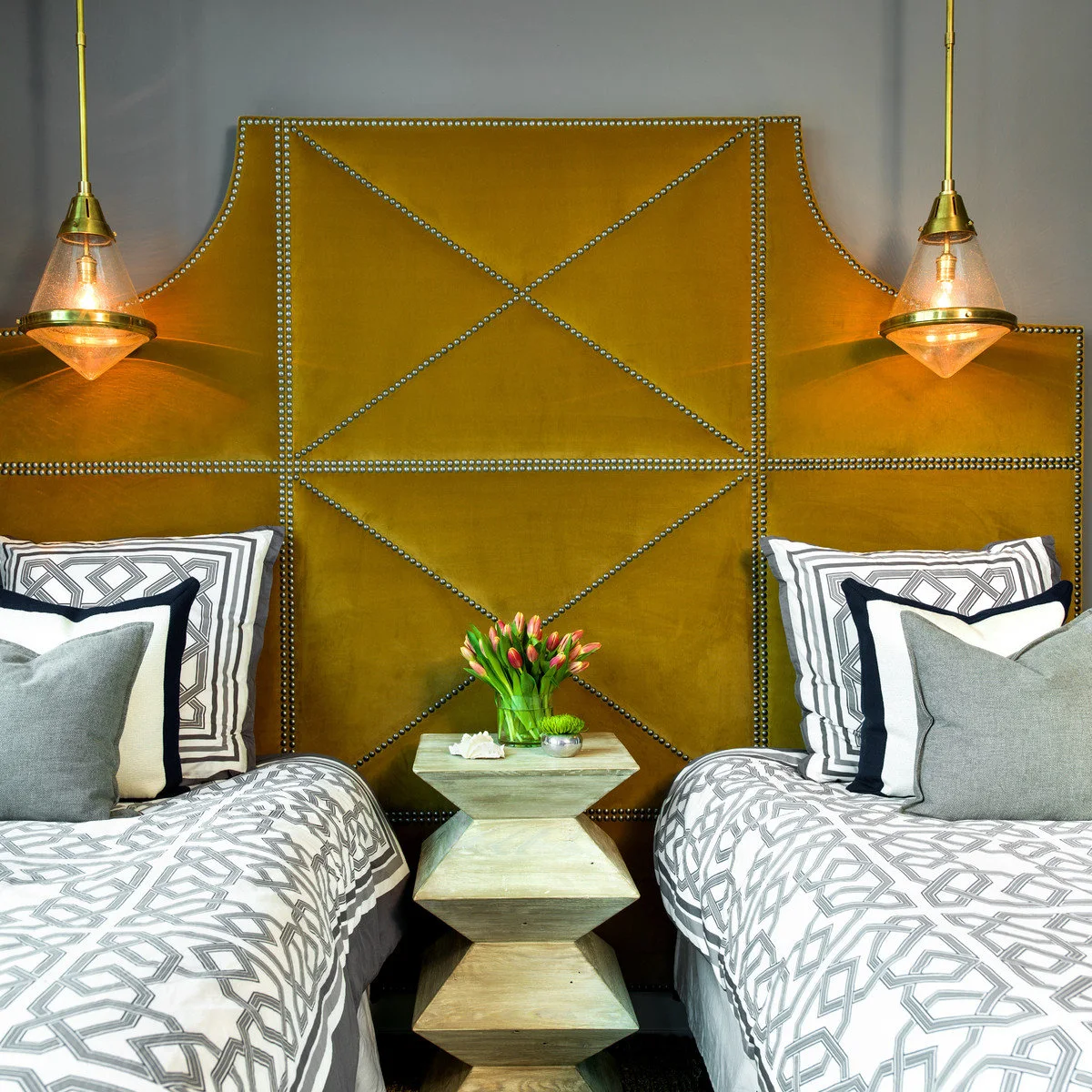
A narrow sculptural table fits between gray patterned bedcovers beneath a large mustard headboard. Pendant lights hang at either side, keeping the table free of lamp bases. The photograph illustrates how a very small bedside surface can coexist with a strong decorative background.
Treat the table as space for essentials rather than a permanent flower arrangement. Check its stability and the height beside each mattress before choosing a similar shape. Plan pendant positions with the finished bed layout and a qualified installer, making sure the fixtures and controls suit normal movement around the sleeping places.
IDEA 14 / 20
Move Reading Lights off the Shared Table
 SaveSupport Non AI Creator
Image credit: Project: Dona Rosene Interiors (via Houzz)
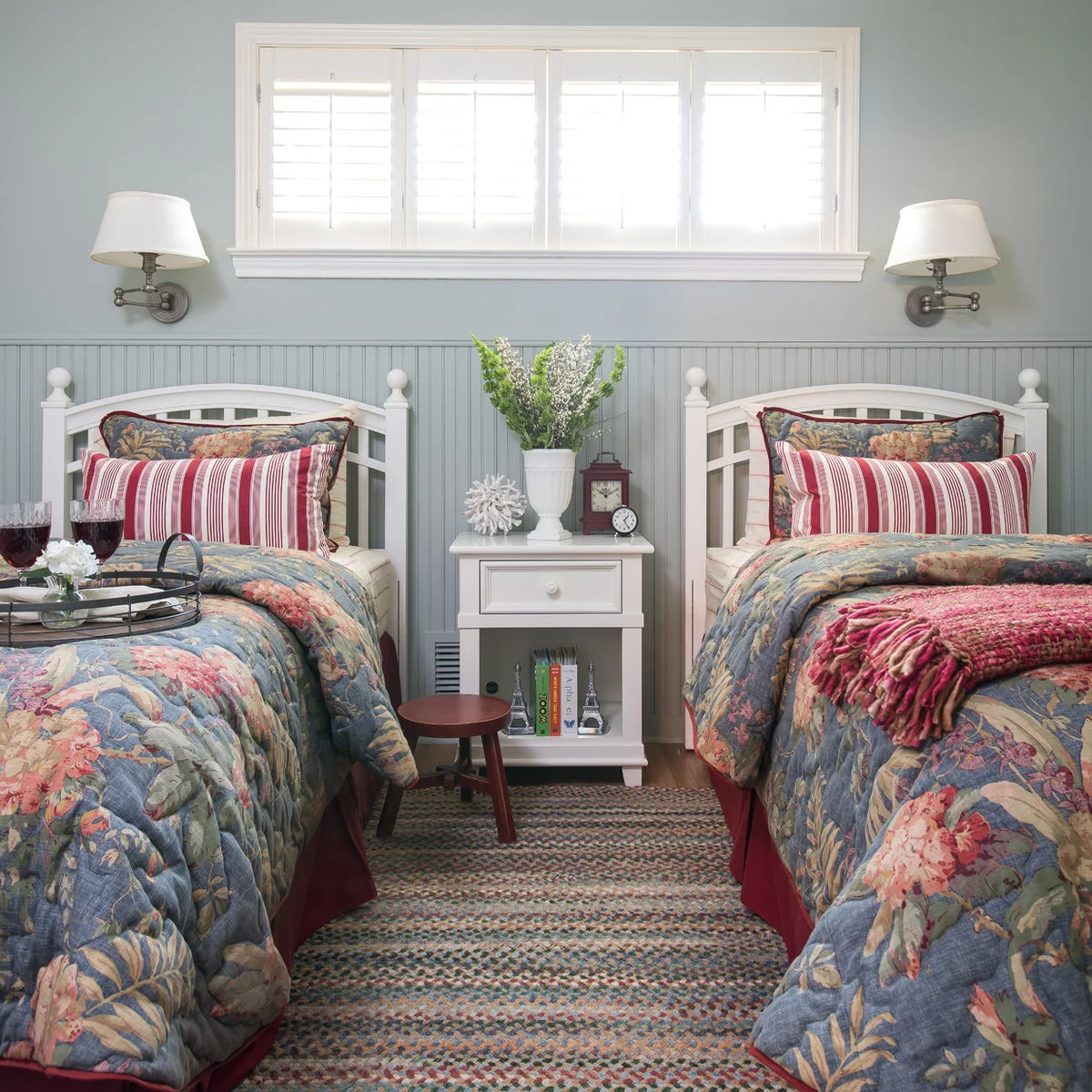
Wall-mounted lights sit above two white bed frames, leaving the shared table for a clock and a few small objects. Floral covers and striped cushions add pattern, while pale blue boards connect the background. The arrangement avoids using two bulky bedside lamps in the narrow central gap.
Choose wall lights for useful reach and simple operation rather than their appearance alone. Keep the tabletop less crowded than a styled photograph if both sleepers need it. Edit the decorative cushions for daily use, reserving a clear place to put them at night without leaving them in the walking route.
IDEA 15 / 20
Connect Two Beds with One Upholstered Background
 SaveSupport Non AI Creator
Image credit: Project: Courchene Development Corp (via Houzz)
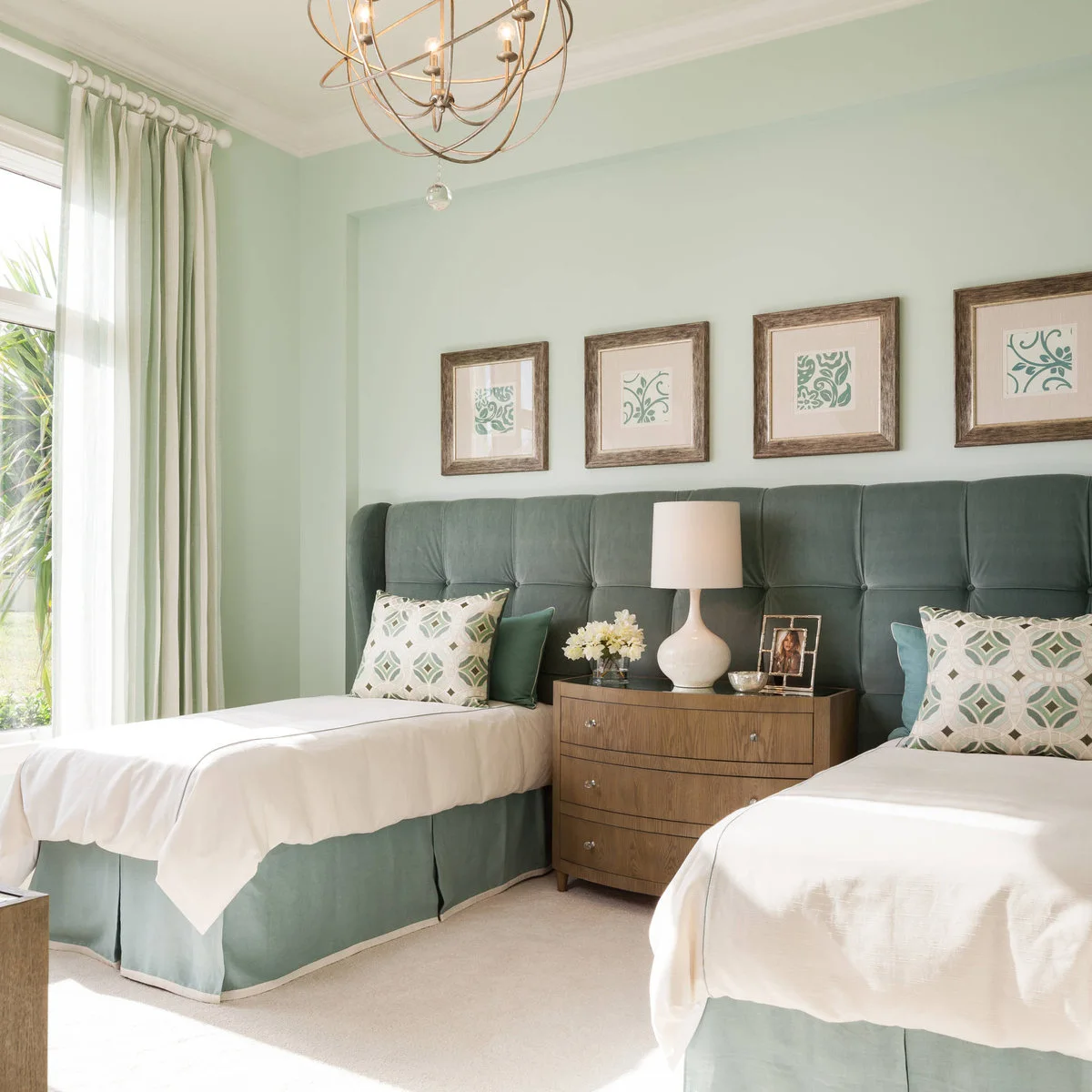
A continuous green upholstered background joins the two beds across the wall. Pale bedding and green bed skirts repeat a limited palette, while a curved wood chest occupies the center. The broad headboard makes the paired arrangement feel intentional without adding separate decorative furniture behind each sleeping place.
Measure the wall and bed positions before ordering a continuous upholstered piece. Check cleaning guidance for the chosen fabric and allow practical access around the frames. Keep the central table useful, and avoid assuming that a full-width headboard creates more floor space; the complete beds and clearances still determine whether the room works.
PART 04
Use Color and Pattern with Purpose
IDEA 16 / 20
Repeat One Pattern and Keep the Bedding Plain
 SaveSupport Non AI Creator
Image credit: Project: SUZANNE KASLER INTERIORS (via Houzz)
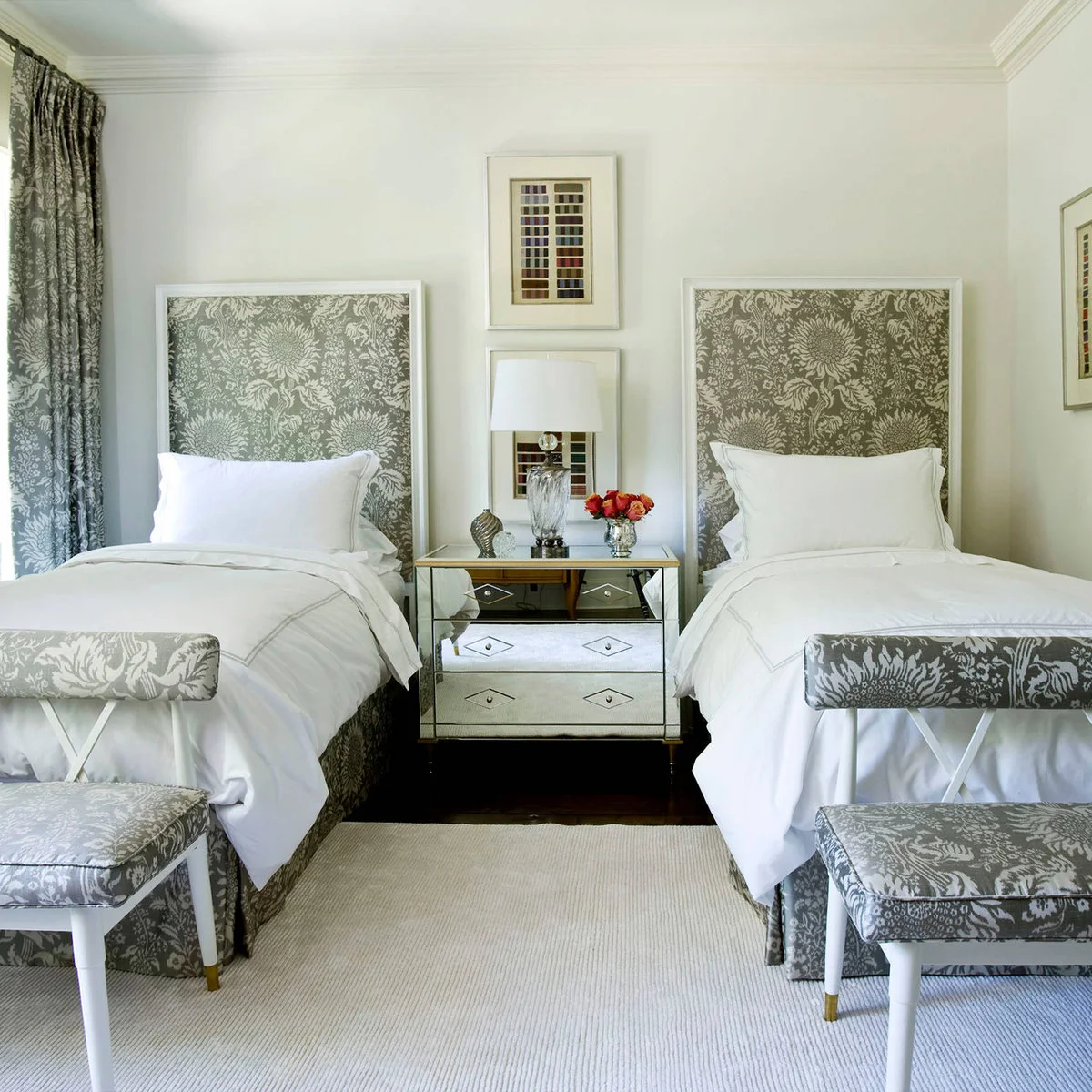
A gray floral pattern repeats across tall headboards and chairs at the foot of these beds. Plain white bedding gives the repeated pattern a quieter middle layer. The mirrored shared chest adds reflection without another large fabric motif, keeping the paired sleeping areas closely coordinated.
Borrow the headboard and plain-bedding relationship without assuming the extra chairs will fit your room. Check the route at the bed ends before adding occasional seating. If the headboards already carry a strong pattern, keep the main covers simple so the small room does not need several competing prints to feel finished.
IDEA 17 / 20
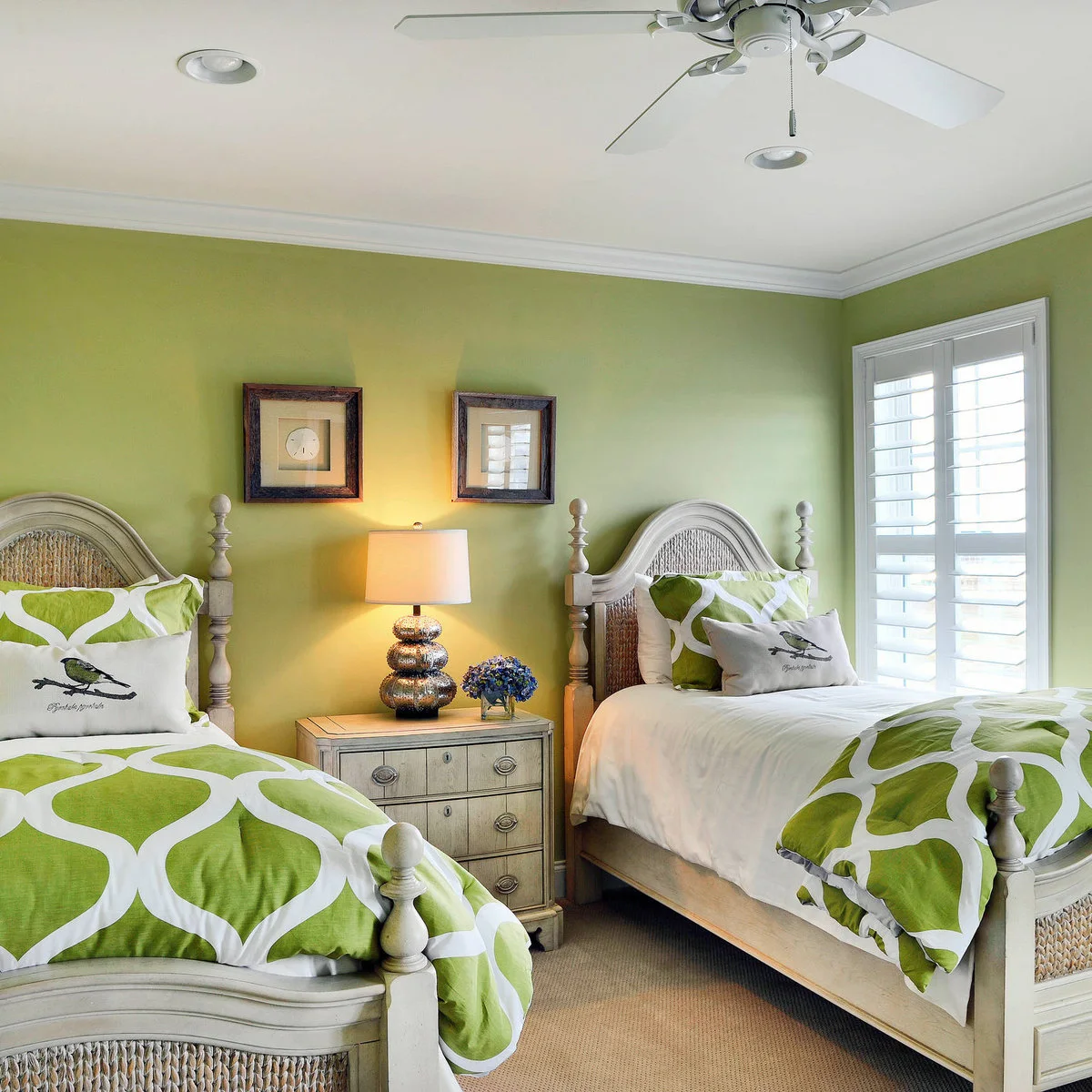
Use Green Bedding to Link Pale Bed Frames
 SaveSupport Non AI Creator
Image credit: Project: Schell Brothers (via Houzz)
Green and white bedding links two pale bed frames with woven details. The green wall repeats the main color, while a shared light chest keeps the center from becoming another strong contrast. Small bird cushions add a different motif without changing the broad color relationship across the beds.
Compare bedding samples with the wall in your own light before choosing similar greens. Keep the decorative pillow count manageable, especially in a shared room where extra pieces need storage at night. Use the shared chest for practical belongings first, leaving only enough space for the lamp and everyday bedside items.
IDEA 18 / 20
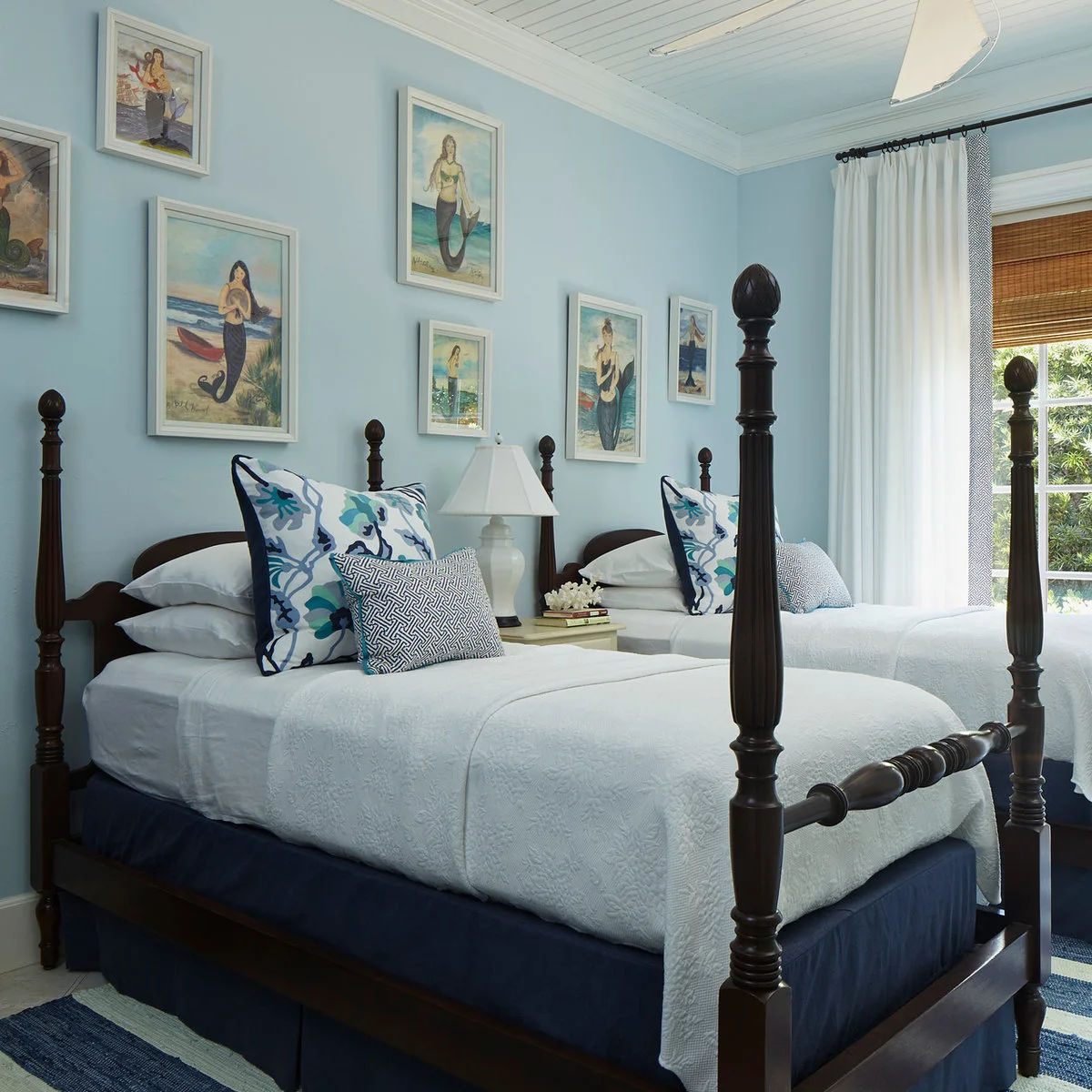
Keep the Center Small between Dark Bed Posts
 SaveSupport Non AI Creator
Image credit: Project: L K DeFrances & Associates (via Houzz)
Dark posts outline the beds against pale blue walls, while a small pale table occupies the center. White covers keep the sleeping surfaces lighter than the frames. Blue patterned cushions and framed pictures supply detail without requiring another substantial piece of furniture between the beds.
Include the posts in the full frame measurements before planning the aisle and foot clearance. Check that their height and visual weight suit your room rather than choosing them only for symmetry. A low or open frame may be easier where circulation is particularly tight, even if you keep the same blue and white bedding palette.
IDEA 19 / 20
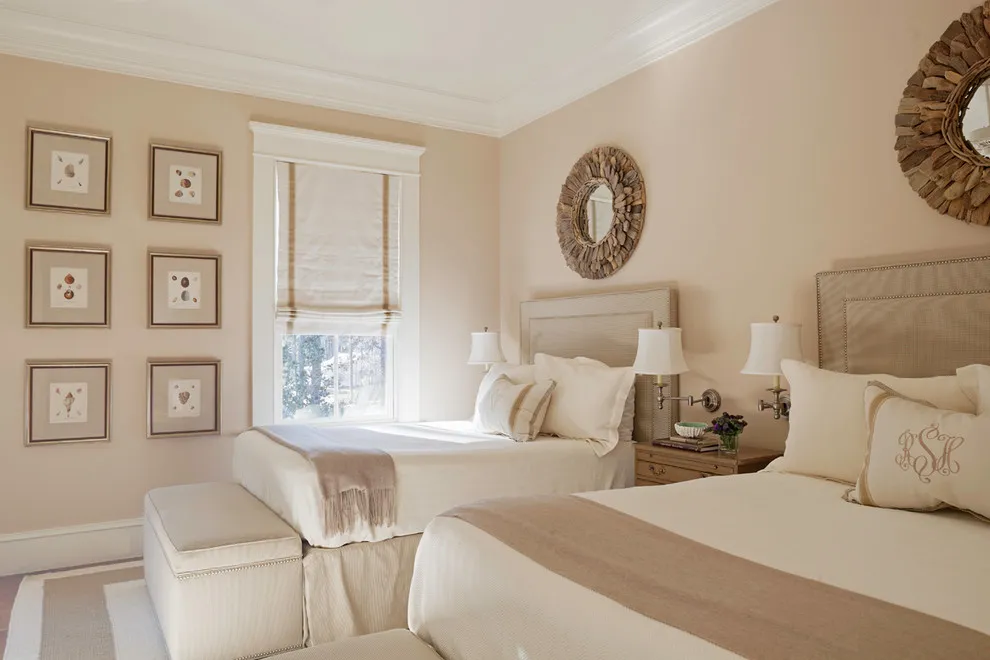
Keep a Neutral Pair from Looking Flat
 SaveSupport Non AI Creator
Image credit: Project: Hansen Architects, P.C. (via Houzz)
Cream bedding and pale upholstered headboards create a restrained pair of sleeping places. Small changes in texture separate the layers, with a shared wood table and wall lights providing a practical center. The light palette allows the bed shapes and wall decorations to remain distinct without strong color contrast.
Compare the whites and creams together before buying several separate sets of bedding. Choose washable layers that suit the room’s use rather than relying on delicate decorative fabric. Leave out foot-of-bed seating if it compromises the route around the beds, keeping the quieter color relationship while simplifying the floor plan.
IDEA 20 / 20
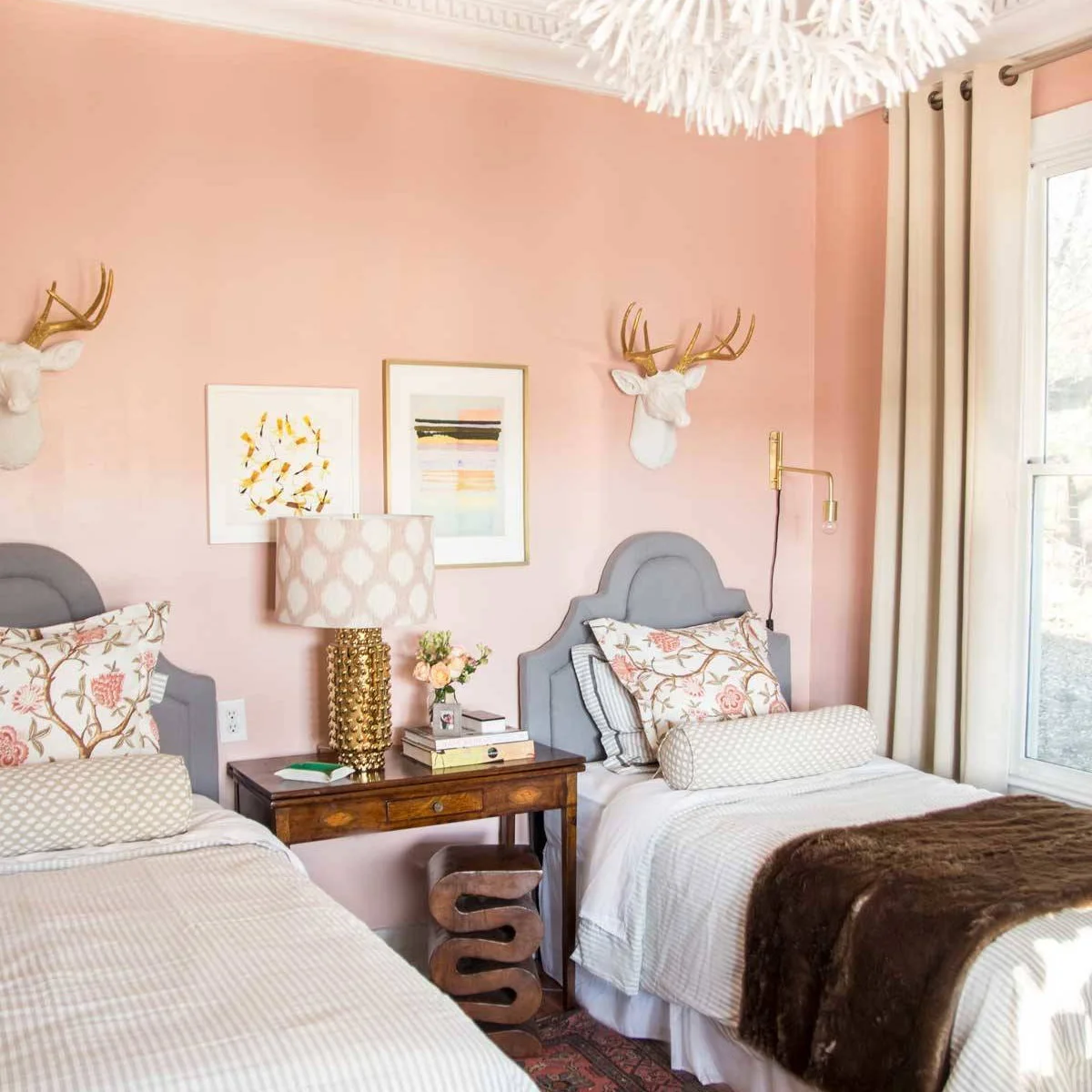
Give a Shared Room Color above the Beds
 SaveSupport Non AI Creator
Source: houzz.com
A peach-pink wall gives two gray headboards a warm background. Floral cushions repeat soft colors, with a shared wood table between the beds. The shaped headboards provide individual outlines, allowing the wall color to connect the sleeping places without giving both beds a large enclosing frame.
Choose the wall shade alongside the existing headboard fabric before changing the bedding. Keep the shared table useful by reducing the decorative pile when the room is occupied. Cozy guest bedroom ideas can offer related ways to provide comfortable layers and bedside essentials without filling a small shared room with additional furniture.
BRING IT ALL TOGETHER
Check the Complete Beds and Their Access First
Set out the full bed frames and storage openings before choosing lamps, rugs or extra seating. A shared chest, a narrow table or drawers beneath the bed can reduce the need for separate pieces, but each option needs enough space to operate comfortably. Keep doors and windows accessible.
Use bedding and a limited color palette to connect the room once the arrangement works. Choose lighting each person can operate and leave useful surfaces clear. A photograph can suggest a detail worth borrowing, while your own measurements determine which version belongs in the room.