A TV wall has to work from the sofa as well as from the doorway. Before choosing panels or shelves, think about the screen’s position, daylight reflections and the equipment that needs a home beside it.
These rooms show colorful walls, simple consoles and fitted storage in different settings. Where a screen sits above a fireplace, treat the photograph as a decorating reference and check heat clearances and seated comfort before copying the installation.
PART 01
Give the Screen a Considered Backdrop
IDEA 01 / 20
Use a Deep Blue Backdrop
 SaveSupport Non AI Creator
Image credit: Project: Lace and Grace Interiors (via Houzz)
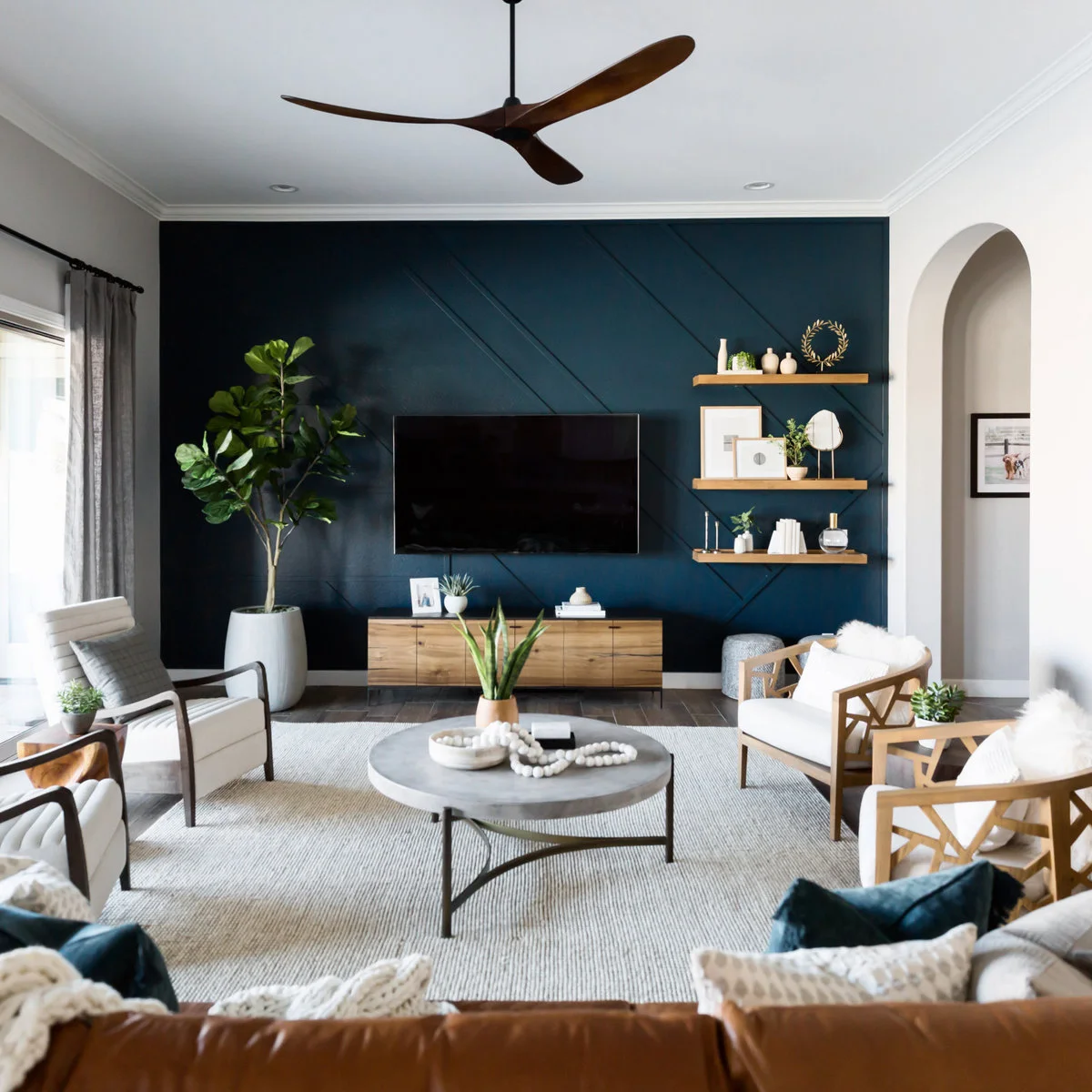
Deep blue paint brings the screen and diagonal wall trim into one composition. A low wood-toned console anchors the TV, while three shelves sit to the right rather than surrounding it. Pale chairs and a simple rug keep the darker wall from taking over the entire room.
Test the wall color behind a switched-off screen before painting the whole surface. Keep shelves outside the main viewing area and leave the console useful for equipment. The large plant adds height, but it should not grow across the picture or block access to a curtain.
IDEA 02 / 20
Match the Built-In to the Walls
 SaveSupport Non AI Creator
Image credit: Paul Raeside / Future
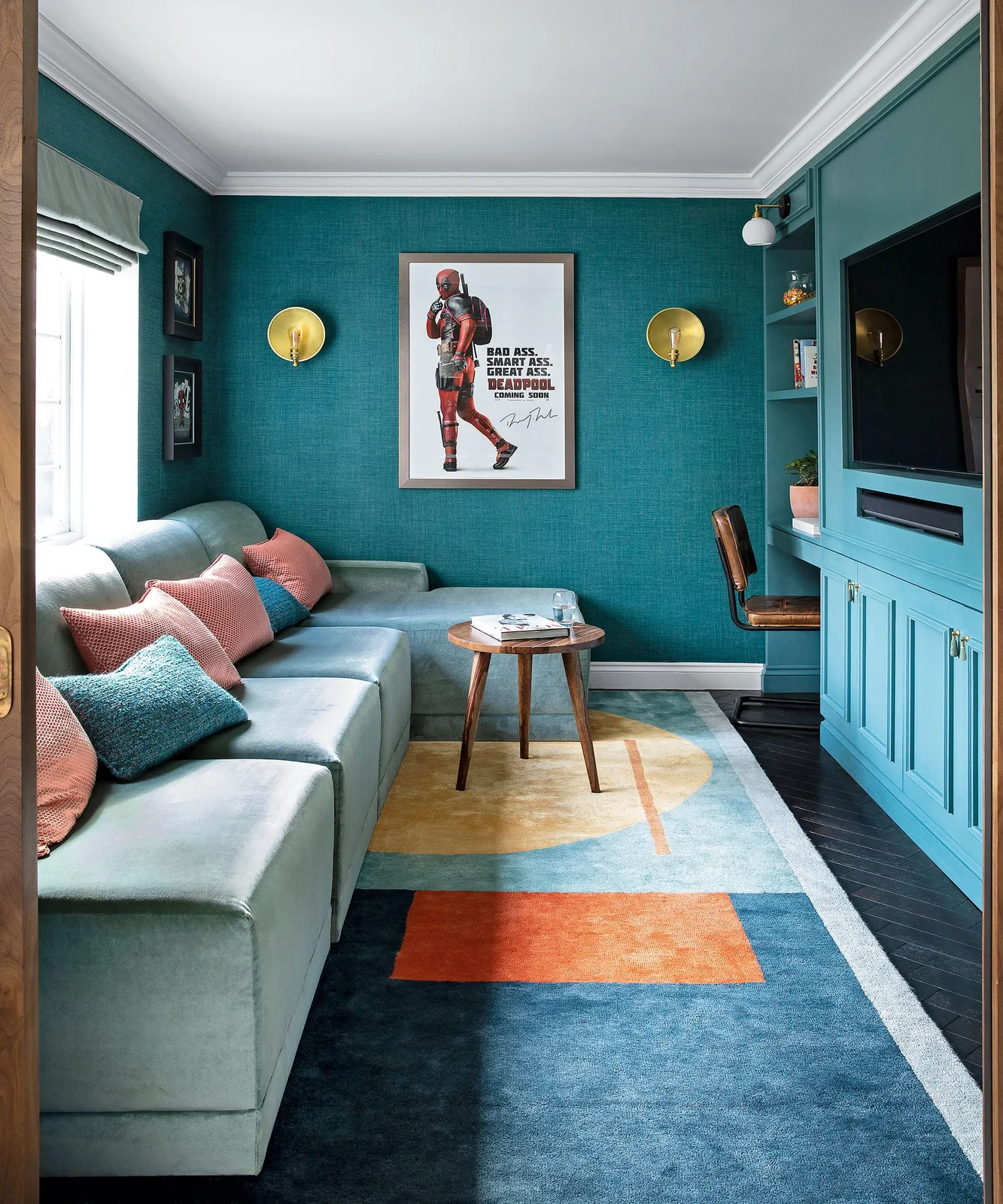
Teal walls and matching cabinetry make this compact TV room feel like one enclosed space. The screen sits within a framed opening, with a soundbar below and cupboards underneath. A small wooden table leaves more of the floor visible than a large central coffee table would.
Plan the cabinet around your actual screen, connections and ventilation requirements rather than a generic rectangle. Check the view from both ends of the sectional. A strong room color can be comfortable, but lamps should not create bright reflections on the screen during evening viewing.
IDEA 03 / 20
Make the Shelving the Color Feature
 SaveSupport Non AI Creator
Image credit: Richard Powers / Future
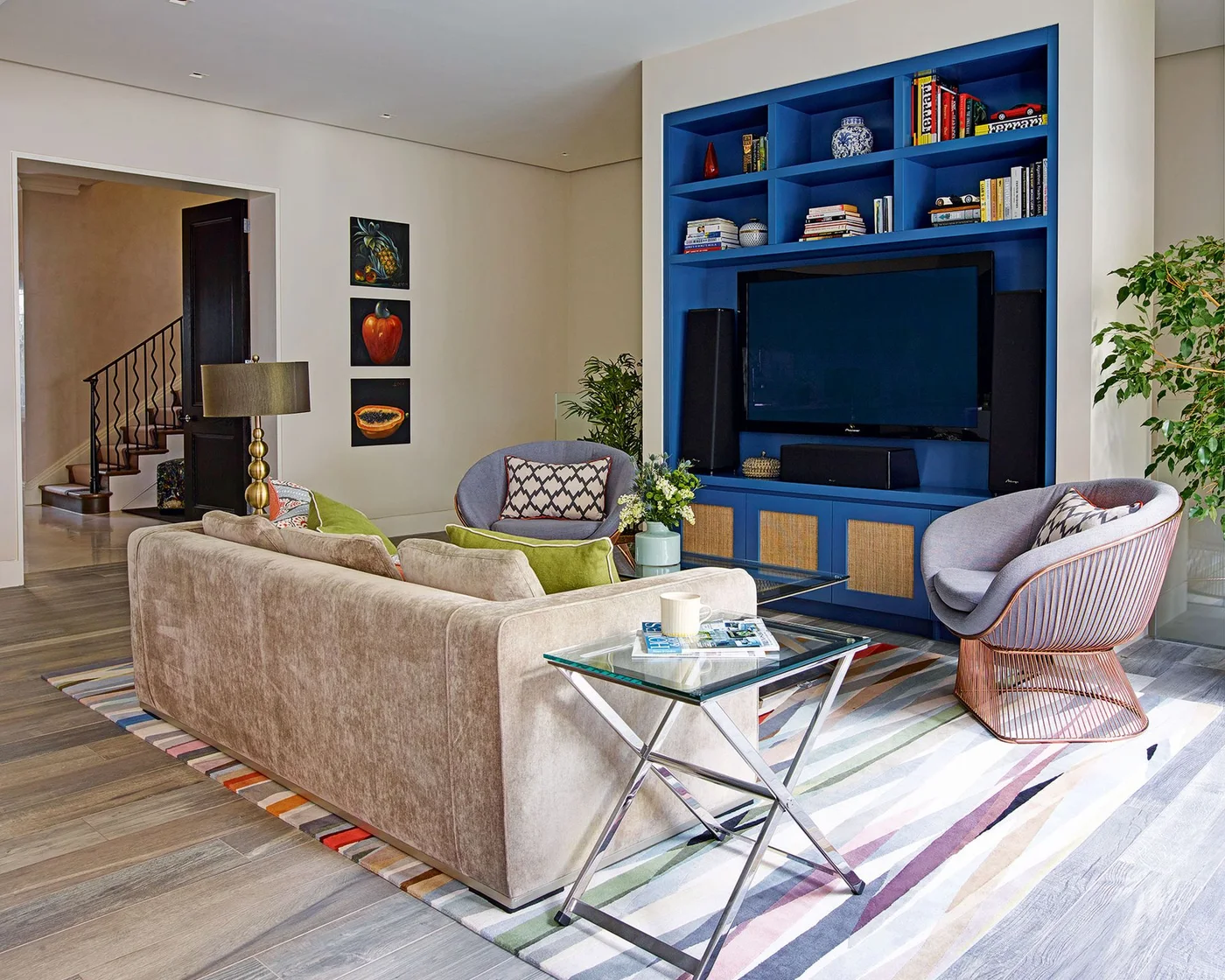
A bright blue media cabinet stands against pale walls, giving the TV a defined home without coloring the entire room. Books and objects fill selected upper compartments, while the lower doors add another texture. The speakers remain clearly visible on either side of the screen.
Measure speakers and equipment before deciding the shelf spacing. Do not assume decorative door panels provide enough ventilation or allow remote signals through. Leave a practical route to plugs and cables so a simple equipment change does not require emptying the whole cabinet.
IDEA 04 / 20
Balance Green Alcoves with a Pale Center
 SaveSupport Non AI Creator
Image credit: Paul Raeside / Future
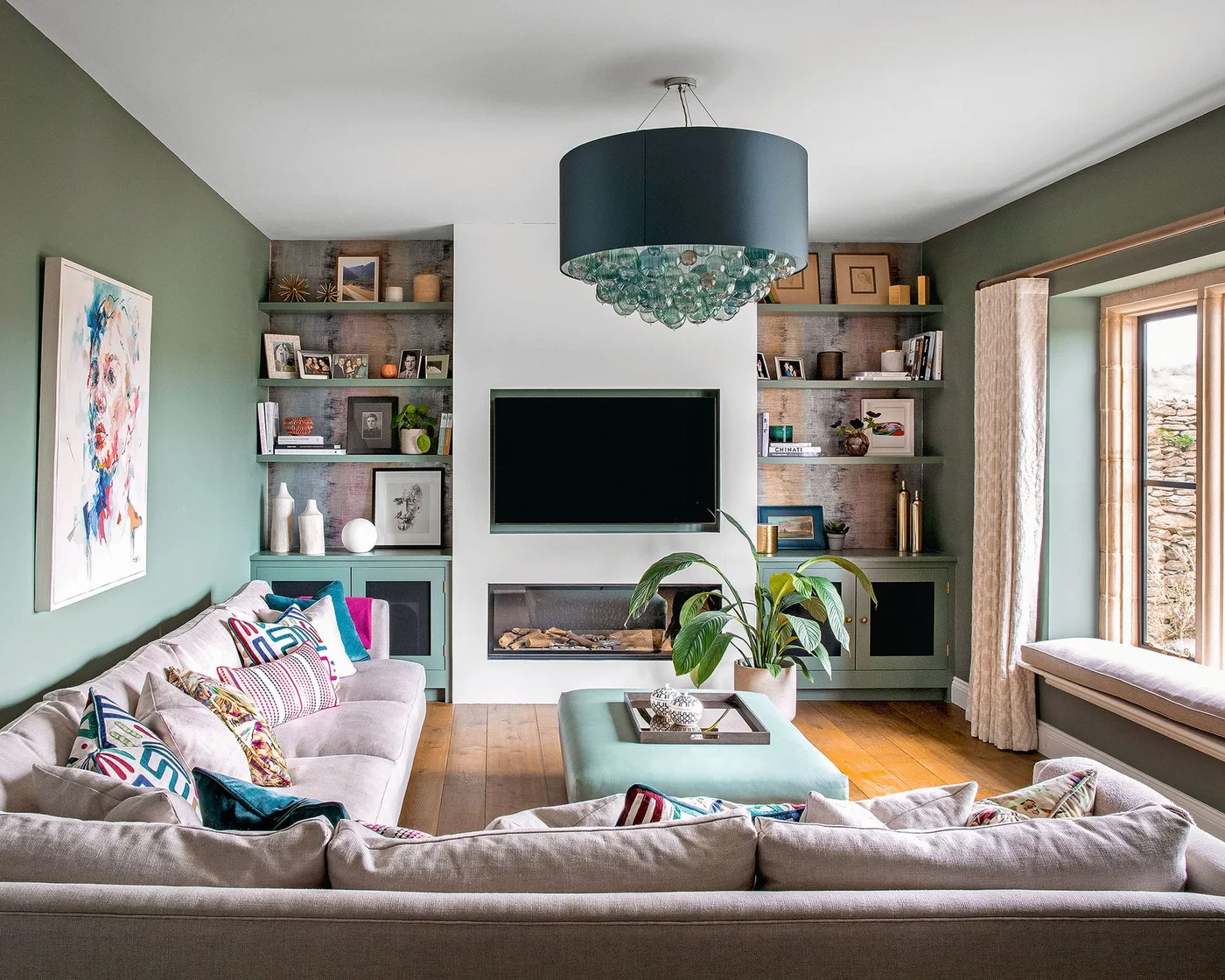
A pale central chimney breast separates two green alcove units in this room. The screen sits between the shelves and above a linear fireplace, while the green cabinetry repeats the wall color. Personal pictures and books keep the surrounding storage connected to the household.
Borrow the color balance even if your TV needs a different position. For any screen above a fireplace, verify the appliance and TV installation requirements and test the viewing angle from your sofa. Keep plants and shelf objects clear of the screen instead of relying on them to hide cables.
IDEA 05 / 20
Wrap Storage Around a Recessed Screen
 SaveSupport Non AI Creator
Image credit: Richard Powers / Future
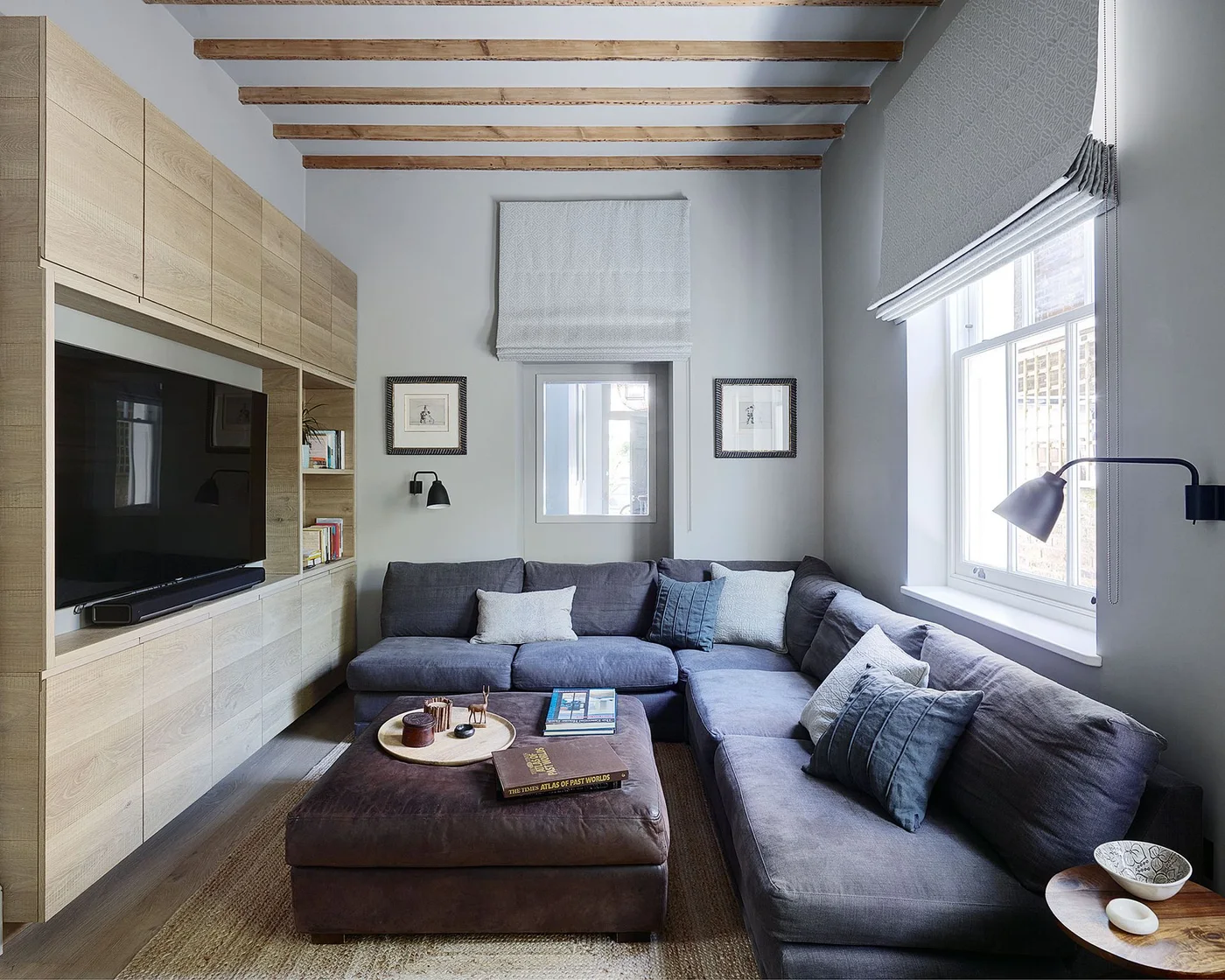
Wood-toned cupboards fill the TV wall from floor level toward the ceiling, with the screen occupying a broad central recess. A few open compartments break up the closed fronts. The gray sectional faces the storage wall directly, making the screen part of a clearly arranged sitting area.
Allow room for the screen’s connections and future replacement before fitting a recess closely around it. Use closed cupboards for the things you do not want visible. Confirm that doors can open without hitting nearby seating, and keep the lowest storage easy to access without moving the ottoman.
PART 02
Build Useful Storage Around It
IDEA 06 / 20
Combine Low Cupboards with Open Side Shelves
 SaveSupport Non AI Creator
Image credit: Project: Salinas Home Design (via Houzz)
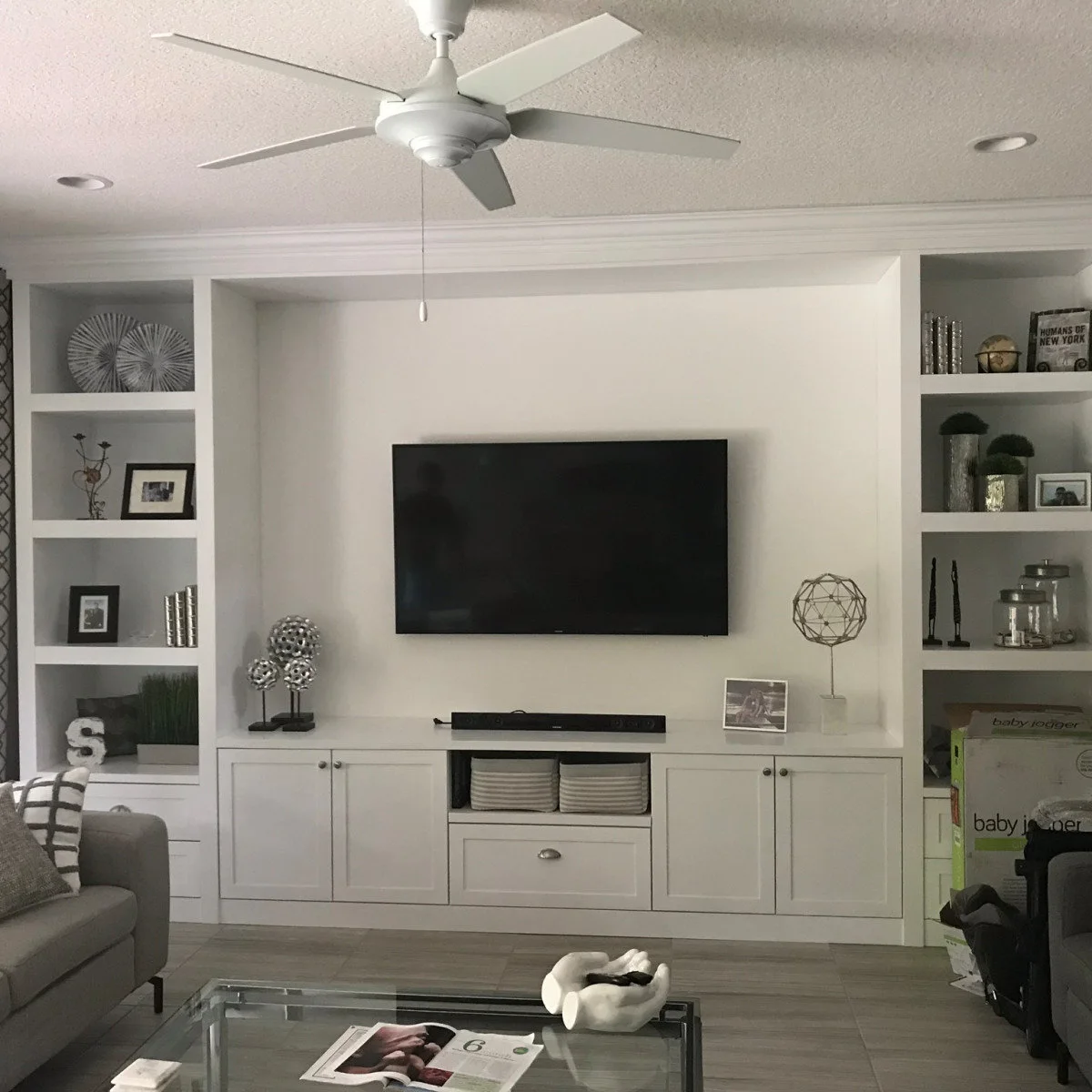
Open shelves frame the screen, while cupboards and drawers provide enclosed storage below. Two baskets sit in the central lower opening, making small household items easy to put away. The white finish connects the many compartments without requiring every shelf to hold a matching object.
Assign the lower storage before styling the upper shelves. Remotes, games and spare cables are easier to manage when each has a reachable place. Keep heavier items low, leave room for equipment airflow and resist filling the side shelves so densely that the screen feels boxed in.
IDEA 07 / 20
Give Shelf Backs a Contrasting Color
 SaveSupport Non AI Creator
Image credit: Project: Board & Vellum (via Houzz)
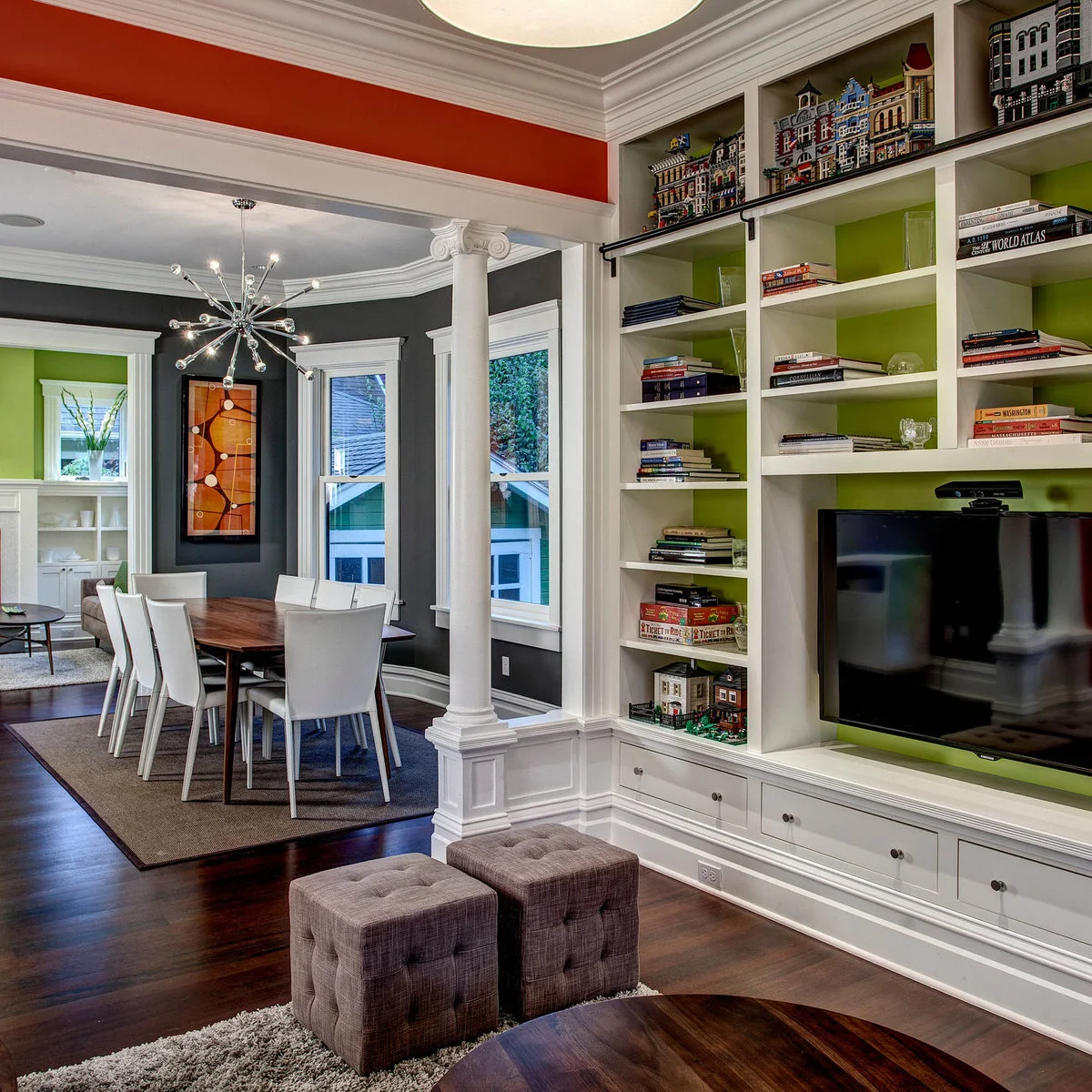
Lime-green shelf backs bring color into this white media wall, while a low run of drawers provides a quieter base. Books and small architectural models occupy the upper compartments. The TV wall shares its setting with the dining area, so the shelving also contributes to the wider room.
Use color behind the shelves when you want a smaller commitment than painting every door. Keep the part directly around the screen relatively calm during viewing. Measure taller collections before fixing the shelf positions, and choose what deserves display rather than spreading every object evenly across the wall.
IDEA 08 / 20
Frame the TV with a Textured Center Panel
 SaveSupport Non AI Creator
Image credit: Project: Hubley Design Interiors, LLC (via Houzz)
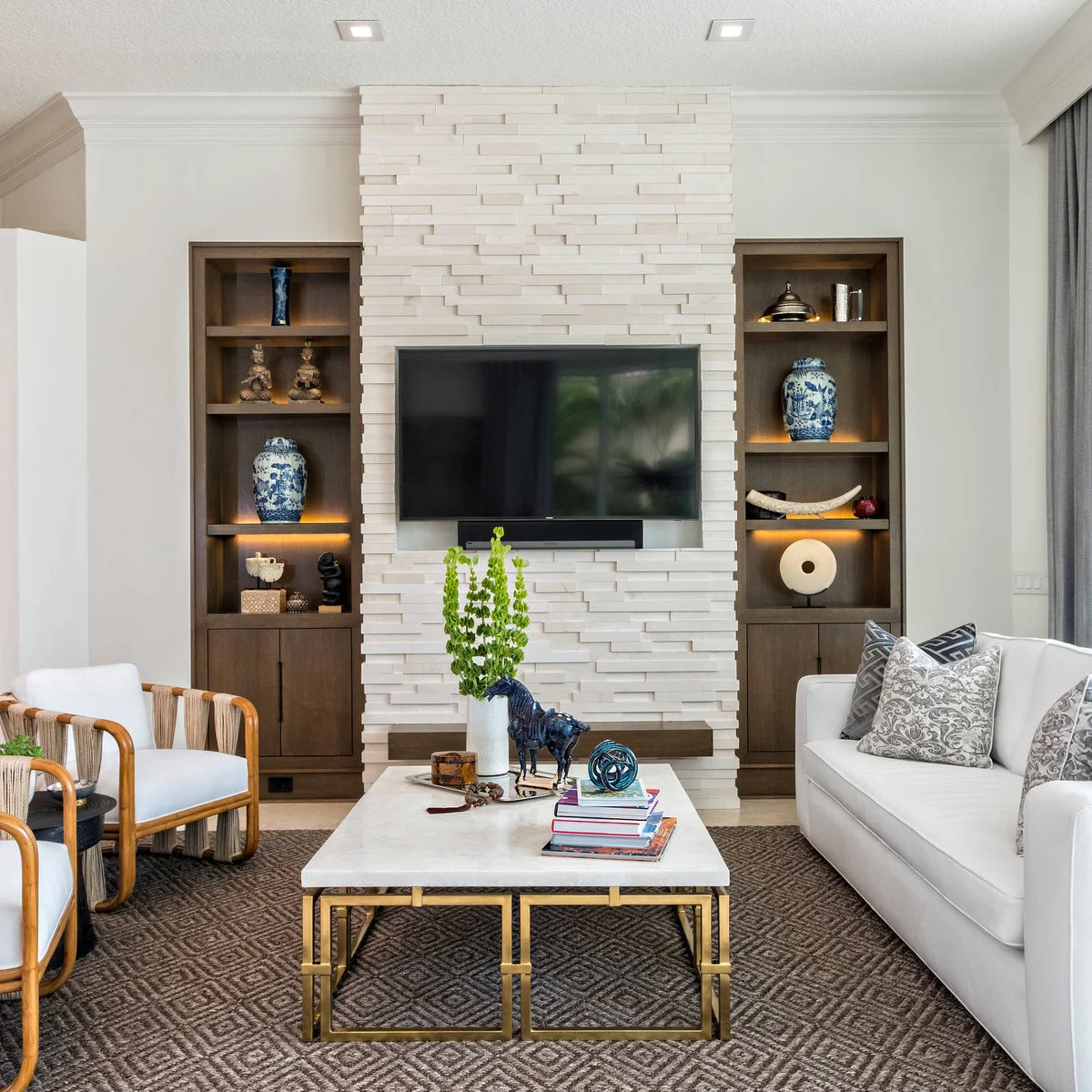
A pale textured panel rises behind the TV, with dark shelves framing it on either side. Small integrated lights pick out selected objects and blue-and-white ceramics. The contrast gives the wall depth while the lower cupboards provide a place to put everyday items away.
Consider how textured surfaces will collect dust before choosing them for a large wall. Keep shelf lights dimmable and avoid reflections in the screen. Leave enough room around the television for its required ventilation and mounting access; a tight decorative frame should not make maintenance difficult.
IDEA 09 / 20
Use Staggered Shelves Above a Long Cabinet
 SaveSupport Non AI Creator
Image credit: Project: 41 West (via Houzz)
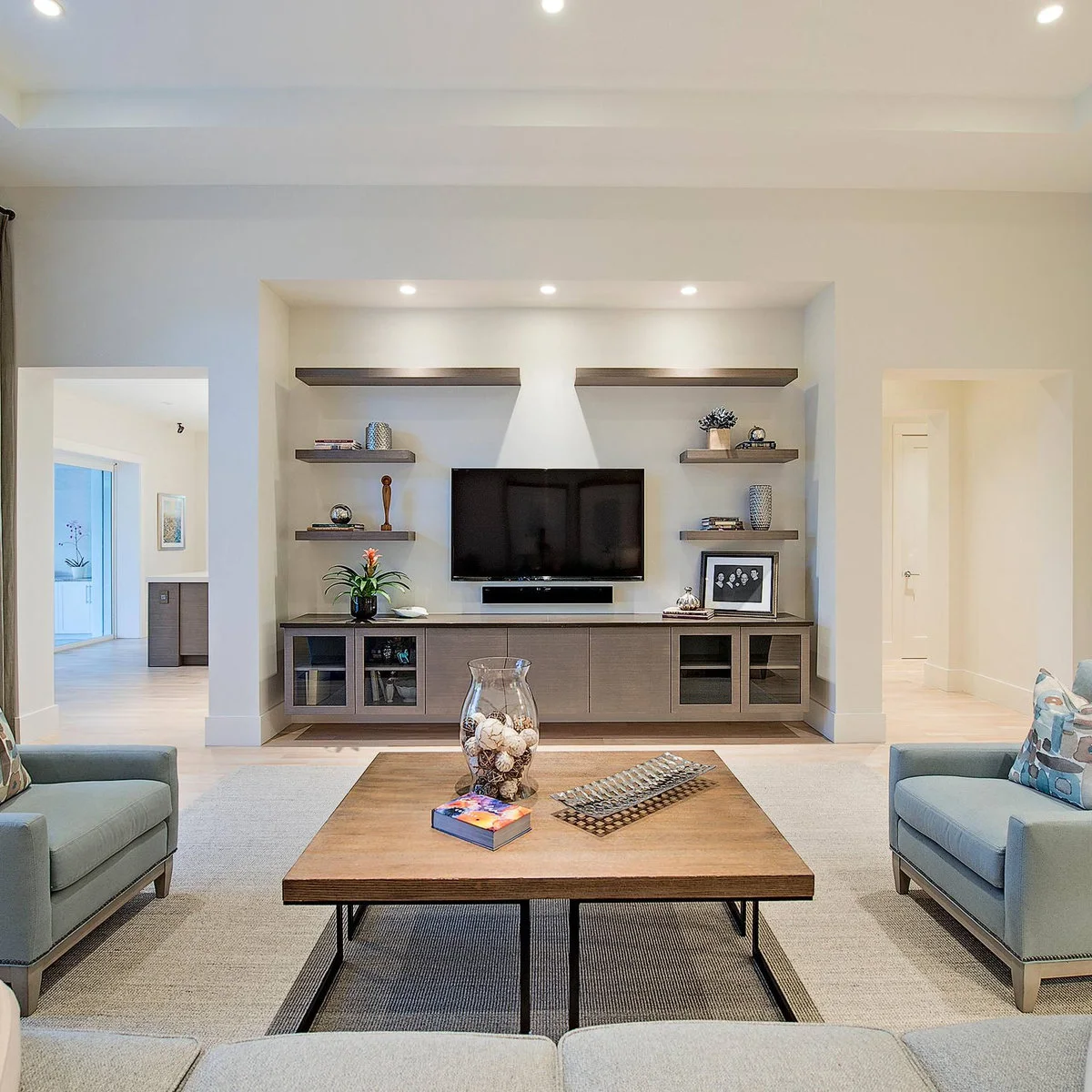
A long cabinet spans this recessed TV wall, combining solid doors with glazed compartments at the ends. Staggered shelves leave the center clear for the screen. Their repeated wood tone connects the upper display with the lower storage, without making the whole wall one solid unit.
Plan shelves around the TV’s sightlines and any speaker positions. Attach them for the weight they will actually carry, especially books and ceramics. Keep a little empty space between objects so dusting is manageable and equipment can be reached without dismantling the display.
IDEA 10 / 20
Keep a Pale Media Wall Soft
 SaveSupport Non AI Creator
Image credit: Project: Jinx McDonald Interior Designs (via Houzz)
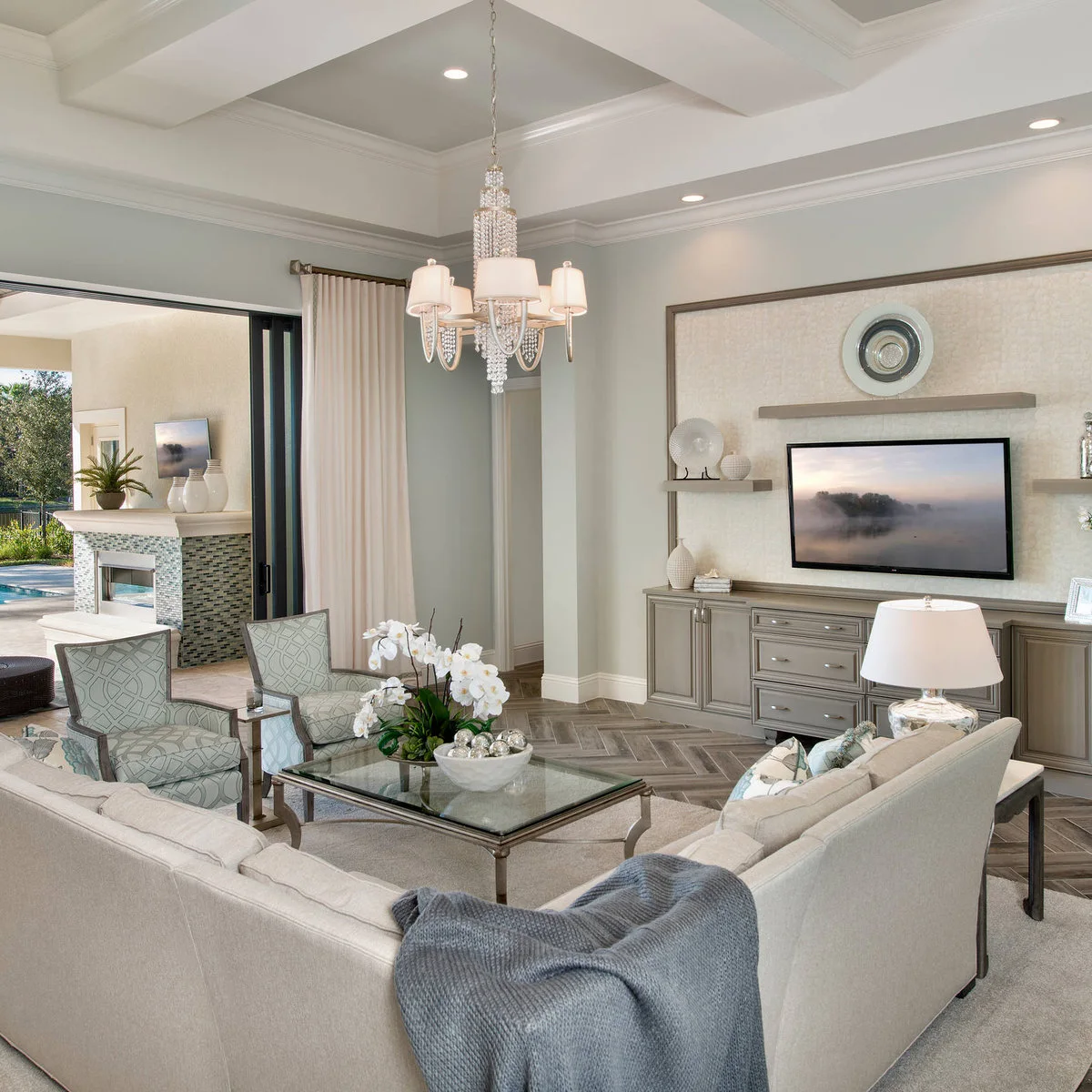
Gray lower cupboards and pale floating shelves give this TV wall a restrained appearance. A lightly textured backdrop distinguishes the screen area from the surrounding wall. The neighboring curtains and upholstered chairs repeat gentle tones, so the television does not introduce the room’s only dark outline.
Try the wall finish beside both the cabinet sample and the switched-off TV. Keep decorative plates securely supported and away from edges where vibration or cleaning could dislodge them. Test afternoon glare from the adjoining doors before deciding that the screen’s position is fixed.
PART 03
Work with the Rest of the Room
IDEA 11 / 20
Continue Dark Tones into Nearby Furniture
 SaveSupport Non AI Creator
Image credit: Paul Raeside / Future
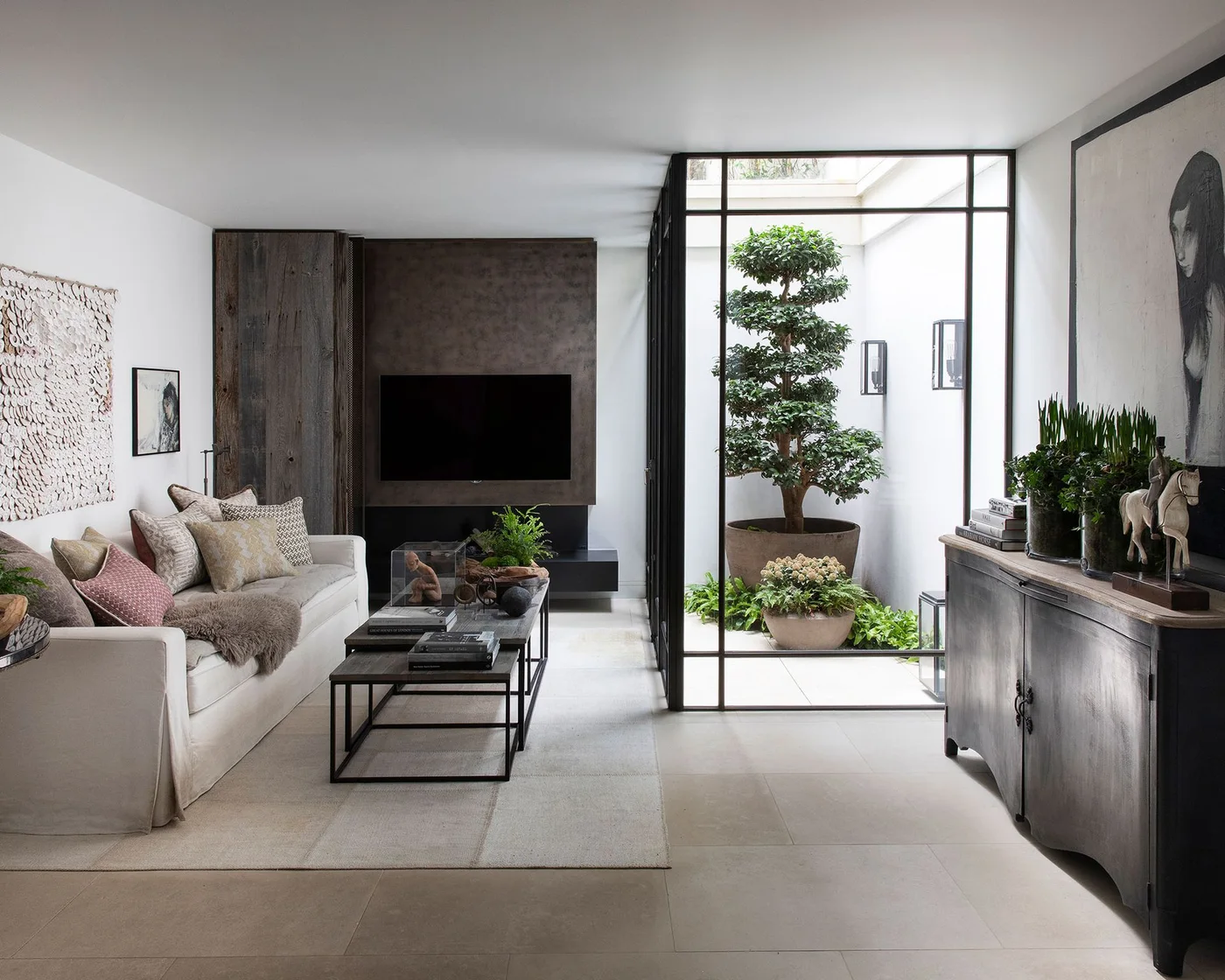
A dark panel and low cabinet mark the TV corner, while a nearby sideboard repeats the darker tones. The pale sofa and floor keep the room balanced. Full-height glazing opens the view toward planting, making the TV one feature among several rather than the only destination.
Check reflections from the glazing at the times you normally watch television. Keep blinds or curtains in mind before mounting the screen permanently. Use the nearby furniture to connect the colors, but leave a clear walking route between the sofa, TV wall and courtyard doors.
IDEA 12 / 20
Let the Room’s Structure Frame the Screen
 SaveSupport Non AI Creator
Image credit: Brent Darby / Future
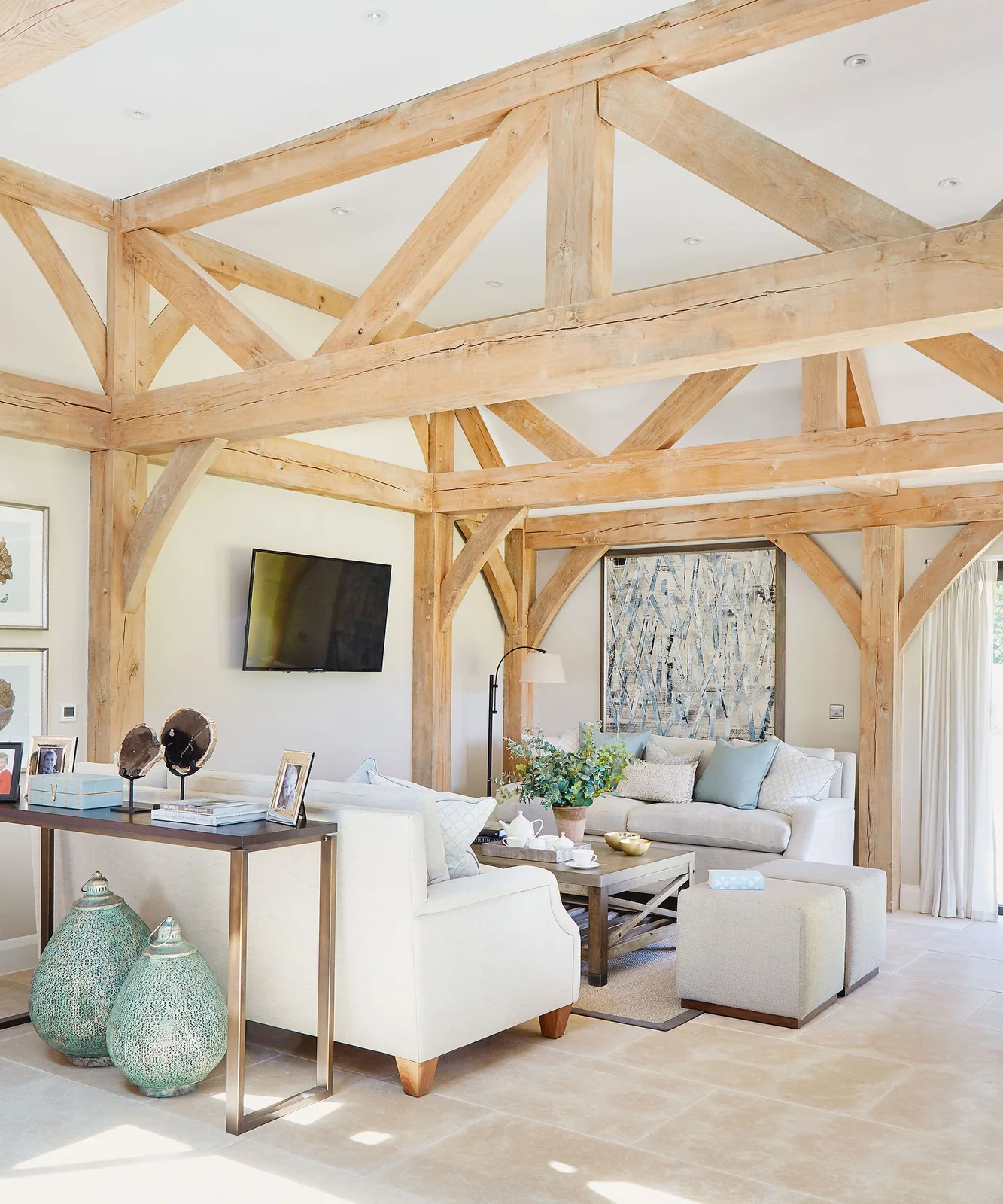
Exposed timber posts and beams already divide the walls of this country living room. The TV occupies one of those sections without an additional built-in surround. Pale upholstery and a large artwork on the neighboring wall keep the room from being organized around the screen alone.
Use existing architectural divisions before adding new paneling. Test the screen height from the seats you use most, since an empty wall section can tempt you to mount it too high. Plan the cable route discreetly and avoid drilling into structural members without appropriate assessment.
IDEA 13 / 20
Place the TV Beside the Fireplace
 SaveSupport Non AI Creator
Image credit: Jody Stewart / Future
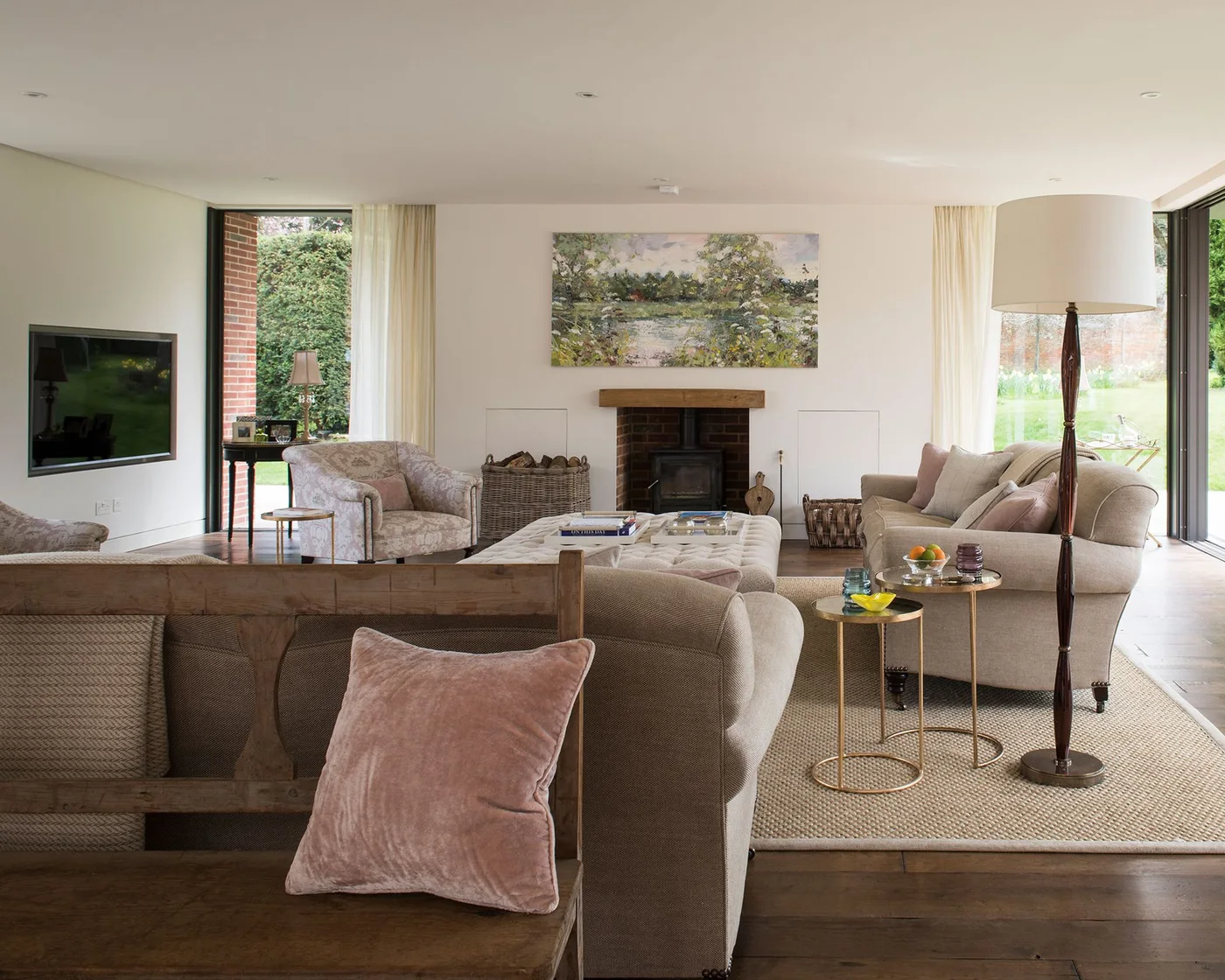
The fireplace keeps its central position in this room, with artwork above and the television on the adjacent wall. Several seats can face either feature. The arrangement shows that the TV and fireplace do not have to share a vertical stack to belong to the same sitting area.
Check the view from every regular seat before choosing a side wall. Swiveling chairs or a carefully selected mounting bracket may help, but should not compensate for a poor layout. Keep the route between furniture clear and consider whether daylight from the neighboring window will reflect across the screen.
IDEA 14 / 20
Set the Screen Above a Freestanding Sideboard
 SaveSupport Non AI Creator
Image credit: Davide Lovatti / Future
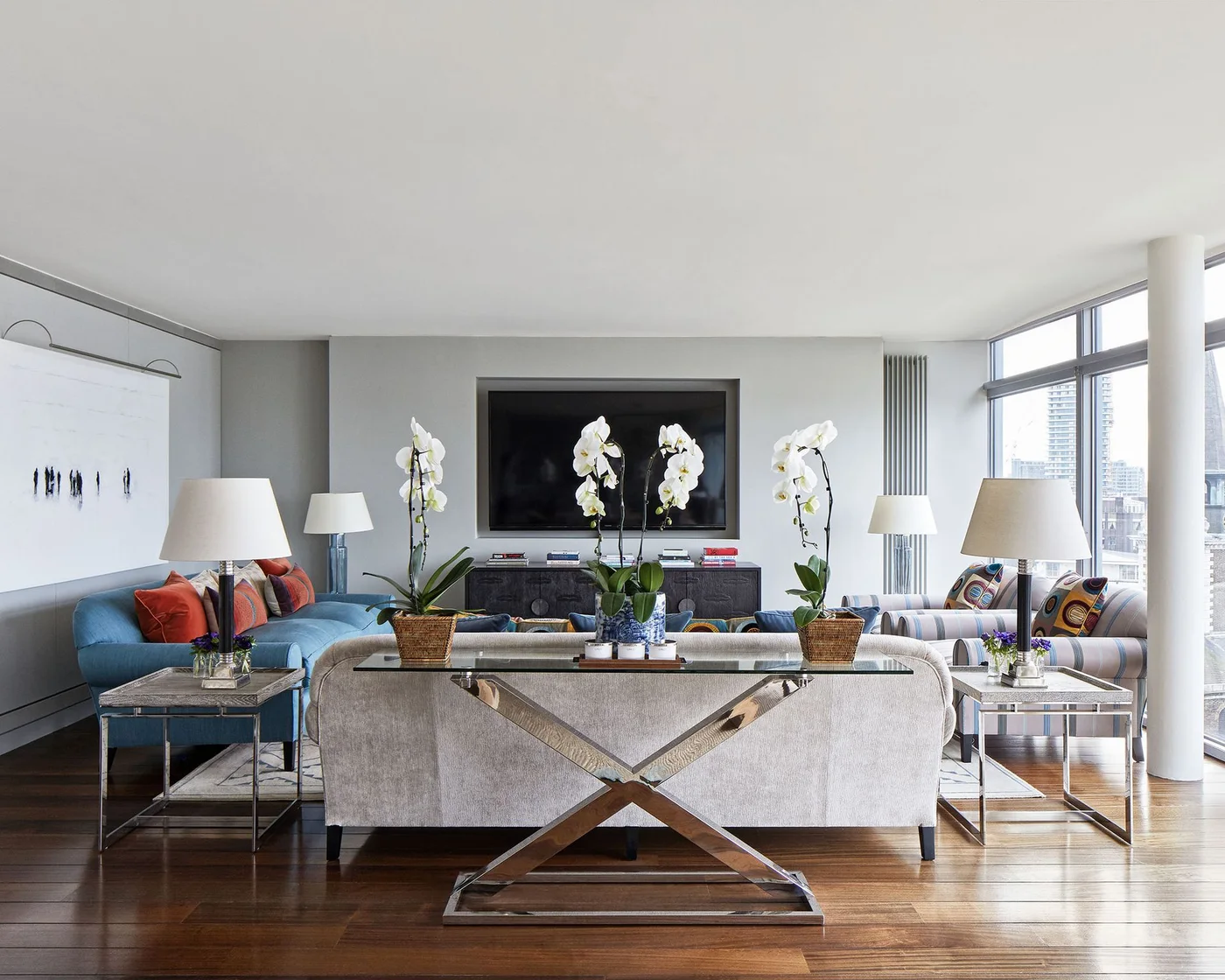
A dark sideboard sits beneath the television in this apartment living room, providing a visual base without full-height built-ins. Blue and striped seating add color around it. Matching table lamps elsewhere in the room keep the screen wall from carrying every decorative detail.
Choose a cabinet that suits the equipment and storage you own, with access to the back for connections. Keep tall flowers outside the direct viewing line. Before mounting, sit in the main viewing position and mark the screen outline so the cabinet height does not dictate an uncomfortable TV height.
IDEA 15 / 20
Style One Side of a Low TV Console
 SaveSupport Non AI Creator
Image credit: Paul Raeside / Future
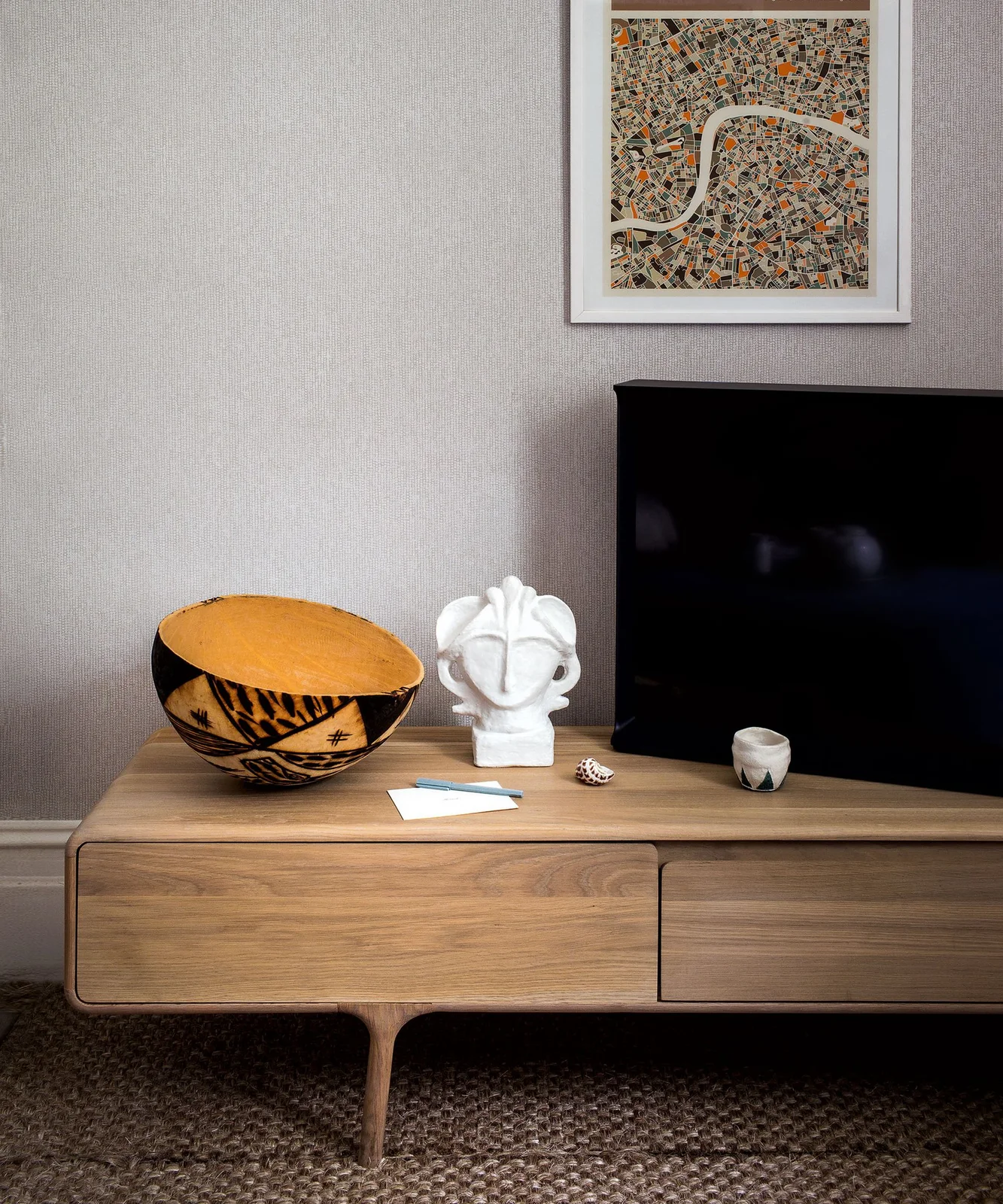
A broad bowl and white sculpture occupy the open end of this low TV console. Their different shapes give the cabinet interest without adding a row of small objects beside the screen. The framed map above contributes a second focal point to the plain wall.
Keep the television stable on a suitable support and secure furniture where required. Leave the console’s top usable for remotes and cleaning rather than covering every inch. Position decorative objects so they do not obstruct the picture, equipment vents or the path of a remote control.
PART 04
Choose Details You Can Live With
IDEA 16 / 20
Use a Sliding Panel to Change the View
 SaveSupport Non AI Creator
Image credit: Project: lisa schmitz interior design (via Houzz)
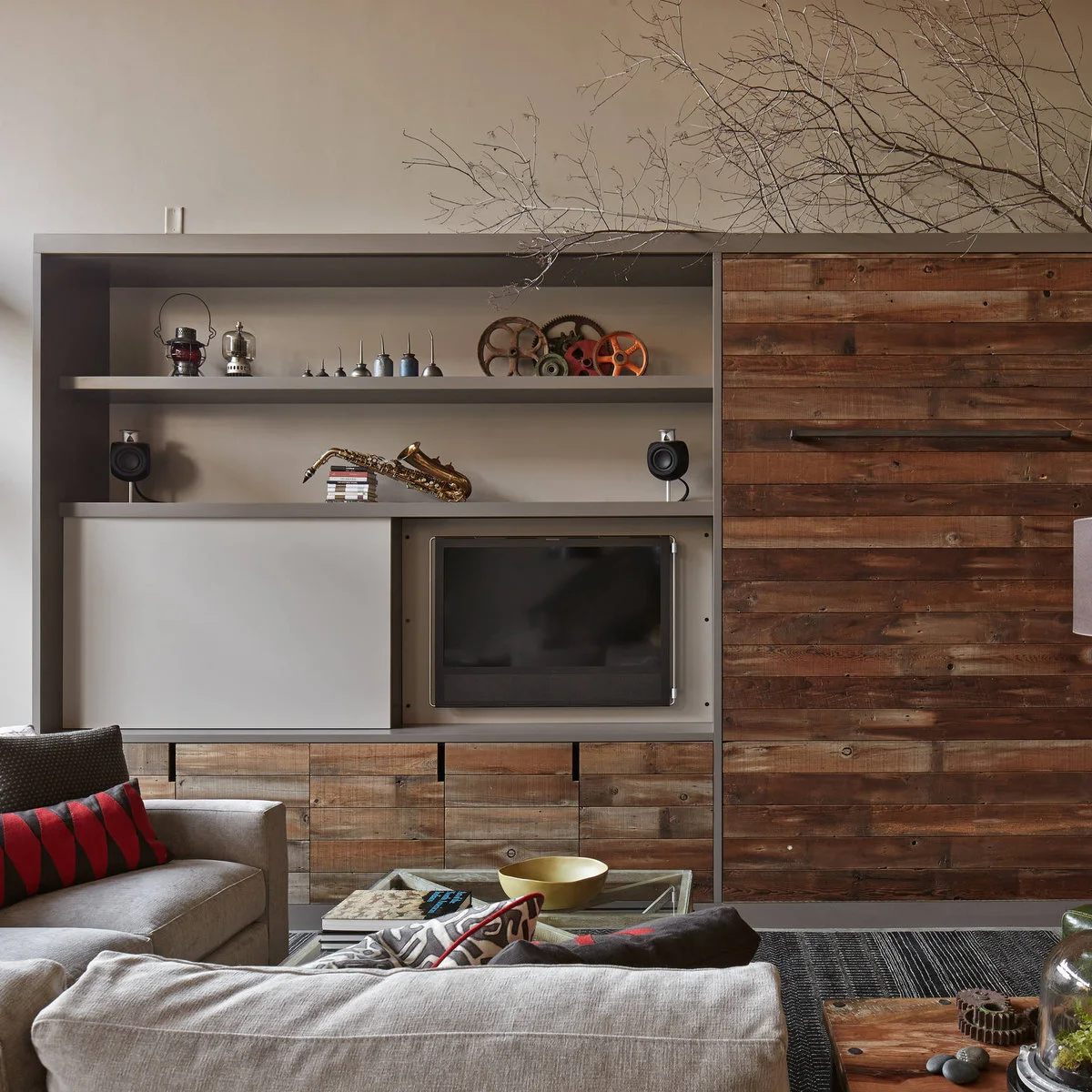
Rustic wood-toned fronts cover the lower storage and the large panel to the right of this media wall. A pale sliding panel partly covers the screen area, while open shelves display personal objects above. The layered fronts let the wall change appearance without adding outward-swinging doors.
Have the panel weight, track and stops planned for the installation rather than adapting an ordinary shelf fitting. Leave ventilation and access to the television when the panel is closed. Keep the sliding path free of projecting objects, and check that fingers cannot be trapped at the closing edges.
IDEA 17 / 20
Balance a Tall Center with Narrow Artwork
 SaveSupport Non AI Creator
Image credit: Project: Urbanhome Interior Design (via Houzz)
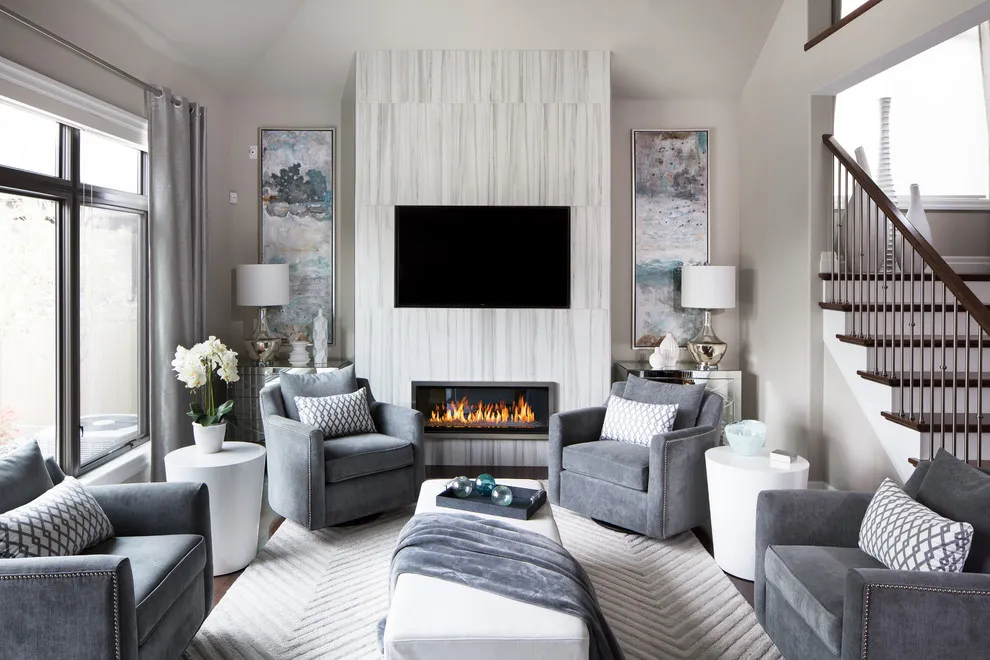
Tall abstract pictures and matching lamps flank the pale central TV-and-fireplace wall. Their vertical shape helps balance the height of the center section. Gray chairs create a conversational arrangement below, showing how symmetry can organize a wall even when it contains several different functions.
Use the framing idea without assuming the pictured TV height suits your room. Test seated sightlines and follow both appliances’ heat and clearance requirements. If the screen would force you to look upward for long periods, keep the artwork arrangement and place the television elsewhere.
IDEA 18 / 20
Use Light Around a Projecting Panel
 SaveSupport Non AI Creator
Image credit: Project: ORA Studio NYC by Giusi Mastro (via Houzz)
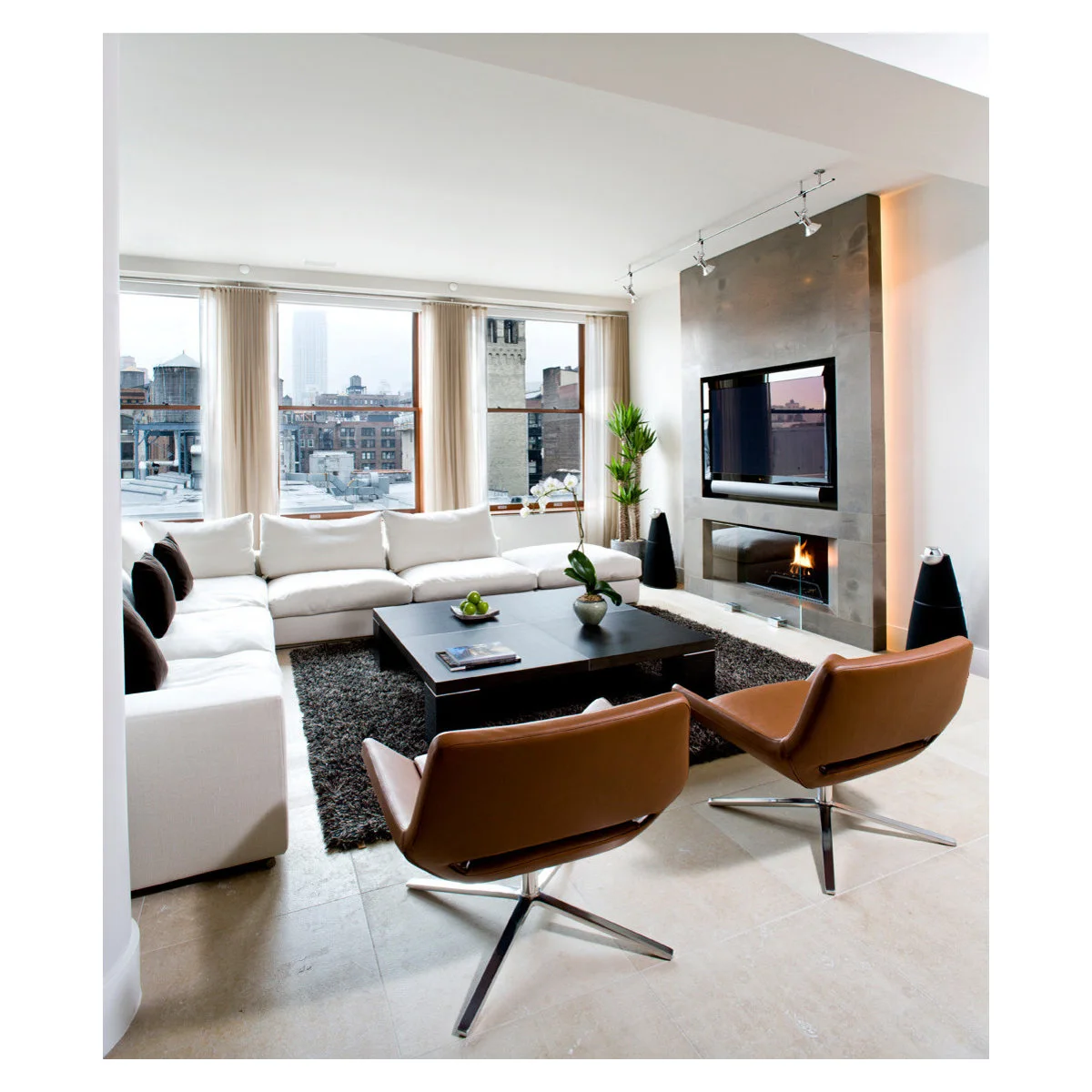
A projecting gray panel contains the television and fireplace, with a warm glow visible along its side. The edge lighting separates the panel from the pale wall. Track lights and full-height windows provide other layers of light around the white sectional and low coffee table.
Keep decorative lighting on separate controls so it can be lowered while watching the screen. Check actual reflections from the windows and track lights. A fireplace installation needs its specified clearances and suitable materials, and the screen position should be tested from the sofa before the panel is built.
IDEA 19 / 20
Repeat Horizontal Lines Across a Wide Wall
 SaveSupport Non AI Creator
Source: www.houzz.com
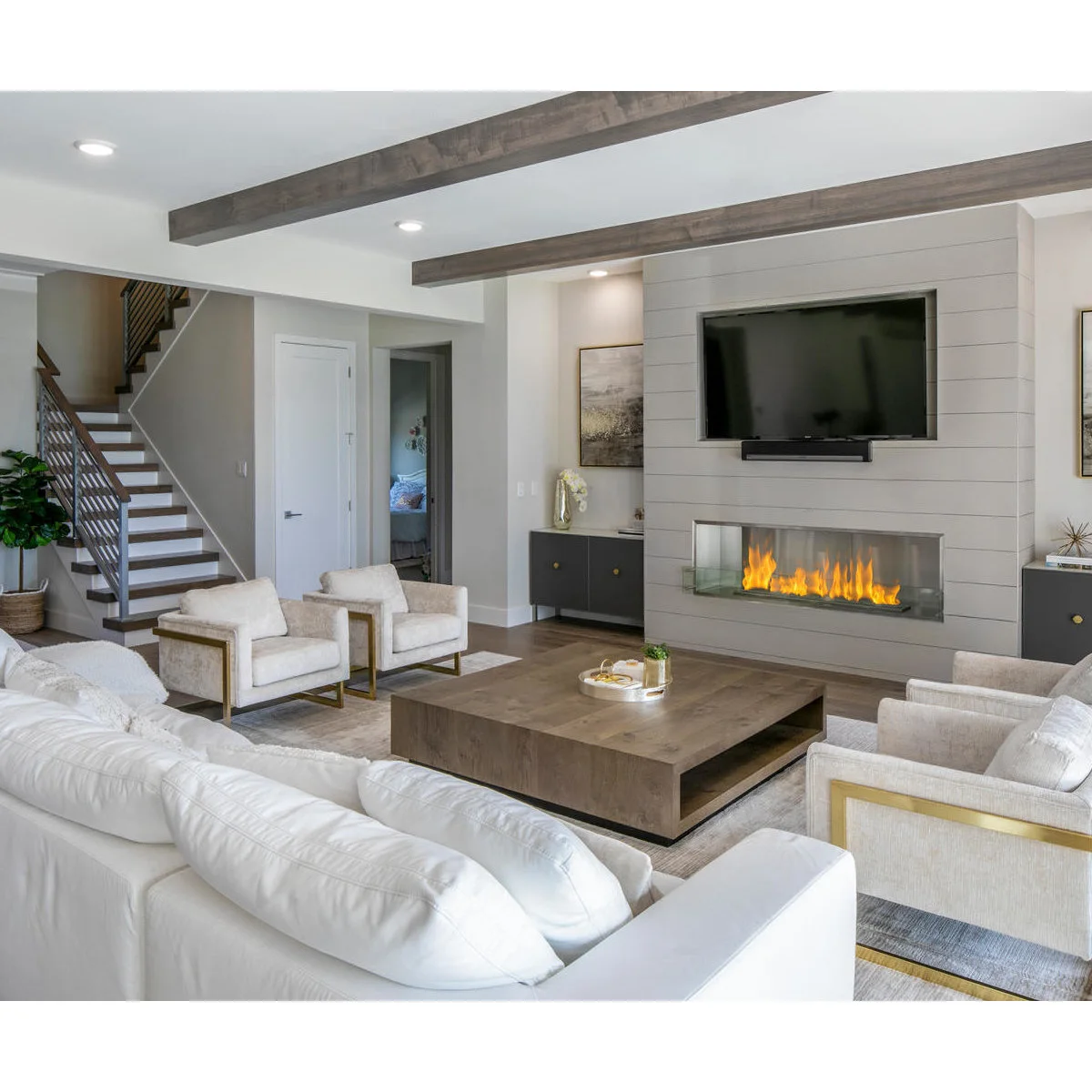
Horizontal panel lines extend behind the screen and linear fireplace, with low dark cabinets at the sides. The broad arrangement suits the room’s wide seating group. Light upholstery and simple accessories leave the wall lines clear rather than competing with another strong pattern.
Check joint placement before fitting panels so the screen bracket and cable access do not land awkwardly across the detailing. Follow fireplace and TV installation requirements independently. Keep the viewing height comfortable from the main sofa, even if that means separating the two appliances on different walls.
IDEA 20 / 20
Keep Traditional Built-Ins Simply Styled
 SaveSupport Non AI Creator
Image credit: Project: County TV & Appliance (via Houzz)
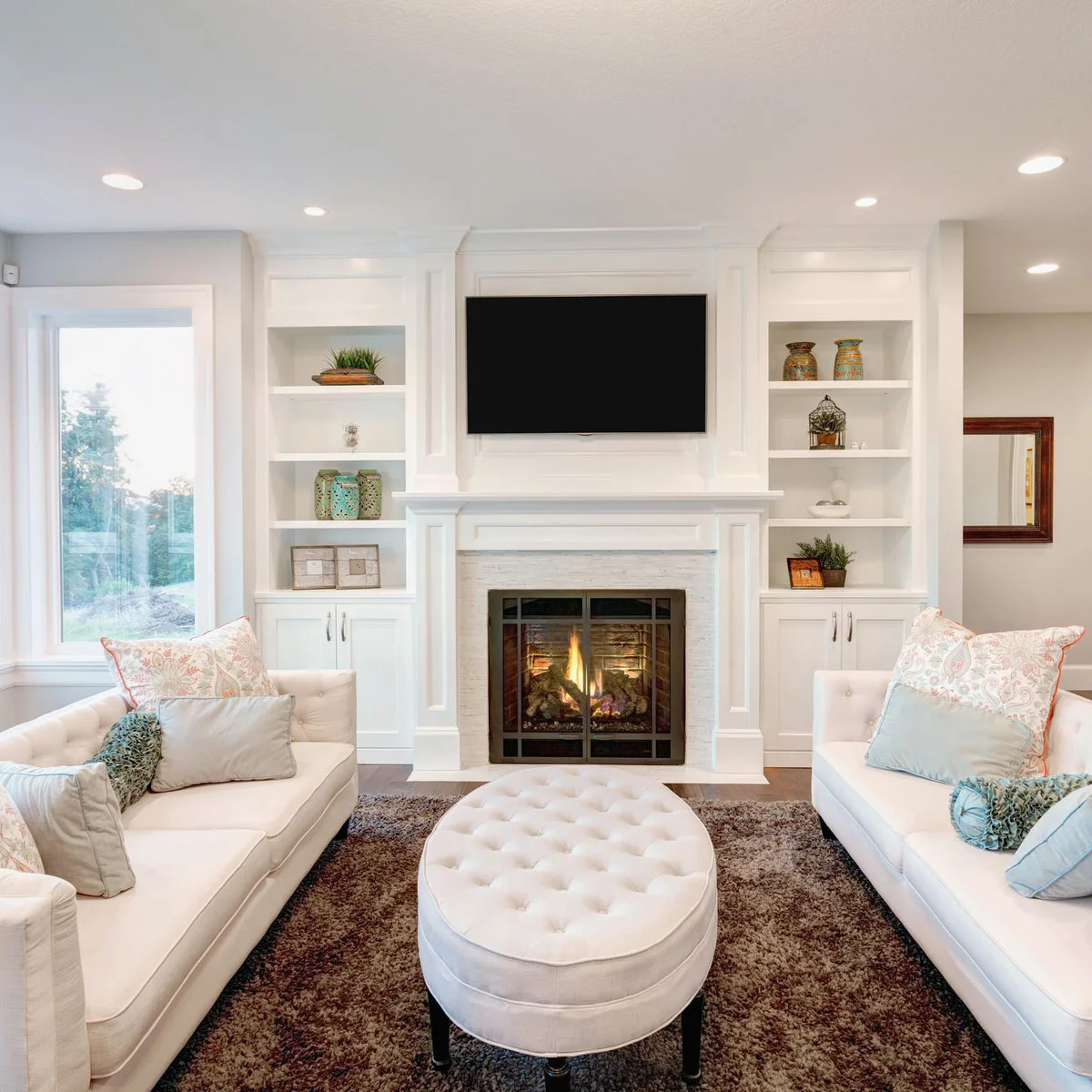
White shelves and paneled trim give this TV wall a traditional framework. The side shelves hold only a few grouped objects, leaving the cabinet shapes visible. Pale sofas and an oval ottoman repeat the soft appearance across the seating area rather than adding another large storage piece.
Borrow the restrained shelf styling, then choose the screen position for seated comfort. A traditional mantel can put a TV higher than is comfortable, so assess the viewing angle and required heat clearances first. Use lower cupboards for everyday clutter and leave the open sections easy to dust.
BRING IT ALL TOGETHER
Start from the Seat
Sit where you normally watch television and test the proposed position before decorating the wall. The right height and a manageable amount of glare matter more than a perfectly symmetrical arrangement.
Once the screen works, give equipment, cables and everyday items a practical home. A few well-chosen shelves or one useful cabinet often make a more comfortable wall than a display that is difficult to maintain.