A small baby nursery works best when each piece has a clear job. Start with an appropriate sleep space and the routes you need to use it, then decide how much changing, clothing storage and adult seating can fit comfortably. Buying less furniture can leave more useful space than filling every wall.
These photographs focus on storage and furniture details you can adapt to a smaller room; they do not establish exact room dimensions. Several views show different parts of one nursery. Measure your own door swings, drawer movement and seating space, and keep decorations separate from the infant sleep area, which should remain free of loose bedding and toys.
PART 01
Make everyday changing and storage work together
IDEA 01 / 15
Fit a Changing Chest into a Defined Nook
 SaveSupport Non AI Creator
Image credit: Cody Guilfoyle
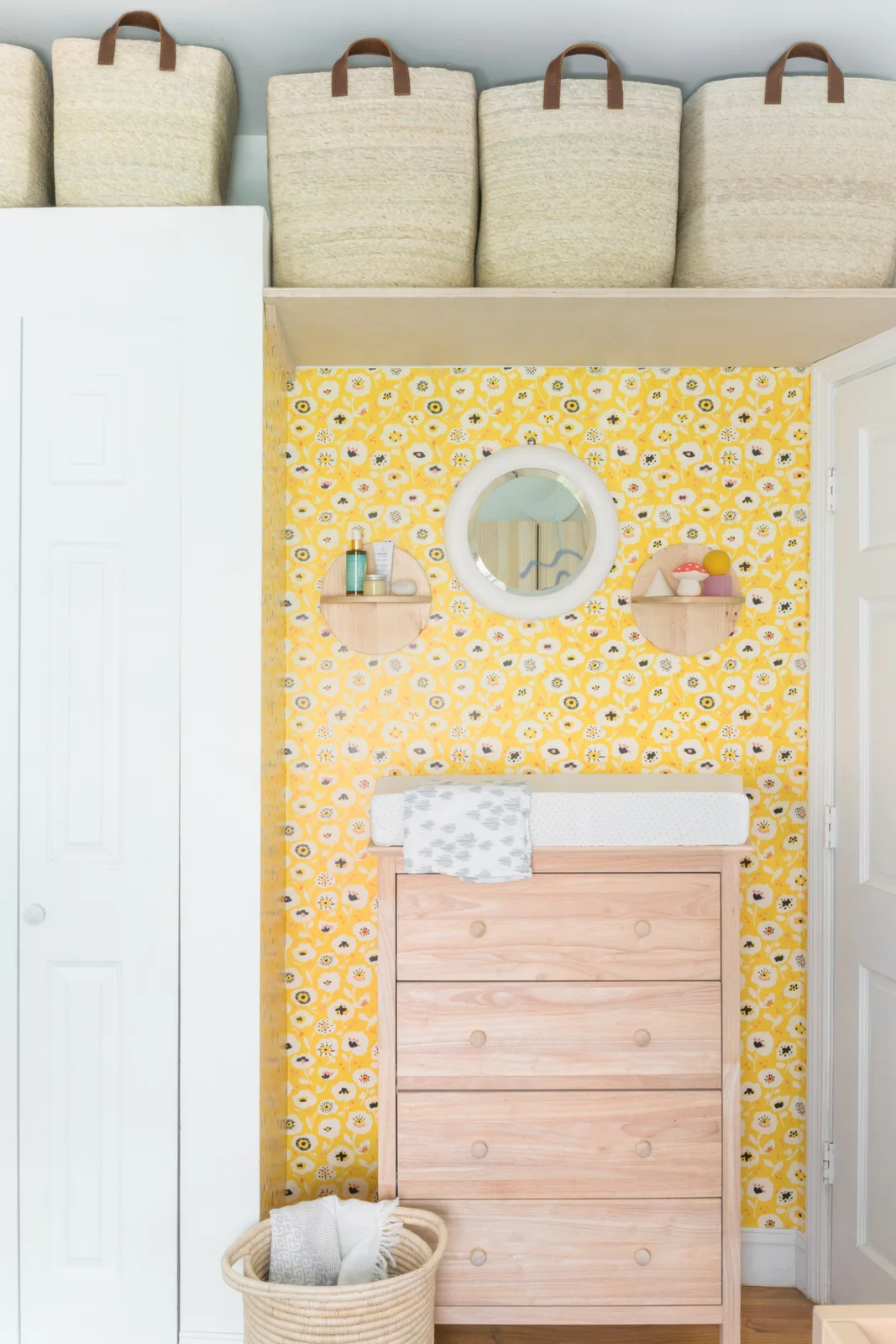
The changing chest occupies a clearly defined gap between the tall cupboard and doorway. Yellow floral wallpaper makes that small area feel deliberate, while storage baskets use the high shelf above. The arrangement combines a daily task with clothing storage rather than adding another separate piece to the floor.
Measure the chest with drawers open and allow a clear standing position in front before buying. Check that the chest and changing attachment are compatible and installed as directed. Keep everyday supplies within an adult’s reach, reserve high baskets for lighter occasional items and never leave a baby unattended on a raised changing surface. Our girls’ nursery ideas include other changing chests, organized closets and adult seating corners to compare with this fitted nook.
IDEA 02 / 15
Use the Back of a Door for Folded Textiles
 SaveSupport Non AI Creator
Image credit: Photography by Hannah Pobar; Design by Andi Teggart
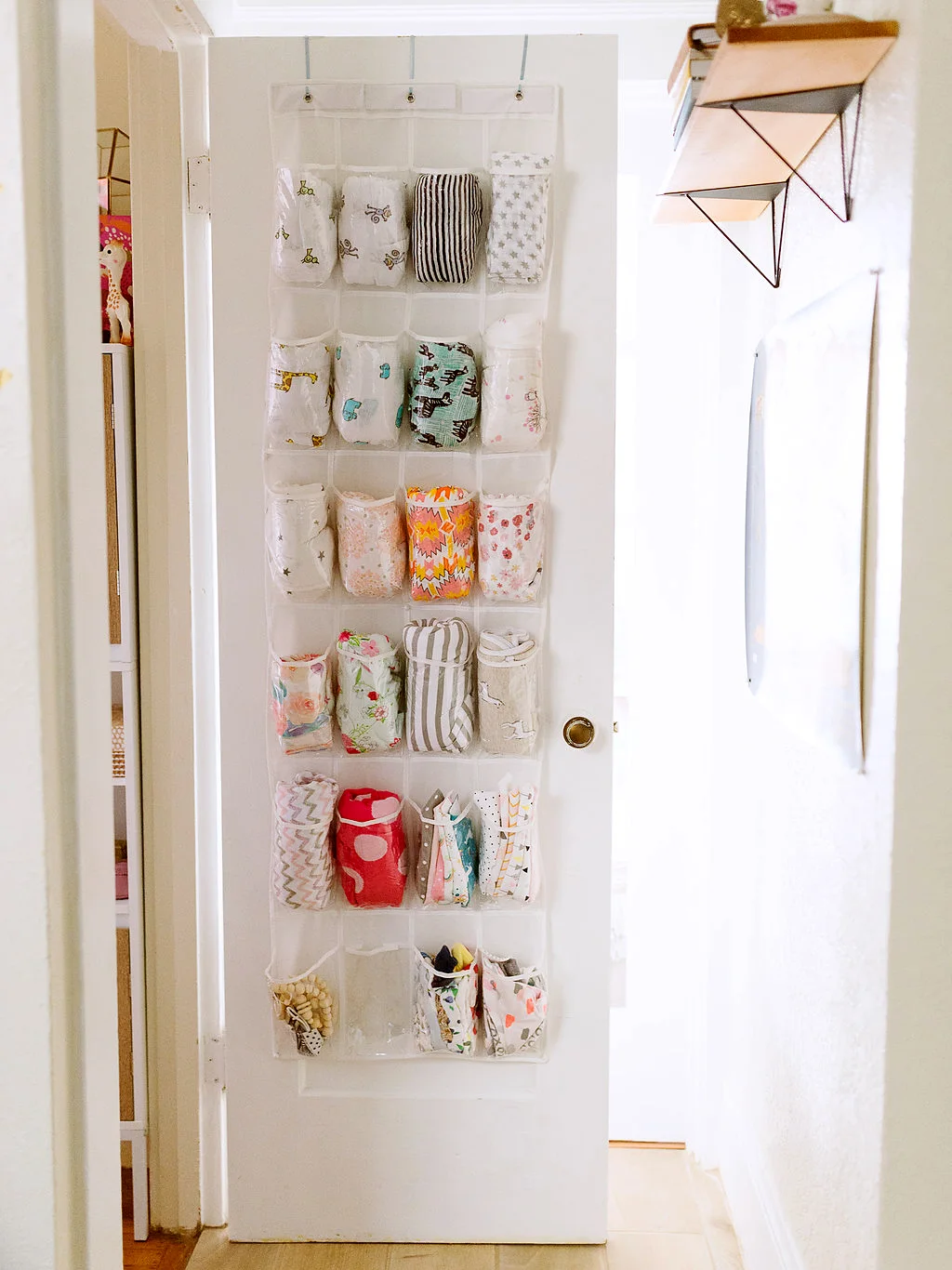
Rows of transparent pockets make the stored textiles easy to distinguish without opening drawers. Using the back of the door creates another storage surface while leaving the floor free. The contents are rolled into small groups, making the system easier to scan than one deep basket.
Check that the organizer’s hooks allow the door to open, close and latch properly. Follow its load limits and keep dangling straps inaccessible. Store clean dry textiles only, and review what you actually use so the pockets do not become a collection of outgrown or difficult-to-find items.
IDEA 03 / 15
Combine Drawers, Cubbies and a Changing Surface
 SaveSupport Non AI Creator
Image credit: Photography by Jessica Antola; Design by Christene Barberich
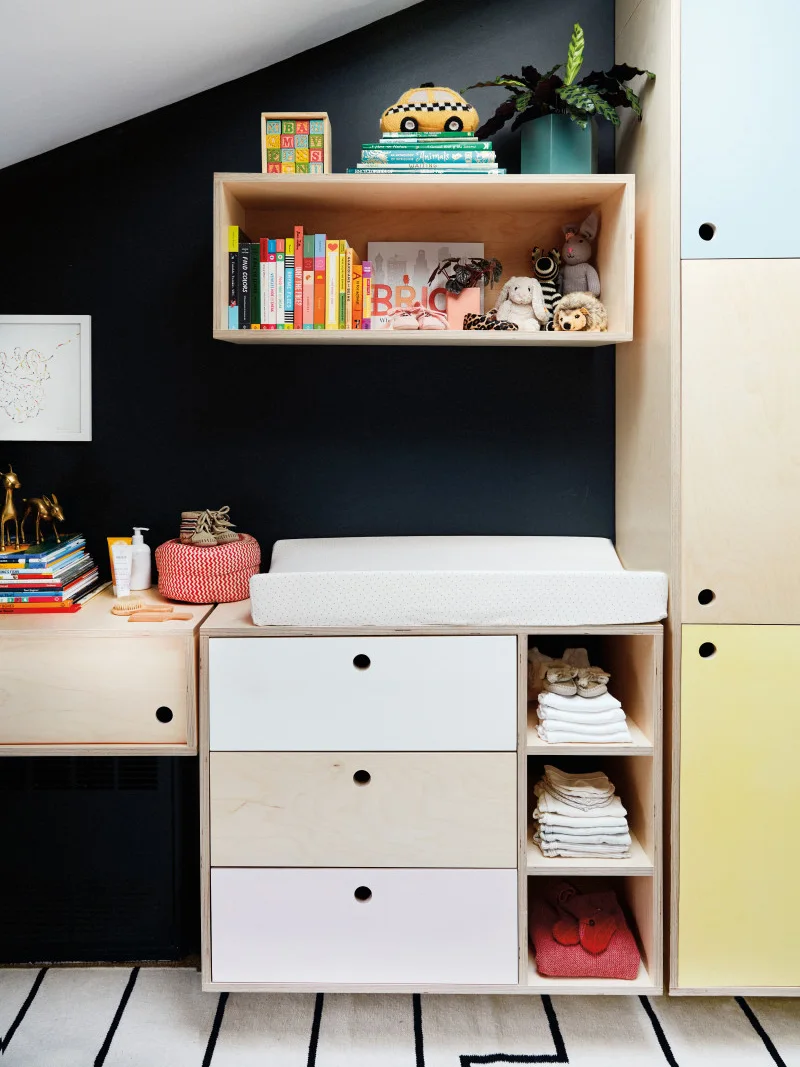
Different storage types sit together in this fitted arrangement: drawers beneath the changing pad, small open cubbies at one side and a taller cupboard beyond. A box shelf uses wall space above. The pale fronts remain distinct against the darker wall without requiring extra freestanding storage units.
Plan the contents of each compartment before commissioning fitted furniture. Daily changes need accessible supplies, while less-used items can sit farther away. Confirm anchoring, changing-pad compatibility and drawer clearances with the supplier, and reconsider heavy objects above the changing position rather than copying every staged shelf item.
IDEA 04 / 15
Add Hooks beneath a Useful Wall Shelf
 SaveSupport Non AI Creator
Image credit: Future PLC/Colin Poole
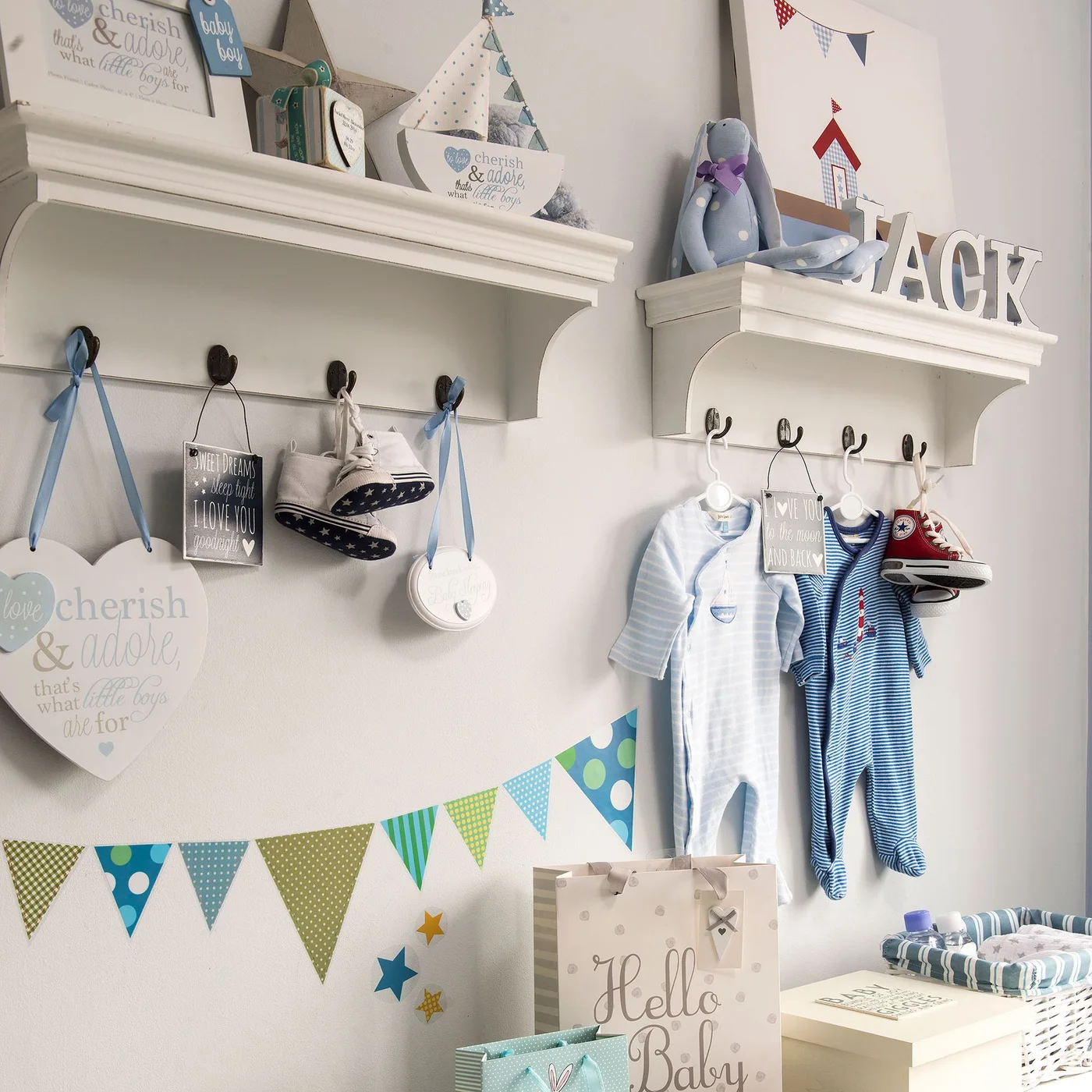
Hooks make the space below these shelves useful for a few small clothes and shoes, rather than leaving everything on the surface above. The white shelves blend into the pale wall. Their contents mix practical items with keepsakes, showing how easily a compact storage area can also become a display.
Limit the display to what you can remove easily for cleaning, and keep hooks, ribbons and hanging objects away from the crib and the child’s reach. Fix shelves for their intended load. Use a small number of frequently needed garments here instead of treating an exposed hook rail as a replacement for the whole wardrobe.
IDEA 05 / 15
Make One Cabinet Serve More than One Storage Need
 SaveSupport Non AI Creator
Image credit: Future PLC/Oliver Gordon
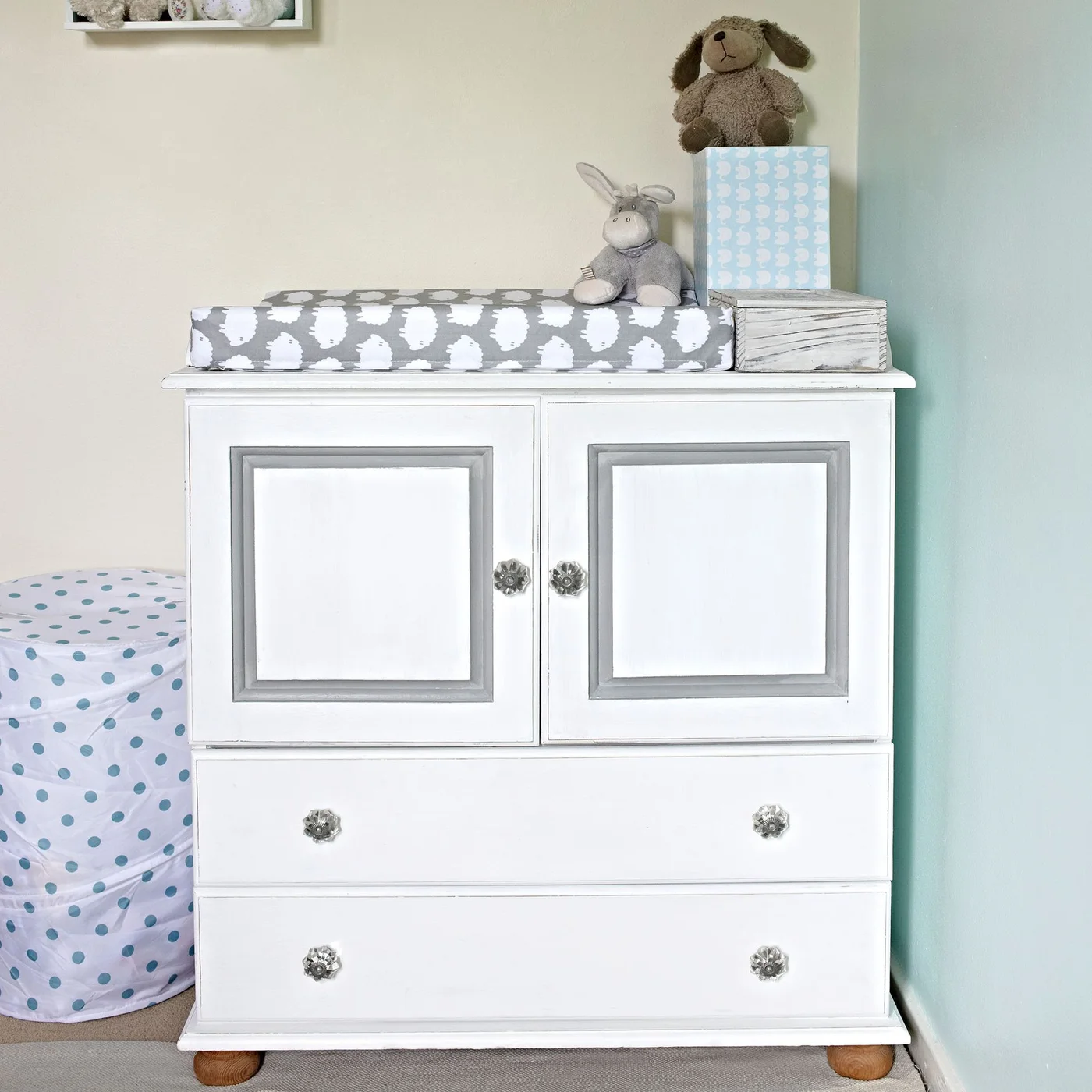
Doors and drawers give this cabinet two ways to contain supplies within one footprint. The pale finish keeps its front relatively quiet beside the blue wall. A changing pad occupies much of the top, while a narrow box and decorative toys show how quickly the remaining surface can fill.
Assess the furniture’s condition, stability and intended use before adapting an existing cabinet for changing. Use a compatible changing system according to its instructions and anchor the furniture appropriately. Keep the top focused on the task, moving ornaments elsewhere if they crowd the space needed for care supplies and cleaning.
PART 02
Use wall space and fitted furniture thoughtfully
IDEA 06 / 15
Organize One Wardrobe for Several Categories
 SaveSupport Non AI Creator
Image credit: Cuckooland
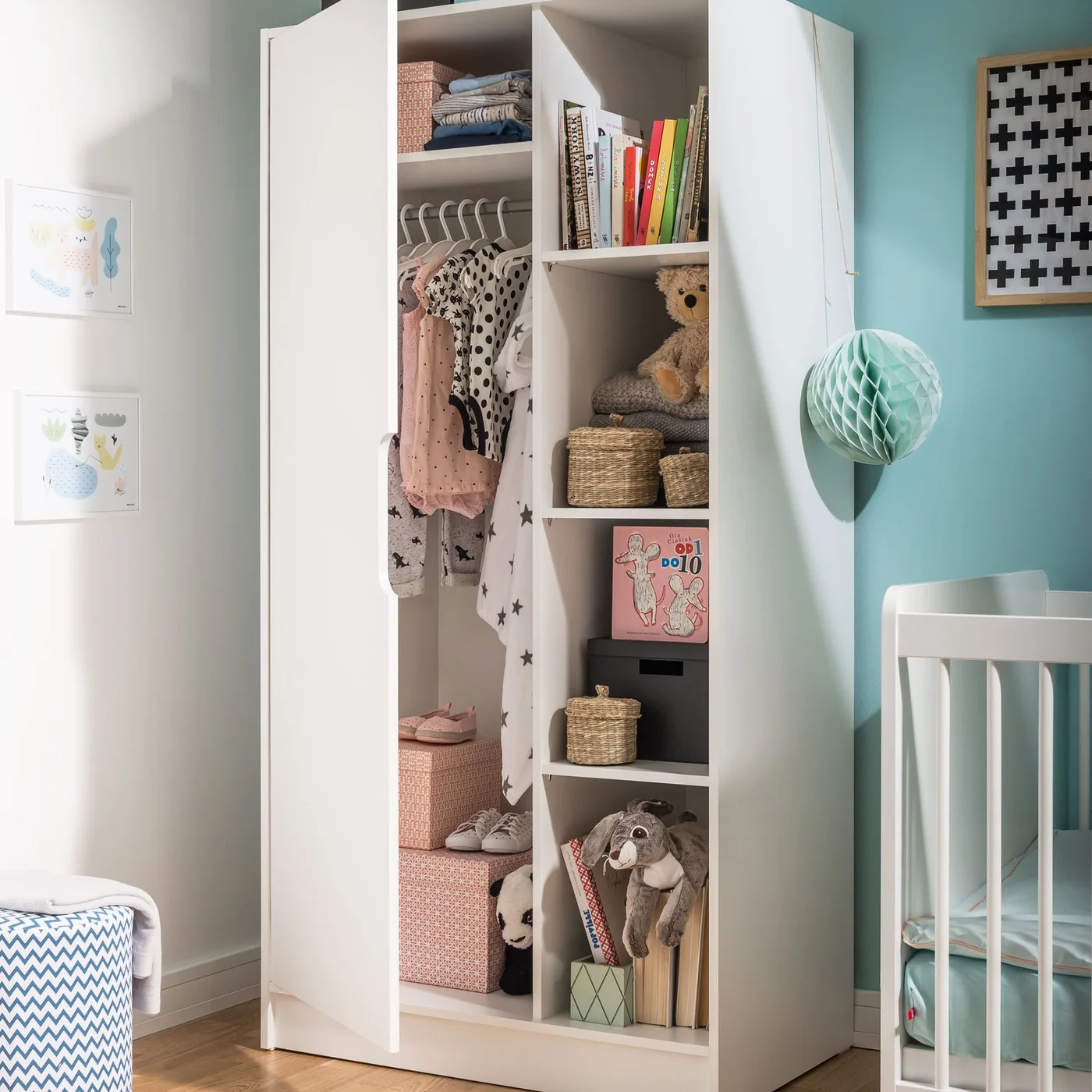
A short hanging section and a column of shelves allow several kinds of belongings to share one tall unit. Small baskets group loose contents without requiring extra drawers. The open view is useful for planning the interior even if the doors are normally closed.
Measure what needs hanging rather than assuming baby clothes require a full-height rail. Keep larger or heavier items low, anchor the wardrobe and allow room for the doors to move. Hanging decorations near the adjacent crib are styling, not a reason to place cords or suspended objects within the baby’s reach.
IDEA 07 / 15
Consider a Pull-Out Surface within Fitted Storage
 SaveSupport Non AI Creator
Source: www.hgtv.com
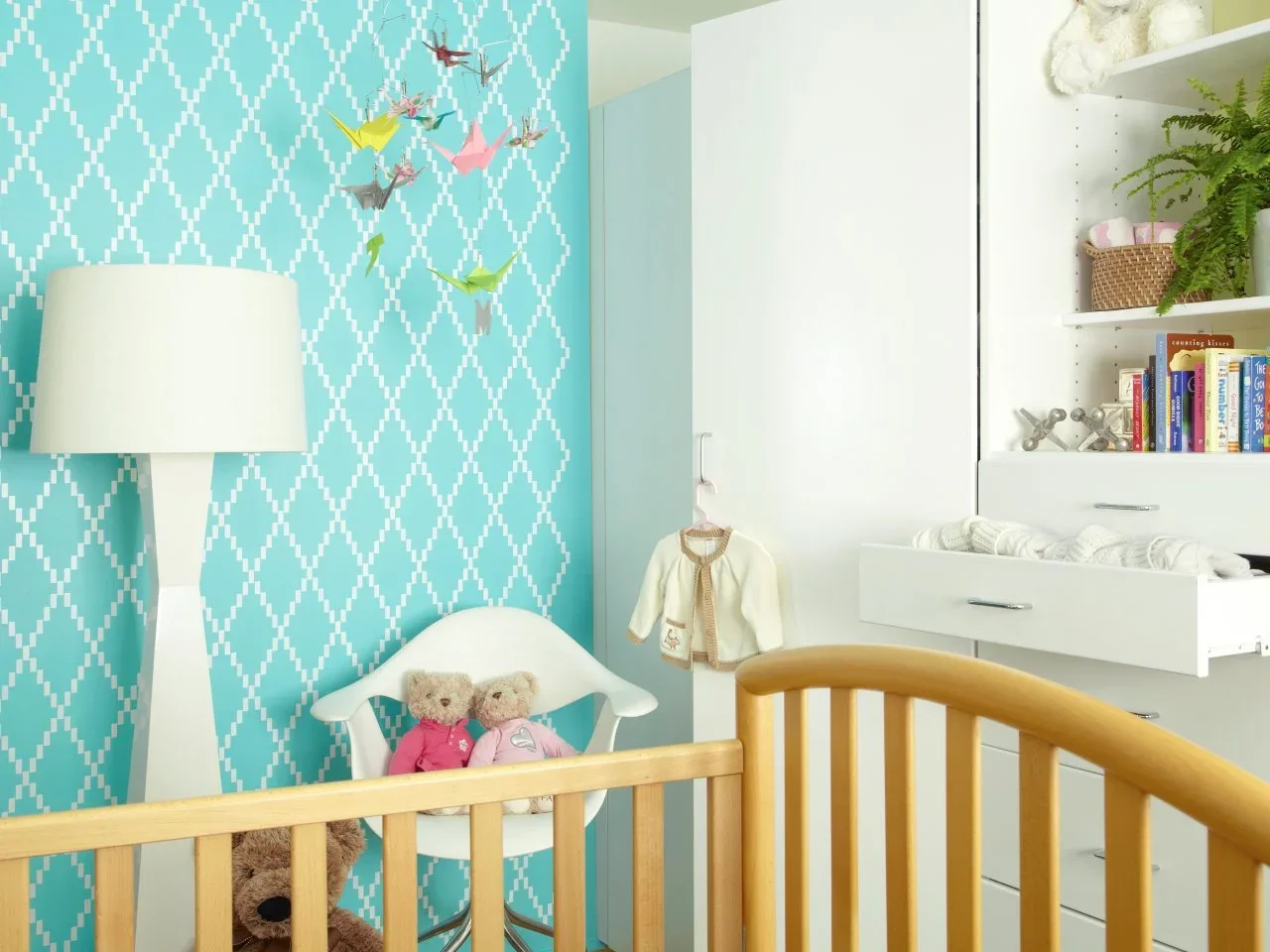
The pull-out surface creates a temporary horizontal area within a larger storage wall. Shelves above and drawers below keep several functions together. The nearby small chair and patterned wall add color, while the closed white cupboards keep most of the storage visually contained.
Treat this as a fitted-furniture reference, not proof that any ordinary drawer can support a baby. Confirm the surface’s intended use, load, locking arrangement and changing-system requirements with the manufacturer. Check the room with it fully extended, and make sure the daily walking route remains usable.
IDEA 08 / 15
Add Interest with Paint instead of Another Object
 SaveSupport Non AI Creator
Image credit: Photo: Kelsey Ann Rose for Homepolish. From: Sara Touijer
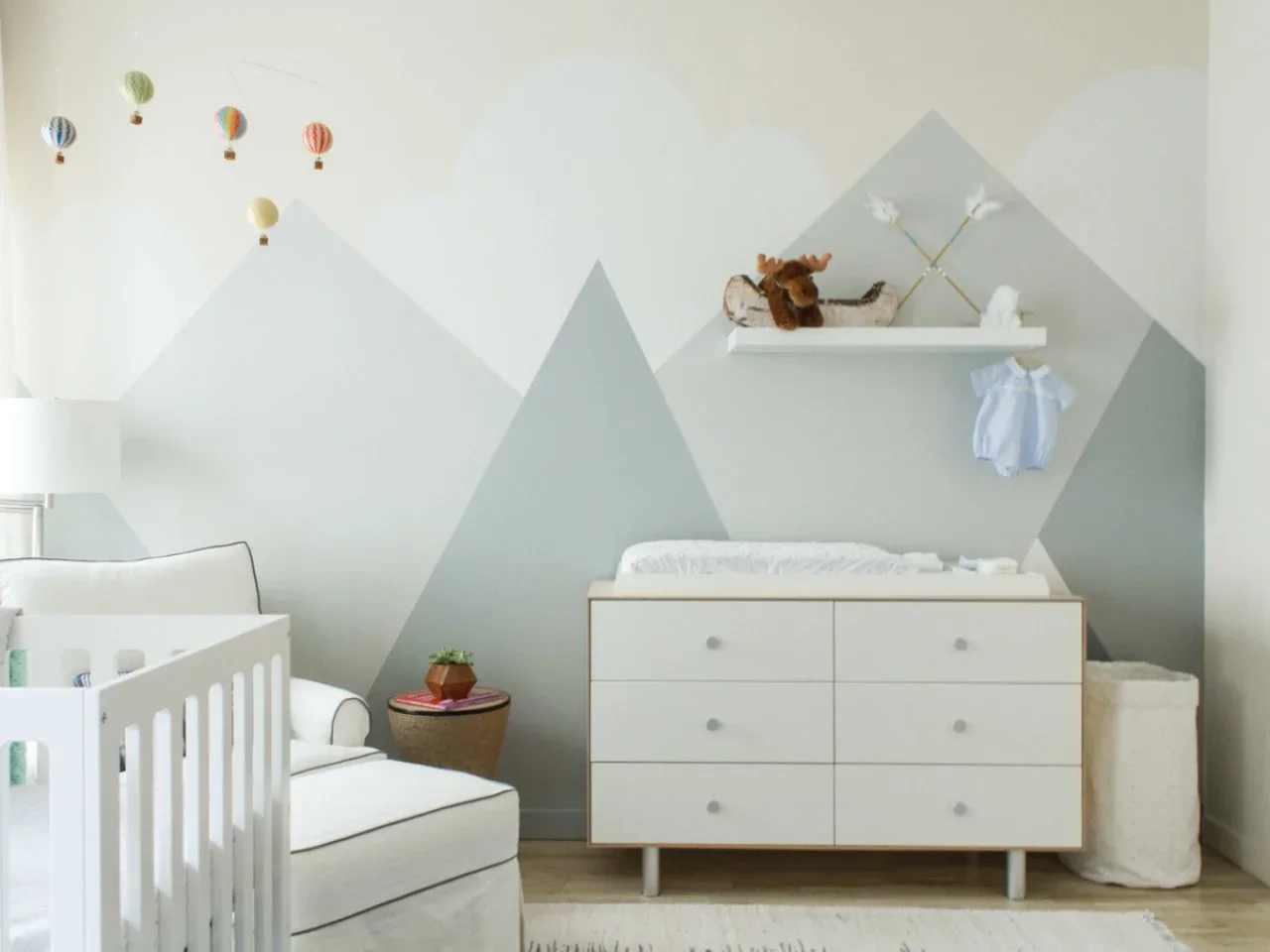
Painted mountain shapes give the wall a clear focal point without using another piece of floor furniture. A white chest provides storage beneath the changing surface, while the chair and small table occupy the neighboring area. The wall’s pale colors connect the separate furniture pieces.
Plan the actual furniture arrangement before marking out a mural so the shapes remain visible where you want them. Leave access to drawers and the chair’s movement. Secure wall items away from the changing area and the baby’s reach, and keep the surface practical rather than adding more ornaments to match the painted scene.
PART 03
Keep seating, textiles and books manageable
IDEA 09 / 15
Test a Slim Open-Frame Chair in the Available Corner
 SaveSupport Non AI Creator
Image credit: Cody Guilfoyle
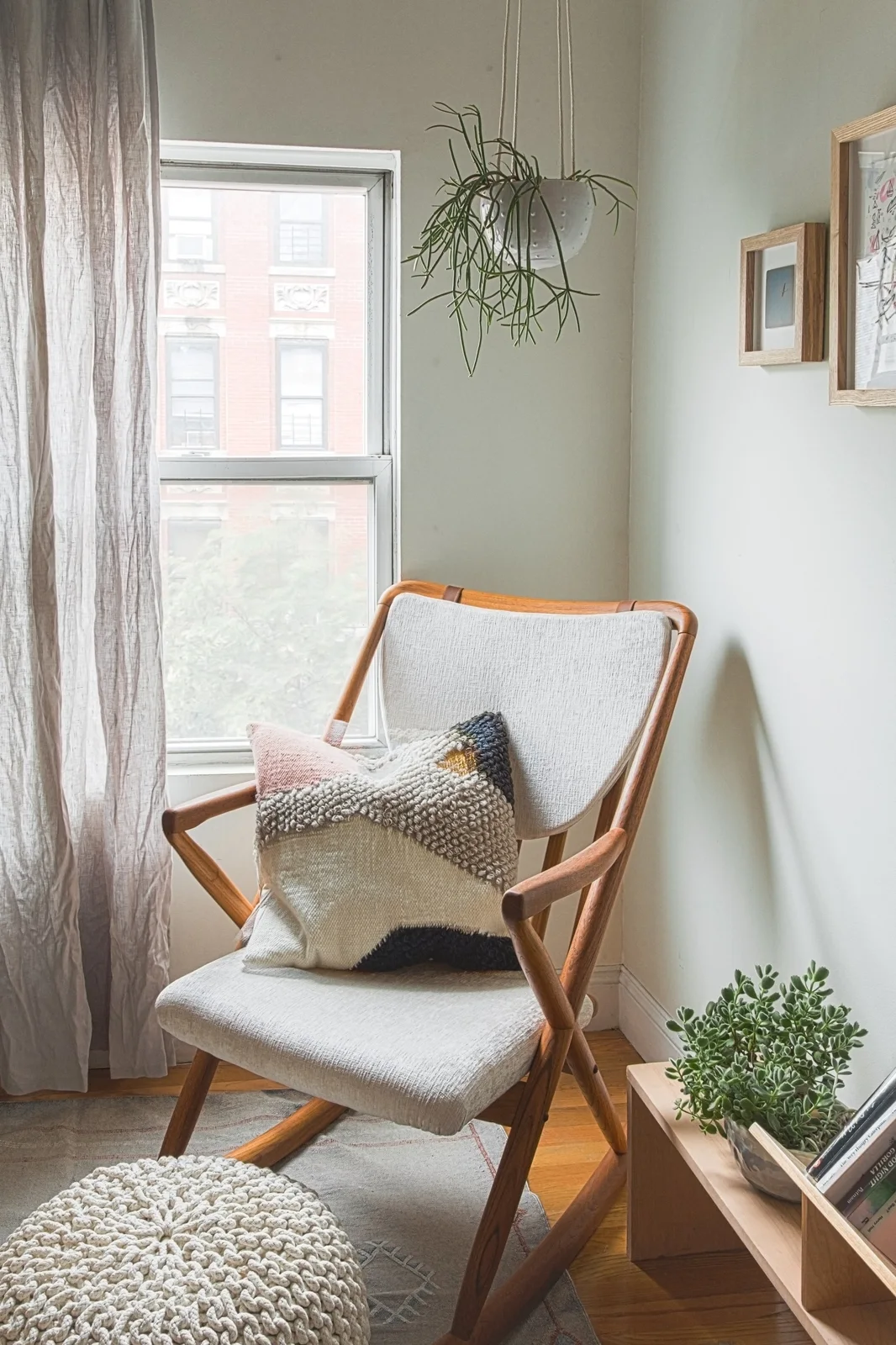
The chair’s open timber frame leaves more of the surrounding floor and wall visible than a fully upholstered base would. A small round footrest sits in front, and a low shelf occupies the neighboring wall. The photograph shows how much the chair’s accessories also contribute to its overall footprint.
Try the chair for adult comfort and measure its full rocking movement before choosing it for a tight corner. Keep the footrest optional if it blocks the route. Secure window coverings and keep plants, hanging cords and decorative objects inaccessible; the chair is for adult seating rather than infant sleep.
IDEA 10 / 15
Group Spare Textiles inside a Wall Cabinet
 SaveSupport Non AI Creator
Image credit: Cody Guilfoyle
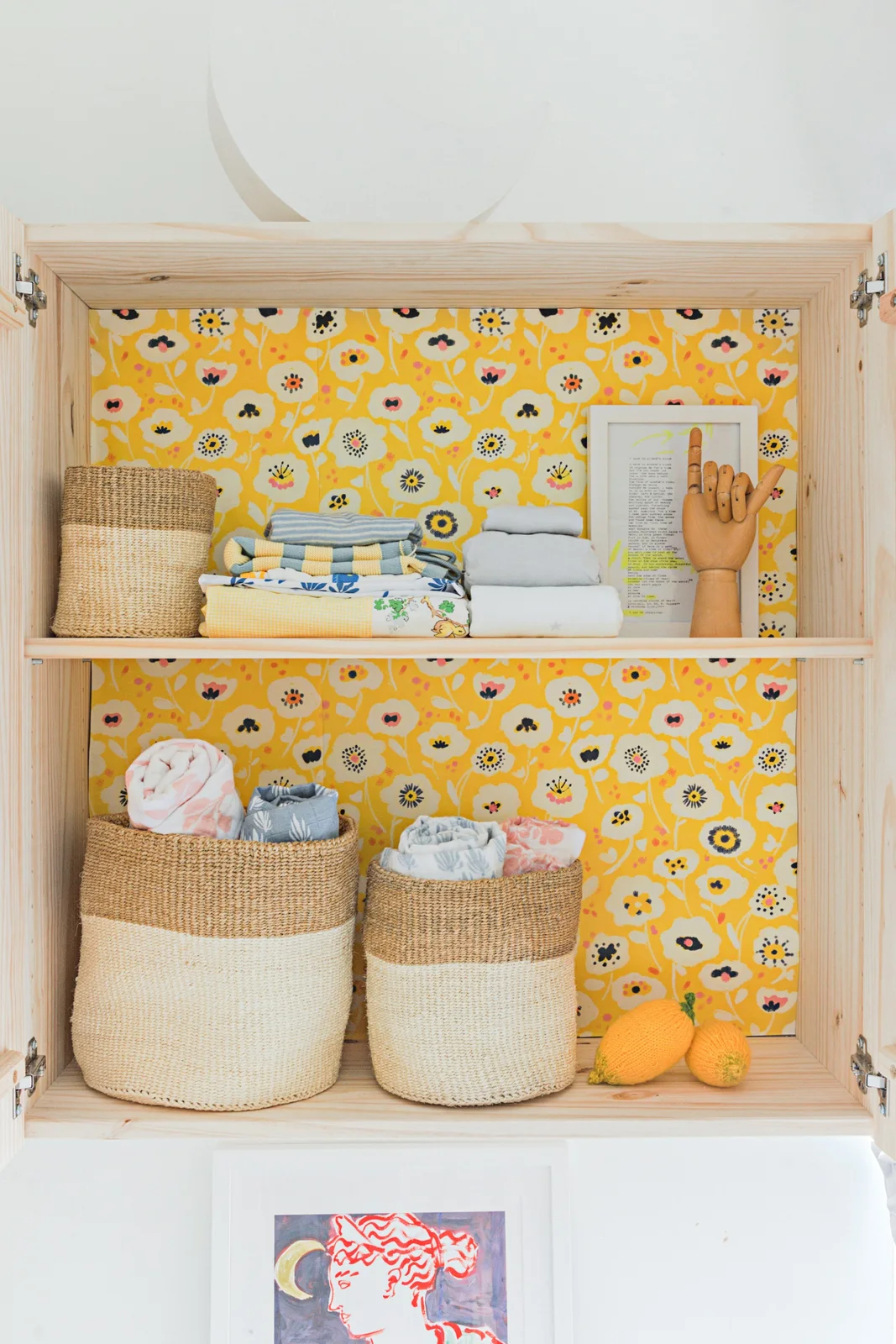
A few folded stacks and baskets divide this cabinet into recognizable groups. The patterned lining adds color inside the doors rather than requiring another decorative object outside. This is a detail from the same room as the yellow changing nook, showing another part of its storage approach.
Measure basket depth and height against the actual shelves, leaving room to grip each one. Avoid placing heavy containers overhead and follow the cabinet’s fixing and load guidance. Separate spare textiles from daily changes, and keep the arrangement simple enough to restock without emptying the whole cabinet.
IDEA 11 / 15
Keep a Book Display Shallow
 SaveSupport Non AI Creator
Image credit: Cody Guilfoyle
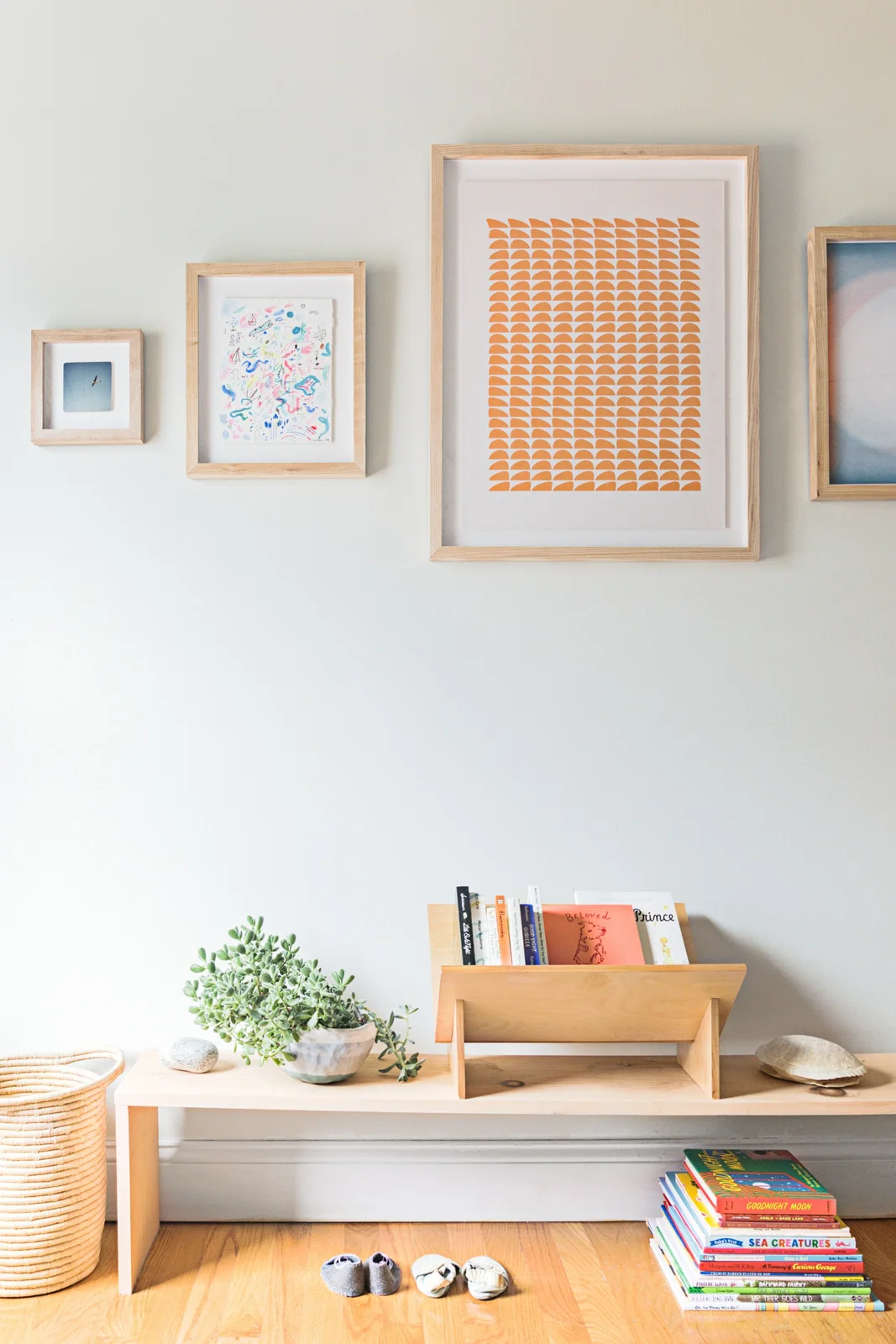
The long low ledge makes a narrow display area for a small selection of books. Artwork hangs above instead of leaning in a large stack on the surface. The shallow arrangement offers an alternative to a deeper bookcase when only a few titles need to be visible.
Check the depth needed for your books and the stability of the rack before choosing a ledge. Secure furniture and frames appropriately, and remove reachable breakables, plants or small decorative pieces as the child becomes mobile. Keep only a manageable selection here and store the rest where they do not narrow the floor route.
PART 04
Compare open and enclosed storage
IDEA 12 / 15
Keep the Crib and Adult Seat in Separate Clear Zones
 SaveSupport Non AI Creator
Source: www.houzz.com
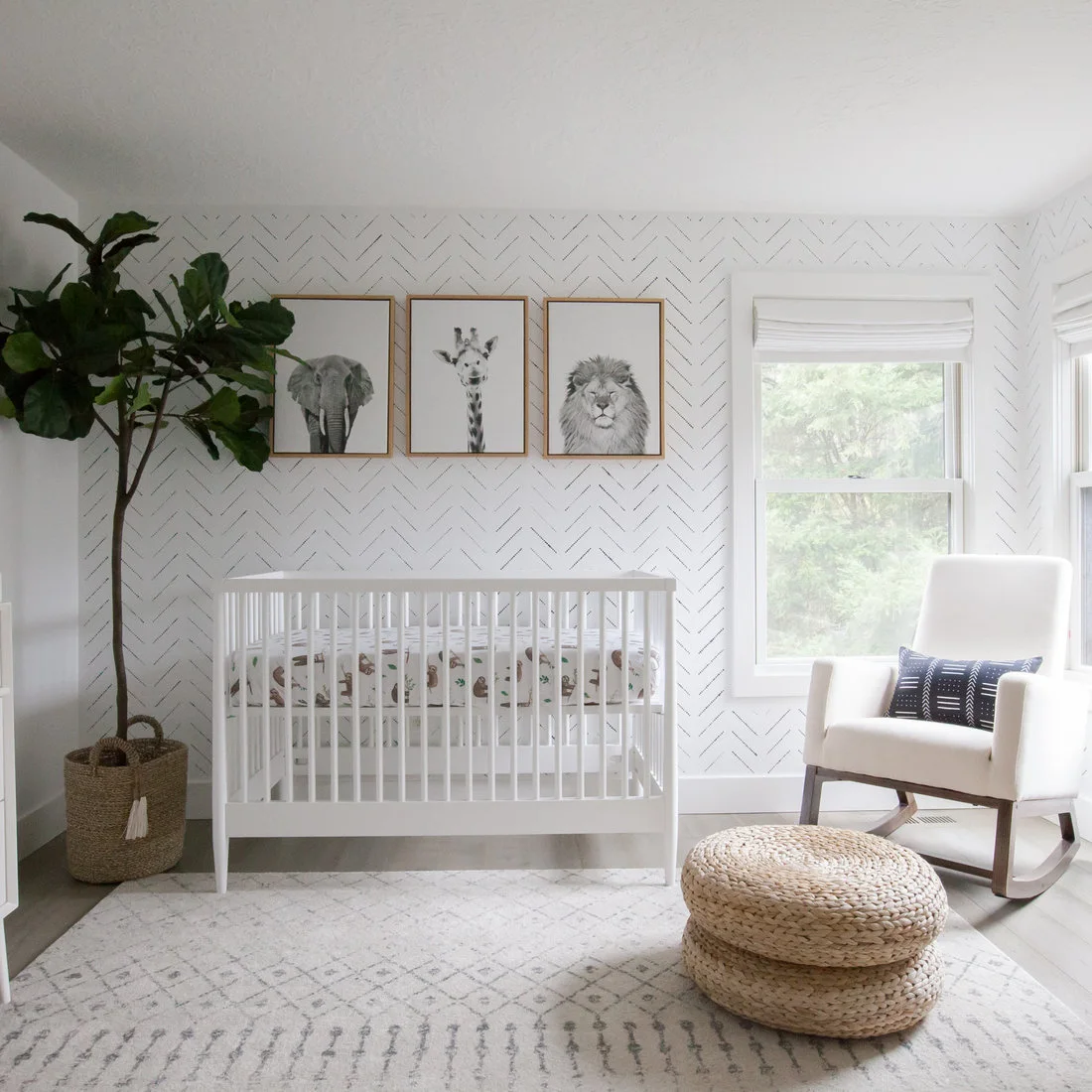
A white crib and a pale rocking chair occupy separate sides of this small nursery, with a woven footstool in front of the adult seat. The fine wall pattern keeps the background light, while three framed animal pictures provide a single grouped display. The arrangement leaves the main furniture easy to recognize without another large storage piece.
Check the chair’s rocking movement and the space you need beside the crib before adding a footstool. Keep window cords and wall decorations out of a child’s reach. Remove the decorative pillow shown inside the crib for sleep; use a suitable firm, flat mattress with a fitted sheet and keep the sleep space clear.
IDEA 13 / 15
Use Bins to Divide an Open Changing Unit
 SaveSupport Non AI Creator
Image credit: IKEA
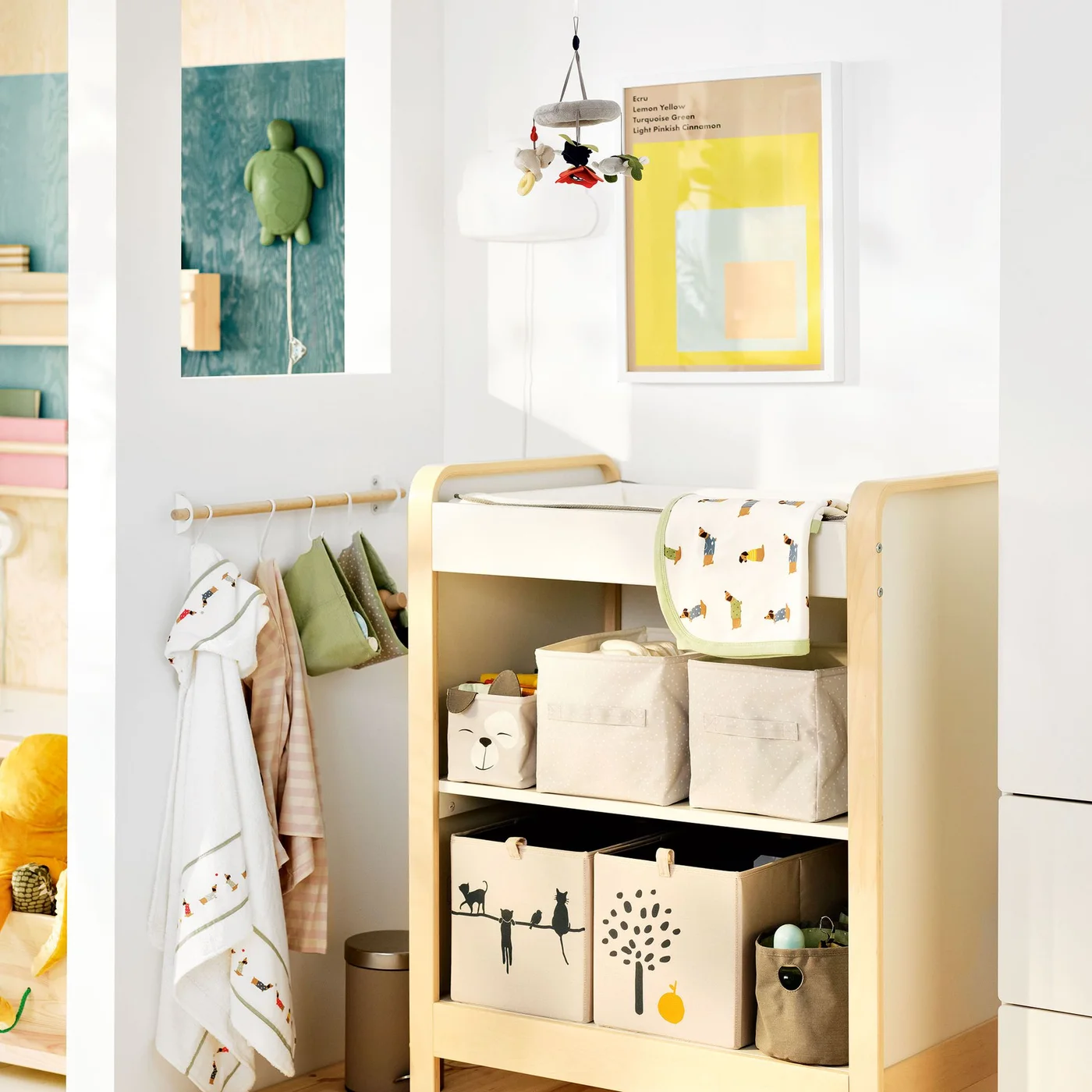
Different-sized bins divide the open shelves into clear sections while keeping the furniture’s contents more contained. A small clothes rail uses the wall beside the unit. The repeated pale colors help the collection read as one practical area even though several storage containers are involved.
Measure the shelf openings before buying bins and check that handles are easy to reach without pulling out several containers. Keep daily supplies in the most accessible positions and follow the changing unit’s anchoring instructions. Keep rails, cords and the hanging mobile outside the child’s reach rather than copying their placement automatically.
IDEA 14 / 15
Mix Closed Compartments with a Few Open Shelves
 SaveSupport Non AI Creator
Image credit: Future PLC
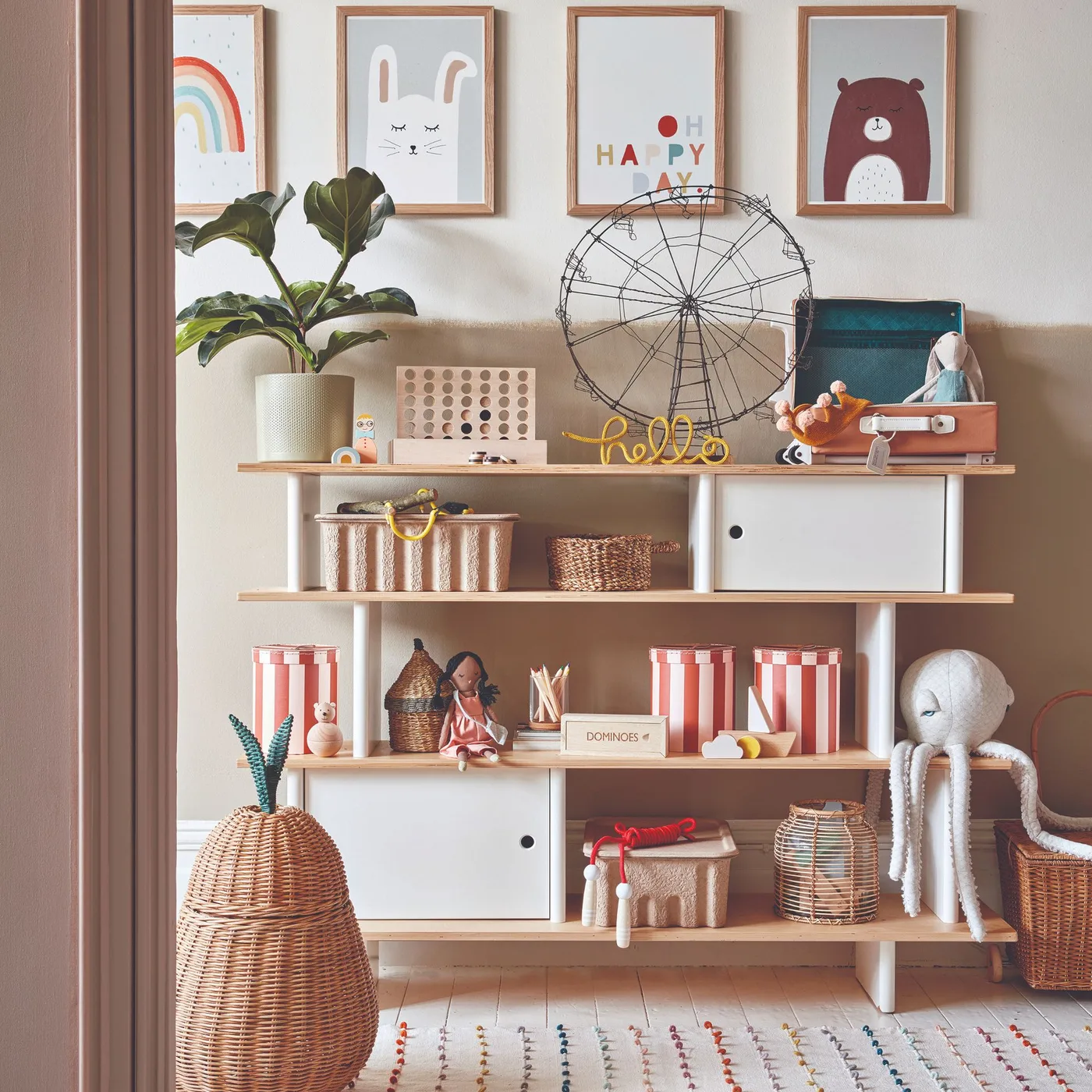
White closed compartments interrupt the open timber shelves, allowing some contents to disappear from view. Baskets provide another way to group small items. The display is lively, but the combination is useful when one wall needs to hold both practical storage and a few personal objects.
Choose shelf depth around what you need to store so the unit does not project farther into the room than necessary. Anchor it, check loading guidance and keep small or breakable display pieces inaccessible. Our boho nursery ideas show other ways to mix baskets and timber; leave enough spare shelf space to make tidying easy.
IDEA 15 / 15
Keep a Combined Dresser Top Clear
 SaveSupport Non AI Creator
Image credit: Photo: Ricky Stern Photography. From: Vanessa Antonelli
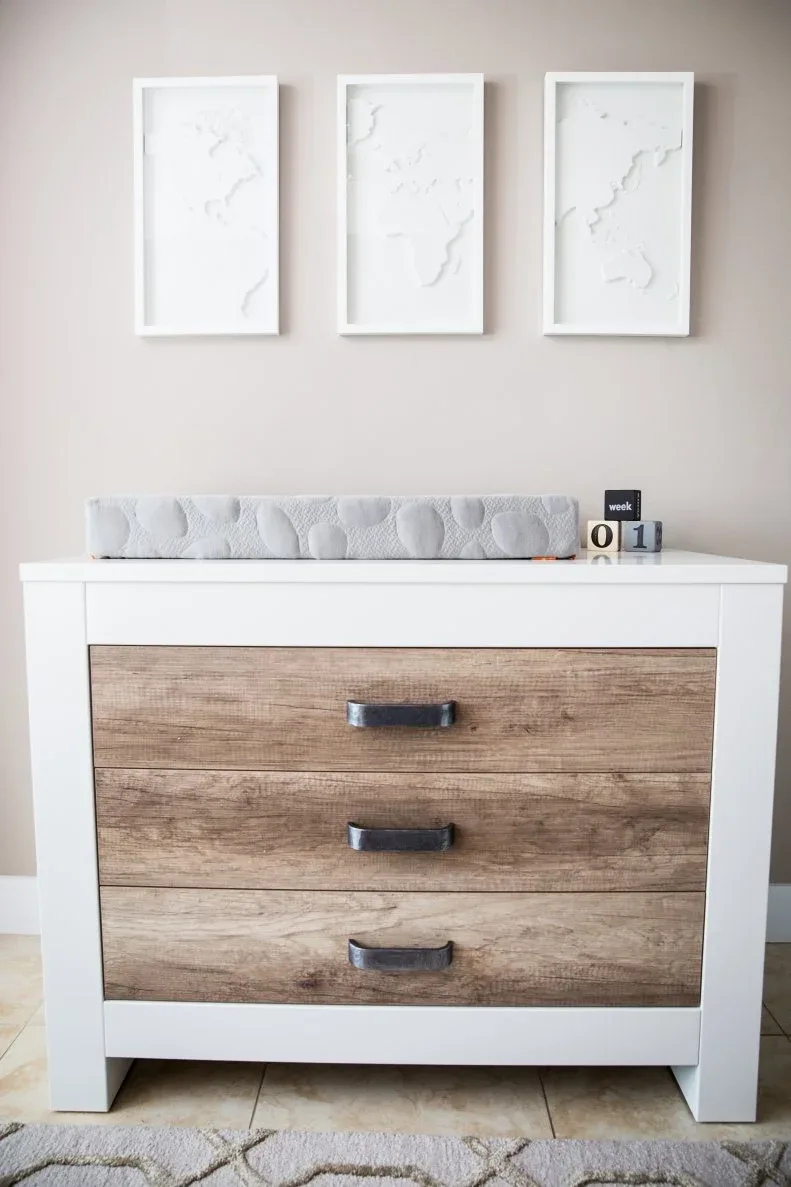
Three broad drawers provide enclosed storage beneath a mostly clear changing surface. Timber-toned fronts give the white unit some contrast without adding another pattern to the room. The simple arrangement makes the furniture’s dual role easier to see than a top crowded with decorative objects would.
Check how much space the drawers need when open, and compare the dresser’s usable storage with a separate changing table before buying both. Follow the furniture and changing-pad instructions together. Hang artwork securely away from reachable care areas, and keep daily supplies close enough for an adult to use without leaving the baby.
BRING IT ALL TOGETHER
Measure the space you need to use
A furniture footprint is only part of the plan. Drawers, doors and a rocking chair need movement space, while adults need clear routes carrying the baby. Mark proposed pieces on the floor before ordering, and decide which belongings can live outside the nursery rather than adding storage for everything at once.
Anchor furniture and follow product instructions for any changing attachment or fitted surface. Keep heavy overhead objects, cords and small decorative pieces inaccessible. Review the room as the child grows, keeping the infant sleep space bare apart from a fitted sheet and storing loose textiles and toys elsewhere.