A girl’s nursery can be pink and floral, quiet and neutral, or full of bright colors. The useful starting point is the same: a suitable crib, a practical place for changing supplies, comfortable adult seating and storage you can reach while caring for your baby.
These photographs focus on room finishes, storage and adult seating. A styled room does not establish product safety: use compliant sleep furniture and keep the infant sleep space bare apart from its fitted sheet, as the CPSC advises. Secure furniture and wall pieces, keep cords out of reach and leave clear walking routes.
PART 01
Choose Color and Wall Details
IDEA 01 / 20
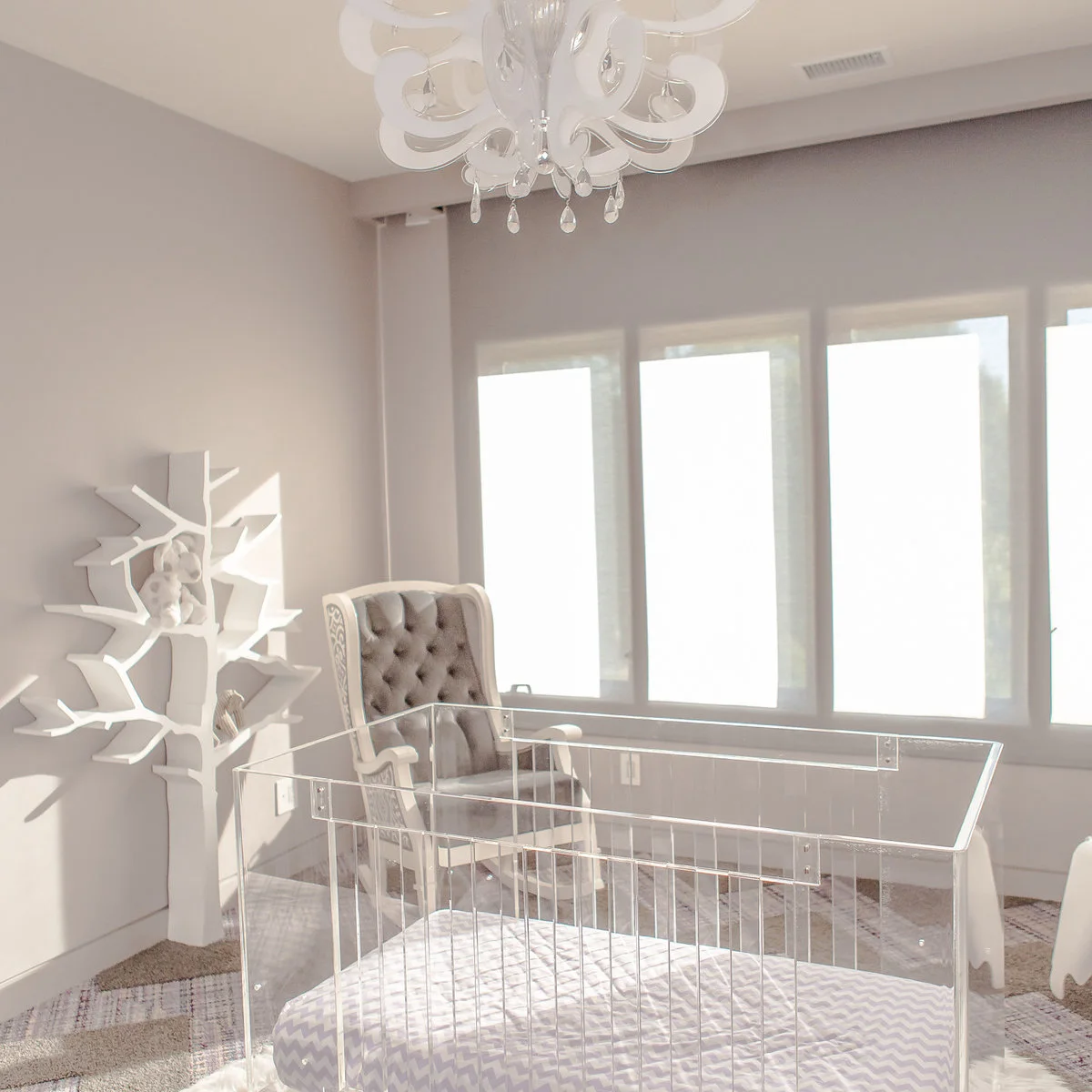
Balance Pale Walls with Interesting Shapes
 SaveSupport Non AI Creator
Source: houzz.com
A transparent crib sits in front of pale window coverings, while a grey tufted chair and tree-shaped wall shelves give the room contrasting shapes. The restrained palette leaves those outlines easy to see. The bedding shown is simple, keeping attention on the room’s furniture and wall treatment.
Borrow the balance of plain surfaces and one distinctive detail rather than assuming a photograph proves a crib’s suitability. Check current product requirements and recalls before buying. Fix wall storage securely, avoid heavy objects near the sleep area and allow enough space to operate the window covering without reaching across the crib.
IDEA 02 / 20
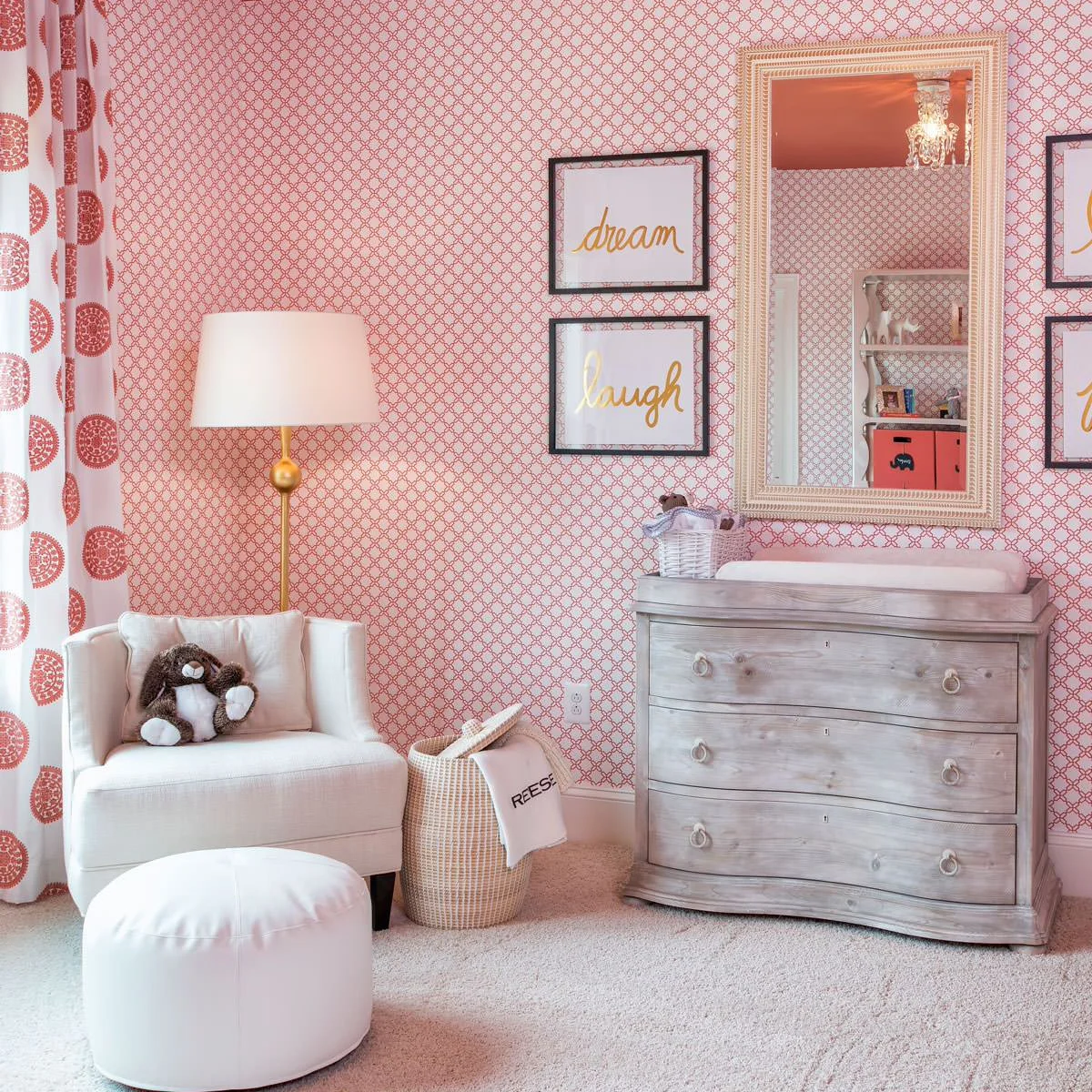
Pair Coral Pattern with Quiet Furniture
 SaveSupport Non AI Creator
Image credit: Project: Stanley Martin Homes (via Houzz)
Coral pattern covers the wall behind this grey dresser and pale chair. A large framed mirror and smaller prints break up the repeat, while the furniture stays comparatively quiet. The color is lively without relying on a large collection of toys or accessories to carry the room.
Compare the wall pattern and curtain fabric together before ordering both. If the room feels too busy, keep one of those surfaces plain. Leave useful room for changing supplies, and secure the dresser and mirror properly; decorative objects should not crowd the surface where you need to work.
IDEA 03 / 20
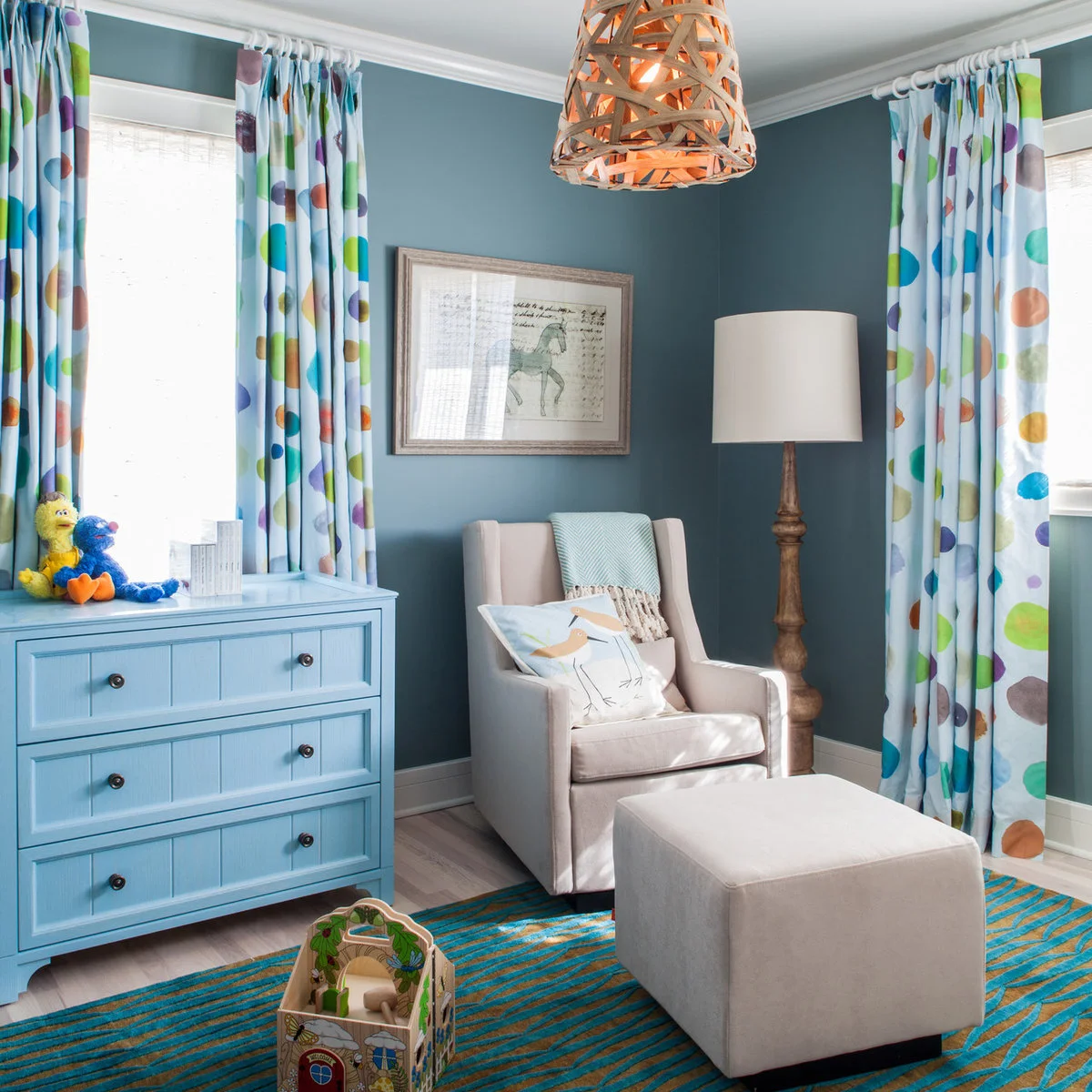
Try Blue with a Few Playful Colors
 SaveSupport Non AI Creator
Image credit: Project: Kati Curtis Design (via Houzz)
Blue walls and a blue dresser give this nursery corner a strong background, while multicolored spots brighten the curtains. The pale chair and large footstool offer a calmer place within the pattern. This is a colorful alternative to an entirely pink room without losing a playful character.
Choose the curtain fabric first if its colors will guide the rest of the room. Test the blue beside that fabric in daylight and evening light. Keep the floor lamp stable with its cord secured out of reach, and leave space for the footstool without blocking the route to storage.
IDEA 04 / 20
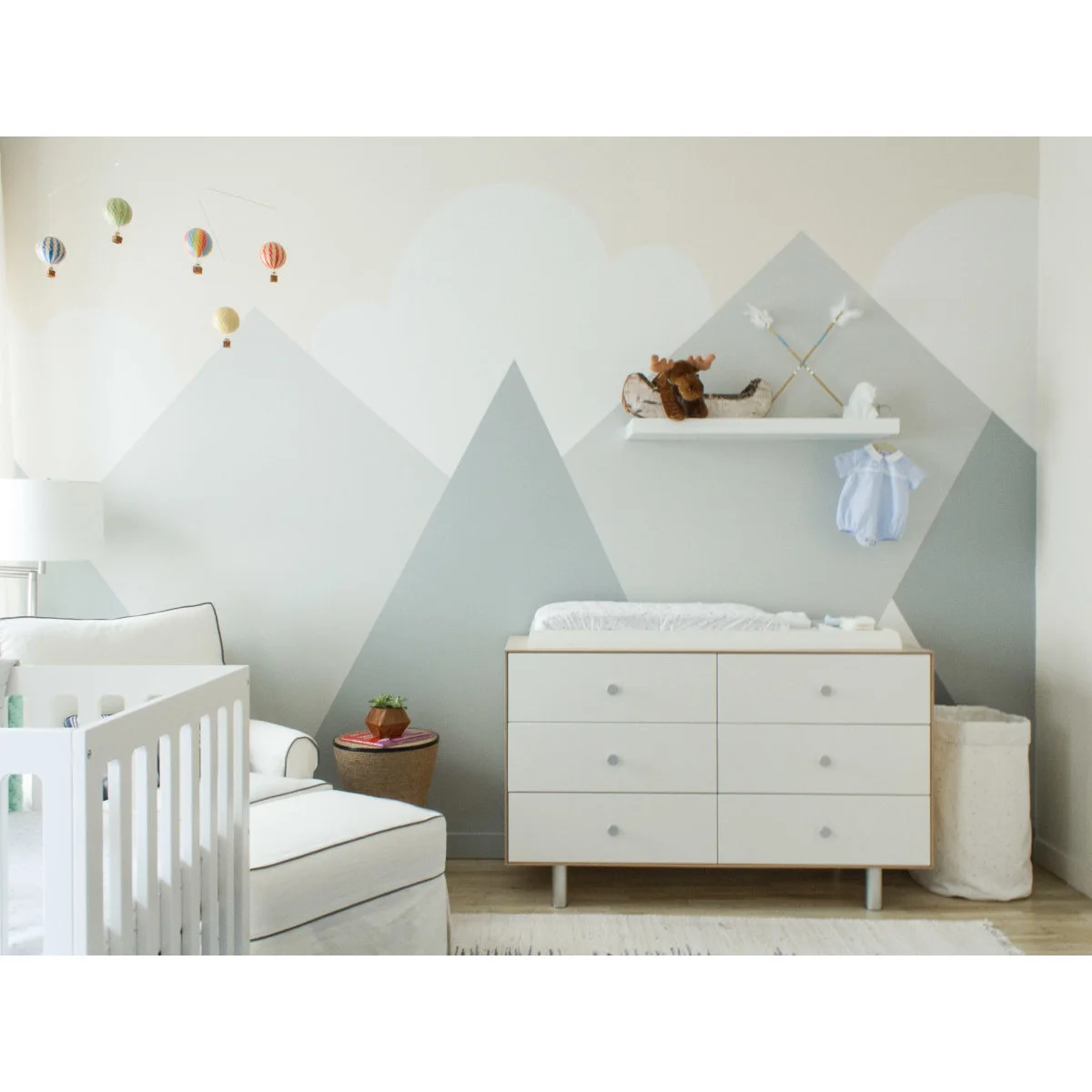
Use a Simple Mountain Shape behind Storage
 SaveSupport Non AI Creator
Image credit: Project: Touijer Designs (via Houzz)
Overlapping grey mountain shapes give the wall behind this white dresser a clear pattern. The dresser’s plain fronts and wood-colored outline keep the furniture from competing with it. A pale chair occupies the neighboring side, so the wall treatment connects the storage and seating areas.
Mark the large shapes on paper before painting so peaks do not disappear awkwardly behind the furniture. Choose a suitable wall finish that you can maintain around everyday use. Place any shelf where stored objects cannot fall onto the changing position, and secure the dresser rather than relying on its weight.
IDEA 05 / 20
Give a Dark Dresser a Light Background
 SaveSupport Non AI Creator
Image credit: Project: Studio McGee (via Houzz)
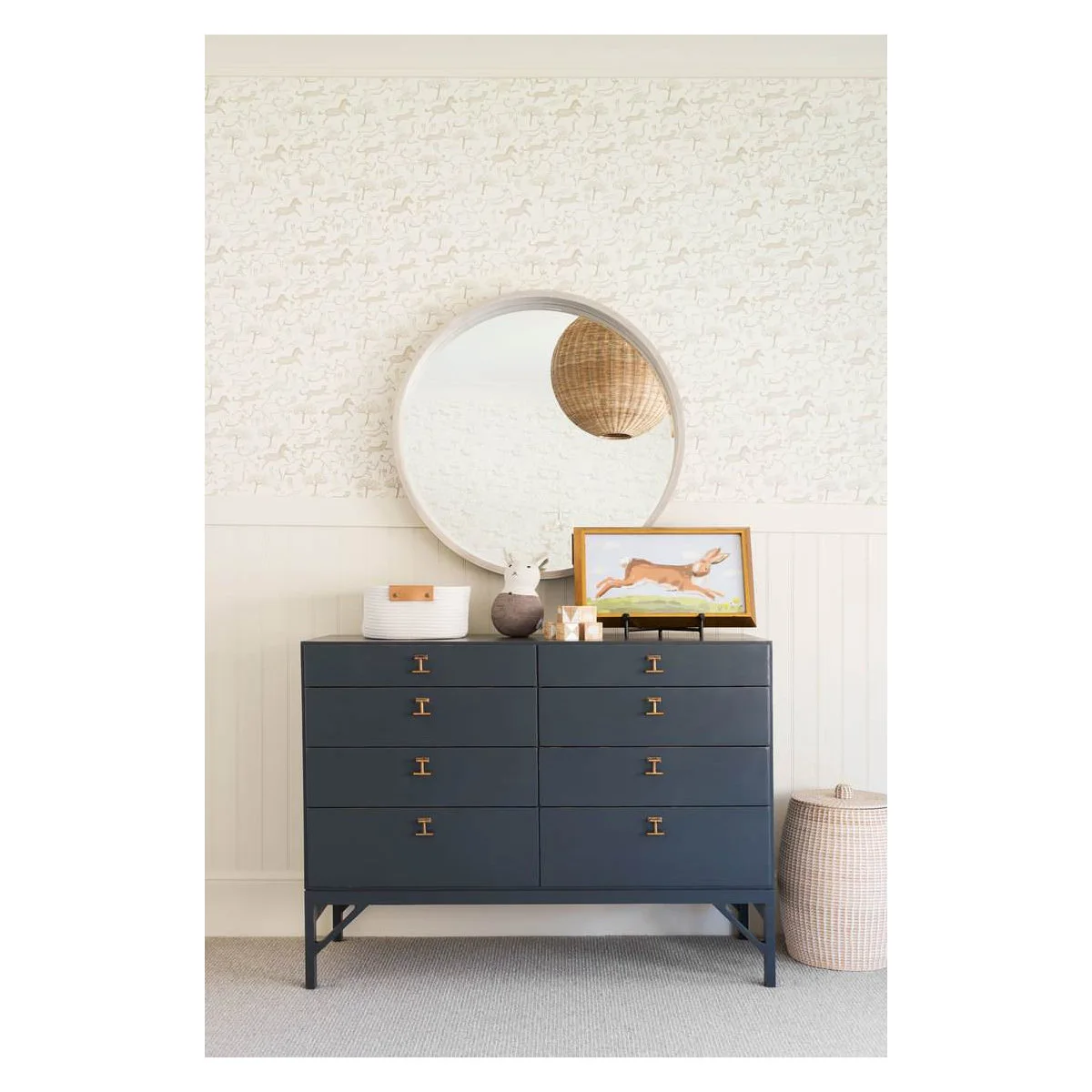
A dark blue dresser stands against white paneling and a pale animal-patterned wall. The round mirror breaks up the rectangular drawer fronts, and a lidded basket provides separate storage alongside. Dark furniture supplies contrast here without making the whole room depend on dark paint.
Sample the dresser color beside both the wallpaper and floor before repainting or buying. Use the basket for items that need their own home, such as laundry, rather than covering the dresser top with containers. Secure furniture and the mirror, and keep decorative frames outside a child’s reach.
PART 02
Make the Changing Area Useful
IDEA 06 / 20
Keep the Changing Surface Clear around the Pad
 SaveSupport Non AI Creator
Image credit: Project: Little Crown Interiors (via Houzz)
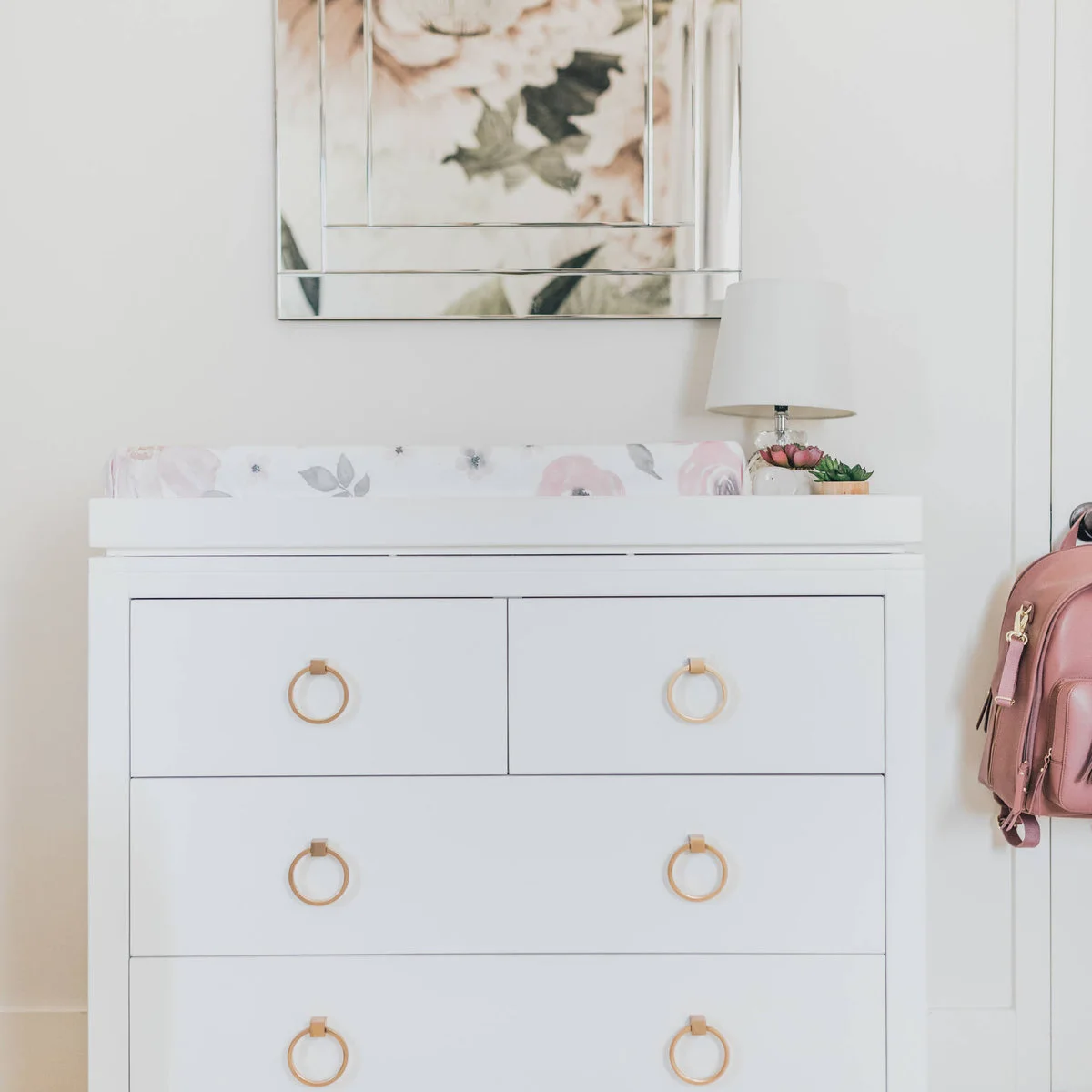
Gold-colored ring pulls give this white changing chest a distinct detail, while a floral pad supplies most of its pink color. The framed mirror above reflects the nearby wall treatment. Wide drawers below offer space for supplies without requiring several extra storage units around the chest.
Check that a changing top and pad are compatible with the furniture and fitted as their instructions require. Reserve reachable space for essentials, then move plants and other display pieces elsewhere. Keep a hand on the baby during changes and prepare supplies beforehand rather than leaving to retrieve something from another corner.
IDEA 07 / 20
Use Drawer Color to Organize the Room Visually
 SaveSupport Non AI Creator
Image credit: Project: Chloe Warner (via Houzz)
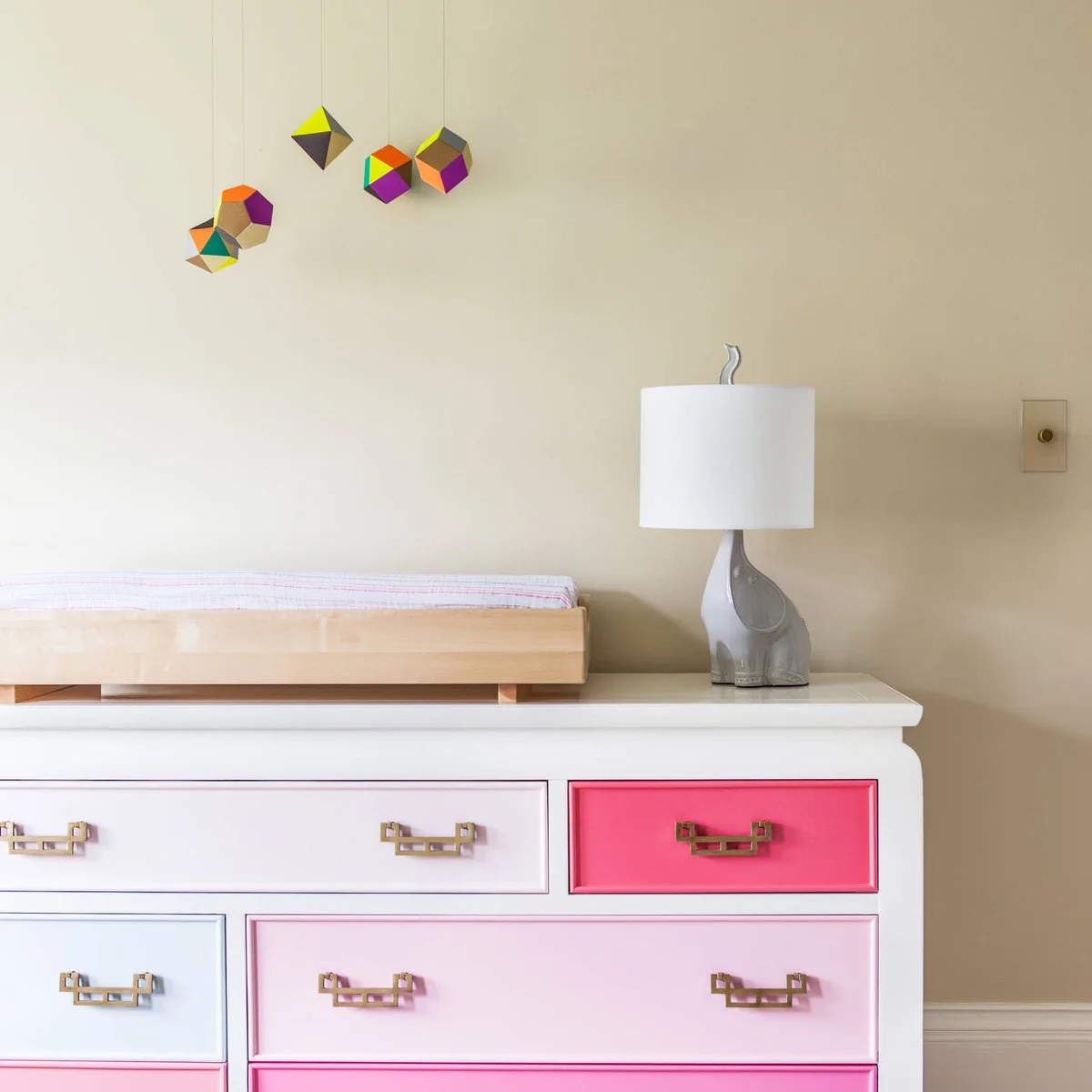
Different pink tones and a pale blue drawer give this dresser a playful finish. Gold-colored handles connect the fronts, and an elephant-shaped lamp repeats the nursery’s character above. Color makes the storage memorable while the cabinet itself remains a straightforward place for folded clothes and everyday supplies.
Choose a small set of drawer colors and repeat them sparingly elsewhere. Interior dividers can do more for finding clothes than a decorative label on every front. Check the furniture’s condition and stability before refinishing it, and do not let lamp cords or hanging decorations become reachable from the changing position.
IDEA 08 / 20
Let a Detailed Chest Carry the Traditional Look
 SaveSupport Non AI Creator
Image credit: Project: Michelle C. Roberts Photography (via Houzz)
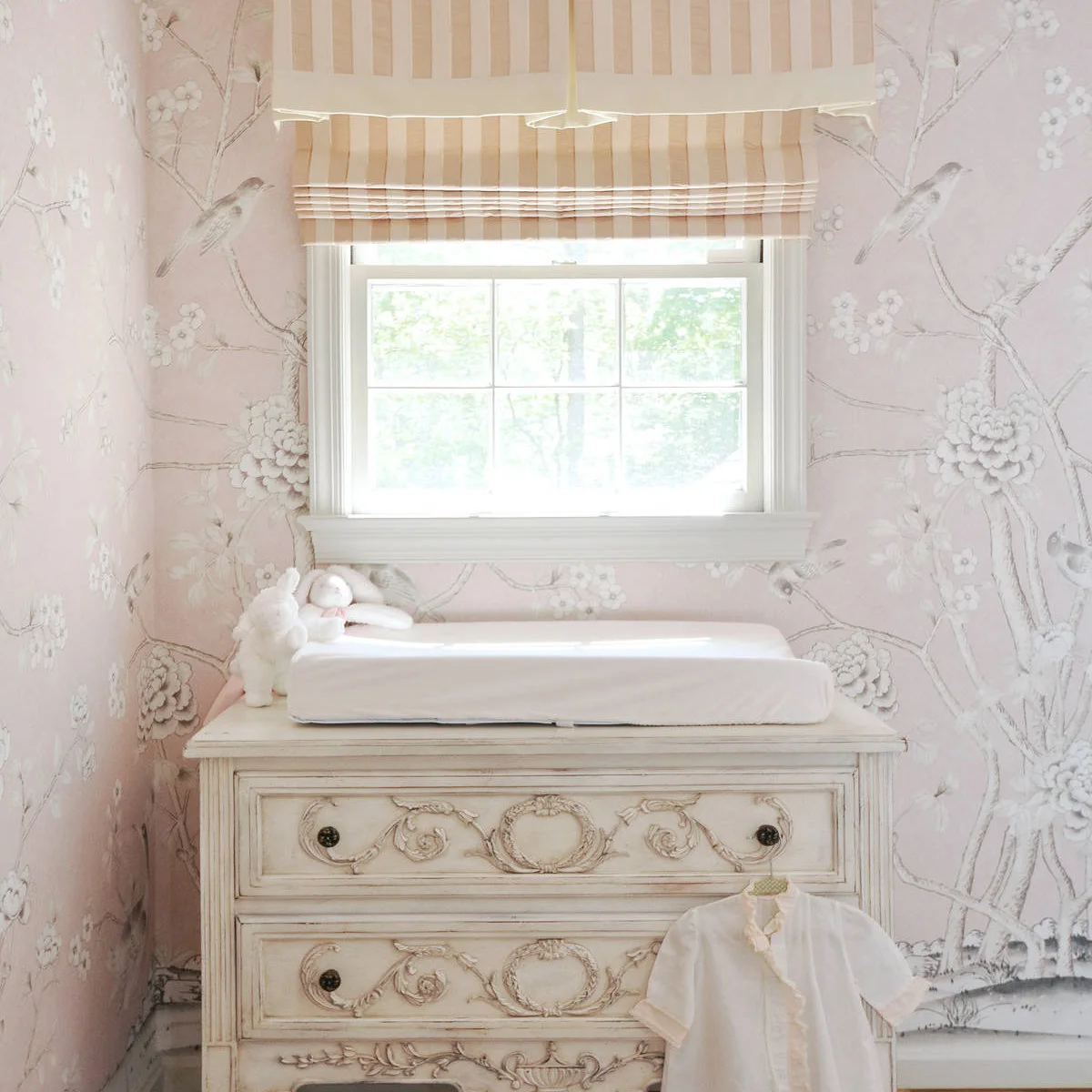
Carved details and a pale distressed-looking finish give this nursery chest a traditional character. Bird-and-flower wallpaper surrounds the window, with a striped blind adding a different scale of pattern. The drawers handle storage while the decoration stays on the furniture front and surrounding walls.
Do not judge the age, coating or changing suitability of a chest from its appearance. Inspect the piece and choose a compatible changing setup before adapting furniture you already own. Keep window cords inaccessible, check drawer operation and leave supplies close enough that the decorative arrangement does not slow down an ordinary change.
IDEA 09 / 20
Use Small Hardware for a Gentle Decorative Detail
 SaveSupport Non AI Creator
Image credit: Project: DesignbyRuchi (via Houzz)
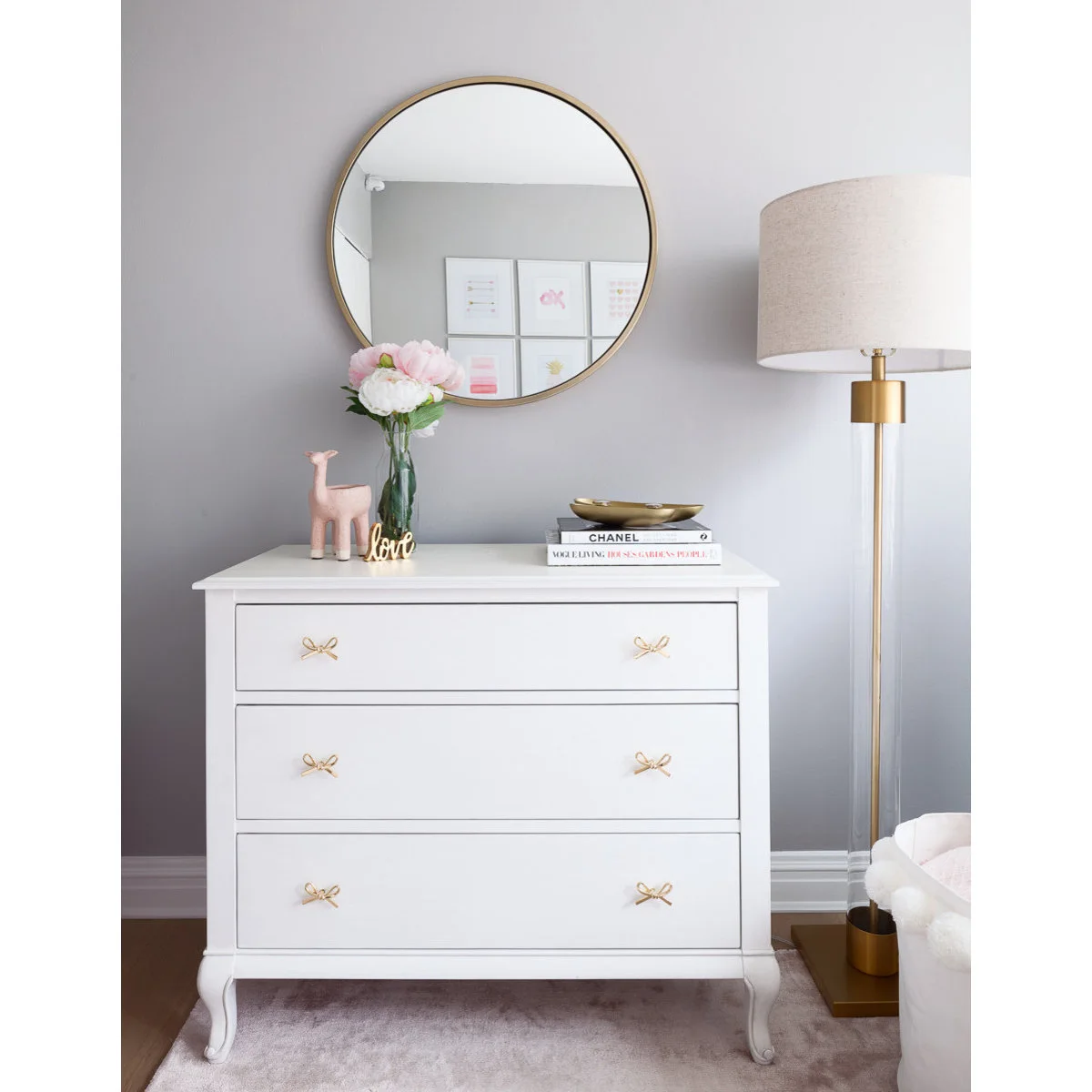
Small gold-colored bow handles add detail to this otherwise plain white chest. A round mirror and pale shade repeat the soft shapes, while the grey wall gives the white furniture a visible outline. The decoration is concentrated in a few pieces rather than spread across every available surface.
Choose handles that are comfortable to use with one hand and fix them securely. A decorative dresser top can become more useful when display objects are reduced to leave a practical landing place. Anchor the chest, mount the mirror correctly and keep the floor lamp and its cable out of a child’s reach.
IDEA 10 / 20
Match a Chair and Footstool to the Storage Corner
 SaveSupport Non AI Creator
Image credit: Project: Romina Furniture (via Houzz)
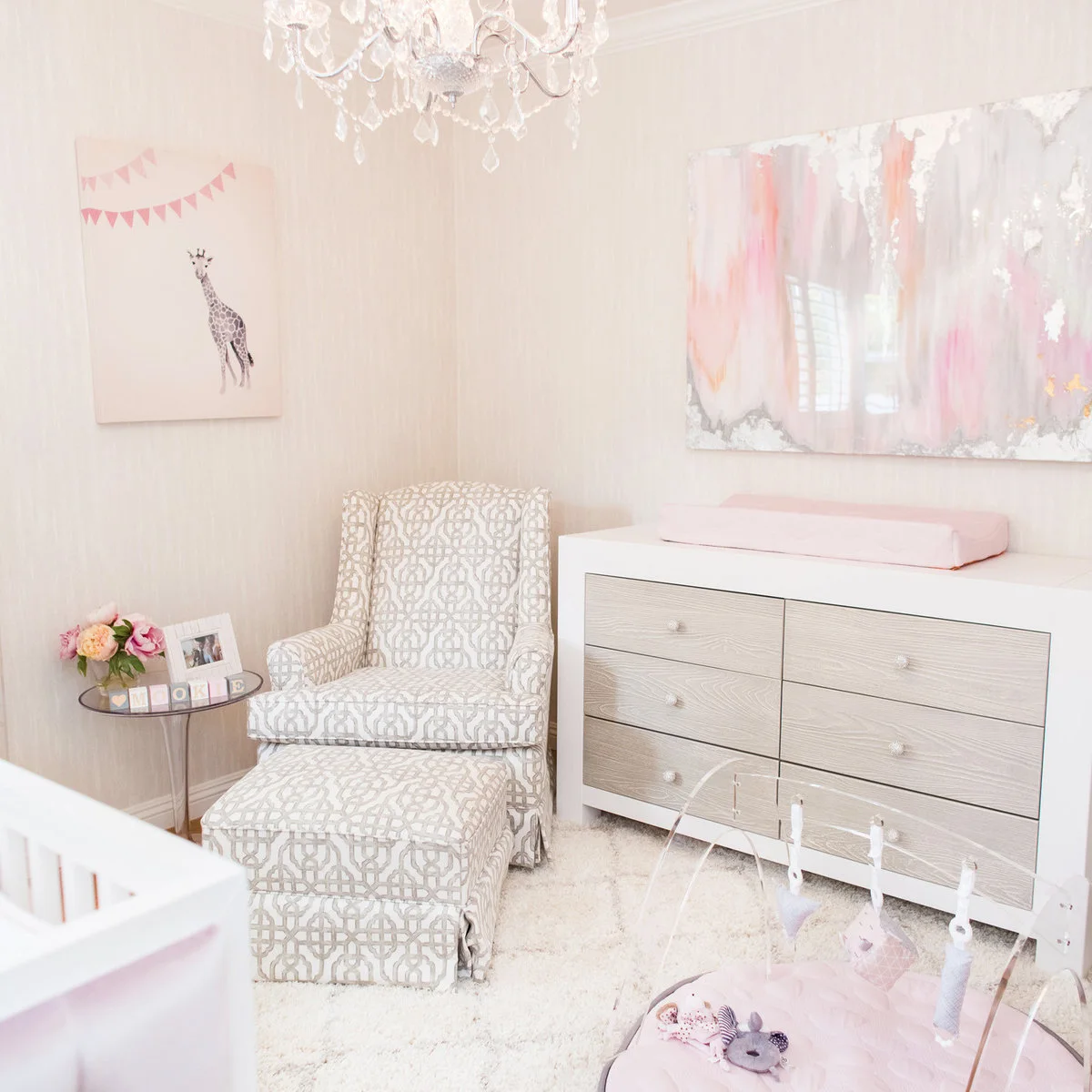
A patterned armchair and matching footstool sit next to a broad white dresser in this nursery. Their related fabric makes the two seats read as one group. Pale pink on the changing pad and artwork carries the color between the seating and storage without requiring another large patterned surface.
Test how easily you can sit down and stand up before choosing a low or deep chair. Leave a clear route around the footstool to the dresser. Keep play equipment for supervised awake use separate from the sleep space, and choose a furniture arrangement that still works after the decorative objects are removed.
PART 03
Organize Clothes, Books and Keepsakes
IDEA 11 / 20
Divide the Closet into Short Hanging Sections
 SaveSupport Non AI Creator
Image credit: Project: Vanessa Antonelli Designs (via Houzz)
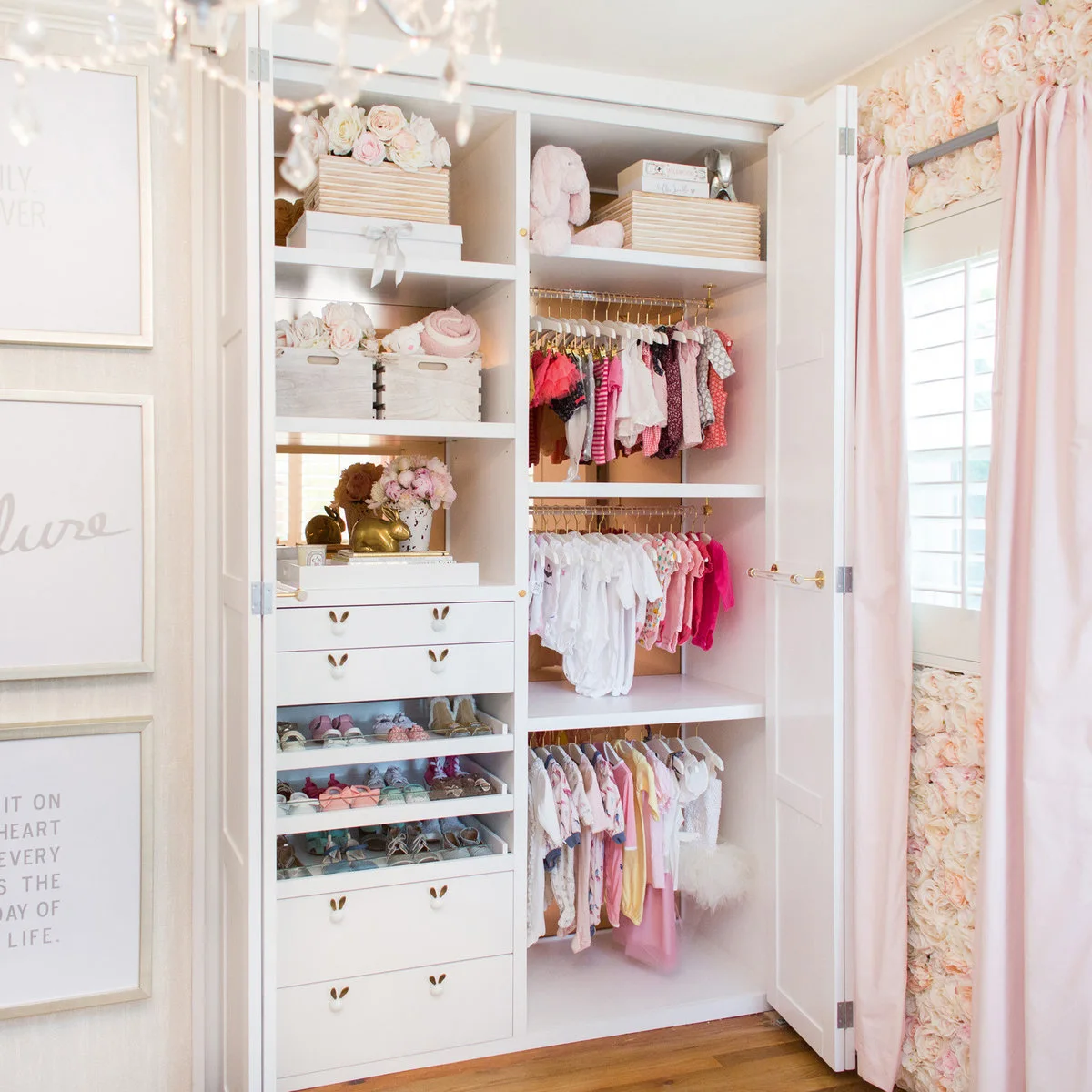
Several short hanging sections fit within this open nursery closet, with drawers and shallow shelves handling smaller items alongside. Matching hangers make the clothing easy to scan. Baskets occupy the upper shelves, putting occasional storage above the clothes and supplies that need more frequent access.
Arrange clothes by current size and keep the next size in a separate labeled container. Allow space for longer garments as needs change rather than fitting every rail permanently close together. Keep heavy supplies lower, secure the fitted units and avoid using precious shelf space for display objects that block everyday clothing.
IDEA 12 / 20
Use Bins to Give Small Items a Defined Place
 SaveSupport Non AI Creator
Image credit: Project: ZeroEnergy Design (via Houzz)
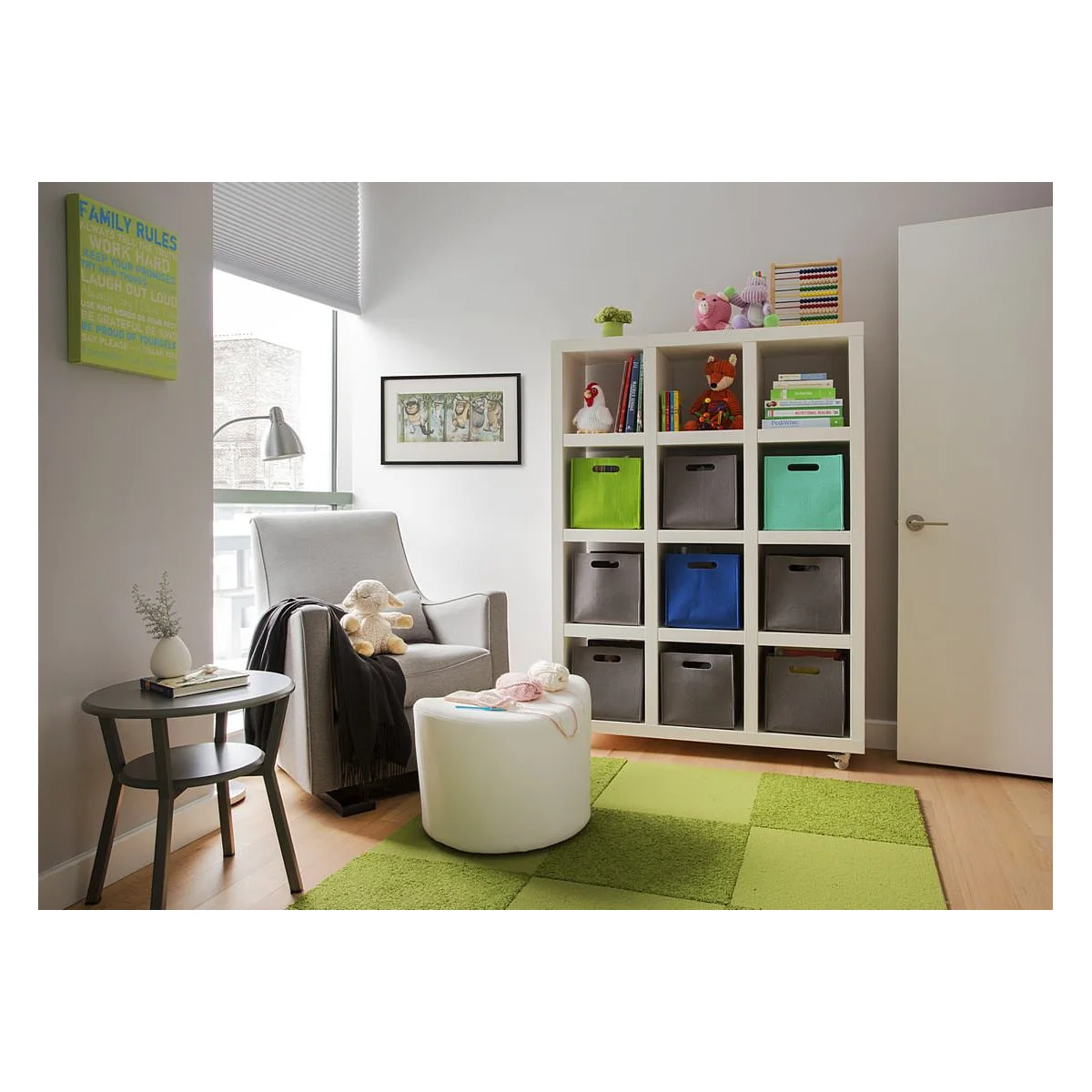
Fabric bins fill most of this white cubby unit, leaving a few upper compartments for books and toys. Green, grey and blue bins add controlled color beside the neutral chair. The repeated compartments create an obvious home for groups of small items that would otherwise spread across a dresser.
Choose lightweight bins you can remove easily and assign each one a simple purpose. Tall storage needs appropriate restraint; a wheeled unit requires particular care so it cannot roll or tip during use. Keep frequently needed supplies in reachable compartments, with heavier items low and small objects away from a child’s access.
IDEA 13 / 20
Turn an Empty Corner into Face-Out Book Storage
 SaveSupport Non AI Creator
Image credit: Project: Mend (via Houzz)
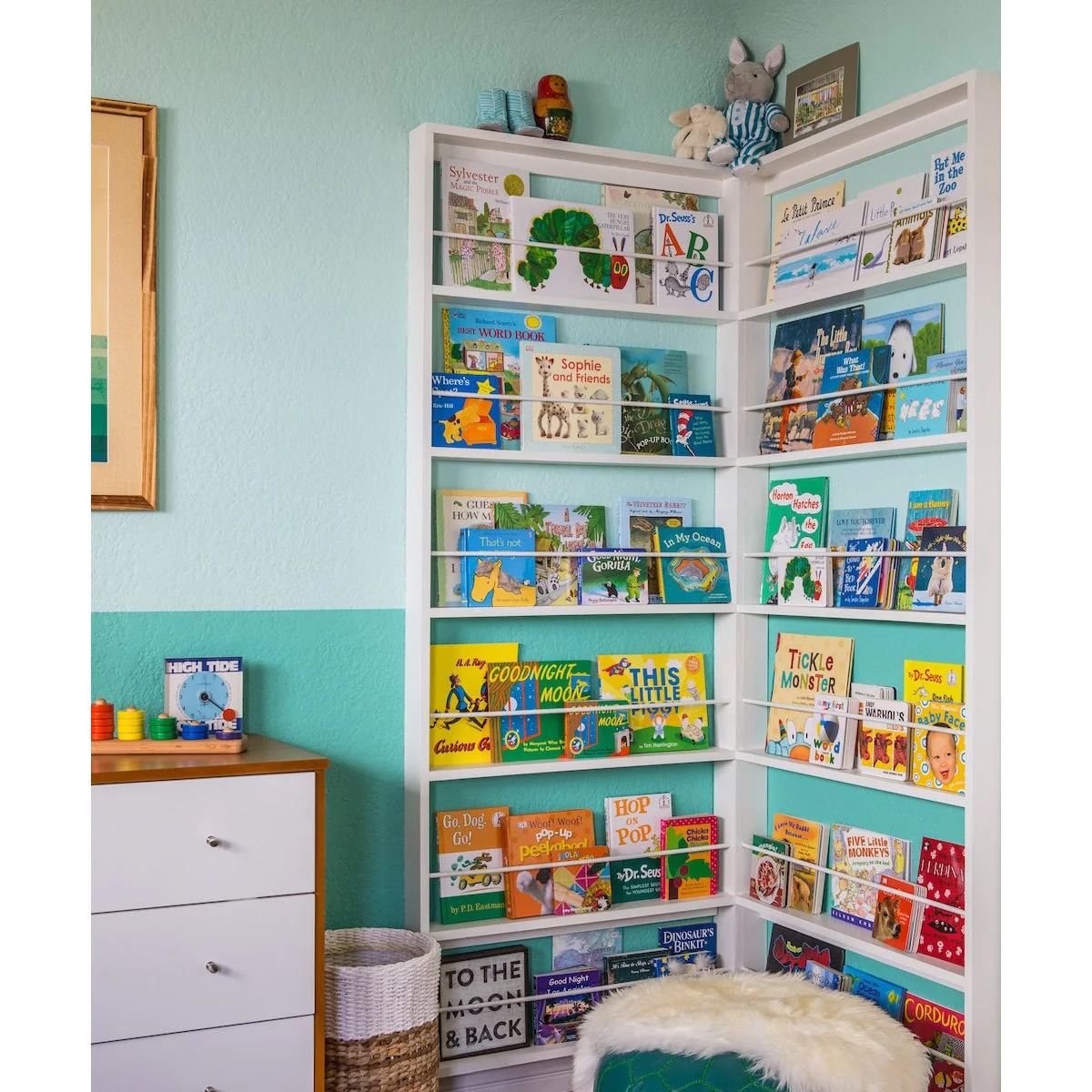
Two narrow book displays meet at the corner of this turquoise wall, showing covers face-out rather than only their spines. A basket and nearby drawer unit provide other storage below. The colorful books become part of the decoration without needing another broad bookcase across the room.
Fix the shelves securely and check their depth against the books you own. Keep only a manageable selection visible, rotating others from closed storage as interests change. Place the display away from the crib and avoid loose decorative objects on the top where they could fall into a seating or play area.
IDEA 14 / 20
Keep the Doorway Clear between Storage Pieces
 SaveSupport Non AI Creator
Image credit: Project: Little Crown Interiors (via Houzz)
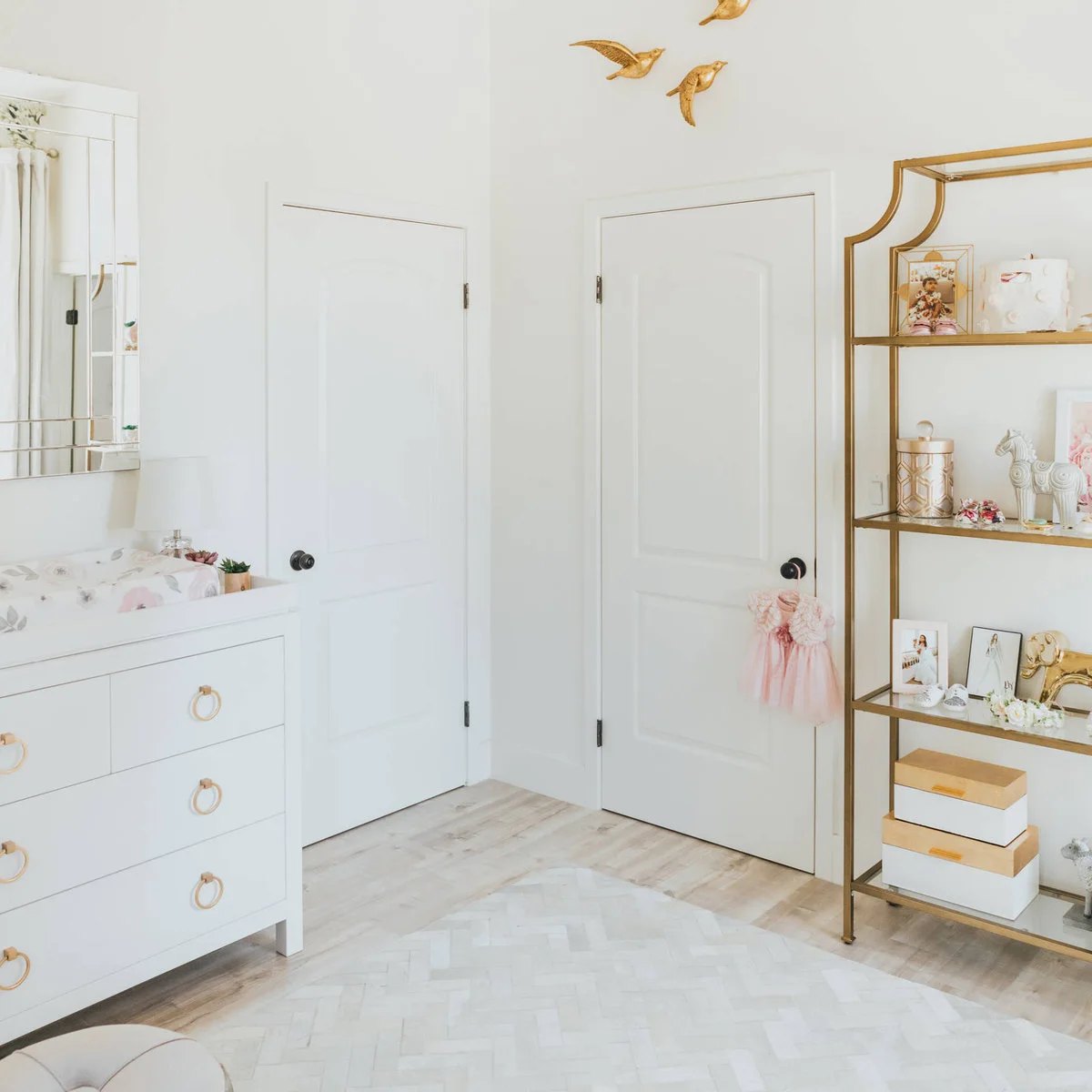
A white changing chest and an open gold-colored shelf stand on opposite sides of the doorway in this nursery. The clear floor between them leaves the doors easy to identify and use. The shelf supplies display space without extending a deep cabinet across the entrance wall.
Check every door in its full opening position before deciding where the storage belongs. A tall open shelf should be secured, and fragile keepsakes are better moved beyond a child’s reach. Keep the lower levels practical and light rather than filling the route with baskets that must be stepped around at night.
IDEA 15 / 20
Combine Open Shelves with a Few Baskets
 SaveSupport Non AI Creator
Image credit: Project: Will Wick (via Houzz)
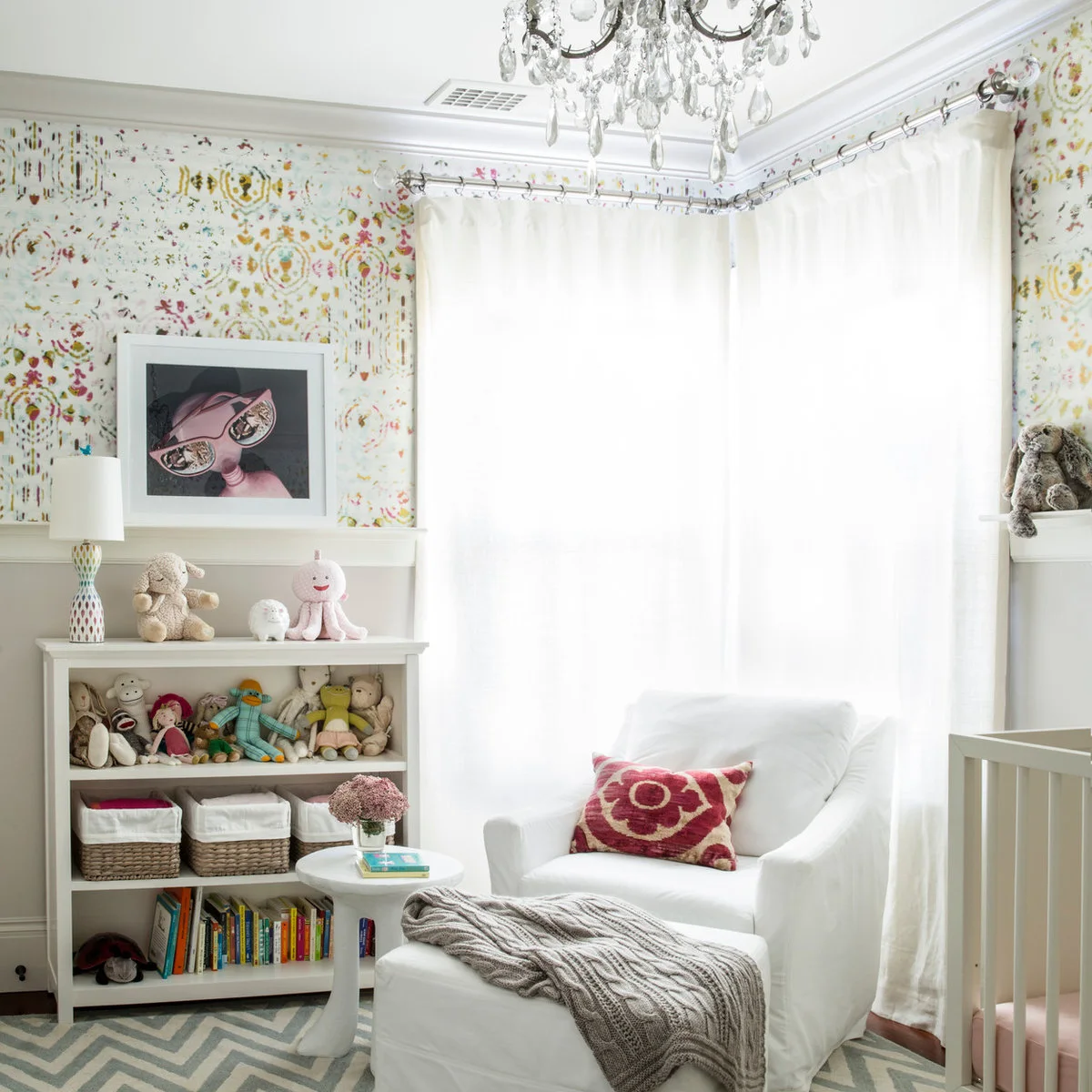
Open shelves hold toys and books in this white bookcase, with lined baskets collecting smaller belongings on the middle level. A pale chair and ottoman sit nearby for reading. Pattern stays mostly above the wall trim, allowing the storage and seating to share a quieter background.
Use baskets for items that are difficult to stack, and keep books where you can reach them from the chair without twisting awkwardly. Secure the bookcase and keep heavy objects low. Maintain separation between the crib, curtains and reachable cords rather than copying their exact spacing from a styled photograph.
PART 04
Plan a Comfortable Adult Seating Corner
IDEA 16 / 20
Fit a Rocking Chair into a Narrow Corner
 SaveSupport Non AI Creator
Image credit: Project: SISSY+MARLEY (via Houzz)
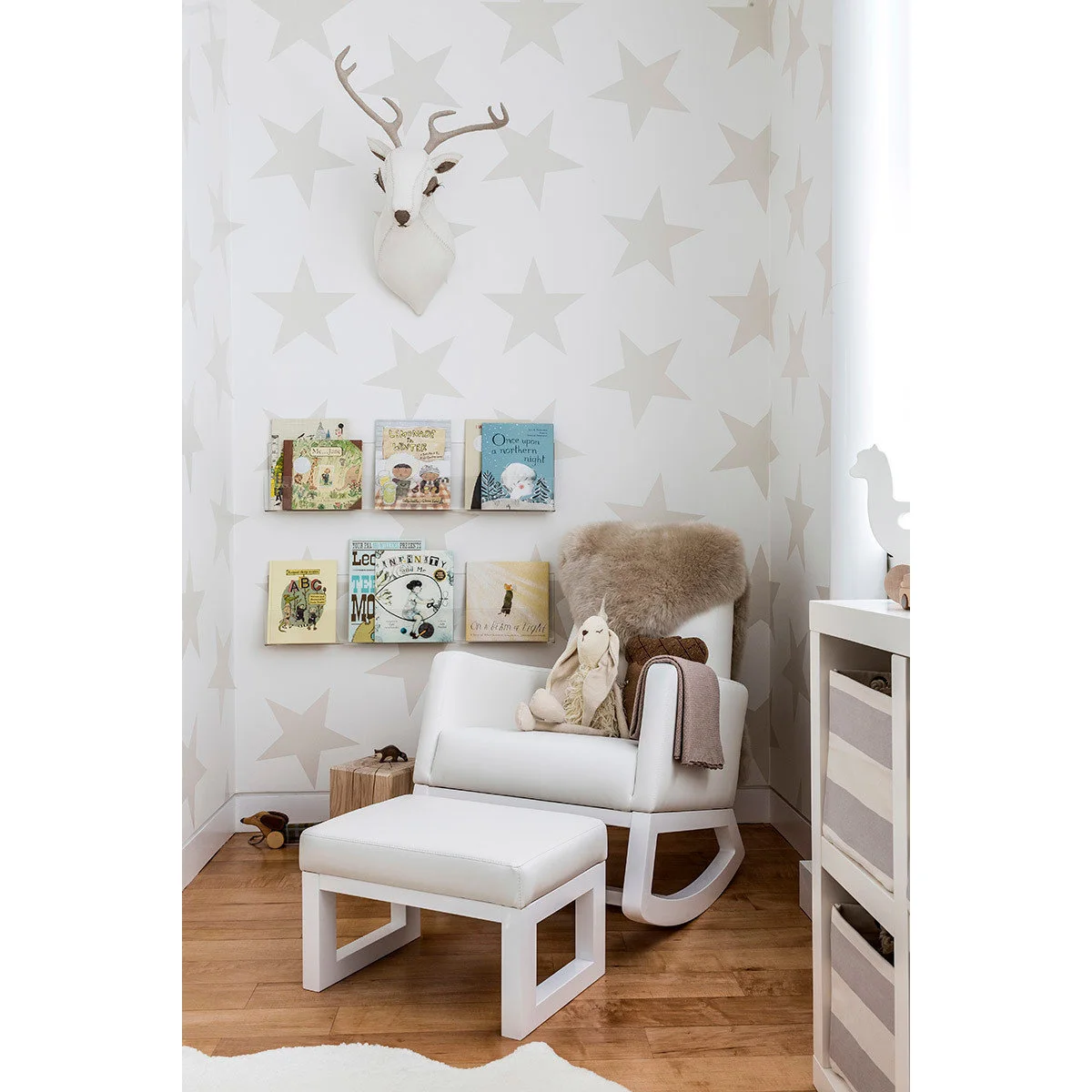
A white rocking chair and matching footstool occupy this narrow nursery corner. Shallow book ledges keep a few covers visible beside the chair, while grey stars give the wall a soft pattern. The arrangement shows a small reading corner without another large cabinet around the seat.
Allow space behind and in front of the rocker through its full movement, including with the footstool in use. Test the chair’s height and support for your own comfort. Keep nearby books and small objects secure, and remember that an adult chair is seating rather than an infant sleep surface.
IDEA 17 / 20
Put a Small Table within Reach of the Chair
 SaveSupport Non AI Creator
Image credit: Project: Crowell + Co. Interiors (via Houzz)
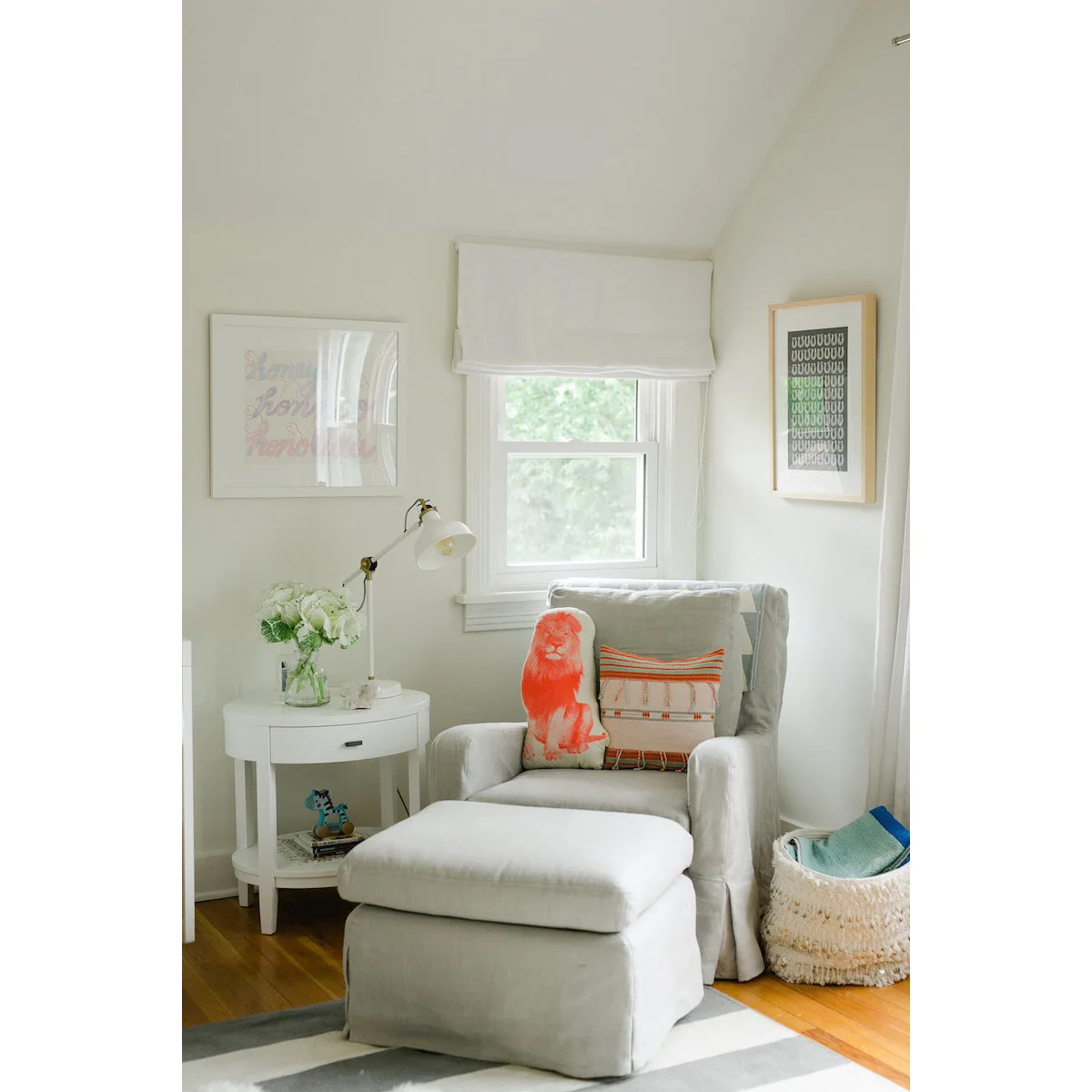
A small white side table stands beside this pale armchair, with a lamp above and a lower shelf for reading material. Orange accents make the quiet corner more personal. The footstool is substantial enough to be a separate part of the layout, rather than a detail to squeeze in last.
Sit in the chair and check where a drink, phone and cloth can be placed without leaning across the baby. Reduce decorative objects if they use the entire table. Secure the lamp cable, keep hot drinks away from children and make sure the footstool leaves a clear path to stand and walk.
IDEA 18 / 20
Use Book Ledges beside a Compact Chair
 SaveSupport Non AI Creator
Image credit: Project: Studio Munroe (via Houzz)
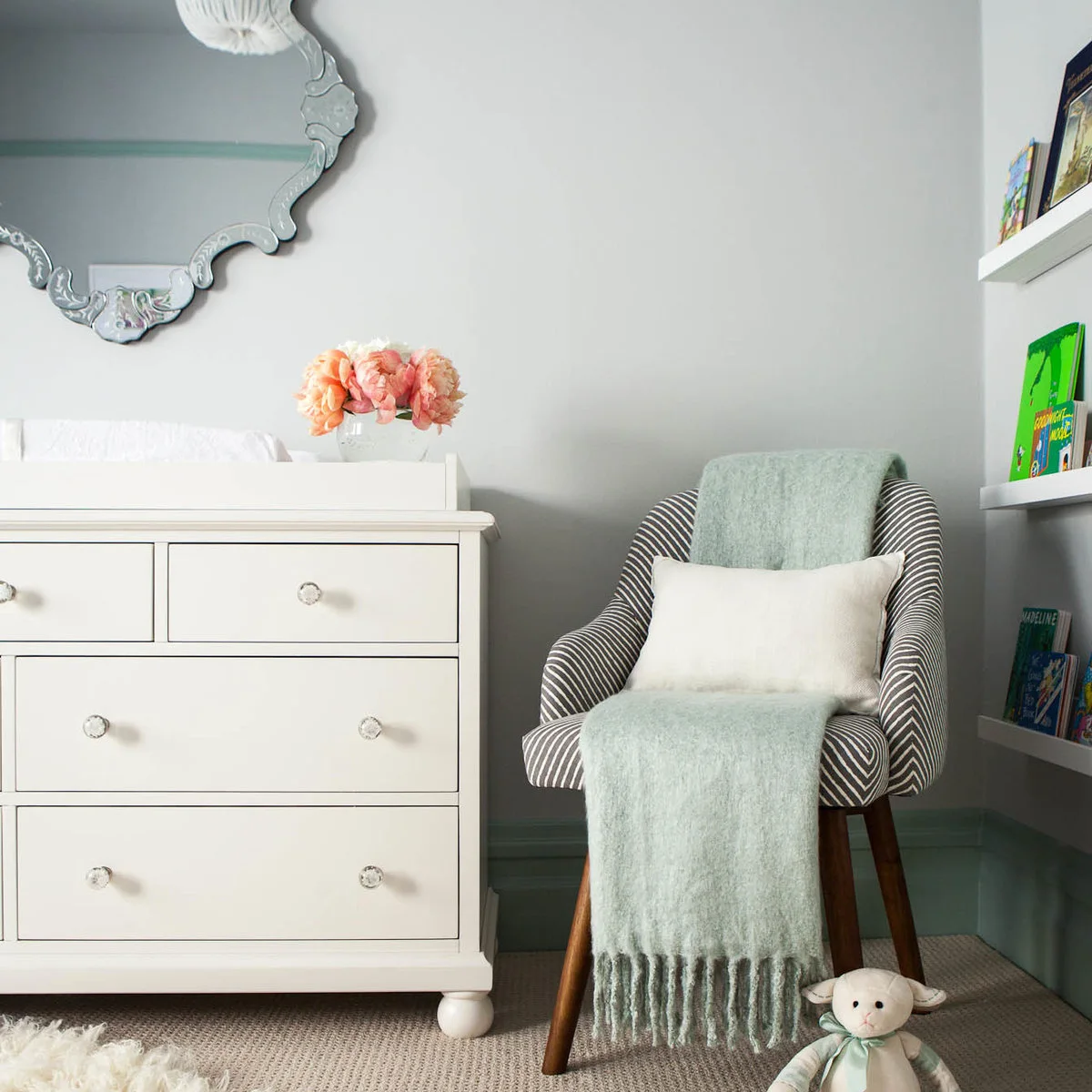
A compact striped chair sits between the changing chest and shallow wall book ledges in this nursery. A pale green throw softens the pattern, and the white dresser keeps the corner bright. The books occupy wall space rather than requiring a deep floor-standing shelf next to the seat.
Choose a chair for its comfort and ease of getting up, then check how the drawer and seat positions work together. Keep the floor free of toys where you need to stand. Mount the ledges securely, with books placed so they cannot fall onto the seated adult or into a nearby sleep space.
IDEA 19 / 20
Repeat a Soft Pink through Adult Seating
 SaveSupport Non AI Creator
Image credit: Project: Vi-Design (via Houzz)
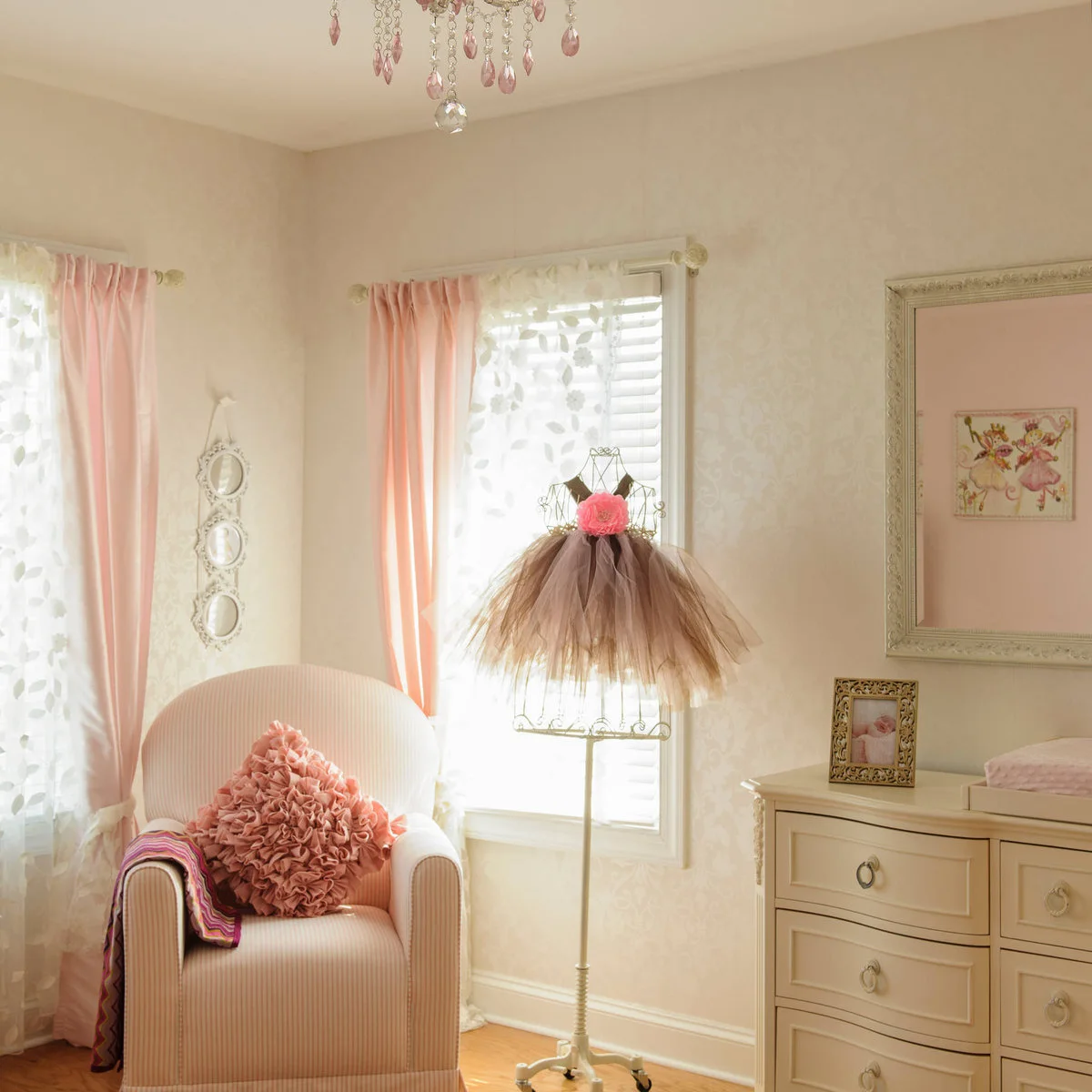
Pale pink repeats through the curtains, striped chair and framed artwork in this nursery corner. Cream furniture keeps the color changes gentle, while the chair provides a distinct place to sit. The room’s softer look comes from related surfaces rather than every piece being exactly the same shade.
Compare fabric samples together in the actual room before committing to several pink tones. You can keep the color relationship while reducing floor-standing decorations that take up useful access. Leave clear space beside the dresser, secure furniture and keep window coverings and their operating parts beyond a child’s reach.
IDEA 20 / 20
Use Neutral Furniture with a Few Strong Accents
 SaveSupport Non AI Creator
Image credit: Project: Studio L Interior Design (via Houzz)
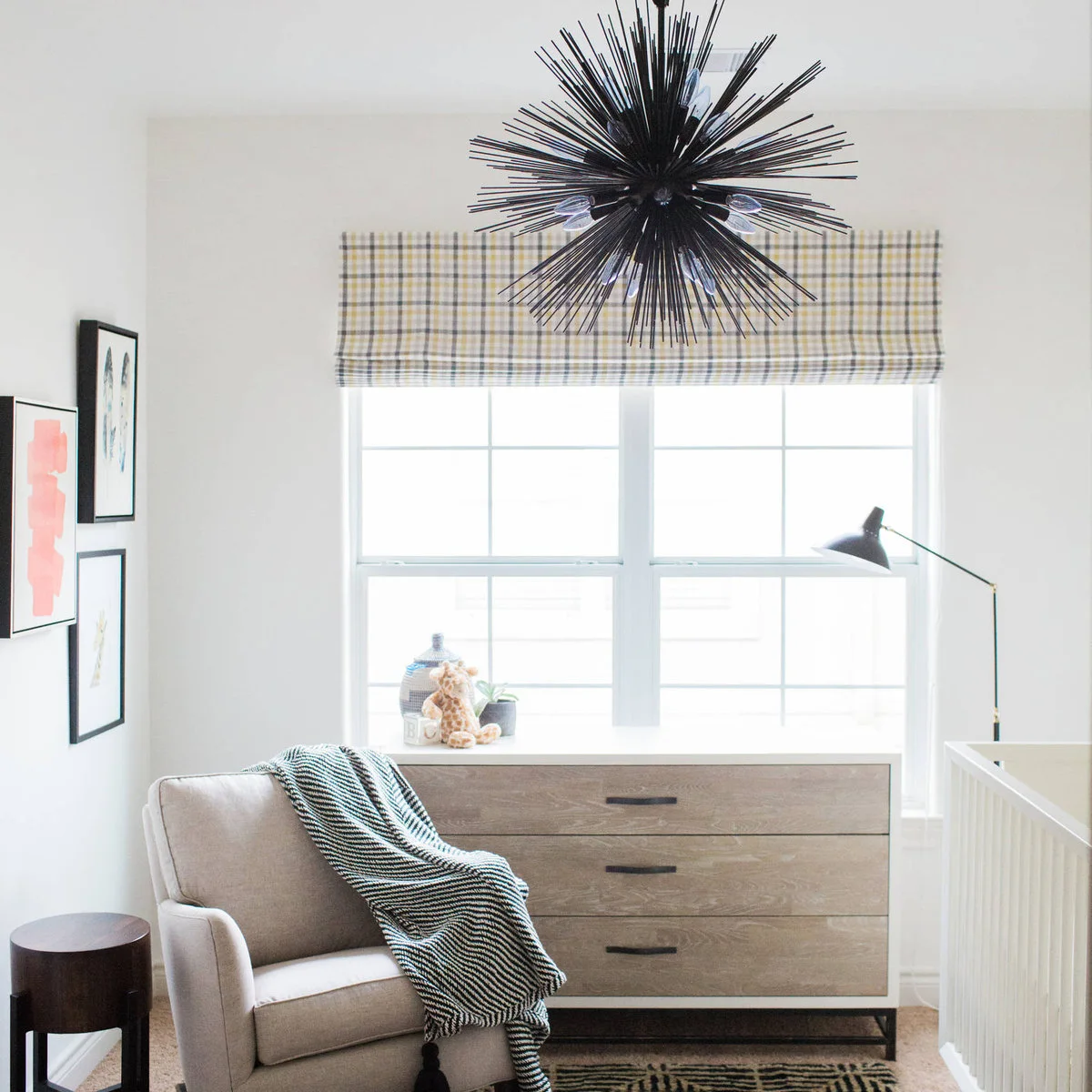
A pale wood dresser and upholstered chair give this nursery a neutral base. A plaid blind and dark sculptural ceiling light add stronger shapes, while small framed pictures bring in a little color. The main furniture could remain in use even if the surrounding decoration changes later.
Choose the dresser around storage needs and drawer access before matching its finish to the chair. Keep tall lamps stable and cables secured, and use suitable fixings for ceiling fittings. If the room needs more personality, change a print or textile first rather than adding another bulky piece to the floor.
BRING IT ALL TOGETHER
Make the Everyday Routine Easy First
Choose the crib position and clear routes before arranging the decorative details. Put changing essentials together, allow drawers and doors to open fully and test the chair with its footstool in place. Useful storage does not need to fill every wall; a few well-chosen compartments can be easier to keep organized.
Build the color scheme around one favorite fabric, print or furniture finish. Repeat it in a small number of places and leave the rest of the room quieter. As your child grows, review reachable cords, furniture restraints and small objects again, because a room that worked at the beginning will need adjustments.