A Scandi nursery can feel warm without becoming crowded. Simple furniture, pale wood and a small group of colors leave room for the practical parts of caring for a baby: somewhere comfortable to sit, supplies that are easy to reach and a clear route through the room.
Start with a crib that meets current safety requirements and a bare sleep surface with only a fitted sheet. The ideas below focus on the room around it, from curtains and storage to adult seating. Check current CPSC guidance and product instructions when planning your nursery.
PART 01
Build a Simple, Warm Palette
IDEA 01 / 17
Let a Simple Crib Define the Room
 SaveSupport Non AI Creator
Source: www.houzz.com
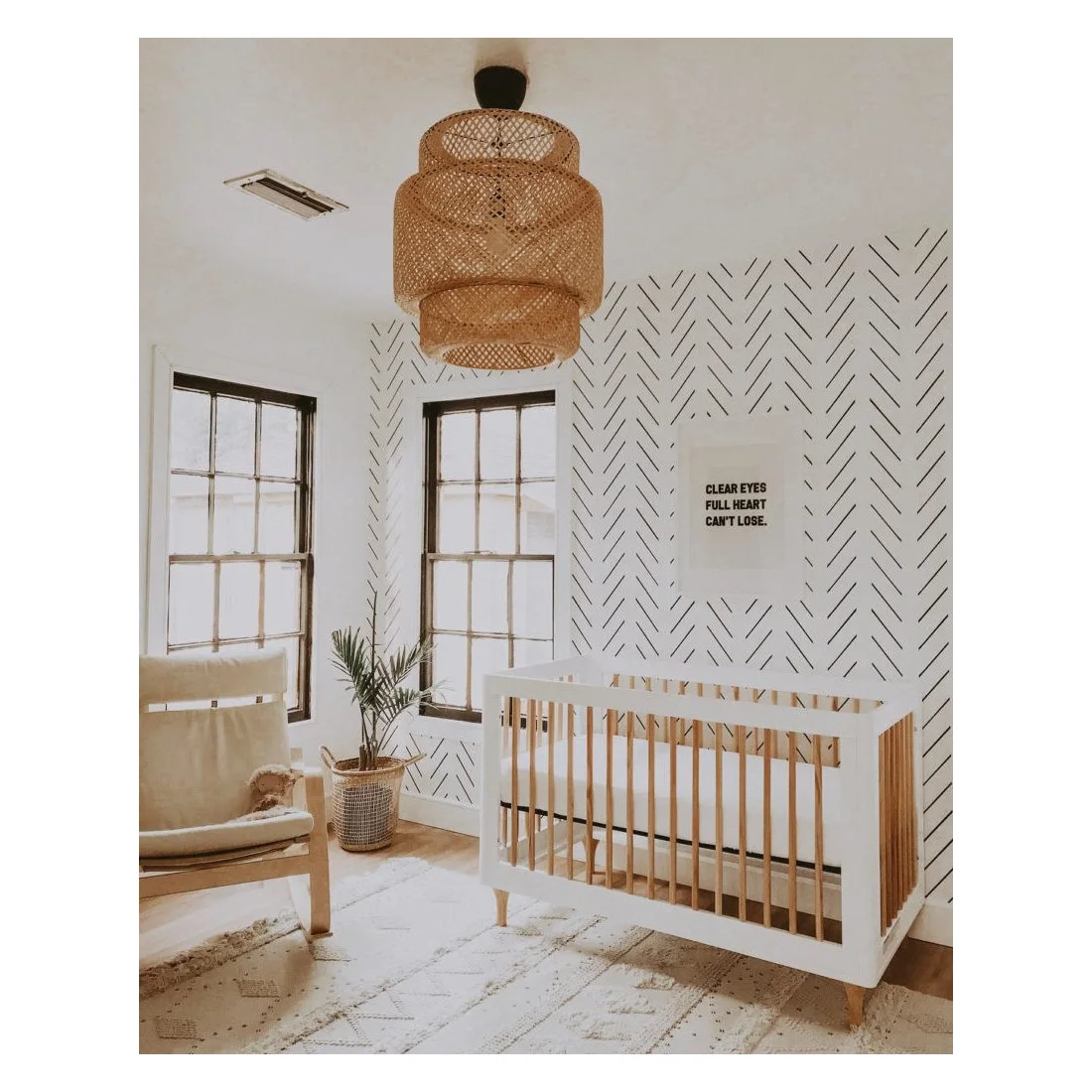
The white crib and wood slats establish a light, uncomplicated palette. Small black wall marks add rhythm without a large mural, while the woven pendant introduces a softer texture above the room. The separate chair keeps the adult sitting area distinct from the sleeping space.
Begin with a crib that meets current safety requirements and follow its assembly instructions. Keep the sleep surface clear except for a fitted sheet, and place cords, plants and wall decorations out of reach. The room can gain texture through the adult chair and lighting instead of accessories inside the crib.
IDEA 02 / 17
Use Fine Pattern Around Pale Furniture
 SaveSupport Non AI Creator
Source: www.houzz.com
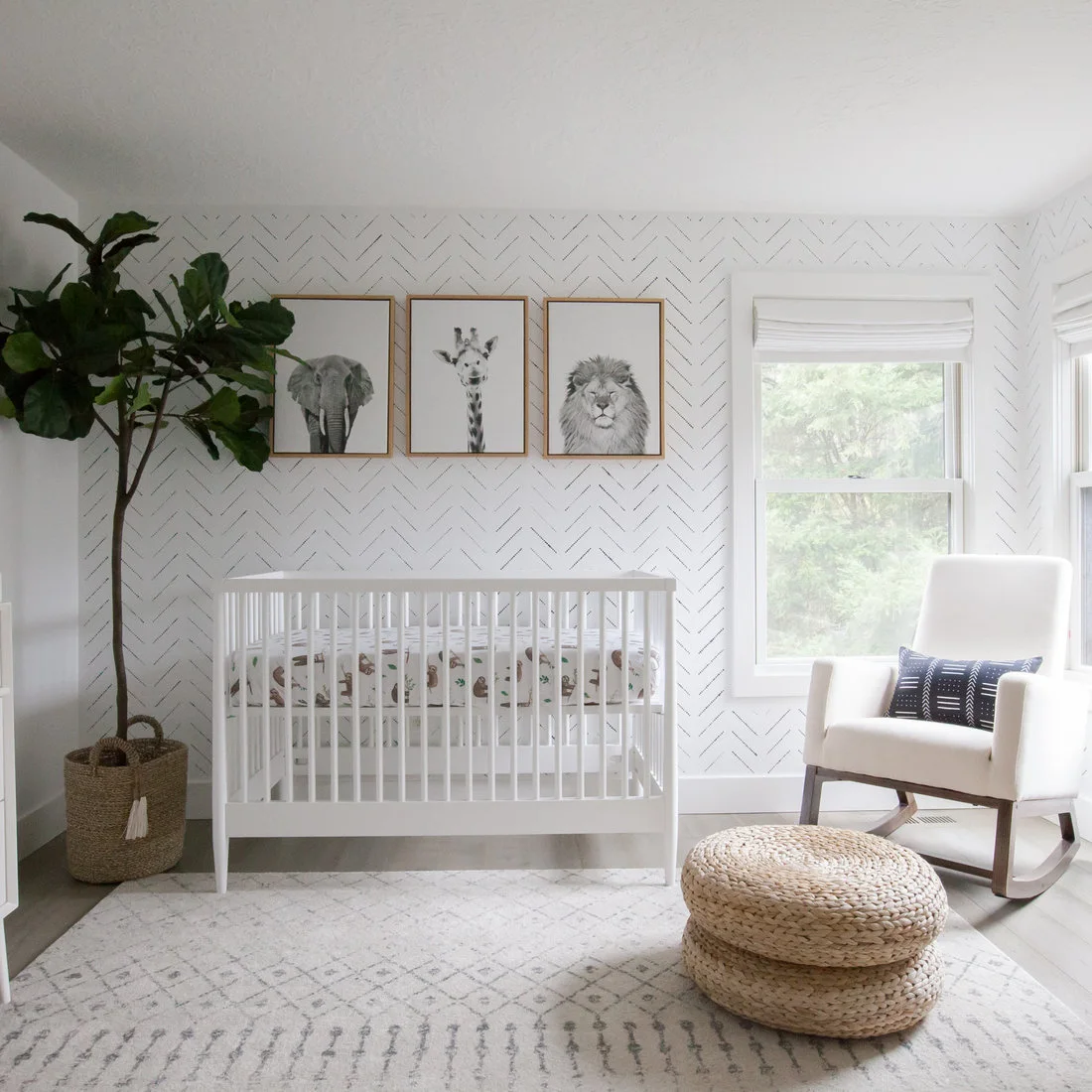
A fine wall pattern adds interest behind the plain white crib without turning every surface into a feature. Pale wood on the rocking chair repeats the frames around the animal pictures. A woven pouf introduces another texture in the adult seating area rather than on the sleep surface.
Test a patterned wall sample from both the doorway and chair before covering the room. Small repeats can become busier at close range. Leave sufficient space for the chair to rock, and choose a stable footrest that does not reduce the clear route between the door, crib and changing station.
IDEA 03 / 17
Bring Warm Wood Into a Small White Room
 SaveSupport Non AI Creator
Source: www.houzz.com
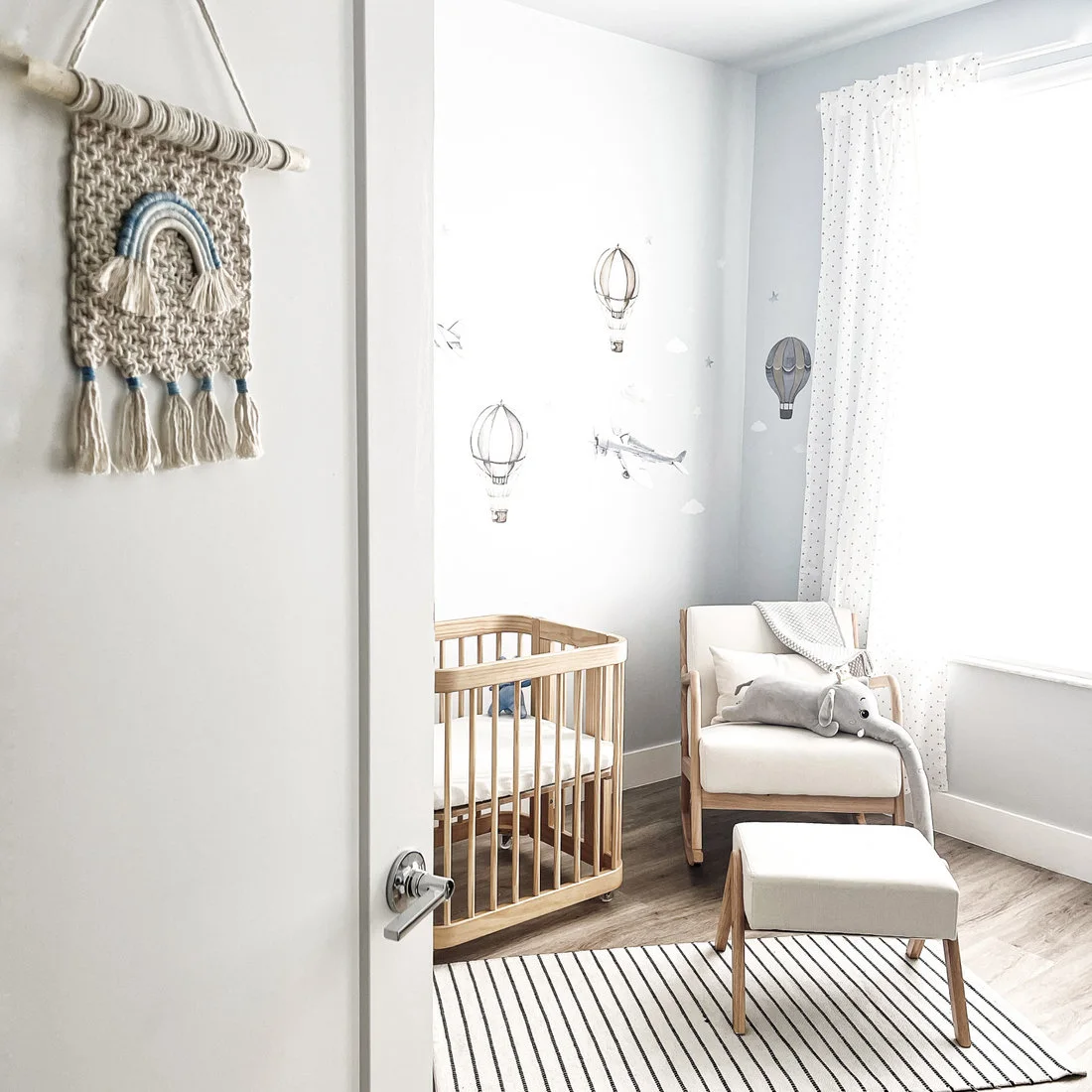
The rounded crib and chair frame give this compact white room warmth without requiring dark walls. Small balloon illustrations introduce a gentle theme, while a striped rug adds definition at floor level. The chair and footstool make one clear corner for the adult using the room.
Check the chair with its footstool in place before choosing the crib position; a compact room still needs a clear walking route. Keep curtain cords and hanging textiles well away from the crib. Cushions and throws belong on adult furniture, with the crib reserved for its fitted sheet.
IDEA 04 / 17
Choose One Color for Curtains and Cushions
 SaveSupport Non AI Creator
Source: www.houzz.com
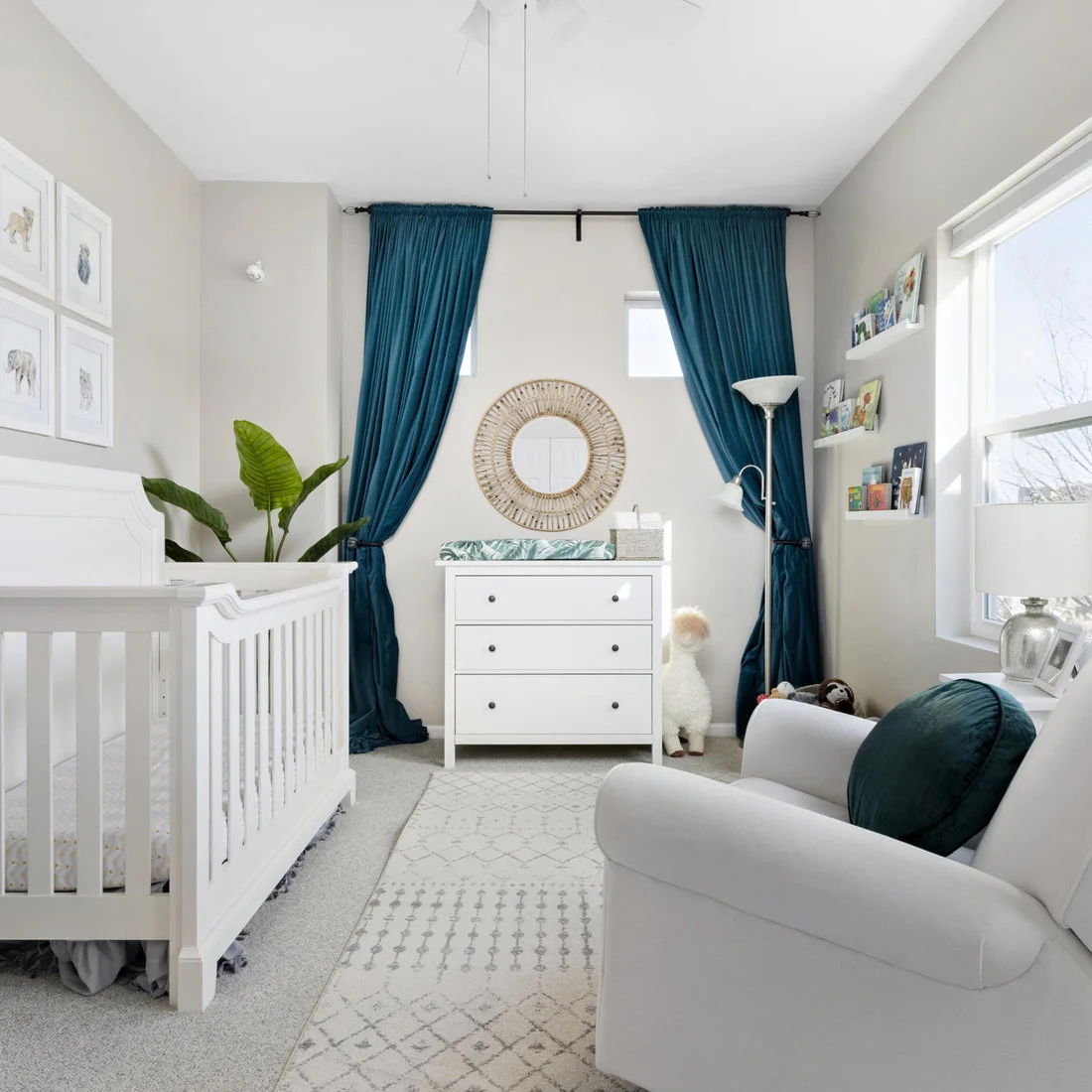
Teal appears in the curtains and chair cushion, giving the otherwise pale room a consistent color accent. White storage and the crib remain visually quiet, while a round woven mirror softens the dresser wall. The color is concentrated in pieces that can change as the room develops.
Choose curtains for the window and light conditions rather than color alone. Check that their fixings and any cords are beyond a child’s reach, and position the crib separately from the window treatment. Leave the changing surface clear of fragile accessories and secure the mirror properly to its wall.
IDEA 05 / 17
Ground Pale Walls With a Geometric Rug
 SaveSupport Non AI Creator
Source: www.houzz.com
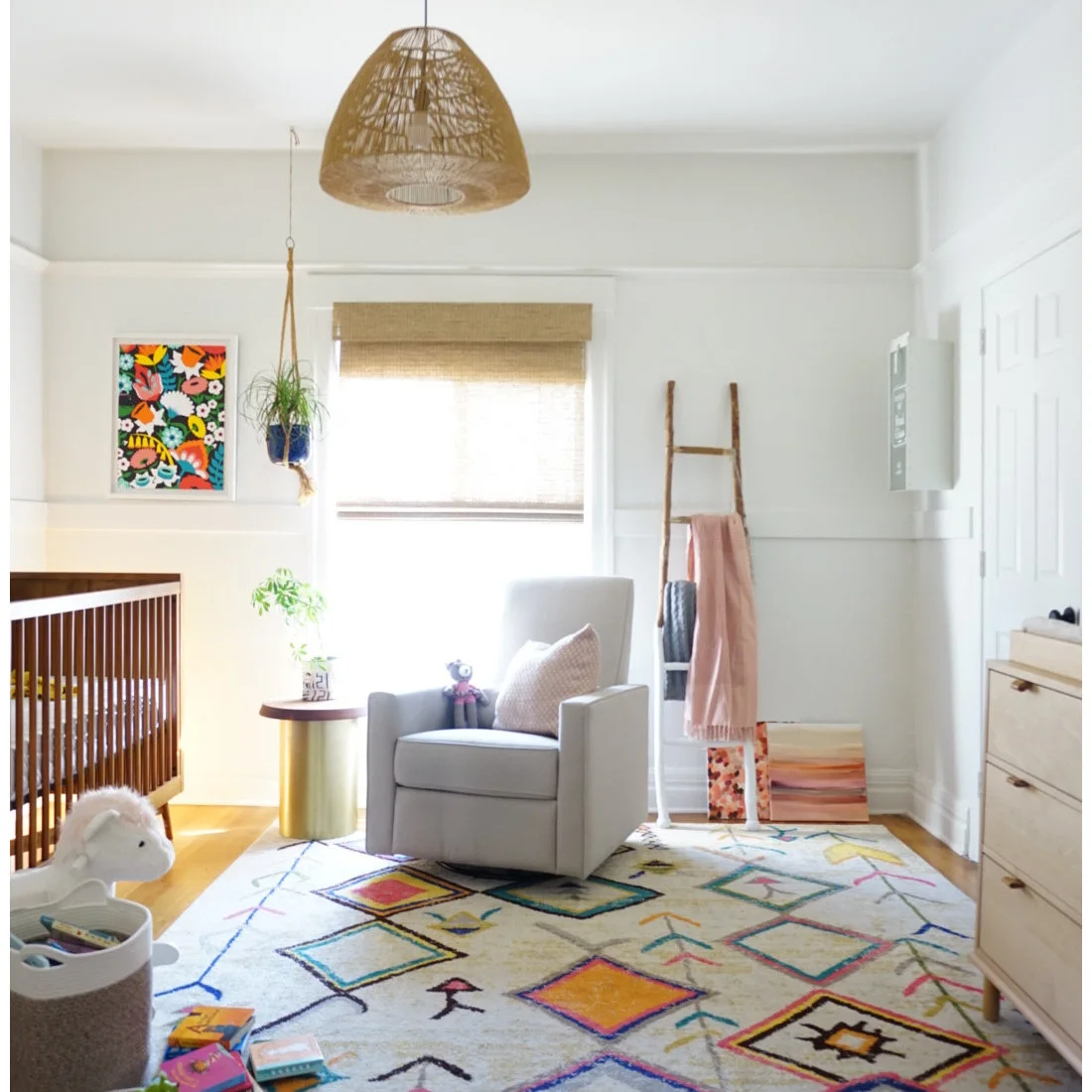
The patterned rug gives this bright nursery a defined central area while the furniture stays simple. A gray adult chair is positioned beside a small round table, and the wood dresser adds warmth along the opposite side. The woven pendant continues the natural texture without another bold color.
Measure the rug against the furniture and door swing, and choose an edge that stays flat. Put adult drinks on a stable surface out of a child’s reach. Avoid leaning decorative ladders or loose objects where they could fall or become climbing aids as the room’s occupant becomes mobile.
PART 02
Make Space for Adults to Sit
IDEA 06 / 17
Make the Reading Chair Easy to Use
 SaveSupport Non AI Creator
Source: www.houzz.com
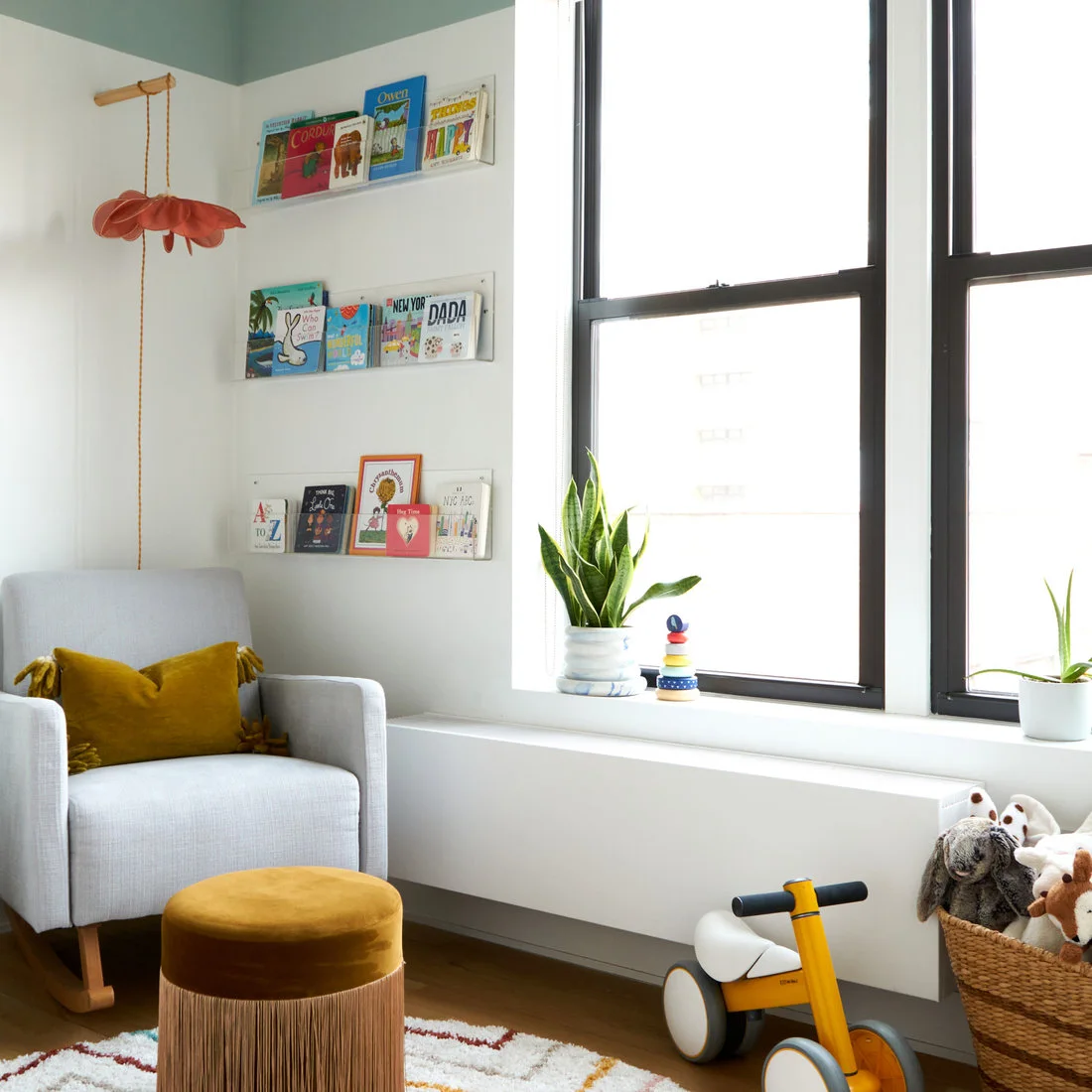
The mustard cushion and pouf bring a warm accent to the gray chair without changing the room’s pale base. Clear book ledges display covers beside the seat, so the reading corner is easy to understand. The dark window frame gives the bright wall a crisp outline.
Test the chair for comfortable arm support and check that the pouf leaves enough room to stand while holding a baby. Secure book ledges and keep accessible books age appropriate. Route the pendant’s long cord securely out of reach rather than copying its decorative drape into a working nursery.
IDEA 07 / 17
Give Adults a Separate Resting Area
 SaveSupport Non AI Creator
Image credit: Photo: Shannon Lazic Photography. From: Steele Street Studio
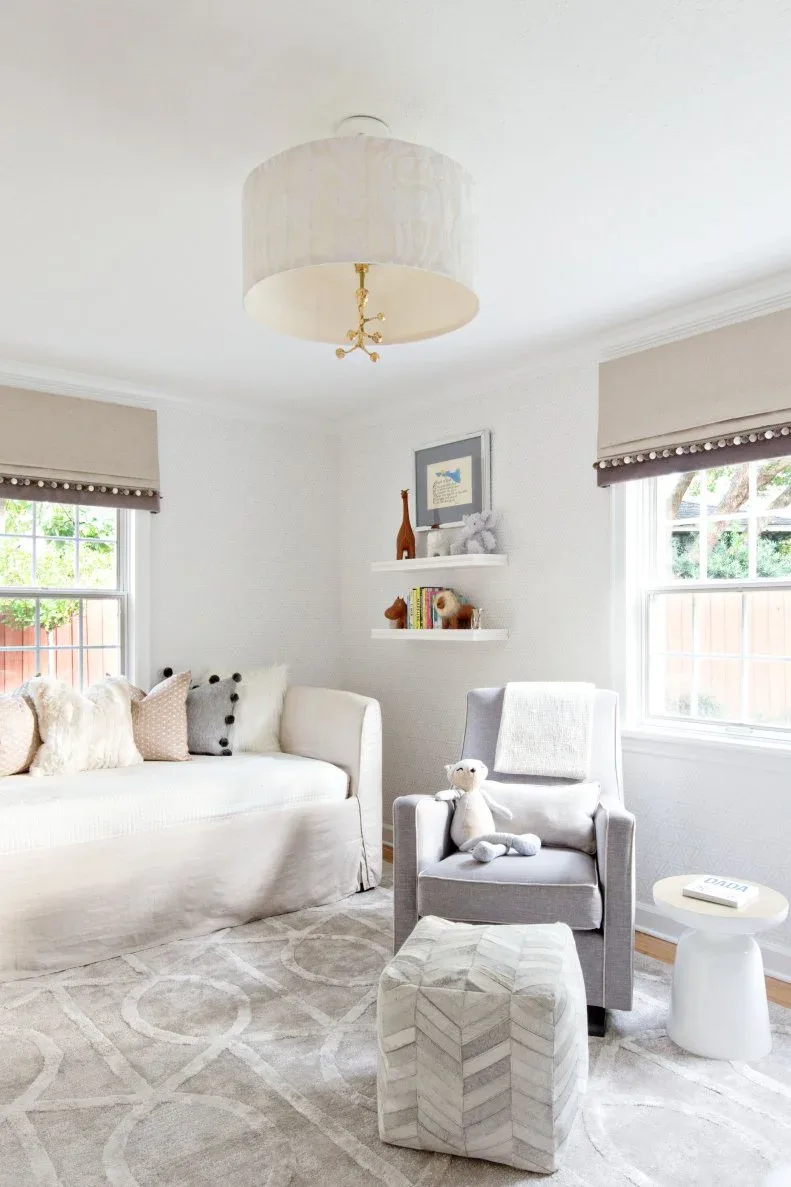
The daybed and armchair form an adult seating area with a soft, restrained palette. A geometric pouf adds a modest pattern, while the two windows keep the wall arrangement balanced. This part of a nursery can support reading, conversation and a place for a parent to sit.
Plan this area only after the crib and essential storage fit comfortably. A daybed, sofa or armchair is not a substitute for an infant’s approved sleep space. Keep the route between adult seating and the crib clear, and choose removable, washable covers where frequent spills are likely.
IDEA 08 / 17
Warm the Chair Corner With Wood Texture
 SaveSupport Non AI Creator
Image credit: Photo: Alexis Alana Photography. From: Stephanie DeBrincat
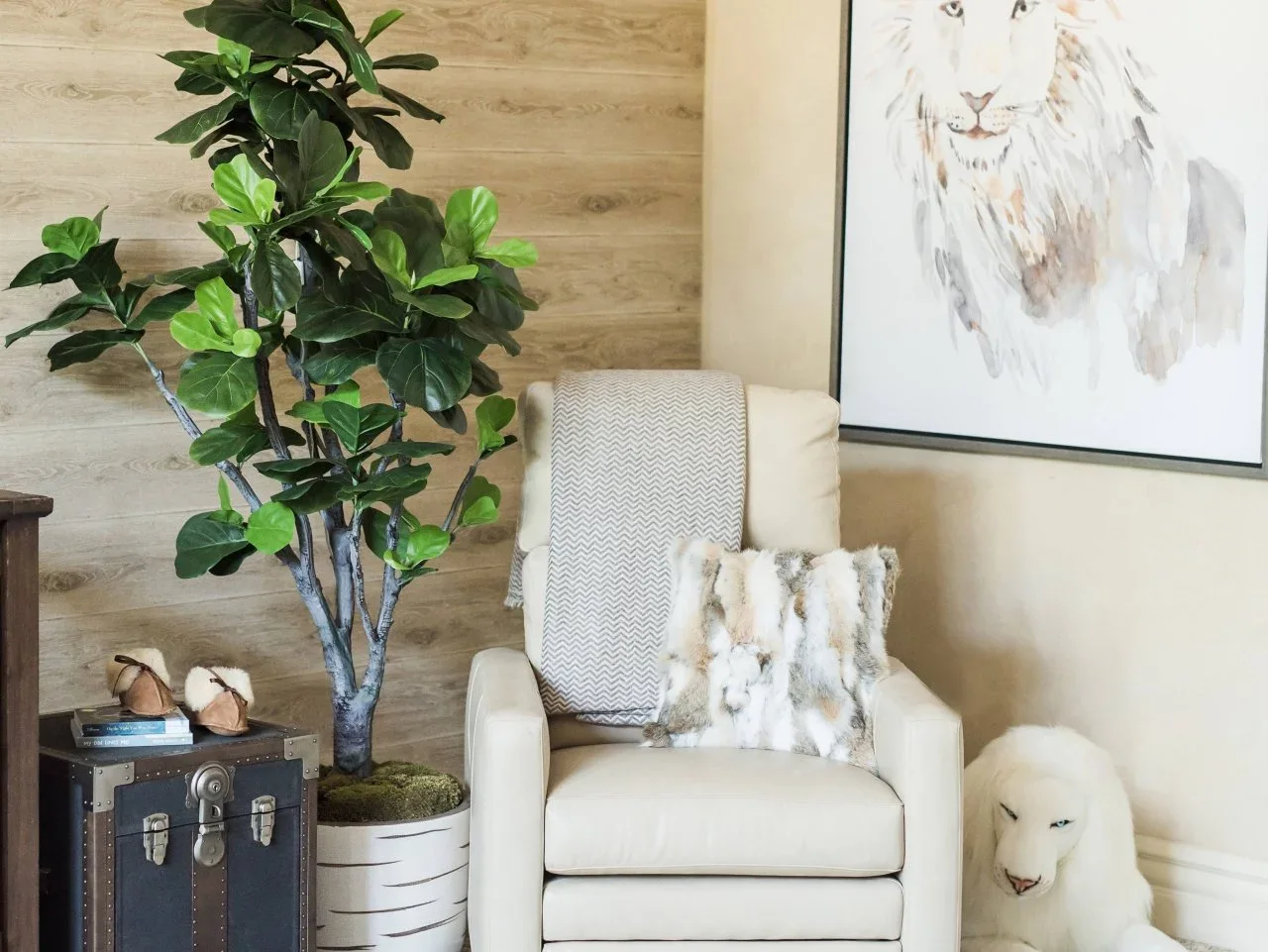
Pale horizontal boards add warmth behind this simple cream chair. The large lion picture creates one focal point rather than several small decorations, and greenery adds a softer outline beside the seat. A compact side cabinet makes the corner feel useful without filling it with additional furniture.
Look for a chair cover that can tolerate frequent cleaning and a seat height that makes standing comfortable. Secure heavy artwork and keep the plant stable and inaccessible to children. A Scandi bedroom palette can offer ideas for repeating the same quiet wood and cream tones elsewhere at home.
PART 03
Keep Books and Supplies Organized
IDEA 09 / 17
Use Low Cubes to Sort Books and Toys
 SaveSupport Non AI Creator
Source: www.houzz.com
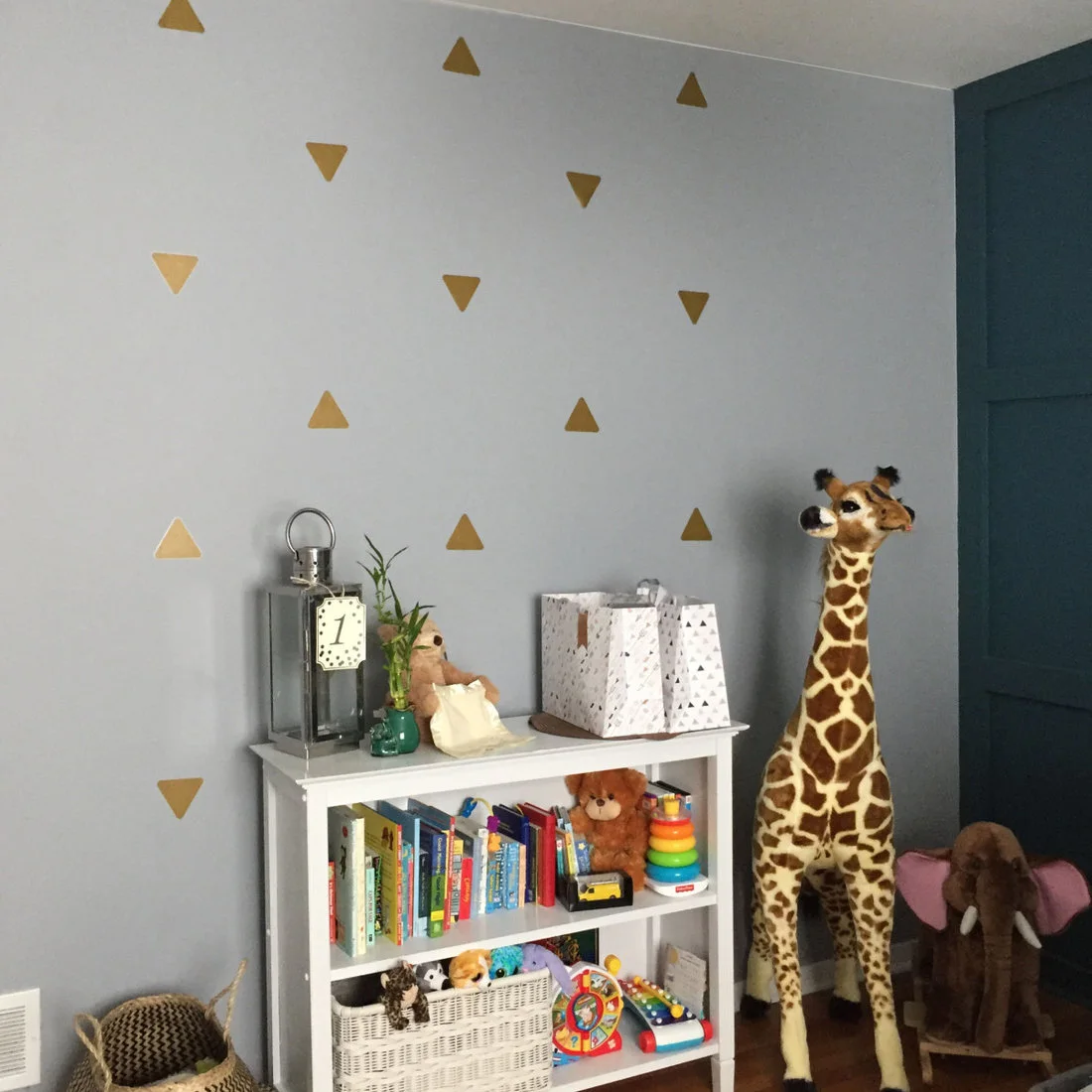
The low white unit separates books, soft toys and baskets into visible compartments. Small gold triangles add a light pattern to the gray wall while the pale furniture keeps the storage area simple. The arrangement shows how a nursery can have personality without adding several competing cabinet finishes.
Anchor the storage unit according to its instructions, even when it looks low and stable. Choose baskets that slide out easily and keep small parts inaccessible to younger children. Leave a few compartments available rather than filling every opening immediately; the mix of supplies will change as the child grows.
IDEA 10 / 17
Keep a Small Book Collection Visible
 SaveSupport Non AI Creator
Source: www.houzz.com
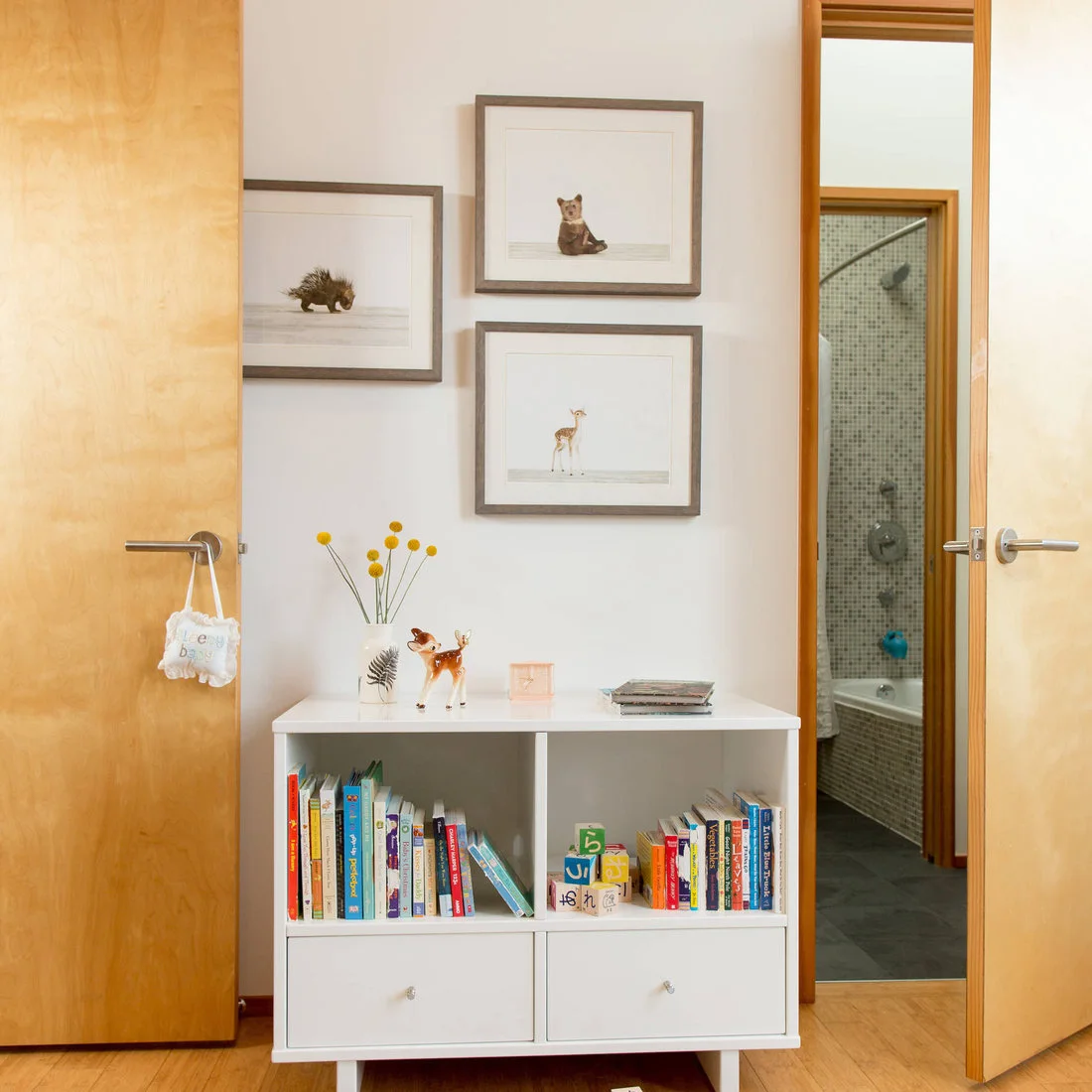
The compact white bookcase gives a small collection a clear place without covering the entire wall. Books and animal pictures add color at a limited scale, while the wood floor and door provide warmth. Drawers below the display can hide less attractive supplies behind a plain front.
Rotate a manageable group of books instead of buying storage for the largest possible collection at the start. Secure the unit and any framed pieces, and keep heavier items low. Choose drawer fittings appropriate for a child’s room and check that open drawers do not obstruct the doorway.
IDEA 11 / 17
Build Storage Around an Existing Window
 SaveSupport Non AI Creator
Source: www.houzz.com
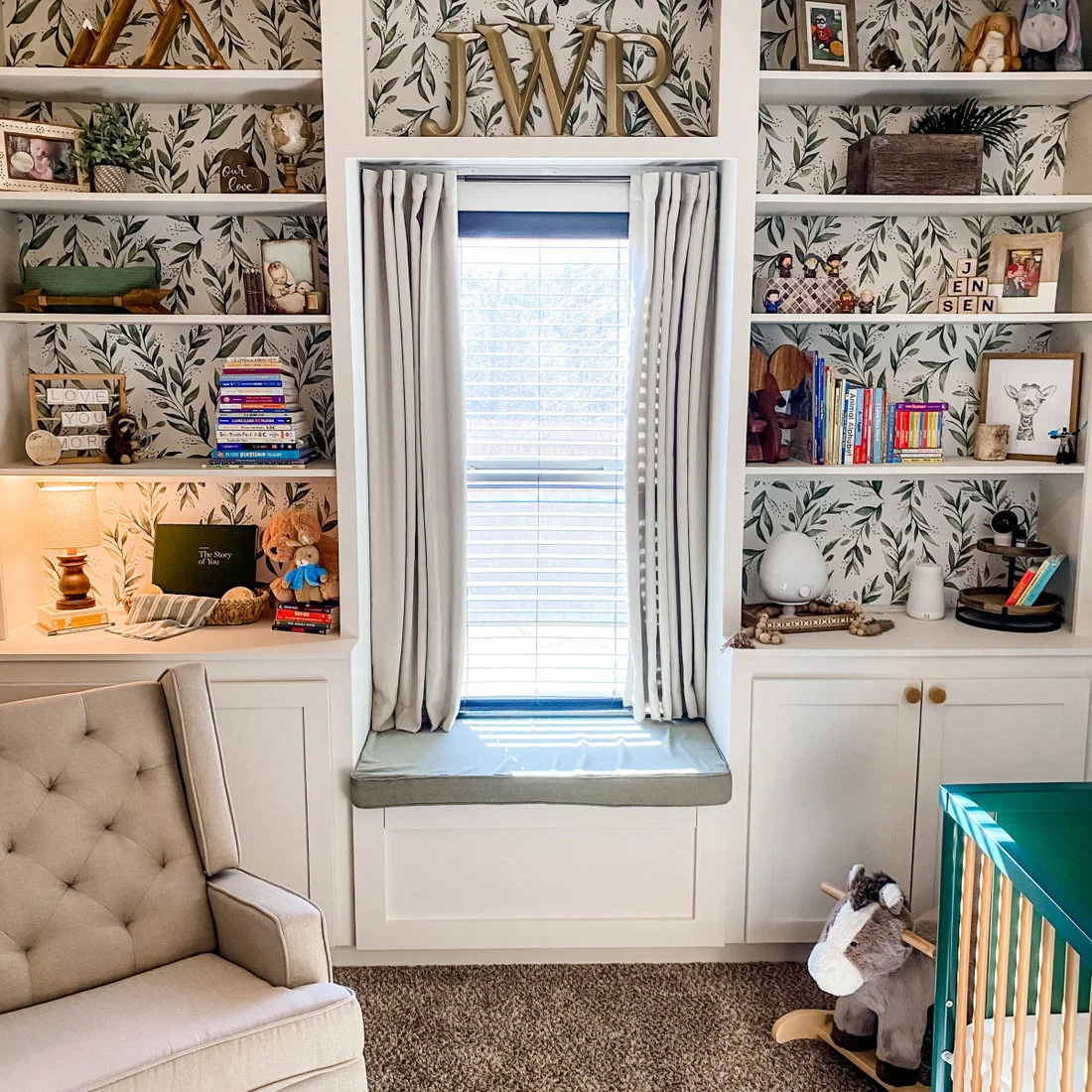
The shelves turn the wall around a narrow window into a storage area while leaving the central opening visible. Leaf-patterned backing adds depth behind the white shelves. Books and objects are grouped within the compartments rather than spread across several separate pieces of furniture.
Built-in nursery storage needs planning around window access, ventilation and secure fixings. Keep climbing opportunities and the position of the sleep space in mind before adding a window seat. Reserve the highest shelves for safely secured display, and use reachable storage for the supplies adults need every day.
PART 04
Plan Care, Storage and Changing Needs
IDEA 12 / 17
Organize a Changing Dresser Without Clutter
 SaveSupport Non AI Creator
Source: www.houzz.com
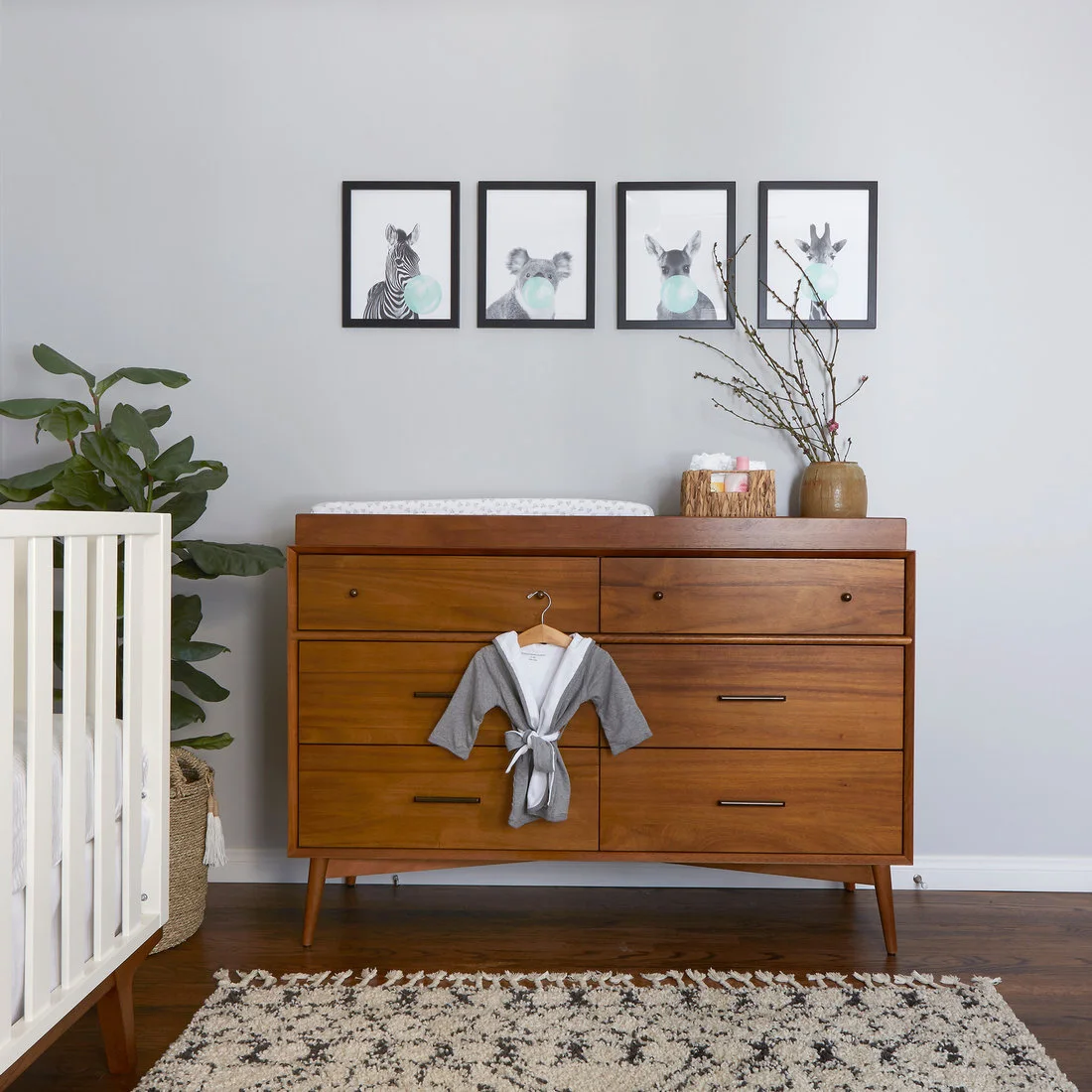
The wood dresser brings warmth to the gray wall and gives changing supplies a substantial storage base. Four animal pictures make a neat group above it, while a small woven container gathers loose items. The broad top shows why storage planning matters as much as the cabinet’s appearance.
Use a dresser and changing attachment designed to work together, and follow the product instructions. Keep essential supplies within the adult’s reach without crowding the pad. Move heavy vases and fragile decorations away from the changing area, anchor the dresser and never leave a child unattended on an elevated surface.
IDEA 13 / 17
Try a Muted Pink Lower Wall
 SaveSupport Non AI Creator
Source: www.houzz.com
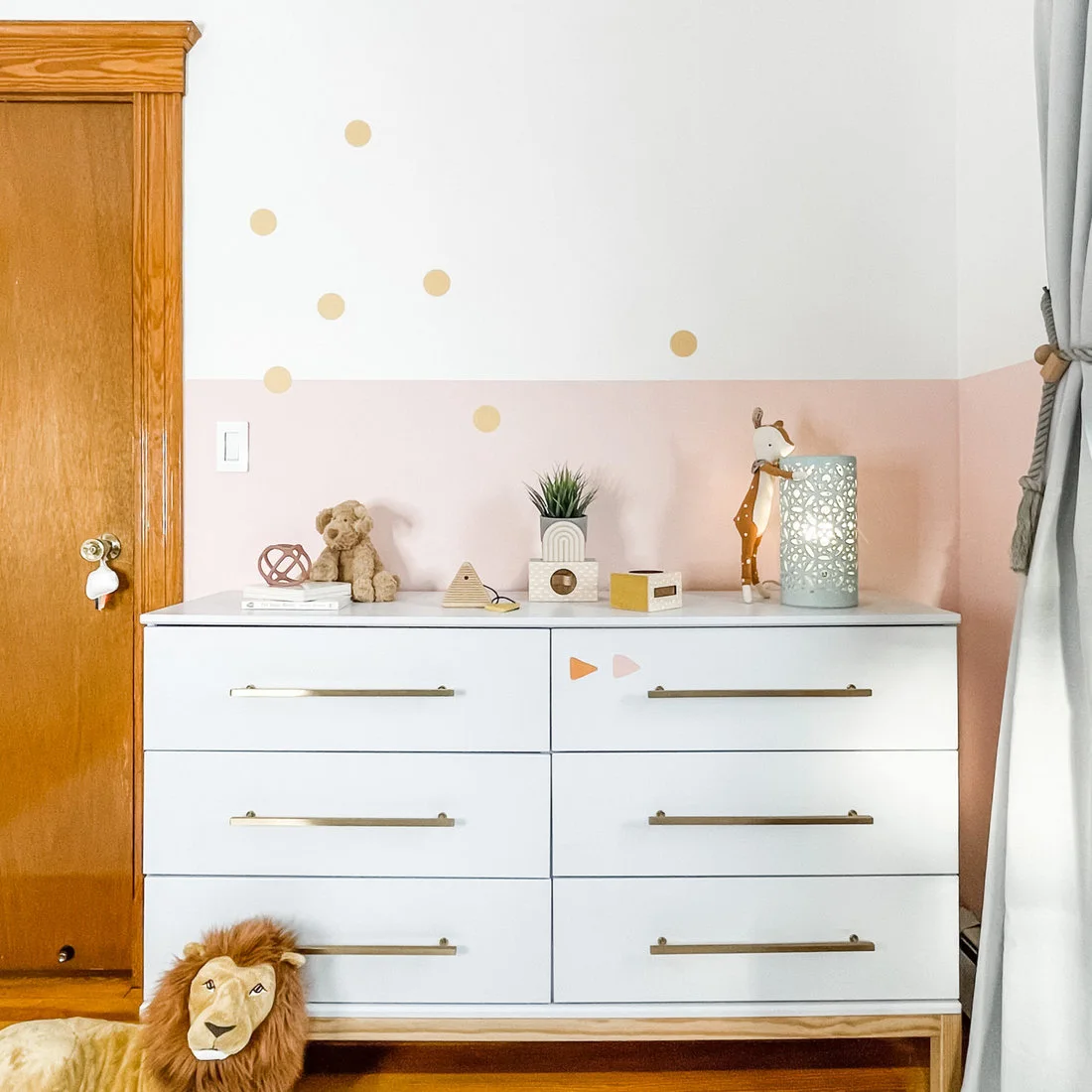
The pink lower wall gives this storage corner color without covering the whole room in a stronger shade. White drawer fronts keep the cabinet light, while pale wood legs and straight warm-metal handles provide small warm details. The wardrobe beside it follows the same quiet combination of pale finishes.
Choose the wall division after checking the height of furniture rather than placing it at an arbitrary level. Test pink paint in daylight and evening light, since the tone can shift noticeably. Use the drawers to separate clothing sizes and anchor both the chest and nearby wardrobe according to their instructions.
IDEA 14 / 17
Give Daily Changing Supplies a Defined Place
 SaveSupport Non AI Creator
Source: www.houzz.com
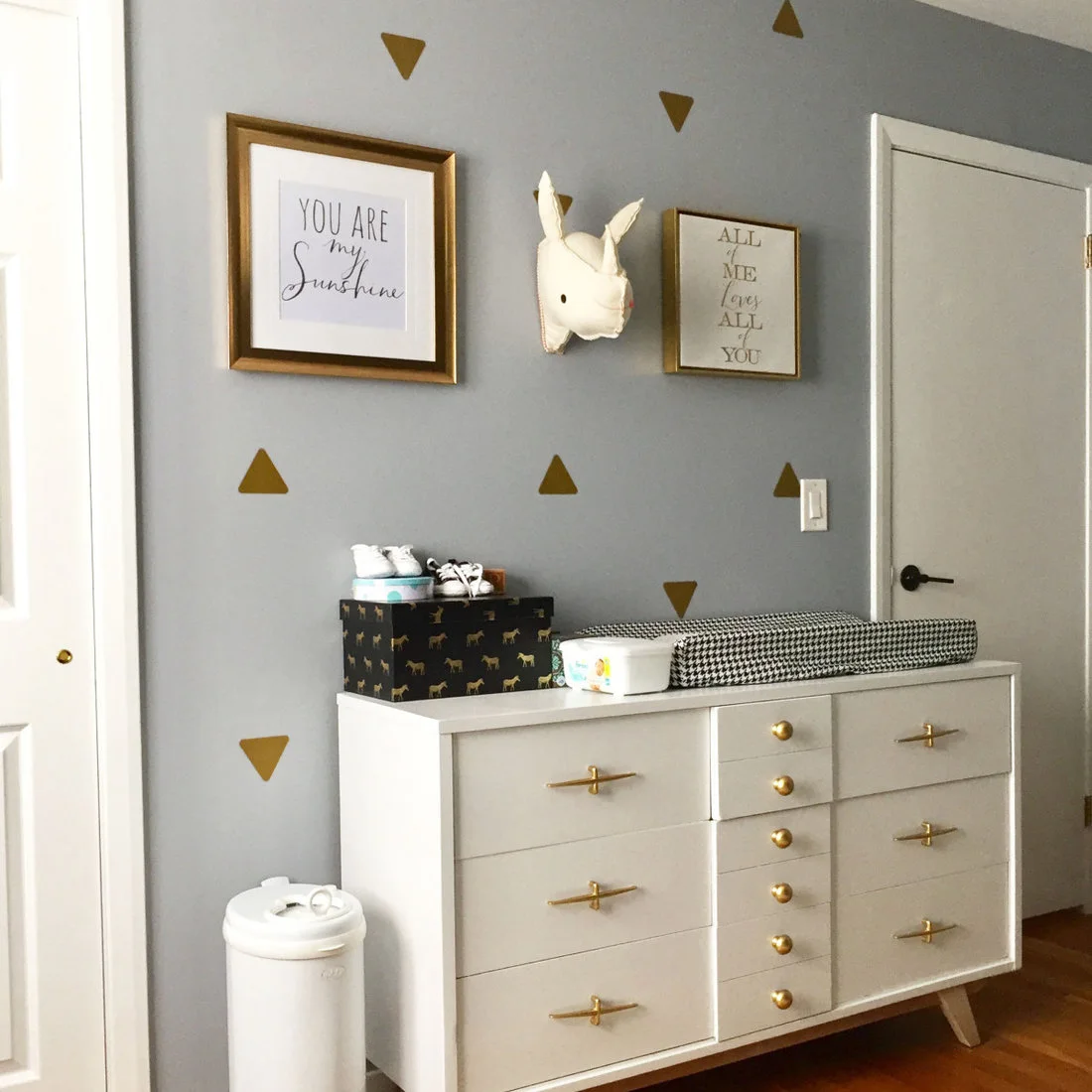
The white dresser separates the changing area from the more decorative parts of the nursery. A small organizer gathers the daily supplies on one side, while the gray and gold wall pattern connects the corner with nearby toy storage. The lidded bin has a straightforward place beside the unit.
Keep only the supplies needed for the next change on top and store refills in drawers. Check that the bin lid and drawer fronts can open without colliding. Choose a compatible changing pad and secure its attachment as instructed; decorative objects should not compete with the space needed to care for the child.
IDEA 15 / 17
Keep the Dresser Front Plain
 SaveSupport Non AI Creator
Source: www.houzz.com
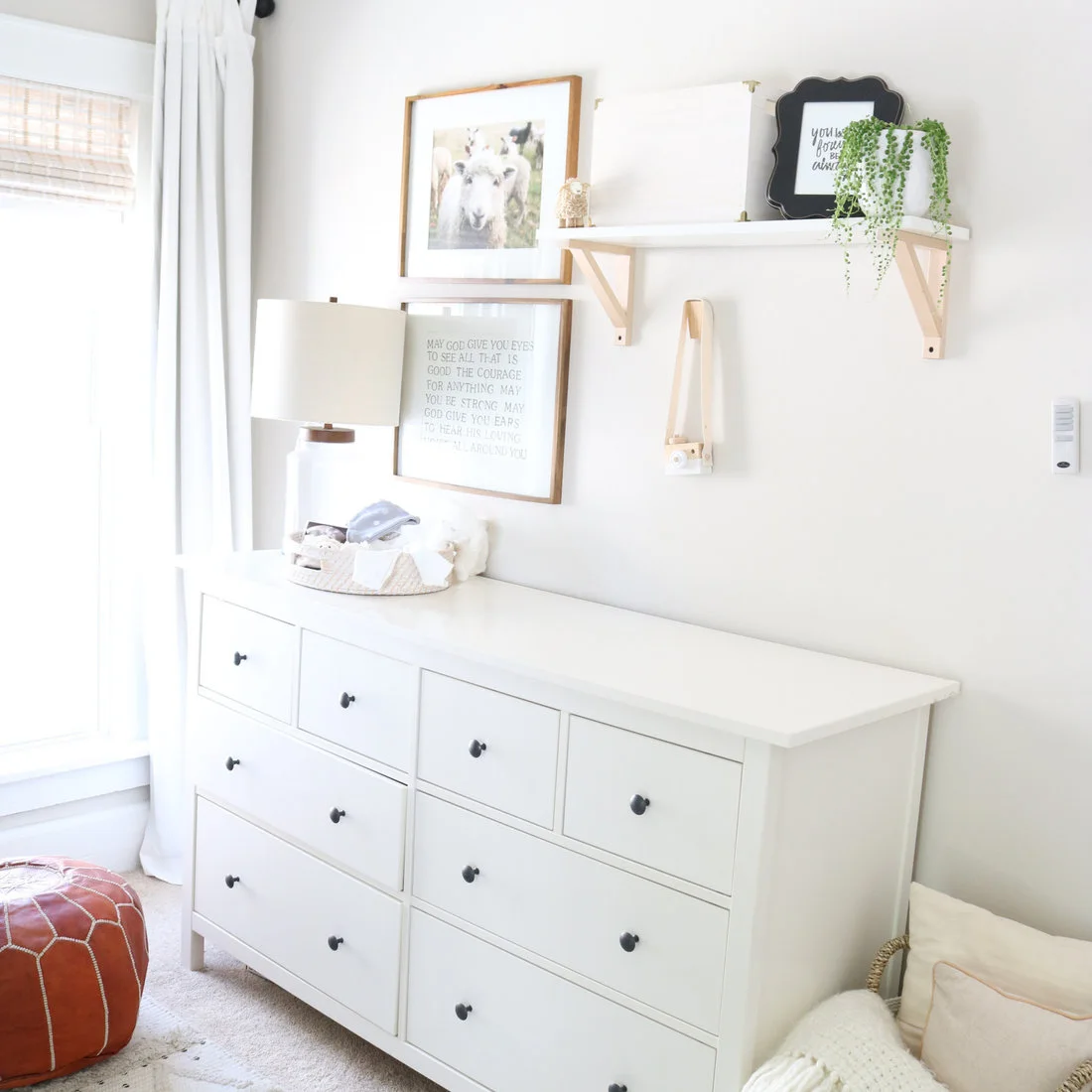
Black knobs give this broad white dresser a simple outline without a heavily detailed cabinet front. The wood shelf introduces warmth above it, and smaller accessories are concentrated at the ends. Pale curtains continue the light palette, leaving the dresser’s useful storage as the main feature.
Use drawer dividers to keep small clothes and linens easy to find rather than adding more containers on top. Fix the shelf and dresser securely and keep breakable frames away from reach. Check lamp cables and nearby window treatments as the child grows, since an adult-friendly arrangement may need adjustment later.
IDEA 16 / 17
Collect Soft Toys in One Floor Basket
 SaveSupport Non AI Creator
Image credit: Photo: Alexis Alana Photography. From: Stephanie DeBrincat
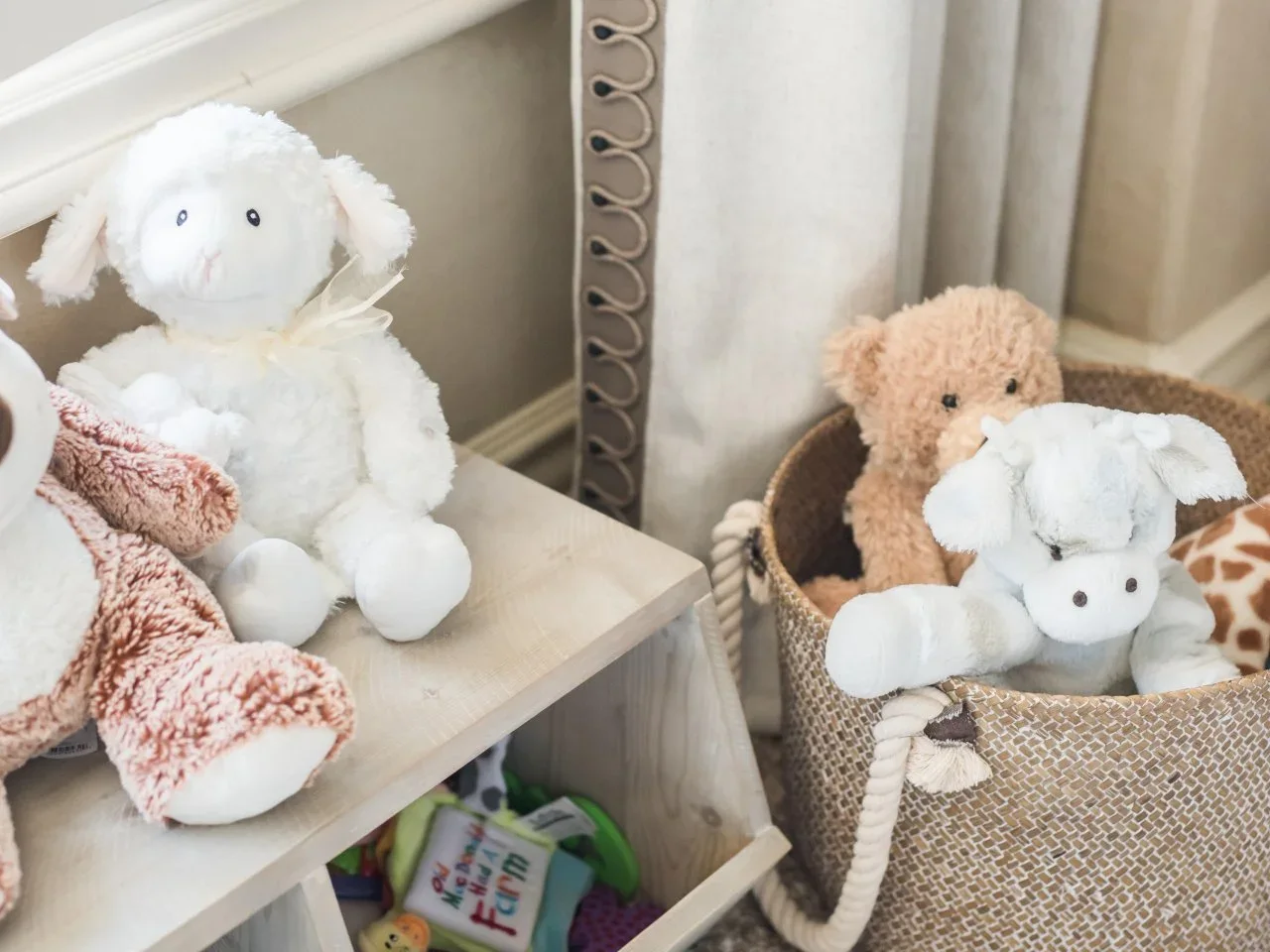
A single woven basket gathers soft toys without adding another cabinet. Its rounded shape contrasts with the straight cubby shelves, and the natural color fits a pale nursery palette. Keeping similar items together also makes the room easier to reset after an adult has used the play area.
Choose a basket without sharp edges, loose fibers or long handles that can snag. Keep toys outside the crib and select them for the child’s age. Avoid overfilling the basket; a lighter collection is easier to lift and gives the room useful storage without turning the floor into an obstacle course.
IDEA 17 / 17
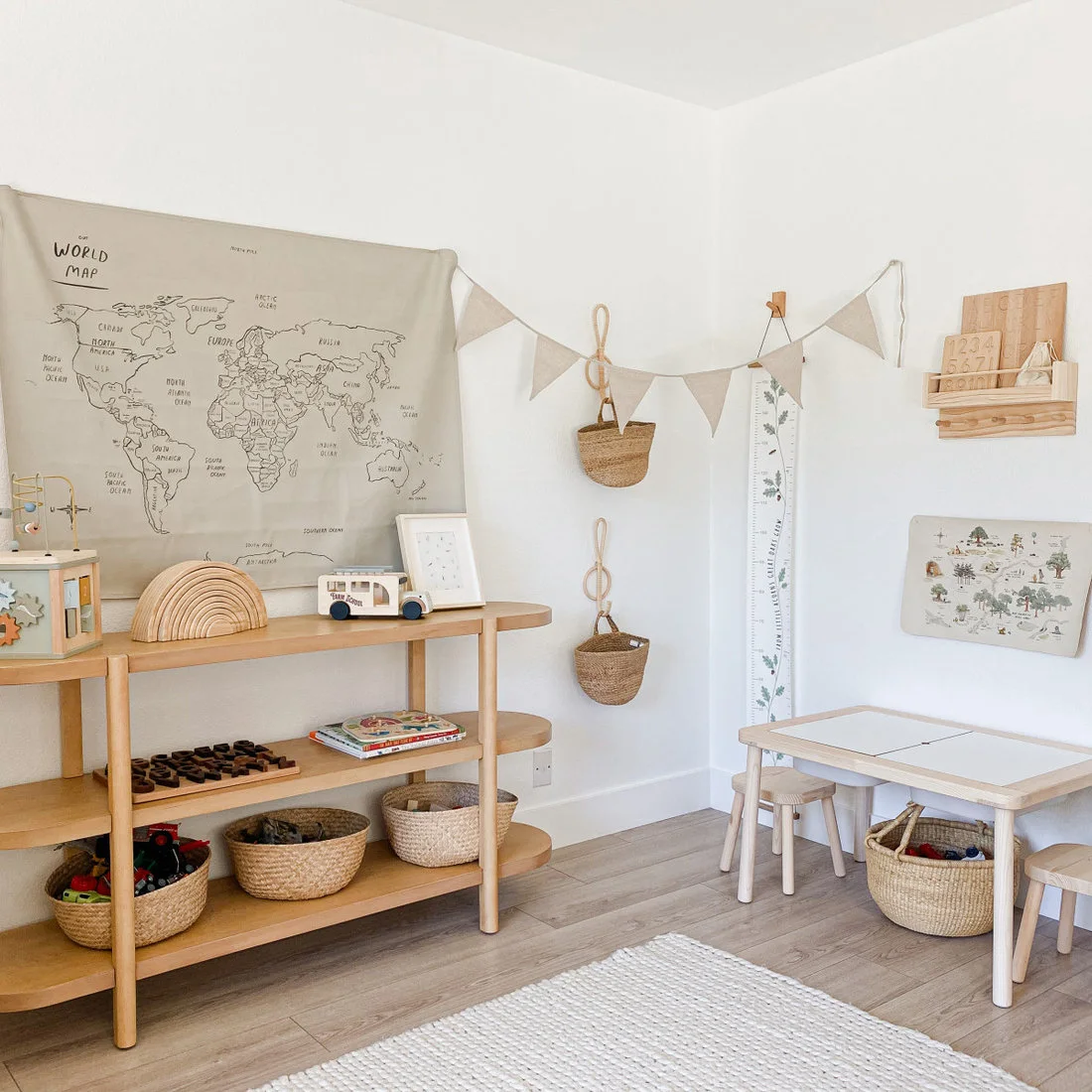
Choose Storage That Can Grow With the Room
 SaveSupport Non AI Creator
Source: www.houzz.com
The low wood shelves combine open display with baskets for smaller items. Rounded ends soften the unit’s outline, and the small table shows how the same pale palette can continue into a later play area. This is a storage and future-use idea rather than a sleeping arrangement.
Furnish for the child’s current stage first, adding a table and stools only when appropriate. Secure the shelving and keep small toys out of reach until suitable. Simple pale storage can remain useful when nursery supplies give way to books and activities, reducing the need to replace every piece together.
BRING IT ALL TOGETHER
Plan the Routine Before the Decorations
Place the crib, changing station and adult chair first, then walk the routes between them. A small number of well-chosen storage pieces can make daily care easier without filling the room with furniture. Keep decoration concentrated on secure walls and adult-use areas.
Choose a restrained palette that can continue as the room changes. Washable textiles, accessible supplies and properly secured furniture matter more than matching every accessory. Review the arrangement as the child begins moving and reaching for new things.