A Scandi entryway should make coming home easier. A clear place for shoes, a reachable hook and somewhere to sit can do more for the daily routine than a crowded decorative console. Warm wood, pale walls and simple shapes help those practical pieces feel connected.
These photographed entrances range from small storage niches to bright stair halls. Some include muted color or a single patterned surface, showing that a useful entry does not have to be entirely white. Choose furniture for the people and belongings arriving through your own door.
PART 01
Organize the Daily Arrival
IDEA 01 / 20
Give Shoes and Bags One Clear Home
 SaveSupport Non AI Creator
Source: www.houzz.com
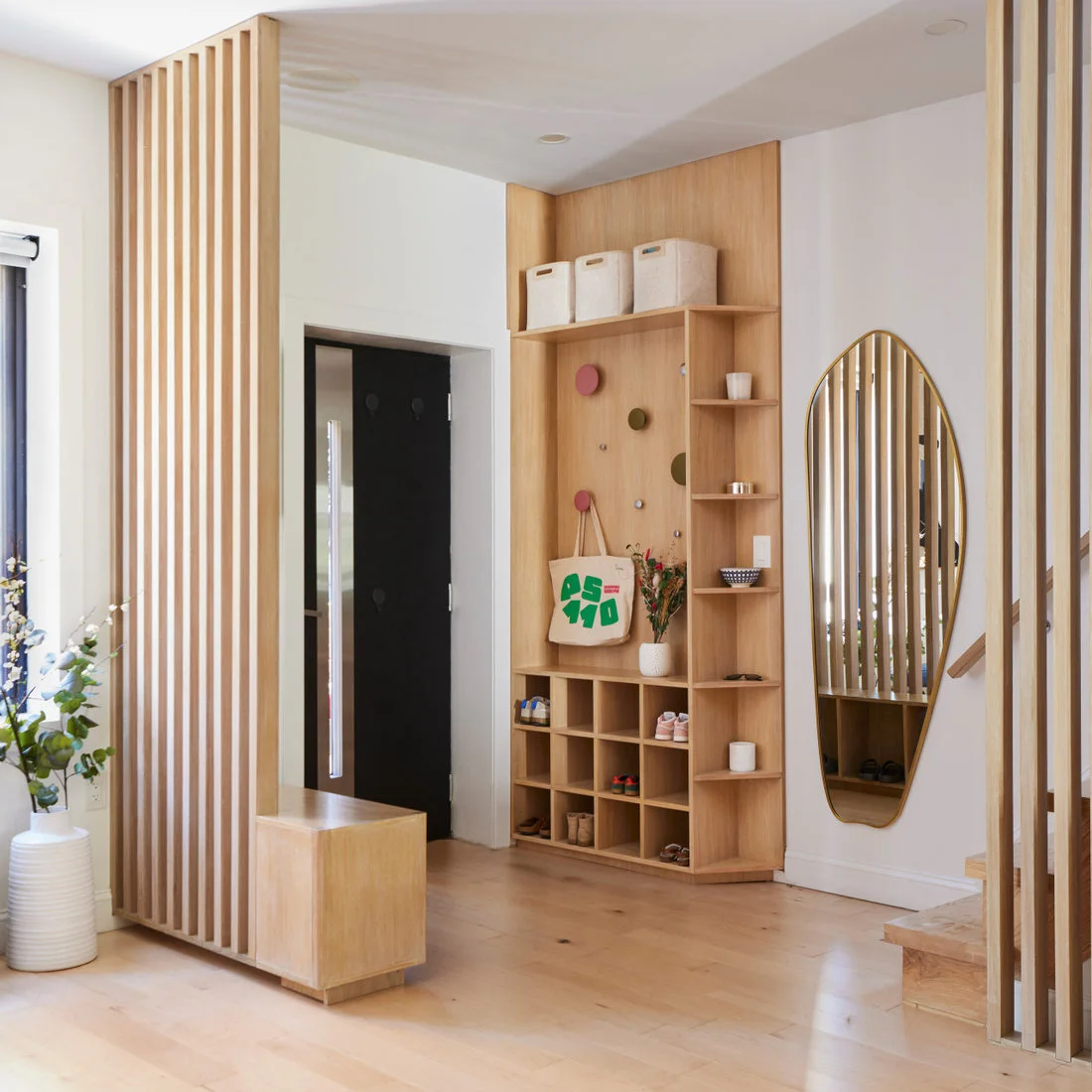
The wood unit gathers shoes, bags and small belongings into one wall section beside the door. Round hooks add a little color while the pale cabinet keeps the overall palette quiet. A slatted divider separates the arrival area from the room beyond without making it feel completely enclosed.
Size the cubbies for the footwear you actually wear, including taller pairs that may need a separate compartment. Keep only daily shoes near the door and store extras elsewhere. If adding a divider, check the light and walking route on both sides rather than choosing its appearance in isolation.
IDEA 02 / 20
Combine a Bench With Closed Coat Storage
 SaveSupport Non AI Creator
Source: www.houzz.com
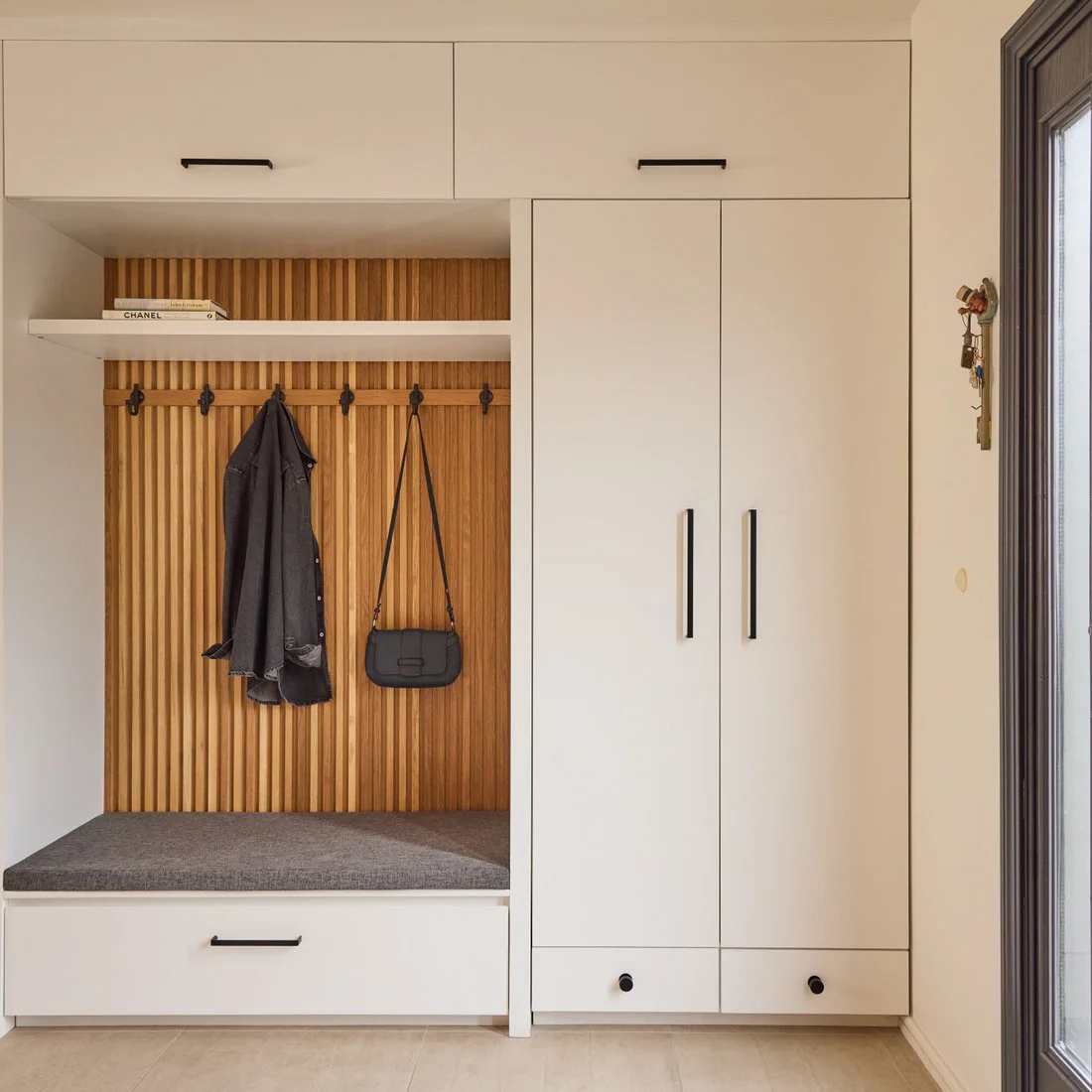
The wood slat panel gives the open coat area warmth while the white cupboards hide the larger collection. A cushioned bench provides a clear sitting position, and the lower drawer keeps small belongings out of view. Black handles and hooks repeat one dark finish across the different sections.
Measure the longest coats before setting the hook height so they do not cover the entire seat. Choose a bench cushion with a removable cover if it will see daily use. Mudroom cabinets offer more enclosed arrangements when a small row of hooks cannot hold the household’s outdoor clothing.
IDEA 03 / 20
Keep the Bench and Tall Cupboard in One Run
 SaveSupport Non AI Creator
Source: www.houzz.com
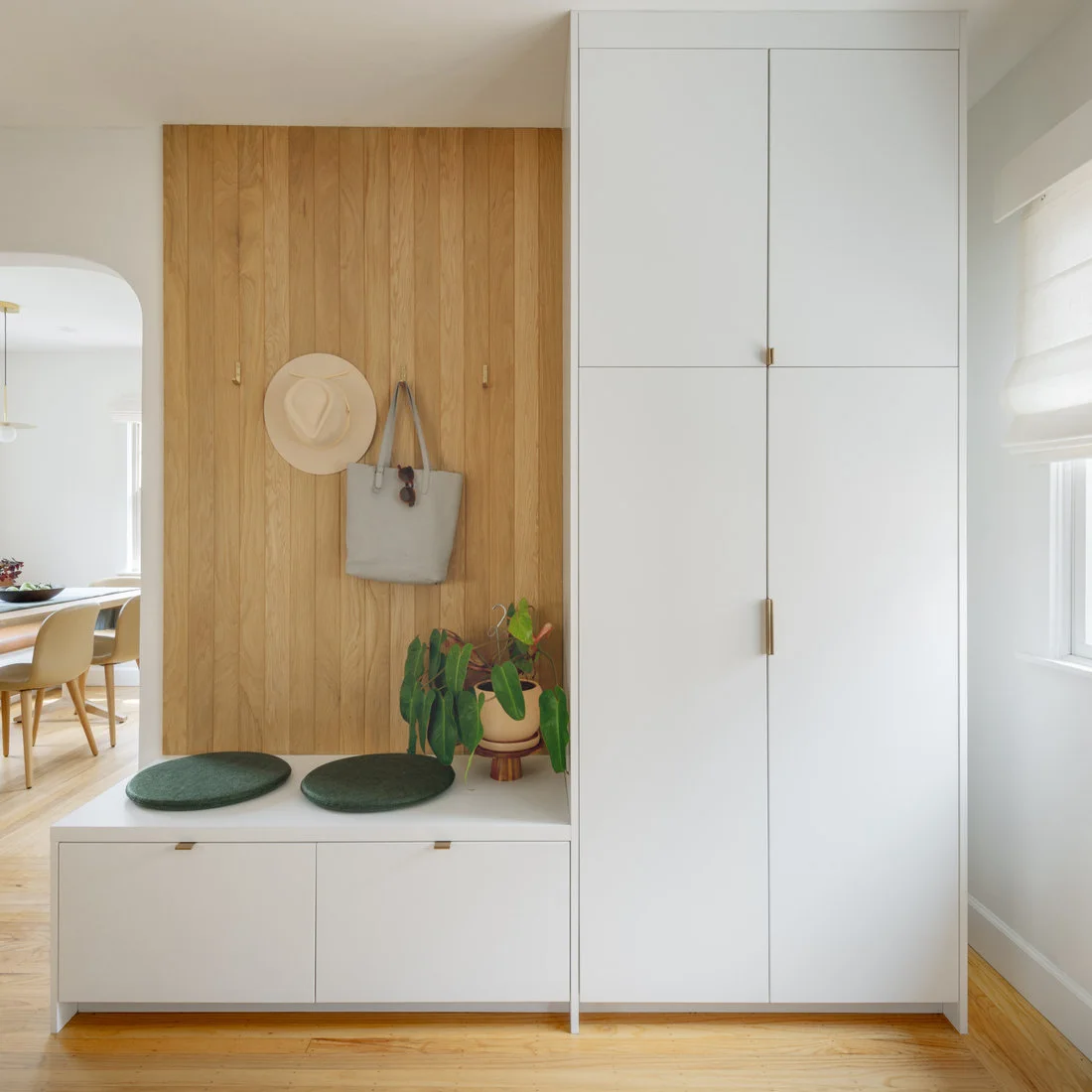
The bench and tall cupboard share plain white fronts, allowing the wood hook panel to provide most of the texture. Round green pads introduce a soft color without a full upholstered seat. The window keeps the storage corner light, and the cupboard conceals belongings that do not need daily access.
Plan tall storage around the actual coats, bags and equipment it must hold. Leave enough room for cupboard doors and seated knees, especially if the bench faces a narrow route. Keep the plant away from the sitting position so the useful part of the bench does not disappear beneath decoration.
IDEA 04 / 20
Use Round Hooks Against a Plain Back Panel
 SaveSupport Non AI Creator
Source: www.houzz.com
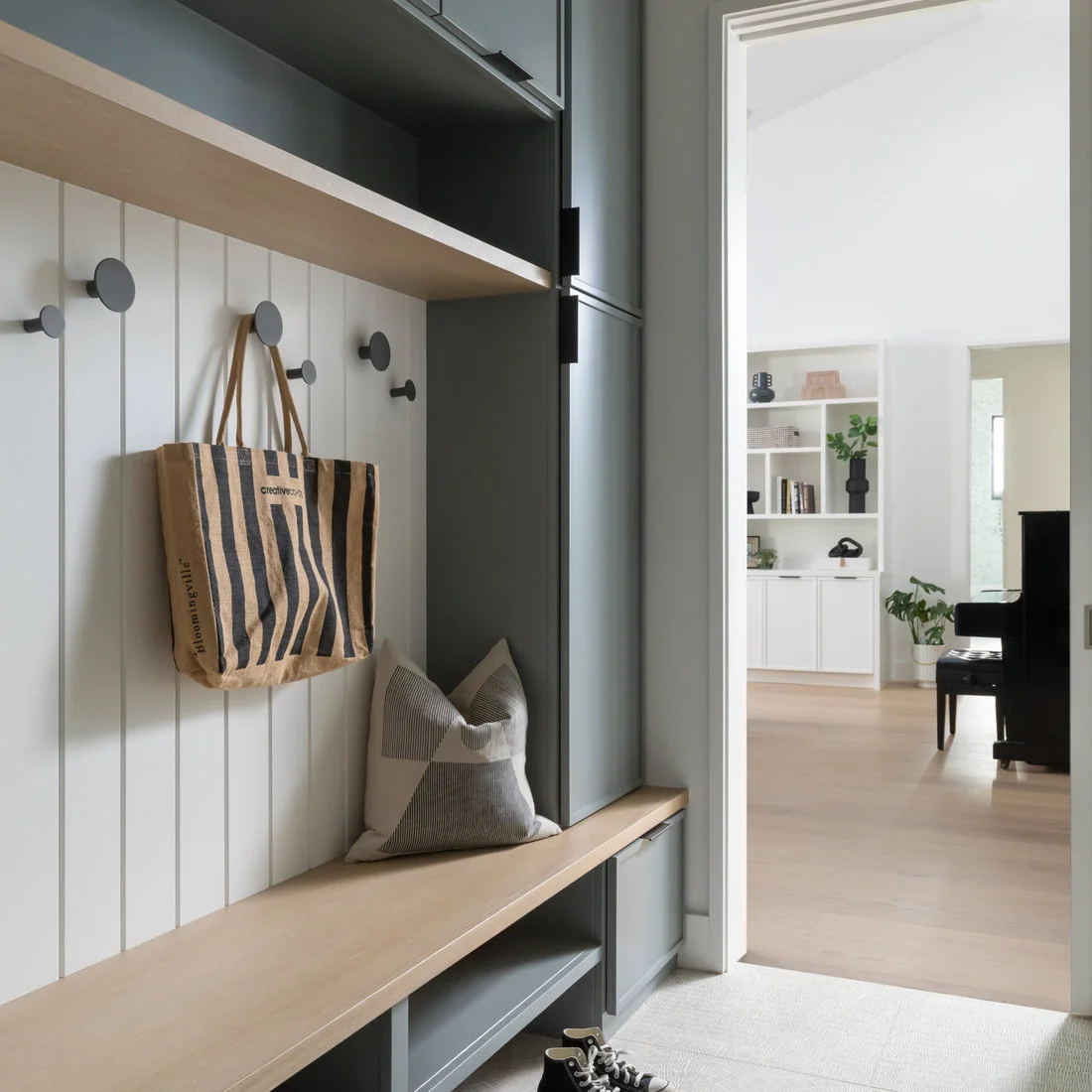
Round hooks make the coat wall feel softer than a row of projecting metal fittings. White vertical boards brighten the recess between the darker cupboards, while the wood bench connects with the pale floor beyond. The entry area has its own storage without a completely different set of finishes.
Space hooks for the width of loaded bags and coats, not just the fittings themselves. Check their load rating and fix them appropriately to the wall. Use the lower open shelf for shoes that need quick access, keeping the remaining floor clear so the entry stays easy to pass through.
IDEA 05 / 20
Place Daily Storage Beside the Arrival Route
 SaveSupport Non AI Creator
Source: www.houzz.com
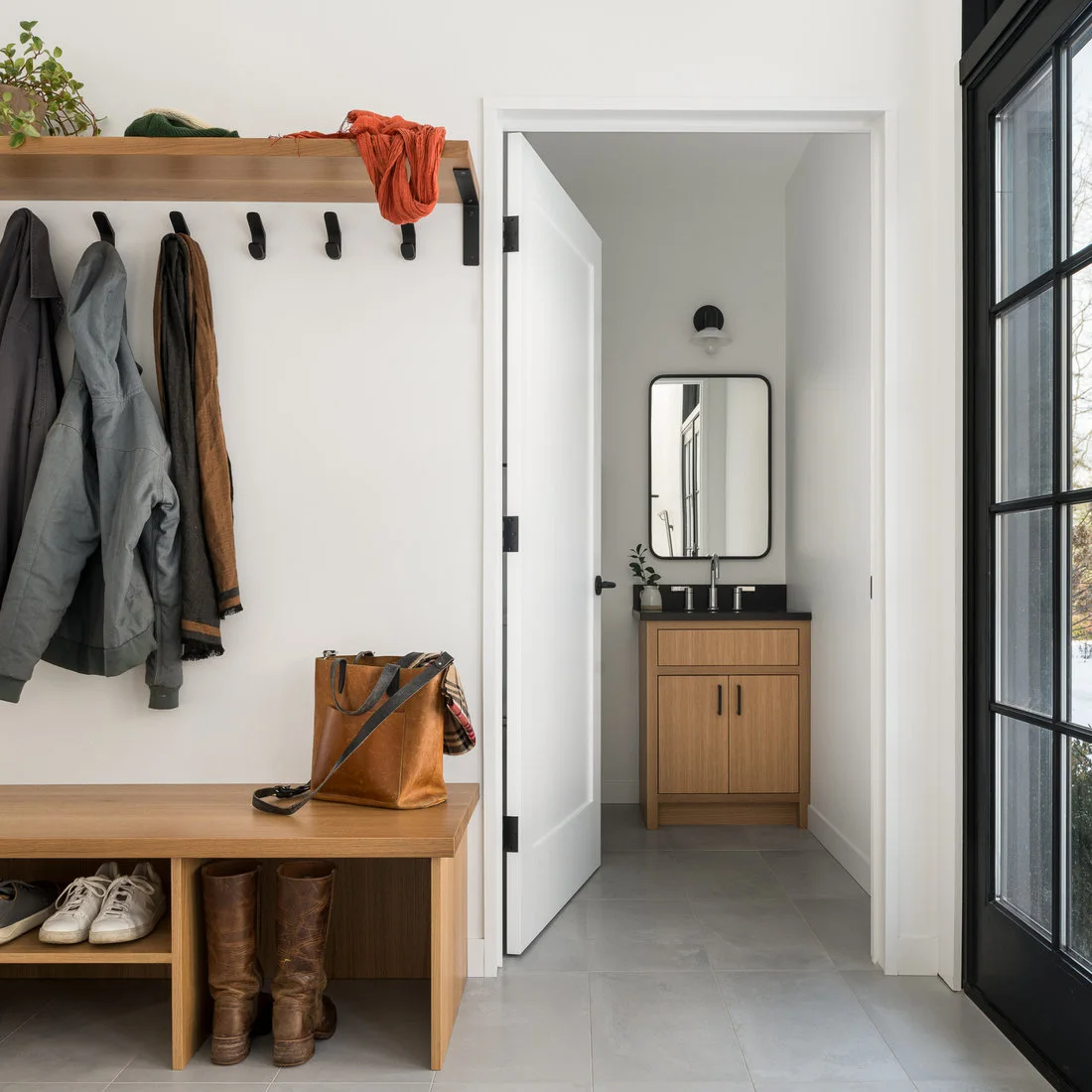
The bench and hooks sit directly beside the arrival route, giving coats and shoes a place before they enter the rest of the home. Plain white walls and a wood shelf keep the arrangement simple. The view into the neighboring bathroom shows how the same wood and dark fittings can continue between rooms.
Check both door swings before setting the bench depth or hook positions. Keep shoes within their compartments instead of extending them into the doorway. Choose an entry floor for the moisture and grit it will receive, and leave enough room for someone to sit while another person comes through the door.
PART 02
Make the Bench Comfortable and Useful
IDEA 06 / 20
Light the Bench Recess Gently
 SaveSupport Non AI Creator
Source: www.houzz.com
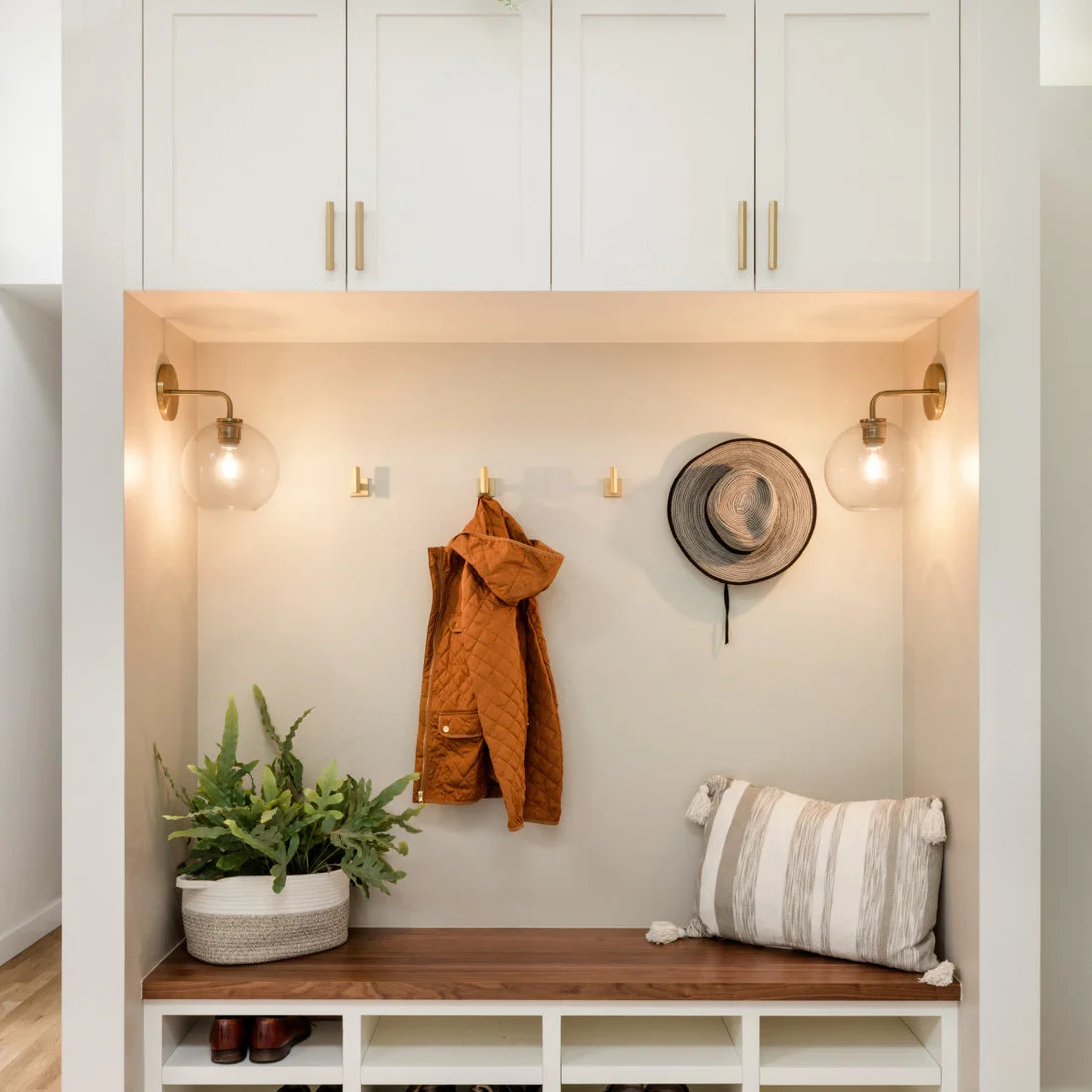
The bench recess gathers several useful functions without adding a separate coat stand. White cubbies and cupboards blend into the wall, while the wood seat adds warmth. Two glass wall lights give the niche a balanced outline and keep the bench from feeling like an unlit space below storage.
Leave enough clear seat for shoes to be changed comfortably rather than filling the bench with plants and cushions. Have the lights positioned so coats cannot brush against them. Keep frequently used footwear low and reserve high cupboards for lighter items that do not need retrieving every day.
IDEA 07 / 20
Try Muted Green Around Natural Wood
 SaveSupport Non AI Creator
Source: www.houzz.com
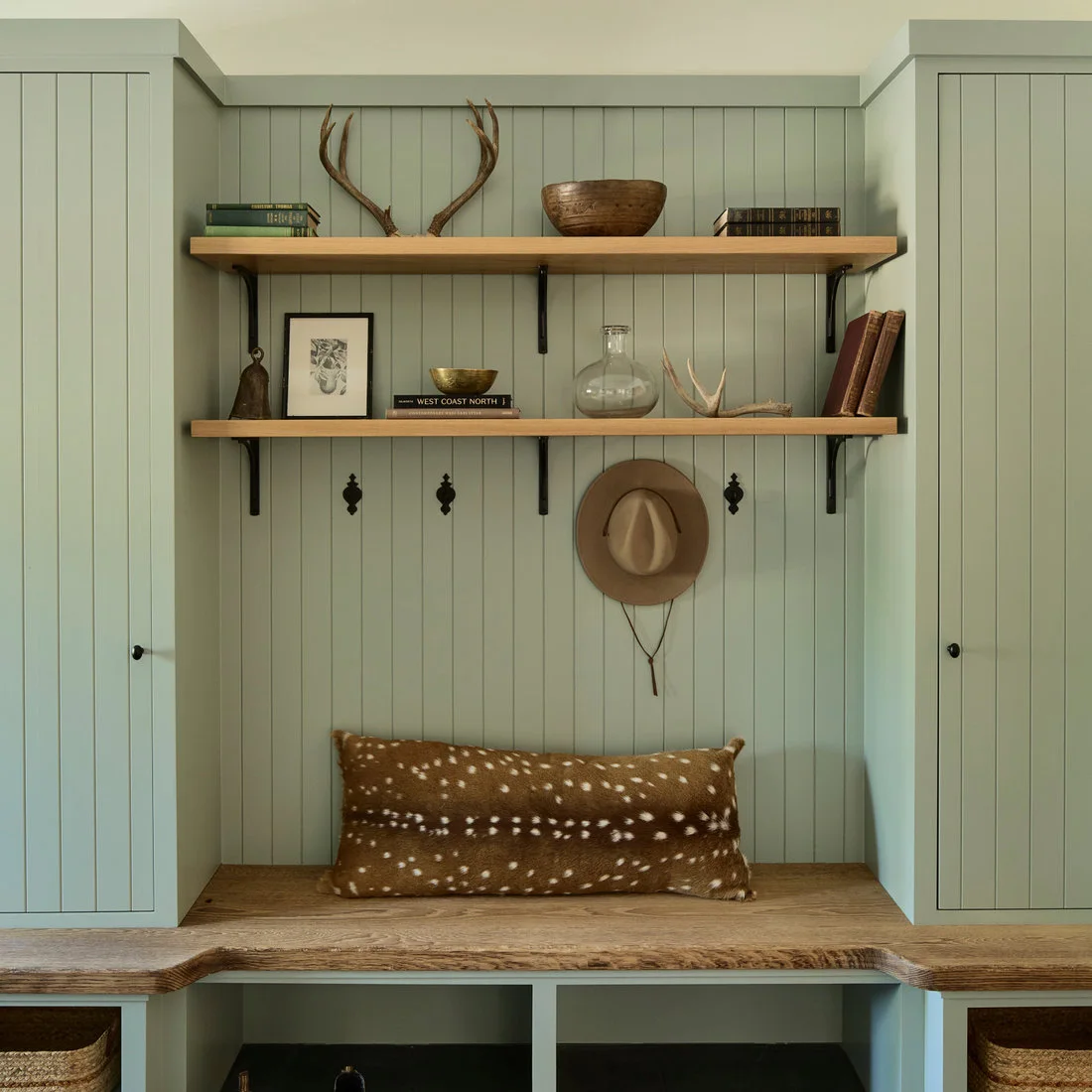
Muted green wraps the cupboard fronts and back panel into one calm section. Wood shelves and the bench break up the painted surfaces, while dark brackets and hooks add a consistent outline. The open lower bays let baskets sit within the furniture rather than across the floor.
Test green paint beside the actual wood finish and entry lighting before choosing the whole cabinet color. Keep shelf decoration sparse enough to dust easily and secure heavy objects. Measure the bench against the length of hanging coats, allowing a useful sitting position even when the hooks are full.
IDEA 08 / 20
Use Dark Storage for a Defined Arrival Zone
 SaveSupport Non AI Creator
Source: www.houzz.com
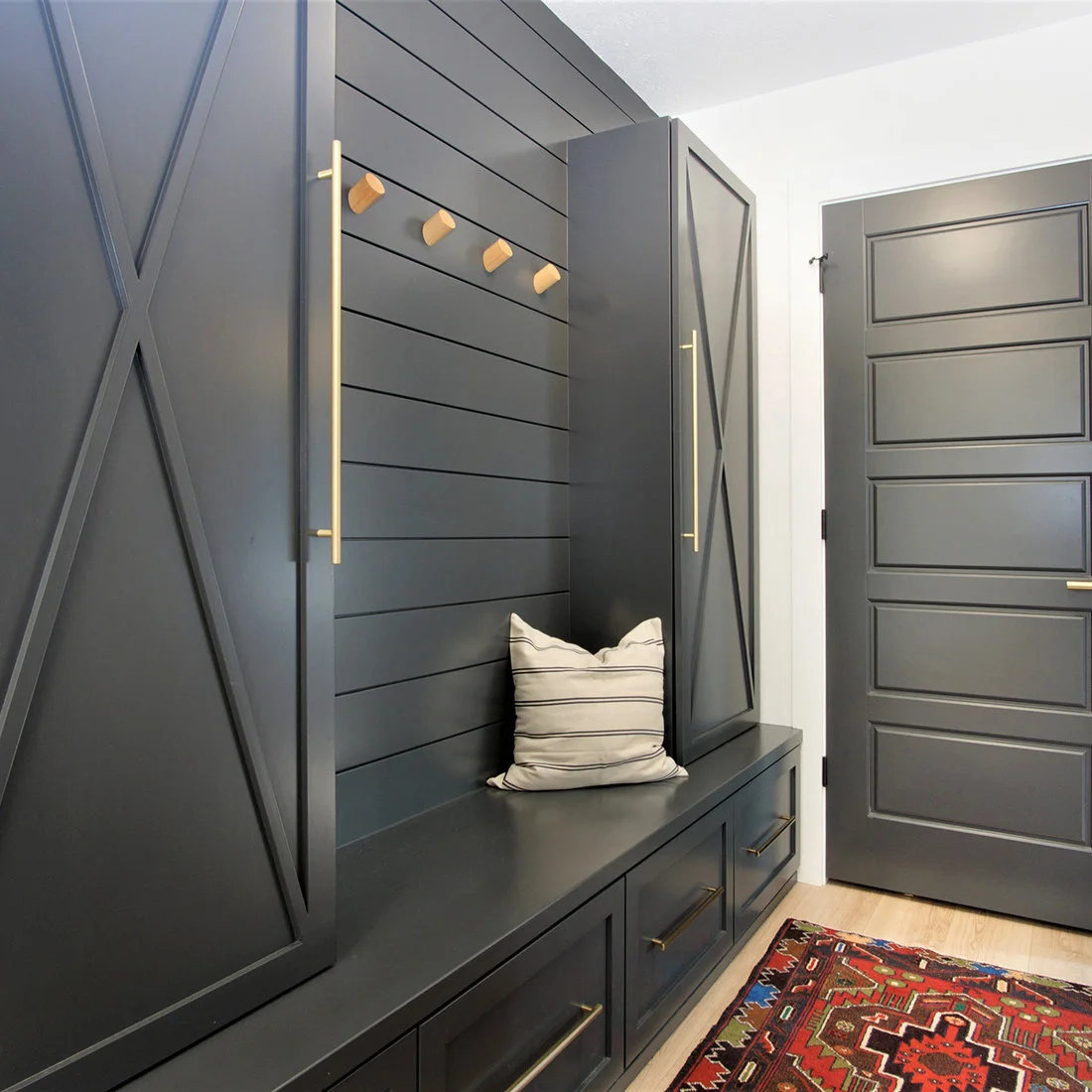
The dark cabinetry gives this compact arrival zone a defined identity while the wood floor adds warmth below. Pale wood pegs and warm-metal handles stand out against the painted fronts. Drawers beneath the seat provide hidden storage, keeping the visible arrangement much simpler than open bags and shoes.
Dark surfaces may show lint and scuffs, so check finish samples for both appearance and cleaning. Measure drawer opening space against the opposite wall before choosing the unit. A patterned runner can soften the contrast, provided it lies flat and allows the nearby door to open freely.
IDEA 09 / 20
Balance a Dark Wall With a Woven Bench
 SaveSupport Non AI Creator
Source: www.houzz.com
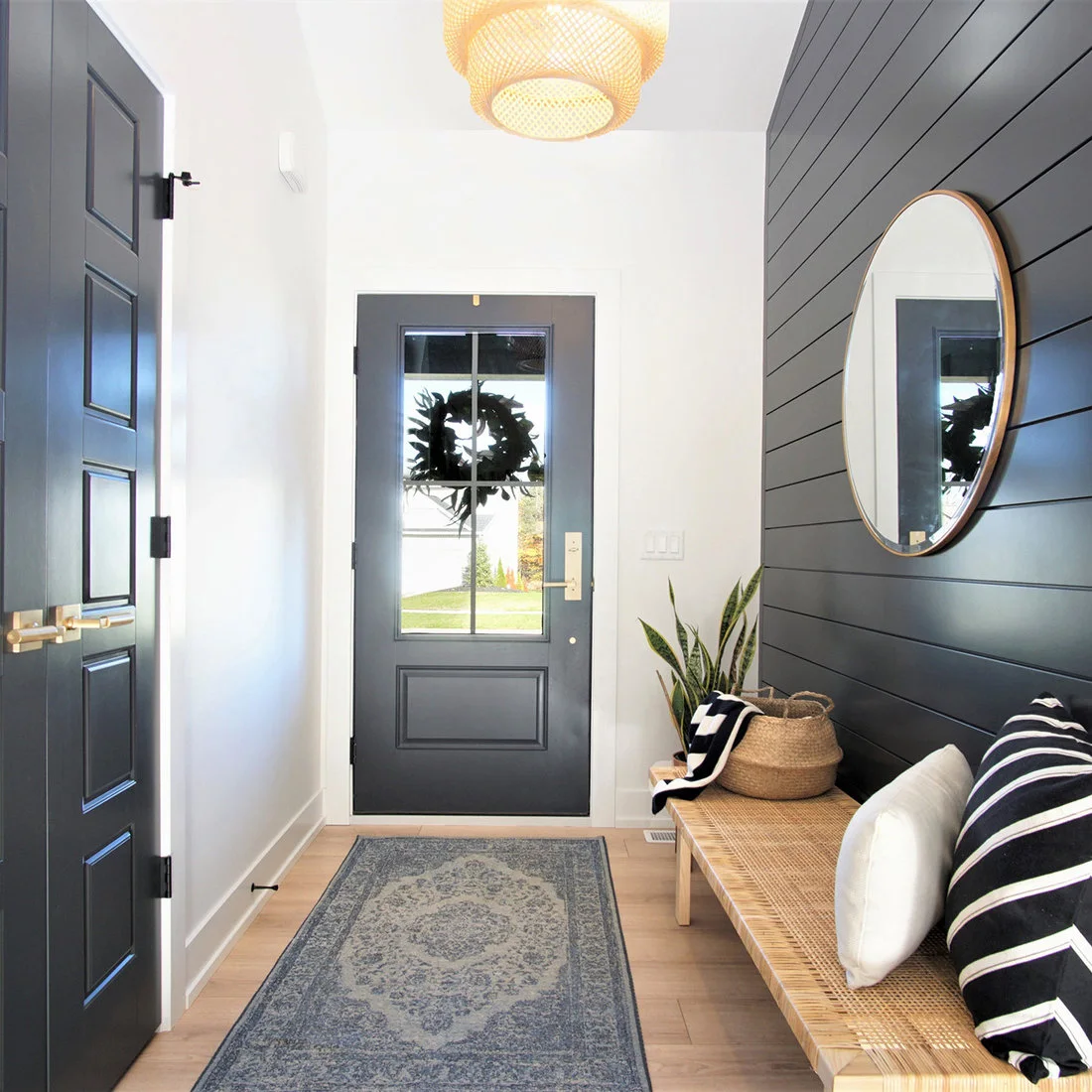
The woven bench brings light texture to the dark paneled wall, while the round mirror keeps the upper arrangement simple. White on the opposite wall prevents the narrow entry from becoming uniformly dark. The runner connects the door with the bench rather than introducing several separate floor accessories.
Try a dark finish on one wall before painting every surface in a small entrance. Select a bench with a seat that suits regular use and keep cushions limited so there is room to sit. Monochrome entryway ideas show other ways to balance dark outlines with lighter walls and useful furniture.
IDEA 10 / 20
Soften a Plain Bench With Warm Accent Colors
 SaveSupport Non AI Creator
Source: www.houzz.com
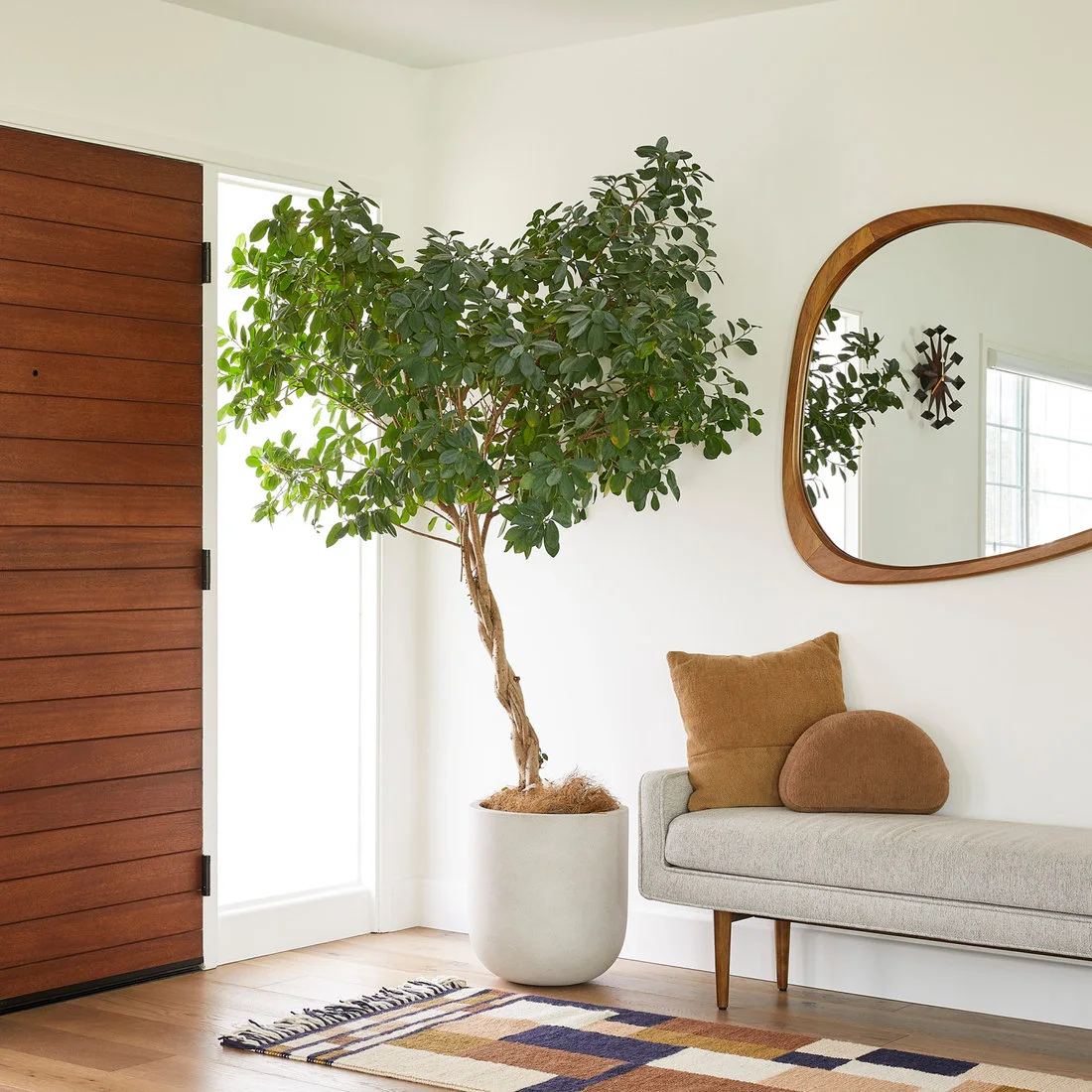
The pale bench and white wall keep this entry light, while the wood door and mirror frame provide warmth. Brown cushions pick up the deeper wood color without adding another dominant finish. A small geometric rug defines the arrival area and introduces pattern close to the floor.
Check the upholstery care instructions before choosing a light seat for a busy entrance. Keep at least part of the bench clear for sitting, and make sure the plant does not crowd the door swing. Choose a rug that fits the actual threshold and can cope with the dirt brought inside.
PART 03
Add Texture and a Little Color
IDEA 11 / 20
Fit a Small Seat Into a Wood-Lined Niche
 SaveSupport Non AI Creator
Source: www.houzz.com
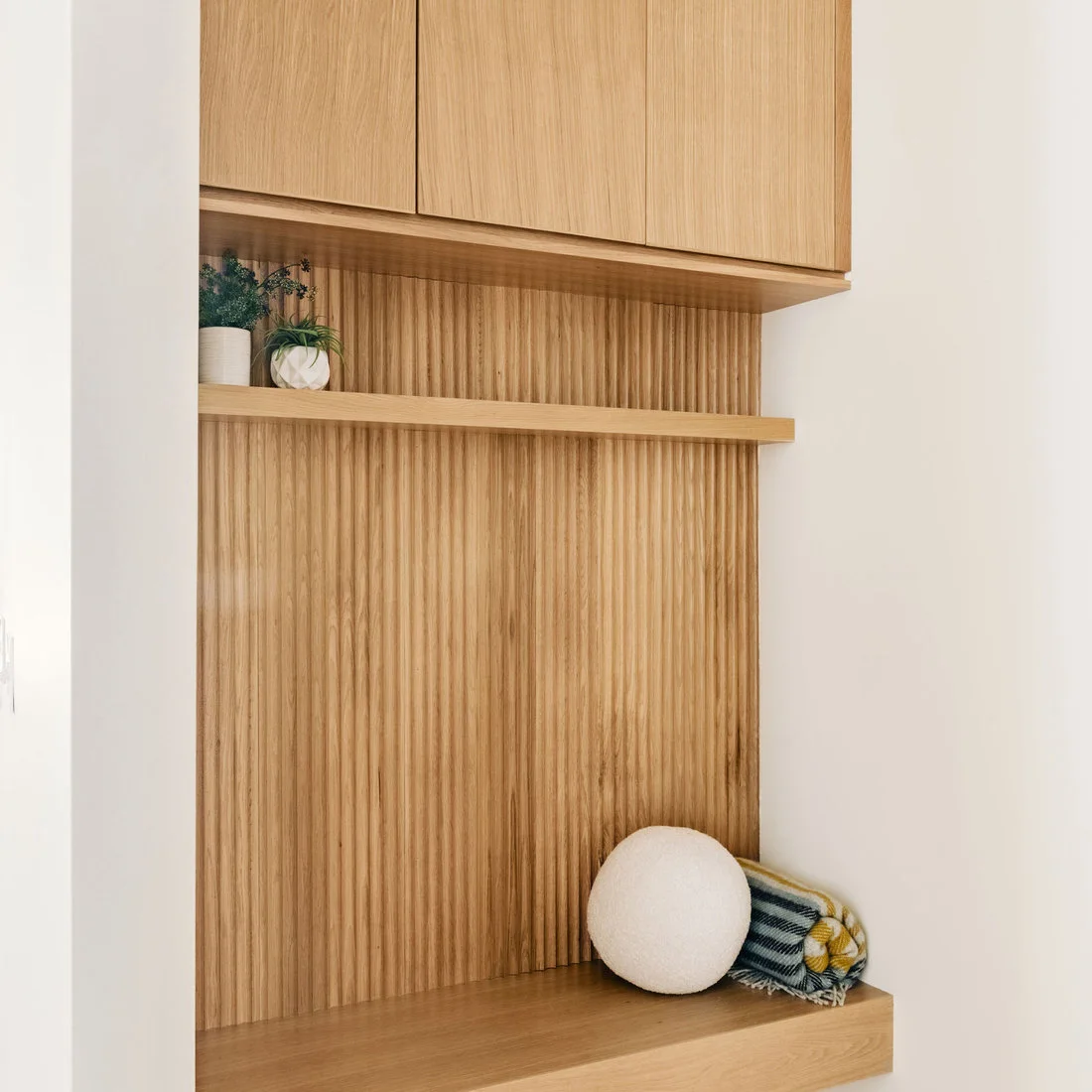
The wood-lined niche makes the small seat feel like part of the wall rather than another piece of furniture. A shallow shelf adds a place for a few small objects, and overhead cupboards keep additional storage enclosed. The pale round cushion softens the seat without hiding the wood grain.
Check seated headroom below the shelf and cupboards before finalizing the niche. A compact seat can work for changing shoes, but it should still be comfortable to approach and stand from. Avoid filling the shelf with fragile objects that could be knocked while using the bench below.
IDEA 12 / 20
Separate the Entry With Open Wood Slats
 SaveSupport Non AI Creator
Source: www.houzz.com
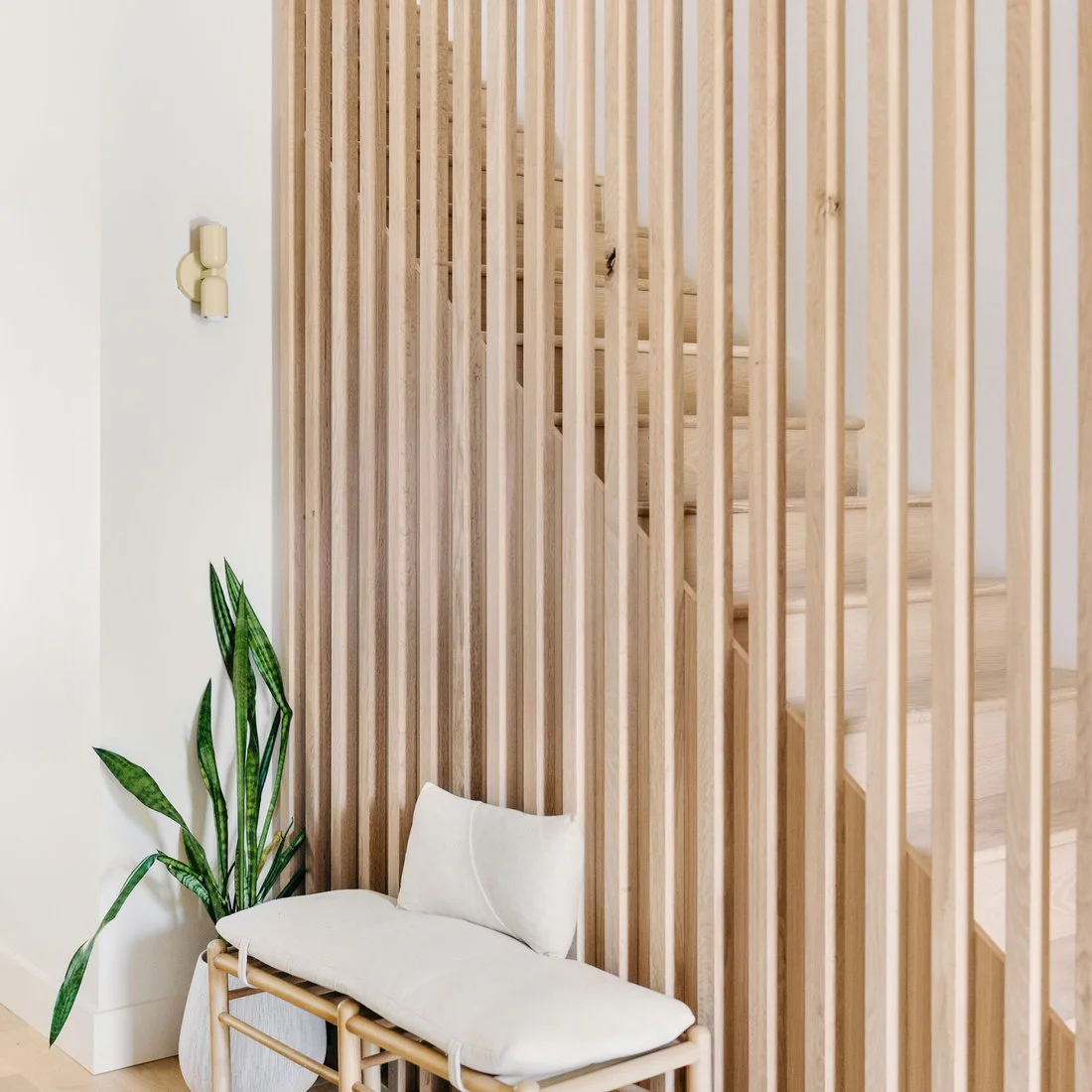
The slat screen provides a partial boundary while allowing light and glimpses of the stair to pass through. A small wood bench repeats its warm tone at a lower height. The pale cushion and white wall keep the corner soft rather than making the screen compete with several other finishes.
A decorative screen needs secure construction and should not be assumed to meet stair guarding requirements. Check those requirements separately if it borders a stair. Keep the bench accessible and leave the nearby plant out of the walking route; the screen should clarify the entry without creating a narrow obstacle.
IDEA 13 / 20
Add Color in a Single Bench Textile
 SaveSupport Non AI Creator
Source: www.houzz.com
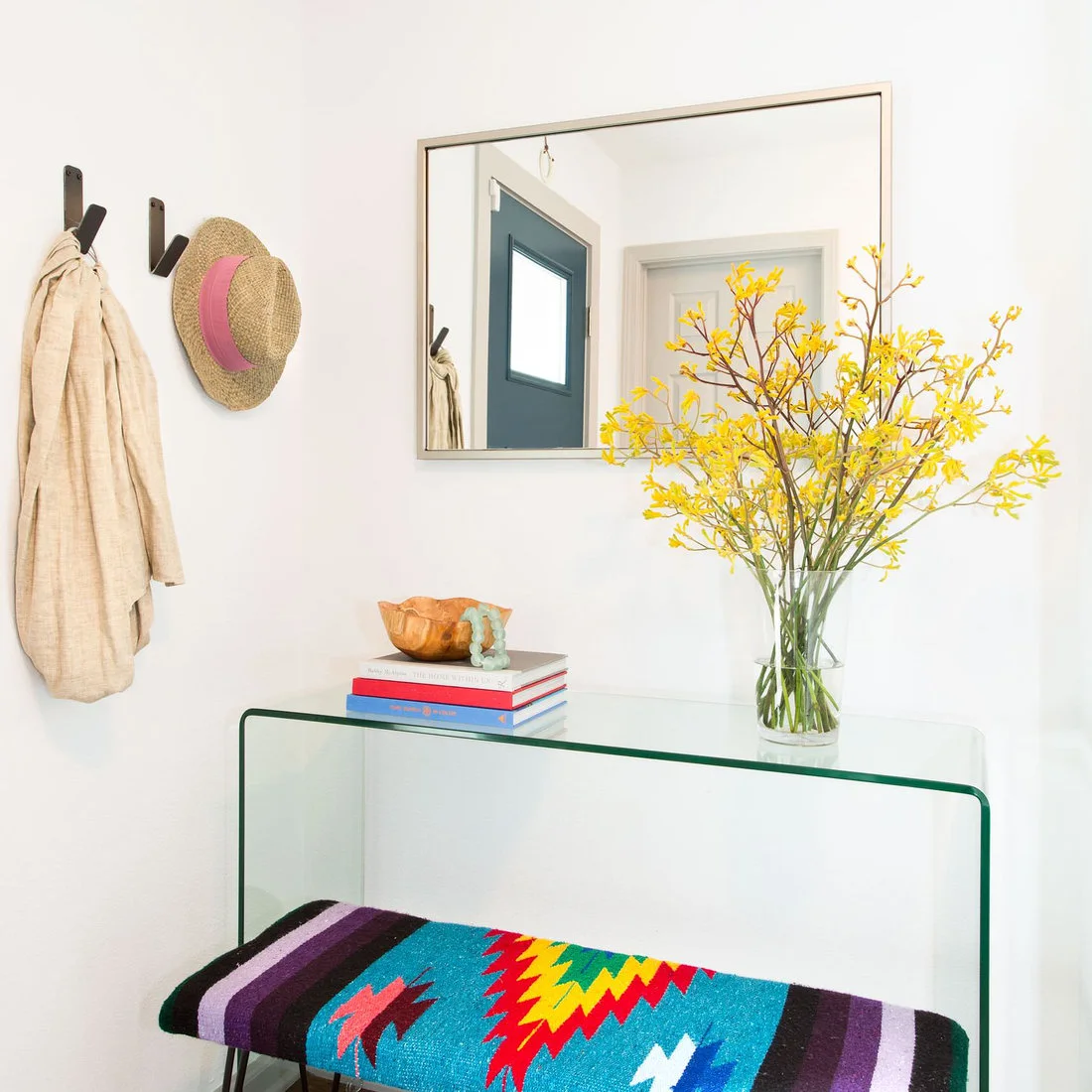
The clear console keeps this small entry wall visually light, while the mirror and hooks handle practical arrival needs. Most of the color is concentrated in the bench textile and flowers. The white wall remains a quiet backdrop, allowing a lively pattern without changing every cabinet or surface.
Choose a stable console suitable for a busy route, especially if glass edges would be difficult to see or avoid. Keep a small bowl available for essentials and limit decorative stacks. A washable bench textile can introduce color more easily than replacing permanent finishes when your preferences change.
IDEA 14 / 20
Contain a Strong Pattern Beside Plain Wood
 SaveSupport Non AI Creator
Source: www.houzz.com
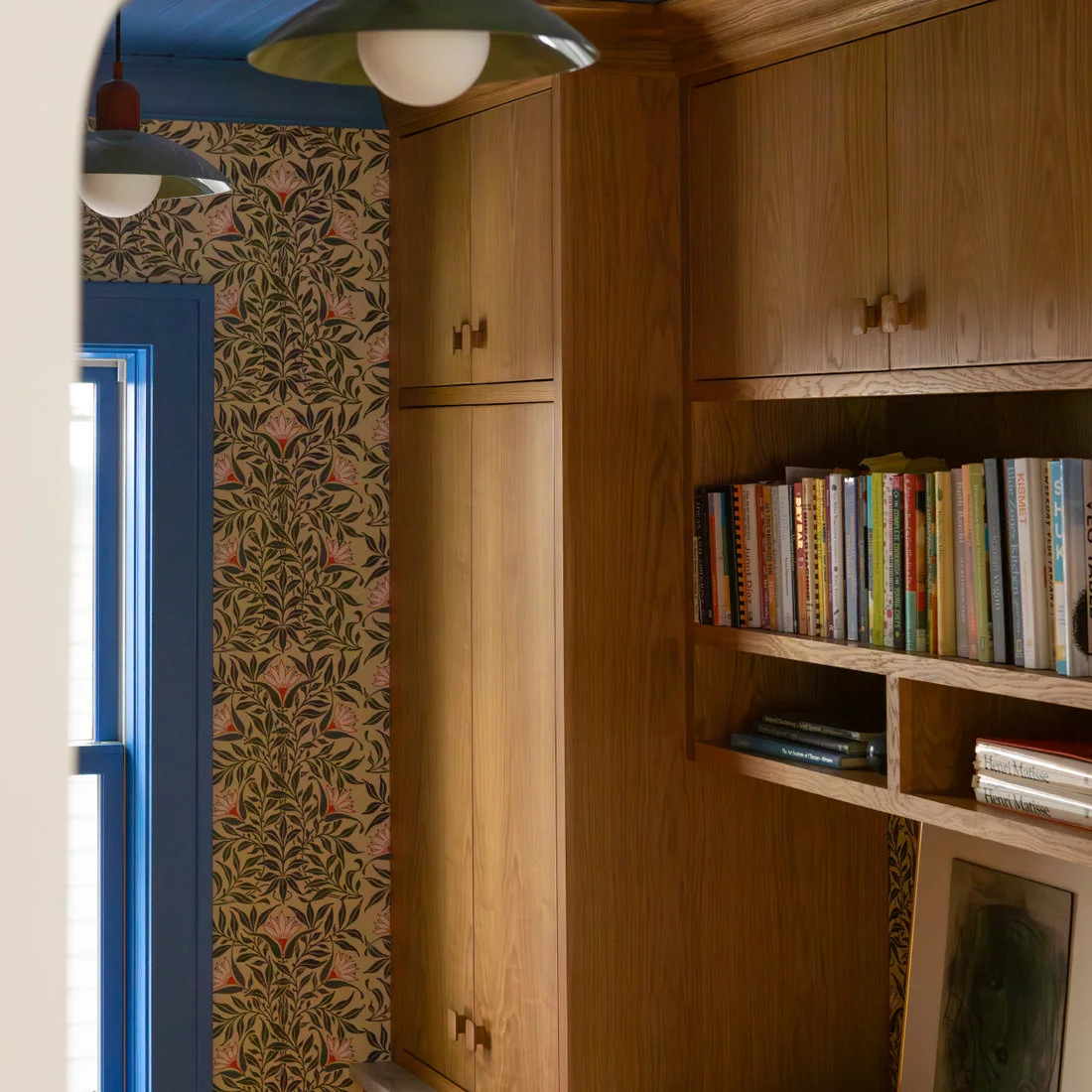
The leaf pattern and blue door frame give this entry a more colorful interpretation of a wood-led palette. Broad plain cupboard fronts prevent the small wall area from becoming all pattern. Open niches introduce books at a controlled scale while the main storage remains concealed.
Keep a strong wallpaper to a defined section if the entry is compact. Test it beside the wood and blue paint in the room’s own light. For everyday use, reserve the open niche for a manageable collection and provide a separate clear place for keys so decoration does not take over the arrival routine.
IDEA 15 / 20
Pair Leaf Pattern With a Plain Black Bench
 SaveSupport Non AI Creator
Source: www.houzz.com
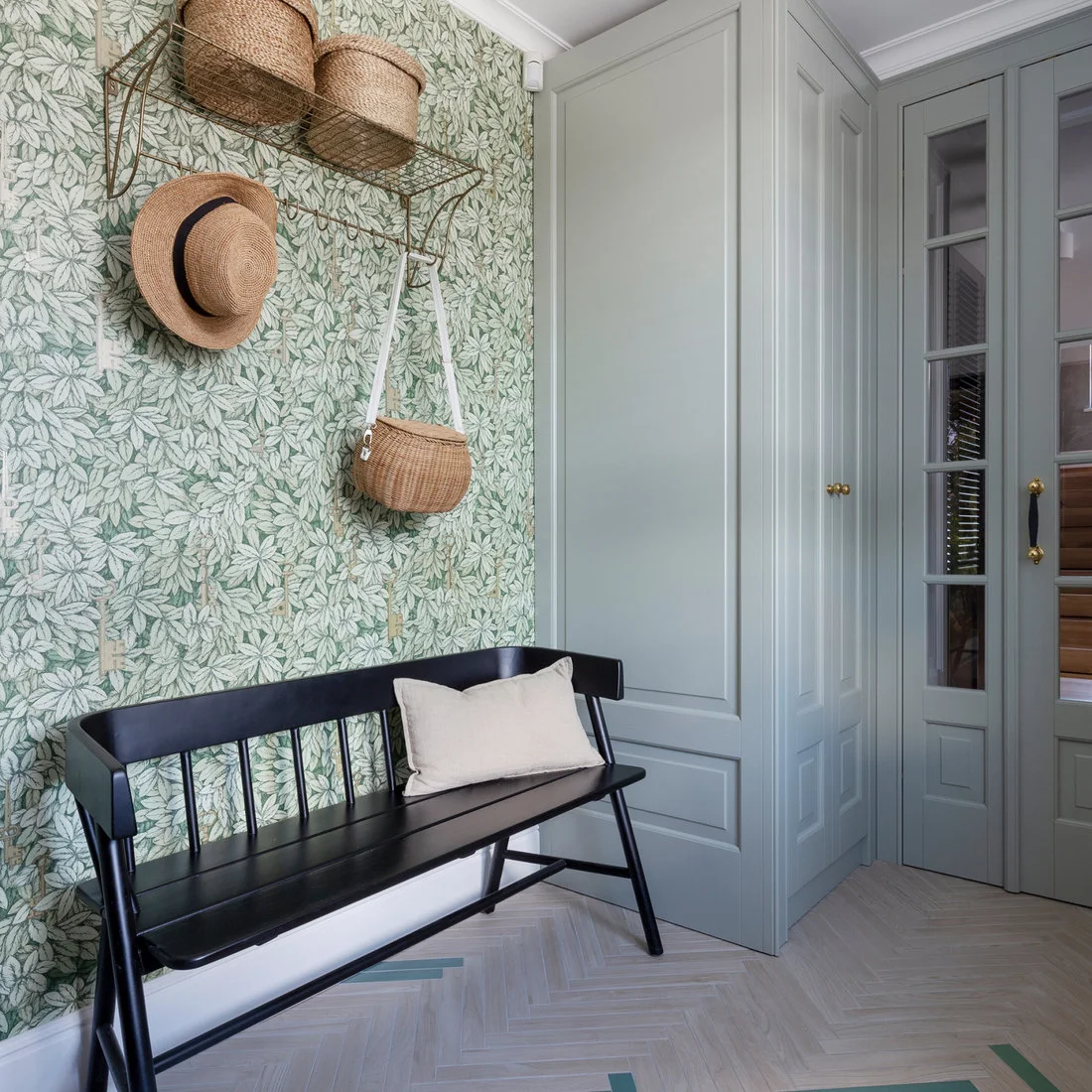
The plain black bench gives the patterned wall a clear anchor without adding another print. Gray cupboard fronts keep the neighboring storage quiet, while woven baskets and a hat introduce natural texture. The pale floor prevents the darker seat from making the entry feel heavy at ground level.
Compare a full wallpaper sample beside the cupboard color before committing. Place the hook shelf high enough for seated headroom while keeping daily items within comfortable reach. Keep the bench clear enough to use, and choose baskets that can be removed without disturbing everything stored alongside them.
PART 04
Keep the Layout Clear
IDEA 16 / 20
Keep a Small Door Landing Almost Bare
 SaveSupport Non AI Creator
Source: www.houzz.com
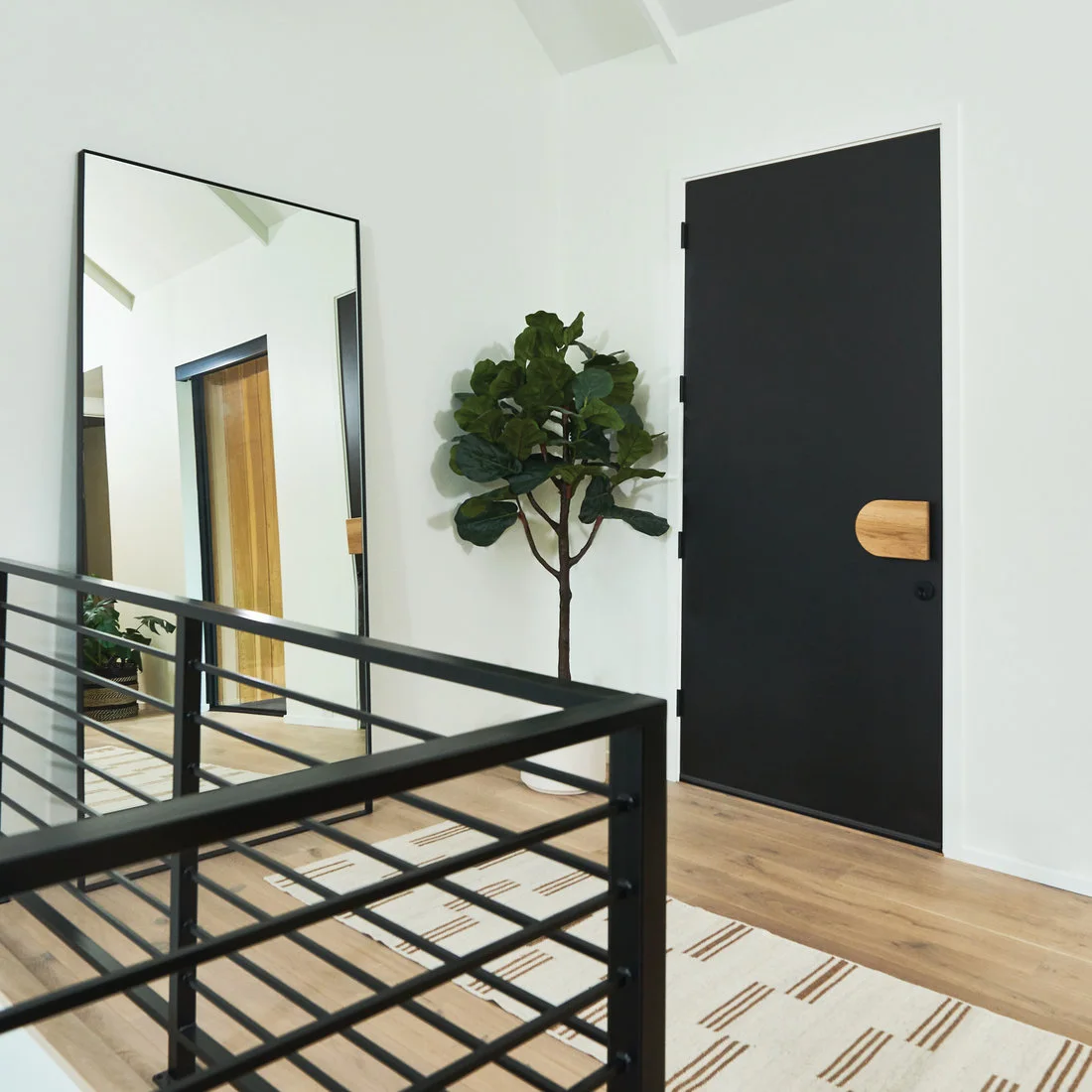
The black door and mirror frame give this pale landing a consistent outline. A wood handle repeats the floor’s warmth, while the runner adds a modest pattern. With no large console or cupboard on the visible wall, the arrival area keeps its available floor space open.
Fix the tall mirror securely rather than leaving it loose against the wall. Keep the plant and rug edges away from the stair approach. If the entry has little spare width, a nearby cupboard in another room may be more useful than squeezing storage into the route beside the door.
IDEA 17 / 20
Build a Plain Wood Wall Around the Seat
 SaveSupport Non AI Creator
Source: www.houzz.com
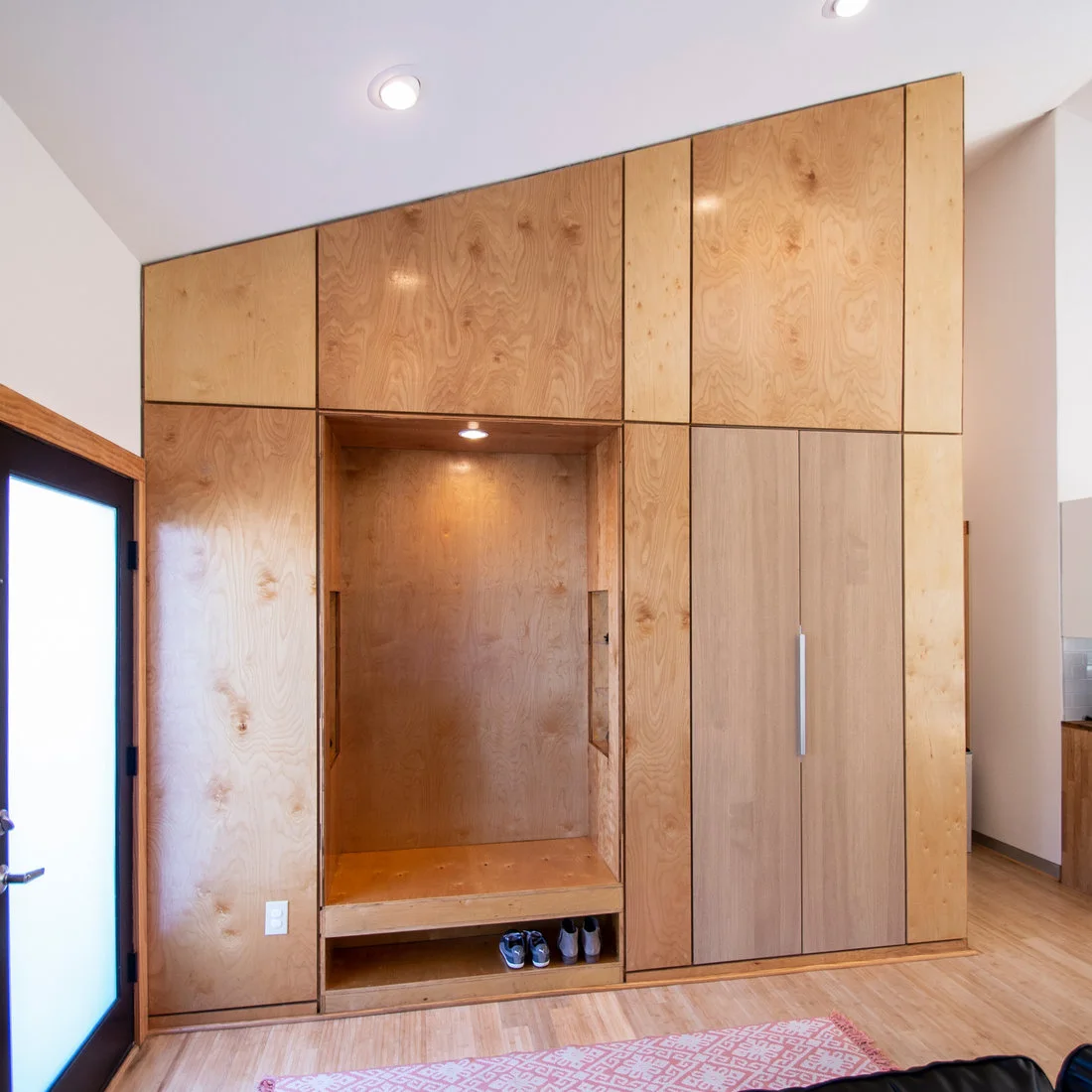
The large plain wood panels create a continuous storage wall rather than several unrelated cabinets. A recessed seat and shoe opening give the entry an obvious place to pause. Small lights within the niche make the bench useful without adding extra floor or table lamps beside the doorway.
Plan the internal storage before dividing the front panels so each door serves a useful compartment. Check how warm the wood color appears under the proposed lighting. Leave comfortable headroom in the niche and make sure the tall cupboard can open without blocking the door or anyone sitting on the bench.
IDEA 18 / 20
Keep a Tall Entrance Open and Bright
 SaveSupport Non AI Creator
Source: www.houzz.com
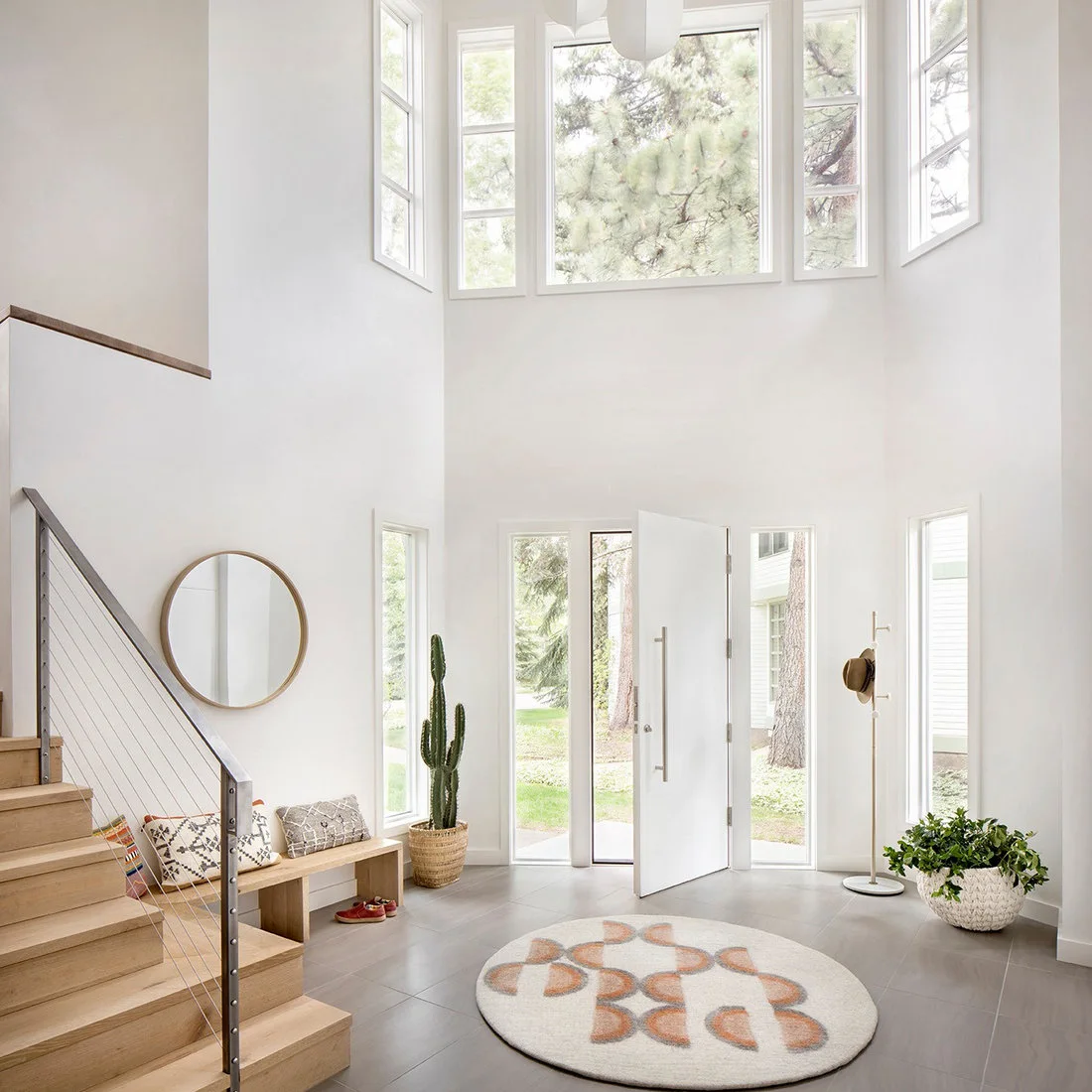
The low bench gives this tall entrance a human scale without filling its open floor. A round mirror and circular rug soften the straight stair and window lines. Pale walls allow the daylight to remain the main feature, with wood on the stair and bench providing warmth.
Use the bench where people naturally stop to change shoes rather than directly in the door’s path. A large plant needs a stable position that does not reduce the route. If your entrance is smaller, borrow the low furniture and simple mirror arrangement without trying to reproduce the room’s height or glazing.
IDEA 19 / 20
Choose a Bench With a Small Attached Surface
 SaveSupport Non AI Creator
Source: www.houzz.com
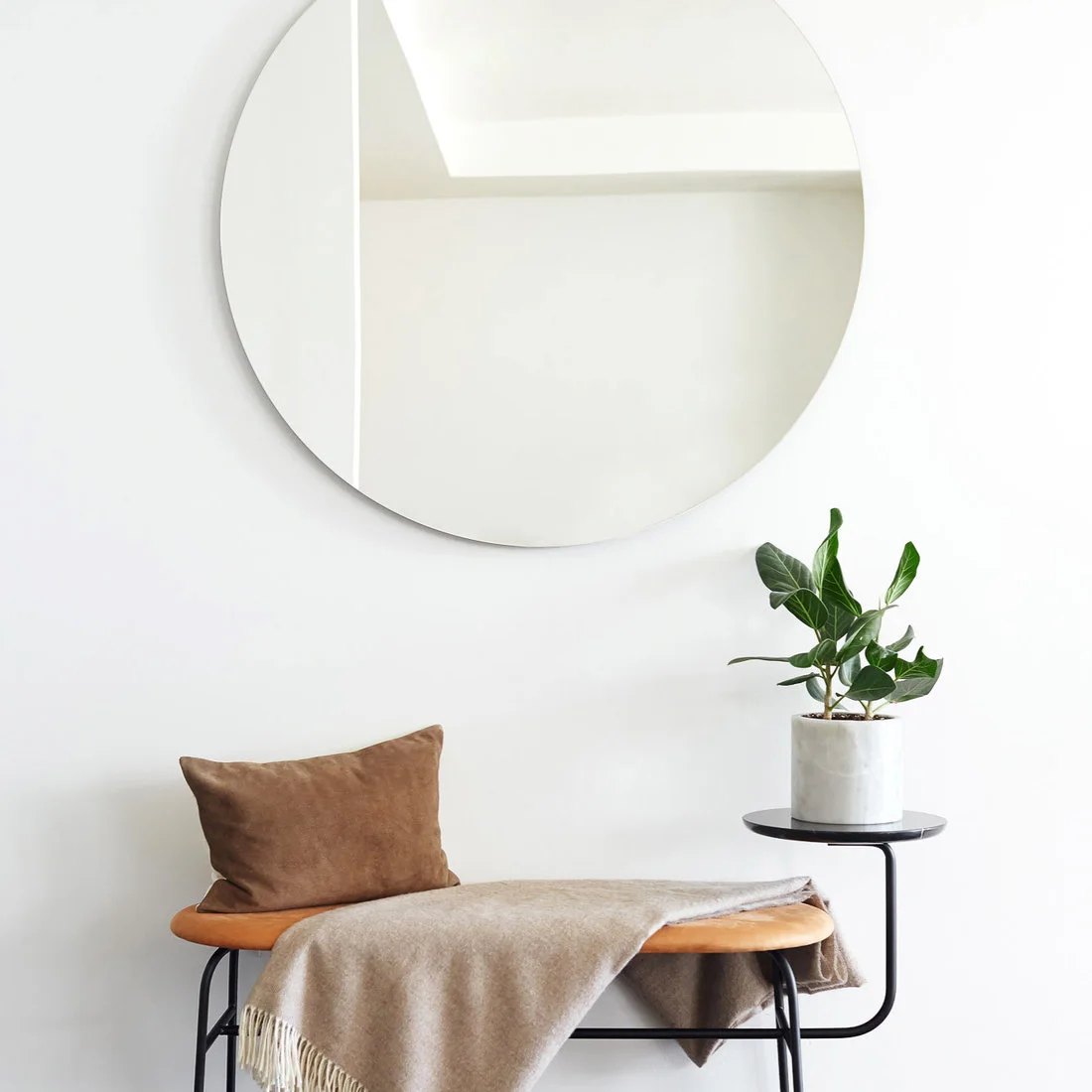
The small attached surface gives the bench a useful landing spot without a separate table footprint. Tan upholstery and a soft throw add warmth to the plain white wall. The round mirror repeats the small table shape, keeping the arrangement simple despite combining several functions.
Check the bench’s seat height and weight rating before choosing it for regular use. An attached surface should remain stable when someone sits down or stands. Keep it for a small tray or essentials rather than a tall fragile display, and choose upholstery that suits the entry’s likely spills and dirt.
IDEA 20 / 20
Float Drawer Storage Below a Round Mirror
 SaveSupport Non AI Creator
Source: www.houzz.com
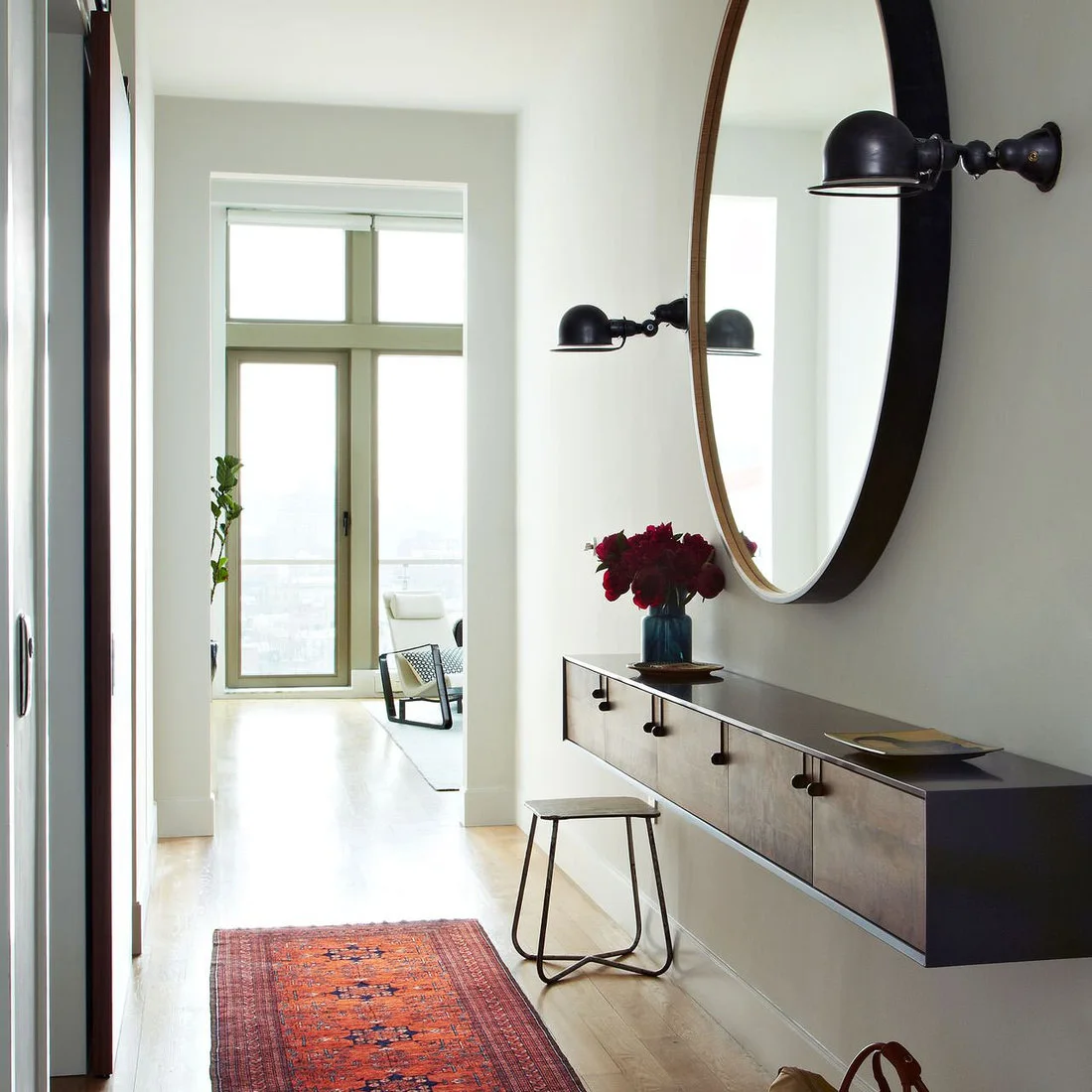
The floating drawers provide concealed storage while leaving the floor visible beneath them. A large round mirror softens the long rectangular cabinet, and paired dark lights repeat its outline. The red runner adds a concentrated color that does not require changing the pale walls or floor.
Have the cabinet fixed appropriately for its weight and intended contents. Place a stool only where it can be used without blocking the route. Japandi entryway ideas offer other ways to combine a restrained wall arrangement with useful concealed storage when a full bench and coat cupboard will not fit.
BRING IT ALL TOGETHER
Give Everyday Belongings a Practical Place
Start with the objects that arrive every day: shoes, coats, bags and keys. Decide where each belongs before choosing the mirror, lighting and decorative details. Keep the door swing and route into the house clear when the bench and hooks are actually in use.
Use wood warmth, simple fronts and a small number of accent colors to connect the storage. A useful entry can still have personality, but it should remain easy to clean, comfortable to sit in and quick to reset after a busy day.