Scandi boho living rooms combine a useful, relatively simple foundation with softer textiles and a few collected pieces. The balance matters more than buying a matching set of woven furniture. A plain sofa, workable layout and restrained background can make room for pattern without losing everyday comfort.
These ideas move from whole seating arrangements to shelves, chairs and window corners. Some use more color than others, but each offers a way to keep the furniture readable while adding texture. Choose the details that fit your room and cleaning routine rather than copying every accessory in a photograph.
PART 01
Build a Simple Foundation for Texture
IDEA 01 / 20
Start With Pale Seating and Small Wood Tables
 SaveSupport Non AI Creator
Image credit: Matthew Williams
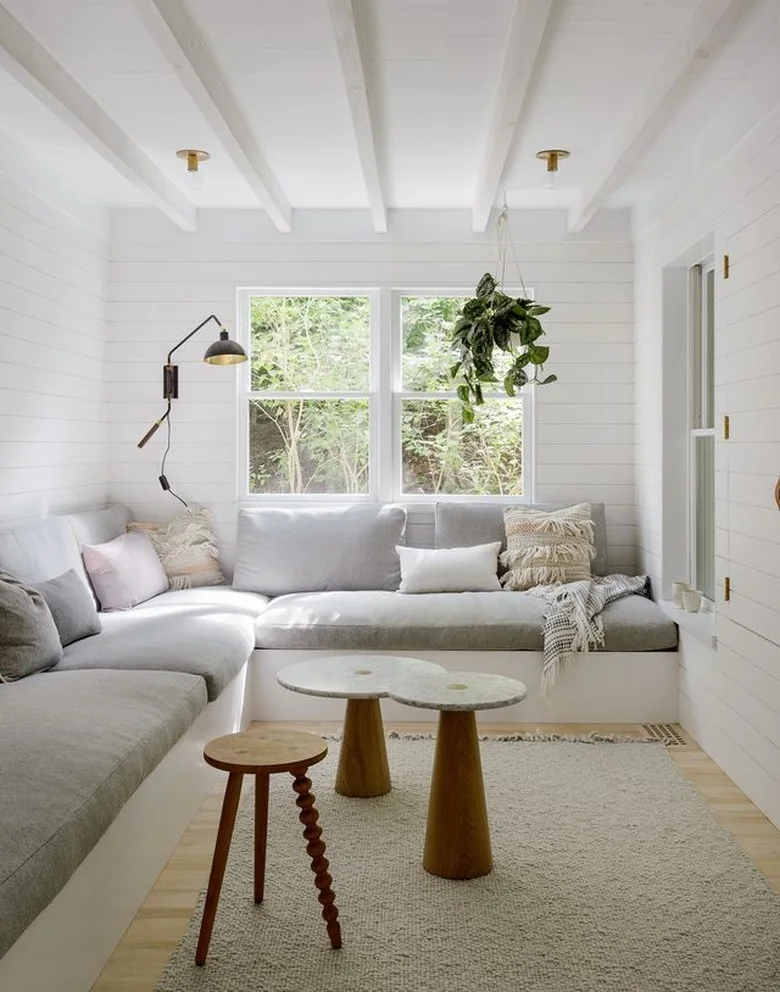
Low pale seating follows the corner, leaving the windows and white ceiling beams as clear lines around it. Small wood bases bring warmth into the center without a heavy rectangular table. The fringed cushions and hanging greenery add looser detail against an otherwise restrained background.
Measure each table from the seats where it will be used, checking reach and space for feet. Choose cushion covers that can be cleaned without special handling if the room gets daily use. Keep a hanging plant easy to remove for watering, with a support suitable for its full wet weight.
IDEA 02 / 20
Layer Pattern Beneath Simple Furniture
 SaveSupport Non AI Creator
Image credit: Amber Interiors
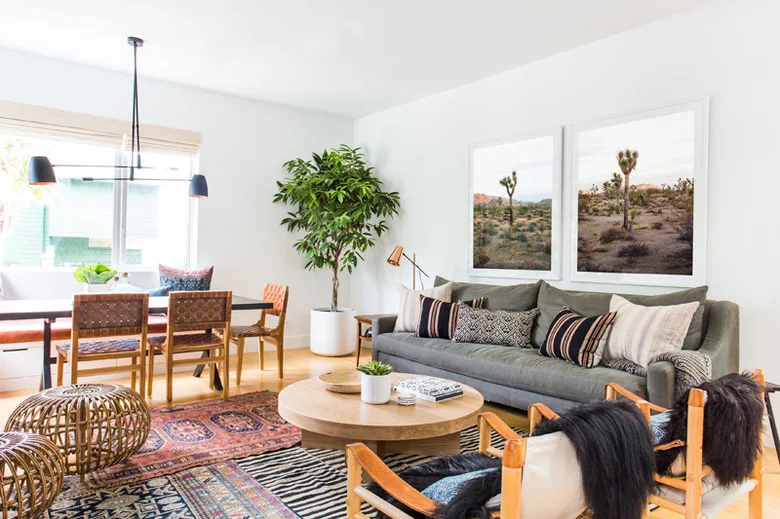
The sofa and round table have simple outlines, giving the mixed rugs room to carry most of the pattern. Wood chair frames connect the sitting area with the dining furniture beyond. The paired photographs provide a calmer repeated shape above the sofa rather than another busy textile display.
Keep rug overlaps flat and secured with suitable underlays, especially where people cross between the living and dining areas. Check that chair legs remain stable across the layers. Our bohemian living room ideas explore more pattern combinations; start with one useful rug size before deciding whether a second layer adds anything practical.
IDEA 03 / 20
Warm a Dark Sofa With Striped Cushions
 SaveSupport Non AI Creator
Image credit: Meagan Forbes for Malfatti Interiors
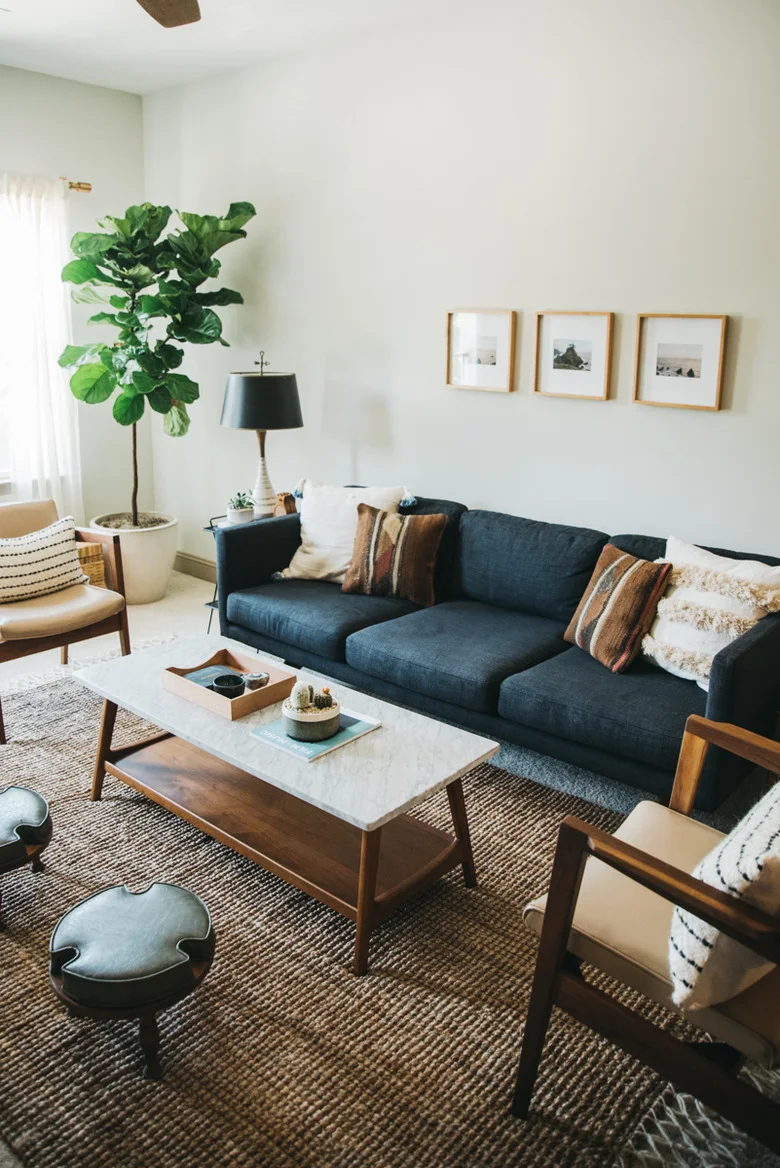
The dark sofa gives this light room a defined center, while the striped cushions add a small amount of earthy color. Wood armchairs and the lower coffee-table shelf repeat a warm tone. Three modest frames keep the wall arrangement orderly without requiring a large gallery around the seating.
Choose cushions that leave enough usable seat depth rather than filling every corner. Check the coffee table’s reach from both the sofa and armchairs, and keep its lower shelf for items you use. A textured rug can add warmth, but compare its feel and cleaning needs with your household’s routine.
IDEA 04 / 20
Use Texture to Soften Black and White
 SaveSupport Non AI Creator
Image credit: Describe the Fauna
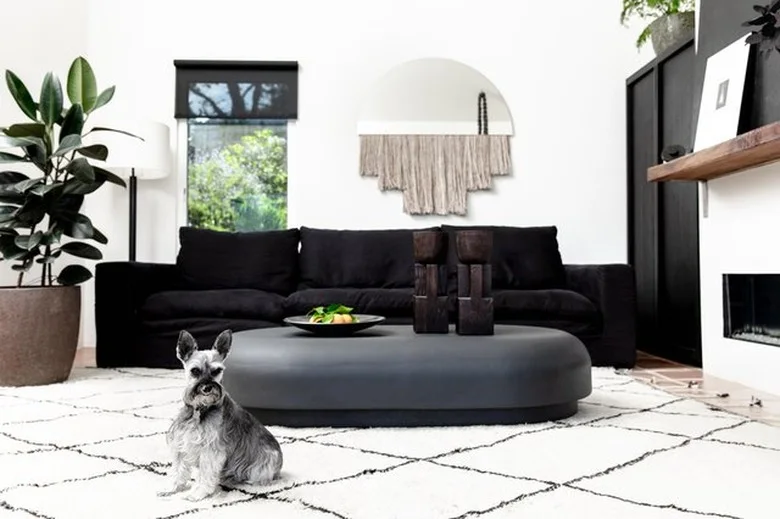
The restrained black-and-white palette lets the fringe, rug pile and leaf shapes become the room’s softer details. A low oval table echoes the generous sofa without adding sharp corners at the center. The fringed mirror introduces a relaxed wall feature while the surrounding white space stays visible.
Compare dark upholstery samples in the actual light, checking how lint and everyday marks show on the fabric. Leave a clear route around the low table and secure the rug appropriately. Use just a few textured accessories if easy cleaning matters; long fringe and deep pile require more attention than smooth surfaces.
IDEA 05 / 20
Let a Warm Sofa Carry the Room
 SaveSupport Non AI Creator
Image credit: A House in the Hills
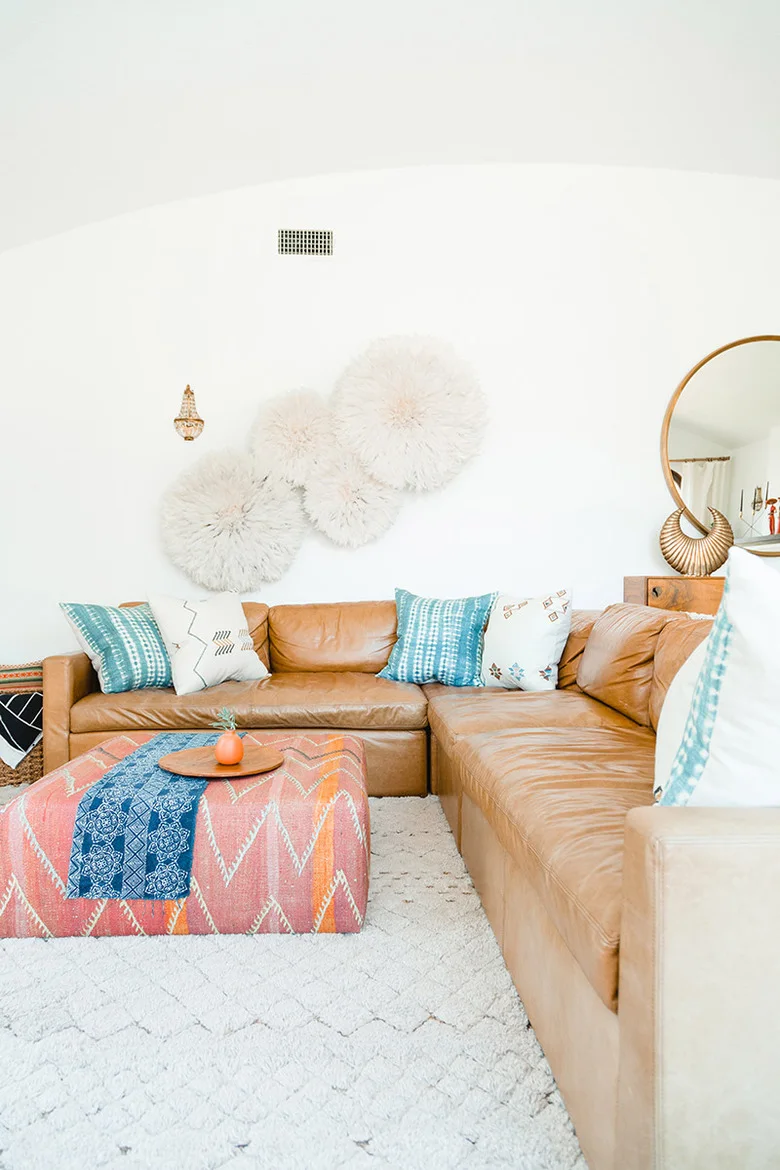
The tan sectional provides a broad warm shape beneath the lighter wall decorations. Color concentrates in the cushions and ottoman, so the room can feel lively without painted walls. The pale rug connects the seating pieces while its quieter pattern leaves the brighter fabric near the center clearly visible.
Choose the sectional from the floor plan first, allowing access around the open end and room to clean beside it. If an ottoman doubles as a table, use a stable tray and remove drinks before moving it. Check the actual upholstery material and care label rather than assuming every tan sofa needs the same treatment.
PART 02
Add Color and Personal Objects Carefully
IDEA 06 / 20
Keep a Gallery Wall Visually Connected
 SaveSupport Non AI Creator
Image credit: Connie and Luna
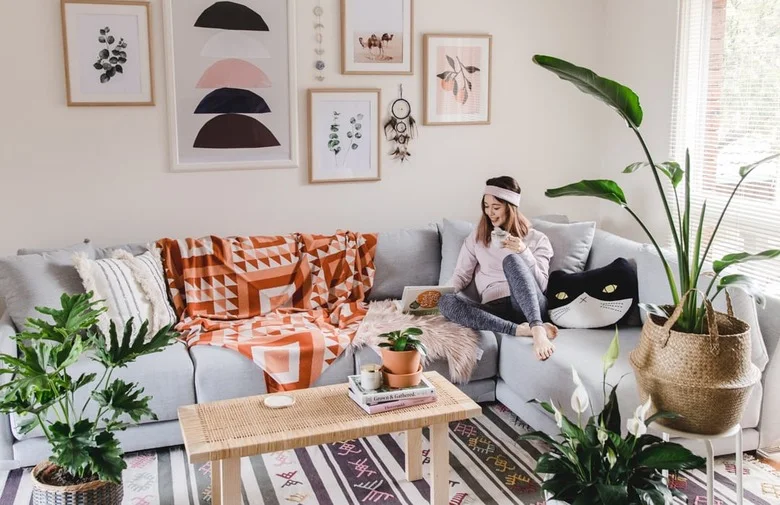
Pale wood frames connect the different prints above the sectional, allowing the orange throw to remain the strongest accent. The woven tabletop and basket planter repeat texture at lower levels. Greenery gathers toward the edges, where it softens the seating without turning the entire wall into a display.
Lay the frame arrangement out before making holes, checking it from seated eye level as well as the doorway. Keep large plant leaves out of the walking route and protect surfaces below pots. Choose a throw that can be washed easily, especially if it will cover a frequently used part of the sofa.
IDEA 07 / 20
Try a Dark Wall With an Open-Leg Sofa
 SaveSupport Non AI Creator
Image credit: Hunker in Partnership With Acme Real Estate
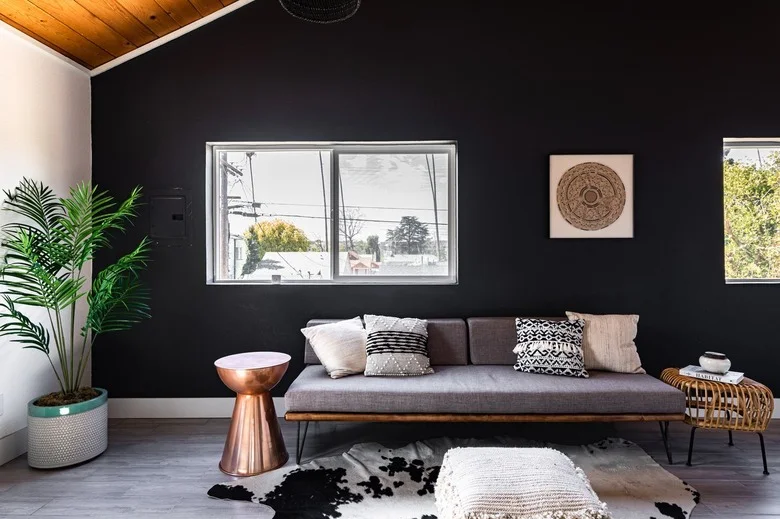
The sofa’s open base keeps its outline relatively light against the dark wall. Pale cushions and the broad window create contrast, while the wood trim relates to the ceiling above. A small metal side table introduces a different finish without adding another large item beside the seating.
Test a dark paint sample over a useful area and look at it through the day before painting the whole wall. Check the sofa’s actual comfort and support rather than choosing it only for slim proportions. Keep floor-covering edges secure, and leave the room’s main walking route free of low stools or loose cushions.
IDEA 08 / 20
Layer Pale Throws Over Existing Seating
 SaveSupport Non AI Creator
Image credit: Meagan Forbes for Malfatti Interiors
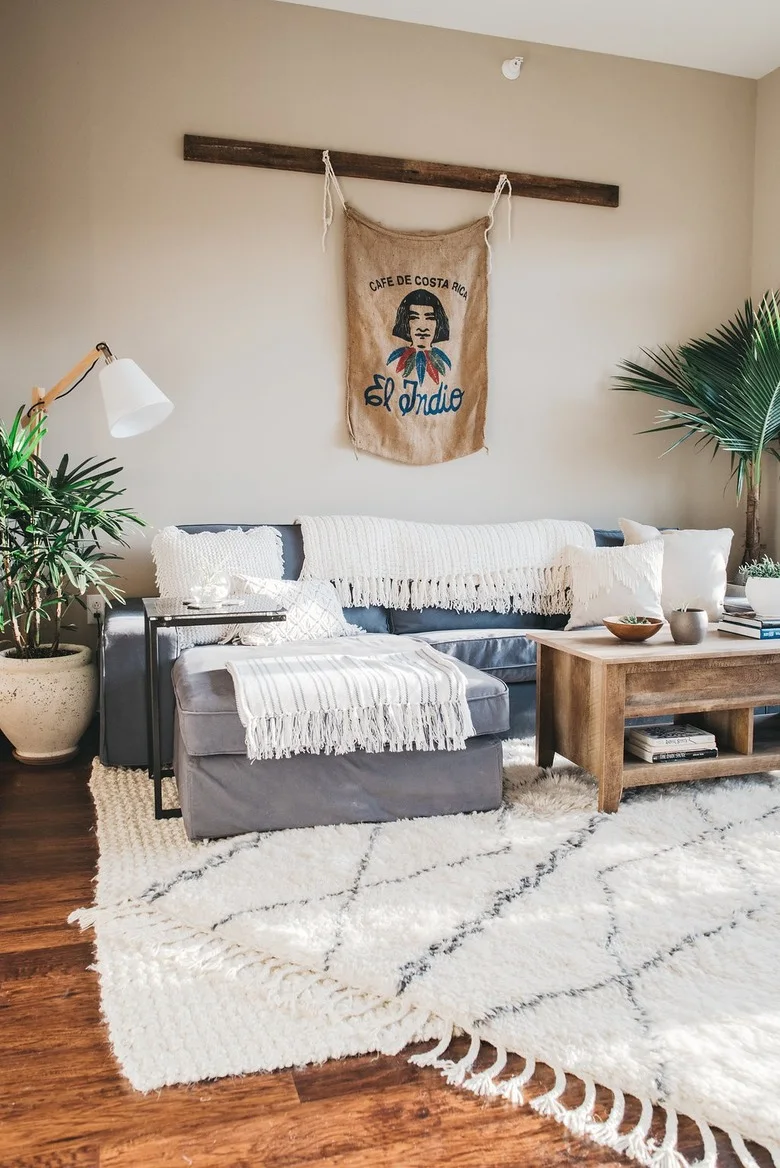
Pale throws change the appearance of the gray seating without replacing its large pieces. Fringe repeats through the textiles, while the plain wood table gives the center a simpler surface. The loose fabric wall hanging adds another soft texture above the sofa instead of a heavy framed arrangement.
Use throws where they stay in place comfortably rather than sliding beneath someone every time they sit down. Check washing and drying requirements before layering several thick textiles. Leave the rug edge flat, and keep tall plants far enough from upholstery that leaves and watering do not become a daily obstacle.
IDEA 09 / 20
Display an Instrument as Part of the Room
 SaveSupport Non AI Creator
Image credit: Ethan Gaskill for Malfatti Interiors
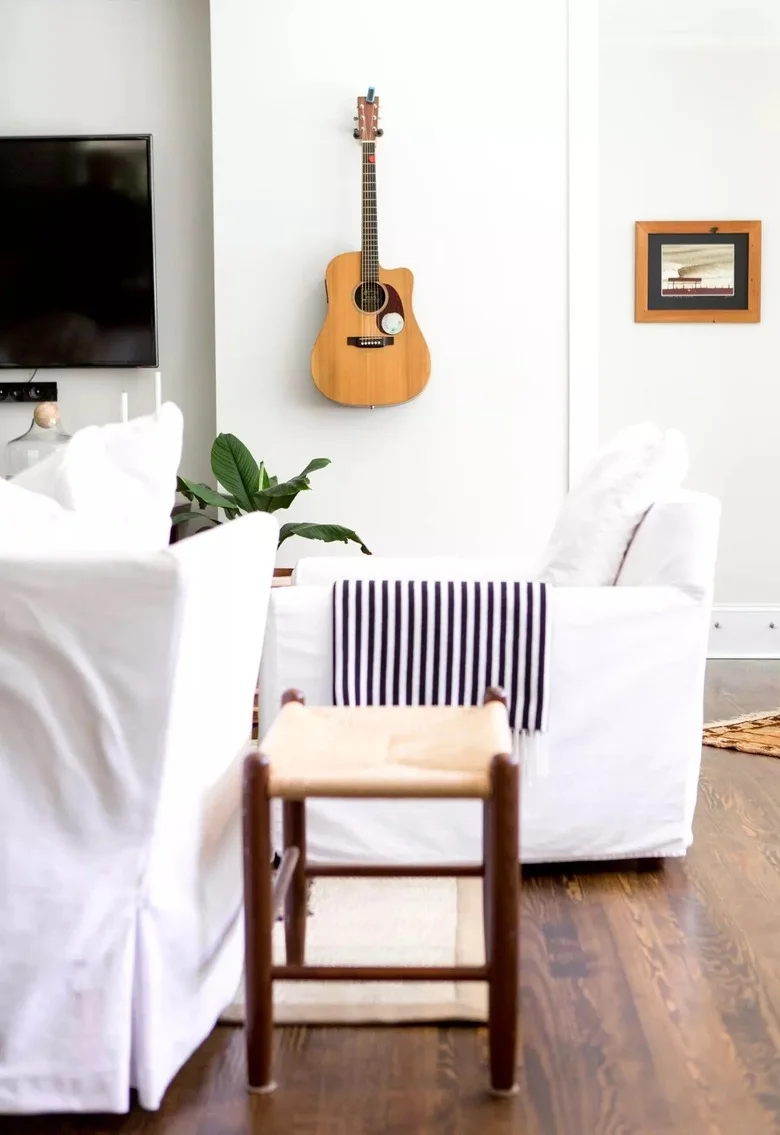
The guitar introduces a warm wood shape on an otherwise simple wall, making a useful personal object part of the decoration. White seating and a small striped textile keep the palette restrained around it. The narrow stool adds another wood element without filling the space between the chairs.
Use a mount appropriate for the instrument and the wall construction, following its fitting instructions. Choose a position away from direct heat and damp, and keep it easy to take down. Our above-couch wall decor ideas offer other ways to use the wall while preserving practical access to the seating.
IDEA 10 / 20
Make One Woven Chair the Feature
 SaveSupport Non AI Creator
Image credit: Ethan Gaskill for Malfatti Interiors
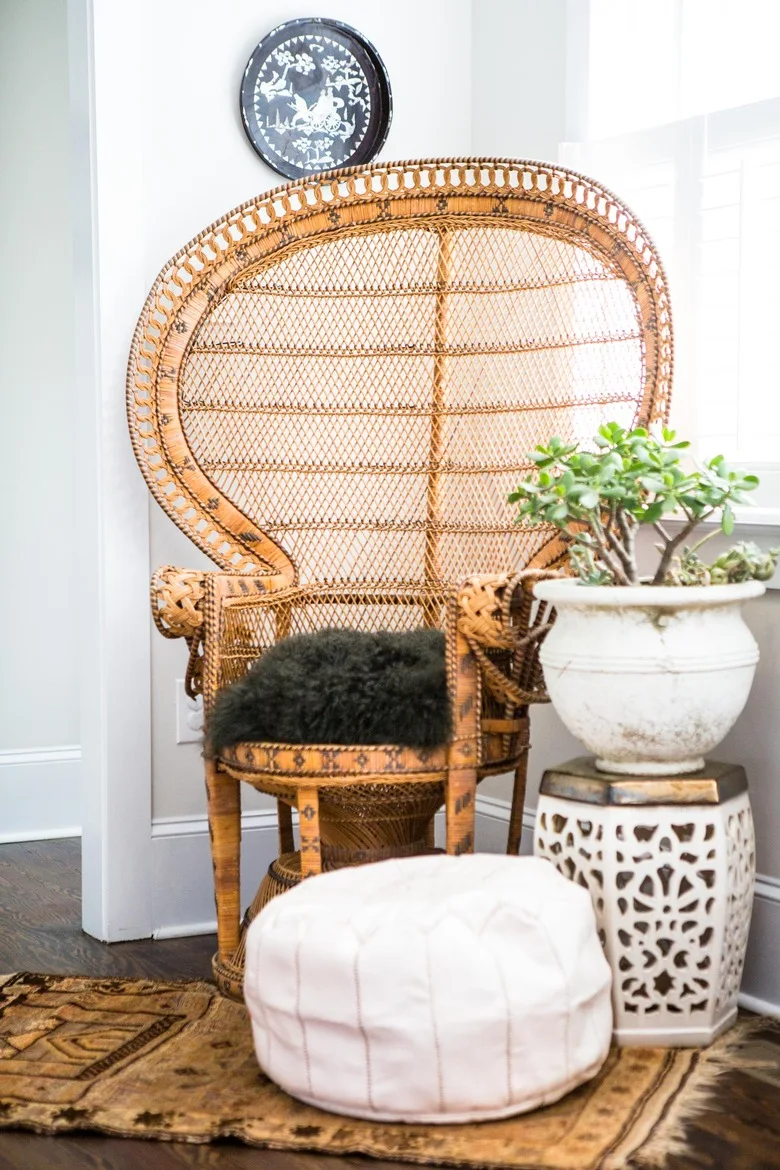
The woven chair supplies most of the decorative detail in this compact corner, leaving the surrounding wall pale and simple. A light floor cushion softens the lower part of the arrangement. The small side table repeats an open pattern, so it does not form another solid block beside the seat.
Check the width of an expressive chair at its widest point, including the back, before assigning it to a tight corner. Inspect woven furniture for loose bindings and damage. Keep the side table usable by choosing a smaller plant or moving the pot if it leaves no safe place for a drink.
PART 03
Give Smaller Details a Useful Place
IDEA 11 / 20
Balance Exposed Brick With Light Woven Seating
 SaveSupport Non AI Creator
Image credit: Codi Ann Backman
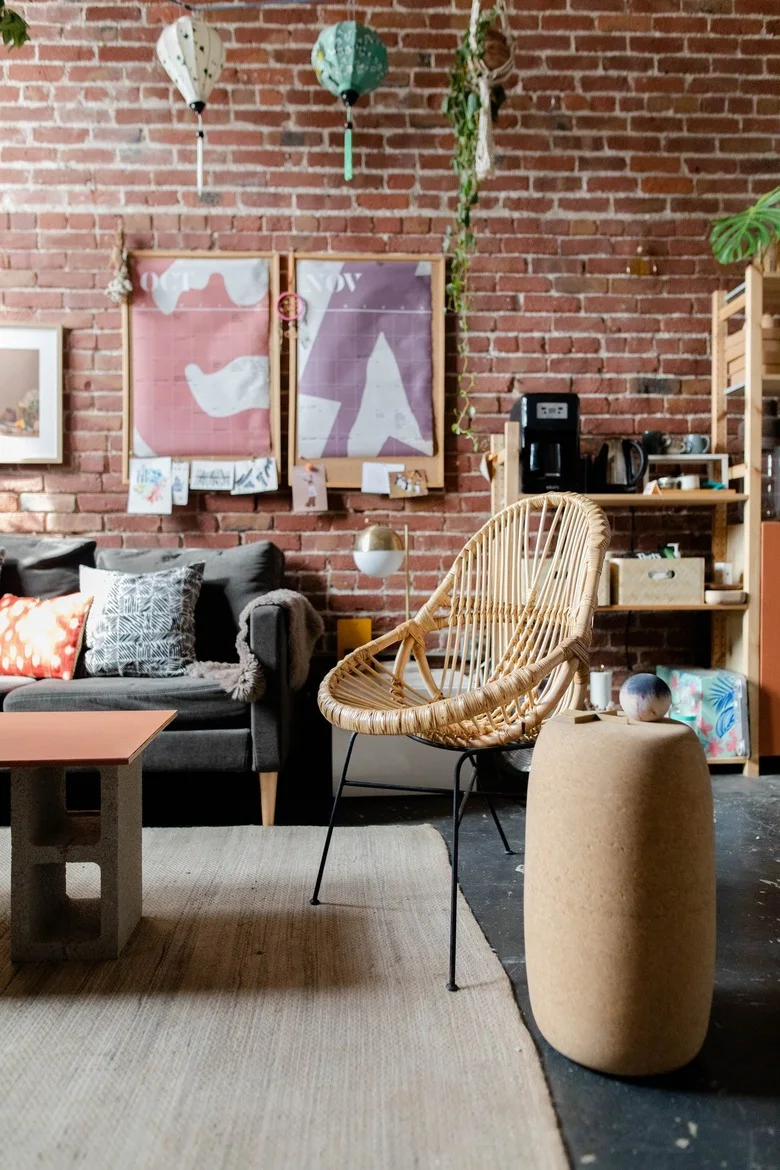
The brick wall already brings strong texture, so the woven chair adds an open outline instead of another bulky upholstered piece. Pale shelving makes useful storage visible beside the seating. Soft pink and lavender artwork lightens the wall, while the orange tabletop supplies a smaller warm accent below.
Check the condition and cleaning needs of exposed masonry before making it a display wall. Use suitable fixings rather than relying on fragile mortar or an improvised hook. Keep the shelving organized around everyday storage, and leave enough room to walk behind the chair without catching its wider arms.
IDEA 12 / 20
Give Collected Objects an Orderly Shelf
 SaveSupport Non AI Creator
Image credit: Sanford Creative
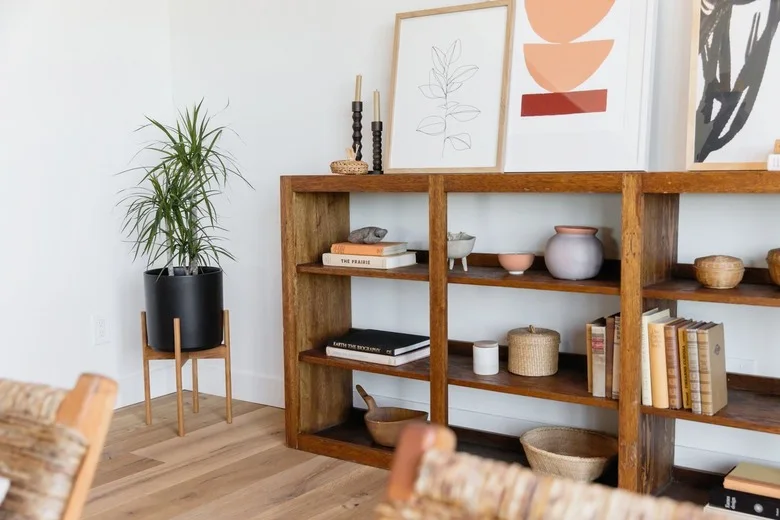
The rectangular shelving gives a simple structure to the mix of books, ceramics and baskets. Some compartments remain partly empty, allowing each group to be seen. Pale artwork extends the display above the cabinet without adding another shelf, while the raised plant marks the end of the arrangement.
Secure the unit and leaning frames as appropriate for your household, particularly where children or pets use the room. Place heavier objects low and keep breakables away from exposed edges. Choose a few containers for real storage needs so the display can absorb everyday items instead of becoming another surface to keep perfectly staged.
IDEA 13 / 20
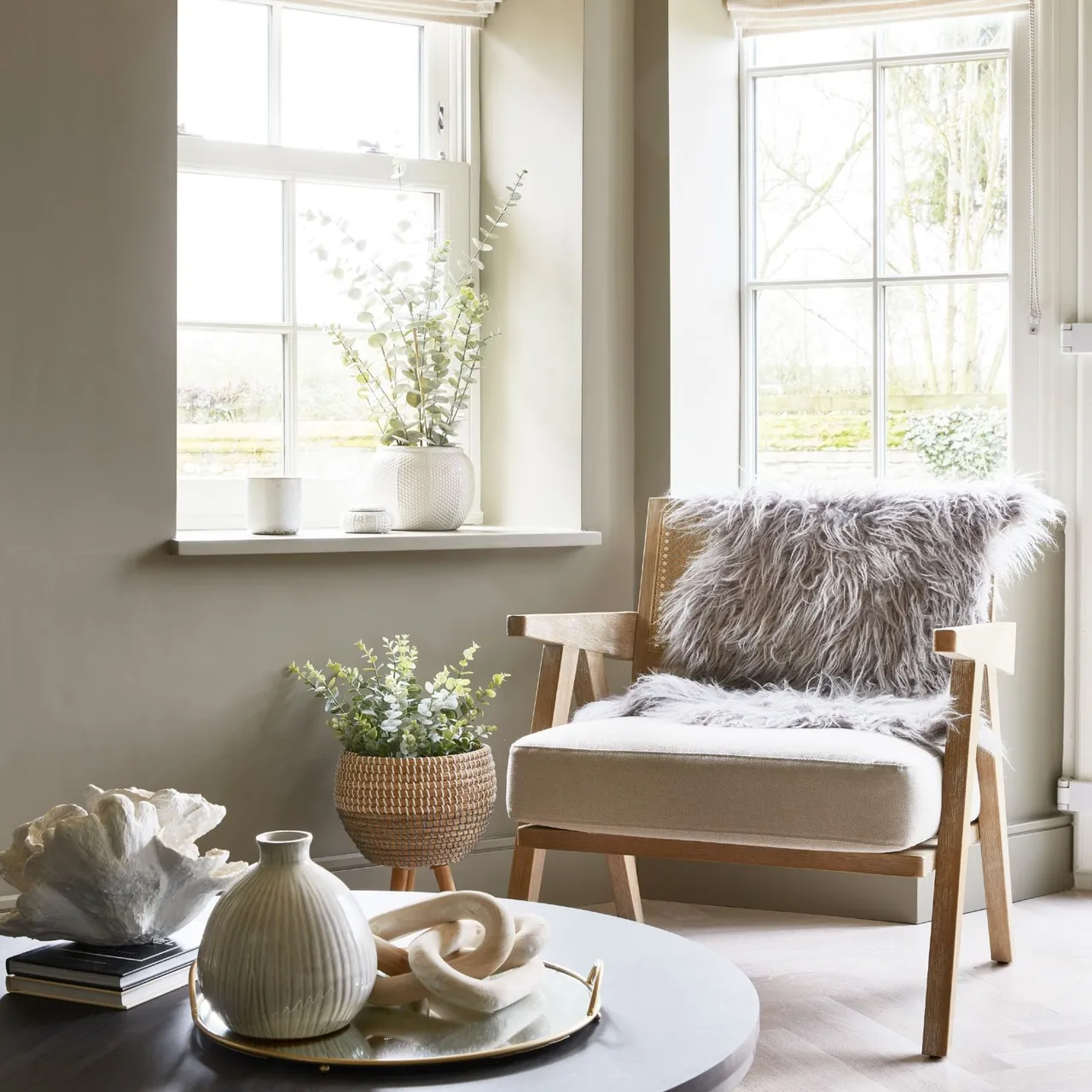
Soften a Wood Armchair in a Quiet Corner
 SaveSupport Non AI Creator
Source: idealhome.co.uk
The chair’s straight wood frame provides the simple structure, while the long-pile throw adds a softer, more informal layer. A woven planter carries texture beside the seat. The muted palette lets those surfaces differ without requiring strong patterns on the wall, floor and chair at the same time.
Sit in the chair with the intended cushion or throw before buying, since an added layer can change support and seat depth. Leave a reachable clear patch on the side table. Position any plant according to its light needs, keeping the container accessible for watering without moving the chair each time.
IDEA 14 / 20
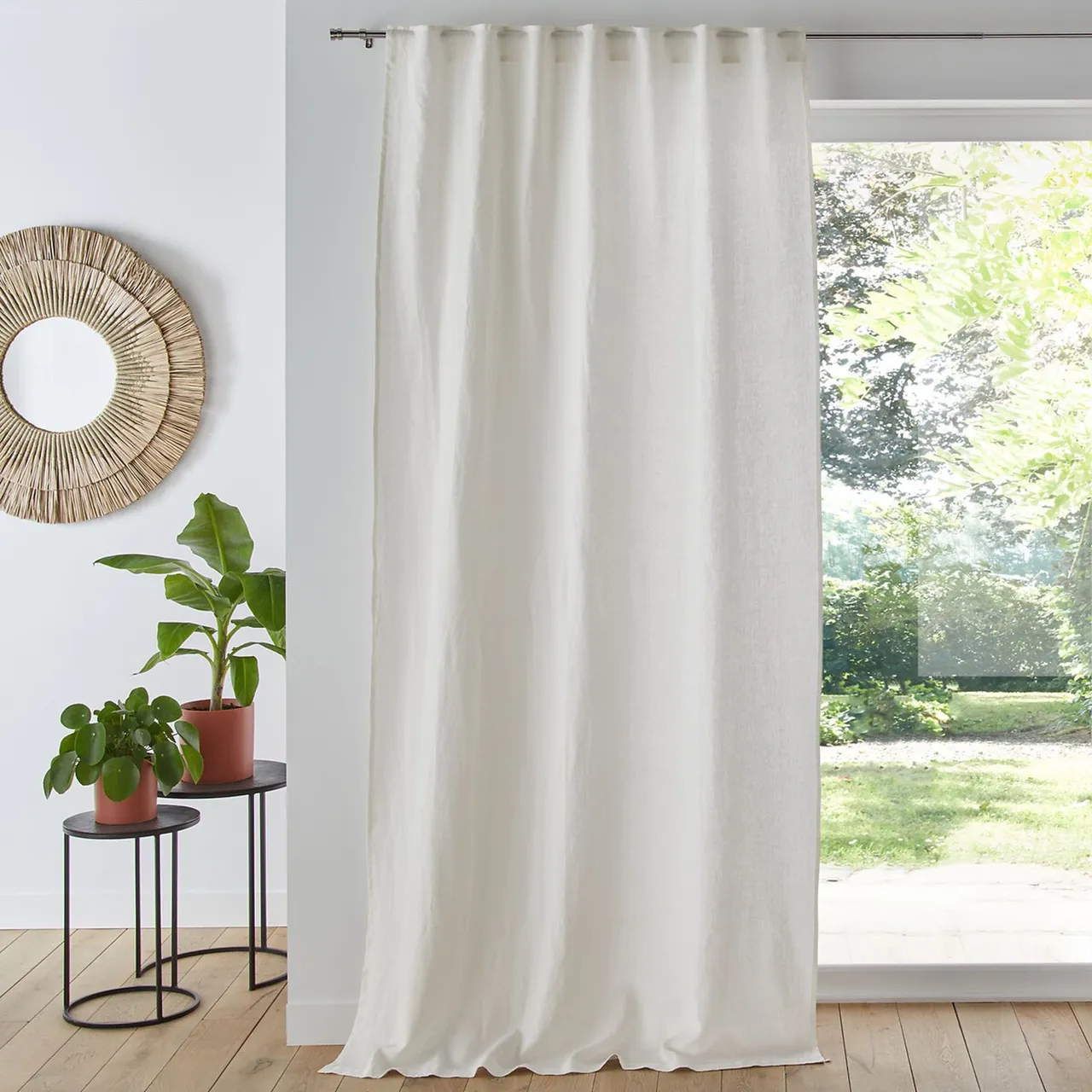
Keep Window Treatments Plain and Generous
 SaveSupport Non AI Creator
Source: idealhome.co.uk
Plain curtains create a broad soft surface beside the glass, balancing the finer woven mirror and plant leaves. Thin dark stands give the pots a clear outline without a large cabinet beneath them. The result shows how a few textured details can carry a light room without busy fabric everywhere.
Check the curtain length against the way the door opens and the route people use. Fabric that pools on the floor can be inconvenient at a frequently used opening. Leave the handles accessible, and choose stands that stay stable when brushed by curtains or a passing person.
IDEA 15 / 20
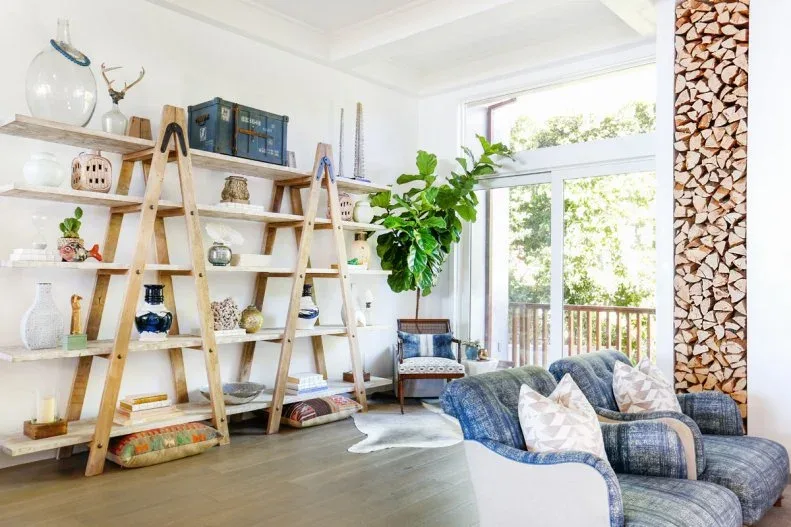
Mix Open Shelves With Useful Closed Storage Elsewhere
 SaveSupport Non AI Creator
Image credit: Photo: Tessa Neustadt . From: Blackband Design
The open shelves give the room a warm framework for collected objects without a solid wall of cupboards. Patterned chairs bring the looser decorative layer into the seating. The shelves leave plenty of white wall visible behind them, making the display easier to read from across the room.
Anchor tall shelving as the manufacturer directs and keep heavy items low. Open display works best when cables and less attractive supplies have a closed storage place elsewhere. Treat stacked logs as a separate storage decision, observing appliance guidance where relevant rather than copying a decorative stack beside a heat source.
PART 04
Make Room for Character Without Crowding
IDEA 16 / 20
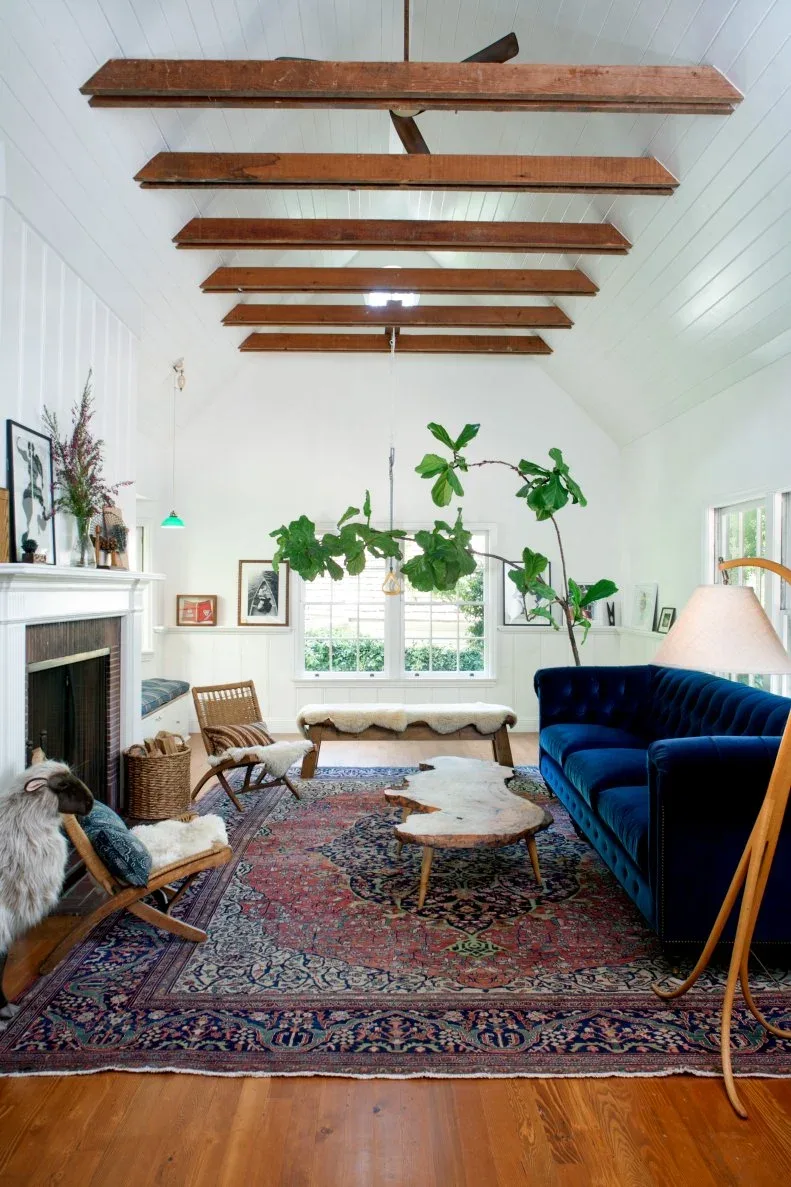
Let Exposed Beams Set the Wood Tone
 SaveSupport Non AI Creator
Image credit: Photo: JWT Associates. From: Jeff Troyer Associates
The beams establish a warm wood tone above the white walls, and the chairs and table repeat it at seating level. A rich blue sofa gives the room a clear anchor. The large patterned rug adds the more collected layer, while the pale wall boards keep the background comparatively consistent.
Choose a rug large enough to connect the seating before selecting its pattern. Check the low table’s edges and reach from each chair, especially if the shape is irregular. Leave useful space between the sofa and table, and do not alter existing structural beams simply to achieve a different furniture arrangement.
IDEA 17 / 20
Repeat One Color Through Different Shapes
 SaveSupport Non AI Creator
Image credit: Photo: Lauren Logan Photography. From: Maureen Stevens
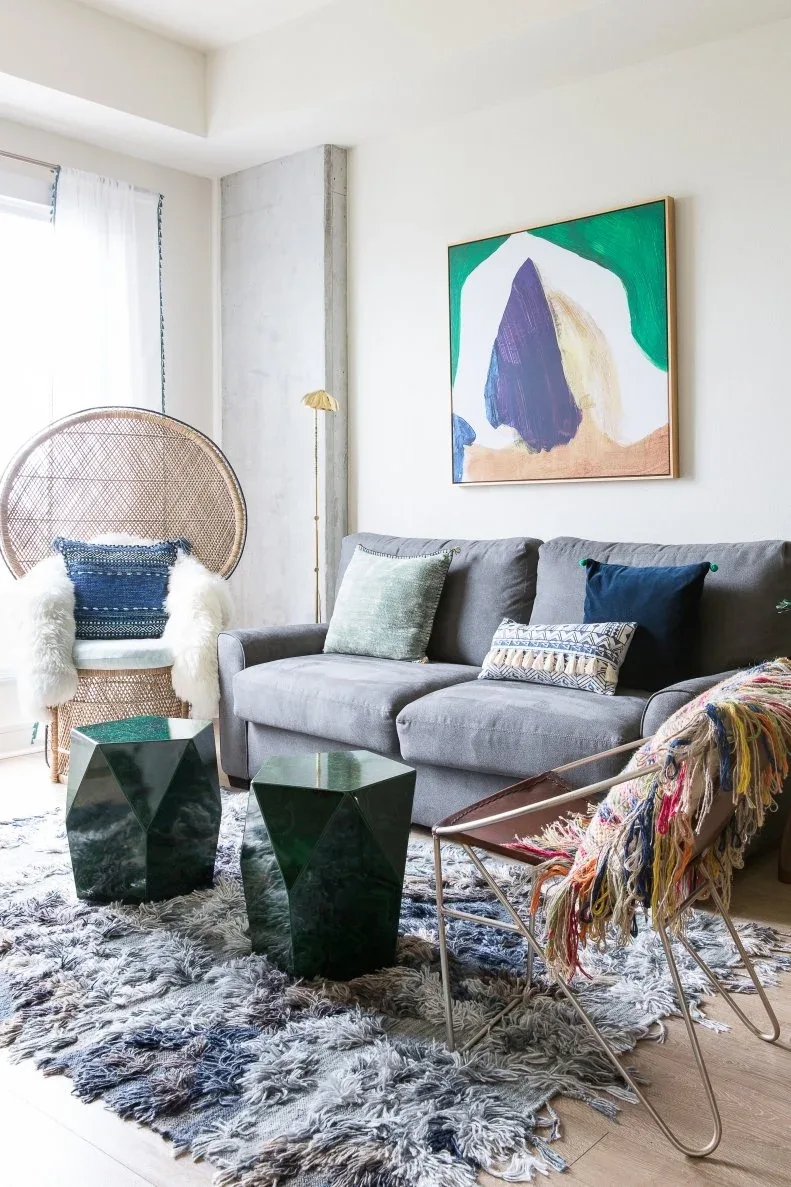
Green repeats between the artwork and the small tables, connecting otherwise different shapes. The plain gray sofa gives that mix a quiet background. Woven seating, a fringed throw and a textured rug add softness around the harder table edges, so the room feels varied without many competing furniture colors.
Keep the central route comfortable when using two small tables instead of one larger piece. Test their stability and leave enough tabletop for actual use. Choose a textured rug with care instructions you can follow, and reduce loose fringe or deep pile if they make cleaning or moving through the room difficult.
IDEA 18 / 20
Use One Small Chair to Add Handwoven Texture
 SaveSupport Non AI Creator
Image credit: Photo: Tessa Neustadt . From: Blackband Design
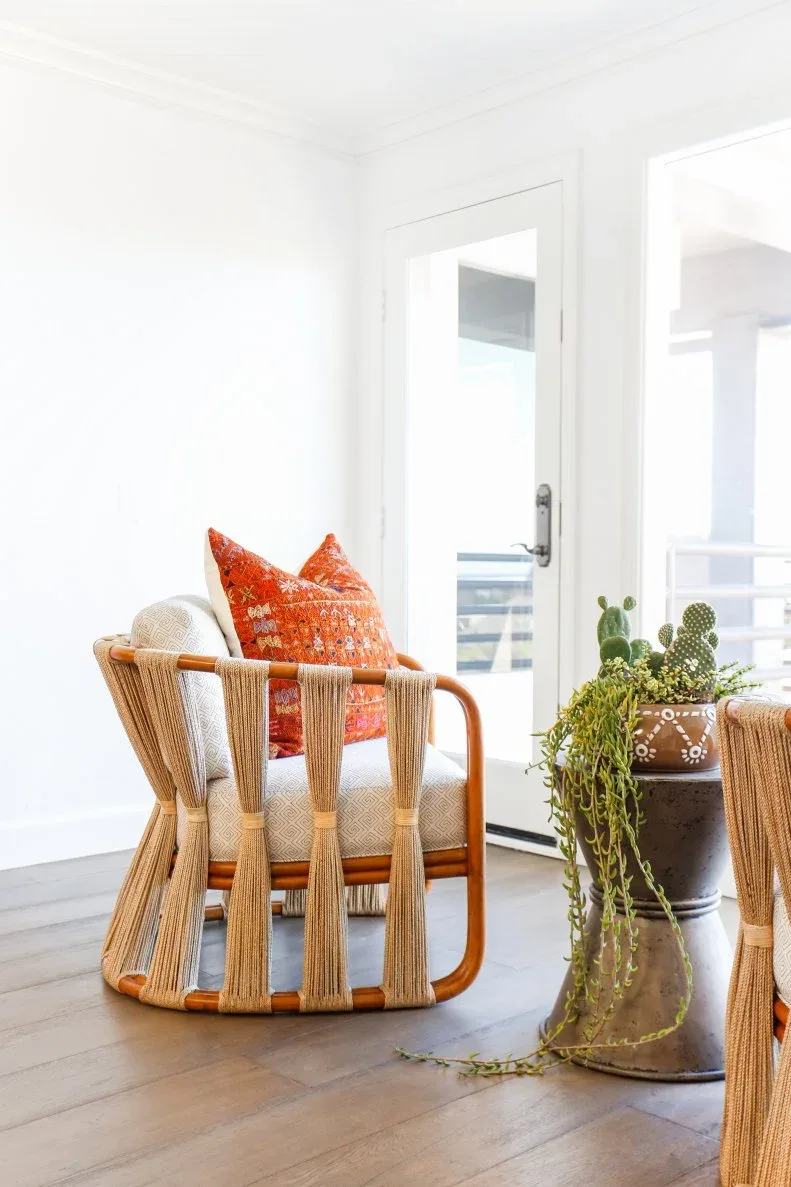
The cord wrapping gives this small chair a strong texture, while the open frame keeps the surrounding floor visible. A single orange cushion provides the main color accent. The plant stand repeats the airy outline beside it, showing how a corner can feel layered without a group of large furniture pieces.
Check the chair’s bindings, joints and weight guidance rather than judging durability from its appearance. Keep trailing stems out of the walking route and doorway. Choose a cushion that stays securely on the seat, and avoid placing a heavy pot where reaching for the chair arm could knock the stand.
IDEA 19 / 20
Keep a Collected Display Inside a Simple Grid
 SaveSupport Non AI Creator
Image credit: Photo: Kyle Born. From: Michelle Gage Interiors
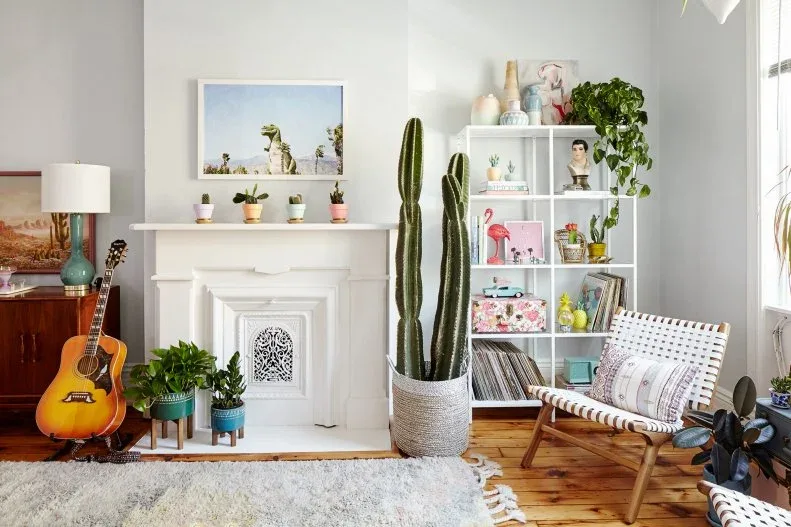
The square shelf grid organizes a lively mix of records, small plants and decorative pieces. Its white frame relates to the fireplace rather than adding another strong furniture color. A low woven chair and pale rug keep the sitting area softer, while the tall plant supplies a distinct vertical shape.
Group the display around what needs to be stored, leaving some compartments clear enough to find things easily. Secure the shelving and protect it from plant drainage. Keep spiny plants away from reachable chair arms and narrow passages, especially in a room used by children or curious pets.
IDEA 20 / 20
Give a Hanging Chair Clear Space Around It
 SaveSupport Non AI Creator
Image credit: Photo: Amy Bartlam. From: Genna Margolis
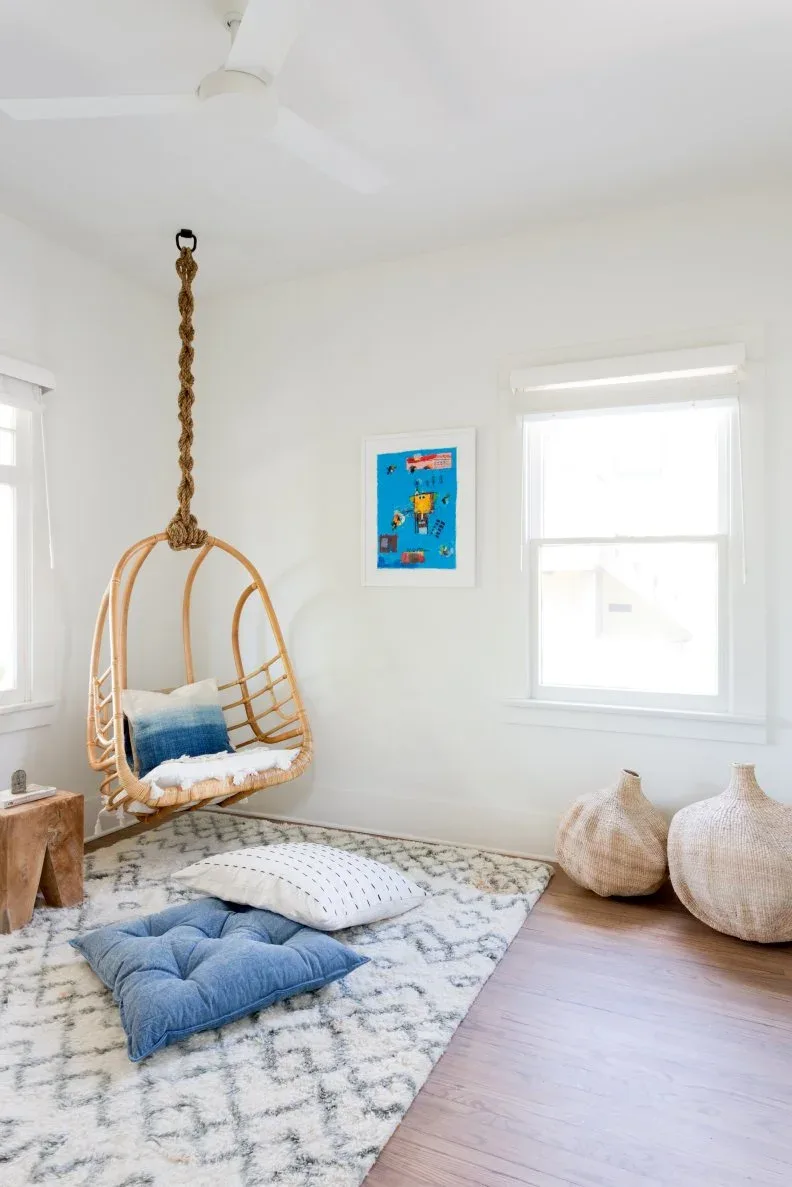
The suspended chair provides a light outline against the white walls, with blue cushions supplying a small amount of color. A pale patterned rug connects it with the floor cushions. The corner stays relatively open, allowing the chair itself to be the decorative feature rather than surrounding it with tall storage.
A hanging chair needs appropriate structural support, rated hardware and the manufacturer’s required movement space. Have the fixing assessed rather than attaching it to a decorative ceiling surface. Move loose floor cushions when they interrupt the route, and check that the chair cannot swing into glass, lamps or nearby furniture.
BRING IT ALL TOGETHER
Keep the Useful Parts Simple
Start with the seat positions, table reach and walking routes. Add the main rug and storage before smaller decorative pieces. A restrained foundation makes it easier to mix patterns and collected objects without losing a comfortable place to sit or a clear surface for everyday use.
Introduce texture where you will enjoy it: a cushion, an open woven chair or a small shelf display. Consider washing, dusting and secure fixings as part of the choice. Edit the room when a decorative layer makes the furniture less useful rather than assuming more objects will improve the mix.