Ralph Lauren-inspired decorating can be relaxed, rustic or polished. What connects these interpretations is a sense that the room has accumulated useful, well-loved things over time: books you read, a comfortable chair, patterned textiles and furniture with a clear purpose. Start with that feeling rather than buying a room of matching pieces.
These photographs include documented homes, published interiors and rooms interpreted through a similar decorating vocabulary. They are not all Ralph Lauren-designed spaces or furnished entirely with Ralph Lauren products. Look at the relationships between colors, patterns and furniture, then borrow the parts that suit the light, scale and everyday life of your own home.
PART 01
Layer pattern with comfortable furniture
IDEA 01 / 16
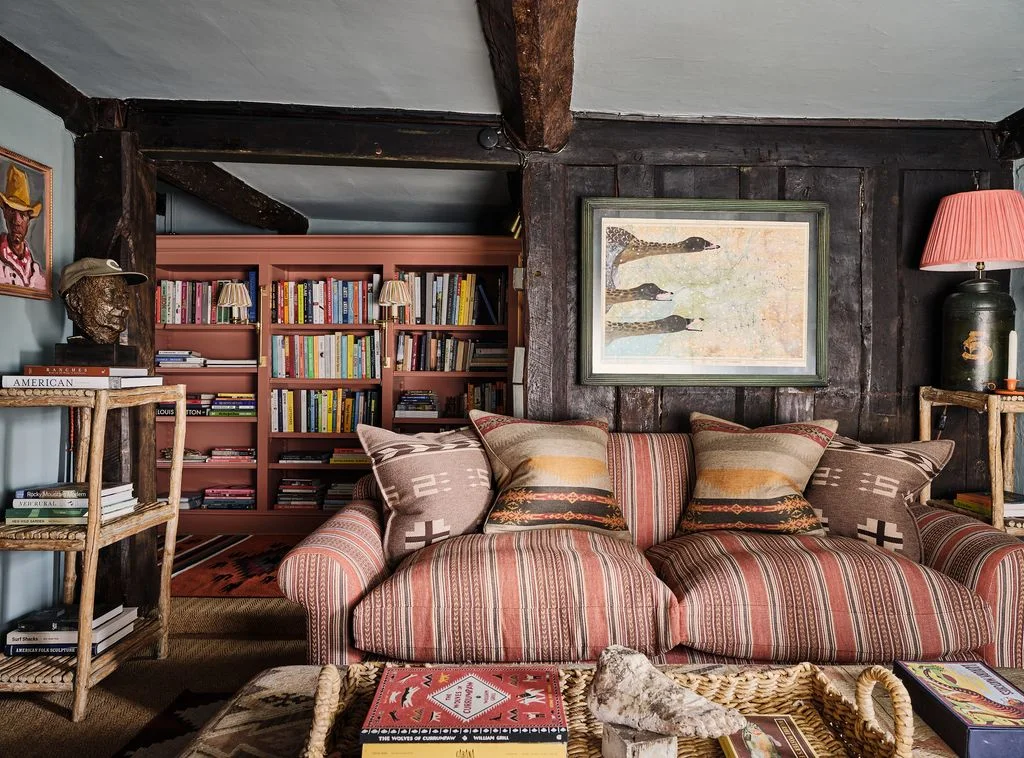
Layer a Striped Sofa With Earthy Pattern
 SaveSupport Non AI Creator
Image credit: Dean Hearne
Rust-red stripes give this sofa a strong base pattern, while its cushions introduce smaller geometric shapes in related earthy colors. Dark timber surrounds the seat, with a busy bookcase behind adding another layer. The pale framed picture provides a quieter area above the patterned upholstery.
Choose one pattern for the largest upholstered surface and vary the scale of the others. Repeat a few colors rather than matching every motif. Test the sofa’s comfort with the cushions in place; a layered arrangement should still leave enough seat depth and room to rest an arm comfortably.
IDEA 02 / 16
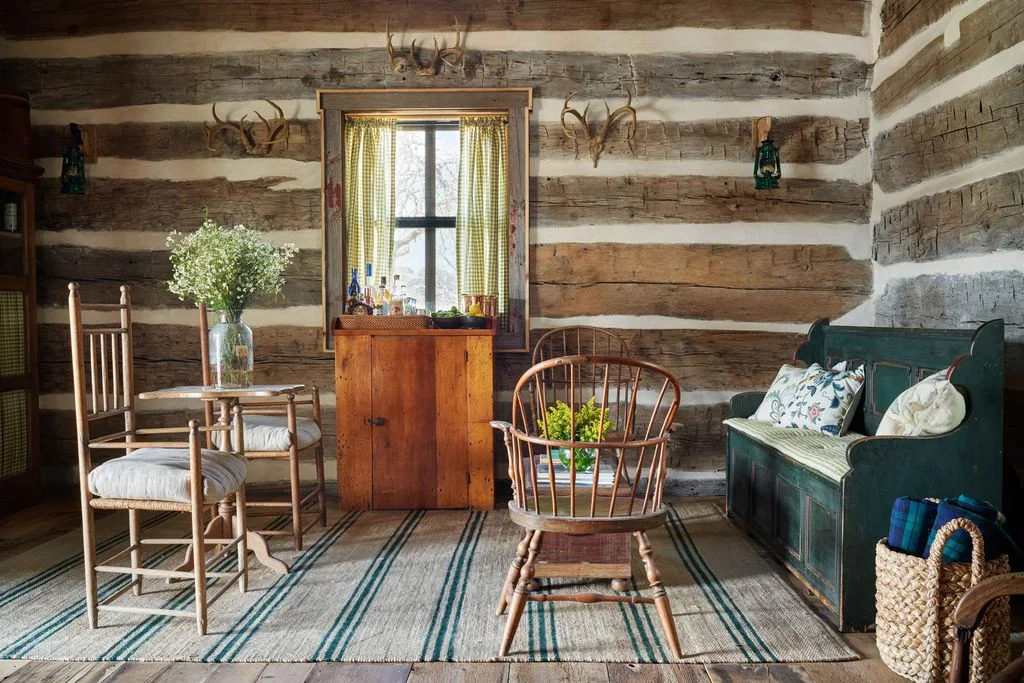
Let Rustic Walls Do Some of the Decorating
 SaveSupport Non AI Creator
Image credit: Stephen Karlisch
The log walls give this sitting area most of its texture, so the furniture can stay relatively simple. A dark green bench anchors one side, with wooden chairs and a striped rug bringing lighter lines across the floor. Small cushions add softness without covering the character of the seats.
If your room already has a strong surface such as timber or brick, keep the first additions restrained. Choose a rug that connects the seating and leaves doors moving freely. Add cushions only where they improve comfort, and check that narrow occasional chairs are suitable for the way the room will actually be used.
IDEA 03 / 16
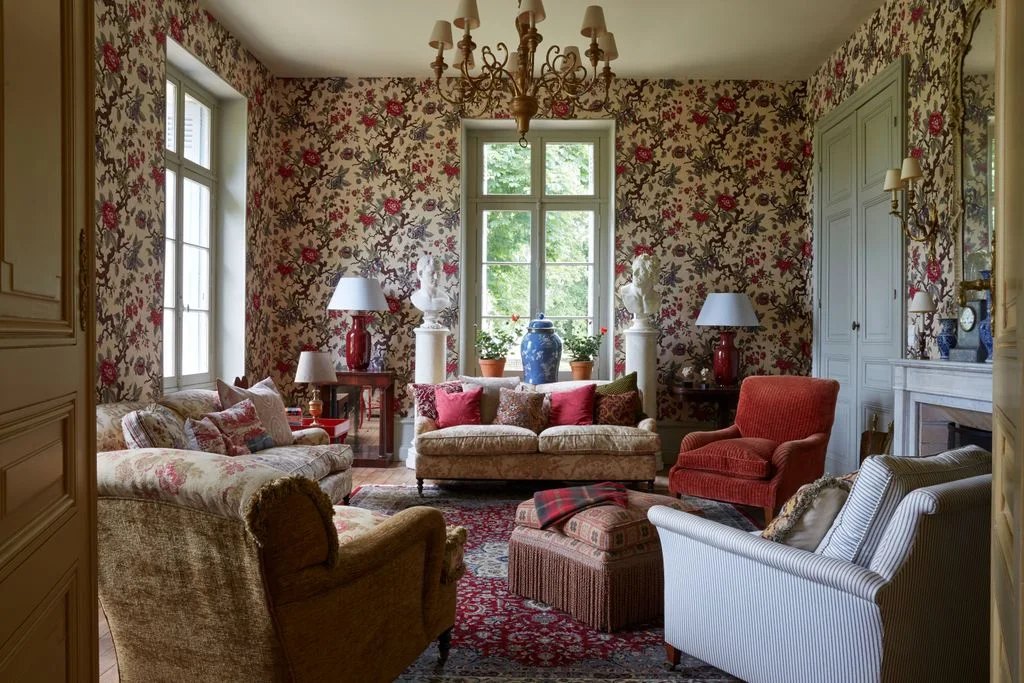
Give Floral Walls a Few Solid Color Companions
 SaveSupport Non AI Creator
Image credit: Boz Gagovski
Large floral wallcovering wraps this sitting room, with pale blue trim outlining the doors and fireplace. A red armchair repeats a color from the flowers, while striped and patterned upholstery add variety below. The plain trim gives the eye a boundary between several richly detailed surfaces.
Sample a large wall pattern alongside the fabrics you plan to keep before covering a whole room. Let one or two solid colors connect the more intricate pieces. Use larger quiet areas where needed, especially around windows, so the combination remains readable in the room’s actual daylight rather than only under bright photography.
IDEA 04 / 16
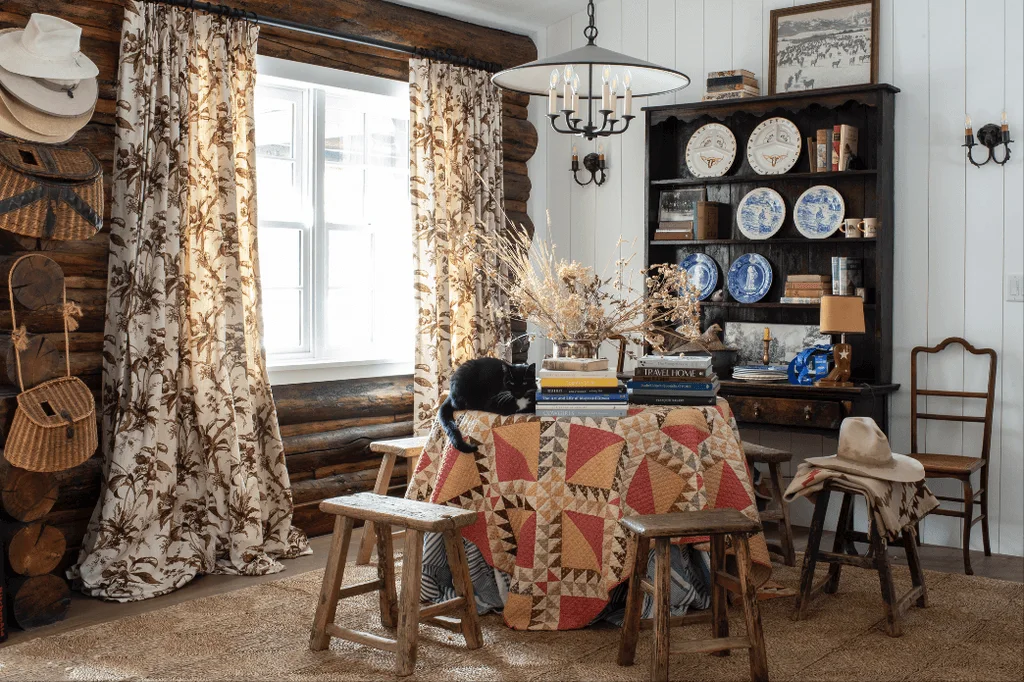
Mix a Dark Dresser With Pale Patterned Textiles
 SaveSupport Non AI Creator
Image credit: Lisa Flood
A dark dresser gives this dining corner a firm outline behind the round table. Pale floral curtains and a geometric table covering soften the timber walls and simple stools. Blue-and-white plates add small repeated accents, with enough space around each display group to keep the dresser’s shape visible.
Use an existing cupboard as the darker anchor before adding more furniture. Keep the dishes you handle often within an easy reach and secure display pieces appropriately. If using a decorative table covering, protect it from food and spills with a suitable removable layer rather than choosing a fabric that makes everyday meals feel difficult.
IDEA 05 / 16
Use One Romantic Print Across the Bed Area
 SaveSupport Non AI Creator
Image credit: Boz Gagovski
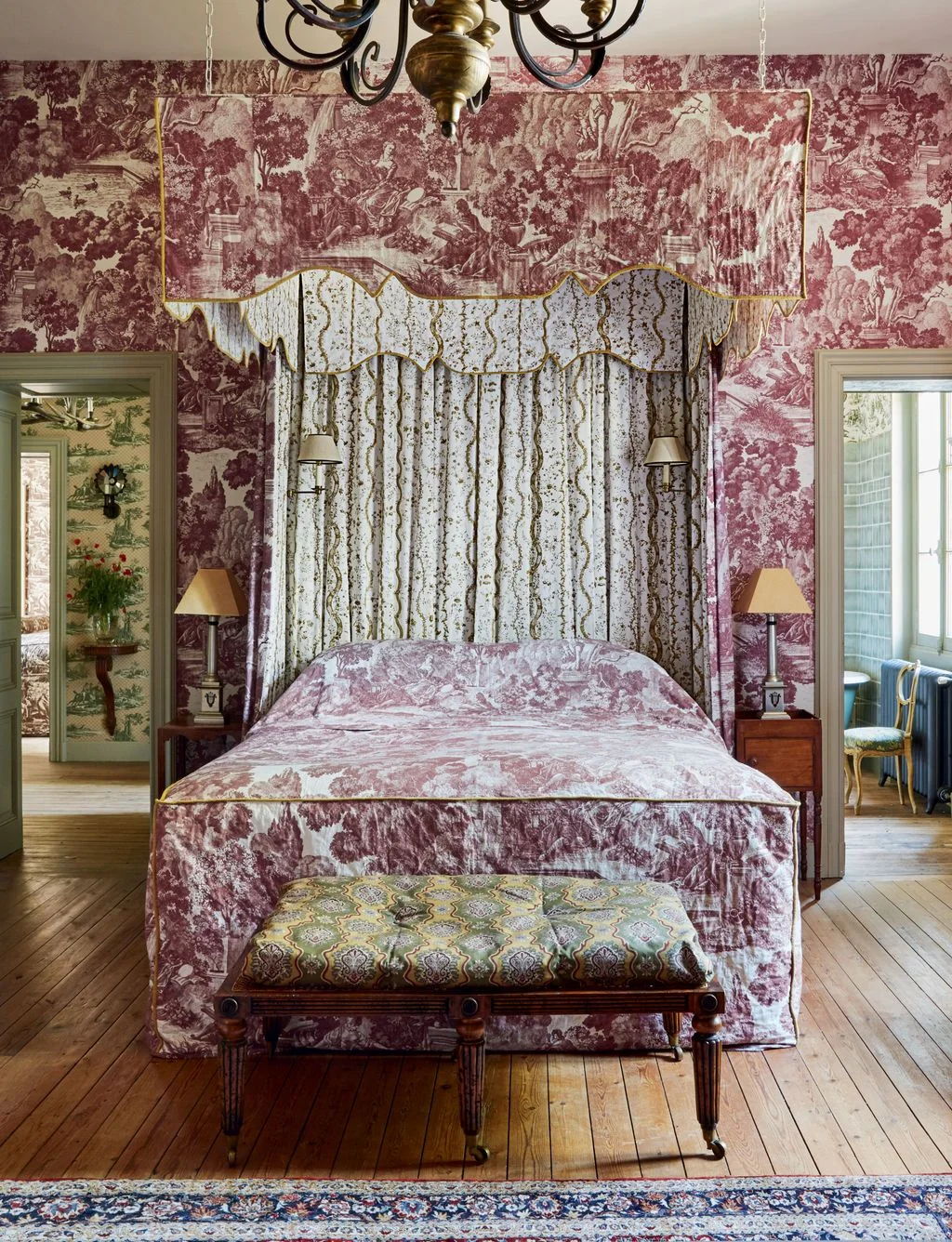
Red-and-cream toile repeats across the walls, canopy and bed covering in this bedroom. A different smaller pattern appears within the canopy, while the bench introduces another color scale below. The coordinated fabric creates an enclosed, intimate sleeping area without relying on many separate decorative objects.
Try the effect first with bedding or curtains before committing to fabric on several large surfaces. Our English cottage bedroom ideas offer more approaches to layered prints in a softer setting. Keep canopy fabric clear of lighting and heat sources, and choose a construction that can be cleaned and maintained without disturbing the bed.
PART 02
Balance checks, stripes and warm surfaces
IDEA 06 / 16
Combine Different Checks in a Small Sleeping Nook
 SaveSupport Non AI Creator
Image credit: Michael Sinclair
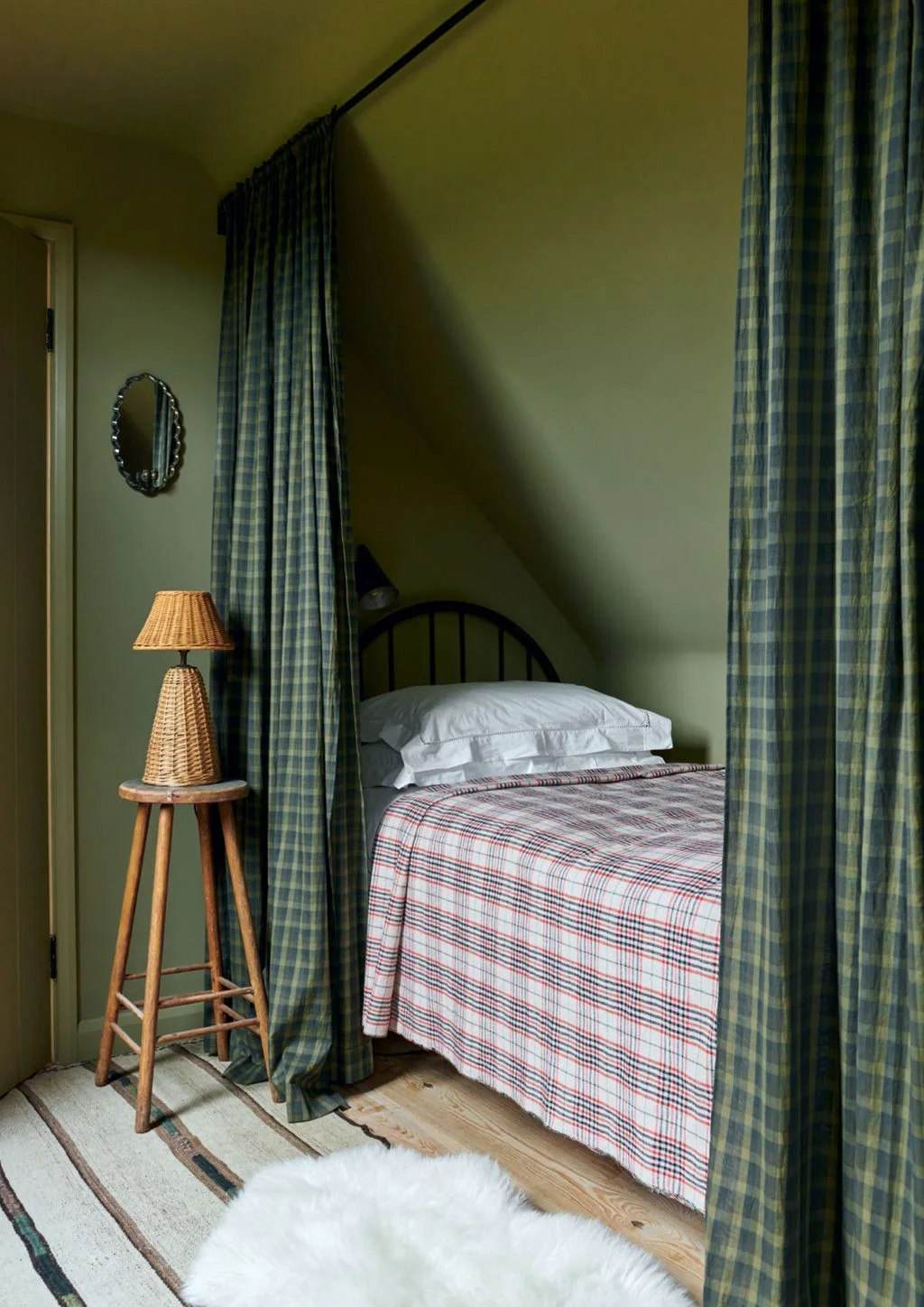
Green checked curtains frame this compact bed, with a finer red-and-dark check across the covering. The plain green walls hold the two patterns together. A woven lamp on a simple stool adds another texture, while the white pillow creates a clear, unpatterned area at the head.
Use different pattern scales so the checks do not compete at the same intensity. In a tight nook, keep the curtain easy to open and preserve ventilation around the bed. Check the stability of any small bedside surface, and place the lamp so neither bedding nor moving fabric can rest against it.
IDEA 07 / 16
Pair a Broad Check With Relaxed Table Linen
 SaveSupport Non AI Creator
Image credit: Tim Beddow
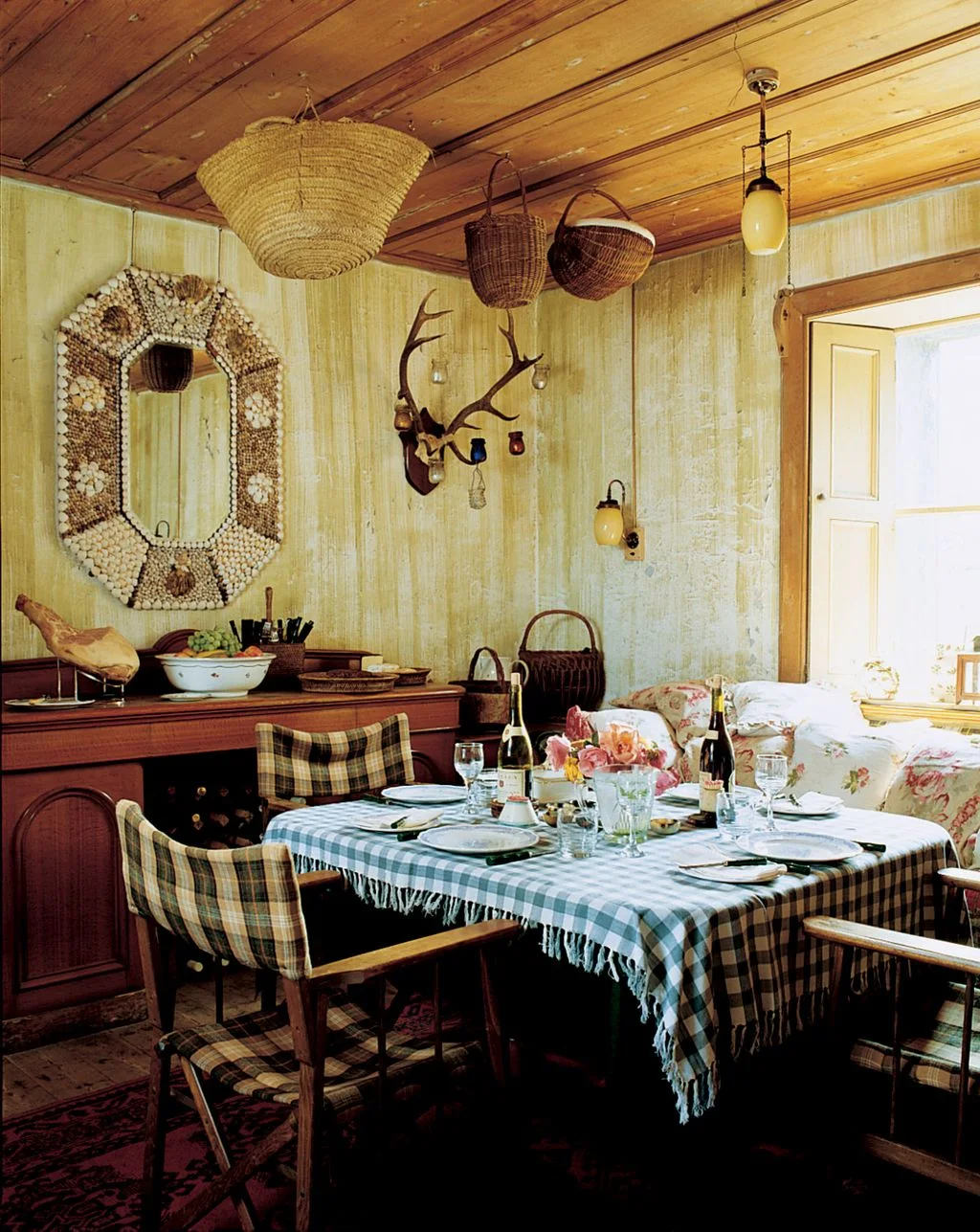
Broad checked chairs surround a table covered in a lighter blue check, creating a relaxed mixture rather than a matched dining set. Timber furniture and woven baskets add warmer textures around them. Pale walls give the strong chair pattern enough space to stand out without darkening the whole room.
Connect contrasting checks through a shared light background or repeated accent color. Keep the table covering washable if the space handles daily meals. Decorative objects above a dining area need secure installation and adequate headroom; their appearance in a room should not take priority over comfortable movement around the table.
IDEA 08 / 16
Make a Checked Chair the Fireside Focus
 SaveSupport Non AI Creator
Image credit: Lauren L. Caron
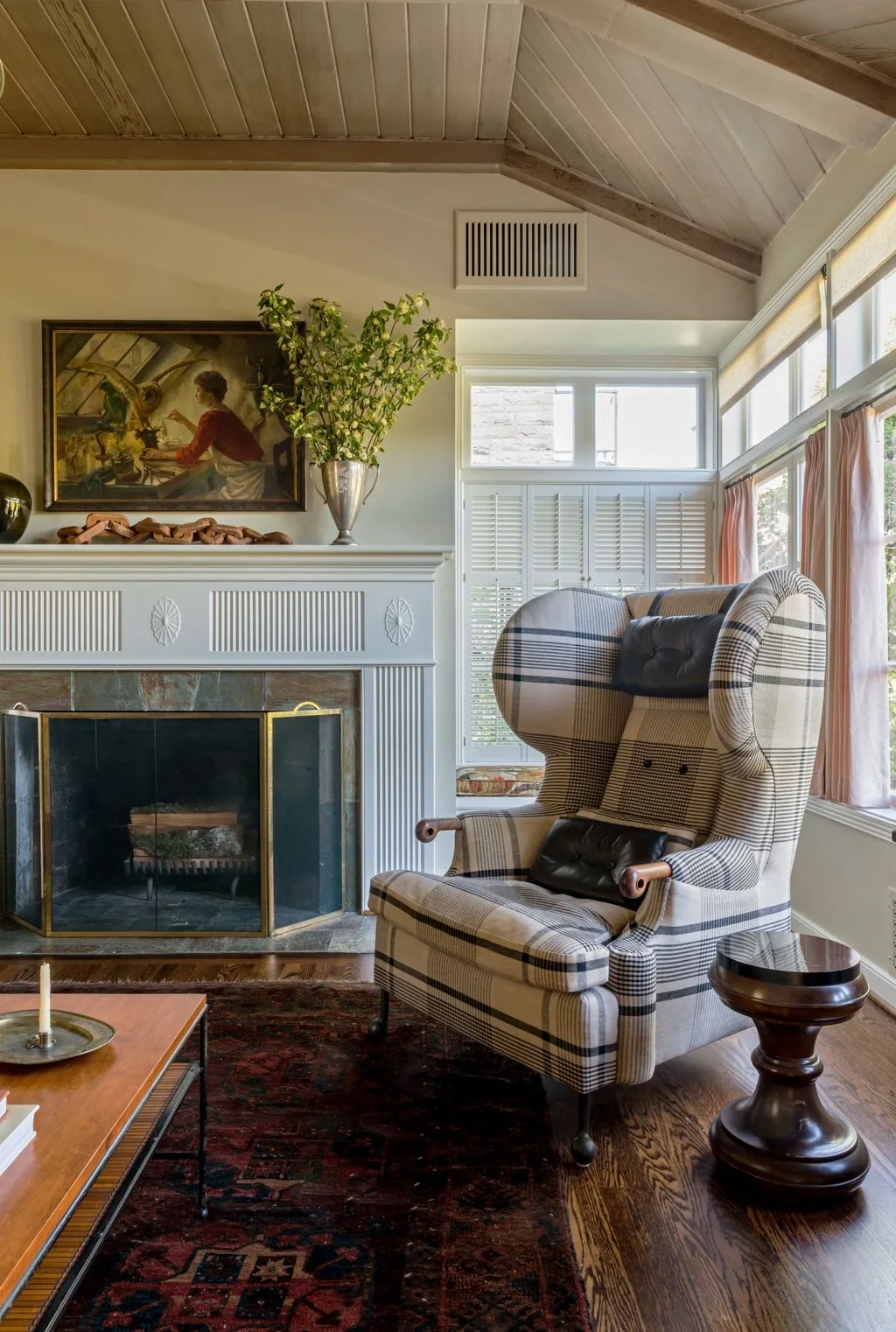
A tall checked wing chair forms a clear fireside seat, with a dark round table close enough for a cup or book. The pale fireplace surround keeps the corner from becoming too dark. A patterned rug underneath introduces warmer color while the chair remains the largest graphic element.
Measure the chair’s full height and width in the room before choosing a large winged shape. Our traditional fireplace ideas show more ways to balance the surround and nearby seating. Follow the fireplace’s required clearances and position the table outside the route through the room, where it will not catch a passing knee.
IDEA 09 / 16
Display Books Alongside Personal Collections
 SaveSupport Non AI Creator
Image credit: Eric Piasecki
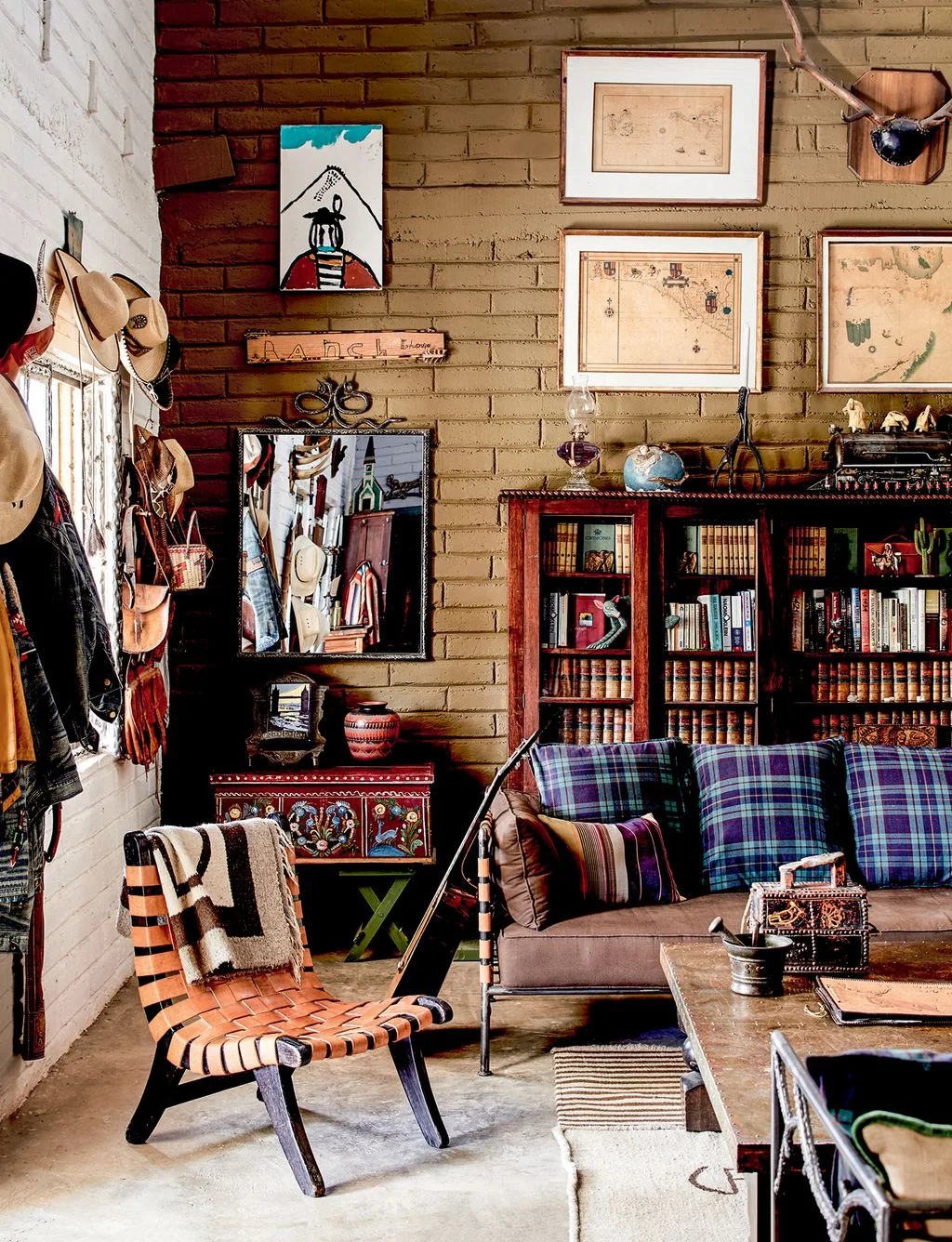
Blue checked cushions bring a cooler note into this room of dark furniture, books and framed maps. Small collected objects sit among the shelves rather than occupying a separate display cabinet. The woven chair and simple table keep the seating usable despite the varied surfaces around them.
Build a collection gradually around things you enjoy, leaving room to handle the books and clean the shelves. Group small objects on one stable surface instead of spreading them across every seat-side table. Use a shared frame tone or limited cushion palette to connect the room without forcing unrelated objects into matching sets.
PART 03
Give rooms a collected character
IDEA 10 / 16
Use Narrow Stripes as a Continuous Background
 SaveSupport Non AI Creator
Image credit: Lucas Allen
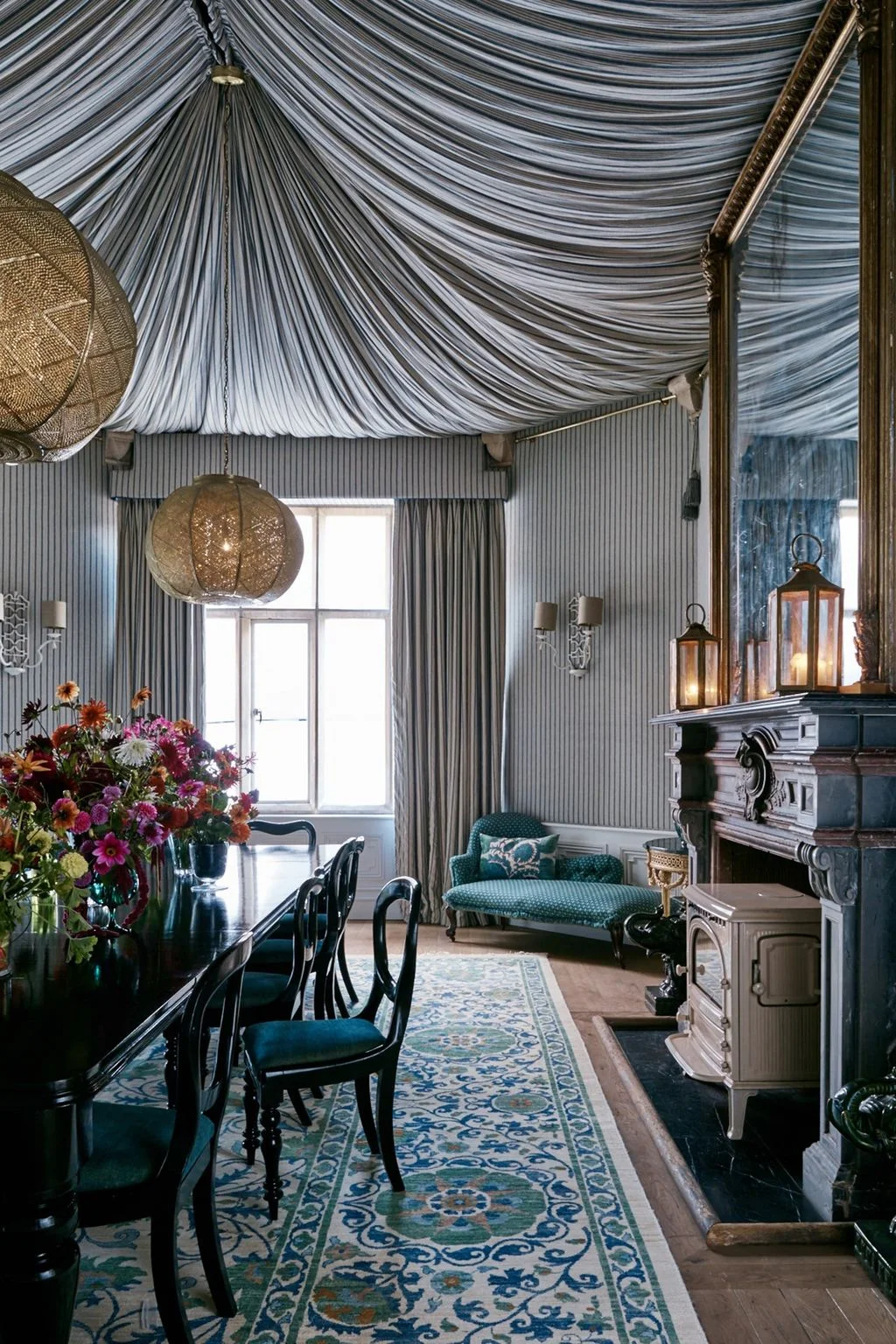
Fine stripes extend from the walls across the tented ceiling in this dining room, turning a small repeated pattern into a continuous background. Dark chairs and a long table stand clearly against it. Large hanging lights interrupt the lines, giving the upper part of the room a different scale.
A continuous pattern is a major commitment, so test a broad sample in the actual room before proceeding. Fabric ceilings need suitable professional assessment, secure fitting and appropriate fire and lighting considerations. You can borrow the striped effect more simply through curtains or upholstery if your room does not suit an overhead treatment.
IDEA 11 / 16
Keep Nautical Stripes Comfortable and Informal
 SaveSupport Non AI Creator
Source: House & Garden
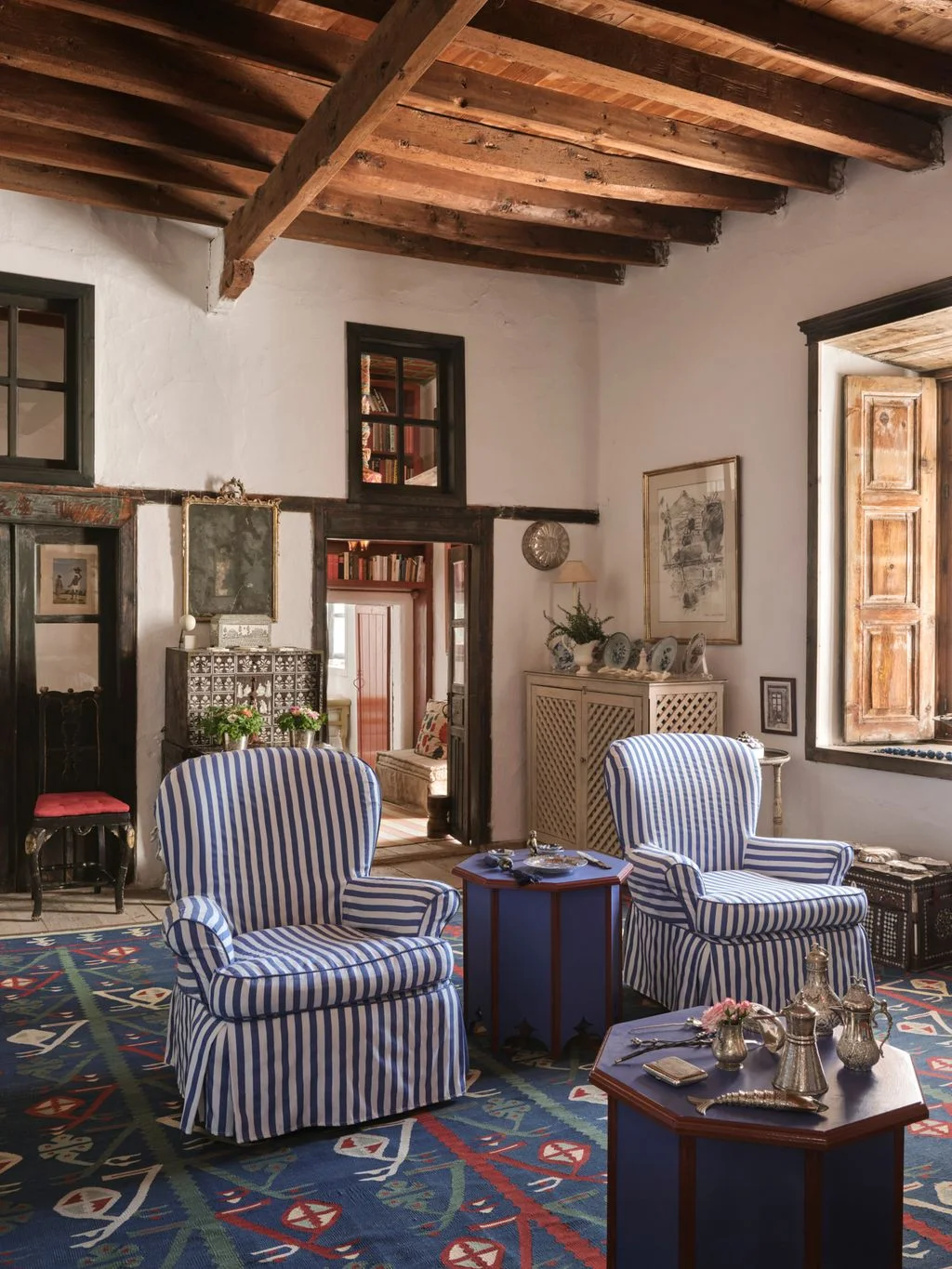
Blue-and-white stripes give these curved armchairs a lighter character against the dark beams and patterned rug. The small tables repeat the upholstery’s blue without using the same pattern. Pale walls and open space between the chairs keep the grouping relaxed rather than tightly arranged around a large central piece.
Try a striped slipcover or cushion if replacing a whole chair is unnecessary. Choose a stripe scale that suits the piece and check how it meets at the seams. Leave enough usable table surface for everyday drinks, and compare the seat heights so the group feels comfortable for more than a quick photograph.
IDEA 12 / 16
Use Dark Color Around a Compact Entertaining Area
 SaveSupport Non AI Creator
Image credit: Lucas Allen
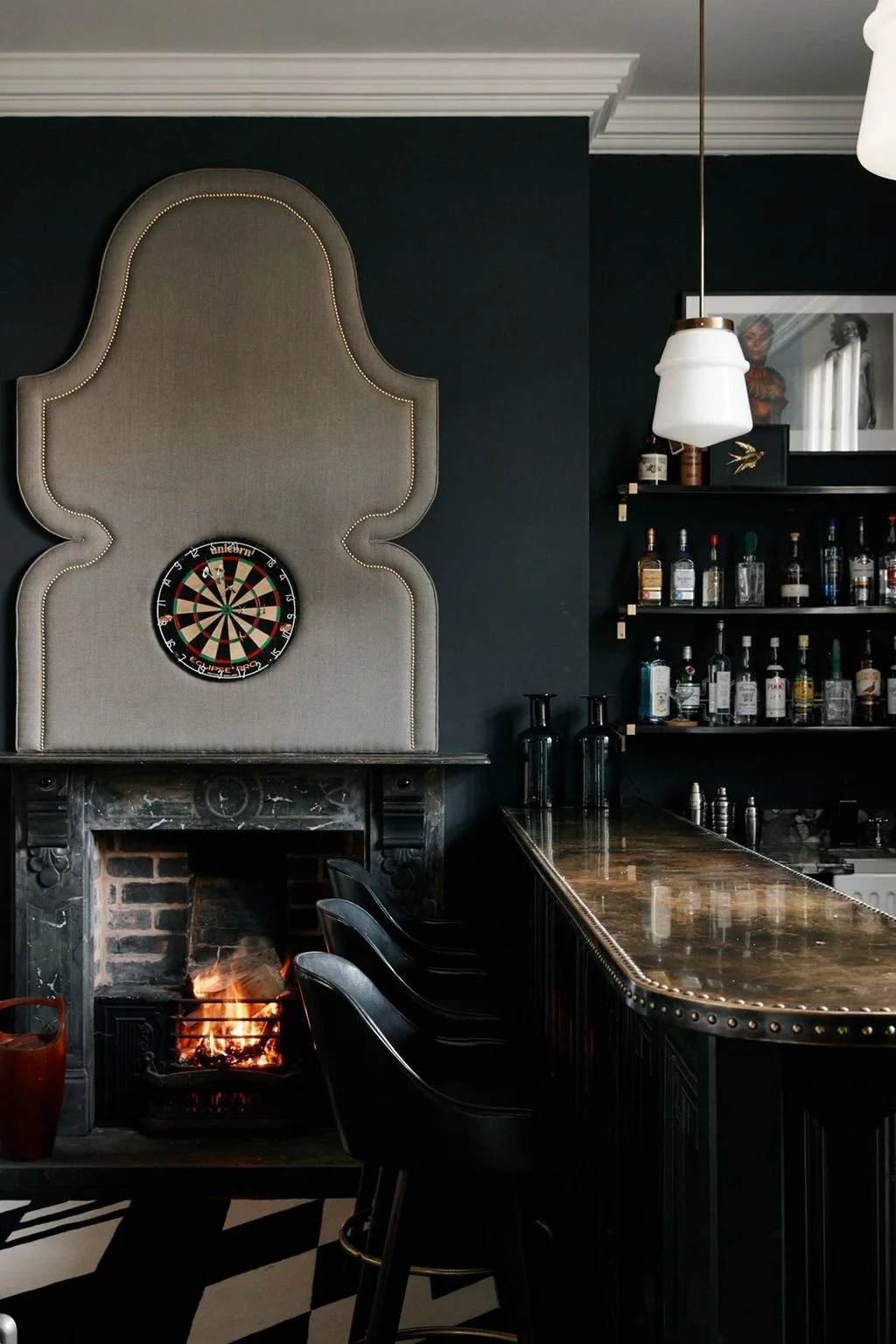
Dark walls and shelving give this small bar area a distinct evening mood. A studded edge outlines the counter, while pale lighting and the fireplace surround provide contrast. The bottles occupy organized rows at one side, keeping the central counter more usable for serving.
Borrow the contrast through a small cabinet or serving area rather than assuming an entire room needs dark paint. Keep glassware stable and liquids away from electrical equipment. If a fireplace is nearby, preserve its required clearances and assess the actual room layout; a photographed arrangement does not establish safe distances.
IDEA 13 / 16
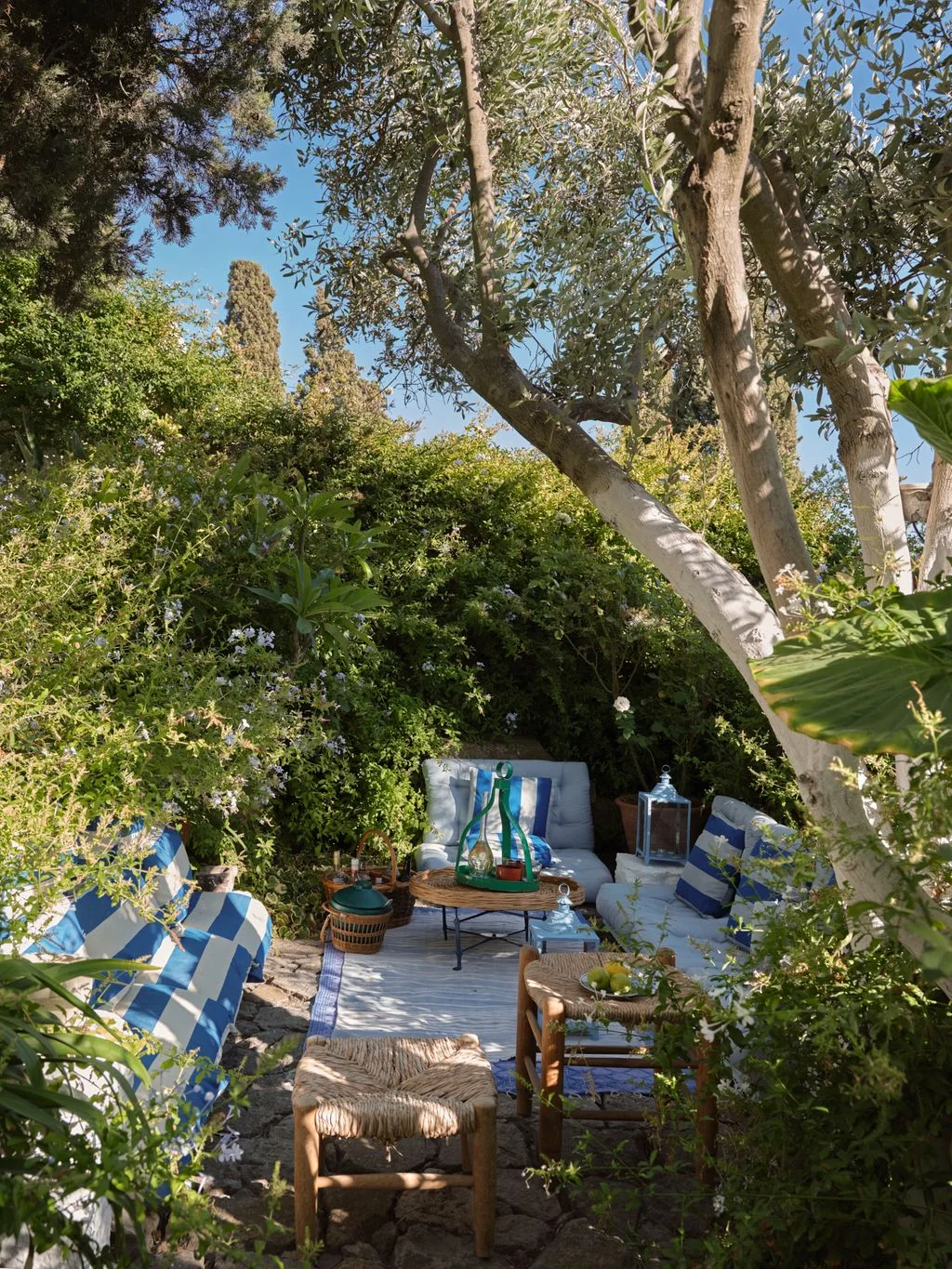
Carry Blue Stripes Into an Outdoor Sitting Spot
 SaveSupport Non AI Creator
Source: House & Garden
Blue-and-white striped cushions link the seats in this sheltered garden corner, with woven stools adding lighter texture below. Small tables are distributed around the seating rather than concentrated in one large piece. Dense greenery encloses the arrangement while leaving a visible route through the middle.
Choose fabrics intended for the conditions of your own outdoor space and follow their care instructions. Bring cushions in when needed rather than assuming shade protects them from damp. Keep containers and furniture clear of the walking route, and check that foliage will not drip onto textiles after rain or watering.
PART 04
Adapt the mood to a different home
IDEA 14 / 16
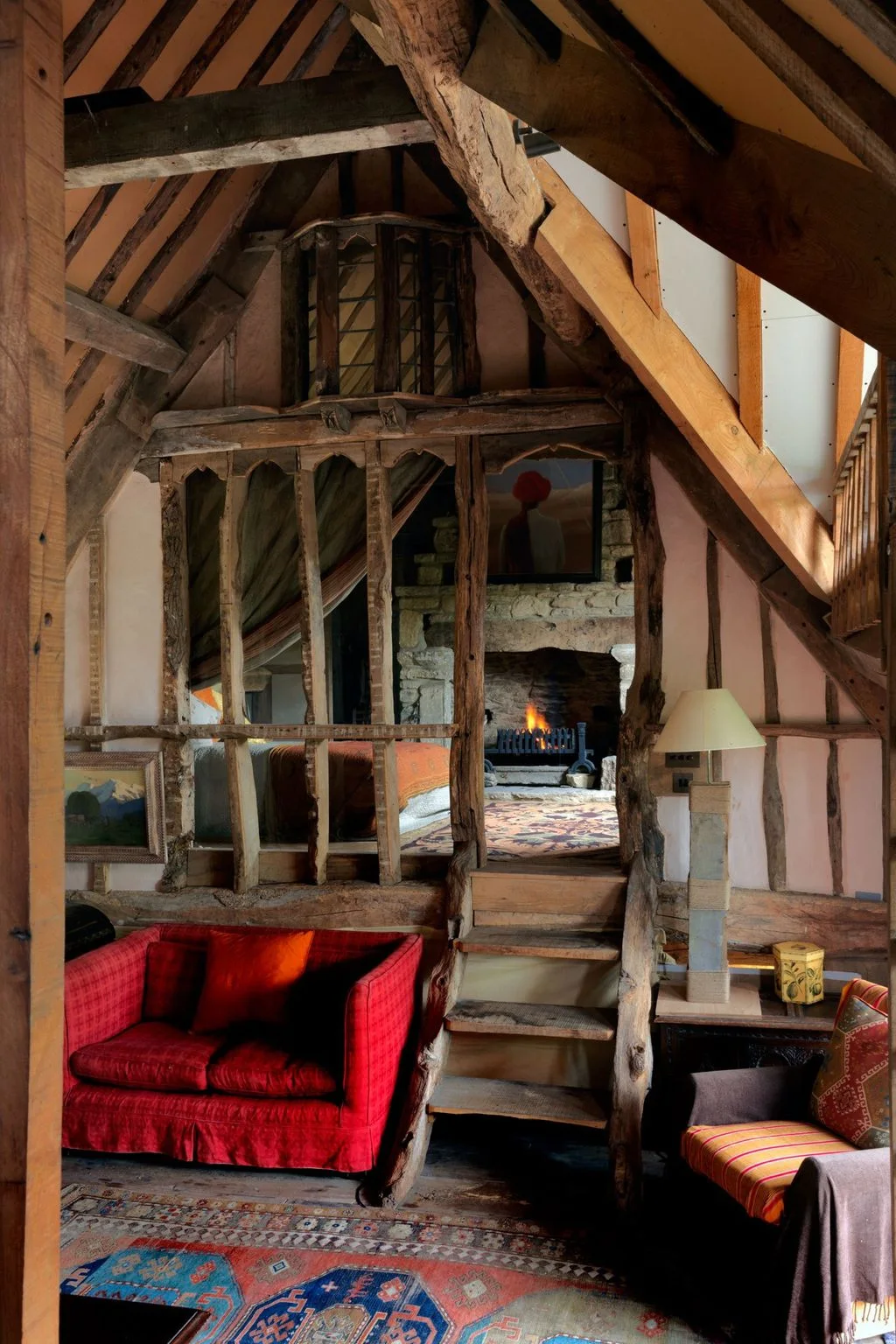
Let Bold Upholstery Warm a Timber Interior
 SaveSupport Non AI Creator
Image credit: Simon Brown
A bright red two-seat loveseat brings warmth to the lower seating area of this heavily timbered room. Patterned rugs connect the different levels, while pale wall sections prevent the beams from becoming one dark surface. The furniture sits within the existing architecture rather than trying to conceal its irregular shapes.
Use one upholstered piece to test a stronger color before changing the entire room. Preserve clear approaches to steps and doorways, particularly in an older home with uneven levels. Place lamps where they illuminate circulation as well as seating, and assess any fireplace independently before arranging fabric-covered furniture nearby.
IDEA 15 / 16
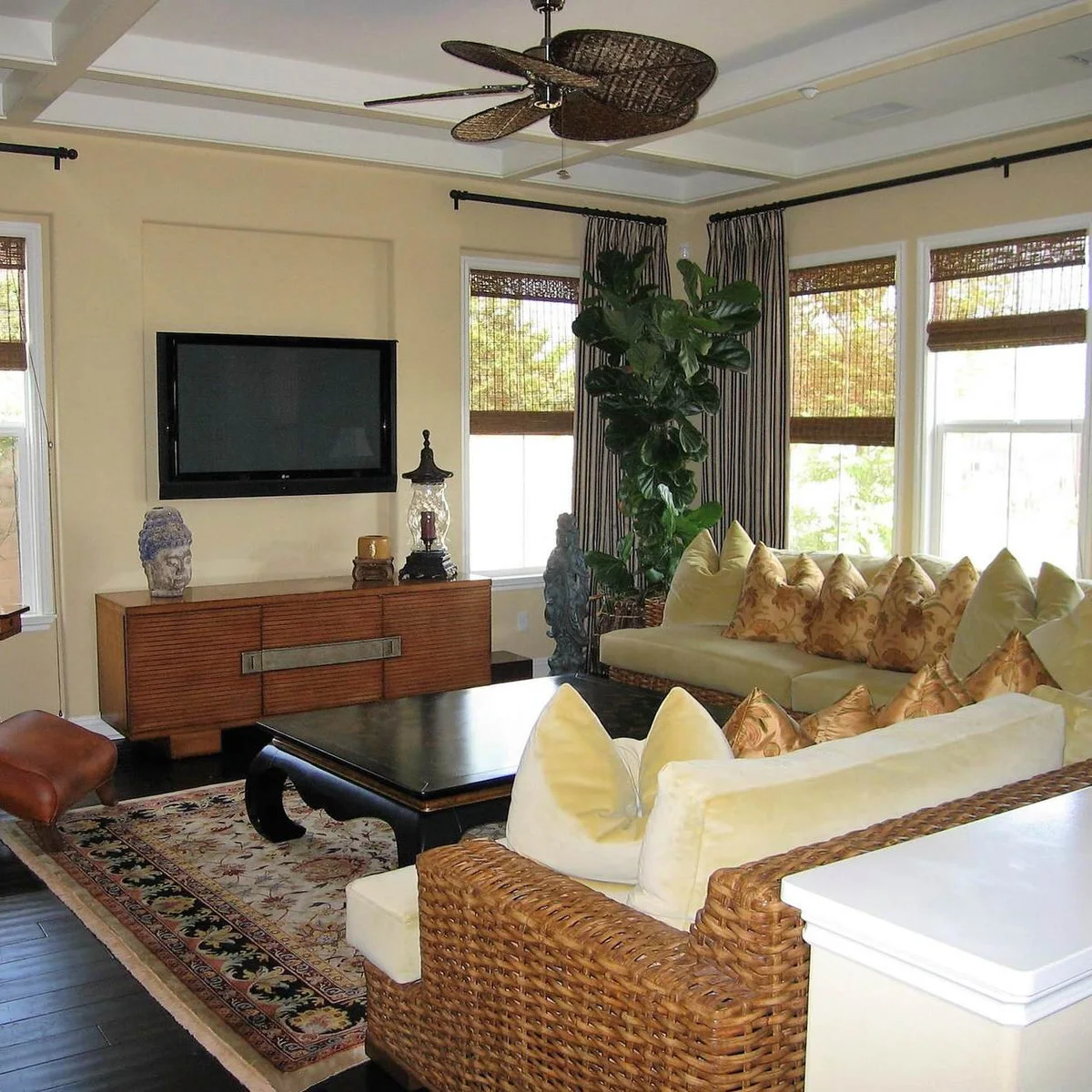
Keep the Television Wall Quieter Than the Seating
 SaveSupport Non AI Creator
Image credit: Julia Caroline Design
The television wall stays relatively simple in this room, with a low wooden cabinet below and patterned textiles concentrated around the seating. Woven sofas and yellow cushions bring texture and warmth. Long striped curtains add a tailored vertical pattern around the windows, while woven sofas and yellow cushions give the seating a relaxed, resort-style character.
Balance the screen with furniture of an appropriate scale rather than surrounding it with many small objects. Keep equipment ventilation and cable access clear, and check the screen height from the seats. Repeat one textile detail across the room so the practical television area still belongs to the wider arrangement.
IDEA 16 / 16
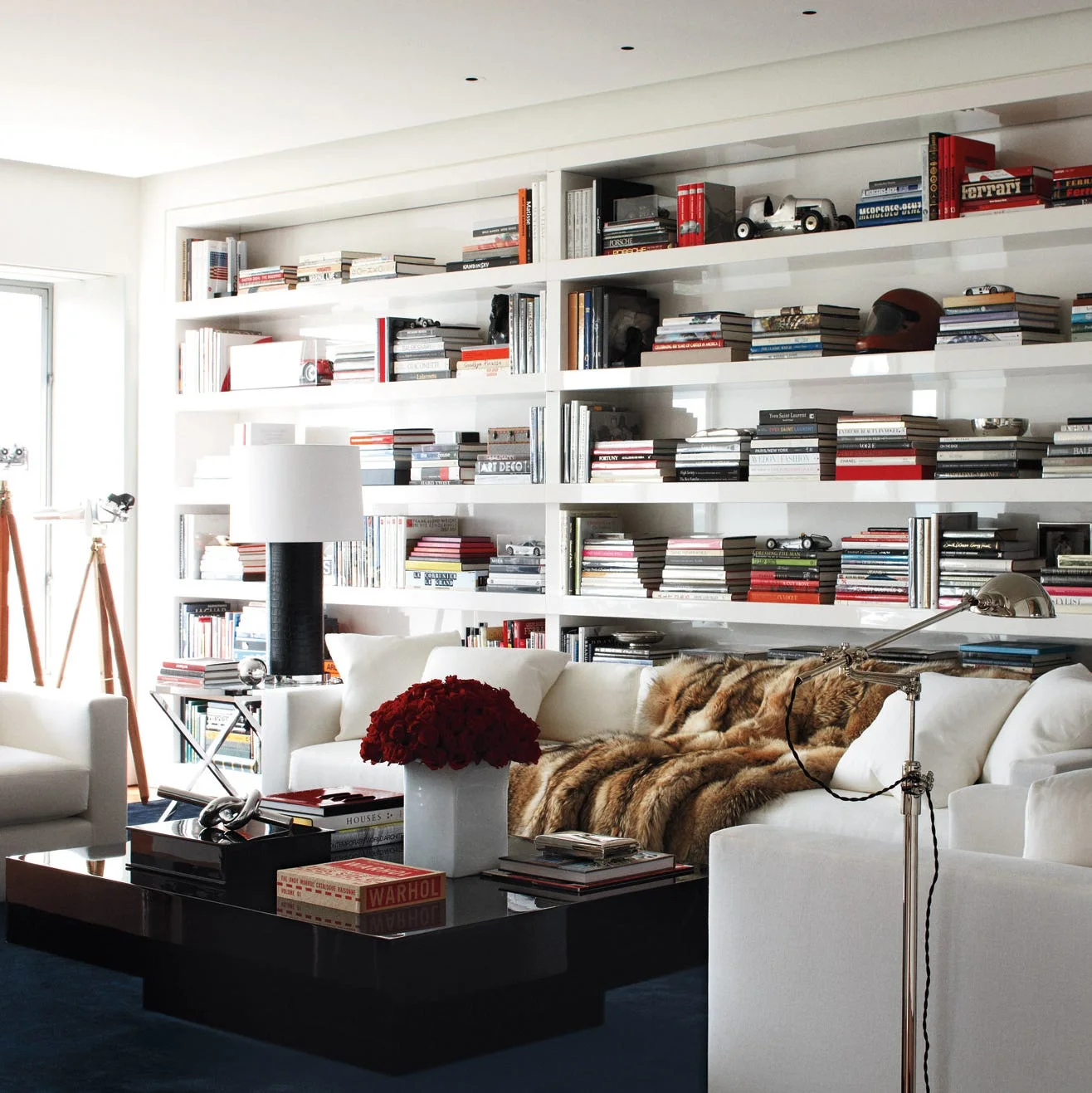
Try a Lighter City Interpretation
 SaveSupport Non AI Creator
Source: www.elledecor.com
White shelves and pale seating give this published Ralph Lauren interior a lighter city character than the rustic rooms elsewhere in the collection. Books, dark tables and a textured throw provide contrast. The layered feeling comes from objects and surfaces, while the room’s broad background remains light.
Use a limited pale palette if a small home cannot comfortably carry dark walls and bulky furniture together. Our apartment living room ideas offer more ways to balance seating, storage and clear circulation. Keep book shelves within their load limits, and choose upholstery care that suits everyday use before committing to a white cover.
BRING IT ALL TOGETHER
Build the room around what you use
Begin with a comfortable seat, practical lighting and a clear route through the room. Add one patterned textile and repeat a few of its colors in smaller details. Books, artwork and objects should mean something to you rather than acting as a checklist of traditional accessories.
Leave quieter spaces between the layers. A plain wall, simple lampshade or unpatterned cushion makes the more detailed pieces easier to enjoy. Check every addition for maintenance and daily use; the room should feel welcoming after an ordinary week, not only when arranged for a photograph.