Dark kitchen cabinets can give a room depth without making every surface equally dark. A pale counter, clear window, or warmer wooden floor changes how the cabinetry feels. These kitchens show different ways to use deeper brown, blue, charcoal, and plum across lower units, tall storage, and islands.
Start by looking at the cabinetry you need rather than choosing a color in isolation. Compare door samples with your existing floor and worktops, then consider the light reaching the preparation area. Each example below explains the visible arrangement and a practical detail to check before trying a similar approach.
PART 01
Balance Deep Wood with Lighter Surfaces
IDEA 01 / 20
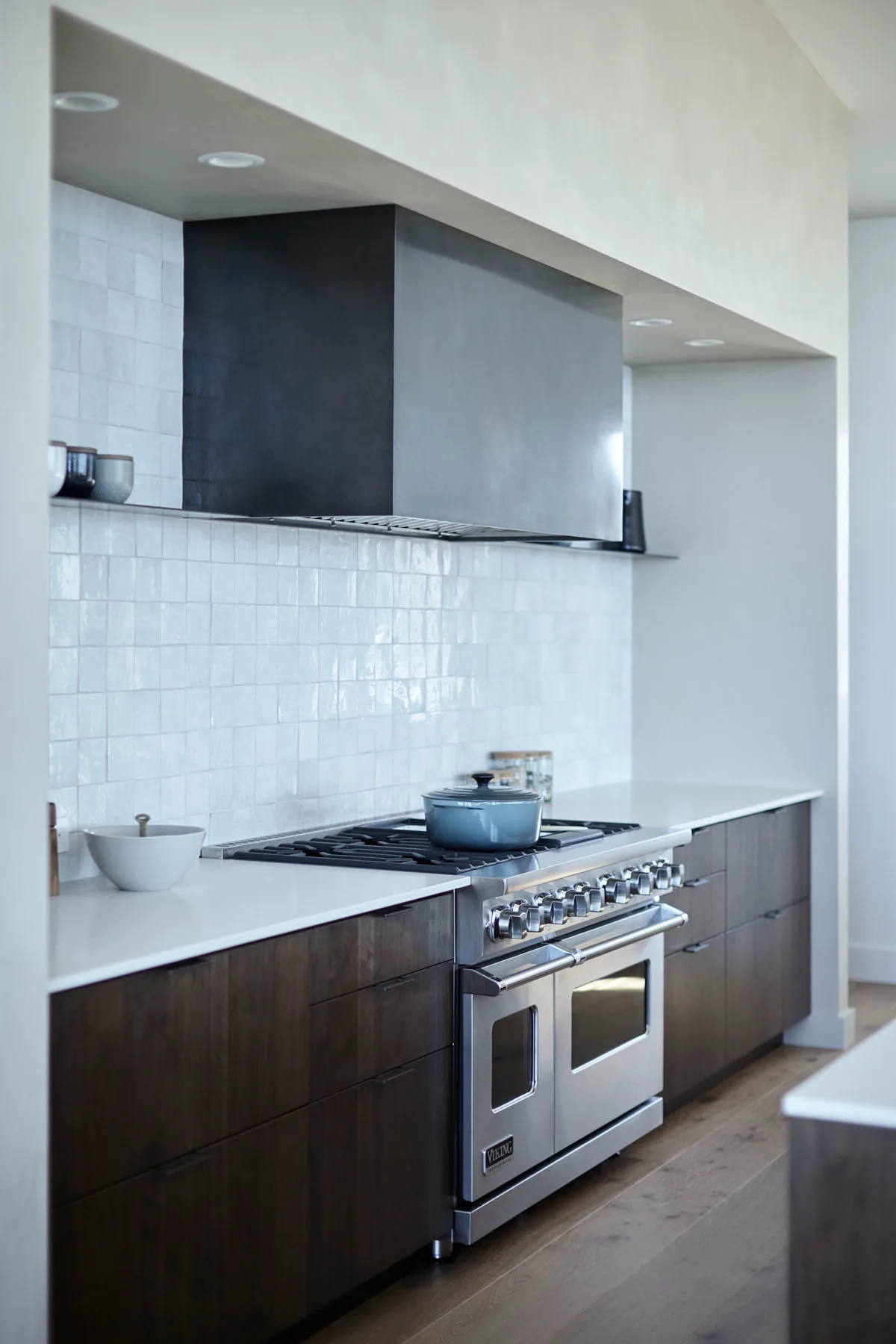
Brighten Deep Brown Drawers with White Tile
 SaveSupport Non AI Creator
Image credit: Photo Courtesy of Space Theory
Deep brown drawer fronts create a steady lower band beneath the white counter. The glossy square tiles reflect the brighter surroundings, separating the cabinets from the broad dark hood above the range. Pale walls leave the cooking area clearly framed, while the simple cabinet fronts keep the varied reflections on the tile from competing with extra door detailing.
View the door finish beside the actual tile and counter samples before choosing a dark wood tone. A small change in sheen can affect how much light each surface appears to return. Plan drawer sizes for the cookware you use, and keep the adjacent worktop available for preparation rather than filling the brighter strip with decorative collections. If clearer counters are your priority, our minimalist kitchen ideas compare storage arrangements that keep useful work space available.
IDEA 02 / 20
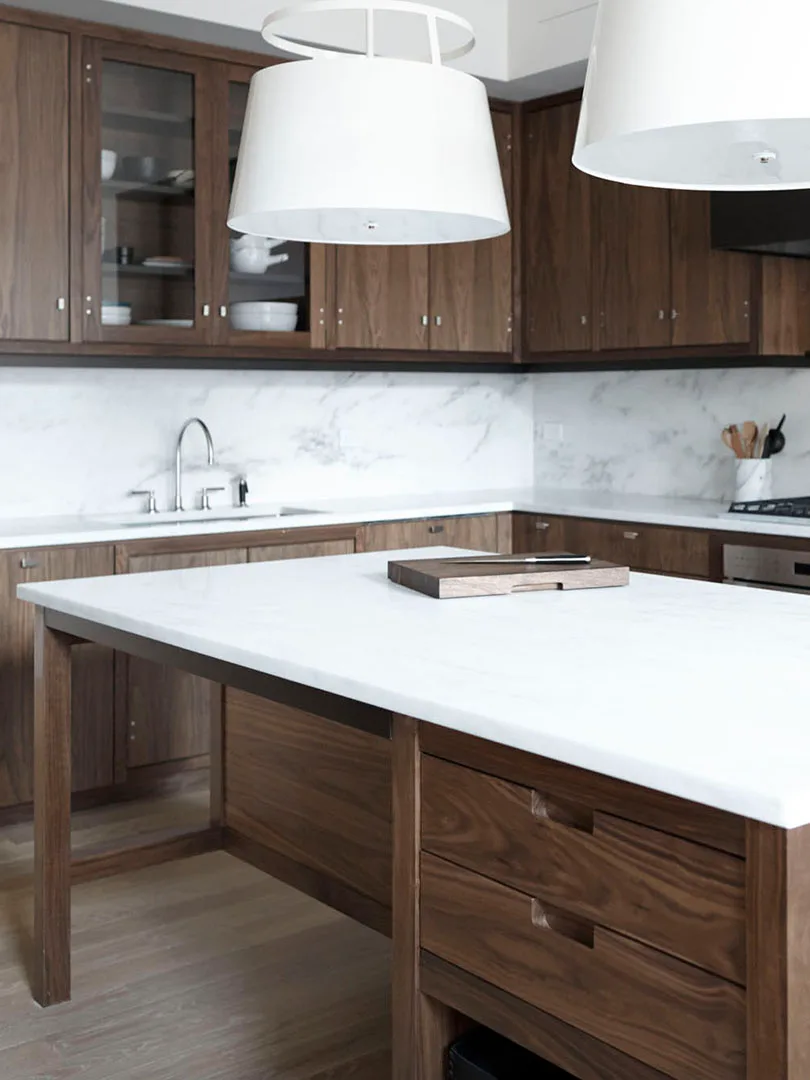
Frame a Pale Island with Dark Wood Storage
 SaveSupport Non AI Creator
Image credit: Photo Courtesy of Space Theory
Dark wood cabinets surround a pale island top, creating contrast across the center and edges of this kitchen. Glazed upper doors show a small selection of white dishes instead of forming an entirely solid wall. The pale backsplash continues behind the sink, and the broad white pendant shades repeat that lighter color at a higher level.
Decide what will sit behind glazed doors before adding them to a large cabinet run. Everyday dishes can look orderly, while packaging and mixed small appliances may need closed storage. Check the island overhang and drawer access together, and position the pendants so their scale suits the counter without obstructing views across the working area.
IDEA 03 / 20
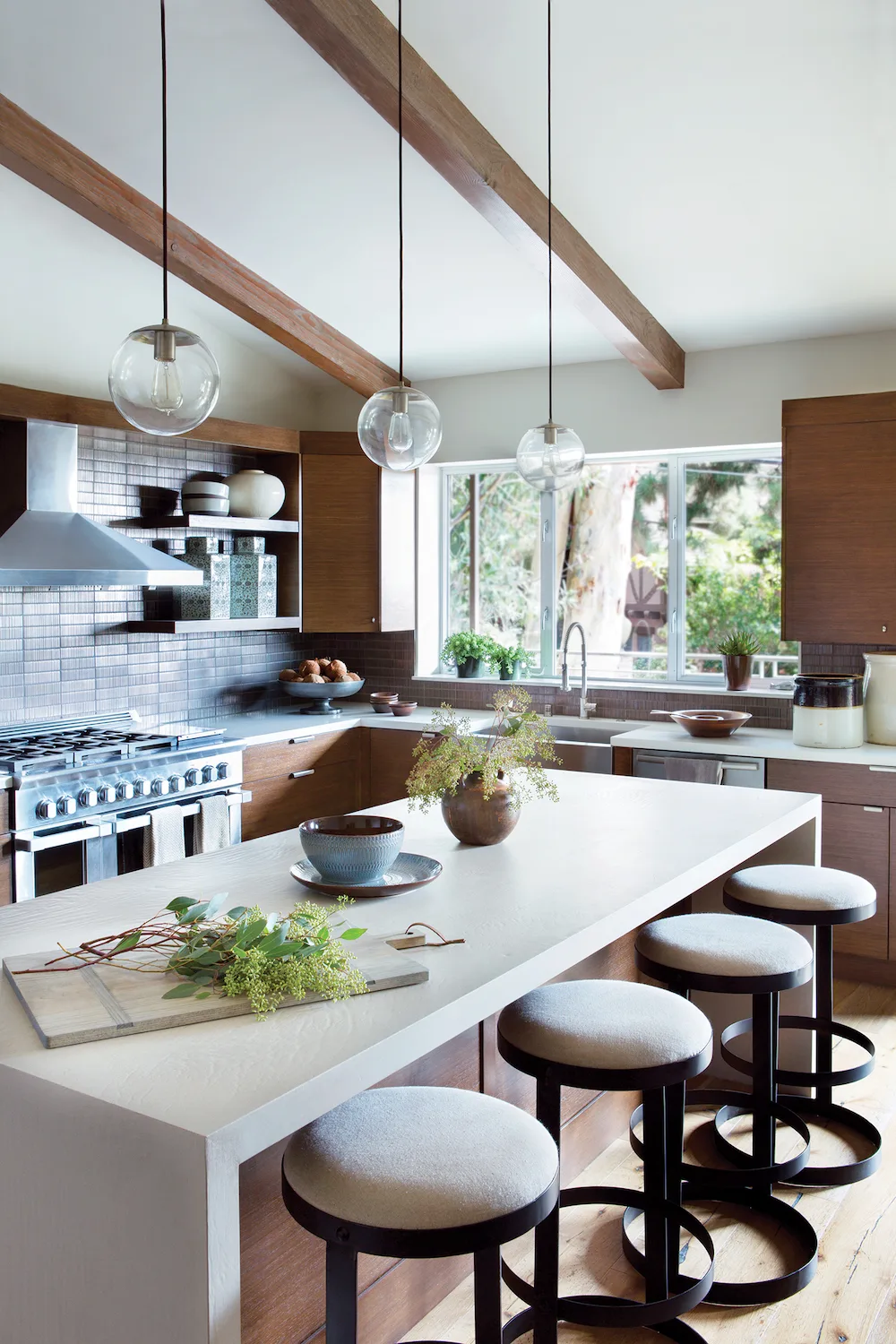
Let a Broad Window Light Brown Cabinets
 SaveSupport Non AI Creator
Image credit: Photography by Nina Choi
Brown cabinets sit around a broad sink window, with the white island counter providing another lighter surface in the foreground. Glass pendants keep the wood ceiling beams visible rather than hiding them behind opaque shades. The gray tile backsplash adds a finer grid behind the range, while the round pale stool seats soften the longer lines of the cabinetry.
Keep a useful landing area beside the sink even when the window encourages plants and decorative vessels on the sill. Check how open drawers and stool positions affect the route around the island. Transparent pendant shades still need cleaning, so choose a fitting you can safely reach and follow its care instructions rather than selecting it only for appearance.
IDEA 04 / 20
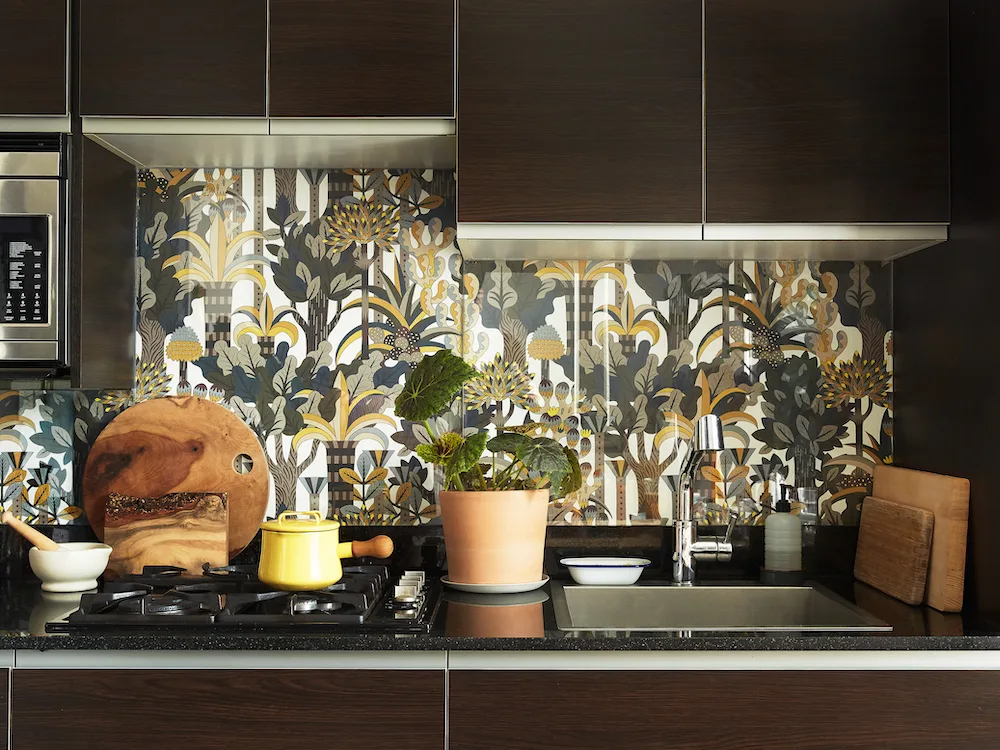
Give Flat Dark Cabinets a Botanical Backdrop
 SaveSupport Non AI Creator
Image credit: Photography by Belle Morizio; Styling by Kate Berry
Flat dark brown doors give the botanical backsplash a simple surrounding frame. The black counter connects the sink and cooking area beneath the pattern, while the slim pale cabinet edges make the individual units readable. A yellow kettle, wooden boards, and potted greenery pick up smaller elements of the wall treatment without changing the cabinet color.
Choose a backsplash that is suitable for its actual exposure to heat, water, and cooking residue. A decorative pattern alone does not show how the surface is protected. Keep the busiest part of the counter clear enough for preparation, and use fewer accessories when the wall already contains several colors and detailed shapes.
IDEA 05 / 20
Pair Dark Brown Doors with Plum Walls
 SaveSupport Non AI Creator
Image credit: Christopher Stark/Project by Kristen Peña Interiors
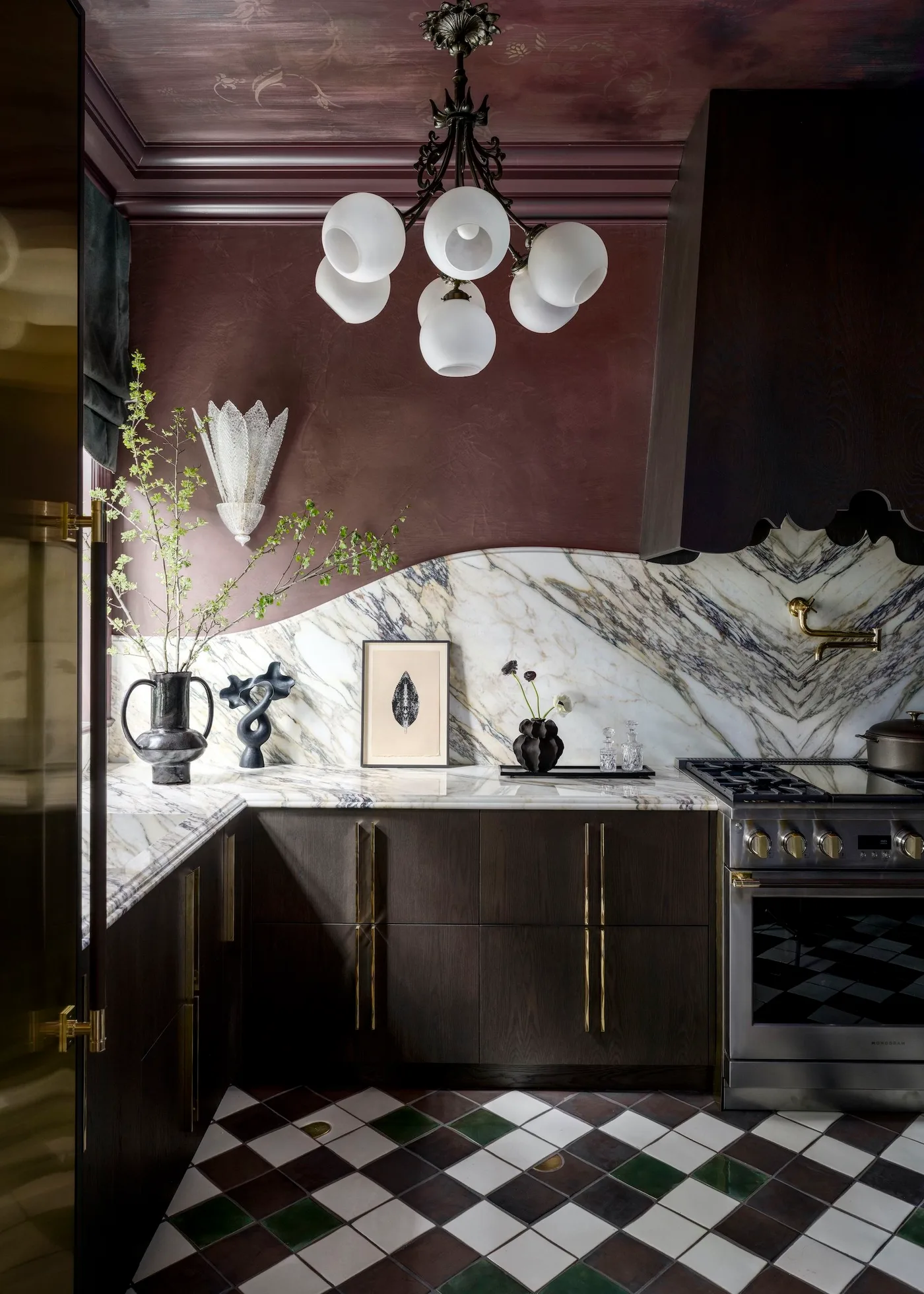
Dark brown doors sit below a strongly veined pale backsplash, while plum-colored walls carry the depth upward. The backsplash edge has a changing curved outline that makes it a distinct feature between the two darker areas. Long warm metal handles repeat a vertical rhythm on the cabinets, and white globe shades interrupt the deeper ceiling color.
Compare the wall color, wood finish, and veining together under the lights you intend to use. A richly colored wall can change how the cabinet undertone appears. Keep the countertop collection selective where the backsplash is already expressive, and check handle placement on wide drawers so the decorative rhythm remains comfortable for everyday opening.
PART 02
Give Islands and Storage a Clear Purpose
IDEA 06 / 20
Use a Pale Waterfall Island Against Brown Doors
 SaveSupport Non AI Creator
Image credit: Kensington Leverne. Design: Albion Nord
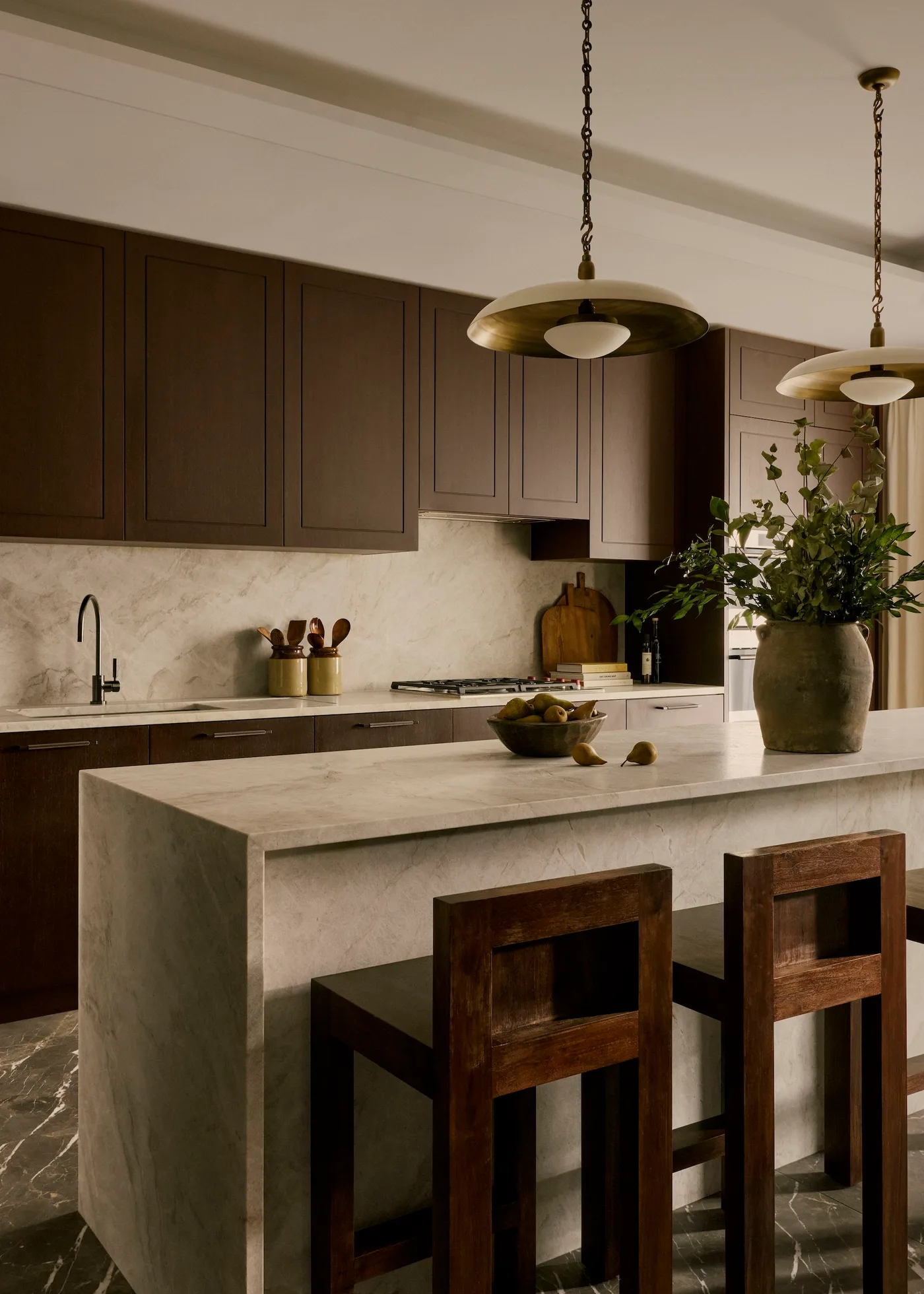
Brown paneled doors form a deeper background for the pale island, whose top continues down the visible end. Wooden stools bring a related warm tone into the seating area without matching every cabinet exactly. Broad metal pendants add a separate finish overhead, while the pale backsplash prevents the cabinet wall from becoming a completely dark surface.
Look at the island end and the cabinet sample from the entrance to the room before deciding where the strongest contrast belongs. Confirm the chosen counter material and its care requirements rather than assuming every pale surface behaves alike. Leave comfortable room behind occupied stools, and check that nearby drawers still open fully when someone is seated.
IDEA 07 / 20
Mix Deep Paneled Storage with Open Wood Shelves
 SaveSupport Non AI Creator
Image credit: Photo Courtesy of DeVol Kitchens
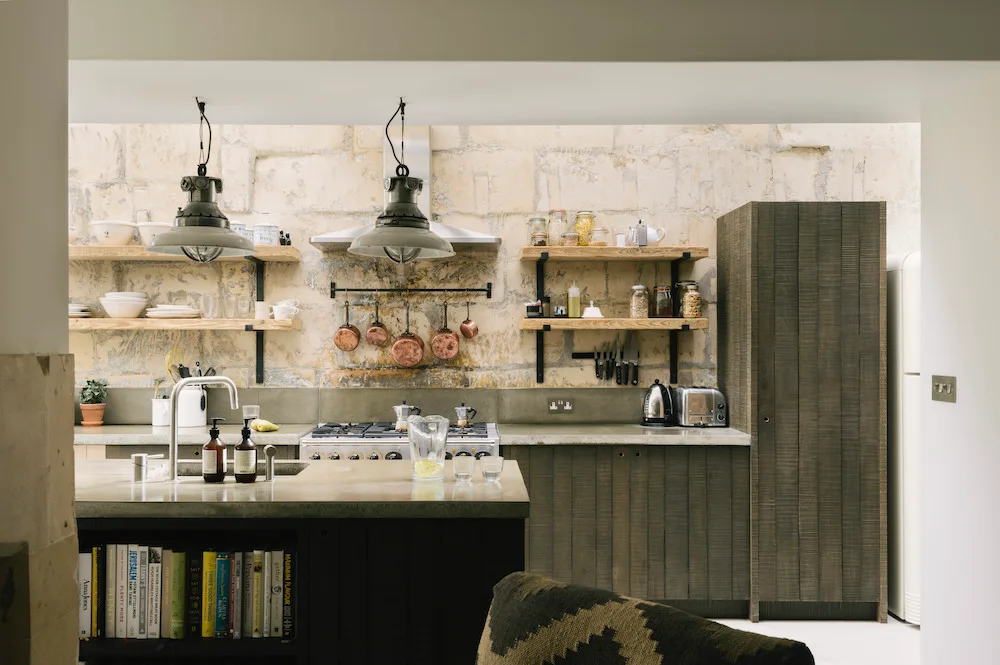
Deep olive-gray cabinet fronts give this kitchen a quieter lower outline beneath the pale textured wall. Open wooden shelves carry dishes and small jars, while the tall paneled cupboard adds a more enclosed storage area to the right. Books on the island shelf and hanging pots make the room feel actively used rather than relying only on decorative objects.
Divide open and closed storage by how often you reach for each item. Dishes used every day are easier to rotate and clean than objects left above the cooking area for months. Keep books away from regular splashing, and check that hanging cookware does not intrude into the reach or headroom you need around the stove.
IDEA 08 / 20
Give a Dark Wood Island Open Dish Storage
 SaveSupport Non AI Creator
Image credit: The Main Company
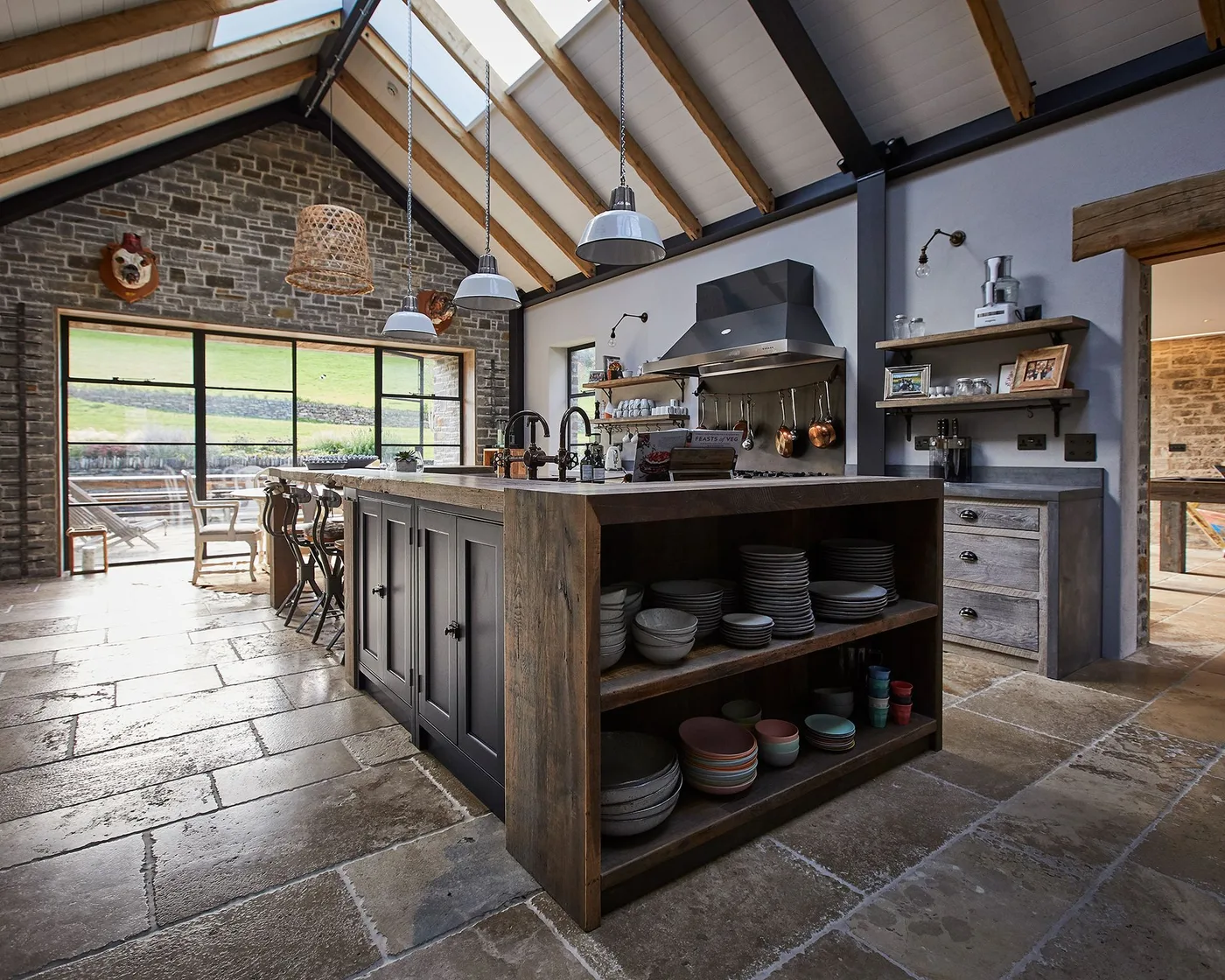
The dark wood island places open dish storage toward the room, so its substantial shape also serves an everyday purpose. Gray cabinetry and the hood relate to the deeper island without reproducing the same wood grain. The high roof, exposed brick, and large glazed opening add several textures, making the cabinet fronts comparatively restrained within the larger space.
Choose shelf heights around the bowls and plates you actually own, leaving enough room to lift a stack without scraping the shelf above. Open island shelves collect dust and occasional splashes, so keep frequently used pieces there. Confirm a clear route around the island before increasing its size simply to create more display space.
IDEA 09 / 20
Warm a Deep Blue Island with Wooden Stools
 SaveSupport Non AI Creator
Image credit: Ted Todd
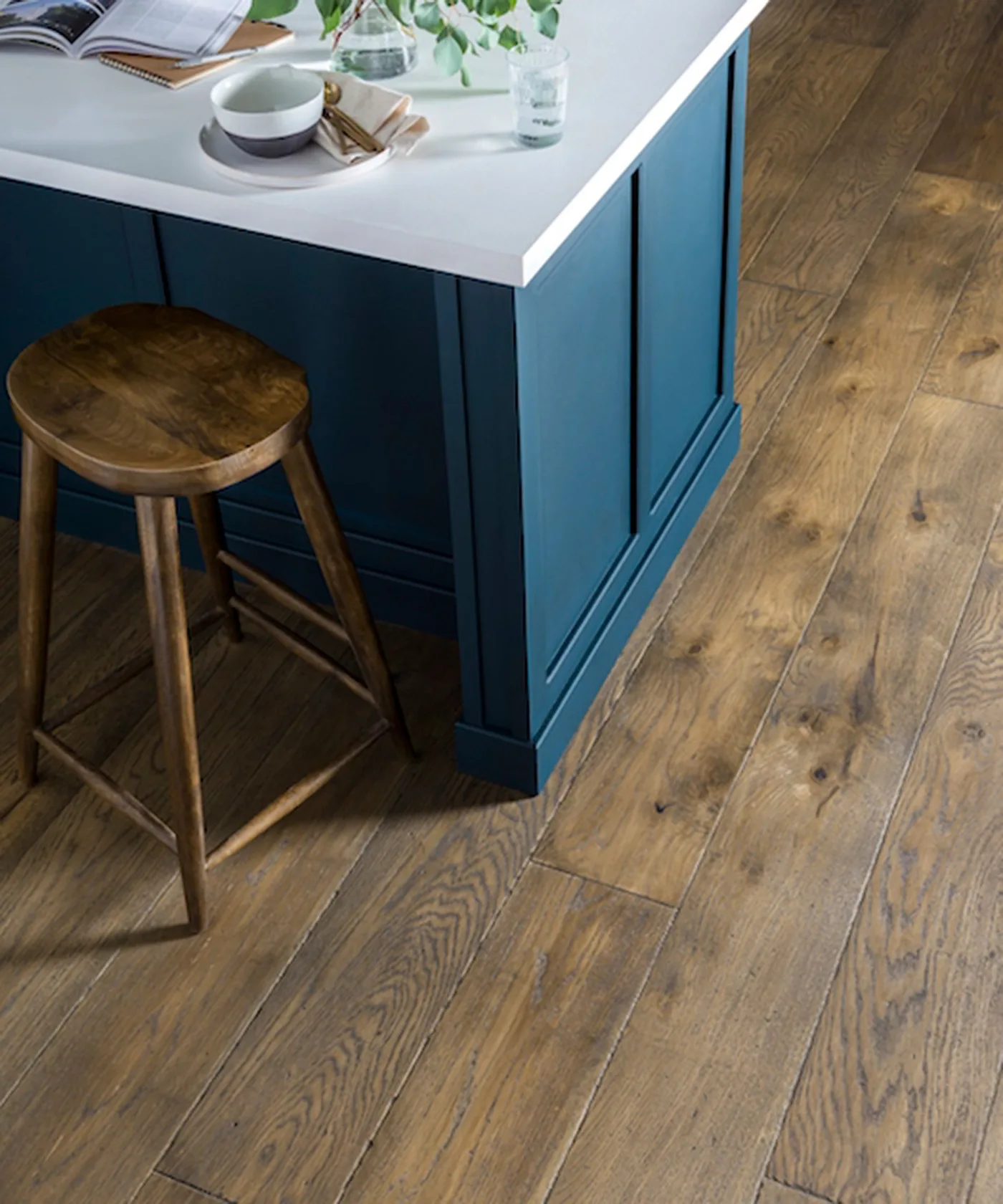
Deep blue paneling gives this island side a clear color, while the white counter keeps its upper edge distinct. A round wooden stool and the surrounding floor bring warmer tones into the close view. The simple cabinet surface leaves the contrast between blue, white, and wood easy to see without adding a second patterned finish.
Check a stool against the actual counter height and overhang before buying a full set. A useful perch needs room for knees and an unobstructed place for feet, as well as space to pull the seat out. Compare the blue door sample with the floor in daylight so its undertone feels intentional beside the wood.
IDEA 10 / 20
Set Deep Blue Doors Above a Patterned Floor
 SaveSupport Non AI Creator
Image credit: Harvey Maria
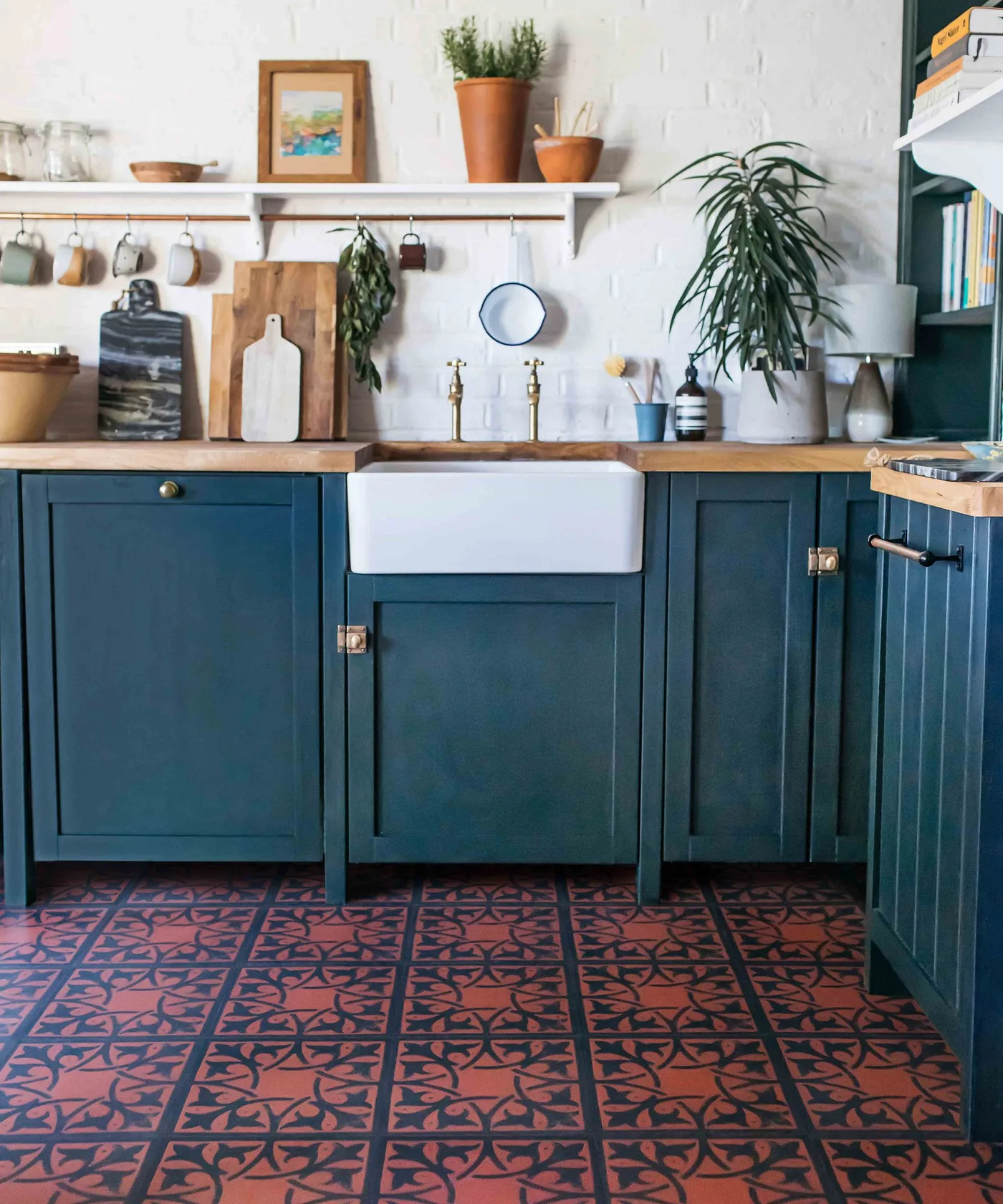
Deep blue doors make a continuous lower band around the white apron-front sink. The wood counter warms that contrast, while the pink-and-blue floor adds a smaller repeated pattern below. White walls leave space for the shelf of mugs and a few boards, and warm metal fittings provide brighter details close to the sink.
Compare a larger floor sample with the painted door before committing to both colors. A pattern that looks subtle on one piece can become much stronger across the whole room. Keep the sink-side wood care routine in mind, and arrange frequently used mugs within comfortable reach rather than treating the open shelf purely as a display.
PART 03
Use Dark Paint Around Everyday Storage
IDEA 11 / 20
Continue Dark Paint onto the Sink Wall
 SaveSupport Non AI Creator
Image credit: Kitchen Makers
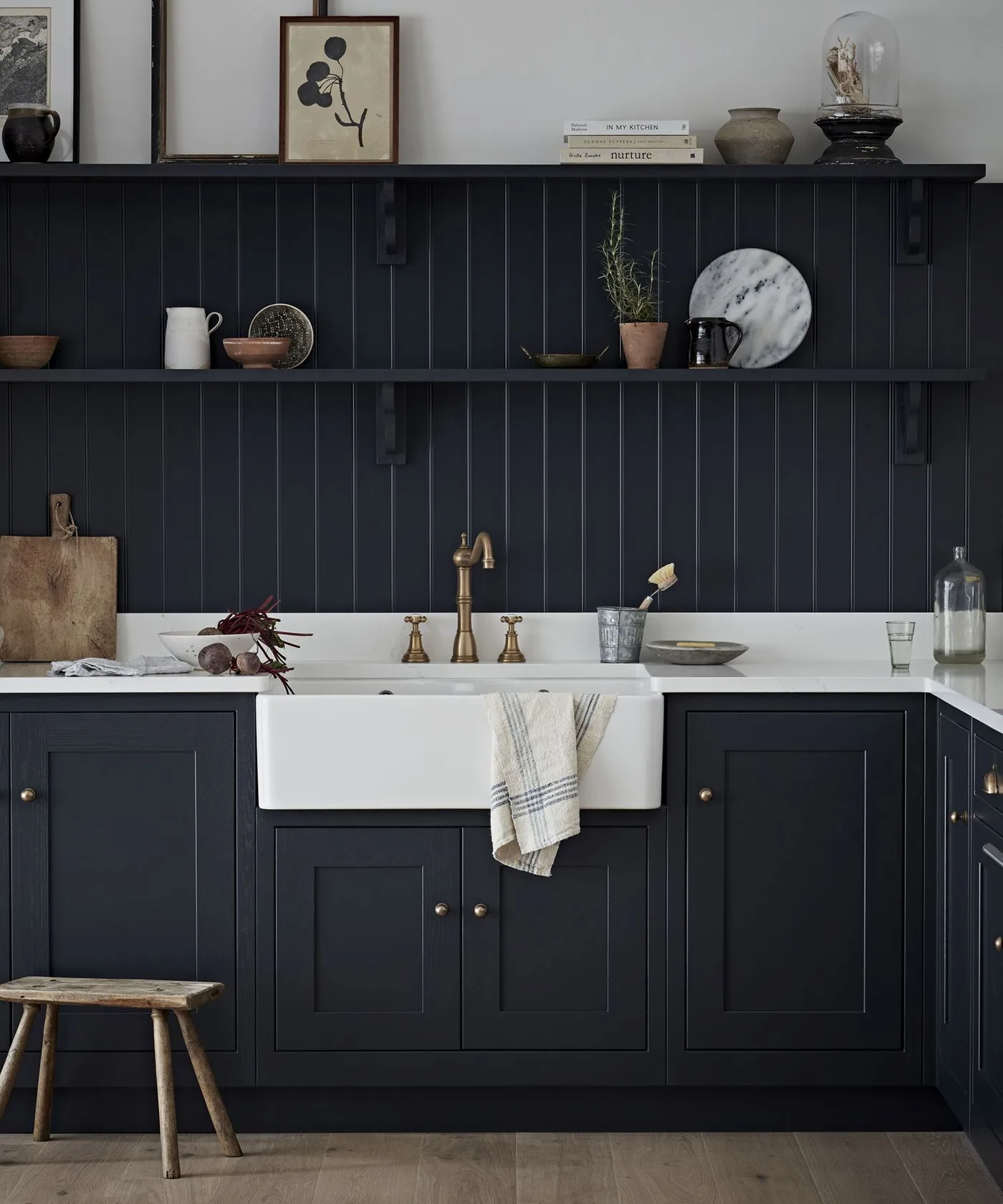
Near-black cabinet doors continue into the vertical paneling behind this sink, creating a connected darker area without covering the upper pale wall. The white basin and counter form a clear horizontal break. Narrow shelves hold a few dishes and vessels, while the warm tap and small wooden stool introduce contrasts that remain separate from the larger painted surfaces.
Test the cabinet and paneling finish together, including how each surface will be cleaned near the sink. Repeating a color does not mean the same coating is suitable for every material. Keep shelf objects light enough for their supports, and leave the area around the tap available for washing rather than extending the display down onto the counter.
IDEA 12 / 20
Break Up Navy Storage with a Plate Rack
 SaveSupport Non AI Creator
Image credit: Neptune
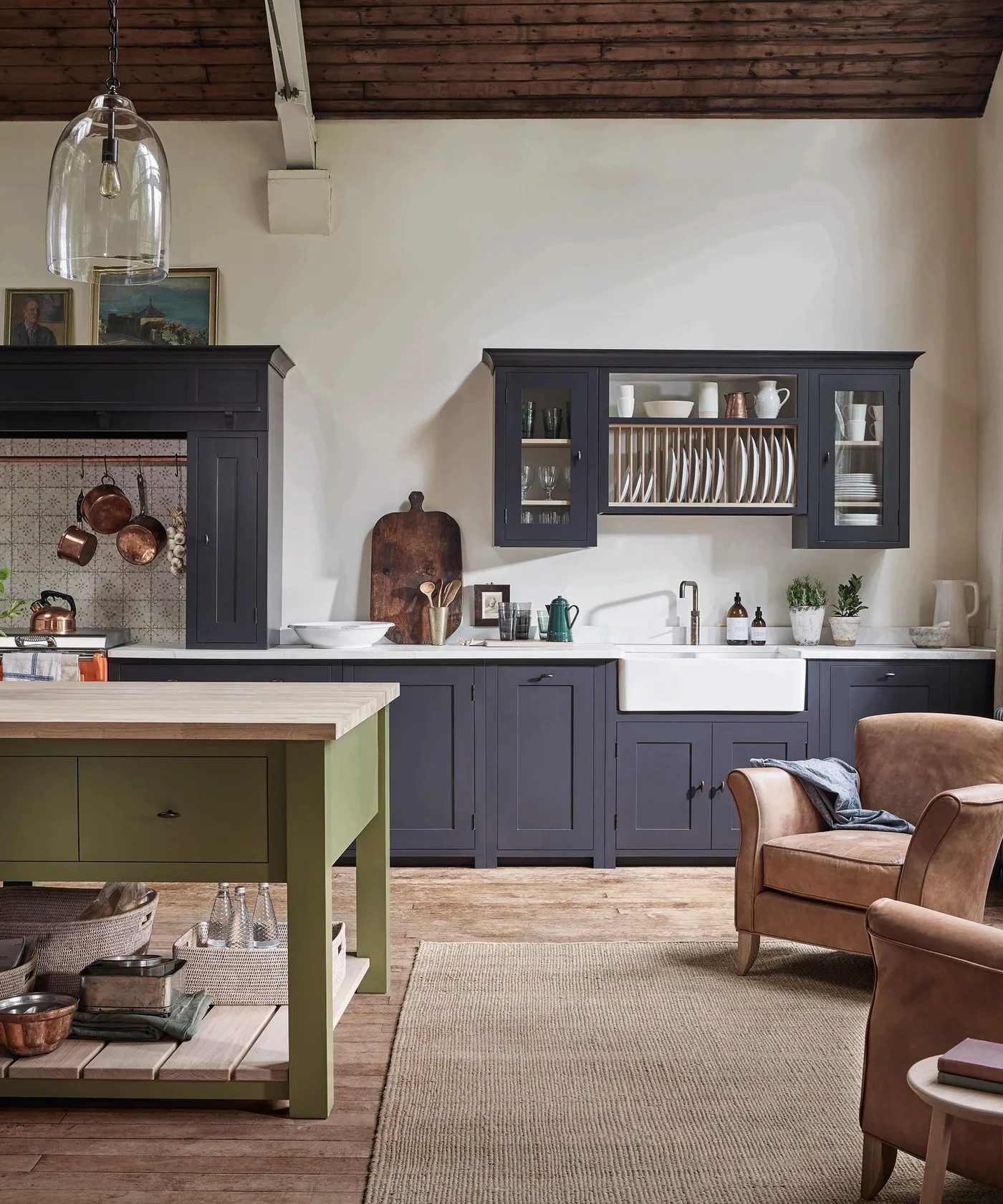
Deep navy lower cupboards relate to the wall cabinet above, whose plate rack and glazed ends break up the dark outline. The white sink creates a bright center within the cabinetry, while pale walls keep the storage arrangement distinct. A green island, wooden ceiling, and tan armchair add warmer and softer elements around the navy surfaces.
Check the plate rack spacing against your everyday dishes before choosing this type of storage. Oversized or irregular pieces may need a different shelf. Keep an armchair or other comfortable seat outside the main cooking route, and compare the island color with the navy sample so the two substantial painted areas feel deliberately related.
IDEA 13 / 20
Contrast Dark Drawers with White Display Shelves
 SaveSupport Non AI Creator
Image credit: Benjamin Moore
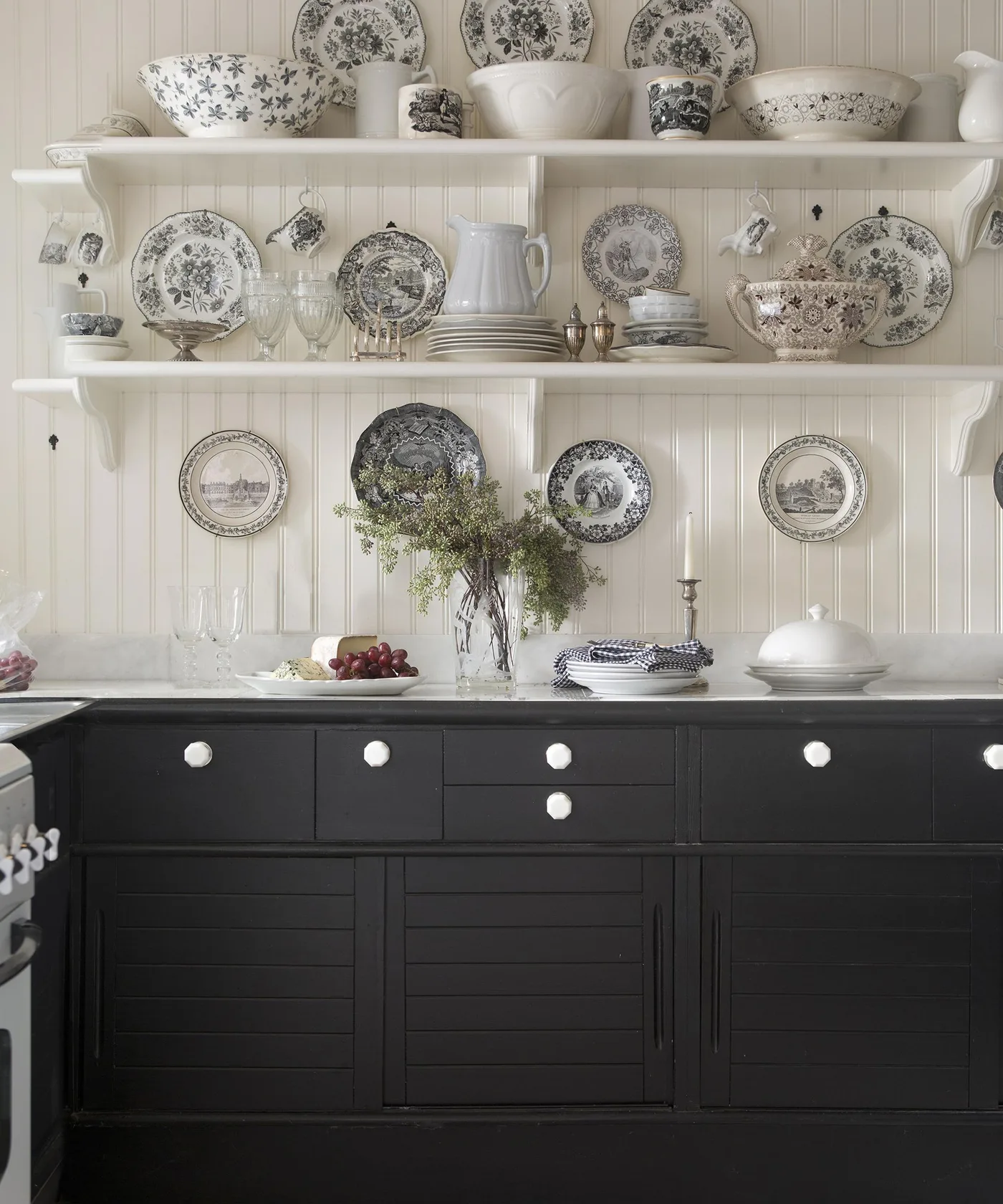
Near-black base cabinets create a firm lower edge beneath a wall of pale paneling and displayed dishes. White round knobs repeat the lighter color across the drawers, making the storage easier to distinguish. The patterned plates and bowls add detail above the counter, while the darker cabinet fronts remain comparatively simple below the collection.
Plan an open dish display around items that can be reached and cleaned comfortably. A larger collection may work better with some pieces stored behind doors rather than every object kept out. Try a knob sample on the chosen finish before ordering, and check its grip and projection as well as the contrast it creates.
IDEA 14 / 20
Combine Deep Teal Storage with Dark Wood
 SaveSupport Non AI Creator
Image credit: Future
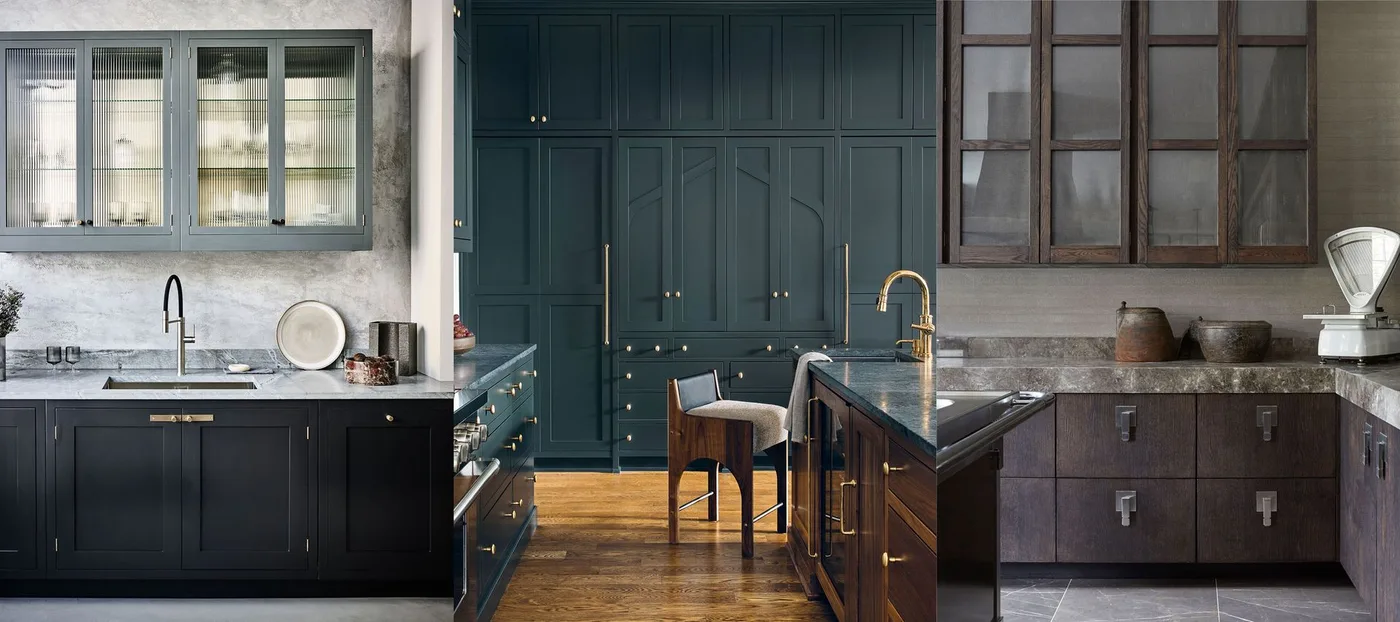
Deep teal full-height cupboards occupy the center of this kitchen, surrounded by darker lower units and wood-framed glazed storage. The gray veined counters introduce a related intermediate tone rather than a stark white break. Warm metal handles connect the different cabinet areas, while the wood floor keeps a warmer color running beneath the arrangement.
Compare the tall cupboard color with the darker base units across a full door-sized sample if possible. Two deep finishes can look almost identical in dim light and distinctly different near a window. Map what each storage run holds, then choose which upper doors should reveal dishes and which need to hide packaging or appliances.
IDEA 15 / 20
Frame a Warm Storage Niche with Dark Cabinetry
 SaveSupport Non AI Creator
Image credit: Ledbury Studio
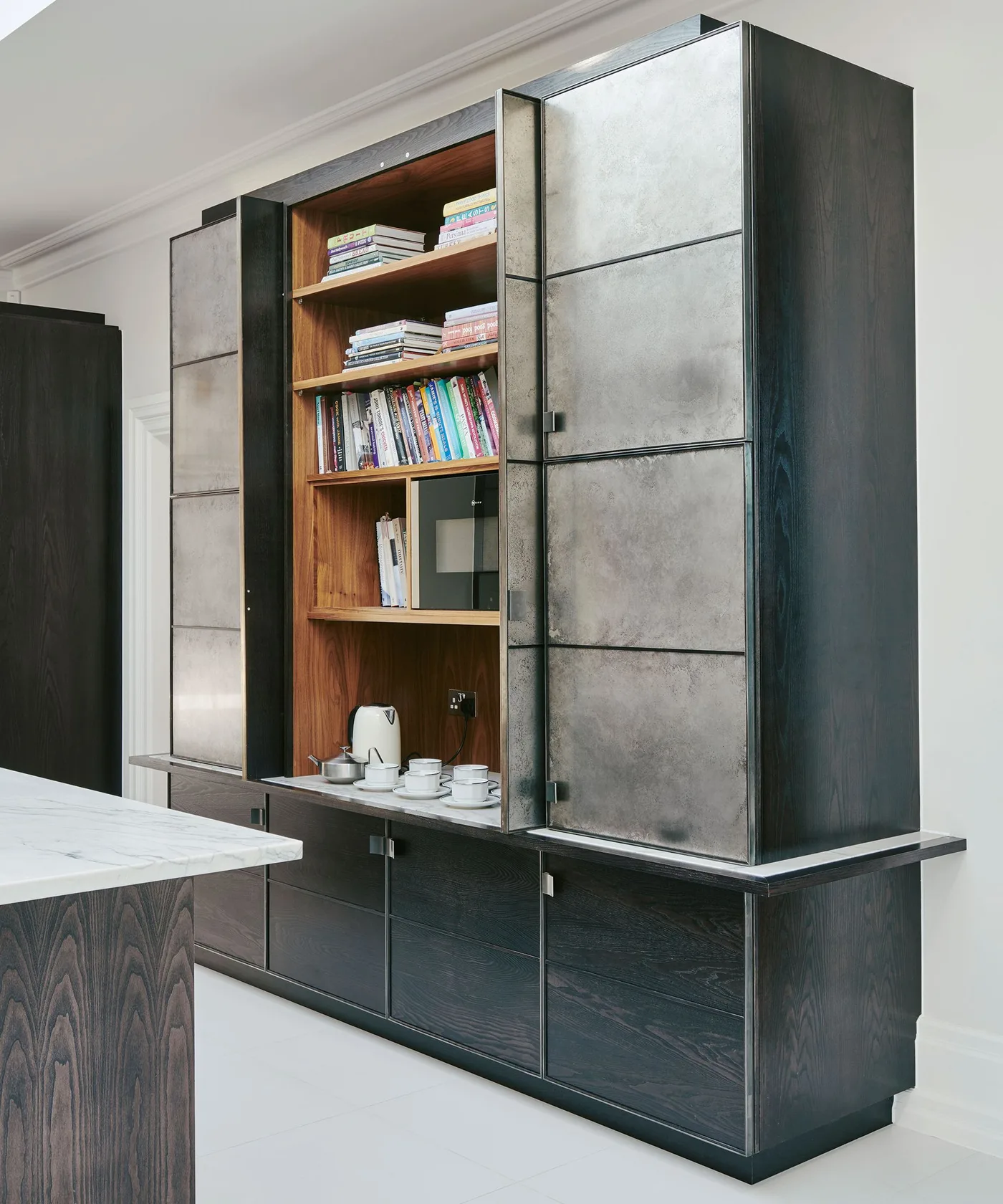
A warm wood niche interrupts the dark tall cabinetry, giving books and small appliances an identifiable place within the storage wall. Gray metallic-looking doors provide another surface tone on either side, while the darker frame and lower drawers connect the arrangement. The pale counter and flooring keep the substantial unit distinct from its brighter surroundings.
Measure the appliances you intend to keep in an open niche and follow their required ventilation and operating clearances. The shelf above a kettle also needs consideration because steam travels upward. Organize cookbooks separately from the wet preparation area, and check how the tall doors open beside the island before settling on the final cabinet depth.
PART 04
Bring the Finishes Together
IDEA 16 / 20
Use Plum Cabinets with Slender Warm Handles
 SaveSupport Non AI Creator
Image credit: Rachel Chudley
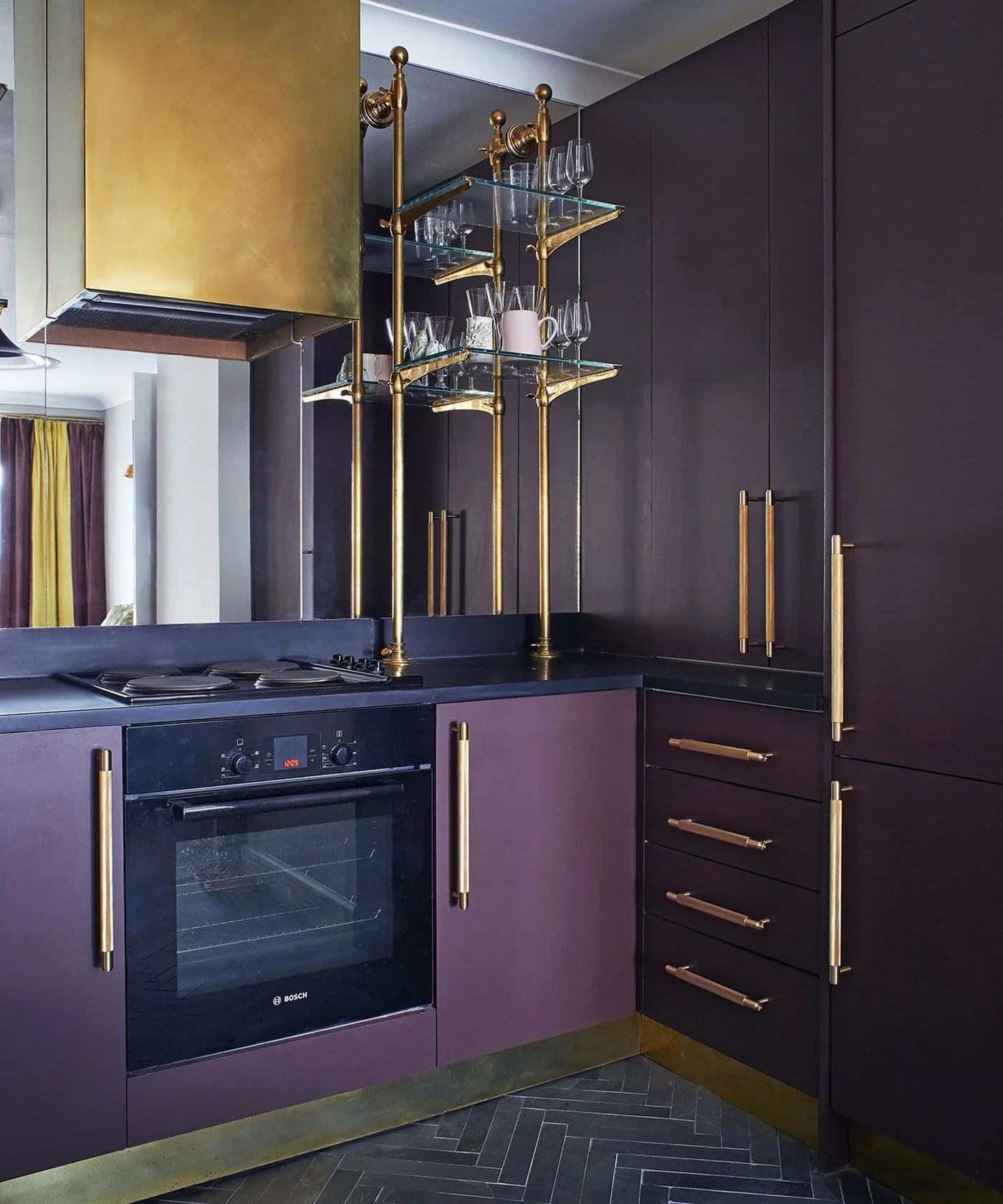
Deep plum doors bring color into a dark kitchen without relying on black cabinetry. Long warm metal handles create slender vertical lines against the plain fronts, and the hood repeats that brighter finish above. Suspended glass shelves hold a small group of glasses, while the dark herringbone floor introduces a finer pattern beneath the storage.
Try the plum finish under both daylight and evening light because deeper purple tones can appear brown or nearly black in different conditions. Check long handle placement on each door and drawer for a comfortable grip. Keep suspended shelves securely supported, and leave enough separation from cooking activity for the glassware to remain practical to use and clean.
IDEA 17 / 20
Pair Dark Wood with a Smoky Counter
 SaveSupport Non AI Creator
Image credit: Fiona Barratt-Campbell
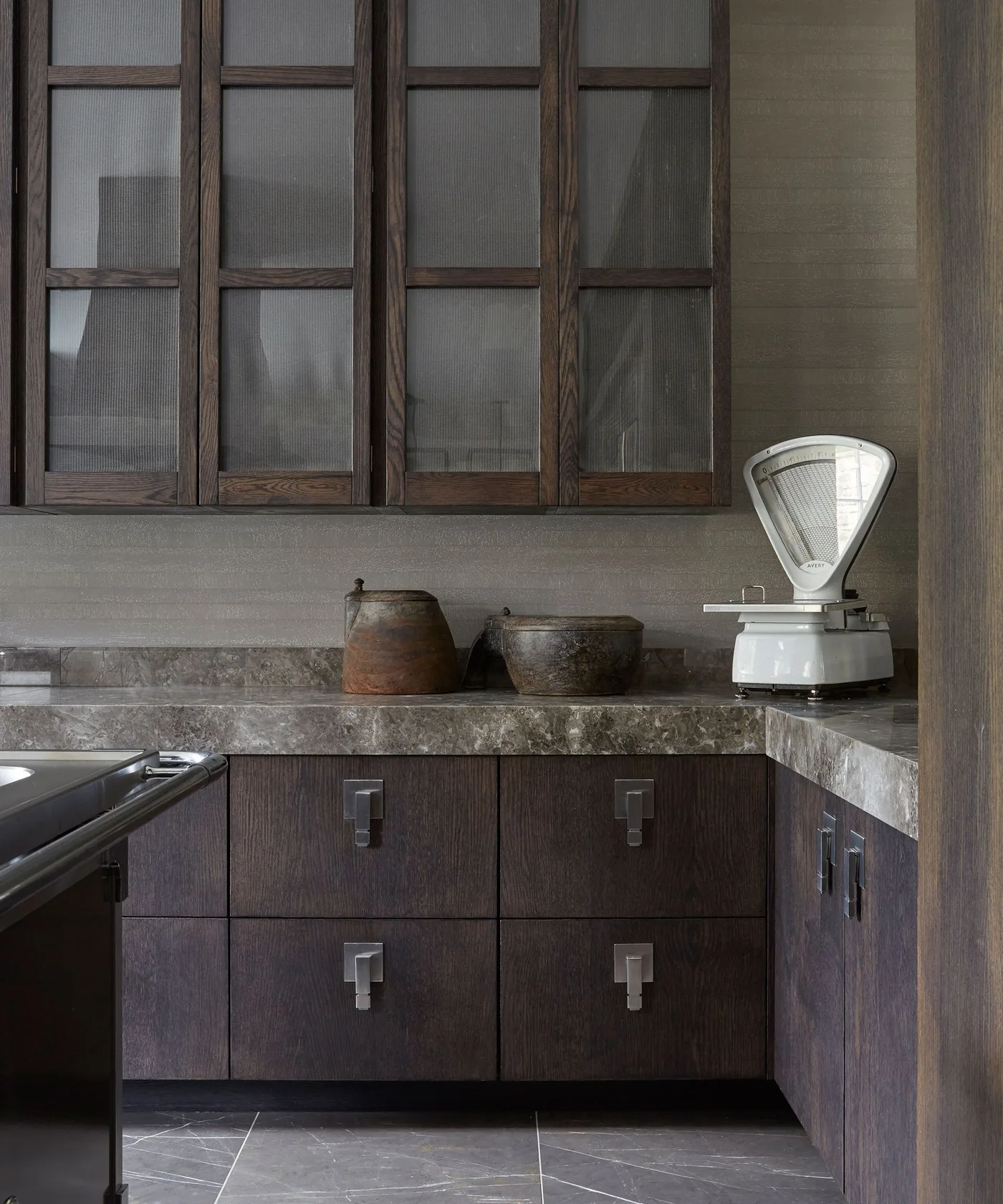
Dark brown cabinets meet a smoky gray-brown counter and backsplash, creating a softer contrast than bright white. The textured glazed upper doors allow shapes behind them to show without exposing every stored item clearly. Square metal handles introduce a repeated detail on the lower doors, and the pale scale adds a single lighter object beside the darker vessels.
Examine the counter and backsplash samples beside the wood finish before choosing a close tonal match. Strongly patterned surfaces can look busier when they wrap a corner. Confirm care instructions for the actual material, and decide whether textured glazing gives enough concealment for the things you plan to store rather than assuming it will hide all clutter.
IDEA 18 / 20
Keep Tall Black Cupboards Clearly Framed
 SaveSupport Non AI Creator
Image credit: Arbor kitchen
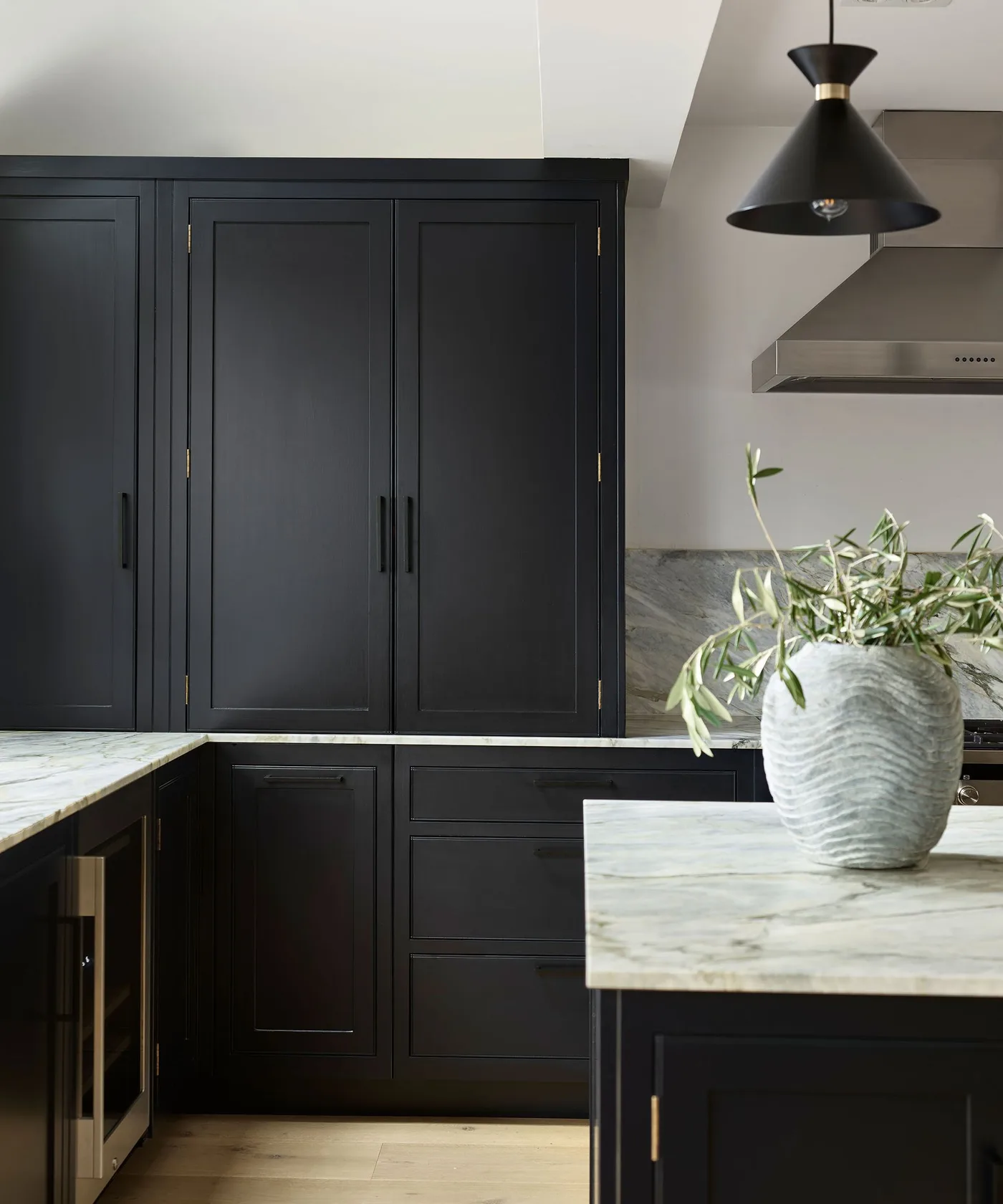
Tall black paneled cupboards create a substantial dark background, while pale counters separate the upper and lower storage areas. A matching dark island base repeats the cabinet color in the foreground. The black pendant provides a smaller connection overhead, and the wood floor brings warmth beneath the contrast between the deeper cabinetry and lighter work surfaces.
Plan the contents of tall cupboards before deciding how wide the dark storage wall should become. Interior shelves and drawers need to suit the items you reach for, not only the door proportions. Check the worktop lighting beside the taller units, and compare the counter sample with the floor so the room retains a coherent warmer element.
IDEA 19 / 20
Add Fine Vertical Texture to Deep Cabinet Doors
 SaveSupport Non AI Creator
Image credit: TR Studio
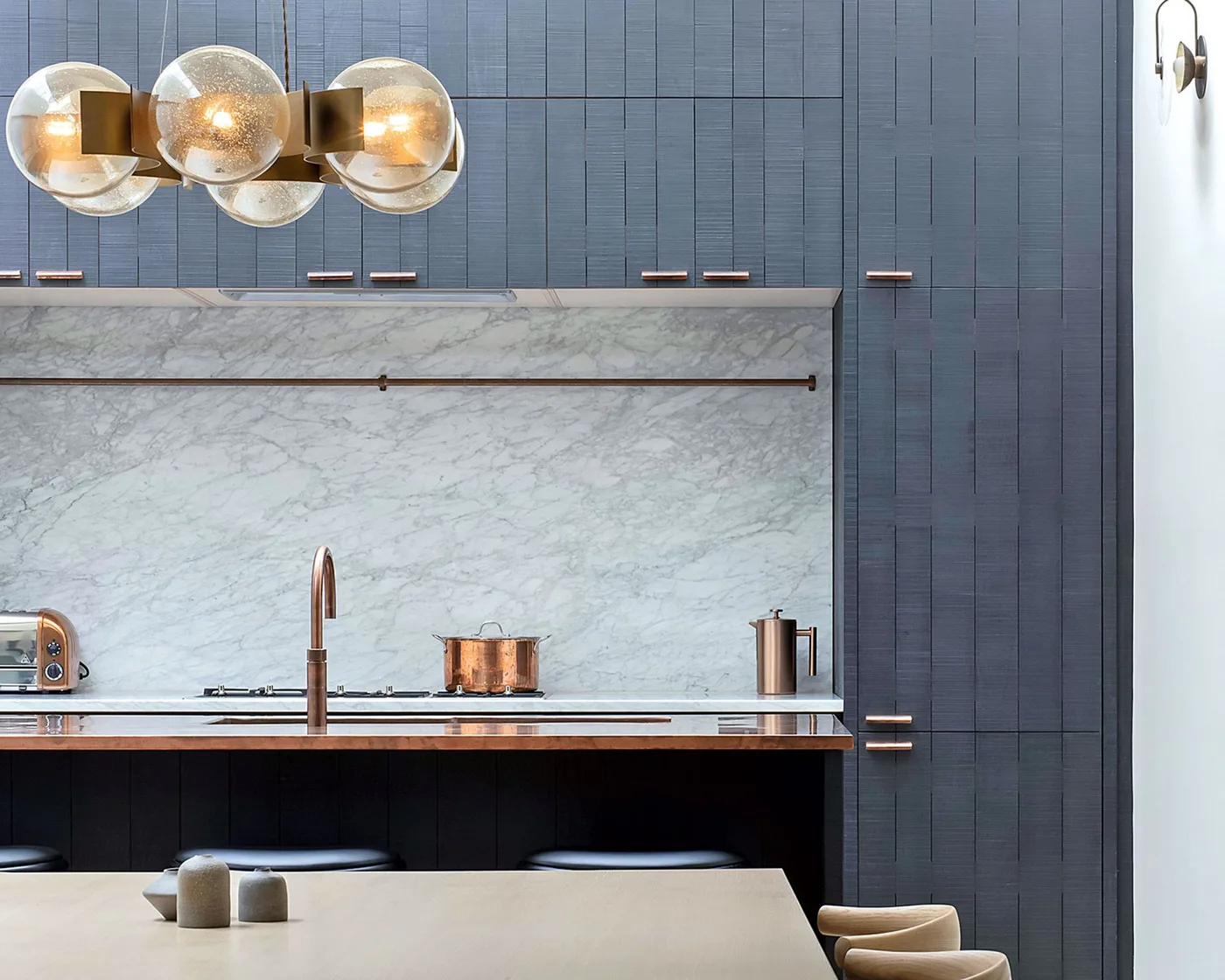
Fine vertical texture gives these blue-charcoal doors detail without changing their broad color. A pale veined backsplash creates a lighter central area, while the slim warm metal pulls form a regular rhythm across the tall storage. The island edge and tap repeat a warmer finish, and globe lights introduce round shapes above the straighter cabinetry.
Look at the textured finish close up as well as across the room before choosing it. Shallow grooves can change both the appearance and the cleaning routine around frequently handled doors. Compare the pulls with the island trim, and keep their placement consistent where practical while making sure each door can be opened comfortably.
IDEA 20 / 20
Balance a Dark Island with Warm Brown Storage
 SaveSupport Non AI Creator
Image credit: Roundhouse
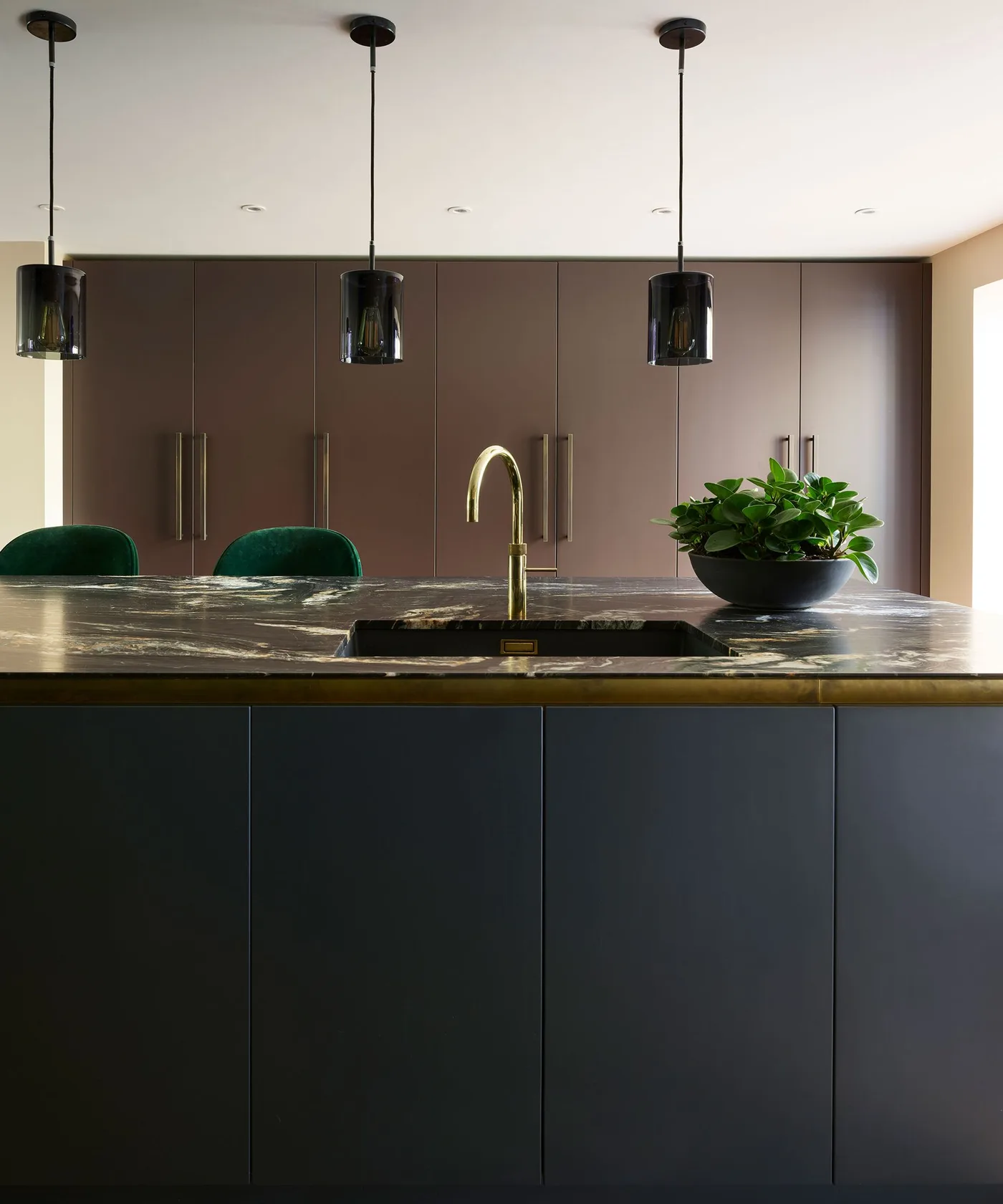
A dark flat-front island sits beneath a strongly veined counter, while the warmer brown storage wall provides a different depth behind it. Long warm metal handles and the sink tap connect the two areas through smaller details. Three dark pendant shades repeat the island color above, and green chair backs introduce a limited accent at the far edge.
Compare the island and tall cabinet finishes together rather than choosing both from separate photographs. A warmer background can soften a dark island, but the countertop pattern will also affect the balance. Plan light directly over preparation areas, and leave the veined surface readable by grouping everyday items instead of scattering them across the whole counter.
BRING IT ALL TOGETHER
Choose the Dark Finish Around Daily Use
Decide whether dark cabinetry belongs across the whole room, around the lower units, or on one island and storage wall. Test the shade with your floor, countertop, and backsplash before ordering. Wood grain, door texture, hardware, and the amount of visible upper storage all affect the result alongside the color.
Plan usable light and storage at the same time as the finishes. A pale counter can create contrast, but it does not replace lighting where you prepare food. Keep appliance clearances, drawer access, and cleaning requirements part of the choice so the kitchen remains comfortable after the surfaces are in everyday use.