A cozy bedroom should be comfortable to use after the cushions have been moved and the lamps switched on. Begin with the things you touch and reach every day: bedding, a bedside surface, useful light and a clear route to the door. Extra decoration is helpful only when it supports those needs.
These rooms show different approaches, from pale compact bedrooms to darker wood-lined spaces. Borrow the scale and arrangement that suit your home. A photograph cannot tell you how warm a room feels or how soft a fabric is, so compare real samples and test furniture whenever possible.
PART 01
Make the Bed Comfortable
IDEA 01 / 20
Balance a Tall Headboard with Smaller Bedside Lights
 SaveSupport Non AI Creator
Image credit: Project: Kay Story Interiors (via Houzz)
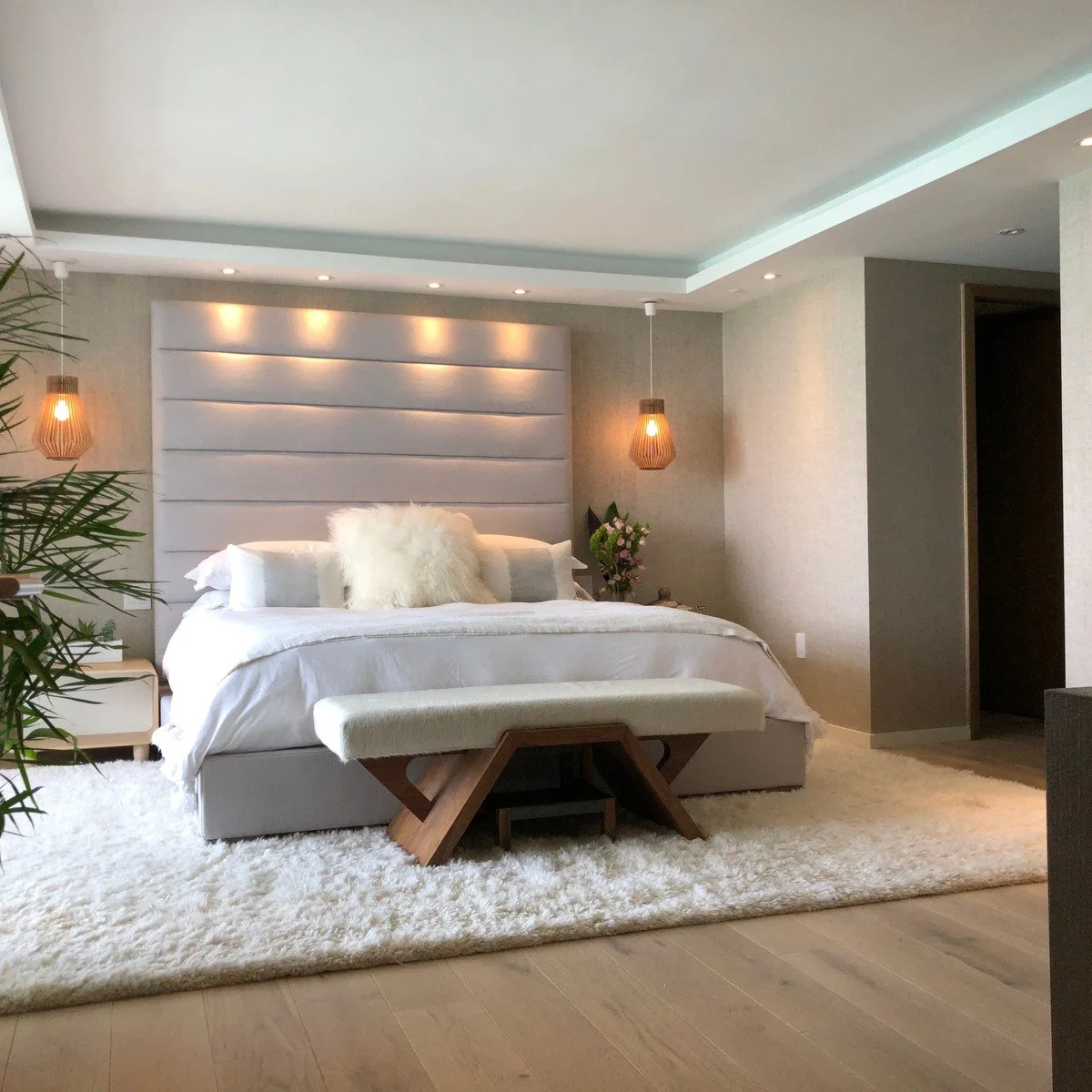
A tall horizontally padded headboard gives the bed a broad soft-looking backdrop. Small hanging lights leave the bedside surfaces more open, while a pale bench repeats the upholstery at the foot. The surrounding floor and walls stay restrained so texture provides most of the detail.
Choose headboard upholstery that you can clean around the seams and check its height against the room. Pendants need suitable placement, controls and clearance beside the mattress. Keep the bench only if it leaves a comfortable walking route; its usefulness matters more than completing a symmetrical photograph.
IDEA 02 / 20
Combine Bedside Storage with Reachable Wall Lights
 SaveSupport Non AI Creator
Image credit: Project: Designer's Atelier (via Houzz)
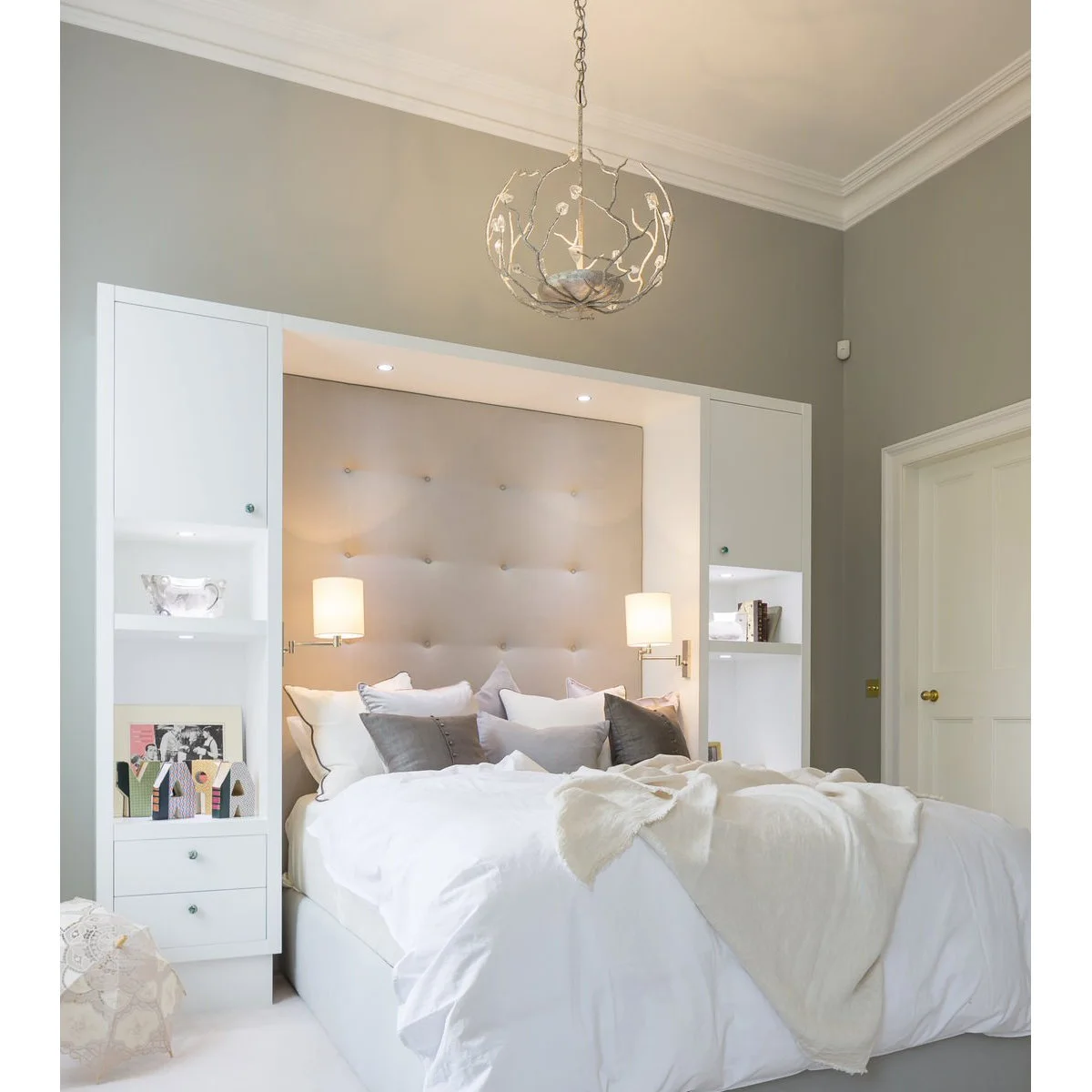
White storage frames the padded headboard, combining cupboards, drawers and small open shelves on each side. Wall lights sit near the pillows instead of using the bedside shelf space. The pale bedding and muted wall color keep the many storage edges from becoming the room’s main feature.
Plan drawer access, switches and reading-light positions from the mattress height before fitting joinery. Keep a reachable landing place for water and glasses. Closed storage can reduce visual clutter, but ventilation and cleaning access still matter behind a bed fitted closely between tall furniture pieces.
IDEA 03 / 20
Use Lamps to Bring Warmth to Brown Walls
 SaveSupport Non AI Creator
Image credit: Project: Keeping Interiors (via Houzz)
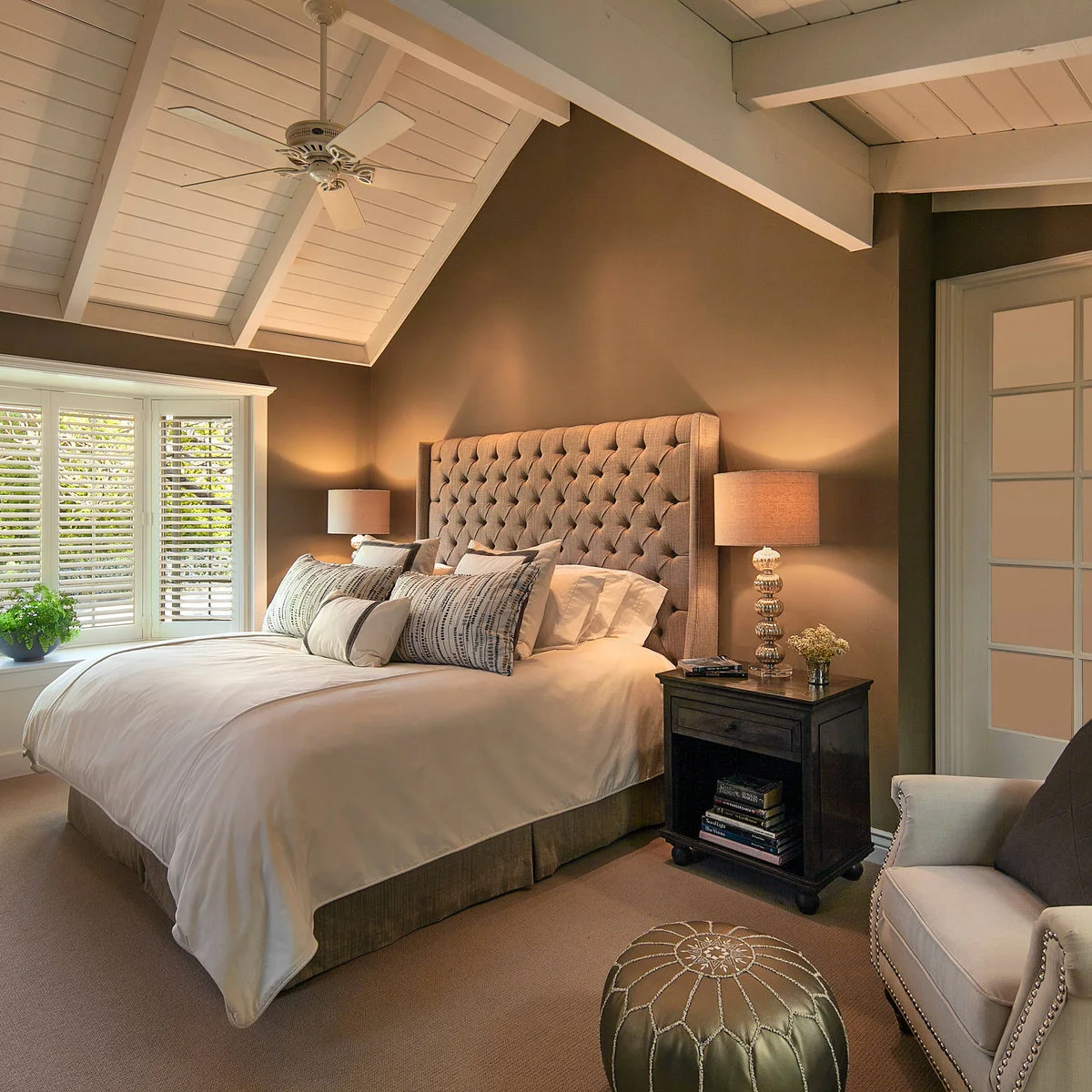
Matching lamps cast pools of light beside the tufted headboard, with brown walls making the pale bedding stand out. White ceiling boards keep the upper part lighter. A small bedside cabinet stores books below its top, leaving the main surface available for a few daily essentials.
Test a brown paint sample under both daylight and your evening lamps. Choose shades that soften glare without making reading difficult, and place controls within reach. Keep the number of decorative pillows manageable so the bed remains easy to prepare at the end of a long day.
IDEA 04 / 20
Keep a Sloping White Room Soft with Texture
 SaveSupport Non AI Creator
Image credit: Project: Nathaniel Ebert (via Houzz)
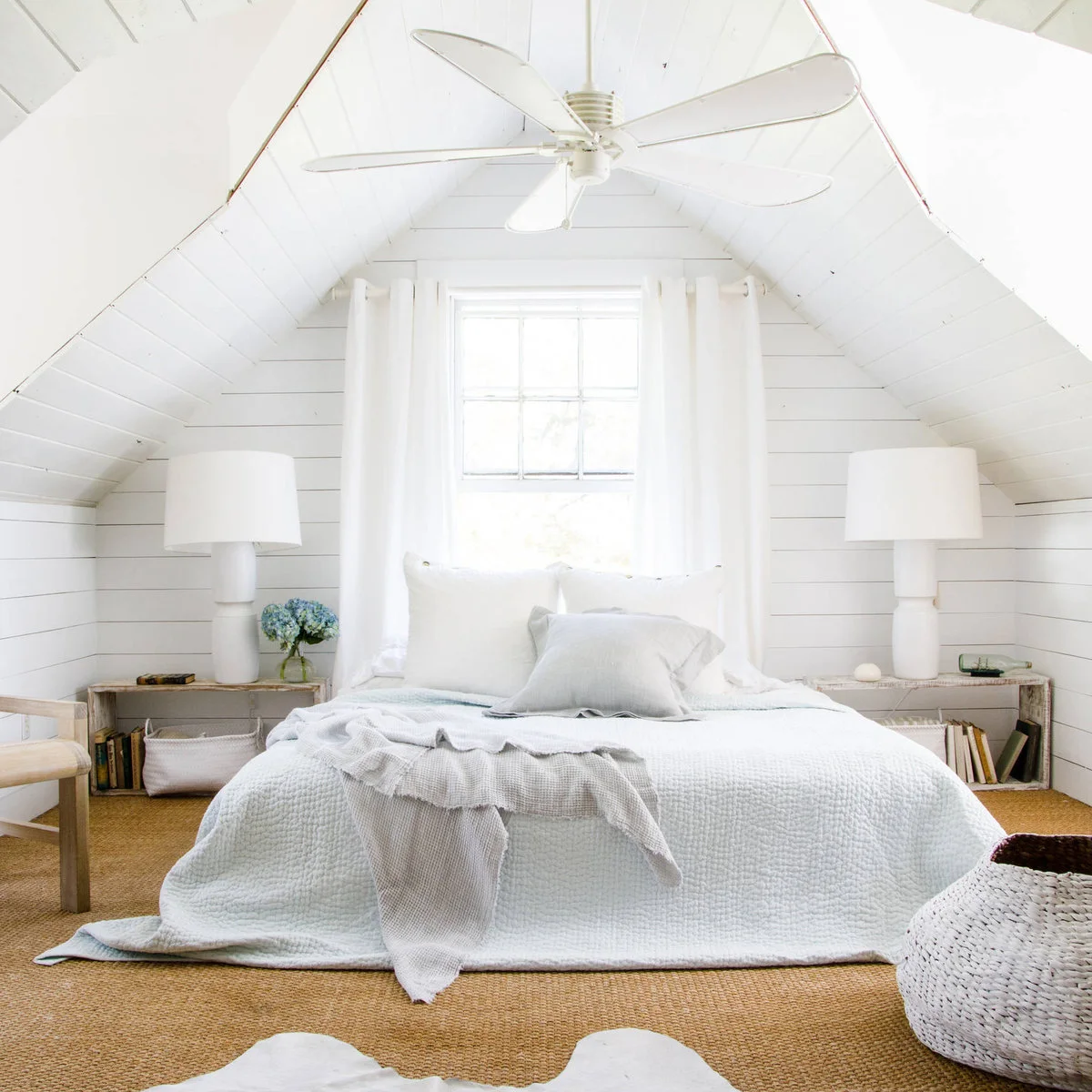
White boards follow the sloping roof, while pale textured bedding gives the bed definition without a strong color contrast. Matching lamps stand on low open units beside the mattress. Baskets and books bring practical detail below, with the roof shape still easy to read above the pillows.
Check headroom on both sides before placing a bed beneath a slope. Use bedding layers that suit the sleeper’s temperature needs rather than copying their number. Keep low storage easy to vacuum around, and choose baskets that can be lifted out without catching on the lamp cables.
IDEA 05 / 20
Let Deep Blue Make Pale Bedding Stand Out
 SaveSupport Non AI Creator
Image credit: Project: Nathalie Priem Photography (via Houzz)
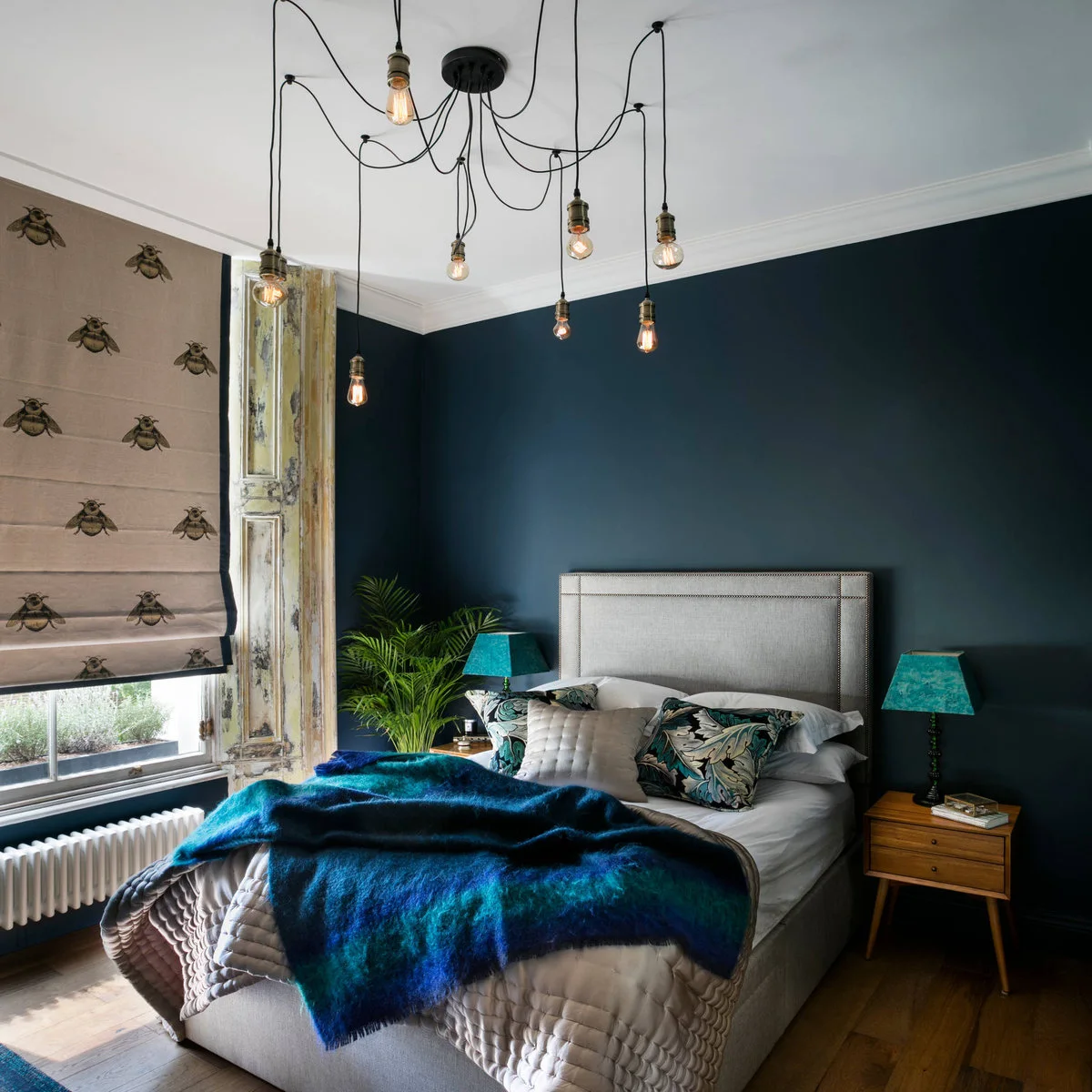
Deep blue walls surround the pale upholstered bed, with a blue throw and turquoise lamps repeating the color in smaller areas. A patterned blind provides another layer beside the window. The wood-colored bedside drawers bring a warmer tone without requiring more decorative objects around the mattress.
Sample the wall color where the room receives the least light before painting. Keep the throw comfortable and easy to remove if you sleep warm. For a gentler accent with darker bedding, compare the pink bedroom ideas for ways to use a smaller amount of soft color.
PART 02
Balance Texture and Clear Space
IDEA 06 / 20
Use Simple Stripes among Busy Wood Surfaces
 SaveSupport Non AI Creator
Source: www.houzz.com
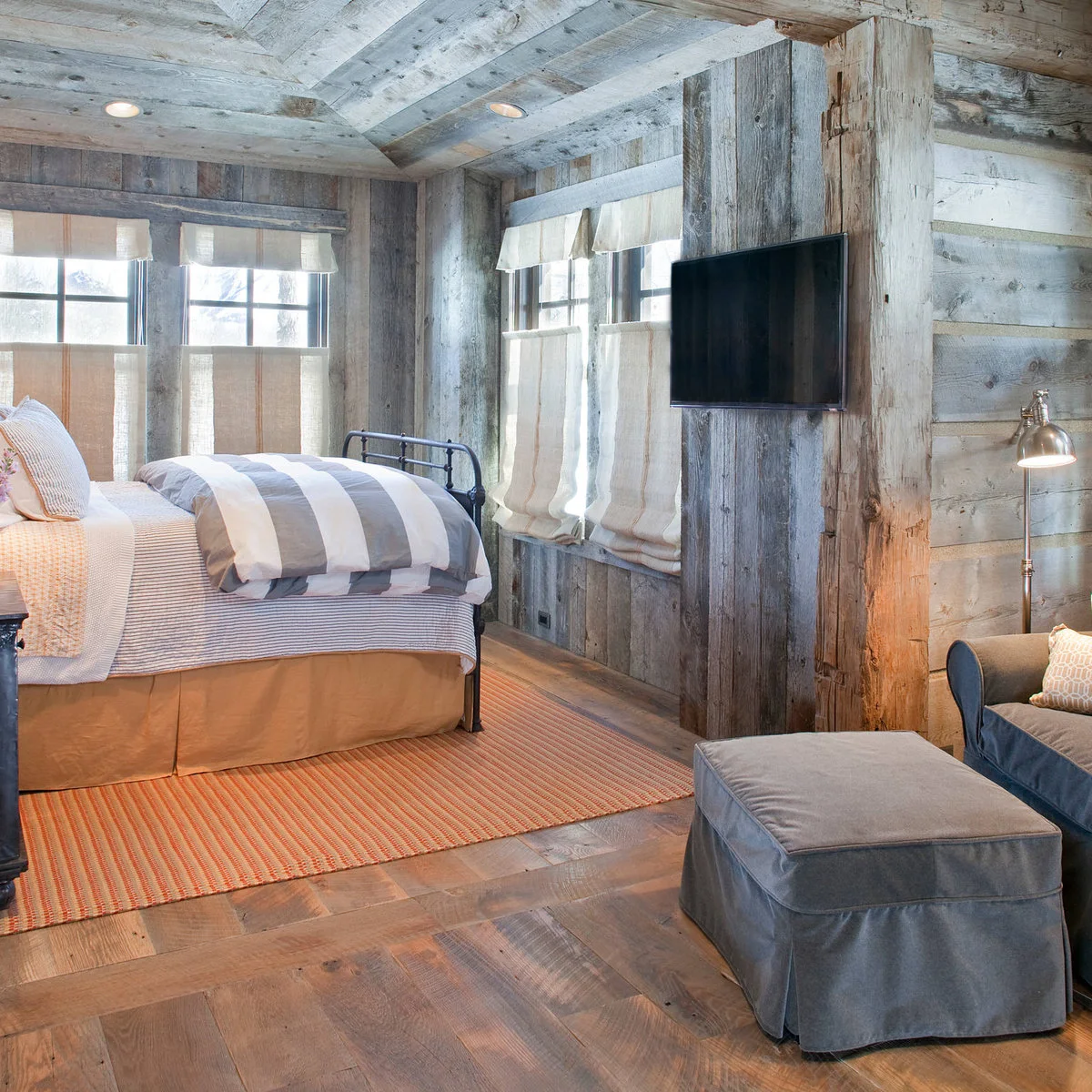
Wood grain covers the walls and ceiling, so the striped bedding provides a simpler repeated pattern at the bed. Pale shades soften the window edges. A blue chair and ottoman create another place to sit, with the rug separating the sleeping area from the surrounding wood-colored floor.
Limit additional patterns if the room already has prominent grain or paneling. Check that an ottoman can move without blocking the door or bed. Choose window coverings for the darkness and privacy you need, and avoid assuming that a wood-lined room is automatically well insulated or warm.
IDEA 07 / 20
Pair a Chunky Throw with a Plain Bed Cover
 SaveSupport Non AI Creator
Image credit: Project: Urban Evolutions (via Houzz)
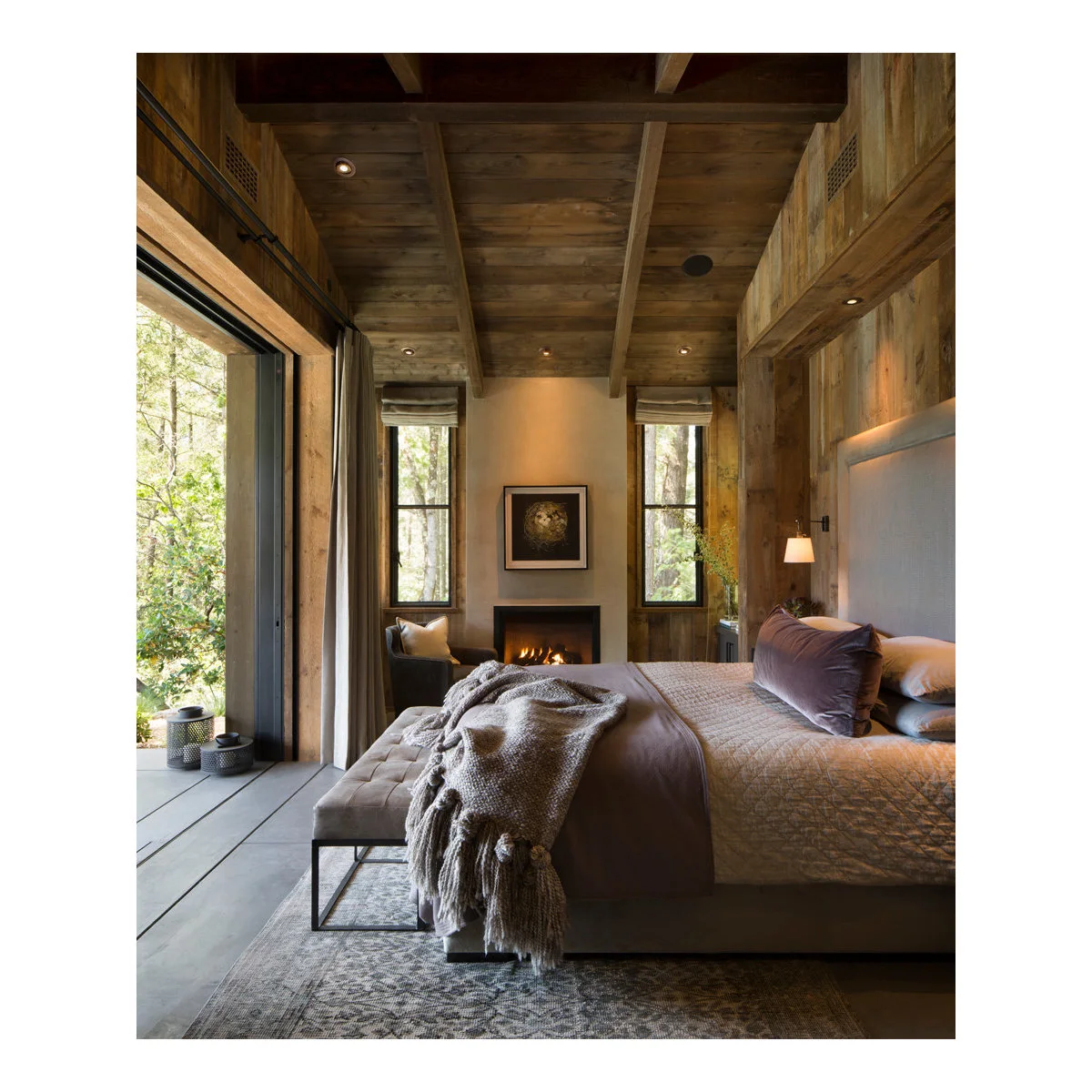
A chunky gray throw lies over a smoother pale cover, making the two textures easy to distinguish. Wood-colored surfaces and a tall headboard give the room a more enclosed outline. The narrow bench sits at the foot, while a glazed opening keeps the garden visible beside the bed.
Choose a chunky knit for its actual comfort and care needs, checking whether loops will snag easily. Keep the floor route clear between bench and glazing. If you have a working fireplace, follow its specified clearances and ventilation requirements rather than using the photograph to judge safe furniture placement.
IDEA 08 / 20
Keep Bedding Quiet beneath Prominent Beams
 SaveSupport Non AI Creator
Image credit: Project: id-homes (via Houzz)
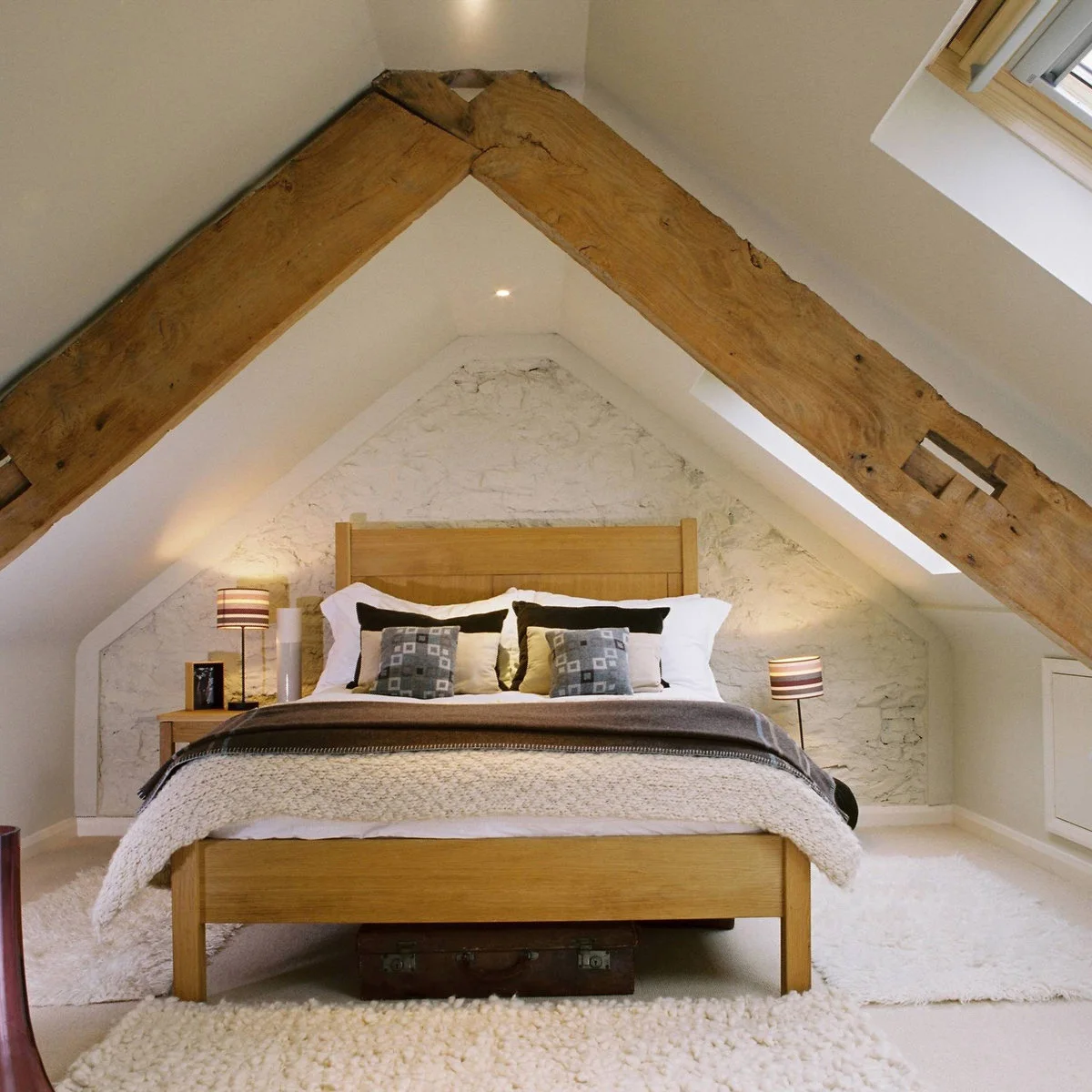
Large exposed beams frame the bed, with pale bedding and gray cushions keeping the lower part simpler. Small striped lamps add detail without competing with the roof structure. Two pale textured floor coverings soften the area around the foot, while the bed frame gives the room a clear center.
Measure headroom where you stand and make the bed, not only above the mattress. Keep overlapping rugs flat and secure, or use one layer if they shift. The cottage bedroom ideas provide more examples of balancing existing architectural character with comfortable bedding and appropriately sized furniture.
IDEA 09 / 20
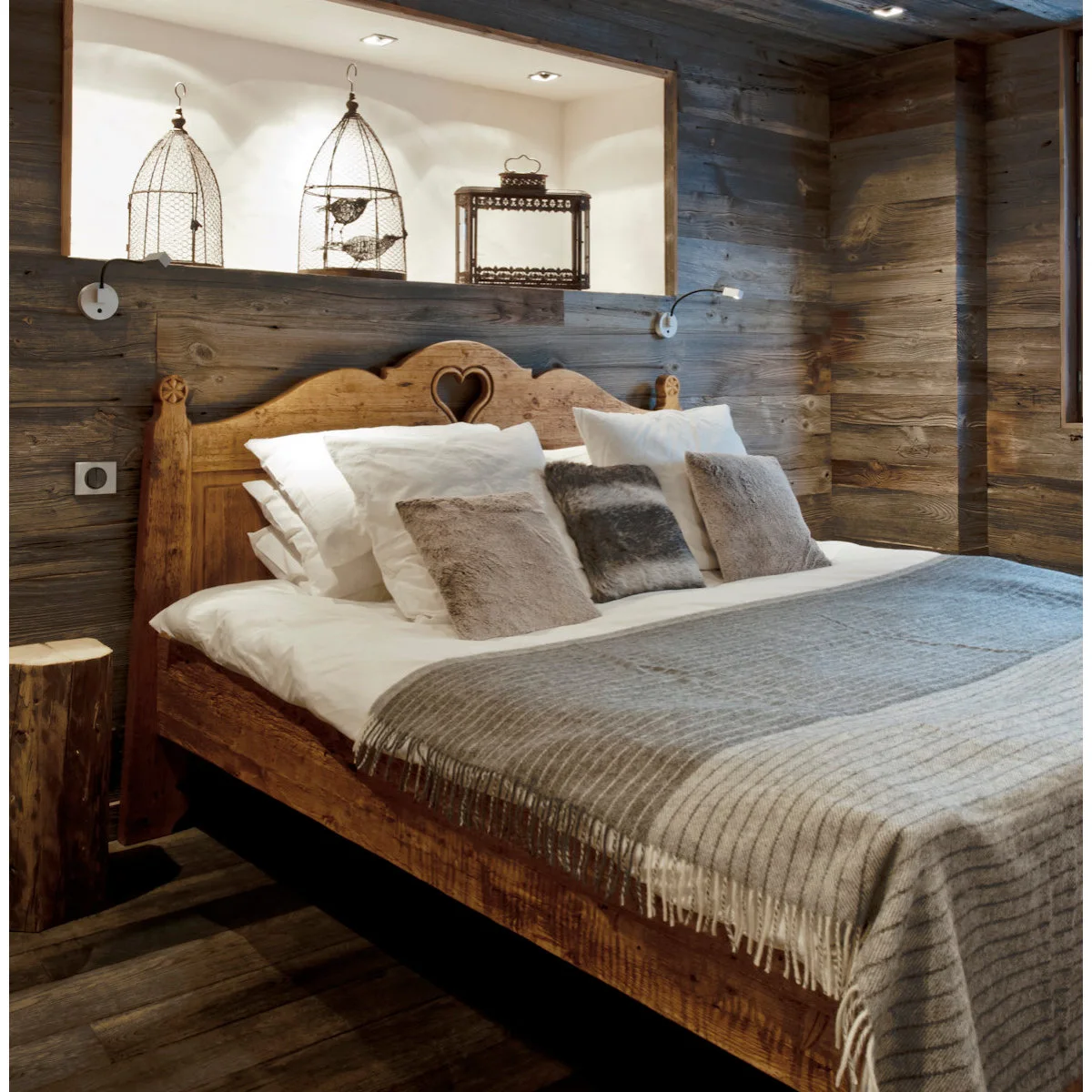
Keep Rustic Surfaces from Becoming Too Busy
 SaveSupport Non AI Creator
Image credit: Project: Inspired Dwellings (via Houzz)
A heart-cutout headboard adds a decorative outline against the wood-lined wall. Gray and white bedding keep the color group restrained, while two small wall lights serve the sleeping positions. A recessed shelf above displays a few objects without requiring extra furniture beside the bed.
Assess how easily the shelf and textured surfaces can be cleaned before adding a similar recess. Secure anything displayed above a bed and keep it away from reach during sleep. Choose reading lights that can be adjusted independently, especially where two people prefer different brightness or bedtimes.
IDEA 10 / 20
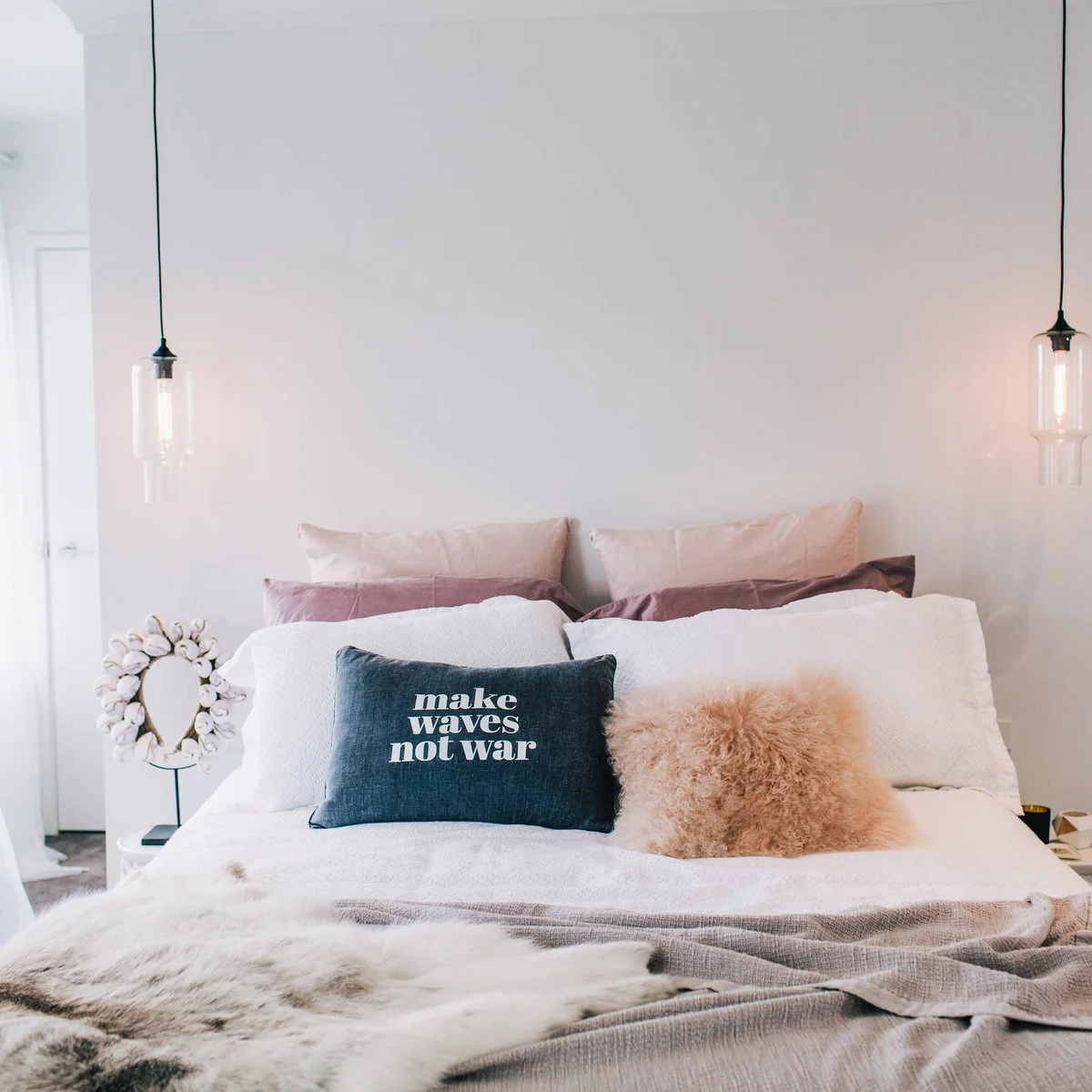
Use Several Textures within a Pale Color Group
 SaveSupport Non AI Creator
Image credit: Project: Claudia Stephenson Interiors (via Houzz)
Different cushion textures give this pale bed depth without relying on many strong colors. A gray throw lies across the foot, while small hanging glass lights keep the bedside outlines narrow. The simple wall lets the bedding remain the main soft feature in the photograph.
Keep only the decorative cushions you can store comfortably at night. Feel fabric samples and check washing guidance rather than assuming fluffy-looking textiles are pleasant or practical. A pair of small lights can suit a restrained room, but make sure they still provide adequate light for everyday tasks.
PART 03
Give Small Corners a Purpose
IDEA 11 / 20
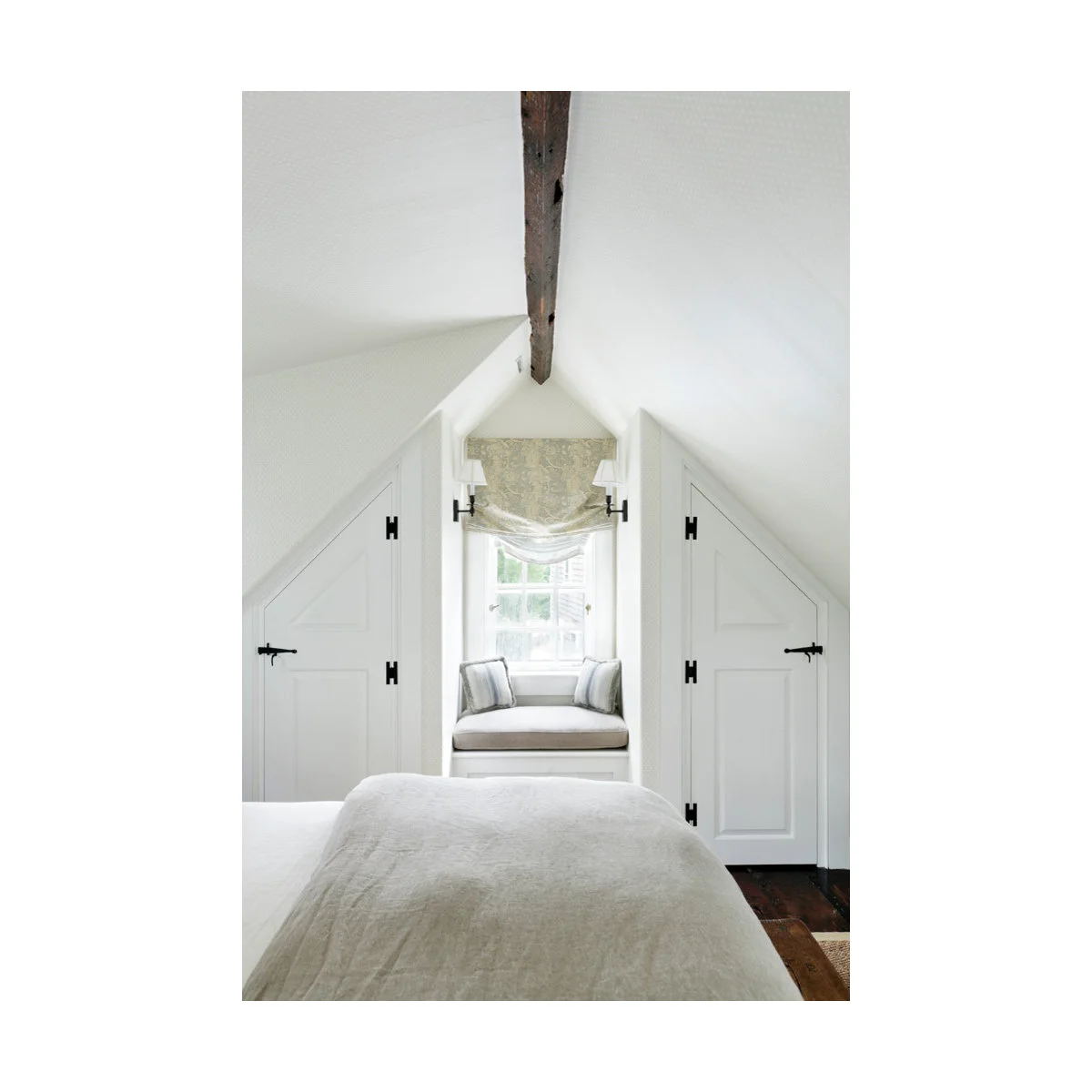
Use the End Window as a Small Sitting Spot
 SaveSupport Non AI Creator
Image credit: Project: PEG Properties & Design (via Houzz)
A small cushioned seat fits beneath the end window, framed by cupboards following the roof slope. The bed remains plain, with the dark ceiling beam supplying a stronger outline above. This uses an awkward low area for a specific purpose without adding a separate armchair.
Check the seat’s depth and headroom before building it, including the space needed to sit down and stand. Keep window access practical and choose a cushion cover that can be cleaned. Measure cupboard doors fully open so the sitting spot does not make storage harder to use.
IDEA 12 / 20
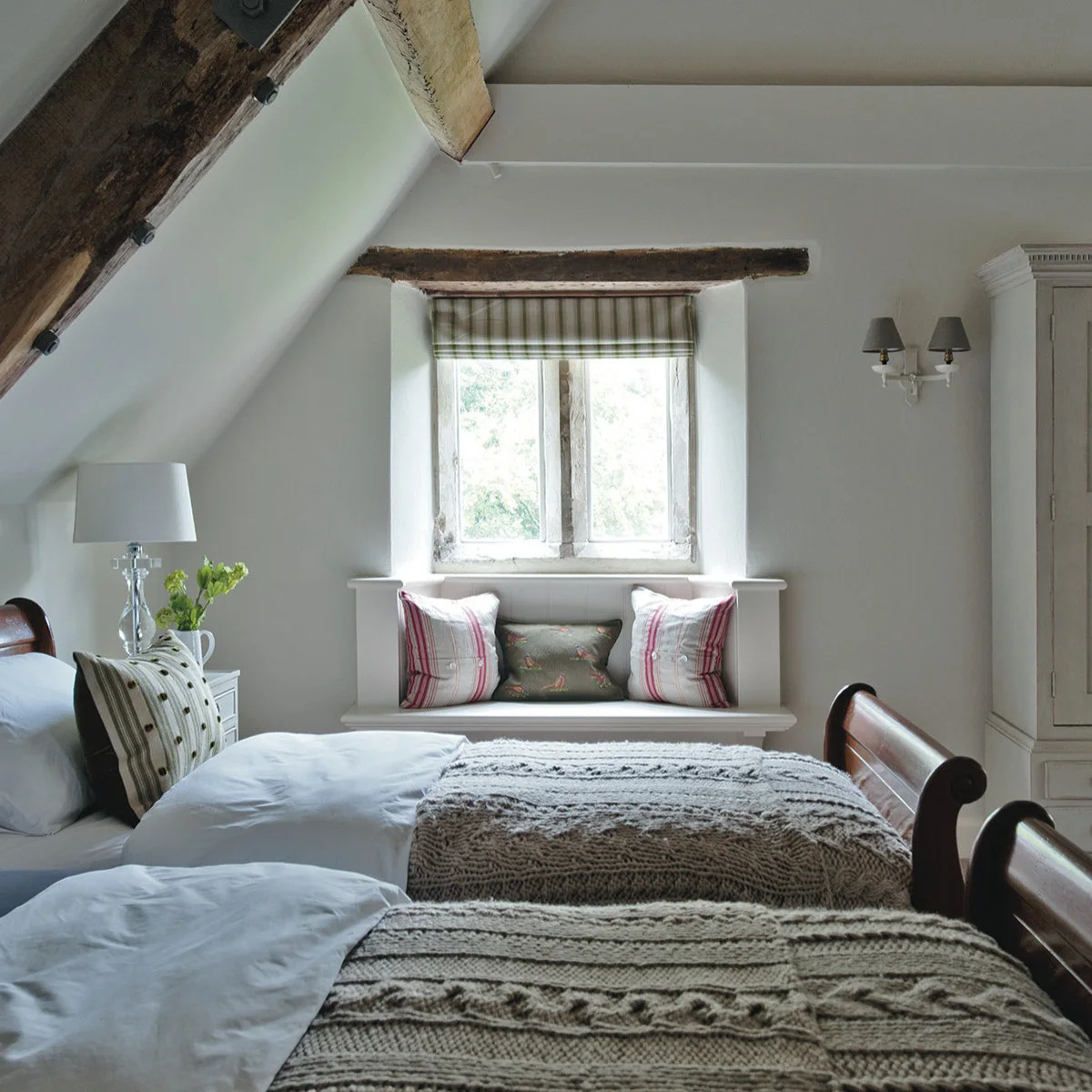
Use Knitted Covers to Connect Twin Beds
 SaveSupport Non AI Creator
Image credit: Project: Sims Hilditch (via Houzz)
Gray knitted covers connect the two beds, with pale pillows keeping their head ends lighter. A small seat sits beneath the window between them, while striped cushions repeat a limited range of colors. The visible beam and darker bed frames give the softer textiles a defined setting.
Choose covers of similar weight if both beds are used together, while allowing each sleeper suitable bedding underneath. Leave enough space for cleaning and making the beds. Keep the window seat useful by limiting cushions, and preserve access to window handles and any nearby curtains or blind controls.
IDEA 13 / 20
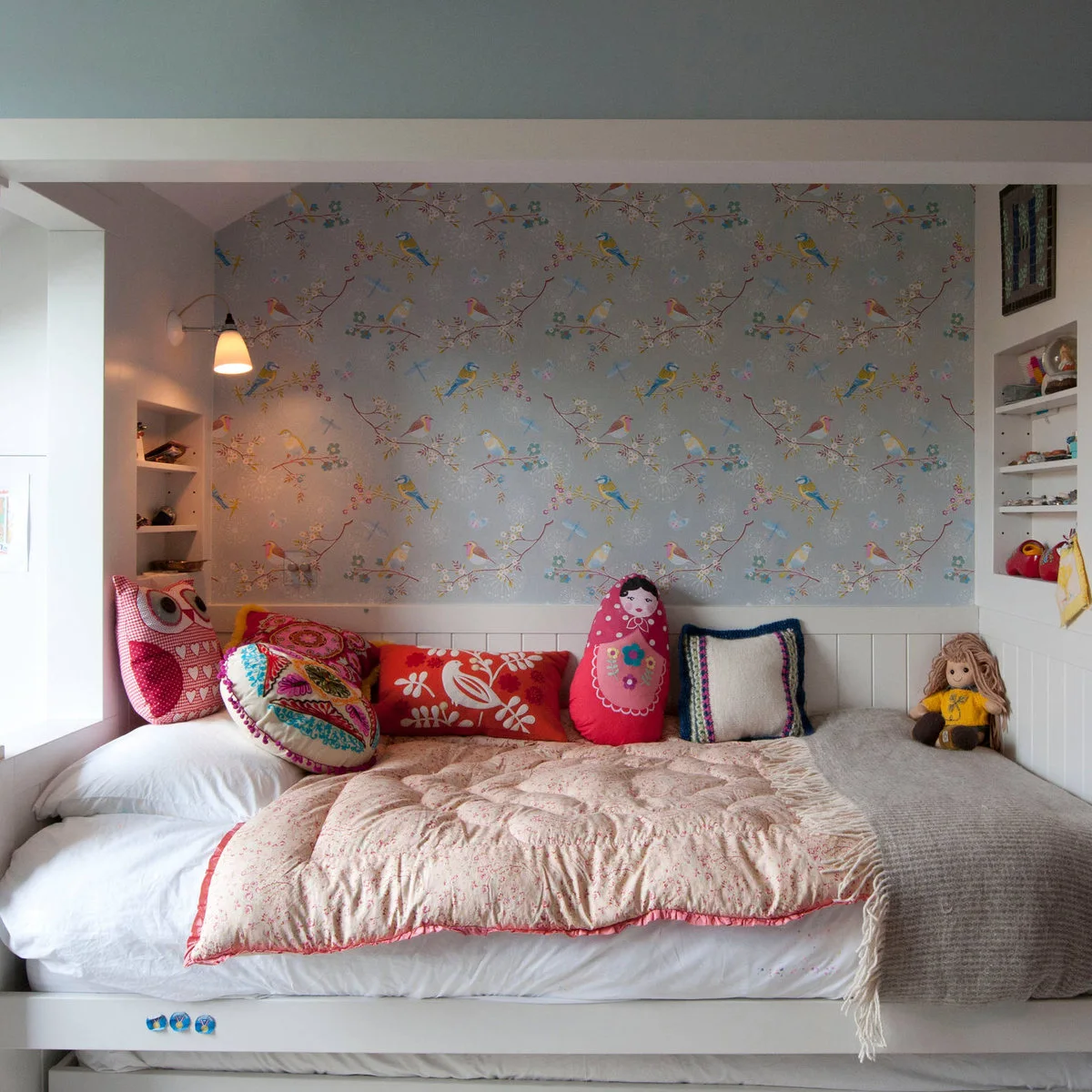
Make a Daybed Feel Inviting with Varied Cushions
 SaveSupport Non AI Creator
Image credit: Project: Caroline Cobbold Design Ltd (via Houzz)
Colorful cushions and a loosely layered cover make the daybed feel different from a formal bed arrangement. Bird-patterned wall covering gives the alcove a clear backdrop. Small shelves at the sides hold belongings close to the mattress without adding another freestanding table in front of the seat.
Check whether the daybed is intended for regular sleep or occasional sitting, then choose the mattress accordingly. Keep the nearest shelf within comfortable reach and avoid crowding it with fragile objects. Store spare cushions elsewhere at bedtime so the inviting daytime arrangement does not complicate sleep.
IDEA 14 / 20
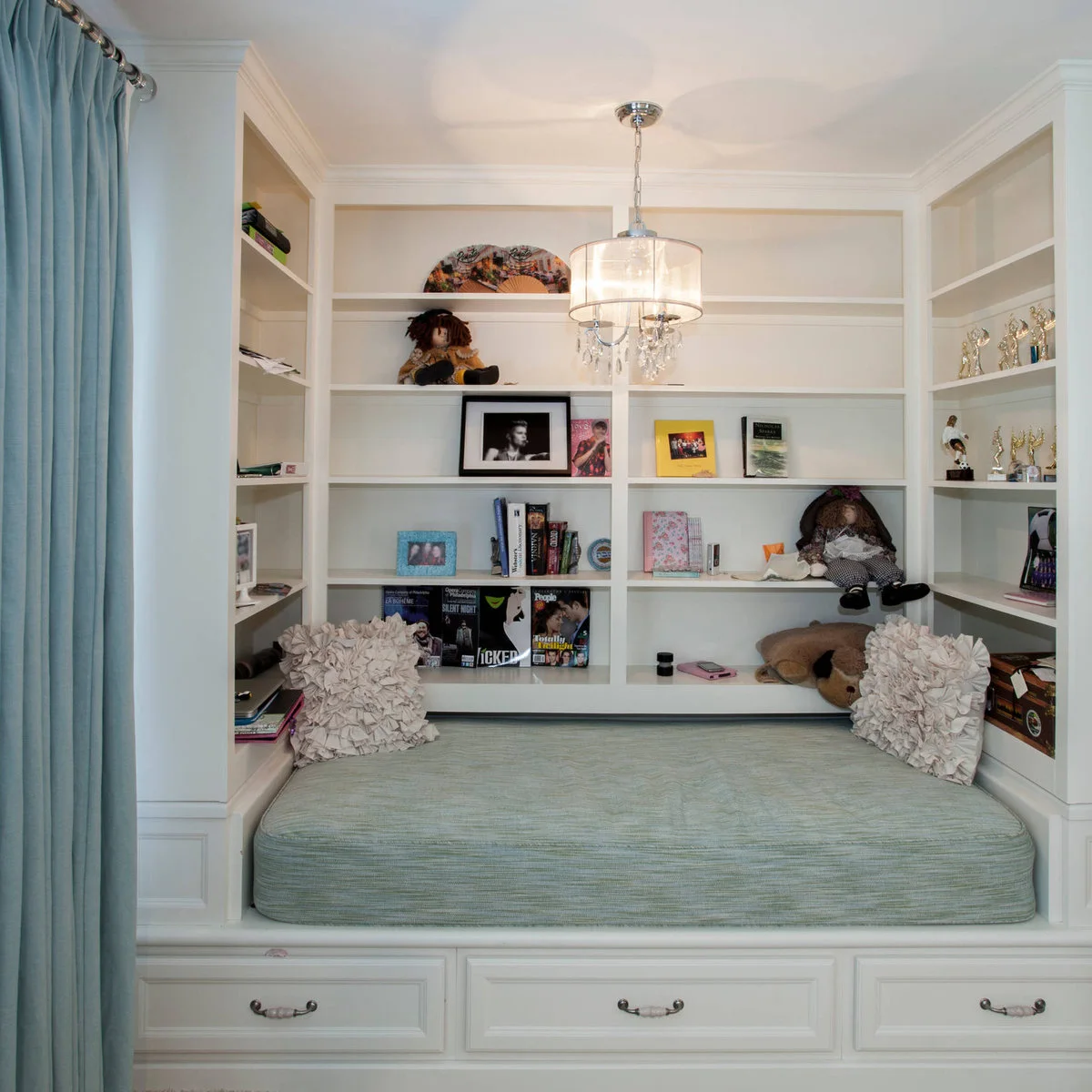
Give a Built-In Daybed Reachable Storage
 SaveSupport Non AI Creator
Image credit: Project: Rudloff Custom Builders (via Houzz)
White shelves surround the daybed, with drawers beneath the cushion adding concealed storage. The pale blue cover links the seat with the nearby curtain. Books and personal objects occupy some shelves while others remain open, keeping the nook from feeling completely packed around the sleeping surface.
Use the easiest-to-reach shelves for everyday items and secure the surrounding joinery correctly. Choose a cushion or mattress suitable for the intended use and provide airflow as required. Keep hard objects away from the sleeping edge, and confirm that drawers can open without moving other furniture.
IDEA 15 / 20
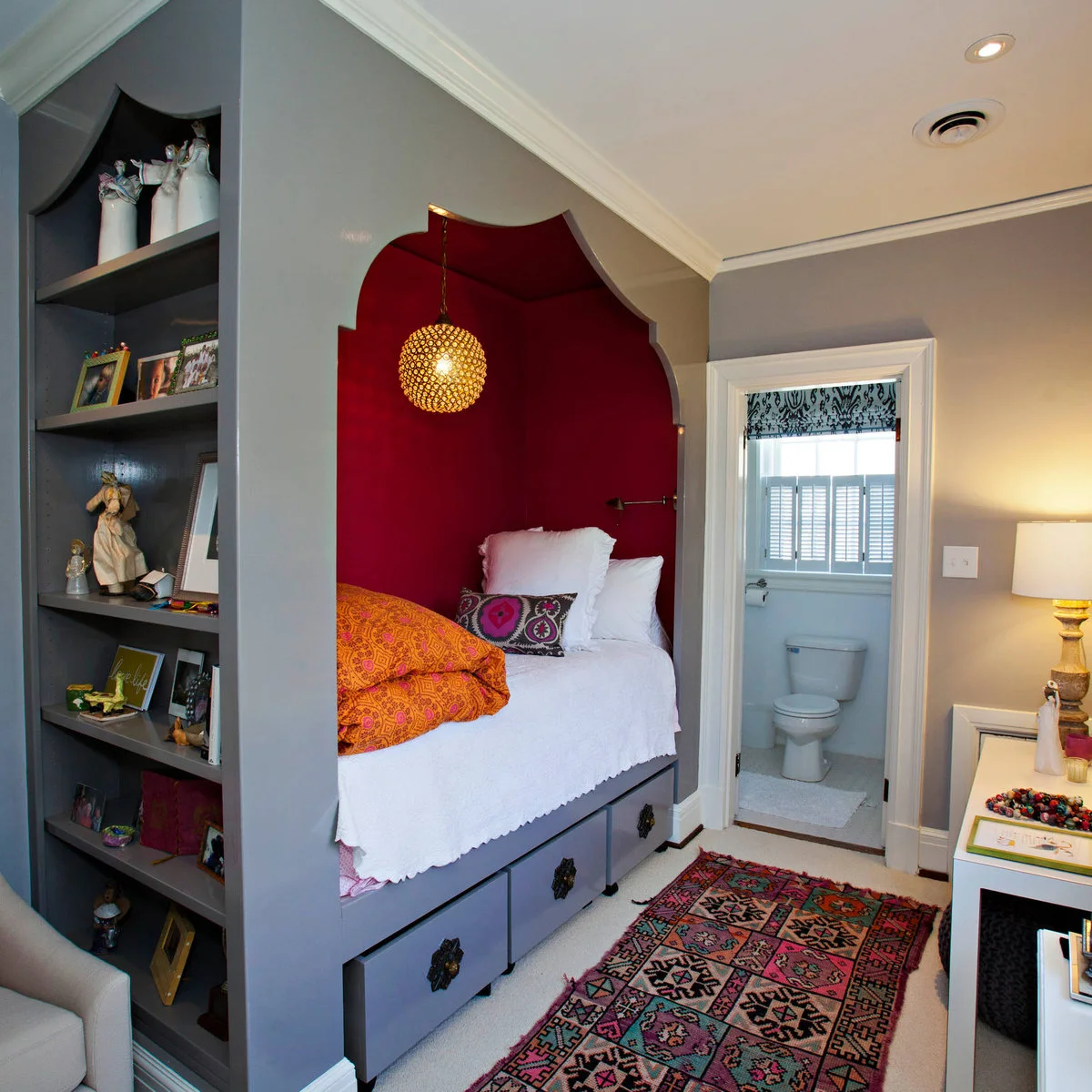
Use a Strong Color inside a Bed Alcove
 SaveSupport Non AI Creator
Source: www.houzz.com
A deep red interior separates the bed alcove from the gray storage around it. Orange patterned textiles add another warm layer, while drawers below make the raised base useful. A small reading light serves the bed separately from the decorative hanging light within the recess.
Plan ventilation, mattress access and cleaning before enclosing a bed on several sides. Keep light fittings and fabric safely separated according to their requirements. Deep storage drawers can be useful, but check that their full opening does not block the route to an adjacent door or bathroom.
PART 04
Keep the Room Easy to Use
IDEA 16 / 20
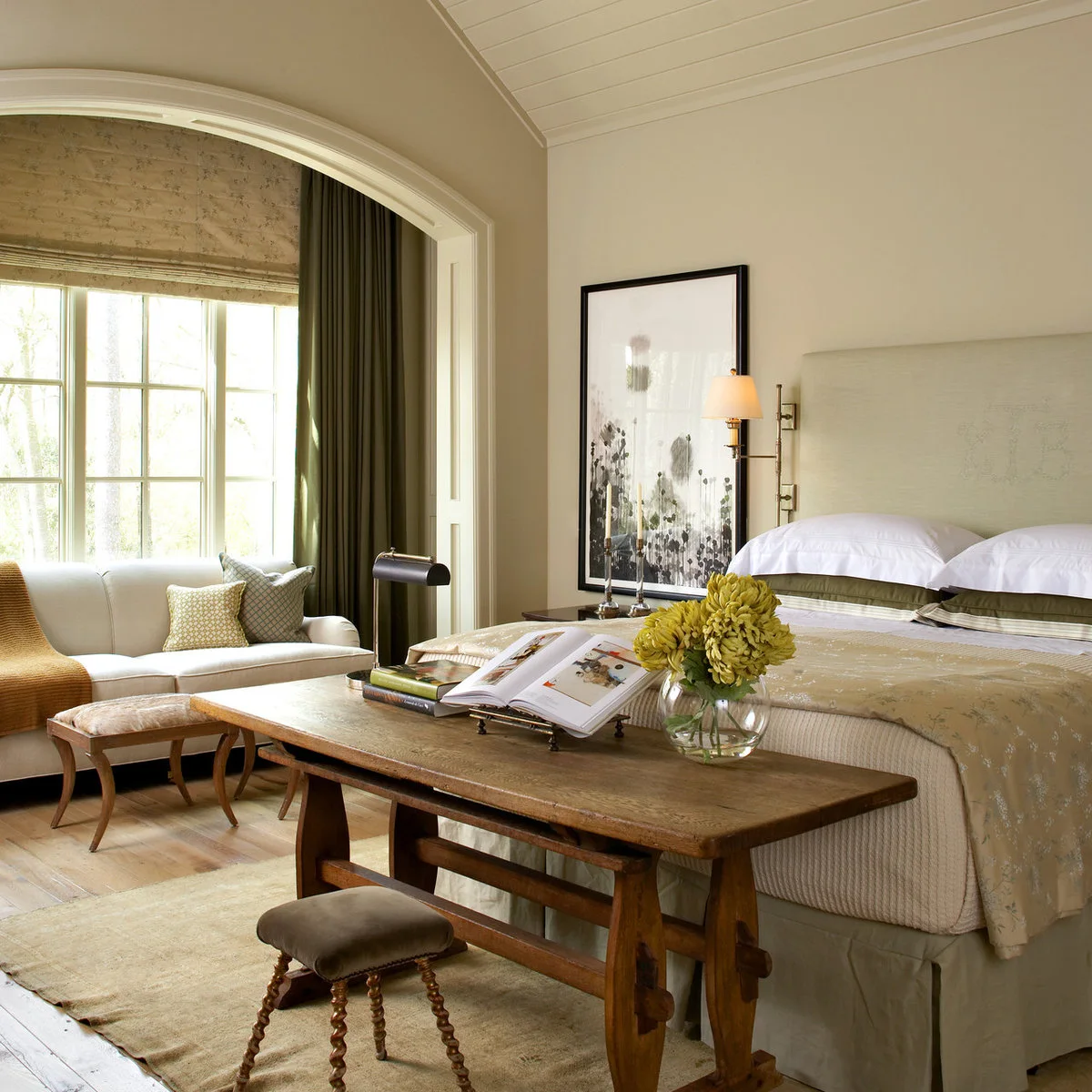
Give a Window Seat Its Own Light
 SaveSupport Non AI Creator
Source: houzz.com
A settee fits beneath the arched window, with long curtains defining the sitting area. The bed uses pale patterned textiles that connect with the quieter surrounding colors. A separate table provides another working surface, making this a room with several functions rather than a sleeping space alone.
Keep only the additional functions you actually need and measure their furniture with seats pulled out. A table at the foot can feel useful in a large room but obstruct a smaller one. Give the window seat suitable reading light and preserve access to curtains and window hardware.
IDEA 17 / 20
Add a Small Warm Accent to Gray Bedding
 SaveSupport Non AI Creator
Image credit: Project: THE SISTERS AND COMPANY – DECORATING DEN INTERIORS (via Houzz)
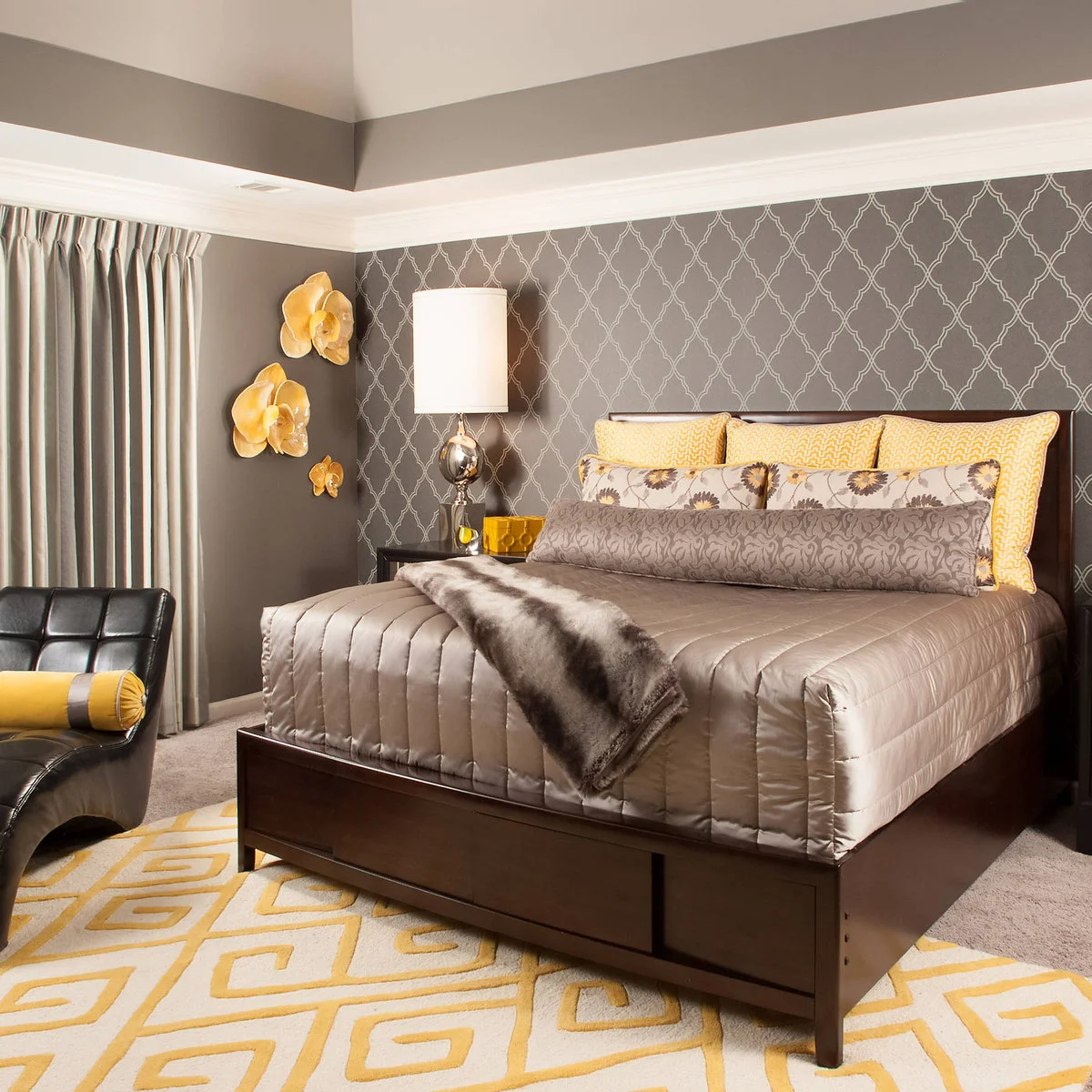
Yellow pillows and small wall decorations add warmth to the gray bedding and patterned wall. The short textured throw changes the surface at the foot without covering the whole bed. A nearby dark chair repeats the furniture’s stronger outlines, with the lampshade keeping the bedside light visually softer.
Try a small accent first if your room already has gray walls or bedding you want to keep. Match its undertone to the actual textiles rather than buying an entire set from a screen. Check the throw’s care instructions and keep the chair clear enough to sit in regularly.
IDEA 18 / 20
Keep a Compact Sleeping Space Simple
 SaveSupport Non AI Creator
Image credit: Project: Riverside Shepherd Huts Ltd (via Houzz)
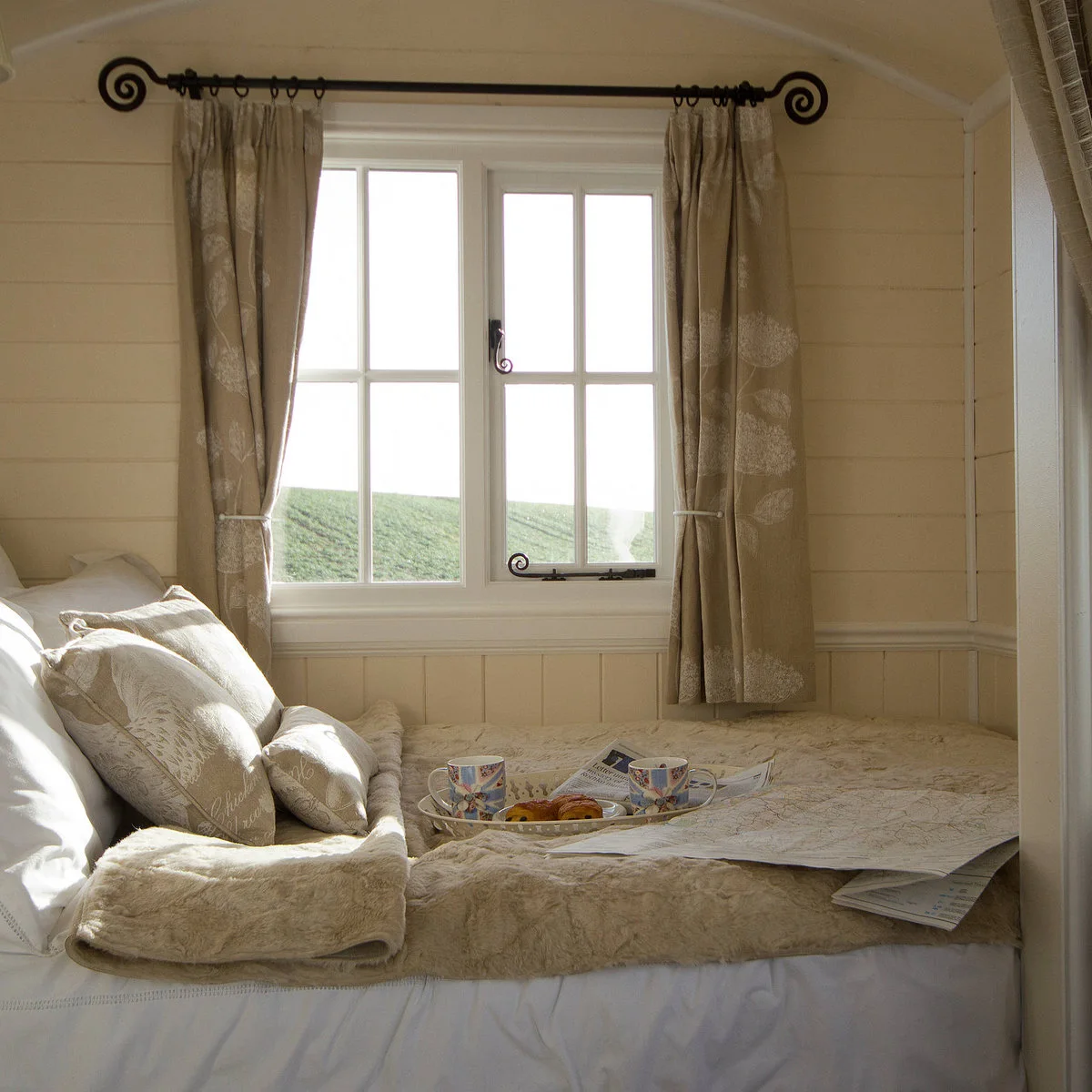
Cream bedding and short patterned curtains keep this compact sleeping space within a narrow color range. The window brings light directly beside the mattress, and the wall boards make the small enclosure’s shape clear. A tray is staged on the bed without requiring a separate large table.
Preserve ventilation, door access and a safe route out when arranging a very small sleeping area. Use a stable bedside surface for drinks rather than relying on a mattress tray every day. Choose only the bedding layers you need so the limited storage is not filled with spare decorative covers.
IDEA 19 / 20
Use a Curtain to Define a Sleeping Nook
 SaveSupport Non AI Creator
Image credit: Project: High Camp Home (via Houzz)
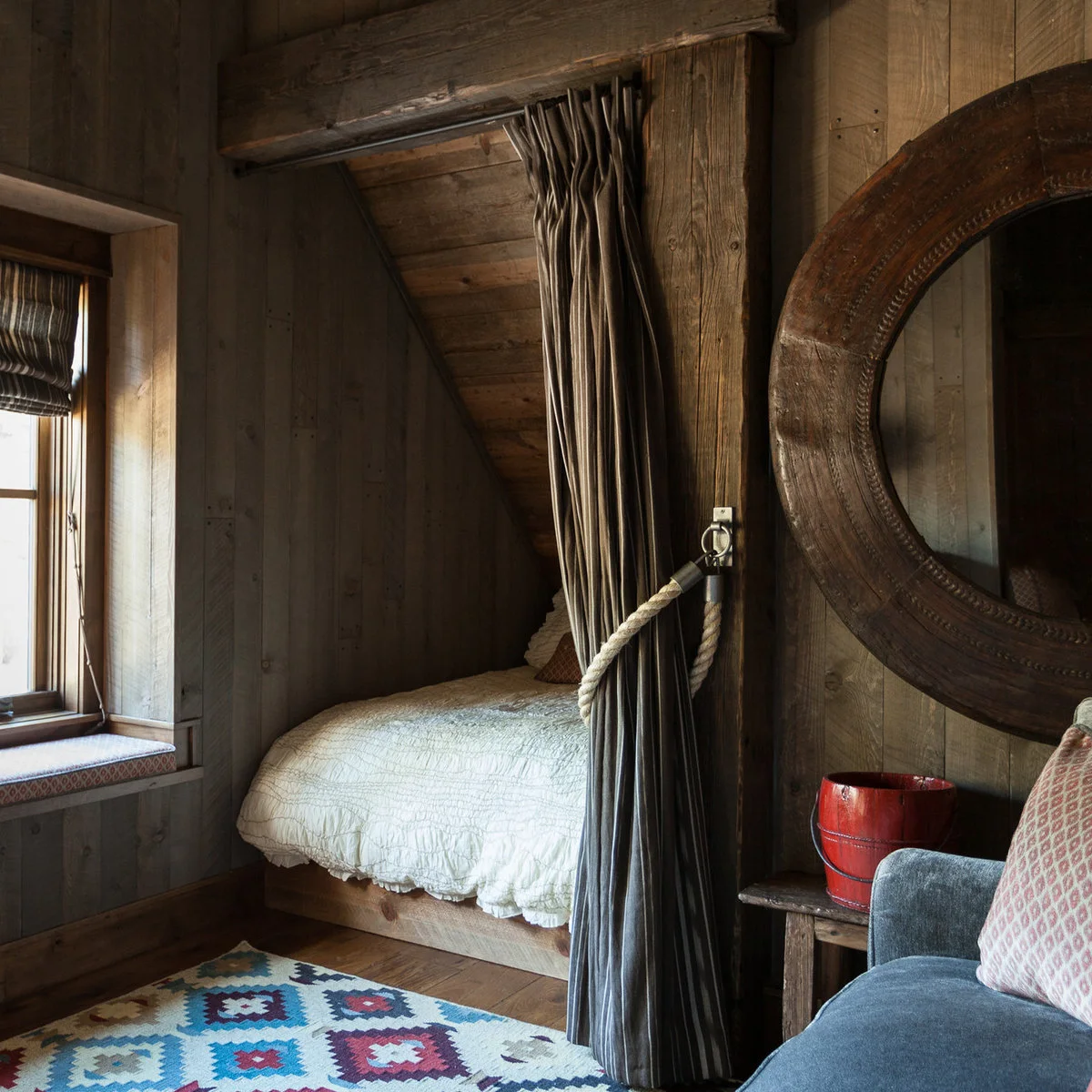
A drawn-back curtain defines the bed within this wood-lined nook. Pale bedding provides contrast against the darker surroundings, while a colorful rug adds detail on the floor outside. The nearby chair gives the larger space a separate place to sit without filling the sleeping recess.
A curtained nook needs appropriate ventilation and enough access to make the bed comfortably. Keep fabric clear of lights, heaters and other heat sources. Choose a curtain you can remove for cleaning, and avoid adding loose ties or cords where they could create a problem during daily use.
IDEA 20 / 20
Use Wall Lights in a Low-Ceilinged Bedroom
 SaveSupport Non AI Creator
Image credit: Project: Cotton Tree Interiors (via Houzz)
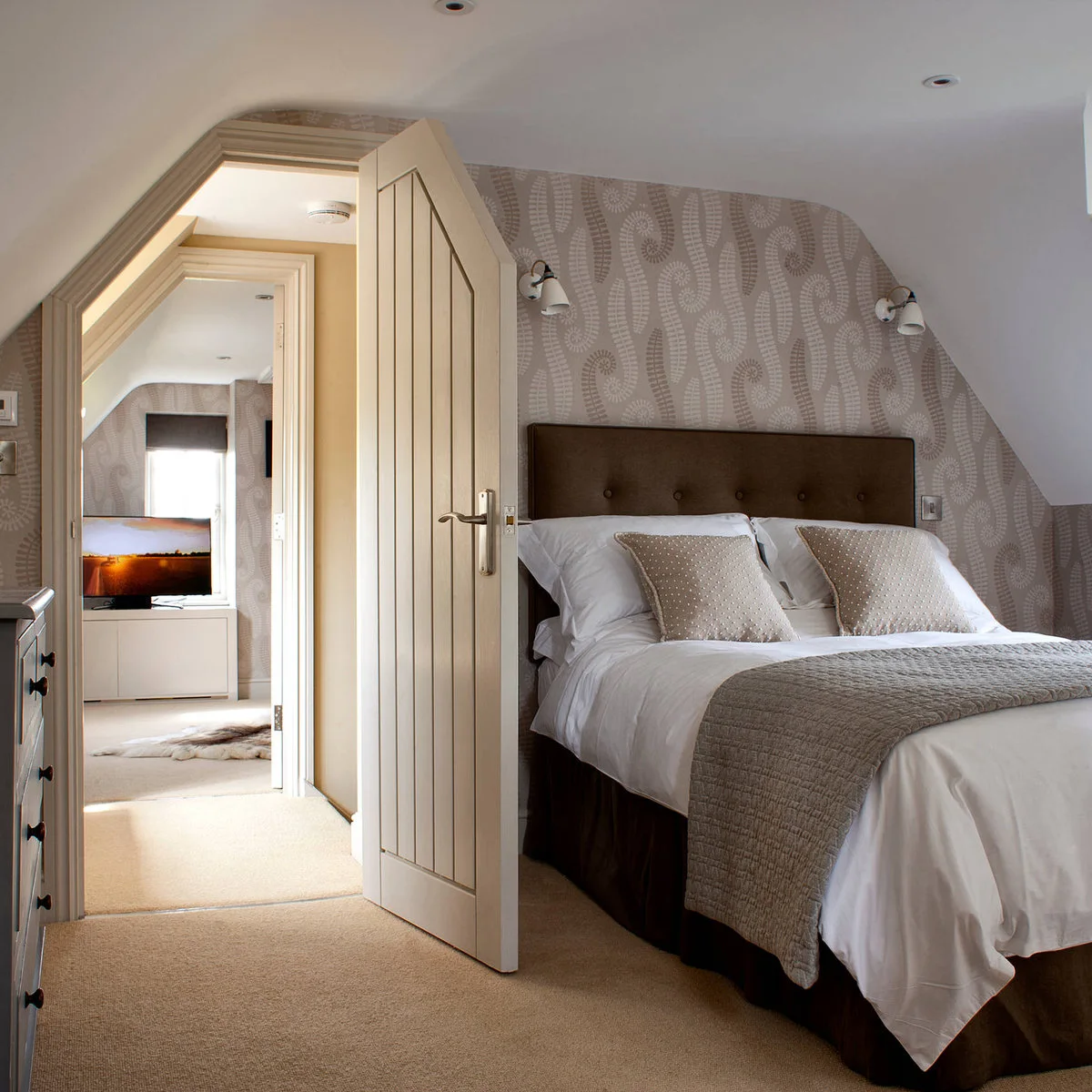
Small wall lights sit above the headboard where the ceiling slopes downward. A pale patterned wall and quilted cover keep the room coordinated without a large decorative fitting over the bed. The open door shows why furniture depth and a clear bedside route matter in a compact room.
Check the lights from a seated position so the beams reach a book without creating glare. Confirm headroom where you get out of bed and keep the door swing unobstructed. Compact bedside storage is often more useful here than adding a bench or extra chair to complete the arrangement.
BRING IT ALL TOGETHER
Choose Comfort You Can Maintain
Add softness where it earns its place: bedding you like to touch, a rug that stays flat and a chair you can actually reach. Compare cleaning requirements before buying heavily textured pieces, particularly if pets share the room.
Use lighting and storage to make the evening routine easier. A reachable switch, a clear bedside surface and somewhere to put spare cushions usually contribute more to lasting comfort than another decorative layer.