A boy’s bedroom should make room for the things he actually enjoys, whether that is drawing, reading, building models or collecting toy cars. Start with those interests and his daily routine rather than choosing a theme that needs to appear on every surface. A comfortable bed and accessible storage still do most of the work.
These rooms show different ways to handle shared beds, collections, color and quieter corners. The photographs include custom furniture and styled accessories; borrow the useful arrangement rather than treating every object as essential. Keep heavy displays securely fixed, store toys clear of walking routes and choose furniture appropriate to the child’s age.
PART 01
Give Interests a Clear Place
IDEA 01 / 15
Start with One Interest-Led Picture
 SaveSupport Non AI Creator
Image credit: Project: Moreau Design (via Houzz)
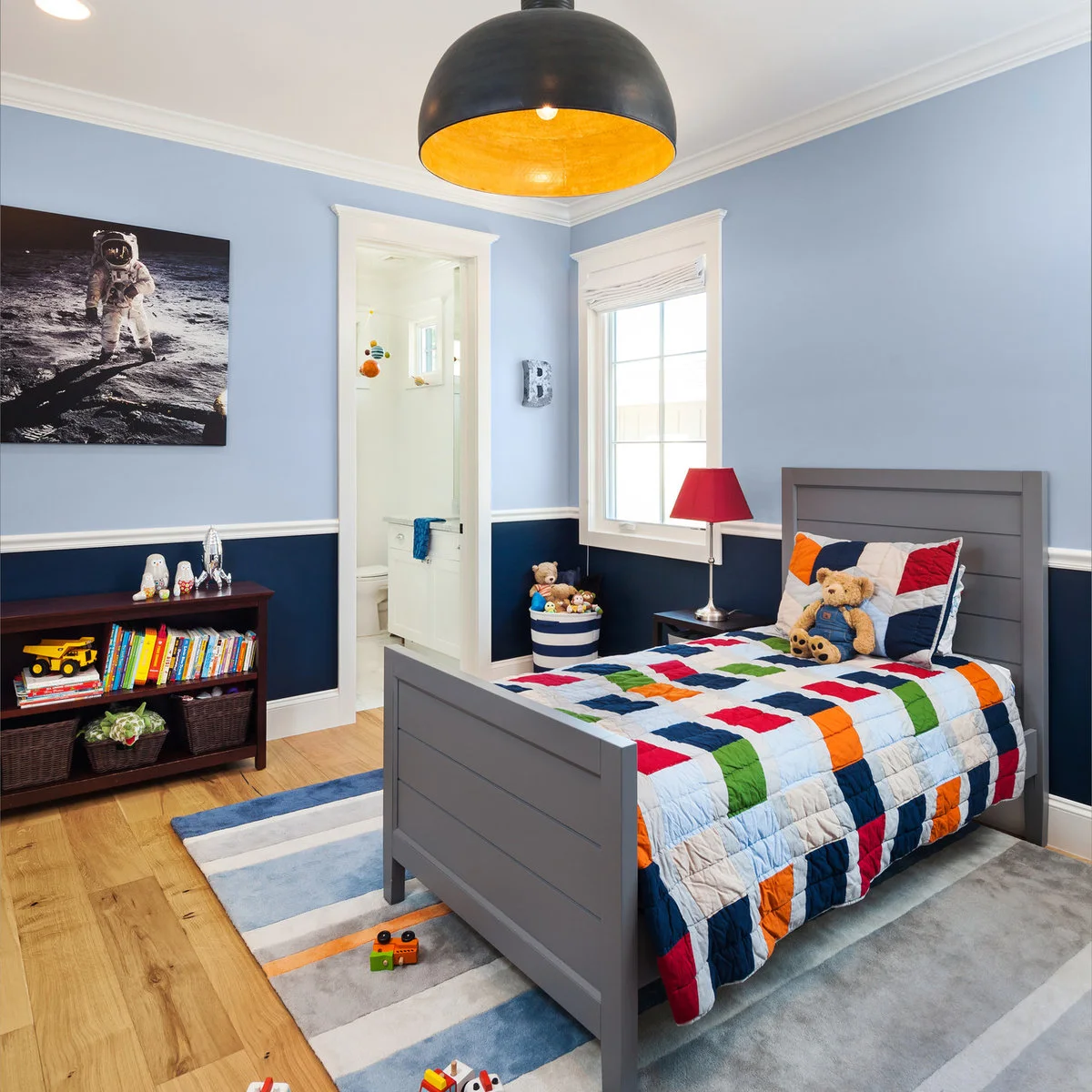
An astronaut photograph gives this bedroom a clear interest without covering every wall in space imagery. Pale blue above a darker lower band keeps the room lively, while the patchwork quilt repeats several brighter colors. A low bookcase leaves books and baskets easy to see.
Let your child choose one picture that matters to him, then keep the larger furniture adaptable. Secure the bookcase and artwork correctly, and store small toys after play so the rug remains a clear route. The bedding can change later without requiring a new bed or another complete decorating scheme. For older children with more study and hobby needs, these teen boy bedroom ideas offer a different set of arrangements.
IDEA 02 / 15
Put a Theme into Replaceable Details
 SaveSupport Non AI Creator
Image credit: Project: Red Leaf Interiors, LLC (via Houzz)
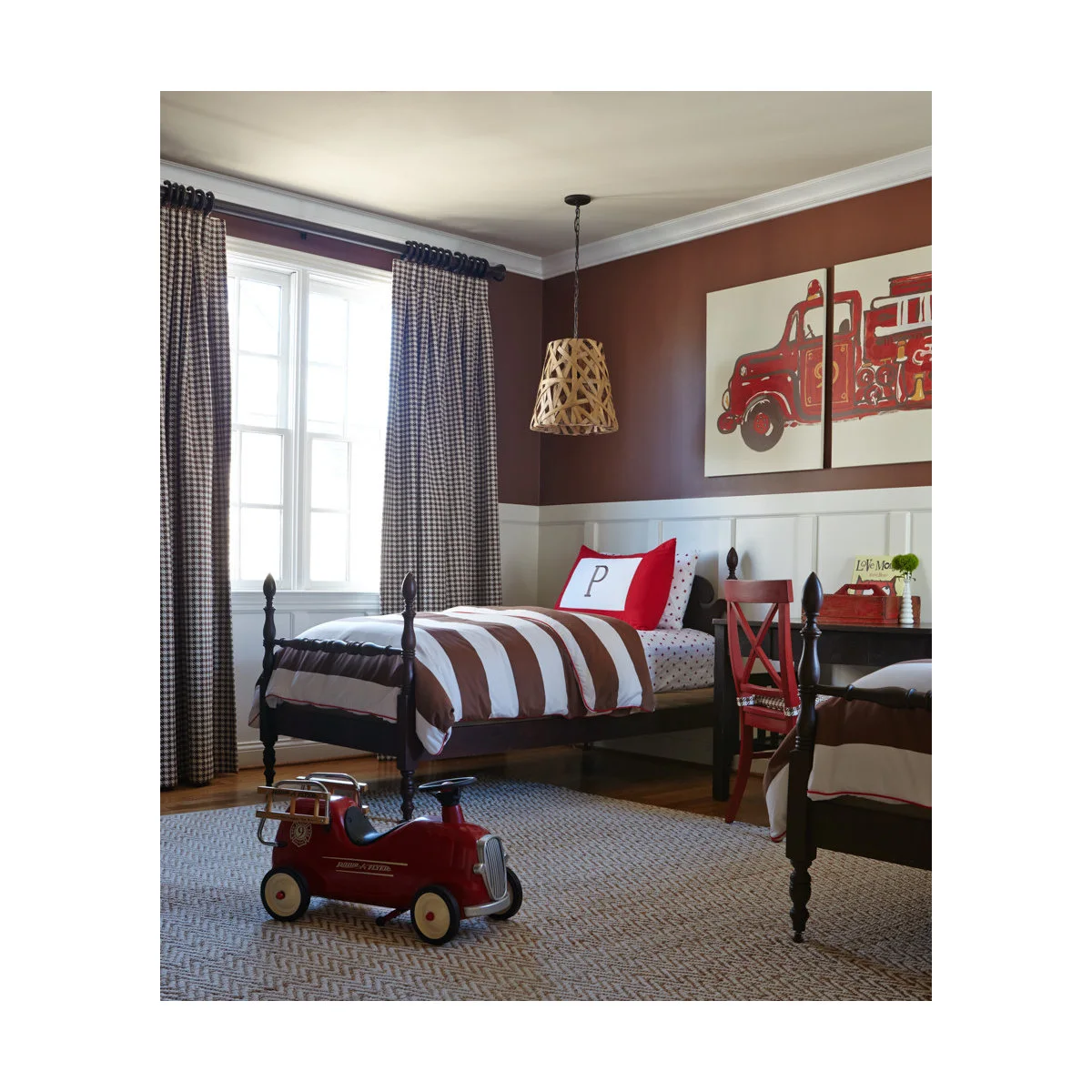
Dark turned bedposts and striped bedding give these shared beds a consistent framework. Red accents and the fire-engine artwork supply the playful theme, rather than the furniture itself. The matching textiles help two sleeping places feel connected without needing identical objects on every nearby surface.
Use pictures, pillow covers and washable bedding for interests that may change quickly. Keep larger toy vehicles in a defined parking spot away from the route between beds and door. Before buying matching sets, ask whether both children like the theme and leave space for their separate choices.
IDEA 03 / 15
Balance Blue Walls with Pale Lower Panels
 SaveSupport Non AI Creator
Image credit: Project: Curb Exposure LLC (via Houzz)
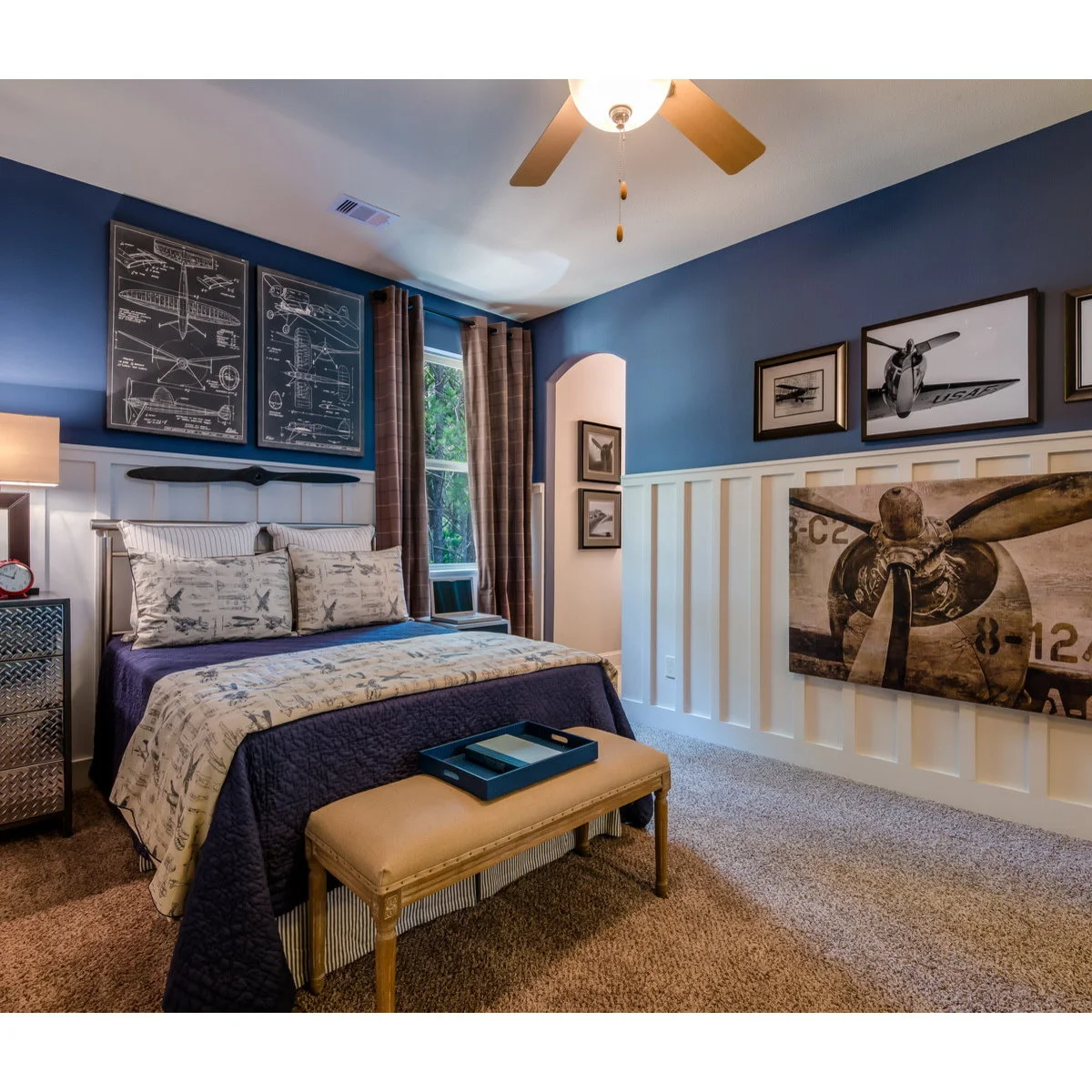
Blue upper walls sit above pale lower panels in this aviation-themed room. The airplane picture and warm brown curtains give the bed area a focus, while the light lower surfaces prevent the color from filling every part of the view. A bench provides another horizontal line near the foot.
Try wall-color samples beside the existing floor and curtains before committing to a whole room. Check that a foot bench leaves enough walking space when someone is dressing. Keep any model or prop securely positioned away from the sleeping area, using lightweight artwork where a large object would be awkward.
IDEA 04 / 15
Use One Large Graphic with Quiet Bedding
 SaveSupport Non AI Creator
Image credit: Project: Kristin Rocke (via Houzz)
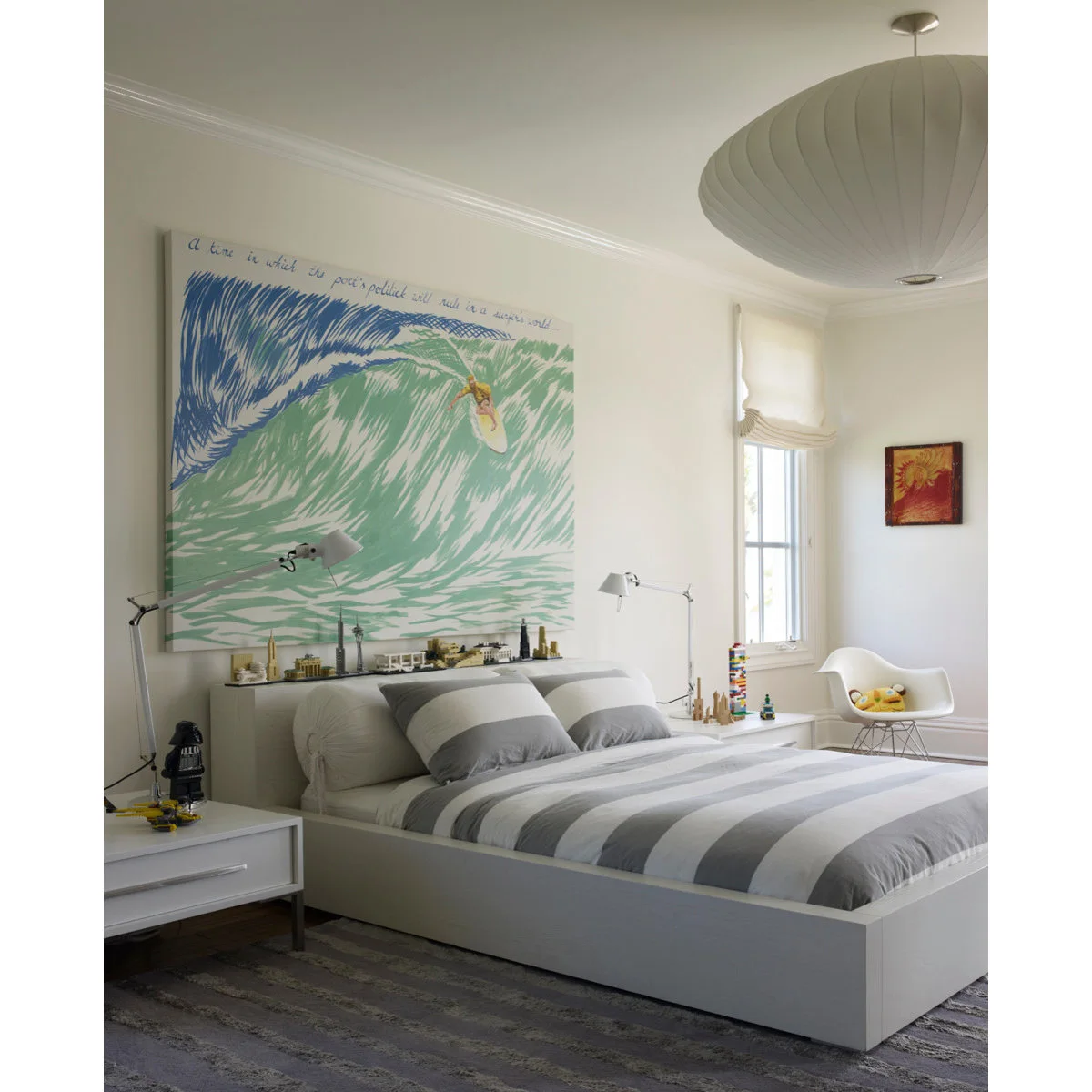
A large wave illustration becomes the main feature above this bed, while broad gray and white stripes keep the bedding comparatively simple. Slim adjustable lamps flank the headboard. Small models and toys give the room personal detail without requiring another patterned wall.
Choose the artwork with your child and mount it securely, leaving the bedside lights easy to operate. Keep models on a stable display surface away from pillows rather than balancing them along the headboard. With a strong picture already present, plain storage fronts help the room feel easier to settle in.
PART 02
Make Shared Space Work
IDEA 05 / 15
Arrange Shared Beds End to End
 SaveSupport Non AI Creator
Image credit: Project: Michael Smith Architects (via Houzz)
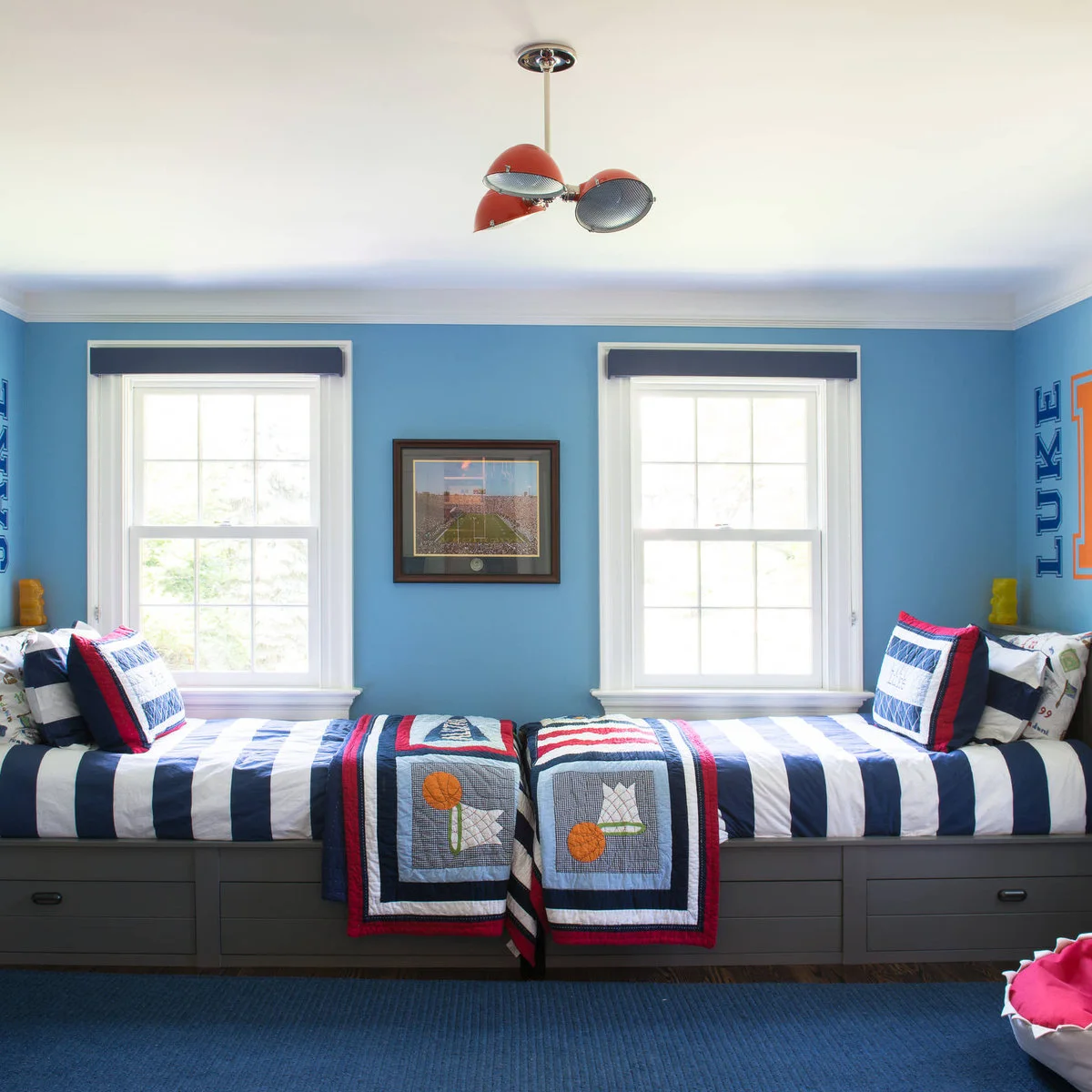
Two beds meet end to end beneath this row of windows, keeping their long edge against one wall. Matching stripes connect the arrangement, and the sports quilts give each bed a playful finish. Drawers underneath make the sleeping platform work as storage too.
Check the actual mattress lengths, window access and room circulation before considering a similar built-in layout. Keep window coverings cordless and follow appropriate window-safety guidance for children. Allow drawers to open fully without colliding with other furniture, and give each child a clearly assigned part of the storage.
IDEA 06 / 15
Build Useful Storage under Shared Beds
 SaveSupport Non AI Creator
Image credit: Project: Stedila Design (via Houzz)
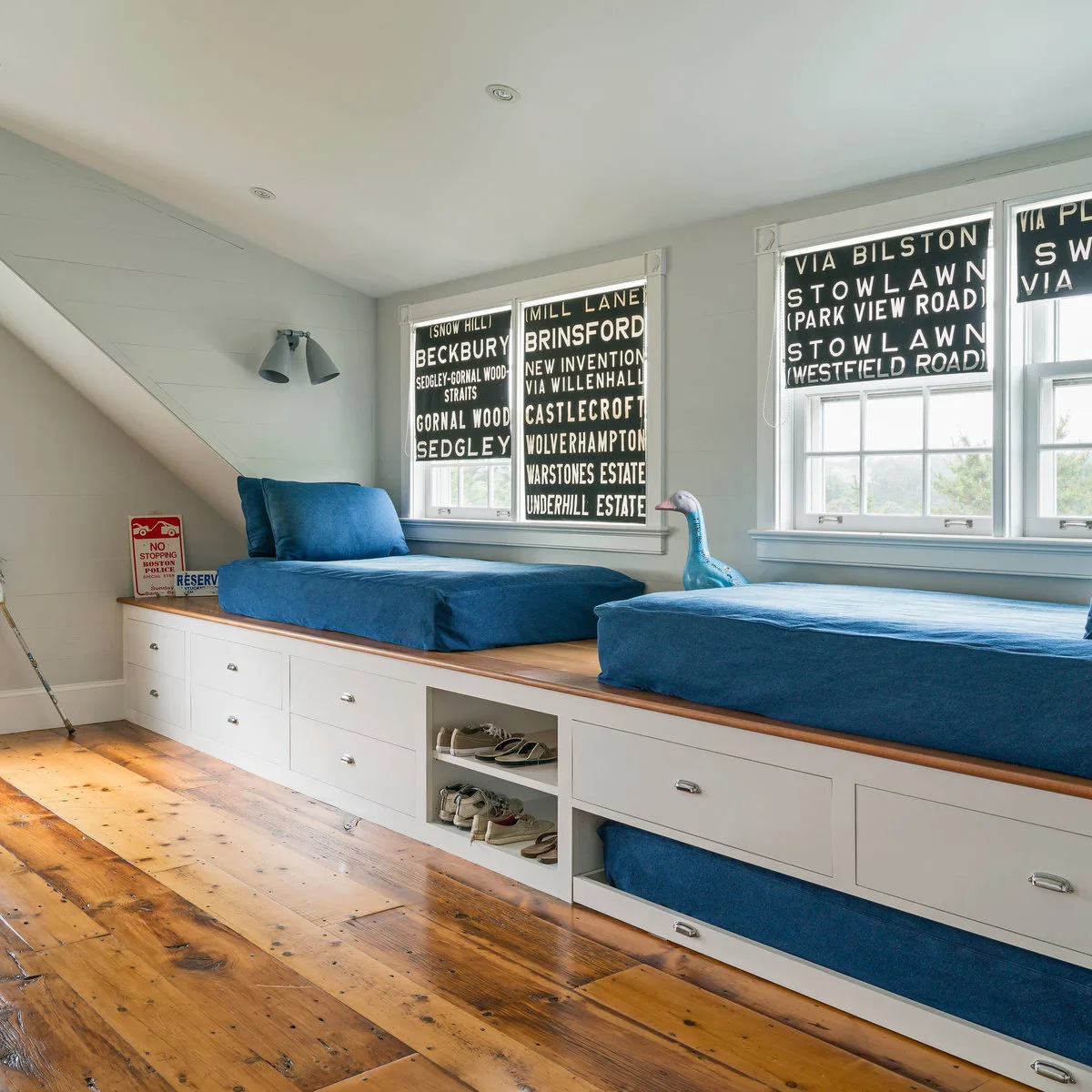
Blue cushions sit on a continuous pale platform beneath these windows, with drawers and open shoe cubbies below. The contrast makes the storage easy to read without several separate furniture pieces. A pullout section is visible beneath the right-hand bed, adding another practical consideration to the arrangement.
Plan everyday access before adding a pullout or extra bed: it needs usable floor space when extended. Give shoes a ventilated compartment and keep drawer handles easy to grip. Choose cordless window coverings and assess window safety, rather than copying the hanging controls visible in a styled photograph.
IDEA 07 / 15
Give Two Beds a Shared Central Table
 SaveSupport Non AI Creator
Image credit: Project: Camelot Homes (via Houzz)
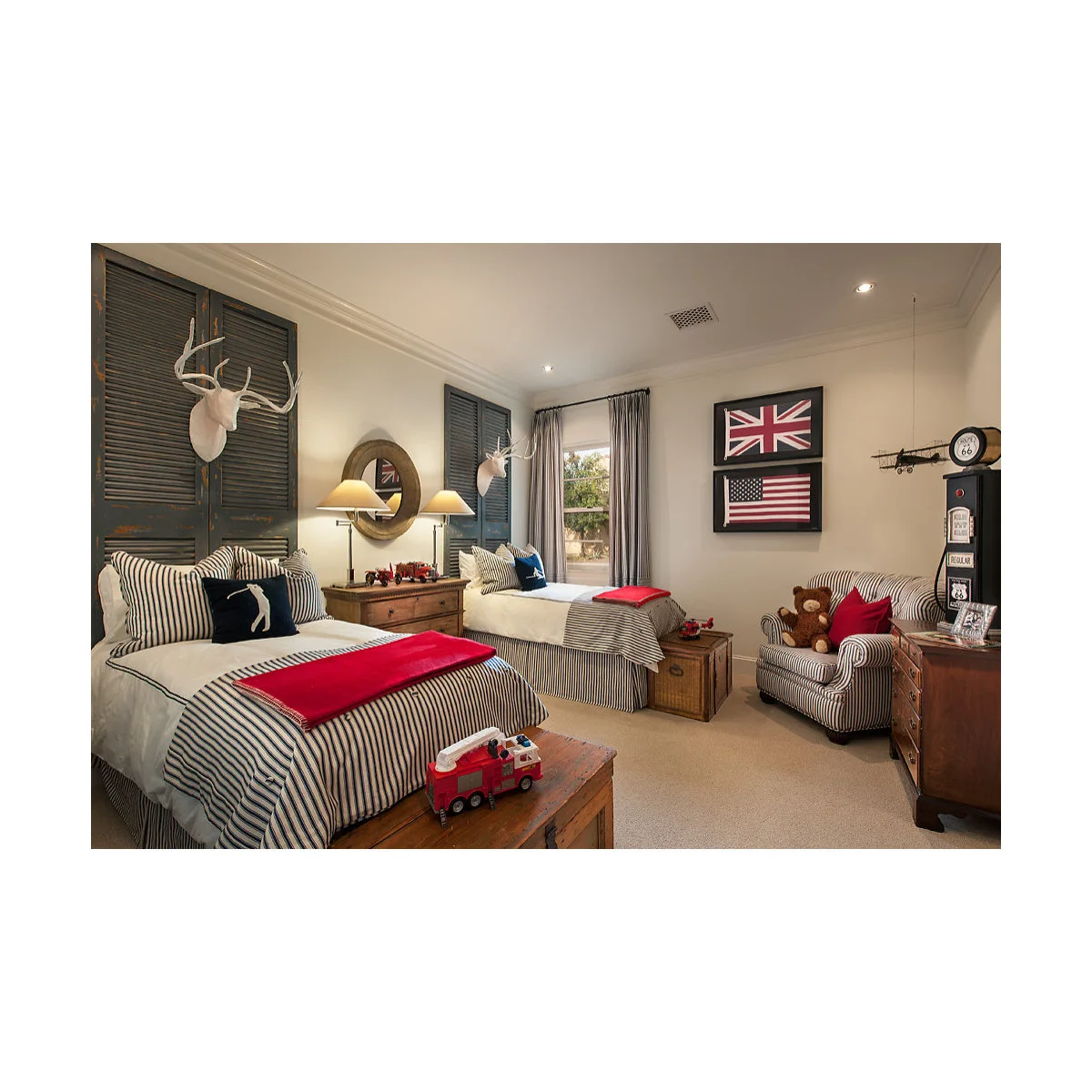
A central chest sits between these two separate beds, creating one shared bedside zone. Matching striped covers and red throws tie the pair together, while trunks at the feet add another storage opportunity. A small upholstered chair supplies a place to sit away from the mattresses.
Agree which drawers and surfaces belong to each child so a shared chest does not become a daily dispute. Check the space around the trunks before including them, and use child-appropriate storage with safe lid mechanisms. Separate beds remain easier to rearrange than a custom platform as the children’s needs change.
IDEA 08 / 15
Separate Sleep and Study in a Shared Room
 SaveSupport Non AI Creator
Image credit: Project: Christina Pahl (via Houzz)
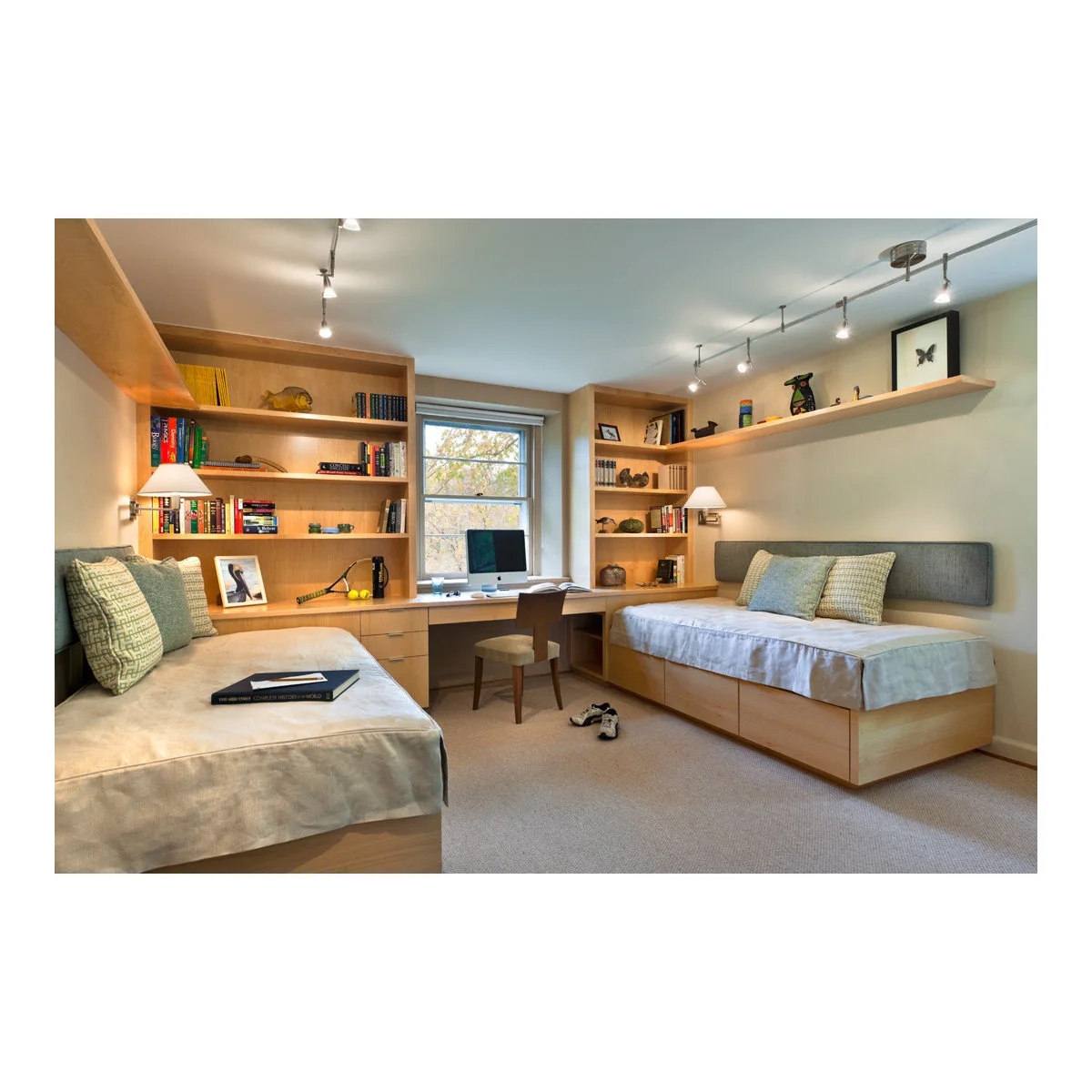
Two low beds sit on opposite sides of this room, with a desk centered beneath the window between them. Wood-colored shelving links the sleeping and study areas. The open floor in the middle gives the arrangement breathing room instead of squeezing a third large item between the beds.
A single desk may work for children who use it at different times, but simultaneous homework needs another comfortable work surface. Keep frequently used books on reachable shelves and secure storage properly. Check the chair’s pullback space and leave the middle route clear rather than using it for permanent toy storage. For tighter layouts, these small bedroom decorating ideas offer more ways to reduce furniture crowding.
PART 03
Put Storage within Reach
IDEA 09 / 15
Combine Bedside Books with Lower Drawers
 SaveSupport Non AI Creator
Image credit: Project: Z+ Interiors (via Houzz)
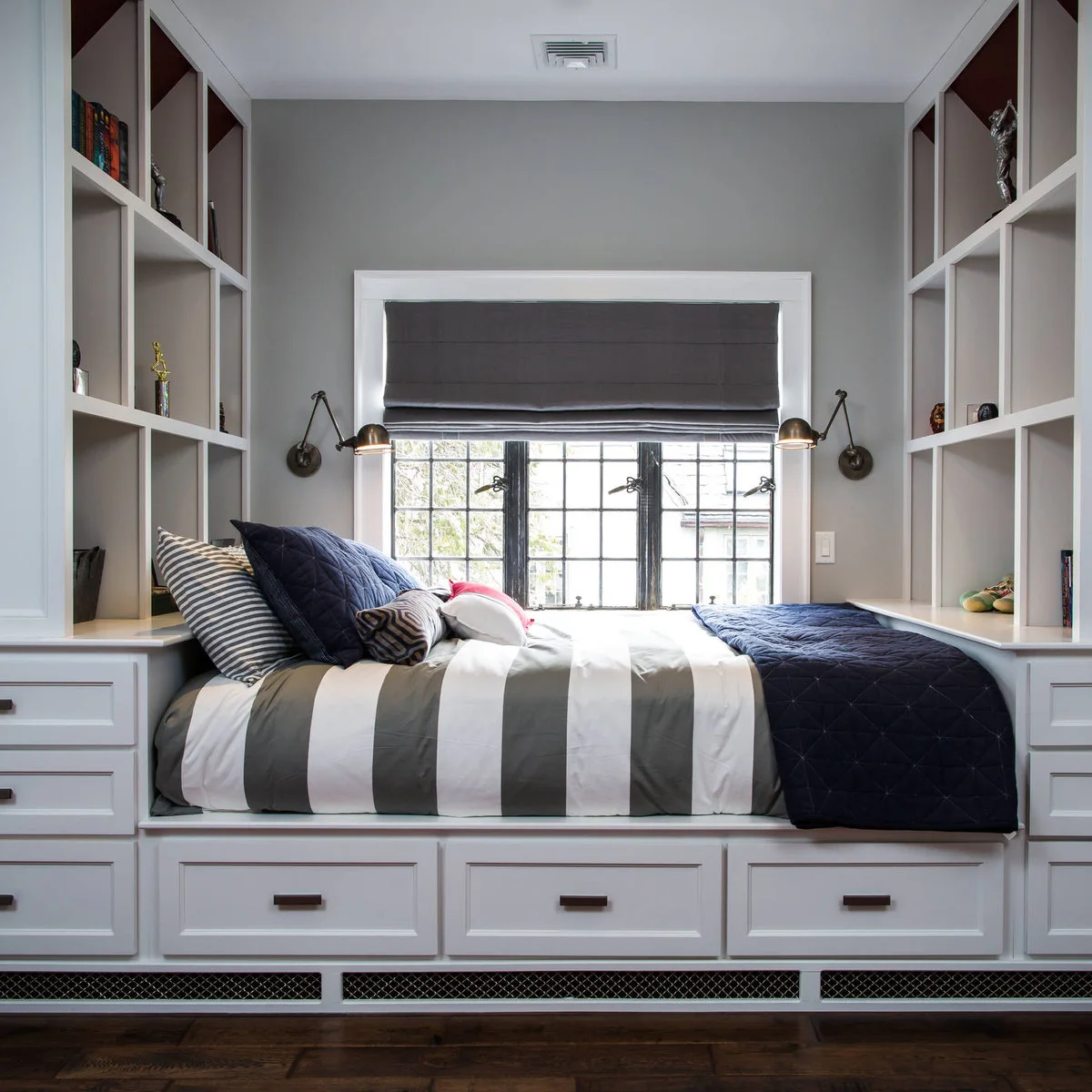
Pale shelving flanks the bed in this compact arrangement, placing books and personal objects beside the sleeping space. Drawers fill the lower platform, and blue-gray striped bedding adds pattern without competing with the shelves. The built-in frame makes several functions feel like one organized zone.
Reserve the easiest shelves for books the child actually reads, keeping heavier objects low and securely stored. Make sure the mattress can be changed comfortably and drawers remain usable beside a rug. Assess window access and cordless coverings before placing a child’s bed directly beneath glazing.
IDEA 10 / 15
Display a Collection in Shallow Rows
 SaveSupport Non AI Creator
Image credit: Project: TATUM BROWN CUSTOM HOMES (via Houzz)
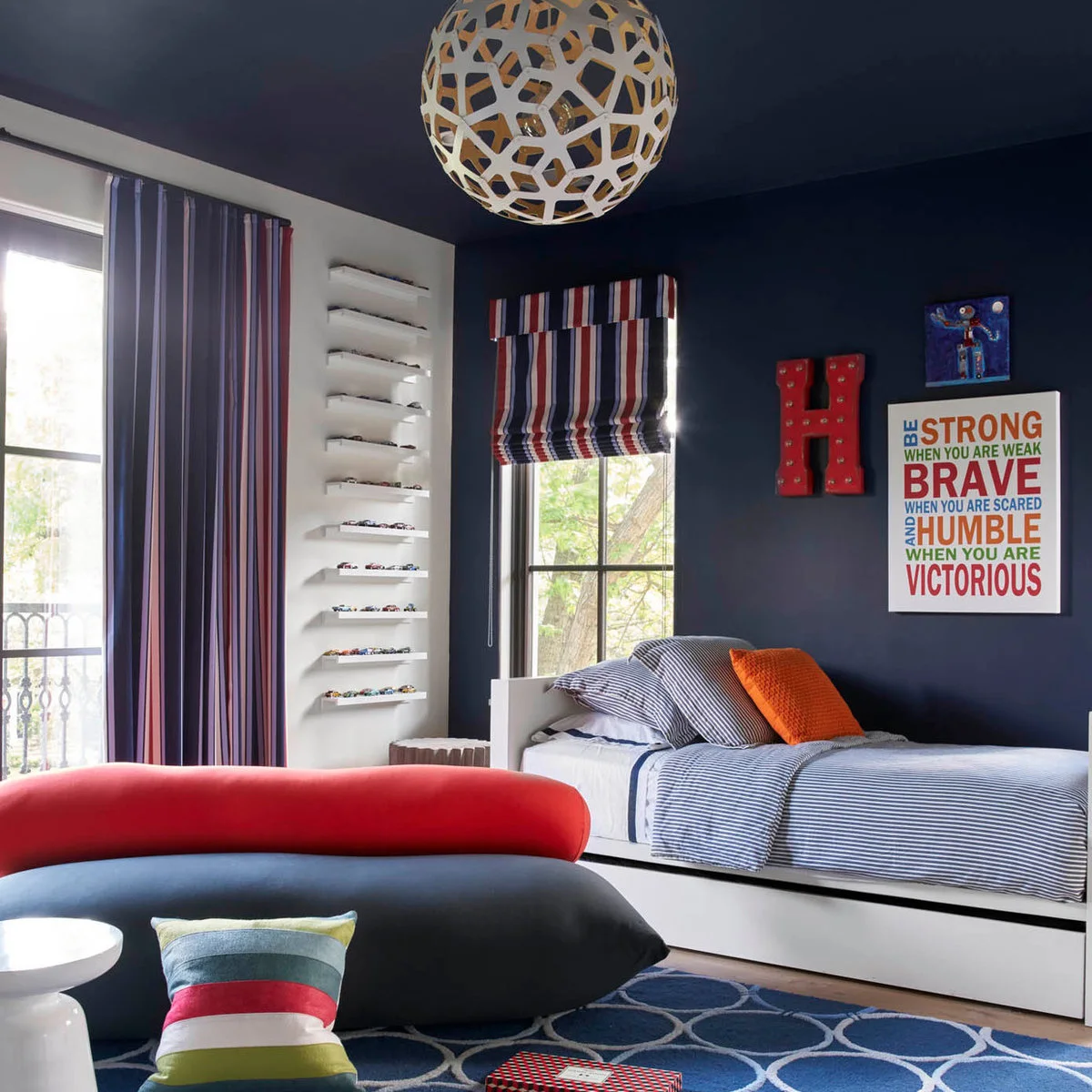
Narrow white ledges turn the toy-car collection into an orderly vertical display beside the window. Navy walls and striped bedding provide a strong background, while a curved lounge seat adds another place to relax. The small cars remain visually grouped instead of spreading across the bedside area.
Keep the ledges securely attached and avoid arranging them where a child would climb furniture to reach the upper rows. Store the cars used most often lower down in a tray or bin. A display works best when it supports play and tidying rather than making every toy difficult to retrieve. The same limited-display approach appears in these minimalist kids bedroom ideas.
IDEA 11 / 15
Place a Simple Desk beside the Bed
 SaveSupport Non AI Creator
Image credit: Project: Bill Fry Construction - Wm. H. Fry Const. Co. (via Houzz)
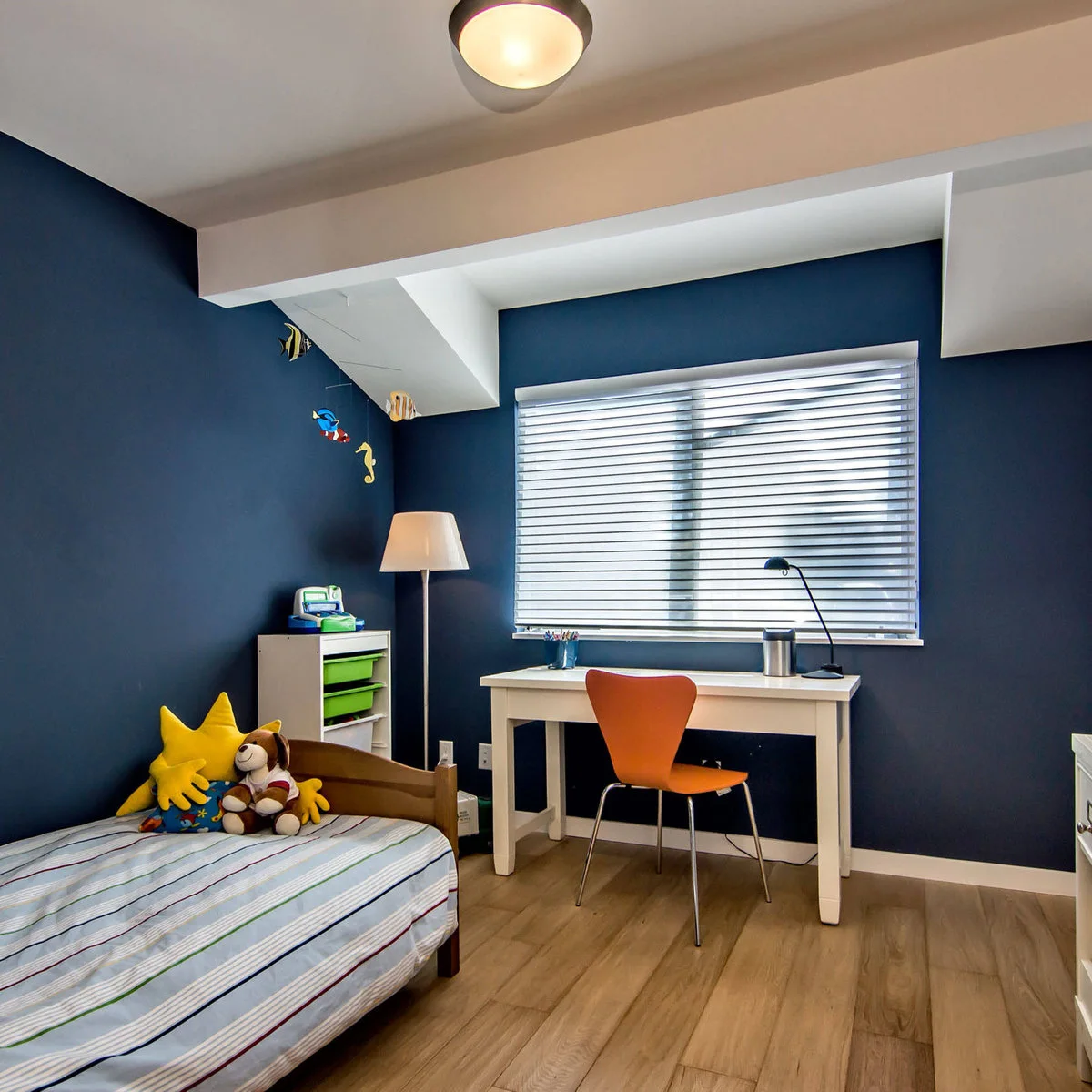
A simple white desk sits below the window, separate from the low bed beside it. The orange chair and green trays add small blocks of color against navy walls. This arrangement gives drawing and school supplies a defined home without requiring a large fitted desk system.
Choose a chair and work surface that suit the child’s height, with support for the feet where needed. Control window glare and add a suitable task light for darker afternoons. Keep cables managed and make sure the tray unit is stable, rather than using its top as another climbing step.
IDEA 12 / 15
Use Low Cubbies for Everyday Belongings
 SaveSupport Non AI Creator
Image credit: Project: Next Generation Signature Homes (via Houzz)
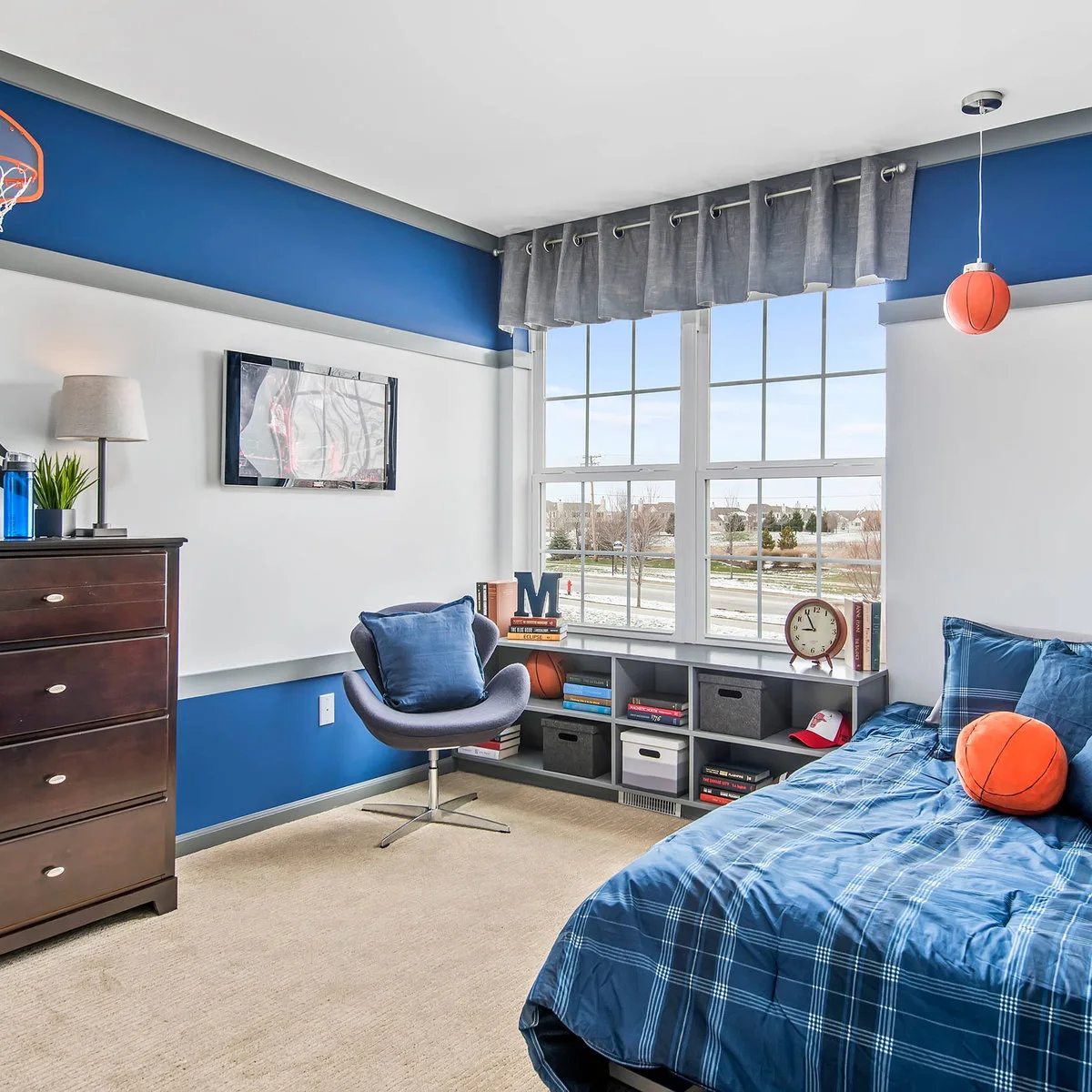
A low cubby unit follows the window wall, with books, boxes and sports details kept in separate compartments. The blue chair creates a reading spot beside it. Broad blue wall bands connect the different areas without requiring a sports motif on every furniture piece.
Assign a purpose to each compartment so the unit stays useful after the room is photographed. Keep ventilation grilles unobstructed and secure storage as appropriate. If a basketball hoop encourages energetic indoor play, place it where throws will not cross glazing, lamps or the sleeping area; decoration alone does not establish a safe playing zone.
PART 04
Choose Details That Can Change
IDEA 13 / 15
Layer Animal Details over Simple Furniture
 SaveSupport Non AI Creator
Image credit: Project: Wynne Taylor Ford (via Houzz)
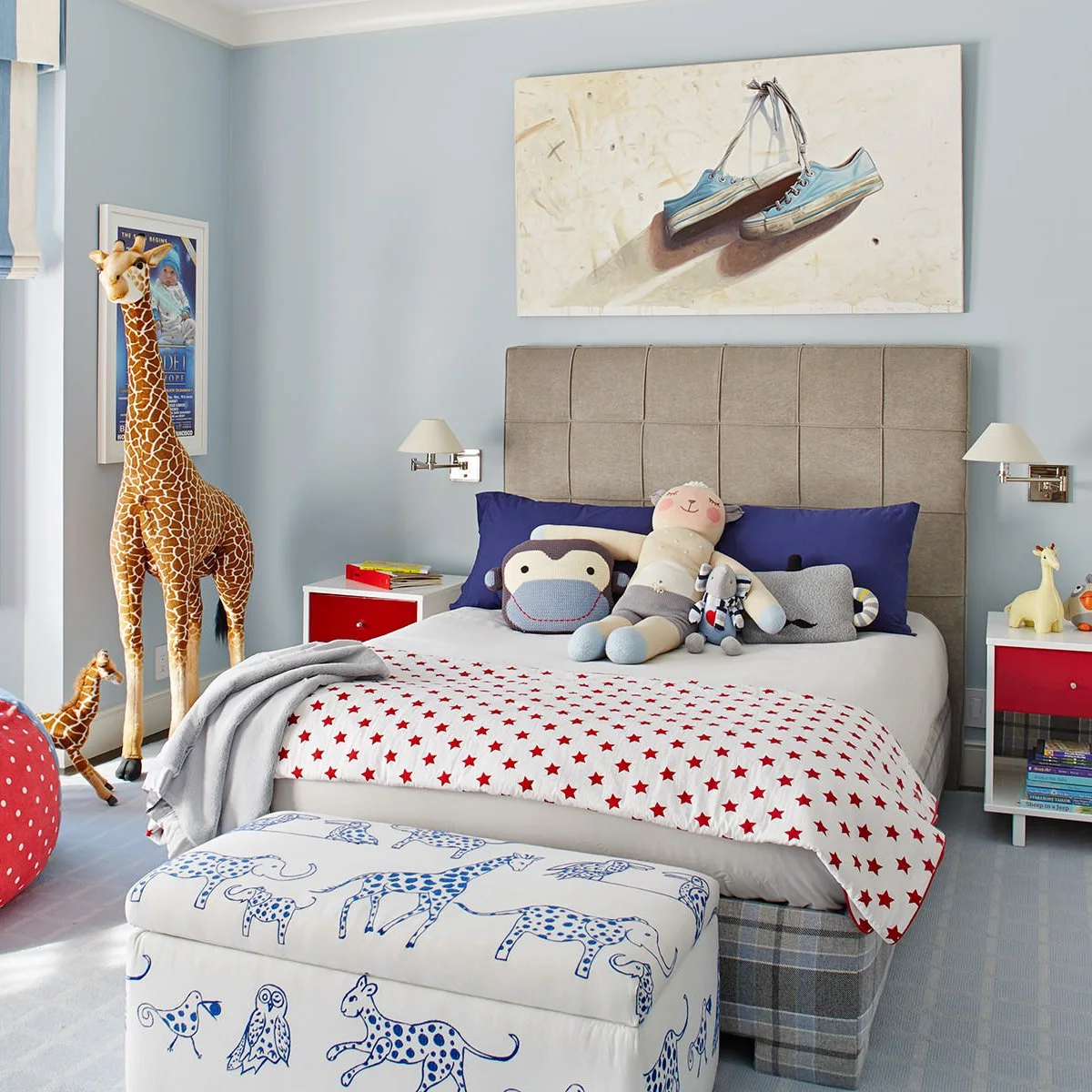
An upholstered gray headboard anchors this room while animal toys, a patterned bench and red-star bedding add the playful layer. Pale blue walls leave those objects visible without another strong pattern behind them. The matching bedside units provide a consistent frame around the bed.
Choose a few washable accessories rather than buying every item in a matching theme. Check the bench footprint with drawers and doors open, and move oversized toys away from walking routes. Secure pictures and furniture appropriately, allowing favorite animals to change while the main bed and storage remain useful.
IDEA 14 / 15
Let a Map Supply Most of the Pattern
 SaveSupport Non AI Creator
Image credit: Project: Hovia (via Houzz)
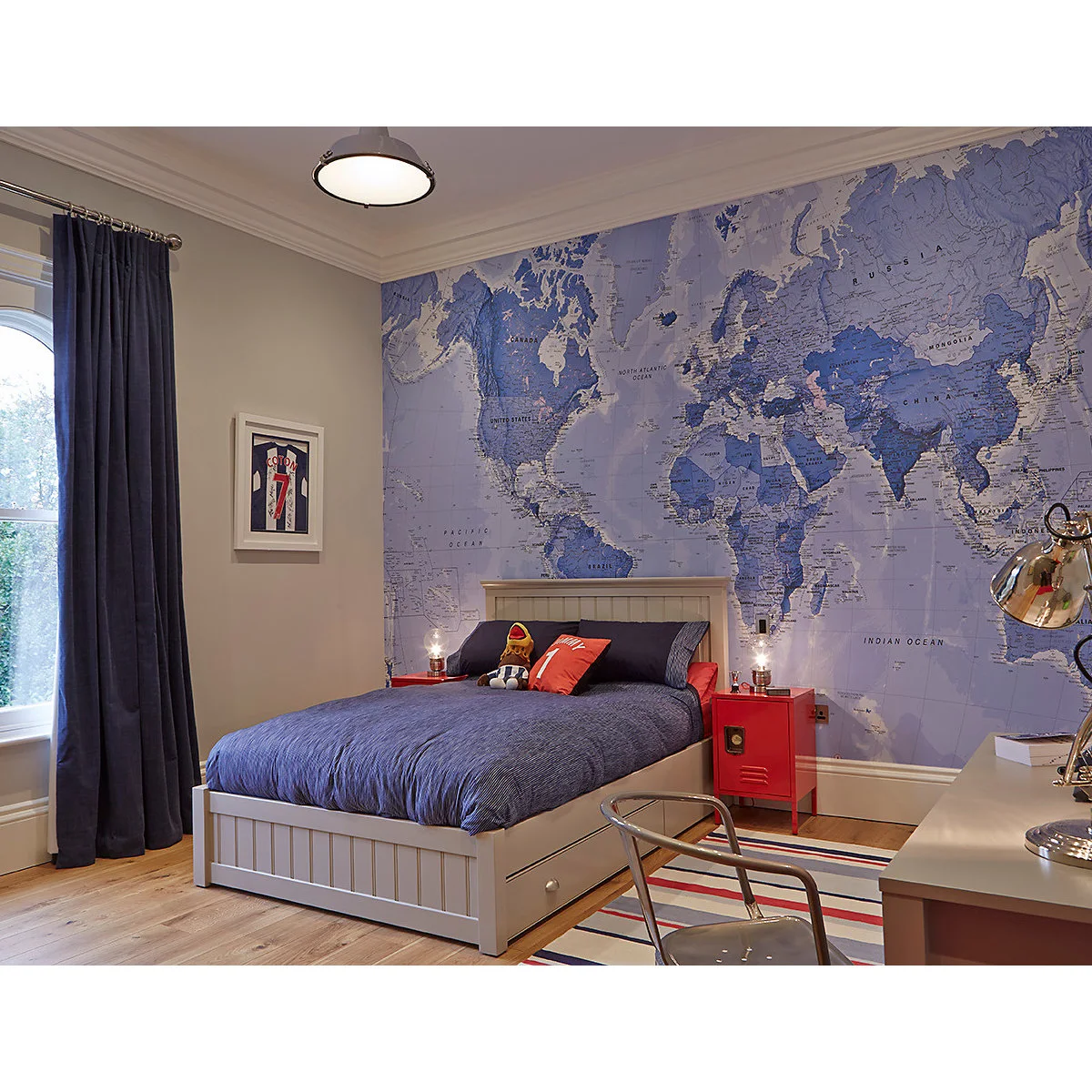
A blue world map covers the bed wall, giving this room its largest area of pattern. The pale bed frame stays simple, and red locker-style bedside units pick up the brighter colors in the bedding. A desk at the side creates a separate place for reading or drawing.
Choose a map for the child’s interests and check that labels remain readable at the viewing distance you have. If learning geography is important, verify its accuracy before ordering. Keep bedside lighting easy to use and leave the desk surface partly clear rather than extending the map theme onto every object.
IDEA 15 / 15
Frame Favorite Jerseys as a Small Gallery
 SaveSupport Non AI Creator
Image credit: Project: Michael Robert Construction (via Houzz)
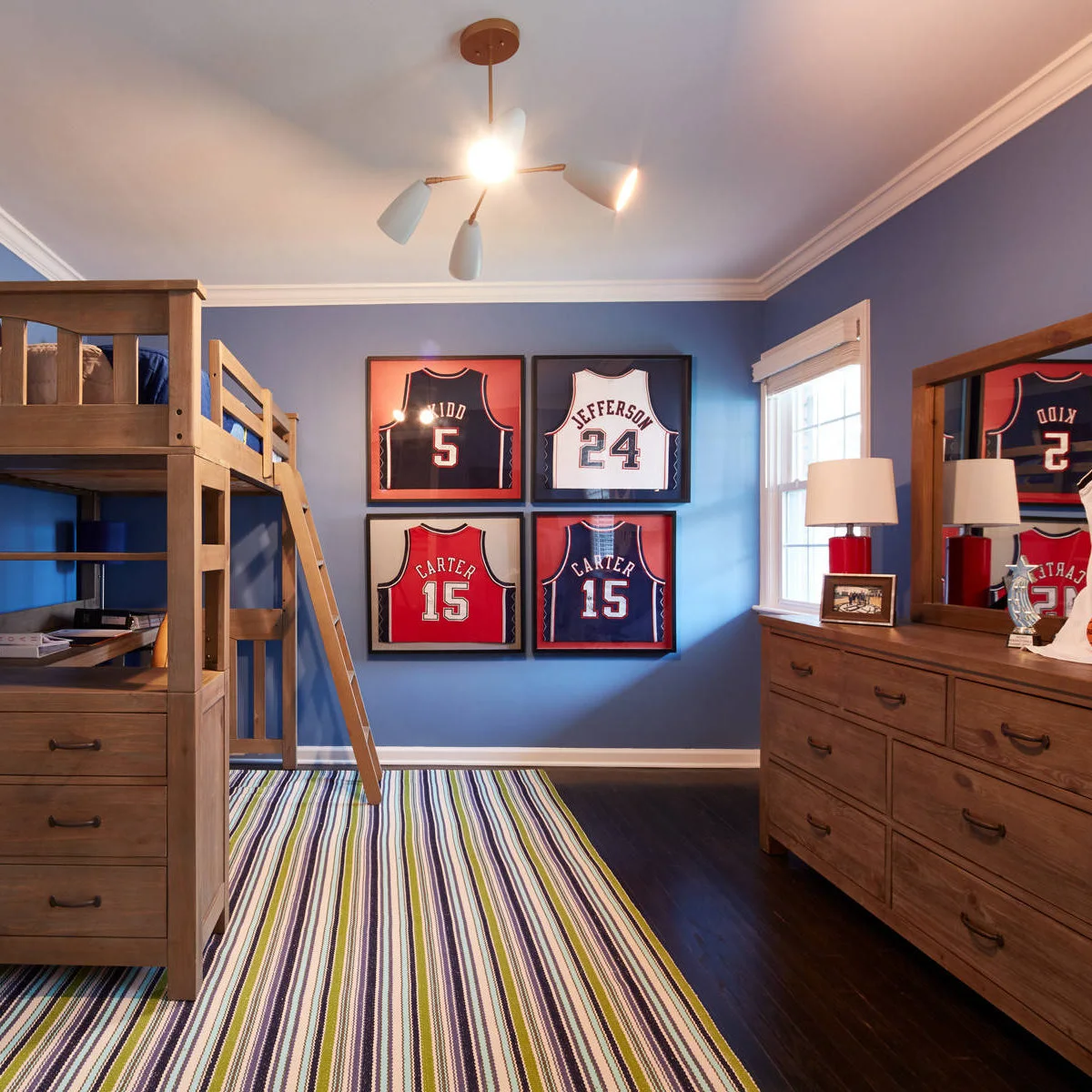
Four framed basketball jerseys form a compact gallery on the blue wall, giving a personal collection the main role. Their similar sizes keep the display organized. Wood-colored furniture and the striped rug supply a steady background rather than adding another large graphic to compete with the jerseys.
Use secure fixings and suitable glazing, keeping heavy frames away from positions where they could be knocked during play. Photograph or archive less-used memorabilia rather than filling every wall. If considering the raised bed visible at the side, assess the complete product, guards, mattress and age guidance separately; this cropped view cannot establish its suitability.
BRING IT ALL TOGETHER
Plan around His Everyday Routine
Choose the bed position and walking route first, then make books, toys and clothes easy to put away. Ask which interests deserve display and which belongings need a practical storage container. A room becomes more personal through those choices than through a completely matching furniture set.
Keep the large pieces adaptable and use textiles or pictures for changing interests. Shared rooms also need clear agreements about drawers, bedside space and quiet time. Revisit the layout as the child grows instead of expecting the first arrangement to work unchanged through every stage.