Bathroom curtains have several different jobs. Window panels can soften the room and control views, while shower curtains need to contain water. Decide which task matters before choosing the fabric, length or pattern; the same decorative panel will not automatically suit both uses.
These photographed bathrooms show full-length drapes, short cafe panels and practical shower curtains. Check privacy from outside with the lights on, keep fabric out of persistent splash zones and choose care instructions you can follow. Where children live or visit, choose cordless window coverings and avoid accessible operating cords.
PART 01
Choose privacy around the window
IDEA 01 / 20
Repeat One Pattern Across Different Window Shapes
 SaveSupport Non AI Creator
Image credit: Project: Tom Grimes Photography (via Houzz)
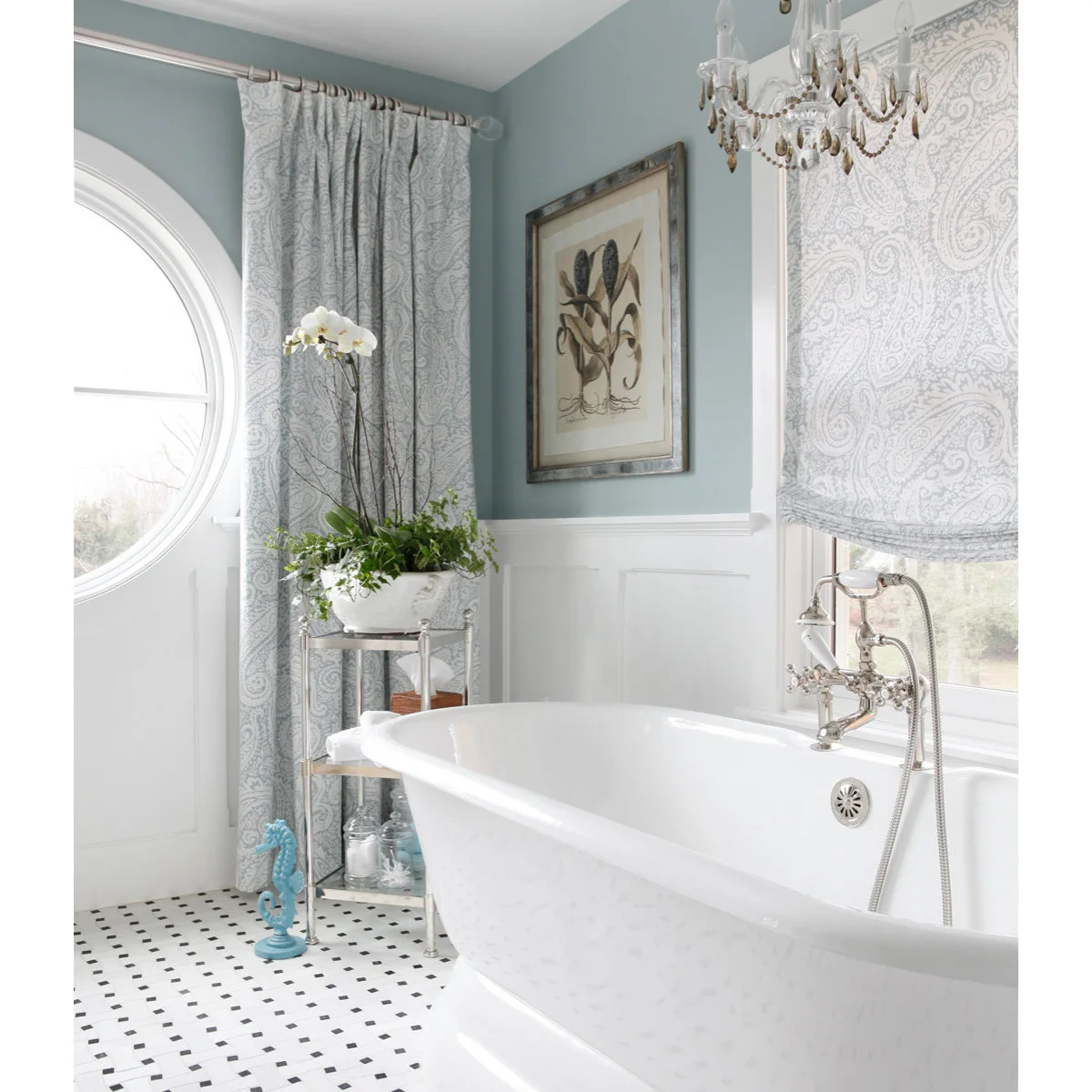
Pale patterned fabric connects two very different windows: a full-length panel beside the circular opening and a Roman shade above the bath. Blue walls and white paneling give the fine pattern a quiet background. Repeating the fabric helps the windows belong together without forcing identical treatments onto them.
Plan each opening separately, including its handles and the way it opens. A shared fabric can coordinate the room even when the mechanisms differ. Confirm suitability for moisture and keep the bath-side shade clear of splashes; choose a cordless operating system where young children may be present. Coordinate nearby bathroom counter decor with the fabric while keeping the basin and window controls easy to reach.
IDEA 02 / 20
Add a Narrow Colored Border to Pale Panels
 SaveSupport Non AI Creator
Image credit: Project: Live Oak Construction Group, LLC (via Houzz)
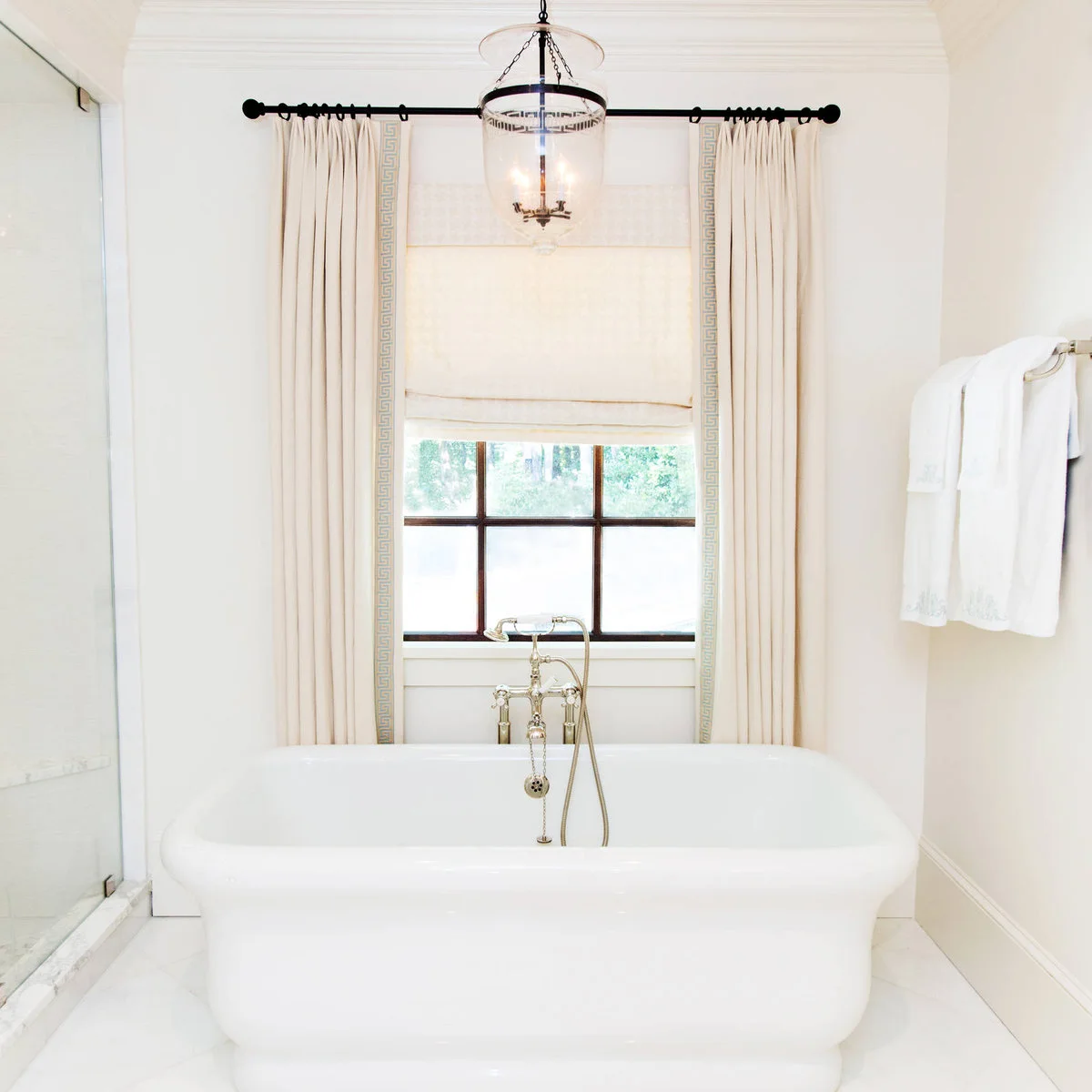
A narrow blue border defines the inner edges of these cream curtains, adding detail without filling the window with pattern. The pale shade behind them performs a separate role. Black curtain hardware gives the soft fabric a clear top line above the white tub.
Use a border when you want a small color accent that can relate to towels or nearby paint. Check the full curtain stack before placing the rod ends, so fabric can open without hiding too much glass. Verify the lining's privacy and cleaning properties independently of the decorative trim.
IDEA 03 / 20
Pair Floral Panels with a Bold Bath Color
 SaveSupport Non AI Creator
Image credit: Project: Alison Kandler Interior Design (via Houzz)
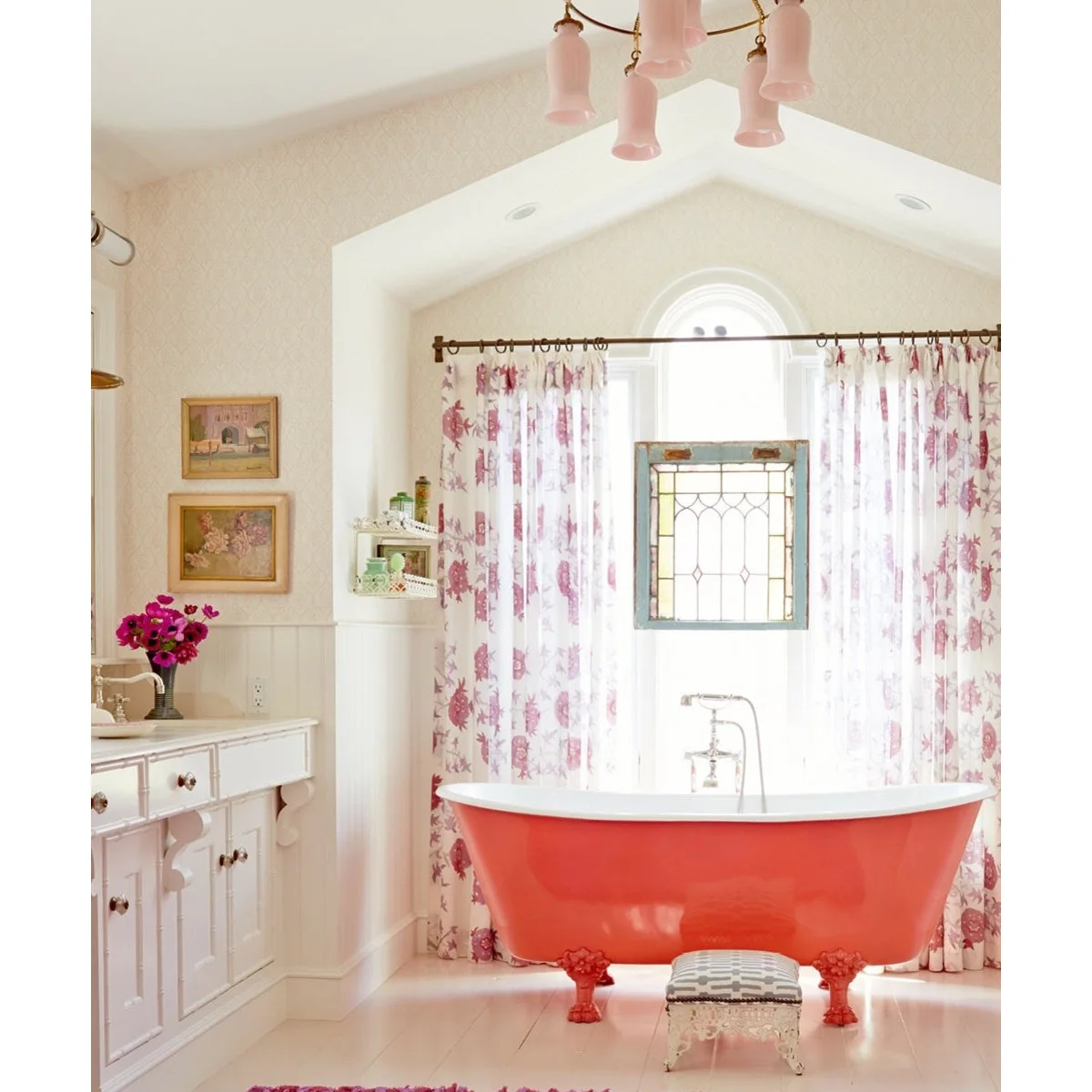
Pink floral panels pick up the warm color of the coral bath while the pale walls keep the combination airy. The curtain rod runs across the straight section below the arch, leaving its curved top visible. Pattern appears in separate layers rather than covering every surrounding surface.
Our cottage bathroom ideas show more ways to combine flowers and traditional shapes. Here, begin with one dominant color and test fabric beside it in the actual light. Keep curtain hems and any decorative hanging objects clear of bathing access, and use appropriate privacy coverage rather than relying on the print.
IDEA 04 / 20
Soften a Stone Bathroom with Plain Pale Fabric
 SaveSupport Non AI Creator
Image credit: Project: Big-D Signature (via Houzz)
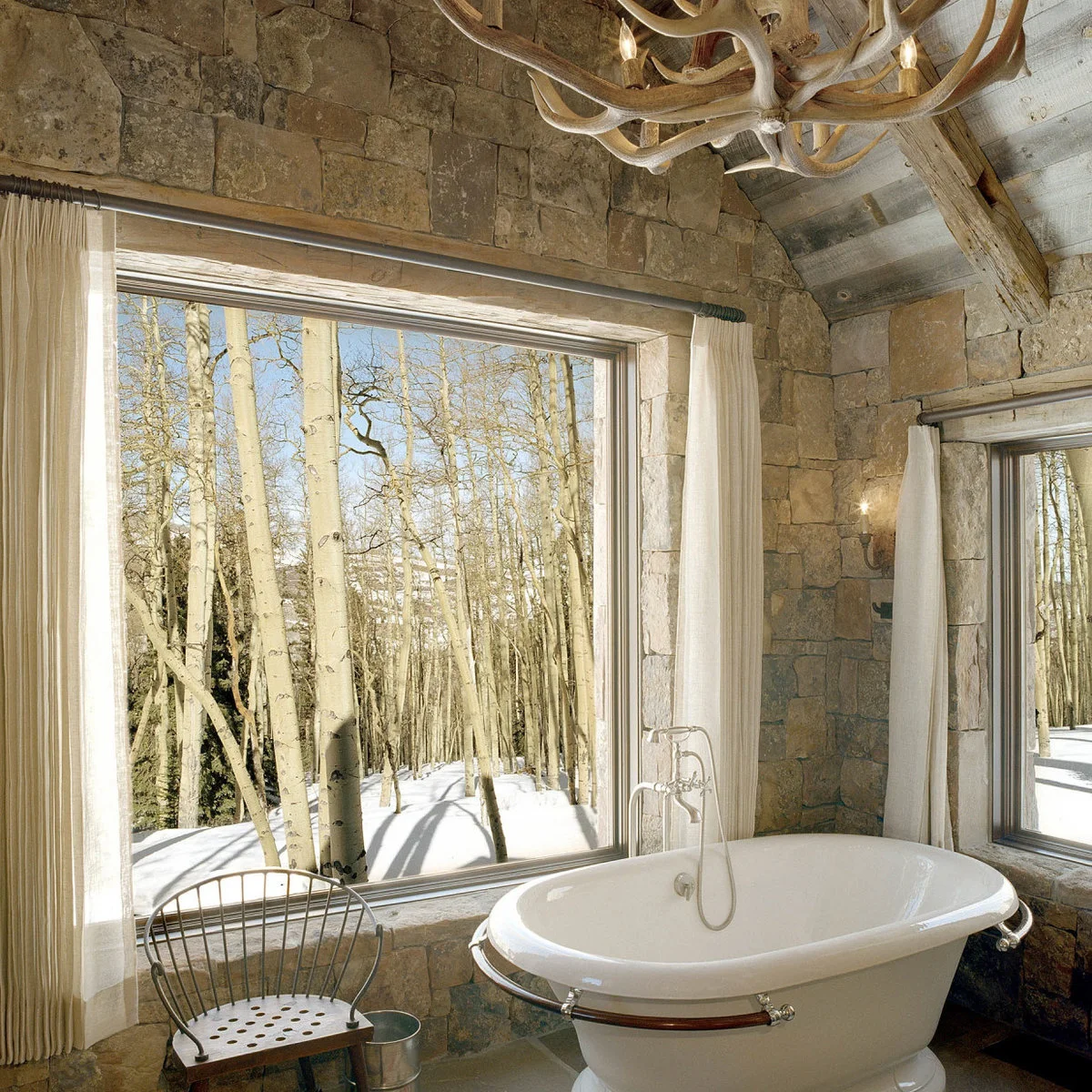
Plain pale curtains soften the large window without competing with the rough wall texture and overhead timber. Their narrow folds keep attention on the view and the freestanding bath. With so much variation in the surrounding surfaces, an unpatterned fabric gives the window a calmer outline.
Check how much fabric is needed to cover the opening without creating an oversized bundle at the sides. Keep the hem away from standing water and choose a care method suited to the room's use. A broad window also needs a realistic privacy check from the paths or neighboring buildings outside.
IDEA 05 / 20
Use a Large Outline Pattern in a Gray Room
 SaveSupport Non AI Creator
Image credit: Project: Shelby Wood Design (via Houzz)
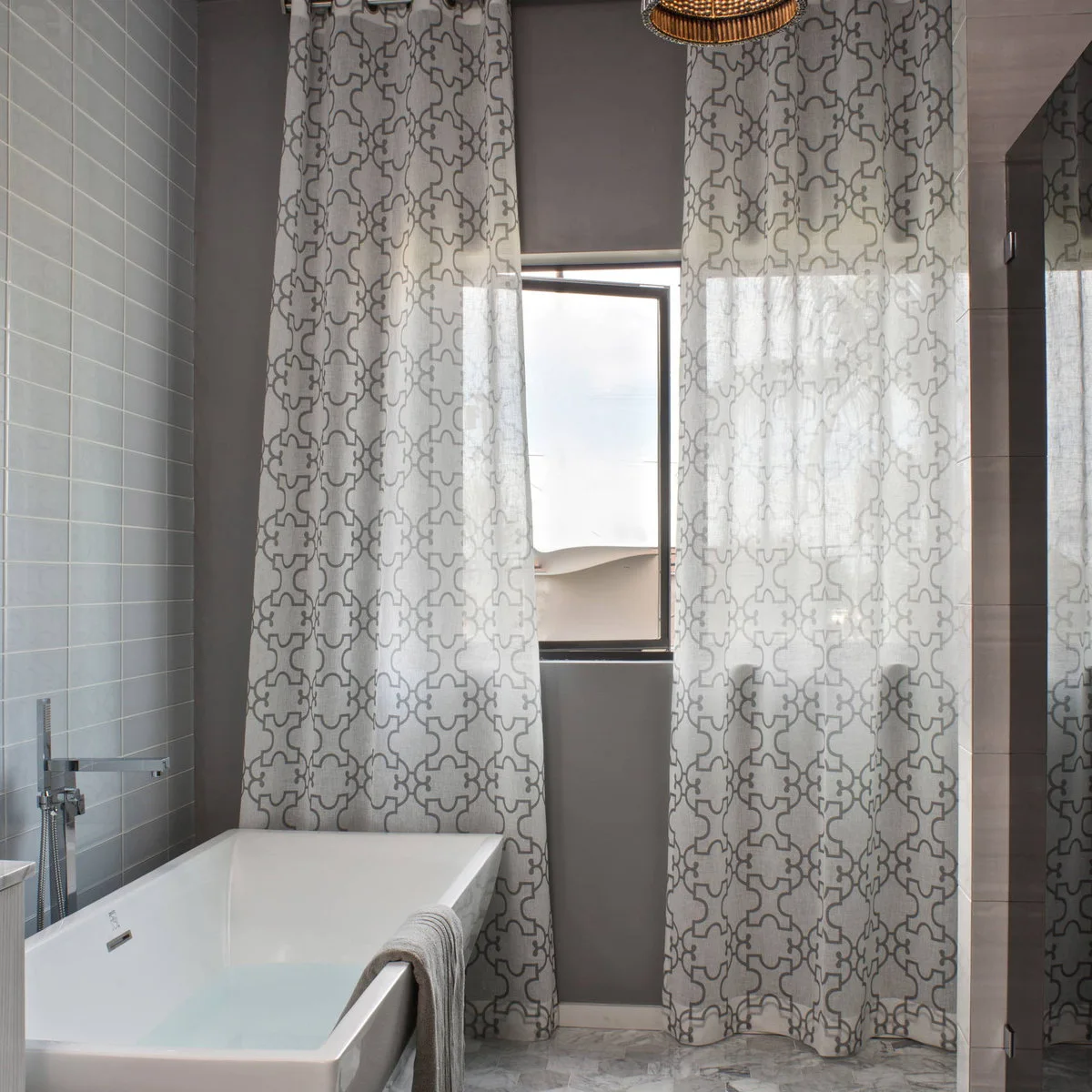
A large gray outline pattern stands out against the lighter fabric and plain gray walls. The tall panels give the small window a wider visual frame, with the bath positioned just to the left. Their translucent weave lets the pattern remain visible even where daylight passes through it.
Treat translucent panels as decoration until their privacy has been tested after dark. Check that the window can open without catching the fabric, and keep panels away from direct water. A sample large enough to show a full repeat is more useful than a tiny swatch for judging this scale.
PART 02
Connect curtains with color and pattern
IDEA 06 / 20
Frame a Narrow Bath View with Patterned Drapes
 SaveSupport Non AI Creator
Image credit: Project: Alan Mascord Design Associates Inc (via Houzz)
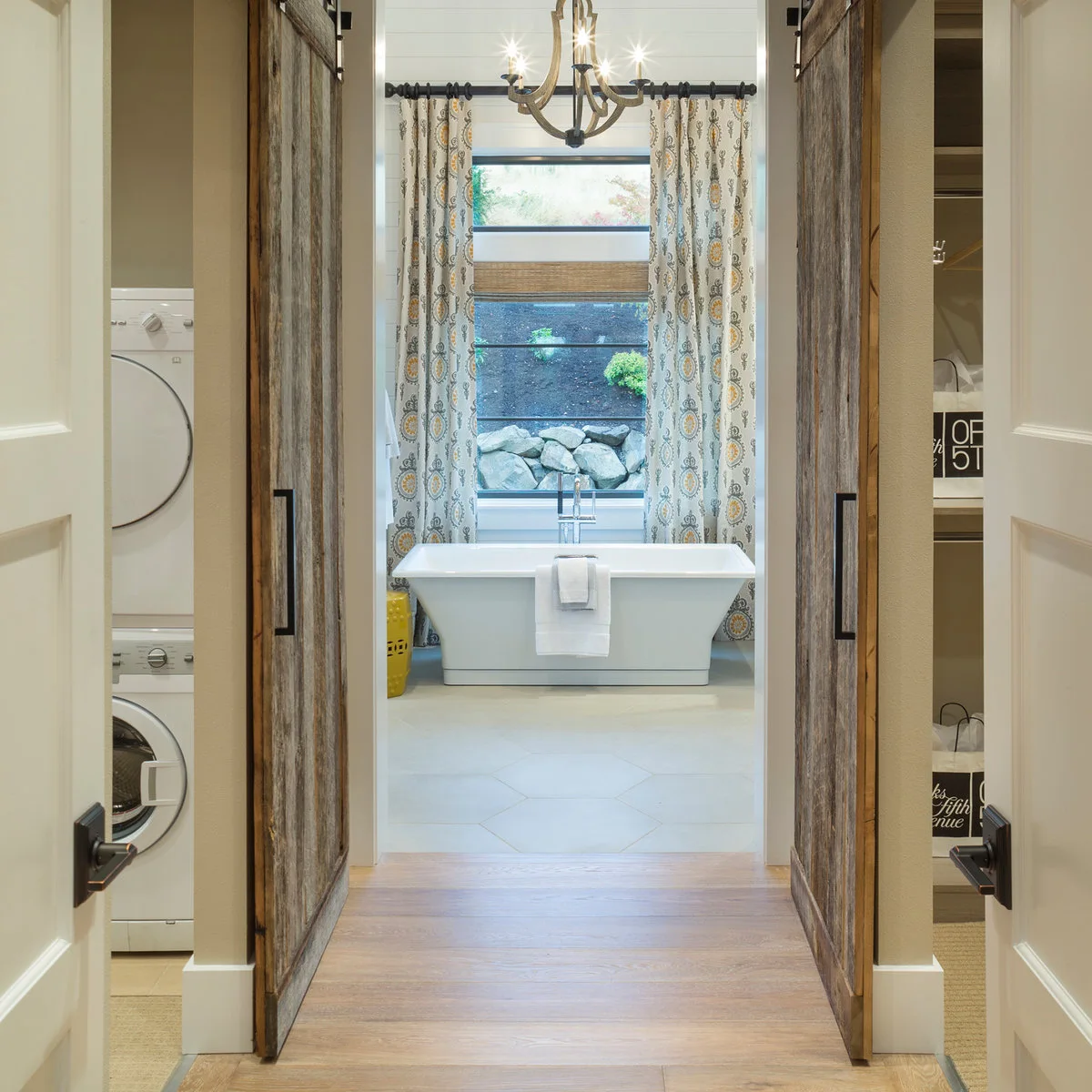
Long patterned curtains emphasize the height of the narrow bathing area at the end of this room. A shorter textured shade adds a second layer within the window. The curtains stay at the sides in the photograph, keeping the outdoor view visible above the rectangular tub.
Decide which layer will actually close for privacy before ordering either one. Check access to the window and the space between the fabric and tub. Keep a clear route through the adjoining doorway, and avoid gathering curtain hems where they will be repeatedly wet during cleaning or bathing.
IDEA 07 / 20
Hang Floral Side Panels above Paired Windows
 SaveSupport Non AI Creator
Image credit: Project: Mark P. Finlay Architects, AIA (via Houzz)
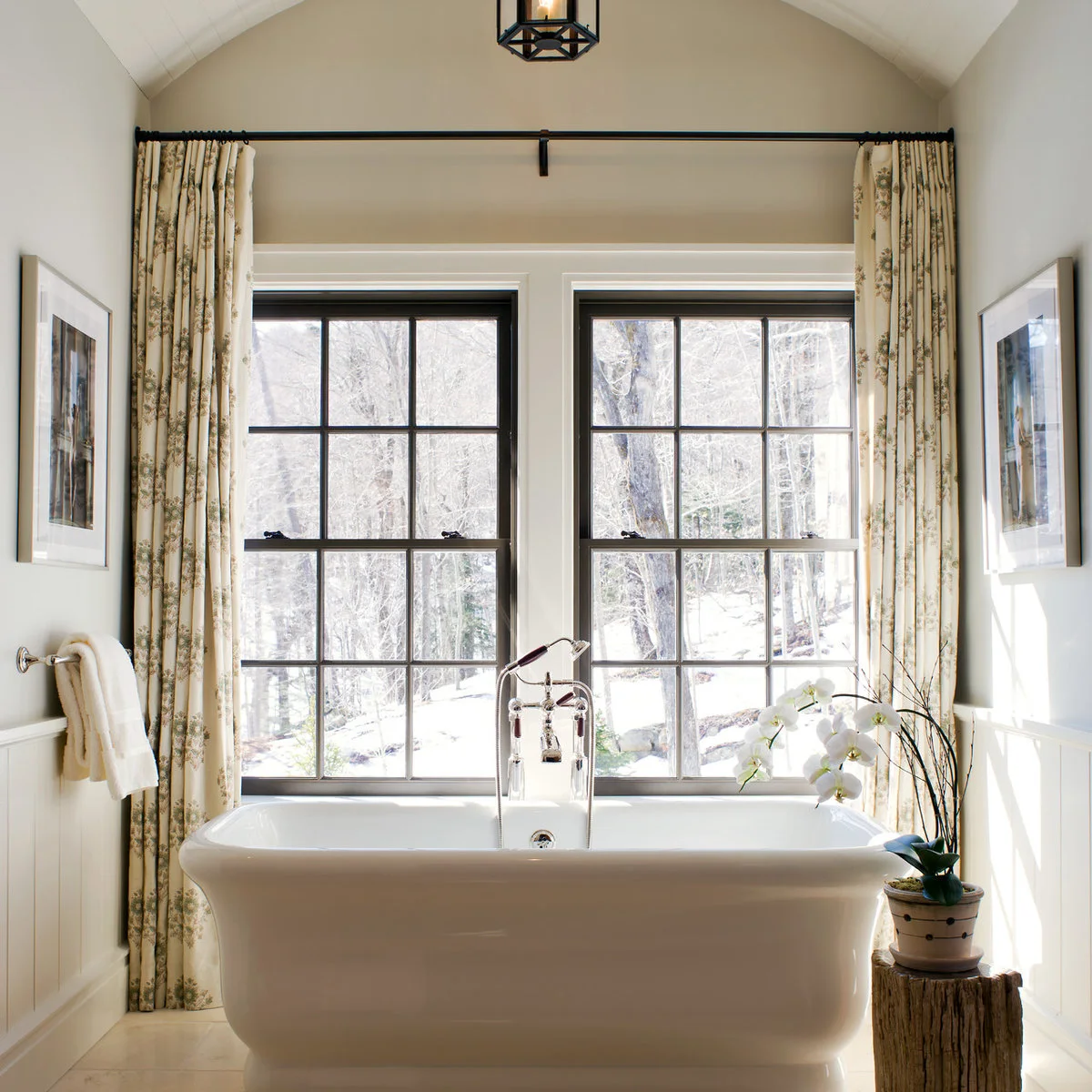
A single black rod links the two windows, while pale floral panels stay at the outer edges. Their long vertical folds soften the strong dark frames. The arrangement keeps the center open above the bath and uses the curtain color to relate to the warm neutral walls.
Check whether side panels are decorative or need to traverse the whole opening; that choice changes both width and hardware. Leave enough clearance for window handles and routine cleaning. Use fabric with a manageable care process, especially where the bath's position makes reaching the curtains more awkward.
IDEA 08 / 20
Keep the Arch Visible Between Rich Side Panels
 SaveSupport Non AI Creator
Image credit: Project: THE COTTAGE (via Houzz)
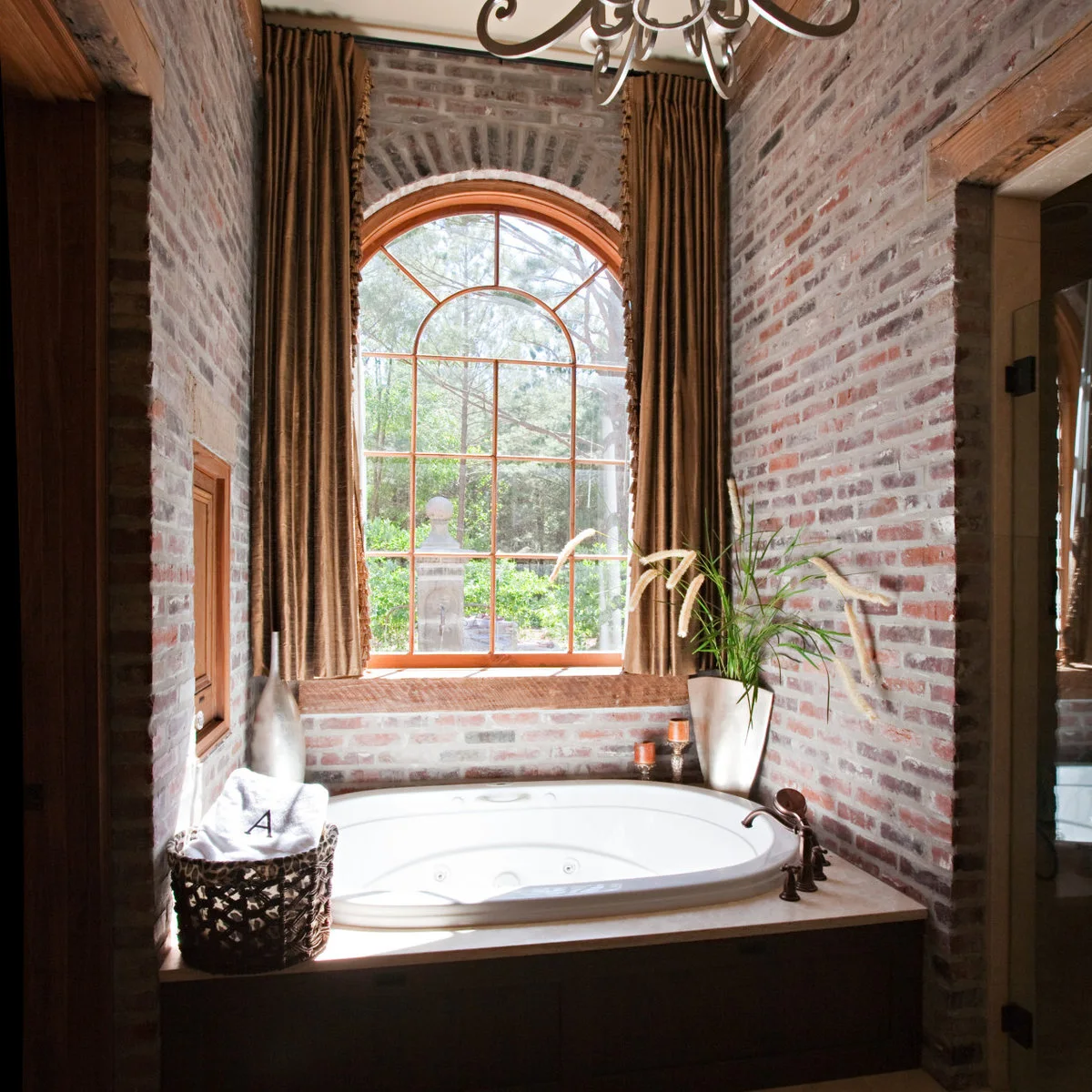
Rich brown side panels leave the arched window exposed in this brick-walled bathroom. Their vertical folds emphasize its height, while the warm color relates to the wood frame and masonry. The curved top remains the main feature instead of disappearing beneath a straight valance.
Choose a fabric weight that suits the hardware and available space at the sides. Check whether the stacked panels obstruct ventilation or access to the window. Keep decorative fabric away from candles and other heat sources, and confirm privacy separately rather than assuming a heavy-looking panel is always lined.
IDEA 09 / 20
Leave the Upper Glass Open with Cafe Panels
 SaveSupport Non AI Creator
Source: houzz.com
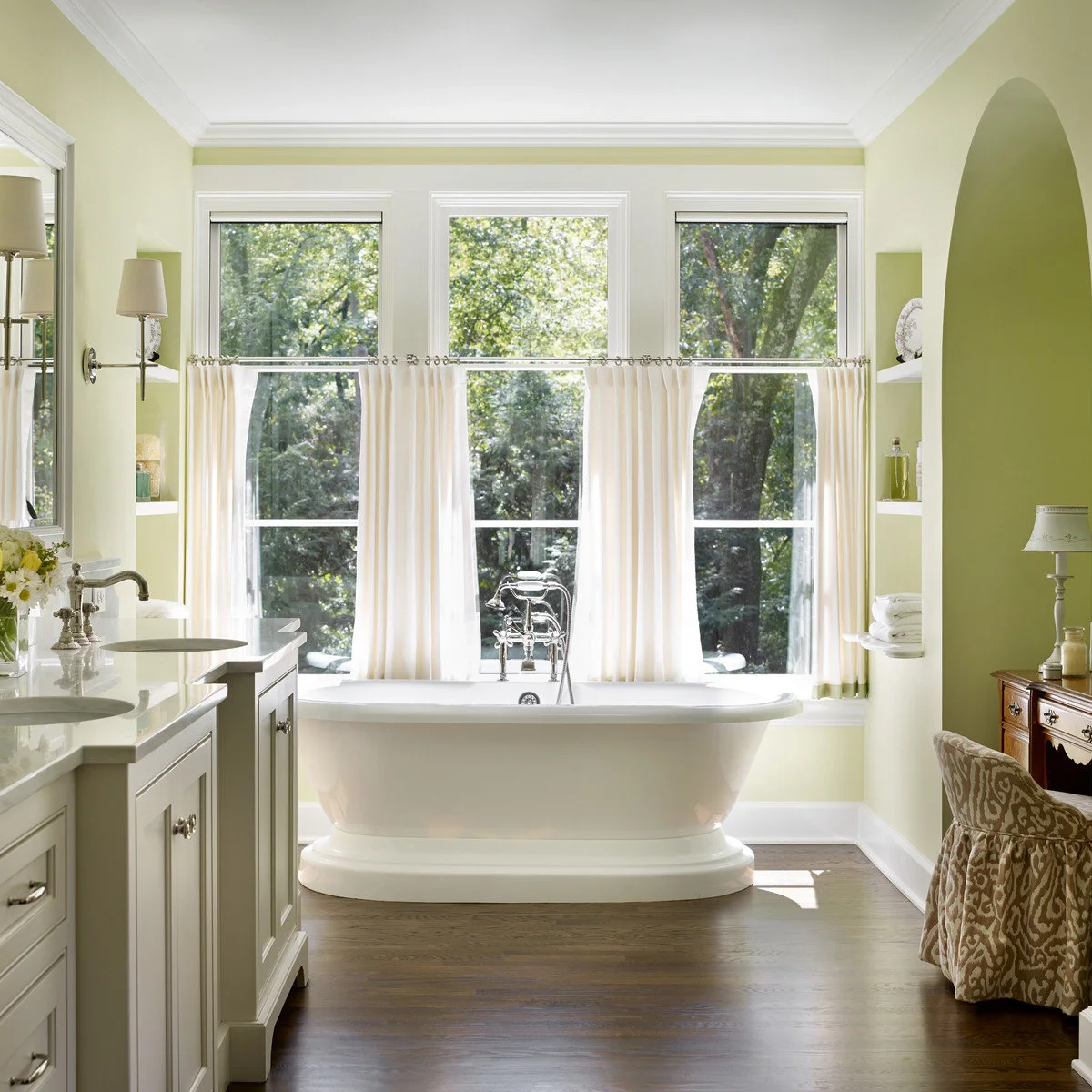
Short cream panels follow the lower portion of this tall window group, leaving the upper glass open to the trees. The light fabric relates to the white bath and trim against pale green walls. Repeating the same height across the windows gives the group a continuous horizontal line.
Set cafe curtain height from actual outside sightlines, including nearby steps or raised ground. An uncovered upper pane can still allow a view from above. Check coverage with someone using the room, and choose a washable fabric whose hem will stay clear of the bath edge.
IDEA 10 / 20
Repeat Short White Panels around a Corner
 SaveSupport Non AI Creator
Image credit: Project: Wade Weissmann Architecture (via Houzz)
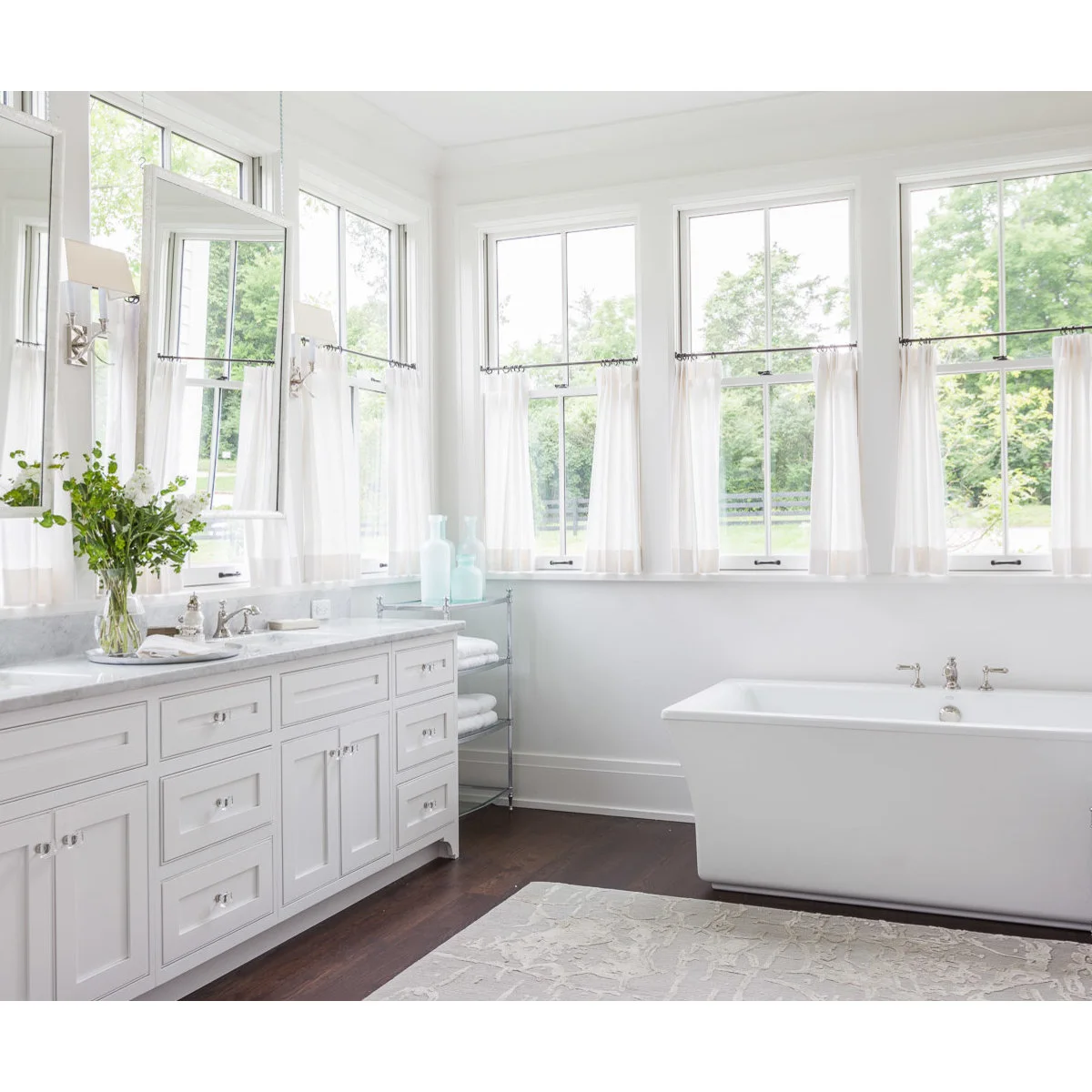
Short white panels repeat across the windows as they turn the corner, linking the vanity and bath areas. The uncovered upper panes preserve a broad band of daylight. Slim dark rods provide a consistent line without adding another large decorative shape to the bright room.
Measure each opening rather than assuming every window in a group is identical. Keep access to latches and allow panels to move for cleaning. Test privacy on both sides of the corner; a neighboring window may have a different view into the bathroom than the garden directly outside.
PART 03
Work with the window and nearby fittings
IDEA 11 / 20
Keep a Small White Curtain Above the Tub
 SaveSupport Non AI Creator
Image credit: Project: Benson Interiors, Inc. (via Houzz)
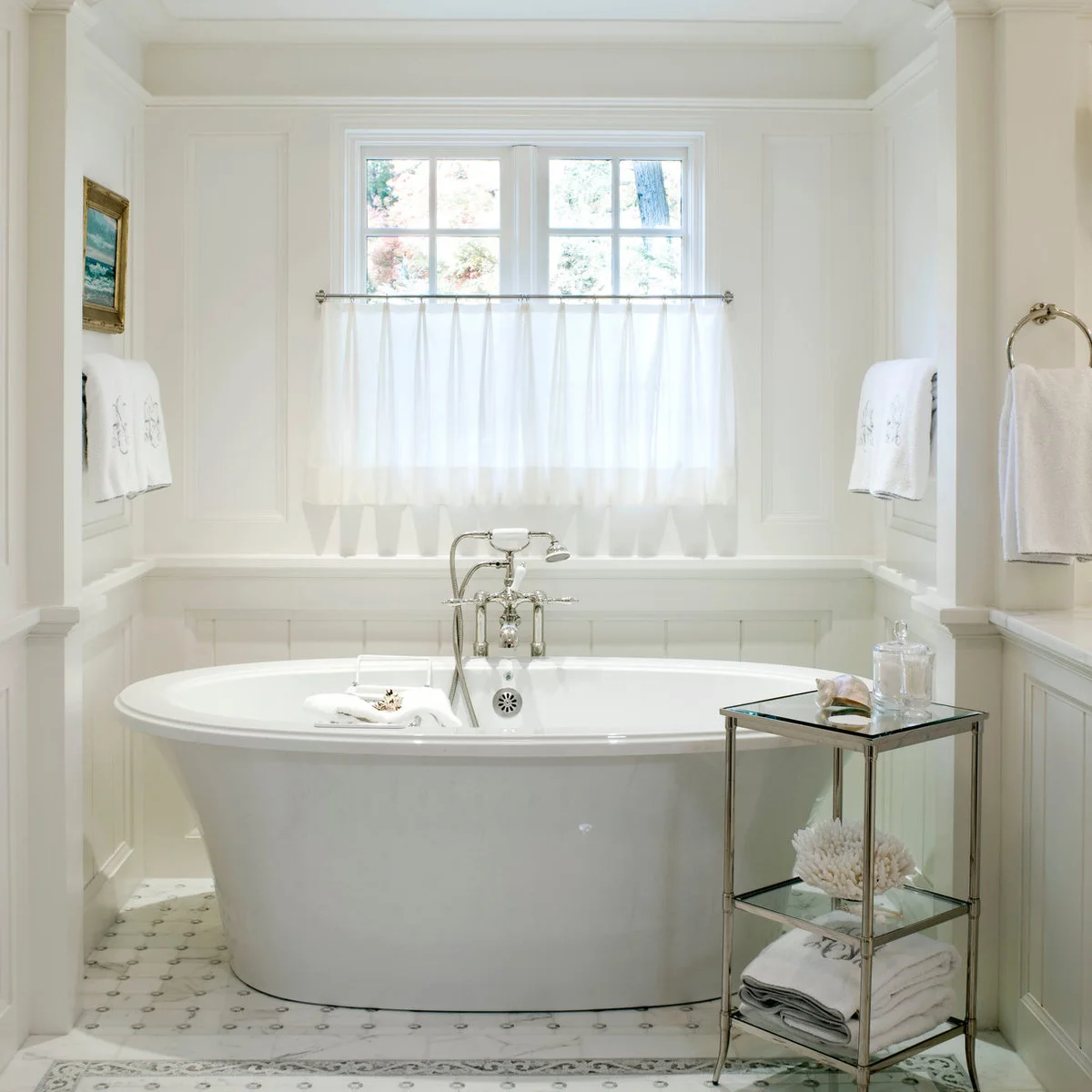
A single short white curtain keeps this bathing alcove visually simple. Its gathered top and soft folds add texture beside the smooth tub, while the uncovered upper panes admit light. The fabric ends within the window area rather than extending down behind the bath.
Choose the finished length with the sill and faucet in view, leaving room to wipe surfaces and move the panel. White fabric makes discoloration easy to notice, so check laundering instructions before purchase. Confirm that the material provides the privacy you need when the room is lit at night.
IDEA 12 / 20
Combine a Patterned Valance with Checked Panels
 SaveSupport Non AI Creator
Image credit: Project: Creative Interiors (via Houzz)
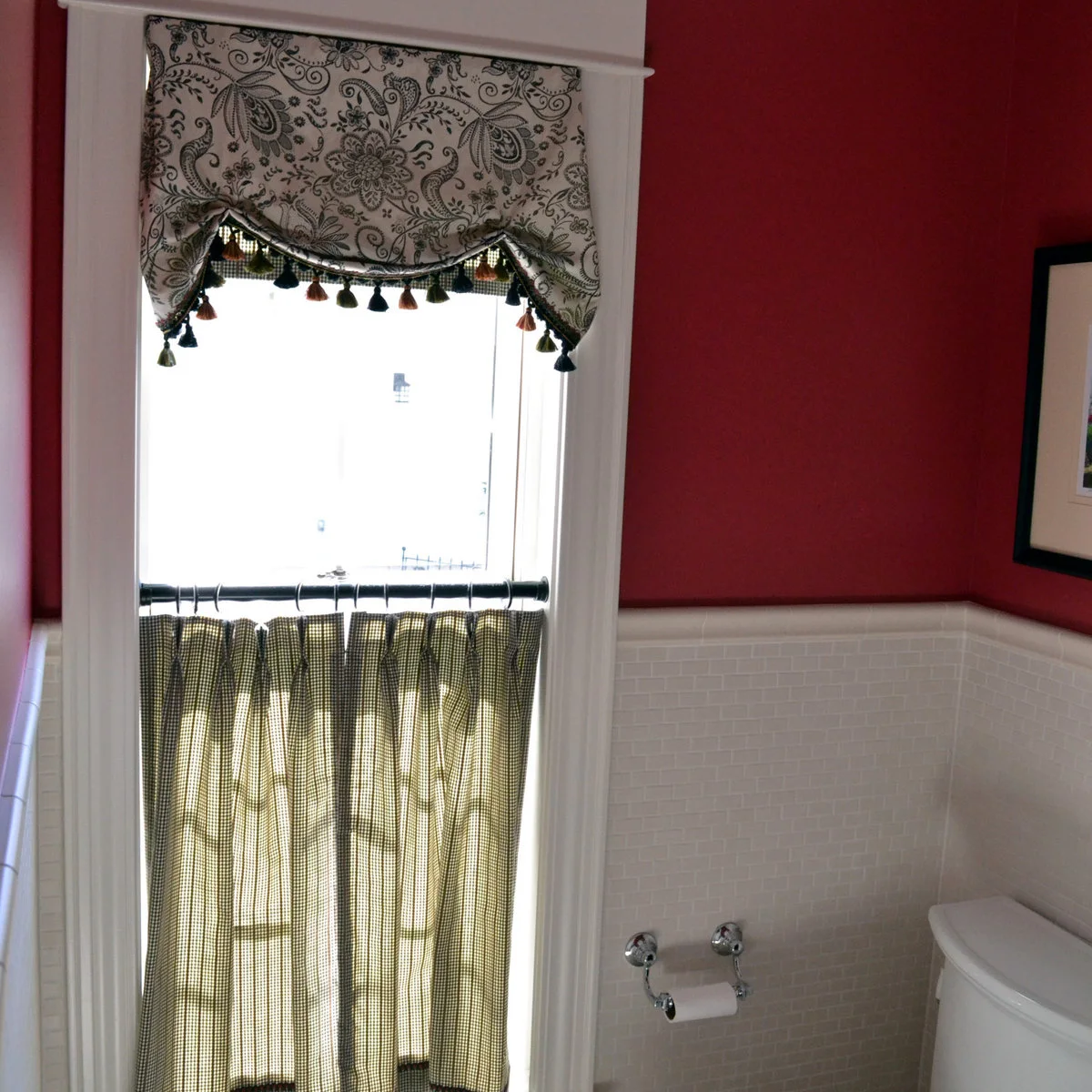
The patterned valance occupies the top of this window, while small checked cafe panels cover the lower portion. Red walls make both black-and-white patterns more pronounced. The solid space between the two treatments prevents their different scales from becoming one continuous patterned block.
Limit additional prints if the window already carries two. Check that any trim can tolerate the fabric's cleaning method, and keep the lower panels easy to remove. Choose coverage for the window's exposure rather than assuming the valance adds privacy simply because it occupies the top.
IDEA 13 / 20
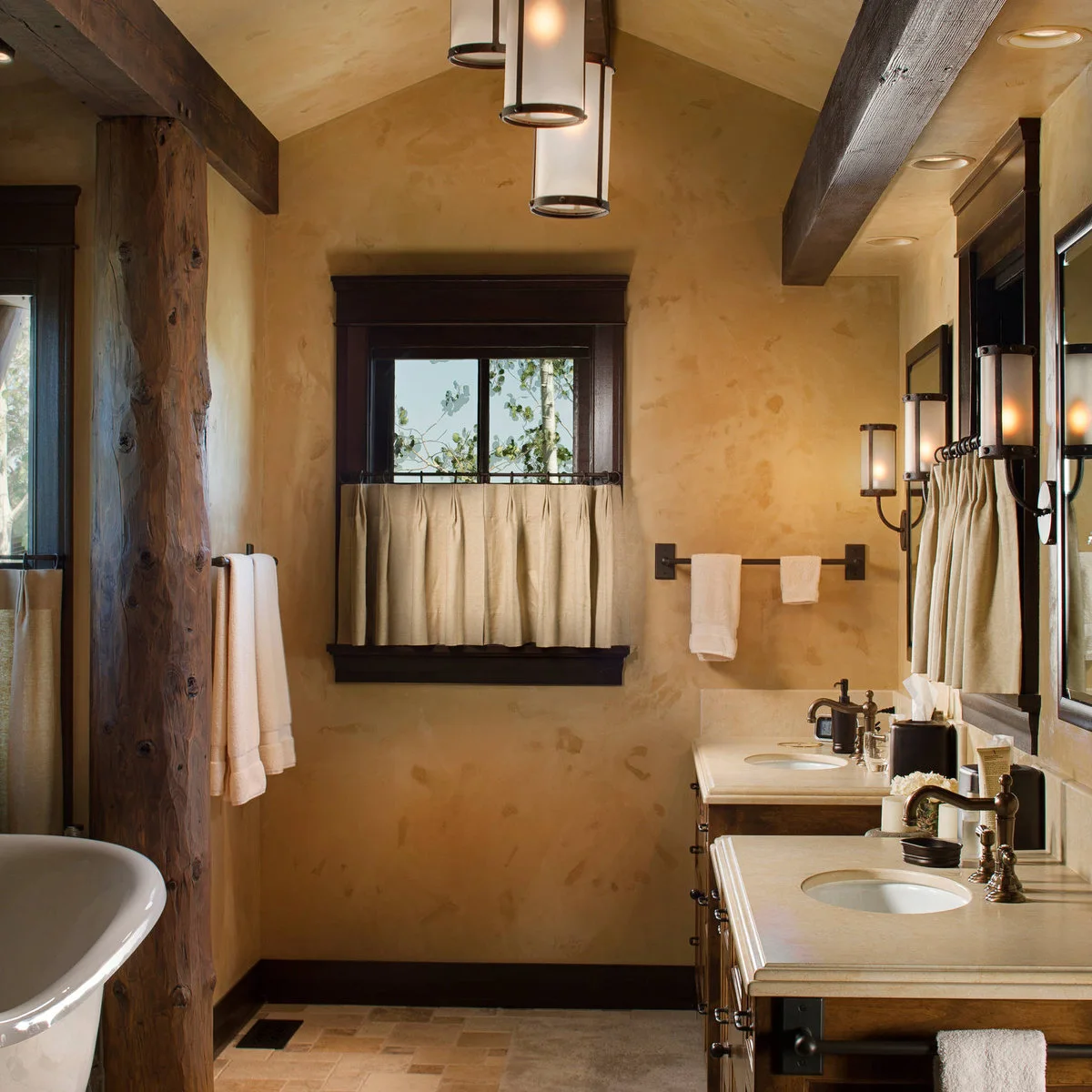
Warm Up Dark Trim with Plain Short Panels
 SaveSupport Non AI Creator
Image credit: Project: Shannon Callaghan Interior Design (via Houzz)
Plain cream cafe curtains soften the dark window frame without hiding its upper section. Their small pleats relate to the pale towels and counters, giving the warm walls and heavy timber a lighter counterpoint. Keeping the fabric simple leaves the wood grain and wall texture visible.
Measure inside the frame if you want the trim to remain exposed, and make sure the rod will not obstruct opening the window. Choose a length that clears the sill and nearby wet surfaces. Test the fabric against evening light, since a pale color alone does not establish opacity.
IDEA 14 / 20
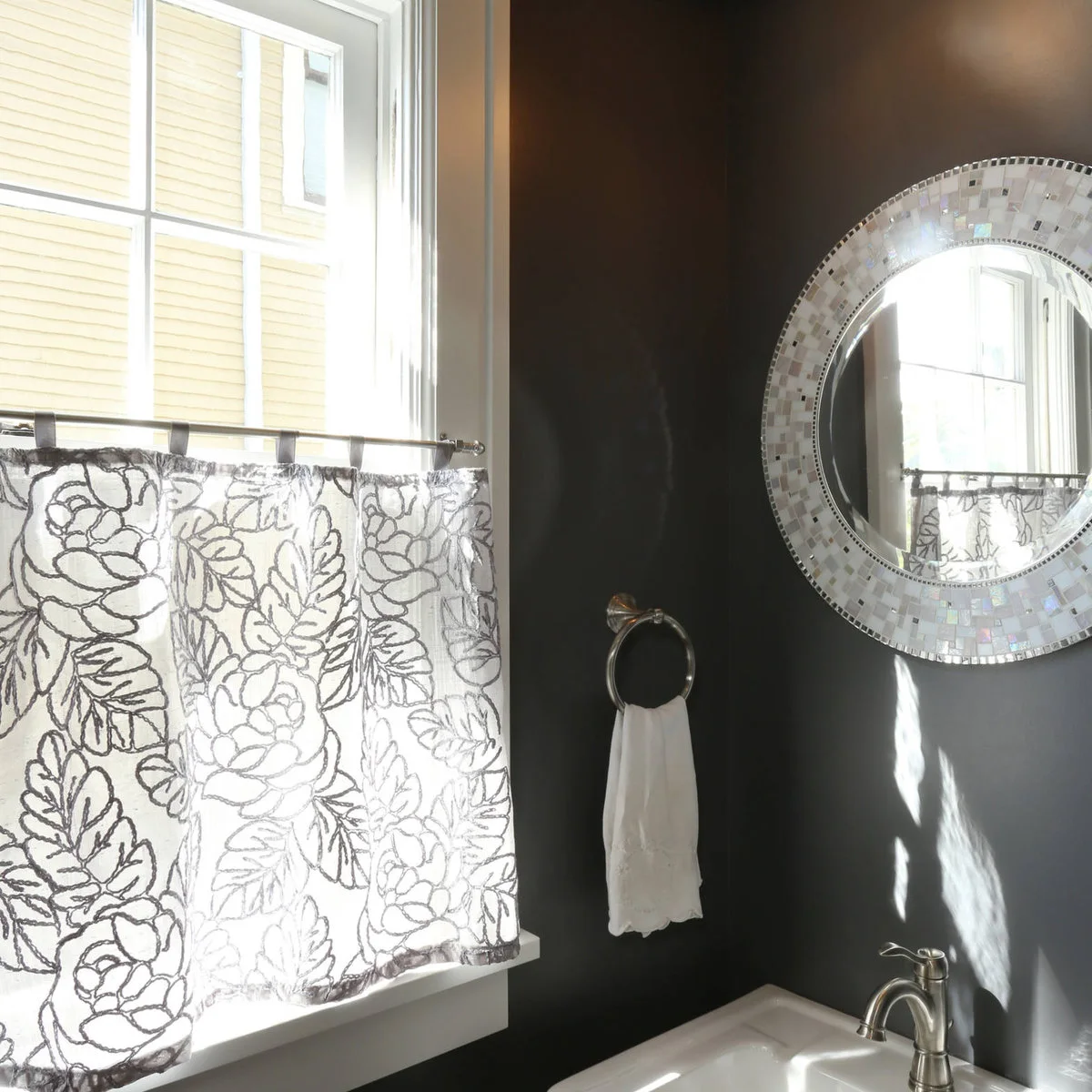
Use a Leaf Outline Print Beside a Dark Wall
 SaveSupport Non AI Creator
Image credit: Project: Arciform (via Houzz)
A gray leaf outline gives these white cafe curtains a clear pattern without introducing another strong color. The light fabric contrasts with the dark wall, while the round mirror adds a separate reflective texture. The uncovered upper window keeps the treatment from filling the whole wall with print.
In a compact room, our powder room ideas can help balance wall color, mirror and window treatment. Check the pattern at its full repeat before buying. Allow enough fabric for gentle folds without making the outline unreadable, and assess privacy under the lighting the room actually uses.
IDEA 15 / 20
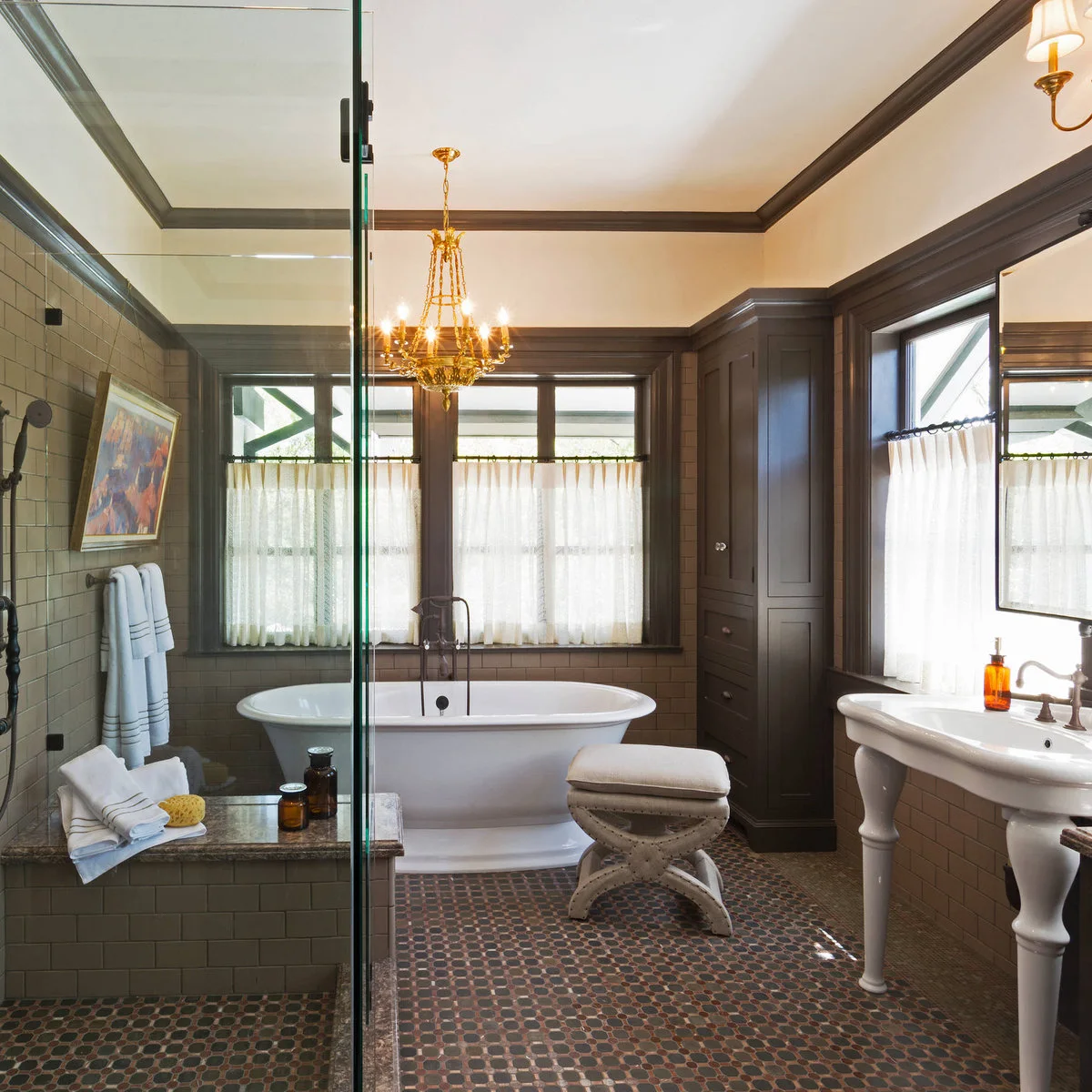
Lighten Dark Woodwork with Sheer Cafe Curtains
 SaveSupport Non AI Creator
Image credit: Project: Carolyn Reyes (via Houzz)
Pale cafe curtains interrupt the dark window frames and cabinet, creating a lighter band around the white bath. The muted tile and small patterned floor remain visible below. Their restrained color lets the substantial woodwork provide most of the contrast in the room.
Sheer-looking fabric needs a separate privacy test, particularly where windows face another building. Check the view through the panels with indoor lights on and select an appropriate lining or additional layer if needed. Keep the curtains removable so the window area can be cleaned without working around a fixed fabric barrier.
PART 04
Keep everyday use and cleaning practical
IDEA 16 / 20
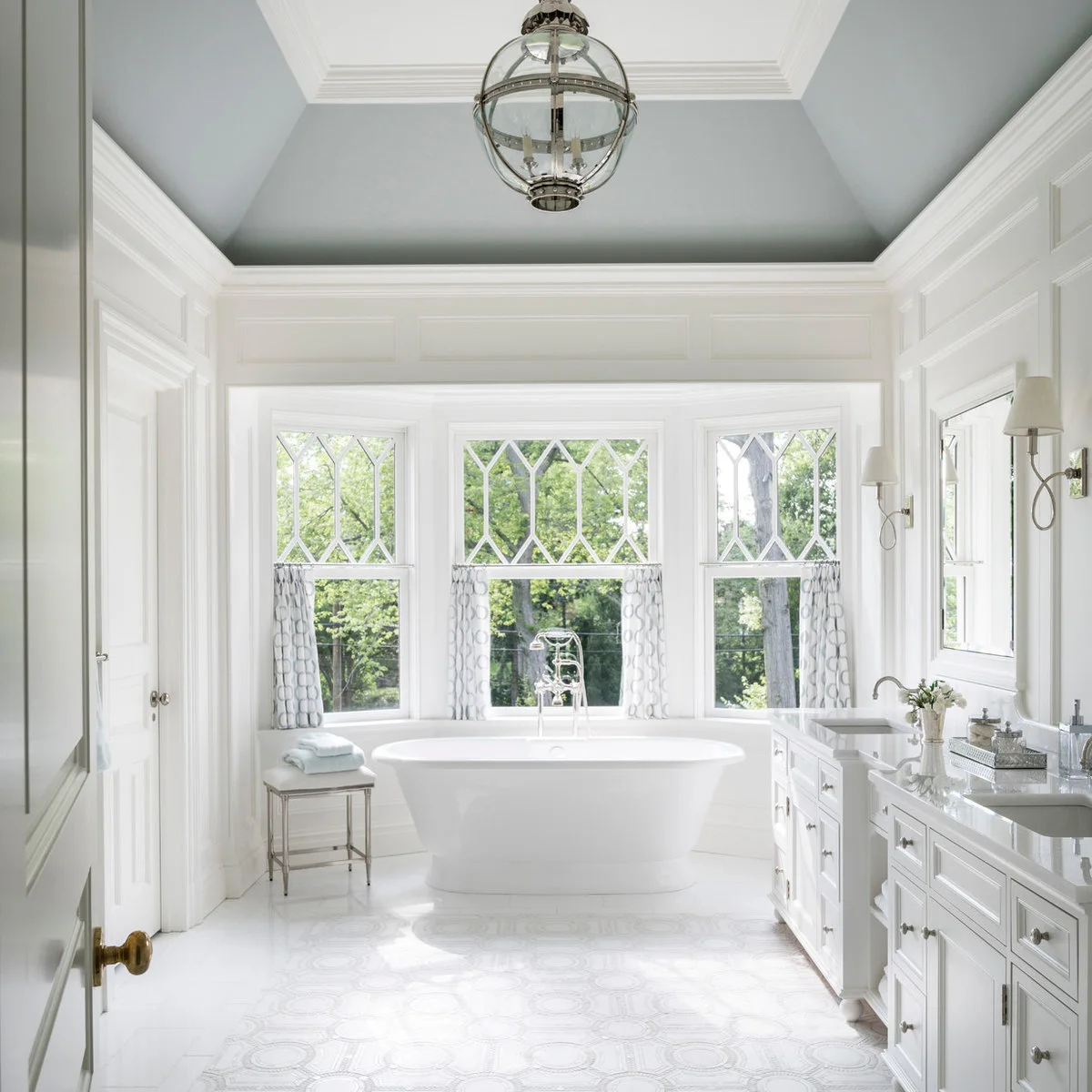
Echo Decorative Glazing with a Simple Repeat
 SaveSupport Non AI Creator
Image credit: Project: VanderHorn Architects (via Houzz)
A soft geometric repeat on the short panels relates to the decorative upper glazing without copying it exactly. White cabinetry and trim keep the window group prominent above the bath. The curtains occupy only the lower panes, allowing the upper glass pattern to remain fully visible.
Our classic bathroom ideas offer more ways to balance traditional details with quieter surfaces. Here, test how the curtain repeat looks beside the glazing from the doorway. Keep the fabric coverage appropriate to outside views, and check that the hanging position allows access to the window's operating hardware.
IDEA 17 / 20
Use Short Panels at a Bathroom Dressing Counter
 SaveSupport Non AI Creator
Image credit: Project: Benson Interiors, Inc. (via Houzz)
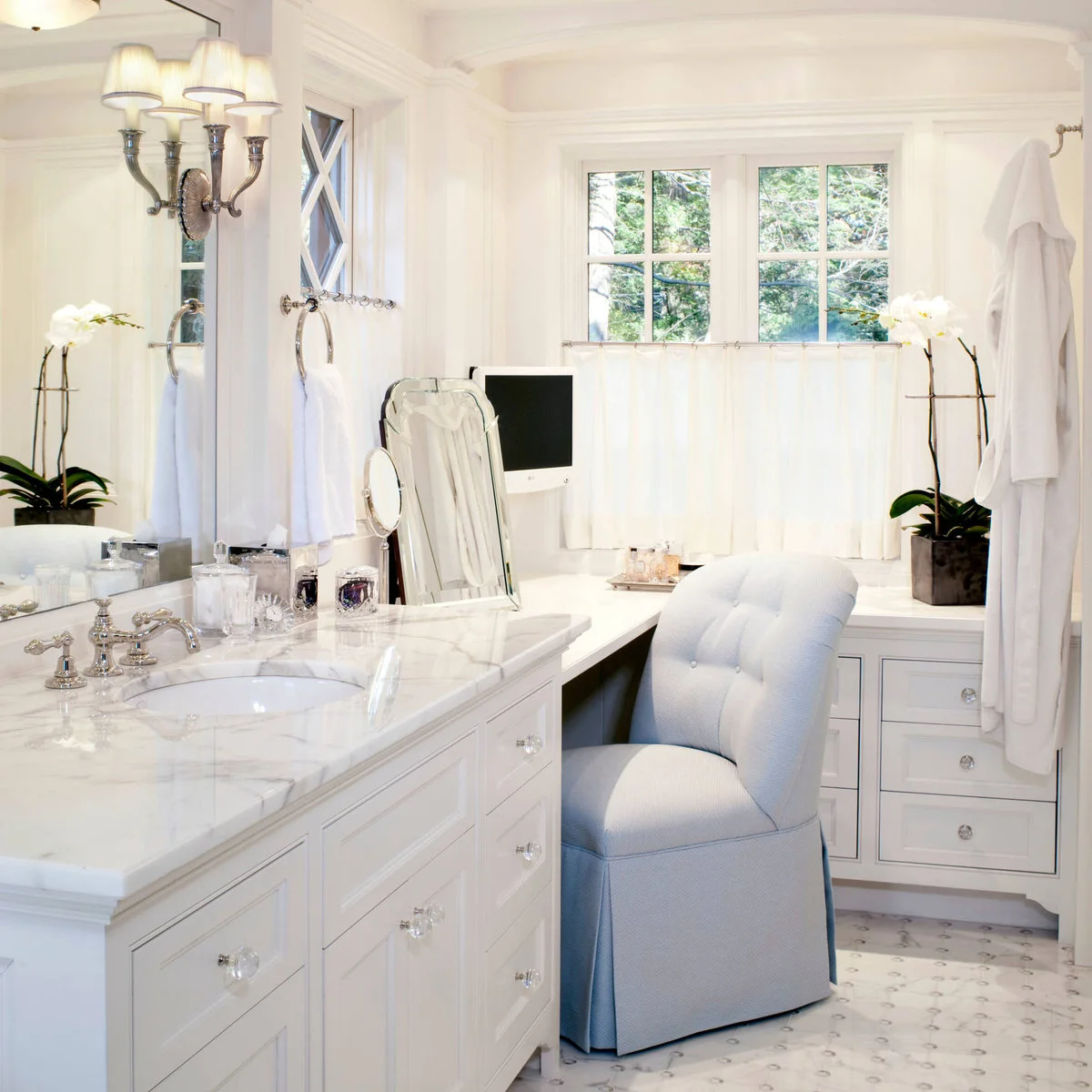
Short white panels sit behind the dressing counter rather than falling beside the chair. Their restrained color relates to the cabinetry, while the pale blue upholstery gives the working corner a gentle contrast. The upper window remains clear above the mirror and small countertop objects.
Keep curtains clear of drawers, chair movement and items left on the counter. Check the view when seated as well as standing, since privacy needs can change with height. If cosmetics or hair products are used here, choose a fabric you can remove and clean without dismantling the entire work area.
IDEA 18 / 20
Make a Shower Curtain the Main Graphic Pattern
 SaveSupport Non AI Creator
Image credit: Project: Breeze Giannasio Interiors (via Houzz)
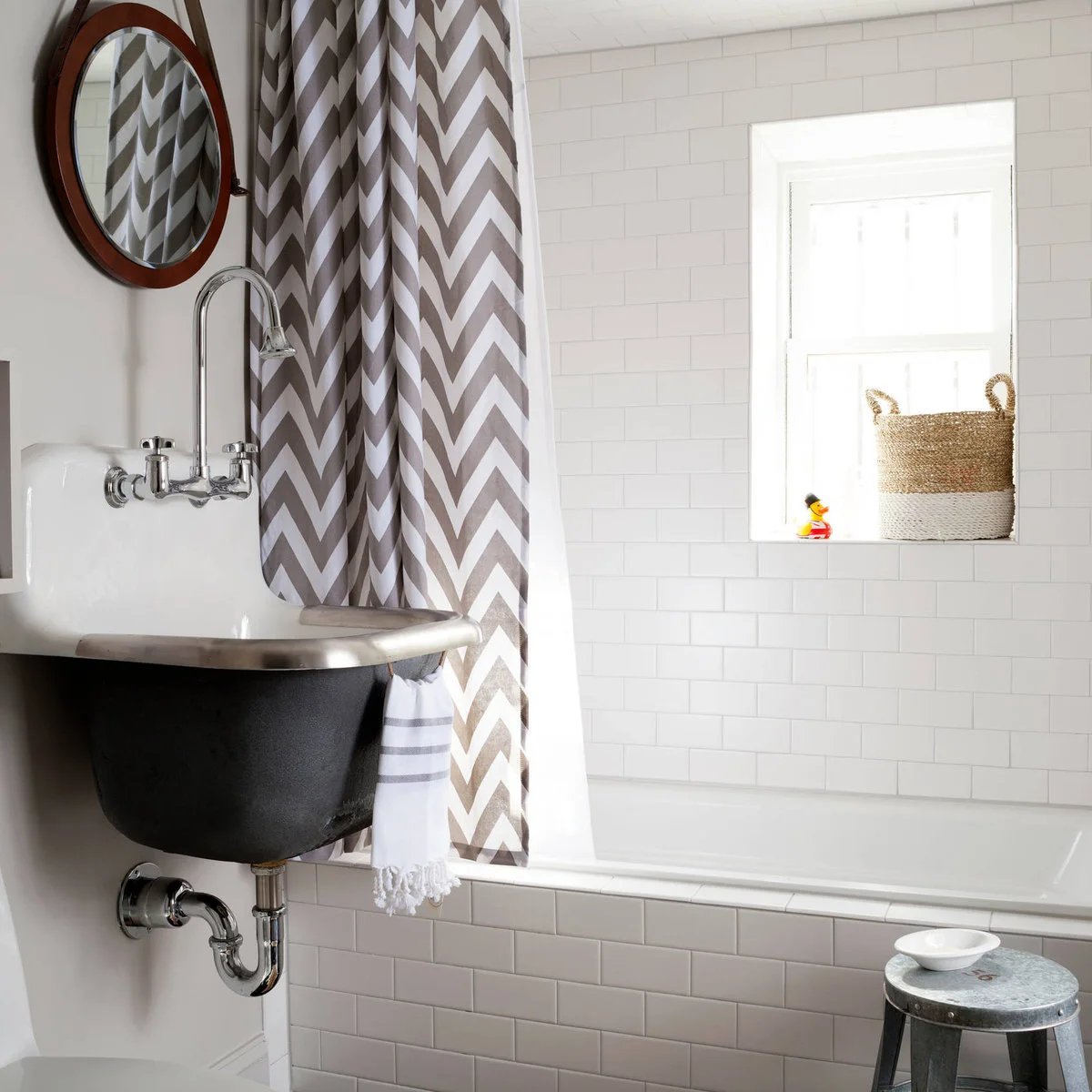
A broad gray-and-white chevron becomes the strongest pattern in this small bathroom. Plain white tiles give the zigzags room to stand out, while the dark sink and wood-framed mirror add weight on the left. The curtain's vertical folds soften the otherwise angular tile grid.
Choose a curtain or liner intended to contain shower spray, with coverage suited to the opening. Check how it hangs inside the tub during use and spreads for drying afterward. Keep pattern choices elsewhere restrained if you want the large chevron to remain clear rather than compete with several other busy surfaces.
IDEA 19 / 20
Bring a Small-Scale Check into a Tiled Shower
 SaveSupport Non AI Creator
Image credit: Project: Thom Filicia Inc. (via Houzz)
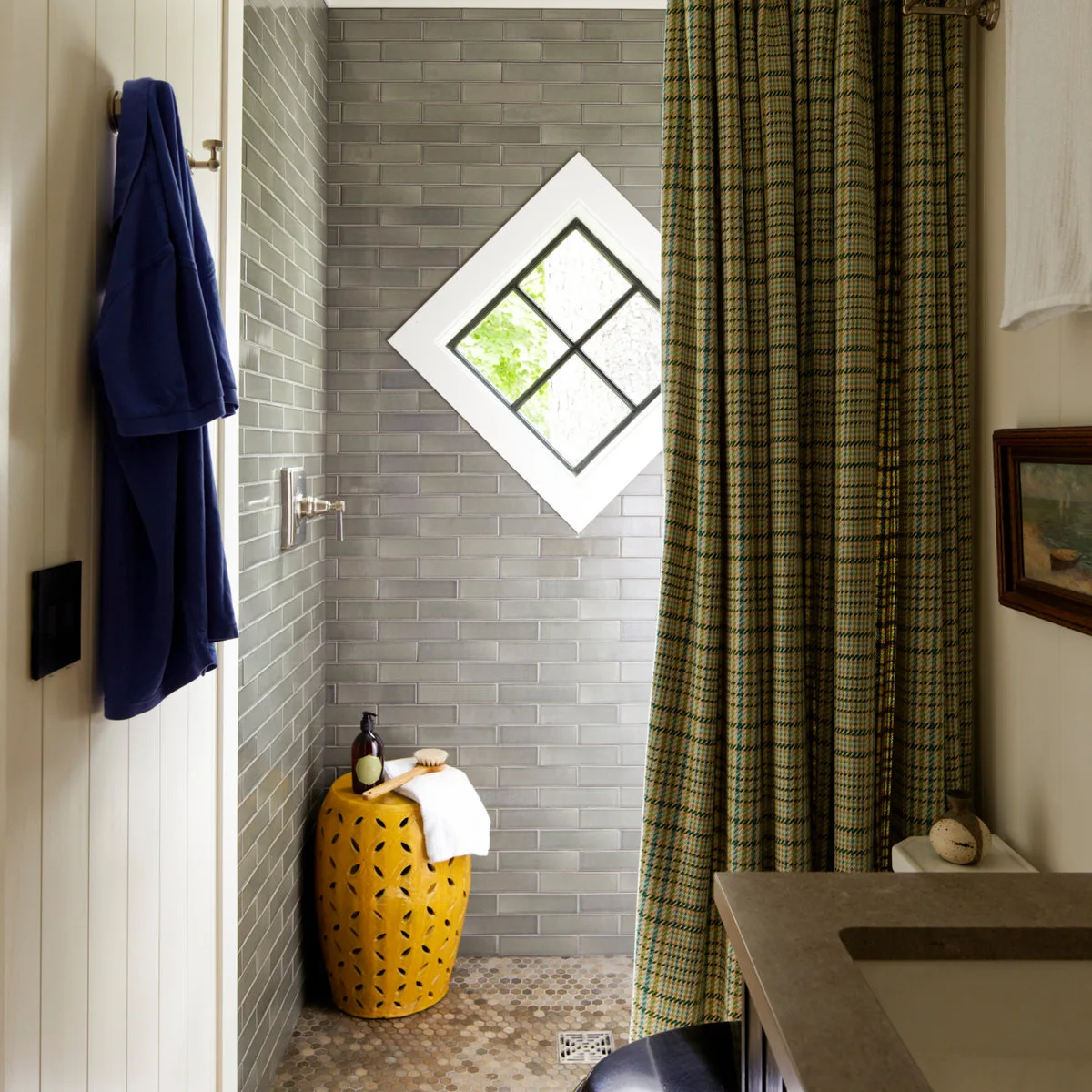
A small checked pattern adds green and gold beside the gray tiled shower. Its regular lines contrast with the diamond-shaped window, while the yellow stool repeats the warmer tone at floor level. The curtain gives the wet area a textile surface without requiring patterned wall tiles.
Confirm that both the curtain and any liner are appropriate for direct shower exposure. Leave enough width for coverage without creating a heavy bundle that stays damp. Keep stools and accessories out of the usable entry route, and follow the manufacturer's washing instructions rather than assuming a decorative weave can be treated like a plain liner.
IDEA 20 / 20
Keep the Shower Curtain Plain beside Patterned Tile
 SaveSupport Non AI Creator
Source: www.houzz.com
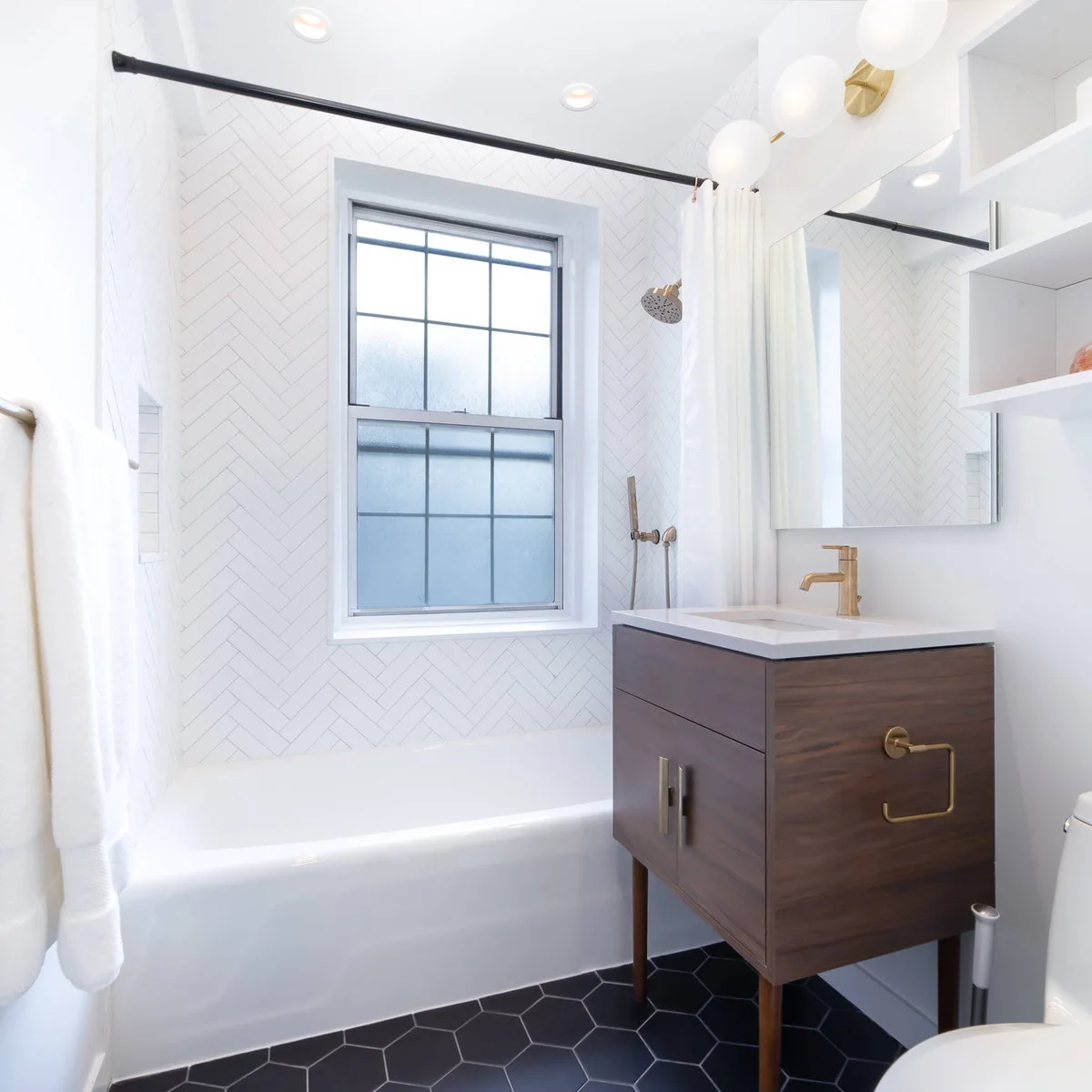
A plain white shower curtain leaves the herringbone wall tile and dark hexagonal floor as the main patterns. The black rod relates to the darker outlines in the room, while the wood-toned vanity adds warmth. The curtain can close the bathing area without adding another competing print.
White need not mean high maintenance if the chosen product has a cleaning routine you can follow, but verify it before buying. Size the curtain and liner for the actual opening and allow them to dry spread out. Check the rail fixings for the wall type and never use the rail as a handhold.
BRING IT ALL TOGETHER
Choose for the wettest day, not just the photograph
Measure the window and usable wall, then check taps, towel rails, openings and the tub edge against the proposed fabric. Test a sample in daylight and after dark. Shorter curtains are often easier to keep clear of wet surfaces, but their coverage must still suit the view from outside.
Check washing, drying and lining instructions before buying. Spread a shower curtain after use so it can dry, and keep decorative window fabric away from direct spray. Hardware needs a suitable fixing for the wall and the curtain's weight; a curtain rail is never a grab rail.