A baby boy’s nursery can begin with books, animals, travel, a favorite color or a few family photographs. None of those choices needs to dictate every piece of furniture. Start with a crib that meets current requirements, accessible changing supplies and a comfortable place for an awake caregiver to sit.
These photographed projects offer decorating ideas, but some contain display blankets, toys or other staged accessories. For infant sleep, follow CPSC guidance: use a compliant sleep product with a firm, flat mattress and fitted sheet only, place baby on their back and keep pillows, blankets, bumpers and toys out. Keep cords and loose decorations out of reach, and move heavy wall displays away from the crib.
PART 01
Choose a Palette That Can Grow
IDEA 01 / 20
Balance a Fine Pattern with Simple Furniture
 SaveSupport Non AI Creator
Image credit: Project: Livettes wallpaper (via Houzz)
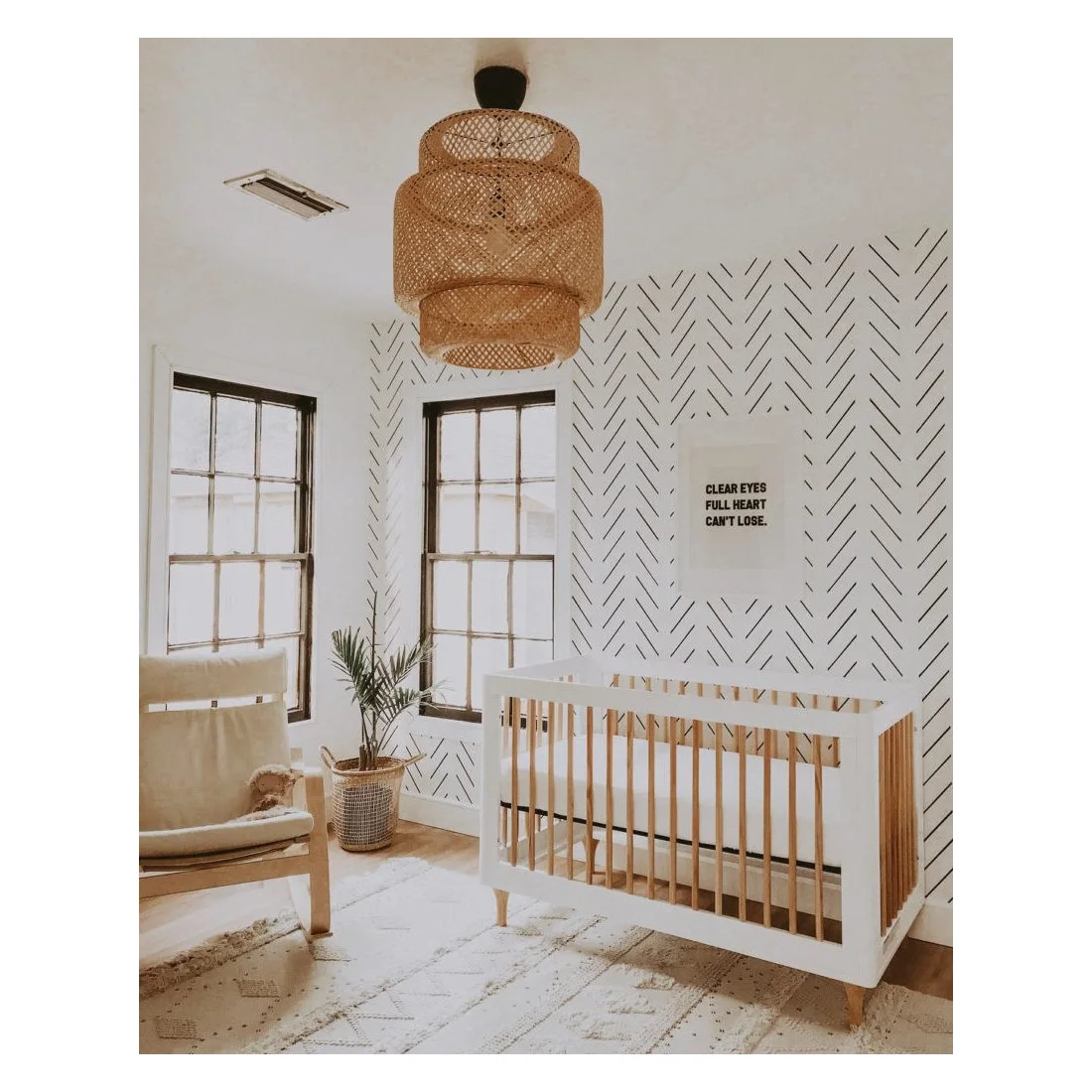
Fine black lines give this mostly white nursery movement without a large block of color. The white crib has wood-colored slats, and the woven pendant adds another texture above. A plain chair keeps the small furniture grouping from competing with the patterned wall.
Try a pattern sample beside the furniture before covering the wall, and allow paint or adhesive work to dry and ventilate before the room is used. Keep framed pieces and plants beyond the crib’s reach. Boho nursery ideas offer other ways to combine pale furniture and natural-looking texture.
IDEA 02 / 20
Use Scattered Dots instead of a Busy Theme
 SaveSupport Non AI Creator
Image credit: Project: SuzAnn Kletzien Design (via Houzz)
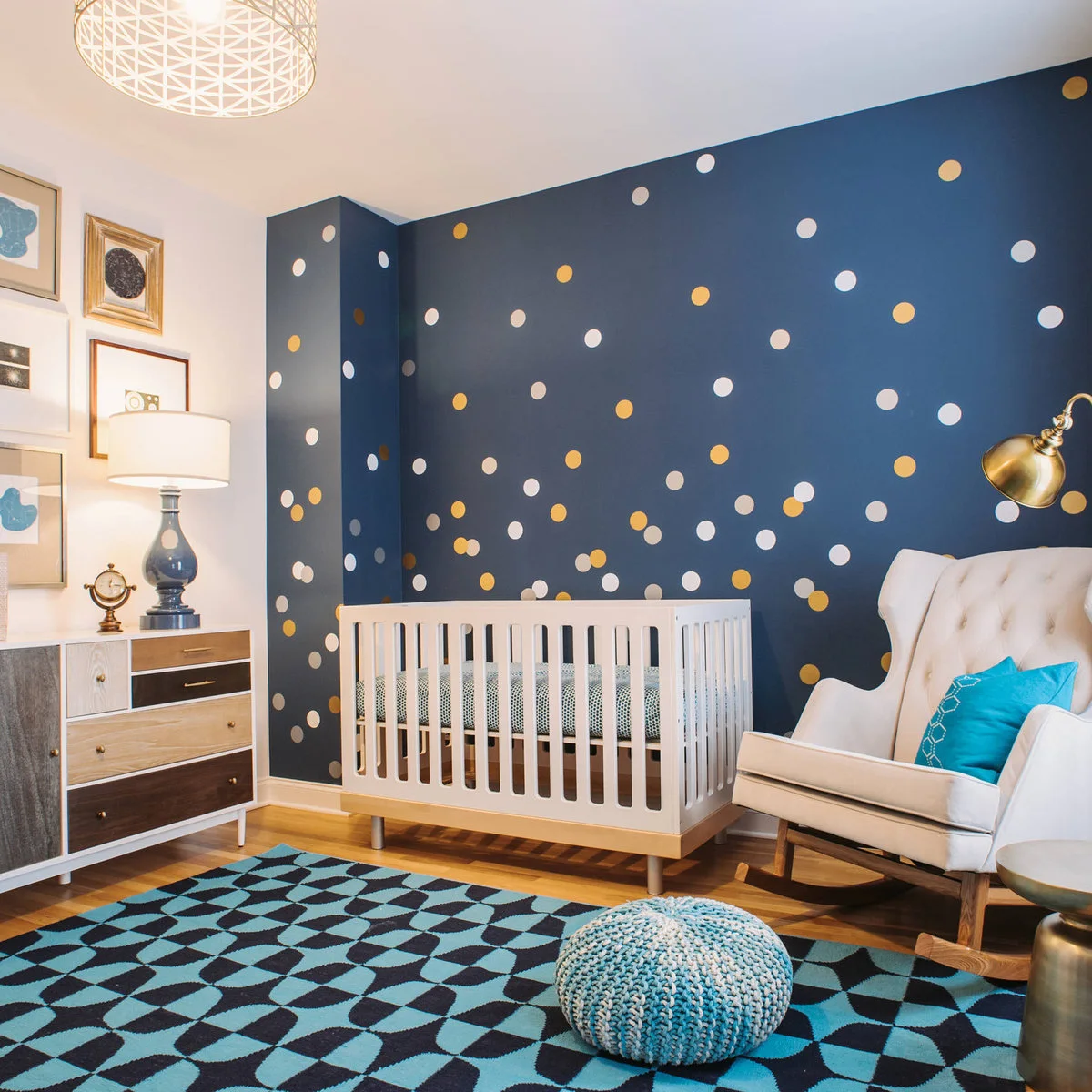
White and gold-colored dots scatter across the deep blue wall, with a simple white crib below. A pale wingback chair and mixed-tone dresser keep the room from becoming one solid color. The turquoise rug and pouf add a second blue rather than matching everything exactly.
Repeat one or two colors in movable pieces so the room can change without replacing all the furniture. Secure wall decorations and keep lamp cords out of reach. Remove the padded crib liner shown here; the useful idea is the wall palette, while the sleep space should have a fitted sheet only.
IDEA 03 / 20
Add Orange through Storage and Small Accents
 SaveSupport Non AI Creator
Image credit: Project: Kathleen Virginia Photography (via Houzz)
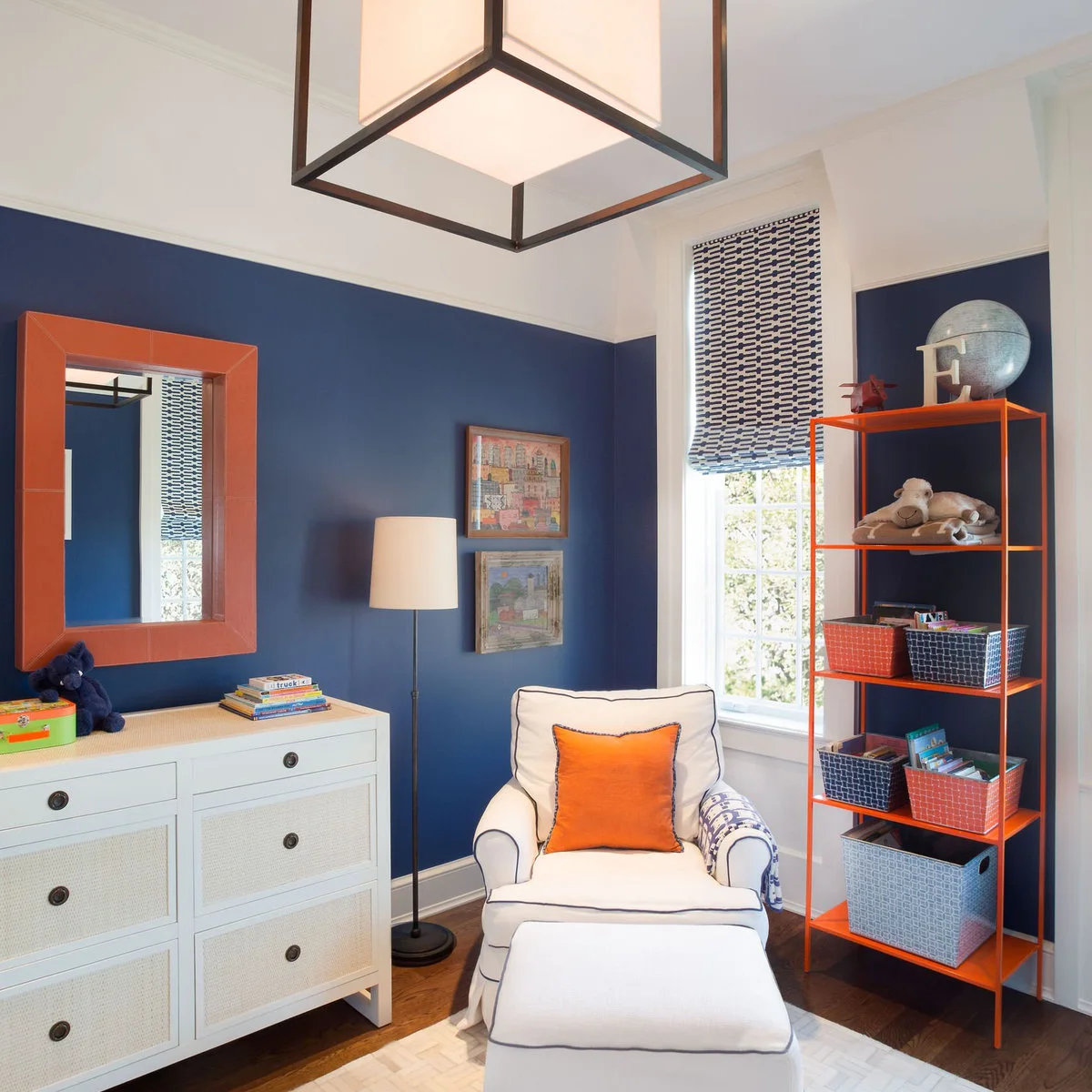
Orange outlines the shelf and mirror in this navy nursery corner. A pale chair, white dresser and light ceiling keep the strong wall color from dominating every surface. Baskets introduce storage at several levels without requiring another large cabinet.
Choose a small accent color that can be changed through baskets or a cushion as preferences develop. Anchor the shelf and dresser and secure the mirror away from the sleep area. Test the chair and footrest together, leaving a clear route beside them rather than filling every gap with decor.
IDEA 04 / 20
Keep a Nautical Palette in the Sitting Area
 SaveSupport Non AI Creator
Image credit: Project: Steffanie Danby Interiors (via Houzz)
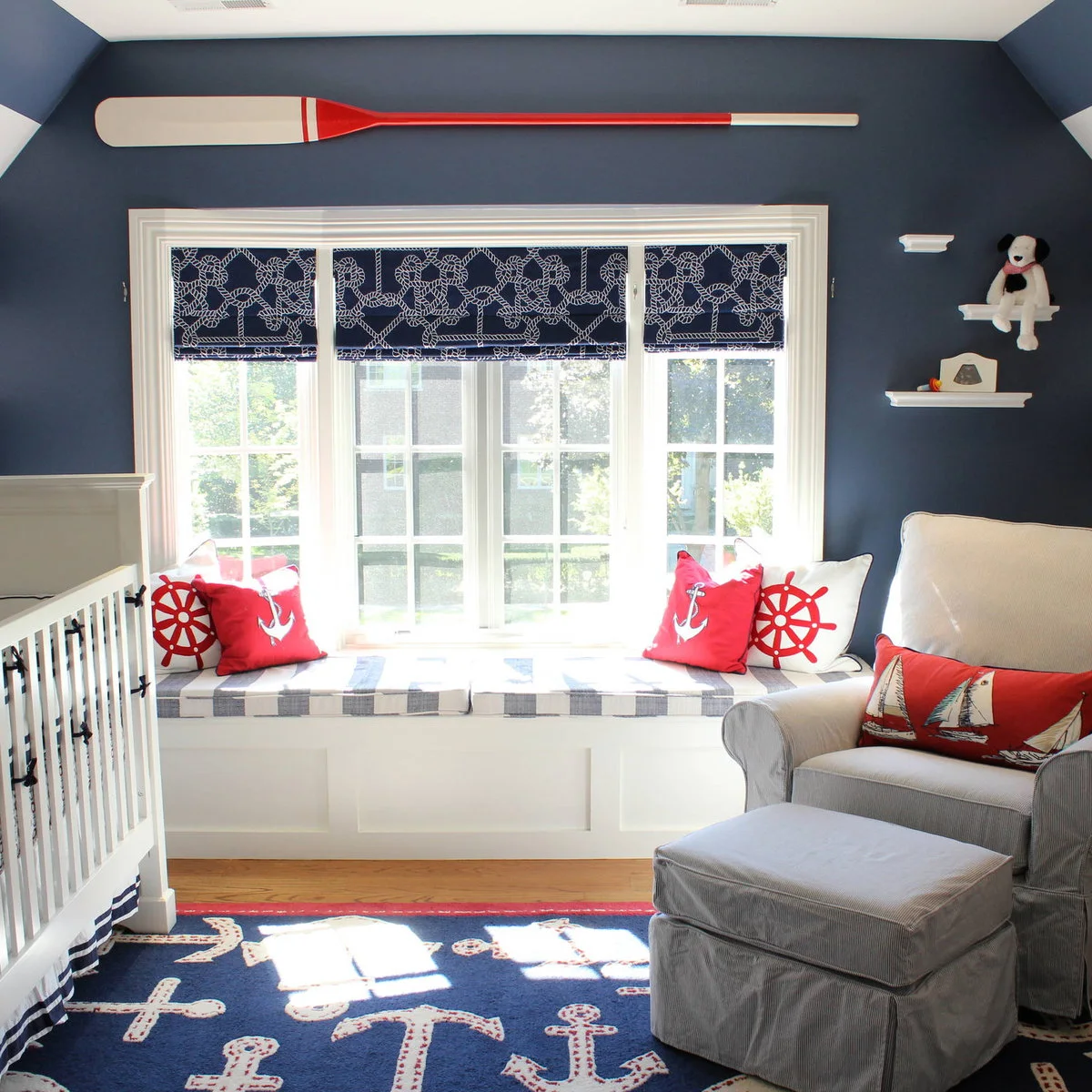
Navy walls, striped window-seat cushions and red details give this room its nautical character. A pale upholstered chair offers a separate adult seat beside the window. The repeated colors connect the rug and fabrics without requiring every item to carry a boat motif.
Use the window seat for supervised sitting and keep it separate from the baby’s sleep space. Secure the decorative oar and shelves, and choose child-safe cordless window treatments. Keep the crib away from window coverings and remove tied fabric accessories rather than copying the photograph’s styling literally.
IDEA 05 / 20
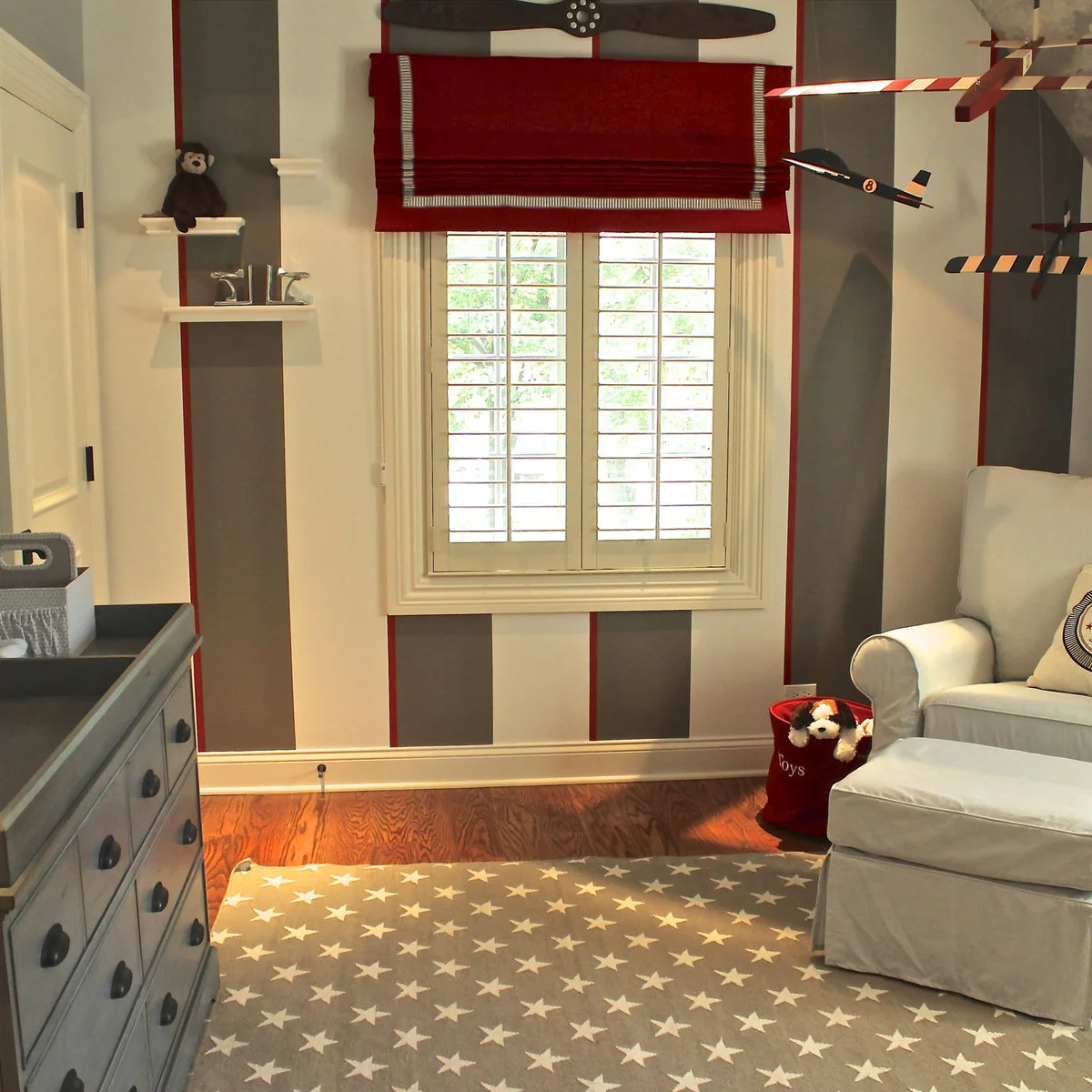
Use Stripes to Organize an Awkward Wall
 SaveSupport Non AI Creator
Image credit: Project: Steffanie Danby Interiors (via Houzz)
Broad gray stripes and thin red lines organize this narrow nursery wall around the window. The red shade repeats the accent color, while the pale chair and footrest soften the geometric backdrop. A dresser sits opposite the seating rather than competing for the same corner.
Mark the stripe arrangement before painting so a window or door does not leave an awkward fragment of color. Keep the adult seat clear of the door swing and secure the dresser. Use aircraft shapes as wall art away from the crib instead of hanging loose objects within reach.
PART 02
Make Everyday Storage Easier
IDEA 06 / 20
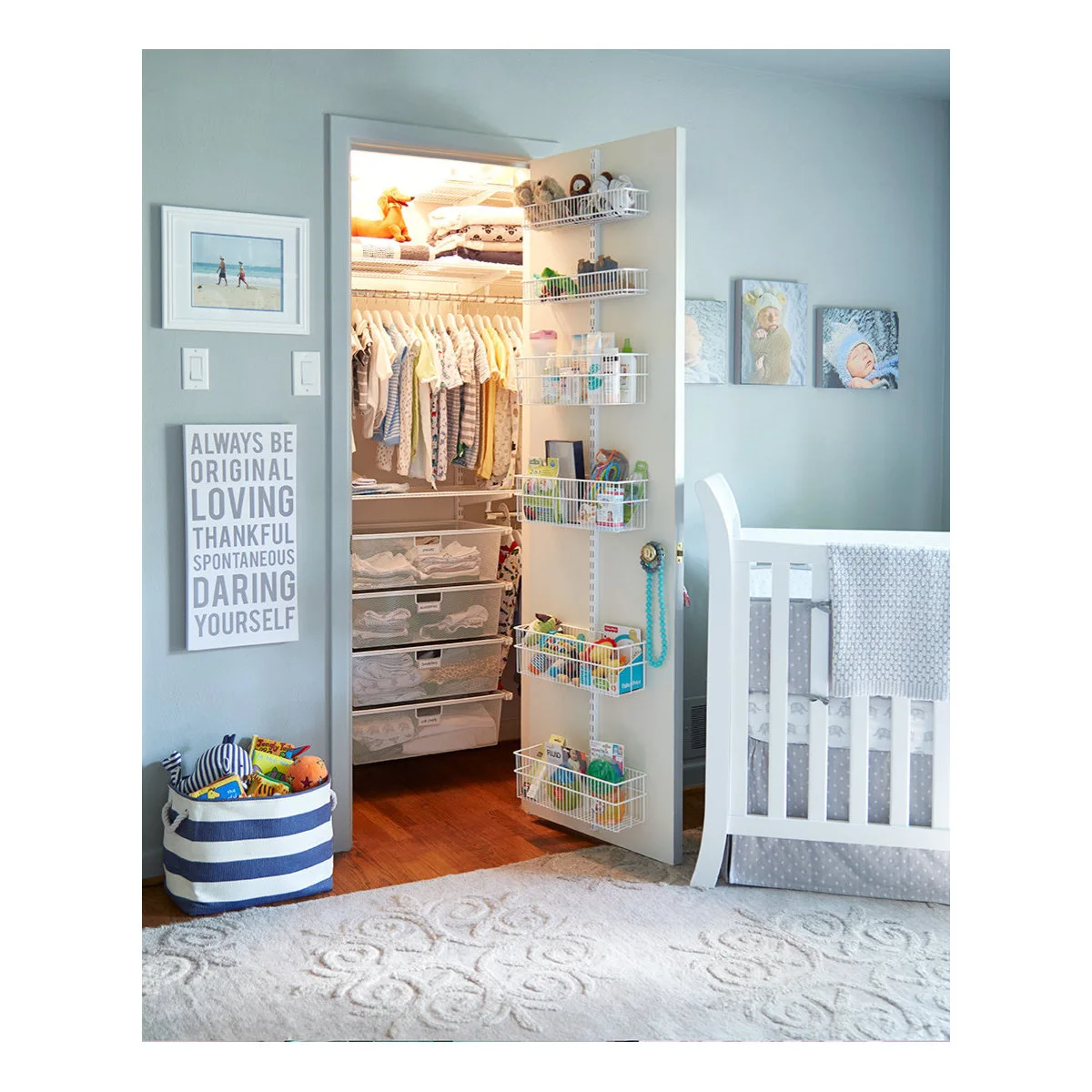
Put Closet Storage to Work before Adding Cabinets
 SaveSupport Non AI Creator
Image credit: Project: The Container Store Custom Closets (via Houzz)
Short hanging clothes, mesh drawers and door baskets divide this closet into several useful storage areas. The pale blue walls continue around the opening, making the closet feel part of the room. Small supplies are visible without being spread across the crib or floor.
Group clothes by current size and keep frequently used supplies where an adult can reach them comfortably. Secure the door storage and check that the door still opens fully. Store medicines and toiletries beyond a child’s reach, and remove the blanket draped on the crib before sleep.
IDEA 07 / 20
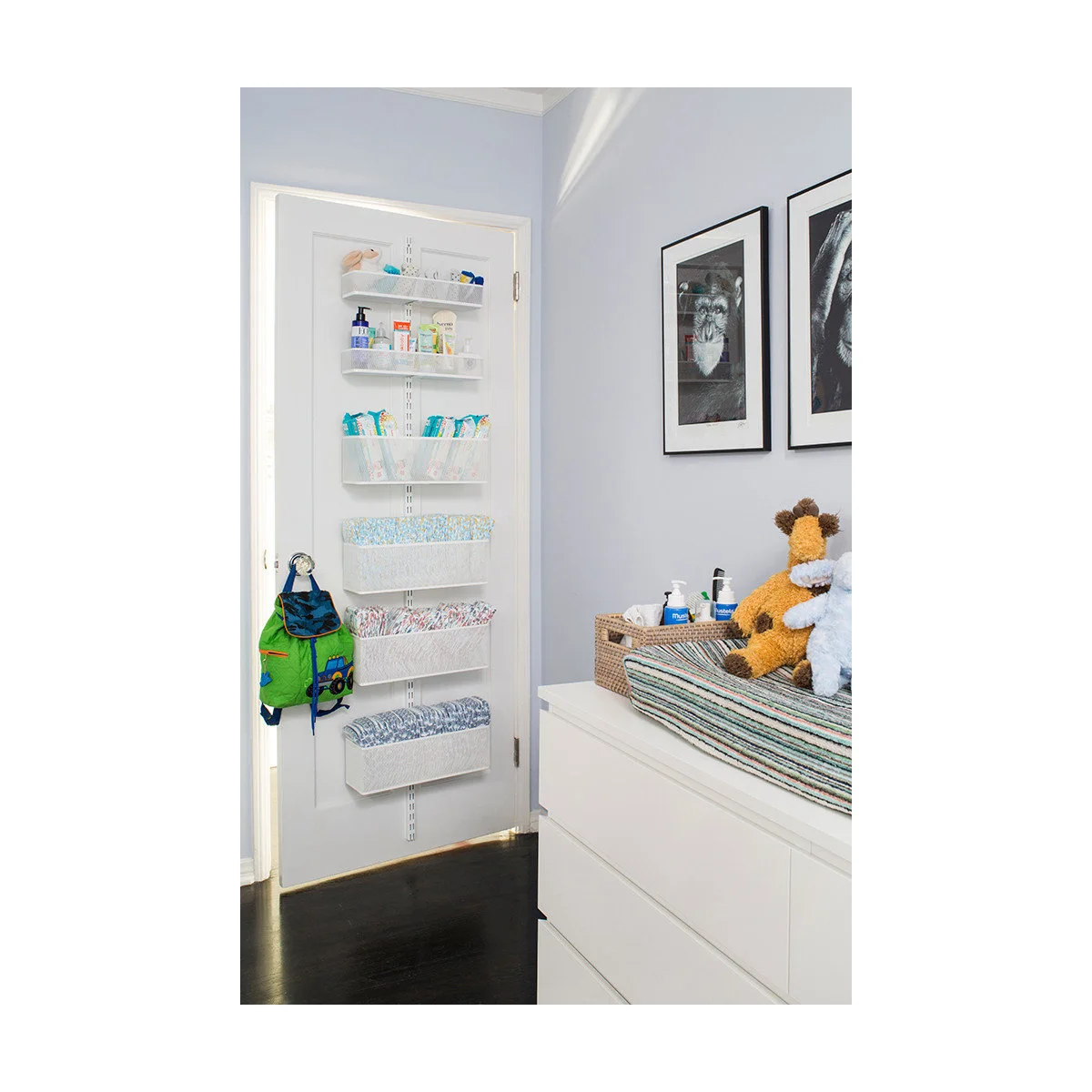
Use the Back of a Door for Sorted Supplies
 SaveSupport Non AI Creator
Image credit: Project: The Container Store Custom Closets (via Houzz)
Narrow baskets on the back of this door hold separate groups of supplies and folded fabrics. A white dresser beside it provides a broader working surface. The arrangement uses a surface that might otherwise stay empty without adding another freestanding piece to the floor.
Check the basket depth with the door fully open and closed so it cannot strike the dresser or trap fingers. Keep heavier items low and secure the mounting system. Put lotions, cleaners and other unsuitable items beyond reach, and clear toys from the changing surface before using it.
IDEA 08 / 20
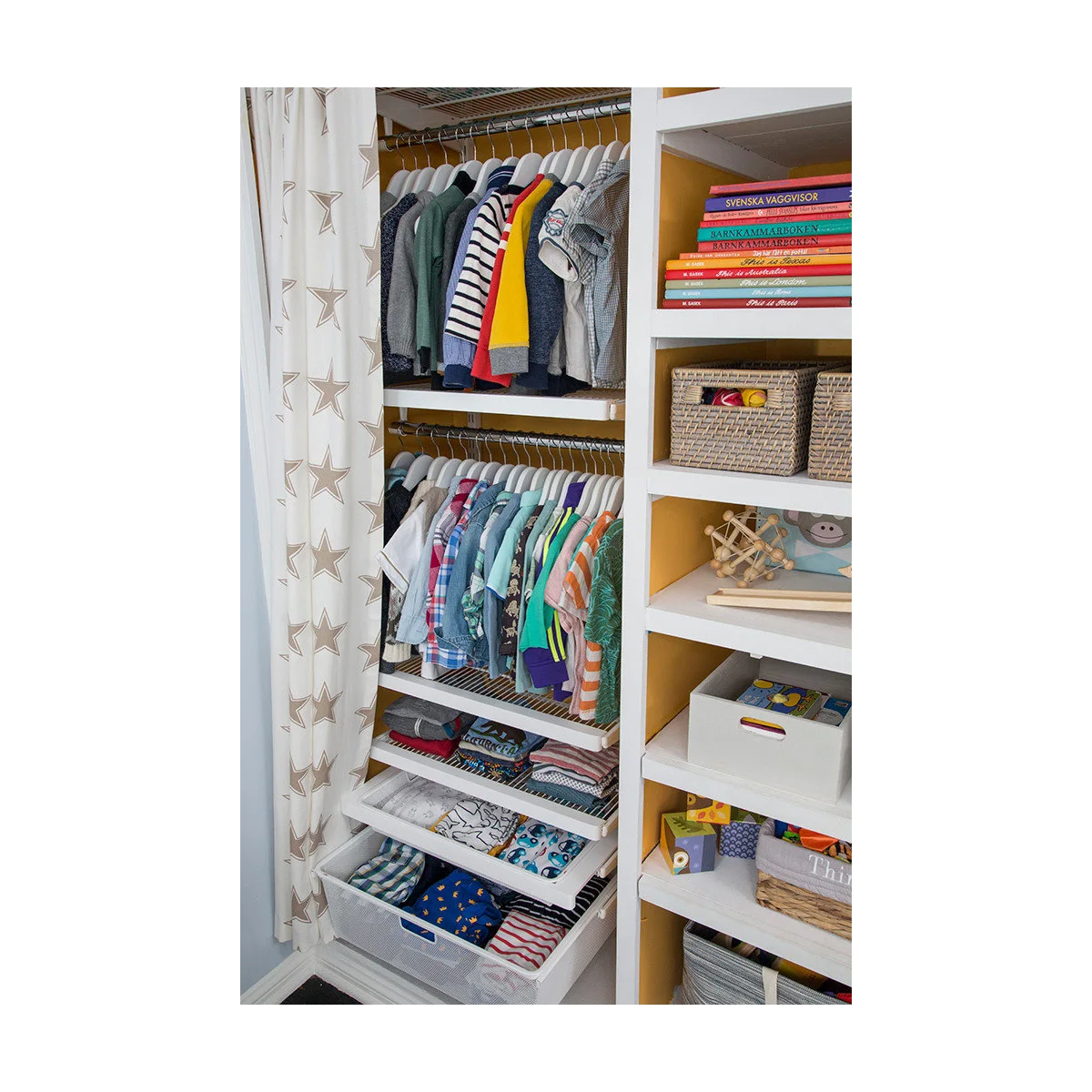
Separate Hanging Clothes from Folded Basics
 SaveSupport Non AI Creator
Image credit: Project: The Container Store Custom Closets (via Houzz)
Two short hanging rails make use of the height needed for baby clothes, while mesh drawers hold folded pieces underneath. Yellow-backed shelves give books and baskets a distinct area beside the clothes. A star-pattern curtain adds softness without changing the internal storage layout.
Plan for adjustable rails if you want the closet to accommodate longer clothes later. Leave enough room to slide drawers out without catching the curtain. Keep any loose fabric and cords away from the crib, and avoid loading open shelves so heavily that everyday items become difficult to retrieve.
IDEA 09 / 20
Fit Drawers and Shelves inside the Closet
 SaveSupport Non AI Creator
Image credit: Project: Carolina Closets Plus (via Houzz)
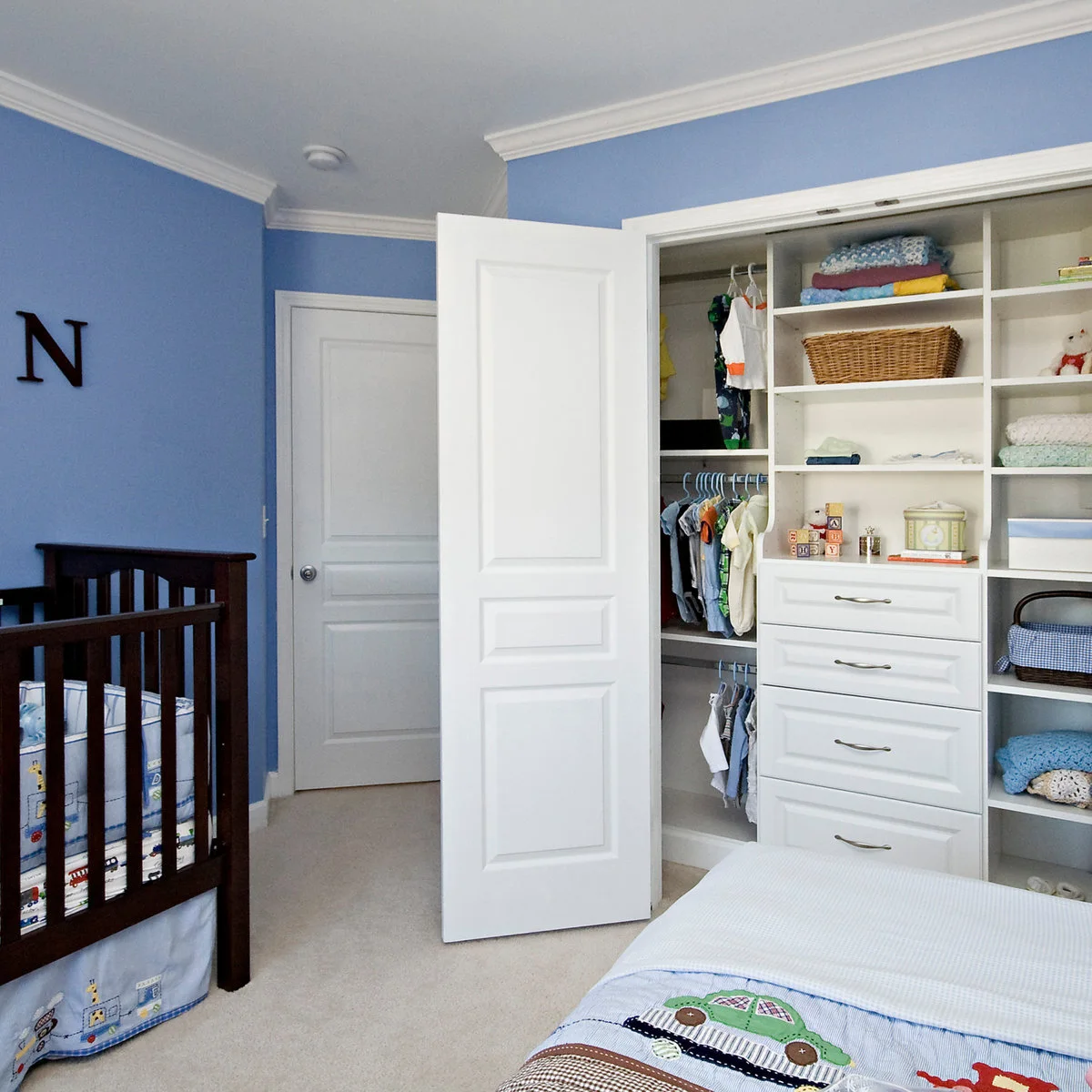
A bank of white drawers sits between short hanging sections in this open closet. Shelves above hold folded fabrics and baskets, keeping much of the nursery storage within one footprint. The blue wall and dark crib remain visible without extra cabinets filling the central floor.
Measure door clearance and drawer extension together, especially where the room has unusual angles. Secure the closet system and keep heavy items at a manageable height. Treat the patterned bedding as display styling; remove bumpers and loose bedding from the crib and keep its sleeping surface clear.
IDEA 10 / 20
Turn a Corner into a Book Display
 SaveSupport Non AI Creator
Image credit: Project: Mend (via Houzz)
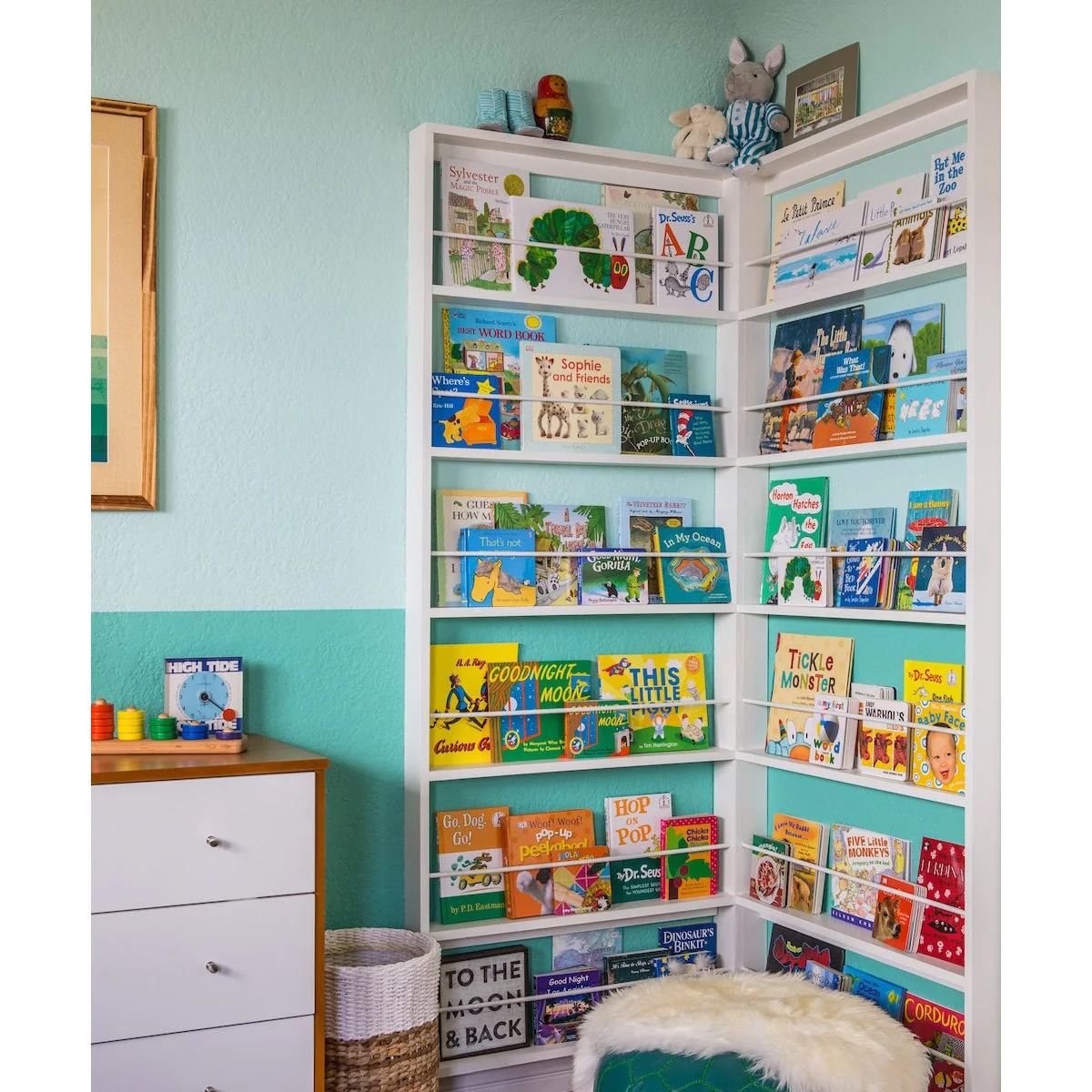
Two white book racks meet in the corner, displaying colorful covers against turquoise walls. Their shallow-looking shelves use height rather than a deep bookcase footprint. The adjacent drawers provide a quieter surface, so the books become the main color and pattern in this part of the room.
Anchor the racks securely and avoid placing them where a child could climb from furniture into the crib. Keep a small selection of sturdy books low for supervised reading and rotate the rest. Choose the display size around cleaning and access, not the number of covers it can hold.
PART 03
Make Room for Books and an Adult Seat
IDEA 11 / 20
Make Books Part of the Color Scheme
 SaveSupport Non AI Creator
Image credit: Project: M.RED Design (via Houzz)
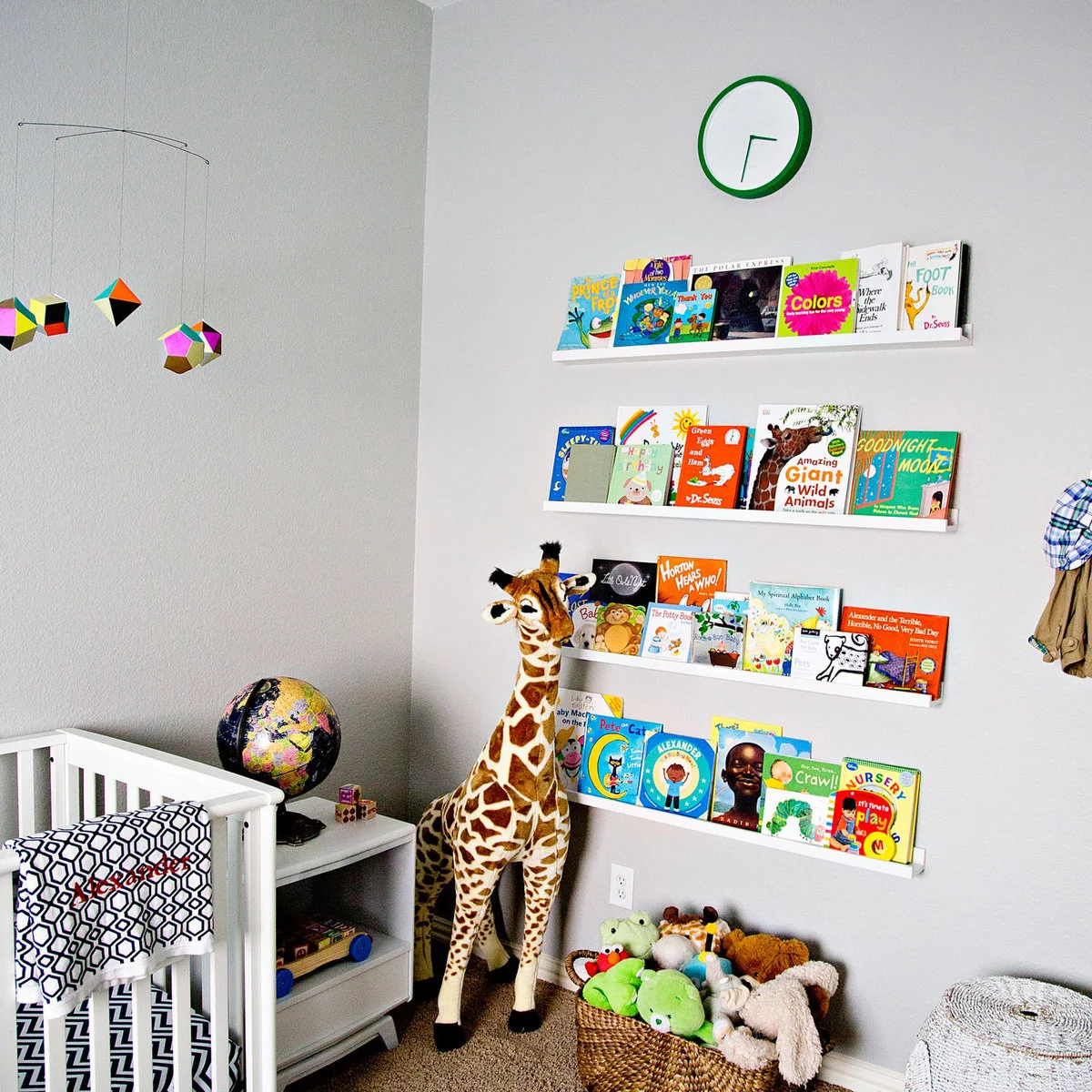
Bright book covers form rows of color beneath a green clock in this nursery. The white ledges keep the arrangement simple, with a tall toy giraffe and basket below. The room gains personality through books rather than relying only on a large painted feature.
Mount ledges securely away from the crib and leave space to lift books out without knocking the row above. Use age-appropriate toys during supervised play and store them separately afterward. Remove the hanging mobile and rail blanket when required by the product instructions and keep the sleep space bare.
IDEA 12 / 20
Give the Adult Chair Its Own Useful Corner
 SaveSupport Non AI Creator
Image credit: Project: Cory Connor Designs (via Houzz)
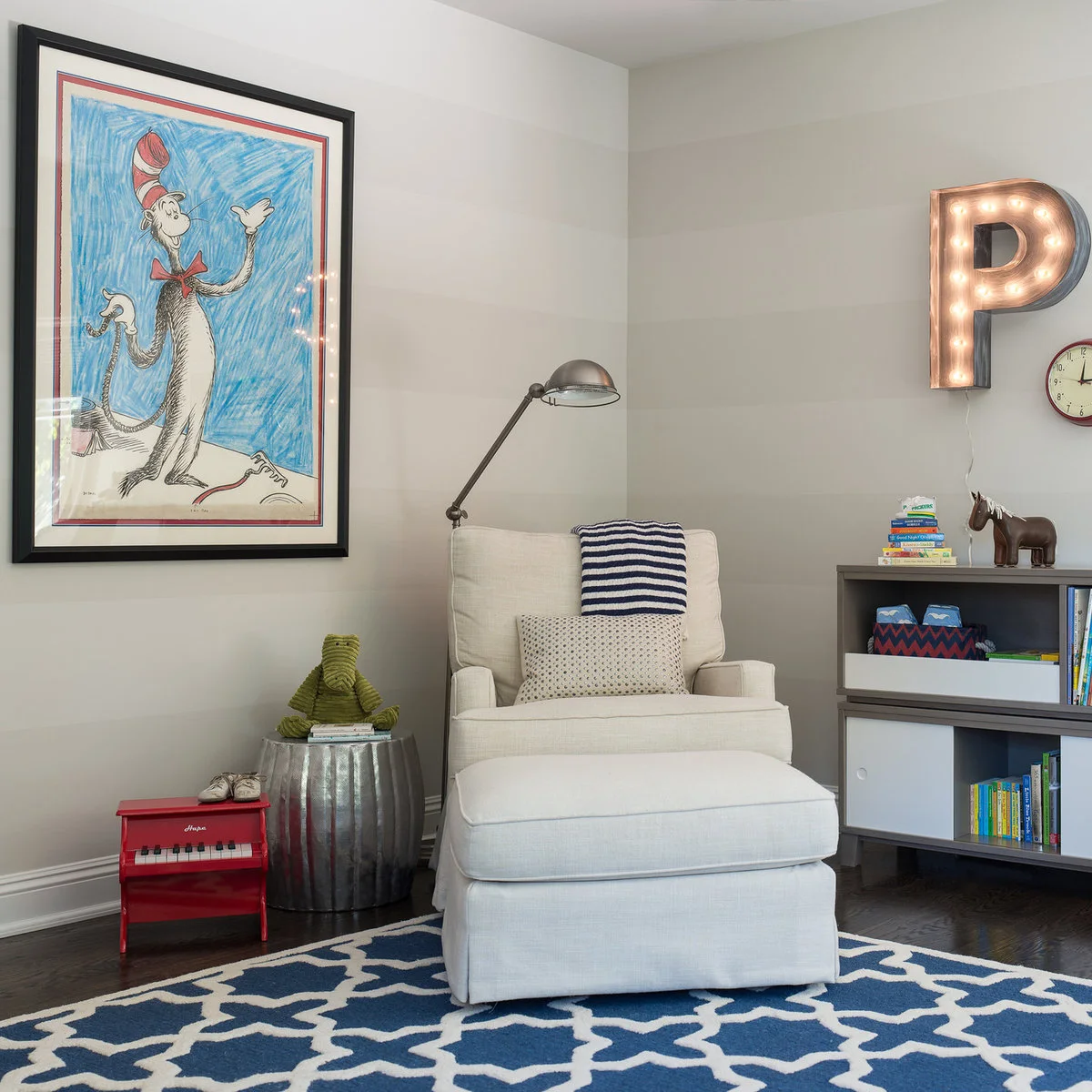
A pale chair and ottoman sit beneath a large storybook print, with a side table close to the arm. The navy-and-white rug connects the seat with the nearby storage. An adjustable floor lamp supplies focused light rather than relying on the overhead fitting alone.
Sit with the footrest in place before deciding the corner works, including whether you can stand up easily. Keep a reachable surface for an adult’s drink and supplies. Secure the artwork and lamp cord, and use the chair for awake caregiving rather than as a place for an infant to sleep.
IDEA 13 / 20
Mix Closed Storage with Visible Books
 SaveSupport Non AI Creator
Image credit: Project: Cory Connor Designs (via Houzz)
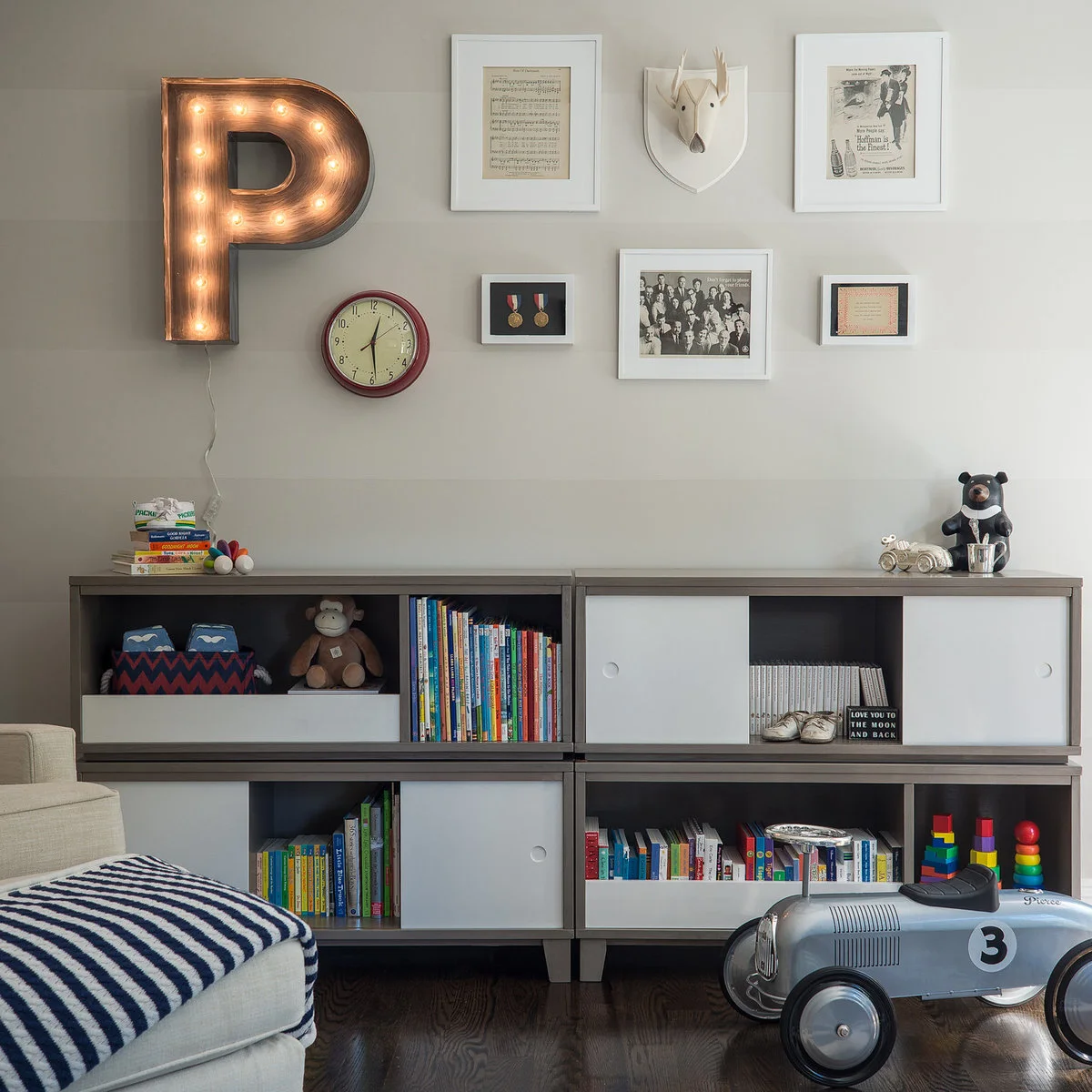
Sliding white fronts interrupt rows of open books and toys on these low gray units. The family picture display above gives the room a personal layer without adding more floor furniture. A clock and illuminated letter provide different shapes among the rectangular frames.
Keep the most useful everyday objects accessible and hide spare supplies behind the closed fronts. Anchor stacked units and protect fingers around sliding panels. Secure frames and electrical cords away from the crib, and choose a smaller display if cleaning around a large collection would become a burden.
IDEA 14 / 20
Use Baskets for Things That Stay outside the Crib
 SaveSupport Non AI Creator
Image credit: Project: Inside Stories (via Houzz)
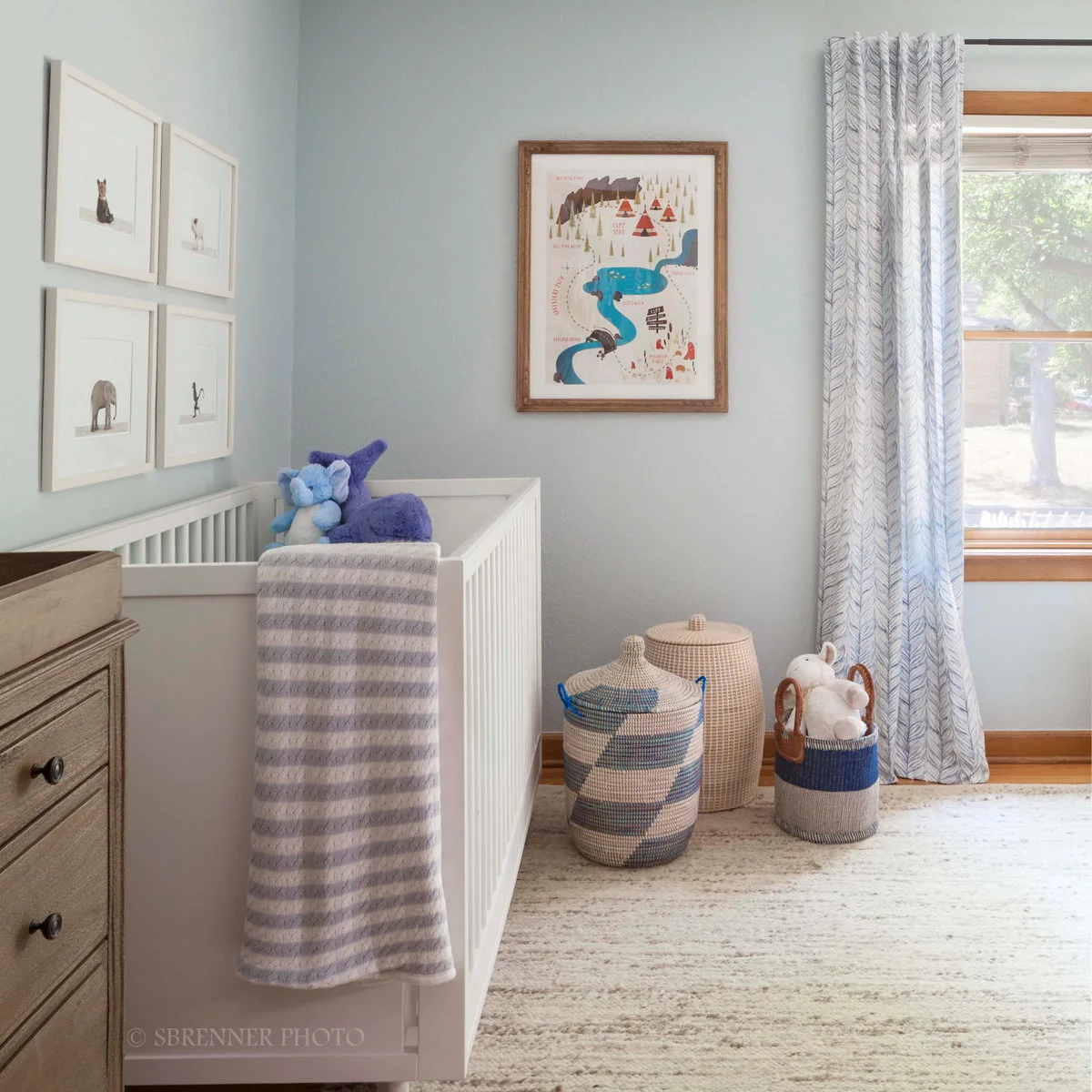
Woven baskets gather loose belongings beside this white crib, while animal pictures and a colorful map provide decoration on the pale blue walls. The curtain pattern is quieter than the wall art. The baskets offer a place for items that do not belong on the mattress.
Move the photographed toys and rail blanket into storage before sleep and remove the crib liner. Keep baskets and curtains outside the child’s reach from the crib. A small number of separate containers is easier to use if each has a clear purpose, such as clean linens or supervised-play toys.
IDEA 15 / 20
Keep the Changing Area Visually Quiet
 SaveSupport Non AI Creator
Image credit: Project: AK Designs (via Houzz)
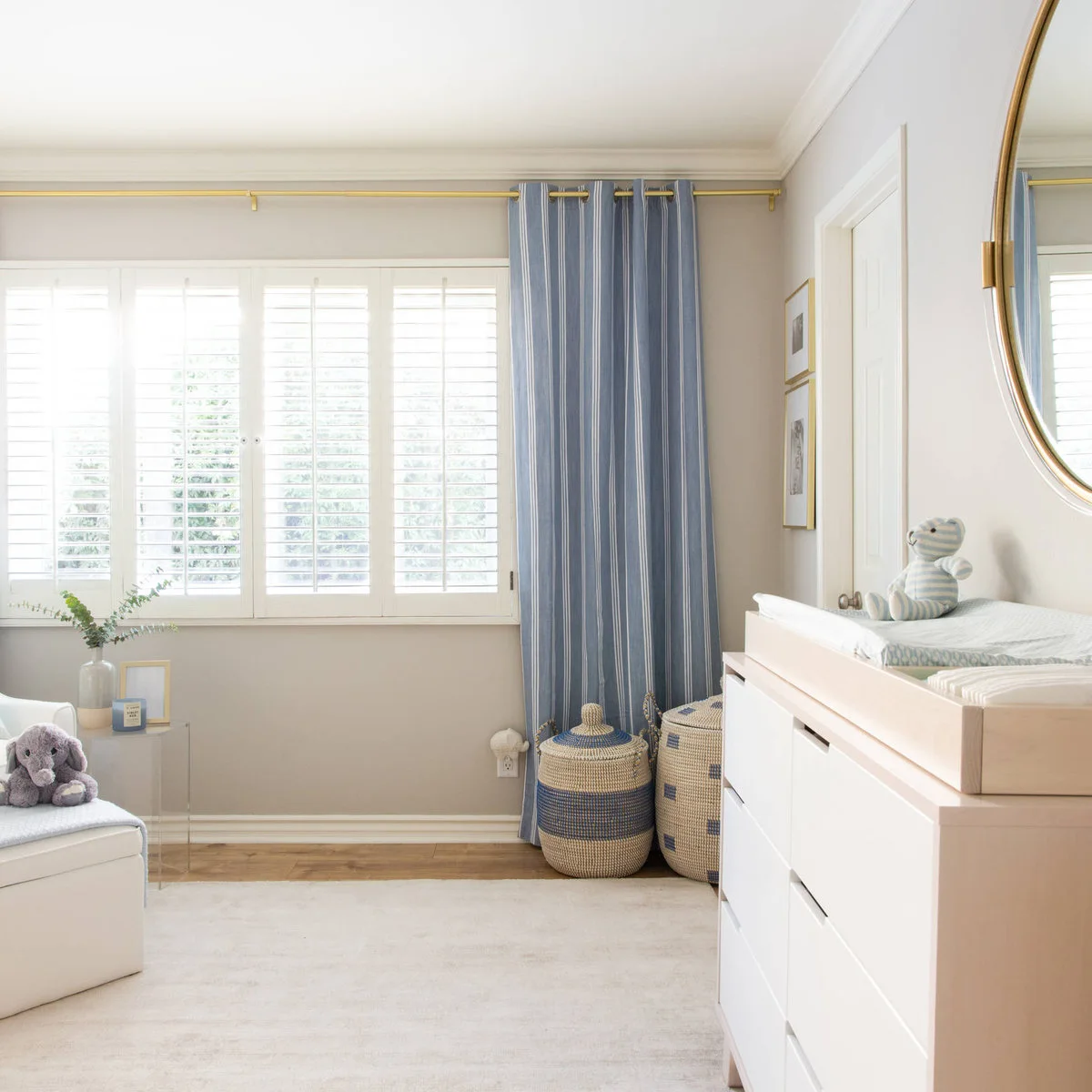
A white dresser and changing tray form a simple working area beside the blue striped curtain. The broad drawer fronts keep most supplies out of sight. Baskets below the window repeat the blue in a softer texture without covering the dresser top with decorative objects.
Choose a changing setup intended for the furniture and follow its installation instructions. Keep needed supplies within an adult’s reach while staying beside the baby, and remove the display toy from the changing surface. Secure the dresser and mirror and keep window-covering cords inaccessible.
PART 04
Add Personality beyond the Sleep Space
IDEA 16 / 20
Put the Main Color on the Ceiling
 SaveSupport Non AI Creator
Image credit: Project: Kaitlyn Wolfe (via Houzz)
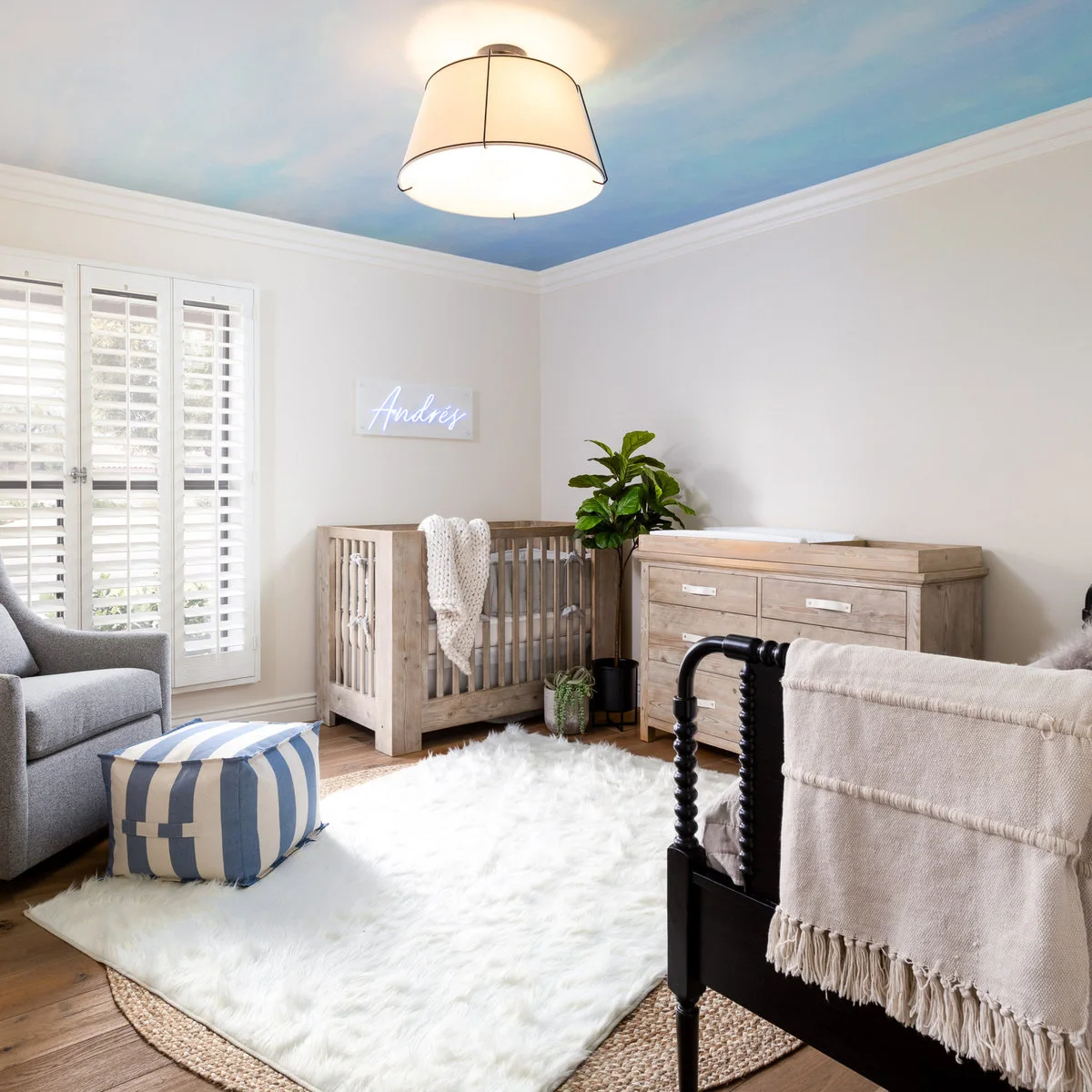
The blue ceiling gives this mostly pale room its strongest color, above wood-colored furniture and a gray chair. A striped ottoman repeats the blue near the floor. The arrangement includes a separate adult-sized resting surface, making furniture spacing especially important.
Use the ceiling idea without crowding the crib with plants, cords or loose accessories. Remove the blanket and mobile before they become a sleep or reach hazard, and secure any illuminated sign. Measure the route between the adult furniture and crib so nighttime care does not require stepping around obstacles.
IDEA 17 / 20
Try a Small Repeated Motif above Plain Walls
 SaveSupport Non AI Creator
Image credit: Project: Ashby Collective (via Houzz)
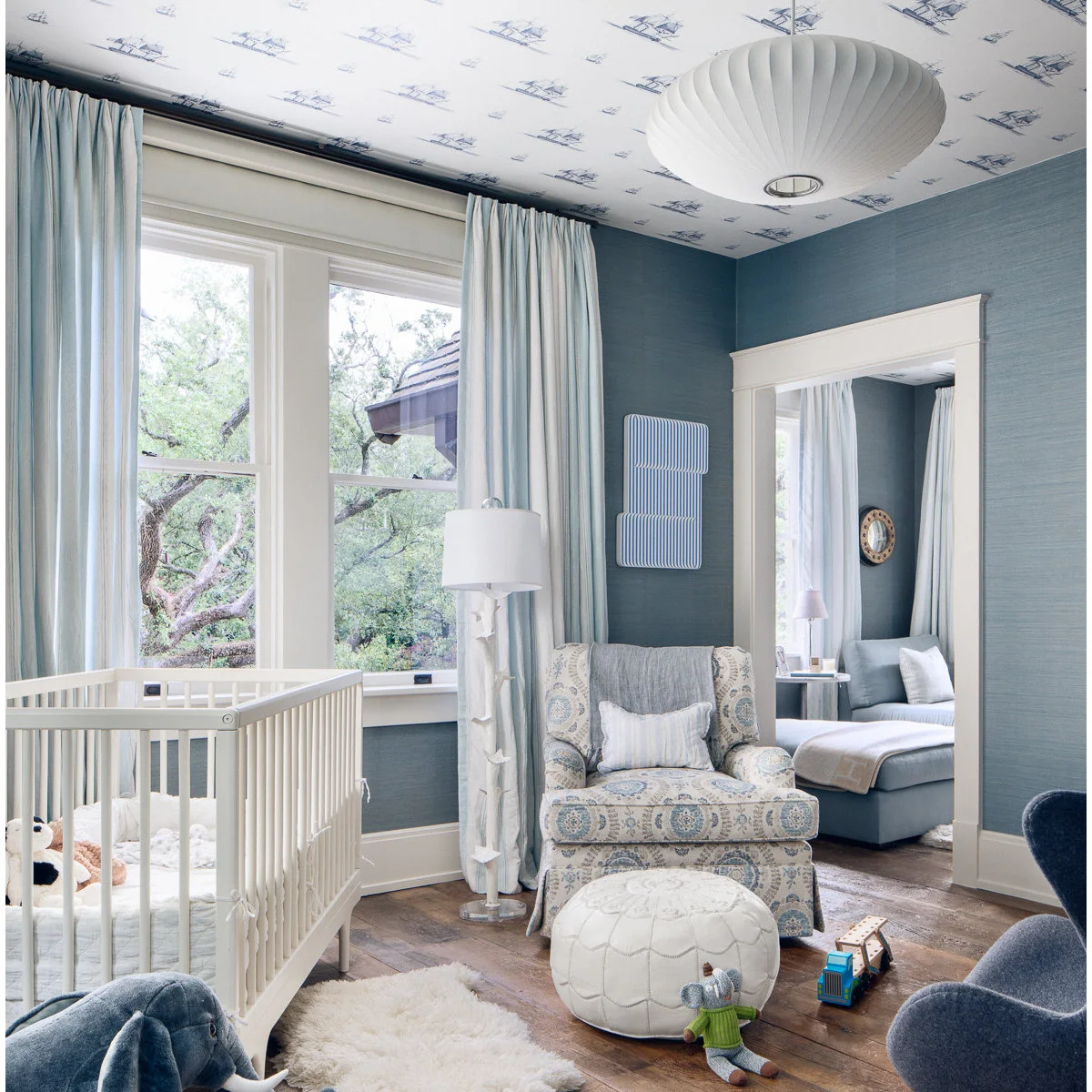
Small ship motifs repeat across the ceiling while the blue walls stay relatively plain. The upholstered adult chair and round pouf provide a separate sitting area. The ceiling carries much of the theme, leaving the larger furniture shapes comparatively restrained.
A repeated motif can be easier to live with than covering every surface in matching pictures. Test a sample in the room’s actual light before committing. Keep curtains, lamp cords and loose toys away from the crib, remove the liner and bedding accessories, and leave the mattress with a fitted sheet only.
IDEA 18 / 20
Use One Animal Mural across a Shared Nursery
 SaveSupport Non AI Creator
Image credit: Project: Anjali Pollack Design (via Houzz)
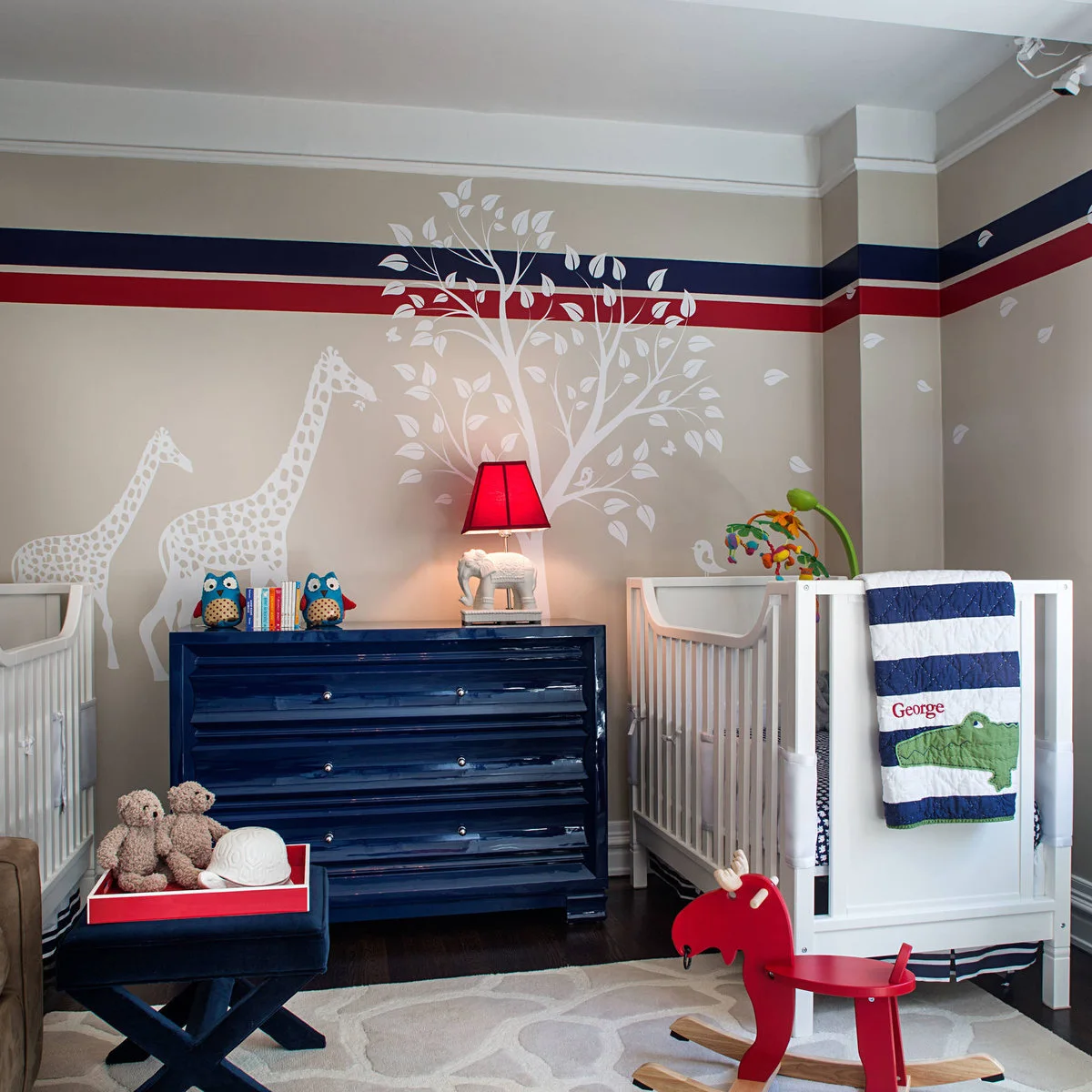
A white giraffe-and-tree mural stretches behind two white cribs and a navy dresser. Red accents connect the lamp, rocking toy and high wall bands. The mural gives the shared room one continuous backdrop rather than competing themes at each side.
Plan access to each crib independently and keep the dresser secured between the sleeping areas. Use the mural as the decorative element instead of adding loose objects above each mattress. Remove rail blankets and accessories before sleep and place electrical lamps and mobiles beyond the children’s reach.
IDEA 19 / 20
Let Animal Prints Carry a Gentle Theme
 SaveSupport Non AI Creator
Image credit: Project: Chango (via Houzz)
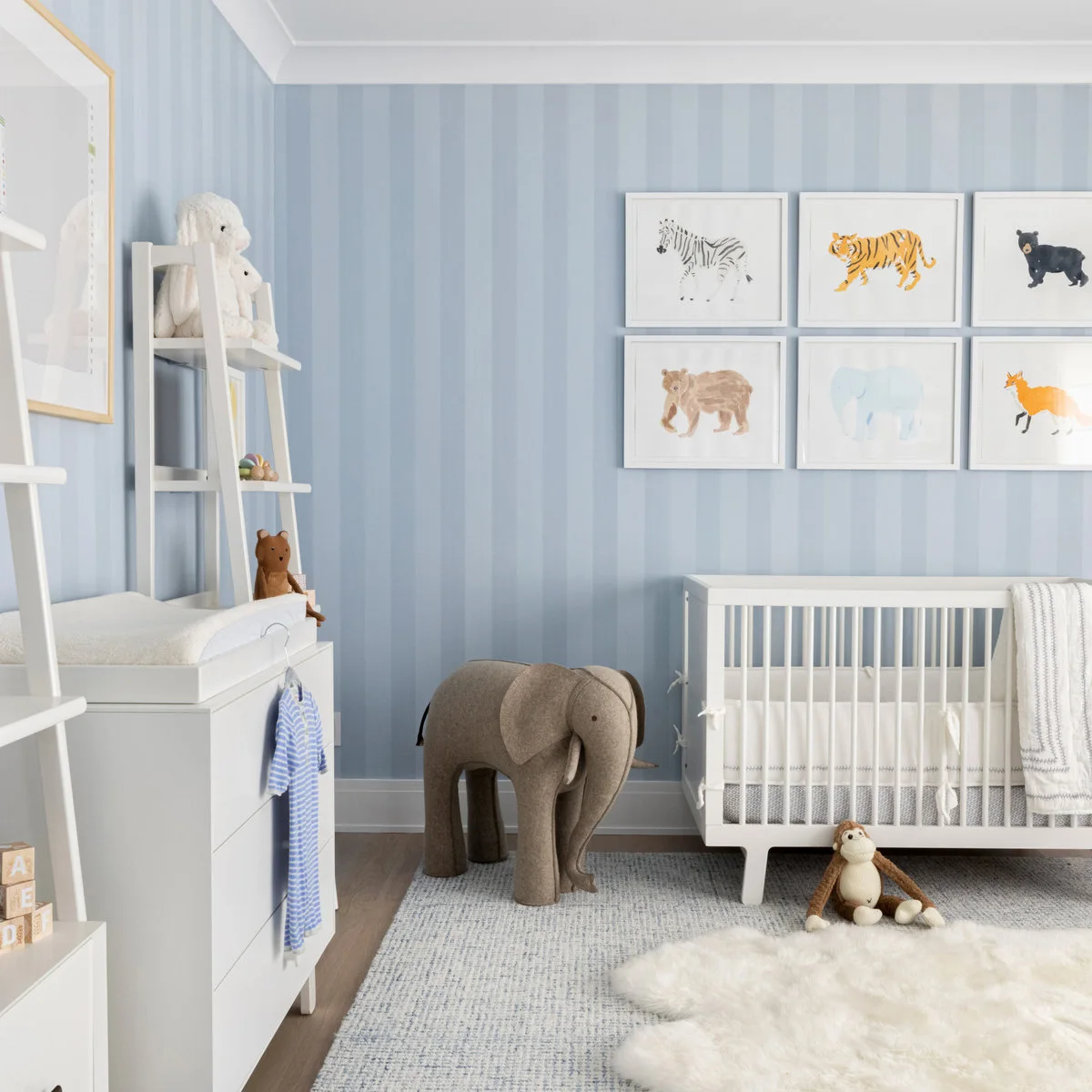
Six animal prints give the pale blue striped wall a gentle focal point. White furniture keeps the arrangement light, while a large fabric elephant adds another animal shape at floor level. The repeated frame style makes the collection feel ordered despite the different illustrations.
Place framed art securely on a wall away from the crib and keep the large toy for supervised use outside the sleep space. Remove the tied bumper and draped blanket shown in this photograph. Choose fewer prints if that leaves a clearer, easier-to-maintain wall around everyday furniture.
IDEA 20 / 20
Choose a Deep Wall Color without Matching Everything
 SaveSupport Non AI Creator
Image credit: Project: Twigg + Lu Design Company (via Houzz)
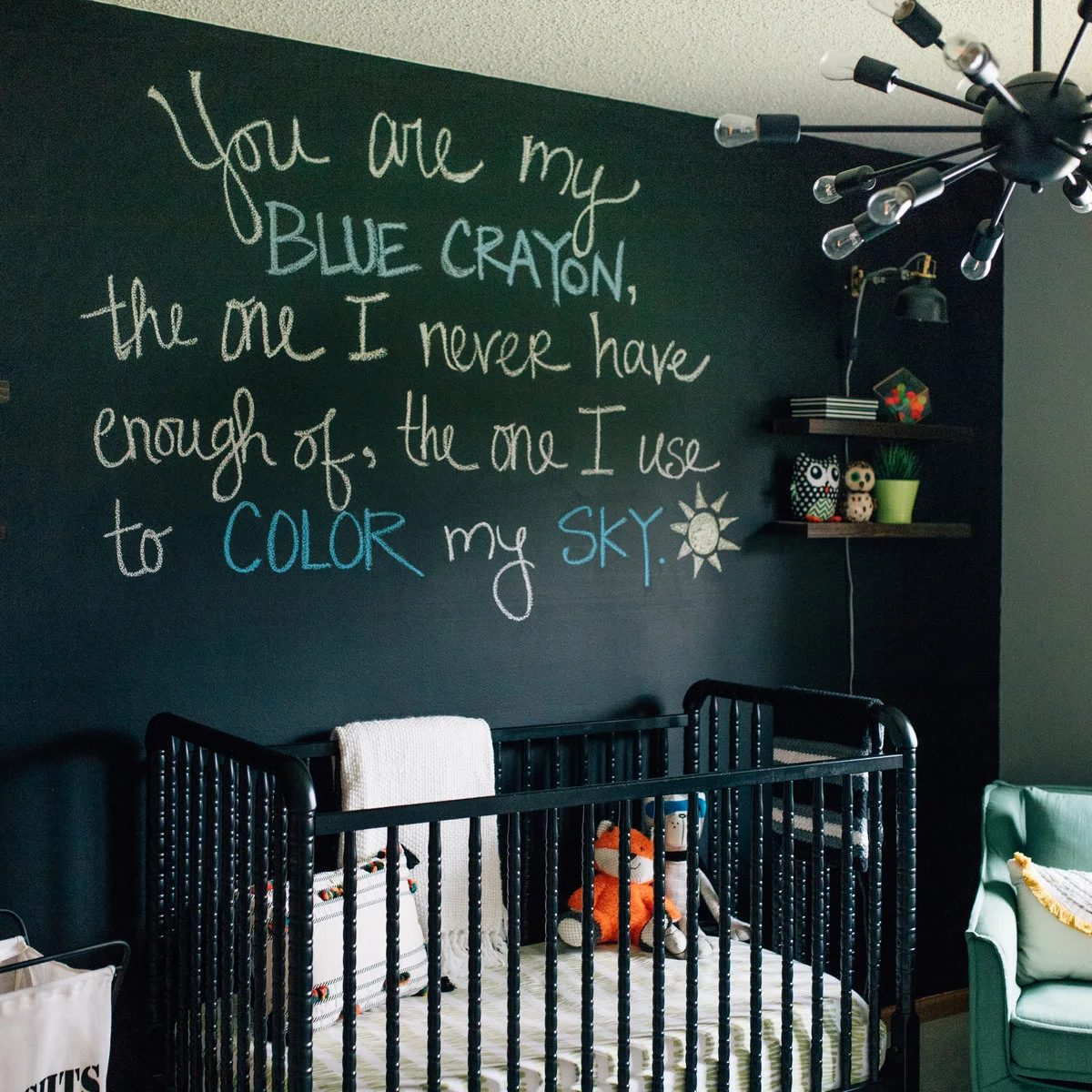
A deep green wall and black crib create a darker nursery palette, balanced by a mint-colored chair at the side. Pale writing and small shelf objects stand out against the wall. The room shows how a strong color can provide character without a matching furniture set.
Use the color combination while keeping dust-producing chalk activities away from the baby’s sleeping area. Secure shelves and light cords outside reach, and remove the pictured toys, cushions and blanket from the crib. Small baby nursery ideas provide more ways to preserve usable floor space around essential furniture.
BRING IT ALL TOGETHER
Keep the Decoration outside the Sleep Space
Choose a palette or motif you enjoy, then use storage and an adult chair to make the room work every day. Books, wall color and a few securely mounted pictures can give the nursery personality without filling the crib with decorative accessories.
Revisit the arrangement as your child develops new reaching and climbing abilities. Keep the crib clear, secure furniture and cords, and follow current product instructions and recall guidance. A useful nursery is one that stays easy to move through, clean and adapt.