A vintage bedroom works best when its older-looking pieces still serve everyday life. A useful chest, a comfortable chair and a bed that fits the mattress matter more than assembling a complete period set. Start with one piece you enjoy, then connect the surrounding colors without making every surface compete.
These rooms combine documented older pieces with vintage-inspired furniture and finishes. Appearance alone cannot establish age, wood species or value. Look for the arrangement you can use: a smaller bedside chest, a quilt over plain bedding, a framed collection or a restored seat that leaves the walking route comfortable.
PART 01
Start with Useful Furniture
IDEA 01 / 20
Pair a Dark Bed with Pale Bedding
 SaveSupport Non AI Creator
Image credit: Project: Lisa Gabrielson Design (via Houzz)
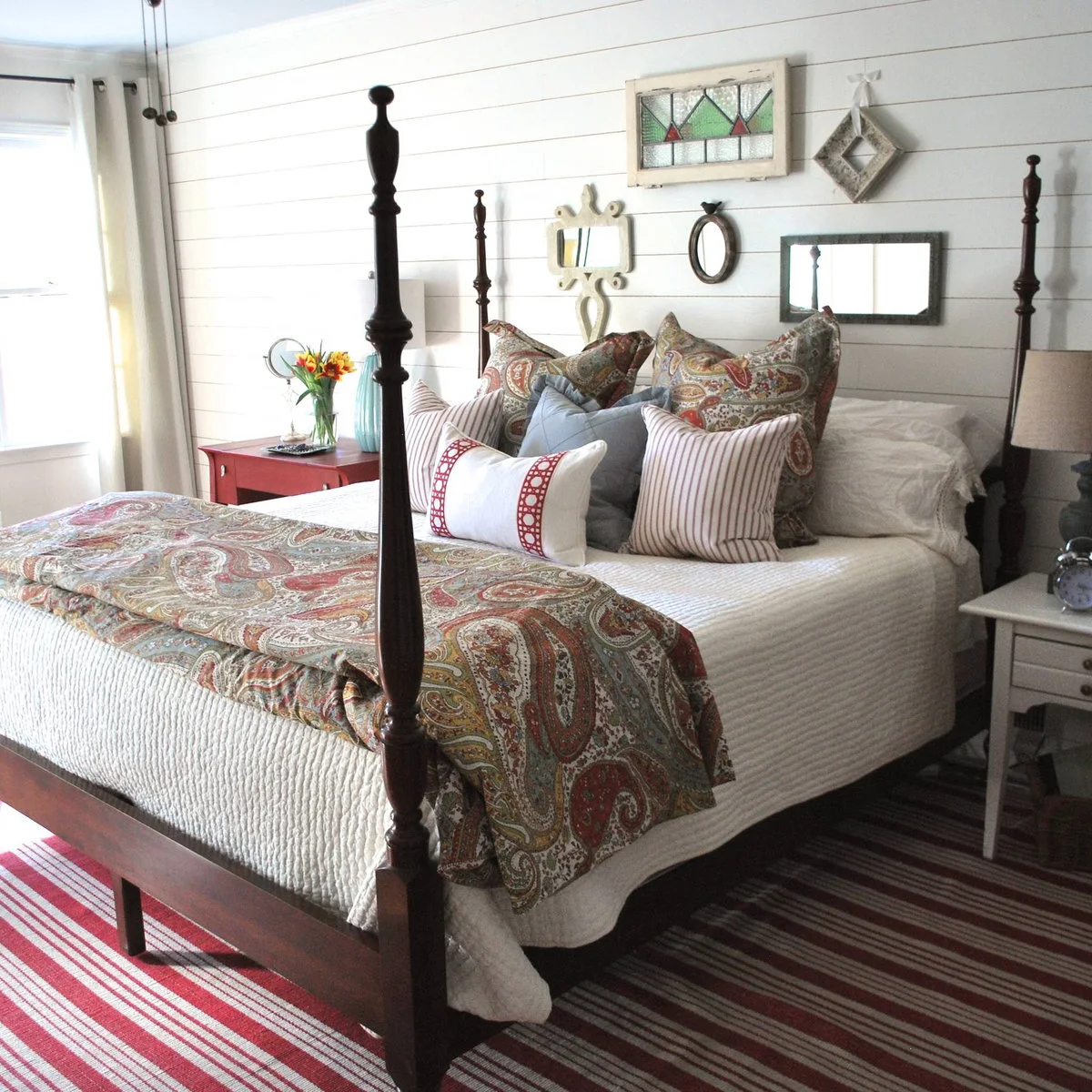
A dark four-poster bed supplies the strongest outline in this room, while white bedding keeps the center lighter. Paisley textiles provide color without covering the whole bed. A loose collection of small mirrors repeats the collected feeling above the headboard without matching the furniture exactly.
Check the post height and delivery route before choosing a substantial bed frame, especially in an older home with tight stairs. Keep the mirrors securely fixed and leave a practical place for reading glasses or water. Limit extra pillows to the number you can store comfortably at night.
IDEA 02 / 20
Give a Painted Dresser a Practical Role
 SaveSupport Non AI Creator
Image credit: Project: Lisa Gabrielson Design (via Houzz)
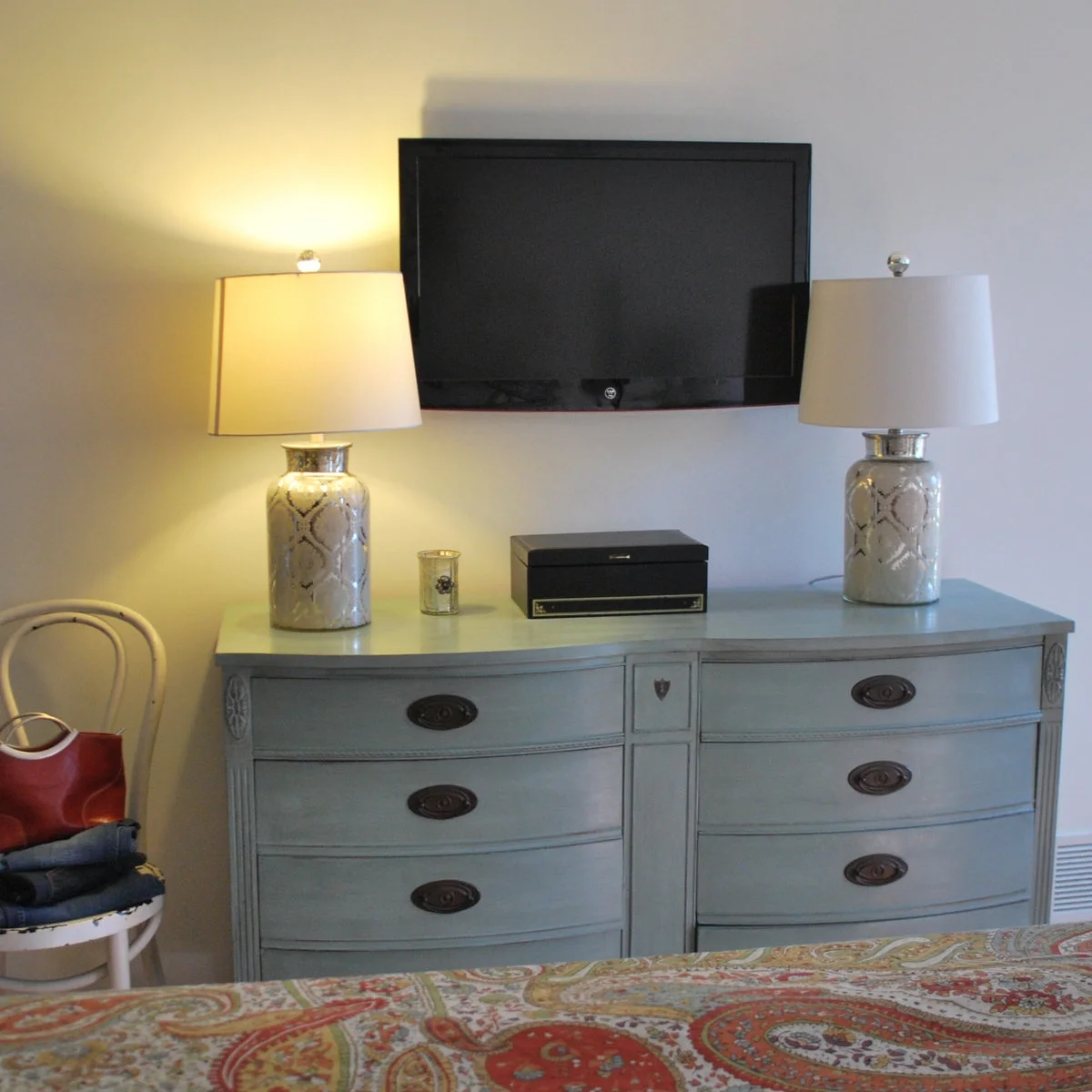
The pale blue dresser gives this room a useful broad storage surface, with curved drawer fronts and dark oval pulls adding older-style detail. Two matching lamps create balance around the screen above. The bedding’s pattern remains a separate layer rather than being repeated on the furniture.
Inspect drawer runners, joints and stability before choosing a secondhand dresser. Secure furniture and any screen appropriately, and check that the drawer interiors suit what you need to store. Keep some top surface clear for everyday belongings so the dresser does more than hold a decorative arrangement.
IDEA 03 / 20
Use a Small Secretary beside the Bed
 SaveSupport Non AI Creator
Image credit: Project: Interior Anthology (via Houzz)
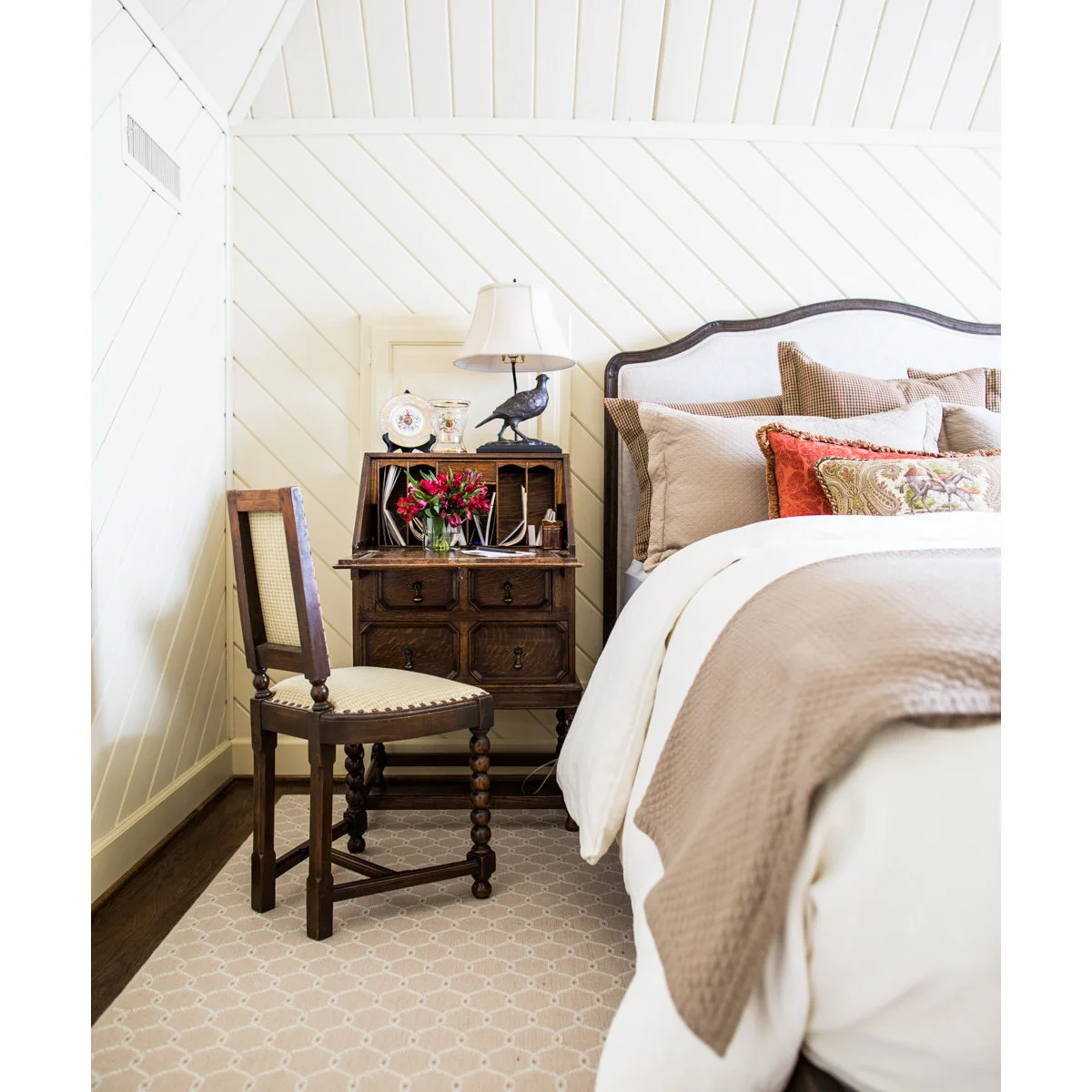
A compact secretary provides drawers and a small writing surface beside this bed, with a cane-backed chair tucked close by. Pale diagonal paneling lets the darker furniture shapes stand out. The curved bed outline connects with the older-style pieces without requiring all their finishes to match.
Measure the furniture with its writing surface open and the chair pulled back. A small secretary can suit notes or correspondence but may be too shallow for long laptop sessions. Preserve a separate bedside landing spot if the open desk would otherwise be the only place for a lamp or water.
IDEA 04 / 20
Use a Console as a Spacious Bedside Table
 SaveSupport Non AI Creator
Image credit: Project: Lisa Erdmann & Associates (via Houzz)
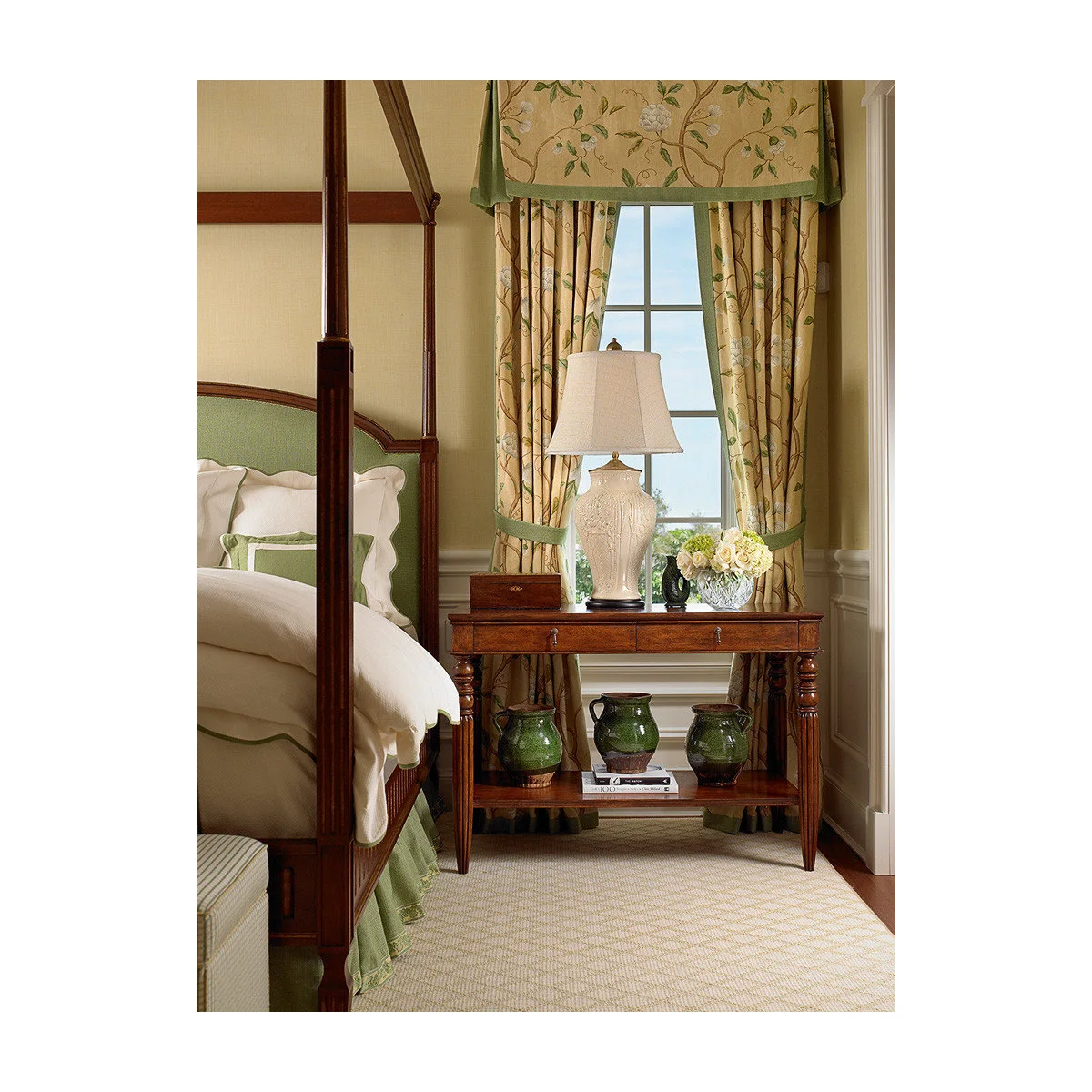
A wood-colored console gives the bedside area a wide surface and a lower display shelf. Green accents connect the patterned curtains, bedding and small vessels underneath. Its slimmer-looking legs leave more floor visible than a solid chest, despite the generous top.
Check that the console height works from the mattress and that its width does not crowd the route around the bed. Keep fragile lower-shelf objects away from feet and vacuuming paths. A shallow drawer can hold small essentials, but assess whether more concealed storage is needed elsewhere before replacing a bedside chest.
IDEA 05 / 20
Add Industrial Character at the Bedside
 SaveSupport Non AI Creator
Image credit: Project: The New Design Project (via Houzz)
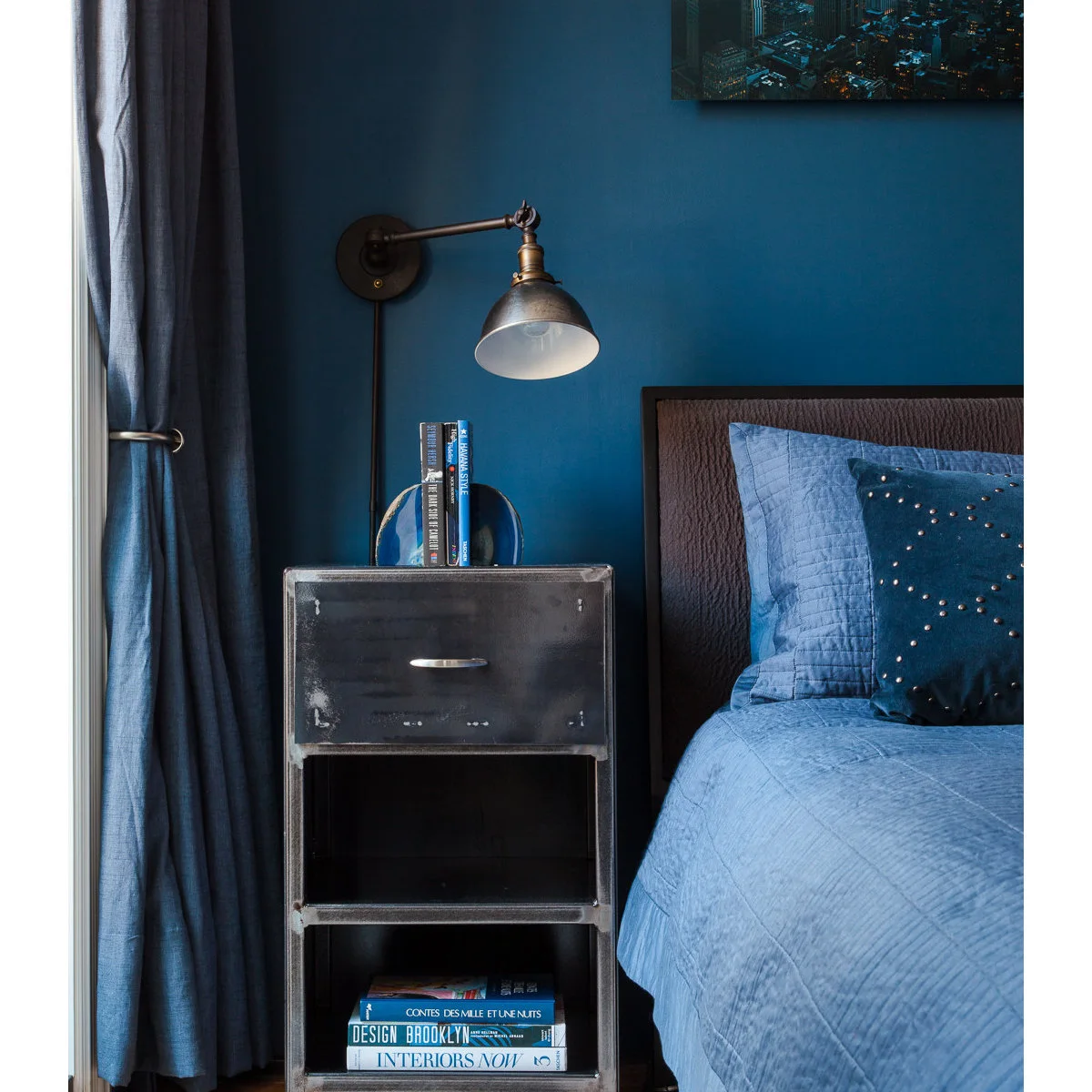
The worn metal-looking cabinet brings a rougher finish to this blue bedside corner. Open shelves keep books visible below its drawer, while a wall light leaves the top less crowded. The plain dark headboard gives the cabinet’s marks and edges room to be noticed.
Check edges, stability and drawer operation before using an older storage piece beside the bed. Have unfamiliar coatings assessed before disturbing them, and avoid refinishing an item simply to imitate wear. Position the reading light around your actual seated height, with cords kept tidy and switches easy to reach.
PART 02
Layer Pattern and Color
IDEA 06 / 20
Connect Colorful Bedding with a Few Older Finds
 SaveSupport Non AI Creator
Image credit: Project: Corynne Pless (via Houzz)
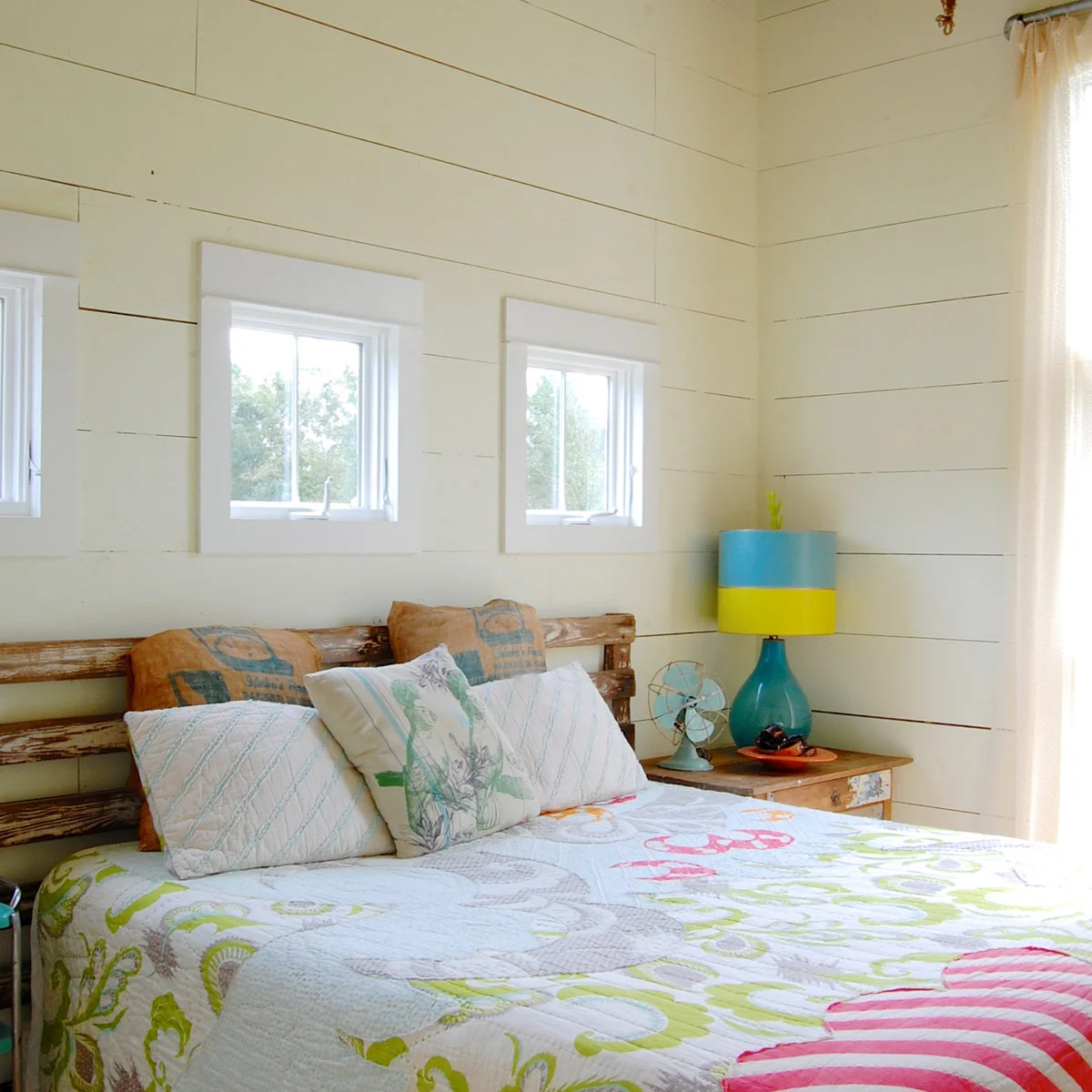
A worn wood-colored headboard and small bedside chest give this room a collected foundation. The quilt adds several bright colors, while the turquoise lamp picks up one of them more strongly. White plank walls keep the individual pieces visible rather than surrounding them with another pattern.
Choose one or two colors from a quilt to guide smaller accessories, leaving the rest of the room easier to change. Check the condition of any reused headboard before placing pillows against it. Use older electrical objects as decoration until a qualified person has confirmed they are suitable for operation.
IDEA 07 / 20
Combine Floral Walls with Plain Bedding
 SaveSupport Non AI Creator
Image credit: Project: Rachel Ashwell Shabby Chic Couture (via Houzz)
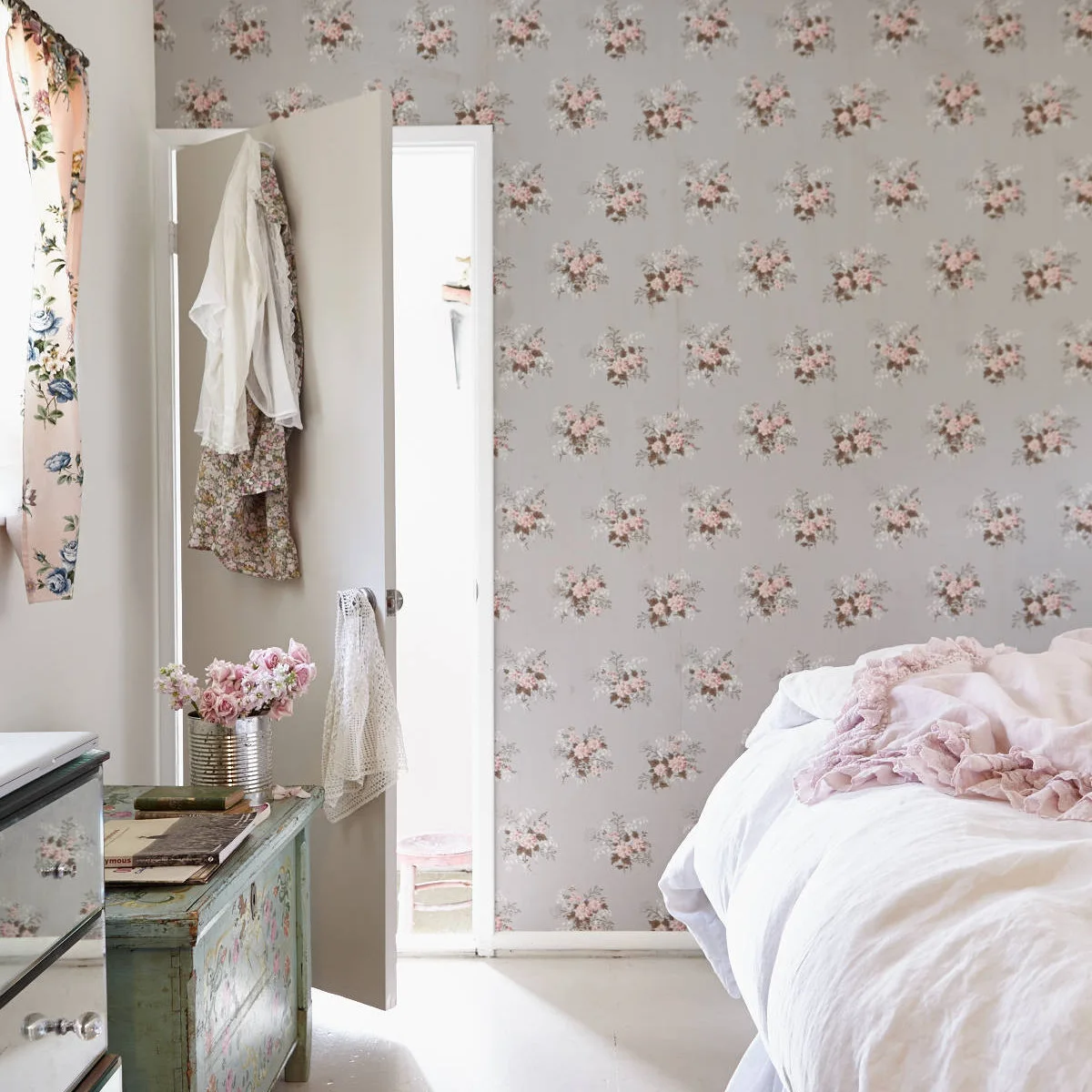
Small floral bouquets repeat across the wallpaper, giving this room a romantic background. Plain pale bedding leaves the wall pattern visible, while the painted chest adds a different scale of detail nearby. Floral curtains connect with the wallpaper without relying on an identical print.
Test multiple pattern samples together before covering a room, considering both repeat size and the amount of daylight. Older wallpaper can be fragile and difficult to replace, so assess condition and quantity before buying. Choose washable bedding for everyday contact and leave the most delicate textiles in lower-wear positions. These English cottage bedrooms show more restrained combinations of floral textiles and older furniture.
IDEA 08 / 20
Let a Quilt Connect the Furniture Colors
 SaveSupport Non AI Creator
Source: houzz.com
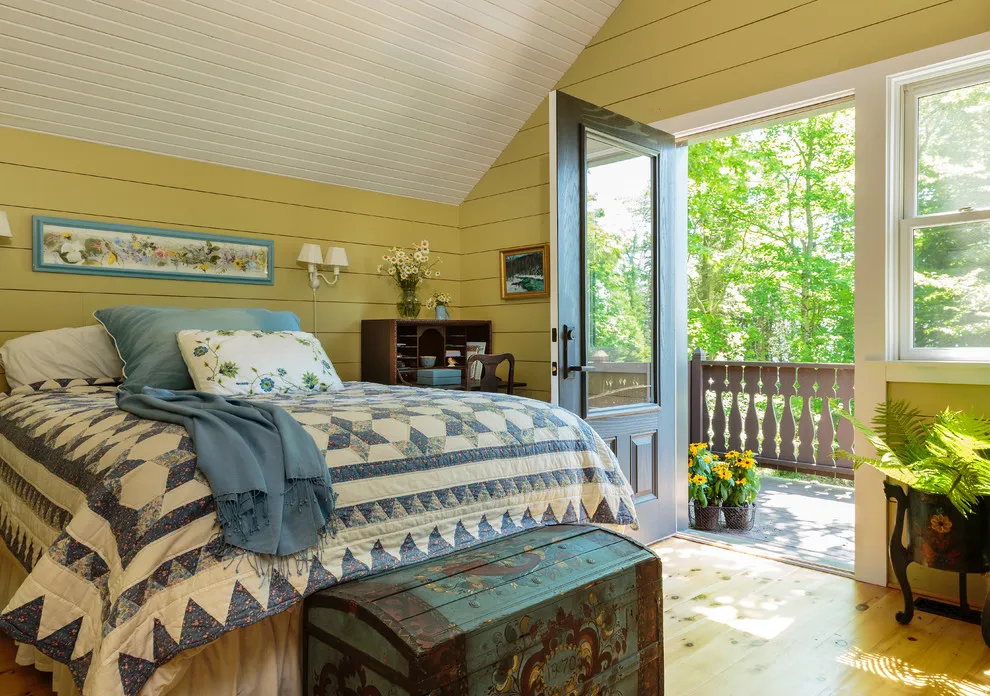
The patterned quilt brings blue, cream and warmer colors together beneath the yellow walls. A painted trunk at the bed foot repeats that collected character, while a small writing corner sits near the far wall. The open balcony door adds another strong blue detail.
Use a quilt as the color starting point if the furniture has several different finishes. Keep an older trunk out of the main route and check its lid mechanism before daily use. Protect fragile textiles from prolonged direct light, rotating or storing them appropriately when the bedroom is especially sunny.
IDEA 09 / 20
Soften a Strong Wall Color with Floral Curtains
 SaveSupport Non AI Creator
Image credit: Project: Peninsula Custom Homes (via Houzz)
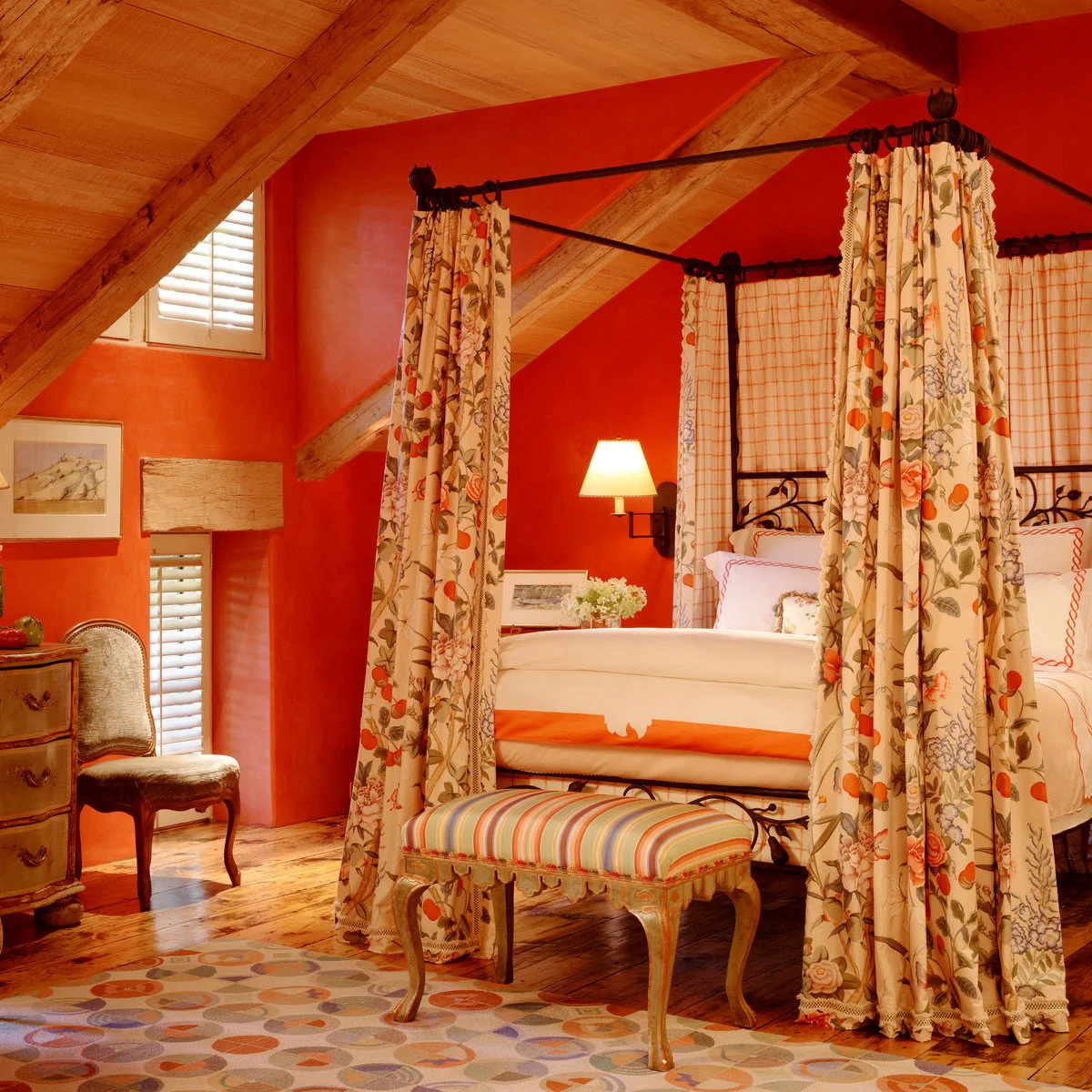
Orange walls and exposed wood-colored beams create a bold background around this canopy bed. Floral curtains soften its dark frame, and a striped bench adds another pattern at floor level. The pale bedding gives the eye a quieter place among the stronger surrounding details.
Check canopy height, light fittings and airflow before adding bed curtains, keeping fabric away from heat sources. Limit other patterned furniture if the bed already carries several textiles. Choose a bench that leaves a comfortable route around the foot, including space to handle the curtains without dragging them underfoot.
IDEA 10 / 20
Use Botanical Details to Repeat a Soft Palette
 SaveSupport Non AI Creator
Source: www.houzz.com
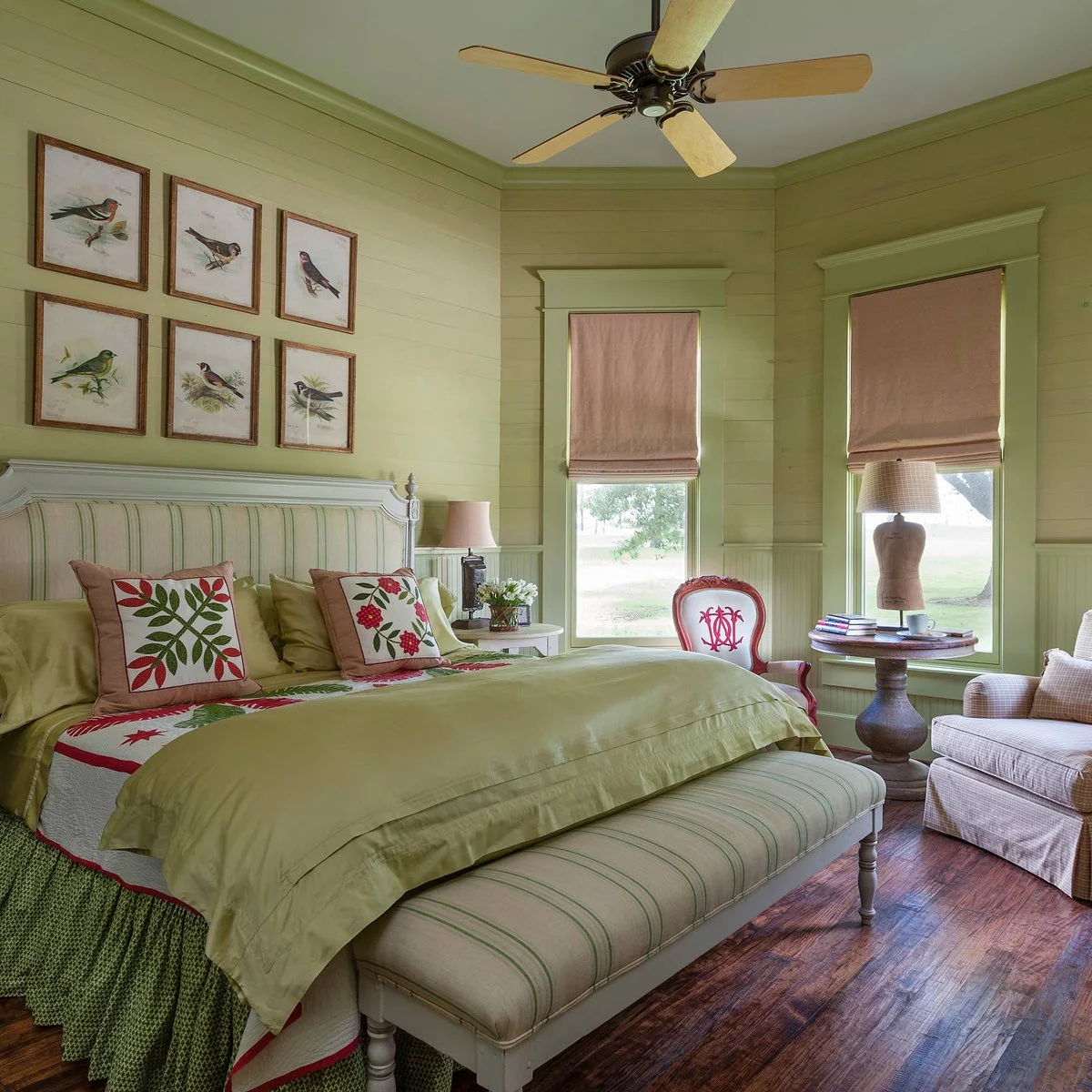
Pale green walls connect the upholstered bed, striped bench and botanical pillows in this room. Framed bird illustrations form a tidy group above the headboard. Pink appears in the window coverings and smaller pieces, giving the softer palette definition without another dominant furniture finish.
Pick the room’s main background color before adding a collection of prints, then use consistent spacing to keep the display calm. Test upholstered pieces for comfort rather than buying solely for their outline. Keep the bench outside drawer and door movement, and choose washable covers where everyday handling is likely.
PART 03
Keep Collected Details Visible
IDEA 11 / 20
Group Older Photographs on One Wall
 SaveSupport Non AI Creator
Image credit: Project: Joshua Smith Inc (via Houzz)
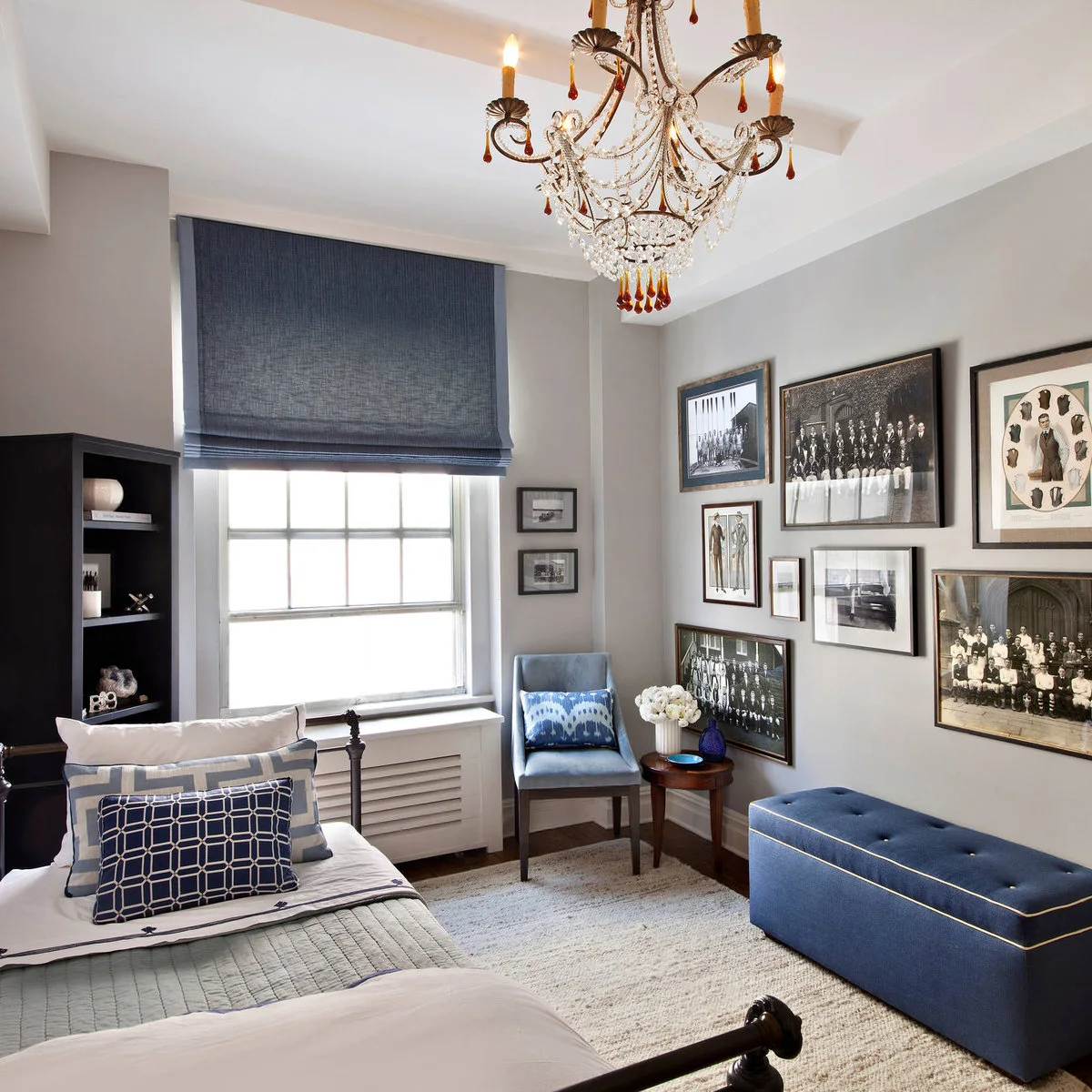
A gallery of old group photographs supplies most of the detail in this room, with varied frames gathered on one wall. Blue seating and textiles connect the separate furniture pieces. The decorative chandelier gives the ceiling a focal point without requiring patterned wallpaper behind the photographs.
Keep the collection grouped rather than distributing a small frame across every wall. Use appropriate archival handling for valuable originals and consider copies in bright positions. These cottage bedroom ideas offer more ways to combine collected details with comfortable bedding, but preserve enough clear wall and floor space for daily use.
IDEA 12 / 20
Use a Colorful Sliding Door as One Accent
 SaveSupport Non AI Creator
Image credit: Project: Corynne Pless (via Houzz)
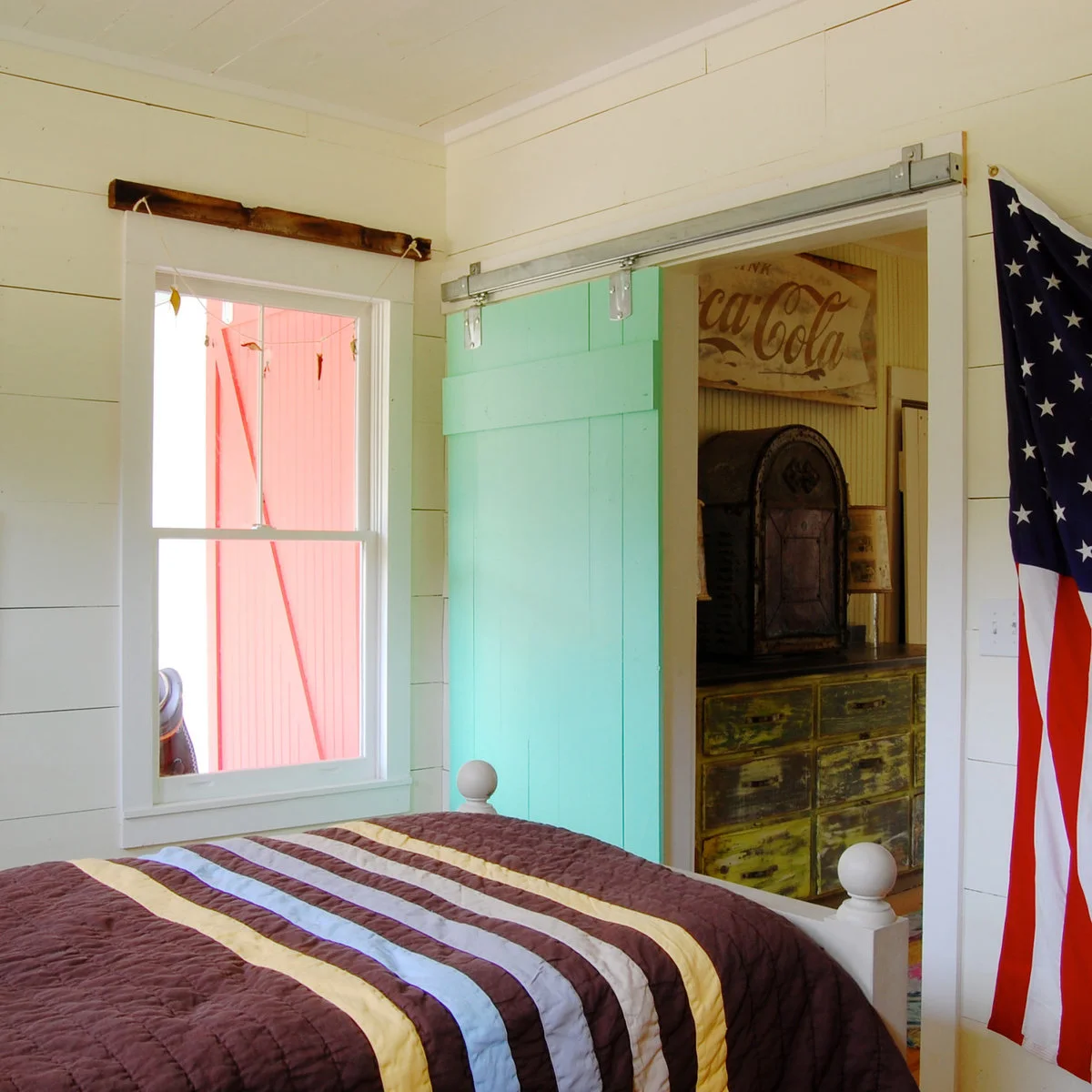
The turquoise sliding door supplies a strong color accent against pale plank walls. Through the opening, a worn green chest and older-looking objects extend the collected character into the next area. Striped bedding gives the bedroom a clear pattern without repeating the door’s finish.
Check hardware, stops and clearance before choosing a sliding door, including whether it provides the privacy you need. Keep the track accessible for maintenance and confirm the opening remains comfortable to use. If the door is already colorful, quieter bedding can let it remain the main feature.
IDEA 13 / 20
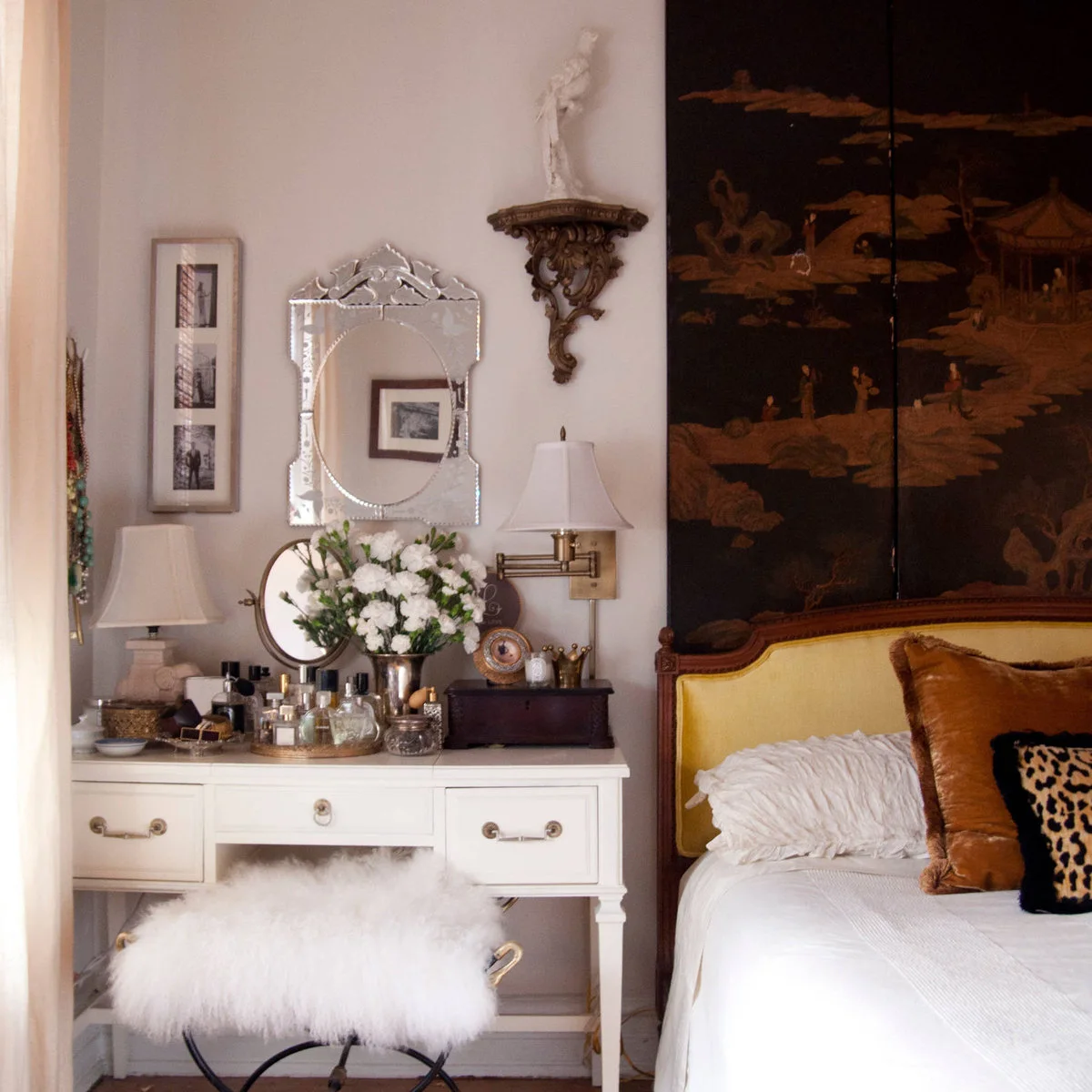
Create a Small Dressing Corner beside the Bed
 SaveSupport Non AI Creator
Image credit: Project: Union Adorn (via Houzz)
A pale dressing table and compact stool sit directly beside this bed, with a decorative mirror and smaller objects grouped above. The yellow bed upholstery gives the corner warmth against the dark scenic panel. Several reflective surfaces make the arrangement feel layered rather than perfectly matched.
Choose which objects actually need to stay on the dressing surface and contain the smaller ones in a tray or drawer. Keep a usable working area in front of the mirror. Secure wall pieces appropriately and ensure the stool can be pulled out without blocking the route beside the bed.
IDEA 14 / 20
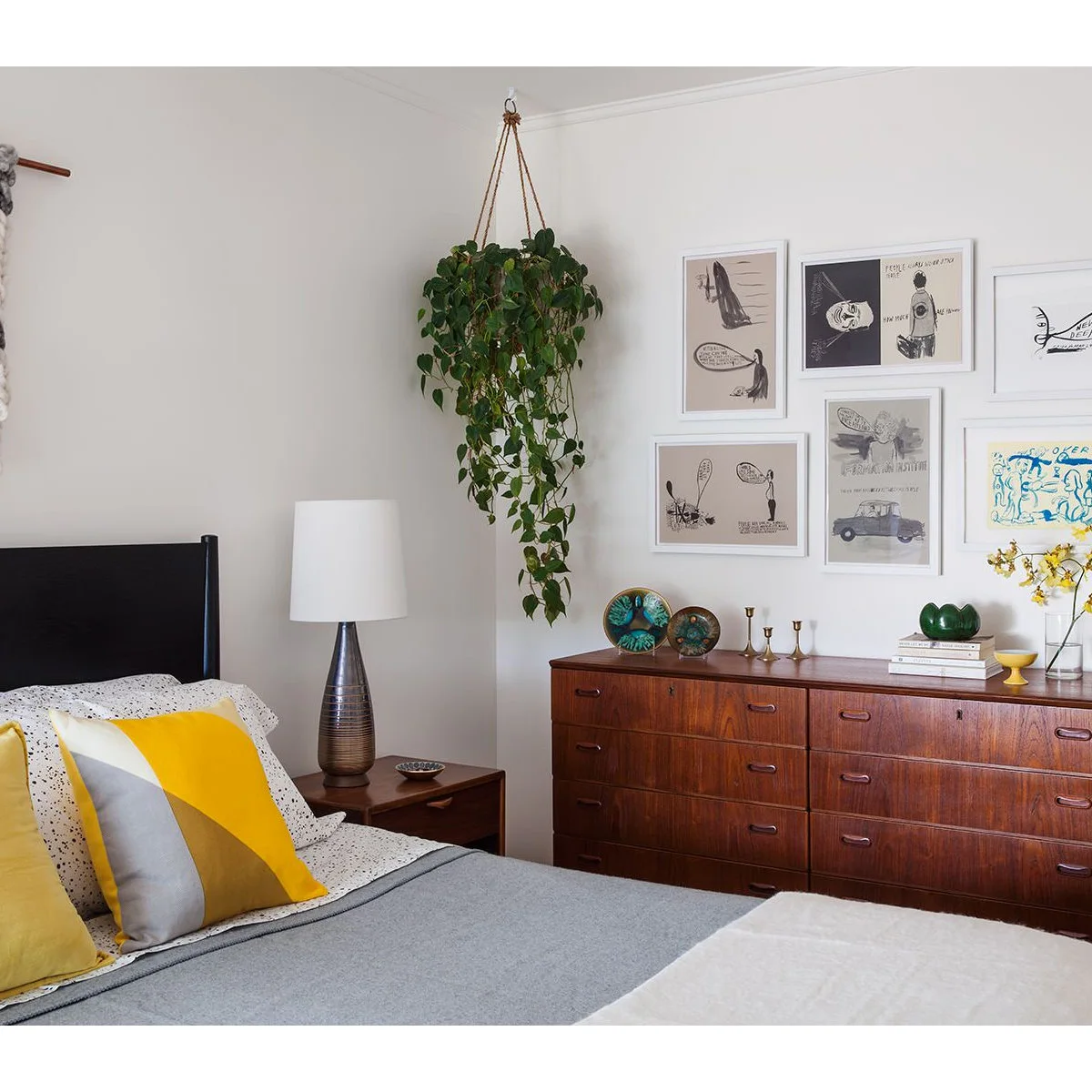
Show Wood-Colored Storage against a Plain Wall
 SaveSupport Non AI Creator
Source: www.houzz.com
A long wood-colored dresser gives this bedroom a strong horizontal feature beneath the framed illustrations. Plain pale walls and simple bedding let the drawer pattern remain visible. A bright yellow pillow provides a small modern accent without competing with the storage or its display.
Inspect drawers and handles carefully when buying older furniture, checking for usable internal depth as well as outward appearance. Anchor the dresser as appropriate and keep plants contained to protect the surface. Match the piece to the room’s storage needs rather than adding another large chest simply for the style.
IDEA 15 / 20
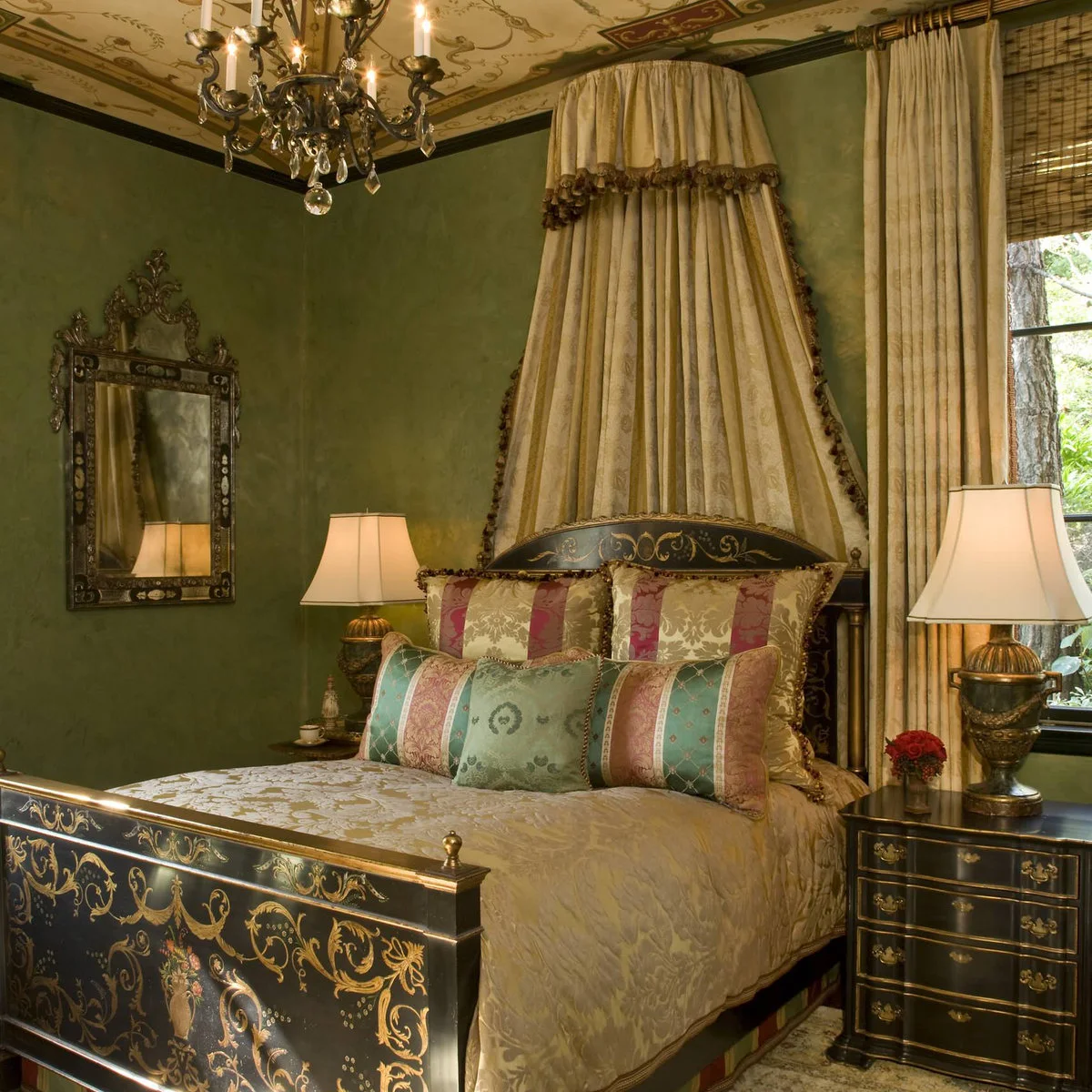
Keep an Ornate Bed as the Main Feature
 SaveSupport Non AI Creator
Image credit: Project: Kathryne Designs, Inc (via Houzz)
Black and gold decoration covers the bed frame in this richly layered room. Green walls, long curtains and a draped headboard support the formal character, while the patterned ceiling adds detail above. The bed remains the strongest furniture feature despite the many surrounding decorative surfaces.
Borrow one part of this arrangement if your room is smaller: the bed outline, a darker finish or a single textile. Confirm that substantial furniture and hanging fittings are suitable for the room. Keep reading lights useful and avoid adding elaborate trim that makes everyday cleaning and bed-making unnecessarily difficult.
PART 04
Balance Older Shapes with Daily Comfort
IDEA 16 / 20
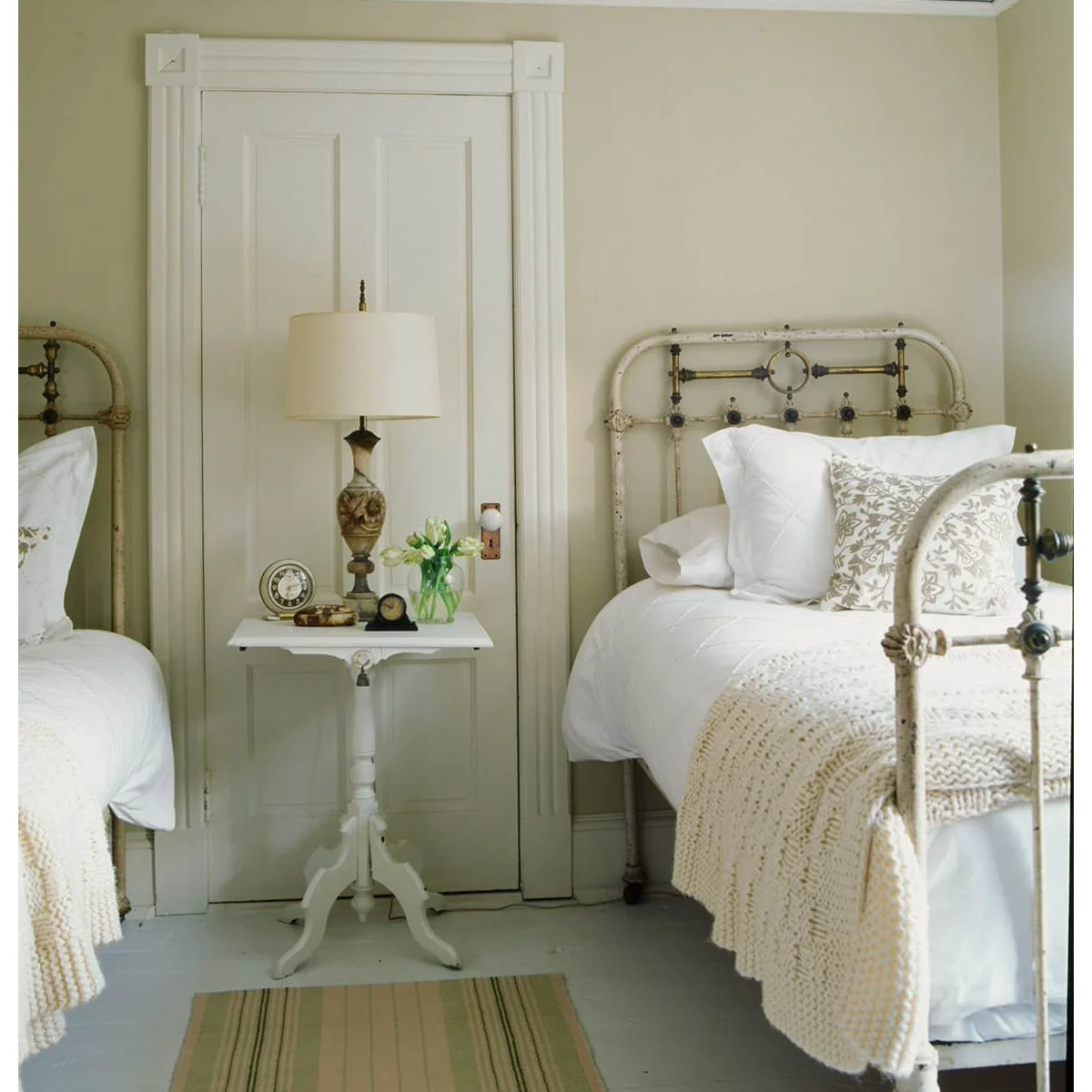
Keep Older Metal Bed Frames Light with Pale Linen
 SaveSupport Non AI Creator
Image credit: Project: SchappacherWhite Architecture D.P.C. (via Houzz)
Two pale metal bed frames give this room delicate outlines, with white bedding keeping their curves easy to see. A small pedestal table serves the gap between them. Cream walls and a narrow striped rug connect the different finishes without introducing another dominant color.
Check the bed frames, supports and mattress fit carefully before using older beds. Make sure a shared table leaves each sleeper a practical landing place. Keep fragile objects limited, and assess any worn painted finish before cleaning or disturbing it rather than assuming the aged appearance is harmless.
IDEA 17 / 20
Refresh Antique Beds with Blue and White Textiles
 SaveSupport Non AI Creator
Image credit: Project: L K DeFrances & Associates (via Houzz)
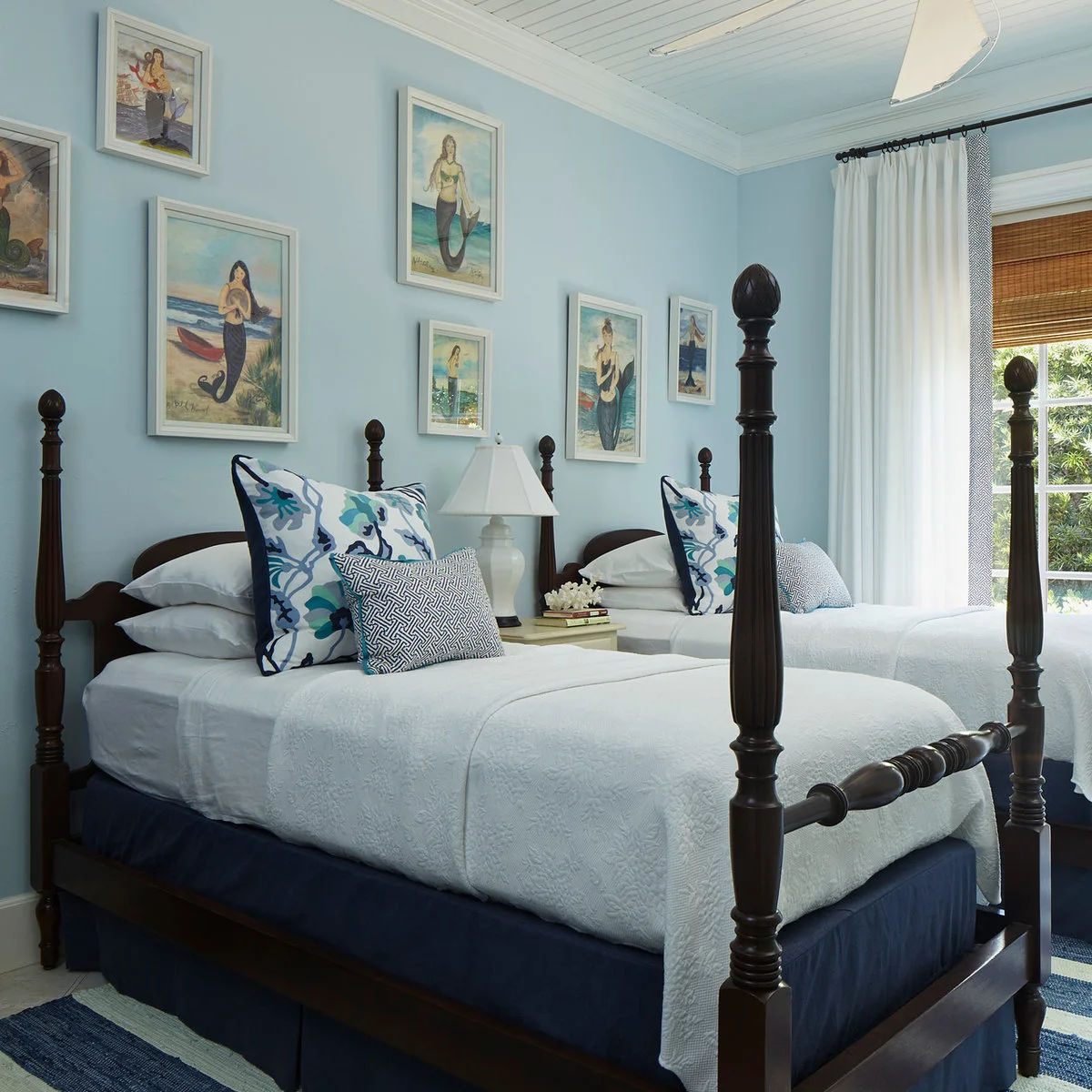
Dark turned posts give these antique beds a strong presence against pale blue walls. White covers and blue-patterned pillows lighten the sleeping surfaces, while the framed illustrations introduce a relaxed coastal note. The room shows how older furniture can work with fresher textiles rather than a complete period recreation.
Confirm mattress dimensions before buying bedding for older beds, since the frame’s size may differ from current standard products. Keep the gap between beds comfortable and choose a shared lamp that both sleepers can reach. Repeating a limited color group helps unmatched textiles feel intentional without hiding the furniture.
IDEA 18 / 20
Pair a Family Bed with a Small Writing Table
 SaveSupport Non AI Creator
Image credit: Project: L K DeFrances & Associates (via Houzz)
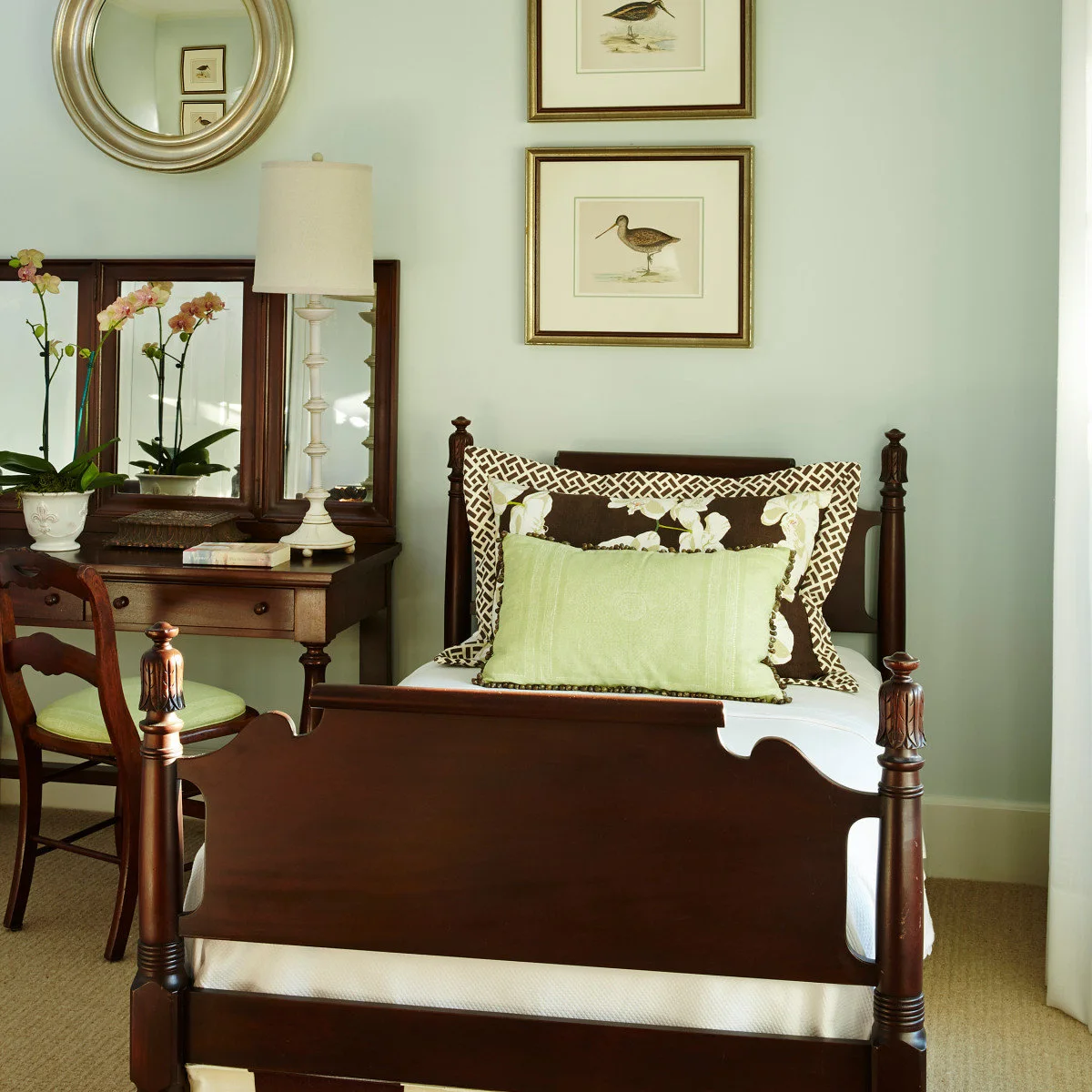
The dark bed and nearby writing table give this corner a coordinated older furniture character. Green pillows and a matching chair seat soften the heavier outlines. Framed bird prints and a round mirror add interest above while leaving the bedding relatively simple.
Keep family furniture useful by checking joints, supports and the condition of the finish before everyday use. A small writing table can also hold a bedside lamp, but leave enough surface for both tasks. Measure the chair pullback carefully so it does not crowd the route around the bed.
IDEA 19 / 20
Use a Small Settee instead of More Case Furniture
 SaveSupport Non AI Creator
Image credit: Project: Shelley Morris Interiors (via Houzz)
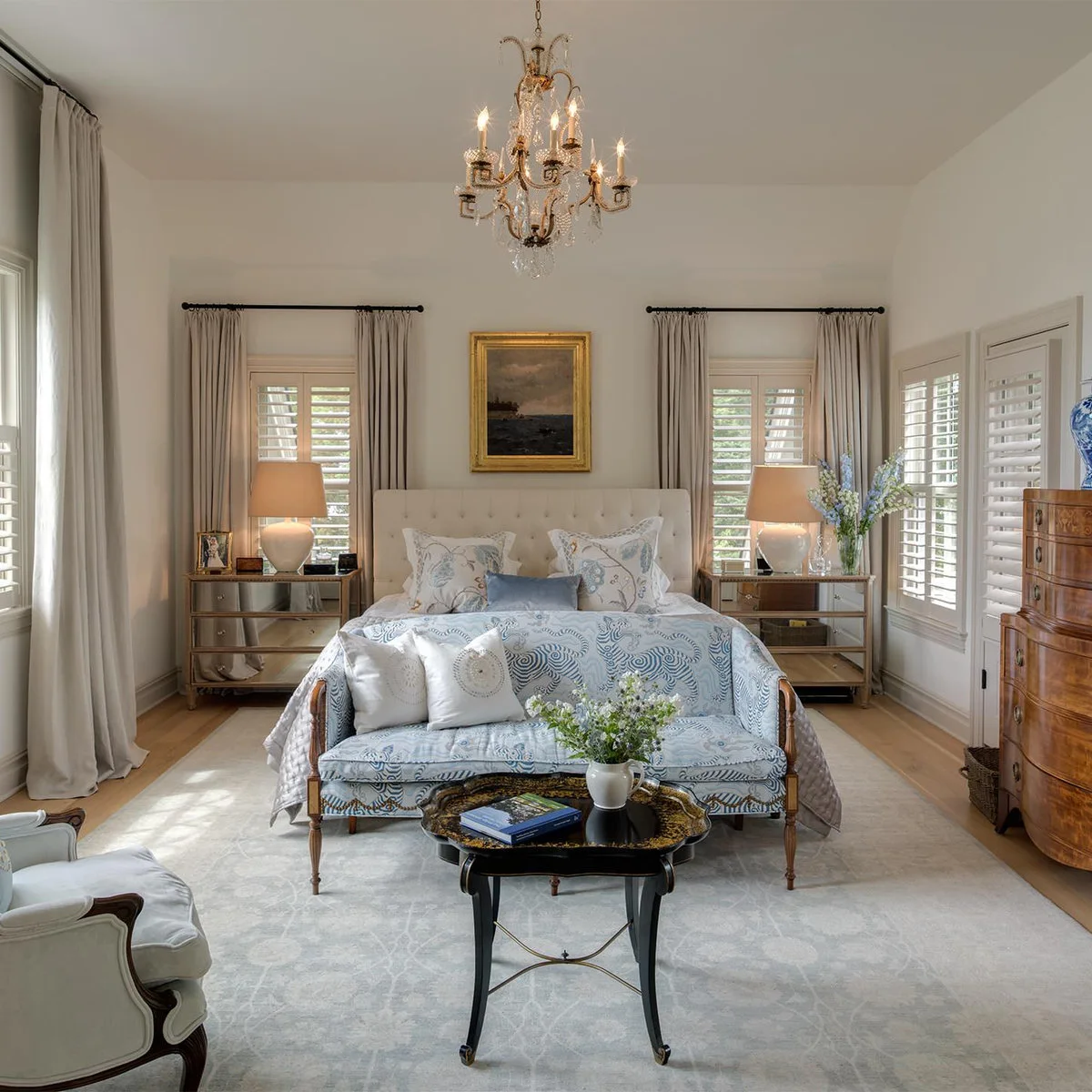
A patterned settee creates a separate place to sit at the foot of this bed, with the blue textile connecting to the bedding. A curved wood-colored chest and chandelier bring older-style shapes into the otherwise pale room. The large rug links the seating and sleeping areas.
Include a settee only when it will be used and the route around it stays comfortable. Check seat padding and upholstery condition if choosing a secondhand piece. One useful seat can make dressing easier, but it should not remove the drawer access or walking space the bedroom needs every day.
IDEA 20 / 20
Balance a Traditional Seat with Simpler Bedding
 SaveSupport Non AI Creator
Image credit: Project: Toronto Interior Design Group (via Houzz)
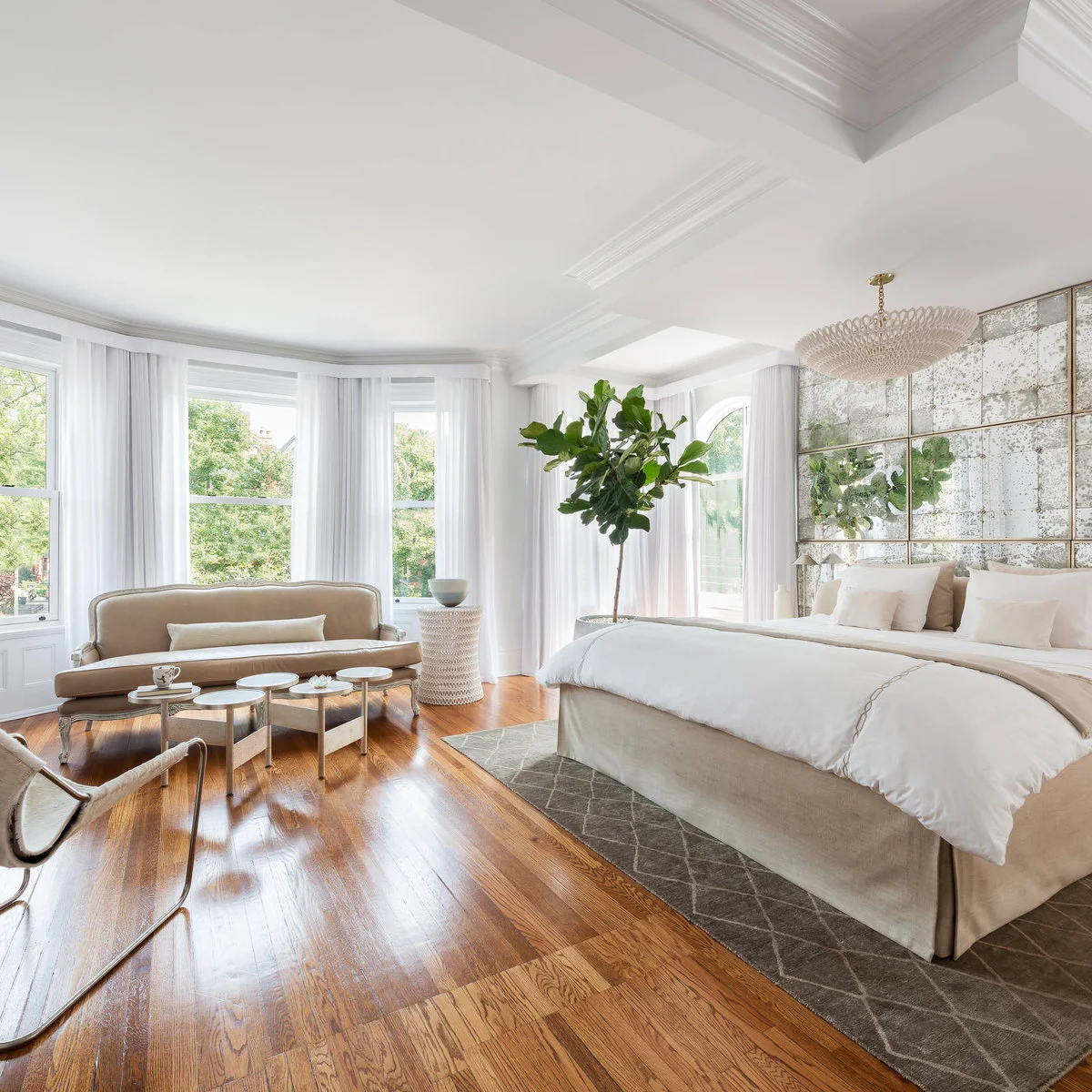
A curved beige settee adds a traditional outline beside the windows, while the bed uses simpler pale layers. The mottled mirror wall creates a second kind of aged-looking detail behind it. Light curtains keep the room’s larger surfaces calm despite the decorative furniture and reflective background.
Treat an aged-looking mirror finish as a visual choice unless its history is documented. Check the reflections from the bed before committing to a large mirrored surface. Keep the sitting area proportionate to the room, using a single chair if a settee would make the route to the windows awkward.
BRING IT ALL TOGETHER
Collect Slowly and Keep the Room Useful
Start with a bed, storage and lighting that work comfortably, then add older pieces around those needs. A chest with functioning drawers is more useful than a fragile object bought only for its appearance. Ask about history and condition where authenticity matters, keeping confirmed provenance separate from a vintage-inspired look.
Connect the pieces through a limited palette or repeated textile colors, leaving space between collections. Avoid buying everything at once simply to create a complete set. The room should remain easy to clean, dress and sleep in as more personal objects find their place.