A safari-inspired nursery can begin with one lion picture, an elephant on the bookshelf or a giraffe-shaped accent. You do not need every wall and fabric to carry the theme. Start with useful furniture, then decide where a few animal details will be most enjoyable to see every day.
These real-room and detail photographs show several ways to use the theme, including broader animal references such as bears and sheep. Several details come from the same rooms so you can compare how their parts work together. Keep decorations separate from the baby’s sleep space: use an appropriate crib with a fitted sheet and no loose bedding or toys.
PART 01
Build the theme around everyday furniture
IDEA 01 / 15
Start with One Large Lion Picture
 SaveSupport Non AI Creator
Image credit: Photo: Alexis Alana Photography. From: Stephanie DeBrincat
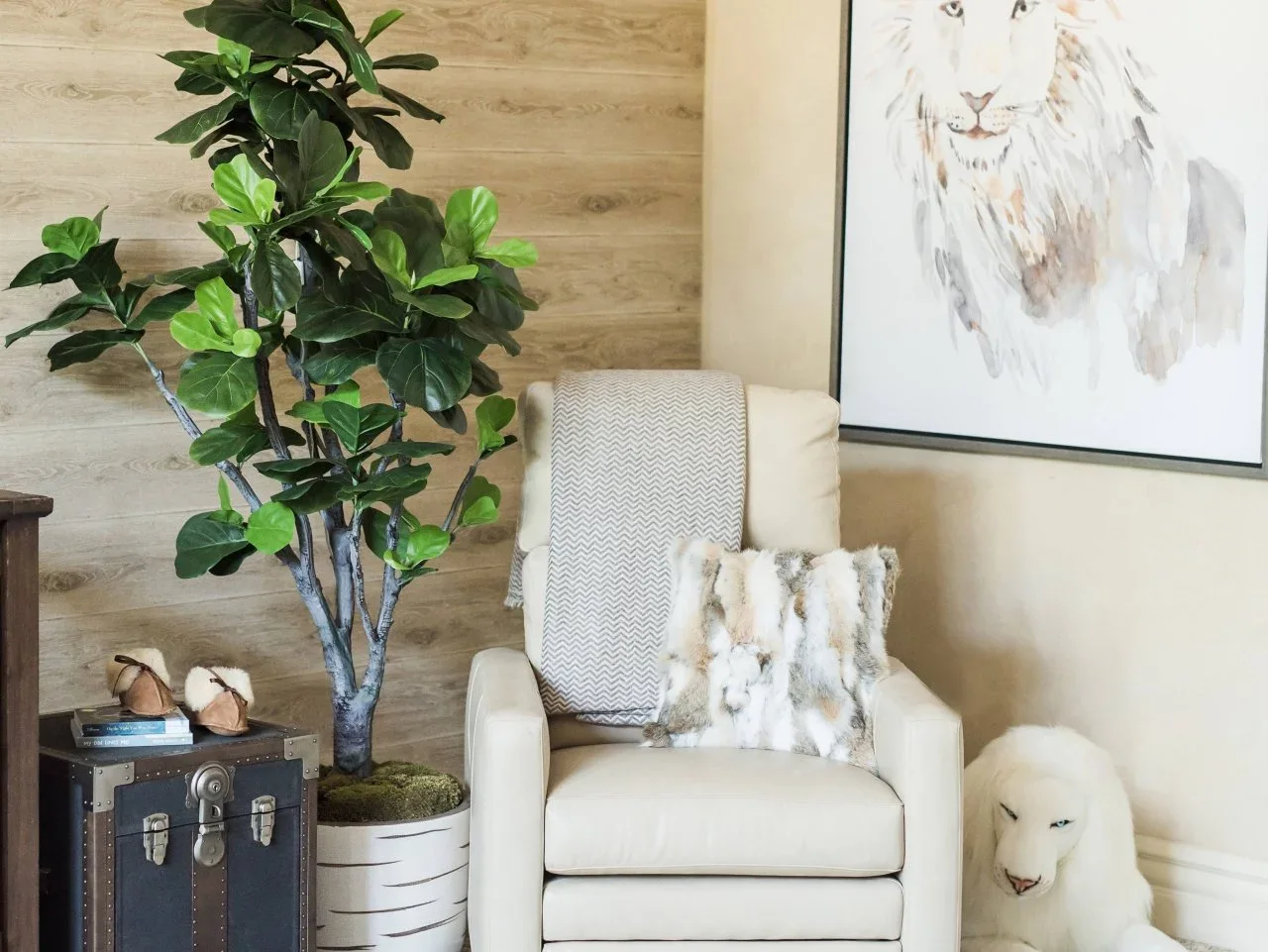
The large lion drawing gives this seating corner a clear animal theme without covering the whole wall in pattern. Cream upholstery and a pale timber-look background keep the colors close together. A leafy plant and a white plush lion bring different shapes into the same small group.
Choose the chair for adult comfort first, then size the artwork around it. Fix heavy frames securely away from the baby’s reach and keep plants inaccessible. Test the chair’s movement before placing nearby furniture, and keep the route back to the crib clear when arranging larger decorative animals.
IDEA 02 / 15
Balance Animal Accents with Useful Closed Storage
 SaveSupport Non AI Creator
Image credit: Photo: Alexis Alana Photography. From: Stephanie DeBrincat
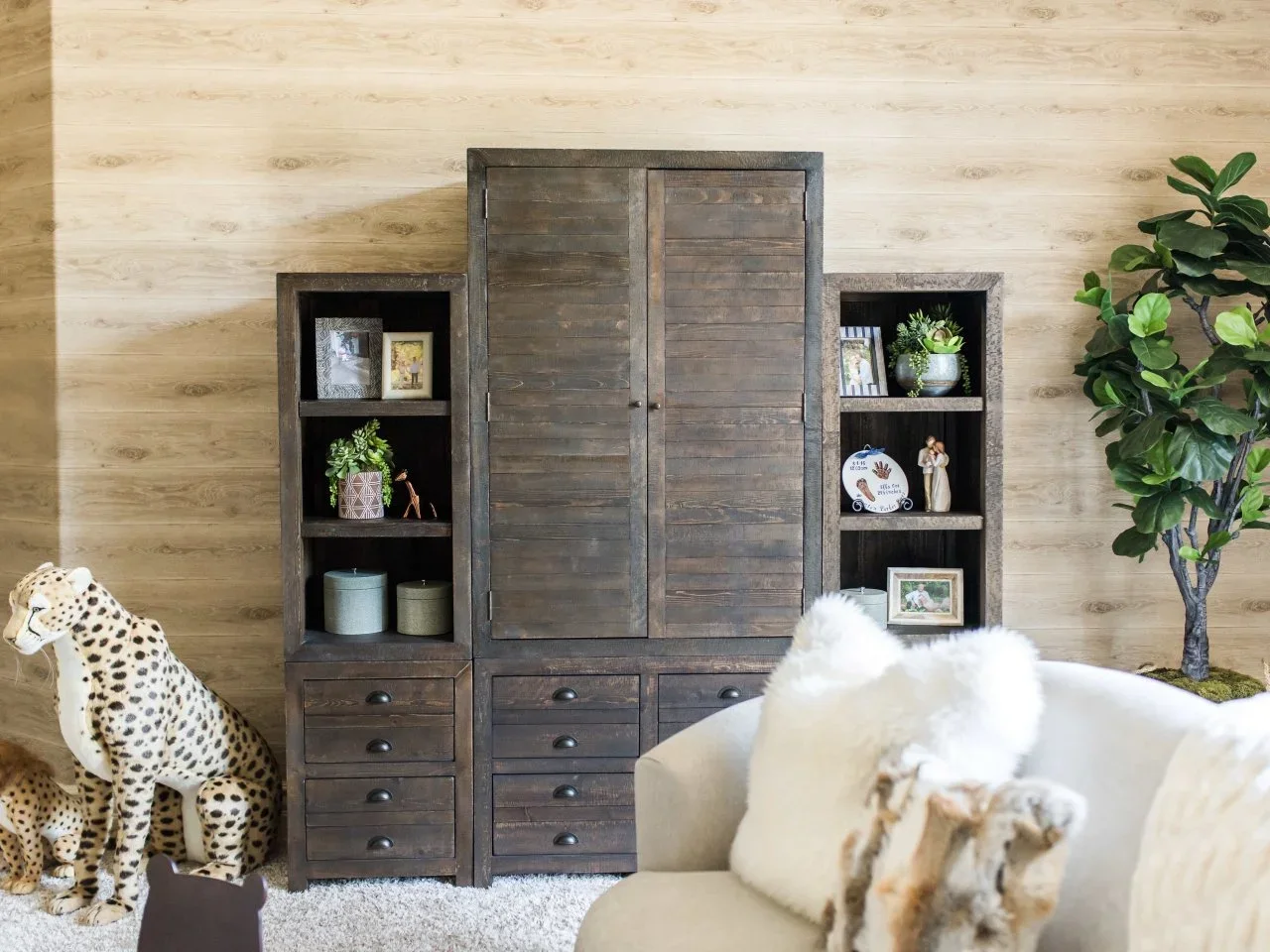
A taller closed cabinet anchors this wall, while narrower shelves hold photographs, containers and small decorative objects. The large spotted cat adds the wildlife reference at floor level. Darker furniture gives the pale background more definition without needing a second strongly patterned wall.
Choose storage around the clothes and supplies you actually need, and anchor the unit according to its instructions. Keep heavier items lower and small ornaments beyond a child’s reach. A single large animal accent can make the theme recognizable while leaving most of the cabinet available for everyday use.
IDEA 03 / 15
Make Book Storage Part of the Collected Look
 SaveSupport Non AI Creator
Image credit: Photo: Alexis Alana Photography. From: Stephanie DeBrincat
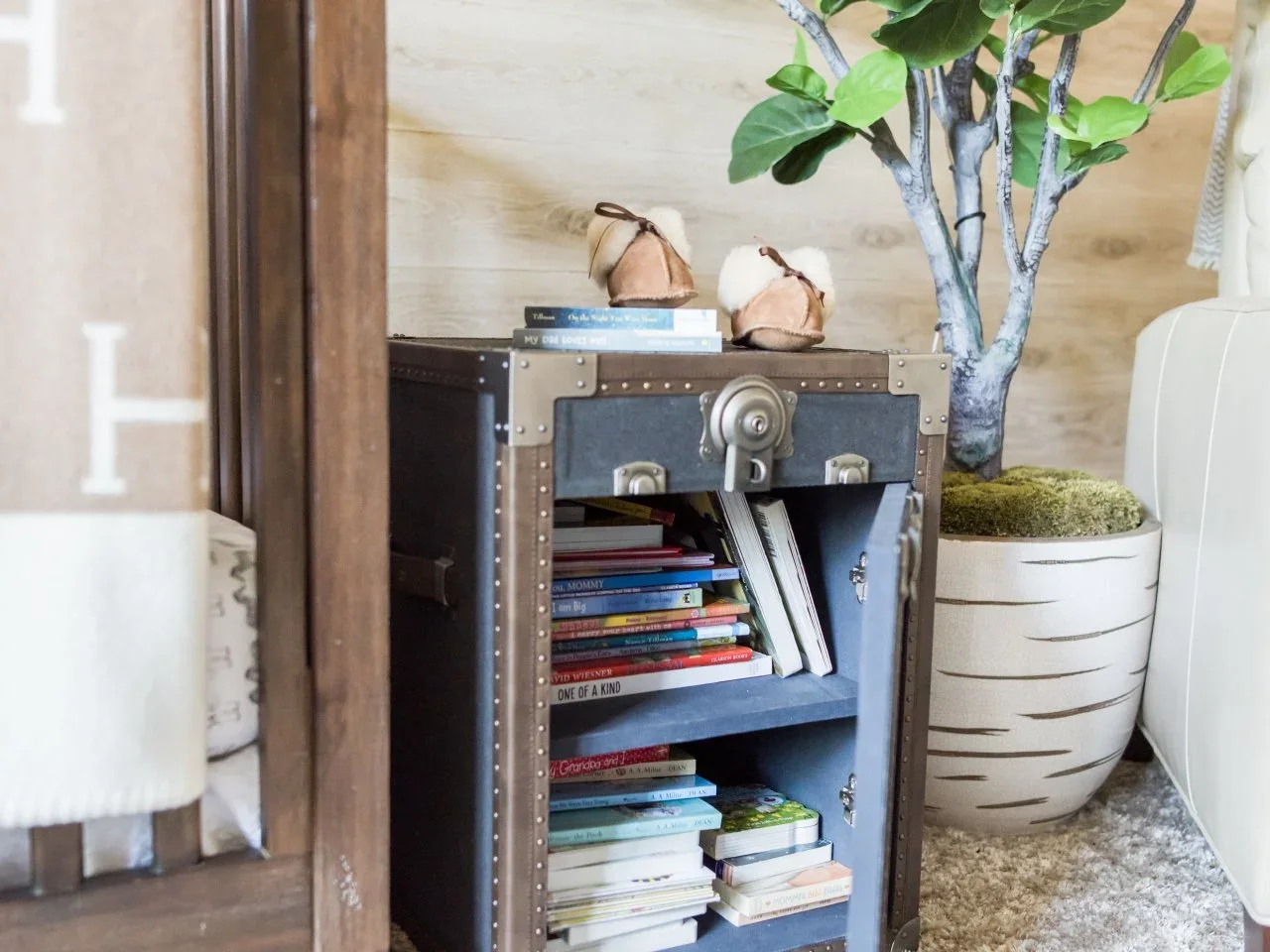
The trunk-style cabinet introduces darker panels and metal-look fittings beside the cream chair. Its open side reveals shelves of picture books, so it serves a practical purpose as well as contributing a collected look. The books add small patches of color without changing the room’s quieter palette.
Check door movement, stability and reachable hardware before choosing a cabinet for a nursery. Keep the books you read most often easy for an adult to reach from the chair. Avoid overfilling the shelves so books can slide out without pulling a stack onto the floor.
IDEA 04 / 15
Keep Plush Animals in Baskets outside the Crib
 SaveSupport Non AI Creator
Image credit: Photo: Alexis Alana Photography. From: Stephanie DeBrincat
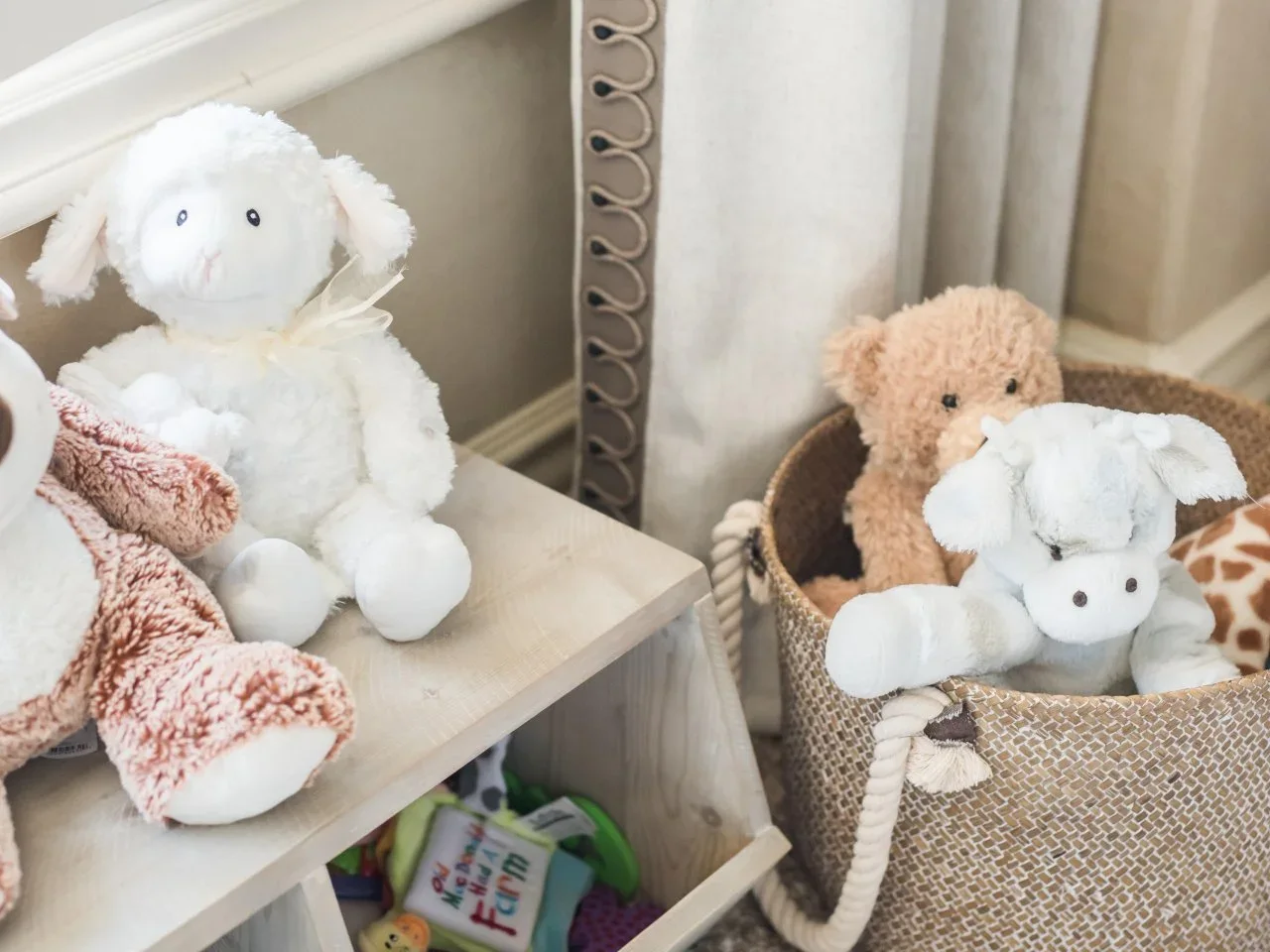
The basket gathers several plush animals in one place rather than spreading them across the floor. Open cubbies beside it provide another level of storage for smaller toys. The varied woven and soft textures make the group feel playful even though the colors remain mostly muted.
Use baskets sized for their contents and check handles, ties and loose parts as the child grows. Keep soft toys out of the infant sleep space. Give each basket a simple role, such as larger animals or smaller playthings, so clearing the floor does not require sorting a mixed pile every evening.
PART 02
Choose artwork and details for different stages
IDEA 05 / 15
Use Matching Frames to Organize Animal Artwork
 SaveSupport Non AI Creator
Image credit: Photo: Alexis Alana Photography. From: Stephanie DeBrincat
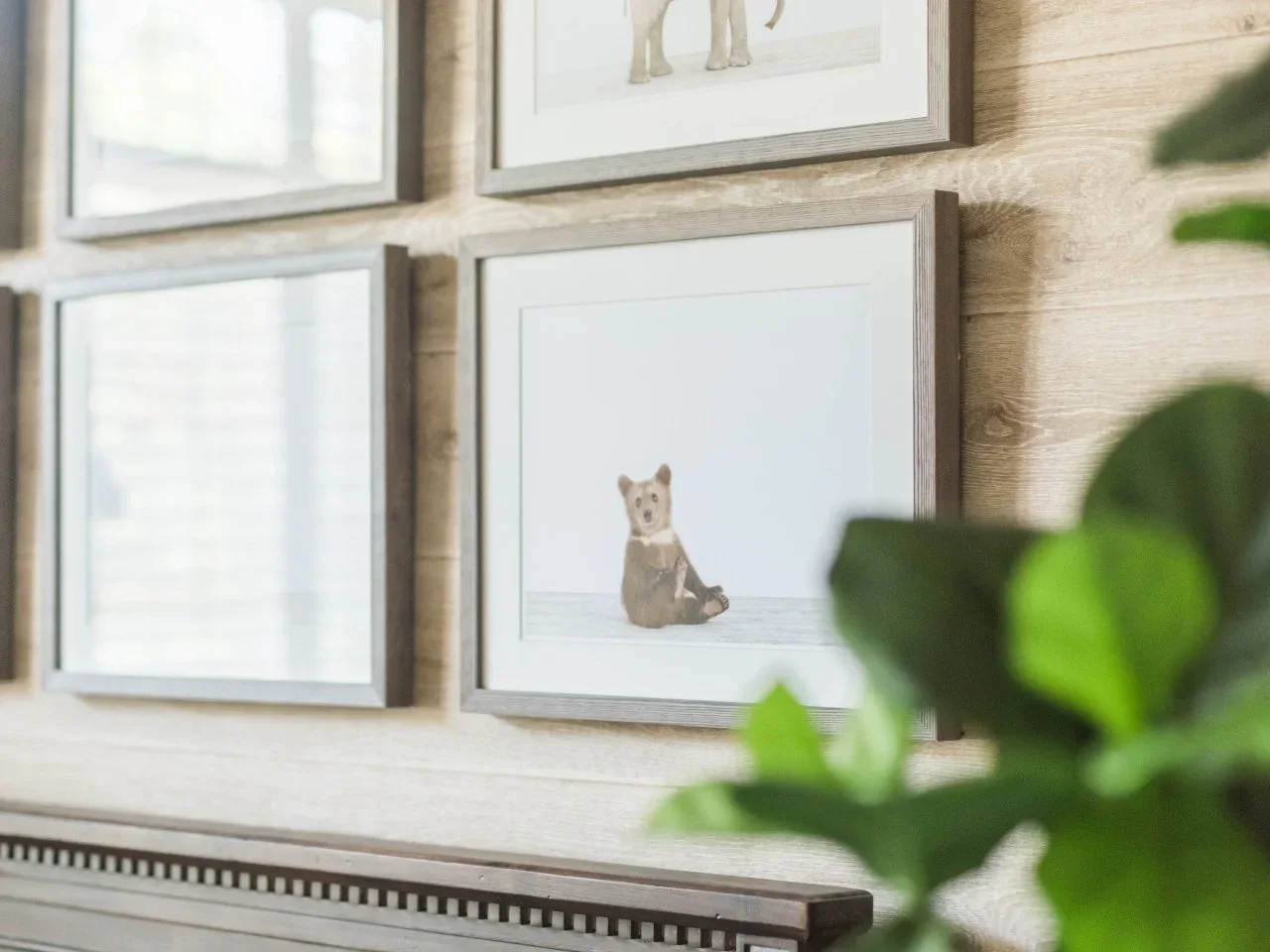
Matching frames and broad white borders bring order to this group of small animal illustrations. The visible bear shows that a room can mix wider animal references with a safari-inspired theme instead of treating every picture as a strict habitat display. The restrained framing keeps the wall from feeling crowded.
Lay out the complete group on paper before making wall fixings, and check it from the main doorway. Hang it securely in a location outside the baby’s reach rather than copying its position over the crib rail shown here. Choose images you enjoy together without needing every available animal in the set.
IDEA 06 / 15
Leave Room for an Animal-Themed Activity Table
 SaveSupport Non AI Creator
Image credit: Photo: Alexis Alana Photography. From: Stephanie DeBrincat
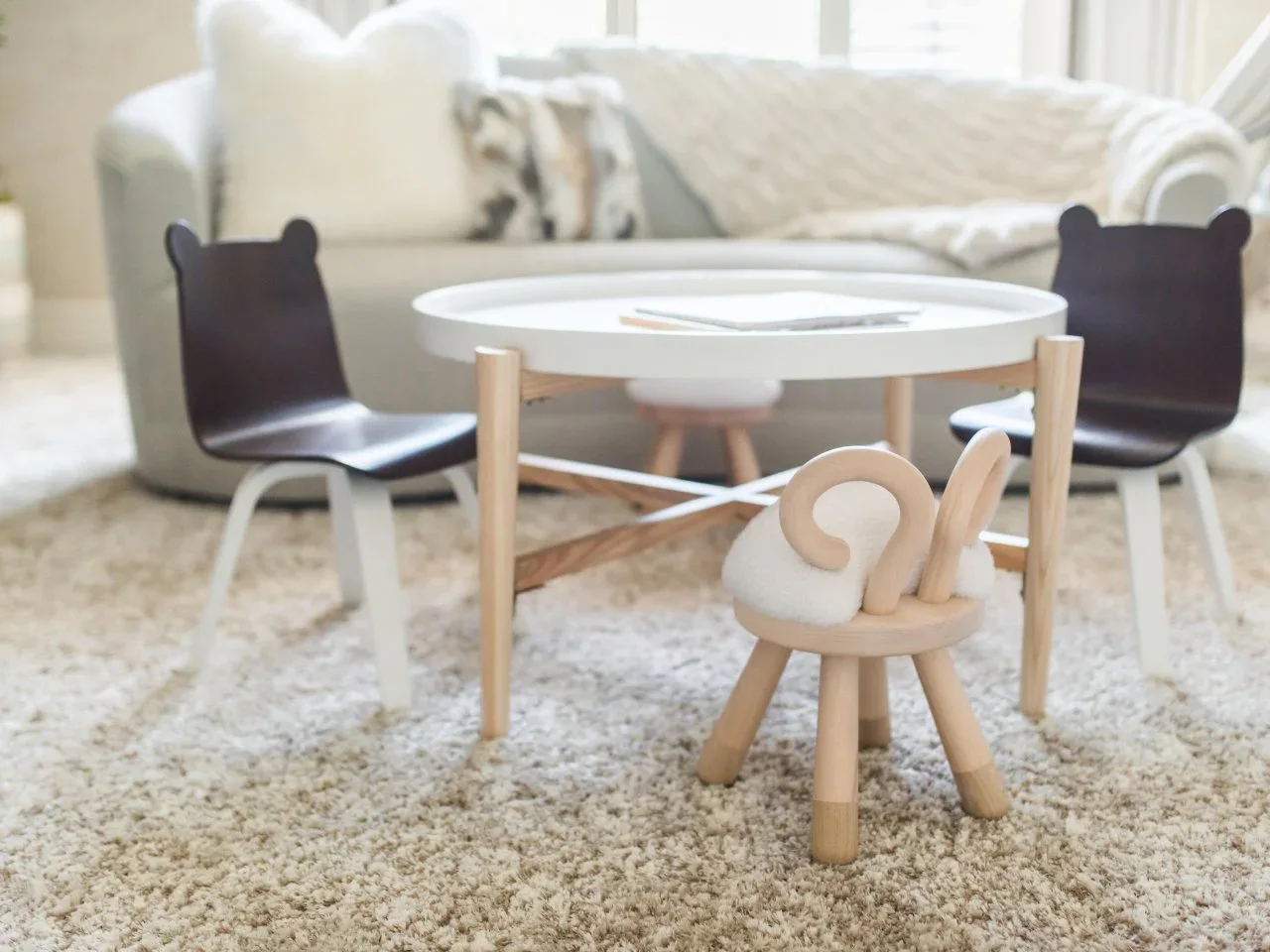
Bear-shaped chair backs and a sheep stool extend the broader animal theme into a small activity area. The round white tabletop is simpler than the seating, giving the group a clear center. These are play furnishings for a later stage, rather than equipment needed for a newborn.
Wait until the child’s age and abilities suit the furniture, and follow its use and load guidance. Allow space to move chairs without blocking the room route. A table can replace a less useful display corner as needs change; you do not have to furnish every stage of childhood at once.
IDEA 07 / 15
Bring Texture to the Theme with Wall Animals
 SaveSupport Non AI Creator
Image credit: Hygge Inspired
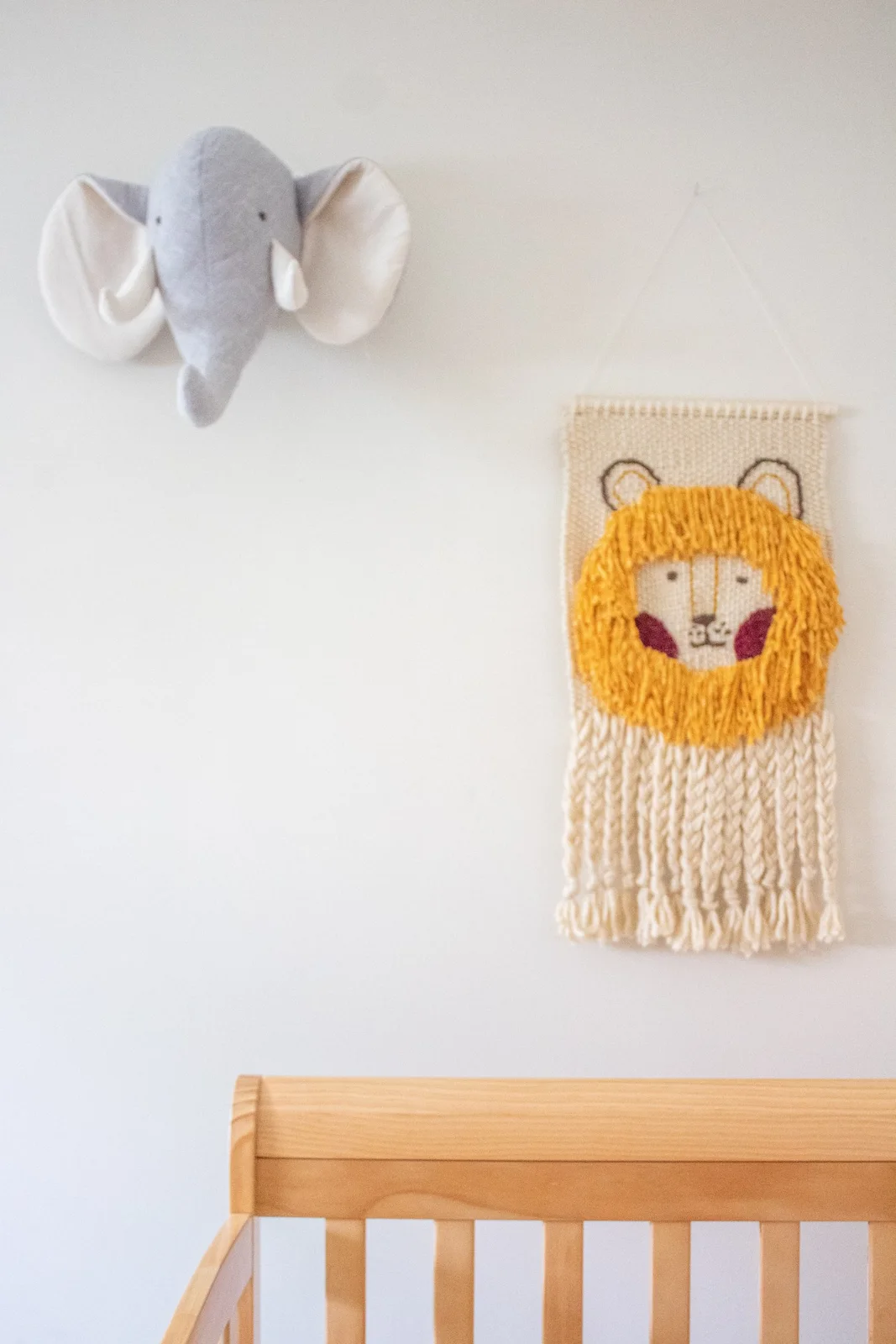
The elephant and lion use different textures rather than a matching pair of printed pictures. The lion’s golden fringe adds the stronger color, while the elephant remains close to the pale wall. Leaving space around both shapes makes their silhouettes easier to recognize.
Treat textured wall pieces as decorations, not toys, unless the product is specifically designed for play. Secure them outside the baby’s reach and away from the sleep space; the crib rail in the photograph is not a placement recommendation. Check fringes and attachments periodically and follow the maker’s cleaning instructions.
PART 03
Connect animals with books and personal objects
IDEA 08 / 15
Mix Wildlife Figures with Personal Photographs
 SaveSupport Non AI Creator
Image credit: Hygge Inspired
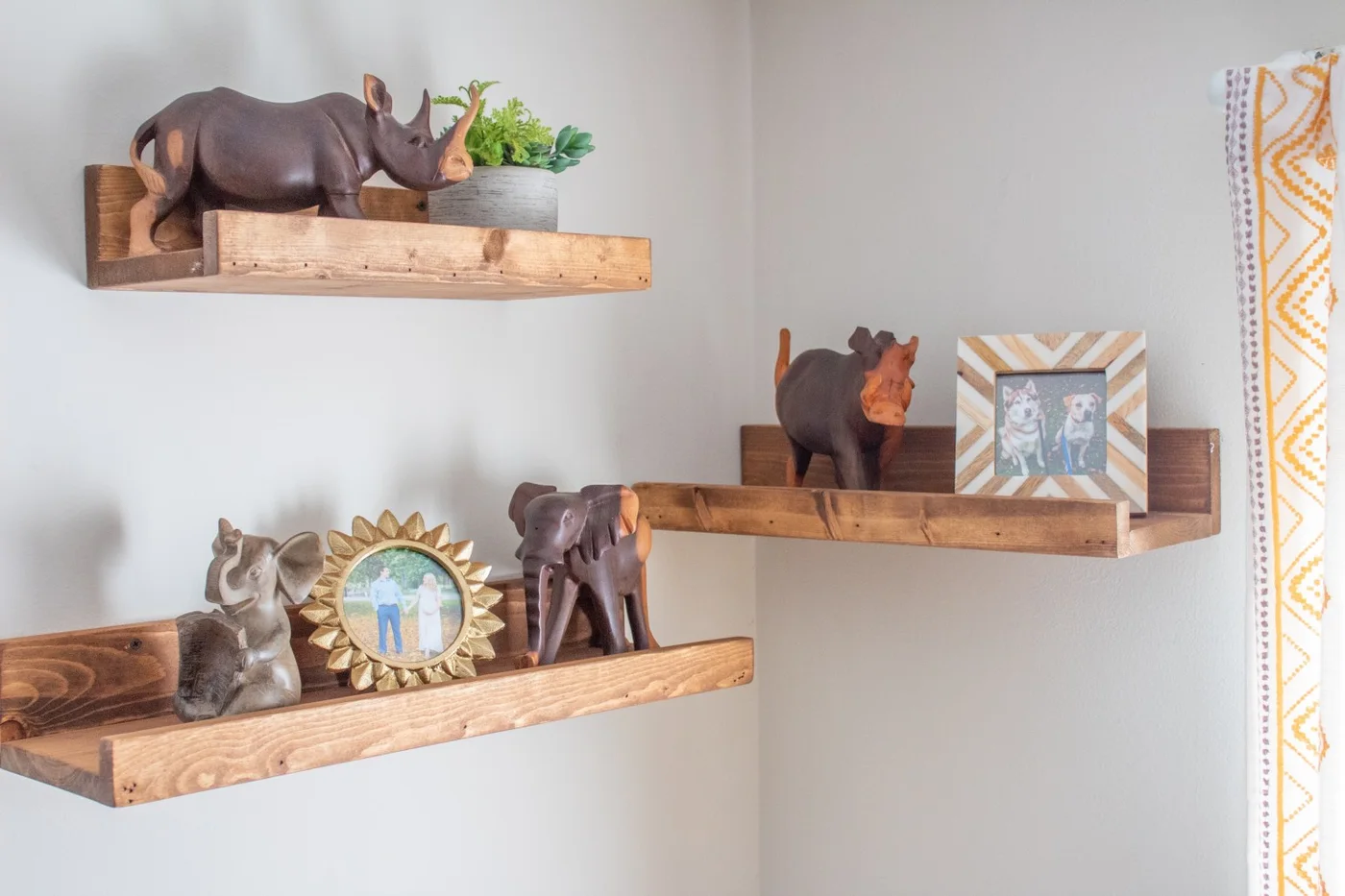
Staggered shelves let the animal figures share space with family photographs instead of forming a separate themed display. The darker figures stand out against the pale wall, while the timber shelves connect them visually. A small plant introduces a softer outline at the top.
Plan the arrangement on the floor first and leave enough empty shelf space to lift each object for dusting. Fix shelves securely and keep heavy figures and small ornaments out of reach. Our boho nursery ideas offer more ways to combine mixed timber tones with a few personal objects.
IDEA 09 / 15
Add a Single Elephant to the Bookshelf
 SaveSupport Non AI Creator
Image credit: Hygge Inspired
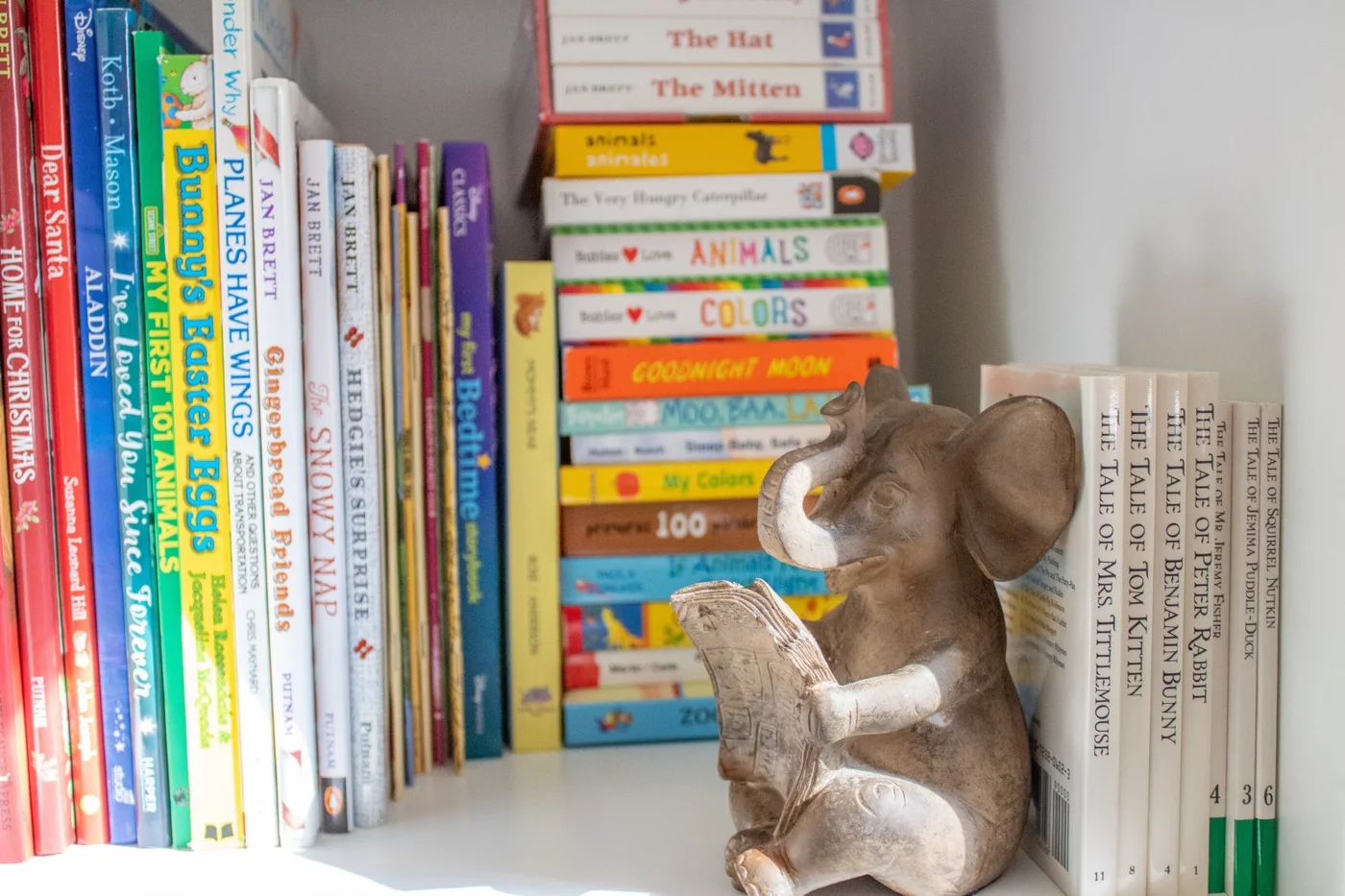
One elephant brings the animal theme into a colorful bookshelf without replacing useful book space with a large ornament collection. Its reading pose suits the surrounding stories. Upright books and a shorter horizontal stack create different heights while keeping the shelf’s main purpose clear.
Check whether a decorative figure is intended as a bookend before relying on it to support heavy books. Keep breakable or small pieces out of reach and leave space to remove titles easily. Rotate a few books at a time instead of building unstable stacks behind the display.
IDEA 10 / 15
Repeat One Warm Accent around the Chair
 SaveSupport Non AI Creator
Image credit: Hygge Inspired
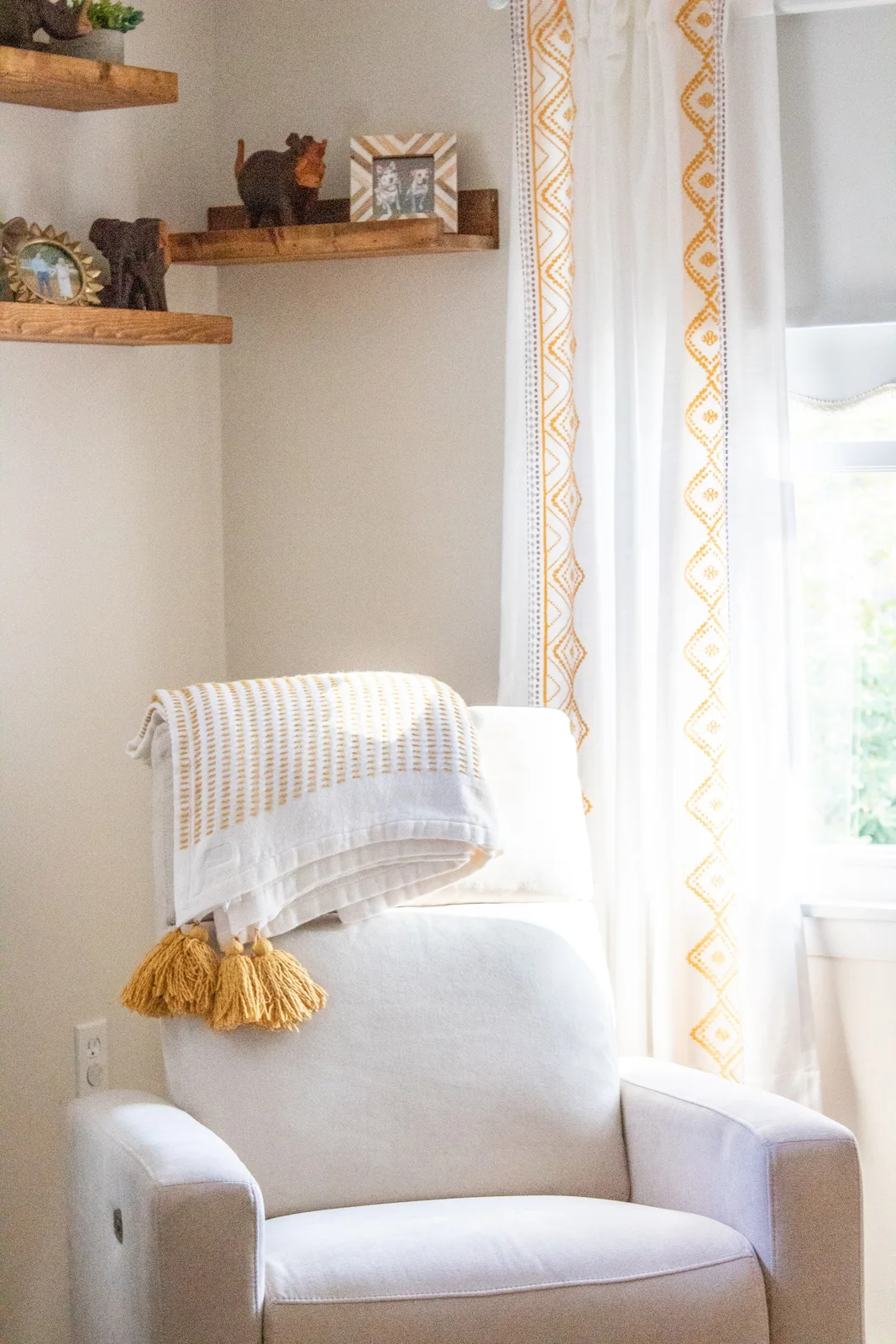
Mustard details connect the throw with the patterned curtain edge, while the chair itself remains plain. The wildlife figures on the nearby shelves carry the theme, so the textiles do not need another animal print. This makes the seating corner easy to update as the room changes.
Choose washable adult seating textiles and check their care labels before mixing them with pale upholstery. Keep tassels, curtain fabric and cords inaccessible to the child, and leave the recliner’s moving parts clear. A comfortable adult chair complements the room, but it is not an infant sleep space.
PART 04
Finish with a few clear animal shapes
IDEA 11 / 15
Use an Elephant-Shaped Side Table as One Accent
 SaveSupport Non AI Creator
Image credit: Daly Digs
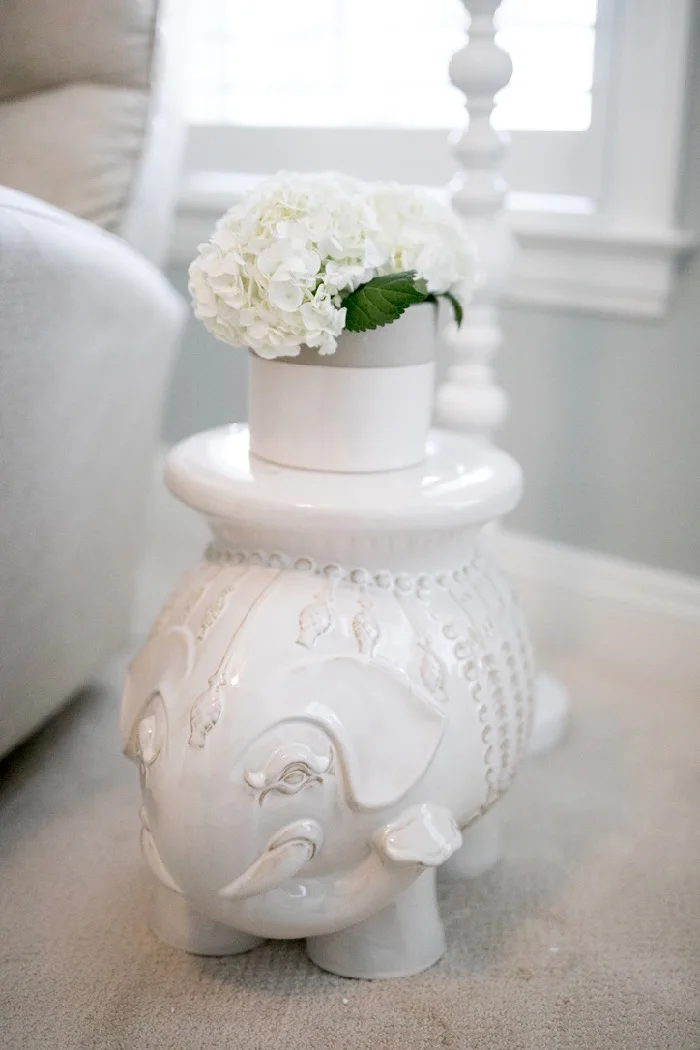
The elephant shape makes a functional side piece part of the theme, while its pale finish keeps it close to the chair and surrounding wall colors. The round top introduces a simpler outline above the sculptural base. Flowers are styling here rather than a nursery essential.
Check stability, weight and the intended use of a sculptural table before placing it beside the chair. A decorative piece may not be suitable for climbing or sitting. Keep water, flowers and other reachable objects elsewhere once a child can access the surface, and leave enough room for the chair to move.
IDEA 12 / 15
Use a Small Lion on a Narrow Wall Section
 SaveSupport Non AI Creator
Image credit: Daly Digs
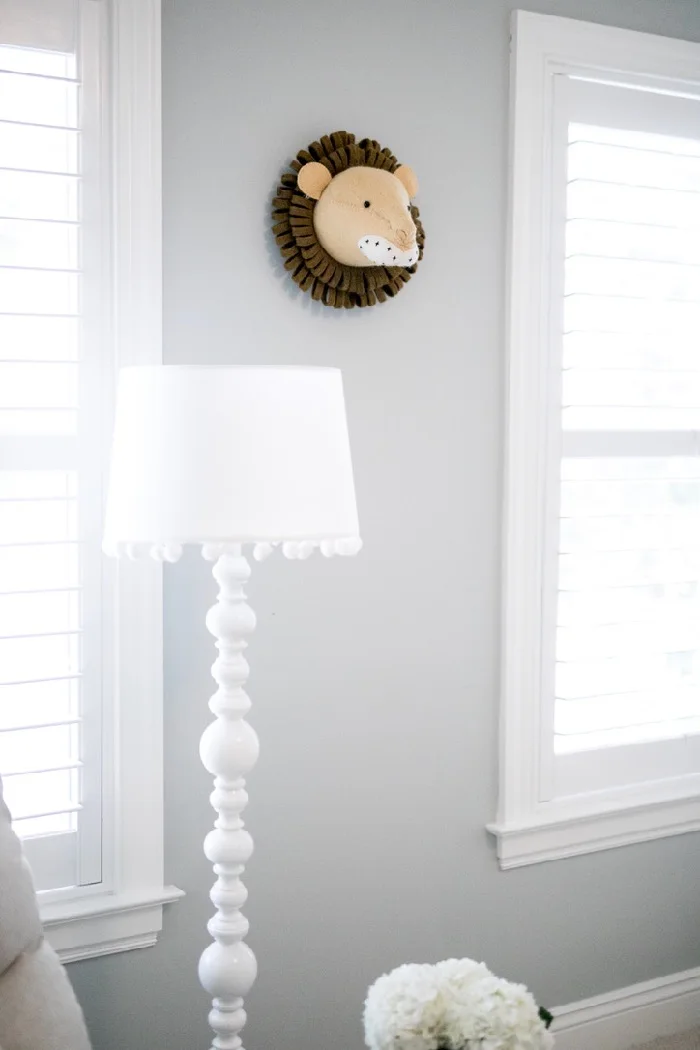
A single lion fills the narrow wall section between the windows without requiring a whole gallery. Its darker mane gives it enough contrast against the pale gray paint. White shutters and a white lamp keep the surrounding shapes quieter, letting the small animal face remain noticeable.
Measure the available wall section before choosing the decoration so it has breathing room beside the window trim. Fix it securely outside the child’s reach. Check the lamp’s stability and cable route separately, and keep nursery furniture clear of accessible window-covering cords or other dangling attachments.
IDEA 13 / 15
Keep a Baby-Animal Gallery Light and Consistent
 SaveSupport Non AI Creator
Image credit: Daly Digs
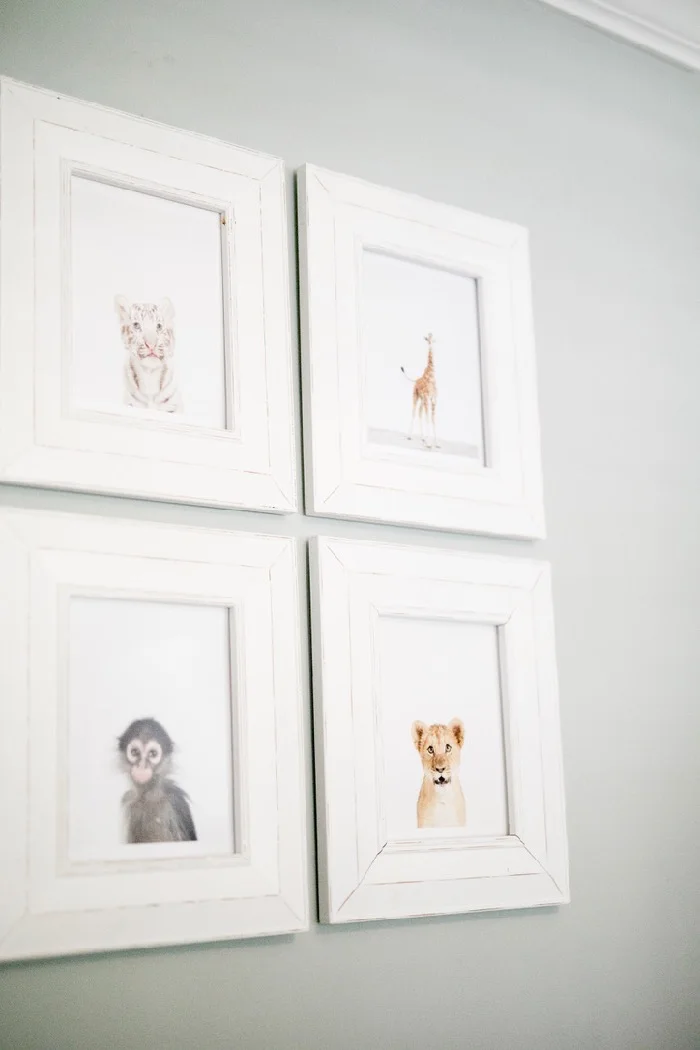
Matching white frames connect four different animal illustrations into one compact gallery. The pictures have plenty of pale background, so the individual faces remain the main detail. Against the gray wall, the arrangement feels lighter than a set of dark frames or a full patterned mural.
Choose frame sizes together and make a paper layout before hanging the set. Check secure fixings and an appropriate position away from the crib and changing area. Keep the spacing consistent, and use a smaller group if the available wall is narrow rather than shrinking every image to fit more animals.
IDEA 14 / 15
Choose One Tall Giraffe instead of Many Small Toys
 SaveSupport Non AI Creator
Image credit: Daly Digs
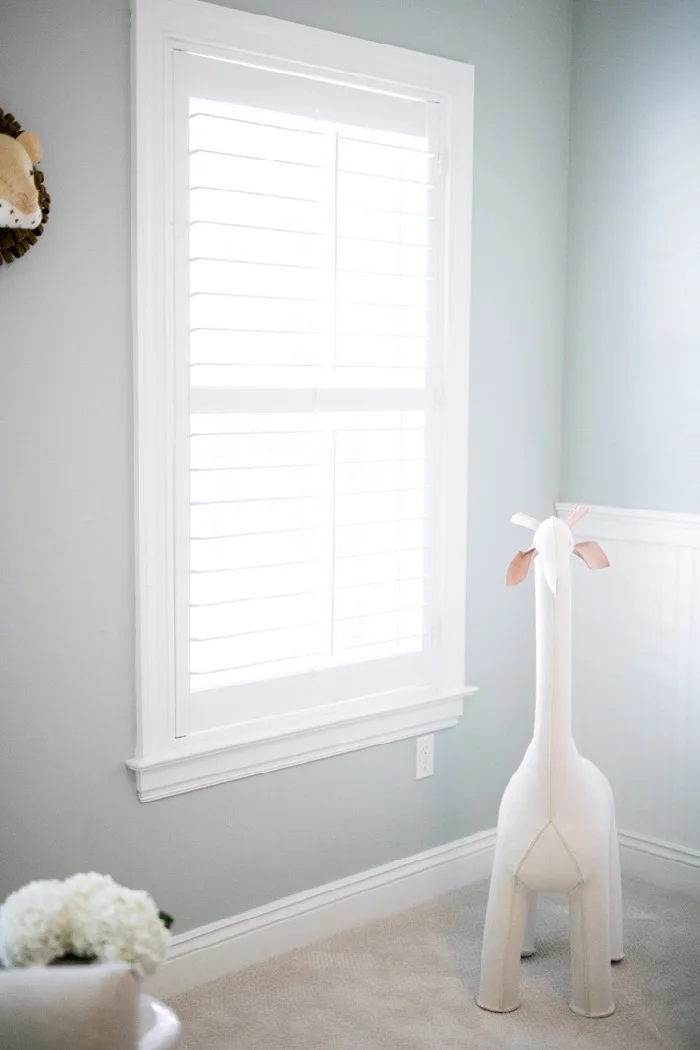
The giraffe’s tall neck creates a clear animal silhouette with very little color contrast. Its pale body sits comfortably beside the white window trim and gray wall. Leaving the surrounding floor relatively open gives the decorative shape more presence than a crowded collection of small figures would.
Check the product’s age guidance, construction and stability before placing a large animal in a child’s room. Keep it out of the crib and away from routes where an adult needs to carry the baby. Choose the location around the actual floor space rather than relying on the animal to fill an inconvenient gap.
IDEA 15 / 15
Bring the Theme down to a Zebra-Pattern Rug
 SaveSupport Non AI Creator
Image credit: Daly Digs
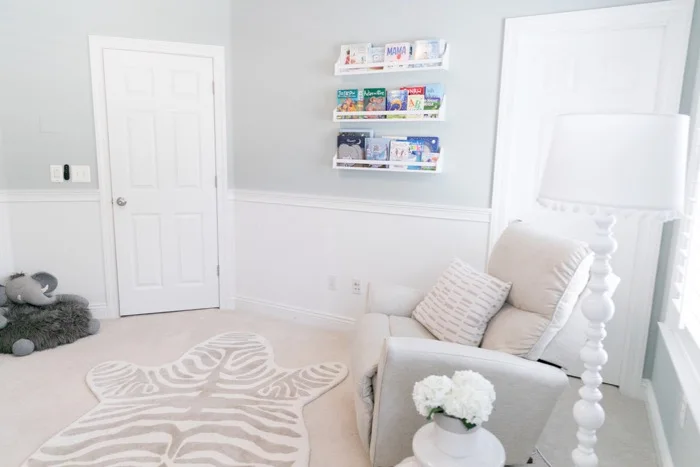
The zebra-shaped rug supplies the main animal pattern at floor level, while the chair and paneled walls stay pale. Book ledges add useful color above the seating area. A darker animal-shaped cushion in the far corner repeats the theme without adding another large piece of furniture.
Check rug stability, cleanability and the edges around the chair before buying a shaped design. Keep the route through the room clear and avoid placing moving chair parts over a raised rug edge. Our minimalist nursery ideas show more ways to leave open floor space while giving a few details greater emphasis.
BRING IT ALL TOGETHER
Let a few animal details do the work
Choose a small number of animal references you enjoy, then repeat their colors around the room. A picture, shelf figure or patterned rug may be enough. Keep storage practical, leave a clear floor route and choose adult seating for comfort before adding decorative pieces.
Revisit reachable objects as the child grows. Secure furniture and wall displays, keep cords and small parts inaccessible, and keep the infant sleep space free of loose objects. Read product instructions and current recall information rather than assuming that a photographed room establishes the suitability of every item.