Rustic bedrooms can start with rough timber, stone or an old-looking piece of furniture, but comfort depends on how those details sit beside the bed and the things you use daily. A room does not need dark walls or a collection of decorative signs to show texture.
These photographs compare exposed architecture with simpler ways to add character through quilts, lamps, bedside furniture and painted boards. Choose the elements that fit your room, then leave enough plain space for their differences to remain visible. The appearance of a surface does not establish its age, origin or material specification.
PART 01
Start with timber and a quieter bed
IDEA 01 / 20
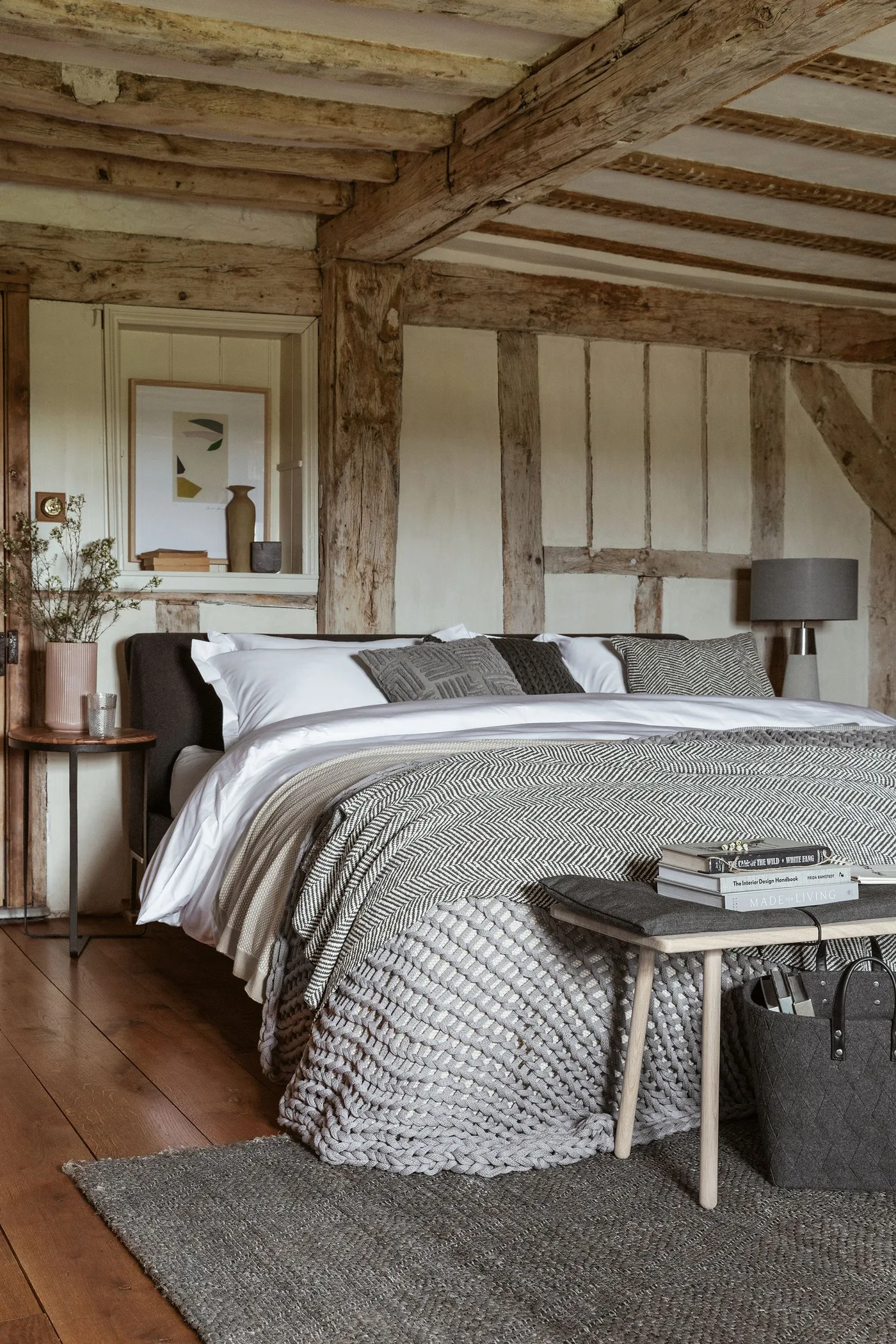
Keep Furnishings Simple Beneath Rough Beams
 SaveSupport Non AI Creator
Image credit: Amara
Rough timber posts and ceiling beams provide the strongest texture in this bedroom. Pale wall sections between them prevent the framework from becoming an uninterrupted dark surface. A low upholstered headboard and layered gray bedding sit below the horizontal timbers, leaving their irregular edges and visible grain easy to appreciate.
Work around existing beams rather than adding several competing decorative features. Compare bedding and rug samples with the timber in daylight to see which tones connect. Have structural timber and any proposed alterations assessed appropriately, and choose furniture heights that leave the room comfortable without trying to disguise every uneven line.
IDEA 02 / 20
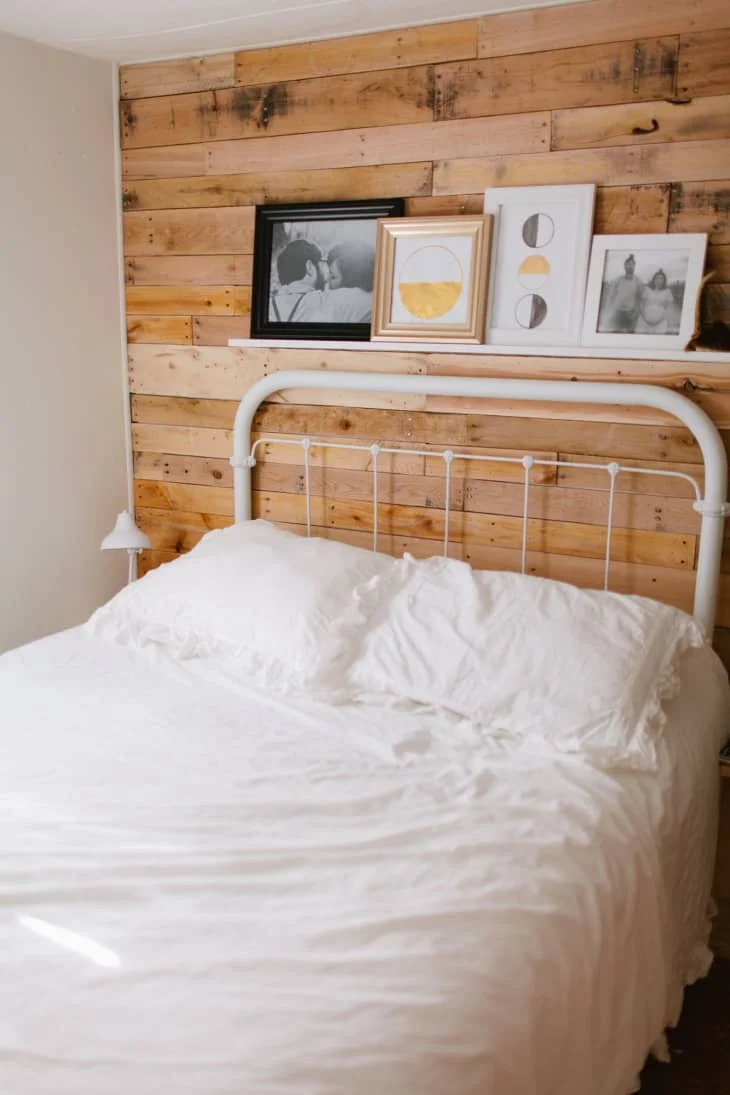
Use a Timber Wall Behind a Simple Metal Bed
 SaveSupport Non AI Creator
Image credit: Kathryn Bacalis
Timber boards in varied warm tones cover the wall behind the white metal bed. Their horizontal joints create the main pattern, while white bedding and the pale adjoining wall keep the arrangement lighter. A narrow picture ledge gathers several framed pieces without covering the full height of the boards.
Check the timber’s condition and suitability before bringing boards indoors; a weathered appearance does not establish a safe or usable material. Finish edges carefully and plan cleaning access around the bed. Secure any shelf and framed objects appropriately, keeping heavy or unstable displays away from where someone sleeps.
IDEA 03 / 20
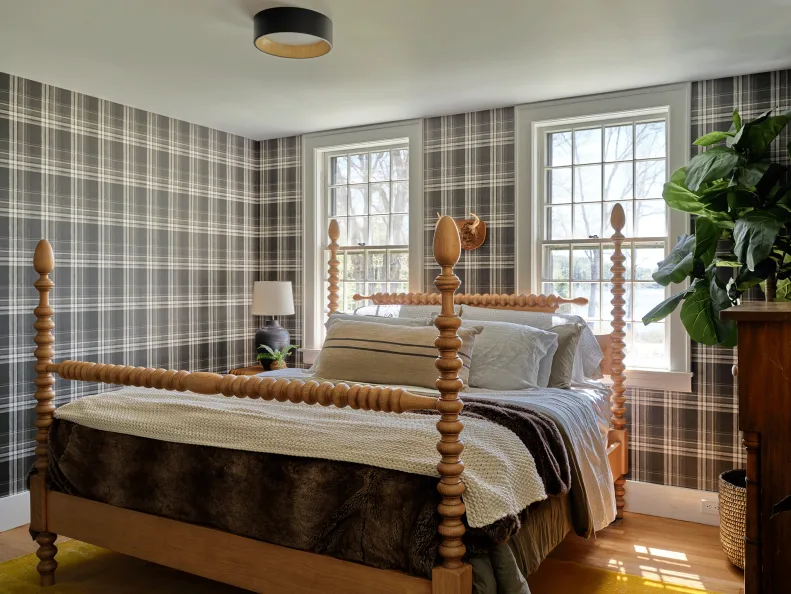
Choose One Strong Check Around Turned Timber
 SaveSupport Non AI Creator
Image credit: Photo: Sean Litchfield. From: Jonathan Knight
The bed’s turned posts and rails repeat rounded shapes against a much finer checked wall pattern. Plain gray and cream bedding provides a pause between those two detailed surfaces. Timber flooring and a darker chest connect with the bed, while the broad windows keep the patterned walls from surrounding every view.
Compare the pattern repeat with the bedposts before covering several walls. If both details are strong, keep curtains and bedding quieter so the room remains easy to read. Check access around the footboard and make sure the taller posts do not interfere with window coverings or the positions of lights.
IDEA 04 / 20
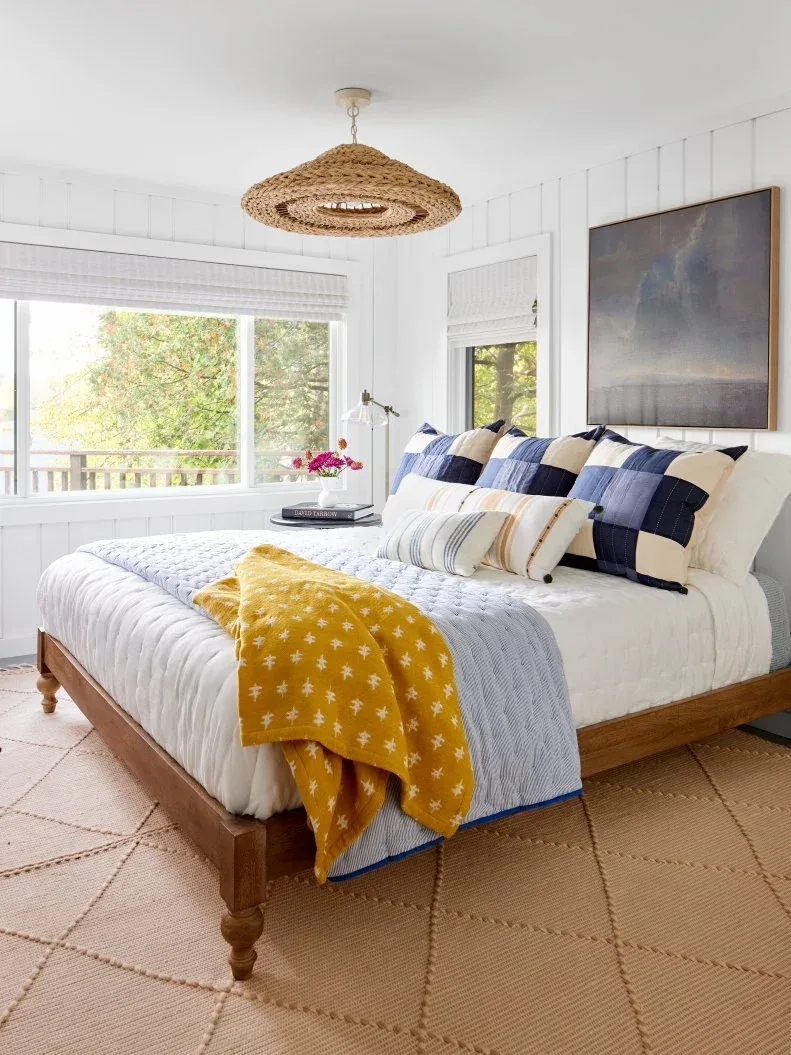
Lighten Rustic Texture with White Boards
 SaveSupport Non AI Creator
Image credit: Photo: Adam Albright. From: HGTV Magazine
White boards retain visible wall texture while leaving the bedroom bright. The timber bed frame and woven light add warmer surfaces, with dark blue checks concentrated in the pillows. A yellow throw introduces another color at the foot of the bed rather than adding a second patterned wall.
Keep the boards, trim and ceiling samples together when choosing whites so their undertones work in the same light. Build the stronger colors through removable textiles, starting with the pieces you use most. Check woven shades for cleaning access, and select a fixture suited to the room rather than copying its size from a photograph.
IDEA 05 / 20
Contrast a Dark Canopy with Pale Weathered Texture
 SaveSupport Non AI Creator
Image credit: Photo: Ashley Gilbreath. From: Ashley Gilbreath
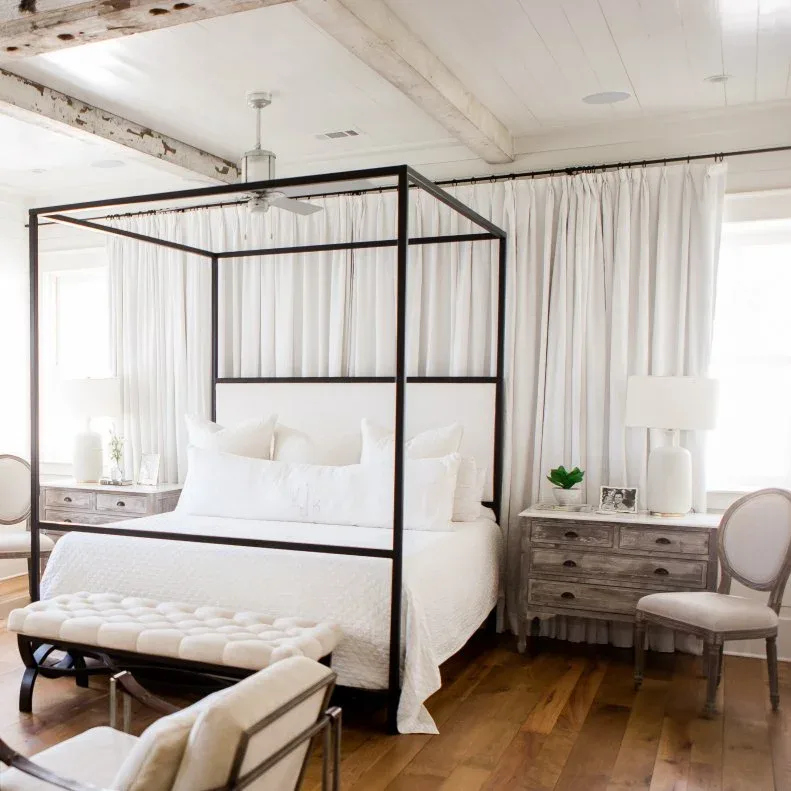
The dark canopy gives the bed a precise outline beneath the rougher pale ceiling beams. Weathered-looking drawer chests add lower timber surfaces on either side, while white curtains and bedding keep the room’s larger fabric areas simple. The upholstered bench introduces a softer seat within the bed’s stronger frame.
Measure the canopy against ceiling beams and fans before choosing a tall bed. Keep curtains clear of the frame and leave room to clean around the posts. Our farmhouse bedroom ideas compare other ways to combine pale architectural finishes with timber furniture when you want a lighter version of rustic style.
PART 02
Balance textured walls with useful furnishings
IDEA 06 / 20
Balance Stone and Timber with Plain Bedding
 SaveSupport Non AI Creator
Image credit: Photo: Troy Thies. From: Martha O'Hara Interiors
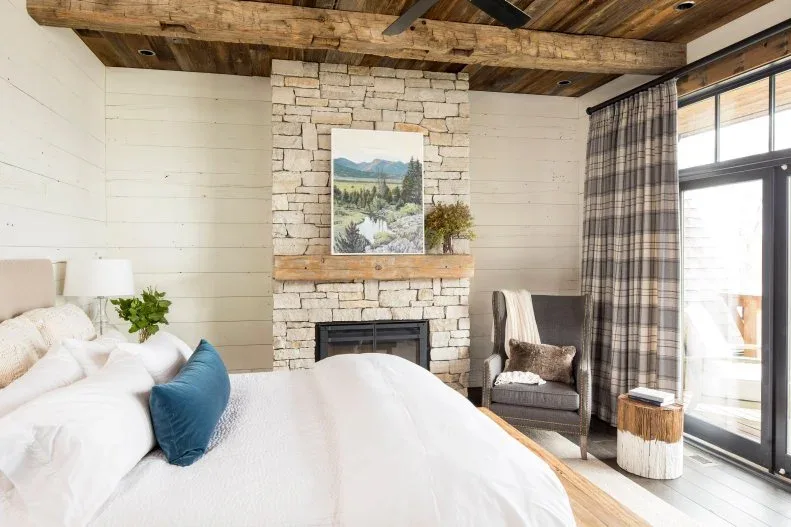
Pale stone rises beneath the timber ceiling, with a broad wood mantel connecting the two textures. The nearby wall boards and checked curtains introduce finer lines, while plain white bedding keeps the sleeping area visually quieter. A gray chair beside the window makes a separate sitting position near the architectural feature.
Use the strongest existing surface to guide the rest of the room rather than adding stone, patterned paper and dark furniture everywhere. Check the fireplace installation and required clearances before positioning bedding or a chair nearby. Keep the decorative arrangement secondary to a usable route, cleaning access and appropriate appliance maintenance.
IDEA 07 / 20
Give Vertical Boards a Plain Timber Headboard
 SaveSupport Non AI Creator
Image credit: Photo: Vivian Johnson, Stylist: Rachel Wanty. From: Carmit Oron Interior Design
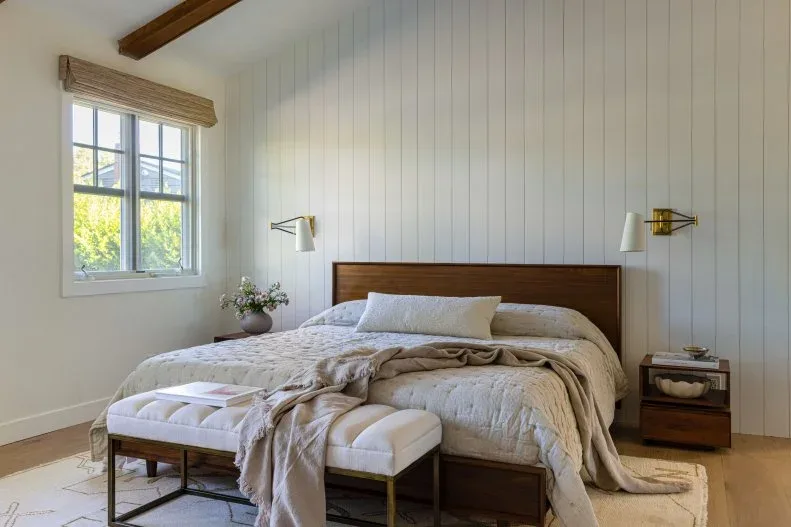
Vertical white boards emphasize the wall height behind the simple timber headboard. A ceiling beam and woven window shade add smaller warm surfaces without surrounding the bed in dark wood. Neutral bedding, wall lights and an upholstered bench create a softer arrangement around the room’s straight architectural lines.
Choose a headboard that sits clearly below the wall lights and leaves enough room beside each bedside unit. Coordinate the timber finishes without requiring every grain to match. Keep extra throws manageable and off the walking route, especially where a low bench already occupies space at the foot of the bed.
IDEA 08 / 20
Warm a White Room with Ochre and Stripes
 SaveSupport Non AI Creator
Image credit: Photo: Adam Albright. From: HGTV Magazine
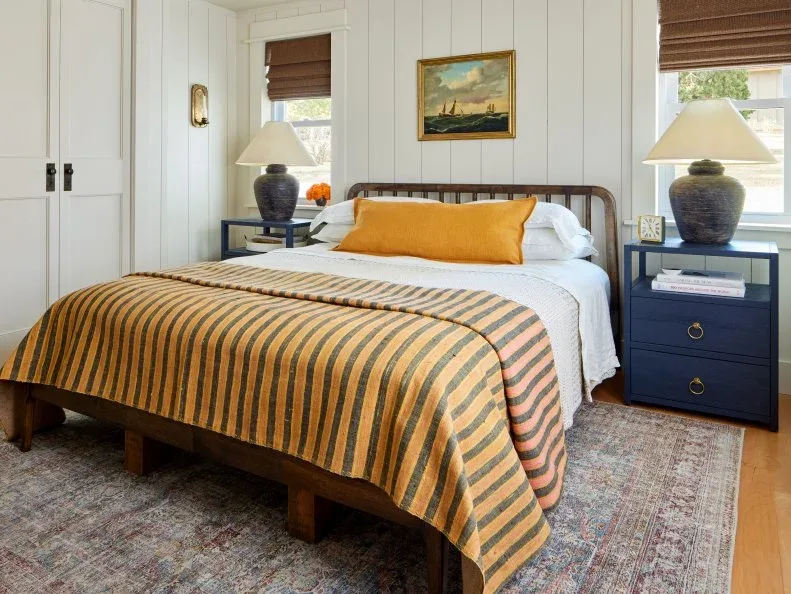
An ochre striped cover gives this pale bedroom its strongest warmth. White vertical boards keep the background simple, while dark blue bedside drawers provide a deeper color at a smaller scale. The timber bed frame connects with the floor, and broad lamp shades soften the outlines above the drawer units.
Start with one patterned cover or quilt before choosing several smaller prints. Pick a bedside color already present in the textiles, then compare the lamps against the available surface. Large lamps can look comfortable but still leave too little space for daily items, so check their bases as well as their shades.
IDEA 09 / 20
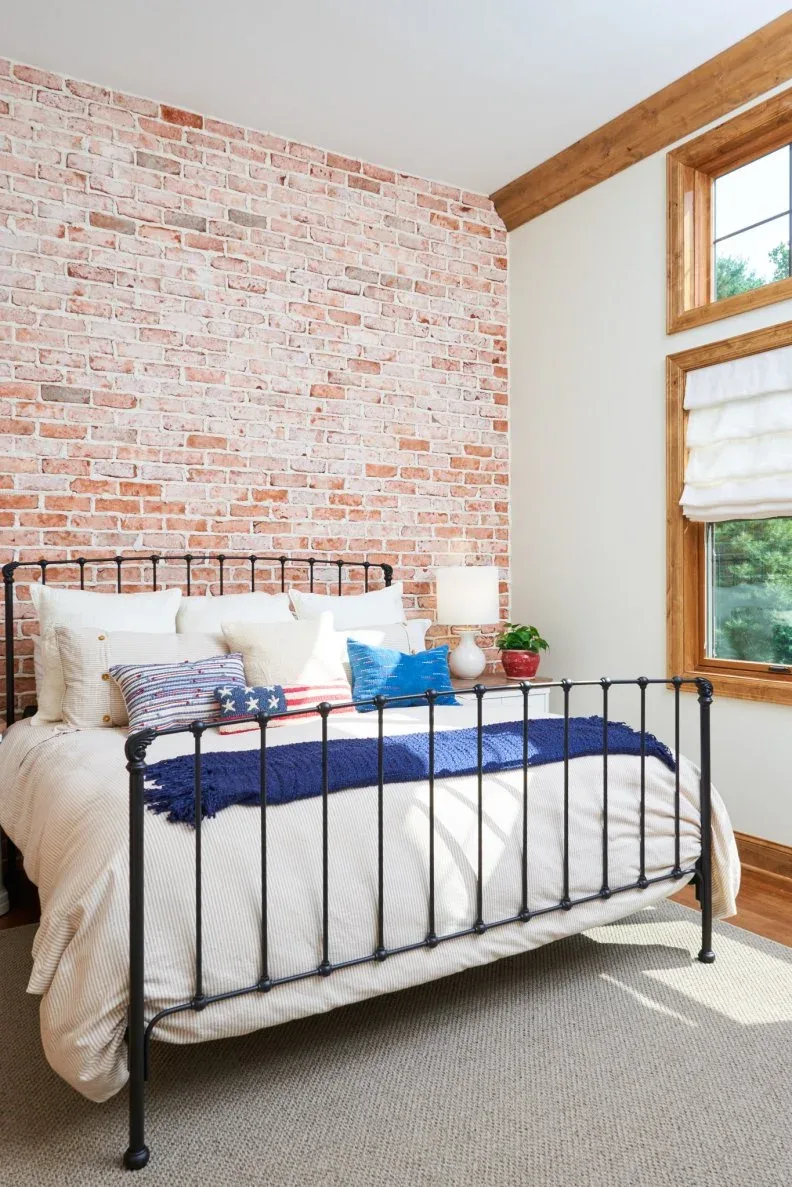
Let Brick and Window Timber Carry the Texture
 SaveSupport Non AI Creator
Image credit: Photo: Kyle Wodarczyk Photo. From: House of L
Pale brick forms a textured background behind the slender black metal bed. Timber window frames and a horizontal beam add warmth around the brighter opening, while white bedding keeps the many brick joints visible. Blue accents stay mostly on the bed rather than appearing across every wall or piece of furniture.
Compare the brick’s varied tones with the timber before adding further wall colors. Check the condition and appropriate care of an existing masonry surface rather than assuming it can take any cleaner or coating. Keep framed pieces and bedside accessories restrained if the wall already provides enough detail for the room.
IDEA 10 / 20
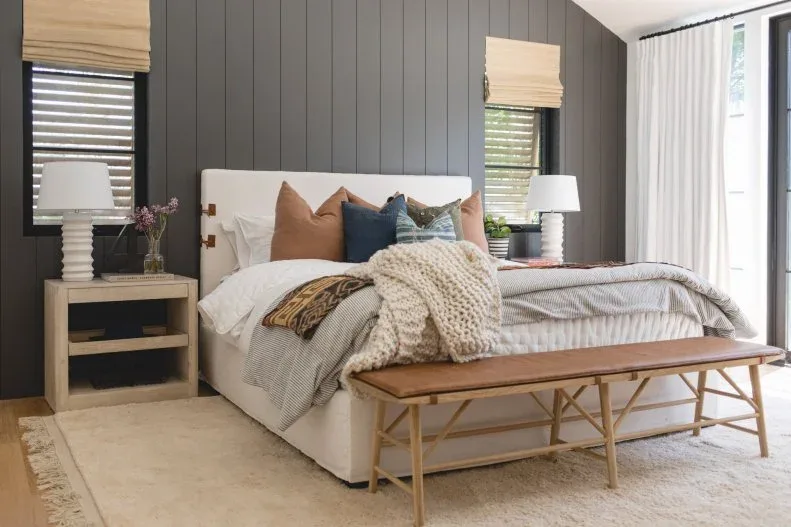
Use Charcoal Boards with Lighter Furniture
 SaveSupport Non AI Creator
Image credit: Photo: Valerie Vogt. From: sKout
Charcoal boards create a dark background between the two bedroom windows. Pale upholstery and lighter bedside units remain distinct against it, while warm brown and blue cushions add smaller color changes. The narrow bench repeats the timber tones without adding another substantial upholstered piece at the bed’s foot.
Test dark paint beside the actual window light and bedding before committing to the whole wall. Use our bedrooms with paneling to compare board directions and how they meet windows. Keep enough contrast between the bedside units and wall for their handles and edges to remain easy to see under evening lamps.
PART 03
Use quilts, metal and warmer wood tones
IDEA 11 / 20
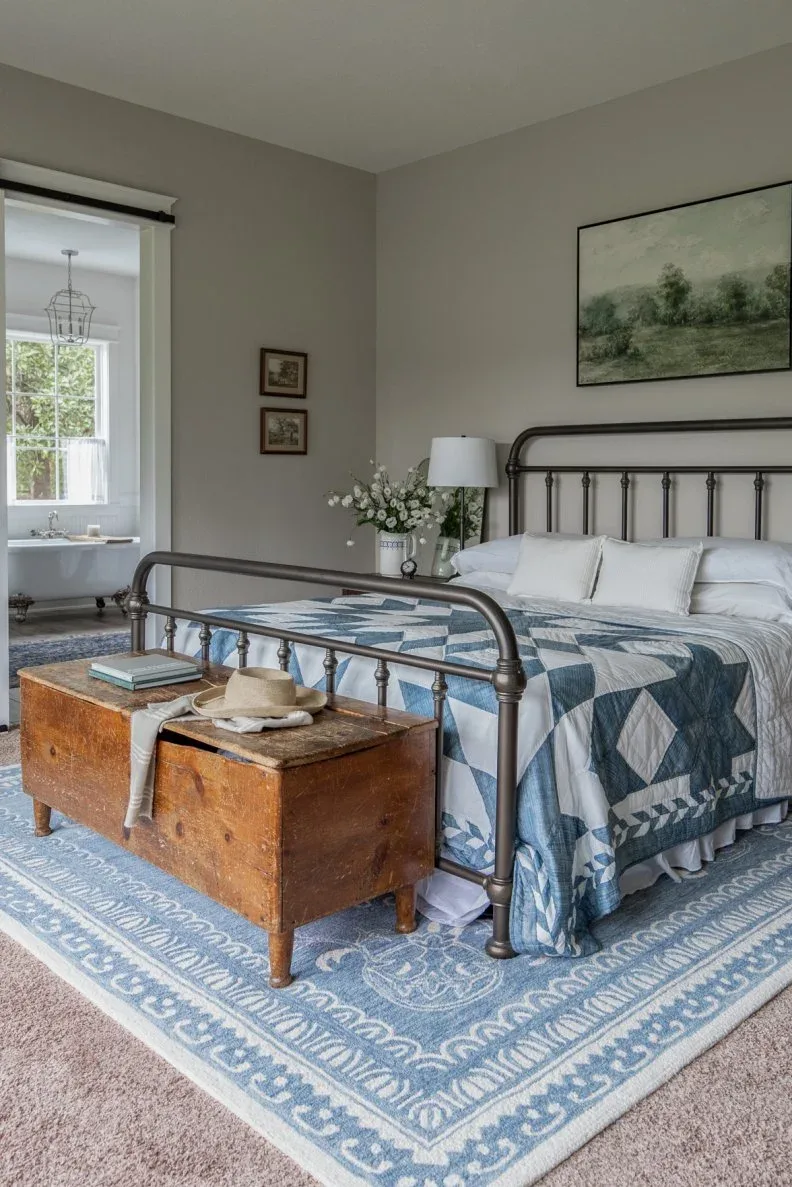
Pair a Worn Timber Chest with a Patterned Quilt
 SaveSupport Non AI Creator
Image credit: Photo: Grace Laird Photography. From: Ashley Moore
A blue patchwork quilt supplies a broad geometric pattern on the metal bed. The timber chest shows a warmer, visibly worn surface at the foot, separating it from the cooler rug and textiles. Plain pale walls and white pillows give both the quilt and chest enough space to stand out.
Check the chest’s condition, hinges and intended use before treating it as a seat or everyday storage. Leave enough room to open it without moving the bed or blocking the doorway. Coordinate the rug with one quieter quilt color rather than trying to repeat every patch across the room’s other fabrics.
IDEA 12 / 20
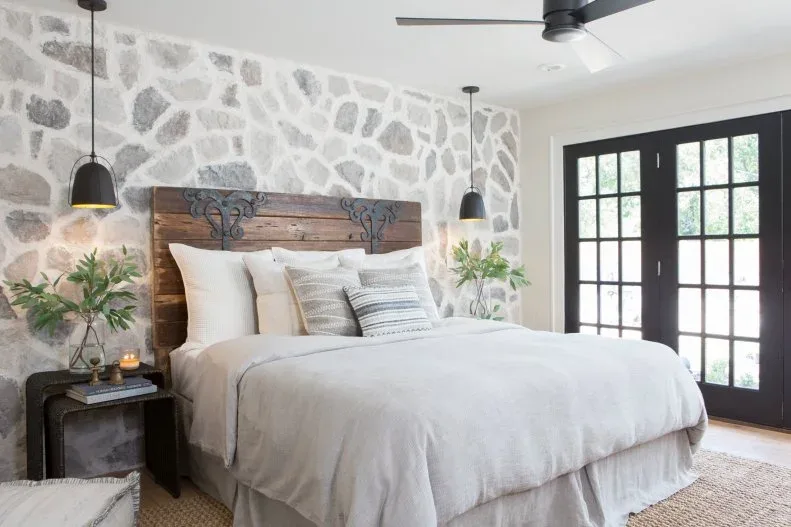
Keep Bedding Plain Against Irregular Stone
 SaveSupport Non AI Creator
Image credit: Photo: Jennifer Boomer/Verbatim Photo Agency. From: Fixer Upper and Ranch House Reimagined
Irregular pale stones and broad mortar joints create a varied wall behind the bed. The timber headboard adds a warmer horizontal shape, with dark brackets connecting to the door frames and hanging lamps. Plain pale bedding prevents the room’s main soft surface from competing with those architectural details.
Look at a larger stone sample or the existing wall from the doorway before choosing more patterns. Keep bedside lamps at useful heights and plan their controls around the headboard. Check cleaning methods for the actual stone and mortar, and keep furniture clear enough of the wall for maintenance without damaging the bedding.
IDEA 13 / 20
Use a Pale Ceiling Above Dark Log Walls
 SaveSupport Non AI Creator
Image credit: Photo: Douglas Friedman Photography. From: Jay Jeffers
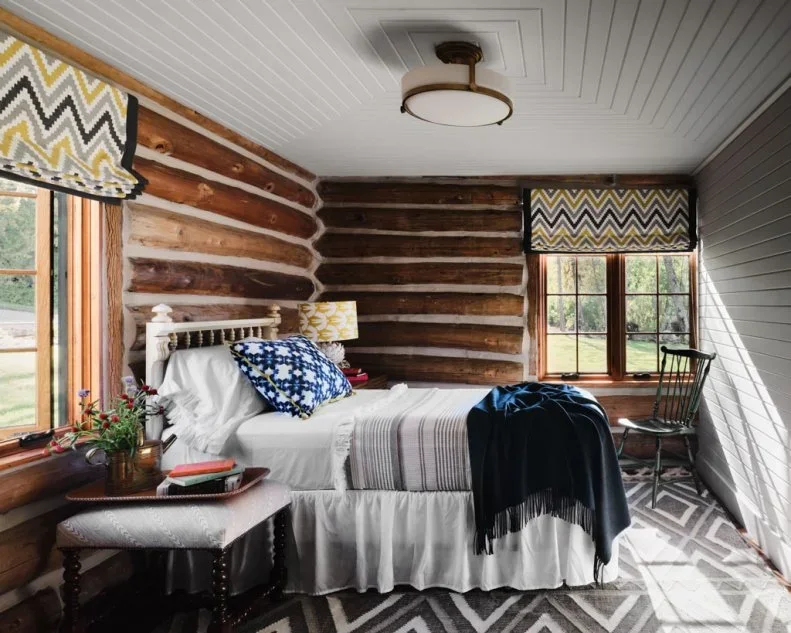
Dark horizontal logs provide the main wall texture, while the white ceiling lightens the room overhead. Zigzag window shades introduce a sharper pattern in smaller areas, repeating the colors of the nearby rug. A pale bed and white bedding keep the compact sleeping position distinct from the timber walls.
Compare window fabric and rug patterns together so their scales differ enough to remain separate. Keep furniture shallow where log walls and a narrow bed already leave a limited route. Use appropriate care guidance for the existing wall finish, and check that lamps, shades and furniture do not obstruct access to the windows.
IDEA 14 / 20
Mix Board Tones Behind Dark Metal
 SaveSupport Non AI Creator
Image credit: Photo: Kyle Wodarczyk Photo. From: House of L
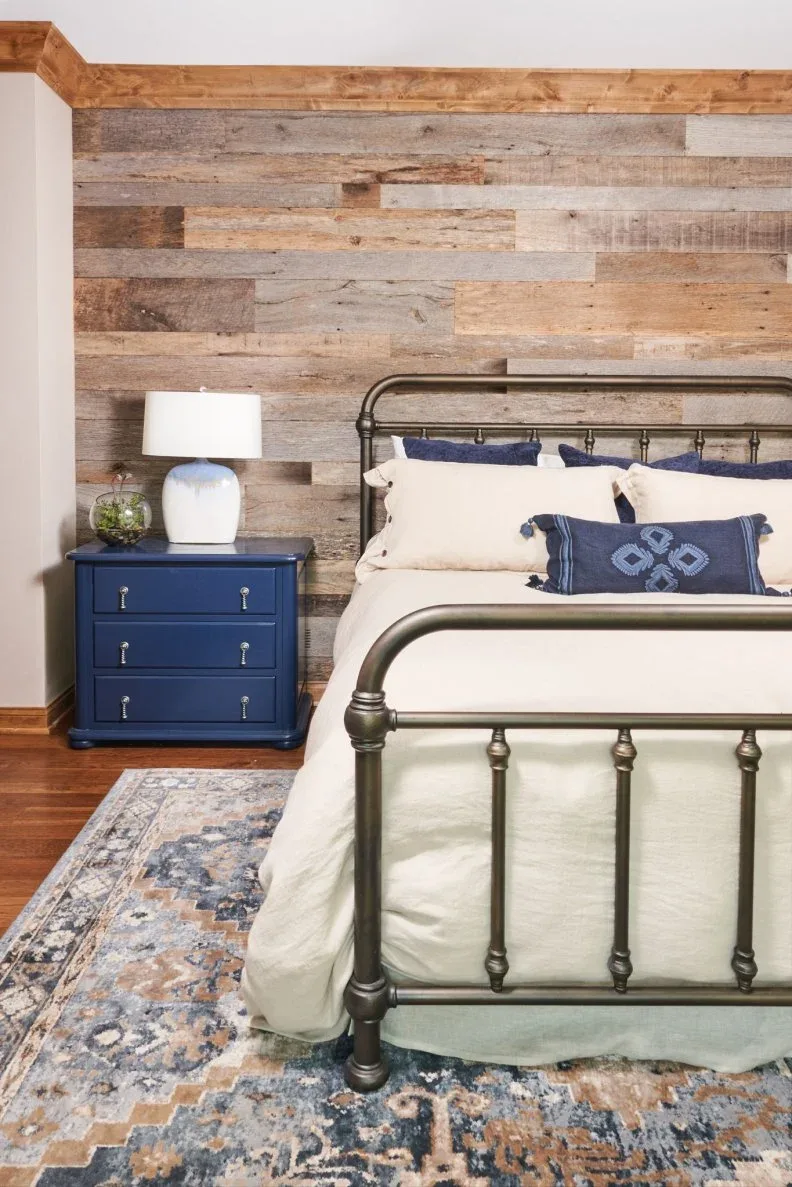
Timber boards in pale gray and warmer brown form the bed wall, with their color changes visible across neighboring pieces. The dark metal bed has a more continuous outline in front. A blue bedside chest and patterned rug pick up cooler tones while pale bedding separates the furniture from the busy wall.
Lay out a larger group of boards before installation to judge their color range and joint positions. A few darker pieces can affect the balance more than a small sample suggests. Keep additional furniture finishes limited, and confirm wall preparation, fixing and timber suitability before copying a weathered-board treatment.
IDEA 15 / 20
Introduce Rustic Character Through a Quilt
 SaveSupport Non AI Creator
Image credit: From: White Arrow
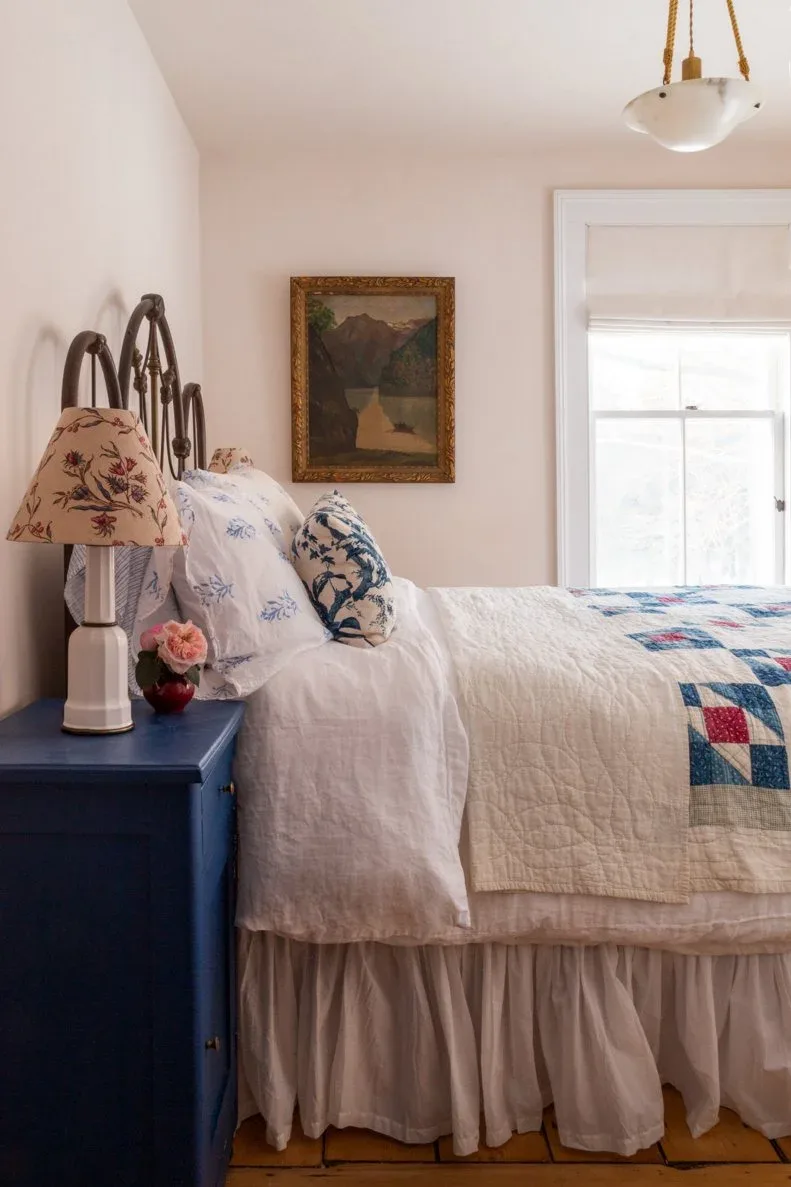
The patchwork quilt brings color and visible stitched texture into a room with plain pale walls. A dark metal headboard and blue bedside cabinet give it a simpler frame, while the floral lamp shade introduces a smaller pattern. Warm floorboards contribute timber without requiring a new wall treatment.
Use a quilt or familiar textile as the starting point when the room has little rustic architecture. Choose one or two colors from it for smaller furnishings rather than reproducing the whole pattern. Check washing and storage requirements for the actual piece, and keep delicate or valuable textiles out of prolonged strong sunlight where their care guidance requires it.
PART 04
Choose smaller details and practical storage
IDEA 16 / 20
Bring Woven Texture into a Paneled Room
 SaveSupport Non AI Creator
Image credit: Oka
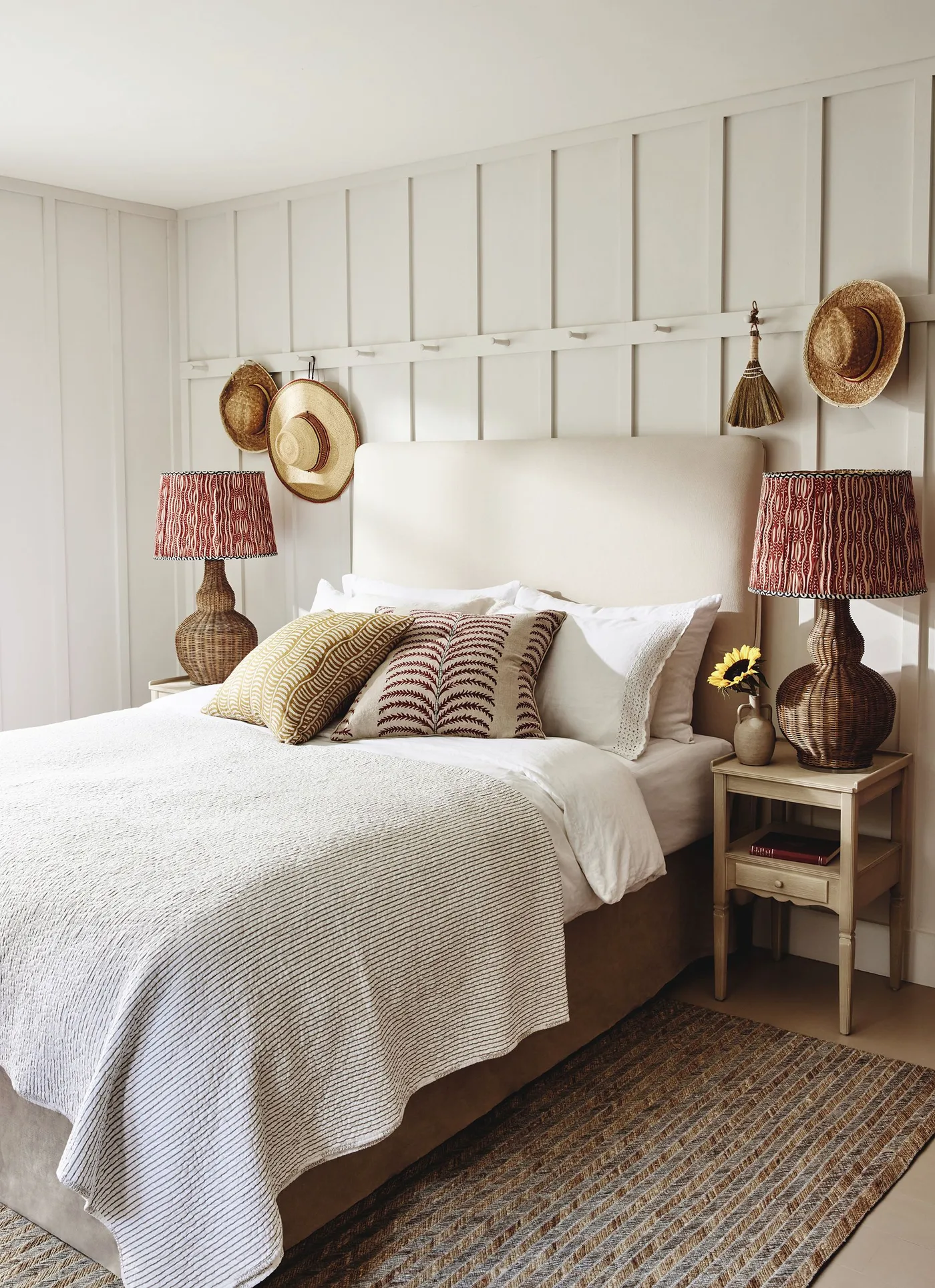
Woven lamp bases add rounded texture against the straighter pale wall paneling. Their patterned shades repeat the warmer colors in the cushions, while a cream headboard keeps the center simple. Timber bedside tables and the darker textured rug extend the rustic details through useful furnishings rather than larger architectural changes.
Choose lamp size around the bedside surface and the height of the mattress. A substantial base needs room for daily essentials as well as its shade. Keep wall displays secure, and compare the weave of lamps and rugs so their textures complement each other without making every nearby object equally detailed.
IDEA 17 / 20
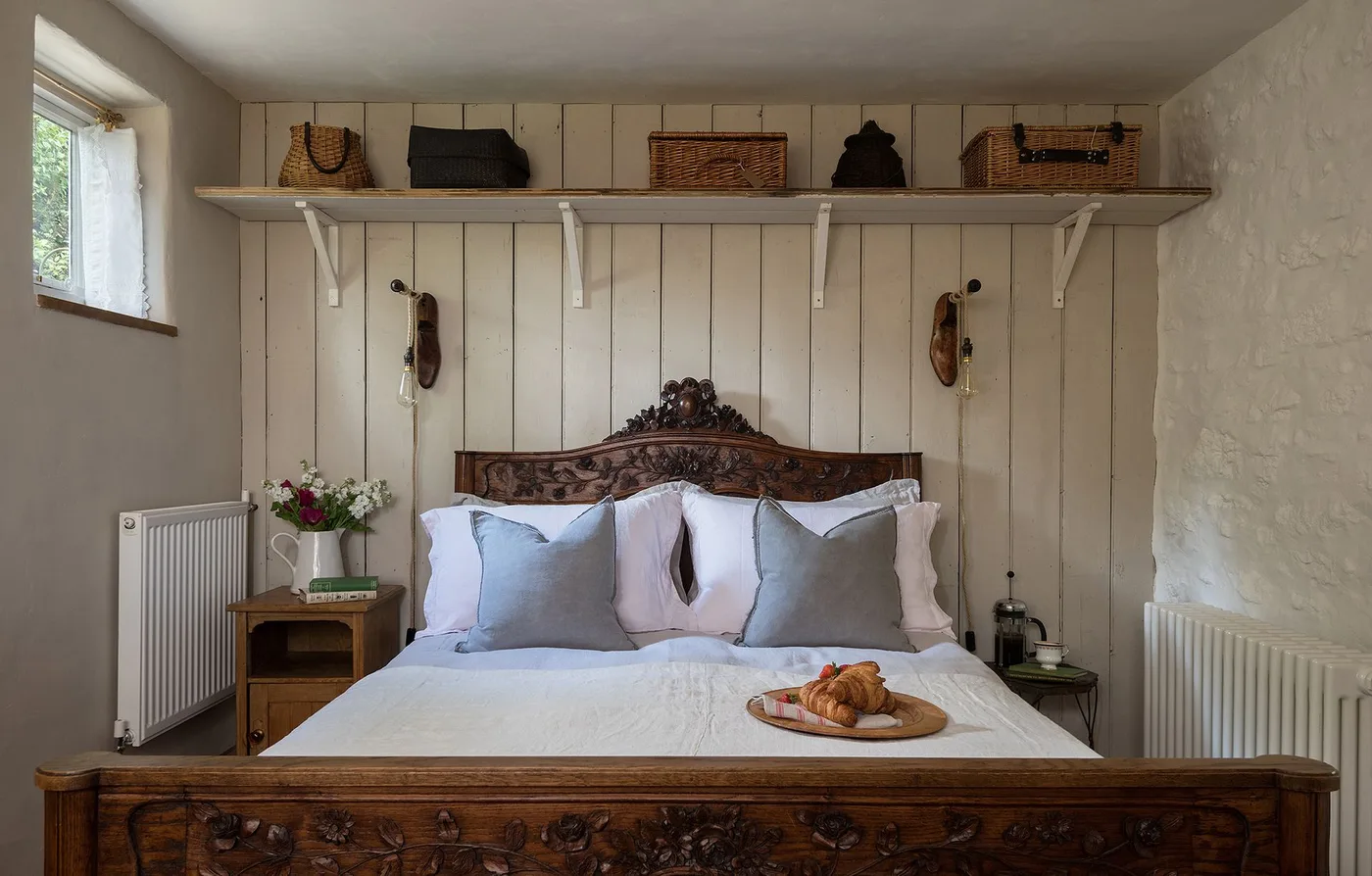
Give a Carved Bed a Plain Board Background
 SaveSupport Non AI Creator
Image credit: Unique Home Stays
A carved timber headboard and footboard bring the strongest decorative detail to this bedroom. Pale boards behind them provide a simpler vertical rhythm, while baskets and bags on the long shelf add woven texture higher up. White bedding and blue-gray cushions leave the carving visible rather than repeating its complexity in fabric.
Check shelf fixings and keep stored items stable, especially above a sleeping position. Use the carved bed as the main detailed piece when choosing bedside furniture. Leave heating equipment unobstructed according to its requirements; storage and decorative baskets should not make a compact room harder to heat, clean or move through.
IDEA 18 / 20
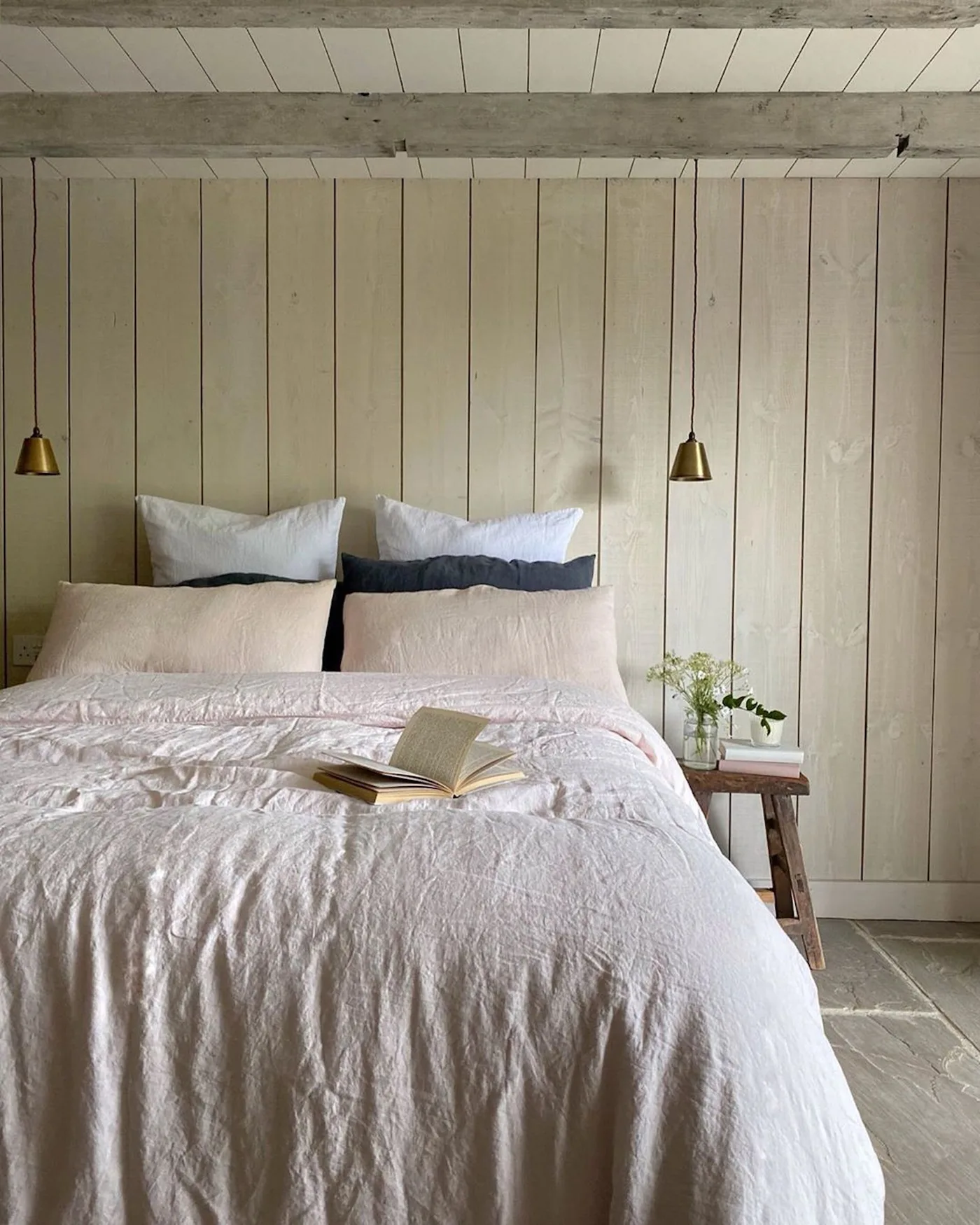
Keep a Boarded Bedroom Deliberately Sparse
 SaveSupport Non AI Creator
Image credit: Steph Gowland/Bedfolk
Pale boards cover the wall behind a simple bed, with exposed ceiling beams creating another layer of timber overhead. Small hanging lights leave the bedside areas comparatively open. Soft neutral bedding and a modest timber stool provide the room’s few furnishings, allowing the grain and board widths to remain the clearer details.
Choose a few useful objects rather than filling the wall with additional displays. Check hanging light positions against the bed and the way someone sits up or reaches for a switch. A stool can work as a small bedside surface, but compare its stability, height and capacity with the belongings you need close by.
IDEA 19 / 20
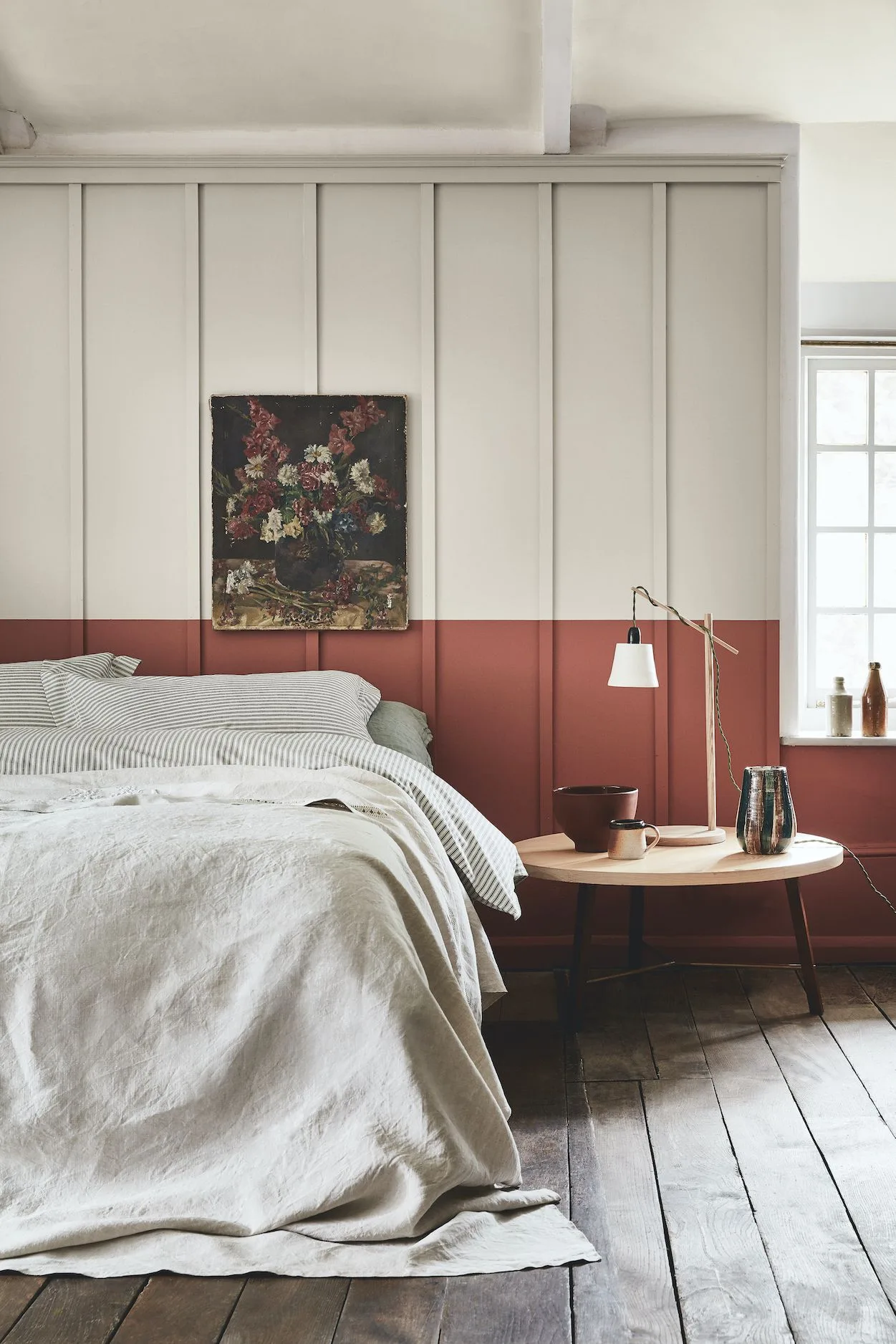
Use a Warm Painted Band on Timber Paneling
 SaveSupport Non AI Creator
Image credit: Little Greene
A rust-red band crosses the lower wall paneling, warming the room without covering the full height in a strong color. Pale bedding and finer stripes sit against the broader board outlines. A round timber table and simple adjustable lamp provide practical bedside shapes beside the more textured floorboards.
Mark the paint boundary against the actual mattress and furniture heights before starting. Check the line at corners and around trim so it remains intentional across the room. Choose a finish compatible with the existing paneling, and test the warm color under bedside lighting before painting a long continuous band.
IDEA 20 / 20
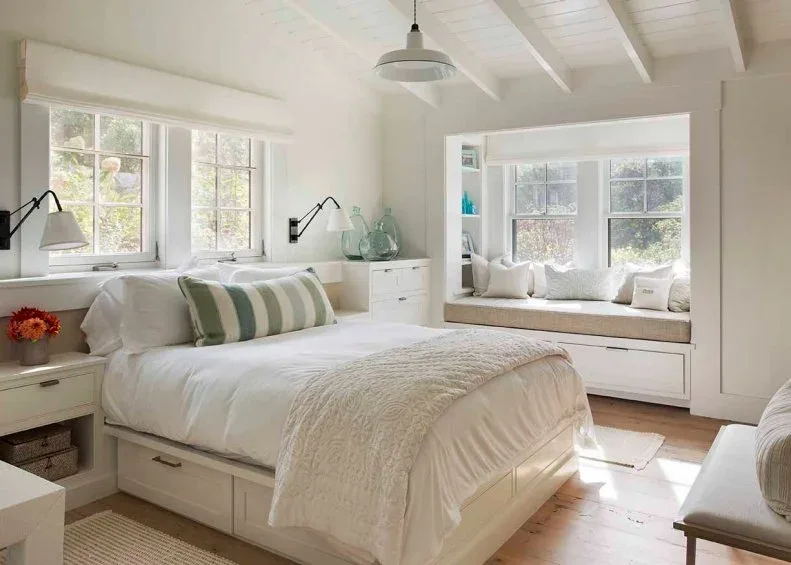
Make Built-In Storage Part of a Pale Rustic Room
 SaveSupport Non AI Creator
Image credit: Photo: Eric Roth. From: Martha's Vineyard Interior Design
Pale exposed ceiling beams give this bedroom its clearest architectural rhythm. The bed base includes drawers, while the window bench provides a separate sitting place with storage below. Simple bedding, small wall lamps and a few glass vessels keep the room useful without adding several freestanding cabinets.
Check every drawer opening with the bed and nearby furniture in their final positions. A built-in bed can save space elsewhere while becoming awkward if a bedside unit blocks storage access. Keep the window seat comfortable and reachable, and compare the larger white surfaces together so their differences in finish do not look accidental.
BRING IT ALL TOGETHER
Keep the texture and make the layout comfortable
Identify the surface or piece of furniture that already gives the bedroom character. Let that guide the scale of other patterns, adding quieter bedding and storage where the architecture is busy. A quilt, lamp or small timber chest can introduce rustic detail without a complete refit.
Measure around the bed with drawers, doors and seating in use. Check the condition and appropriate care of timber, stone and older furnishings before adapting them. Choose practical light positions and secure displays, keeping the bedroom comfortable to clean and use as well as pleasing to look at.