A red brick fireplace does not always need to be covered to feel at home in a refreshed room. Wall color, a better-proportioned mantel and quieter surrounding furniture can change its appearance while keeping the brick visible. Start by deciding what you value about the existing fireplace before choosing a finish.
These photographed rooms show retained red and mixed-tone brick, pale textured examples and one charcoal-painted direction. They are individual references, not before-and-after pairs. Any changes to the fireplace, hearth, surround or coatings should be checked for the actual masonry and appliance before work begins.
PART 01
Refresh the Room While Keeping Brick Visible
IDEA 01 / 15
Keep the Brick and Give the Mantel a Pale Frame
 SaveSupport Non AI Creator
Image credit: Steves Photography / Cline Design Group
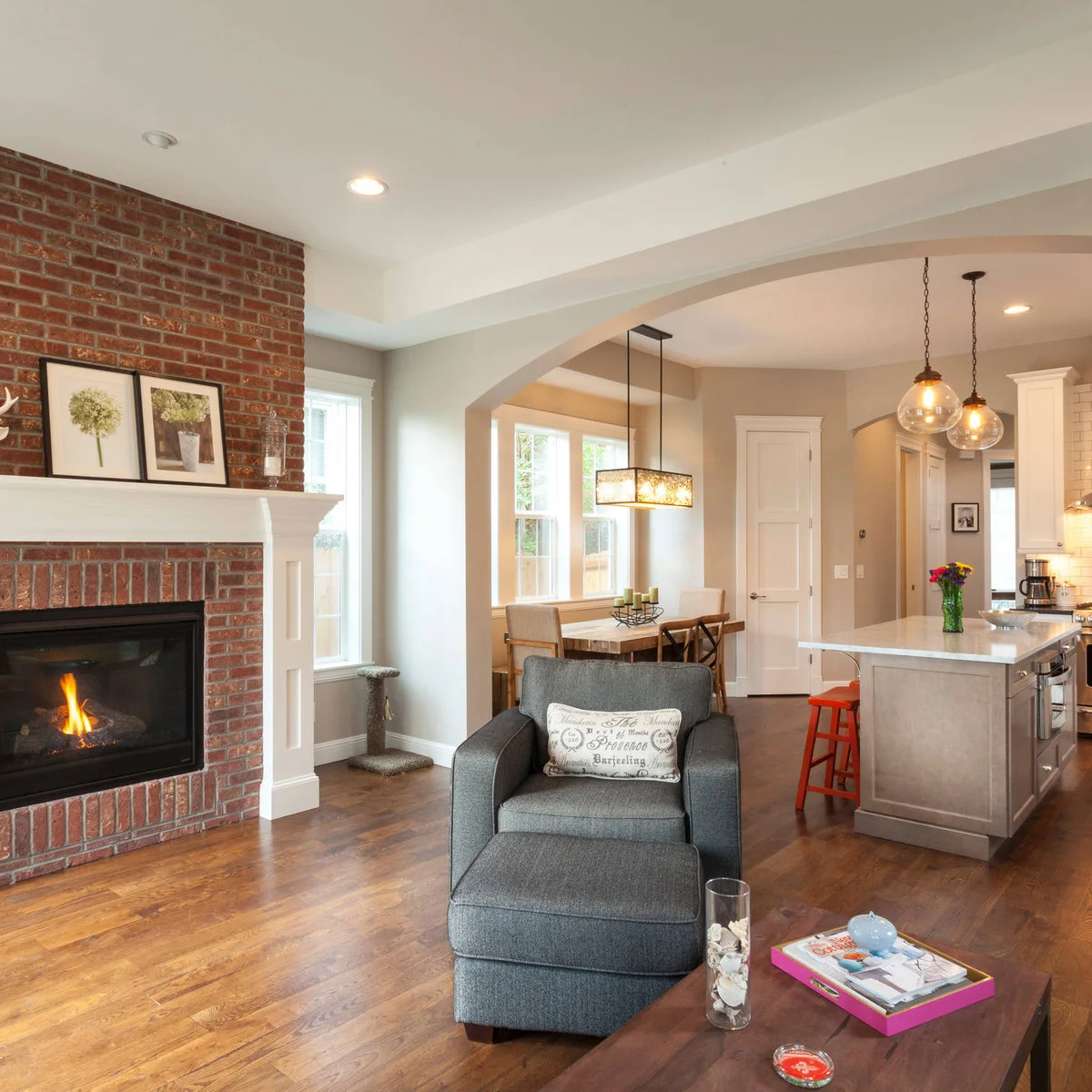
The red brick remains visible above and inside the pale mantel frame, connecting the fireplace with the warm wood floor. Gray walls and a plain gray chair give it a quieter setting. The frame changes the fireplace’s outline without hiding the full-height brick above.
Compare a pale trim sample with both the mortar and the adjoining wall before choosing its shade. Keep the mantel’s proposed width and projection in the fireplace assessment rather than deciding from appearance alone. Test the surrounding furniture arrangement so the refreshed fireplace does not narrow the route into the next room.
IDEA 02 / 15
Lighten the Shelves Around a Full-Height Brick Chimney
 SaveSupport Non AI Creator
Image credit: Project: Diana Crimmins at Local Color Interiors (via Houzz)
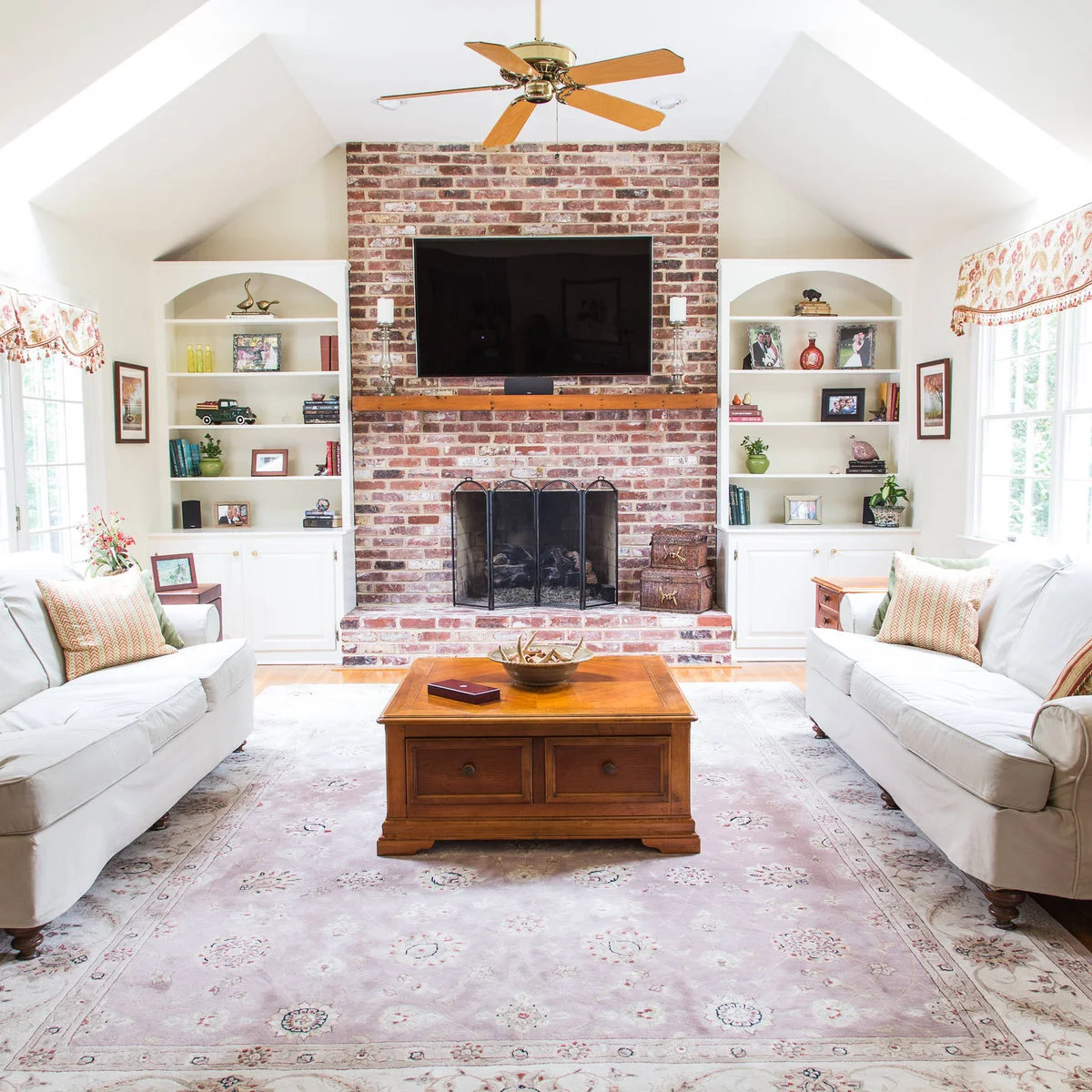
Pale shelves and cupboards frame the full-height mixed red brick chimney, helping its texture remain the central detail. A simple wood mantel crosses the brick, while pale sofas continue the lighter surrounding palette. The shelving follows the room’s lower side walls beneath the sloping ceiling.
Compare fireplace built-ins with the space actually available beside your chimney before planning cabinets. Check the fireplace requirements and leave service access where needed. A lighter shelf finish can make a substantial difference without coating the brick, but keep displayed objects selective so they do not turn both sides into competing focal points.
IDEA 03 / 15
Refresh the Walls Before Changing the Brick
 SaveSupport Non AI Creator
Image credit: Project: Gentry Home Builders (via Houzz)
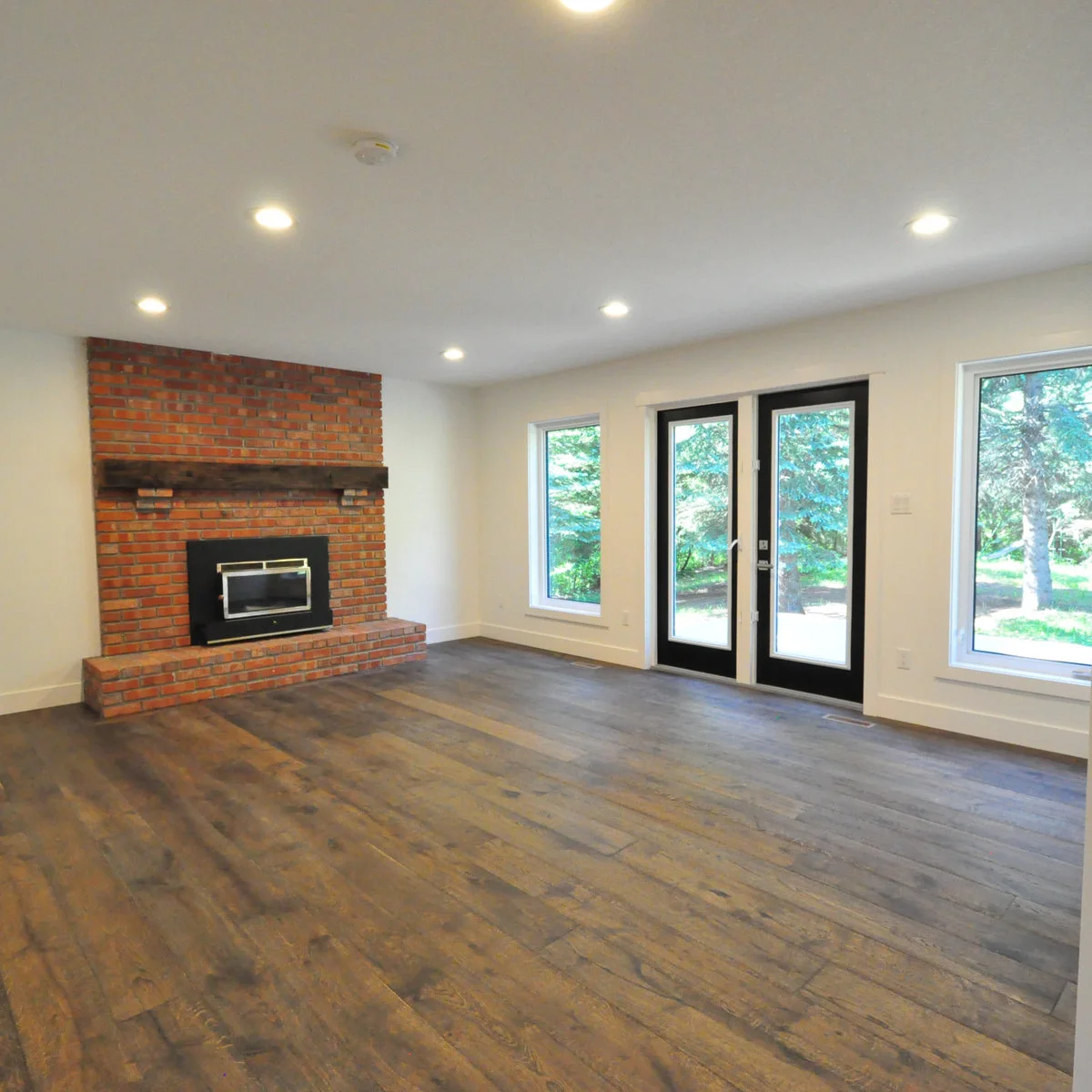
The retained red brick fireplace has a dark wood mantel and sits against freshly pale-looking walls. Dark glazed doors repeat the fireplace opening’s strongest outline, while broad gray-brown boards provide a different floor color. With little furniture in the room, the relationship between those fixed finishes is easy to see.
Test wall and trim samples beside the brick before deciding that the brick itself needs changing. Include the existing or proposed floor in that comparison. This photographed project documents a room refresh with retained original brick; use that principle to assess your own room without assuming its other construction changes are necessary.
IDEA 04 / 15
Keep the Brick as the Room’s Compact Warm Accent
 SaveSupport Non AI Creator
Image credit: Project: Coyle Modular Homes (via Houzz)
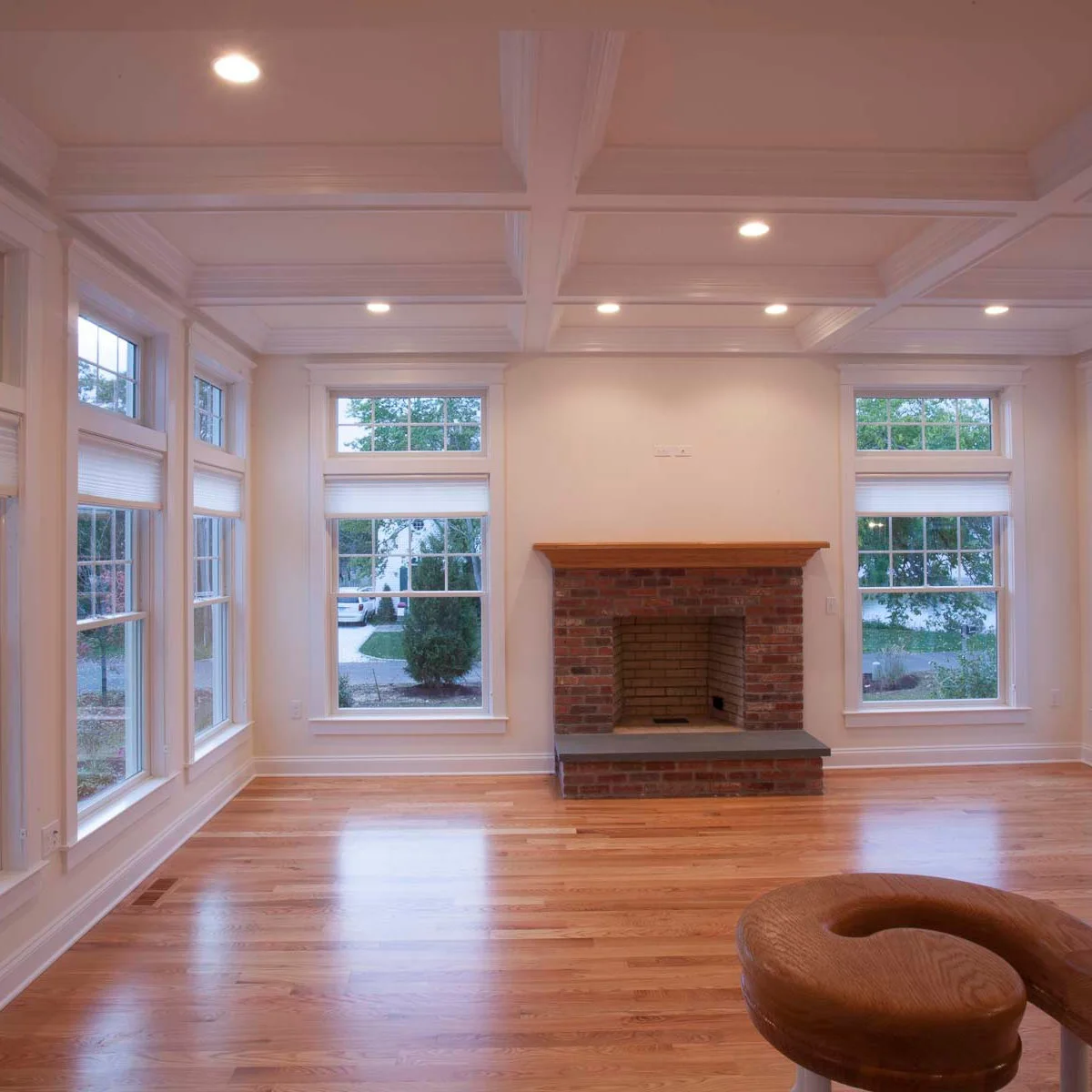
The compact brick fireplace forms a warm center between the tall windows. A plain wood mantel and dark hearth top give the brick clear upper and lower boundaries. Pale walls, white trim and light wood flooring keep the surrounding room visually simple around that smaller textured feature.
Check the room’s permanent proportions before adding a taller surround just to fill empty wall space. The window trim and ceiling details already provide structure. Compare mantel and hearth samples with the brick, and have any proposed replacement components assessed for the fireplace rather than treating them as ordinary furniture trim.
PART 02
Compare Mantel Shapes and Nearby Finishes
IDEA 05 / 15
Use a Pale Mantel Against a Deep Wall Color
 SaveSupport Non AI Creator
Image credit: Project: Natick Fireplace (via Houzz)
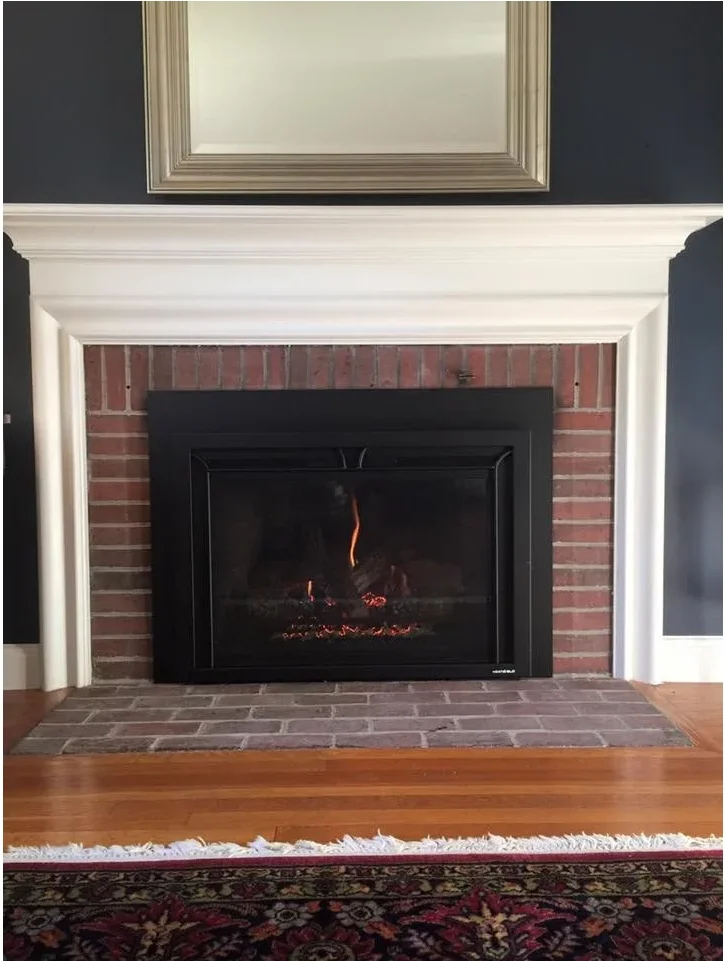
The pale mantel makes a distinct frame against the deep blue-gray wall, while the red brick remains visible around the dark insert. A matching brick hearth continues the texture below. The combination gives each layer a clear outline without adding a patterned finish to the surrounding wall.
Compare the deep wall sample with the mortar and the dark insert frame before painting a large area. Keep the mantel finish consistent with the trim if you want its shape to feel connected to the room. Have the insert and surrounding clearances assessed independently of the wall color decision.
IDEA 06 / 15
Compare a Plain Wood Shelf with Simple Corbels
 SaveSupport Non AI Creator
Image credit: Project: Jonathan Miller Architects (via Houzz)
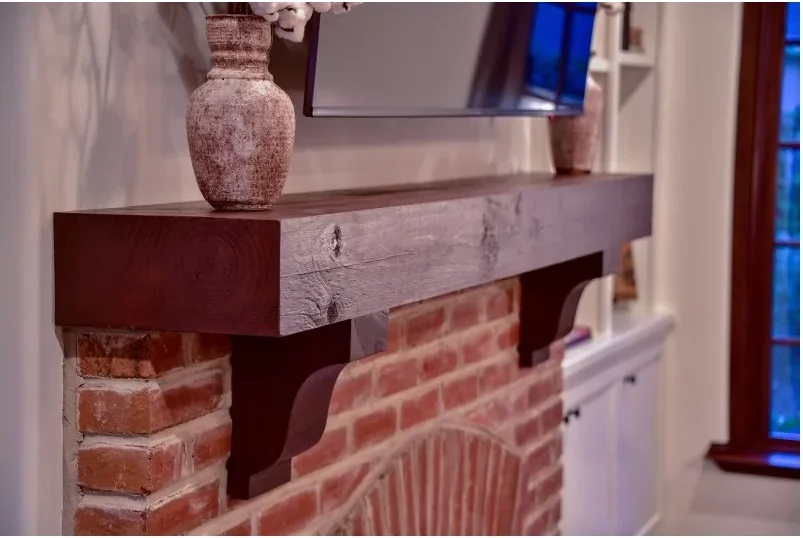
The plain wood shelf gives the brick a strong horizontal line, while shaped corbels add smaller detail beneath it. The red brick arch remains visible below the mantel rather than disappearing behind a broad painted surround. Pale shelving at the side provides a lighter counterpart to the dark wood.
Use fireplace mantel decor to compare the visible shelf space before adding several objects. Check the proposed wood, projection and fixing method with a fireplace professional. A deep shelf may look useful for display, but its permitted position depends on the actual fireplace rather than the height shown in a close-up photograph.
IDEA 07 / 15
Keep a Tall Brick Chimney Connected to Wood Beams
 SaveSupport Non AI Creator
Image credit: Cory Holland, Holland Photography / Design Harmony
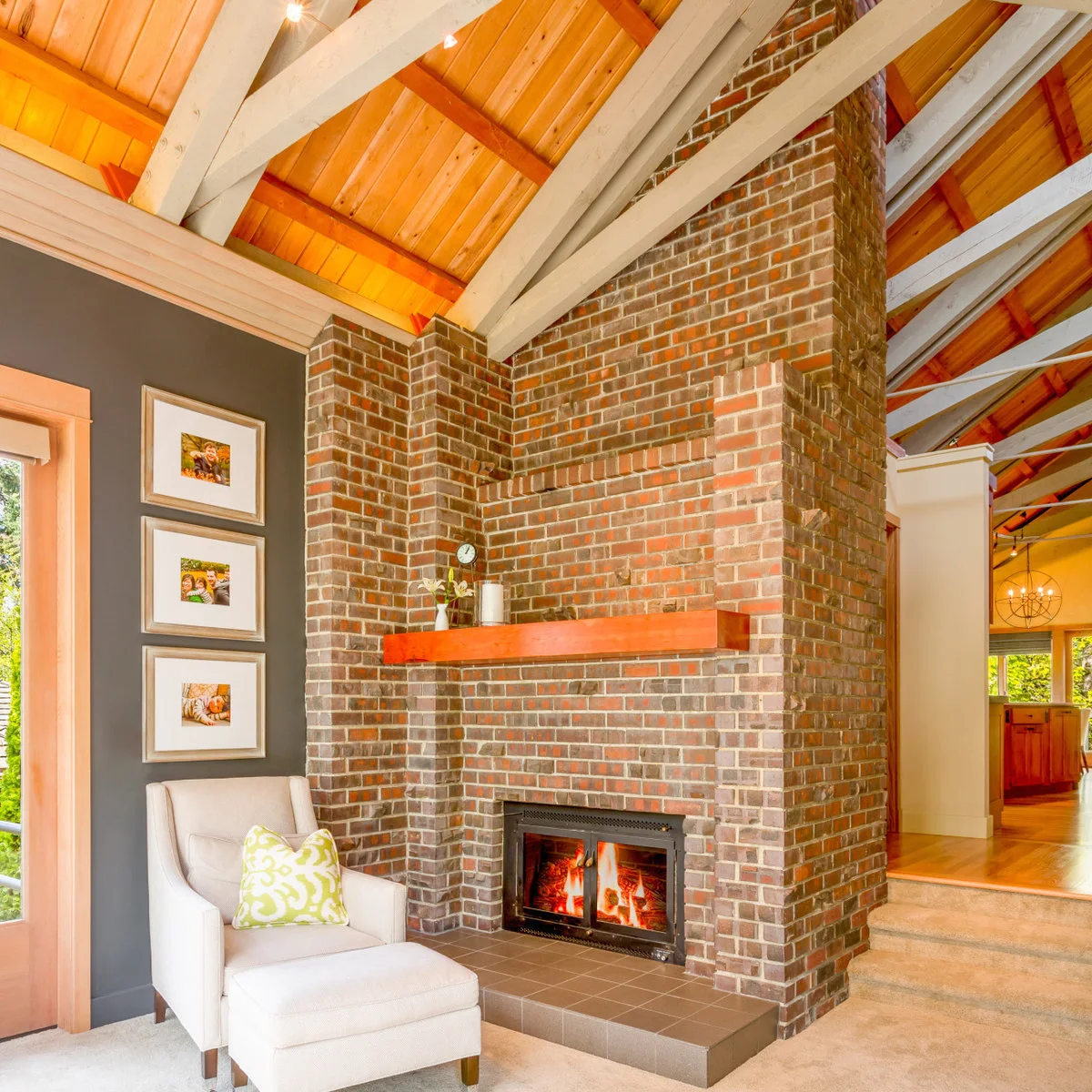
The mixed red and brown brick chimney rises into the exposed roof framing, giving the room a substantial textured center. A thick wood mantel relates to the ceiling boards, while the white trusses separate the warm surfaces. A pale chair and gray wall provide a quieter area beside the chimney.
Compare the mantel wood with the ceiling and floor rather than introducing another strong warm finish without a sample. Check the appliance and mantel requirements before altering its thickness or position. Keep furnishings and textiles outside the required operating area even when a close seating arrangement looks appealing in a photograph.
IDEA 08 / 15
Use a Detailed Pale Surround with Softer Seating
 SaveSupport Non AI Creator
Image credit: Steve Chenn / Thompson Custom Homes
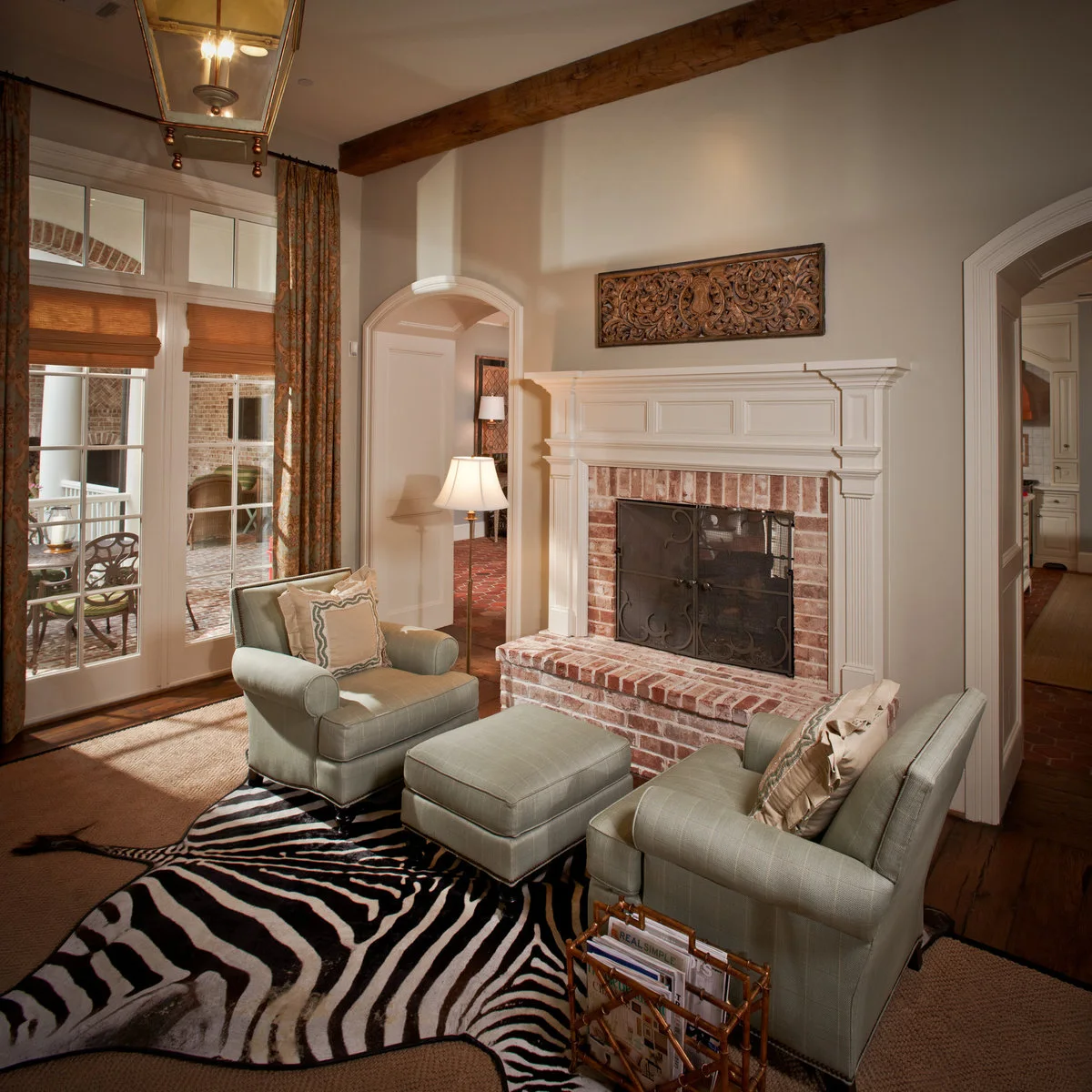
The detailed pale mantel gives the red brick a more formal frame, while muted green chairs soften the area in front. Gray walls keep the surrounding color restrained. Tall curtains and a carved wall panel add detail farther from the opening rather than covering the visible brick face.
Check the surround’s full outline against nearby doorways and window trim before choosing a more elaborate profile. Keep enough clear floor for the chairs to be used comfortably outside the fireplace’s required clearances. Compare the green upholstery with the brick in your room, since its effect depends on the actual red and mortar tones.
PART 03
Use Furnishings to Work with the Brick Color
IDEA 09 / 15
Repeat Blue Around a Small Red Brick Inset
 SaveSupport Non AI Creator
Image credit: Michael J. Lee Photography / Katie Rosenfeld Design
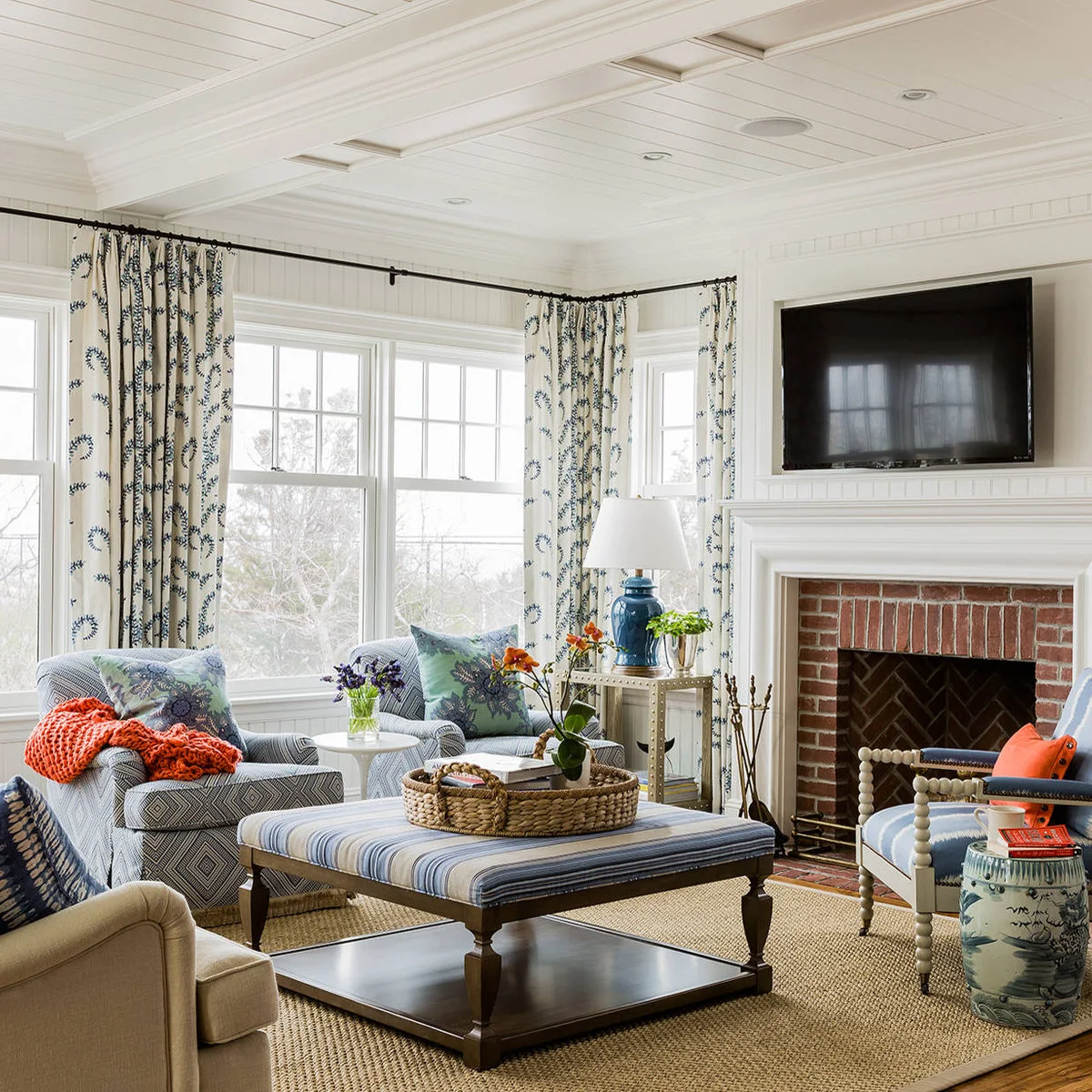
Blue patterns appear across the curtains, chairs and ottoman, giving the small red brick inset a repeated contrasting color around it. The pale surround and wall paneling keep the fireplace’s outline simple. Small orange accents connect the warmer brick with the otherwise blue and cream seating area.
Try a few textiles before committing to patterned upholstery throughout the room. Check the largest pattern beside the actual brick and floor, then leave some plainer surfaces between them. Assess the television position and nearby furniture separately for comfort and appliance requirements rather than assuming the photographed arrangement is a universal layout.
IDEA 10 / 15
Echo the Brick in a Rug and a Single Chair
 SaveSupport Non AI Creator
Image credit: Sober Photography / Perfect Touch Interiors
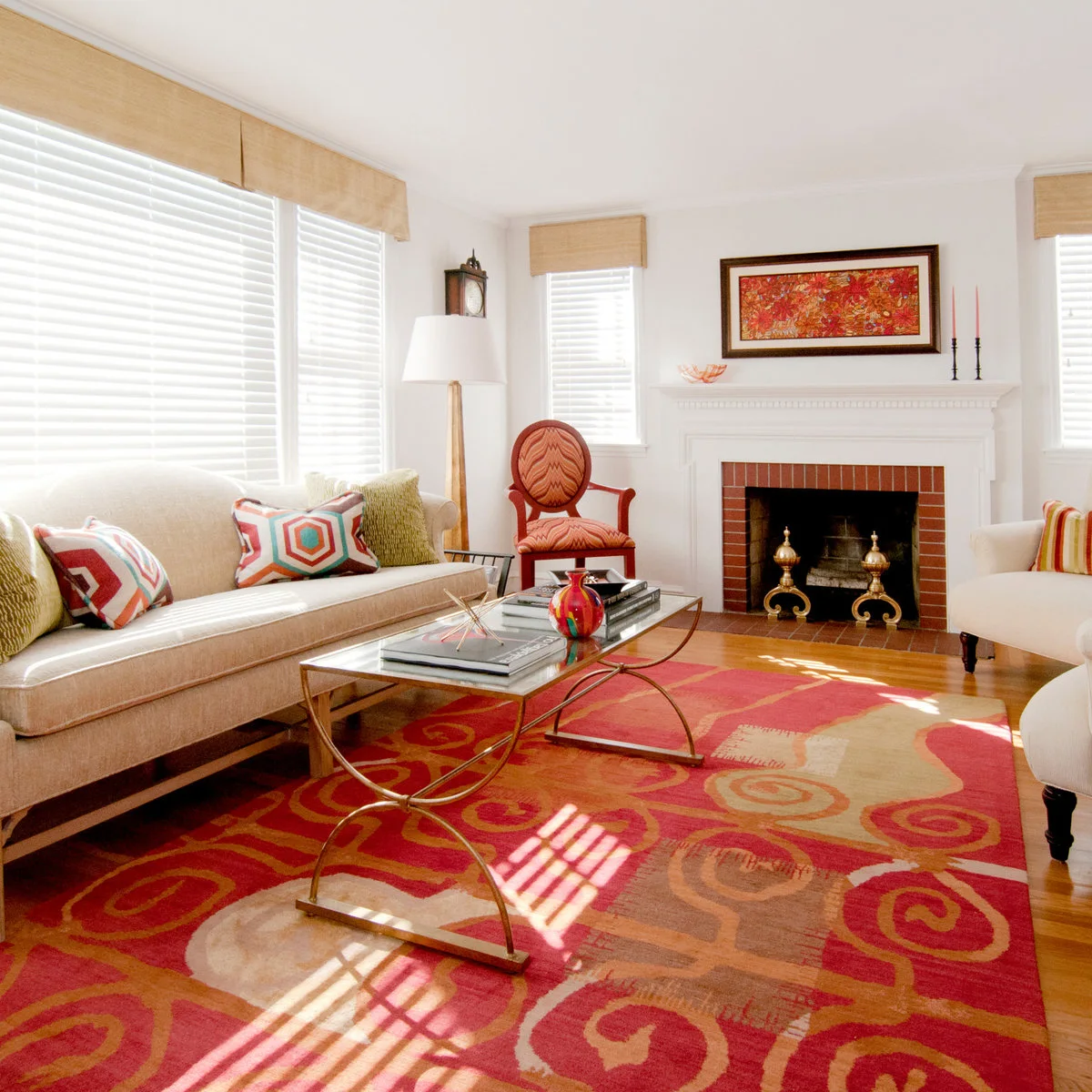
The red patterned rug and red-framed chair repeat the warmth of the brick without covering it. Pale seating and a light mantel make those repeated colors more distinct. A glass-topped table keeps the rug visible, while the framed artwork continues the warmer palette above the shelf.
Compare red fabrics and the brick in the same light before selecting several pieces at once. They do not need to match exactly, but each should look deliberate beside the others. Keep the hearth and working area clear, and place small decorative objects where they do not interfere with fireplace use or maintenance.
IDEA 11 / 15
Pair Mixed-Tone Brick with a Weathered Wood Shelf
 SaveSupport Non AI Creator
Image credit: Andrea Cary / White Oak Construction
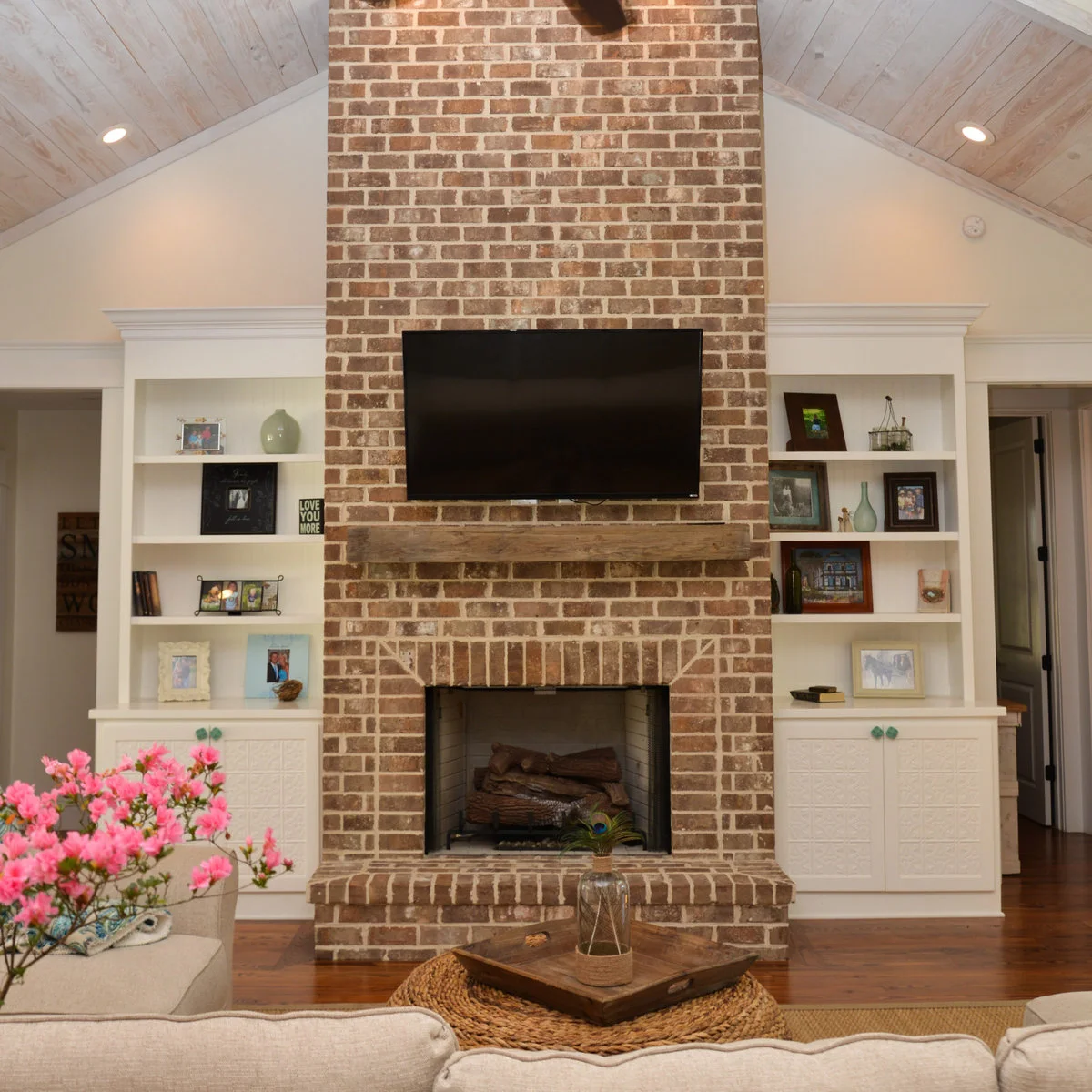
The mixed-tone brick and weathered wood shelf give this chimney a quieter rustic character than a bright painted surround would. Pale built-ins on both sides keep the brick visible as one central surface. A raised brick hearth repeats the chimney texture at floor level beneath the opening.
Compare a weathered wood sample with the existing brick before choosing a replacement shelf finish. Keep television installation and cable routing separate from the decorative plan. Leave the hearth usable and easy to inspect instead of treating its entire surface as permanent display space simply because the room is styled for a photograph.
IDEA 12 / 15
Work with Warm Walls and Dark Upholstery
 SaveSupport Non AI Creator
Image credit: Project: Kristin von Zweck, Architect (via Houzz)
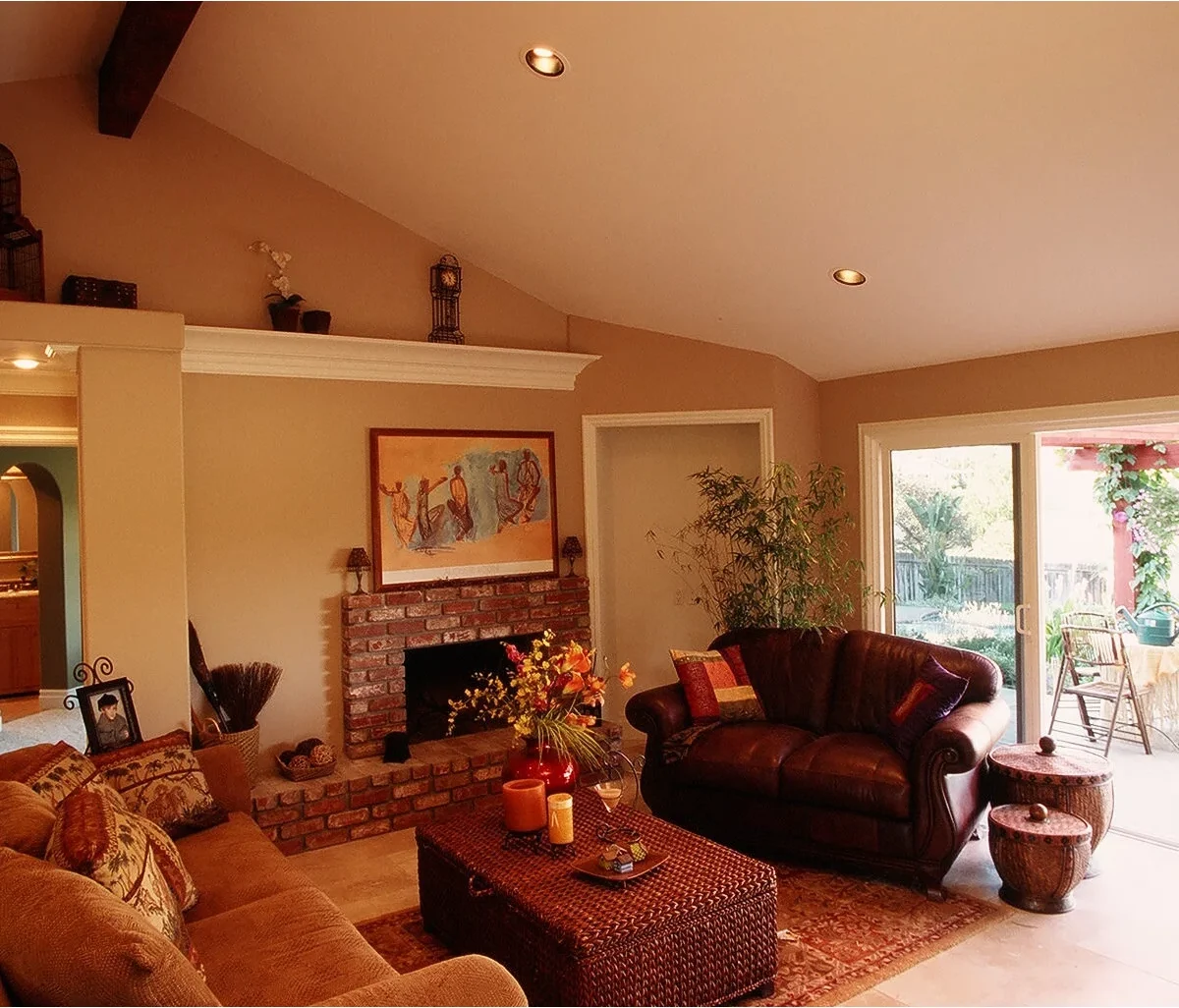
Warm tan walls and dark leather seating give this red brick fireplace a close family of surrounding colors. A woven coffee table adds texture lower in the room, while the pale door trim separates the warmer surfaces. The brick remains a distinct feature without needing a large new mantel.
Lay wall, upholstery and rug samples beside the brick to check that the combined warm tones do not become too heavy for the room. Try removing extra small accessories before making permanent changes. Keep floral arrangements, furniture and baskets outside the fireplace’s required operating clearances when setting up the room for everyday use.
PART 04
Consider a Different Finish Carefully
IDEA 13 / 15
Compare a Pale Varied Finish Without Hiding Every Brick
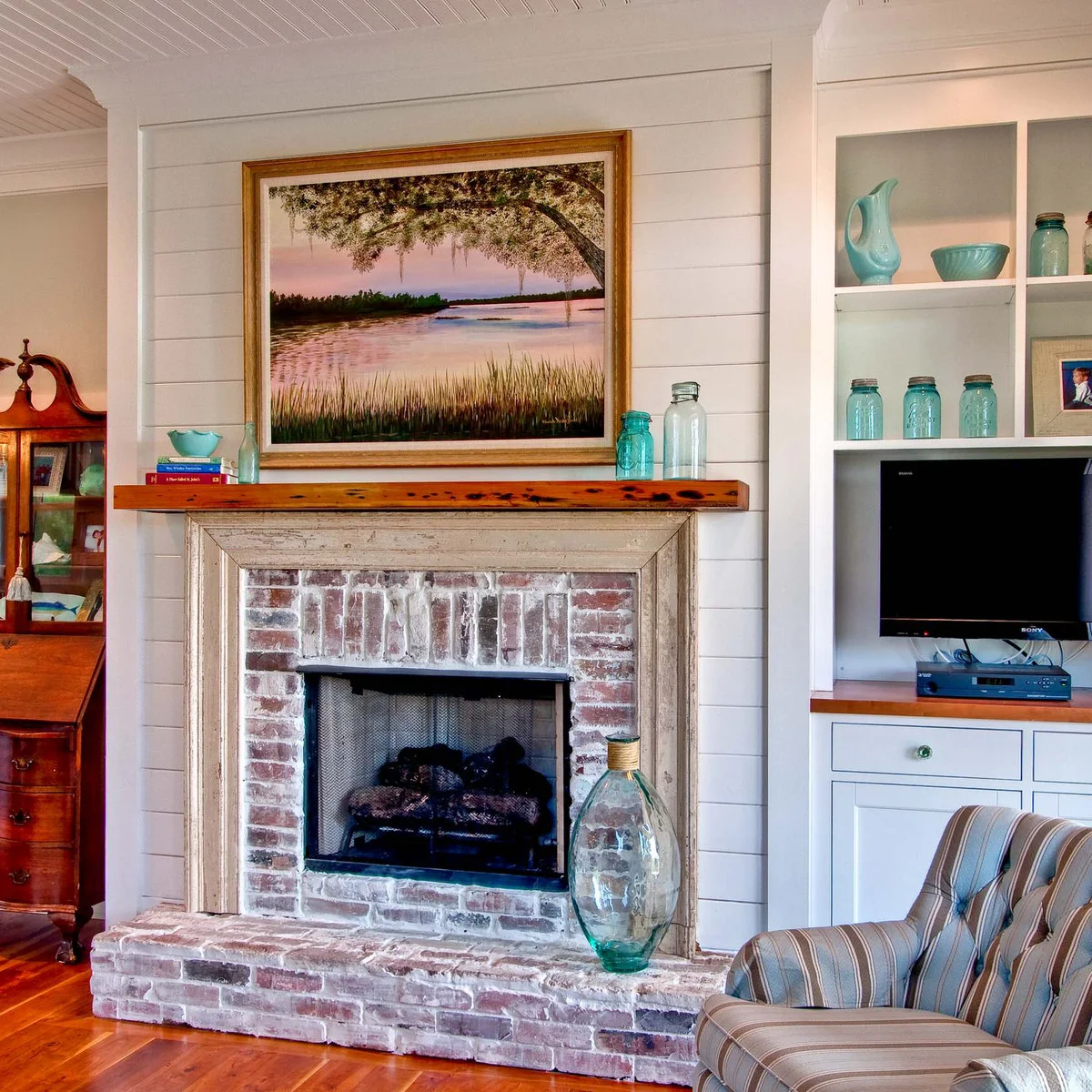 SaveSupport Non AI Creator
Image credit: Blake Middleton / The Middleton Group
The brick remains visibly varied beneath the pale areas, while a weathered pale frame and wood shelf add two different boundaries above it. White wall boards continue the lighter treatment beyond the fireplace. Blue-green glass accessories provide a smaller color accent beside the warmer shelf and flooring.
If you want a similar lighter appearance, have the brick assessed and compare appropriate sample finishes before treating the full surround. This photograph does not identify the coating or its application method. Follow the selected system’s instructions, and keep the firebox and any appliance-specific surfaces outside an ordinary decorative paint project.
IDEA 14 / 15
Let Pale Brick Texture Remain the Main Feature
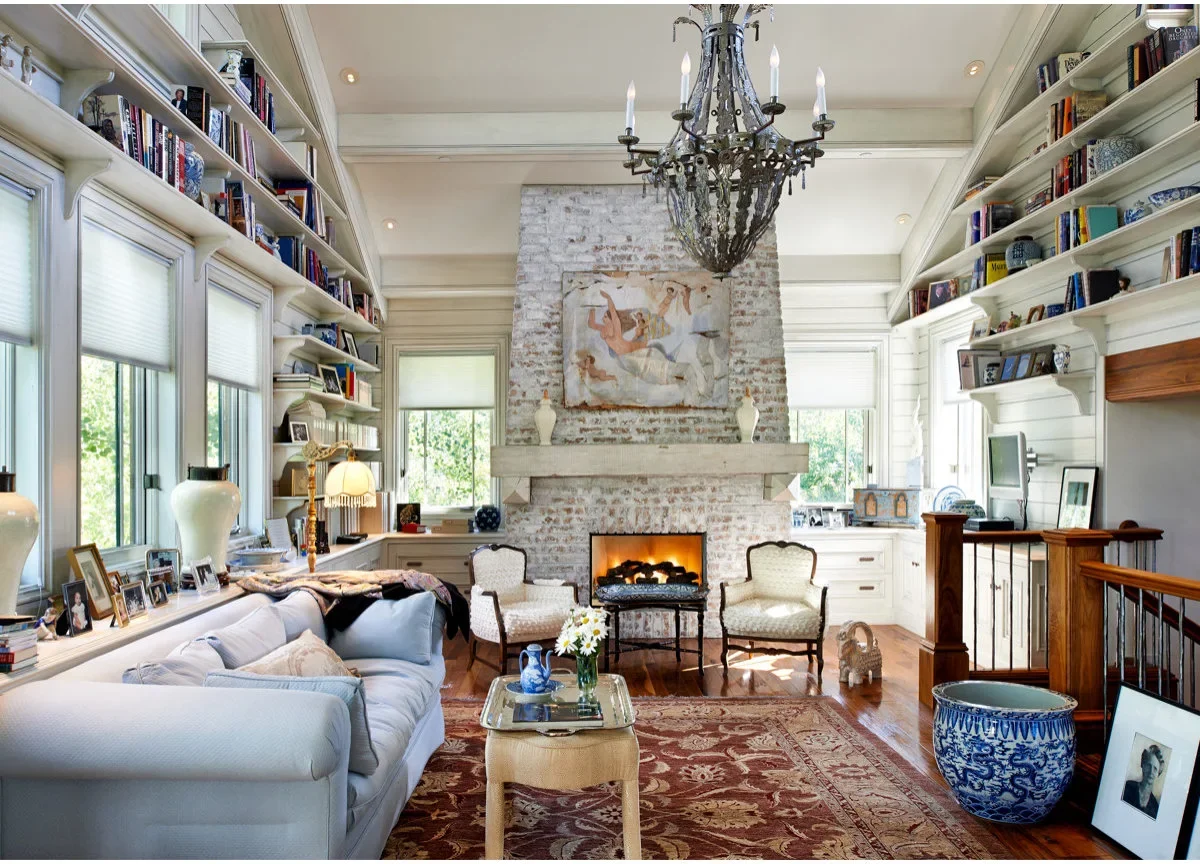 SaveSupport Non AI Creator
Image credit: Project: Judge + Associates (via Houzz)
The tall chimney has a pale, unevenly colored surface that leaves the brick pattern and patches of warmer tone visible. A broad simple mantel crosses it below the artwork. High pale bookshelves and a light sofa keep the room’s largest surrounding surfaces restrained, while the red rug adds warmth lower down.
Compare the texture you want to retain before choosing a coating that could cover it. A photo cannot establish whether this appearance comes from a particular wash, mortar treatment or original masonry. Ask a suitable professional to assess your brick, then approve a small sample and preparation plan before treating the full chimney.
IDEA 15 / 15
Consider Charcoal as a Full-Color Finish Direction
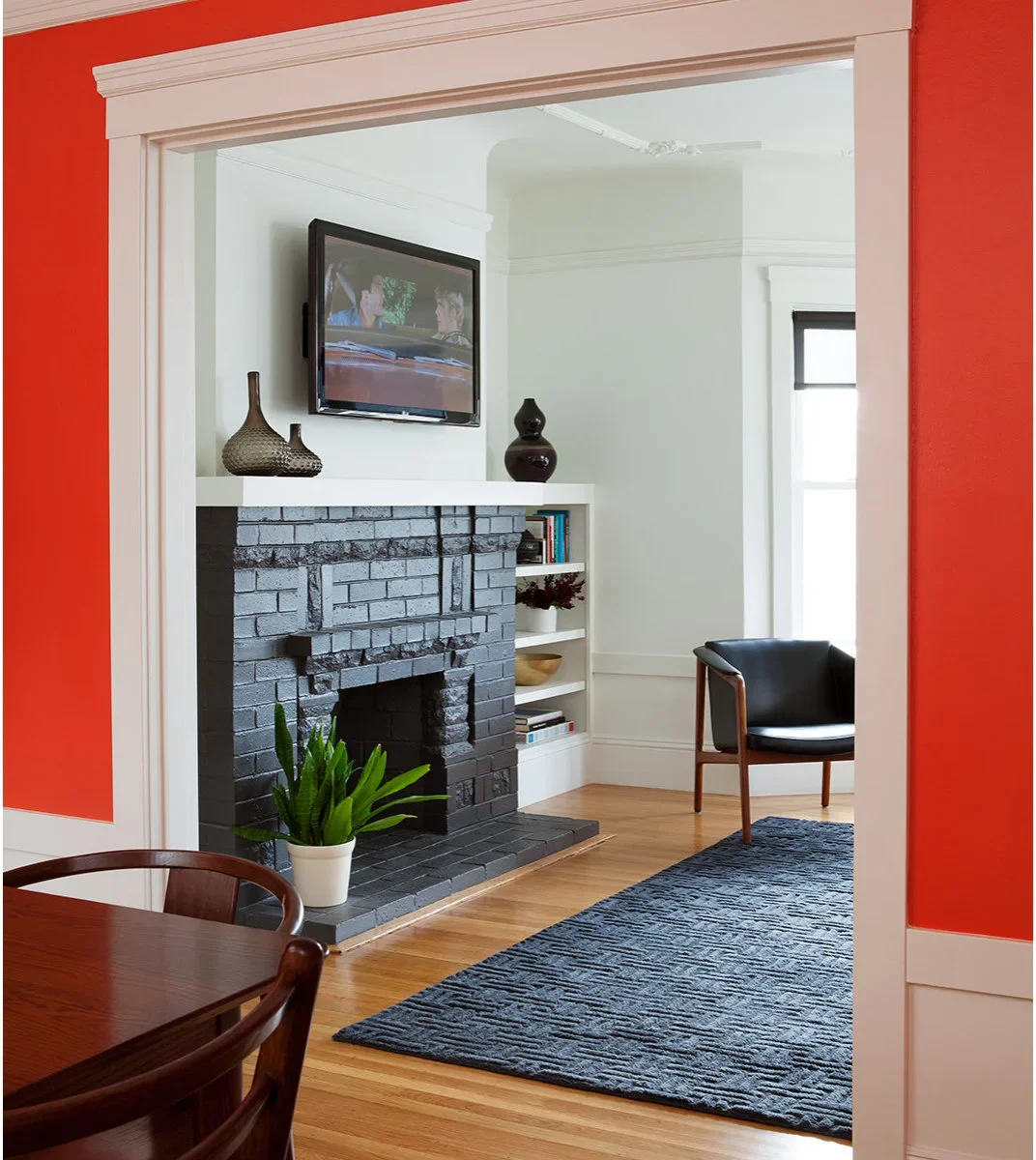 SaveSupport Non AI Creator
Image credit: Michele Lee Willson / Christy Allen Designs
The charcoal finish unifies the brick faces and joints into a darker surface while leaving their texture visible. A pale shelf provides a clear top edge, and the white room keeps the fireplace distinct. Red appears in the adjoining doorway rather than remaining on the brick face.
Compare more brick fireplace ideas before committing to a full-color coating, especially if you value the existing masonry variation. This is a painted-brick reference, with no original brick color established. Check surface suitability and preparation with the coating maker and installer, and do not extend ordinary decorative paint into the firebox.
BRING IT ALL TOGETHER
Try the Surrounding Changes Before Covering Brick
Compare wall paint, furniture fabric and mantel samples beside the existing brick before choosing a coating. The brick contains several colors, so view more than one small area. A quieter surrounding palette may give you the change you want while preserving the original variation.
Have the masonry condition and fireplace requirements assessed before coating, drilling or altering the surround. Choose a finish for the actual surface and use conditions, and follow its preparation instructions. Keep the hearth, openings and required clearances usable; a styled photograph does not establish that every object shown should remain there during operation.