Dining room paneling can give a plain wall a rhythm, connect storage with the table or provide a quiet base beneath busy wallpaper. The best arrangement responds to the room’s windows, openings and furniture rather than treating the wall as an empty rectangle.
These examples show framed panels, vertical boards, slatted features and painted molding in dining settings. Compare their proportions and visible details, then plan chair clearance, lighting positions and cleaning access before choosing a treatment for your own room.
PART 01
Shape the Wall With Color and Frames
IDEA 01 / 17
Layer Two Panel Patterns in a Dining Corner
 SaveSupport Non AI Creator
Image credit: Future PLC/Dominic Blackmore
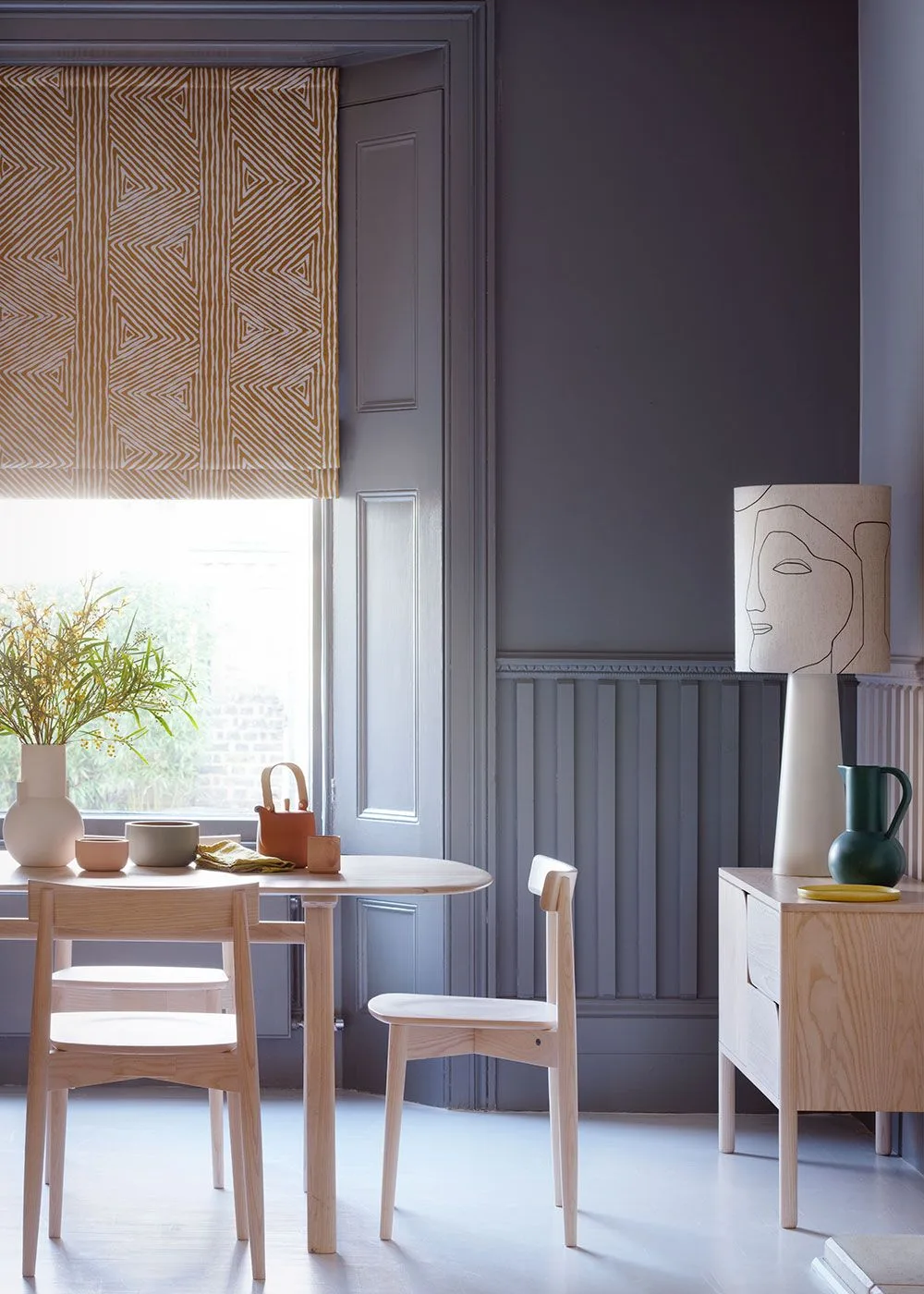
Narrow vertical panels run beneath a decorative rail in this gray dining corner, while larger framed sections rise around the window. A pale table and chairs keep the furniture quiet against the layered wall detail. The patterned blind and sculptural lamp add interest without introducing another strong color, making the different panel proportions the main feature of this small setting.
Plan the lower rail and upper divisions together before fixing trim. Window edges, switches and the height of nearby furniture can interrupt a pattern that looks balanced on an empty wall. Keep the table far enough away that chair backs do not repeatedly rub against the paneling. Choose a cleanable finish appropriate to the panel material, particularly around the lower sections near dining seats.
IDEA 02 / 17
Use a Painted Rail to Unify Deep Wall Color
 SaveSupport Non AI Creator
Image credit: Crown
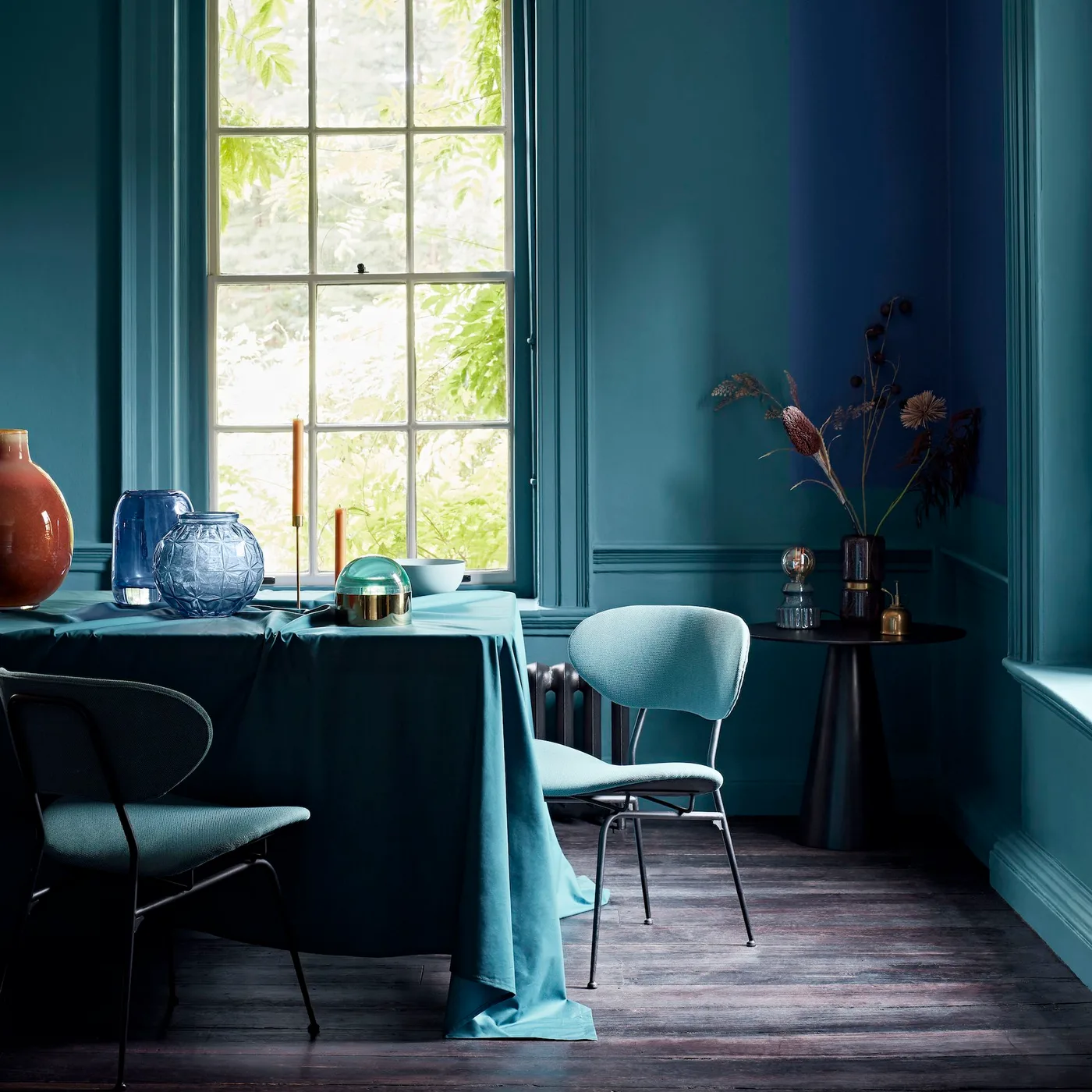
Deep teal covers the walls and decorative lower rail in this dining corner, with tall trim around the window continuing the same color. A cloth-covered table and pale blue chairs soften the setting. The detail is restrained rather than a dense panel grid, showing how painted molding can give a dining wall definition without becoming its most noticeable feature.
Check the wall color in daylight and under the light used for evening meals. A single color across molding and wall can look calm, but the finish still affects how strongly the trim catches light. Plan the rail around the window and radiator rather than stopping it arbitrarily. Keep chairs from knocking the lower detail and follow the paint’s care guidance when wiping meal splashes.
IDEA 03 / 17
Carry Blue Panels Around an Arched Opening
 SaveSupport Non AI Creator
Image credit: Photo: Michael Hunter. From: Traci Connell Interiors
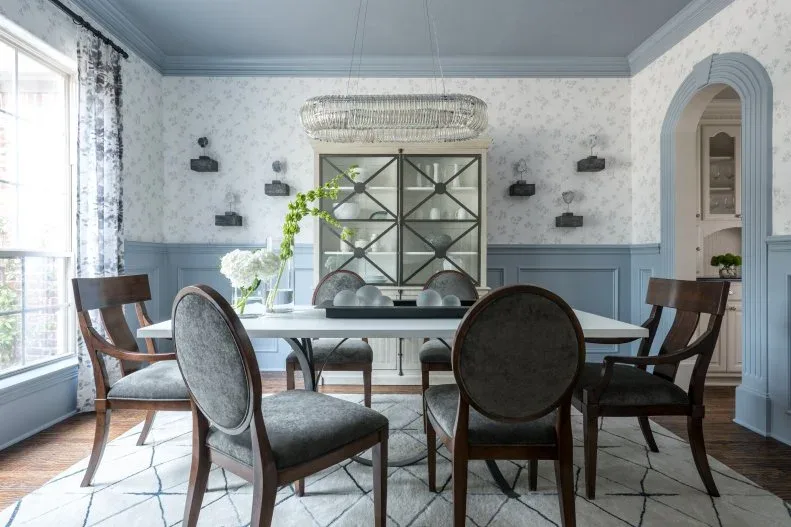
Blue lower-wall panels continue toward a matching arched opening in this dining room. Pale patterned wallpaper fills the upper walls, while a blue ceiling reinforces the color above the table. Mixed wood and upholstered chairs keep the furnishings varied. The paneling creates a continuous lower boundary, allowing the wallpaper and curved doorway to feel connected rather than like unrelated decorative additions.
Set out the rail height across the whole room before adding panels beside an opening. Check how it meets door trim, window sills and any existing cupboards. Use sample colors on the paneling and upper wall together, since pale wallpaper can change how blue appears. Leave room for chair movement, and choose fixing and finishing methods suited to the wall and the material you are actually installing.
IDEA 04 / 17
Give Busy Wallpaper a Plain Paneled Base
 SaveSupport Non AI Creator
Image credit: Photo: Rebecca McAlpin. From: Michelle Gage Interiors
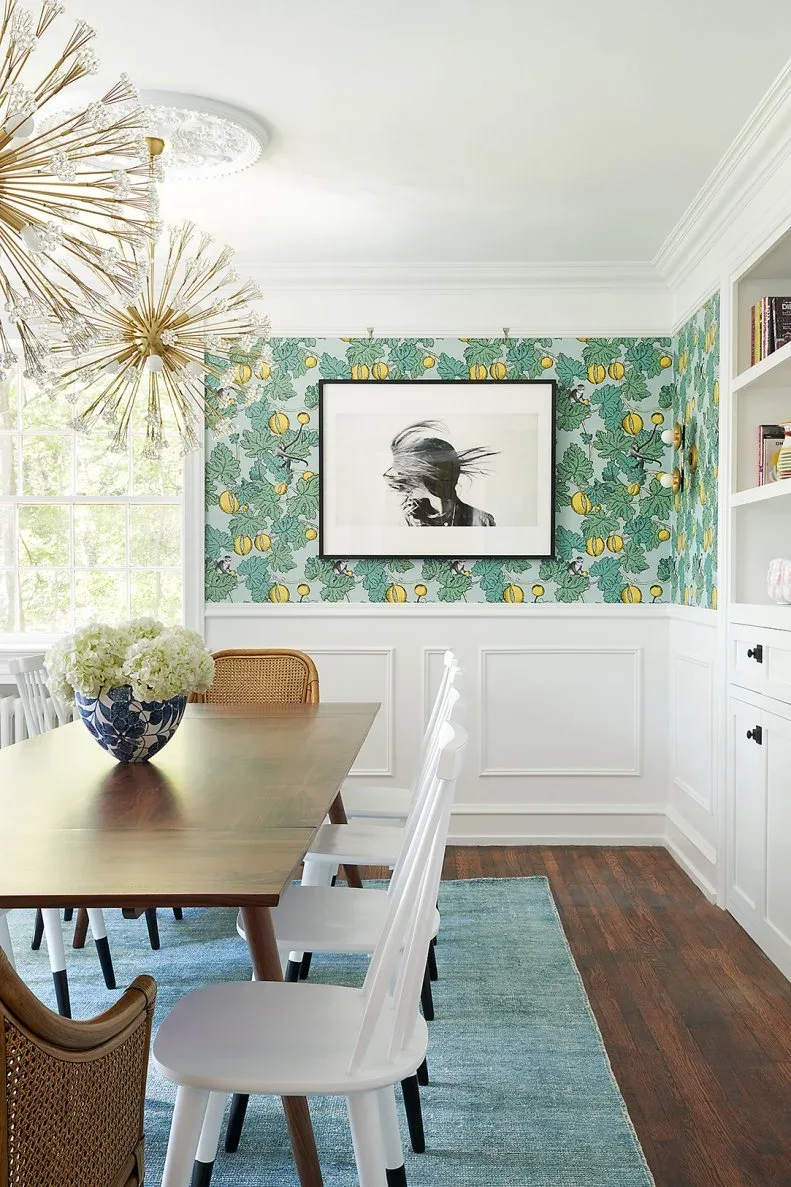
White rectangular panels form a quiet base beneath green and yellow patterned wallpaper. A wood table, white chairs and woven-back seating introduce warm texture without competing with the upper wall. The panel frames repeat a measured rhythm around the dining area, while the wallpaper and framed portrait provide the more decorative layer above the rail.
Use panel proportions that remain readable around furniture rather than fitting a small frame into every gap. Check the wallpaper pattern against the rail before cutting or hanging it, and keep pictures comfortably within the upper section. A pale lower wall may show scuffs near dining chairs, so select a suitable washable finish and maintain enough space to pull seats out without hitting the trim.
PART 02
Balance Wallpaper and Dining Furniture
IDEA 05 / 17
Match Blue Paneling With Built-In Storage
 SaveSupport Non AI Creator
Image credit: Photo: Chase Daniel, Tyler Rush, Trisha Shepard. From: Hugh Jefferson Randolph Architects
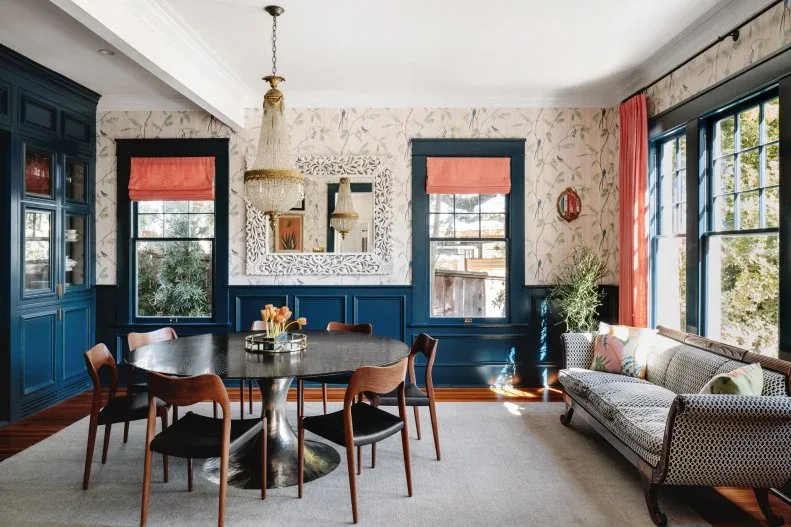
Blue paneling connects the lower walls, glazed cabinets and window trim around a dark round dining table. Bird-patterned wallpaper lightens the upper walls, while coral blinds and curtains add a warmer accent. The cabinetry and paneling read as one room feature, giving the storage a deliberate relationship with the dining setting rather than treating it as a separate piece of furniture.
Coordinate the wall panels with cabinet doors and trim before choosing a layout. Their divisions need not line up everywhere, but awkward narrow strips can make the junction feel crowded. Test blue samples beside the window treatment and wallpaper in the room’s actual light. Keep cabinet access clear of dining chairs, and use the specified finish and cleaning method for both the cabinetry and wall surface.
IDEA 06 / 17
Keep White Panels Quiet Behind Purple Chairs
 SaveSupport Non AI Creator
Image credit: Photo: Brittany Ambridge. From: HGTV Magazine
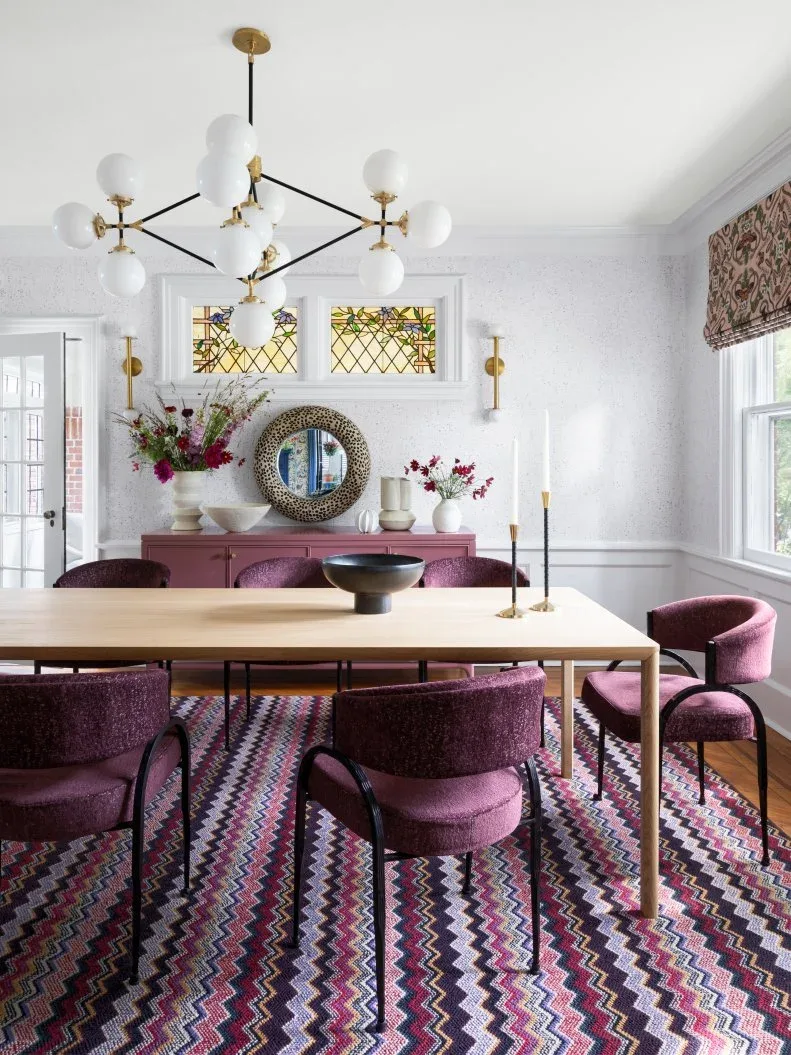
White panels sit behind purple upholstered chairs and a matching sideboard, with a zigzag rug carrying more color below. A pale wood table provides a calm center. The wall detail stays restrained, allowing the seating and rug to lead the room’s character. The rail also gives the sideboard arrangement a clear horizontal boundary beneath the mirror and flowers.
Let the stronger furniture colors guide how much wall detail you add. Simple panel frames can provide structure without needing contrasting paint around every edge. Check the rail against the sideboard height so the two lines do not meet awkwardly. Leave a practical serving area on the cabinet and protect the lower wall from chair scuffs with adequate seating clearance rather than relying on decoration alone.
IDEA 07 / 17
Balance Patterned Upper Walls With Tall White Panels
 SaveSupport Non AI Creator
Image credit: Photo: Kimberly Murray Photography. From: FORBES + MASTERS
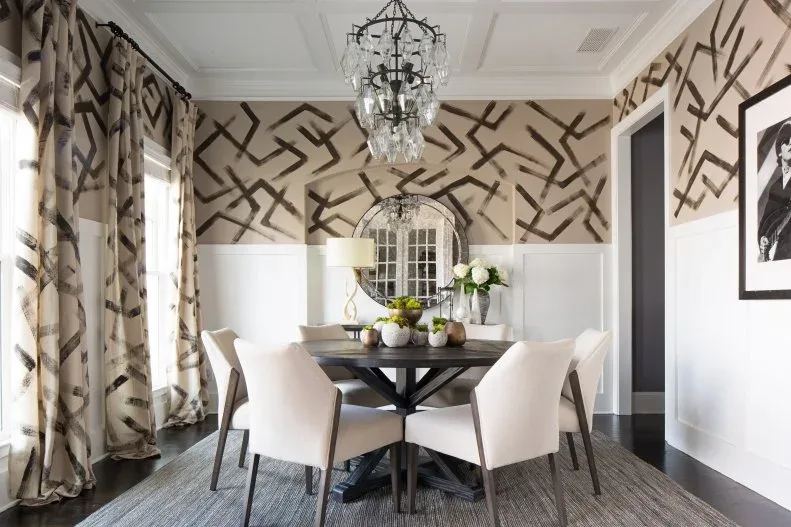
Tall white panels fill much of the lower wall, with a strong angular pattern above and on the curtains. Pale dining chairs and a dark table give the room a clear furniture center. A round mirror adds a different shape between the framed wall sections. The broad white area keeps the repeated pattern from surrounding the table at every height.
Choose the panel height by looking at the room as a whole, including curtains and seated views. A higher white section can reduce the amount of visible pattern, but it also changes where pictures and mirrors fit. Plan the top rail across corners and around openings before fixing it. Keep the furniture slightly away from the panels so chair movement and routine cleaning remain straightforward.
IDEA 08 / 17
Connect Green Paneling With a Corner Bench
 SaveSupport Non AI Creator
Image credit: From: Drake Interiors
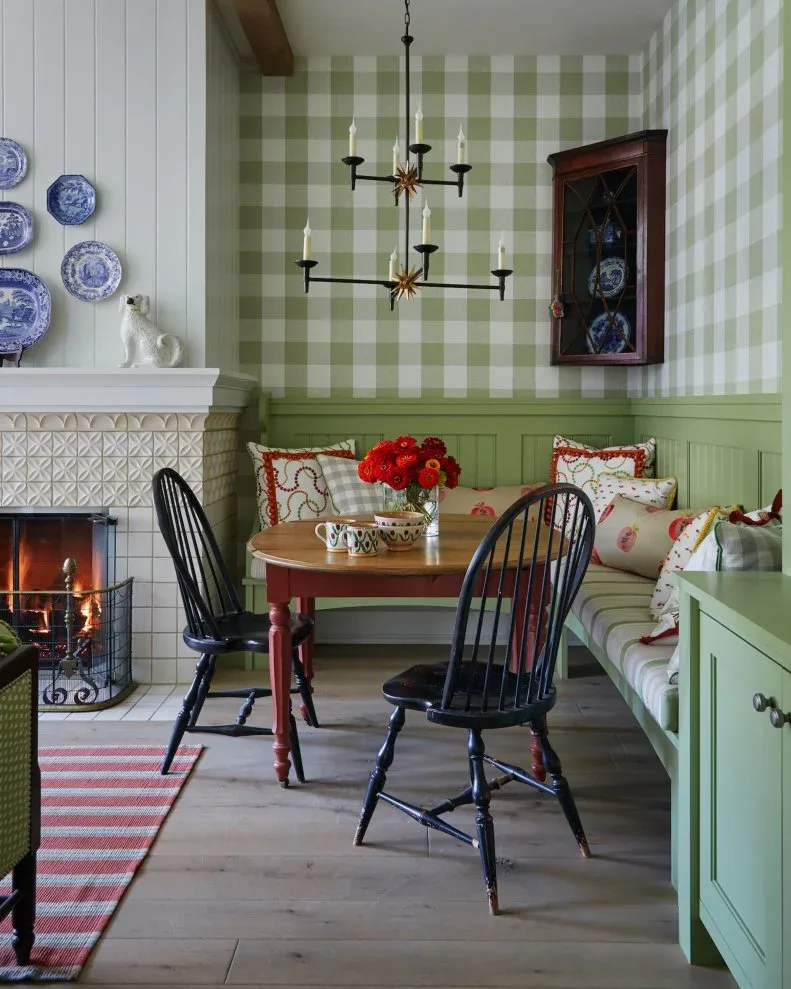
Green paneling connects a corner dining bench with surrounding cabinetry, while large checkered wallpaper rises above it. Black chairs and a small wood table keep the nook distinct from the white fireplace beside it. The repeated green gives the bench and wall a common backdrop, and the check pattern adds character without requiring more objects on the dining surface.
Plan paneling behind a bench with cushions and seated shoulders in mind. Narrow ledges or projecting trim should not press against someone using the seat. Keep the panel divisions readable above the bench back, and check how the rail approaches the fireplace surround. Follow any fireplace clearance requirements for nearby materials, and leave the seating cushions easy to remove for cleaning.
PART 03
Connect Panels With Storage and Texture
IDEA 09 / 17
Repeat Pale Blue Across Panels and Door Trim
 SaveSupport Non AI Creator
Image credit: Photo: Rustic White Interiors by Robert Peterson. From: Copper Sky Design + Remodel
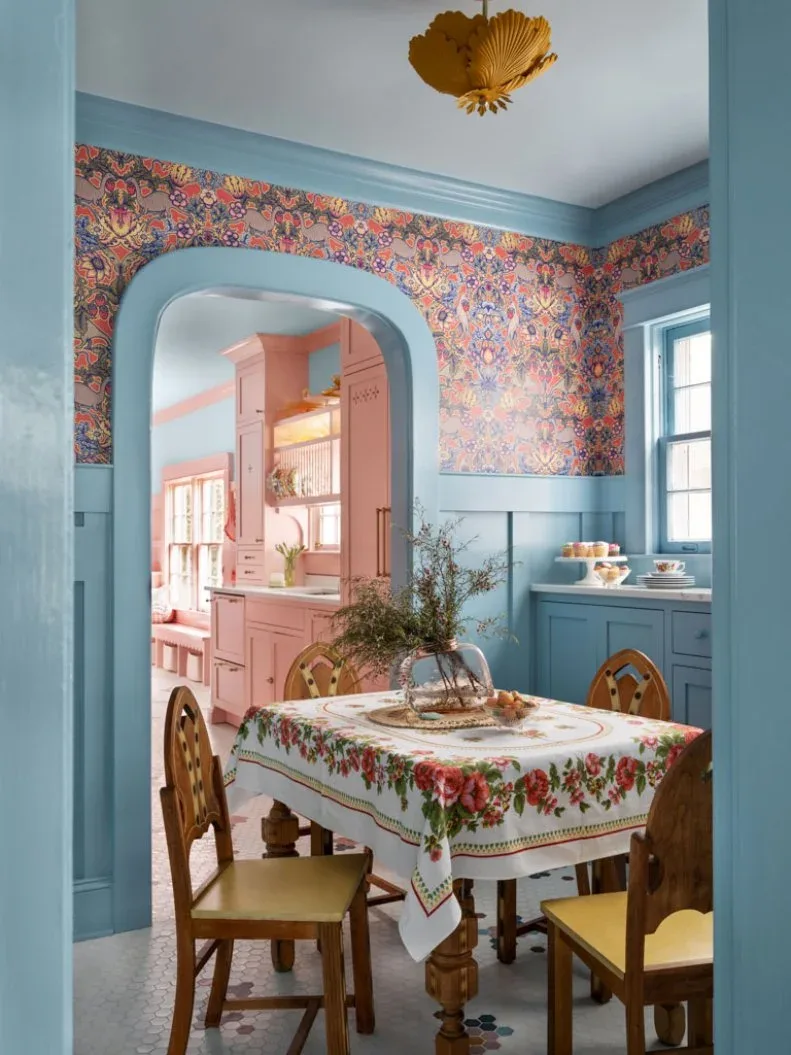
Pale blue paneling continues around an arched doorway and toward dining storage, with colorful patterned wallpaper filling the upper walls. A small cloth-covered table and wood chairs occupy the foreground. The same blue appears at several architectural edges, helping the room’s strong pattern feel contained. The doorway also reveals warmer pink cabinetry beyond, giving the dining palette a clear relationship with the adjacent space.
Check the chosen color from both rooms before extending it across the doorway trim. A panel arrangement should finish cleanly against the opening instead of leaving unusually thin sections at its edges. Keep the dining table clear of the walking route through the arch. Use samples of the wallpaper and paint together, and choose a lower-wall finish that suits regular wiping around a frequently used eating area.
IDEA 10 / 17
Use Vertical Panels Between Display Cabinets
 SaveSupport Non AI Creator
Image credit: Photo: LandMark Photography. From: Andrea Swan
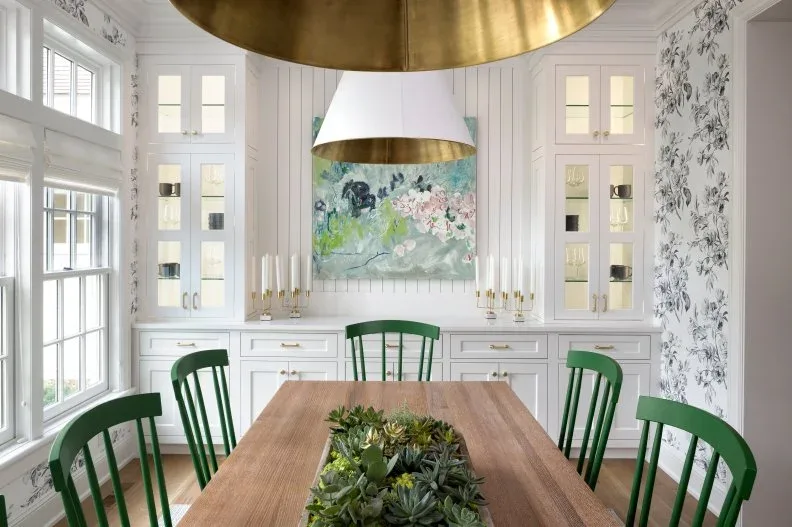
White vertical paneling fills the space between two glazed display cabinets behind a wood dining table. Green chairs and a colorful painting bring warmth and contrast to the pale storage wall. The panel lines give the central section a different texture from the cabinet doors, while the matching white finish keeps the whole wall from feeling divided into unrelated pieces.
Set out the panel spacing around the central picture and the adjoining cabinet frames. Check that the vertical lines finish evenly at both edges rather than creating a narrow leftover strip. Leave cabinet drawers and doors usable with chairs pulled back. Keep display lighting and electrical work planned before installation, and follow the panel supplier’s advice for cleaning grooves without damaging the finish.
IDEA 11 / 17
Put a Gallery Above Broad Gray Panels
 SaveSupport Non AI Creator
Image credit: Photo: Studio Jaki Photography. From: WAKE + LOOM
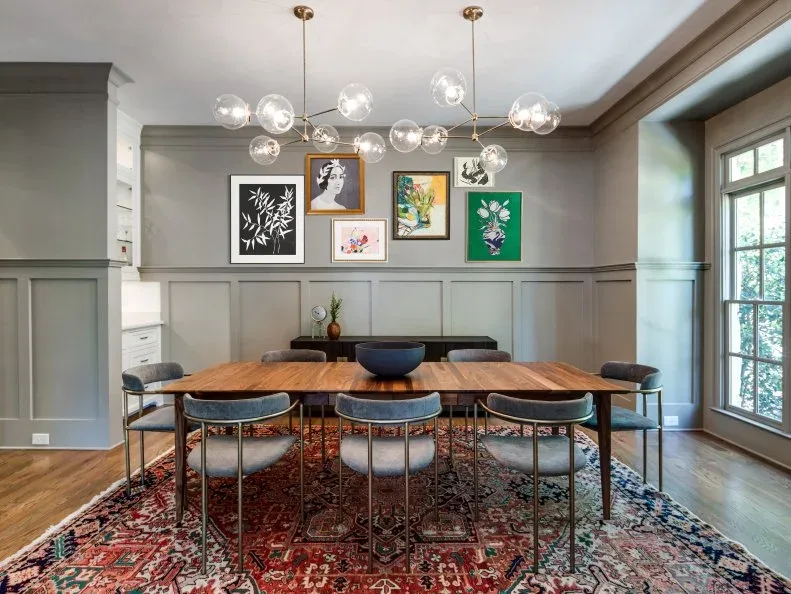
Broad gray panels run beneath a group of framed pictures in this dining room. A wood table and slim dark chairs sit on a richly patterned rug, while a clear globe chandelier adds a lighter layer overhead. The wall’s restrained divisions give the art a stable backdrop. Matching paint above and below the rail lets texture, furniture and pictures introduce the variety.
Lay out the pictures and panel frames together so the rail does not crowd the bottom of the gallery. Keep the larger wall divisions simple if the art and rug already contain several shapes and colors. Test cleaning access behind the sideboard or table, and leave chair backs clear of projecting trim. A consistent paint color still needs a finish suitable for the material beneath it.
IDEA 12 / 17
Pair White Lower Panels With a Textured Upper Wall
 SaveSupport Non AI Creator
Image credit: Photo: Jeff Herr. From: Terracotta Design Build
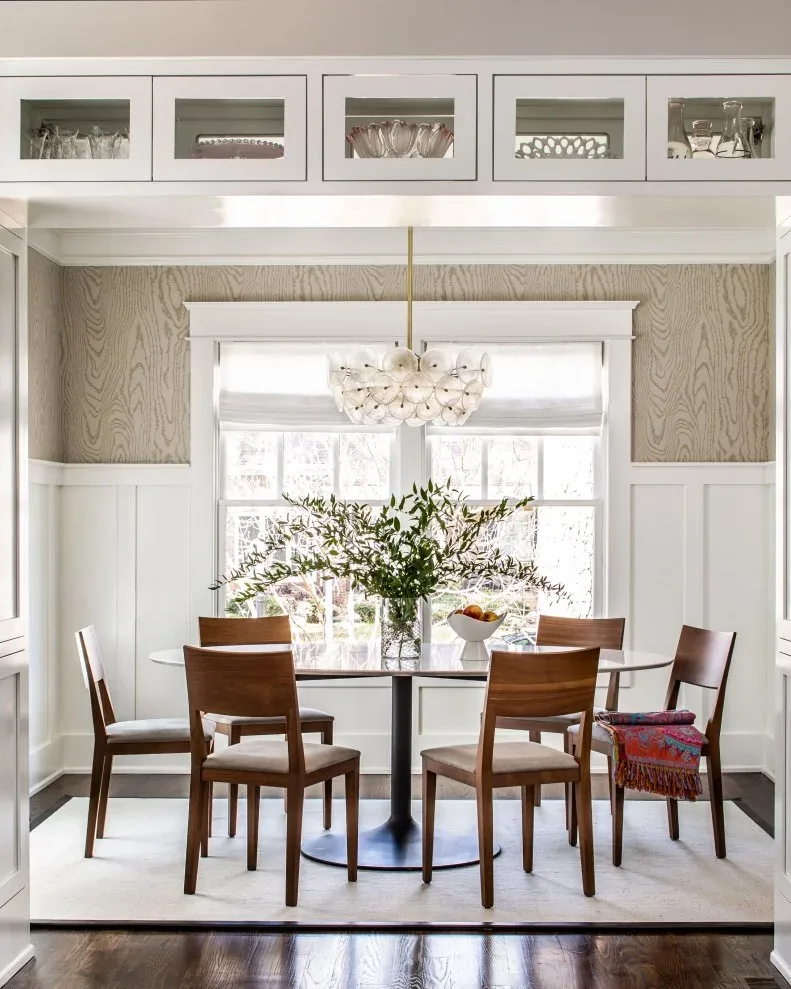
White lower panels surround the window behind a glass dining table, while a wood-grain-patterned upper wall adds a warmer visual texture. High glazed cupboards create another horizontal layer above the opening. The photograph shows the effect of combining framed paneling with a patterned surface; the upper wall’s appearance alone does not establish that it is solid wood.
Compare the upper covering and panel finish using physical samples rather than choosing from color alone. Keep the rail and window trim transitions clean, especially where several horizontal edges meet. Plan access to the high storage separately from the dining chairs. Confirm the actual wall-covering material before selecting adhesives or cleaning products, and do not assume a grain pattern has the same care needs as timber.
PART 04
Give the Whole Room a Consistent Finish
IDEA 13 / 17
Add a Slatted Feature Beside Colorful Seating
 SaveSupport Non AI Creator
Image credit: Photo: Marisa Vitale. From: Natalie Myers
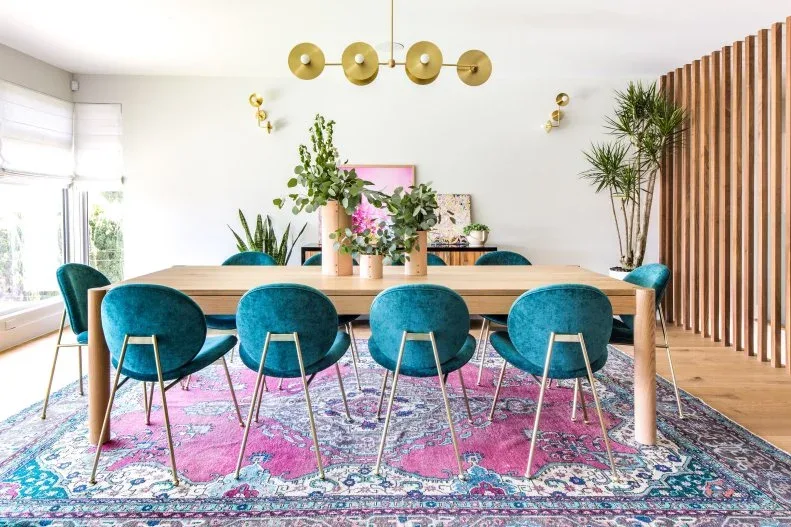
Vertical wood slats form a feature beside a long dining table, with teal chairs and a pink patterned rug providing strong color below. The plain pale walls allow the repeated slat edges to show clearly. A slim gold-toned light follows the table, while plants soften the transition toward the feature. The slatted surface adds rhythm without covering every wall in the room.
Check the depth of a slatted treatment as well as its width. It can reduce the usable space beside chairs or a passing route, particularly when installed over an existing wall. Plan how to clean between the slats before choosing closely spaced profiles. Keep any electrical work accessible and use the specified installation system; visible timber strips alone do not establish sound-absorbing performance.
IDEA 14 / 17
Frame a Dining Picture With Large Pale Panels
 SaveSupport Non AI Creator
Image credit: Photo: Julie Soefer Photography. From: Marie Flanigan Interiors
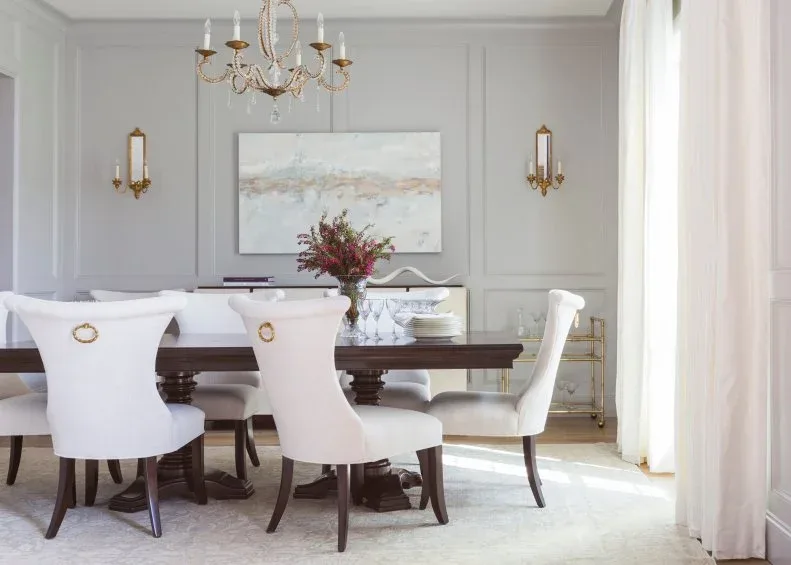
Large pale gray wall frames create a measured backdrop behind a dark table and white upholstered chairs. A central picture and two gold-toned sconces sit within the wall arrangement, while a chandelier brings another decorative element above the seats. The broad frames give the artwork room to breathe, making the wall feel structured without filling it with many small panel divisions.
Plan the picture position and sconces before setting out the molding. The electrical points and wall fixings need proper support independently of the decorative frames. Keep the panel lines far enough from the artwork that both shapes remain clear. Look at the wall from seated height as well as the doorway, and test the evening lighting so the picture is visible without distracting glare.
IDEA 15 / 17
Balance a Deep Blue Wall With High White Panels
 SaveSupport Non AI Creator
Image credit: Photo: Flynnside Out Productions
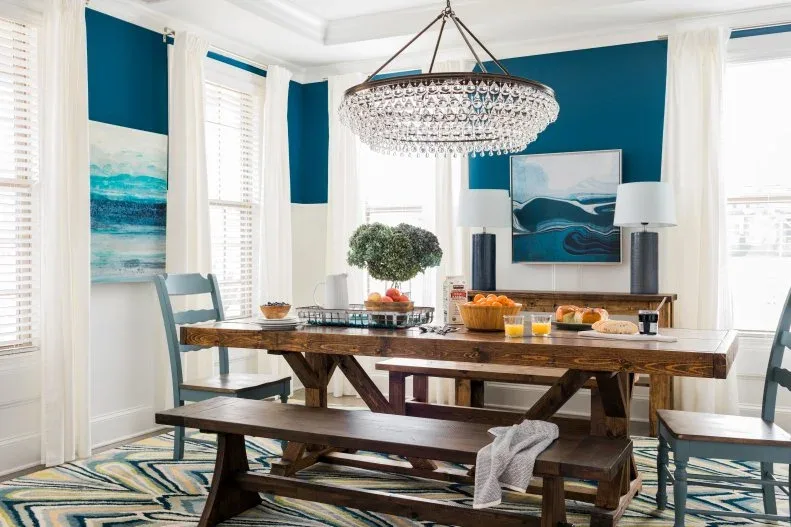
High white paneling meets deep blue upper walls around a wood table and bench. Pale painted chairs, a patterned rug and a broad chandelier add further detail, but the large white wall area keeps the blue from dominating the whole room. The horizontal division gives the sideboard and artwork a clear setting, while the vertical panel rhythm continues around the dining furniture.
Choose the rail height with the table, sideboard and window trim in view. A high white section changes the proportions of the room, so mark it temporarily before installing the panels. Keep large artwork from awkwardly straddling the divide unless that overlap is intentional. Test the blue at night, and maintain enough chair clearance to keep the pale lower panels from collecting repeated scuff marks.
IDEA 16 / 17
Repeat Pale Boards From Wall to Sloped Ceiling
 SaveSupport Non AI Creator
Image credit: Sims Hilditch
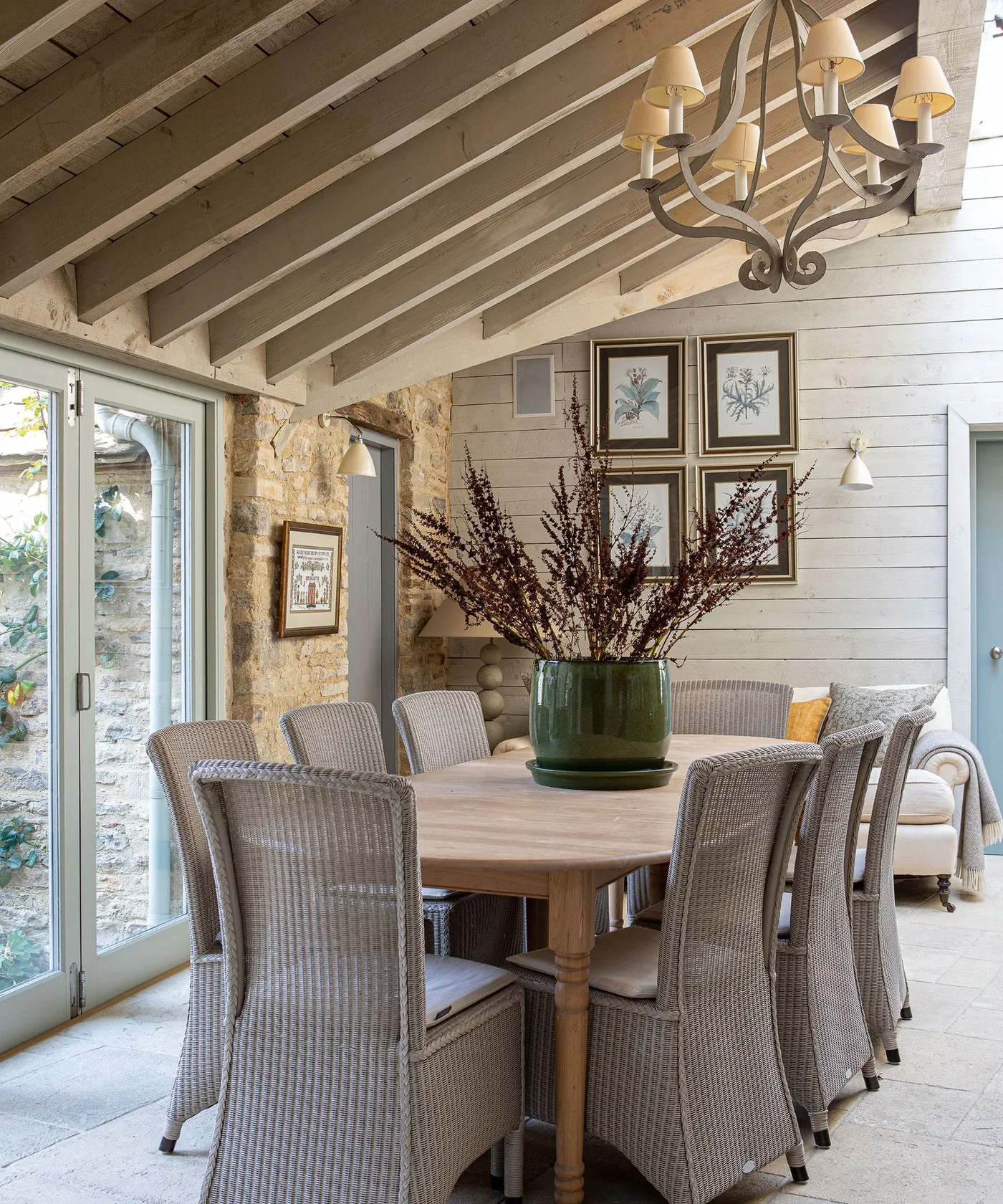
Horizontal pale boards cover the dining wall beneath a sloped boarded ceiling and exposed beams. A wood table and woven chairs continue the relaxed texture, while framed pictures and a large green vase add contrast. The wall and ceiling share a similar finish, making the change in direction and the structural beams more noticeable than a difference in color.
Decide where board lines should finish around beams, windows and wall lights before installation. A coordinated finish can connect several surfaces, but each needs the appropriate material and fixing method. Keep picture fixings supported by the wall structure rather than assuming the decorative boards can carry them. Plan dusting along the horizontal joints and leave enough room behind the chairs to reach the lower wall.
IDEA 17 / 17
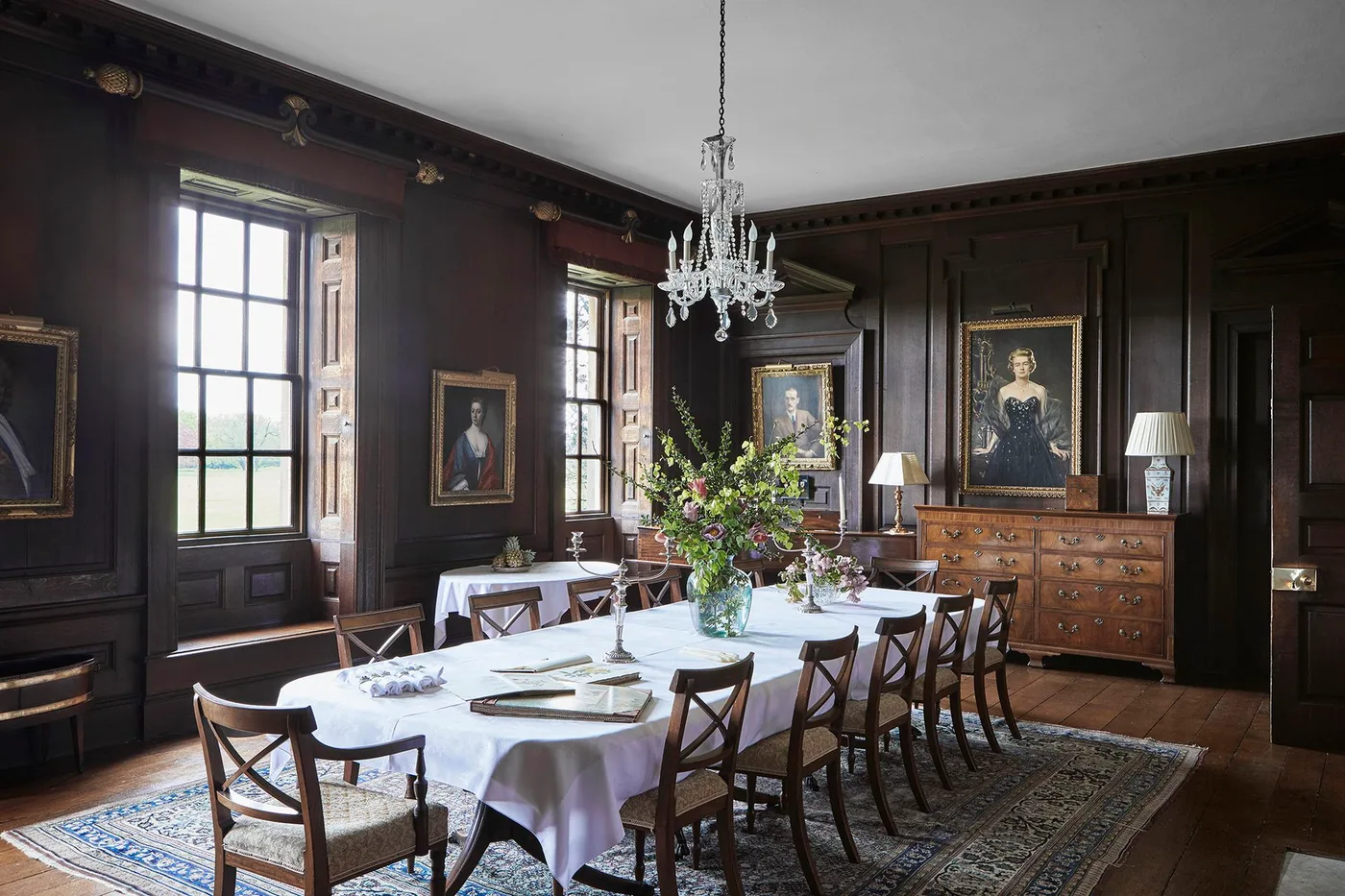
Let Dark Full-Height Panels Set a Formal Mood
 SaveSupport Non AI Creator
Image credit: Brent Darby
Full-height dark panels surround a long dining table covered with a white cloth. Portraits, tall windows and a decorative chandelier reinforce the formal setting, while the pale tabletop creates a clear center within the darker room. The panel divisions carry from low wall sections toward the ceiling, giving the walls their own substantial character rather than acting as a narrow decorative border.
Treat existing dark paneling as part of the room before deciding to paint or alter it. Inspect its condition and understand the finish, especially where the detail may be original to the building. Add lighting and pale textiles to test the room’s balance first. Use suitable picture fixings, avoid aggressive cleaning on an unknown finish and preserve practical access to windows, shutters and nearby furniture.
BRING IT ALL TOGETHER
Set Out the Whole Wall Before Adding Trim
Mark the rail, panel divisions and nearby furniture together. Check how the arrangement meets doors, windows, sockets and storage, then look at it from the dining chairs. Adjust awkward narrow sections before committing to the installation.
Choose materials and finishes for the wall condition and your cleaning routine. Decorative paneling does not fix damp or provide reliable support for heavy pictures by itself. Plan wall lights and fixings properly, and keep chairs from repeatedly striking projecting details.