A dark grey couch is a dependable starting point, but it can feel severe if everything around it is equally dark, cool, or smooth. The best rooms give charcoal upholstery something to play against: light walls, layered rugs, warm timber, or a color that genuinely suits the house.
Start by looking at the materials and lighting in your own home. An idea that looks effortless in a large photographed room may need changes in a compact or shaded space. These examples focus on adaptable design decisions rather than matching a staged room piece for piece.
PART 01
Color and contrast
IDEA 01 / 20
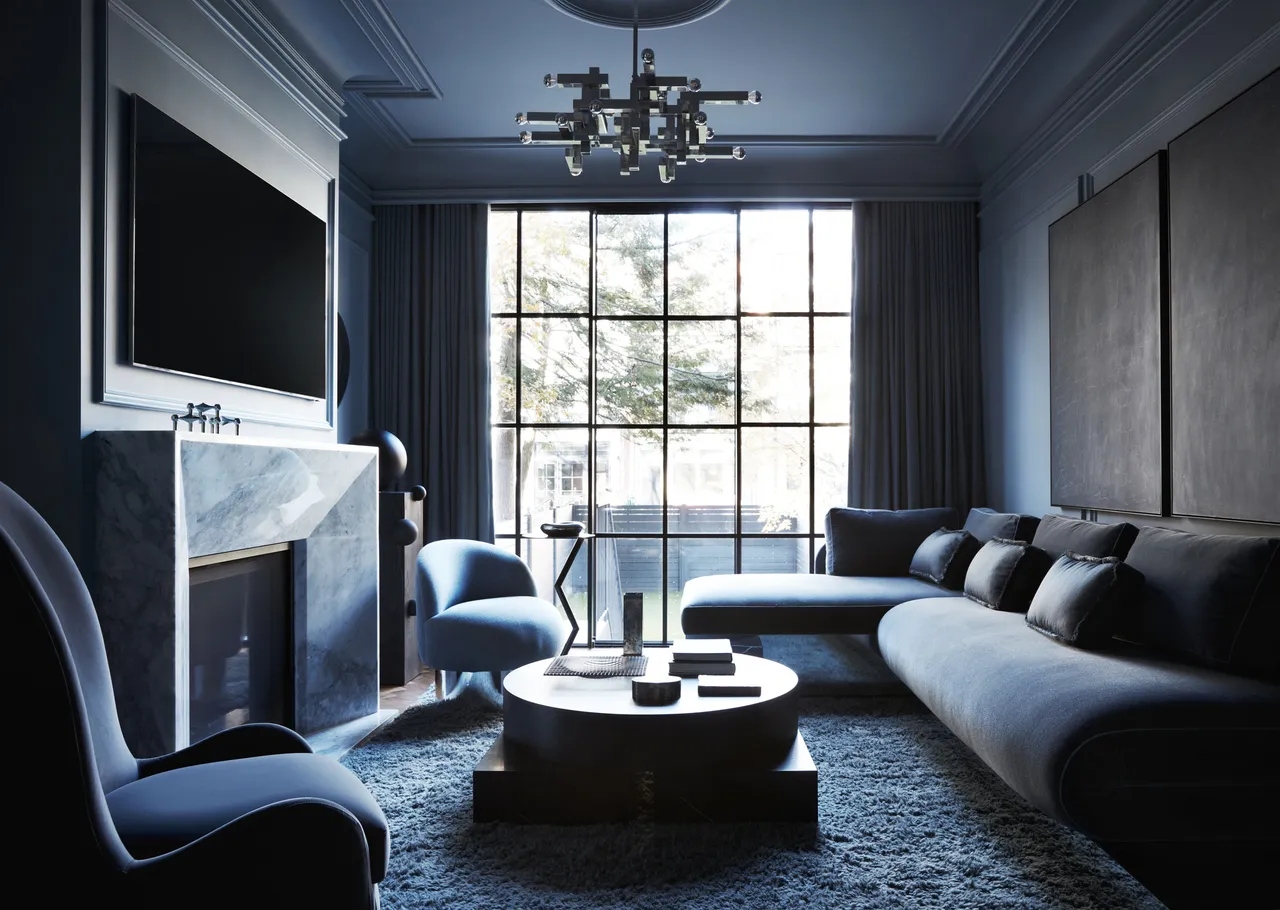
Wrap the Room in Charcoal
 SaveSupport Non AI Creator
(Image credit: Crystal Sinclair)
A dark gray sofa sits against charcoal paneled walls beside a bright window. The continuous dark palette makes the window and pale tables stand out. The pale mantel and window grid also make the room's edges readable, giving the darker sofa a setting that feels deliberate rather than isolated.
Test wall paint beside the sofa fabric in daylight and lamplight. Keep a lighter surface near the seating so books, cups, and everyday objects remain easy to find. If your room has less daylight, try this treatment on one wall first and retain pale trim or a lighter rug to preserve contrast.
IDEA 02 / 20
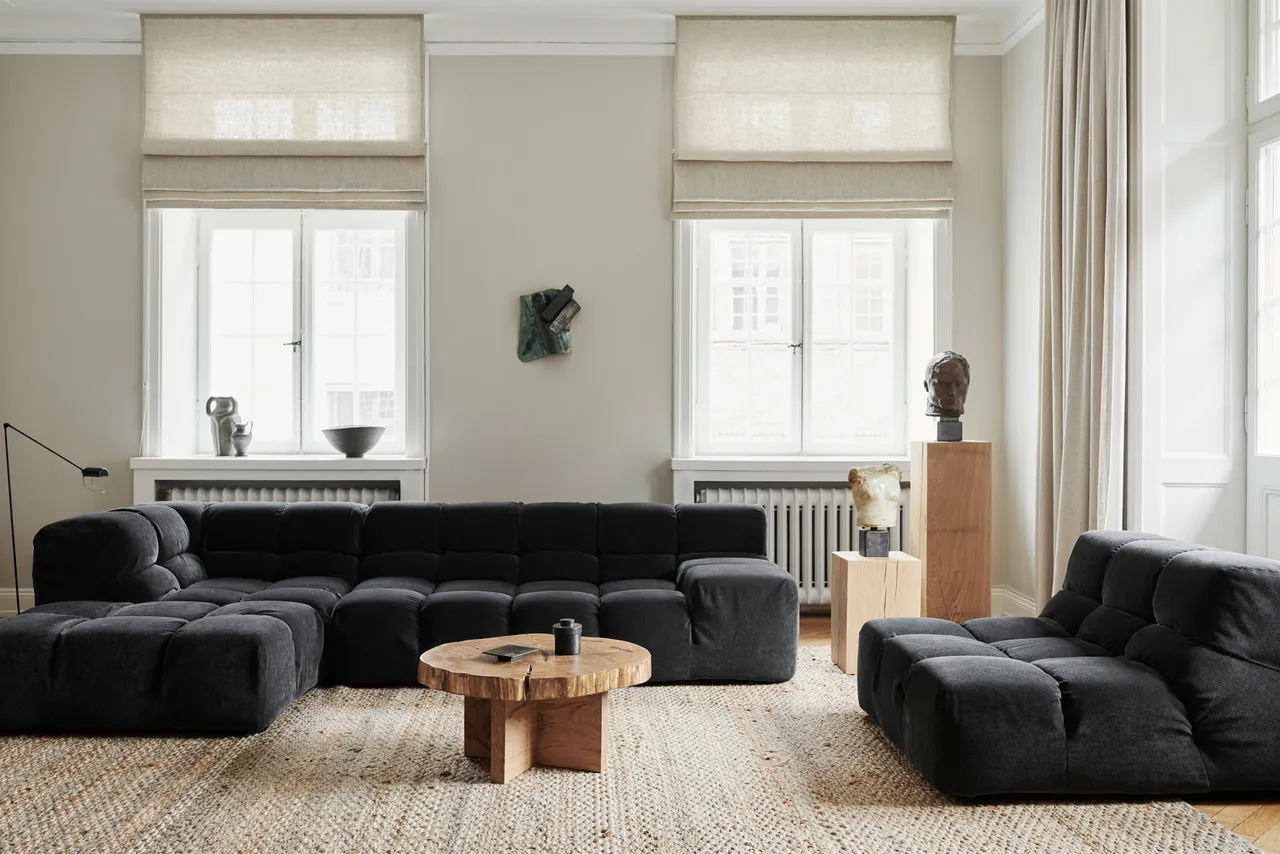
Warm Gray With Rounded Wood
 SaveSupport Non AI Creator
(Image credit: Kristofer Johansson. Design: WTP Studios)
Dark gray modular sofas surround small rounded wooden tables in a light room. The timber breaks up the large areas of dark upholstery. The rounded table introduces a different outline from the modular seats, while the woven-looking rug supplies a lighter texture beneath their heavier shape.
Use a warm wood tone to soften charcoal without adding another strong color. Check table height and reach from each seat before choosing a sculptural shape. Sit in the sofa before deciding on the table: a low, deep seat can make even an attractive central surface inconvenient for drinks or a laptop.
IDEA 03 / 20
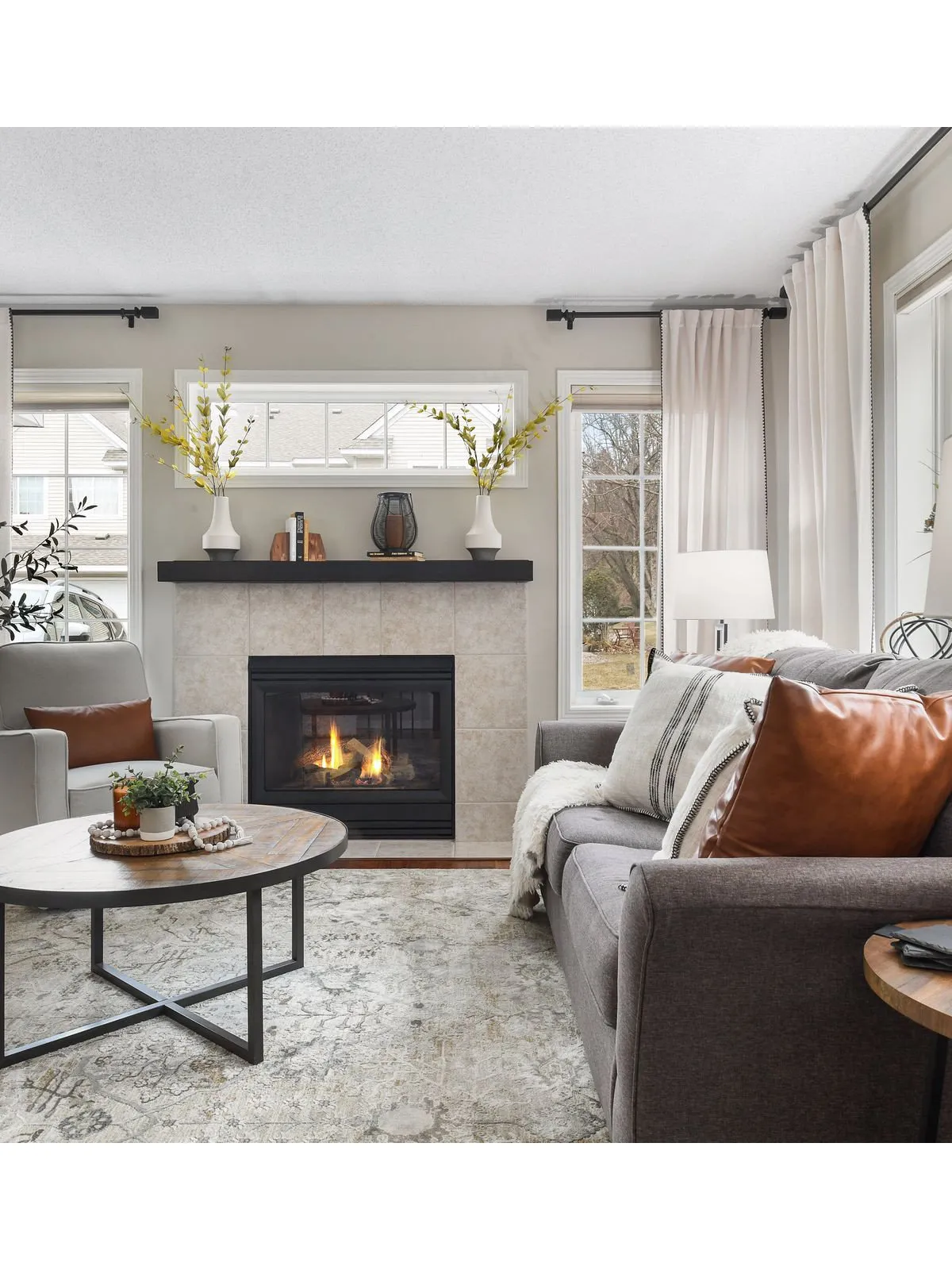
Keep Gray Seating Comfortable Beside a Bright Hearth
 SaveSupport Non AI Creator
Source: 1st Impressions Design, LLC on Houzz.
A gray sofa with white and rust-colored cushions sits beside a bright fireplace and pale curtains. The pale wall and light rug keep its substantial arm from dominating the corner, while the warmer cushion gives the neutral upholstery a more welcoming companion.
Arrange the cushions so they support the way you actually sit rather than covering the entire backrest. Keep a nearby table within comfortable reach and choose a lamp for reading, checking the fireplace's required clearances before placing furniture beside the hearth.
IDEA 04 / 20
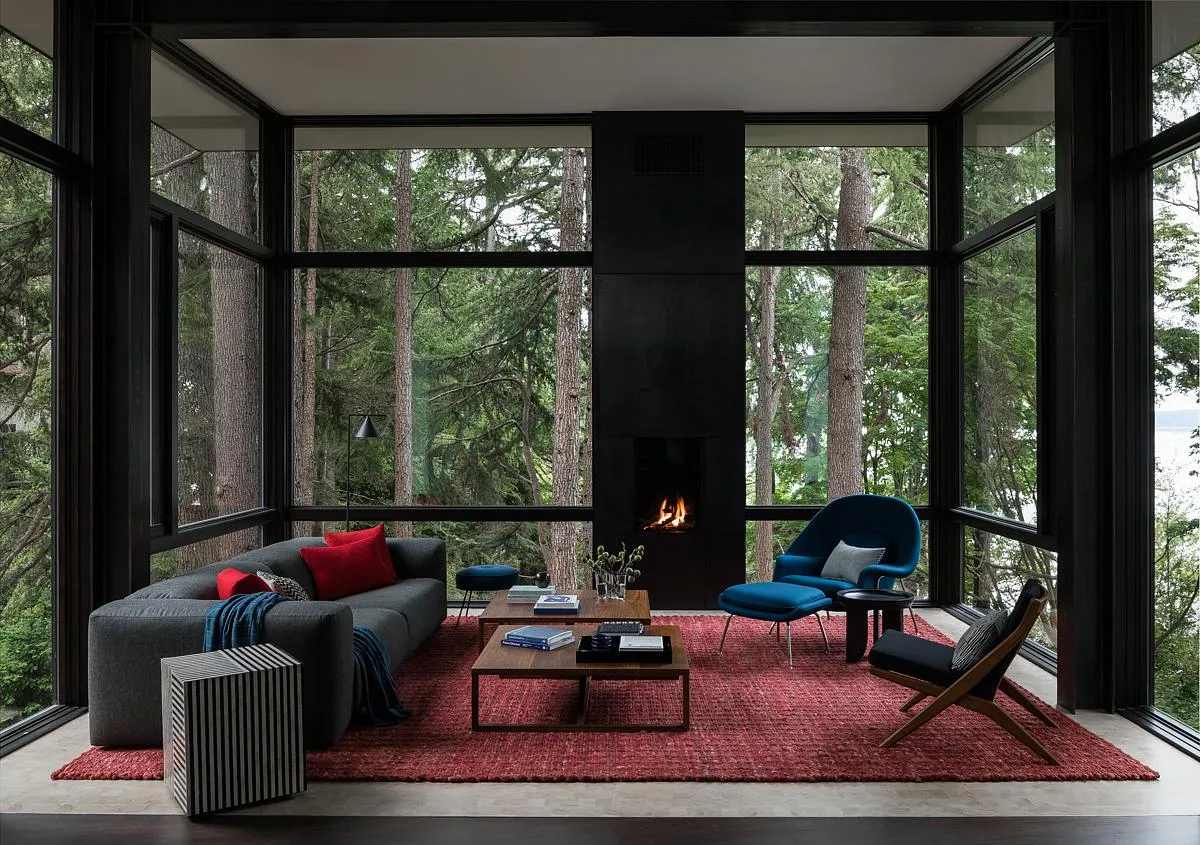
Add a Red Rug
 SaveSupport Non AI Creator
(Image credit: Haris Kenjar. Architecture: DeForest Architects PLLC. Interior Design: Ore Studio)
A dark gray sofa sits on a red rug beside a blue chair and black-framed windows. The rug brings concentrated warmth below the neutral seating. Black window frames connect the sofa to the architecture, and the red rug gives the furniture group a boundary within the larger glazed space.
Choose one large color accent before adding smaller accessories. Repeat a quieter version of the rug color in a cushion if you want continuity without filling the whole room with red. Choose the rug size with the sofa and chairs in position, then check that the color still works when the garden view becomes dark after sunset.
IDEA 05 / 20
Use Texture Beside Dark Fireplace Panels
 SaveSupport Non AI Creator
(Image credit: Douglas Friedman. Design: Lucas Interiors)
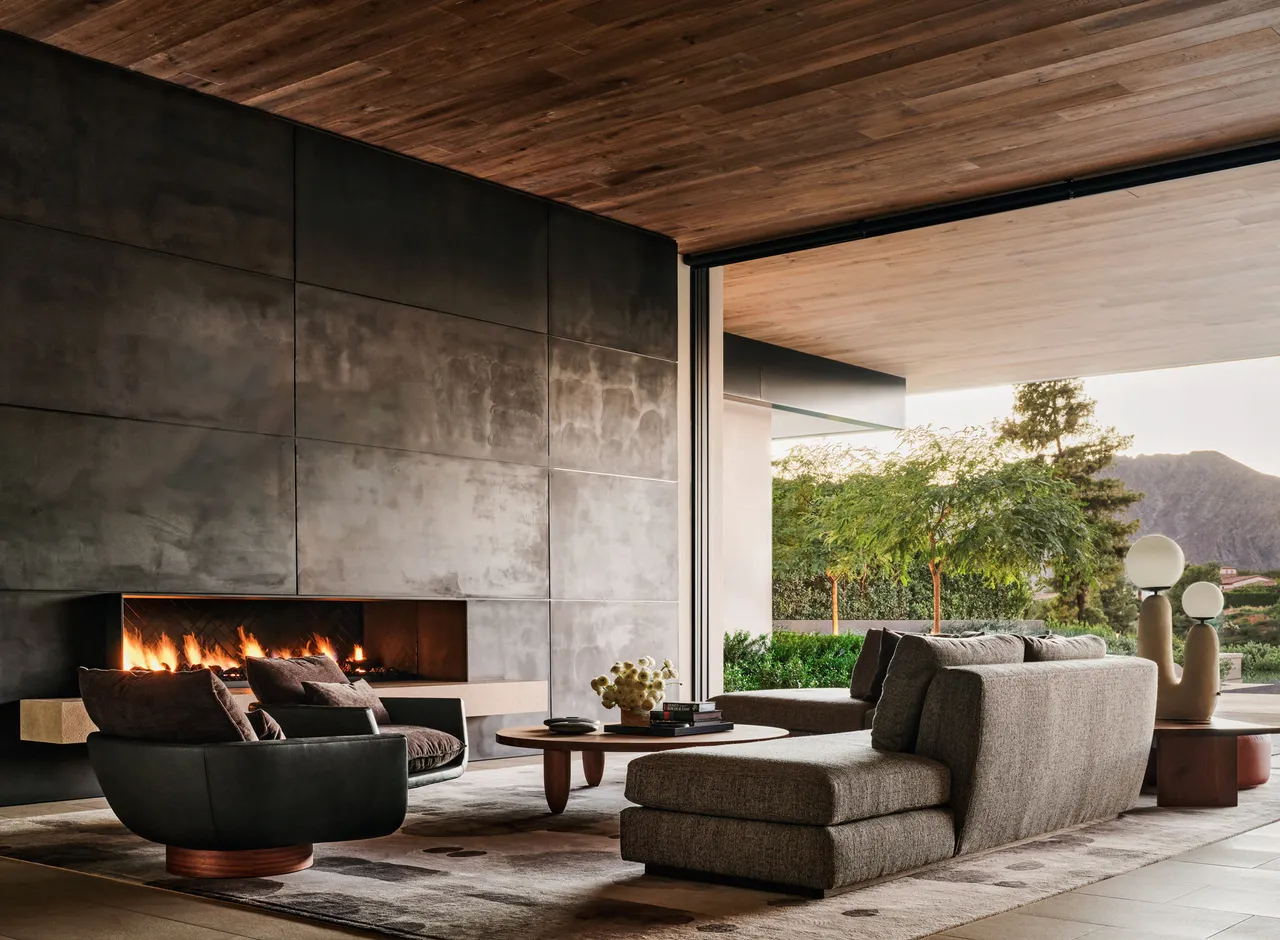
Textured gray seating sits beside a broad dark-paneled fireplace wall and a glazed garden opening. A timber ceiling and low rounded table add warmth, while the upholstery's visible weave keeps the seating from looking as smooth and imposing as the surrounding architectural surfaces.
Compare upholstery samples against both the fireplace wall and the timber, since the neighboring surfaces can change how warm or cool gray appears. Ask about cleaning and fabric care, and plan comfortable access around the low seats before committing to a wide modular arrangement.
PART 02
Materials and texture
IDEA 06 / 20
Pair Charcoal With Patterned Curtains
 SaveSupport Non AI Creator
Source: Jan Hiltz Interiors LLC on Houzz.
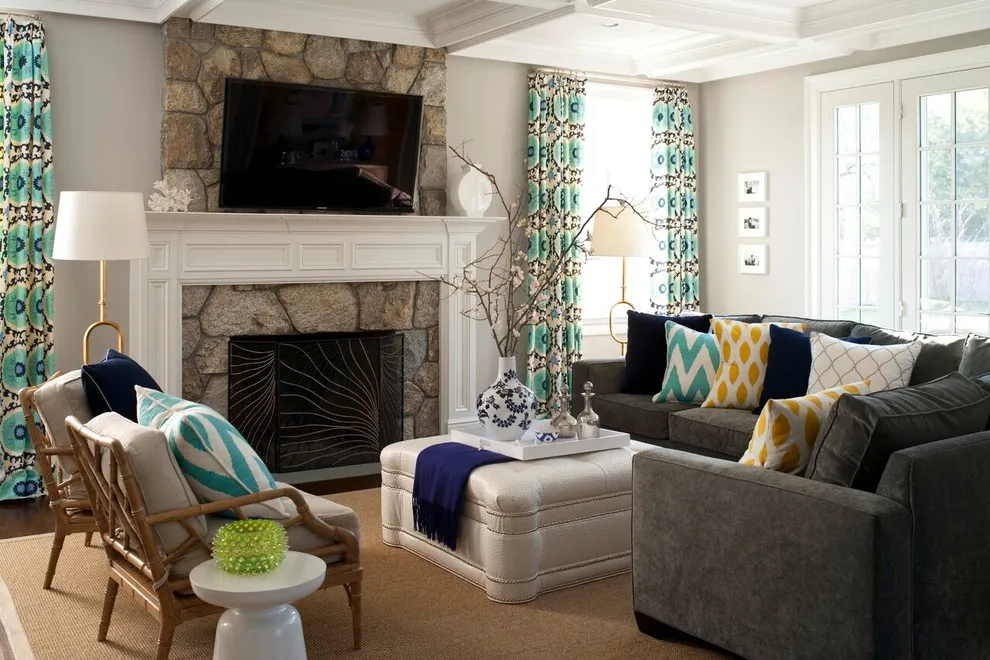
Dark gray seating is surrounded by light upholstery and patterned curtains near a stone fireplace. The patterned fabric brings color to the edges of the room. The curtain colors recur in several cushions, but the main sofa remains quiet. That separation makes the combination easier to read than pattern on every seat.
Keep the sofa plain when curtains carry a busy motif. Pull one small color from the curtain pattern into cushions, and compare the fabrics together before committing. A curtain swatch is especially useful at the window, where backlighting can reveal more contrast than you noticed in a shop or online photograph.
IDEA 07 / 20
Use Dark Built-In Seating
 SaveSupport Non AI Creator
Source: Eva Quateman Interiors on Houzz.
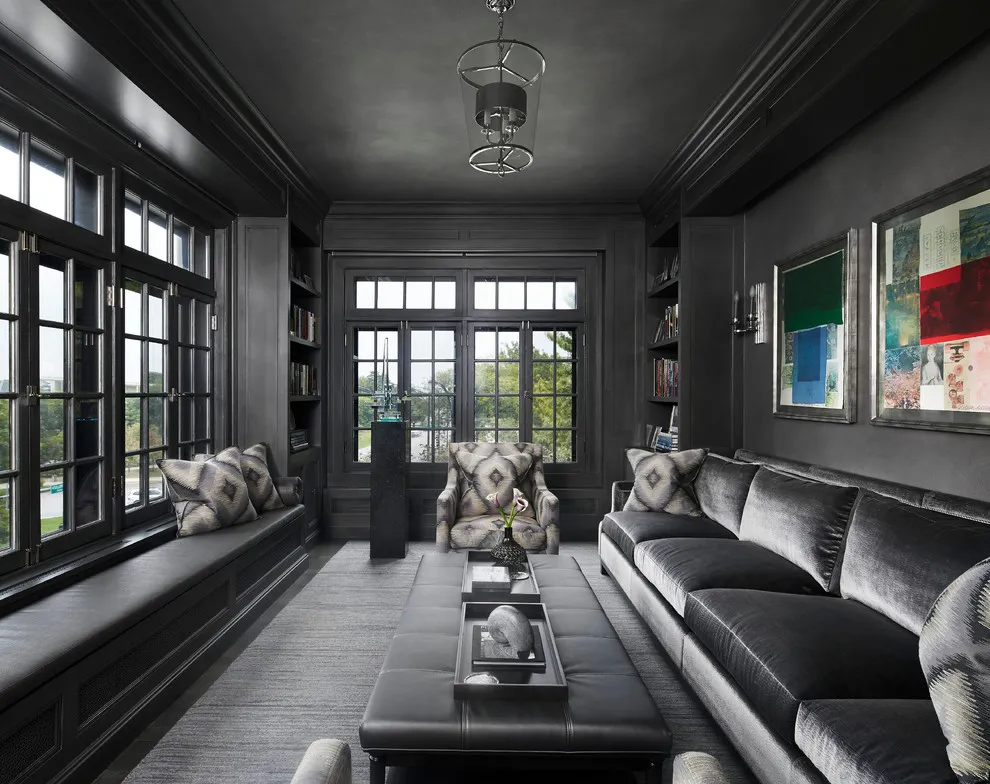
Gray sofas and a cushioned window seat occupy a room with dark walls and black window frames. Light from several windows keeps the deep palette varied. The window seat creates a second place to sit without introducing another freestanding chair. A central upholstered bench keeps the furniture group visually low.
A dark scheme works best when you plan lighting for reading and movement separately. Add soft lamps near the seats rather than relying only on a ceiling fitting. If you copy the window seat, check access to handles and nearby heating first; useful integrated seating should not make routine ventilation or maintenance difficult.
IDEA 08 / 20
Bring in Red Cushions
 SaveSupport Non AI Creator
Source: Meriwether Design Group on Houzz.
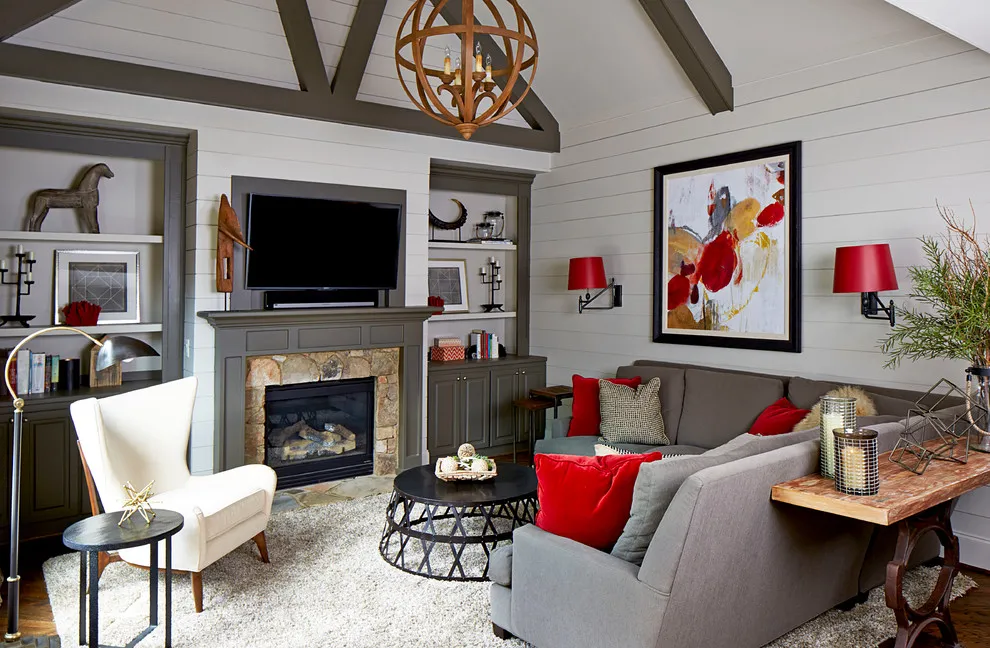
A gray sectional sits beside red cushions, colorful artwork, and a stone fireplace. The small red accents give the neutral seating a distinct focal point. Red lamps and artwork carry the accent beyond the sofa, while white chairs and a pale ceiling prevent the stronger pieces from filling every sightline.
Try color with removable cushion covers before changing larger furnishings. Leave some cushions neutral so the sectional does not become a collection of competing bright spots. Use cushion sizes that leave the seat depth comfortable, and compare a red sample against the existing artwork so the accents relate without needing to match exactly.
IDEA 09 / 20
Choose Mustard Accent Chairs
 SaveSupport Non AI Creator
Source: Bankston May Associates on Houzz.
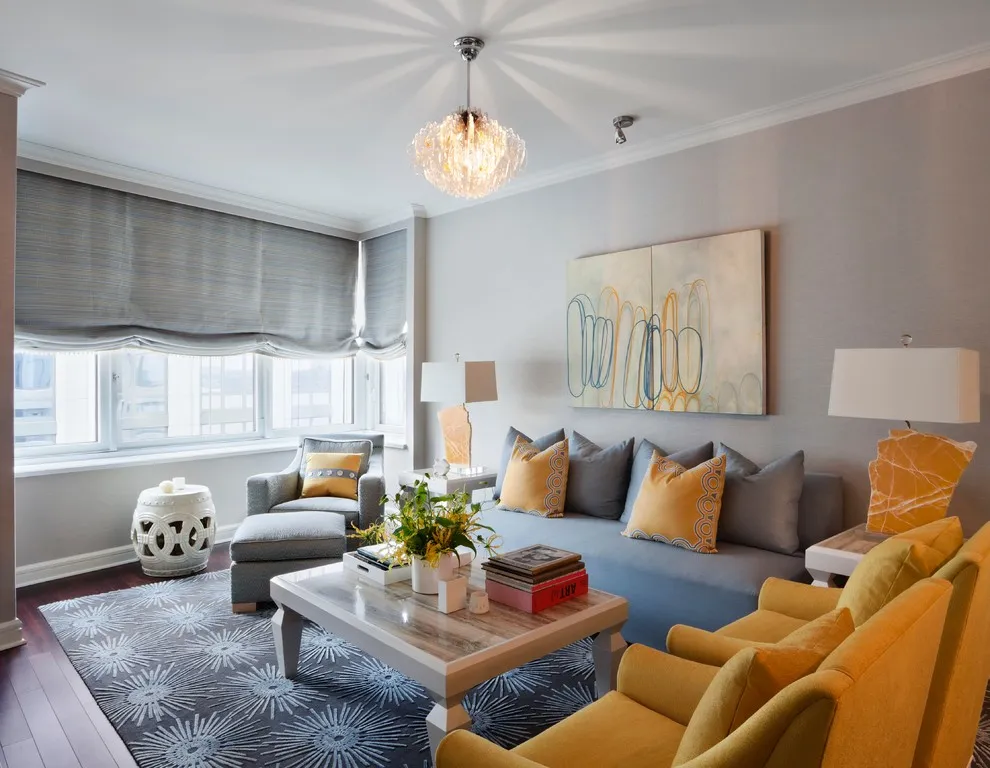
A gray sofa faces mustard chairs across a wooden coffee table. The warm chair color creates a clear contrast with the cooler upholstery. The chairs' rounded backs soften the straight sofa and rectangular table. Yellow cushions carry their warmer tone across the room without another large colored surface.
Check both chair comfort and scale beside the sofa. A strong accent color needs less repetition than a neutral, so one pair of chairs may be enough for the room. If one accent chair is enough for your layout, use a smaller cushion to balance its color instead of squeezing in a second seat for symmetry.
IDEA 10 / 20
Connect the Sofa to Built-Ins
 SaveSupport Non AI Creator
Source: John Lively & Associates on Houzz.
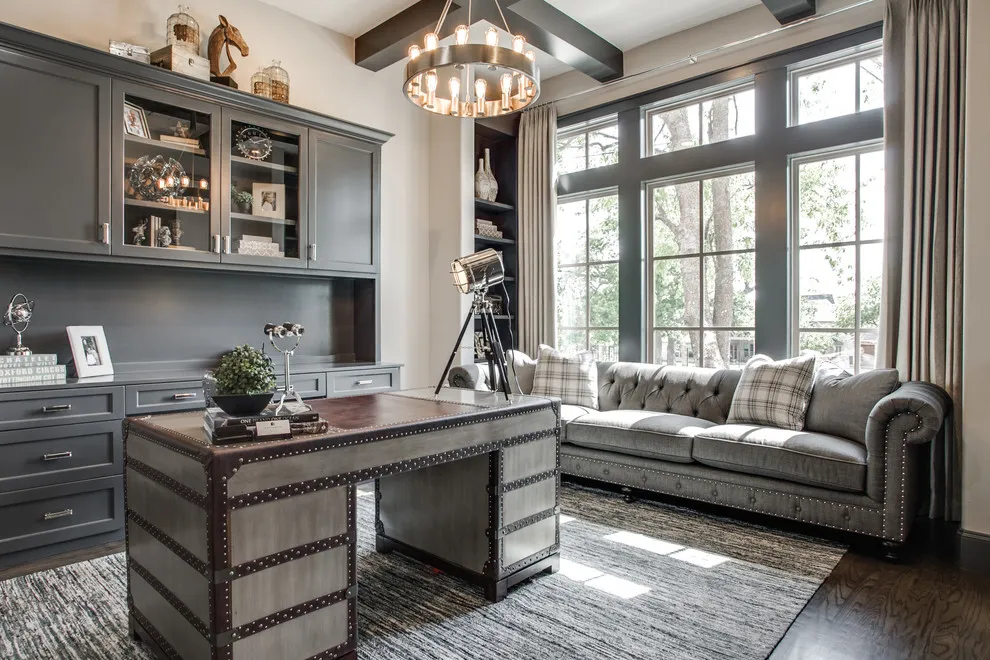
A tufted gray sofa sits beside dark built-in cabinetry and a desk in a bright living room. Related gray tones connect the sitting and working areas. The sofa's buttons and nailhead edges differ from the cabinet's straight panels, so the shared color has enough variation to avoid a flat, matched appearance.
Use different textures when furniture and cabinetry share a color. Keep a clear route to the desk and make sure a sofa arm does not interfere with nearby drawers or doors. Check the desk chair in its pulled-out position and open the nearest drawers before finalizing placement, particularly if the sitting area also serves as a workspace.
PART 03
Layout and everyday comfort
IDEA 11 / 20
Lift Charcoal With Yellow
 SaveSupport Non AI Creator
Source: Jerry B Smith Photography on Houzz.
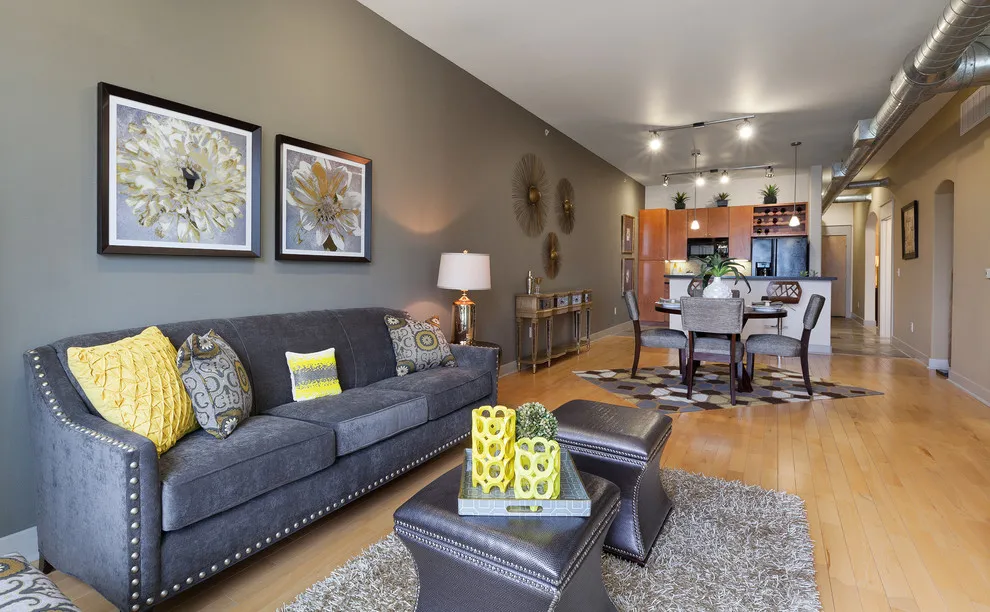
A dark gray sofa has yellow patterned cushions beneath botanical artwork. The bright accents make the simple seating area feel more lively. The wooden floor adds another warm layer below the sofa, while the large plain wall allows the smaller patterned cushions and botanical pictures to stay visible.
Choose a yellow that works with the room light rather than assuming every mustard or lemon shade will suit gray. Keep the largest pieces neutral if you like changing cushion colors seasonally. A removable cover makes it easier to test the effect of yellow through the seasons, but choose the fabric for comfort and care as well as color.
IDEA 12 / 20
Echo Gray Around a Fireplace
 SaveSupport Non AI Creator
Source: Element Construction Partners on Houzz.
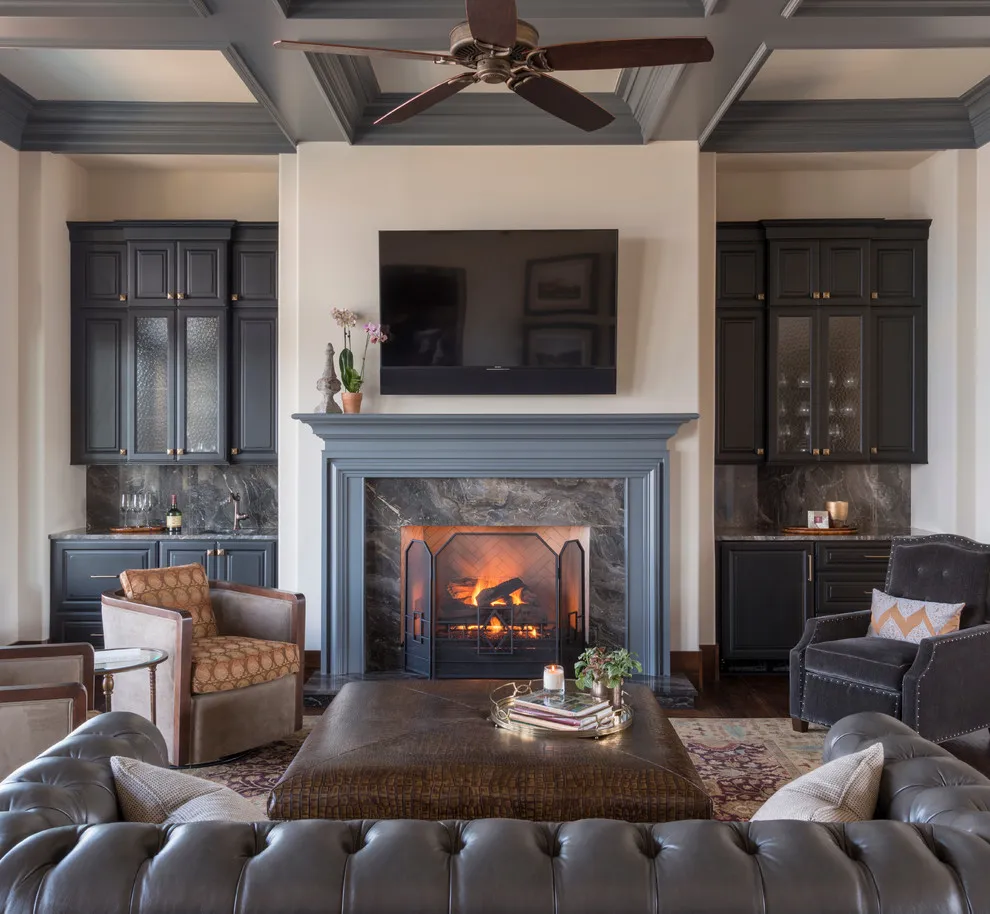
Gray seating faces a fireplace framed by darker cabinetry. The repeated tones tie the upholstered furniture to the built-in wall. The fireplace's pale upper wall interrupts the darker cabinetry, preventing the built-in wall from becoming one uninterrupted block opposite the substantial upholstered seats.
Check the sofa fabric against cabinet paint before trying to match them. A deliberate difference in depth usually looks more comfortable than two nearly identical shades that clash in different light. Keep enough difference between adjacent grays to make the contrast intentional, and review the combination with your evening lamps switched on before buying the final fabric.
IDEA 13 / 20
Use a Pale Geometric Rug
 SaveSupport Non AI Creator
Source: The Whole 9 Yards on Houzz.
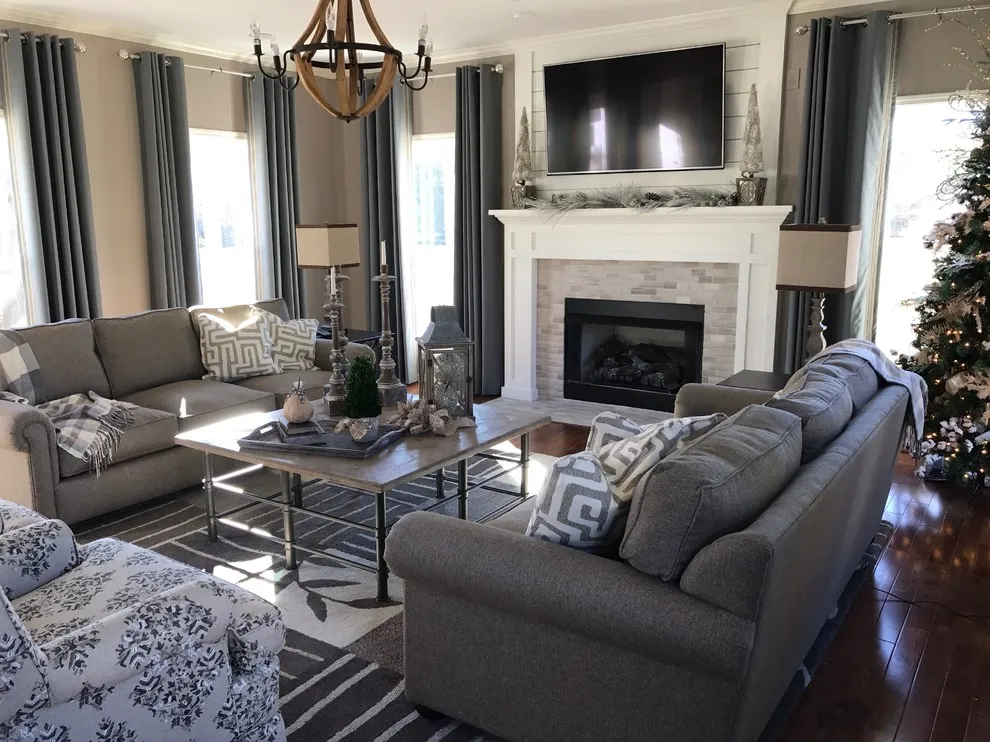
Two gray sofas sit around a dark coffee table on a pale geometric rug. The rug separates the seating group from the darker wood floor. The geometric pattern appears again in smaller cushions, linking the seats without identical upholstery on every chair. Plain sofa surfaces give the repeated pattern breathing room.
Choose a rug large enough to connect the seats rather than floating under the table alone. Test the pattern at room scale, especially if curtains and cushions also contain strong shapes. Pull the nearest chair forward while assessing the rug footprint; the rug should support everyday sitting and movement, not just look proportionate beneath a styled table.
IDEA 14 / 20
Keep the Ceiling Bright
 SaveSupport Non AI Creator
Source: TRG Architecture + Interior Design on Houzz.
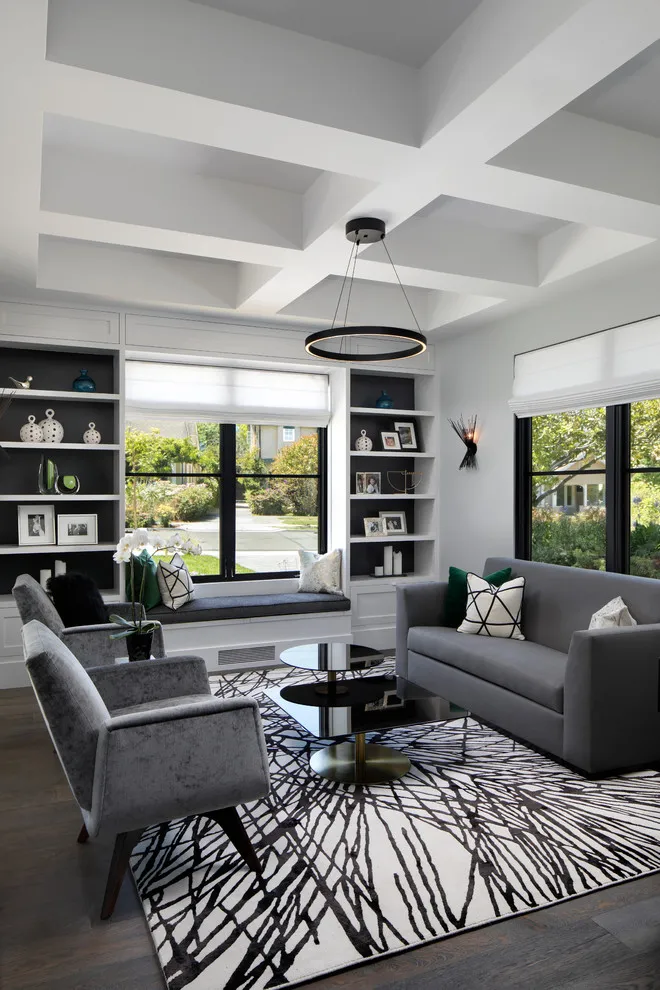
Dark gray seating rests beneath a white coffered ceiling in a room with black shelving. The pale ceiling gives the deeper furniture visual breathing room. Pale window blinds and white shelf borders continue the lighter treatment around the room, while a dark patterned rug connects the black details to gray seating.
Balance dark seating with lighter areas where you want daylight to spread. Use upholstery and paint samples together so the gray does not look unexpectedly blue beside white trim. If repainting the ceiling is impractical, introduce a lighter window treatment or pale artwork first and assess how that changes the balance beside your sofa.
IDEA 15 / 20
Mix Gray With Leather Chairs
 SaveSupport Non AI Creator
Source: Noble Architects, LLC on Houzz.
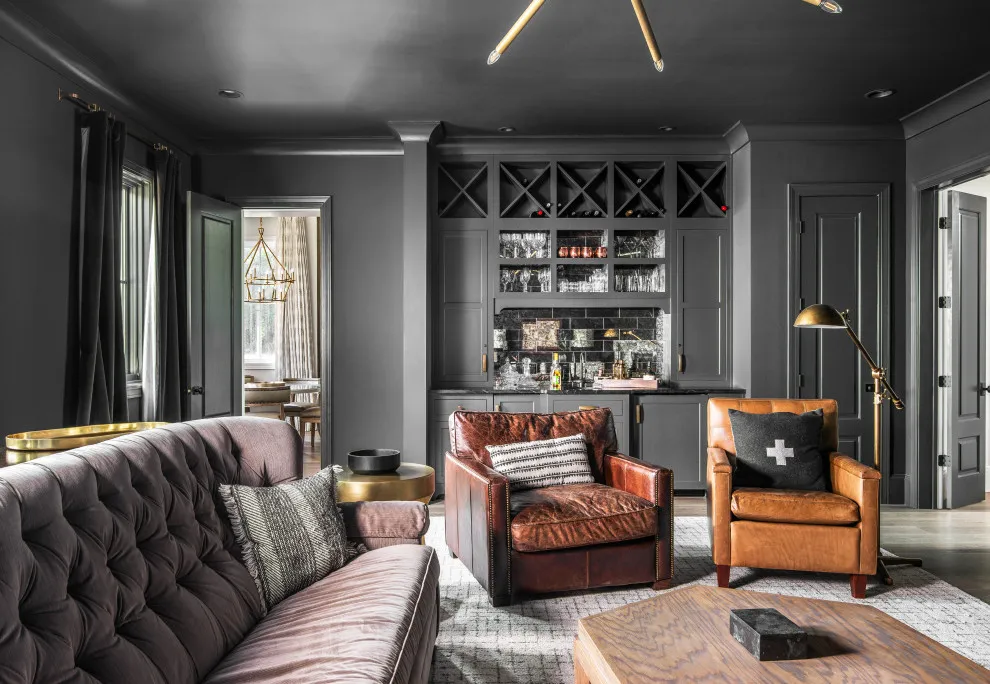
A tufted gray sofa shares a dark room with brown leather and timber-framed chairs. The warmer chair materials keep the seating from looking uniform. The chair frames and leather introduce warmer hues without a bright painted accent. Their different outlines also keep the traditionally tufted sofa from setting every furniture shape.
Combine pieces through similar heights and comfortable spacing instead of matching every fabric. Check the leather finish against the wood floor so the room does not accumulate too many unrelated brown tones. Test whether the chairs provide the same level of comfort as the sofa, and leave accessible surfaces near both so mixed seating works equally well for guests.
PART 04
Finishing details
IDEA 16 / 20
Use a Large Modular Sofa
 SaveSupport Non AI Creator
Source: Control4 on Houzz.
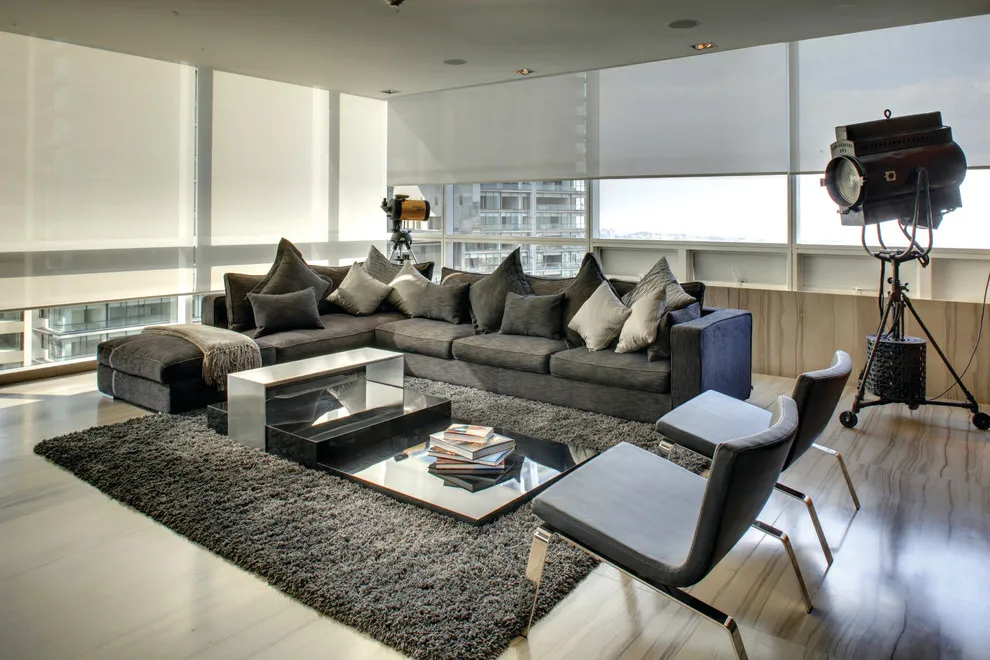
A dark gray modular sofa fills the center of a bright room with broad windows and a deep textured rug. Its low profile preserves the view across the space. A broad pale backdrop and minimal upright furniture let the sectional carry most of the room's visual weight. The textured rug gives that large footprint a clear boundary.
Measure each module and the delivery route before ordering. Leave a practical passage behind the sofa, and choose a layout that serves daily use rather than simply filling the available floor. Map the full arrangement with removable floor markers, including the ottoman or chaise, and walk through it with doors open before choosing the final module combination.
IDEA 17 / 20
Add a Small Orange Accent
 SaveSupport Non AI Creator
Source: Adam Gibson Design on Houzz.
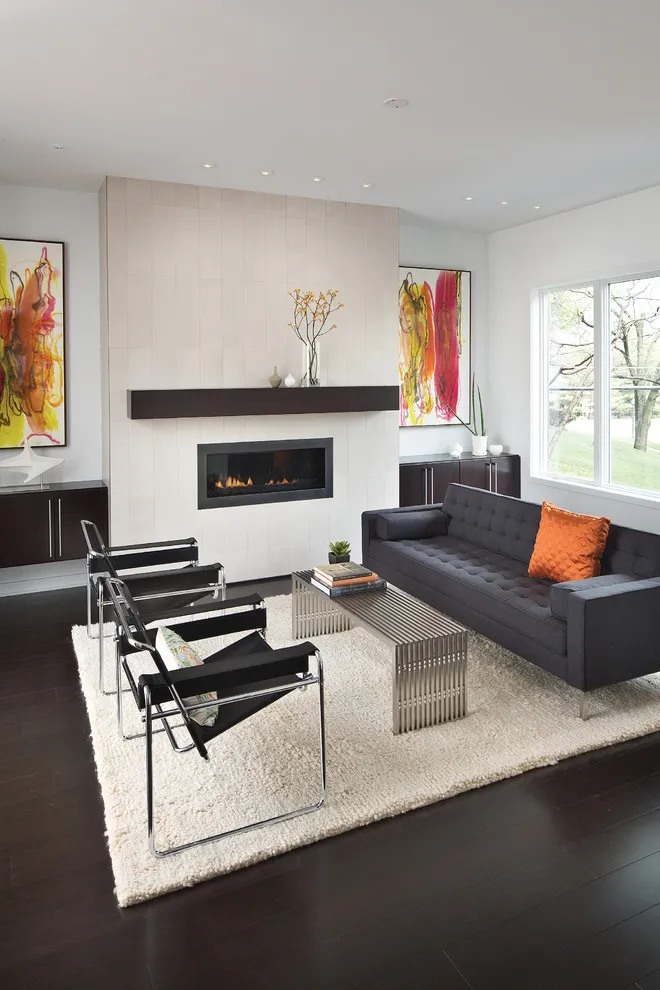
A dark gray sofa sits beside a white fireplace with an orange cushion at one end. The small accent gives the restrained palette a warmer note. Pale walls and a light rug define the darker sofa, while the orange cushion picks up some of the warmth already visible in the framed artwork.
Start with one color accent if you are unsure about a bold palette. Repeat it only where it helps the room feel connected, and keep everyday lighting warm enough for comfortable evening use. Keep the accent away from objects you replace frequently, so everyday items can change without making the carefully limited color combination feel unsettled or overly coordinated.
IDEA 18 / 20
Mix Deep Gray and Pale Chairs
 SaveSupport Non AI Creator
Source: Luxe Nest on Houzz.
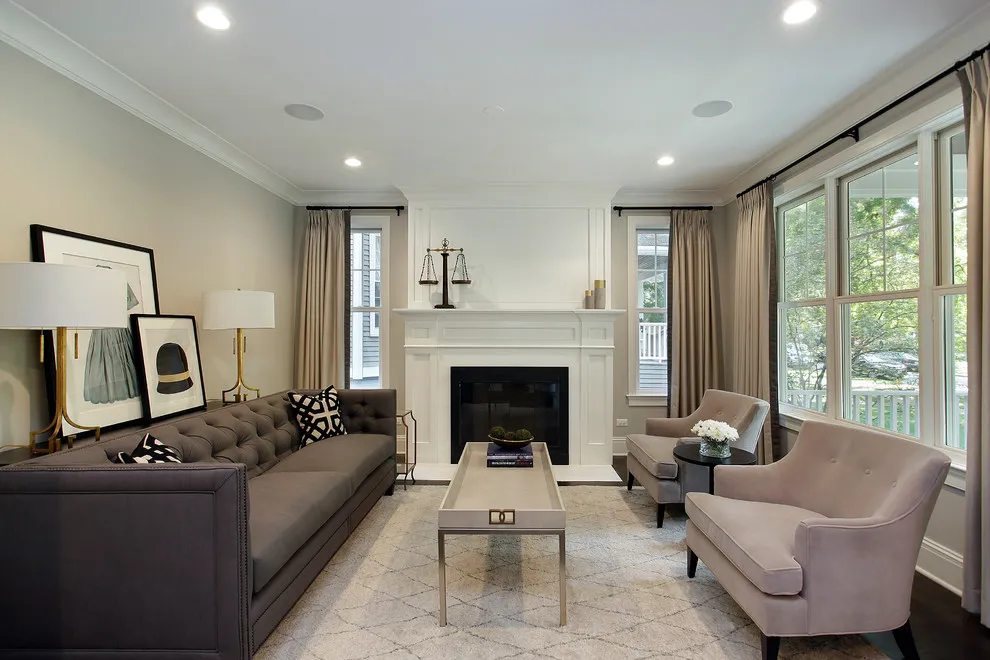
A dark gray sofa faces light chairs beside a fireplace and a large window. The different upholstery tones distinguish the seats without dividing the room. The pale chairs occupy the window side of the room, and a long narrow table connects them to the tufted sofa without another bulky upholstered center.
Use a shared table or rug to connect mixed seating. Compare seat heights before buying, since a very low sofa can feel awkward beside taller, upright chairs. Try each chair beside the proposed table before buying; a visually balanced arrangement is less useful if one seat cannot comfortably reach the shared surface.
IDEA 19 / 20
Give a Sectional a Clear View
 SaveSupport Non AI Creator
Source: Jordan Powers on Houzz.
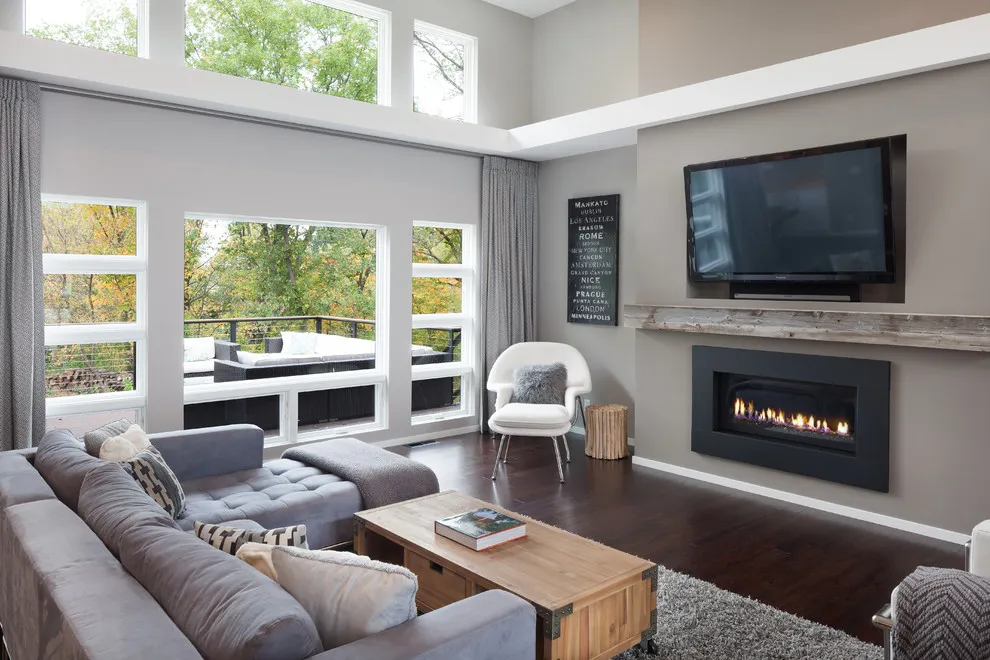
A gray sectional faces a television and fireplace beneath a large window. The simple coffee table leaves the central floor area relatively open. The sofa's chaise directs attention toward the screen, while pale curtains and upper glazing keep the room's edges lighter than its large furniture and floor.
Check viewing angles from every seat before placing a large sectional. Allow access to windows and heating outlets, and avoid using deep corner seats as a substitute for a clear walking route. Consider reflections on the television at the times you use it most, and leave room for curtains to move without catching behind the sofa arm.
IDEA 20 / 20
Create a Balanced Seating Group
 SaveSupport Non AI Creator
Source: Wolfe Rizor Interiors on Houzz.
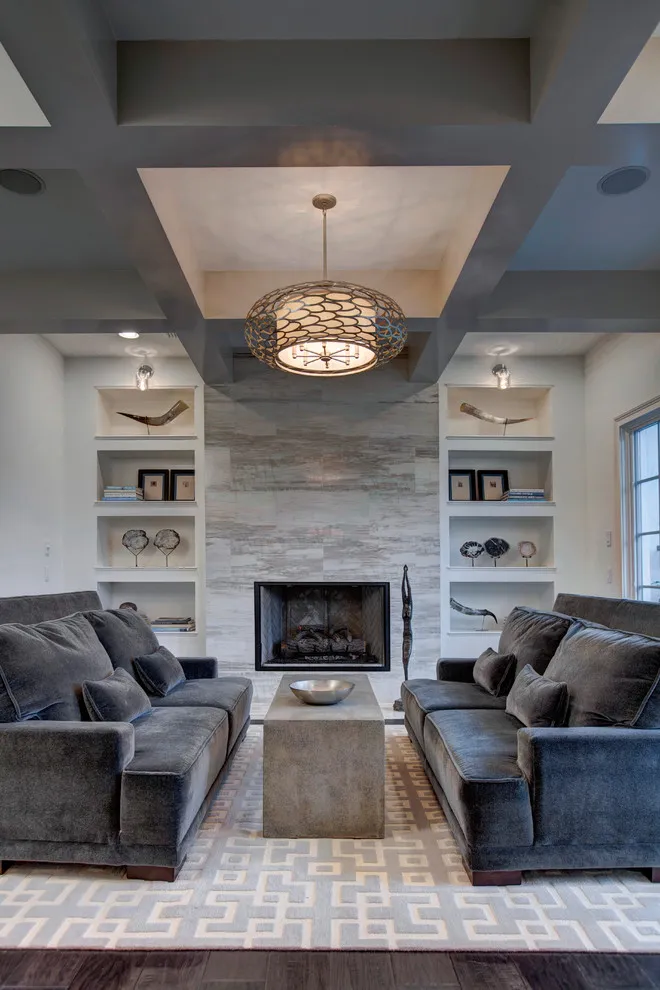
Dark gray sofas sit on either side of a long wooden table beneath a decorative ceiling light. The matching upholstery brings order to a room with several architectural details. A pale fireplace wall and slim central table keep the matching sofas from overwhelming the room. The overhead fixture reinforces the shared center without another floor-standing object.
Use symmetry where it supports the room rather than forcing it around every opening. Leave equal access to both sofas and choose a table length that does not block the approach from either end. If the room has an offset doorway, adjust one sofa slightly rather than sacrificing a comfortable entrance; repeated upholstery can still connect an arrangement that is not perfectly mirrored.
BRING IT ALL TOGETHER
Choose what works in your home
The most satisfying updates are usually the ones that solve an everyday problem while making the room more inviting. Begin with the largest fixed elements, then use lighting, texture, and smaller details to bring the look together.
There is no need to buy everything at once. Test samples, make one considered change, and let the rest of the room settle before adding more.