A brown leather couch gives a living room a warm starting point, but its surroundings determine whether it feels light, richly layered or distinctly traditional. The shade of the leather matters: a pale tan sofa behaves differently beside a wall color than a deep chocolate one.
These rooms show ways to work with a couch you already own as well as ideas for choosing a new one. Compare colors in your own light, plan comfortable circulation and follow the upholstery supplier's care instructions before applying any cleaning product.
PART 01
Find a wall color that suits the leather
IDEA 01 / 16
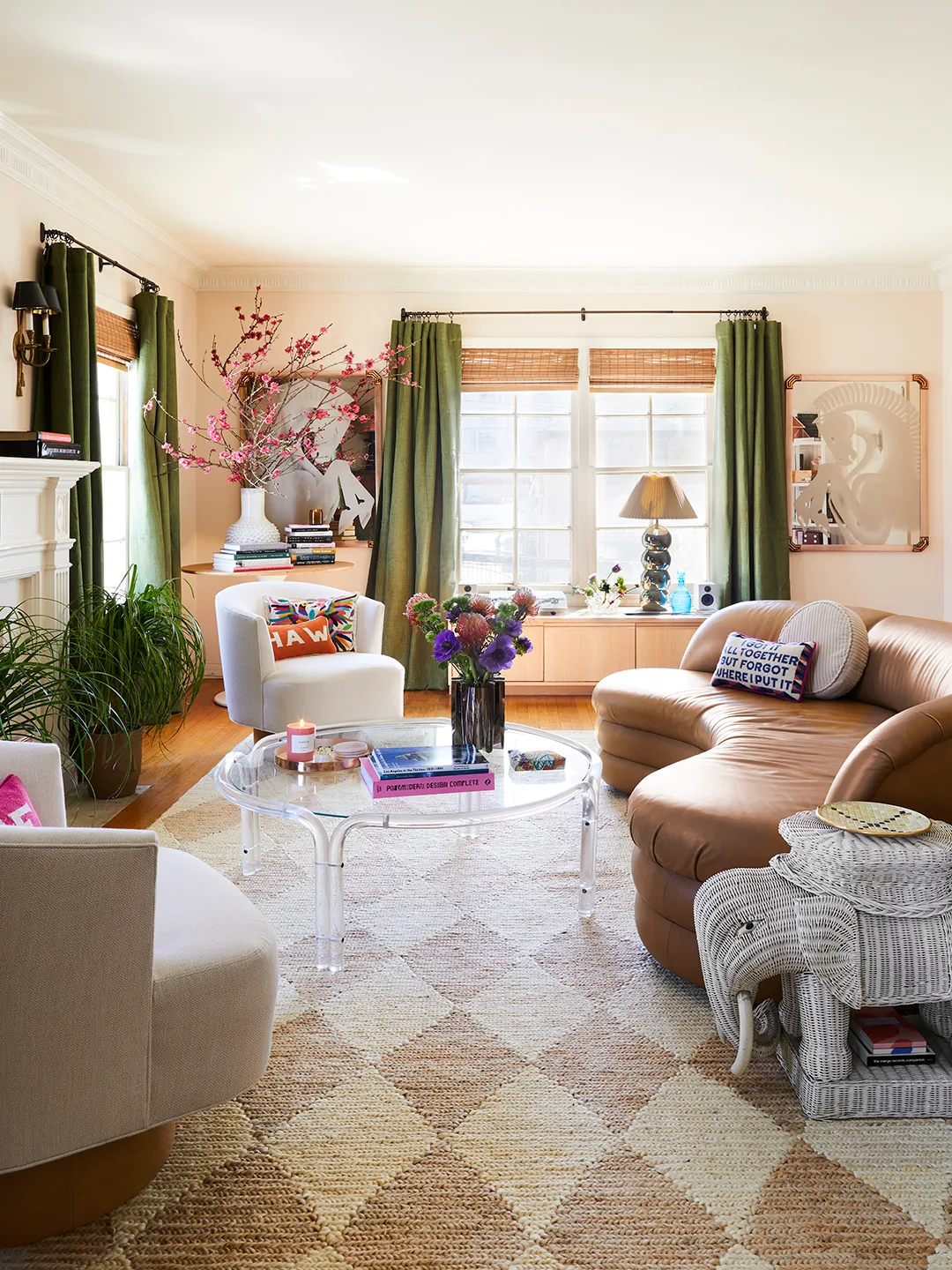
Soften warm leather with pink and green
 SaveSupport Non AI Creator
Image credit: Photography by Sara Ligorria-Tramp; Styled by Emily Bowser; Courtesy of Emily Henderson Design
A curved tan couch sits against pale pink walls and green curtains, giving the warm leather a gentle color contrast. Pale chairs keep the seating group light. The transparent coffee table leaves the patterned rug visible, so the couch's rounded outline remains the strongest furniture shape in the room.
Try a muted pink sample near the leather before painting; a peach undertone can look quite different from a cooler pink. Green curtains can introduce another color without replacing furniture. Keep a clear route around the curved couch and check whether its shape suits the seats you need.
IDEA 02 / 16
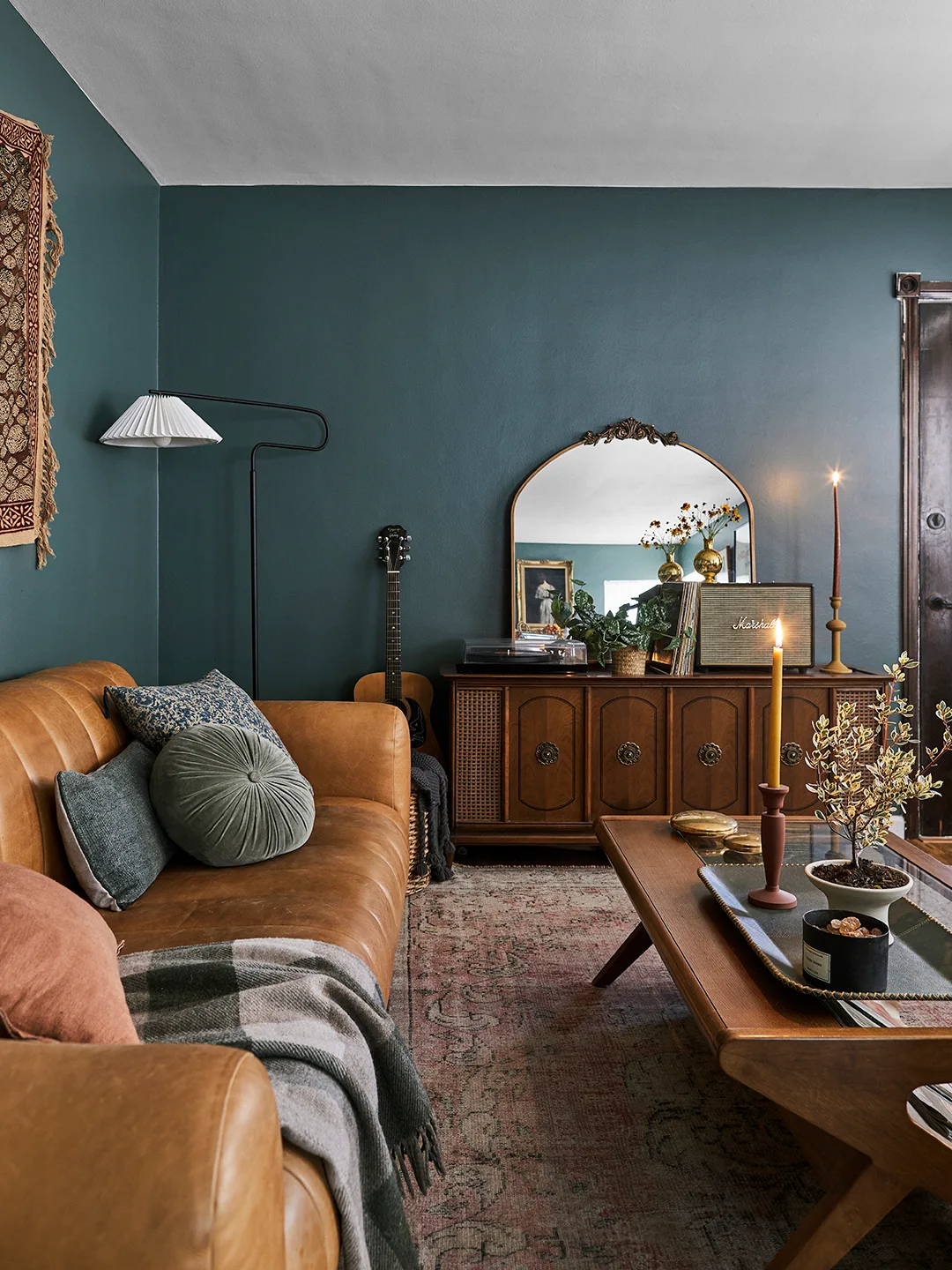
Set caramel leather against a deep blue-green wall
 SaveSupport Non AI Creator
Image credit: Photography by Sara Ligorria-Tramp / Courtesy of Emily Henderson Design
Deep blue-green walls give the caramel sofa a clear warm contrast. Patterned cushions and a checked throw add softer surfaces to its smooth upholstery. The wooden sideboard repeats the warmth, while the ornate mirror brings a different outline above the low furniture rather than filling the wall with several small pictures.
Look at a darker paint sample behind the actual sofa under both daylight and lamps. Add a reading light if the wall color reduces the room's apparent brightness after sunset. Use only care products approved for your leather type, and test any permitted treatment in an inconspicuous area.
IDEA 03 / 16
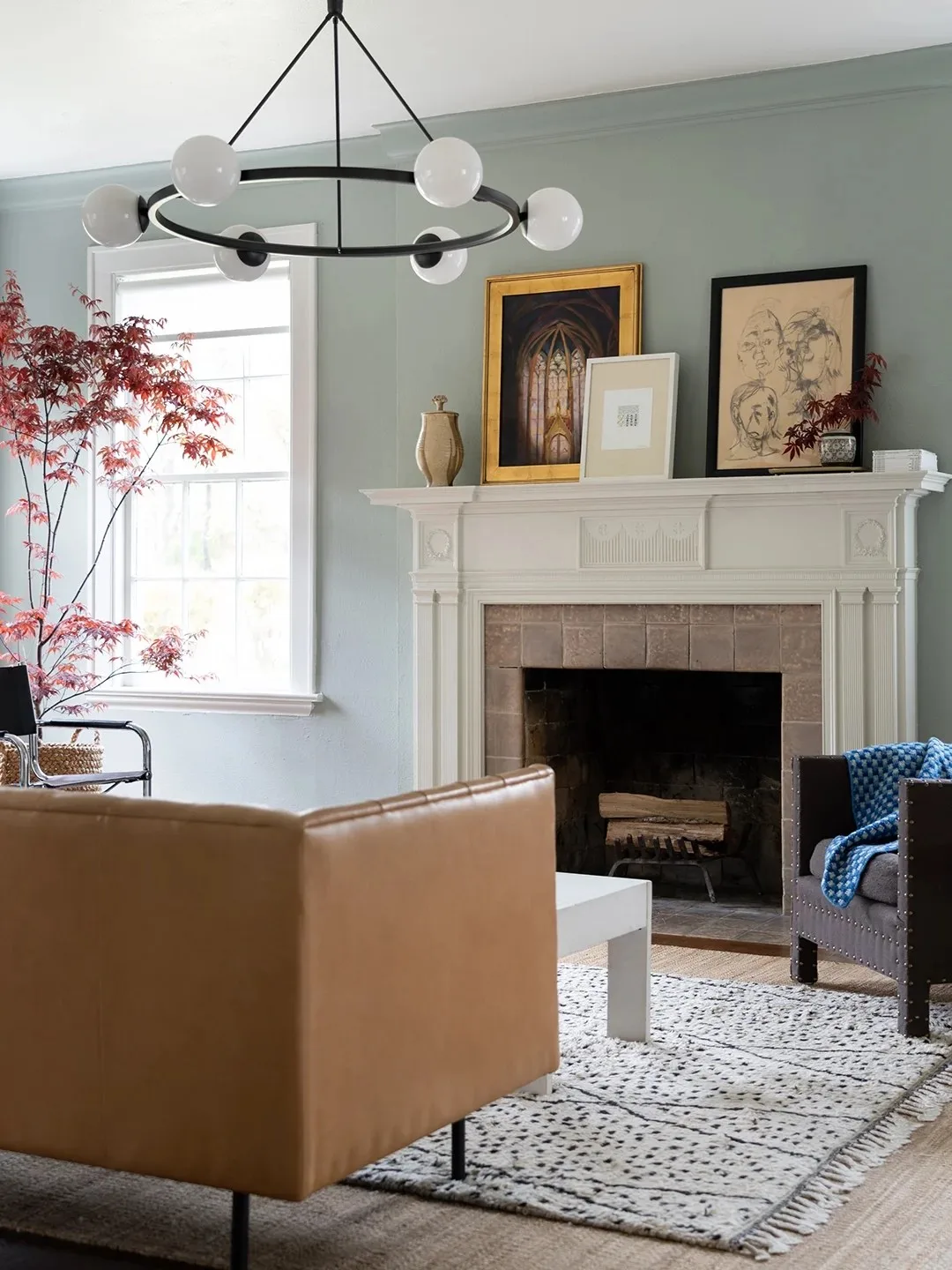
Use pale blue around a clean-lined sofa
 SaveSupport Non AI Creator
Image credit: Photography by Jeff Jones
The brown leather sofa brings warmth into a room with pale blue-gray walls and a light fireplace surround. Its raised dark legs echo the neighboring chair frame. A mostly pale patterned rug connects the seats while leaving the sofa's smooth, straight back visible from the adjoining part of the room.
A sofa that stands away from a wall needs a back you are happy to see. Check its appearance from the doorway as well as from the seat. Compare pale blue with your existing trim color before painting, and preserve comfortable circulation behind the sofa rather than squeezing it against a route.
IDEA 04 / 16
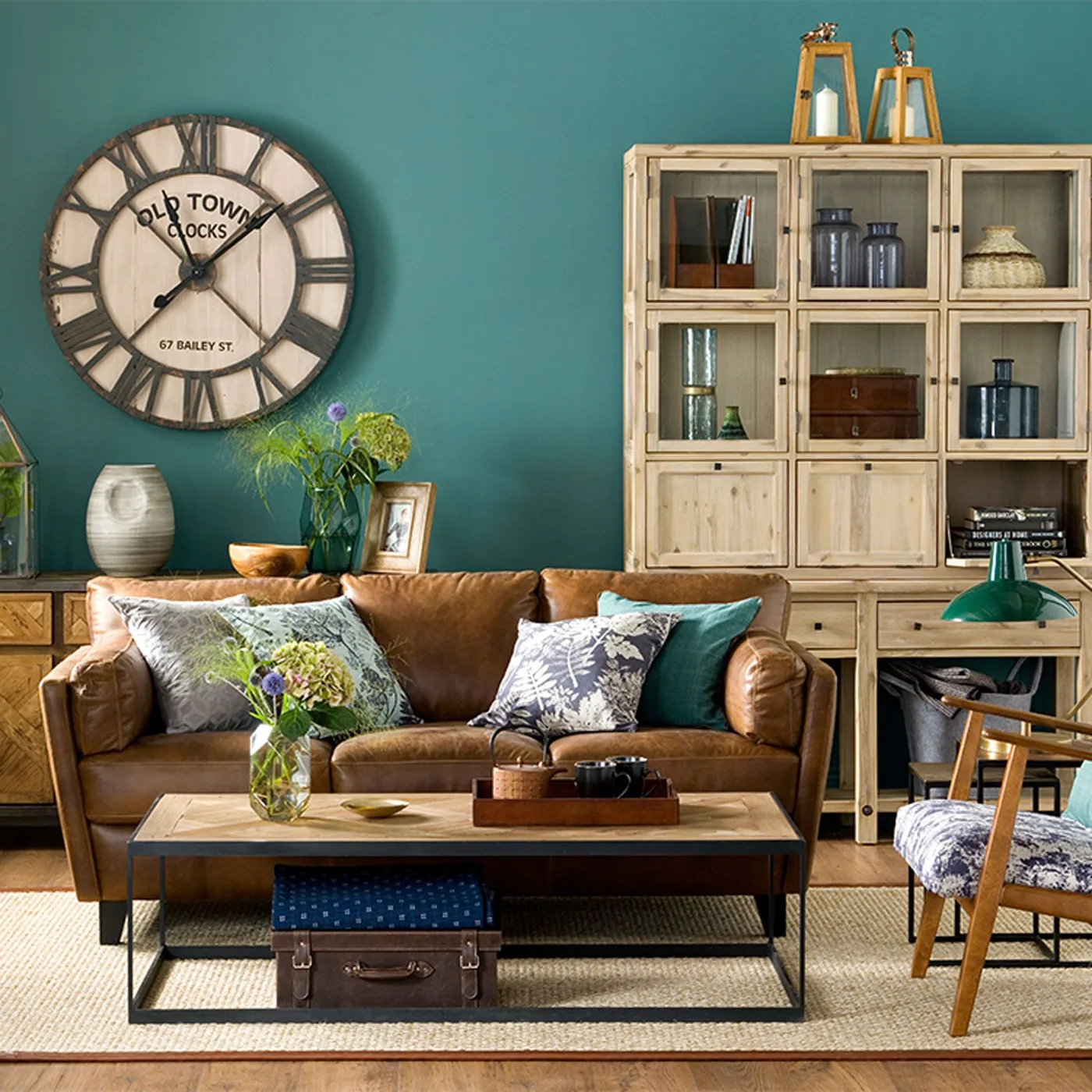
Connect teal walls with warm wooden storage
 SaveSupport Non AI Creator
Image credit: Future PLC/Simon Whitmore
Teal walls set off the brown leather couch, with pale wooden storage keeping the warm tones from feeling too heavy. A large clock fills part of the wall, while patterned cushions repeat both lighter and greener colors. The rectangular table gives the collected arrangement a straightforward everyday surface.
Use one broad wall color to connect different storage pieces instead of replacing everything to match the sofa. Check cabinet access behind or beside the seating before moving furniture into place. Keep enough tabletop clear for drinks and everyday objects, particularly when the surrounding wall already holds several features.
PART 02
Make the seating comfortable through texture
IDEA 05 / 16
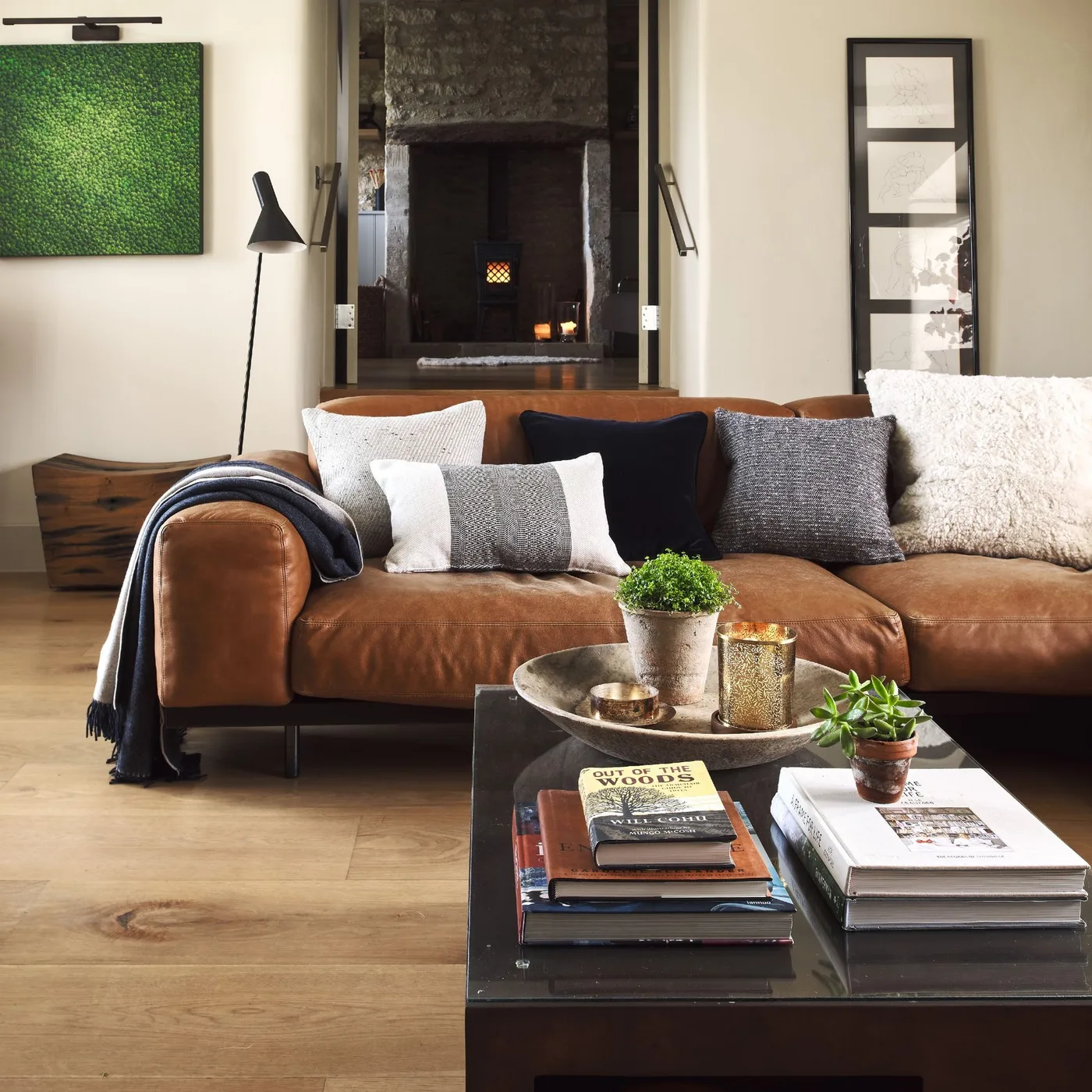
Add texture with restrained cushion colors
 SaveSupport Non AI Creator
Image credit: Future PLC/Adam Carter
Black, gray and white cushions soften the brown leather sofa while leaving its warm color visible along the arms and seat. A dark throw repeats the black cushion without introducing another bright shade. Small plants and a shallow table display provide interest lower down, keeping the seating as the main feature.
Choose cushion textures for comfort as well as appearance, and leave usable seat space between them. Throws can slide on smooth upholstery, so test how yours behaves in daily use. Keep pots protected against drainage and follow the sofa supplier's guidance rather than assuming every leather finish tolerates the same treatment.
IDEA 06 / 16
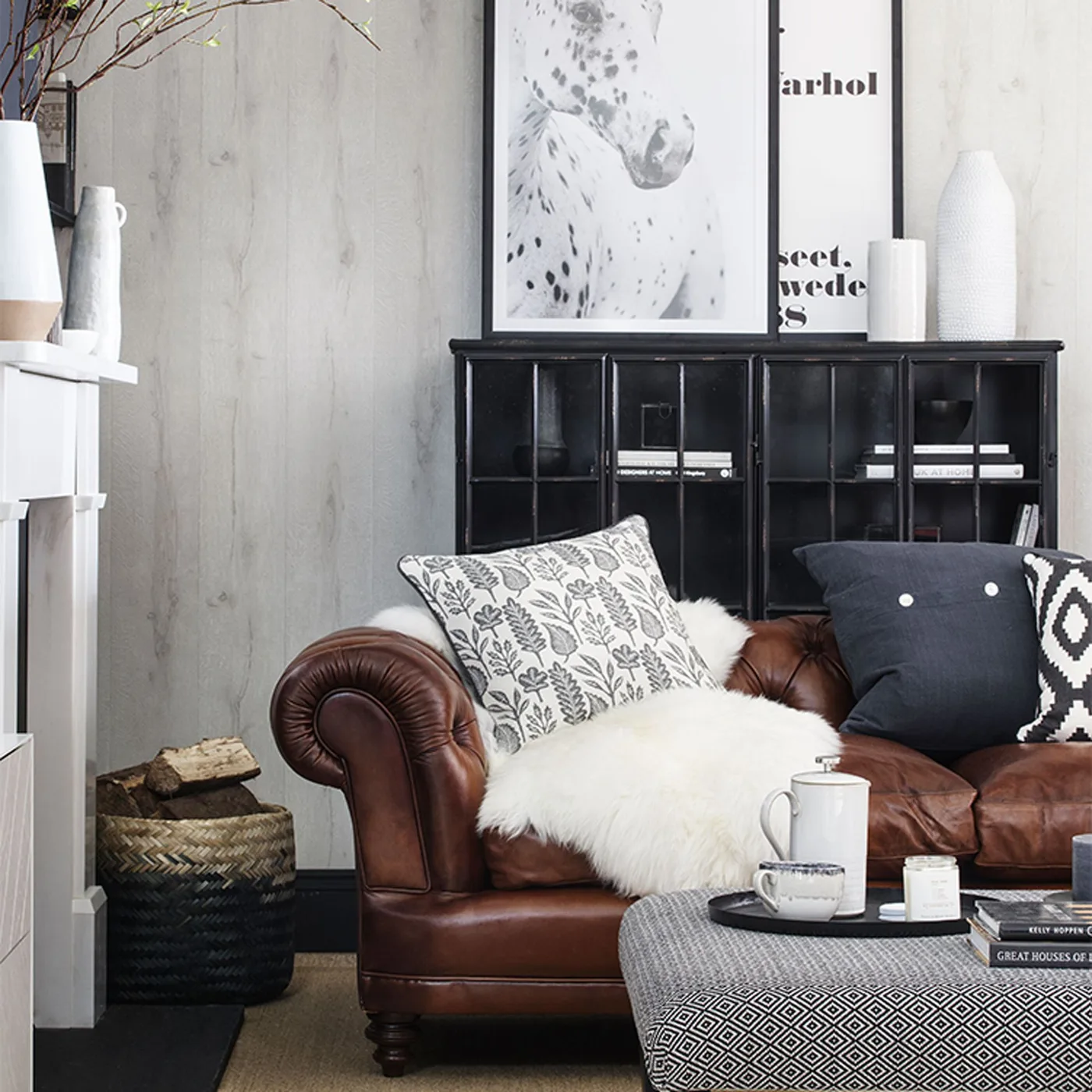
Give rolled arms a quieter black-and-white setting
 SaveSupport Non AI Creator
Image credit: Future PLC/Dominic Blackmore
The sofa's rolled brown arm brings a warm curve into a setting of black storage and monochrome pictures. A pale textured throw brightens the seat, and patterned cushions add smaller graphic details. The restrained colors behind it make the leather's creases and rounded outline easier to appreciate.
A traditional rolled-arm couch does not require a room full of matching traditional furniture. Try simple storage and a limited picture palette around it first. Avoid covering the entire seat with decorative textiles, and check that any throw's backing or dye is suitable against the upholstery.
IDEA 07 / 16
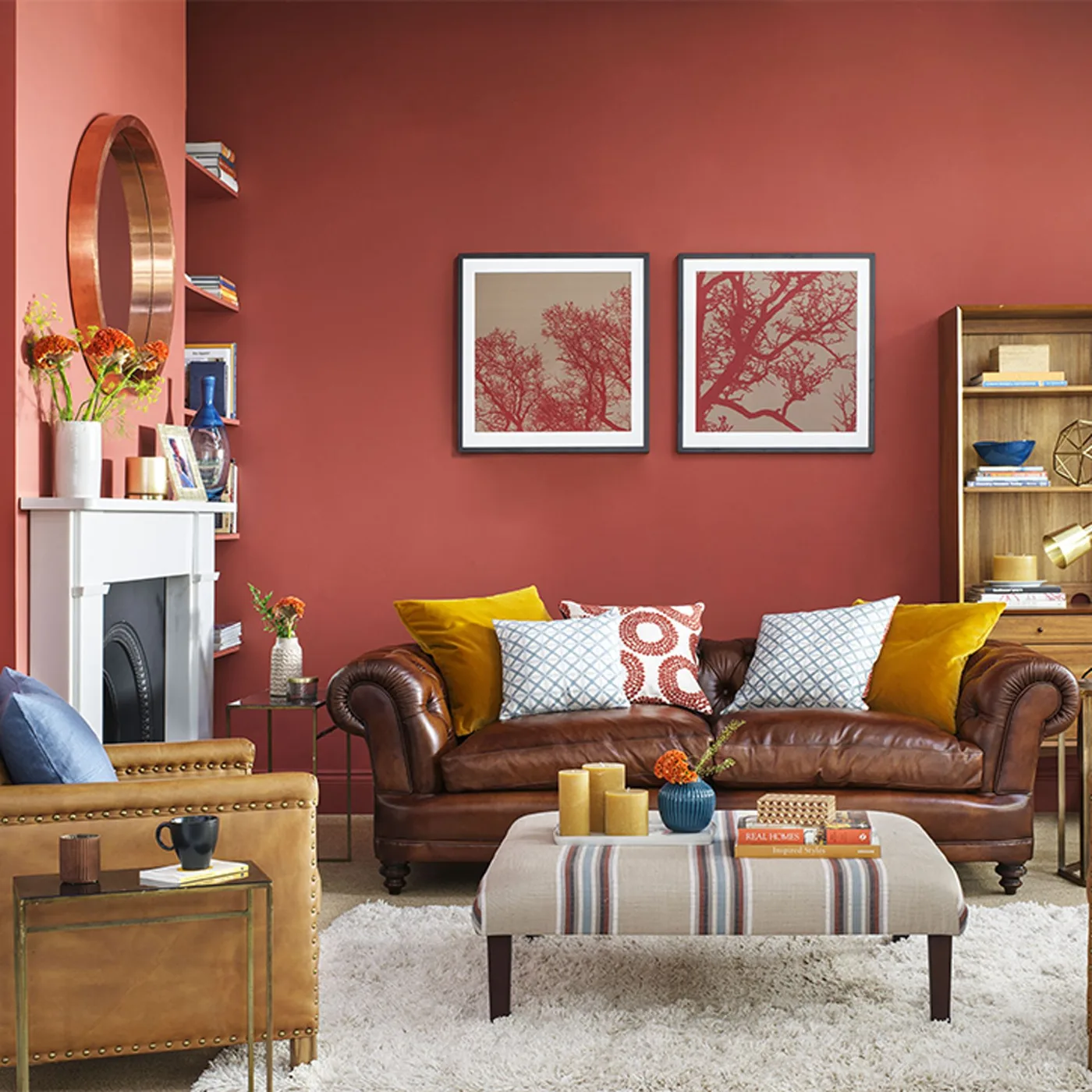
Bring a warm wall color around a darker couch
 SaveSupport Non AI Creator
Image credit: Future PLC/Dominic Blackmore
Terracotta walls surround the darker brown couch, building a warm palette rather than a sharp cool contrast. Yellow cushions brighten the middle of the seat. The pale striped ottoman introduces a lighter surface in front, while two framed botanical pictures make an orderly group above the couch.
Warm wall colors can make dark leather feel enveloping, so check the effect at night before painting the whole room. Add lighter textiles if the combination feels too dense. An ottoman used for drinks needs a stable tray; keep enough space around it for people to get out of the sofa.
IDEA 08 / 16
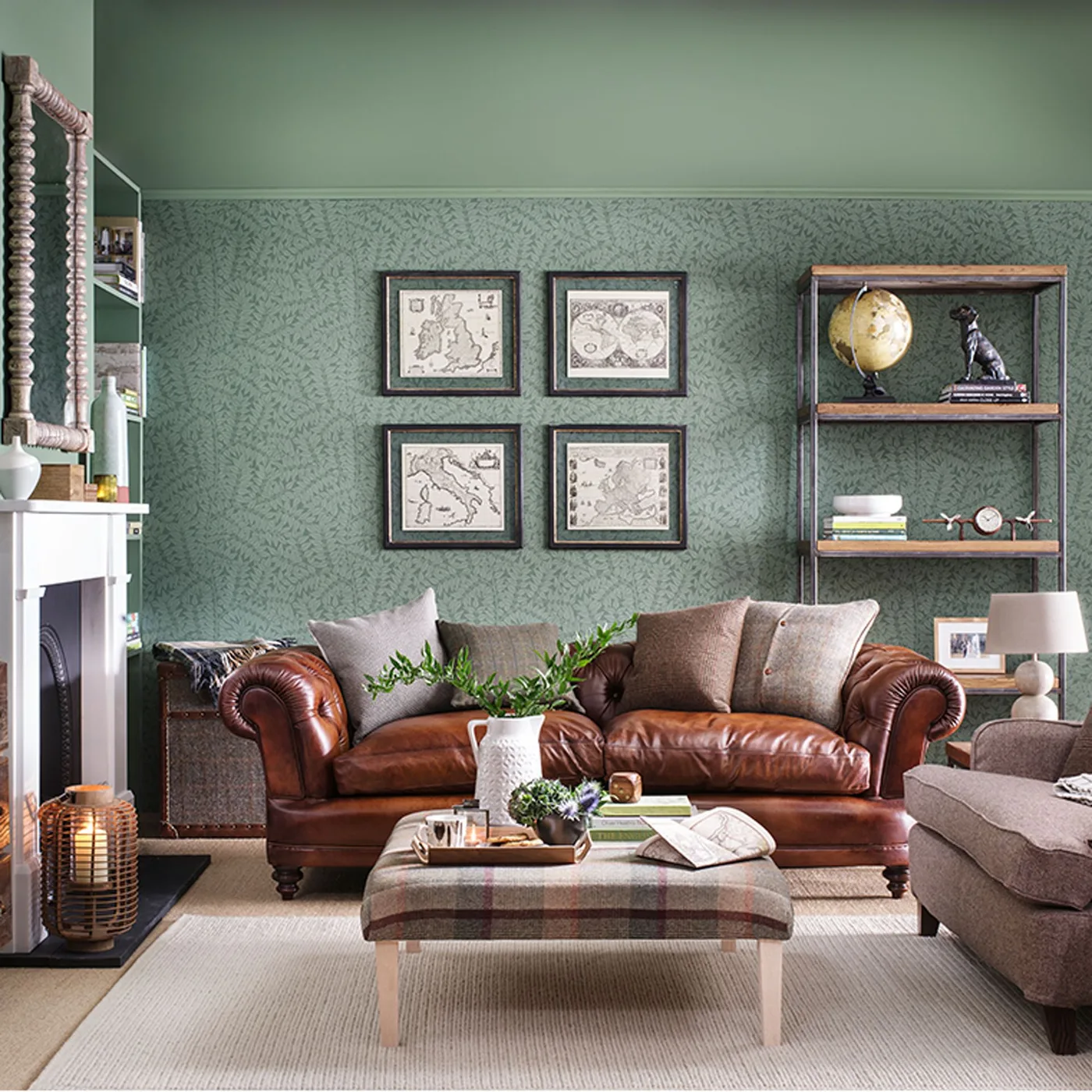
Pair a tufted couch with softly patterned green
 SaveSupport Non AI Creator
Image credit: Future PLC/Dominic Blackmore
Green patterned walls make a soft background for the tufted brown couch and its rolled arms. Four framed pictures create a regular arrangement above the seat. The checked ottoman adds another pattern at a larger scale, with pale cushions preventing the leather from becoming the room's only visible seating texture.
Vary pattern scale when combining wallpaper and an upholstered ottoman so their details remain distinct. Keep the cushions simpler if both surfaces already carry strong motifs. Tufted upholstery has creases that collect dust; follow the manufacturer's cleaning guidance and avoid saturating seams when dealing with a spill.
PART 03
Work with the couch's shape and scale
IDEA 09 / 16
Let a sculptural couch keep the wall simple
 SaveSupport Non AI Creator
Image credit: Photography by Angela Hau; Styling by Naomi Demañana and Julia Stevens
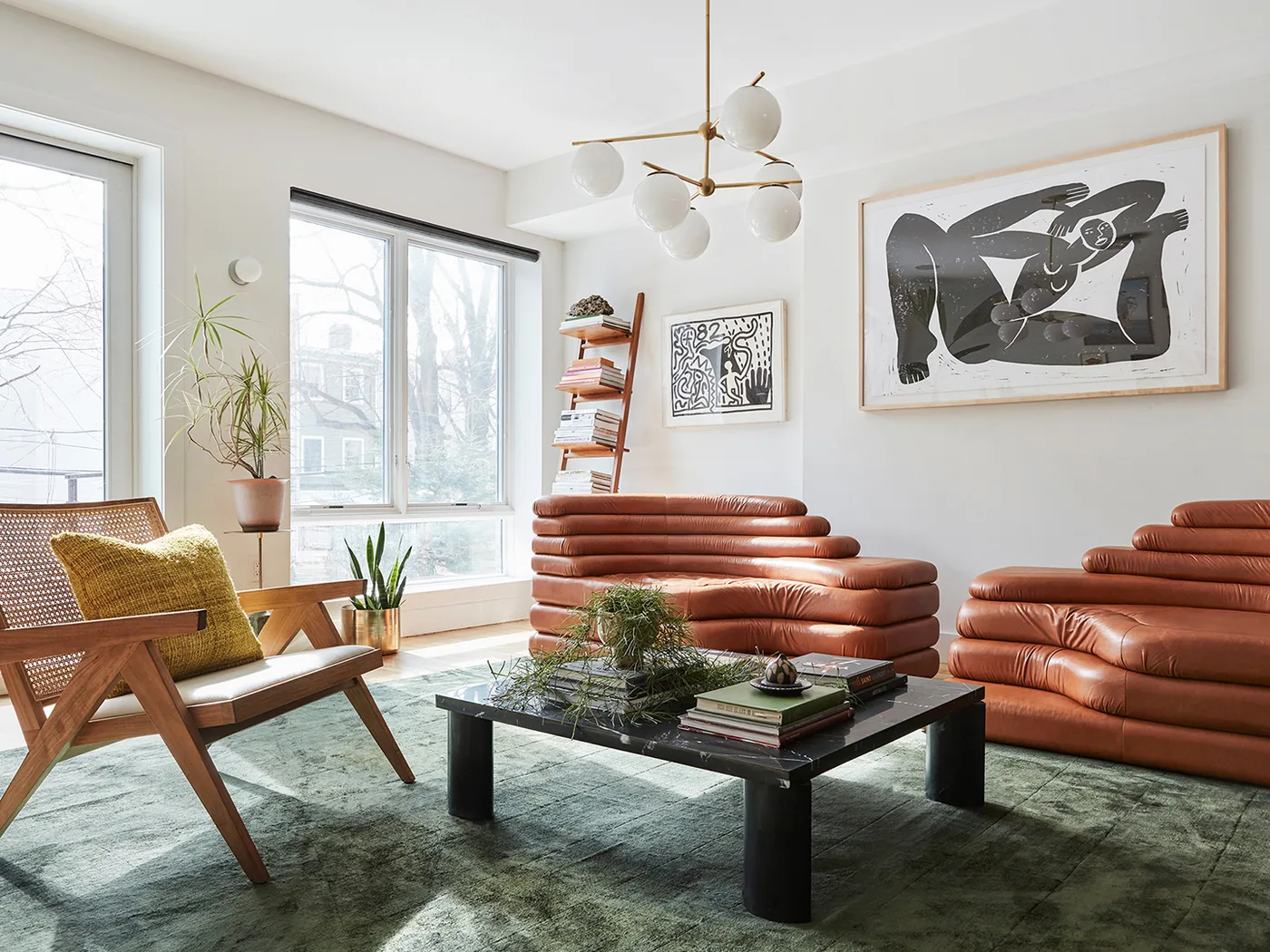
Tiered leather cushions give these brown sofas a strong sculptural profile against pale walls. The dark table keeps the central surface relatively quiet, while a green rug supplies a cooler color beneath the furniture. Black-and-white abstract pictures complement the shapes without introducing a crowded collection of small accents.
Try an unusual couch in person if possible; a striking profile does not tell you how the seat supports your body. Measure its full footprint, including the widest cushion edges. Keep nearby furniture simpler when the sofa's shape already provides the room's main visual feature.
IDEA 10 / 16
Use light tan beneath a warm timber ceiling
 SaveSupport Non AI Creator
Image credit: Photography by Adrian Gaut
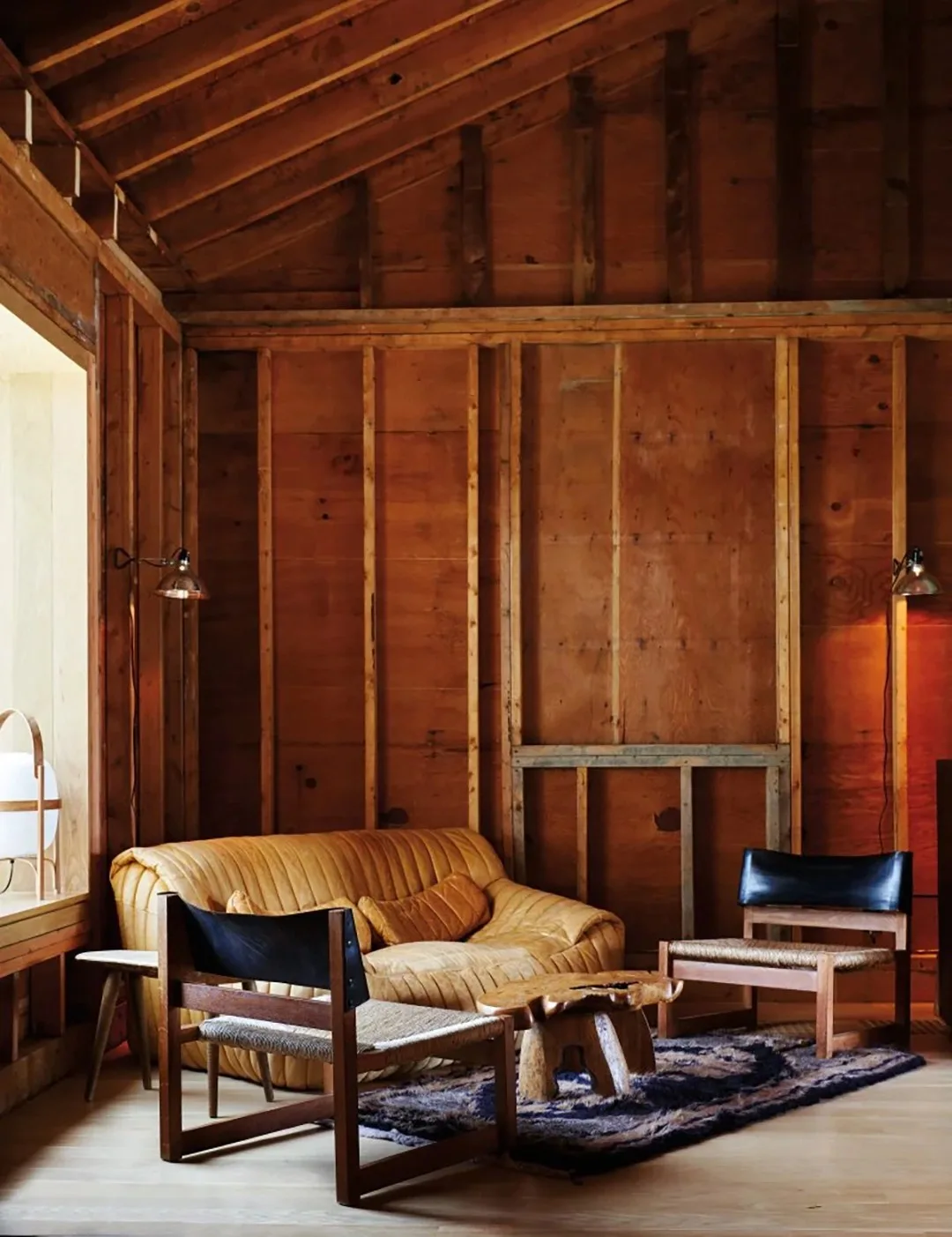
The light tan sofa sits below exposed roof timbers and wood-lined walls, keeping the room's warm palette continuous. Dark-backed chairs introduce a sharper contrast in front of it. A low irregular table and patterned rug vary the textures, so the leather does not have to supply every decorative detail.
Compare the leather shade with your room's strongest wood tone before buying, especially in a space with timber on several surfaces. A lighter couch may stand out more than another dark brown one. Check the delivery route and the usable height beneath any sloping ceiling before choosing a large sofa.
IDEA 11 / 16
Give a low modular couch a rich wood backdrop
 SaveSupport Non AI Creator
Image credit: Anson Smart. Design: Flack Studio. Styling: Joseph Gardner
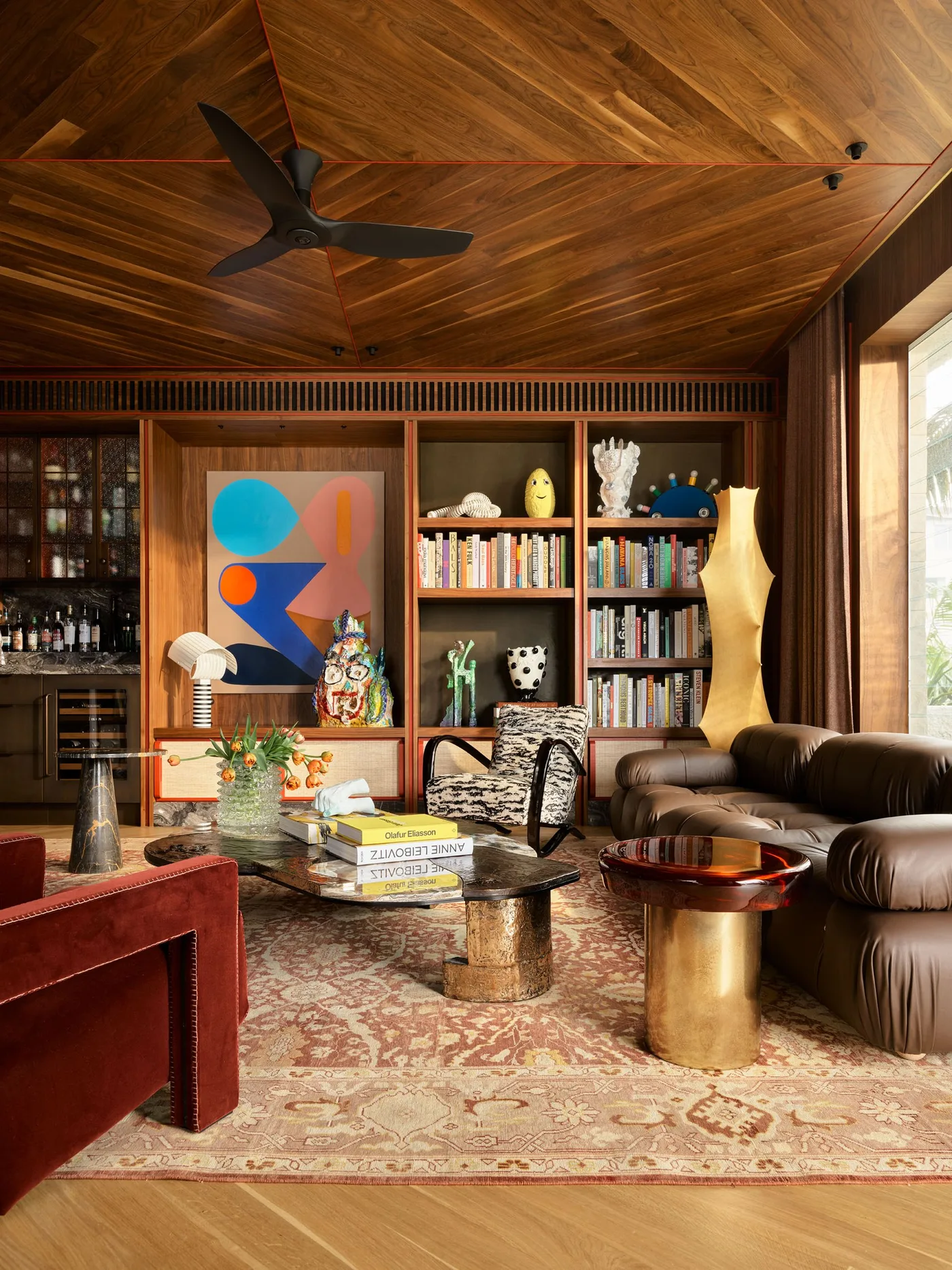
The low brown couch continues the warm color of the wood ceiling and surrounding bookcases. Its rounded cushions contrast with the shelving's straight grid. Colorful art, a patterned rug and rounded metallic tables add separate accents, giving the room layers without making the large leather piece disappear into a matching furniture set.
A low modular couch suits some sitting habits better than others, so test getting up as well as settling down. Leave access to shelving behind the arrangement. If you move modules frequently, check their connectors and floor protection rather than assuming each piece can slide safely across the room.
IDEA 12 / 16
Soften a corner sofa with a rounded table
 SaveSupport Non AI Creator
Image credit: Isy's Interiors, photography Duncan Smith
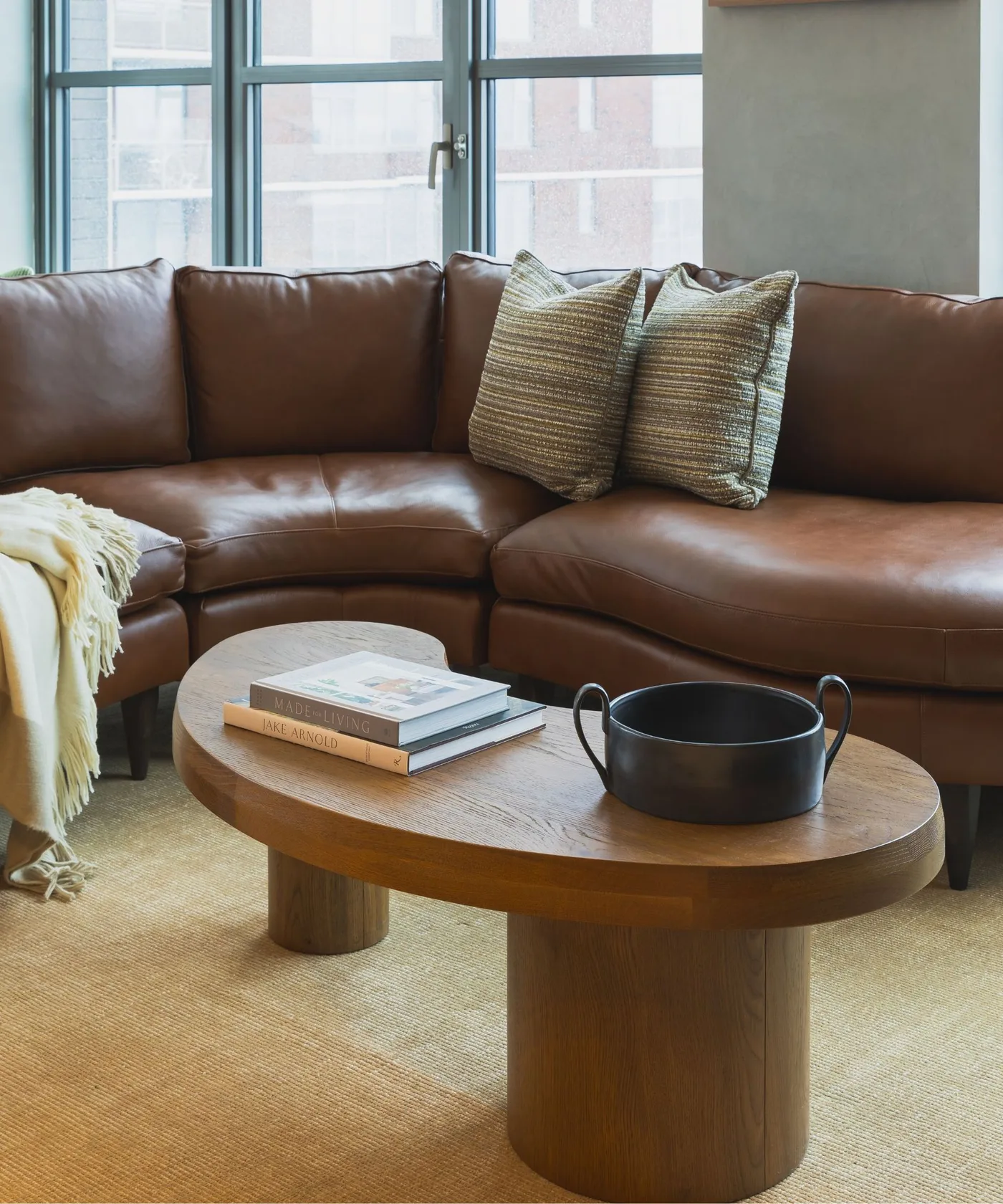
The corner sofa makes a broad brown seating surface beneath the windows, with two striped cushions adding a modest textile layer. A rounded wooden table echoes the upholstery's softer contours. The pale rug separates both warm pieces from the floor, keeping the small arrangement from feeling like one uninterrupted brown block.
Measure both runs of a corner sofa and check which side needs the longer section before ordering. Leave the window controls accessible behind it. A rounded table can ease movement around the corner, but make sure every main seat still has a useful surface within reach.
PART 04
Connect the couch with useful details
IDEA 13 / 16
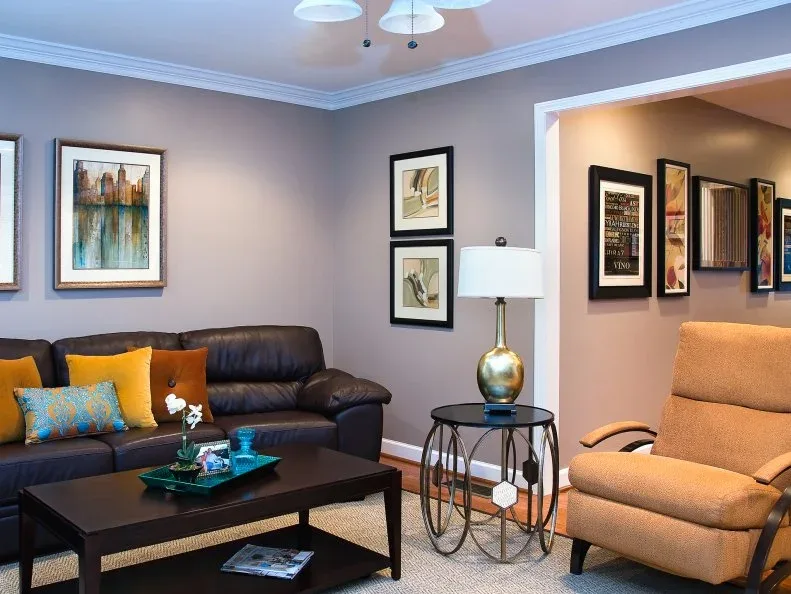
Brighten chocolate leather with a warm accent chair
 SaveSupport Non AI Creator
Image credit: From: Kristen Pawlak
Yellow cushions and a yellow armchair brighten the deep brown sofa against gray walls. A small blue patterned cushion and turquoise tray introduce a cooler secondary color. The dark rectangular table connects with the sofa, while lighter wall pictures keep the upper part of the room from becoming too heavy.
Use a repeated accent color to connect an existing sofa with a different chair rather than matching their upholstery. Keep the cushion group small enough for comfortable sitting. Check the chair's width and recline space if relevant, and leave access between its arm and the side table.
IDEA 14 / 16
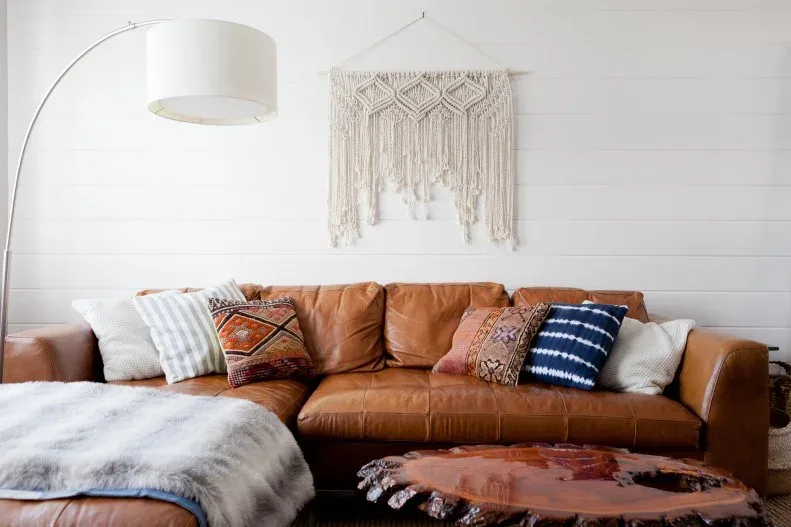
Layer warm leather beneath a pale wall hanging
 SaveSupport Non AI Creator
Image credit: Photo: Amy Bartlam. From: Natalie Myers
The warm brown sectional sits below a pale knotted wall hanging, giving the white paneled wall a softer texture. Blue and orange patterned cushions bring smaller color accents across the seat. A curved floor lamp reaches into the group while leaving the wall display unobstructed.
Use the couch as the warm anchor and change smaller textile layers when you want a fresh look. Check that a floor lamp's base and cable stay outside the walking route. Follow the upholstery care instructions before cleaning beneath a throw, where dust and crumbs can gather unnoticed.
IDEA 15 / 16
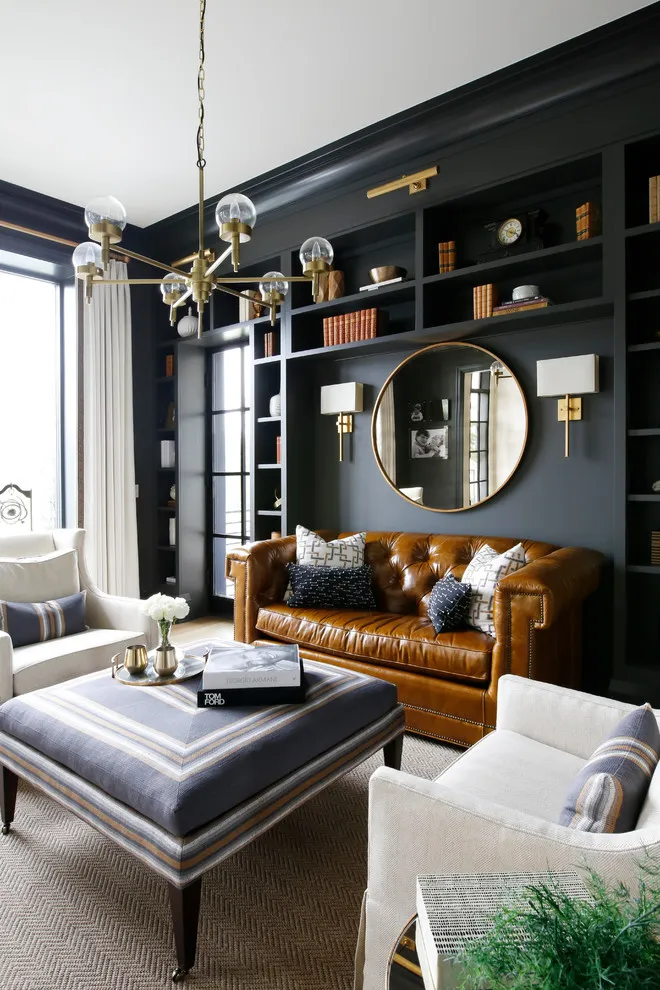
Set cognac leather inside dark built-in shelves
 SaveSupport Non AI Creator
Image credit: Vernich Interiors
Dark built-in shelving creates a clear frame around the cognac-colored sofa. A round mirror and paired pale sconces provide lighter points above it, while pale armchairs balance the leather across the seating group. The sofa's warm color stands out even though the surrounding wall contains several shelves and decorative objects.
A dark storage wall can make warm leather more prominent without adding a bright wall color. Keep shelf contents grouped and leave practical space around the sofa arms. An upholstered central ottoman needs a stable tray for drinks; test the arrangement from each chair before settling its position.
IDEA 16 / 16
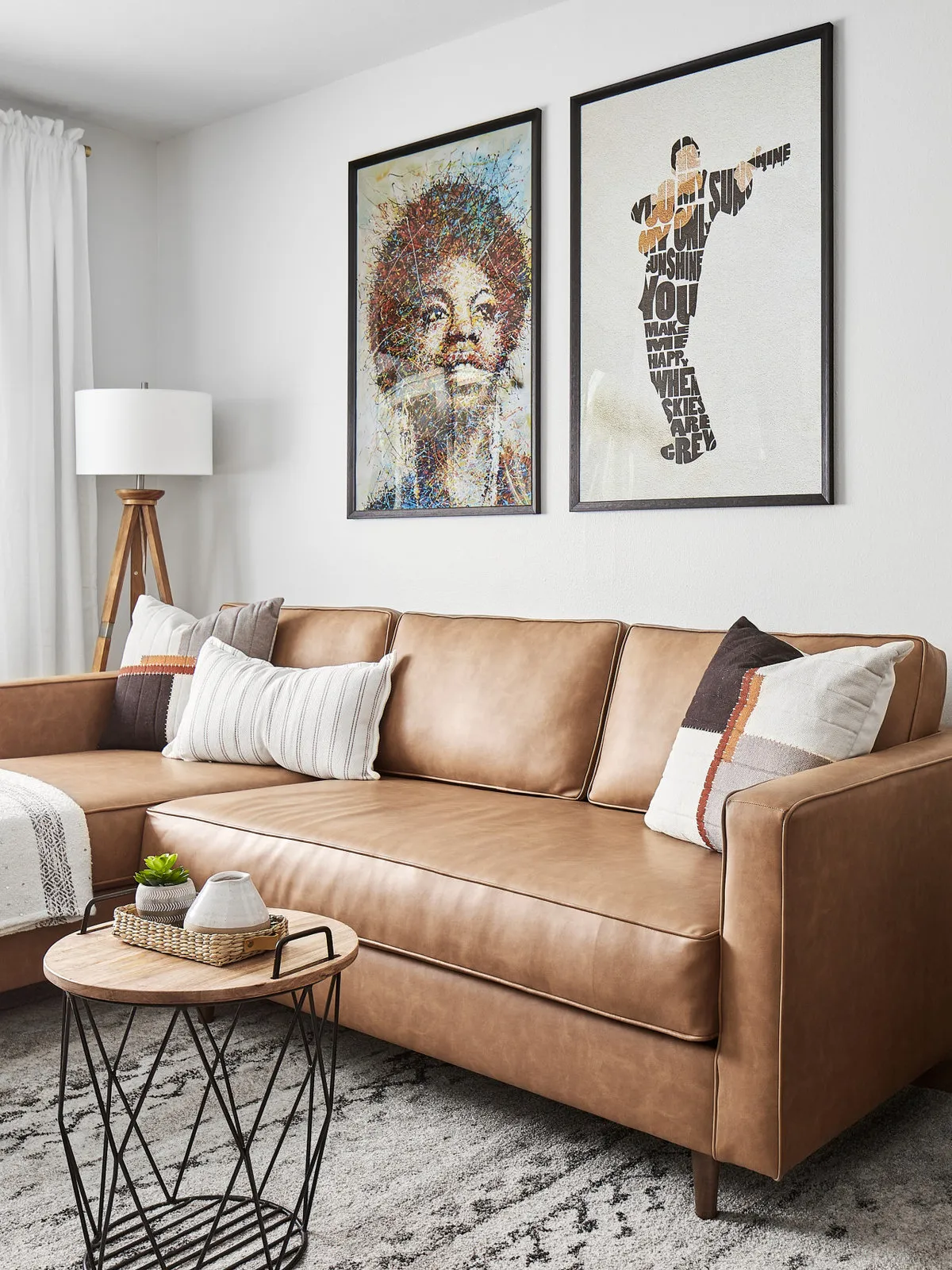
Connect a simple tan sofa with larger framed art
 SaveSupport Non AI Creator
Image credit: Joselyn Rendon Interiors
Two large black-framed pictures give the simple tan sofa a clear wall arrangement without a dense gallery of smaller pieces. Pale striped cushions soften the smooth leather, while the wooden lamp repeats its warm tone. The wire-based side table adds a lighter outline beside the couch's broad arm.
Check picture placement from the seat and doorway, then fix each frame securely for its weight. Use a side table large enough for the things you actually place beside the sofa rather than choosing only for its outline. Protect the tabletop from plants and keep the lamp lead tucked away.
BRING IT ALL TOGETHER
Let the leather lead, then adjust the surroundings
Start with the couch's actual shade and shape when choosing the rest of the room. A paint sample, a different rug or a few comfortable cushions can change its setting without replacing furniture that still works well.
Keep the finished arrangement easy to sit in and maintain. Leather types and finishes vary, so use the care guidance supplied with your couch rather than a universal cleaning recipe.